

Mendelian randomization: genetic anchors for causal inference in epidemiological studies
Open accessThe DOI matches its Crossref record; 92 of the 92 references it cites were found in a registry or an index.
Abstract
Observational epidemiological studies are prone to confounding, reverse causation and various biases and have generated findings that have proved to be unreliable indicators of the causal effects of modifiable exposures on disease outcomes. Mendelian randomization (MR) is a method that utilizes genetic variants that are robustly associated with such modifiable exposures to generate more reliable evidence regarding which interventions should produce health benefits. The approach is being widely applied, and various ways to strengthen inference given the known potential limitations of MR are now available. Developments of MR, including two-sample MR, bidirectional MR, network MR, two-step MR, factorial MR and multiphenotype MR, are outlined in this review. The integration of genetic information into population-based epidemiological studies presents translational opportunities, which capitalize on the investment in genomic discovery research.
Overview
The claims and statistics of this paper haven’t been checked yet.
Free: it reads the open-access text and checks the first 5 claims that cite a source we can check. Create a free account to check every claim.
Integrity signals
Registry
Cites
Statistics
Figures
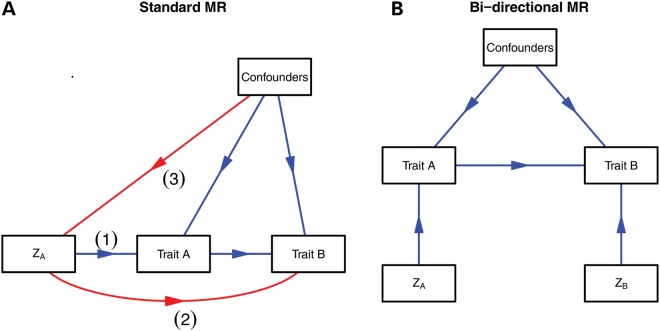
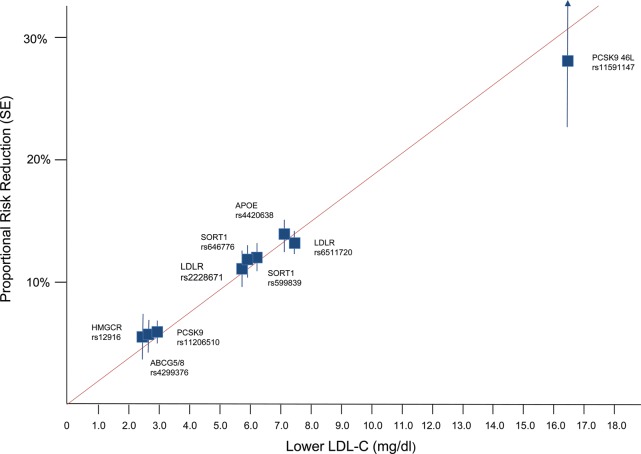
Verification
Claims the paper makes
The claims and statistics of this paper haven’t been checked yet.
Free: it reads the open-access text and checks the first 5 claims that cite a source we can check. Create a free account to check every claim.
Claims other papers make about this one
Each is checked against this paper’s own text: does it say what the citing paper says it does?
The source backs part of the claim, not all of it — or backs it for a different population, condition or comparison.
In the citing paper
“Similarly, violation of the ‘exclusion restriction criteria’33–37 could bias causal estimates in IV analyses when used to test effects of intermediates in RCTs or when used in observational data (including MR)”
From Triangulation in aetiological epidemiology (2017) · cites this paper as [35]
Experimental — accuracy not yet measuredThe cited source says what the claim attributes to it.
In the citing paper
“Discrepancies between MR findings and observational studies are frequently observed[9,17].”
From Evaluating genetic insights into ulcerative colitis and anxiety: Limitations and future directions (2024) · cites this paper as [17]
The cited source says what the claim attributes to it.
In the citing paper
“This pattern is consistent with a directional influence of disease liability on longevity27,64 and is also compatible with vertical pleiotropy65.”
From Genetic trade-offs in fertility and longevity explain the maintenance of disease-associated alleles in humans (2026) · cites this paper as [64]
The check wasn’t confident either way, so it gives no verdict — never disputed.
In the citing paper
“Varespladib (a drug targeting sPLA 2 -IIA) failed in VISTA16 41”
From Integrating genomics with biomarkers and therapeutic targets to invigorate cardiovascular drug development (2021) · cites this paper as [41]
Experimental — accuracy not yet measuredThe check wasn’t confident either way, so it gives no verdict — never disputed.
In the citing paper
“unlike the impact of weak instrument bias in one-sample MR (which biases effects towards the confounded multivariable regression result), in two-sample MR weak instrument bias is towards the null.”
From Commentary: Two-sample Mendelian randomization: opportunities and challenges (2016) · cites this paper as [3]
Experimental — accuracy not yet measured
5 more claims about this paper
Create a free account to see every claim other papers make about this one.
Self-check
Percentages, sums and reported differences re-computed from the paper’s own numbers.
The self-check needs the paper’s full text.
Citations
Cites
Genetics of Food Intake Self-Regulation in Childhood: Literature Review and Research Opportunities
Faith, M. S., Carnell, S., & Kral, T. V. E. (2013) · Human Heredity · doi:10.1159/000353879 · Cited by 7,601
Lippa, N. C., & Sanderson, S. C. (2013) · Human Heredity · doi:10.1159/000353712 · Cited by 6,078
Davey Smith, G., & Ebrahim, S. (2003) · International Journal of Epidemiology · doi:10.1093/ije/dyg070 · Cited by 5,882 · cited 1×
“A successful approach is to use genetic variants as exposure indicators that are not subject to the influences that vitiate conventional study designs, an approach known as Mendelian randomization (MR) (8,9).”
Common polygenic variation contributes to risk of schizophrenia and bipolar disorder
The International Schizophrenia Consortium (2009) · Nature · doi:10.1038/nature08185 · Cited by 4,821 · cited 1×
“significance thresholds are also included, the rationale being that these will include false-negatives owing to small effect size (56).”
BackgroundMendelian randomization: Using genes as instruments for making causal inferences in epidemiology
Lawlor, D. A., Harbord, R. M., Sterne, J. A. C., Timpson, N., & Davey Smith, G. (2008) · Statistics in Medicine · doi:10.1002/sim.3034 · Cited by 4,618
Frayling, T. M., Timpson, N. J., Weedon, M. N., Zeggini, E., Freathy, R. M., Lindgren, C. M., Perry, J. R. B., Elliott, K. S., Lango, H., Rayner, N. W., et al. (2007) · Science · doi:10.1126/science.1141634 · Cited by 4,531
Self-citationEffects of torcetrapib in patients at high risk for coronary events
Barter, P. J., Caulfield, M., Eriksson, M., Grundy, S. M., Kastelein, J. J. P., Komajda, M., Lopez-Sendon, J., Mosca, L., Tardif, J.-C., Waters, D. D., et al. (2007) · New England Journal of Medicine · doi:10.1056/nejmoa0706628 · Cited by 3,139
Willer (2013) · doi:10.1038/ng.2797 · Cited by 2,983
Inference to the Best Explanation
Lipton, P. (2003) · Routledge eBooks · doi:10.4324/9780203470855 · Cited by 2,130
Genetic variants in novel pathways influence blood pressure and cardiovascular disease risk
The International Consortium for Blood Pressure Genome-Wide Association Studies (2011) · Nature · doi:10.1038/nature10405 · Cited by 2,033
Research works printed but not linked: 17
- 2007, New England Journal of Medicine, 357, 2109, 10.1056/nejmoa0706628 · DOI · Paper page
- 2007, American Journal of Epidemiology, 166, 646, 10.1093/aje/kwm165 · DOI · Paper page
- 2013, Psychological medicine, 43, 711, 10.1017/s0033291712001274 · DOI · Paper page
- 2013, International Journal of Epidemiology, 42, 1358, 10.1093/ije/dyt172 · DOI · Paper page
- 2013, American Journal of Epidemiology, 178, 1177, 10.1093/aje/kwt084 · DOI · Paper page
- 2013, Nature reviews. Genetics, 14, 483, 10.1038/nrg3461 · DOI · Paper page
- 2012, Nephrology Dialysis Transplantation, 27, 1030, 10.1093/ndt/gfr418 · DOI
- 2013, International Journal of Epidemiology, 42, 1497, 10.1093/ije/dyt179 · DOI · Paper page
- 2013, International Journal of Epidemiology, 42, 1134, 10.1093/ije/dyt093 · DOI · Paper page
- 2012, Journal of the American College of Cardiology, 60, 2631, 10.1016/j.jacc.2012.09.017 · DOI · Paper page
- 2010, Circulation: Cardiovascular Genetics, 3, 523, 10.1161/circgenetics.109.934455 · DOI · Paper page
- 2010, The review of economics and statistics, 92, 57
- 2011, International journal of obesity, 35, 300, 10.1038/ijo.2010.137 · DOI · Paper page
- 2009, Journal of Clinical Endocrinology & Metabolism, 95, 93
- 2013, Journal of Epidemiology & Community Health, 67, 458, 10.1136/jech-2012-201813 · DOI · Paper page
- 2012, International Journal of Epidemiology, 41, 161, 10.1093/ije/dyr233 · DOI · Paper page
- 2013, Nature reviews. Genetics, 14, 585, 10.1038/nrg3405 · DOI · Paper page
Cited by
Items 1,001–1,022 of 1,022
Beyond the Single SNP: Emerging Developments in Mendelian Randomization in the “Omics” Era
Brion, M., Benyamin, B., Visscher, P. M., & Smith, G. D. (2014) · Current Epidemiology Reports · doi:10.1007/s40471-014-0024-2 · Cited by 23
Identifying Multi-Omics Causers and Causal Pathways for Complex Traits
Qin, H., Niu, T., & Zhao, J. (2019) · Frontiers in Genetics · doi:10.3389/fgene.2019.00110 · Cited by 23
Frikke‐Schmidt, R. (2020) · Atherosclerosis · doi:10.1016/j.atherosclerosis.2020.03.005 · Cited by 23
Hansen, E.-S., Hindberg, K., Latysheva, N., Aukrust, P., Ueland, T., Hansen, J.-B., Brækkan, S. K., Morelli, V. M., & the INVENT Consortium (2020) · Blood · doi:10.1182/blood.2019004572 · Cited by 22
How humans can contribute to Mendelian randomization analyses.
Burgess, S., & Davey Smith, G. (2019) · International Journal of Epidemiology · doi:10.1093/ije/dyz152 · Cited by 20
Zhan, H., Cammann, D., Cummings, J. L., Dong, X., & Chen, J. (2025) · Journal of Translational Medicine · doi:10.1186/s12967-025-06317-5 · Cited by 17
Spiller, W., Hartwig, F. P., Sanderson, E., Smith, G. D., & Bowden, J. (2020) · doi:10.1101/2020.07.27.20162909 · Cited by 15
Self-citationSun, Q., Yuan, G., Yang, J., Lu, J., Feng, W., & Yang, W. (2021) · doi:10.1101/2021.06.29.21259512 · Cited by 15
Xia, K., Zhang, L., Tang, L., Huang, T., & Fan, D. (2022) · Orphanet Journal of Rare Diseases · doi:10.1186/s13023-022-02212-0 · Cited by 14
Harlow, C. E., Gandawijaya, J., Bamford, R. A., Martin, E.-R., Wood, A. R., van der Most, P. J., Tanaka, T., Leonard, H. L., Etheridge, A. S., Innocenti, F., et al. (2022) · The American Journal of Human Genetics · doi:10.1016/j.ajhg.2022.08.004 · Cited by 13
“34 35–37 The properties of inherited genetic variation mean the associations are far less likely to be confounded or biased, compared to observational studies.”
Wade, K. H., Forouhi, N. G., Cook, D. G., Johnson, P., McConnachie, A., Morris, R. W., Rodriguez, S., Ye, Z., Ebrahim, S., Padmanabhan, S., et al. (2015) · The American Journal of Clinical Nutrition · doi:10.3945/ajcn.114.092981 · Cited by 12
Polimanti, R., Peterson, R. E., Ong, J.-S., MacGregor, S., Edwards, A. C., Clarke, T.-K., Frank, J., Gerring, Z., Gillespie, N. A., Lind, P. A., et al. (2018) · doi:10.1101/412098 · Cited by 108
Ahmed, A., Sattar, N., & Yaghootkar, H. (2022) · Diabetic Medicine · doi:10.1111/dme.14982 · Cited by 10
Identifying novel drug targets for calcific aortic valve disease through Mendelian randomization
Xu, D., Lu, J., Yang, Y., Hu, W., Chen, J., Xue, J., Yang, S., Cao, N., Hu, H., Qian, N., et al. (2025) · Atherosclerosis · doi:10.1016/j.atherosclerosis.2025.119110 · Cited by 10
Jones, H. J., Hammerton, G., McCloud, T., Hines, L. A., Wright, C., Gage, S. H., Holmans, P., Jones, P. B., Davey Smith, G., Linden, D. E. J., et al. (2022) · Psychological Medicine · doi:10.1017/s0033291720001798 · Cited by 9
Ference, B. A. (2019) · Clinical Pharmacology & Therapeutics · doi:10.1002/cpt.1163 · Cited by 8
He, L., Tiemuerniyazi, X., Yang, Z., Huang, S., Chen, L., Nan, Y., Song, Y., & Feng, W. (2024) · European Journal of Preventive Cardiology · doi:10.1093/eurjpc/zwae336 · Cited by 7
Brigos-Barril, E., Vasallo, C., Farré, X., Morcillo-Suárez, C., Polo-Alonso, S., Rodríguez-Fernández, B., Valenzuela, A., Sarabia, C., Bosch, E., Laayouni, H., et al. (2026) · Nature Ecology & Evolution · doi:10.1038/s41559-026-03140-z · Cited by 6
Gao, J., & Liu, J. (2024) · Frontiers in Endocrinology · doi:10.3389/fendo.2024.1389453 · Cited by 3
Modifiable factors for benign salivary gland neoplasms: A Mendelian randomization study
Gao, Y., Chen, H., Liu, Y., Zhang, X., Qiu, Y., & Huang, D. (2024) · Oral Diseases · doi:10.1111/odi.14682 · Cited by 3
Evaluating genetic insights into ulcerative colitis and anxiety: Limitations and future directions
Peng, Y., & Long, X.-D. (2024) · World Journal of Gastroenterology · doi:10.3748/wjg.v30.i37.4156 · Cited by 2
Chen, G., Xu, J., He, X., Yan, Y., Hu, L., & Li, Z. (2026) · Clinical Immunology · doi:10.1016/j.clim.2026.110785
Metadata
- Authors
- Davey Smith, G., & Hemani, G.
- Affiliations
- University of Bristol (GB)
- ORCID
- Hemani, G.
- Venue
- Human Molecular Genetics
- Publisher
- Oxford University Press (OUP)
- Published
- 2014-07-04
- Volume
- 23
- Issue
- R1
- Pages
- R89-R98
- ISSN
- 0964-6906 (ISSN-L)
- 1460-2083
- PMC
- PMC4170722
- OpenAlex
- W2103783427
- Semantic Scholar
- e86fe9b56bac5e159a1b18d9e5003ec06cd14314
- Cited by
- 4,677
- References
- 91
- Citations by year
- 2026: 457 · 2025: 807 · 2024: 1310 · 2023: 734 · 2022: 349 · 2021: 231 · 2020: 223 · 2019: 178 · 2018: 143 · 2017: 101 · 2016: 89 · 2015: 43 · 2014: 11
- FWCI
- 10.78
- Type
- journal article
- Language
- en
- Open access
- hybrid
- doi.org
- Licence
- cc-by
- Locations
- Human Molecular Genetics (publishedVersion, cc-by)
- Europe PMC (PubMed Central) (publishedVersion, cc-by)
- PubMed Central (publishedVersion, cc-by)
- PubMed (publishedVersion)
- Explore Bristol Research (publishedVersion)
- Funders
- University of Bristol (MC_UU_12013/1, MC_UU_12013/1,9, MC_UU_12013)
- Medical Research Council (MC_UU_12013, MC_UU_12013/1‐9, MCUU12013/1)
- Topics
- Life Sciences › Biochemistry, Genetics and Molecular Biology › Genetics › Genetic Associations and Epidemiology
- Physical Sciences › Mathematics › Statistics and Probability › Advanced Causal Inference Techniques
- Physical Sciences › Mathematics › Statistics and Probability › Statistical Methods in Epidemiology
- Keywords
- Mendelian randomization, causal inference, genetic variants, confounding, reverse causality, bidirectional Mendelian randomization, two-sample Mendelian randomization
- MeSH terms
- Humans, Genetic Variation, Causality, Epidemiologic Studies, Randomized Controlled Trials as Topic, Mendelian Randomization Analysis
About these checks
Registry, retraction, Cites and statistics results are computed, not judged, with one exception: a printed reference that no index lists is read once by a model before it counts as a citation error. Claims are extracted by a model and kept only when their quote appears verbatim in the text; each cited source is then checked, with a model’s help, for whether it says what the claim relies on. Those verdicts can be wrong — read the claim’s quote and the cited source before relying on one.
Statistics and arithmetic are recomputed, not judged.
Confidence bands are shown only for fields calibrated on our annotated test set. None is calibrated yet, so no band is shown.
What counts as a claim ›How we measure confidence ›How we check this ›
Are you an author, or do you see a problem with this page? Request a review
Data sources
Bibliographic data: Semantic Scholar, OpenAlex, Crossref.
Contains information from the Semantic Scholar Academic Graph Datasets, made available under the ODC Attribution License (ODC-BY 1.0).
Semantic Scholar’s data is described in: Kinney, R., et al. (2023). The Semantic Scholar Open Data Platform. arXiv:2301.10140.
