

The DOI matches its Crossref record; 120 of the 120 references it cites were found in a registry or an index.
Evaluating the potential role of pleiotropy in Mendelian randomization studies
Open accessAbstract
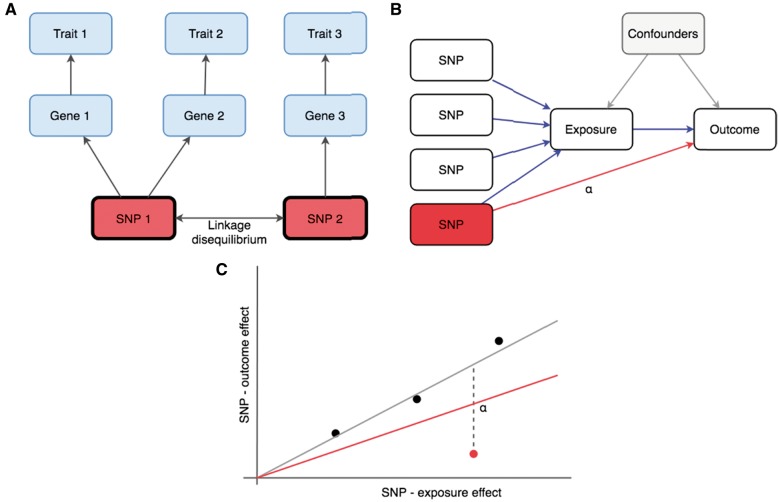
Pleiotropy, the phenomenon of a single genetic variant influencing multiple traits, is likely widespread in the human genome. If pleiotropy arises because the single nucleotide polymorphism (SNP) influences one trait, which in turn influences another ('vertical pleiotropy'), then Mendelian randomization (MR) can be used to estimate the causal influence between the traits. Of prime focus among the many limitations to MR is the unprovable assumption that apparent pleiotropic associations are mediated by the exposure (i.e. reflect vertical pleiotropy), and do not arise due to SNPs influencing the two traits through independent pathways ('horizontal pleiotropy'). The burgeoning treasure trove of genetic associations yielded through genome wide association studies makes for a tantalizing prospect of phenome-wide causal inference. Recent years have seen substantial attention devoted to the problem of horizontal pleiotropy, and in this review we outline how newly developed methods can be used together to improve the reliability of MR.
Overview
The claims and statistics of this paper haven’t been checked yet.
Run the check — free, no account needed. It reads the open-access text and checks the sources it cites.
Integrity signals
Registry
Cites
Statistics
Figures
Verification
Claims the paper makes
The claims and statistics of this paper haven’t been checked yet.
Run the check — free, no account needed. It reads the open-access text and checks the sources it cites.
Claims other papers make about this one
Each is checked against this paper’s own text: does it say what the citing paper says it does?
The cited source says what the claim attributes to it.
In the citing paper
“This pattern is consistent with a directional influence of disease liability on longevity27,64 and is also compatible with vertical pleiotropy65.”
From Genetic trade-offs in fertility and longevity explain the maintenance of disease-associated alleles in humans (2026) · cites this paper as [65]
In the citing paper
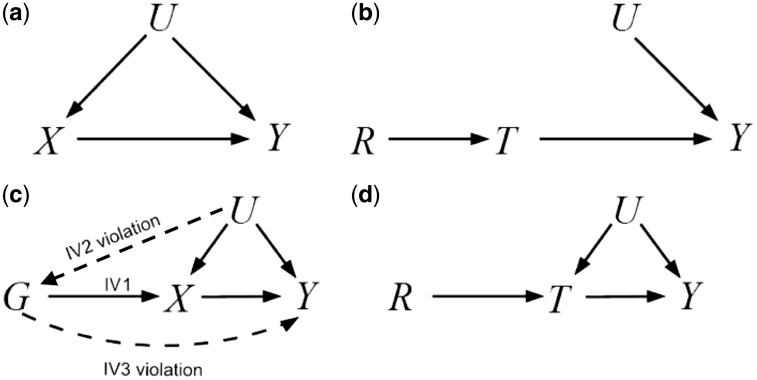
“However, confounding of the genetic variants with the outcome in a sample can be induced by population stratification, dynastic effects and assortative mating,60 violating the second IV condition.”
From Mendelian randomization (2022) · cites this paper as [60]
In the citing paper
“If there are many correlated candidate variants in a gene region, then including all variants in a single analysis will typically result in numerical instability, as the analysis can be highly sensitive to small changes in the variant correlation matrix 62 .”
From Guidelines for performing Mendelian randomization investigations (2020) · cites this paper as [62]
Self-check
Percentages, sums and reported differences re-computed from the paper’s own numbers.
The self-check needs the paper’s full text.
Citations
Cites
PLINK: a tool set for whole-genome association and population-based linkage analyses.
Purcell, S., Neale, B., Todd-Brown, K., Thomas, L., Ferreira, M. A. R., Bender, D., Maller, J., Sklar, P., de Bakker, P. I. W., Daly, M. J., et al. (2007) · The American Journal of Human Genetics · doi:10.1086/519795 · Cited by 34,089 · cited 1×
“Independence is often ensured using LDbased clumping and pruning (45).”
MethodBowden, J., Davey Smith, G., & Burgess, S. (2015) · International Journal of Epidemiology · doi:10.1093/ije/dyv080 · Cited by 9,816 · cited 3×
“Here, it is assumed that on an average the random effects have zero mean and are uncorrelated with the SNP-exposure effect (55) (Appendix 1).”
BackgroundMethodSelf-citationBowden, J., Davey Smith, G., Haycock, P. C., & Burgess, S. (2016) · Genetic Epidemiology · doi:10.1002/gepi.21965 · Cited by 8,922 · cited 2×
“This can be extended to a more efficient weighted analysis, which then requires that the set of instruments accounting for 50% or more of the total weight is valid (64).”
BackgroundSelf-citationVerbanck, M., Chen, C.-Y., Neale, B., & Do, R. (2018) · Nature Genetics · doi:10.1038/s41588-018-0099-7 · Cited by 8,591 · cited 3×
“based heterogeneity and outlier test is proposed within MR-PRESSO (61), which performs similarly to modified second-order”
BackgroundMethodThe MR-Base platform supports systematic causal inference across the human phenome
Hemani, G., Zheng, J., Elsworth, B., Wade, K. H., Haberland, V., Baird, D., Laurin, C., Burgess, S., Bowden, J., Langdon, R., et al. (2018) · eLife · doi:10.7554/elife.34408 · Cited by 7,959 · cited 8×
“It is also common to see leaveone-out analyses where the causal effect is re-estimated but sequentially omitting a particular instrument each time, to evaluate if any one variant is driving the analysis (8).”
BackgroundMethodResultInfluentialSelf-citationDavey Smith, G., & Ebrahim, S. (2003) · International Journal of Epidemiology · doi:10.1093/ije/dyg070 · Cited by 5,882 · cited 3×
“In these cases, extending the analogy to RCTs, each instrumenting SNP is considered an independent experiment (in the sense that they independently modify the exposure), and as such the results from each experiment can be meta-analysed to give an overall estimate (7,46,47).”
MethodCommon polygenic variation contributes to risk of schizophrenia and bipolar disorder
The International Schizophrenia Consortium (2009) · Nature · doi:10.1038/nature08185 · Cited by 4,821
Mendelian randomization: genetic anchors for causal inference in epidemiological studies
Davey Smith, G., & Hemani, G. (2014) · Human Molecular Genetics · doi:10.1093/hmg/ddu328 · Cited by 4,677 · cited 5×
“In these cases, extending the analogy to RCTs, each instrumenting SNP is considered an independent experiment (in the sense that they independently modify the exposure), and as such the results from each experiment can be meta-analysed to give an overall estimate (7,46,47).”
MethodInfluentialSelf-citationGiambartolomei, C., Vukcevic, D., Schadt, E. E., Franke, L., Hingorani, A. D., Wallace, C., & Plagnol, V. (2014) · PLoS Genetics · doi:10.1371/journal.pgen.1004383 · Cited by 4,261 · cited 4×
“The R/coloc (25) package uses summary data for the SNPs in a region and estimates the posterior probability of shared genetic factors by evaluating the similarity of effect size patterns across the region.”
BackgroundMethodInfluentialIdentification and estimation of local average treatment effects
Imbens, G. W., & Angrist, J. D. (1994) · Econometrica · doi:10.2307/2951620 · Cited by 4,101
10 Years of GWAS Discovery: Biology, Function, and Translation
Visscher, P. M., Wray, N. R., Zhang, Q., Sklar, P., McCarthy, M. I., Brown, M. A., & Yang, J. (2017) · The American Journal of Human Genetics · doi:10.1016/j.ajhg.2017.06.005 · Cited by 3,719 · cited 13×
“Causal Inference Using Multiple Genetic Variants Many complex traits for which GWAS has been performed using very large sample sizes return tens or hundreds of independent genetic variants reaching the established genome wide significance level (4).”
BackgroundInfluentialRobust inference in summary data Mendelian randomization via the zero modal pleiotropy assumption
Hartwig, F. P., Davey Smith, G., & Bowden, J. (2017) · International Journal of Epidemiology · doi:10.1093/ije/dyx102 · Cited by 3,485 · cited 1×
“assumption (ZEMPA) and calculate the weighted mode of the Wald ratio estimates (65).”
MethodSelf-citationIntegration of summary data from GWAS and eQTL studies predicts complex trait gene targets
Zhu, Z., Zhang, F., Hu, H., Bakshi, A., Robinson, M. R., Powell, J. E., Montgomery, G. W., Goddard, M. E., Wray, N. R., Visscher, P. M., et al. (2016) · Nature Genetics · doi:10.1038/ng.3538 · Cited by 3,352 · cited 5×
“Such outlier removal strategies are present in the MR-PRESSO (61), and generalized summary MR (GSMR) approaches (62).”
MethodInfluentialWiller (2013) · doi:10.1038/ng.2797 · Cited by 2,983 · cited 3×
“In estimating the influence of LDL on CHD, is it clear that any putative causal effect is not due to the SNPs in fact acting through HDL?”
BackgroundIdentification and Estimation of Local Average Treatment Effects
Angrist, J. D., & Imbens, G. W. (1995) · National Bureau of Economic Research · doi:10.3386/t0118 · Cited by 2,915
Hierarchical Mixtures of Experts and the EM Algorithm
Jordan, M. I., & Jacobs, R. A. (1994) · Neural Computation · doi:10.1162/neco.1994.6.2.181 · Cited by 2,786
Orienting the causal relationship between imprecisely measured traits using GWAS summary data.
Hemani, G., Tilling, K., & Davey Smith, G. (2017) · PLoS Genetics · doi:10.1371/journal.pgen.1007081 · Cited by 2,607 · cited 3×
“Second, in Steiger filtering (72), outliers were detected based on the likelihood that they were reverse-causal.”
InfluentialSelf-citationIntegrative approaches for large-scale transcriptome-wide association studies
Gusev, A., Ko, A., Shi, H., Bhatia, G., Chung, W., Penninx, B. W. J. H., Jansen, R., de Geus, E. J. C., Boomsma, D. I., Wright, F. A., et al. (2016) · Nature Genetics · doi:10.1038/ng.3506 · Cited by 2,479
Meta-analysis of the heritability of human traits based on fifty years of twin studies
Polderman, T. J. C., Benyamin, B., de Leeuw, C. A., Sullivan, P. F., van Bochoven, A., Visscher, P. M., & Posthuma, D. (2015) · Nature Genetics · doi:10.1038/ng.3285 · Cited by 2,467 · cited 1×
“• Given that the majority of measurable phenotypes have a heritable component (105), pleiotropy in the most general”
BackgroundA comprehensive 1000 Genomes–based genome-wide association meta-analysis of coronary artery disease
the CARDIoGRAMplusC4D Consortium (2015) · Nature Genetics · doi:10.1038/ng.3396 · Cited by 2,447 · cited 7×
“Estimating the causal influence of CRP on CHD (69,70) is likely to be quite susceptible to this problem, using all 20 variants from Dehghan et al.”
BackgroundMethodInfluentialMendelian Randomization as an Approach to Assess Causality Using Observational Data
Sekula, P., Del Greco M, F., Pattaro, C., & Köttgen, A. (2016) · Journal of the American Society of Nephrology · doi:10.1681/asn.2016010098 · Cited by 2,351
The new NHGRI-EBI Catalog of published genome-wide association studies (GWAS Catalog)
MacArthur, J., Bowler, E., Cerezo, M., Gil, L., Hall, P., Hastings, E., Junkins, H., McMahon, A., Milano, A., Morales, J., et al. (2017) · Nucleic Acids Research · doi:10.1093/nar/gkw1133 · Cited by 2,161 · cited 2×
“(3) accrued through over a decade of genome-wide association studies (GWAS) (4) for causal inference, but the method is not a panacea.”
BackgroundYavorska, O. O., & Burgess, S. (2017) · International Journal of Epidemiology · doi:10.1093/ije/dyx034 · Cited by 2,029 · cited 1×
“Other software packages are available such as MendelianRandomization (96) and gsmr (62) and in Stata, mrrobust (100).”
MethodA framework for the investigation of pleiotropy in two‐sample summary data Mendelian randomization
Bowden, J., Del Greco M, F., Minelli, C., Davey Smith, G., Sheehan, N., & Thompson, J. (2017) · Statistics in Medicine · doi:10.1002/sim.7221 · Cited by 1,887
Self-citationA review of instrumental variable estimators for Mendelian randomization
Burgess, S., Small, D. S., & Thompson, S. G. (2015) · Statistical Methods in Medical Research · doi:10.1177/0962280215597579 · Cited by 1,769 · cited 1×
“have appeared recently that relate to the scope of MR (10,11), emerging methods (11,12), applications to drug discovery (13– 15), and comparisons to other causal methods (16–18).”
BackgroundCalculating statistical power in Mendelian randomization studies.
Brion, M.-J. A., Shakhbazov, K., & Visscher, P. M. (2013) · International Journal of Epidemiology · doi:10.1093/ije/dyt179 · Cited by 1,751 · cited 1×
“Hence, it is tempting to use a similar strategy in MR because better prediction accuracy of the exposure will improve statistical power (77).”
MethodGenetic Investigation of ANthropometric Traits (GIANT) Consortium, Yang, J., DIAbetes Genetics Replication And Meta-analysis (DIAGRAM) Consortium, Ferreira, T., Morris, A. P., Medland, S. E., Madden, P. A. F., Heath, A. C., Martin, N. G., Montgomery, G. W., et al. (2012) · Nature Genetics · doi:10.1038/ng.2213 · Cited by 1,712
Detecting pleiotropy in Mendelian randomisation studies with summary data and a continuous outcome
Greco M, F. D., Minelli, C., Sheehan, N. A., & Thompson, J. R. (2015) · Statistics in Medicine · doi:10.1002/sim.6522 · Cited by 1,700 · cited 1×
“between studies is Cochran’s Q statistic (49), and it can also be applied in the MR context (50,51).”
BackgroundSystematic identification of trans eQTLs as putative drivers of known disease associations
Westra, H.-J., Peters, M. J., Esko, T., Yaghootkar, H., Schurmann, C., Kettunen, J., Christiansen, M. W., Fairfax, B. P., Schramm, K., Powell, J. E., et al. (2013) · Nature Genetics · doi:10.1038/ng.2756 · Cited by 1,658
Burgess, S., & Thompson, S. G. (2015) · American Journal of Epidemiology · doi:10.1093/aje/kwu283 · Cited by 1,605
Bowden, J., Fabiola Del Greco, M., Minelli, C., Smith, G. D., Sheehan, N. A., & Thompson, J. R. (2016) · International Journal of Epidemiology · doi:10.1093/ije/dyw220 · Cited by 1,555 · cited 3×
“Simulation extrapolation (SIMEX) corrections can be applied to account for regression dilution bias (57).”
BackgroundMethodSelf-citationPhenoScanner: a database of human genotype-phenotype associations.
Staley, J. R., Blackshaw, J., Kamat, M. A., Ellis, S., Surendran, P., Sun, B. B., Paul, D. S., Freitag, D., Burgess, S., Danesh, J., et al. (2016) · Bioinformatics · doi:10.1093/bioinformatics/btw373 · Cited by 1,479
THE COMPARISON OF PERCENTAGES IN MATCHED SAMPLES
COCHRAN, W. G. (1950) · Biometrika · doi:10.1093/biomet/37.3-4.256 · Cited by 1,465 · cited 1×
“between studies is Cochran’s Q statistic (49), and it can also be applied in the MR context (50,51).”
BackgroundPierce, B. L., & Burgess, S. (2013) · American Journal of Epidemiology · doi:10.1093/aje/kwt084 · Cited by 1,389 · cited 3×
“MR analyses that use only summary data have been called summary MR (SMR) (30) and two-sample MR (2SMR) (7).”
BackgroundMethodBurgess, S., Dudbridge, F., & Thompson, S. G. (2016) · Statistics in Medicine · doi:10.1002/sim.6835 · Cited by 1,153 · cited 1×
“analogy to RCTs, each instrumenting SNP is considered an independent experiment (in the sense that they independently modify the exposure), and as such the results from each experiment can be meta-analysed to give an overall estimate (7,46,47).”
BackgroundRecent Developments in Mendelian Randomization Studies
Zheng, J., Baird, D. A., Borges, M. C., Bowden, J., Hemani, G., Haycock, P., Evans, D. M., & Smith, G. D. (2017) · Current Epidemiology Reports · doi:10.1007/s40471-017-0128-6 · Cited by 1,147 · cited 1×
“have appeared recently that relate to the scope of MR (10,11), emerging methods (11,12), applications to drug discovery (13– 15), and comparisons to other causal methods (16–18).”
BackgroundSelf-citationTriangulation in aetiological epidemiology
Lawlor, D. A., Tilling, K., & Davey Smith, G. (2017) · International Journal of Epidemiology · doi:10.1093/ije/dyw314 · Cited by 1,129 · cited 3×
“The next major transformation in MR is likely to involve the improvement of causal inference by incorporating information from beyond the SNP-exposure and SNP-outcome effects, in the spirit of triangulation of evidence (16,18).”
BackgroundPleiotropy in complex traits: challenges and strategies
Solovieff, N., Cotsapas, C., Lee, P. H., Purcell, S. M., & Smoller, J. W. (2013) · Nature Reviews Genetics · doi:10.1038/nrg3461 · Cited by 1,085 · cited 2×
“ropy, though it has also been called biological pleiotropy (106), Type I pleiotropy (107), developmental pleiotropy and selec-”
BackgroundHou, L., Kellis, M., Liu, Y., Park, Y., & Rinaldi, N. J. (2018) · DSpace@MIT (Massachusetts Institute of Technology) · doi:10.34944/dspace/4648 · Cited by 1,082
An integrative genomics approach to infer causal associations between gene expression and disease
Schadt, E. E., Lamb, J., Yang, X., Zhu, J., Edwards, S., GuhaThakurta, D., Sieberts, S. K., Monks, S., Reitman, M., Zhang, C., et al. (2005) · Nature Genetics · doi:10.1038/ng1589 · Cited by 1,043
Bowden, J., Del Greco M, F., Minelli, C., Zhao, Q., Lawlor, D. A., Sheehan, N. A., Thompson, J., & Davey Smith, G. (2019) · International Journal of Epidemiology · doi:10.1093/ije/dyy258 · Cited by 995 · cited 4×
“Cochran’s Q statistic to detect heterogeneity due to pleiotropy when it is truly present (51) (i.”
BackgroundMethodInfluentialSelf-citationCausal associations between risk factors and common diseases inferred from GWAS summary data
Zhu, Z., Zheng, Z., Zhang, F., Wu, Y., Trzaskowski, M., Maier, R., Robinson, M. R., McGrath, J. J., Visscher, P. M., Wray, N. R., et al. (2018) · Nature Communications · doi:10.1038/s41467-017-02317-2 · Cited by 951 · cited 2×
“Other software packages are available such as MendelianRandomization (96) and gsmr (62) and in Stata, mrrobust (100).”
BackgroundMethodThe Fitting of Straight Lines if Both Variables are Subject to Error
Wald, A. (1940) · The Annals of Mathematical Statistics · doi:10.1214/aoms/1177731868 · Cited by 930 · cited 1×
“An estimate of the causal effect can be obtained from a Wald ratio: the influence of the SNP-outcome effect divided by the SNP-exposure effect (23) (Appendix 1).”
BackgroundBurgess, S., Dudbridge, F., & Thompson, S. G. (2015) · American Journal of Epidemiology · doi:10.1093/aje/kwv017 · Cited by 930
Ference, B. A., Yoo, W., Alesh, I., Mahajan, N., Mirowska, K. K., Mewada, A., Kahn, J., Afonso, L., Williams, K. A., & Flack, J. M. (2012) · Journal of the American College of Cardiology · doi:10.1016/j.jacc.2012.09.017 · Cited by 898 · cited 1×
“The more SNPs that satisfy this expectation, the less likely it is that the SNP-outcome associations are arising simply because of horizontal pleiotropy (or distinct causal variants) (48).”
BackgroundBowden, J., Spiller, W., Del Greco M, F., Sheehan, N., Thompson, J., Minelli, C., & Davey Smith, G. (2018) · International Journal of Epidemiology · doi:10.1093/ije/dyy101 · Cited by 880
Self-citationZhao, Q., Wang, J., Hemani, G., Bowden, J., & Small, D. S. (2020) · The Annals of Statistics · doi:10.1214/19-aos1866 · Cited by 868 · cited 7×
“Modified second-order weights are also incorporated into the MR-RAPS (54) estimator.”
BackgroundMethodInfluentialSelf-citationCommon variants associated with plasma triglycerides and risk for coronary artery disease
Do, R., Willer, C. J., Schmidt, E. M., Sengupta, S., Gao, C., Peloso, G. M., Gustafsson, S., Kanoni, S., Ganna, A., Chen, J., et al. (2013) · Nature Genetics · doi:10.1038/ng.2795 · Cited by 862 · cited 3×
“In estimating the influence of LDL on CHD, is it clear that any putative causal effect is not due to the SNPs in fact acting through HDL?”
Hartwig, F. P., Davies, N. M., Hemani, G., & Davey Smith, G. (2016) · International Journal of Epidemiology · doi:10.1093/ije/dyx028 · Cited by 860 · cited 1×
“concomitant explosion in the use of MR across a broad range of disciplines (5).”
BackgroundSelf-citationTrynka, G., PreventCD Study Group, Hunt, K. A., Bockett, N. A., Romanos, J., Mistry, V., Szperl, A., Bakker, S. F., Bardella, M. T., Bhaw, L., et al. (2011) · Nature Genetics · doi:10.1038/ng.998 · Cited by 836
Random measurement error and regression dilution bias
Hutcheon, J. A., Chiolero, A., & Hanley, J. A. (2010) · BMJ · doi:10.1136/bmj.c2289 · Cited by 752 · cited 1×
“Egger analyses are more susceptible to regression dilution bias (57,60).”
BackgroundThe pleiotropic structure of the genotype–phenotype map: the evolvability of complex organisms
Wagner, G. P., & Zhang, J. (2011) · Nature Reviews Genetics · doi:10.1038/nrg2949 · Cited by 746 · cited 2×
“ropy, though it has also been called biological pleiotropy (106), Type I pleiotropy (107), developmental pleiotropy and selec-”
BackgroundMendelian randomization in cardiometabolic disease: challenges in evaluating causality
Holmes, M. V., Ala-Korpela, M., & Smith, G. D. (2017) · Nature Reviews Cardiology · doi:10.1038/nrcardio.2017.78 · Cited by 679
Robust research needs many lines of evidence
Munafò, M. R., & Davey Smith, G. (2018) · Nature · doi:10.1038/d41586-018-01023-3 · Cited by 666 · cited 3×
“The next major transformation in MR is likely to involve the improvement of causal inference by incorporating information from beyond the SNP-exposure and SNP-outcome effects, in the spirit of triangulation of evidence (16,18).”
BackgroundGenome-wide genetic data on ~500,000 UK Biobank participantsPreprint
Bycroft, C., Freeman, C., Petkova, D., Band, G., Elliott, L. T., Sharp, K., Motyer, A., Vukcevic, D., Delaneau, O., O’Connell, J., et al. (2017) · bioRxiv (Cold Spring Harbor Laboratory) · doi:10.1101/166298 · Cited by 622 · cited 12×
“Causal Inference Using Multiple Genetic Variants Many complex traits for which GWAS has been performed using very large sample sizes return tens or hundreds of independent genetic variants reaching the established genome wide significance level (4).”
BackgroundInfluentialSystematic identification of genetic influences on methylation across the human life course
Gaunt, T. R., Shihab, H. A., Hemani, G., Min, J. L., Woodward, G., Lyttleton, O., Zheng, J., Duggirala, A., McArdle, W. L., Ho, K., et al. (2016) · Genome Biology · doi:10.1186/s13059-016-0926-z · Cited by 598 · cited 4×
“as gene expression (19), DNA methylation (20) and protein levels (21) where there is typically a strong genetic association nearby the genomic location of the variable, typically referred Box 1.”
BackgroundInfluentialSelf-citationA comprehensive 1000 Genomes-based genome-wide association meta-analysis of coronary artery disease
Nikpay, M., Goel, A., Won, H., Hall, L. M., Willenborg, C., Kanoni, S., Saleheen, D., Kyriakou, T., Nelson, C. P., Hopewell, J. C., et al. (2015) · EUR Research Repository (Erasmus University Rotterdam) · Cited by 581
Relton, C. L., & Davey Smith, G. (2012) · International Journal of Epidemiology · doi:10.1093/ije/dyr233 · Cited by 567 · cited 1×
“Network construction to evaluate consistency of effects (an alternative form of mediation analysis using MR) can also be used (44).”
MethodMendelian Randomization: New Applications in the Coming Age of Hypothesis-Free Causality
Evans, D. M., & Smith, G. D. (2015) · Annual Review of Genomics and Human Genetics · doi:10.1146/annurev-genom-090314-050016 · Cited by 529 · cited 1×
“Sometimes it is the case that it is useful to have a single ‘most likely’ causal effect estimate to select from among the many analyses that have been performed (94).”
BackgroundDehghan, A., Dupuis, J., Barbalić, M., Bis, J. C., Eiríksdóttir, G., Lu, C., Pellikka, N., Wallaschofski, H., Kettunen, J., Henneman, P., et al. (2011) · Circulation · doi:10.1161/circulationaha.110.948570 · Cited by 507
Identifying Causal Variants at Loci with Multiple Signals of Association
Hormozdiari, F., Kostem, E., Kang, E. Y., Pasaniuc, B., & Eskin, E. (2014) · Genetics · doi:10.1534/genetics.114.167908 · Cited by 465
Disease variants alter transcription factor levels and methylation of their binding sites
Bonder, M. J., Luijk, R., Zhernakova, D. V., Moed, M., Deelen, P., Vermaat, M., van Iterson, M., van Dijk, F., van Galen, M., Bot, J. J., et al. (2016) · Nature Genetics · doi:10.1038/ng.3721 · Cited by 462 · cited 1×
“in the ‘omic setting described earlier, a single cis-acting variant might account for >50% of the weight even when there are many SNP effects from elsewhere in the genome (trans-effects) (20,66,67).”
BackgroundWang, Y., Lu, Y. C., Zhang, Y., Ning, Z., Li, Y., Zhao, Q., Lu, H., Huang, R., Xia, X.-Q., Feng, Q., et al. (2015) · Nature Genetics · doi:10.1038/ng.3280 · Cited by 436
Nica, A. C., Montgomery, S. B., Dimas, A. S., Stranger, B. E., Beazley, C., Barroso, I., & Dermitzakis, E. T. (2010) · PLoS Genetics · doi:10.1371/journal.pgen.1000895 · Cited by 435
Rees, J. M. B., Wood, A., & Burgess, S. (2017) · Statistics in Medicine · doi:10.1002/sim.7492 · Cited by 396
Freimer, N., & Sabatti, C. (2003) · Nature Genetics · doi:10.1038/ng0503-15 · Cited by 372 · cited 1×
“• The human phenome can be described as all (measurable or not) characteristics of an individual (104).”
BackgroundCausality and causal inference in epidemiology: the need for a pluralistic approach
Vandenbroucke, J. P., Broadbent, A., & Pearce, N. E. (2016) · International Journal of Epidemiology · doi:10.1093/ije/dyv341 · Cited by 355
Network biology concepts in complex disease comorbidities
Hu, J. X., Thomas, C. E., & Brunak, S. (2016) · Nature Reviews Genetics · doi:10.1038/nrg.2016.87 · Cited by 328
Chen, L., Davey Smith, G., Harbord, R. M., & Lewis, S. J. (2008) · PLoS Medicine · doi:10.1371/journal.pmed.0050052 · Cited by 314 · cited 1×
“It is important to note that grouping by an exogenous variable like sex (88) is safer than potentially endogenous covariates because it avoids the possibility of collider bias (89).”
BackgroundInflammatory Biomarkers and Risk of Schizophrenia
Hartwig, F. P., Borges, M. C., Horta, B. L., Bowden, J., & Smith, G. D. (2017) · JAMA Psychiatry · doi:10.1001/jamapsychiatry.2017.3191 · Cited by 301 · cited 1×
“By contrast, the (protective) apparent causal influence of CRP on schizophrenia is much more consistent between the CRP variant and all other instruments (71), indicating that whether a SNP exhibits horizontal pleiotropy is dependent on the causal question being asked (72,73) (Fig.”
BackgroundSelf-citationEvans, D. M., Visscher, P. M., & Wray, N. R. (2009) · Human Molecular Genetics · doi:10.1093/hmg/ddp295 · Cited by 297 · cited 1×
“constructed polygenic scores exhibiting better prediction accuracy (75,76).”
BackgroundTreatment-effect estimates adjusted for small-study effects via a limit meta-analysis
Rücker, G., Schwarzer, G., Carpenter, J. R., Binder, H., & Schumacher, M. C. (2010) · Biostatistics · doi:10.1093/biostatistics/kxq046 · Cited by 295 · cited 1×
“Adapting methodology developed for meta-analysis to the MR context, the Rucker framework (56,95) uses heterogeneity statistics to navigate between different models in a principled manner.”
MethodGalarneau, G., Palmer, C. D., Sankaran, V. G., Orkin, S. H., Hirschhorn, J. N., & Lettre, G. (2010) · Nature Genetics · doi:10.1038/ng.707 · Cited by 273
Kang, H., Zhang, A., Cai, T. T., & Small, D. S. (2016) · Journal of the American Statistical Association · doi:10.1080/01621459.2014.994705 · Cited by 265 · cited 1×
“While IVW and MR-Egger use a mean-based approach to obtain an overall estimate, one way to avoid the contribution of some invalid instruments is to instead base the overall estimate on the median of the instruments (63,64).”
Chun, S., Casparino, A., Patsopoulos, N. A., Croteau-Chonka, D. C., Raby, B. A., De Jager, P. L., Sunyaev, S. R., & Cotsapas, C. (2017) · Nature Genetics · doi:10.1038/ng.3795 · Cited by 259
Zhao, Q., Wang, J., Hemani, G., et al. (2018) · Bristol Research (University of Bristol) · doi:10.48550/arxiv.1801.09652 · Cited by 258 · cited 7×
“Modified second-order weights are also incorporated into the MR-RAPS (54) estimator.”
BackgroundMethodInfluentialSelf-citationThe meta-analysis of genome-wide association studies
Thompson, J. R., Attia, J., & Minelli, C. (2011) · Briefings in Bioinformatics · doi:10.1093/bib/bbr020 · Cited by 251
The Genetic Architecture of Gene Expression in Peripheral Blood
Lloyd‐Jones, L. R., Holloway, A., McRae, A. F., Yang, J., Small, K. S., Zhao, J., Zeng, B., Bakshi, A., Metspalu, A., Dermitzakis, M., et al. (2017) · The American Journal of Human Genetics · doi:10.1016/j.ajhg.2016.12.008 · Cited by 246
Sherlock: Detecting Gene-Disease Associations by Matching Patterns of Expression QTL and GWAS
He, X., Fuller, C. K., Song, Y., Meng, Q., Zhang, B., Yang, X., & Li, H. (2013) · The American Journal of Human Genetics · doi:10.1016/j.ajhg.2013.03.022 · Cited by 241
Smith, J. G., Luk, K., Schulz, C.-A., Engert, J. C., Do, R., Hindy, G., Rukh, G., Dufresne, L., Almgren, P., Owens, D. S., et al. (2014) · JAMA · doi:10.1001/jama.2014.13959 · Cited by 238 · cited 1×
“Extension to systematically leaving out combinations of SNPs is possible also (93).”
BackgroundDisentangling molecular relationships with a causal inference test
Millstein, J., Zhang, B., Zhu, J. W., & Schadt, E. E. (2009) · BMC Genetics · doi:10.1186/1471-2156-10-23 · Cited by 234
Gage, S. H., Jones, H. J., Burgess, S., Bowden, J., Smith, G. D., Zammit, S., & Munafo, M. R. (2016) · Psychological Medicine · doi:10.1017/s0033291716003172 · Cited by 219 · cited 1×
“If an association is obtained this would indicate that the instruments were in some way invalid (86).”
ResultSelf-citationWalker, V. M., Smith, G. D., Davies, N. M., & Martin, R. M. (2017) · International Journal of Epidemiology · doi:10.1093/ije/dyx207 · Cited by 216
Epidemiology—is it time to call it a day?
Smith, G. D., & Ebrahim, S. B. J. (2001) · International Journal of Epidemiology · doi:10.1093/ije/30.1.1 · Cited by 214 · cited 1×
“While MR offers an attractive solution to causal inference using observational or non-interventional data, it essentially replaces traditional epidemiological assumptions (9) with other assumptions (Appendix 1 and Table 1).”
BackgroundPrins, B. P., Abbasi, A., Wong, A., Vaez, A., Nolte, I., Franceschini, N., Stuart, P. E., Guterriez Achury, J., Mistry, V., Bradfield, J. P., et al. (2016) · PLOS Medicine · doi:10.1371/journal.pmed.1001976 · Cited by 199 · cited 5×
“Estimating the causal influence of CRP on CHD (69,70) is likely to be quite susceptible to this problem, using all 20 variants from Dehghan et al.”
MethodInfluentialFrom expression QTLs to personalized transcriptomics
Montgomery, S. B., & Dermitzakis, E. T. (2011) · Nature Reviews Genetics · doi:10.1038/nrg2969 · Cited by 194
Corbin, L. J., Richmond, R. C., Wade, K. H., Burgess, S., Bowden, J., Smith, G. D., & Timpson, N. J. (2016) · Diabetes · doi:10.2337/db16-0418 · Cited by 184
Self-citationMendelian randomisation in cardiovascular research: an introduction for clinicians
Bennett, D., & Holmes, M. V. (2017) · Heart · doi:10.1136/heartjnl-2016-310605 · Cited by 181 · cited 1×
“have appeared recently that relate to the scope of MR (10,11), emerging methods (11,12), applications to drug discovery (13– 15), and comparisons to other causal methods (16–18).”
BackgroundNoyce, A. J., Kia, D. A., Hemani, G., Nicolas, A., Price, T. R., Pablo‐Fernández, E. D., Haycock, P., Lewis, P. A., Foltynie, T., Smith, G. D., et al. (2017) · PLoS Medicine · doi:10.1371/journal.pmed.1002314 · Cited by 174 · cited 1×
“a particular exposure is being tested against a particular outcome) a common strategy (92) is to begin with the simplest model, the fixed effects IVW, which has the highest statistical power when all assumptions are met.”
BackgroundSelf-citationTaylor, A. E., Davies, N. M., Ware, J. J., VanderWeele, T., Smith, G. D., & Munafò, M. R. (2014) · Economics & Human Biology · doi:10.1016/j.ehb.2013.12.002 · Cited by 166 · cited 1×
“It is important to note that grouping by an exogenous variable like sex (88) is safer than potentially endogenous covariates because it avoids the possibility of collider bias (89).”
BackgroundSelf-citationHodgkin, J. (1998) · The International Journal of Developmental Biology · doi:10.1387/ijdb.9654038 · Cited by 164 · cited 1×
“in this review, but it has also been termed mediated pleiotropy (106), type II pleiotropy (107), secondary pleiotropy (108),”
BackgroundPlasma urate concentration and risk of coronary heart disease: a Mendelian randomisation analysis.
White, J., Sofat, R., Hemani, G., Shah, T., Engmann, J., Dale, C., Shah, S., Kruger, F. A., Giambartolomei, C., Swerdlow, D. I., et al. (2016) · The Lancet Diabetes & Endocrinology · doi:10.1016/s2213-8587(15)00386-1 · Cited by 132 · cited 1×
“after accounting for directional pleiotropy in the MR-Egger model (58).”
MethodSelf-citationFortune, M. D., Guo, H., Burren, O. S., Schofield, E. C., Walker, N. M., Ban, M., Sawcer, S. J., Bowes, J., Worthington, J., Barton, A. C., et al. (2015) · Nature Genetics · doi:10.1038/ng.3330 · Cited by 130 · cited 2×
“The second alternative mechanism is through distinct causal variants (24), where a SNP exhibits a”
BackgroundPleiotropy-robust Mendelian randomization.
van Kippersluis, H., & Rietveld, C. A. (2018) · International Journal of Epidemiology · doi:10.1093/ije/dyx002 · Cited by 125
On Instrumental Variables Estimation of Causal Odds Ratios
Vansteelandt, S., Bowden, J., Babanezhad, M., & Goetghebeur, E. J. T. (2011) · Statistical Science · doi:10.1214/11-sts360 · Cited by 116 · cited 1×
“Heterogeneity in this case is due to the non-collapsibility of the odds ratio as a summary measure, meaning that each SNP is estimating a slightly different causal parameter (52); • The samples used to estimate the SNP-exposure and SNPoutcome associations are not homogeneous e.”
BackgroundSelf-citationAlcohol intake and cardiovascular risk factors: A Mendelian randomisation study
Cho, Y., Shin, S.-Y., Won, S., Relton, C. L., Smith, G. D., & Shin, M. (2015) · Scientific Reports · doi:10.1038/srep18422 · Cited by 109 · cited 3×
“including the alcohol example, with a perfect no-relevance point (87,91).”
BackgroundBowden, J., Fabiola Del Greco, M., Minelli, C., et al. (2017) · bioRxiv (Cold Spring Harbor Laboratory) · doi:10.1101/159442 · Cited by 102
Self-citationThe Brisbane Systems Genetics Study: Genetical Genomics Meets Complex Trait Genetics
Powell, J. E., Henders, A. K., McRae, A. F., Caracella, A., Smith, S., Wright, M. J., Whitfield, J. B., Dermitzakis, E. T., Martin, N. G., Visscher, P. M., et al. (2012) · PLoS ONE · doi:10.1371/journal.pone.0035430 · Cited by 101 · cited 1×
“Typically, the instruments for an exposure are readily available through publications, the GWAS catalog (3), or other resources (20,67,102) in which reliable and reproducible associations are reported.”
BackgroundUsing Multivariable Mendelian Randomization to Disentangle the Causal Effects of Lipid Fractions
Burgess, S., Freitag, D. F., Khan, H., Gorman, D. N., & Thompson, S. G. (2014) · PLoS ONE · doi:10.1371/journal.pone.0108891 · Cited by 95
An analysis of the “pleiotropic” effects of a new lethal mutation in the rat ( Mus norvegicus )
Grüneberg, H. (1938) · Proceedings of the Royal Society B Biological Sciences · doi:10.1098/rspb.1938.0017 · Cited by 94 · cited 1×
“spurious pleiotropy (109), and in some literature it is not considered to be pleiotropy at all.”
BackgroundSpiller, W., Slichter, D., Bowden, J., & Davey Smith, G. (2018) · International Journal of Epidemiology · doi:10.1093/ije/dyy204 · Cited by 90 · cited 2×
“including the alcohol example, with a perfect no-relevance point (87,91).”
BackgroundSelf-citationHemani, G., Tilling, K. M., & Smith, G. D. (2017) · PLoS Genetics · doi:10.1371/journal.pgen.1007149 · Cited by 85
Self-citationle Cessie, S., Debeij, J., Rosendaal, F. R., Cannegieter, S. C., & Vandenbroucke, J. P. (2012) · Epidemiology · doi:10.1097/ede.0b013e318254f5de · Cited by 84
The Genetic Architecture of Gene Expression in Peripheral Blood
Lloyd‐Jones, L. R., Holloway, A., McRae, A. F., Yang, J., Small, K. S., Zhao, W., Zeng, B., Bakshi, A., Metspalu, A., Dermitzakis, M., et al. (2017) · The American Journal of Human Genetics · doi:10.1016/j.ajhg.2017.01.026 · Cited by 76 · cited 2×
“as gene expression (19), DNA methylation (20) and protein levels (21) where there is typically a strong genetic association nearby the genomic location of the variable, typically referred Box 1.”
BackgroundMisclassification of the mediator matters when estimating indirect effects
Blakely, T. A., McKenzie, S., & Carter, K. N. (2013) · Journal of Epidemiology & Community Health · doi:10.1136/jech-2012-201813 · Cited by 74 · cited 1×
“erroneous results under some levels of confounding or reverse causation (42), but it is unlikely to lead to the same problems as the heterogeneity-based outlier removal methods.”
BackgroundThe challenging interpretation of instrumental variable estimates under monotonicity
Swanson, S. A., & Hernán, M. A. (2018) · International Journal of Epidemiology · doi:10.1093/ije/dyx038 · Cited by 71 · cited 1×
“in the two-sample setting the causal relationship between the exposure and the outcome is different in each of the samples (53,54).”
BackgroundRichardson, T. G., Zheng, J., Smith, G. D., Timpson, N. J., Gaunt, T. R., Relton, C. L., & Hemani, G. (2017) · The American Journal of Human Genetics · doi:10.1016/j.ajhg.2017.09.003 · Cited by 71 · cited 1×
“then test the reverse causal effect (110); if not”
BackgroundSelf-citationBarbeira, A. N., Dickinson, S. P., Bonazzola, R., Zheng, J., Wheeler, H. E., Torres, J. M., Torstenson, E. S., Shah, K. P., Garcia, T., Edwards, T. L., et al. (2018) · Nature Communications · doi:10.1038/s41467-018-03621-1 · Cited by 69 · cited 1×
“S-PrediXcan (32) adopts a similar strategy of using an”
MethodUnbiased estimation of odds ratios: combining genomewide association scans with replication studies
Bowden, J., & Dudbridge, F. (2009) · Genetic Epidemiology · doi:10.1002/gepi.20394 · Cited by 61 · cited 1×
“This is particularly problematic when combined with selection bias (78), where the discovery”
BackgroundSelf-citationMendelian randomization with Egger pleiotropy correction and weakly informative Bayesian priors
Schmidt, A. F., & Dudbridge, F. (2017) · International Journal of Epidemiology · doi:10.1093/ije/dyx254 · Cited by 57 · cited 1×
“Schmidt and Dudbrudge (98) put forward a similar idea in the Bayesian MR-Egger estimator (BMRE), in which prior beliefs about the extent of directional pleiotropy can be used to average between IVW and MR-Egger estimates.”
BackgroundMendelian randomization incorporating uncertainty about pleiotropy
Thompson, J. R., Minelli, C., Bowden, J., Fabiola Del Greco, M., Gill, D., Jones, E. M., Shapland, C. Y., & Sheehan, N. A. (2017) · Statistics in Medicine · doi:10.1002/sim.7442 · Cited by 44 · cited 2×
“(2017) (97) applied this idea to MR, using a Bayesian approach to average across three nested models—no pleiotropy (IVW fixed effects), balanced random pleiotropy (IVW random effects) and”
MethodSelf-citationWang, L., & Michoel, T. (2017) · PLoS Computational Biology · doi:10.1371/journal.pcbi.1005703 · Cited by 38
Koestler, D. C., Chalise, P., Cicek, M. S., Cunningham, J. M., Armasu, S. M., Larson, M. C., CHIEN, J. R., Block, M. S., Kalli, K. R., Sellers, T. A., et al. (2014) · BMC Medical Genomics · doi:10.1186/1755-8794-7-8 · Cited by 36
Pleiotropy-robust Mendelian RandomizationPreprint
van Kippersluis, H., & Rietveld, C. A. (2016) · bioRxiv (Cold Spring Harbor Laboratory) · doi:10.1101/072603 · Cited by 27
Davies, N. M., Dickson, M., Smith, G. D., Windmeijer, F., & van den Berg, G. J. (2018) · bioRxiv (Cold Spring Harbor Laboratory) · doi:10.1101/250068 · Cited by 17
Consequences of natural perturbations in the human plasma proteomePreprint
Sun, B. B., Maranville, J., Peters, J. E., et al. (2017) · bioRxiv (Cold Spring Harbor Laboratory) · doi:10.1101/134551 · Cited by 17
Bowden, J., Spiller, W., Fabiola Del Greco, M., Sheehan, N. A., Thompson, J. R., Minelli, C., & Smith, G. D. (2017) · bioRxiv (Cold Spring Harbor Laboratory) · doi:10.1101/200378 · Cited by 12
Self-citationWood, A. R., Tuke, M. A., Nalls, M. A., Hernandez, D. G., Gibbs, J. R., Lin, H., Xu, C. S., Li, Q., Shen, J., Jun, G., et al. (2014) · Human Molecular Genetics · doi:10.1093/hmg/ddu560 · Cited by 11
Fortune, M. D., Guo, H., Burren, O. S., Schofield, E. C., Walker, N. M., Ban, M., Sawcer, S. J., Bowes, J., Worthington, J., Barton, A. C., et al. (2015) · Nature Genetics · doi:10.1038/ng0815-962c · Cited by 2
Cho, Y., Shin, S.-Y., Won, S., Relton, C. L., Smith, G. D., & Shin, M. (2016) · Scientific Reports · doi:10.1038/srep26307 · Cited by 1
Research works printed but not linked: 1
- Purcell, 2009, International Schizophrenia Consortium, Nature, 460, 748
Cited by
Sorted by citations
Sanderson, E., Glymour, M. M., Holmes, M. V., Kang, H., Morrison, J., Munafò, M. R., Palmer, T., Schooling, C. M., Wallace, C., Zhao, Q., et al. (2022) · Nature Reviews Methods Primers · doi:10.1038/s43586-021-00092-5 · Cited by 2,229
Guidelines for performing Mendelian randomization investigations
Burgess, S., Smith, G. D., Davies, N. M., Dudbridge, F., Gill, D., Glymour, M. M., Hartwig, F. P., Holmes, M. V., Minelli, C., Relton, C. L., et al. (2019) · Wellcome Open Research · doi:10.12688/wellcomeopenres.15555.1 · Cited by 1,828
Meta‐analysis and Mendelian randomization: A review
Bowden, J., & Holmes, M. V. (2019) · Research Synthesis Methods · doi:10.1002/jrsm.1346 · Cited by 1,683
“Unfortunately, due to the sheer number of variants that can now be easily included in such MR analyses, often with limited knowledge of their functional role, it is increasingly likely that some do not meet the IV assumptions due to a phenomenon known as horizontal pleiotropy.(14) This occurs when a SNP affects the ou…”
BackgroundSelf-citationGuidelines for performing Mendelian randomization investigations
Burgess, S., Davey Smith, G., Davies, N. M., Dudbridge, F., Gill, D., Glymour, M. M., Hartwig, F. P., Holmes, M. V., Minelli, C., Relton, C. L., et al. (2020) · Wellcome Open Research · doi:10.12688/wellcomeopenres.15555.2 · Cited by 1,273
Mendelian randomisation for mediation analysis: current methods and challenges for implementation
Carter, A. R., Sanderson, E., Hammerton, G., Richmond, R. C., Davey Smith, G., Heron, J., Taylor, A. E., Davies, N. M., & Howe, L. D. (2021) · European Journal of Epidemiology · doi:10.1007/s10654-021-00757-1 · Cited by 1,215
“Bias due to pleiotropy has been discussed extensively in the literature [41, 42].”
Background
Metadata
- Authors
- Hemani, G., Bowden, J., & Davey Smith, G.
- Affiliations
- University of Bristol (GB)
- MRC Integrative Epidemiology Unit, Population Health Sciences, University of Bristol
- Corresponding author
- Hemani, Gibran
- Venue
- Human Molecular Genetics
- Publisher
- Oxford University Press (OUP)
- Published
- 2018-05-16
- Volume
- 27
- Issue
- R2
- Pages
- R195-R208
- ISSN
- 0964-6906 (ISSN-L)
- 1460-2083
- PMC
- PMC6061876
- OpenAlex
- W2810852503
- Cited by
- 1,496
- References
- 113
- Citations by year
- 2026: 129 · 2025: 266 · 2024: 422 · 2023: 209 · 2022: 169 · 2021: 131 · 2020: 101 · 2019: 62 · 2018: 7
- FWCI
- 10.71
- Type
- journal article
- Language
- en
- Open access
- hybrid
- doi.org
- Licence
- Locations
- Human Molecular Genetics (publishedVersion, cc-by)
- Europe PMC (PubMed Central) (publishedVersion, cc-by)
- PubMed Central (publishedVersion, cc-by)
- PubMed (publishedVersion)
- Bristol Research (University of Bristol) (submittedVersion, cc-by)
- Funders
- Wellcome Trust (208806/Z/17/Z)
- Medical Research Council (MC_UU_12013/1)
- Topics
- Life Sciences › Biochemistry, Genetics and Molecular Biology › Genetics › Genetic Associations and Epidemiology
- Physical Sciences › Mathematics › Statistics and Probability › Advanced Causal Inference Techniques
- Life Sciences › Biochemistry, Genetics and Molecular Biology › Genetics › Genetics and Physical Performance
- Keywords
- pleiotropy, Mendelian randomization, horizontal pleiotropy, single nucleotide polymorphisms, causal inference, phenome-wide association study, genetic variants
- MeSH terms
- Animals, Humans, Phenotype, Genetic Variation, Reproducibility of Results, Genome, Human, Polymorphism, Single Nucleotide, Genome-Wide Association Study, Mendelian Randomization Analysis, Genetic Pleiotropy
About these checks
Registry, retraction, Cites and statistics results are computed, not judged, with one exception: a printed reference that no index lists is read once by a model before it counts as a citation error. Claims are extracted by a model and kept only when their quote appears verbatim in the text; each cited source is then checked, with a model’s help, for whether it says what the claim relies on. Those verdicts can be wrong — read the claim’s quote and the cited source before relying on one.
Statistics and arithmetic are recomputed, not judged.
Confidence bands are shown only for fields calibrated on our annotated test set. None is calibrated yet, so no band is shown.
What counts as a claim ›How we measure confidence ›How we check this ›
Are you an author, or do you see a problem with this page? Request a review
