

Global birth prevalence of congenital heart defects 1970–2017: updated systematic review and meta-analysis of 260 studies
Open accessThe DOI matches its Crossref record; 20 of the 20 references it cites were found in a registry or an index.
Abstract
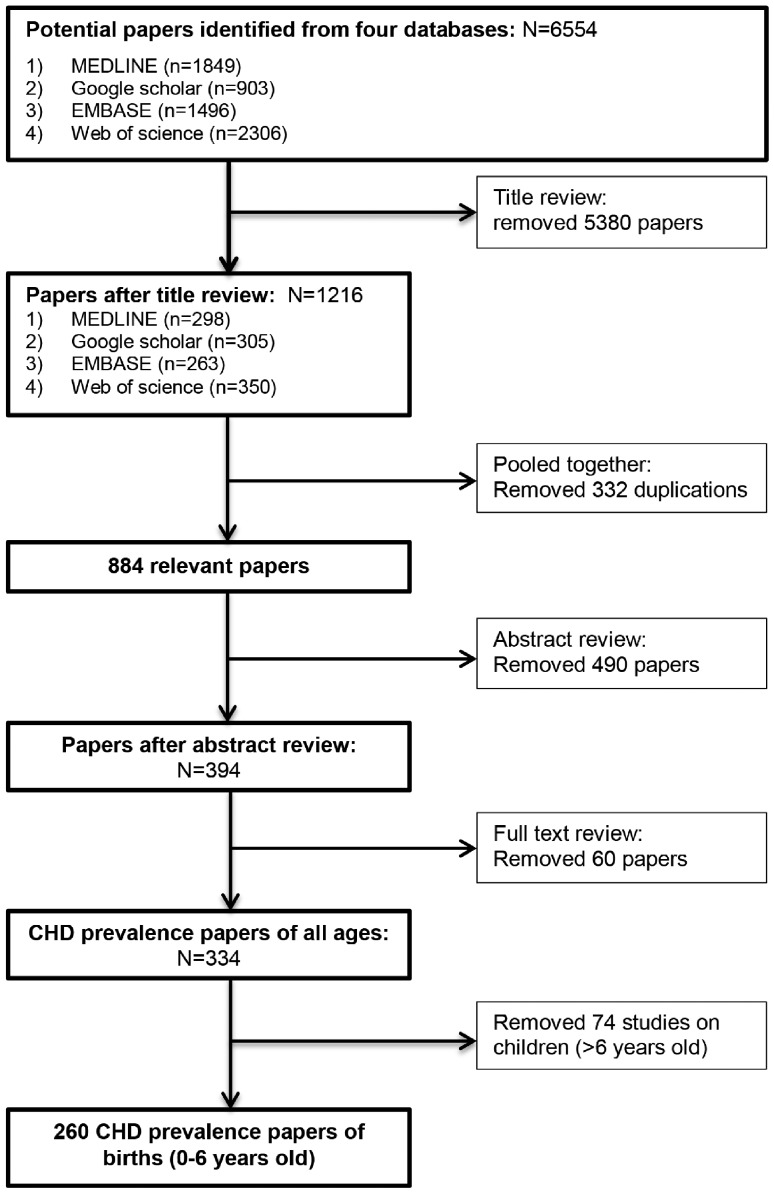
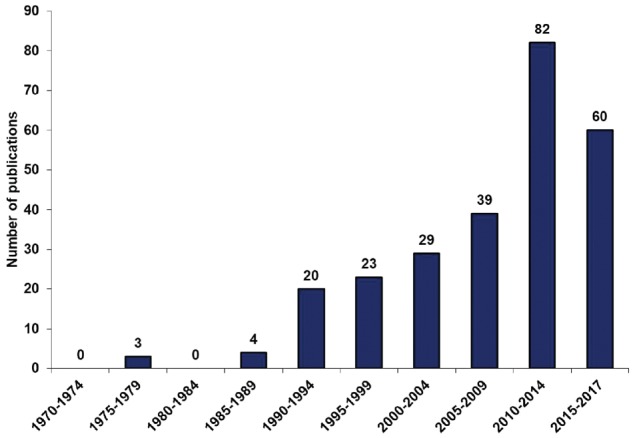
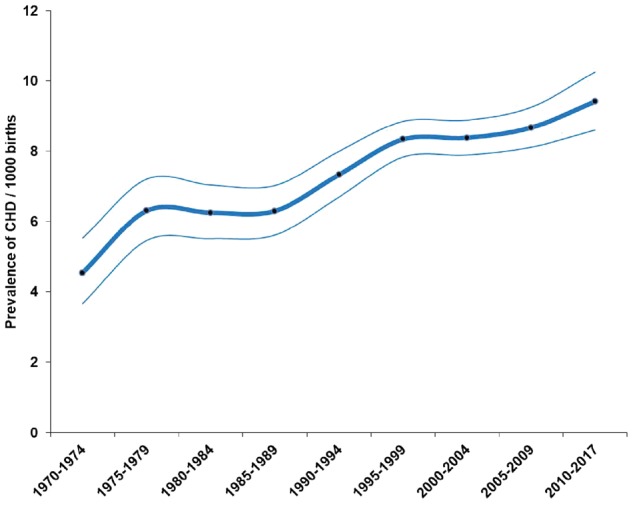
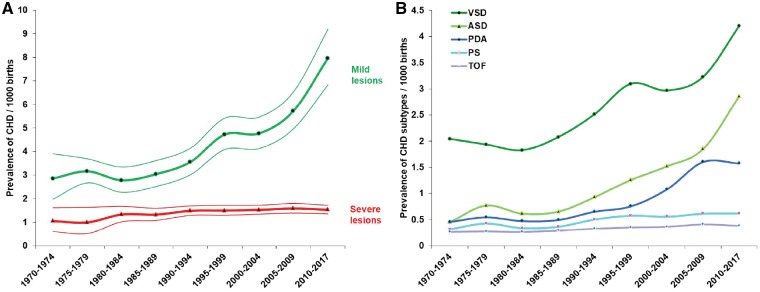
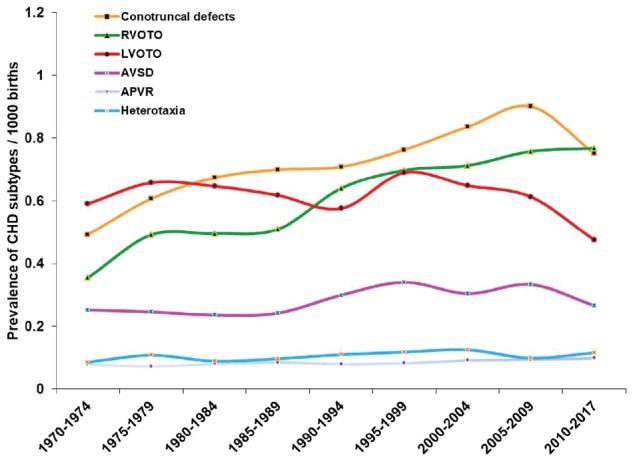
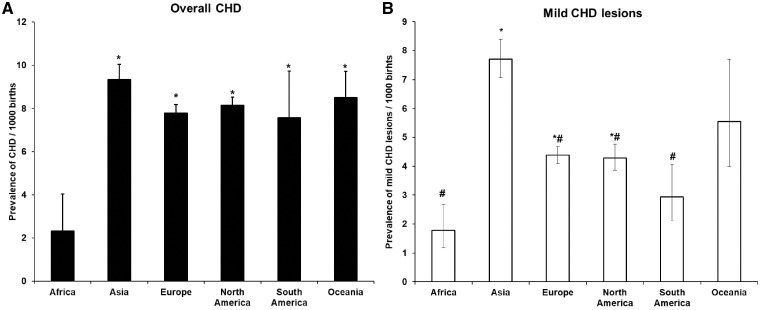
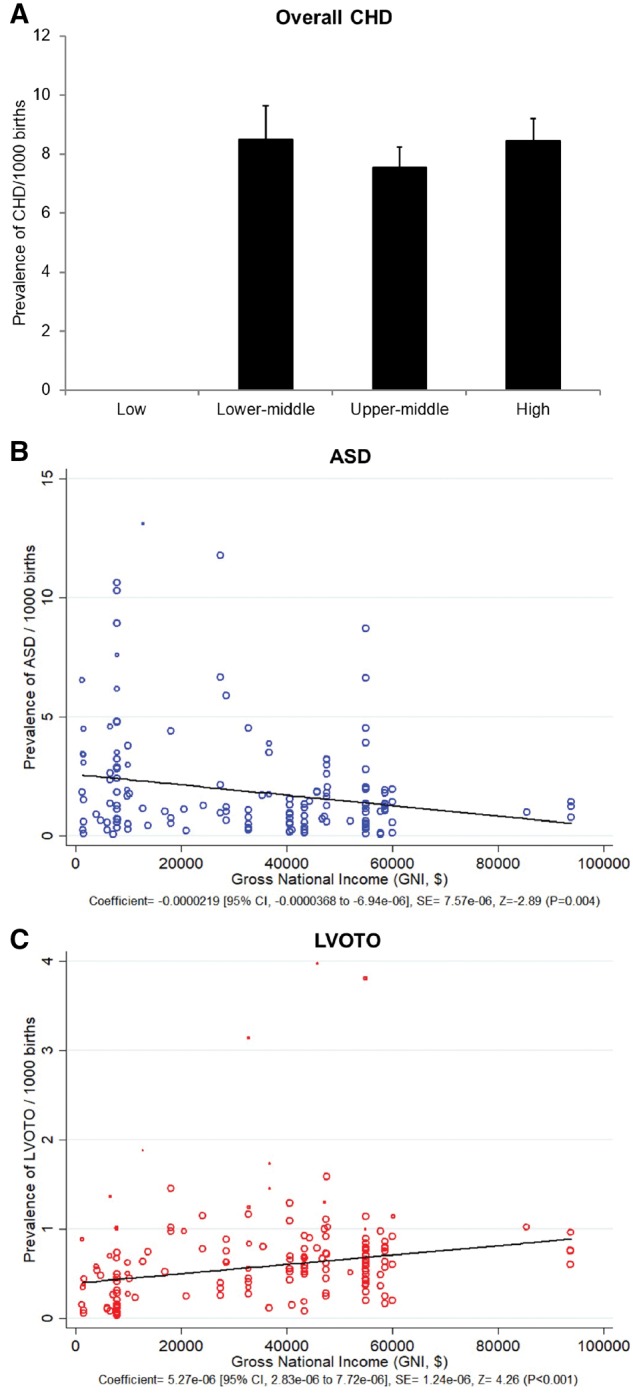
BACKGROUND: Globally, access to healthcare and diagnostic technologies are known to substantially impact the reported birth prevalence of congenital heart disease (CHD). Previous studies have shown marked heterogeneity between different regions, with a suggestion that CHD prevalence is rising globally, but the degree to which this reflects differences due to environmental or genetic risk factors, as opposed to improved detection, is uncertain. We performed an updated systematic review to address these issues. METHODS: Studies reporting the birth prevalence of CHD between the years 1970-2017 were identified from searches of PubMed, EMBASE, Web of Science and Google Scholar. Data on the prevalence of total CHD and 27 anatomical subtypes of CHD were collected. Data were combined using random-effect models. Subgroup and meta-regression analyses were conducted, focused on geographical regions and levels of national income. RESULTS: Two hundred and sixty studies met the inclusion criteria, encompassing 130 758 851 live births. The birth prevalence of CHD from 1970-2017 progressively increased to a maximum in the period 2010-17 of 9.410/1000 [95% CI (confidence interval) 8.602-10.253]. This represented a significant increase over the fifteen prior years (P = 0.031). The change in prevalence of mild CHD lesions (ventricular septal defect, atrial septal defect and patent ductus arteriosus) together explained 93.4% of the increased overall prevalence, consistent with a major role of improved postnatal detection of less severe lesions. In contrast the prevalence of lesions grouped together as left ventricular outflow tract obstruction (which includes hypoplastic left heart syndrome) decreased from 0.689/1000 (95% CI 0.607-0.776) in 1995-99, to 0.475/1000 (95% CI 0.392-0.565; P = 0.004) in 2010-17, which would be consistent with improved prenatal detection and consequent termination of pregnancy when these very severe lesions are discovered. There was marked heterogeneity among geographical regions, with Africa reporting the lowest prevalence [2.315/1000 (95% CI 0.429-5.696)] and Asia the highest [9.342/1000 (95% CI 8.072-10.704)]. CONCLUSIONS: The reported prevalence of CHD globally continues to increase, with evidence of severe unmet diagnostic need in Africa. The recent prevalence of CHD in Asia for the first time appears higher than in Europe and America, where disease ascertainment is likely to be near-complete, suggesting higher genetic or environmental susceptibility to CHD among Asian people.
Overview
The claims and statistics of this paper haven’t been checked yet.
Free: it reads the open-access text and checks the first 5 claims that cite a source we can check. Create a free account to check every claim.
Integrity signals
Registry
Cites
Statistics
Figures
Verification
Claims the paper makes
The claims and statistics of this paper haven’t been checked yet.
Free: it reads the open-access text and checks the first 5 claims that cite a source we can check. Create a free account to check every claim.
Claims other papers make about this one
Each is checked against this paper’s own text: does it say what the citing paper says it does?
The cited source doesn’t support the claim as written.
In the citing paper
“In a subgroup analysis based on the geographic region, a surprisingly high prevalence was reported across all regions of Sub-Saharan Africa.”
From Pooled prevalence and subgroup variations of Tetralogy of Fallot among children and adolescents with congenital heart defect in Sub-Saharan Africa: A systematic review and meta-analysis (2025) · cites this paper as [10]
Checked by a reasoning model — may be wrong.
Experimental — accuracy not yet measuredThe source backs part of the claim, not all of it — or backs it for a different population, condition or comparison.
In the citing paper
“Globally, it accounts for 3% to 5% of all CHD cases, with an estimated incidence of 2.8 to 3.4 per 10,000 live births [2, 10].”
From Pooled prevalence and subgroup variations of Tetralogy of Fallot among children and adolescents with congenital heart defect in Sub-Saharan Africa: A systematic review and meta-analysis (2025) · cites this paper as [10]
Experimental — accuracy not yet measuredThe source backs part of the claim, not all of it — or backs it for a different population, condition or comparison.
In the citing paper
“The prevalence of Tetralogy of Fallot observed was found considerably higher compared to global estimate and reports of developed countries.”
From Pooled prevalence and subgroup variations of Tetralogy of Fallot among children and adolescents with congenital heart defect in Sub-Saharan Africa: A systematic review and meta-analysis (2025) · cites this paper as [10]
Experimental — accuracy not yet measured
Self-check
Percentages, sums and reported differences re-computed from the paper’s own numbers.
The self-check needs the paper’s full text.
Citations
Cites
Cochrane Handbook for Systematic Reviews of Interventions: Cochrane Book Series
(2008) · doi:10.1002/9780470712184 · Cited by 25,048
The incidence of congenital heart disease.
Hoffman, J. I. E., & Kaplan, S. (2002) · Journal of the American College of Cardiology · doi:10.1016/s0735-1097(02)01886-7 · Cited by 6,099
Birth prevalence of congenital heart disease worldwide
van der Linde, D., Konings, E. E. M., Slager, M. A., Witsenburg, M., Helbing, W. A., Takkenberg, J. J. M., & Roos-Hesselink, J. W. (2011) · Journal of the American College of Cardiology · doi:10.1016/j.jacc.2011.08.025 · Cited by 3,452 · cited 6×
“A systematic review of global prevalence data since 1930 was conducted by van der Linde et al.1 in 2010, suggesting an increase in CHD prevalence from the 1930s until 1995, with stabilization between the years 1995–2009.”
BackgroundMethodInfluentialLuchini, C., Stubbs, B., Solmi, M., & Veronese, N. (2017) · World Journal of Meta-Analysis · doi:10.13105/wjma.v5.i4.80 · Cited by 977
Genetics and Genomics of Congenital Heart Disease
Zaidi, S., & Brueckner, M. (2017) · Circulation Research · doi:10.1161/circresaha.116.309140 · Cited by 565 · cited 1×
“It is known that genetic copy number variants and de novo single-nucleotide variants may account for up to 20% of CHD accompanied by extracardiac malformations and/or intellectual impairment.(21) We were unable to stratify participants in the individual studies based on these additional diagnoses.”
BackgroundDu, Y., Xu, X., Chu, M., Guo, Y., & Wang, J. (2016) · PubMed · doi:10.3978/j.issn.2072-1439.2015.11.37 · Cited by 525
Seeking causes: Classifying and evaluating congenital heart defects in etiologic studies
Botto, L. D., Lin, A. E., Riehle‐Colarusso, T., Malik, S., & Correa, A. (2007) · Birth Defects Research Part A: Clinical and Molecular Teratology · doi:10.1002/bdra.20403 · Cited by 469 · cited 2×
“In the principal analyses, CHD was classified into seven phenotypic categories, following the approach of Botto et al.(7) which groups together lesions on the basis of their anatomical/developmental similarity (Supplementary Table 2, available as Supplementary data at IJE online).”
MethodMoller, A.-B., Petzold, M., Chou, D., & Say, L. (2017) · The Lancet Global Health · doi:10.1016/s2214-109x(17)30325-x · Cited by 377
Ambient Air Pollution and Risk of Congenital Anomalies: A Systematic Review and Meta-analysis
Vrijheid, M., Martinez, D., Manzanares, S., Dadvand, P., Schembari, A., Rankin, J., & Nieuwenhuijsen, M. (2011) · Environmental Health Perspectives · doi:10.1289/ehp.1002946 · Cited by 305
Congenital heart disease: current knowledge about causes and inheritance
Blue, G. M., Kirk, E. P., Sholler, G. F., Harvey, R. P., & Winlaw, D. S. (2012) · Medical Journal of Australia · doi:10.5694/mja12.10811 · Cited by 241 · cited 3×
“The studies included in the meta-analysis showed high heterogeneity, as expected, given the unknown aetiological factors for around 80% of CHDs.2 Potentially, hospitalbased studies could have provided upwardly biased estimates of prevalence compared to national registries, both of which were included in the meta-analy…”
BackgroundResultInfluential
Research works printed but not linked: 1
- United Nations. World Economic Situation and Prospects. New York: United Nations, UN, 2014.
Cited by
Items 201–300 of 1,000
NOX2 Is Critical to Endocardial to Mesenchymal Transition and Heart Development
Moazzen, H., Wu, Y., Engineer, A., Lu, X., Aulakh, S., & Feng, Q. (2020) · Oxidative Medicine and Cellular Longevity · doi:10.1155/2020/1679045 · Cited by 17
“Congenital heart defects (CHDs) are birth defects in infants affecting about 1% of live births [1, 2].”
BackgroundDinarti, L. K., Murni, I. K., Anggrahini, D. W., Dewanto, V. C., Pritazahra, A., Hadwiono, M. R., Fajarwati, P., & Hartopo, A. B. (2020) · Cardiology in the Young · doi:10.1017/s1047951120003881 · Cited by 16
“17 Most CHD involves septal defects, which are acyanotic type CHD. 15 The fatal and non-fatal burdens of CHD are serious concerns in infants less than 1 year, while the CHD in adulthood is associated with disability burden.”
BackgroundYang, G., Deng, X., Xiao, J., Huang, P., Zhang, K., & Li, Y. (2021) · Medicine · doi:10.1097/md.0000000000024899 · Cited by 18
Yan, F., Liu, H., Zhang, H., Yi, L., Wu, Y., Deng, C., Qiu, Y., Ma, X., Li, Q., Yang, F., et al. (2021) · Environmental Research · doi:10.1016/j.envres.2021.111472 · Cited by 16
Trends in the Prenatal Detection of Major Congenital Heart Disease in Alberta From 2008–2018
Kaur, A., Hornberger, L. K., Fruitman, D. S., Ngwezi, D. P., Chandra, S., & Eckersley, L. (2022) · Journal of Obstetrics and Gynaecology Canada · doi:10.1016/j.jogc.2022.03.020 · Cited by 19
Lee, J. S., Jung, J., Choi, J.-U., Seo, W., & Shin, H. J. (2022) · Yonsei Medical Journal · doi:10.3349/ymj.2022.0111 · Cited by 19
“2,3 Moreover, the survival rate of patients with CHD has improved dramatically, and currently, more than 90% of patients can survive to adulthood.”
Chen, X., Lou, H., Chen, L., Muhuza, M. P. U., Chen, D., & Zhang, X. (2022) · Frontiers in Public Health · doi:10.3389/fpubh.2022.1008028 · Cited by 18
Kosiorek, A., Donofrio, M. T., Zurakowski, D., Reitz, J. G., Tague, L., Murnick, J. G., Axt-Fliedner, R., Limperopoulos, C., Yerebakan, C., & Carpenter, J. L. (2021) · Pediatric Cardiology · doi:10.1007/s00246-021-02693-z · Cited by 17
Liastuti, L. D., & Nursakina, Y. (2025) · Frontiers in Cardiovascular Medicine · doi:10.3389/fcvm.2025.1473544 · Cited by 22
Pulmonary Manifestations of Congenital Heart Disease in Children
Johnson, B. N., Fierro, J. L., & Panitch, H. B. (2020) · Pediatric Clinics of North America · doi:10.1016/j.pcl.2020.09.001 · Cited by 15
Narrative review of Ebstein’s anomaly beyond childhood: Imaging, surgery, and future perspectives
Neumann, S., Rüffer, A., Sachweh, J. S., Biermann, D., Herrmann, J., Jerosch‐Herold, M., Hazekamp, M. G., Sinning, C., Zengin, E., Blankenberg, S., et al. (2021) · Cardiovascular Diagnosis and Therapy · doi:10.21037/cdt-20-771 · Cited by 18
“5% of all congenital heart diseases (CHD) with a prevalence of approximately 1 in 20,000 (1-3).”
BackgroundHigh-risk genes involved in common septal defects of congenital heart disease
Chaithra, S. G., Agarwala, S., & Ramachandra, N. B. (2022) · Gene · doi:10.1016/j.gene.2022.146745 · Cited by 16
Ma, J., Gu, Y., Liu, J., Song, J., Zhou, T., Jiang, M., Wen, Y., Guo, X., Zhou, Z., Sha, J., et al. (2022) · Cellular and Molecular Life Sciences · doi:10.1007/s00018-022-04669-5 · Cited by 15
“Congenital heart disease (CHD) is the most common birth defect worldwide and a main cause of perinatal and infant mortality which affect 7–9 per 1000 newborns depending on the population, methods of diagnosis, and severity of the disease [1, 2].”
BackgroundRuan, X., Ou, J., Chen, Y., Diao, J., Huang, P., Song, X., Wei, J., Sun, M., Shi, H., Li, L., et al. (2024) · Frontiers in Pediatrics · doi:10.3389/fped.2024.1167460 · Cited by 20
Identifying pediatric heart murmurs and distinguishing innocent from pathologic using deep learning
Zhou, G. W., Chien, C., Chen, J., Luan, L., Chen, Y., Carroll, S. J., Dayton, J. D., Thanjan, M. T., Bayle, K., & Flynn, P. (2024) · Artificial Intelligence in Medicine · doi:10.1016/j.artmed.2024.102867 · Cited by 18
Andrade, C. (2020) · The Journal of Clinical Psychiatry · doi:10.4088/jcp.20f13472 · Cited by 16
Fazekas‐Pongor, V., Csáky‐Szunyogh, M., Fekete, M., Mészáros, Á., Cseh, K., & Pénzes, M. (2020) · Congenital Anomalies · doi:10.1111/cga.12401 · Cited by 16
“Congenital heart diseases (CHDs) are the most common types of congenital malformations, and their global occurrence has been increasing for the past years.(1) The live birth prevalence of CHDs ranges from 4 to 12 cases per 1000 live births depending on the geographic location.”
BackgroundFoote, H. P., Hornik, C. P. V., Hill, K. D., Rotta, A. T., Chamberlain, R. C., & Thompson, E. J. (2021) · Cardiology in the Young · doi:10.1017/s1047951121001451 · Cited by 15
Incidence and risk factors of congenital heart disease in Qingdao: a prospective cohort study
Jin, X., Ni, W., Wang, G., Wu, Q., Zhang, J., Li, G., Jiao, N., Chen, W., Liu, Q., Gao, L., et al. (2021) · BMC Public Health · doi:10.1186/s12889-021-11034-x · Cited by 17
“An updated systematic review and meta-analysis of 260 studies revealed that between 1970 and 2017, the prevalence of CHD globally increased by 10% every 5 years [4].”
MethodEpidemiological Aspects, Prenatal Screening and Diagnosis of Congenital Heart Defects in Beijing
Zhang, Y., Zhang, W., Xu, H.-Y., & Liu, K. (2021) · Frontiers in Cardiovascular Medicine · doi:10.3389/fcvm.2021.777899 · Cited by 15
“2 per 1,000 births from 1970 to 2017 (1).”
The top-100 most cited articles of biomarkers in congenital heart disease: a bibliometric analysis
Yi, K., Xu, J.-G., Yang, K.-L., Zhang, X., Ma, L., You, T., & Tian, J.-H. (2022) · Annals of Palliative Medicine · doi:10.21037/apm-21-2422 · Cited by 16
“4 cases per 1,000 live births over the past 10 years (1,2).”
BackgroundNAD + deficiency in human congenital malformations and miscarriage: A new model of pleiotropy
Mark, P. R. (2022) · American Journal of Medical Genetics Part A · doi:10.1002/ajmg.a.62764 · Cited by 19
Wang, H., Xiao, F., Qian, Y., Wu, B., Dong, X., Lu, Y., Cheng, G., Wang, L., Yan, K., Yang, L., et al. (2022) · Journal of Medical Genetics · doi:10.1136/jmedgenet-2021-108354 · Cited by 15
Shang, L., Wang, K., Liu, D., Qin, S., Huang, J., Zhao, Y., & Pang, Y. (2020) · Experimental and Therapeutic Medicine · doi:10.3892/etm.2020.8589 · Cited by 15
Lu, Y., Fang, Q., Ming Xin, Q. I., Li, X., Zhang, X., Lin, Y., Xiang, Y., Fu, Q., & Wang, B. (2023) · Communications Biology · doi:10.1038/s42003-023-04565-z · Cited by 14
van Vliet, J. T., Majani, N. G., Chillo, P., & Slieker, M. G. (2023) · Children · doi:10.3390/children11010047 · Cited by 18
“One in four newborns will have a CHD labelled as critical [1–5].”
BackgroundLing, S., Yan, L., Mao, R., Li, J., Xi, H., Wang, F., Li, X., & He, M. (2024) · IEEE Journal of Biomedical and Health Informatics · doi:10.1109/jbhi.2024.3390688 · Cited by 14
“C ONGENITAL heart disease (CHD) is the most common birth defect and the leading cause of infant mortality, affecting about 2.5 million newborns worldwide each year [1], [2], [3].”
BackgroundInfluentialGosbell, S. E., Ayer, J. G., Lubans, D. R., Coombes, J. S., Maiorana, A., Morris, N. R., Tran, D., & Cordina, R. (2024) · CJC Pediatric and Congenital Heart Disease · doi:10.1016/j.cjcpc.2024.05.002 · Cited by 15
Liu, Y., Zhang, H., Li, J., Liang, C., Zhao, Y., Chen, F., Wang, D., & Pei, L. (2020) · Scientific Reports · doi:10.1038/s41598-020-69788-0 · Cited by 15
Self-citationAyerbe, V. M. C., Morales, M. L. V., Latorre-Rojas, C. J., & Arango-Cortes, M. L. (2020) · World Journal for Pediatric and Congenital Heart Surgery · doi:10.1177/2150135120923618 · Cited by 14
“15 of 1,000 through the period 2001 to 2014.(2,3) This report describes the initial experience of the implementation of virtual reality (VR) in the surgical planning for a complex congenital heart lesion at the Shaio Clinical Foundation.”
BackgroundVedel, C., Rode, L., Jørgensen, F. S., Petersen, O. B., Sundberg, K., Tabor, A., & Ekelund, C. K. (2020) · Prenatal Diagnosis · doi:10.1002/pd.5853 · Cited by 14
“Due to better equipment and well trained and experienced sonographers and doctors, we now detect more isolated VSDs in low-risk women.(3) As a result, we need updated data regarding the risk for chromosomal abnormalities when counseling these women.”
BackgroundSanayeh, M., Nourian, M., Tajalli, S., Fomani, F. K., Heidari, A. B., & Nasiri, M. (2021) · PubMed Central · doi:10.30476/ijcbnm.2021.89691.1630 · Cited by 23
Downing, K. F., Oster, M. E., Olivari, B. S., & Farr, S. L. (2022) · International Journal of Cardiology · doi:10.1016/j.ijcard.2022.04.019 · Cited by 16
Lu, E., Wu, L., Chen, B., Xu, S., Fu, Z., Wu, Y., Wu, Y., & Gu, H. (2023) · Journal of Cardiovascular Development and Disease · doi:10.3390/jcdd10020078 · Cited by 17
Kang, L., Guo, Z.-R., Shang, W., Cao, G., Zhang, Y., Wang, Q., Shen, H., Liang, W., & Liu, M. (2024) · World Journal of Pediatrics · doi:10.1007/s12519-023-00786-8 · Cited by 14
“Noteworthily, we found that congenital heart defects were the most prevalent type of birth defect, similar to both G S ( 2022 ) 4312 , w h i c h i s p e r m itt e d t o b e u s e d pub li c l y domestic [21] and foreign [42] studies.”
Chang, L., Chiu, S., Wang, C.-C., Weng, W., & Chang, H. (2019) · European Journal of Cardiovascular Nursing · doi:10.1177/1474515119881871 · Cited by 20
Congenital heart defects and copy number variants associated with neurodevelopmental impairment
Findley, T. O., Crain, A. K., Mahajan, S., Deniwar, A., Davis, J., Zavala, A. S., Corno, A. F., & Rodriguez‐Buritica, D. (2021) · American Journal of Medical Genetics Part A · doi:10.1002/ajmg.a.62484 · Cited by 15
Ye, F., Lu, X., van Neck, R., Jones, D. L., & Feng, Q. (2022) · Life Sciences · doi:10.1016/j.lfs.2022.121308 · Cited by 13
“Overall, between 1970 and 2017, the prevalence of CHDs globally increased by 10 % [1].”
BackgroundDerridj, N., Ghanchi, A., Bonnet, D., Adnot, P., Rahshenas, M., Salomon, L. J., Cohen, J. F., & Khoshnood, B. (2023) · Journal of Cardiovascular Development and Disease · doi:10.3390/jcdd10020047 · Cited by 16
“The reported prevalence of congenital heart defects (CHDs) worldwide continues to increase and is currently estimated in 9.5/1000 live births [1].”
BackgroundInfluentialPhysical Activity Promotion Among Individuals With Tetralogy of Fallot
Buchanan, M., Spence, C. M., Keir, M., & Khoury, M. (2023) · CJC Pediatric and Congenital Heart Disease · doi:10.1016/j.cjcpc.2023.08.002 · Cited by 8
Maternal Gestational Diabetes Mellitus and Congenital Heart Disease in Offspring: A Meta-Analysis
Liu, Y., Yue, L., & Chang, L. (2024) · Hormone and Metabolic Research · doi:10.1055/a-2238-1710 · Cited by 19
“The reported incidence of CHD in neonates ranges from 2 to 10 per 1000 live births, im - pacting approximately 1.35 million infants worldwide each year [3, 4].”
BackgroundInfluentialSelf-citationLu, Y., Tan, G., Pu, B., Wang, H., Liang, B., Li, K., & Rajapakse, J. C. (2024) · IEEE Journal of Biomedical and Health Informatics · doi:10.1109/jbhi.2024.3426068 · Cited by 16
“F ETAL congenital heart disease (CHD) is one of the most common birth defects, which may have no significant symptoms during fetal growth but leads to significant morbidity and mortality after birth, affecting about 0.2%-0.8% of the total population [1], [2], [3].”
BackgroundInfluentialHuisenga, D. C., Bergen, A. H. V., Sweeney, J. K., Wu, Y., & Hadders‐Algra, M. (2020) · Early Human Development · doi:10.1016/j.earlhumdev.2020.105167 · Cited by 14
Khoshhal, S., Albasri, A. M., Morsy, M. F., & Alnajjar, A. A. (2020) · Saudi Medical Journal · doi:10.15537/smj.2020.9.25275 · Cited by 13
Adult patients with congenital heart disease in the intensive care unit
Ramlakhan, K. P., van der Bie, M., den Uil, C. A., Dubois, E. A., & Roos‐Hesselink, J. W. (2022) · Heart · doi:10.1136/heartjnl-2021-320676 · Cited by 13
Minimal-Access Atrial Septal Defect (ASD) Closure
Hardman, G., & Zacharias, J. (2023) · Journal of Cardiovascular Development and Disease · doi:10.3390/jcdd10050206 · Cited by 15
“The prevalence of CHD worldwide is approximately 9 per 1000 newborns [1], and while severe congenital heart defects are declining in many developed nations, globally, overall prevalence is increasing.”
BackgroundMansoorshahi, S., Yetman, A. T., Bissell, M. M., Kim, Y. Y., Michelena, H. I., Backer, J. F. A. D., Mosquera, L. M., Hui, D. S., Caffarelli, A. D., Andreassi, M. G., et al. (2024) · The American Journal of Human Genetics · doi:10.1016/j.ajhg.2024.08.001 · Cited by 17
Right ventricular strain in repaired Tetralogy of Fallot with regards to pulmonary valve replacement
Monti, C. B., Secchi, F., Capra, D., Guarnieri, G., Lastella, G., Barbaro, U., Carminati, M., & Sardanelli, F. (2020) · European Journal of Radiology · doi:10.1016/j.ejrad.2020.109235 · Cited by 13
Investigating the Feasibility of Virtual Reality (VR) for Teaching Cardiac Morphology
Pajaziti, E., Schievano, S., Sauvage, E., Cook, A. C., & Capelli, C. (2021) · Electronics · doi:10.3390/electronics10161889 · Cited by 13
“Meanwhile, the burden of CHD continues to increase [1], likely leading to more clinicians requiring specialist training in this discipline.”
BackgroundYalçın, S. S., Dönmez, Y. N., Aypar, E., & Yalçın, S. (2020) · Journal of Trace Elements in Medicine and Biology · doi:10.1016/j.jtemb.2020.126662 · Cited by 13
Tetralogy of Fallot in Low- and Middle-Income Countries
Dib, N., Chauvette, V., Diop, M. S., Bouhout, I., Hadid, M., Vô, C., Khairy, P., & Poirier, N. (2024) · CJC Pediatric and Congenital Heart Disease · doi:10.1016/j.cjcpc.2023.12.002 · Cited by 19
Deep sequencing unveils altered cardiac miRNome in congenital heart disease
Ramachandran, V., Bhagavatheeswaran, S., Shanmugam, S., Vasudevan, M., Ragunathan, M., Cherian, K. M., Munirajan, A. K., Sudesh, R., & Balakrishnan, A. (2022) · Molecular Genetics and Genomics · doi:10.1007/s00438-022-01908-z · Cited by 13
“Among the CHD subtypes, Atrial Septal Defect (ASD), Ventricular Septal Defect (VSD), and Tetralogy of Fallot (TOF) occur most frequently and exhibited a higher birth prevalence in the period of 1970 to 2017 owing to genetic and environmental susceptibility, raising the burden of CHD globally (Liu et al. 2019).”
Backgroundde Hosson, M., Groote, K. D., Hecke, A. V., Wolf, D. D., Vandekerckhove, K., Mosquera, L. M., Panzer, J., Logghe, K., Mels, S., Demulier, L., et al. (2023) · Patient Education and Counseling · doi:10.1016/j.pec.2023.108028 · Cited by 14
Gomersall, J. S., Moore, V., Fernandez, R. C., Giles, L. C., Grzeskowiak, L. E., Davies, M. J., & Rumbold, A. R. (2024) · BMJ Open · doi:10.1136/bmjopen-2023-082961 · Cited by 17
“79 Notably, the highest increase in CHDs has occurred in the Asia region, 1 which also has had high rates of increase in hyperglycaemia in pregnancy.”
BackgroundEsbensen, A. J., Schworer, E. K., & Hartley, S. L. (2024) · Contemporary clinical neuroscience · doi:10.1007/978-3-031-66932-3_13 · Cited by 15
Risk of stroke in patients with congenital heart disease: a systematic review and meta-analysis
Odat, R. M., Idrees, M., Jain, H., Alshwayyat, S., Hussain, H. A. H., Khalefa, B. B., Aldamen, A. O., Yaseen, A. R. K. B., Alrabadi, B., Tamimi, M. A., et al. (2024) · BMC Neurology · doi:10.1186/s12883-024-03967-8 · Cited by 15
Fedchenko, M., Giang, K. W., Snygg‐Martin, U., Dellborg, M., & Mandalenakis, Z. (2025) · International Journal of Cardiology · doi:10.1016/j.ijcard.2025.133081 · Cited by 16
Hsieh, Y.-H., Liu, H.-K., Wu, J., Yan, T.-Y., Huang, Y., Guo, M., & Yang, M. (2025) · Scientific Reports · doi:10.1038/s41598-025-04746-2 · Cited by 15
Congenital Heart Diseases: Recent Insights into Epigenetic Mechanisms
Rodríguez-Pérez, J. M., Ortega‐Zhindón, D. B., Villamil-Castañeda, C., Lara-Ortiz, J. S., Borgonio‐Cuadra, V. M., Cervantes-Salazar, J. L., Calderón-Colmenero, J. E., Escalante-Ruiz, Z. N., Retama-Méndez, E., Hernández, Y. C. G., et al. (2025) · Cells · doi:10.3390/cells14110820 · Cited by 13
“Additionally, it was determined that cell differentiation depends on the activity or inactivity of certain genes [4].”
InfluentialJi, H., Liang, H., Yu, Y., Wang, Z., Yuan, W., Qian, X., Mikkelsen, E. M., Laursen, A. S. D., Fang, G., Huang, G., et al. (2021) · JAMA Network Open · doi:10.1001/jamanetworkopen.2021.33805 · Cited by 16
Fernandes, P. S., Magalhães, L. R., Pezzini, T. R., Santos, E. F. D. S., & Calderon, M. G. (2022) · World Journal of Pediatrics · doi:10.1007/s12519-022-00543-3 · Cited by 12
“However, there are still uncertainties regarding the risk factors for 70% to 80% of the remaining cases [3].”
BackgroundResultInfluentialFotaki, A., Fuin, N., Nordio, G., Velasco, C., Qi, H., Emmanuel, Y., Pushparajah, K., Botnar, R. M., & Prieto, C. (2022) · Magnetic Resonance Imaging · doi:10.1016/j.mri.2022.06.012 · Cited by 13
Majiyagbe, O. O., Akinsete, A. M., Adeyemo, T. A., Salako, A. O., Ekure, E. N., & Okoromah, C. A. N. (2022) · PLoS ONE · doi:10.1371/journal.pone.0263948 · Cited by 16
“Globally, congenital heart defect (CHD) defined as a structural and functional defect of the heart present at birth, affecting the heart or adjacent great blood vessels, detected either at birth or later in life, accounts for nearly a third of all major congenital anomalies with an estimated prevalence of 8-12 per 100…”
Lian, Z., Wu, Z., Gu, R., Wang, Y., Wu, C., Cheng, Z., He, M., Wang, Y., Cheng, Y., & Gu, H. F. (2022) · Cells · doi:10.3390/cells11243946 · Cited by 12
“The total incidence of CHDs in populations worldwide has increased [16].”
BackgroundMaessen, L., Meester, P. D., Troost, E., Gewillig, M. H. M. L., Rega, F., Moons, P., Budts, W., & Bruaene, A. V. D. (2022) · Canadian Journal of Cardiology · doi:10.1016/j.cjca.2022.12.018 · Cited by 13
Update on Transcatheter Device Closure of Congenital Septal Defects
Wood, K. P., Fleming, G. A., & Chamberlain, R. C. (2023) · Current Cardiology Reports · doi:10.1007/s11886-023-01925-3 · Cited by 12
Psychological interventions for depression in adolescent and adult congenital heart disease
Leo, D. G., Islam, U., Lotto, R. R., Lotto, A. A., & Lane, D. A. (2023) · Cochrane Database of Systematic Reviews · doi:10.1002/14651858.cd004372.pub3 · Cited by 14
Impact of congenital heart disease on personality disorders in adulthood
Stapel, B., Winter, L., Heitland, I., Löffler, F., Bauersachs, J. K., Westhoff‐Bleck, M., & Kahl, K. G. (2024) · European Journal of Preventive Cardiology · doi:10.1093/eurjpc/zwae030 · Cited by 13
Monaghan, R. M., Naylor, R. W., Flatman, D., Kasher, P. R., Williams, S. G., & Keavney, B. D. (2024) · Cardiovascular Research · doi:10.1093/cvr/cvae104 · Cited by 14
Self-citationGuía ESC 2020 para el tratamiento de las cardiopatías congénitas del adulto
Baumgartner, H., Backer, J. F. A. D., Babu‐Narayan, S. V., Budts, W., Chessa, M., Diller, G., Iung, B., Kluin, J., Lang, I. M., Meijboom, F. J., et al. (2021) · Revista Española de Cardiología · doi:10.1016/j.recesp.2020.10.023 · Cited by 21
Hou, C., Zheng, J., Liu, W., Xie, L., Sun, X., Zhang, Y., Xu, M., Li, Y., & Xiao, T. (2021) · Scientific Reports · doi:10.1038/s41598-021-93736-1 · Cited by 12
Li, Z.-Q., Zhang, W., Guo, Z., Du, X., & Wang, W. (2023) · Frontiers in Cardiovascular Medicine · doi:10.3389/fcvm.2023.1224872 · Cited by 13
Baruteau, A., Fraisse, A., Butera, G., & Bautista-Rodríguez, C. (2023) · Journal of Cardiovascular Development and Disease · doi:10.3390/jcdd10120476 · Cited by 11
“This is the third most common congenital heart defect (CHD), accounting for 10.2% of CHD, with a prevalence of 1.004 per thousand [12].”
BackgroundInfluentialOn the involvement of the second heart field in congenital heart defects
Guijarro, C., & Kelly, R. G. (2024) · Comptes Rendus Biologies · doi:10.5802/crbiol.151 · Cited by 14
“Atrial and ventricular CHD together account for over 50% of CHD [82].”
Syssoyev, D., Seitkamzin, A., Lim, N., Mussina, K., Poddighe, D., Gaipov, A., & Galiyeva, D. (2024) · Journal of Clinical Medicine of Kazakhstan · doi:10.23950/jcmk/14683 · Cited by 13
Moscatelli, S., Pozza, A., Leo, I., Ielapi, J., Scatteia, A., Piana, S., Cavaliere, A., Reffo, E., & Salvo, G. D. (2024) · Children · doi:10.3390/children11070878 · Cited by 16
“Congenital heart diseases (CHDs) represent the most prevalent group of congenital defects worldwide, exhibiting a prevalence of approximately 0.9% of liveborn children [1,2].”
BackgroundInfluentialInterventions for adult congenital heart disease
Guillén, P. L. C., Flores‐Umanzor, E., Horlick, E. M., Aboulhosn, J., Benson, L. N., Freixa, X., Houde, C., & Rodés‐Cabau, J. (2025) · Nature Reviews Cardiology · doi:10.1038/s41569-025-01118-1 · Cited by 11
“CoA has been reported in 0.29 per 1,000 live births 1 .”
InfluentialAppadurai, V., Nicolae, M., Aboulhosn, J., & Lluri, G. (2021) · International Journal of Cardiology Congenital Heart Disease · doi:10.1016/j.ijcchd.2021.100096 · Cited by 13
Prognostic Value of Preoperative Absolute Lymphocyte Count in Children With Tetralogy of Fallot
Wu, X., Luo, Q., Su, Z., Li, Y., Wang, H., Yuan, S., & Yan, F. (2021) · Journal of the American Heart Association · doi:10.1161/jaha.120.019098 · Cited by 11
“The exclusion criteria were as follows: (1) patients aged >6 years; (2) patients with known risk factors for poor prognosis, including previous palliative operations,3,4,6 complex malformations5,17(doubleoutlet right ventricle, complete endocardial cushion defect, right ventricular outflow tract stenosis, and severe p…”
MethodYe, B., Wu, Y., Chen, J., Yang, Y., Niu, J., Wang, H., Wang, Y., & Cheng, W. (2021) · Translational Pediatrics · doi:10.21037/tp-21-255 · Cited by 13
“41 per 1,000 live births (1,2), is the most common congenital malformation.”
BackgroundHigh-Energy Enteral Nutrition in Infants After Complex Congenital Heart Surgery
Ni, P., Chen, X., Zhang, Y., Zhang, M., Xu, Z., & Luo, W. (2022) · Frontiers in Pediatrics · doi:10.3389/fped.2022.869415 · Cited by 12
Sprong, M. C. A., Huijgen, B. C. H., de Vries, L. S., Talacua, H., van Loon, K., Eijsermans, R. M. J. C., Nijman, J., Breur, J. M. P. J., van Brussel, M., & Slieker, M. G. (2022) · Journal of Clinical Medicine · doi:10.3390/jcm11185464 · Cited by 13
“35 million newborns worldwide every year [1].”
Ratti, C., Greca, A. D., Bertoncelli, D., Rubini, M., & Tchana, B. (2023) · The Italian Journal of Pediatrics/Italian journal of pediatrics · doi:10.1186/s13052-022-01399-z · Cited by 11
Relationships between Physiologic and Neuropsychologic Functioning after Fontan
Wolfe, K. R., Liptzin, D. R., Brigham, D., Kelly, S. L., Rafferty, C., Albertz, M. L., Younoszai, A. K., & Maria, M. V. D. (2020) · The Journal of Pediatrics · doi:10.1016/j.jpeds.2020.07.043 · Cited by 11
Nkx2–5 Regulates the Proliferation and Migration of H9c2 Cells
Wang, H., Liu, Y., Shen, H., Zi, Y.-F., Zhang, Y., Kong, R., Zu, L., Zhibin, C., Zhong, C., Liu, W., et al. (2020) · Medical Science Monitor · doi:10.12659/msm.925388 · Cited by 11
“Congenital heart disease (CHD), which arises from defective cardiac structure, has a global incidence of approximately 1% [1].”
BackgroundSelf-citationPhenotypes of adults with congenital heart disease around the globe: a cluster analysis
Callus, E., Pagliuca, S., Boveri, S., Ambrogi, F., Luyckx, K., Kovacs, A. H., Apers, S., Budts, W., Enomoto, J., Sluman, M. A., et al. (2021) · Health and Quality of Life Outcomes · doi:10.1186/s12955-021-01696-x · Cited by 11
“As noted previously, it is recommended that ACHD patients are provided with psychosocial screening accompanied by face to face clinical interviews [29, 30].”
BackgroundCongenital Rubella: A Salient Cause of Congenital Heart Defects in Infants
Gupta, S., Verma, S., Dash, N., Goel, M., Rawat, A. K., Singh, M. P., Rohit, M. K., & Kumar, P. (2021) · Journal of Tropical Pediatrics · doi:10.1093/tropej/fmab044 · Cited by 14
Williams, S. G., Byrne, D. J. F., & Keavney, B. D. (2021) · Journal of Human Genetics · doi:10.1038/s10038-021-00976-0 · Cited by 11
Self-citationYuan, X., Li, L., Kang, H., Wang, M., Zeng, J., Lei, Y., Li, N., Yu, P., Li, X., & Liu, Z. (2022) · BMC Cardiovascular Disorders · doi:10.1186/s12872-022-02912-2 · Cited by 10
“Previous studies reported that maternal serum [17], urine [18, 19], and amniotic fluid (AF) [20] were used to detect metabolites by [1] H NMR or GC–MS technology.”
BackgroundMethodSelf-citationE-Health: A Game Changer in Fetal and Neonatal Cardiology?
Padovani, P., Singh, Y., Pass, R. H., Vasile, C. M., Nield, L. E., & Baruteau, A. (2023) · Journal of Clinical Medicine · doi:10.3390/jcm12216865 · Cited by 15
“Congenital heart diseases (CHD) affect approximately 1% of births worldwide and remain a major cause of childhood morbidity and mortality, posing significant challenges to healthcare resources [1,2].”
BackgroundUpdate from a cohort study for birth defects in Hunan Province, China, 2010–2020
Zhou, X., Cai, S., Wang, H., Fang, J., Gao, J., Kuang, H., Xie, D., He, J. M., & Wang, A. (2023) · Scientific Reports · doi:10.1038/s41598-023-47741-1 · Cited by 10
“We infer that the main reason for these results is differences in diagnosis and reporting rates 30 , as pregnant women had better access to diagnostic and therapeutic services in high-income countries than in low-and middle-income countries.”
ResultComorbidities in congenital heart disease: different patterns in childhood and adulthood
Ding, Z., Zhu, J., Ding, Y., & Zhu, C. (2023) · BMC Cardiovascular Disorders · doi:10.1186/s12872-023-03654-5 · Cited by 10
“A meta-analysis of the global birth prevalence of CHD showed a gradual increase in the global prevalence of births with CHD between 1970–2017, reaching a peak value of 9.410 cases per 1,000 births in 2010–2017 [3].”
BackgroundInfluentialVariants in FOXC1 and FOXC2 identified in patients with conotruncal heart defects
Wei, W., Li, B., Li, F., Sun, K., Jiang, X., & Xu, R. (2024) · Genomics · doi:10.1016/j.ygeno.2024.110840 · Cited by 10
Ambient Air Pollution and Congenital Heart Disease: Updated Evidence and Future Challenges
Gorini, F., & Tonacci, A. (2025) · Antioxidants · doi:10.3390/antiox14010048 · Cited by 16
Congenital Heart Diseases and Neurodevelopmental Disorders
Demonceaux, M., Werner, O., Cadeau, O., Guerra, A. B., Roy, A., Ferchaud‐Roucher, V., & Baruteau, A. (2025) · JACC Basic to Translational Science · doi:10.1016/j.jacbts.2025.01.022 · Cited by 10
Moons, P., Kovacs, A. H., Goossens, E., Luyckx, K., Ladak, L. A., Leye, M. M. C. B. O., Bruaene, A. V. D., Leong, M. C., Kaneva, A., Manso, P. H., et al. (2025) · Heart · doi:10.1136/heartjnl-2024-325296 · Cited by 10
Study of congenital heart defects among neonates in Jos, Nigeria: prevalence and spectrum
Ige, O., Afolanranmi, T., Yilgwan, C. S., Ayatse, F., Nkereuwem, E., Sagay, A. S., Kanki, P., & Bode-Thomas, F. (2021) · Cardiovascular journal of South Africa/Cardiovascular journal of Southern Africa · doi:10.5830/cvja-2020-044 · Cited by 11
“…were found to be more common than cyanotic lesions in our study, with VSD being the most frequent lesion, followed by ASD.5,18 Although the relative distributions of septal defects in this study were much higher than the global prevalence reported by Liu et al.,19 most of the lesions were mild.”
ResultAthar, F., Ehsan, M. T., Farooq, M., Lo, K. B., Cheema, H. A., Ahmad, S., Naveed, A., & Umer, M. (2022) · British Journal of Clinical Pharmacology · doi:10.1111/bcp.15413 · Cited by 10
“410 per 1000 for the period 2010–2017, which is lower than the risk found in our analysis.(49) Samrén et al.”
ResultBolunduț, A. C., Lazea, C., & Mihu, C. M. (2023) · Children · doi:10.3390/children10050812 · Cited by 13
“AF, Atrial fibrillation; ASD, atrial septal defect; AV block, atrioventricular block; AVSD, atrioventricular septal defect; DCM, dilated cardiomyopathy; GOF, gain-of-function; HLHS, hypoplastic left heart syndrome; LOF, lossof-function; PDA, patent ductus arteriosus; TAPVR, total anomalous pulmonary venous return; VSD…”
BackgroundInfluentialZhao, Z., Pan, Z., Wu, C., Tian, J., Qin, J., Zhang, Y., & Jin, X. (2023) · Frontiers in Cardiovascular Medicine · doi:10.3389/fcvm.2023.1144755 · Cited by 10
“57% of all congenital cardiovascular malformations (1).”
Method
Metadata
- Authors
- Liu, Y., Chen, S., Zühlke, L., Black, G. C., Choy, M.-K., Li, N., & Keavney, B. D.
- Affiliations
- University of Manchester (GB)
- Sichuan University (CN)
- Department of Paediatrics, Red Cross War Memorial Children’s Hospital, University of Cape Town, Cape Town, South Africa
- Manchester Academic Health Science Centre (GB)
- Corresponding author
- Keavney, Bernard D
- Venue
- International Journal of Epidemiology
- Publisher
- Oxford University Press (OUP)
- Published
- 2019-02-19
- Volume
- 48
- Issue
- 2
- Pages
- 455-463
- ISSN
- 0300-5771 (ISSN-L)
- 1464-3685
- PMC
- PMC6469300
- OpenAlex
- W2918094628
- Cited by
- 1,436
- References
- 20
- Citations by year
- 2026: 216 · 2025: 233 · 2024: 288 · 2023: 228 · 2022: 197 · 2021: 162 · 2020: 86 · 2019: 22
- FWCI
- 17.04
- Type
- journal article
- Language
- en
- Open access
- hybrid
- doi.org
- Licence
- Locations
- International Journal of Epidemiology (publishedVersion, cc-by)
- Europe PMC (PubMed Central) (publishedVersion, cc-by)
- PubMed Central (publishedVersion, cc-by)
- PubMed (publishedVersion)
- e-space (Manchester Metropolitan University) (acceptedVersion)
- Research Explorer (The University of Manchester) (submittedVersion, cc-by)
- Funders
- The British Heart Foundation
- The University of Manchester-Peking University Health Science Centre Alliance
- China Scholarships Council
- Medical Research Council
- South African Medical Research Council
- Topics
- Health Sciences › Medicine › Cardiology and Cardiovascular Medicine › Congenital Heart Disease Studies
- Life Sciences › Biochemistry, Genetics and Molecular Biology › Molecular Biology › Congenital heart defects research
- Health Sciences › Medicine › Surgery › Congenital Anomalies and Fetal Surgery
- Keywords
- congenital heart disease, birth prevalence, temporal trends, ventricular septal defect, atrial septal defect, patent ductus arteriosus, left ventricular outflow tract obstruction, hypoplastic left heart syndrome, prenatal diagnosis, abortion, postnatal diagnosis, regional variation, national income, Africa, South America, Asia, Europe
- MeSH terms
- Heart Defects, Congenital, Humans, Infant, Newborn, Global Health, Prevalence, Confidence Intervals
About these checks
Registry, retraction, Cites and statistics results are computed, not judged, with one exception: a printed reference that no index lists is read once by a model before it counts as a citation error. Claims are extracted by a model and kept only when their quote appears verbatim in the text; each cited source is then checked, with a model’s help, for whether it says what the claim relies on. Those verdicts can be wrong — read the claim’s quote and the cited source before relying on one.
Statistics and arithmetic are recomputed, not judged.
Confidence bands are shown only for fields calibrated on our annotated test set. None is calibrated yet, so no band is shown.
What counts as a claim ›How we measure confidence ›How we check this ›
Are you an author, or do you see a problem with this page? Request a review
Data sources
Bibliographic data: Semantic Scholar, OpenAlex, Crossref.
Contains information from the Semantic Scholar Academic Graph Datasets, made available under the ODC Attribution License (ODC-BY 1.0).
Semantic Scholar’s data is described in: Kinney, R., et al. (2023). The Semantic Scholar Open Data Platform. arXiv:2301.10140.
