

The DOI matches its Crossref record; 22 of the 24 references it cites were found in a registry or an index; 1 of the 24 sources its claims cite were checked for support.
AlphaFold Protein Structure Database: massively expanding the structural coverage of protein-sequence space with high-accuracy models
Open accessAbstract
The AlphaFold Protein Structure Database (AlphaFold DB, https://alphafold.ebi.ac.uk) is an openly accessible, extensive database of high-accuracy protein-structure predictions. Powered by AlphaFold v2.0 of DeepMind, it has enabled an unprecedented expansion of the structural coverage of the known protein-sequence space. AlphaFold DB provides programmatic access to and interactive visualization of predicted atomic coordinates, per-residue and pairwise model-confidence estimates and predicted aligned errors. The initial release of AlphaFold DB contains over 360,000 predicted structures across 21 model-organism proteomes, which will soon be expanded to cover most of the (over 100 million) representative sequences from the UniRef90 data set.
Overview
AI snapshot
Written from the paper’s full text.
TL;DR
AlphaFold DB is an openly accessible database of high-accuracy protein-structure predictions generated by AlphaFold v2.0, initially containing over 360,000 predicted structures across 21 model-organism proteomes. It provides atomic coordinates, per-residue pLDDT confidence, and pairwise predicted aligned errors through FTP, API, and interactive web pages, with planned expansion to >100 million UniRef90 representative sequences.
Key findings
- The initial release contains over 360,000 predicted structures across 21 model-organism proteomes, including 23,391 human, 55,799 soybean, 43,649 Asian rice, 39,299 maize, 27,434 Arabidopsis, 24,664 zebrafish, 21,615 mouse, and 21,272 rat structures.
- Predictions include atomic coordinates, per-residue confidence pLDDT on a 0–100 scale, and pairwise Predicted Aligned Error (PAE) in Ångströms capped at 31.75 Å; pLDDT bands are ≥90 very high, 90 > pLDDT ≥ 70 confident, 70 > pLDDT ≥ 50 low, and <50 very low.
- Data are available via bulk FTP downloads, a public API keyed on UniProt accessions, and protein-specific web pages with interactive visualization using Mol*; metadata are indexed with Apache Solr.
- Planned expansions aim to exceed 1 million structures, including SwissProt and neglected-disease proteomes, followed by >100 million structures for most UniRef90 representative sequences.
Methods
- Database/resource paper describing AlphaFold DB, created by DeepMind and EMBL-EBI, using AlphaFold v2.0 predictions.
- Initial version predicted most sequences in UniProt reference proteomes for 21 organisms in the 16–2700 amino-acid length range, plus 1400-residue fragments for longer human proteins; sequences with non-standard amino acids were excluded, and multiple isoforms were not provided.
- Data archival includes PDB and mmCIF coordinate files, PAE JSON files, and metadata JSON files; access is through FTP, API, and web pages, with confidence metrics stored in B-factor fields and used for coloring in the 3D viewer.
Limitations
- Stated: the initial release excludes isoforms and sequences with unknown or non-standard amino acids, and predictions are limited to 16–2700 amino acids, with 1400-residue fragments for longer human proteins.
- Stated: PAE is asymmetric and capped at 31.75 Å; high PAE values indicate unreliable relative domain positions/orientations, and pLDDT reflects local confidence rather than global accuracy.
- Evident: this is a database/resource description, not an experimental validation study; initial coverage is limited to 21 proteomes, and the paper does not report new accuracy benchmarks beyond citing AlphaFold/CASP14 and prior human-proteome analyses.
Model-written summary. Check it against the paper before relying on it.
Integrity signals
Registry
Cites
Statistics
Figures
Verification
Claims the paper makes
15 No basis given · 12 Not checked yet · 5 Own interpretation · 2 Own result · 1 Partly supported · accuracy not yet measured
A result the paper reports from its own data — it cites no other source for it, so there is none to check. The quote shows it is in the paper.
In the paper
“The initial release of AlphaFold DB contains over 360,000 predicted structures across 21 model-organism proteomes”
- Also stated in: § IMPLEMENTATION · plain
“The initial version of AlphaFold DB contains over 360 000 predicted structures, corresponding meta-information and confidence metrics.”
- Also stated in: § CONCLUSION AND OUTLOOK · plain
“The first release of AlphaFold DB contains over 360 000 predicted structures from 21 model-organism proteomes.”
§ AlphaFold Protein Structure Database: massively expanding the structural coverage of protein-sequence space with high-accuracy models > Abstract
plain- Asserted: passes — The authors put it forward as true.
- Checkable: passes — It can be checked against evidence.
- Load-bearing: passes — The paper’s conclusions depend on it.
- Based: passes — The paper gives a reason why it holds.
- Also stated in: § IMPLEMENTATION · plain
A result the paper reports from its own data — it cites no other source for it, so there is none to check. The quote shows it is in the paper.
In the paper
“The first release described here covers the human proteome and those of 20 other model organisms (Table 1).”
§ AlphaFold Protein Structure Database: massively expanding the structural coverage of protein-sequence space with high-accuracy models > INTRODUCTION
plain- Asserted: passes — The authors put it forward as true.
- Checkable: passes — It can be checked against evidence.
- Load-bearing: unclear — It is unclear whether the paper’s conclusions depend on it.
- Based: passes — The paper gives a reason why it holds.
The paper states this without a source or data behind it here, so there is nothing to check it against. The quote shows it is in the paper.
In the paper
“Model confidence can vary significantly along a chain, making it essential to analyse the confidence measures before interpreting structural features.”
§ AlphaFold Protein Structure Database: massively expanding the structural coverage of protein-sequence space with high-accuracy models > IMPLEMENTATION > AlphaFold DB web pages
plain- Asserted: passes — The authors put it forward as true.
- Checkable: passes — It can be checked against evidence.
- Load-bearing: unclear — It is unclear whether the paper’s conclusions depend on it.
- Based: passes — The paper gives a reason why it holds.
None of the sources cited for this claim have been checked yet.
In the paper
“However, while the Universal Protein Resource (UniProt) archives almost 220 million unique protein sequences, the Protein Data Bank (PDB) holds only just over 180 000 3D structures for over 55 000 distinct proteins, thus severely limiting the coverage of the sequence space to support biomolecular research globally (5–7).”
§ AlphaFold Protein Structure Database: massively expanding the structural coverage of protein-sequence space with high-accuracy models > INTRODUCTION
What the sources say
- Not checked yetcites [5] Bateman, 2021, UniProt: the universal protein knowledgebase in 2021, Nucleic Acids Res. source
- Not checked yetcites [6] Armstrong, 2019, PDBe: improved findability of macromolecular structure data in the PDB, Nucleic Acids Res.
- Not checked yetcites [7] Varadi, 2019, PDBe-KB: a community-driven resource for structural and functional annotations, Nucleic Acids Res.
plain- Asserted: passes — The authors put it forward as true.
- Checkable: passes — It can be checked against evidence.
- Load-bearing: passes — The paper’s conclusions depend on it.
- Based: passes — The paper gives a reason why it holds.
A conclusion the paper draws from its own results — it cites no other source for it, so there is none to check. The quote shows it is in the paper.
In the paper
“Powered by AlphaFold v2.0 of DeepMind, it has enabled an unprecedented expansion of the structural coverage of the known protein-sequence space.”
§ AlphaFold Protein Structure Database: massively expanding the structural coverage of protein-sequence space with high-accuracy models > Abstract
boosteddirect- Asserted: passes — The authors put it forward as true.
- Checkable: passes — It can be checked against evidence.
- Load-bearing: passes — The paper’s conclusions depend on it.
- Based: passes — The paper gives a reason why it holds.
A conclusion the paper draws from its own results — it cites no other source for it, so there is none to check. The quote shows it is in the paper.
In the paper
“The unprecedented accuracy and speed of AlphaFold allowed the creation of an extensive database of structure predictions at a large scale.”
§ AlphaFold Protein Structure Database: massively expanding the structural coverage of protein-sequence space with high-accuracy models > INTRODUCTION
plaindirect- Asserted: passes — The authors put it forward as true.
- Checkable: passes — It can be checked against evidence.
- Load-bearing: passes — The paper’s conclusions depend on it.
- Based: passes — The paper gives a reason why it holds.
In the paper
“In 2020, the organizers of the CASP14 benchmark recognized AlphaFold as a solution to the protein–structure–prediction problem (12).”
§ AlphaFold Protein Structure Database: massively expanding the structural coverage of protein-sequence space with high-accuracy models > INTRODUCTION
What the sources say
- Not checked yetcites [12] Pereira, 2021, High-accuracy protein structure prediction in CASP14, Proteins Struct. Funct. Bioinf. source
plain- Asserted: passes — The authors put it forward as true.
- Checkable: passes — It can be checked against evidence.
- Load-bearing: unclear — It is unclear whether the paper’s conclusions depend on it.
- Based: passes — The paper gives a reason why it holds.
None of the sources cited for this claim have been checked yet.
In the paper
“Although recent advances in the field of electron cryo-microscopy and hybrid and integrative methods (I/HM) for structure determination have accelerated the pace of structure determination, the gap between known protein sequences and experimental protein structures continues to expand (6,8).”
§ AlphaFold Protein Structure Database: massively expanding the structural coverage of protein-sequence space with high-accuracy models > INTRODUCTION
What the sources say
- Not checked yetcites [6] Armstrong, 2019, PDBe: improved findability of macromolecular structure data in the PDB, Nucleic Acids Res.
- Not checked yetcites [8] de Oliveira, 2021, Cryo-EM: the resolution revolution and drug discovery, SLAS Discov. source
plaindirect- Asserted: passes — The authors put it forward as true.
- Checkable: passes — It can be checked against evidence.
- Load-bearing: unclear — It is unclear whether the paper’s conclusions depend on it.
- Based: passes — The paper gives a reason why it holds.
None of the sources cited for this claim have been checked yet.
In the paper
“thus severely limiting the coverage of the sequence space to support biomolecular research globally (5–7).”
§ AlphaFold Protein Structure Database: massively expanding the structural coverage of protein-sequence space with high-accuracy models > INTRODUCTION
What the sources say
- Not checked yetcites [5] Bateman, 2021, UniProt: the universal protein knowledgebase in 2021, Nucleic Acids Res. source
- Not checked yetcites [6] Armstrong, 2019, PDBe: improved findability of macromolecular structure data in the PDB, Nucleic Acids Res.
- Not checked yetcites [7] Varadi, 2019, PDBe-KB: a community-driven resource for structural and functional annotations, Nucleic Acids Res.
boosted- Asserted: passes — The authors put it forward as true.
- Checkable: passes — It can be checked against evidence.
- Load-bearing: passes — The paper’s conclusions depend on it.
- Based: passes — The paper gives a reason why it holds.
None of the sources cited for this claim have been checked yet.
In the paper
“Although recent advances in the field of electron cryo-microscopy and hybrid and integrative methods (I/HM) for structure determination have accelerated the pace of structure determination, the gap between known protein sequences and experimental protein structures continues to expand (6,8).”
§ AlphaFold Protein Structure Database: massively expanding the structural coverage of protein-sequence space with high-accuracy models > INTRODUCTION
What the sources say
- Not checked yetcites [6] Armstrong, 2019, PDBe: improved findability of macromolecular structure data in the PDB, Nucleic Acids Res.
- Not checked yetcites [8] de Oliveira, 2021, Cryo-EM: the resolution revolution and drug discovery, SLAS Discov. source
plaincorrelational- Asserted: passes — The authors put it forward as true.
- Checkable: passes — It can be checked against evidence.
- Load-bearing: passes — The paper’s conclusions depend on it.
- Based: passes — The paper gives a reason why it holds.
- Probably not a substantial claim. 19
- It may state two separate claims as one. 10
The cited sources support only part of this claim — read each source’s verdict below.
In the paper
“As a confidence metric based on lDDT, pLDDT also reflects local confidence in the structure, and should be used, for example, to assess confidence within a single domain.”
§ AlphaFold Protein Structure Database: massively expanding the structural coverage of protein-sequence space with high-accuracy models > IMPLEMENTATION
What the sources say
- Partly supportedcites [14] Mariani, 2013, lDDT: a local superposition-free score for comparing protein structures and models using distance difference tests, Bioinformatics sourceExperimental — accuracy not yet measured
Section 3.3 says per-residue lDDT scores reflect the accuracy of a model’s local atomic environment, including within individual domains. The paper describes lDDT as a comparison with a reference structure; it does not address pLDDT or establish that pLDDT measures predicted local confidence. (LLM, conf=0.85)
plaincorrelational- Asserted: passes — The authors put it forward as true.
- Checkable: passes — It can be checked against evidence.
- Load-bearing: fails — The paper’s conclusions may not depend on it.
- Based: passes — The paper gives a reason why it holds.
Probably not a substantial claim. The paper’s conclusions may not depend on it.
- Partly supported
The paper states this without a source or data behind it here, so there is nothing to check it against. The quote shows it is in the paper.
In the paper
“The AlphaFold Protein Structure Database (AlphaFold DB, https://alphafold.ebi.ac.uk) is an openly accessible, extensive database of high-accuracy protein-structure predictions.”
§ AlphaFold Protein Structure Database: massively expanding the structural coverage of protein-sequence space with high-accuracy models > Abstract
plain- Asserted: passes — The authors put it forward as true.
- Checkable: passes — It can be checked against evidence.
- Load-bearing: passes — The paper’s conclusions depend on it.
- Based: passes — The paper gives a reason why it holds.
It may state two separate claims as one.
The paper states this without a source or data behind it here, so there is nothing to check it against. The quote shows it is in the paper.
In the paper
“The predicted structures contain atomic coordinates and per-residue confidence estimates on a scale from 0 to 100, with higher scores corresponding to higher confidence.”
§ AlphaFold Protein Structure Database: massively expanding the structural coverage of protein-sequence space with high-accuracy models > IMPLEMENTATION
plaincorrelational- Asserted: passes — The authors put it forward as true.
- Checkable: passes — It can be checked against evidence.
- Load-bearing: fails — The paper’s conclusions may not depend on it.
- Based: passes — The paper gives a reason why it holds.
Probably not a substantial claim. The paper’s conclusions may not depend on it. It may state two separate claims as one.
The paper states this without a source or data behind it here, so there is nothing to check it against. The quote shows it is in the paper.
In the paper
“Powered by AlphaFold v2.0 of DeepMind”
§ AlphaFold Protein Structure Database: massively expanding the structural coverage of protein-sequence space with high-accuracy models > Abstract
plaindirect- Asserted: passes — The authors put it forward as true.
- Checkable: passes — It can be checked against evidence.
- Load-bearing: passes — The paper’s conclusions depend on it.
- Based: passes — The paper gives a reason why it holds.
Probably not a substantial claim.
The paper states this without a source or data behind it here, so there is nothing to check it against. The quote shows it is in the paper.
In the paper
“AlphaFold DB provides programmatic access to and interactive visualization of predicted atomic coordinates, per-residue and pairwise model-confidence estimates and predicted aligned errors.”
§ AlphaFold Protein Structure Database: massively expanding the structural coverage of protein-sequence space with high-accuracy models > Abstract
plain- Asserted: passes — The authors put it forward as true.
- Checkable: passes — It can be checked against evidence.
- Load-bearing: fails — The paper’s conclusions may not depend on it.
- Based: passes — The paper gives a reason why it holds.
Probably not a substantial claim. The paper’s conclusions may not depend on it. It may state two separate claims as one.
The paper states this without a source or data behind it here, so there is nothing to check it against. The quote shows it is in the paper.
In the paper
“All the data are publicly accessible through a cloud-based infrastructure.”
§ AlphaFold Protein Structure Database: massively expanding the structural coverage of protein-sequence space with high-accuracy models > IMPLEMENTATION
plain- Asserted: passes — The authors put it forward as true.
- Checkable: passes — It can be checked against evidence.
- Load-bearing: fails — The paper’s conclusions may not depend on it.
- Based: passes — The paper gives a reason why it holds.
Probably not a substantial claim. The paper’s conclusions may not depend on it.
The paper states this without a source or data behind it here, so there is nothing to check it against. The quote shows it is in the paper.
In the paper
“We provide access to all entries through a public API endpoint, keyed on a UniProt accession.”
§ AlphaFold Protein Structure Database: massively expanding the structural coverage of protein-sequence space with high-accuracy models > IMPLEMENTATION > Data access
plain- Asserted: passes — The authors put it forward as true.
- Checkable: passes — It can be checked against evidence.
- Load-bearing: fails — The paper’s conclusions may not depend on it.
- Based: passes — The paper gives a reason why it holds.
Probably not a substantial claim. The paper’s conclusions may not depend on it.
The paper states this without a source or data behind it here, so there is nothing to check it against. The quote shows it is in the paper.
In the paper
“AlphaFold DB archives and provides access to the atomic coordinates in PDB and mmCIF formats, PAEs in JSON format and corresponding metadata in JSON format.”
§ AlphaFold Protein Structure Database: massively expanding the structural coverage of protein-sequence space with high-accuracy models > IMPLEMENTATION > Data archival
plain- Asserted: passes — The authors put it forward as true.
- Checkable: passes — It can be checked against evidence.
- Load-bearing: fails — The paper’s conclusions may not depend on it.
- Based: passes — The paper gives a reason why it holds.
Probably not a substantial claim. The paper’s conclusions may not depend on it. It may state two separate claims as one.
None of the sources cited for this claim have been checked yet.
In the paper
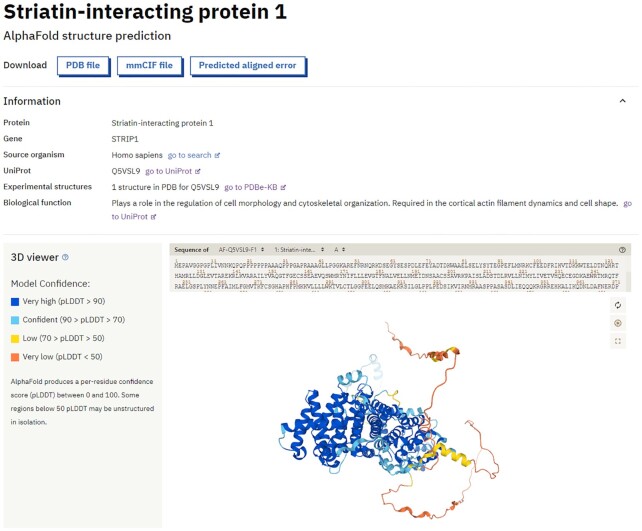
“Each protein has a dedicated structure page that shows basic information (drawn from UniProt (5) and PDBe (6)) and three separate outputs of the AlphaFold model.”
§ AlphaFold Protein Structure Database: massively expanding the structural coverage of protein-sequence space with high-accuracy models > IMPLEMENTATION > AlphaFold DB web pages
What the sources say
- Not checked yetcites [5] Bateman, 2021, UniProt: the universal protein knowledgebase in 2021, Nucleic Acids Res. source
- Not checked yetcites [6] Armstrong, 2019, PDBe: improved findability of macromolecular structure data in the PDB, Nucleic Acids Res.
plain- Asserted: passes — The authors put it forward as true.
- Checkable: passes — It can be checked against evidence.
- Load-bearing: fails — The paper’s conclusions may not depend on it.
- Based: passes — The paper gives a reason why it holds.
Probably not a substantial claim. The paper’s conclusions may not depend on it. It may state two separate claims as one.
The paper states this without a source or data behind it here, so there is nothing to check it against. The quote shows it is in the paper.
In the paper
“The data files in the archive are versioned, and previous snapshots of the data will be available via FTP, but the web pages will always display the latest version.”
§ AlphaFold Protein Structure Database: massively expanding the structural coverage of protein-sequence space with high-accuracy models > IMPLEMENTATION > Data archival
plain- Asserted: passes — The authors put it forward as true.
- Checkable: passes — It can be checked against evidence.
- Load-bearing: fails — The paper’s conclusions may not depend on it.
- Based: passes — The paper gives a reason why it holds.
Probably not a substantial claim. The paper’s conclusions may not depend on it. It may state two separate claims as one.
The paper states this without a source or data behind it here, so there is nothing to check it against. The quote shows it is in the paper.
In the paper
“AlphaFold DB provides graphical access to and interactive visualization of all the predictions and meta-information for the broader scientific community through web pages.”
§ AlphaFold Protein Structure Database: massively expanding the structural coverage of protein-sequence space with high-accuracy models > IMPLEMENTATION > Data access
plain- Asserted: passes — The authors put it forward as true.
- Checkable: passes — It can be checked against evidence.
- Load-bearing: fails — The paper’s conclusions may not depend on it.
- Based: passes — The paper gives a reason why it holds.
Probably not a substantial claim. The paper’s conclusions may not depend on it.
The paper states this without a source or data behind it here, so there is nothing to check it against. The quote shows it is in the paper.
In the paper
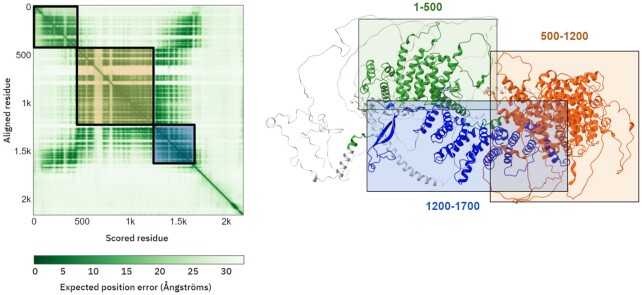
“The third output is a pairwise confidence prediction, which helps to assess the reliability of relative domain positions and orientations as well as the global topology of the protein (Figure 3).”
§ AlphaFold Protein Structure Database: massively expanding the structural coverage of protein-sequence space with high-accuracy models > IMPLEMENTATION > AlphaFold DB web pages
plaindirect- Asserted: passes — The authors put it forward as true.
- Checkable: passes — It can be checked against evidence.
- Load-bearing: fails — The paper’s conclusions may not depend on it.
- Based: passes — The paper gives a reason why it holds.
Probably not a substantial claim. The paper’s conclusions may not depend on it.
The paper states this without a source or data behind it here, so there is nothing to check it against. The quote shows it is in the paper.
In the paper
“The data set contains proteins with sequence lengths of 16–2700 and excludes isoforms and sequences with unknown or non-standard amino acids.”
§ AlphaFold Protein Structure Database: massively expanding the structural coverage of protein-sequence space with high-accuracy models > INTRODUCTION
plain- Asserted: passes — The authors put it forward as true.
- Checkable: passes — It can be checked against evidence.
- Load-bearing: unclear — It is unclear whether the paper’s conclusions depend on it.
- Based: passes — The paper gives a reason why it holds.
It may state two separate claims as one.
None of the sources cited for this claim have been checked yet.
In the paper
“UniProt (5), Pfam (18), InterPro (19) and PDBe-KB (7) use this API to display AlphaFold models on their web pages.”
§ AlphaFold Protein Structure Database: massively expanding the structural coverage of protein-sequence space with high-accuracy models > IMPLEMENTATION > Data access
What the sources say
- Not checked yetcites [5] Bateman, 2021, UniProt: the universal protein knowledgebase in 2021, Nucleic Acids Res. source
- Not checked yetcites [18] Mistry, 2021, Pfam: The protein families database in 2021, Nucleic Acids Res. source
- Not checked yetcites [19] Blum, 2021, The InterPro protein families and domains database: 20 years on, Nucleic Acids Res. source
plaindirect- Asserted: passes — The authors put it forward as true.
- Checkable: passes — It can be checked against evidence.
- Load-bearing: fails — The paper’s conclusions may not depend on it.
- Based: passes — The paper gives a reason why it holds.
Probably not a substantial claim. The paper’s conclusions may not depend on it.
The paper states this without a source or data behind it here, so there is nothing to check it against. The quote shows it is in the paper.
In the paper
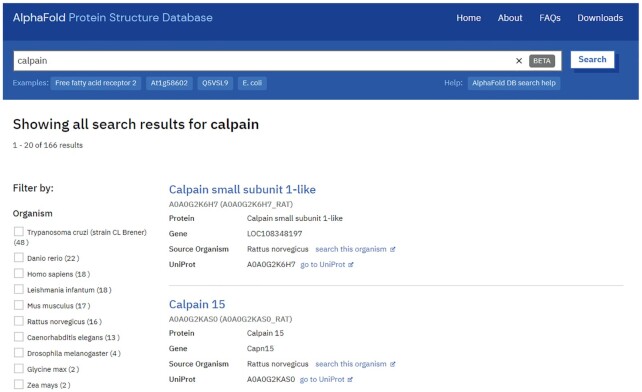
“AlphaFold DB provides predictions through several data-access mechanisms: (i) bulk downloads via FTP; (ii) programmatic access via an application programming interface (API); (iii) download and interactive visualization of individual predictions on protein-specific web pages keyed on UniProt accessions.”
§ AlphaFold Protein Structure Database: massively expanding the structural coverage of protein-sequence space with high-accuracy models > IMPLEMENTATION > Data access
plain- Asserted: passes — The authors put it forward as true.
- Checkable: passes — It can be checked against evidence.
- Load-bearing: fails — The paper’s conclusions may not depend on it.
- Based: passes — The paper gives a reason why it holds.
Probably not a substantial claim. The paper’s conclusions may not depend on it. It may state two separate claims as one.
A conclusion the paper draws from its own results — it cites no other source for it, so there is none to check. The quote shows it is in the paper.
In the paper
“For residues x and y in two different domains, if the PAE values (x, y) are low, AlphaFold predicts the domains to have well-defined relative positions and orientations.”
§ AlphaFold Protein Structure Database: massively expanding the structural coverage of protein-sequence space with high-accuracy models > IMPLEMENTATION
plainconditional- Asserted: passes — The authors put it forward as true.
- Checkable: passes — It can be checked against evidence.
- Load-bearing: fails — The paper’s conclusions may not depend on it.
- Based: passes — The paper gives a reason why it holds.
Probably not a substantial claim. The paper’s conclusions may not depend on it.
In the paper
“AlphaFold is an AI system developed by DeepMind that makes state-of-the-art predictions of protein structures from their amino-acid sequences (9).”
§ AlphaFold Protein Structure Database: massively expanding the structural coverage of protein-sequence space with high-accuracy models > INTRODUCTION
What the sources say
- Not checked yetcites [9] Jumper, 2021, Highly accurate protein structure prediction with AlphaFold, Nature source
plaindirect- Asserted: passes — The authors put it forward as true.
- Checkable: passes — It can be checked against evidence.
- Load-bearing: passes — The paper’s conclusions depend on it.
- Based: passes — The paper gives a reason why it holds.
It may state two separate claims as one.
None of the sources cited for this claim have been checked yet.
In the paper
“However, while the Universal Protein Resource (UniProt) archives almost 220 million unique protein sequences, the Protein Data Bank (PDB) holds only just over 180 000 3D structures for over 55 000 distinct proteins, thus severely limiting the coverage of the sequence space to support biomolecular research globally (5–7).”
§ AlphaFold Protein Structure Database: massively expanding the structural coverage of protein-sequence space with high-accuracy models > INTRODUCTION
What the sources say
- Not checked yetcites [5] Bateman, 2021, UniProt: the universal protein knowledgebase in 2021, Nucleic Acids Res. source
- Not checked yetcites [6] Armstrong, 2019, PDBe: improved findability of macromolecular structure data in the PDB, Nucleic Acids Res.
- Not checked yetcites [7] Varadi, 2019, PDBe-KB: a community-driven resource for structural and functional annotations, Nucleic Acids Res.
plain- Asserted: passes — The authors put it forward as true.
- Checkable: passes — It can be checked against evidence.
- Load-bearing: passes — The paper’s conclusions depend on it.
- Based: passes — The paper gives a reason why it holds.
It may state two separate claims as one.
In the paper
“It was recently described that very low confidence pLDDT scores correlate with high propensities for intrinsic disorder (17).”
§ AlphaFold Protein Structure Database: massively expanding the structural coverage of protein-sequence space with high-accuracy models > IMPLEMENTATION
What the sources say
- Not checked yetcites [17] Akdel, 2021, A structural biology community assessment of AlphaFold 2 applications Biophysics
plaincorrelational- Asserted: passes — The authors put it forward as true.
- Checkable: passes — It can be checked against evidence.
- Load-bearing: fails — The paper’s conclusions may not depend on it.
- Based: passes — The paper gives a reason why it holds.
Probably not a substantial claim. The paper’s conclusions may not depend on it.
A conclusion the paper draws from its own results — it cites no other source for it, so there is none to check. The quote shows it is in the paper.
In the paper
“If the PAE values are high, then the relative position and orientation of the two domains are unreliable, and users should not attach biological or structural relevance to these.”
§ AlphaFold Protein Structure Database: massively expanding the structural coverage of protein-sequence space with high-accuracy models > IMPLEMENTATION
plaindirect- Asserted: passes — The authors put it forward as true.
- Checkable: passes — It can be checked against evidence.
- Load-bearing: fails — The paper’s conclusions may not depend on it.
- Based: passes — The paper gives a reason why it holds.
Probably not a substantial claim. The paper’s conclusions may not depend on it.
The paper states this without a source or data behind it here, so there is nothing to check it against. The quote shows it is in the paper.
In the paper
“However, figuring out the exact structure of a protein remains an expensive and often time-consuming process.”
§ AlphaFold Protein Structure Database: massively expanding the structural coverage of protein-sequence space with high-accuracy models > CONCLUSION AND OUTLOOK
plain- Asserted: passes — The authors put it forward as true.
- Checkable: passes — It can be checked against evidence.
- Load-bearing: passes — The paper’s conclusions depend on it.
- Based: fails — The paper may give no reason why it holds.
Probably not a substantial claim. The paper may give no reason why it holds.
In the paper
“The lower confidence bands appear to correlate well with backbone flexibility and intrinsic disorder (13) (Figure 2).”
§ AlphaFold Protein Structure Database: massively expanding the structural coverage of protein-sequence space with high-accuracy models > IMPLEMENTATION > AlphaFold DB web pages
What the sources say
- Not checked yetcites [13] Tunyasuvunakool, 2021, Highly accurate protein structure prediction for the human proteome, Nature source
hedgedcorrelational- Asserted: passes — The authors put it forward as true.
- Checkable: passes — It can be checked against evidence.
- Load-bearing: fails — The paper’s conclusions may not depend on it.
- Based: passes — The paper gives a reason why it holds.
Probably not a substantial claim. The paper’s conclusions may not depend on it.
In the paper
“Since the mid-1950s, the scientific community has been using ever-more advanced experimental methods to determine over 180 000 structures of proteins, nucleic acids, and complexes in atomic detail, and archive them in the PDB, the single worldwide archive of experimental macromolecular structure data managed by the wwPDB consortium (21).”
§ AlphaFold Protein Structure Database: massively expanding the structural coverage of protein-sequence space with high-accuracy models > CONCLUSION AND OUTLOOK
What the sources say
- Not checked yetcites [21] wwPDB consortium, 2018, Protein Data Bank: the single global archive for 3D macromolecular structure data, Nucleic Acids Res. source
plain- Asserted: passes — The authors put it forward as true.
- Checkable: passes — It can be checked against evidence.
- Load-bearing: fails — The paper’s conclusions may not depend on it.
- Based: passes — The paper gives a reason why it holds.
Probably not a substantial claim. The paper’s conclusions may not depend on it.
Claims other papers make about this one
Each is checked against this paper’s own text: does it say what the citing paper says it does?
The source backs part of the claim, not all of it — or backs it for a different population, condition or comparison.
In the citing paper
“The new CC+ database includes both experimentally derived CCs from the RCSB PDB (Bittrich et al., 2022) and predicted AlphaFold2 models for 48 proteomes (https://alphafold.ebi.ac.uk/; Varadi et al., 2022).”
From CC + : A searchable database of validated coiled coils in PDB structures and AlphaFold2 models (2023) · cites this paper as Varadi et al., 2022
Experimental — accuracy not yet measuredThe source backs part of the claim, not all of it — or backs it for a different population, condition or comparison.
In the citing paper
“we posit that AlphaFold (Jumper et al., 2021;Varadi et al., 2021) is a Level 5 Narrow AI (“Superhuman Narrow AI”) since it performs a single task (predicting a protein's 3D structure from an amino acid sequence) above the level of the world's top scientists.”
From Levels of AGI for Operationalizing Progress on the Path to AGI (2023) · cites this paper as Varadi et al., 2021
Experimental — accuracy not yet measuredIn the citing paper
“houses over 200 million pre-run AF2 predictions”
From The power and pitfalls of AlphaFold2 for structure prediction beyond rigid globular proteins (2024) · cites this paper as [6]
In the citing paper
“AF2 also generates a Predicted Aligned Error (PAE) matrix, which evaluates the relative orientation and position of different parts (i.e., domains) of the model6”
From The power and pitfalls of AlphaFold2 for structure prediction beyond rigid globular proteins (2024) · cites this paper as [6]
In the citing paper
“Likewise, AlphaFold2 provides a per-residue confidence measure that allows researchers to judge the quality of the predicted structure.281”
From Advancing Targeted Protein Degradation via Multiomics Profiling and Artificial Intelligence (2023) · cites this paper as [281]
In the citing paper
“over 214 million predicted structures are available in the AlphaFold database2”
From Clustering predicted structures at the scale of the known protein universe (2023) · cites this paper as [2]
In the citing paper
“The European Bioinformatics Institute already holds over 214 million structures predicted by AlphaFold2 (ref. 3)”
From Fast and accurate protein structure search with Foldseek (2024) · cites this paper as [3]
Citations
Cites
Highly accurate protein structure prediction with AlphaFold
Jumper, J., Evans, R., Pritzel, A., Green, T., Figurnov, M., Ronneberger, O., Tunyasuvunakool, K., Bates, R., Žídek, A., Potapenko, A., et al. (2021) · Nature · doi:10.1038/s41586-021-03819-2 · Cited by 43,764
Self-citationPfam: The protein families database in 2021
Mistry, J., Chuguransky, S., Williams, L., Qureshi, M., Salazar, G. A., Sonnhammer, E. L. L., Tosatto, S. C. E., Paladin, L., Raj, S., Richardson, L. J., et al. (2021) · Nucleic Acids Research · doi:10.1093/nar/gkaa913 · Cited by 7,452
UniProt: the universal protein knowledgebase in 2021
The UniProt Consortium, Bateman, A., Martin, M.-J., Orchard, S., Magrane, M., Agivetova, R., Ahmad, S., Alpi, E., Bowler-Barnett, E. H., Britto, R., et al. (2021) · Nucleic Acids Research · doi:10.1093/nar/gkaa1100 · Cited by 6,372
Accurate prediction of protein structures and interactions using a 3-track network
Baek, M., DiMaio, F., Anishchenko, I., Dauparas, J., Ovchinnikov, S., Lee, G. R., Wang, J., Cong, Q., Kinch, L. N., Schaeffer, R. D., et al. (2021) · doi:10.1101/2021.06.14.448402 · Cited by 5,549
Highly accurate protein structure prediction for the human proteome
Tunyasuvunakool, K., Adler, J., Wu, Z., Green, T., Zielinski, M., Žídek, A., Bridgland, A., Cowie, A., Meyer, C., Laydon, A., et al. (2021) · Nature · doi:10.1038/s41586-021-03828-1 · Cited by 3,025 · cited 4×
“The methodology of AlphaFold and insights gained from the predictions for the complete human proteome have been described recently (9,13).”
BackgroundMethodInfluentialSelf-citationThe InterPro protein families and domains database: 20 years on
Blum, M., Chang, H.-Y., Chuguransky, S., Grego, T., Kandasaamy, S., Mitchell, A., Nuka, G., Paysan-Lafosse, T., Qureshi, M., Raj, S., et al. (2021) · Nucleic Acids Research · doi:10.1093/nar/gkaa977 · Cited by 2,231
Protein Data Bank: the single global archive for 3D macromolecular structure data
wwPDB consortium, Burley, S. K., Berman, H. M., Bhikadiya, C., Bi, C., Chen, L., Costanzo, L. D., Christie, C., Duarte, J. M., Dutta, S., et al. (2019) · Nucleic Acids Research · doi:10.1093/nar/gky949 · Cited by 1,163
Self-citationMol* Viewer: modern web app for 3D visualization and analysis of large biomolecular structures
Sehnal, D., Bittrich, S., Deshpande, M., Svobodová, R., Berka, K., Bazgier, V., Velankar, S., Burley, S. K., Koča, J., & Rose, A. S. (2021) · Nucleic Acids Research · doi:10.1093/nar/gkab314 · Cited by 1,154
Self-citationMariani, V., Biasini, M., Barbato, A., & Schwede, T. (2013) · Bioinformatics · doi:10.1093/bioinformatics/btt473 · Cited by 1,138
QMEANDisCo—distance constraints applied on model quality estimation
Studer, G., Rempfer, C., Waterhouse, A. M., Gumienny, R., Haas, J., & Schwede, T. F. (2019) · Bioinformatics · doi:10.1093/bioinformatics/btz828 · Cited by 1,082
Cited by
Sorted by citations
Items 501–600 of 1,065
Wu, X., Lin, H., Bai, R., & Duan, H. (2024) · European Journal of Medicinal Chemistry · doi:10.1016/j.ejmech.2024.116262 · Cited by 52
McMaster, B., Thorpe, C. J., Ogg, G. S., Deane, C. M., & Koohy, H. (2024) · Nature Methods · doi:10.1038/s41592-024-02240-7 · Cited by 42
m6A-modified cenRNA stabilizes CENPA to ensure centromere integrity in cancer cells
Kang, Z., Li, R., Liu, C., Dong, X., Hu, Y., Xu, L., Liu, X., Xiang, Y., Gao, L., Si, W., et al. (2024) · Cell · doi:10.1016/j.cell.2024.08.040 · Cited by 54
Berman, H. M., & Burley, S. K. (2025) · Quarterly Reviews of Biophysics · doi:10.1017/s0033583525000034 · Cited by 49
Jeblick, T., Leisen, T., Steidele, C. E., Albert, I., Müller, J., Kaiser, S., Mahler, F., Sommer, F., Keller, S., Hückelhoven, R., et al. (2023) · Plant Physiology · doi:10.1093/plphys/kiac476 · Cited by 43
Gain of Function (GOF) Mutant p53 in Cancer—Current Therapeutic Approaches
Roszkowska, K. A., Piecuch, A., Sady, M., Gajewski, Z., & Flis, S. (2022) · International Journal of Molecular Sciences · doi:10.3390/ijms232113287 · Cited by 48
Puente-Lelièvre, C., Malik, A. J., Douglas, J., Ascher, D. B., Baker, M. A. B., Allison, J. R., Poole, A. M., Lundin, D., Fullmer, M. S., Bouckaert, R., et al. (2023) · bioRxiv (Cold Spring Harbor Laboratory) · doi:10.1101/2023.12.12.571181 · Cited by 36
Ramalli, S. G., Miles, A. J., Janes, R. W., & Wallace, B. A. (2022) · Journal of Molecular Biology · doi:10.1016/j.jmb.2022.167441 · Cited by 42
Naesens, L., Muppala, S., Acharya, D., Nemegeer, J., Bogaert, D. J. A., Lee, J., Staes, K., Debacker, V., Bleser, P. D., Bruyne, M. D., et al. (2022) · Science Immunology · doi:10.1126/sciimmunol.abq4531 · Cited by 47
Recent advances and challenges in experiment-oriented polymer informatics
Hatakeyama‐Sato, K. (2022) · Polymer Journal · doi:10.1038/s41428-022-00734-9 · Cited by 46
RPL3L-containing ribosomes determine translation elongation dynamics required for cardiac function
Shiraishi, C., Matsumoto, A., Ichihara, K., Yamamoto, T., Yokoyama, T., Mizoo, T., Hatano, A., Matsumoto, M., Tanaka, Y., Suzuki, E., et al. (2023) · Nature Communications · doi:10.1038/s41467-023-37838-6 · Cited by 42
Mechanism of ribosome-associated mRNA degradation during tubulin autoregulation
Höpfler, M., Absmeier, E., Peak-Chew, S.-Y., Vartholomaiou, E., Passmore, L. A., Gasic, I., & Hegde, R. S. (2023) · Molecular Cell · doi:10.1016/j.molcel.2023.05.020 · Cited by 41
Olechnovič, K., & Venclovas, Č. (2023) · Proteins: Structure, Function, and Bioinformatics · doi:10.1002/prot.26554 · Cited by 38
The current role and evolution of X-ray crystallography in drug discovery and development
Bijak, V., Szczygiel, M., Lenkiewicz, J., Gucwa, M., Cooper, D. R., Murzyn, K., & Minor, W. (2023) · Expert Opinion on Drug Discovery · doi:10.1080/17460441.2023.2246881 · Cited by 51
AggreProt: a web server for predicting and engineering aggregation prone regions in proteins
Planas-Iglesias, J., Borko, S., Swiatkowski, J., Elias, M., Havlásek, M., Salamon, O., Grakova, E., Kunka, A., Martinovič, T., Damborský, J., et al. (2024) · Nucleic Acids Research · doi:10.1093/nar/gkae420 · Cited by 46
USP7 deubiquitinates KRAS and promotes non-small cell lung cancer
Huang, B., Cao, D., Yuan, X., Xiong, Y., Chen, B., Wang, Y., Niu, X., Tian, R., & Huang, H. (2024) · Cell Reports · doi:10.1016/j.celrep.2024.114917 · Cited by 47
Protein structure-informed bacteriophage genome annotation with Phold
Bouras, G., Grigson, S. R., Mirdita, M., Heinzinger, M., Papudeshi, B., Mallawaarachchi, V., Green, R., Kim, R. S., Mihalia, V., Psaltis, A. J., et al. (2026) · Nucleic Acids Research · doi:10.1093/nar/gkaf1448 · Cited by 71
Self-citationBarrett, A. M., Britton, Z. T., Carrasco, R. A., Breen, S., Broggi, M. A. S., Hatke, A. L., Clark, B., Yang, C., Phipps, S., Ortiz, L., et al. (2024) · Clinical Cancer Research · doi:10.1158/1078-0432.ccr-24-1853 · Cited by 43
Highly accurate carbohydrate-binding site prediction with DeepGlycanSite
He, X., Zhao, L.-F., Tian, Y.-P., Li, R., Chu, Q., Gu, Z.-Y., Zheng, M.-Y., Wang, Y., Li, S.-N., Jiang, H.-L., et al. (2024) · Nature Communications · doi:10.1038/s41467-024-49516-2 · Cited by 43
The Amino Acid Homoarginine Inhibits Atherogenesis by Modulating T-Cell Function
Nitz, K., Lacy, M., Bianchini, M., Wichapong, K., Avcilar-Kücükgöze, I., Bonfiglio, C. A., Migheli, R., Wu, Y., Burger, C., Li, Y., et al. (2022) · Circulation Research · doi:10.1161/circresaha.122.321094 · Cited by 46
Machine learning methods for protein-protein binding affinity prediction in protein design
Guo, Z., & Yamaguchi, R. (2022) · Frontiers in Bioinformatics · doi:10.3389/fbinf.2022.1065703 · Cited by 41
Regulation of 3′ splice site selection after step 1 of splicing by spliceosomal C* proteins
Dybkov, O., Preußner, M., Ayoubi, L. E., et al. (2023) · Science Advances · doi:10.1126/sciadv.adf1785 · Cited by 36
Wu, Z., Guo, M., Jin, X., Chen, J., & Liu, B. (2023) · Bioinformatics · doi:10.1093/bioinformatics/btad123 · Cited by 40
The expanding genetic and clinical landscape associated with Meier-Gorlin syndrome
Nielsen-Dandoroff, E., Ruegg, M. S. G., & Bicknell, L. (2023) · European Journal of Human Genetics · doi:10.1038/s41431-023-01359-z · Cited by 37
Structural biology: A golden era
Carugo, O., & Djinović‐Carugo, K. (2023) · PLoS Biology · doi:10.1371/journal.pbio.3002187 · Cited by 47
Richter, D., Laķis, E., & Piel, J. (2023) · Nature Chemistry · doi:10.1038/s41557-023-01252-8 · Cited by 42
Wang, K., Hua, G., Li, J., Yu, Y., Zhang, C., Yang, L., Hu, X., Scheben, A., Wu, Y., Gong, P., et al. (2023) · iMeta · doi:10.1002/imt2.154 · Cited by 41
Cortactin stabilizes actin branches by bridging activated Arp2/3 to its nucleated actin filament
Liu, T., Cao, L., Mladenov, M., Jegou, A., Way, M., & Moores, C. A. (2024) · Nature Structural & Molecular Biology · doi:10.1038/s41594-023-01205-2 · Cited by 40
Insertases scramble lipids: Molecular simulations of MTCH2
Bartoš, L., Menon, A. K., & Vácha, R. (2024) · Structure · doi:10.1016/j.str.2024.01.012 · Cited by 42
Structural insights reveal interplay between LAG-3 homodimerization, ligand binding, and function
Silberstein, J. L., Du, J., Chan, K.-W., Frank, J. A., Mathews, I. I., Kim, Y. B., You, J., Qiao, L., Liu, J., Philips, E. A., et al. (2024) · Proceedings of the National Academy of Sciences · doi:10.1073/pnas.2310866121 · Cited by 45
Prot2Text: Multimodal Protein’s Function Generation with GNNs and Transformers
Abdine, H., Chatzianastasis, M., Bouyioukos, C., & Vazirgiannis, M. (2024) · Proceedings of the AAAI Conference on Artificial Intelligence · doi:10.1609/aaai.v38i10.28948 · Cited by 58
Diagnostic and therapeutic value of human serpin family proteins.
Janciauskiene, S., Lechowicz, U., Pelc, M., Olejnicka, B., & Chorostowska-Wynimko, J. (2024) · Biomedicine & pharmacotherapy = Biomedecine & pharmacotherapie · doi:10.1016/j.biopha.2024.116618 · Cited by 39
Burton, A. T., Zeinert, R., & Storz, G. (2024) · Annual Review of Microbiology · doi:10.1146/annurev-micro-112723-083001 · Cited by 37
Structural basis for human mitochondrial tRNA maturation
(2024) · doi:10.1038/s41467-024-49132-0 · Cited by 41
Machine learning prediction of enzyme optimum pH
Gado, J. E., Knotts, M., Shaw, A. Y., Marks, D. S., Gauthier, N. P., Sander, C., & Beckham, G. T. (2025) · Nature Machine Intelligence · doi:10.1038/s42256-025-01026-6 · Cited by 78
Proteins Plus : a publicly available resource for protein structure mining
Ehrt, C., Schulze, T., Graef, J., Diedrich, K., Pletzer-Zelgert, J., & Rarey, M. (2025) · Nucleic Acids Research · doi:10.1093/nar/gkaf377 · Cited by 46
Chemerin Forms: Their Generation and Activity
Zhao, L., Leung, L. L. K., & Morser, J. (2022) · Biomedicines · doi:10.3390/biomedicines10082018 · Cited by 42
Conserved degronome features governing quality control associated proteolysis
Mashahreh, B., Armony, S., Johansson, K. E., Chappleboim, A., Friedman, N., Gardner, R. G., Hartmann‐Petersen, R., Lindorff‐Larsen, K., & Ravid, T. (2022) · Nature Communications · doi:10.1038/s41467-022-35298-y · Cited by 37
Zero-shot antibody design in a 24-well platePreprint
Chai Discovery Team, Boitreaud, J., Dent, J., Geisz, D., McPartlon, M., Meier, J., Qiao, Z., Rogozhnikov, A., Rollins, N., Wollenhaupt, P., et al. (2025) · bioRxiv (Cold Spring Harbor Laboratory) · doi:10.1101/2025.07.05.663018 · Cited by 56
PMIpred: a physics-informed web server for quantitative protein–membrane interaction prediction
van Hilten, N., Verwei, N., Methorst, J., Nase, C., Bernatavicius, A., & Risselada, H. J. (2024) · Bioinformatics · doi:10.1093/bioinformatics/btae069 · Cited by 41
Birth of a poly(A) tail: mechanisms and control of mRNA polyadenylation
Rodríguez‐Molina, J. B., & Turtola, M. (2022) · FEBS Open Bio · doi:10.1002/2211-5463.13528 · Cited by 40
Marcink, T. C., Zipursky, G., Cheng, W., Stearns, K. N., Stenglein, S., Golub, K., Cohen, F., Bovier, F. T., Pfalmer, D., Greninger, A. L., et al. (2023) · Science Advances · doi:10.1126/sciadv.ade2727 · Cited by 36
Obana, N., Takada, H., Crowe-McAuliffe, C., Iwamoto, M., Egorov, A. A., Wu, K. J. Y., Chiba, S., Murina, V., Paternoga, H., Tresco, B. I. C., et al. (2023) · Nucleic Acids Research · doi:10.1093/nar/gkad193 · Cited by 42
Engineering the methylotrophic yeast Ogataea polymorpha for lactate production from methanol
Wefelmeier, K., Schmitz, S., Haut, A. M., et al. (2023) · Frontiers in Bioengineering and Biotechnology · doi:10.3389/fbioe.2023.1223726 · Cited by 39
A direct interaction between CPF and RNA Pol II links RNA 3′ end processing to transcription
Carminati, M., Rodríguez‐Molina, J. B., Manav, M. C., Bellini, D., & Passmore, L. A. (2023) · Molecular Cell · doi:10.1016/j.molcel.2023.11.004 · Cited by 41
Culbertson, E. M., & Levin, T. C. (2023) · PLOS Biology · doi:10.1371/journal.pbio.3002436 · Cited by 43
Ni, B., Kaplan, D. L., & Buehler, M. J. (2024) · Science Advances · doi:10.1126/sciadv.adl4000 · Cited by 51
Diet-derived urolithin A is produced by a dehydroxylase encoded by human gut Enterocloster species
Pidgeon, R., Mitchell, S., Shamash, M., Suleiman, L., Dridi, L., Maurice, C. F., & Castagner, B. (2025) · Nature Communications · doi:10.1038/s41467-025-56266-2 · Cited by 58
Cold seeps are potential hotspots of deep-sea nitrogen loss driven by microorganisms across 21 phyla
Jiang, Q., Cao, L., Han, Y., Li, S., Zhao, R., Zhang, X., Ruff, S. E., Zhao, Z., Peng, J., Liao, J., et al. (2025) · Nature Communications · doi:10.1038/s41467-025-56774-1 · Cited by 45
Živić, F., Kaplarevic-Malisic, A. M., Grujović, N., Stojanovic, B. S., & Ivanovic, M. R. (2025) · Materials Today Communications · doi:10.1016/j.mtcomm.2025.113525 · Cited by 51
Tang, X., Chen, R., Mesias, V. S. D., Wang, T., Wang, Y., Poljak, K., Fan, X., Miao, H., Hu, J., Zhang, L. N., et al. (2022) · Proceedings of the National Academy of Sciences · doi:10.1073/pnas.2113991119 · Cited by 41
Mercado-Evans, V., Mejia, M. E., Zulk, J. J., Ottinger, S., Hameed, Z. A., Serchejian, C., Marunde, M. G., Robertson, C. M., Ballard, M. B., Ruano, S. H., et al. (2024) · Nature Communications · doi:10.1038/s41467-024-45336-6 · Cited by 40
LilrB3 is a putative cell surface receptor of APOE4
Zhou, J., Wang, Y., Huang, G., Yang, M., Zhu, Y., Jin, C., Jing, D., Ji, K., & Shi, Y. (2023) · Cell Research · doi:10.1038/s41422-022-00759-y · Cited by 44
Mapping diversity in African trypanosomes using high resolution spatial proteomics
Moloney, N. M., Barylyuk, K. V., Tromer, E. C., Crook, O. M., Breckels, L. M., Lilley, K. S., Waller, R. F., & MacGregor, P. (2023) · Nature Communications · doi:10.1038/s41467-023-40125-z · Cited by 40
Enhanced mapping of small-molecule binding sites in cells
Wozniak, J. M., Li, W., Governa, P., Chen, L., Jadhav, A. M., Dongré, A. R., Forli, S., & Parker, C. G. (2024) · Nature Chemical Biology · doi:10.1038/s41589-023-01514-z · Cited by 46
DiffModeler: large macromolecular structure modeling for cryo-EM maps using a diffusion model
Wang, X., Zhu, H., Terashi, G., Taluja, M., & Kihara, D. (2024) · Nature Methods · doi:10.1038/s41592-024-02479-0 · Cited by 49
McCafferty, C. L., Papoulas, O., Jordan, M. A., Hoogerbrugge, G., Nichols, C., Pigino, G., Taylor, D. W., Wallingford, J. B., & Marcotte, E. M. (2022) · eLife · doi:10.7554/elife.81977 · Cited by 40
Liu, J., Sun, T., Liu, S., Liu, J., Fang, S., Tan, S., Zeng, Y., Zhang, B., & Li, W. (2022) · Computers in Biology and Medicine · doi:10.1016/j.compbiomed.2022.106298 · Cited by 44
Weber, L. M., Jia, Y., Stielow, B., Gisselbrecht, S. S., Cao, Y., Ren, Y., Rohner, I., King, J. E., Rothman, E., Fischer, S., et al. (2022) · Nucleic Acids Research · doi:10.1093/nar/gkac1188 · Cited by 38
Li, M., Kang, L., Xiong, Y., Wang, Y. G., Fan, G., Tan, P., & Hong, L. (2023) · Journal of Cheminformatics · doi:10.1186/s13321-023-00688-x · Cited by 38
Reichhardt, C. (2023) · Journal of Bacteriology · doi:10.1128/jb.00019-23 · Cited by 40
Cross-phyla protein annotation by structural prediction and alignment
Ruperti, F., Papadopoulos, N., Musser, J. M., Mirdita, M., Steinegger, M., & Arendt, D. (2023) · Genome Biology · doi:10.1186/s13059-023-02942-9 · Cited by 38
AI models for protein design are driving antibody engineering
Chungyoun, M., & Gray, J. J. (2023) · Current Opinion in Biomedical Engineering · doi:10.1016/j.cobme.2023.100473 · Cited by 40
Gabaldón-Figueira, J. C., Martínez-Peinado, N., Escabia, E., Ros-Lucas, A., Chatelain, E., Scandale, I., Gascón, J., Pinazo, M., & Alonso-Padilla, J. (2023) · Research and Reports in Tropical Medicine · doi:10.2147/rrtm.s415273 · Cited by 46
Tavoulari, S., Sichrovsky, M., & Kunji, E. R. S. (2023) · Acta Physiologica · doi:10.1111/apha.14016 · Cited by 45
Selenium-binding protein 1 (SELENBP1) is a copper-dependent thiol oxidase
Philipp, T. M., Gernoth, L., Will, A., Schwarz, M., Ohse, V. A., Kipp, A. P., Steinbrenner, H., & Klotz, L. (2023) · Redox Biology · doi:10.1016/j.redox.2023.102807 · Cited by 41
The transformative power of transformers in protein structure prediction
Moussad, B., Roche, R., & Bhattacharya, D. (2023) · Proceedings of the National Academy of Sciences · doi:10.1073/pnas.2303499120 · Cited by 37
Structural basis of metallo-β-lactamase resistance to taniborbactam
Drusin, S. I., Terrier, C. L., Poirel, L., Bonomo, R. A., Vila, A. J., & Moreno, D. M. (2023) · Antimicrobial Agents and Chemotherapy · doi:10.1128/aac.01168-23 · Cited by 45
Recent Progress of Protein Tertiary Structure Prediction
Wuyun, Q., Chen, Y., Shen, Y., Cao, Y., Hu, G., Cui, W., Gao, J., & Zheng, W. H. (2024) · Molecules · doi:10.3390/molecules29040832 · Cited by 48
GPSFun: geometry-aware protein sequence function predictions with language models
Yuan, Q., Tian, C., Song, Y., Ou, P., Zhu, M., Zhao, H., & Yang, Y. (2024) · Nucleic Acids Research · doi:10.1093/nar/gkae381 · Cited by 41
PLK1-mediated phosphorylation cascade activates Mis18 complex to ensure centromere inheritance
Parashara, P., Medina-Pritchard, B., Abad, M. A., Sotelo-Parrilla, P., Thamkachy, R., Grundei, D., Zou, J., Spanos, C., Kumar, C. N., Basquin, C., et al. (2024) · Science · doi:10.1126/science.ado8270 · Cited by 36
Malhotra, Y., John, J., Yadav, D., Sharma, D., Vanshika, Rawal, K., Mishra, V., & Chaturvedi, N. (2025) · Computers in Biology and Medicine · doi:10.1016/j.compbiomed.2025.109842 · Cited by 42
The mechanism of activation of MEK1 by B-Raf and KSR1
Maloney, R., Zhang, M., Liu, Y., Jang, H., & Nussinov, R. (2022) · Cellular and Molecular Life Sciences · doi:10.1007/s00018-022-04296-0 · Cited by 33
Interaction between VPS13A and the XK scramblase is important for VPS13A function in humans
Park, J.-S., Hu, Y., Hollingsworth, N. M., Miltenberger-Miltényi, G., & Neiman, A. M. (2022) · Journal of Cell Science · doi:10.1242/jcs.260227 · Cited by 36
TOR complex 2 is a master regulator of plasma membrane homeostasis
Thorner, J. W. (2022) · Biochemical Journal · doi:10.1042/bcj20220388 · Cited by 38
Gomes, P. D. S. F. C., Gomes, D. E. B., & Bernardi, R. C. (2022) · Frontiers in Bioinformatics · doi:10.3389/fbinf.2022.983306 · Cited by 42
Digging into the 3D Structure Predictions of AlphaFold2 with Low Confidence: Disorder and Beyond
Bruley, A., Mornon, J., Duprat, É., & Callebaut, I. (2022) · Biomolecules · doi:10.3390/biom12101467 · Cited by 37
Structure and dynamics of the essential endogenous mycobacterial polyketide synthase Pks13
Kim, S. K., Dickinson, M. S., Finer-Moore, J., Guan, Z., Kaake, R. M., Echeverria, I., Chen, J., Pulido, E. H., Sali, A., Krogan, N. J., et al. (2023) · Nature Structural & Molecular Biology · doi:10.1038/s41594-022-00918-0 · Cited by 41
Highly accurate isoform identification for the human transcriptome
Sommer, M. J., Cha, S., Varabyou, A., Rincon, N., Park, S., Minkin, I., Pertea, M., Steinegger, M., & Salzberg, S. L. (2022) · doi:10.1101/2022.06.08.495354 · Cited by 40
Liu, Y.-X., Wan, S., Yang, X., Wang, Y., Gan, W.-J., Ye, W.-L., He, X., Chen, J.-J., Yang, Y., Yang, X., et al. (2023) · Cell chemical biology · doi:10.1016/j.chembiol.2023.05.009 · Cited by 42
Xia, X., Zhu, C., Zhong, F., & Liu, L. (2023) · Bioinformatics · doi:10.1093/bioinformatics/btad411 · Cited by 42
Malinverni, D., Zamuner, S., Rebeaud, M. E., Barducci, A., Nillegoda, N. B., & De Los Rios, P. (2023) · Proceedings of the National Academy of Sciences · doi:10.1073/pnas.2218217120 · Cited by 39
Ubiquitin‐targeted bacterial effectors: rule breakers of the ubiquitin system
Roberts, C. G., Franklin, T. G., & Pruneda, J. N. (2023) · The EMBO Journal · doi:10.15252/embj.2023114318 · Cited by 37
Roche, R., Moussad, B., Shuvo, M. H., & Bhattacharya, D. (2023) · PLoS Computational Biology · doi:10.1371/journal.pcbi.1011435 · Cited by 35
Organelle proteomic profiling reveals lysosomal heterogeneity in association with longevity
Yu, Y., Gao, S. M., Guan, Y., Hu, P.-W., Zhang, Q., Liu, J., Jing, B., Zhao, Q., Sabatini, D. M., Abu-Remaileh, M., et al. (2024) · eLife · doi:10.7554/elife.85214 · Cited by 37
An intramolecular macrocyclase in plant ribosomal peptide biosynthesis
Mydy, L. S., Hungerford, J. A., Chigumba, D. N., Konwerski, J. R., Jantzi, S. C., Wang, D., Smith, J. L., & Kersten, R. D. (2024) · Nature Chemical Biology · doi:10.1038/s41589-024-01552-1 · Cited by 36
Biosynthesis and function of 7-deazaguanine derivatives in bacteria and phages
de Crécy‐Lagard, V., Hutinet, G., Cediel-Becerra, J. D. D., Yuan, Y., Zallot, R., Chevrette, M. G., Ratnayake, R. M. M. N., Jaroch, M., Quaiyum, S., & Bruner, S. D. (2024) · Microbiology and Molecular Biology Reviews · doi:10.1128/mmbr.00199-23 · Cited by 33
He, H., Chen, G., Tang, Z., & Chen, C. Y. (2025) · npj Digital Medicine · doi:10.1038/s41746-025-01464-x · Cited by 43
Potel, C. M., Burtscher, M. L., Garrido‐Rodríguez, M., Brauer-Nikonow, A., Becher, I., Sueur, C. L., Typas, A., Zimmermann, M., & Savitski, M. M. (2025) · Nature Structural & Molecular Biology · doi:10.1038/s41594-025-01485-w · Cited by 43
Recent Advances in NMR Protein Structure Prediction with ROSETTA
Leman, J. K., & Künze, G. (2023) · International Journal of Molecular Sciences · doi:10.3390/ijms24097835 · Cited by 38
Accelerating Biomolecular Modeling with AtomWorks and RF3Preprint
Corley, N., Mathis, S. V., Krishna, R., Bauer, M. S., Thompson, T. R., Ahern, W., Kazman, M. W., Brent, R. I., Didi, K., Kubaney, A., et al. (2025) · bioRxiv (Cold Spring Harbor Laboratory) · doi:10.1101/2025.08.14.670328 · Cited by 59
Structural mechanism for bidirectional actin cross-linking by T-plastin
Mei, L., Reynolds, M. J., Garbett, D., Gong, R., Meyer, T., & Alushin, G. M. (2022) · Proceedings of the National Academy of Sciences · doi:10.1073/pnas.2205370119 · Cited by 34
Bernabé, G., Marzaro, G., Pietra, G. D., Otero, A., Bellato, M., Pauletto, A., Scarpa, M., Sut, S., Chilin, A., Dall’Acqua, S., et al. (2022) · Frontiers in Pharmacology · doi:10.3389/fphar.2022.996871 · Cited by 37
Algorithms and the future of work
Howard, J. (2022) · American Journal of Industrial Medicine · doi:10.1002/ajim.23429 · Cited by 47
Paşayeva, L., Fatullayev, H., Çeli̇k, İ., et al. (2022) · Antioxidants · doi:10.3390/antiox11112284 · Cited by 38
canSAR: update to the cancer translational research and drug discovery knowledgebase
Micco, P. D., Antolín, A. A., Mitsopoulos, C., Villasclaras-Fernández, E. D., Sanfelice, D., Dolciami, D., Ramagiri, P., Mica, I. L., Tym, J. E., Gingrich, P. W., et al. (2022) · Nucleic Acids Research · doi:10.1093/nar/gkac1004 · Cited by 39
Kalinger, R. S., & Rowland, O. (2023) · BMC Plant Biology · doi:10.1186/s12870-022-04003-y · Cited by 38
Taurine and Creatine Transporters as Potential Drug Targets in Cancer Therapy
Stary, D., & Bajda, M. (2023) · International Journal of Molecular Sciences · doi:10.3390/ijms24043788 · Cited by 38
Metadata
- Authors
- Varadi, M., Anyango, S., Deshpande, M., Nair, S., Natassia, C., Yordanova, G., Yuan, D., Stroe, O., Wood, G., Laydon, A., Žídek, A., Green, T., Tunyasuvunakool, K., Petersen, S., Jumper, J., Clancy, E., Green, R., Vora, A., Lutfi, M., Figurnov, M., Cowie, A., Hobbs, N., Kohli, P., Kleywegt, G., Birney, E., Hassabis, D., & Velankar, S.
- Affiliations
- European Molecular Biology Laboratory, European Bioinformatics Institute, Hinxton, UK
- European Bioinformatics Institute (GB)
- Google DeepMind (United Kingdom) (GB)
- Corresponding author
- Hassabis, Demis
- Velankar, Sameer
- ORCID
- Varadi, Mihaly
- Anyango, Stephen
- Deshpande, Mandar
- Nair, Sreenath
- Yordanova, Galabina
- Yuan, David
- Stroe, Oana
- Laydon, Agata
- Žídek, Augustin
- Green, Tim
- Tunyasuvunakool, Kathryn
- Petersen, Stig
- Jumper, John
- Clancy, Ellen
- Green, Richard
- Vora, Ankur
- Figurnov, Michael
- Kohli, Pushmeet
- Kleywegt, Gerard
- Birney, Ewan
- Hassabis, Demis
- Velankar, Sameer
- Venue
- Nucleic Acids Research
- Publisher
- Oxford University Press (OUP)
- Published
- 2021-11-17
- Volume
- 50
- Issue
- D1
- Pages
- D439-D444
- ISSN
- 0305-1048 (ISSN-L)
- 1362-4962
- PMC
- PMC8728224
- OpenAlex
- W3211795435
- Semantic Scholar
- 86c048c4d91066610beba9099b7d23bdae29caab
- Cited by
- 7,850
- References
- 24
- Citations by year
- 2026: 1070 · 2025: 1540 · 2024: 2150 · 2023: 2142 · 2022: 925 · 2021: 13
- FWCI
- 416.00
- Type
- journal article
- Language
- en
- Open access
- gold
- doi.org
- Licence
- Locations
- Nucleic Acids Research (publishedVersion, cc-by)
- PubMed Central (publishedVersion, cc-by)
- PubMed (publishedVersion)
- Funders
- DeepMind
- Topics
- Life Sciences › Biochemistry, Genetics and Molecular Biology › Molecular Biology › Protein Structure and Dynamics
- Life Sciences › Biochemistry, Genetics and Molecular Biology › Structural Biology › Enzyme Structure and Function
- Life Sciences › Biochemistry, Genetics and Molecular Biology › Molecular Biology › Machine Learning in Bioinformatics
- Keywords
- AlphaFold, protein structure prediction, protein sequence space, structural coverage, model confidence, atomic coordinates, proteome, DeepMind
- MeSH terms
- Protein Conformation, alpha-Helical, Protein Conformation, beta-Strand, Amino Acid Sequence, Animals, Bacteria, Dictyostelium, Fungi, Humans, Models, Molecular, Plants, Proteins, Software, Trypanosoma cruzi, Protein Folding, Internet, Databases, Protein, Datasets as Topic
About these checks
Registry, retraction, Cites and statistics results are computed, not judged, with one exception: a printed reference that no index lists is read once by a model before it counts as a citation error. Claims are extracted by a model and kept only when their quote appears verbatim in the text; each cited source is then checked, with a model’s help, for whether it says what the claim relies on. Those verdicts can be wrong — read the claim’s quote and the cited source before relying on one.
A language model drew the claims from the paper on 2026-10-07, under version 3 of the claim definition (model deepseek-v4.1-flash, prompt extract-v3).
A second model labelled each claim on 2026-10-07 (model jev-1.13-20260917, definition revision gold-guideline-v0.2).
Cited sources are checked with a language model’s help (gpt-6-sol).
Statistics and arithmetic are recomputed, not judged.
Confidence bands are shown only for fields calibrated on our annotated test set. None is calibrated yet, so no band is shown.
What counts as a claim ›How we measure confidence ›How we check this ›
Are you an author, or do you see a problem with this page? Request a review
