

MEME SUITE: tools for motif discovery and searching
Open accessThe DOI matches its Crossref record; 15 of the 15 references it cites were found in a registry or an index.
Abstract
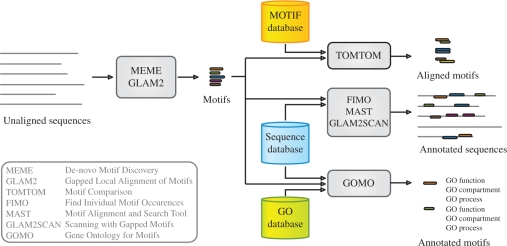
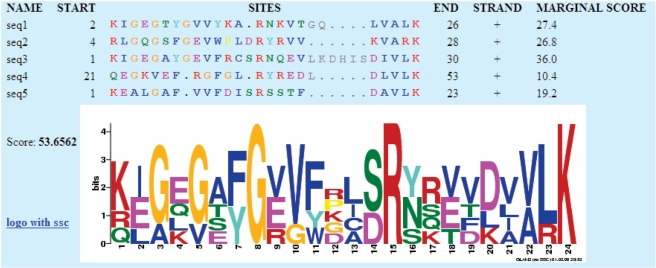
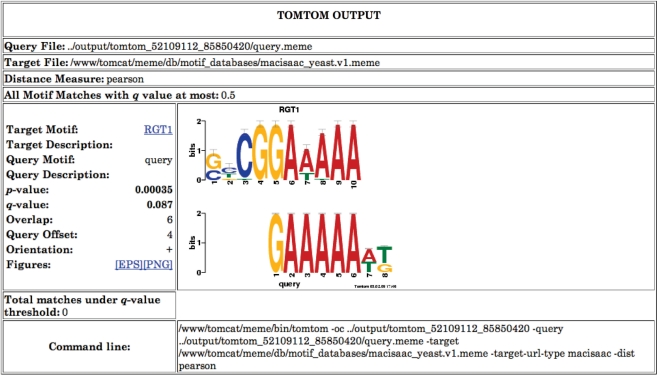
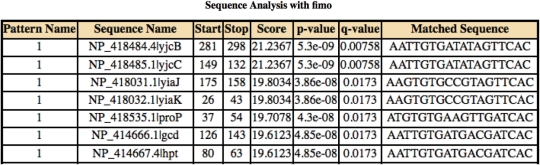
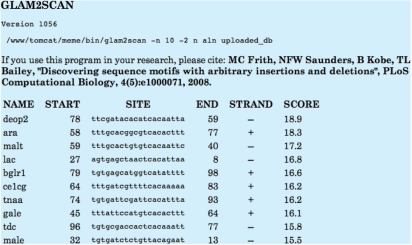
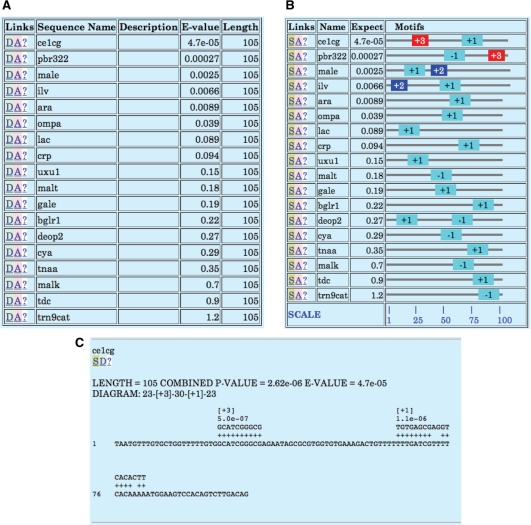
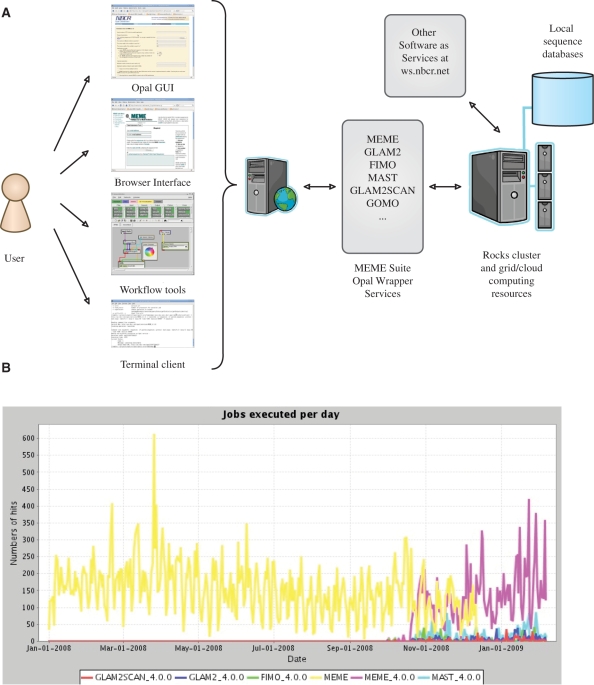
The MEME Suite web server provides a unified portal for online discovery and analysis of sequence motifs representing features such as DNA binding sites and protein interaction domains. The popular MEME motif discovery algorithm is now complemented by the GLAM2 algorithm which allows discovery of motifs containing gaps. Three sequence scanning algorithms--MAST, FIMO and GLAM2SCAN--allow scanning numerous DNA and protein sequence databases for motifs discovered by MEME and GLAM2. Transcription factor motifs (including those discovered using MEME) can be compared with motifs in many popular motif databases using the motif database scanning algorithm TOMTOM. Transcription factor motifs can be further analyzed for putative function by association with Gene Ontology (GO) terms using the motif-GO term association tool GOMO. MEME output now contains sequence LOGOS for each discovered motif, as well as buttons to allow motifs to be conveniently submitted to the sequence and motif database scanning algorithms (MAST, FIMO and TOMTOM), or to GOMO, for further analysis. GLAM2 output similarly contains buttons for further analysis using GLAM2SCAN and for rerunning GLAM2 with different parameters. All of the motif-based tools are now implemented as web services via Opal. Source code, binaries and a web server are freely available for noncommercial use at http://meme.nbcr.net.
Overview
The claims and statistics of this paper haven’t been checked yet.
Free: it reads the open-access text and checks the first 5 claims that cite a source we can check. Create a free account to check every claim.
Integrity signals
Registry
Cites
Statistics
Figures
Verification
Claims the paper makes
The claims and statistics of this paper haven’t been checked yet.
Free: it reads the open-access text and checks the first 5 claims that cite a source we can check. Create a free account to check every claim.
Claims other papers make about this one
Each is checked against this paper’s own text: does it say what the citing paper says it does?
The cited source says what the claim attributes to it.
In the citing paper
“Next, we applied the MEME motif-based sequence analysis tool (36) to investigate sequence elements that were enriched in genes whose TE was decreased by [-]CR-1-31B, which identified 2 significantly enriched 12-mer sequences (CGGCGGCGGCGG and GAGGAGGAGGAG; p = 2.2 × 10⁻²⁰ and p = 6.1 × 10⁻¹¹, respectively; Figure 2F).”
From Targeting eIF4A-dependent translation in genetically complex sarcoma (2026) · cites this paper as [36]
The cited source says what the claim attributes to it.
In the citing paper
“A discriminative motif search of S. salmonicida annexins versus Giardia alpha-giardins with the MEME tool (45) revealed a motif that is identical or highly similar to AB loops (type II Ca2+ coordination sites) in the former.”
From Comparative Cell Biology and Evolution of Annexins in Diplomonads (2016) · cites this paper as [45]
The check wasn’t confident either way, so it gives no verdict — never disputed.
In the citing paper
“The Olink technology allows the measurement of up to 92 proteins in 1 µL of plasma using the proximity extension assay (PEA).”
From Identification of Genetic Variants Regulating the Abundance of Clinically Relevant Plasma Proteins using the Diversity Outbred Mouse Model (2021) · cites this paper as [35]
Experimental — accuracy not yet measured
Self-check
Percentages, sums and reported differences re-computed from the paper’s own numbers.
The self-check needs the paper’s full text.
Citations
Cites
Fitting a mixture model by expectation maximization to discover motifs in biopolymers.
Bailey, T. L., & Elkan, C. (1994) · PubMed · Cited by 5,806
Self-citationA Direct Approach to False Discovery Rates
Storey, J. D. (2002) · Journal of the Royal Statistical Society Series B: Statistical Methodology · doi:10.1111/1467-9868.00346 · Cited by 5,603
MEME: discovering and analyzing DNA and protein sequence motifs
Bailey, T. L., Williams, N., Misleh, C., & Li, W. W. (2006) · Nucleic Acids Research · doi:10.1093/nar/gkl198 · Cited by 2,670 · cited 1×
“It offers a significantly expanded set of programs for these tasks compared with the earlier web server (1).”
BackgroundSelf-citationQuantifying similarity between motifs
Gupta, S., Stamatoyannopoulos, J. A., Bailey, T. L., & Noble, W. S. (2007) · Genome Biology · doi:10.1186/gb-2007-8-2-r24 · Cited by 2,058 · cited 2×
“TOMTOM (4) quantifies the similarity between two motifs, and can be used to search a database of known motifs for matches to motifs found by MEME.”
BackgroundMethodSelf-citationCombining evidence using p-values: application to sequence homology searches.
Bailey, T. L., & Gribskov, M. (1998) · Bioinformatics · doi:10.1093/bioinformatics/14.1.48 · Cited by 1,253
Self-citationSignificance analysis of time course microarray experiments
Storey, J. D., Xiao, W., Leek, J. T., Tompkins, R. G., & Davis, R. W. (2005) · Proceedings of the National Academy of Sciences · doi:10.1073/pnas.0504609102 · Cited by 567
Discovering Sequence Motifs with Arbitrary Insertions and Deletions
Frith, M. C., Saunders, N. F. W., Kobe, B., & Bailey, T. L. (2008) · PLoS Computational Biology · doi:10.1371/journal.pcbi.1000071 · Cited by 390 · cited 2×
“To overcome this limitation, we have incorporated a recent algorithm for gapped motif discovery—GLAM2 (3)—into the MEME suite.”
MethodSelf-citationCheminformatics analysis and learning in a data pipelining environment
Hassan, M., Brown, R. D., Varma-O’Brien, S., & Rogers, D. (2006) · Molecular Diversity · doi:10.1007/s11030-006-9041-5 · Cited by 184 · cited 1×
“A generic user interface may be generated automatically based upon an XML description of the command line syntax through the Opal GUI, either in a standard web browser or from a workflow program such as Vision (14), Kepler (15) or the Pipeline Pilot (16).”
MethodA Component-Based Software Environment for Visualizing Large Macromolecular Assemblies
Sanner, M. F. (2005) · Structure · doi:10.1016/j.str.2005.01.010 · Cited by 86
Score Distributions for Simultaneous Matching to Multiple Motifs
Bailey, T. L., & Gribskov, M. (1997) · Journal of Computational Biology · doi:10.1089/cmb.1997.4.45 · Cited by 59 · cited 10×
“MAST is ‘sequence oriented’, computing a single score for each sequence in the database.”
MethodInfluentialSelf-citation
Research works printed but not linked: 2
- 2005, PNAS, 102, 12837, 10.1073/pnas.0504609102 · DOI · Paper page
- Ludaescher B Altintas I Berkley C Higgins D Jaeger E Jones M Lee EA Tao J Zhao Y Scientific workow management and the Kepler system Concurrency Comput. Pract. Exp. 2005 18 1039 1065
Cited by
Items 901–1,000 of 1,098
Visvanathan, A., Patil, V., Abdulla, S., Hoheisel, J. D., & Somasundaram, K. (2019) · Genes · doi:10.3390/genes10020141 · Cited by 96
Zhang, Z., Chen, J., Liang, C., Liu, F., Hou, X., & Zou, X. (2020) · Frontiers in Genetics · doi:10.3389/fgene.2020.570156 · Cited by 100
ZFTA–RELA Dictates Oncogenic Transcriptional Programs to Drive Aggressive Supratentorial Ependymoma
Arabzade, A., Zhao, Y., Varadharajan, S., Chen, H., Jessa, S., Rivas, B. L., Stuckert, A. J., Solis, M., Kardian, A., Tlais, D., et al. (2021) · Cancer Discovery · doi:10.1158/2159-8290.cd-20-1066 · Cited by 96
Chen, X., Wang, P., Gu, M., Lin, X.-Y., Hou, B., Zheng, Y., Sun, Y., Jin, S., & Ye, N. (2021) · Genomics · doi:10.1016/j.ygeno.2021.03.033 · Cited by 97
Barral, A., Pozo, G., Ducrot, L., Papadopoulos, G. L., Sauzet, S., Oldfield, A., Cavalli, G., & Déjardin, J. (2022) · Molecular Cell · doi:10.1016/j.molcel.2021.12.037 · Cited by 96
Hu, X., Liang, J., Wang, W., Cai, C., Ye, S., Wang, N., Han, F., Wu, Y., & Zhu, Q. (2023) · The Plant Journal · doi:10.1111/tpj.16420 · Cited by 96
Liu, Y., Schmidt, B., Liu, W., & Maskell, D. L. (2009) · Pattern Recognition Letters · doi:10.1016/j.patrec.2009.10.009 · Cited by 97
Prediction of Short Linear Protein Binding Regions
Mooney, C., Pollastri, G., Shields, D. C., & Haslam, N. J. (2011) · Journal of Molecular Biology · doi:10.1016/j.jmb.2011.10.025 · Cited by 96
“(15) and NestedMICA (16) use expectation maximisation techniques.”
BackgroundLi, M. J., Yan, B., Sham, P. C., & Wang, J. (2014) · Briefings in Bioinformatics · doi:10.1093/bib/bbu018 · Cited by 95
“Computationally, by applying motif scanning for these PWMs stored in public database including TRANSFAC [171], JASPAR [172] and UniPROBE [173], one could easily judge the putative DNA-binding affinity for each TF given a DNA sequence [174].”
MethodZeng, L., Deng, R., Guo, Z., Yang, S., & Deng, X. (2016) · BMC Genomics · doi:10.1186/s12864-016-2527-3 · Cited by 97
“org/tools/meme) to analyze the conserved motifs and plot the motif logos [46].”
Integrative meta-analysis of transcriptomic responses to abiotic stress in cotton
Tahmasebi, A., Ashrafi‐Dehkordi, E., Shahriari, A. G., Mazloomi, S. M., & Ebrahimie, E. (2019) · Progress in Biophysics and Molecular Biology · doi:10.1016/j.pbiomolbio.2019.02.005 · Cited by 96
Sanchez, G. J., Richmond, P. A., Bunker, E. N., Karman, S. S., Azofeifa, J., Garnett, A. T., Xu, Q., Wheeler, G. E., Toomey, C. M., Zhang, Q., et al. (2018) · Nucleic Acids Research · doi:10.1093/nar/gkx1225 · Cited by 93
“The reported E-value is the output of the MEME de novo motif finding algorithm.”
MethodInfluentialWang, Z., Yan, L., Wan, L., Huai, D., Kang, Y., Shi, L. G., Jiang, H., Lei, Y. H., & Liao, B. (2019) · BMC Genomics · doi:10.1186/s12864-019-5434-6 · Cited by 94
“net/meme/) [42] was employed to detect the additional motifs outside the bZIP domain of protein sequences.”
MethodRecurrent SRSF2 mutations in MDS affect both splicing and NMD
Rahman, M. A., Lin, K., Bradley, R. K., Abdel-Wahab, O. I., & Krainer, A. R. (2020) · Genes & Development · doi:10.1101/gad.332270.119 · Cited by 95
“We next analyzed cassette exons to quantify the enrichment of each possible 5-mer motif in SRSF2Mut-regulated exons, using the MEME (multiple expectation maximization for motif elicitation) algorithm (Bailey et al. 2009).”
MethodTyagi, S., Shumayla, Madhu, M., Singh, K., & Upadhyay, S. K. (2020) · Journal of Hazardous Materials · doi:10.1016/j.jhazmat.2020.123585 · Cited by 94
Michael, T. P., Ernst, E., Hartwick, N. T., Chu, P., Bryant, D., Gilbert, S., Ortleb, S., Baggs, E. L., Sree, K. S., Appenroth, K., et al. (2020) · Genome Research · doi:10.1101/gr.266429.120 · Cited by 95
Arce-Rodríguez, M. L., Martínez, O., & Ochoa‐Alejo, N. (2021) · International Journal of Molecular Sciences · doi:10.3390/ijms22052229 · Cited by 94
“org/tools/meme, accessed on 5 January 2021) [40] was used to discover conserved motifs outside the MYB domain.”
MethodLai, X., Vega‐León, R., Hugouvieux, V., Blanc‐Mathieu, R., van der Wal, F., Lucas, J., Silva, C. S., Jourdain, A., Muiño, J. M., Nanao, M., et al. (2021) · Nature Communications · doi:10.1038/s41467-021-24978-w · Cited by 94
“Type I MADS TFs include AGL61M(63-122)-5MyC, AGL61MI(63-155)-5MyC, PHEM(1-60)-3FLAG, PHEMI(1-95)-3FLAG, AGL80M(1-61)-3FLAG and AGL80MI(1-88)-3FLAG, and type II MADS TFs include SEP3M(1-57)-3FLAG, SEP3MI(1-90)-3FLAG, AGM(1-73)-5MyC, AGMI(1-107)-5MyC, AG(ΔN)M(17-73)-5MyC, AG(ΔN)MI(17-107)-5MyC, AP1M(1-57)-5MyC and AP1MI…”
InfluentialIn-depth analysis reveals complex molecular aetiology in a cohort of idiopathic cerebral palsy
Li, N., Zhou, P., Tang, H., He, L., Fang, X., Zhao, J., Wang, X., Qi, Y., Sun, C., Lin, Y., et al. (2021) · Brain · doi:10.1093/brain/awab209 · Cited by 97
Abdullah, A., Faraji, S., Mehmood, F., Malik, H. M. T., Ahmed, I., Heidari, P., & Poczai, P. (2021) · Agronomy · doi:10.3390/agronomy11071425 · Cited by 96
Wang, R., Xue, Y., Fan, J., Yao, J., Qin, M., Lin, T., Lian, Q., Zhang, M., Li, X., Li, J., et al. (2021) · Genome biology · doi:10.1186/s13059-021-02531-8 · Cited by 94
“MEME was used to identify conserved motifs with default parameters [91].”
MethodReactivity-dependent profiling of RNA 5-methylcytidine dioxygenases
Arguello, A. E., Li, A., Sun, X., Eggert, T. W., Mairhofer, E., & Kleiner, R. E. (2022) · Nature Communications · doi:10.1038/s41467-022-31876-2 · Cited by 94
Shelton, D. A., Stranne, M., Mikkelsen, L., Pakseresht, N., Welham, T., Hiraka, H., Tabata, S., Sato, S., Paquette, S. M., Wang, T. L., et al. (2012) · PLANT PHYSIOLOGY · doi:10.1104/pp.112.194753 · Cited by 94
“Motif logos were prepared using MEME software running on the MEME suite Web server (Bailey et al., 2009).”
MethodOgilvie, H. A., Imin, N., & Djordjevic, M. A. (2014) · BMC Genomics · doi:10.1186/1471-2164-15-870 · Cited by 94
“CEP domains were identified within extracted ORFs using the motif scanning tool FIMO [59], with a conservative P-value cut-off of 6 × 10⁻¹¹.”
MethodNFIX Regulates Neural Progenitor Cell Differentiation During Hippocampal Morphogenesis
Heng, Y. H. E., McLeay, R. C., Harvey, T. J., Smith, A. G., Barry, G., Cato, K., Plachez, C., Little, E., Mason, S., Dixon, C., et al. (2014) · Cerebral Cortex · doi:10.1093/cercor/bhs307 · Cited by 88
“MEME was run with parameters: -dna -minw 6 -maxw 30 -revcomp.”
MethodSelf-citationRosenbusch, K. E., Bakker, D., Kuijper, E. J., & Smits, W. K. (2012) · PLoS ONE · doi:10.1371/journal.pone.0048608 · Cited by 94
“difficile Spo0A; based on the limited data set of this study, a MEME analysis [58] already suggests possible differences in the extended Spo0A motif (W.”
BackgroundHuman PGBD5 DNA transposase promotes site-specific oncogenic mutations in rhabdoid tumors
Henssen, A. G., Koche, R. P., Zhuang, J., Jiang, E., Reed, C., Eisenberg, A., Still, E., MacArthur, I. C., Rodríguez-Fos, E., González, S., et al. (2017) · Klinische Pädiatrie · doi:10.1038/ng.3866 · Cited by 95
Potting, C., Crochemore, C., Moretti, F., Nigsch, F., Schmidt, I., Manneville, C., Carbone, W., Knehr, J., DeJesus, R., Lindeman, A., et al. (2018) · Proceedings of the National Academy of Sciences · doi:10.1073/pnas.1711023115 · Cited by 93
Baker, C. R., Booth, L. N., Sorrells, T. R., & Johnson, A. D. (2012) · Cell · doi:10.1016/j.cell.2012.08.018 · Cited by 82
“The 600 base pairs upstream of each asg were scanned to identify the asg cis-regulatory sequences of all genome sequenced hemiascomycetes using MAST (Bailey et al., 2009).”
Evidence that a consensus element found in naturally intronless mRNAs promotes mRNA export
Lei, H., Zhai, B., Yin, S., Gygi, S. P., & Reed, R. (2012) · Nucleic Acids Research · doi:10.1093/nar/gks1314 · Cited by 94
“To identify sequences that function in export of naturally intronless mRNAs, we used the MEME algorithm (34) (http://meme.”
InfluentialBehbahani, M., Mohabatkar, H., & Nosrati, M. (2016) · Journal of Theoretical Biology · doi:10.1016/j.jtbi.2016.09.001 · Cited by 94
Systems Genetics Identifies a Novel Regulatory Domain of Amylose Synthesis
Butardo, V. M., Anacleto, R., Parween, S., Samson, I., de Guzman, M. K., Alhambra, C. M., Misra, G., & Sreenivasulu, N. (2016) · PLANT PHYSIOLOGY · doi:10.1104/pp.16.01248 · Cited by 93
“Motif analysis for starch-related genes and bHLH done using locally installed Meme package (Bailey et al., 2009) with the JASPAR Plant Database (Mathelier et al., 2016).”
MethodMani, A., & Sankaranarayanan, K. (2018) · The Protein Journal · doi:10.1007/s10930-018-9773-y · Cited by 94
Yang, Q., Liu, K., Niu, X., Wang, Q., Wan, Y., Yang, F., Li, G., Wang, Y., & Wang, R. (2018) · Scientific Reports · doi:10.1038/s41598-018-29627-9 · Cited by 93
Transcription-driven chromatin repression of Intragenic transcription start sites
Nielsen, M., Ard, R., Leng, X., Ivanov, M., Kindgren, P., Pelechano, V., & Marquardt, S. (2019) · PLoS Genetics · doi:10.1371/journal.pgen.1007969 · Cited by 95
Zhu, Y., Mordaunt, C. E., Yasui, D. H., Marathe, R., Coulson, R. L., Dunaway, K. W., Jianu, J. M., Walker, C. K., Ozonoff, S. J., Hertz‐Picciotto, I., et al. (2019) · Human Molecular Genetics · doi:10.1093/hmg/ddz084 · Cited by 93
Li, X., Guo, C., Ahmad, S., Wang, Q., Yu, J., Liu, C., & Guo, Y. (2019) · Biomolecules · doi:10.3390/biom9080317 · Cited by 93
Vitsios, D., Dhindsa, R. S., Middleton, L., Gussow, A. B., & Petrovski, S. (2021) · Nature Communications · doi:10.1038/s41467-021-21790-4 · Cited by 88
Targeted protein degradation reveals a direct role of SPT6 in RNAPII elongation and termination
Narain, A., Bhandare, P., Adhikari, B., Backes, S., Eilers, M., Dölken, L., Schlösser, A., Erhard, F., Baluapuri, A., & Wolf, E. (2021) · Molecular Cell · doi:10.1016/j.molcel.2021.06.016 · Cited by 96
A conformational switch in the SCF-D3/MAX2 ubiquitin ligase facilitates strigolactone signalling
Tal, L., Palayam, M., Ron, M., Young, A., Britt, A., & Shabek, N. (2022) · Nature Plants · doi:10.1038/s41477-022-01145-7 · Cited by 93
Genetic risk converges on regulatory networks mediating early type 2 diabetes
Walker, J. T., Saunders, D. C., Rai, V., Chen, H., Orchard, P., Dai, C., Pettway, Y. D., Hopkirk, A. L., Reihsmann, C., Tao, Y., et al. (2023) · Nature · doi:10.1038/s41586-023-06693-2 · Cited by 94
“3.2) tool from MEME suite 77 (using default parameters) to identify enriched TFBMs represented in cisBP v.2.0 78 .”
InfluentialGenomic Targets and Features of BarA-UvrY (-SirA) Signal Transduction Systems
Zere, T., Vakulskas, C. A., Leng, Y., Pannuri, A., Potts, A. H., Dias, R., Tang, D., Kolaczkowski, B., Georgellis, D., Ahmer, B. M. M., et al. (2015) · PLoS ONE · doi:10.1371/journal.pone.0145035 · Cited by 95
“The extracted DNA sequences were uploaded into MEME Suite [47] for motif discovery analysis.”
MethodLeskinen, K., Blasdel, B. G., Lavigne, R., & Skurnik, M. (2016) · Viruses · doi:10.3390/v8040111 · Cited by 94
Genome-wide dynamics of alternative polyadenylation in rice
Fu, H., Yang, D., Su, W., Ma, L., Shen, Y., Ji, G., Ye, X., Wu, X., & Li, Q. Q. (2016) · Genome Research · doi:10.1101/gr.210757.116 · Cited by 93
DIX Domain Polymerization Drives Assembly of Plant Cell Polarity Complexes
van Dop, M., Fiedler, M., Mutte, S. K., de Keijzer, J., Olijslager, L. H., Albrecht, C., Liao, C., Janson, M. E., Bienz, M., & Weijers, D. (2020) · Cell · doi:10.1016/j.cell.2020.01.011 · Cited by 93
Mass Spectrometry in Plant-omics
Gemperline, E., Keller, C., & Li, L. (2016) · Analytical Chemistry · doi:10.1021/acs.analchem.5b02938 · Cited by 94
Schneider, A., Aghamirzaie, D., Elmarakeby, H., Poudel, A. N., Koo, A. J., Heath, L. S., Grene, R., & Collakova, E. (2016) · The Plant Journal · doi:10.1111/tpj.13106 · Cited by 93
“All subsequent steps (Figure S12), starting with mapping reads to the TAIR10 version of the Arabidopsis genome using TOPHAT 2, were performed using the TUXEDO SUITE (Trapnell, 2009, 2010; Roberts, 2011), as described previously (Aghamirzaie et al., 2013), except that STRINGTIE (Pertea et al., 2015) instead of CUFFLINK…”
MethodInfluentialNovel Genomic and Evolutionary Insight of WRKY Transcription Factors in Plant Lineage
Mohanta, T. K., Park, Y.-H., & Bae, H. (2016) · Scientific Reports · doi:10.1038/srep37309 · Cited by 92
Jones, D. R., Thomas, D., Alger, N., Ghavidel, A., Inglis, G. D., & Abbott, D. W. (2018) · Biotechnology for Biofuels · doi:10.1186/s13068-018-1027-x · Cited by 90
“Randomized selection is performed using fasta_subsample.pl script [60] against extracted CAZy sequences.”
MethodEvolution of folate biosynthesis and metabolism across algae and land plant lineages
Gorelova, V., Bastien, O., Clerck, O. D., Lespinats, S., Rébeillé, F., & Straeten, D. V. D. (2019) · Scientific Reports · doi:10.1038/s41598-019-42146-5 · Cited by 92
Jeschke, J., Collignon, É., Wardi, C. A., Krayem, M., Bizet, M., Jia, Y., Garaud, S., Wimana, Z., Calonne, E., Hassabi, B., et al. (2021) · Nature Cancer · doi:10.1038/s43018-021-00223-7 · Cited by 92
Chen, Y., Guo, Y., Guan, P., Wang, Y., Wang, X., Wang, Z., Qin, Z., Ma, S., Xin, M., Hu, Z., et al. (2022) · Molecular Plant · doi:10.1016/j.molp.2022.12.019 · Cited by 93
SRSF2 plays an unexpected role as reader of m5C on mRNA, linking epitranscriptomics to cancer
Ma, H.-L., Bizet, M., Soares Da Costa, C., Murisier, F., de Bony, E. J., Wang, M.-K., Yoshimi, A., Lin, K.-T., Riching, K. M., Wang, X., et al. (2023) · Molecular Cell · doi:10.1016/j.molcel.2023.11.003 · Cited by 82
Celik, N., Webb, C. T., Leyton, D. L., Holt, K. E., Heinz, E., Gorrell, R., Kwok, T., Naderer, T., Strugnell, R. A., Speed, T. P., et al. (2012) · PLoS ONE · doi:10.1371/journal.pone.0043245 · Cited by 86
“edu/) [78].”
A systems biology approach to understanding atherosclerosis
Ramsey, S. A., Gold, E. S., & Aderem, A. A. (2010) · EMBO Molecular Medicine · doi:10.1002/emmm.201000063 · Cited by 94
Parry, R. H., & Asgari, S. (2018) · Journal of Virology · doi:10.1128/jvi.00224-18 · Cited by 92
“AeAV genome, we used MEME (Multiple Em for Motif Elicitation) to search for overrepresented 5- to 50-nt motifs (44).”
MethodGlobal site-specific neddylation profiling reveals that NEDDylated cofilin regulates actin dynamics
Vogl, A. M., Phu, L., Becerra, R., Giusti, S. A., Verschueren, E., Hinkle, T. B., Bordenave, M. D., Adrian, M., Heidersbach, A. J., Yankilevich, P., et al. (2020) · Nature Structural & Molecular Biology · doi:10.1038/s41594-019-0370-3 · Cited by 92
AtrR Is an Essential Determinant of Azole Resistance in Aspergillus fumigatus
Paul, S., Stamnes, M., Thomas, G. H., Liu, H., Hagiwara, D., Gomi, K., Filler, S. G., & Moye-Rowley, W. S. (2019) · mBio · doi:10.1128/mbio.02563-18 · Cited by 91
“This extensive overlap helps explain why the SRE was the second most common enriched motif found in our MEME-ChIP analysis.”
InfluentialBrlR from P seudomonas aeruginosa is a c‐di‐ GMP ‐responsive transcription factor
Chambers, J. R., Liao, J., Schurr, M. J., & Sauer, K. (2014) · Molecular Microbiology · doi:10.1111/mmi.12562 · Cited by 83
“, 2013), we made use of MEME to search for common DNA binding motifs (Bailey et al., 2009).”
MethodXue, C., Guan, S., Chen, J., Wen, C., Cai, J., & Chen, X. (2020) · BMC Plant Biology · doi:10.1186/s12870-019-2225-9 · Cited by 92
“To search for the potential conserved motifs of FvPMEs, we applied MEME tool to analyze the sequences of 54 FvPMEs.”
MethodInfluentialA lytic polysaccharide monooxygenase-like protein functions in fungal copper import and meningitis
García‐Santamarina, S., Probst, C., Festa, R. A., Ding, C., Smith, A. D., Conklin, S. E., Brander, S., Kinch, L. N., Grishin, N. V., Franz, K. J., et al. (2020) · Nature Chemical Biology · doi:10.1038/s41589-019-0437-9 · Cited by 91
Ryan, D., Jenniches, L., Reichardt, S., Barquist, L., & Westermann, A. J. (2020) · Nature Communications · doi:10.1038/s41467-020-17348-5 · Cited by 91
Madhu, M., Kaur, A., Tyagi, S., Shumayla, Singh, K., & Upadhyay, S. K. (2021) · Plant Cell Reports · doi:10.1007/s00299-021-02717-1 · Cited by 91
Heidari, P., Abdullah, A., Faraji, S., & Poczai, P. (2021) · Agronomy · doi:10.3390/agronomy11081651 · Cited by 91
Escape of hair follicle stem cells causes stem cell exhaustion during aging
Zhang, C., Wang, D., Wang, J., Wang, L., Qiu, W., Kume, T., Dowell, R. D., & Yi, R. (2021) · Nature Aging · doi:10.1038/s43587-021-00103-w · Cited by 91
Isolation and characterization of a new Staphylococcus epidermidis broad-spectrum bacteriophage
Melo, L. D. R., Sillankorva, S., Ackermann, H., Kropinski, A. M., Azeredo, J., & Cerca, N. (2013) · Journal of General Virology · doi:10.1099/vir.0.060590-0 · Cited by 94
“Using MEME, 50 promoters were predicted with the consensus sequence TTGACA(N14)TGNTATAAT, as well as 22 rho-independent terminators.”
Progressive impairment of muscle regeneration in muscleblind-like 3 isoform knockout mice
Poulos, M. G., Batra, R., Li, M., Yuan, Y., Zhang, C., Darnell, R. B., & Swanson, M. S. (2013) · Human Molecular Genetics · doi:10.1093/hmg/ddt209 · Cited by 70
“For motif enrichment, de novo motif searches were performed using the MEME suite (54).”
MethodZhu, X., Huang, C., Zhang, L., Liu, H., Yu, J., Hu, Z., & Hua, W. (2017) · Frontiers in Plant Science · doi:10.3389/fpls.2017.01174 · Cited by 91
“Domain and Gene Structure Analysis The MEME program3 (Bailey et al., 2009) was used for identification of conserved motifs, with the following parameters: number of repetitions: any; maximum number of motifs:15; and the optimum motif widths: 6–200 amino acid residues.”
MethodZhang, Z., Gou, X., Xun, H., Bian, Y., Ma, X., Li, J., Li, N., Gong, L., Feldman, M., Liu, B., et al. (2020) · Proceedings of the National Academy of Sciences · doi:10.1073/pnas.2003505117 · Cited by 91
“T. L. Bailey et al., MEME SUITE: Tools for motif discovery and searching.”
MethodInfluentialEvolutionary analysis of the most polymorphic gene family in falciparum malaria
Otto, T. D., Assefa, S. A., Böhme, U., Sanders, M. J., Kwiatkowski, D. P., Pf3k consortium, Berriman, M., & Newbold, C. (2019) · Wellcome Open Research · doi:10.12688/wellcomeopenres.15590.1 · Cited by 90
Wang, Q., Venkataramanan, K. P., Huang, H., Papoutsakis, E. T., & Wu, C. H. (2013) · BMC Systems Biology · doi:10.1186/1752-0509-7-120 · Cited by 90
“These matrices were compared against the PWMs of known TF binding DNA motifs from three public resources: RegPrecise [22], RegTransbase [23] and PRODORIC databases [24] with the tool Tomtom [25].”
MethodAP2/ERF Transcription Factors Involved in Response to Tomato Yellow Leaf Curly Virus in Tomato
Huang, Y., Zhang, B., Sun, S., Xing, G., Wang, F., Li, M., Tian, Y., & Xiong, A. (2016) · The Plant Genome · doi:10.3835/plantgenome2015.09.0082 · Cited by 90
“Conserved motifs were detected using MEME (Version 4.9.1) (Bailey et al., 2009).”
MethodInfluentialHong, L., Gu, T., He, Y., Zhou, C., Hu, Q., Wang, X., Zheng, E., Huang, S., Xu, Z., Yang, J., et al. (2019) · Frontiers in Cell and Developmental Biology · doi:10.3389/fcell.2019.00289 · Cited by 90
“To associate the enriched motifs to potential RBPs, all enriched motifs were compared against a database of known motifs using Tomtom (Gupta et al., 2007; Bailey et al., 2009).”
MethodPoudel, S., Tsunemoto, H., Seif, Y., Sastry, A. V., Szubin, R., Xu, S., Machado, H., Olson, C. A., Anand, A., Pogliano, J., et al. (2020) · Proceedings of the National Academy of Sciences · doi:10.1073/pnas.2008413117 · Cited by 90
Su, T., Fu, L., Kuang, L., Chen, D., Zhang, G., Shen, Q., & Wu, D. (2021) · Journal of Hazardous Materials · doi:10.1016/j.jhazmat.2021.127140 · Cited by 90
Transposon integration enhances expression of stress response genes
Feng, G., Leem, Y.-E., & Levin, H. L. (2012) · Nucleic Acids Research · doi:10.1093/nar/gks1185 · Cited by 93
“The motif-based sequence analysis tool MEME (35) identified a motif present in all six promoters that had activity increased by Tf1 and in the Tf1 promoter itself (Supplementary Figure S7A–S7C).”
MethodLiu, D., Sun, W. Y., Yuan, Y., Zhang, N., Hayward, A. C., Liu, Y., & Wang, Y. (2014) · Annals of Botany · doi:10.1093/aob/mcu061 · Cited by 90
“The MEME (version 4.9.0) motif search tool (http://meme.nbcr.net/meme/ intro.html; Bailey et al ., 2009) was used to detect conserved motifs within related OFPs with the following parameters: maximum number of motifs: 10; 4 ≤ motif width ≤ 70; 2 ≤ number of sites ≤ 300.”
MethodInfluentialAhmed, F. H., Carr, P. D., Lee, B. M., Afriat‐Jurnou, L., Mohamed, A. E., Hong, N., Flanagan, J. U., Taylor, M. C., Greening, C., & Jackson, C. J. (2015) · Journal of Molecular Biology · doi:10.1016/j.jmb.2015.09.021 · Cited by 90
Guydosh, N. R., Kimmig, P., Walter, P., & Green, R. (2017) · eLife · doi:10.7554/elife.29216 · Cited by 88
“( C ) Motif analysis using MEME ( Bailey et al., 2009 ), Figure 6.”
Aughey, G. N., Estacio Gomez, A., Thomson, J., Yin, H., & Southall, T. D. (2018) · eLife · doi:10.7554/elife.32341 · Cited by 89
Isolation, structural analysis, and expression characteristics of the maize TIFY gene family
Zhang, Z., Li, X., Yu, R., Han, M., & Wu, Z. (2015) · Molecular Genetics and Genomics · doi:10.1007/s00438-015-1042-6 · Cited by 89
Molecular phylogeny and dynamic evolution of disease resistance genes in the legume family
Zheng, F., Wu, H., Zhang, R., Li, S., He, W., Wong, F., Li, G., Zhao, S., & Lam, H. (2016) · BMC Genomics · doi:10.1186/s12864-016-2736-9 · Cited by 89
“The authors only used MEME algorithm [44] to identify CC domains, while we employed other softwares and databases as mentioned above to limit the false positive predictions.”
MethodLiu, B., Sun, Y., Xue, J., Jia, X., & Li, R. (2018) · PeerJ · doi:10.7717/peerj.4796 · Cited by 90
Song, X., Ma, X., Li, C., Hu, J., Yang, Q., Wang, T., Wang, L., Wang, J., Guo, D., Ge, W., et al. (2018) · BMC Genomics · doi:10.1186/s12864-018-4744-4 · Cited by 89
“0) was used to search for conserved motifs, and the number of motifs was set as 10 [27].”
Cao, S., Guo, M., Wang, C., Xu, W., Shi, T., Tong, G., Zhen, C., Cheng, H., Yang, C., Elsheery, N. I., et al. (2019) · BMC Plant Biology · doi:10.1186/s12870-019-1865-0 · Cited by 89
Circular RNAs from BOULE play conserved roles in protection against stress-induced fertility decline
Gao, L., Chang, S., Xia, W., Wang, X., Zhang, C., Cheng, L., Liu, X., Chen, L., Shi, Q., Huang, J., et al. (2020) · Science Advances · doi:10.1126/sciadv.abb7426 · Cited by 90
“The conserved motifs (motif 1 and motif 2) in circBoule RNAs among species (human, mouse, pig, chicken, and fly) predicted by MEME (32) are shown.”
Schwalie, P. C., Ward, M. C., Cain, C. E., Faure, A. J., Gilad, Y., Odom, D. T., & Flicek, P. (2013) · Genome Biology · doi:10.1186/gb-2013-14-12-r148 · Cited by 77
“Bailey TL, Boden M, Buske FA, Frith M, Grant CE, Clementi L, Ren J, Li WW, Noble WS: MEME SUITE: tools for motif discovery and searching.”
MethodHarms, F. L., Girisha, K. M., Hardigan, A. A., Kortüm, F., Shukla, A., Alawi, M., Dalal, A., Brady, L., Tarnopolsky, M., Bird, L. M., et al. (2017) · The American Journal of Human Genetics · doi:10.1016/j.ajhg.2016.11.012 · Cited by 80
Wu, J., Zhu, J., Wang, L., & Wang, S. (2017) · Frontiers in Plant Science · doi:10.3389/fpls.2017.01398 · Cited by 89
“Motifs of the NBS proteins were searched on MEME web (Bailey et al., 2009).”
MethodTrac-looping measures genome structure and chromatin accessibility
Lai, B., Tang, Q., Jin, W., Hu, G., Wangsa, D., Cui, K., Stanton, B. Z., Ren, G., Ding, Y., Zhao, M., et al. (2018) · Nature Methods · doi:10.1038/s41592-018-0107-y · Cited by 91
Asgari, E., McHardy, A. C., & Mofrad, M. R. K. (2019) · Scientific Reports · doi:10.1038/s41598-019-38746-w · Cited by 80
“Examples of non-discriminative methods are SLiMFinder [23] (regular expression based approach), GLAM2 [24] (simulated annealing algorithm for alignments of SLiMs), MEME [25] (mixture model fitting by expectation-maximization), HH-MOTiF [26] (Hidden Markov Model (HMM) model based approach on multiple sequence alignment…”
MethodHigh-Throughput SELEX Determination of DNA Sequences Bound by Transcription Factors In Vitro
Ogawa, N., & Biggin, M. D. (2012) · Methods in Molecular Biology · doi:10.1007/978-1-61779-292-2_3 · Cited by 63
Ortíz, C. E., Dutta, S. K., Natarajan, P., Peña-García, Y., Abburi, V. L., Saminathan, T., Nimmakayala, P., & Reddy, U. K. (2019) · PLoS ONE · doi:10.1371/journal.pone.0215901 · Cited by 89
Ori-Finder 2, an integrated tool to predict replication origins in the archaeal genomes
Luo, H., Zhang, C., & Gao, F. (2014) · Frontiers in Microbiology · doi:10.3389/fmicb.2014.00482 · Cited by 88
Zhang, G., Lu, T., Miao, W., Sun, L., Tian, M., Wang, J., & Hao, F. (2017) · PeerJ · doi:10.7717/peerj.4126 · Cited by 88
“The motifs in Gossypium PYLs were analyzed by MEME (Bailey et al., 2009).”
MethodGlont, S., Chernukhin, I. V., & Carroll, J. S. (2019) · Cell Reports · doi:10.1016/j.celrep.2019.02.036 · Cited by 88
Theune, M. L., Bloss, U., Brand, L. H., Wanke, F., & Wanke, D. (2019) · Frontiers in Plant Science · doi:10.3389/fpls.2019.00466 · Cited by 88
“Motif discovery and WebLogo illustration in the promoters of brassinosteroid signaling genes was performed with the MEME suit2 (Bailey et al., 2009), with the following settings modified from the default: Maximum number of motifs 5, motif E-value threshold no limit, minimum motif width 4, maximum motif width 7, minimu…”
MethodGenome-Wide Analysis of the WOX Gene Family and Function Exploration of GmWOX18 in Soybean
Hao, Q., Zhang, L., Yang, Y., Shan, Z., & Zhou, X. (2019) · Plants · doi:10.3390/plants8070215 · Cited by 88
“org/tools/ meme) [52], with the following parameters: any number of repetitions, maximum of 10 misfits and an optimum motif width of 6–200 amino acid residues.”
BackgroundA computational platform to identify origins of replication sites in eukaryotes
Dao, F., Lv, H., Zulfiqar, H., Yang, H. Q., Su, W., Gao, H., Ding, H., & Lin, H. (2020) · Briefings in Bioinformatics · doi:10.1093/bib/bbaa017 · Cited by 88
Jutzi, D., Campagne, S., Schmidt, R., Reber, S., Mechtersheimer, J., Gypas, F., Schweingruber, C., Colombo, M., von Schroetter, C., Loughlin, F. E., et al. (2020) · Nature Communications · doi:10.1038/s41467-020-20191-3 · Cited by 88
Metadata
- Authors
- Bailey, T. L., Boden, M., Buske, F. A., Frith, M., Grant, C. E., Clementi, L., Ren, J., Li, W. W., & Noble, W. S.
- Affiliations
- The University of Queensland (AU)
- Corresponding author
- Bailey, T. L.
- Noble, W. S.
- Venue
- Nucleic Acids Research
- Publisher
- Oxford University Press (OUP)
- Published
- 2009-05-20
- Volume
- 37
- Issue
- Web Server
- Pages
- W202-W208
- ISSN
- 0305-1048 (ISSN-L)
- 1362-4962
- PMC
- PMC2703892
- OpenAlex
- W2157009395
- Semantic Scholar
- f804dfb886b1424571f0446df10074af63c57921
- Cited by
- 10,648
- References
- 15
- Citations by year
- 2026: 635 · 2025: 885 · 2024: 922 · 2023: 999 · 2022: 1146 · 2021: 1349 · 2020: 979 · 2019: 720 · 2018: 613 · 2017: 498 · 2016: 448 · 2015: 456 · 2014: 376 · 2013: 296 · 2012: 184
- FWCI
- 42.64
- Type
- journal article
- Language
- en
- Open access
- gold
- doi.org
- Licence
- Locations
- Nucleic Acids Research (publishedVersion, cc-by-nc)
- PubMed Central (publishedVersion, cc-by-nc)
- PubMed (publishedVersion)
- Funders
- National Institutes of Health (5r01rr021692-06)
- National Center for Research Resources (P41-RR08605, R0-1 RR021692, P41RR008605)
- Topics
- Life Sciences › Biochemistry, Genetics and Molecular Biology › Molecular Biology › Genomics and Chromatin Dynamics
- Life Sciences › Biochemistry, Genetics and Molecular Biology › Molecular Biology › Genomics and Phylogenetic Studies
- Life Sciences › Biochemistry, Genetics and Molecular Biology › Molecular Biology › Bioinformatics and Genomic Networks
- Keywords
- motif discovery, DNA binding sites, protein-protein interaction domains, MAST, TomTom, Gene Ontology, transcription factor binding motifs, sequence logos, web server, motif database, web services
- MeSH terms
- Algorithms, Binding Sites, Software, Transcription Factors, Sequence Analysis, DNA, Internet, Sequence Analysis, Protein, Databases, Genetic, Regulatory Elements, Transcriptional
About these checks
Registry, retraction, Cites and statistics results are computed, not judged, with one exception: a printed reference that no index lists is read once by a model before it counts as a citation error. Claims are extracted by a model and kept only when their quote appears verbatim in the text; each cited source is then checked, with a model’s help, for whether it says what the claim relies on. Those verdicts can be wrong — read the claim’s quote and the cited source before relying on one.
Statistics and arithmetic are recomputed, not judged.
Confidence bands are shown only for fields calibrated on our annotated test set. None is calibrated yet, so no band is shown.
What counts as a claim ›How we measure confidence ›How we check this ›
Are you an author, or do you see a problem with this page? Request a review
Data sources
Bibliographic data: Semantic Scholar, OpenAlex, Crossref.
Contains information from the Semantic Scholar Academic Graph Datasets, made available under the ODC Attribution License (ODC-BY 1.0).
Semantic Scholar’s data is described in: Kinney, R., et al. (2023). The Semantic Scholar Open Data Platform. arXiv:2301.10140.
