

MEME SUITE: tools for motif discovery and searching
Open accessThe DOI matches its Crossref record; 15 of the 15 references it cites were found in a registry or an index.
Abstract
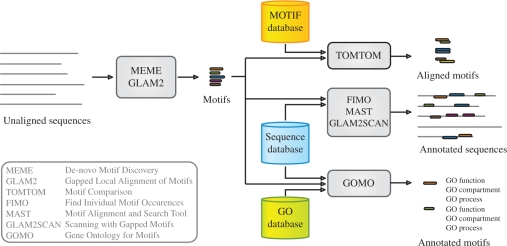
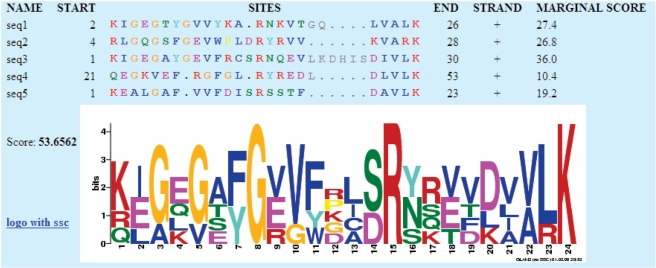
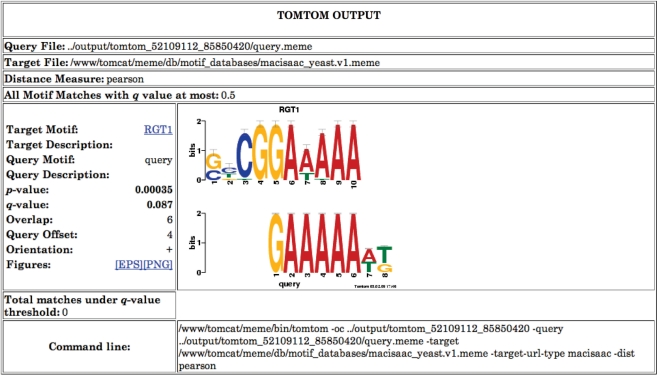
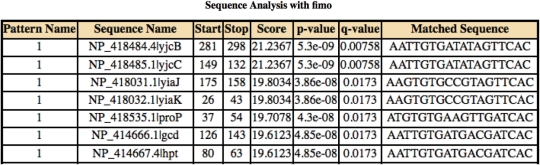
The MEME Suite web server provides a unified portal for online discovery and analysis of sequence motifs representing features such as DNA binding sites and protein interaction domains. The popular MEME motif discovery algorithm is now complemented by the GLAM2 algorithm which allows discovery of motifs containing gaps. Three sequence scanning algorithms--MAST, FIMO and GLAM2SCAN--allow scanning numerous DNA and protein sequence databases for motifs discovered by MEME and GLAM2. Transcription factor motifs (including those discovered using MEME) can be compared with motifs in many popular motif databases using the motif database scanning algorithm TOMTOM. Transcription factor motifs can be further analyzed for putative function by association with Gene Ontology (GO) terms using the motif-GO term association tool GOMO. MEME output now contains sequence LOGOS for each discovered motif, as well as buttons to allow motifs to be conveniently submitted to the sequence and motif database scanning algorithms (MAST, FIMO and TOMTOM), or to GOMO, for further analysis. GLAM2 output similarly contains buttons for further analysis using GLAM2SCAN and for rerunning GLAM2 with different parameters. All of the motif-based tools are now implemented as web services via Opal. Source code, binaries and a web server are freely available for noncommercial use at http://meme.nbcr.net.
Overview
The claims and statistics of this paper haven’t been checked yet.
Free: it reads the open-access text and checks the first 5 claims that cite a source we can check. Create a free account to check every claim.
Integrity signals
Registry
Cites
Statistics
Figures
Verification
Claims the paper makes
The claims and statistics of this paper haven’t been checked yet.
Free: it reads the open-access text and checks the first 5 claims that cite a source we can check. Create a free account to check every claim.
Claims other papers make about this one
Each is checked against this paper’s own text: does it say what the citing paper says it does?
The cited source says what the claim attributes to it.
In the citing paper
“Next, we applied the MEME motif-based sequence analysis tool (36) to investigate sequence elements that were enriched in genes whose TE was decreased by [-]CR-1-31B, which identified 2 significantly enriched 12-mer sequences (CGGCGGCGGCGG and GAGGAGGAGGAG; p = 2.2 × 10⁻²⁰ and p = 6.1 × 10⁻¹¹, respectively; Figure 2F).”
From Targeting eIF4A-dependent translation in genetically complex sarcoma (2026) · cites this paper as [36]
The cited source says what the claim attributes to it.
In the citing paper
“A discriminative motif search of S. salmonicida annexins versus Giardia alpha-giardins with the MEME tool (45) revealed a motif that is identical or highly similar to AB loops (type II Ca2+ coordination sites) in the former.”
From Comparative Cell Biology and Evolution of Annexins in Diplomonads (2016) · cites this paper as [45]
The check wasn’t confident either way, so it gives no verdict — never disputed.
In the citing paper
“The Olink technology allows the measurement of up to 92 proteins in 1 µL of plasma using the proximity extension assay (PEA).”
From Identification of Genetic Variants Regulating the Abundance of Clinically Relevant Plasma Proteins using the Diversity Outbred Mouse Model (2021) · cites this paper as [35]
Experimental — accuracy not yet measured
Self-check
Percentages, sums and reported differences re-computed from the paper’s own numbers.
The self-check needs the paper’s full text.
Citations
Cites
Fitting a mixture model by expectation maximization to discover motifs in biopolymers.
Bailey, T. L., & Elkan, C. (1994) · PubMed · Cited by 5,806
Self-citationA Direct Approach to False Discovery Rates
Storey, J. D. (2002) · Journal of the Royal Statistical Society Series B: Statistical Methodology · doi:10.1111/1467-9868.00346 · Cited by 5,603
MEME: discovering and analyzing DNA and protein sequence motifs
Bailey, T. L., Williams, N., Misleh, C., & Li, W. W. (2006) · Nucleic Acids Research · doi:10.1093/nar/gkl198 · Cited by 2,670 · cited 1×
“It offers a significantly expanded set of programs for these tasks compared with the earlier web server (1).”
BackgroundSelf-citationQuantifying similarity between motifs
Gupta, S., Stamatoyannopoulos, J. A., Bailey, T. L., & Noble, W. S. (2007) · Genome Biology · doi:10.1186/gb-2007-8-2-r24 · Cited by 2,058 · cited 2×
“TOMTOM (4) quantifies the similarity between two motifs, and can be used to search a database of known motifs for matches to motifs found by MEME.”
BackgroundMethodSelf-citationCombining evidence using p-values: application to sequence homology searches.
Bailey, T. L., & Gribskov, M. (1998) · Bioinformatics · doi:10.1093/bioinformatics/14.1.48 · Cited by 1,253
Self-citationSignificance analysis of time course microarray experiments
Storey, J. D., Xiao, W., Leek, J. T., Tompkins, R. G., & Davis, R. W. (2005) · Proceedings of the National Academy of Sciences · doi:10.1073/pnas.0504609102 · Cited by 567
Discovering Sequence Motifs with Arbitrary Insertions and Deletions
Frith, M. C., Saunders, N. F. W., Kobe, B., & Bailey, T. L. (2008) · PLoS Computational Biology · doi:10.1371/journal.pcbi.1000071 · Cited by 390 · cited 2×
“To overcome this limitation, we have incorporated a recent algorithm for gapped motif discovery—GLAM2 (3)—into the MEME suite.”
MethodSelf-citationCheminformatics analysis and learning in a data pipelining environment
Hassan, M., Brown, R. D., Varma-O’Brien, S., & Rogers, D. (2006) · Molecular Diversity · doi:10.1007/s11030-006-9041-5 · Cited by 184 · cited 1×
“A generic user interface may be generated automatically based upon an XML description of the command line syntax through the Opal GUI, either in a standard web browser or from a workflow program such as Vision (14), Kepler (15) or the Pipeline Pilot (16).”
MethodA Component-Based Software Environment for Visualizing Large Macromolecular Assemblies
Sanner, M. F. (2005) · Structure · doi:10.1016/j.str.2005.01.010 · Cited by 86
Score Distributions for Simultaneous Matching to Multiple Motifs
Bailey, T. L., & Gribskov, M. (1997) · Journal of Computational Biology · doi:10.1089/cmb.1997.4.45 · Cited by 59 · cited 10×
“MAST is ‘sequence oriented’, computing a single score for each sequence in the database.”
MethodInfluentialSelf-citation
Research works printed but not linked: 2
- 2005, PNAS, 102, 12837, 10.1073/pnas.0504609102 · DOI · Paper page
- Ludaescher B Altintas I Berkley C Higgins D Jaeger E Jones M Lee EA Tao J Zhao Y Scientific workow management and the Kepler system Concurrency Comput. Pract. Exp. 2005 18 1039 1065
Cited by
Items 401–500 of 1,097
Kanwar, P., Sanyal, S. K., Tokas, I., Yadav, A. K., Pandey, A., Kapoor, S., & Pandey, G. K. (2014) · Cell Calcium · doi:10.1016/j.ceca.2014.05.003 · Cited by 163
ProOpDB: Prokaryotic Operon DataBase
Taboada, B., Ciria, R., Martinez-Guerrero, C. E., & Merino, E. (2012) · Nucleic Acids Research · doi:10.1093/nar/gkr1020 · Cited by 163
“Once that the sequences have been retrieved, they can be used directly as the input data to the motifs identification program MEME (4), which has been locally installed in our web server, or as input data to any other motifs identification web servers.”
MethodAdaptive laboratory evolution of a genome-reduced Escherichia coli
Choe, D., Lee, J. H., Yoo, M., Hwang, S., Sung, B. H., Cho, S., Palsson, B., Kim, S. C., & Cho, B.-K. (2019) · Nature Communications · doi:10.1038/s41467-019-08888-6 · Cited by 163
Kahramanoglou, C., Prieto, A. I., Khedkar, S., Haase, B., Gupta, A., Benes, V., Fraser, G. M., Luscombe, N. M., & Seshasayee, A. S. N. (2012) · Nature Communications · doi:10.1038/ncomms1878 · Cited by 163
A Conserved Regulatory Logic Controls Temporal Identity in Mouse Neural Progenitors
Mattar, P., Ericson, J., Blackshaw, S., & Cayouette, M. (2015) · Neuron · doi:10.1016/j.neuron.2014.12.052 · Cited by 163
“Mouse Casz1 Is the Ortholog of Drosophila castor and Is Expressed in RPCs during Mid-Retinogenesis (A) Meme analysis (Bailey et al., 2009) of murine and Drosophila castor proteins identifies a signature HUHjC motif, where ‘‘U’’ represents a bulky amino acid residue, and ‘‘j’’ divides the 2 zinc finger repeats of the d…”
Kaaij, L. J. T., Mohn, F., van der Weide, R. H., de Wit, E., & Bühler, M. (2019) · Cell · doi:10.1016/j.cell.2019.08.007 · Cited by 163
Xiao, J. Y., Xu, S., Li, C., Xu, Y., Xing, L., Niu, Y., Huan, Q., Tang, Y., Zhao, C., Wagner, D., et al. (2014) · Nature Communications · doi:10.1038/ncomms5572 · Cited by 163
RetractedEttwiller, L. M., Buswell, J., Yigit, E., & Schildkraut, I. (2016) · BMC Genomics · doi:10.1186/s12864-016-2539-z · Cited by 162
“for overrepresented motifs in the 40 bases upstream of1C + 1C TSS class using MEME [20] and found the canonical TATAAT box at − 10 and sigma 70 motif at − 35”
InfluentialGuo, Y. A., Chang, M. M., Huang, W., Ooi, W. F., Xing, M., Tan, P., & Skanderup, A. J. (2018) · Nature Communications · doi:10.1038/s41467-018-03828-2 · Cited by 148
SOG1 activator and MYB3R repressors regulate a complex DNA damage network in Arabidopsis
Bourbousse, C., Vegesna, N., & Law, J. A. (2018) · Proceedings of the National Academy of Sciences · doi:10.1073/pnas.1810582115 · Cited by 163
RNase L Reprograms Translation by Widespread mRNA Turnover Escaped by Antiviral mRNAs
Burke, J. M., Moon, S. L., Lester, E., Matheny, T., & Parker, R. (2019) · Molecular Cell · doi:10.1016/j.molcel.2019.07.029 · Cited by 163
Song, X.-M., Huang, Z.-N., Duan, W.-K., Ren, J., Liu, T.-K., Li, Y., & Hou, X.-L. (2014) · Molecular Genetics and Genomics · doi:10.1007/s00438-013-0791-3 · Cited by 162
Self-citationPePPER: a webserver for prediction of prokaryote promoter elements and regulons
de Jong, A., Pietersma, H., Cordes, M., Kuipers, O. P., & Kok, J. (2012) · BMC Genomics · doi:10.1186/1471-2164-13-299 · Cited by 162
“; licensee BioMed Centra Commons Attribution License (http://creativec reproduction in any medium, provided the or regions that might act as TFBSs (MEME [9], ARCSMotif [10], GLAM2 [9], W-AlignACE [11], GIMSAN [12], RankMotif++ [13], GAME [14], and Tmod [15]).”
BackgroundMethodGiudice, J., Xia, Z., Wang, E. T., Scavuzzo, M. A., Ward, A. J., Kalsotra, A., Wang, W., Wehrens, X. H. T., Burge, C. B., Li, W., et al. (2014) · Nature Communications · doi:10.1038/ncomms4603 · Cited by 162
Self-citationHuman gut bacteria contain acquired interbacterial defence systems
Ross, B. D., Verster, A. J., Radey, M. C., Schmidtke, D. T., Pope, C. E., Hoffman, L. R., Hajjar, A. M., Peterson, S. B., Borenstein, E., & Mougous, J. D. (2019) · Nature · doi:10.1038/s41586-019-1708-z · Cited by 162
Babiychuk, E., Vandepoele, K., Wissing, J., Garcia-Diaz, M., De Rycke, R., Akbari, H., Joubès, J., Beeckman, T., Jänsch, L., Frentzen, M., et al. (2011) · Proceedings of the National Academy of Sciences · doi:10.1073/pnas.1103442108 · Cited by 162
Ceribelli, M., Hou, Z. E., Kelly, P. N., Huang, D. W., Wright, G., Ganapathi, K., Evbuomwan, M. O., Pittaluga, S., Shaffer, A. L., Marcucci, G., et al. (2016) · Cancer Cell · doi:10.1016/j.ccell.2016.10.002 · Cited by 162
“(C) The DNA logos of the top TCF4-binding motif predicted by MEME are shown (Bailey et al., 2009).”
Altered RNA Splicing by Mutant p53 Activates Oncogenic RAS Signaling in Pancreatic Cancer
Escobar-Hoyos, L. F., Penson, A., Kannan, R., Cho, H., Pan, C.-H., Singh, R. K., Apken, L. H., Hobbs, G. A., Luo, R., Lecomte, N., et al. (2020) · Cancer Cell · doi:10.1016/j.ccell.2020.05.010 · Cited by 162
“11.2 Bailey et al., 2009 N/A Prism GraphPad https://www.graphpad.com/ scientific-software/prism/ Primer3 Howard Hughes Medical Institute and by the National Institutes of Health http://bioinfo.ut.ee/primer3/ Other Sequence data, (FastQ files) for alternative splicing analyses in patient derived…”
MethodInfluentialGenome-wide analysis of primary auxin-responsive Aux/IAA gene family in maize (Zea mays. L.)
Wang, Y., Deng, D., Bian, Y., Lv, Y., & Xie, Q. (2010) · Molecular Biology Reports · doi:10.1007/s11033-010-0058-6 · Cited by 163
“cgi) [22].”
Wu, H., Whitfield, T. W., Gordon, J. A. R., Dobson, J. R., Tai, P. W. L., van Wijnen, A. J., Stein, J. L., Stein, G. S., & Lian, J. B. (2014) · Genome biology · doi:10.1186/gb-2014-15-3-r52 · Cited by 162
“Using TOMTOM [24] it was determined that the de novo Runx2 motif was similar (E-value = 2.6 × 10⁻⁴, q-value = 2.6 × 10⁻⁴) to the JASPAR MA0002.”
BackgroundMethodInfluentialMeyer, K., Köster, T., Nolte, C., Weinholdt, C., Lewinski, M., Große, I., & Staiger, D. (2017) · Genome biology · doi:10.1186/s13059-017-1332-x · Cited by 166
“The black boxes represent the significant MEME intron motif at LL36 (identified using the FIMO tool from the MEME suite; cf. Additional file 1: Fig.”
MethodInfluentialPWMScan: a fast tool for scanning entire genomes with a position-specific weight matrix
Ambrosini, G., Groux, R., & Bucher, P. (2018) · Bioinformatics · doi:10.1093/bioinformatics/bty127 · Cited by 147
Mitigation of off-target toxicity in CRISPR-Cas9 screens for essential non-coding elements
Tycko, J., Wainberg, M., Marinov, G. K., Ursu, O., Hess, G. T., Ego, B. K., Aradhana, Li, A., Truong, A., Trevino, A. E., et al. (2019) · Nature Communications · doi:10.1038/s41467-019-11955-7 · Cited by 148
Jin, J. F., Wang, Z., He, Q., Wang, J., Li, P. F., Xu, J. M., Zheng, S. J., Fan, W., & Yang, J. (2020) · BMC Genomics · doi:10.1186/s12864-020-6689-7 · Cited by 163
“org/tools/meme) [52] with the following motif parameters: number of repetitions Jin et al.”
BackgroundWalker, M. C., Eslami, S. M., Hetrick, K. J., Ackenhusen, S. E., Mitchell, D. A., & van der Donk, W. A. (2020) · BMC Genomics · doi:10.1186/s12864-020-06785-7 · Cited by 147
Gene regulatory network inference resources: A practical overview
Mercatelli, D., Scalambra, L., Triboli, L., Ray, F., & Giorgi, F. M. (2020) · Biochimica et Biophysica Acta (BBA) - Gene Regulatory Mechanisms · doi:10.1016/j.bbagrm.2019.194430 · Cited by 161
Codon bias confers stability to human mRNA s
Hia, F., Yang, S. F., Shichino, Y., Yoshinaga, M., Murakawa, Y., Vandenbon, A., Fukao, A., Fujiwara, T., Landthaler, M., Natsume, T., et al. (2019) · EMBO reports · doi:10.15252/embr.201948220 · Cited by 161
“Based on the RIP-seq data in JJN3 and H929 [Data ref: 43,44], we identified common transcripts, which were more than fivefold differentially upregulated, and subjected their cDNA sequences to de novo motif identification via the MEME (Multiple EM for Motif Elicitation) software [46].”
Excised linear introns regulate growth in yeast
Morgan, J. T., Fink, G. R., & Bartel, D. P. (2019) · Nature · doi:10.1038/s41586-018-0828-1 · Cited by 161
Huang, H., Shao, X., Xie, Y., Wang, T., Zhang, Y., Wang, X., & Deng, X. (2019) · Nature Communications · doi:10.1038/s41467-019-10778-w · Cited by 161
Virulence Regulator EspR of Mycobacterium tuberculosis Is a Nucleoid-Associated Protein
Blasco, B., Chen, J. M., Hartkoorn, R., Sala, C., Uplekar, S., Rougemont, J., Pojer, F., & Cole, S. T. (2012) · PLoS Pathogens · doi:10.1371/journal.ppat.1002621 · Cited by 137
“Thus, from the 582 sequences, those belonging to the pe and ppe categories were excluded, leaving 416 sequences that were reanalyzed using MEME.”
MethodInfluentialSkinnider, M. A., Johnston, C. W., Edgar, R. E., Dejong, C. A., Merwin, N. J., Rees, P. N., & Magarvey, N. A. (2016) · Proceedings of the National Academy of Sciences · doi:10.1073/pnas.1609014113 · Cited by 161
“Motif discovery was performed using the MEME web server (39), allowing any number of motif occurrences with a minimummotif length of 6 aa and a maximum length of 25 aa.”
MethodYe, P., Luan, Y., Chen, K., Liu, Y., Xiao, C., & Xie, Z. (2016) · Nucleic Acids Research · doi:10.1093/nar/gkw950 · Cited by 161
Amato, A., Cavallini, E., Zenoni, S., Finezzo, L., Begheldo, M., Ruperti, B., & Tornielli, G. B. (2017) · Frontiers in Plant Science · doi:10.3389/fpls.2016.01979 · Cited by 161
“The online MEME Suite (http://meme-suite.org/doc/ overview.html; Bailey et al., 2009) was used to discover protein motifs with an expected value lower than 2 × 10⁻¹² using the following search parameters: four to twelve residues (minimum to maximum length), any number of repetitions, and 10 motifs…”
MethodLong-range single-molecule mapping of chromatin accessibility in eukaryotes
Shipony, Z., Marinov, G. K., Swaffer, M. P., Sinnott-Armstrong, N. A., Skotheim, J. M., Kundaje, A., & Greenleaf, W. J. (2020) · Nature Methods · doi:10.1038/s41592-019-0730-2 · Cited by 160
Souza, G. M., Van Sluys, M.-A., Lembke, C. G., Lee, H., Margarido, G. R. A., Hotta, C. T., Gaiarsa, J. W., Diniz, A. L., Oliveira, M. D. M., Ferreira, S. D. S., et al. (2019) · GigaScience · doi:10.1093/gigascience/giz129 · Cited by 160
De Novo Mutations in the Genome Organizer CTCF Cause Intellectual Disability
Gregor, A., Oti, M., Kouwenhoven, E. N., Hoyer, J., Sticht, H., Ekici, A. B., Kjaergaard, S., Rauch, A., Stunnenberg, H. G., Uebe, S., et al. (2013) · The American Journal of Human Genetics · doi:10.1016/j.ajhg.2013.05.007 · Cited by 160
CNTF-STAT3-IL-6 Axis Mediates Neuroinflammatory Cascade across Schwann Cell-Neuron-Microglia
Hu, Z., Deng, N., Liu, K., Zhou, N., Sun, Y., & Zeng, W. (2020) · Cell Reports · doi:10.1016/j.celrep.2020.107657 · Cited by 160
Visualizing the complex functions and mechanisms of the anaphase promoting complex/cyclosome (APC/C)
Alfieri, C., Zhang, S., & Barford, D. (2017) · Open Biology · doi:10.1098/rsob.170204 · Cited by 160
Yap, K., Mukhina, S., Zhang, G., Tan, J. S. C., Ong, H. S., & Makeyev, E. V. (2018) · Molecular Cell · doi:10.1016/j.molcel.2018.08.041 · Cited by 160
Shan, Q., Zeng, Z., Xing, S., Li, F., Hartwig, S. M., Gullicksrud, J. A., Kurup, S. P., Van Braeckel-Budimir, N., Su, Y., Martin, M. D., et al. (2017) · Nature Immunology · doi:10.1038/ni.3773 · Cited by 160
Metabolic Reprogramming Promotes Neural Crest Migration via Yap/Tead Signaling
Bhattacharya, D., Azambuja, A. P., & Simoes-Costa, M. (2020) · Developmental Cell · doi:10.1016/j.devcel.2020.03.005 · Cited by 160
Liu, Q., Wang, Z., Xu, X., Zhang, H., & Li, C. (2015) · PLoS ONE · doi:10.1371/journal.pone.0134753 · Cited by 163
“net/meme/) was used to identify conserved motifs for each C2H2-ZF gene [42].”
MethodInferring transcription factor complexes from ChIP-seq data
Whitington, T., Frith, M. C., Johnson, J., & Bailey, T. L. (2011) · Nucleic Acids Research · doi:10.1093/nar/gkr341 · Cited by 135
“Given a set of binding regions determined by ChIP-seq, ab initio motif discovery tools such as MEME (2) and GLAM (3) can discover the motif corresponding to the TF’s DBD, while sometimes identifying additional motifs corresponding to co-regulatory TFs.”
MethodSelf-citationNoncanonical crRNAs derived from host transcripts enable multiplexable RNA detection by Cas9
Jiao, C., Sharma, S., Dugar, G., Peeck, N. L., Bischler, T., Wimmer, F., Yu, Y., Barquist, L., Schoen, C. U., Kurzai, O., et al. (2021) · Science · doi:10.1126/science.abe7106 · Cited by 160
Engineering source-sink relations by prime editing confers heat-stress resilience in tomato and rice
Lou, H., Li, S., Shi, Z., Zou, Y., Zhang, Y., Huang, X., Yang, D., Yang, Y., Li, Z., & Xu, C. (2025) · Cell · doi:10.1016/j.cell.2024.11.005 · Cited by 159
Ma, J., Li, M.-Y., Wang, F., Tang, J., & Xiong, A.-S. (2015) · BMC Genomics · doi:10.1186/s12864-015-1242-9 · Cited by 159
“MEME Suite was used to identify all motifs in the BraDof protein sequences [60].”
MethodFranco, H. L., Nagari, A., Malladi, V. S., Li, W., Xi, Y., Richardson, D., Allton, K. L., Tanaka, K., Li, J., Murakami, S., et al. (2018) · Genome Research · doi:10.1101/gr.226019.117 · Cited by 159
Self-citationNie, J., Yin, Z., Li, Z., Wu, Y., & Huang, L. (2018) · New Phytologist · doi:10.1111/nph.15631 · Cited by 159
IVT-seq reveals extreme bias in RNA sequencing
Lahens, N. F., Kavakli, I. H., Zhang, R., Hayer, K., Black, M. B., Dueck, H., Pizarro, A., Kim, J., Irizarry, R., Thomas, R. S., et al. (2014) · Genome Biology · doi:10.1186/gb-2014-15-6-r86 · Cited by 158
“To address the possibility that mouse RNAs may interact with homologous human RNAs and interfere with them in trans, we assayed the sequences surrounding these regions using the MEME Suite [18], but we found no sequence motifs these regions have in common.”
MethodOkay, S., Derelli, E., & Unver, T. (2014) · Molecular Genetics and Genomics · doi:10.1007/s00438-014-0849-x · Cited by 158
“net/meme) (Bailey et al. 2009) was utilized for analysis of the conserved motifs of TaWRKY sequences.”
MethodInfluentialFunctional and topological diversity of LOV domain photoreceptors
Glantz, S. T., Carpenter, E. J., Melkonian, M., Gardner, K. H., Boyden, E. S., Wong, G. K.-S., & Chow, B. Y. (2016) · Proceedings of the National Academy of Sciences · doi:10.1073/pnas.1509428113 · Cited by 158
“A Python script removed duplicate proteins or exact subsets of longer proteins on a per-species basis to ensure uniqueness of each candidate, which was then searched for the sensor motifs with the MAST tool (20) with e-value threshold ≤ 1e-25.”
BackgroundMethodInfluentialInsulin Receptor Associates with Promoters Genome-wide and Regulates Gene Expression
Hancock, M. L., Meyer, R. C., Mistry, M., Khetani, R. S., Wagschal, A., Shin, T., Ho Sui, S. J., Näär, A. M., & Flanagan, J. G. (2019) · Cell · doi:10.1016/j.cell.2019.02.030 · Cited by 158
Sharma, R., Xia, X., Cano, L. M., Evangelisti, E., Kemen, E., Judelson, H., Oome, S., Sambles, C., van den Hoogen, D. J., Kitner, M., et al. (2015) · BMC Genomics · doi:10.1186/s12864-015-1904-7 · Cited by 158
Malvezzi, F., Litos, G., Schleiffer, A., Heuck, A., Mechtler, K., Clausen, T., & Westermann, S. (2013) · The EMBO Journal · doi:10.1038/emboj.2012.356 · Cited by 161
“The C-terminal motif in Dsn1 homologues was defined with MEME (one occurrence per sequence, motif width 5–15) (Bailey et al , 2009).”
He, Q., Jones, D. C., Li, W., Xie, F., Ma, J., Sun, R., Wang, Q., Zhu, S., & Zhang, B. (2016) · Scientific Reports · doi:10.1038/srep22980 · Cited by 160
Self-citationkpLogo: positional k-mer analysis reveals hidden specificity in biological sequences
Wu, X., & Bartel, D. P. (2017) · Nucleic Acids Research · doi:10.1093/nar/gkx323 · Cited by 144
“Consistent with this early understanding of the defining features of pri-miRNAs, no visible sequence signals were observed when human miRNA precursors were anchored at the sites of initial endonucleolytic cleavage and visualized by WebLogo (1) (Figure 3B), nor did motifdiscovery tools such as MEME (12) identify any si…”
Baker, C. L., Kajita, S., Walker, M., Saxl, R. L., Raghupathy, N., Choi, K., Petkov, P. M., & Paigen, K. (2015) · PLoS Genetics · doi:10.1371/journal.pgen.1004916 · Cited by 136
“0) for motif discovery and sequence searching [54].”
BackgroundChromatin-wide Profiling of DYRK1A Reveals a Role as a Gene-Specific RNA Polymerase II CTD Kinase
Vona, C. D., Bezdan, D., Islam, A. B. M. M. K., Salichs, E., López-Bigas, N., Ossowski, S., & de la Luna, S. (2015) · Molecular Cell · doi:10.1016/j.molcel.2014.12.026 · Cited by 158
“De novo motif search MEME was used for de novo identification of motifs in peak regions and associated promoters (Bailey et al., 2009) (http://meme.”
MethodInsertions and Deletions Target Lineage-Defining Genes in Human Cancers
Imielinski, M., Guo, G., & Meyerson, M. (2017) · Cell · doi:10.1016/j.cell.2016.12.025 · Cited by 129
“7 (Bailey et al., 2009) http://meme-suite.org/ Other Universal mask for whole genome sequencing variant calling Heng Li, personal communication https://github.com/lh3/sgdp-fermi/releases/ download/v1/sgdp-263-hs37d5.tgz Please cite this article in press as: Imielinski et al., Insertions and…”
Chen, G., Yang, X., Ko, A., Sun, X., Gao, M., Zhang, Y., Shi, A., Mariuzza, R. A., & Weng, N.-P. (2017) · Cell Reports · doi:10.1016/j.celrep.2017.03.072 · Cited by 132
Chia, L. W., Hornung, B. V. H., Aalvink, S., Schaap, P. J., de Vos, W. M., Knol, J., & Belzer, C. (2018) · Antonie van Leeuwenhoek · doi:10.1007/s10482-018-1040-x · Cited by 140
Evolutionary and expression analyses of soybean basic Leucine zipper transcription factor family
Zhang, M., Liu, Y., Shi, H., Guo, M., Chai, M., He, Q., Yan, M., Cao, D., Zhao, L., Cai, H., et al. (2018) · BMC Genomics · doi:10.1186/s12864-018-4511-6 · Cited by 157
“To obtain insight into the divergence and function of GmbZIP proteins, a total of 20 conserved motifs in the GmbZIPs were captured by the MEME software (Additional file 7: Figure S1) [34].”
MethodInfluentialBrooks, M. D., Cirrone, J., Pasquino, A. V., Álvarez, J. M., Swift, J., Mittal, S., Juang, C.-L., Varala, K., Gutiérrez, R. A., Krouk, G., et al. (2019) · Nature Communications · doi:10.1038/s41467-019-09522-1 · Cited by 160
FOXA2 Is Required for Enhancer Priming during Pancreatic Differentiation
Lee, K., Cho, H., Rickert, R. W., Li, Q. V., Pulecio, J., Leslie, C. S., & Huangfu, D. (2019) · Cell Reports · doi:10.1016/j.celrep.2019.06.034 · Cited by 151
“, 2011) of MEME suite (Bailey et al., 2009), under the P value cutoff of 1e-4.”
MethodReconstitution of the oocyte transcriptional network with transcription factors
Hamazaki, N., Kyogoku, H., Araki, H., Miura, F., Horikawa, C., Hamada, N., Shimamoto, S., Hikabe, O., Nakashima, K., Kitajima, T. S., et al. (2020) · Nature · doi:10.1038/s41586-020-3027-9 · Cited by 157
Predicting dynamic cellular protein–RNA interactions by deep learning using in vivo RNA structures
Sun, L., Xu, K., Huang, W., Yang, Y. T., Li, P., Tang, L., Xiong, T., & Zhang, Q. C. (2021) · Cell Research · doi:10.1038/s41422-021-00476-y · Cited by 141
Schick, S., Rendeiro, A. F., Runggatscher, K., Ringler, A., Boidol, B., Hinkel, M., Májek, P., Vulliard, L., Penz, T., Parapatics, K., et al. (2019) · Nature Genetics · doi:10.1038/s41588-019-0477-9 · Cited by 157
A multi-omic single-cell landscape of human gynecologic malignancies
Regner, M. J., Wisniewska, K., Garcia-Recio, S., Thennavan, A., Mendez-Giraldez, R., Malladi, V. S., Hawkins, G., Parker, J. S., Perou, C. M., Bae-Jump, V. L., et al. (2021) · Molecular Cell · doi:10.1016/j.molcel.2021.10.013 · Cited by 135
Genome-wide identification and characterization of ABA receptor PYL gene family in rice
Yadav, S. K., Kumar, V. V. S., Verma, R. K., Yadav, P. D., Saroha, A., Wankhede, D. P., Chaudhary, B., & Chinnusamy, V. (2020) · BMC Genomics · doi:10.1186/s12864-020-07083-y · Cited by 155
LC3B is an RNA-binding protein to trigger rapid mRNA degradation during autophagy
Hwang, H. J., Ha, H., Lee, B. S., Kim, B. H., Song, H. K., & Kim, Y. K. (2022) · Nature Communications · doi:10.1038/s41467-022-29139-1 · Cited by 158
Occupancy maps of 208 chromatin-associated proteins in one human cell type
Partridge, E. C., Chhetri, S. B., Prokop, J. W., Ramaker, R. C., Jansen, C. S., Goh, S.-T., Mackiewicz, M., Newberry, K. M., Brandsmeier, L. A., Meadows, S. K., et al. (2020) · Nature · doi:10.1038/s41586-020-2023-4 · Cited by 154
Vatansever, R., Koç, İ., Özyiğit, İ. İ., Şen, U., Uras, M. E., Anjum, N. A., Pereira, E., & Filiz, E. (2016) · Planta · doi:10.1007/s00425-016-2575-6 · Cited by 154
“Conserved motif residues in SULTR sequences were predicted by MEME suite with parameters, where maximum number of motifs was 5, minimum motif width was 6 and maximum motif width was 50 (http:// meme-suite.org/; Timothy et al. 2009).”
MethodNiu, X., Guan, Y., Chen, S., & Li, H. (2017) · BMC Genomics · doi:10.1186/s12864-017-4044-4 · Cited by 155
“Conserved motifs of BdbHLHs were identified by MEME server [41] with maximum number of motifs set at 15 and optimum width of motifs from 5 to 200 amino acids.”
MethodFoxk proteins repress the initiation of starvation-induced atrophy and autophagy programs
Bowman, C. J., Ayer, D. E., & Dynlacht, B. D. (2014) · Nature Cell Biology · doi:10.1038/ncb3062 · Cited by 153
Bailey, P. C., Schudoma, C., Jackson, W., Baggs, E., Dagdas, G., Haerty, W., Moscou, M., & Krasileva, K. V. (2018) · Genome Biology · doi:10.1186/s13059-018-1392-6 · Cited by 147
“FIMO was used to identify motifs in the entire set of NLRs from diverse grass species [52].”
MethodDeep genome annotation of the opportunistic human pathogen Streptococcus pneumoniae D39
Slager, J., Aprianto, R., & Veening, J.-W. (2018) · Nucleic Acids Research · doi:10.1093/nar/gky725 · Cited by 137
“We defined the 100 bps upstream of each TSS as the promoter region and used the MEME Suite (92) to scan each promoter region for regulatory motifs (Figure 6D, see Supplementary Methods for detailed constraints).”
BackgroundMethodPRDM9 binding organizes hotspot nucleosomes and limits Holliday junction migration
Baker, C. L., Walker, M., Kajita, S., Petkov, P. M., & Paigen, K. (2014) · Genome Research · doi:10.1101/gr.170167.113 · Cited by 149
“0, accessed online) for motif discovery and sequence searching (Bailey et al. 2009).”
BackgroundInfluentialSoler, M., Camargo, E. L. O., Carocha, V., Wang, H., Clemente, H. S., Savelli, B., Hefer, C. A., Paiva, J. A. P., Myburg, A. A., & Grima‐Pettenati, J. (2014) · New Phytologist · doi:10.1111/nph.13039 · Cited by 152
Chatterjee, S., Kapoor, A., Akiyama, J. A., Auer, D. R., Lee, D., Gabriel, S., Berrios, C., Pennacchio, L. A., & Chakravarti, A. (2016) · Cell · doi:10.1016/j.cell.2016.09.005 · Cited by 140
“5 CRE sequences for TF biding sites (TFBSs) from publically available motif databases (Bryne et al., 2008; Newburger and Bulyk, 2009; Wingender et al., 1996) using the software FIMO (MEME suite [Bailey et al., 2009]).”
MethodJiang, X., Hall, B., Arthur, T. D., Plichta, D. R., Covington, C. T., Poyet, M., Crothers, J. W., Moses, P. L., Tolonen, A. C., Vlamakis, H. C., et al. (2019) · Science · doi:10.1126/science.aau5238 · Cited by 152
The Litsea genome and the evolution of the laurel family
Chen, Y., Li, Z., Zhao, Y., Gao, M., Wang, J., Liu, K.-W., Wang, X., Wu, L., Jiao, Y., Xu, Z., et al. (2020) · Nature Communications · doi:10.1038/s41467-020-15493-5 · Cited by 153
A direct physical interaction between Nanog and Sox2 regulates embryonic stem cell self-renewal
Gagliardi, A., Mullin, N. P., Ying Tan, Z., Colby, D., Kousa, A. I., Halbritter, F., Weiss, J. T., Felker, A., Bezstarosti, K., Favaro, R., et al. (2013) · The EMBO Journal · doi:10.1038/emboj.2013.161 · Cited by 134
Bioinformatic Expansion and Discovery of Thiopeptide Antibiotics
Schwalen, C. J., Hudson, G. A., Kille, B., & Mitchell, D. A. (2018) · Journal of the American Chemical Society · doi:10.1021/jacs.8b03896 · Cited by 136
Complementary Alu sequences mediate enhancer–promoter selectivity
Liang, L., Cao, C., Ji, L., Cai, Z., Wang, D., Ye, R., Chen, J., Yu, X., Zhou, J., Bai, Z., et al. (2023) · Nature · doi:10.1038/s41586-023-06323-x · Cited by 153
Sarkies, P., Selkirk, M. E., Jones, J. T., Blok, V., Boothby, T., Goldstein, B., Hanelt, B., Ardila-Garcia, A., Fast, N. M., Schiffer, P. M., et al. (2015) · PLOS Biology · doi:10.1371/journal.pbio.1002061 · Cited by 137
“The motifs are presented as sequence logos generated using the MEME program [27].”
MethodGusev, O., Suetsugu, Y., Cornette, R., Kawashima, T., Logacheva, M. D., Kondrashov, A. S., Penin, A. A., Hatanaka, R., Kikuta, S., Shimura, S., et al. (2014) · Nature Communications · doi:10.1038/ncomms5784 · Cited by 151
Reddy, T. E., Gertz, J., Crawford, G. E., Garabedian, M. J., & Myers, R. M. (2012) · Molecular and Cellular Biology · doi:10.1128/mcb.00062-12 · Cited by 149
Adachi, K., Nikaido, I., Ohta, H., Ohtsuka, S., Ura, H., Kadota, M., Wakayama, T., Ueda, H. R., & Niwa, H. (2013) · Molecular Cell · doi:10.1016/j.molcel.2013.09.002 · Cited by 149
Wolf, T., Shelest, V., Nath, N., & Shelest, E. (2015) · Bioinformatics · doi:10.1093/bioinformatics/btv713 · Cited by 149
Faraji, S., Filiz, E., Kazemitabar, S. K., Vannozzi, A., Palumbo, F., Barcaccia, G., & Heidari, P. (2020) · Genes · doi:10.3390/genes11121464 · Cited by 150
Hu, W., Zeng, H., Shi, Y., Zhou, C., Huang, J., Jia, L., Xu, S., Feng, X., Zeng, Y., Xiong, T., et al. (2022) · Nature Communications · doi:10.1038/s41467-022-32791-2 · Cited by 151
Rbfox2 controls autoregulation in RNA-binding protein networks
Jangi, M., Boutz, P. L., Paul, P., & Sharp, P. A. (2014) · Genes & Development · doi:10.1101/gad.235770.113 · Cited by 133
“In support of direct targeting by Rbfox2, hexamer analysis using MEME identified the UGCAUG motif as the only significantly enriched motif in the 300 nt flanking these exons (61 motifs/61 sites, E = 0.0012).”
MethodInfluentialWang, Z., Cheng, K., Wan, L., Yan, L., Jiang, H., Liu, S., Lei, Y. H., & Liao, B. (2015) · BMC Genomics · doi:10.1186/s12864-015-2258-x · Cited by 149
Melo, L. D. R., Veiga, P., Cerca, N., Kropinski, A. M., Almeida, C., Azeredo, J., & Sillankorva, S. (2016) · Frontiers in Microbiology · doi:10.3389/fmicb.2016.01024 · Cited by 152
Tian, Z., Yi, X.-X., Cho, A., O’Gara, F., & Wang, Y. (2016) · PLoS Pathogens · doi:10.1371/journal.ppat.1005932 · Cited by 150
DNA stretching induces Cas9 off-target activity
Newton, M. D., Taylor, B. J., Driessen, R. P. C., Roos, L., Cvetesic, N., Allyjaun, S., Lenhard, B., Cuomo, M. E., & Rueda, D. S. (2019) · Nature Structural & Molecular Biology · doi:10.1038/s41594-019-0188-z · Cited by 138
Verma, D., Lakhanpal, N., & Singh, K. (2019) · BMC Genomics · doi:10.1186/s12864-019-5593-5 · Cited by 149
Acute depletion of CTCF directly affects MYC regulation through loss of enhancer–promoter looping
Hyle, J., Zhang, Y., Wright, S., Xu, B., Shao, Y., Easton, J., Tian, L., Feng, R., Xu, P., & Li, C. (2019) · Nucleic Acids Research · doi:10.1093/nar/gkz462 · Cited by 139
“To further define CTCF peaks with high stringency, we scanned genome-wide CTCF motif predicted by TRANSFAC (55) and JASPAR (56) using FIMO from MEME suite (57) (version 4.”
MethodWang, L., Jia, G., Jiang, X., Cao, S., Chen, Z. J., & Song, Q. (2021) · The Plant Cell · doi:10.1093/plcell/koab081 · Cited by 149
Genome-wide analyses of LINE–LINE-mediated nonallelic homologous recombination
Startek, M., Szafranski, P., Gambin, T., Campbell, I. M., Hixson, P., Shaw, C. A., Stankiewicz, P., & Gambin, A. (2015) · Nucleic Acids Research · doi:10.1093/nar/gku1394 · Cited by 104
“We performed a de novo study of motifs associated with recombination with the MEME software suite (34,35), using the LINEs identified as NAHR-mediating in this study and from the literature.”
Metadata
- Authors
- Bailey, T. L., Boden, M., Buske, F. A., Frith, M., Grant, C. E., Clementi, L., Ren, J., Li, W. W., & Noble, W. S.
- Affiliations
- The University of Queensland (AU)
- Corresponding author
- Bailey, T. L.
- Noble, W. S.
- Venue
- Nucleic Acids Research
- Publisher
- Oxford University Press (OUP)
- Published
- 2009-05-20
- Volume
- 37
- Issue
- Web Server
- Pages
- W202-W208
- ISSN
- 0305-1048 (ISSN-L)
- 1362-4962
- PMC
- PMC2703892
- OpenAlex
- W2157009395
- Cited by
- 10,648
- References
- 15
- Citations by year
- 2026: 635 · 2025: 885 · 2024: 922 · 2023: 999 · 2022: 1146 · 2021: 1349 · 2020: 979 · 2019: 720 · 2018: 613 · 2017: 498 · 2016: 448 · 2015: 456 · 2014: 376 · 2013: 296 · 2012: 184
- FWCI
- 42.64
- Type
- journal article
- Language
- en
- Open access
- gold
- doi.org
- Licence
- Locations
- Nucleic Acids Research (publishedVersion, cc-by-nc)
- PubMed Central (publishedVersion, cc-by-nc)
- PubMed (publishedVersion)
- Funders
- National Institutes of Health (5r01rr021692-06)
- National Center for Research Resources (P41-RR08605, R0-1 RR021692, P41RR008605)
- Topics
- Life Sciences › Biochemistry, Genetics and Molecular Biology › Molecular Biology › Genomics and Chromatin Dynamics
- Life Sciences › Biochemistry, Genetics and Molecular Biology › Molecular Biology › Genomics and Phylogenetic Studies
- Life Sciences › Biochemistry, Genetics and Molecular Biology › Molecular Biology › Bioinformatics and Genomic Networks
- Keywords
- motif discovery, DNA binding sites, protein-protein interaction domains, MAST, TomTom, Gene Ontology, transcription factor binding motifs, sequence logos, web server, motif database, web services
- MeSH terms
- Algorithms, Binding Sites, Software, Transcription Factors, Sequence Analysis, DNA, Internet, Sequence Analysis, Protein, Databases, Genetic, Regulatory Elements, Transcriptional
About these checks
Registry, retraction, Cites and statistics results are computed, not judged, with one exception: a printed reference that no index lists is read once by a model before it counts as a citation error. Claims are extracted by a model and kept only when their quote appears verbatim in the text; each cited source is then checked, with a model’s help, for whether it says what the claim relies on. Those verdicts can be wrong — read the claim’s quote and the cited source before relying on one.
Statistics and arithmetic are recomputed, not judged.
Confidence bands are shown only for fields calibrated on our annotated test set. None is calibrated yet, so no band is shown.
What counts as a claim ›How we measure confidence ›How we check this ›
Are you an author, or do you see a problem with this page? Request a review
Data sources
Bibliographic data: Semantic Scholar, OpenAlex, Crossref.
Contains information from the Semantic Scholar Academic Graph Datasets, made available under the ODC Attribution License (ODC-BY 1.0).
Semantic Scholar’s data is described in: Kinney, R., et al. (2023). The Semantic Scholar Open Data Platform. arXiv:2301.10140.
