

MEME SUITE: tools for motif discovery and searching
Open accessThe DOI matches its Crossref record; 15 of the 15 references it cites were found in a registry or an index.
Abstract
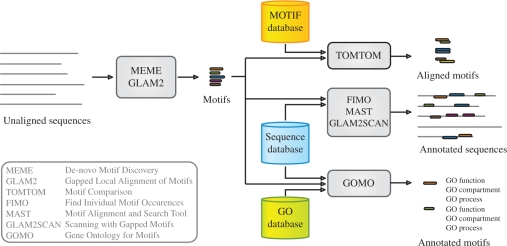
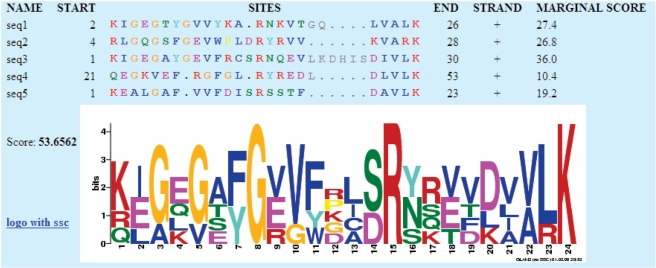
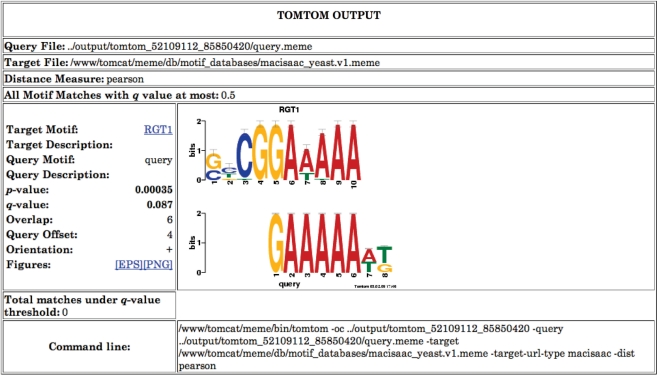
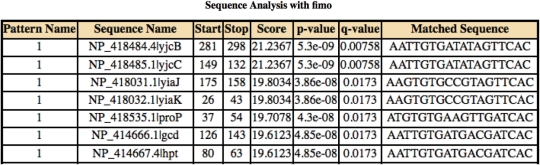
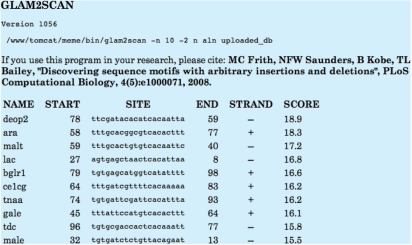
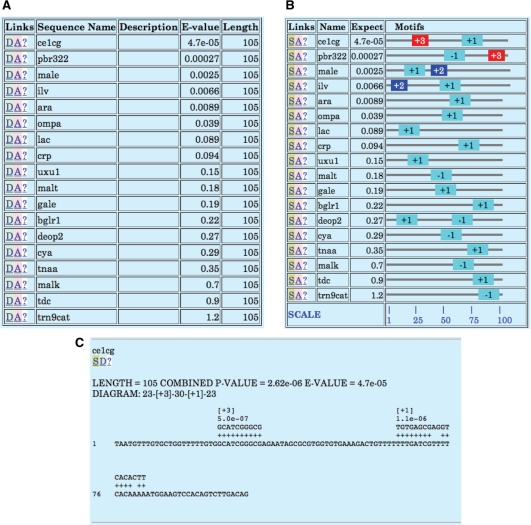
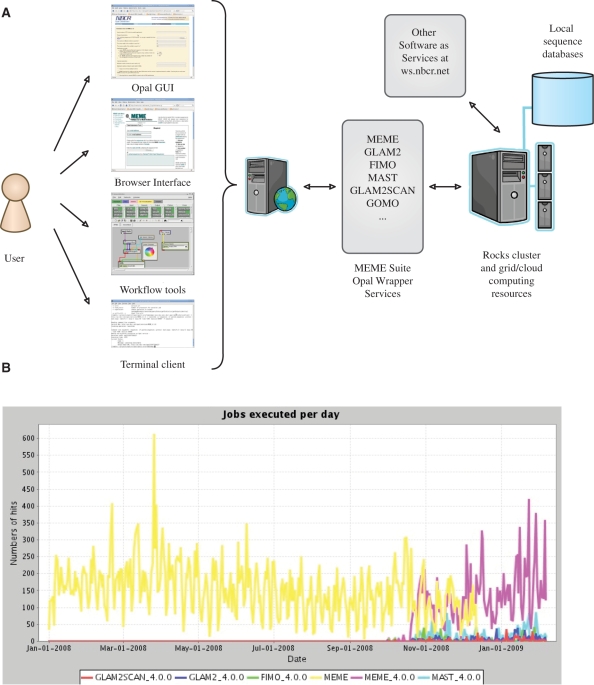
The MEME Suite web server provides a unified portal for online discovery and analysis of sequence motifs representing features such as DNA binding sites and protein interaction domains. The popular MEME motif discovery algorithm is now complemented by the GLAM2 algorithm which allows discovery of motifs containing gaps. Three sequence scanning algorithms--MAST, FIMO and GLAM2SCAN--allow scanning numerous DNA and protein sequence databases for motifs discovered by MEME and GLAM2. Transcription factor motifs (including those discovered using MEME) can be compared with motifs in many popular motif databases using the motif database scanning algorithm TOMTOM. Transcription factor motifs can be further analyzed for putative function by association with Gene Ontology (GO) terms using the motif-GO term association tool GOMO. MEME output now contains sequence LOGOS for each discovered motif, as well as buttons to allow motifs to be conveniently submitted to the sequence and motif database scanning algorithms (MAST, FIMO and TOMTOM), or to GOMO, for further analysis. GLAM2 output similarly contains buttons for further analysis using GLAM2SCAN and for rerunning GLAM2 with different parameters. All of the motif-based tools are now implemented as web services via Opal. Source code, binaries and a web server are freely available for noncommercial use at http://meme.nbcr.net.
Overview
The claims and statistics of this paper haven’t been checked yet.
Free: it reads the open-access text and checks the first 5 claims that cite a source we can check. Create a free account to check every claim.
Integrity signals
Registry
Cites
Statistics
Figures
Verification
Claims the paper makes
The claims and statistics of this paper haven’t been checked yet.
Free: it reads the open-access text and checks the first 5 claims that cite a source we can check. Create a free account to check every claim.
Claims other papers make about this one
Each is checked against this paper’s own text: does it say what the citing paper says it does?
The cited source says what the claim attributes to it.
In the citing paper
“Next, we applied the MEME motif-based sequence analysis tool (36) to investigate sequence elements that were enriched in genes whose TE was decreased by [-]CR-1-31B, which identified 2 significantly enriched 12-mer sequences (CGGCGGCGGCGG and GAGGAGGAGGAG; p = 2.2 × 10⁻²⁰ and p = 6.1 × 10⁻¹¹, respectively; Figure 2F).”
From Targeting eIF4A-dependent translation in genetically complex sarcoma (2026) · cites this paper as [36]
The cited source says what the claim attributes to it.
In the citing paper
“A discriminative motif search of S. salmonicida annexins versus Giardia alpha-giardins with the MEME tool (45) revealed a motif that is identical or highly similar to AB loops (type II Ca2+ coordination sites) in the former.”
From Comparative Cell Biology and Evolution of Annexins in Diplomonads (2016) · cites this paper as [45]
The check wasn’t confident either way, so it gives no verdict — never disputed.
In the citing paper
“The Olink technology allows the measurement of up to 92 proteins in 1 µL of plasma using the proximity extension assay (PEA).”
From Identification of Genetic Variants Regulating the Abundance of Clinically Relevant Plasma Proteins using the Diversity Outbred Mouse Model (2021) · cites this paper as [35]
Experimental — accuracy not yet measured
Self-check
Percentages, sums and reported differences re-computed from the paper’s own numbers.
The self-check needs the paper’s full text.
Citations
Cites
Fitting a mixture model by expectation maximization to discover motifs in biopolymers.
Bailey, T. L., & Elkan, C. (1994) · PubMed · Cited by 5,806
Self-citationA Direct Approach to False Discovery Rates
Storey, J. D. (2002) · Journal of the Royal Statistical Society Series B: Statistical Methodology · doi:10.1111/1467-9868.00346 · Cited by 5,603
MEME: discovering and analyzing DNA and protein sequence motifs
Bailey, T. L., Williams, N., Misleh, C., & Li, W. W. (2006) · Nucleic Acids Research · doi:10.1093/nar/gkl198 · Cited by 2,670 · cited 1×
“It offers a significantly expanded set of programs for these tasks compared with the earlier web server (1).”
BackgroundSelf-citationQuantifying similarity between motifs
Gupta, S., Stamatoyannopoulos, J. A., Bailey, T. L., & Noble, W. S. (2007) · Genome Biology · doi:10.1186/gb-2007-8-2-r24 · Cited by 2,058 · cited 2×
“TOMTOM (4) quantifies the similarity between two motifs, and can be used to search a database of known motifs for matches to motifs found by MEME.”
BackgroundMethodSelf-citationCombining evidence using p-values: application to sequence homology searches.
Bailey, T. L., & Gribskov, M. (1998) · Bioinformatics · doi:10.1093/bioinformatics/14.1.48 · Cited by 1,253
Self-citationSignificance analysis of time course microarray experiments
Storey, J. D., Xiao, W., Leek, J. T., Tompkins, R. G., & Davis, R. W. (2005) · Proceedings of the National Academy of Sciences · doi:10.1073/pnas.0504609102 · Cited by 567
Discovering Sequence Motifs with Arbitrary Insertions and Deletions
Frith, M. C., Saunders, N. F. W., Kobe, B., & Bailey, T. L. (2008) · PLoS Computational Biology · doi:10.1371/journal.pcbi.1000071 · Cited by 390 · cited 2×
“To overcome this limitation, we have incorporated a recent algorithm for gapped motif discovery—GLAM2 (3)—into the MEME suite.”
MethodSelf-citationCheminformatics analysis and learning in a data pipelining environment
Hassan, M., Brown, R. D., Varma-O’Brien, S., & Rogers, D. (2006) · Molecular Diversity · doi:10.1007/s11030-006-9041-5 · Cited by 184 · cited 1×
“A generic user interface may be generated automatically based upon an XML description of the command line syntax through the Opal GUI, either in a standard web browser or from a workflow program such as Vision (14), Kepler (15) or the Pipeline Pilot (16).”
MethodA Component-Based Software Environment for Visualizing Large Macromolecular Assemblies
Sanner, M. F. (2005) · Structure · doi:10.1016/j.str.2005.01.010 · Cited by 86
Score Distributions for Simultaneous Matching to Multiple Motifs
Bailey, T. L., & Gribskov, M. (1997) · Journal of Computational Biology · doi:10.1089/cmb.1997.4.45 · Cited by 59 · cited 10×
“MAST is ‘sequence oriented’, computing a single score for each sequence in the database.”
MethodInfluentialSelf-citation
Research works printed but not linked: 2
- 2005, PNAS, 102, 12837, 10.1073/pnas.0504609102 · DOI · Paper page
- Ludaescher B Altintas I Berkley C Higgins D Jaeger E Jones M Lee EA Tao J Zhao Y Scientific workow management and the Kepler system Concurrency Comput. Pract. Exp. 2005 18 1039 1065
Cited by
Items 801–900 of 1,098
Genome‐wide analysis and molecular dissection of the SPL gene family in Salvia miltiorrhiza
LinSu, Z., Wu, B., Zhao, D., Li, C., Shao, F., & Lu, S. (2013) · Journal of Integrative Plant Biology · doi:10.1111/jipb.12111 · Cited by 105
“Conserved motifs were predicted using MEME version 3.0.14 (Bailey and Elkan 1994, Bailey et al. 2009).”
MethodInfluentialWu, Z., Cheng, J., Cui, J., Xu, X., GuanSheng, L., Luo, X., Chen, X., Tang, X., Hu, K., & Qin, C. (2016) · Frontiers in Plant Science · doi:10.3389/fpls.2016.00574 · Cited by 106
“The seeds were first sterilized and germinated in an incubator (28◦C), as previously described (Qin et al., 2014).”
MethodInfluentialKayum, M. A., Nath, U. K., Park, J., Biswas, M. K., Choi, E., Song, J., Kim, H., & Nou, I. (2018) · Genes · doi:10.3390/genes9020084 · Cited by 106
“Conserved motifs were found among the GST genes of C. maxima using the MEME web tool.”
MethodLi, Y., Lin‐Wang, K., Liu, Z., Allan, A. C., Qin, S., Zhang, J., & Liu, Y. (2020) · International Journal of Biological Macromolecules · doi:10.1016/j.ijbiomac.2020.01.167 · Cited by 105
Li, P., Chai, Z., Lin, P., Huang, C., Huang, G., Xu, L., Deng, Z., Zhang, M., Zhang, Y., & Zhao, X. (2020) · BMC Genomics · doi:10.1186/s12864-020-07076-x · Cited by 105
Diesch, J., Sanij, E., Gilan, O., Love, C. G., Tran, H., Fleming, N. I., Ellul, J., Marcia, A., Haviv, I., Pearson, R. B., et al. (2014) · PLoS ONE · doi:10.1371/journal.pone.0088950 · Cited by 105
“Subsequently, motif analysis was performed using the MEME suite [60] and the data visualised with the Integrative Genomic Viewer (IGV 2.”
MethodRochat, T., Nicolas, P., Delumeau, O., Rabatinová, A., Wiedermannová, J., Leduc, A., Bessières, P., Dervyn, E., Krásný, L., & Noirot, P. H. (2012) · Nucleic Acids Research · doi:10.1093/nar/gks755 · Cited by 105
“Preliminary analyses with consensus-finding algorithms tailored for well conserved motifs (47) were not successful.”
BackgroundLiu, W., & hualan, L. (2020) · ChemRxiv · doi:10.26434/chemrxiv.11938173.v8 · Cited by 106
Chen, J., Shen, C., Guo, Y., & Rao, G. (2018) · Frontiers in Plant Science · doi:10.3389/fpls.2018.00551 · Cited by 104
“To elucidate characteristics of the conserved motifs of the Asterales CYC2 proteins, the web-based tool Multiple Expectation Maximization for Motif Elicitation (MEME) v.4.11.2 was employed (http:// meme-suite.org/tools/meme, Bailey et al., 2009).”
MethodInfluentialThe Tumor Suppressor ARID1A Controls Global Transcription via Pausing of RNA Polymerase II
Trizzino, M., Barbieri, E., Petracovici, A., Wu, S., Welsh, S. A., Owens, T. A., Licciulli, S., Zhang, R., & Gardini, A. (2018) · Cell Reports · doi:10.1016/j.celrep.2018.05.097 · Cited by 97
“Motif analyses were performed with Meme-ChIP (Bailey et al., 2009).”
Characterization of Maize Phytochrome-Interacting Factors in Light Signaling and Photomorphogenesis
Wu, G., Zhao, Y., Shen, R., Wang, B., Xie, Y., Ma, X., Zheng, Z., & Wang, H. (2019) · PLANT PHYSIOLOGY · doi:10.1104/pp.19.00239 · Cited by 104
“In addition, analysis of ZmPIF protein sequence motifs using MEME (Bailey et al., 2009) showed that all seven ZmPIF proteins have a highly conserved bHLH domain and APBmotif, while ZmPIF3s (ZmPIF3.”
MethodEpigenetic reprogramming rewires transcription during the alternation of generations in Arabidopsis
Borg, M., Papareddy, R. K., Dombey, R., Axelsson, E., Nodine, M. D., Twell, D., & Berger, F. (2021) · eLife · doi:10.7554/elife.61894 · Cited by 104
Ribosome ADP-ribosylation inhibits translation and maintains proteostasis in cancers
Challa, S., Khulpateea, B. R., Nandu, T. S., Camacho, C. V., Ryu, K. W., Chen, H., Peng, Y. S., Lea, J. S., & Kraus, W. L. (2021) · Cell · doi:10.1016/j.cell.2021.07.005 · Cited by 105
Rabara, R. C., Tripathi, P., & Rushton, P. J. (2014) · OMICS: A Journal of Integrative Biology · doi:10.1089/omi.2013.0177 · Cited by 101
“In silico analysis programs include Multiple Em Motif Elici-tation (MEME; http://meme.sdsc.edu/meme/cgi-bin/meme .cgi) ( Bailey et al., 2009), a web-based software tool used to identify and predict conserved DNA motifs in promoter sequences.”
Prediction and Analysis of Quorum Sensing Peptides Based on Sequence Features
Rajput, A., Gupta, A., & Kumar, M. (2015) · PLoS ONE · doi:10.1371/journal.pone.0120066 · Cited by 104
Song, H. K., Hong, S.-E., Kim, T., & Kim, D. H. (2012) · PLoS ONE · doi:10.1371/journal.pone.0035552 · Cited by 95
“The bottom motifs were predicted by MEME and the motifs above are the consensus ones for MAZ.”
MethodZhao, C., Waalwijk, C., WIT, P. J. G. M. D., Tang, D., & van der Lee, T. (2013) · BMC Genomics · doi:10.1186/1471-2164-14-21 · Cited by 107
“Analysis of nucleotides preference flanking GC donor splice site and AG acceptor splice site by using the MEME program [42].”
MethodBencivenga, S., Serrano-Mislata, A., Bush, M., Fox, S., & Sablowski, R. W. M. (2016) · Developmental Cell · doi:10.1016/j.devcel.2016.08.013 · Cited by 104
“For detection of enrichment for sequence motifs, MEME-ChIP (http://meme-suite.org/tools/ meme-chip) (Bailey et al., 2009) was used in discriminative mode, comparing the sequences around observed peaks with a control set of sequences around a 10-fold larger number of random peaks; both sets were…”
MethodHuang, Z., Duan, W., Song, X., Tang, J., Wu, P., Zhang, B., & Hou, X. (2015) · Genome Biology and Evolution · doi:10.1093/gbe/evv259 · Cited by 103
“Supplementary figures S1–S9 and tables S1–S11 are available at Genome Biology and Evolution online (http://www.gbe. oxfordjournals.org/).”
BackgroundSchmidt, K., Carroll, J. S., Yee, E., Thomas, D. D., Wert-Lamas, L., Neier, S. C., Sheynkman, G., Ritz, J., & Novina, C. D. (2019) · Cell Reports · doi:10.1016/j.celrep.2019.04.101 · Cited by 103
“Multiple EM for Motif Elicitation (MEME) and TOMTOM analysis (Bailey et al., 2009) identified enrichment of the DNA binding motif of REST (or NRSF), a transcriptional repressor that regulates AR activity in prostate cancer (p = 1e 191; Figure S6A; Svensson et al.”
Bai, B., van der Horst, S., Cordewener, J. H. G., America, A. H. P., Hanson, J., & Bentsink, L. (2019) · PLANT PHYSIOLOGY · doi:10.1104/pp.19.00644 · Cited by 103
“17 Motif analysis 463 DNA motif analyses were performed using the MEME suite (Bailey et al., 2009), for full 464”
MethodInfluentialKhan, N., You, F. M., Datla, R., Ravichandran, S., Jia, B., & Cloutier, S. (2020) · BMC Genomics · doi:10.1186/s12864-020-07121-9 · Cited by 103
“Multiple Em for Motif Elicitation (version 5.1.0) [74] were used for scanning the conserved motifs of LuABC and LuHMA proteins.”
MethodInfluentialSelewa, A., Dohn, R., Eckart, H., Lozano, S., Xie, B., Gauchat, E., Elorbany, R., Rhodes, K., Burnett, J., Gilad, Y., et al. (2020) · Scientific Reports · doi:10.1038/s41598-020-58327-6 · Cited by 102
Barrington, C., Georgopoulou, D., Pezic, D., Varsally, W., Herrero, J., & Hadjur, S. (2019) · Nature Communications · doi:10.1038/s41467-019-10725-9 · Cited by 102
Song, X., Liu, G., Duan, W., Liu, T., Huang, Z., Ren, J., Li, Y., & Hou, X. (2014) · Molecular Genetics and Genomics · doi:10.1007/s00438-014-0833-5 · Cited by 102
“The conserved motifs were identified using MeMe (http://meme.nbcr.net/meme/) (Bailey et al. 2009).”
BackgroundSelf-citationIntegrated proteomic and transcriptomic analysis of the Aedes aegyptieggshell
Marinotti, O., Ngo, T., Kojin, B. B., Chou, S., Nguyen, B. D., Juhn, J., Carballar‐Lejarazú, R., Marinotti, P. N., Jiang, X., Walter, M. F., et al. (2014) · BMC Developmental Biology · doi:10.1186/1471-213x-14-15 · Cited by 102
“A) Full length protein sequences were submitted to MEME [65] http://meme.”
MethodInfluentialGenome-wide identification and analysis of the Populus trichocarpa TIFY gene family
Wang, Y., Pan, F., Chen, D., Chu, W., Liu, H., & Xiang, Y. (2017) · Plant Physiology and Biochemistry · doi:10.1016/j.plaphy.2017.04.015 · Cited by 103
“The motif structures were predicted using the online MEME (http://meme. nbcr.net/meme/cgi-bin/meme.cgi) (Bailey et al., 2009).”
MethodShen, W., Li, H., Teng, R., Wang, Y., Wang, W., & Zhuang, J. (2018) · Genomics · doi:10.1016/j.ygeno.2018.07.009 · Cited by 102
Yu, X., Han, J., Wang, E., Xiao, J., Hu, R., Yang, G., & He, G. (2019) · Frontiers in Genetics · doi:10.3389/fgene.2019.00561 · Cited by 102
“To identify conserved motifs within TaPP2Cs, the MEME motif search tool (Bailey et al., 2009) was applied with an optimum motif width of 6–50 and each motif having 2–600 sites.”
MethodLi, Q., Hu, A., Qi, J., Dou, W., Qin, X., Zou, X., Xu, L., Chen, S., & He, Y. (2020) · Horticulture Research · doi:10.1038/s41438-020-0263-y · Cited by 103
Genome-Wide Analysis of the GRAS Gene Family in Barley (Hordeum vulgare L.)
To, V.-T., Shi, Q., Zhang, Y., Shi, J., Shen, C., Zhang, D., & Cai, W. (2020) · Genes · doi:10.3390/genes11050553 · Cited by 102
“org/) with non-modification of parameters, except for that the “MEME should find” was 17 [42].”
BackgroundCleves, P. A., Krediet, C. J., Lehnert, E. M., Onishi, M., & Pringle, J. R. (2020) · Proceedings of the National Academy of Sciences · doi:10.1073/pnas.2015737117 · Cited by 102
“The MEME, TOMTOM, and FIMO programs are parts of the MEME suite web server (98).”
MethodRelating enhancer genetic variation across mammals to complex phenotypes using machine learning
Kaplow, I. M., Lawler, A. J., Schäffer, D. E., Srinivasan, C., Sestili, H. H., Wirthlin, M. E., Phan, B. N., Prasad, K., Brown, A. R., Zhang, X., et al. (2023) · Science · doi:10.1126/science.abm7993 · Cited by 91
Chironex fleckeri (Box Jellyfish) Venom Proteins
Brinkman, D. L., Konstantakopoulos, N., McInerney, B. V., Mulvenna, J. P., Seymour, J., Isbister, G. K., & Hodgson, W. C. (2014) · Journal of Biological Chemistry · doi:10.1074/jbc.m113.534149 · Cited by 102
“Conserved motifs in amino acid sequences were detected using the MEME Suite Web server (20).”
MethodSystematic analysis of intrinsic enhancer-promoter compatibility in the mouse genome
Martinez-Ara, M., Comoglio, F., van Arensbergen, J., & van Steensel, B. (2022) · Molecular Cell · doi:10.1016/j.molcel.2022.04.009 · Cited by 101
FOXG1 Orchestrates Neocortical Organization and Cortico-Cortical Connections
Cargnin, F., Kwon, J.-S., Katzman, S. J., Chen, B., Lee, J. W., & Lee, S. (2018) · Neuron · doi:10.1016/j.neuron.2018.10.016 · Cited by 101
A blue light receptor that mediates RNA binding and translational regulation
Weber, A., Kaiser, J., Ziegler, T., Pilsl, S., Renzl, C., Sixt, L., Pietruschka, G., Moniot, S., Kakoti, A., Juraschitz, M., et al. (2019) · Nature Chemical Biology · doi:10.1038/s41589-019-0346-y · Cited by 102
Evolution of NLR resistance genes with noncanonical N‐terminal domains in wild tomato species
Seong, K., Seo, E., Witek, K., Li, M., & Staskawicz, B. J. (2020) · New Phytologist · doi:10.1111/nph.16628 · Cited by 101
Chung, D., Kuan, P. F., Li, B., Sanalkumar, R., Liang, K., Bresnick, E. H., Dewey, C., & Keleş, S. (2011) · PLoS Computational Biology · doi:10.1371/journal.pcbi.1002111 · Cited by 89
“We scanned the STAT1 peaks with FIMO [46] using the two known STAT1 position weight matrices from JASPAR [47].”
MethodGhiselli, F., Milani, L., Guerra, D., Chang, P. L., Breton, S., Nuzhdin, S. V., & Passamonti, M. (2013) · Genome Biology and Evolution · doi:10.1093/gbe/evt112 · Cited by 101
Li, M., Xu, Z., Tian, C., Huang, Y., Wang, F., & Xiong, A. (2016) · Scientific Reports · doi:10.1038/srep23101 · Cited by 100
Mitani‐Ueno, N., Yamaji, N., & Feng, J. X. (2016) · Plant and Cell Physiology · doi:10.1093/pcp/pcw163 · Cited by 100
Zhang, S., Gottschalk, C., & van Nocker, S. (2019) · BMC Genomics · doi:10.1186/s12864-019-6090-6 · Cited by 100
m6Am-seq reveals the dynamic m6Am methylation in the human transcriptome
Sun, H., Li, K., Zhang, X., Liu, J., Zhang, M., Meng, H., & Yi, C. (2021) · Nature Communications · doi:10.1038/s41467-021-25105-5 · Cited by 101
MYB-related transcription factors control chloroplast biogenesis
Frangedakis, E., Yelina, N. E., Billakurthi, K., Hua, L., Schreier, T. B., Dickinson, P. J., Tomaselli, M., Haseloff, J. P., & Hibberd, J. M. (2024) · Cell · doi:10.1016/j.cell.2024.06.039 · Cited by 100
Deciphering the transcriptional regulatory logic of amino acid metabolism
Cho, B.-K., Federowicz, S., Park, Y.-S., Zengler, K., & Palsson, B. Ø. (2012) · Nature Chemical Biology · doi:10.1038/nchembio.710 · Cited by 91
“The ArgR -, Lrp - and TrpR -binding motif analysis was completed using the MEME and FIMO tools from the MEME software suit”
MethodGenome-wide analysis of the MADS-box gene family in Brassica rapa (Chinese cabbage)
Duan, W., Song, X., Liu, T., Huang, Z., Ren, J., Hou, X., & Li, Y. (2014) · Molecular Genetics and Genomics · doi:10.1007/s00438-014-0912-7 · Cited by 100
“0 (Bailey et al. 2009) was used with default parameters, except for the following parameters: (1) optimum motif width was set to ≥10 and ≤100; and (2) the maximum number of motifs was set to identify 15 motifs.”
MethodInfluentialSelf-citationRegulated post-transcriptional RNA cleavage diversifies the eukaryotic transcriptome
Mercer, T. R., Dinger, M. E., Bracken, C. P., Kolle, G., Szubert, J. M., Korbie, D. J., Askarian-Amiri, M., Gardiner, B., Goodall, G. J., Grimmond, S. M., et al. (2010) · Genome Research · doi:10.1101/gr.112128.110 · Cited by 103
“To search for possible motifs associated with post-transcriptional cleavage, 60-nt sequences centered on CAGE tag mapping sites either within exons or at promoters were obtained and analyzed with MEME (Bailey et al. 2009).”
MethodSamans, B., Chalhoub, B., & Snowdon, R. J. (2017) · The Plant Genome · doi:10.3835/plantgenome2017.02.0013 · Cited by 99
“The motif finder software MEME (Bailey et al., 2009, 2015) was implemented 4 of 15 the plant genome november 2017 vol. 10, no. 3 to search for enriched DNA motifs with oligonucleotide sequences between 8 and 20 bases, applying the options -dna, -nmotifs 10, -minw 8, and -maxw 20.”
MethodIntegrative genomic analysis reveals widespread enhancer regulation by p53 in response to DNA damage
Younger, S. T., Kenzelmann-Broz, D., Jung, H., Attardi, L. D., & Rinn, J. L. (2015) · Nucleic Acids Research · doi:10.1093/nar/gkv284 · Cited by 99
“MEME-ChIP analysis of p53 ChIP peaks revealed enrichment of the p53 consensus binding motif, confirming the specificity of the ChIP experiment for p53 binding sites (Figure 2C).”
MethodInfluentialMurtha, M., Tokcaer-Keskin, Z., Tang, Z., Strino, F., Chen, X., Wang, Y., Xi, X., Basilico, C., Brown, S., Bonneau, R., et al. (2014) · Nature Methods · doi:10.1038/nmeth.2885 · Cited by 93
Vatansever, R., Filiz, E., & Eroğlu, S. (2017) · BioMetals · doi:10.1007/s10534-017-9997-x · Cited by 100
“Conserved motifs in MTP sequences were predicted by MEME tool with such parameters; max number of motifs to find, 5; and min/max motif width, 6–50 (inclusive) (meme-suite.org/tools/meme; Bailey et al. 2009).”
Functional Characterization of a Flavonoid Glycosyltransferase in Sweet Orange (Citrus sinensis)
Liu, X., Lin, C., Ma, X., Tan, Y. Q., Wang, J., & Zeng, M. (2018) · Frontiers in Plant Science · doi:10.3389/fpls.2018.00166 · Cited by 99
“PSPG box logo was produced by using MEME software (http://meme-suite.org) (Bailey et al., 2009).”
MethodOldfield, A., Henriques, T., Kumar, D., Burkholder, A., Cinghu, S., Paulet, D., Bennett, B. D., Yang, P., Scruggs, B. S., Lavender, C. A., et al. (2019) · Nature Communications · doi:10.1038/s41467-019-10905-7 · Cited by 99
Spatially distinct physiology of Bacteroides fragilis within the proximal colon of gnotobiotic mice
Donaldson, G. P., Chou, W., Manson, A. L., Rogov, P., Abeel, T., Bochicchio, J., Ciulla, D., Melnikov, A., Ernst, P. B., Chu, H., et al. (2020) · Nature Microbiology · doi:10.1038/s41564-020-0683-3 · Cited by 101
Core transcriptional regulatory circuitries in cancer
Chen, Y., Xu, L., Lin, R. Y.-T., Müschen, M., & Koeffler, H. P. (2020) · Oncogene · doi:10.1038/s41388-020-01459-w · Cited by 80
“This approach utilized FIMO software [39] package from the MEME suite [40] to scan TF motifs inside SE regions (with 500-bp extension of each SE boundary), and then retrieved both auto-regulated TFs and all possible fully interconnected regulatory circuitries.”
MethodXia, Y., Lv, J., Jiang, T., Li, B., Li, Y., He, Z., Xuan, Z., Sun, G., Wang, S., Li, Z., et al. (2021) · Journal of Experimental & Clinical Cancer Research · doi:10.1186/s13046-021-01896-9 · Cited by 100
“We then utilized the MEME Suite [31] to analyze the known RBP binding motifs flanking intron-2 and intron-7 of circFAM73A (p 0.001, q 0.5).”
InfluentialGenome-Wide Analysis of the MADS-Box Gene Family in Brachypodium distachyon
Wei, B., Zhang, R., Guo, J., Liu, D., Li, A., Fan, R., Mao, L., & Zhang, X. (2014) · PLoS ONE · doi:10.1371/journal.pone.0084781 · Cited by 99
“MEME program was used to predict conserved motifs with the following parameters: number of repetitions - any, maximum number of motifs - 20, optimum motif width set to $ 6 and # 200 [32].”
MethodLiang, H., Deng, X., Li, X., Ye, Y., & Wu, M. (2014) · Nucleic Acids Research · doi:10.1093/nar/gku586 · Cited by 87
“The enriched peaks were identified using MACS software (version 2.0.0) (28), which was followed by MEME analyses to generate the VqsM-binding motif (29).”
BackgroundMethodInfluentialHfq CLASH uncovers sRNA-target interaction networks linked to nutrient availability adaptation
Iosub, I. A., van Nues, R. W., McKellar, S. W., Nieken, K. J., Marchioretto, M., Sy, B., Tree, J. J., Viero, G., & Granneman, S. (2020) · eLife · doi:10.7554/elife.54655 · Cited by 98
“1 and/or the MAST p-value of the motif, which indicates the overall match between the identified motifs and the sRNA sequence (Bailey et al., 2009), was <= 0.”
BackgroundMethodInfluentialKakar, K. U., Nawaz, Z., Kakar, K., Ali, E., Almoneafy, A., Ullah, R., Ren, X., & Shu, Q. (2017) · BMC Genomics · doi:10.1186/s12864-017-4244-y · Cited by 98
“The BoCNGC protein sequences were used for domain or motif structure analyses with the Multiple Expectation Maximization for Motif Elicitation suite [28].”
MethodPUMILIO hyperactivity drives premature aging of Norad-deficient mice
Kopp, F. B., YALVAÇ, M. E., Chen, B., Zhang, H., 이성율, Gillett, F. A., Elguindy, M. M., Sivakumar, S., Yu, H., Xie, Y., et al. (2019) · eLife · doi:10.7554/elife.42650 · Cited by 98
Sun, W., Jin, X., Ma, Z., Chen, H., & Liu, M. (2019) · International Journal of Biological Macromolecules · doi:10.1016/j.ijbiomac.2019.11.126 · Cited by 98
Genome-wide analysis reveals a switch in the translational program upon oocyte meiotic resumption
Luong, X. G., Daldello, E. M., Rajkovic, G., Yang, C., & Conti, M. (2020) · Nucleic Acids Research · doi:10.1093/nar/gkaa010 · Cited by 98
“The locations of putative PAS (AATAAA, ATTAAA and AAGAAA) (31) and CPE (TTTTAT, TTTTAAT, TTTTACT, TTTTAAAT, TTTTAAGT and TTTTCAT) (32) sequences were determined via the Find Individual Motif Occurrences tool (33) that is part of the MEME Suite (34); only exact matches were used for downstream analysis.”
Guide RNA Categorization Enables Target Site Choice in Tn7-CRISPR-Cas Transposons
Petassi, M. T., Hsieh, S.-C., & Peters, J. E. (2020) · Cell · doi:10.1016/j.cell.2020.11.005 · Cited by 101
Fan, Y., Yan, J., Lai, D., Yang, H., Xue, G., He, A., Guo, T., Chen, L., Cheng, X.-B., Xiang, D., et al. (2021) · BMC Genomics · doi:10.1186/s12864-021-07848-z · Cited by 99
“To study the structural differences between the SbGRAS genes, conserved motifs were studied in the encoded GRAS proteins [104, 105].”
BackgroundChen, X., Wang, P., Gu, M., Hou, B., Zhang, C., Zheng, Y., Sun, Y., Jin, S., & Ye, N. (2021) · Horticultural Plant Journal · doi:10.1016/j.hpj.2021.12.005 · Cited by 99
CLIP and complementary methods
(2021) · Nature Reviews Methods Primers · doi:10.1038/s43586-021-00023-4 · Cited by 101
Genome-Wide Mapping of Yeast RNA Polymerase II Termination
Schaughency, P., Merran, J., & Corden, J. L. (2014) · PLoS Genetics · doi:10.1371/journal.pgen.1004632 · Cited by 98
“The top hit in the MEME analysis [71] of the top 27 snoRNA upstream regions (Figure 3C) include the GUA[A/G] sequence previously identified as a Nrd1 binding site [8,31–34,72].”
Backgroundvan Kessel, J. C., Ulrich, L. E., Zhulin, I. B., & Bassler, B. L. (2013) · mBio · doi:10.1128/mbio.00378-13 · Cited by 101
“To determine the precise locations of LuxR binding sites that are relevant for regulation, we used the position weight matrix (PWM) generated by our ChIPseq data to scan for binding sites at the VIBHAR_05222 locus using the MAST (Motif Alignment and Search Tool) software tool (15, 17, 18).”
MethodAdriaenssens, E. M., Farkas, K., Harrison, C., Jones, D. L., Allison, H. E., & McCarthy, A. J. (2018) · mSystems · doi:10.1128/msystems.00025-18 · Cited by 99
Zhou, C., Zhu, C. X., Fu, H., Li, X., Chen, L., Lin, Y., Lai, Z., & Guo, Y. (2019) · PLoS ONE · doi:10.1371/journal.pone.0223609 · Cited by 99
“org/tools/meme) [44] to predicted conserved motifs.”
Li, X., Gao, S., Tang, Y., Li, L., Zhang, F., Feng, B., Fang, Z., Ma, L., & Zhao, C. (2015) · BMC Genomics · doi:10.1186/s12864-015-2196-7 · Cited by 97
“org/tools/meme) [67], and a limit of 15 motifs was specified with all other parameters set to default.”
BackgroundFurther studies on sugar transporter (SWEET) genes in wheat (Triticum aestivum L.)
Gautam, T., Saripalli, G., Gahlaut, V., Kumar, A., Sharma, P. K., Balyan, H. S., & Gupta, P. K. (2019) · Molecular Biology Reports · doi:10.1007/s11033-019-04691-0 · Cited by 97
Dall’Agnese, A., Caputo, L., Nicoletti, C., di Iulio, J., Schmitt, A. D., Gatto, S., Diao, Y., Ye, Z., Forcato, M., Perera, R. J., et al. (2019) · Molecular Cell · doi:10.1016/j.molcel.2019.07.036 · Cited by 97
“Motif analysis was performed using MEME Suite (Bailey et al., 2009), Jaspar (Mathelier et al.”
MethodTian, R., Yang, Y., & Chen, M. (2020) · International Journal of Biological Macromolecules · doi:10.1016/j.ijbiomac.2020.07.302 · Cited by 97
Myf6/MRF4 is a myogenic niche regulator required for the maintenance of the muscle stem cell pool
Lazure, F., Blackburn, D. M., Karam, N., Sahinyan, K., Sharanek, A., Nguyen, D., Corchado, A. H., Lepper, C., Najafabadi, H. S., Perkins, T. J., et al. (2020) · EMBO Reports · doi:10.15252/embr.201949499 · Cited by 99
“C Motif analysis using MEME suite (Bailey et al , 2009 ) identified canonical E-box motif as the most highly enriched sequence among all sequences under Myf 6 peaks, followed by the Mef 2 a DNA binding motif.”
Ortabozkoyun, H., Huang, P.-Y., Cho, H., Narendra, V., LeRoy, G., Gonzalez-Buendia, E., Skok, J. A., Tsirigos, A., Mazzoni, E. O., & Reinberg, D. (2022) · Nature Genetics · doi:10.1038/s41588-021-01008-5 · Cited by 88
Blassberg, R. A., Patel, H., Watson, T., Gouti, M., Metzis, V., Delàs, M. J., & Briscoe, J. (2022) · Nature Cell Biology · doi:10.1038/s41556-022-00910-2 · Cited by 97
Silverman, I. M., Li, F., Alexander, A., Goff, L., Trapnell, C., Rinn, J. L., & Gregory, B. D. (2014) · Genome Biology · doi:10.1186/gb-2014-15-1-r3 · Cited by 85
“This is surprising, given that MEME does not use RNA secondary structure as a search feature when identifying motifs from a set of given sequences.”
MethodInfluentialLi, M., Liu, P., Wiley, J. D., Ojani, R., Bevan, D. R., Li, J., & Zhu, J. (2014) · Molecular and Cellular Endocrinology · doi:10.1016/j.mce.2014.06.021 · Cited by 94
“Consensus motifs were identified by the MEME algorithm (Bailey et al., 2009).”
DNA copy number evolution in Drosophila cell lines
Lee, H., McManus, C. J., Cho, D.-Y., Eaton, M. L., Renda, F., Somma, M. P., Cherbas, L., May, G. E., Powell, S., Zhang, D., et al. (2014) · Genome biology · doi:10.1186/gb-2014-15-8-r70 · Cited by 96
“We used sequence for the breakpoints that were found from five or more cell lines to find potential motifs with the MEME suite (minimum motif length 2 bp, maximum 50 bp) [97].”
Zheng, Z., Appiano, M., Pavan, S., Bracuto, V., Ricciardi, L. M., Visser, R. G. F., Wolters, A. A., & Bai, Y. (2016) · Frontiers in Plant Science · doi:10.3389/fpls.2016.00380 · Cited by 98
Wang, L., Li, Z., Lu, M., & Wang, Y. (2017) · Frontiers in Plant Science · doi:10.3389/fpls.2017.00635 · Cited by 97
“The conserved motifs among the full length NAC protein sequences were predicted using MEME online program1 (Bailey et al., 2009).”
MethodOliveira, H., Costa, A. R., Konstantinides, N., Ferreira, A., Akturk, E., Sillankorva, S., Nemec, A., Shneider, M. M., Dötsch, A., & Azeredo, J. (2017) · Environmental Microbiology · doi:10.1111/1462-2920.13970 · Cited by 97
“Transcriptional factors were determined by MEME (Bailey et al., 2009) and ARNold (Naville et al.”
MethodBallester, B., Medina-Rivera, A., Schmidt, D., Gonzàlez-Porta, M., Carlucci, M., Chen, X., Chessman, K., Faure, A. J., Funnell, A. P., Goncalves, A., et al. (2014) · eLife · doi:10.7554/elife.02626 · Cited by 96
“Output motifs were compared with motifs discovered using MEME (see above) and external motifs coming from JASPAR (Vertebrate core 2009 version) ( Sandelin et al., 2004 ) and UniPROBE ( Newburger and Bulyk, 2009 ) (2009 version) databases, in order to assign identity to the discovered motifs.”
MethodInfluentialMeDReaders: a database for transcription factors that bind to methylated DNA
Wang, G., Luo, X., Wang, J., Wan, J., Xia, S., Zhu, H., Qian, J. X., & Wang, Y. (2017) · Nucleic Acids Research · doi:10.1093/nar/gkx1096 · Cited by 96
“The MEME (31) algorithm was used to predict significantly enriched sequence motifs in each group.”
MethodZhang, W., Wang, S., Yu, F., Tang, J., Shan, X., Bao, K., Li, Y., Wang, H., Fei, Z., & Li, J. (2019) · BMC Genomics · doi:10.1186/s12864-019-5454-2 · Cited by 96
“org/tools/ meme) was used to identify conserved protein motifs using default parameters [52].”
MethodPerrin, E., Ghini, V., Giovannini, M., Patti, F. D., Cardazzo, B., Carraro, L., Fagorzi, C., Turano, P., Fani, R., & Fondi, M. (2020) · Nature Communications · doi:10.1038/s41467-020-16872-8 · Cited by 96
Tyagi, S., Shumayla, Verma, P. C., Singh, K., & Upadhyay, S. K. (2020) · Genomics · doi:10.1016/j.ygeno.2020.07.023 · Cited by 97
Duan, Y., Yang, L., Zhu, H., Zhou, J., Sun, H., & Gong, H. (2021) · International Journal of Molecular Sciences · doi:10.3390/ijms22094698 · Cited by 96
Kamel, L., Tang, N., Malbreil, M., Clemente, H. S., Marquer, M. L., Roux, C. P., & Frey, N. F. D. (2017) · Frontiers in Plant Science · doi:10.3389/fpls.2017.00124 · Cited by 96
“MEME motifs are described by their number (Figure 4) and their occurrence (value within brackets).”
MethodInfluentialLin, T.-C., Neuner, A., Schlosser, Y. T., Scharf, A. N. D., Weber, L., & Schiebel, E. (2014) · eLife · doi:10.7554/elife.02208 · Cited by 98
Agonist and antagonist switch DNA motifs recognized by human androgen receptor in prostate cancer
Chen, Z., Lan, X., Thomas‐Ahner, J. M., Wu, D., Liu, X., Ye, Z., Wang, L., Sunkel, B. D., Grenade, C., Chen, J., et al. (2014) · The EMBO Journal · doi:10.15252/embj.201490306 · Cited by 98
Self-citationKong, W., Zhao, J., Kang, H., Zhu, M., Zhou, T., Deng, X., & Liang, H. (2015) · Nucleic Acids Research · doi:10.1093/nar/gkv747 · Cited by 86
“By using MEME tool on the identified peaks (44), we determined an 11-bp AlgR consensus sequence (Figure 1D).”
Favre, P., Bapaume, L., Bossolini, E., Delorenzi, M., Falquet, L., & Reinhardt, D. (2014) · BMC Plant Biology · doi:10.1186/s12870-014-0333-0 · Cited by 95
“html) [85].”
Wang, Z., Liu, Q., Wang, H., Zhang, H., Xu, X., Li, C., & Yang, C. (2016) · Scientific Reports · doi:10.1038/srep36274 · Cited by 95
“10.2) 48 was used to identify conserved motifs.”
InfluentialPARP14 Controls the Nuclear Accumulation of a Subset of Type I IFN–Inducible Proteins
Caprara, G., Prosperini, E., Piccolo, V., Sigismondo, G., Melacarne, A., Cuomo, A., Boothby, M. R., Rescigno, M., Bonaldi, T., & Natoli, G. (2018) · The Journal of Immunology · doi:10.4049/jimmunol.1701117 · Cited by 96
“FIMO software (56), from the MEME Suite software toolkit (parameters – parse-genomic-coord and –bgfile) (57), was employed to detect specific transcription factors binding sites on the Parp14 locus.”
MethodChen, X., Zhu, D., Yang, M. G., Hu, W., Duan, Y.-Y., Lü, B.-J., Rong, Y., Dong, S., Hao, R.-H., Chen, J., et al. (2018) · The American Journal of Human Genetics · doi:10.1016/j.ajhg.2018.03.001 · Cited by 95
Genome-wide identification and characterization of laccase gene family in Citrus sinensis
Xu, X., Zhou, Y., Wang, B., Ding, L., Wang, Y., Luo, L., Zhang, Y., & Kong, W. (2018) · Gene · doi:10.1016/j.gene.2018.12.015 · Cited by 96
Metadata
- Authors
- Bailey, T. L., Boden, M., Buske, F. A., Frith, M., Grant, C. E., Clementi, L., Ren, J., Li, W. W., & Noble, W. S.
- Affiliations
- The University of Queensland (AU)
- Corresponding author
- Bailey, T. L.
- Noble, W. S.
- Venue
- Nucleic Acids Research
- Publisher
- Oxford University Press (OUP)
- Published
- 2009-05-20
- Volume
- 37
- Issue
- Web Server
- Pages
- W202-W208
- ISSN
- 0305-1048 (ISSN-L)
- 1362-4962
- PMC
- PMC2703892
- OpenAlex
- W2157009395
- Semantic Scholar
- f804dfb886b1424571f0446df10074af63c57921
- Cited by
- 10,648
- References
- 15
- Citations by year
- 2026: 635 · 2025: 885 · 2024: 922 · 2023: 999 · 2022: 1146 · 2021: 1349 · 2020: 979 · 2019: 720 · 2018: 613 · 2017: 498 · 2016: 448 · 2015: 456 · 2014: 376 · 2013: 296 · 2012: 184
- FWCI
- 42.64
- Type
- journal article
- Language
- en
- Open access
- gold
- doi.org
- Licence
- Locations
- Nucleic Acids Research (publishedVersion, cc-by-nc)
- PubMed Central (publishedVersion, cc-by-nc)
- PubMed (publishedVersion)
- Funders
- National Institutes of Health (5r01rr021692-06)
- National Center for Research Resources (P41-RR08605, R0-1 RR021692, P41RR008605)
- Topics
- Life Sciences › Biochemistry, Genetics and Molecular Biology › Molecular Biology › Genomics and Chromatin Dynamics
- Life Sciences › Biochemistry, Genetics and Molecular Biology › Molecular Biology › Genomics and Phylogenetic Studies
- Life Sciences › Biochemistry, Genetics and Molecular Biology › Molecular Biology › Bioinformatics and Genomic Networks
- Keywords
- motif discovery, DNA binding sites, protein-protein interaction domains, MAST, TomTom, Gene Ontology, transcription factor binding motifs, sequence logos, web server, motif database, web services
- MeSH terms
- Algorithms, Binding Sites, Software, Transcription Factors, Sequence Analysis, DNA, Internet, Sequence Analysis, Protein, Databases, Genetic, Regulatory Elements, Transcriptional
About these checks
Registry, retraction, Cites and statistics results are computed, not judged, with one exception: a printed reference that no index lists is read once by a model before it counts as a citation error. Claims are extracted by a model and kept only when their quote appears verbatim in the text; each cited source is then checked, with a model’s help, for whether it says what the claim relies on. Those verdicts can be wrong — read the claim’s quote and the cited source before relying on one.
Statistics and arithmetic are recomputed, not judged.
Confidence bands are shown only for fields calibrated on our annotated test set. None is calibrated yet, so no band is shown.
What counts as a claim ›How we measure confidence ›How we check this ›
Are you an author, or do you see a problem with this page? Request a review
Data sources
Bibliographic data: Semantic Scholar, OpenAlex, Crossref.
Contains information from the Semantic Scholar Academic Graph Datasets, made available under the ODC Attribution License (ODC-BY 1.0).
Semantic Scholar’s data is described in: Kinney, R., et al. (2023). The Semantic Scholar Open Data Platform. arXiv:2301.10140.
