

MEME SUITE: tools for motif discovery and searching
Open accessThe DOI matches its Crossref record; 15 of the 15 references it cites were found in a registry or an index.
Abstract
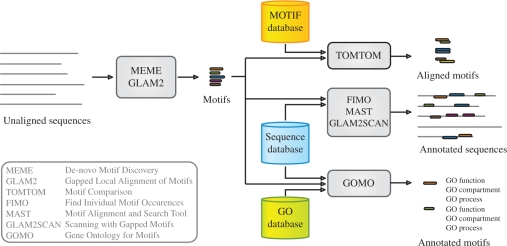
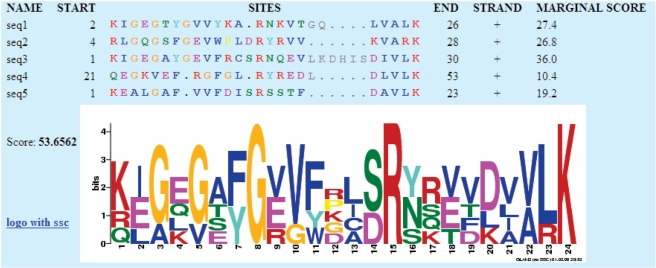
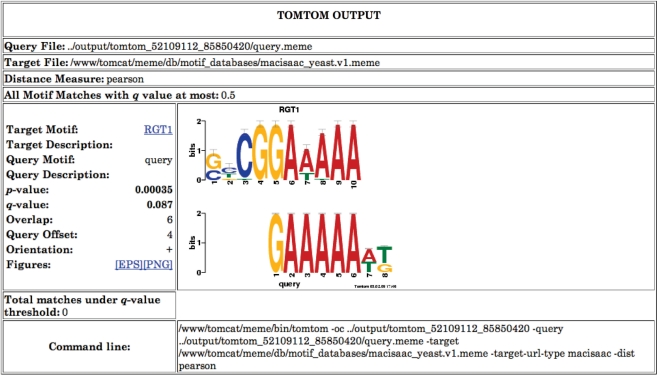
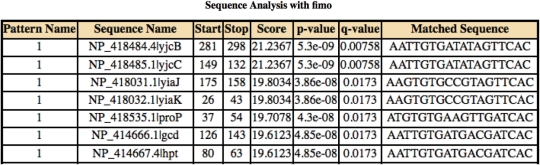
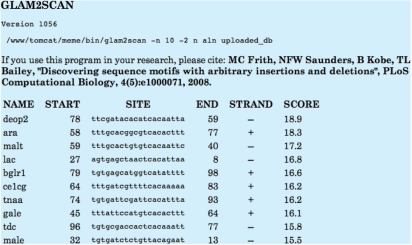
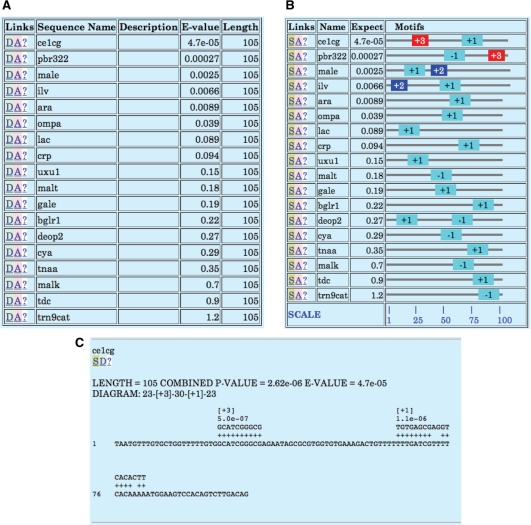
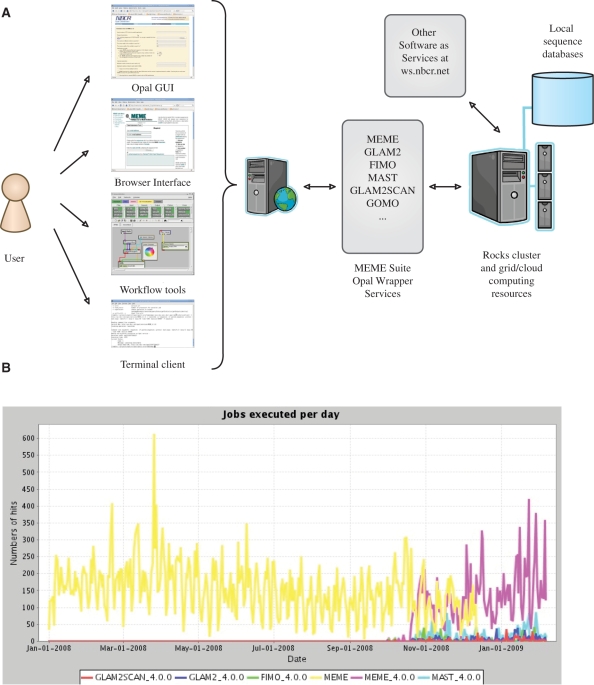
The MEME Suite web server provides a unified portal for online discovery and analysis of sequence motifs representing features such as DNA binding sites and protein interaction domains. The popular MEME motif discovery algorithm is now complemented by the GLAM2 algorithm which allows discovery of motifs containing gaps. Three sequence scanning algorithms--MAST, FIMO and GLAM2SCAN--allow scanning numerous DNA and protein sequence databases for motifs discovered by MEME and GLAM2. Transcription factor motifs (including those discovered using MEME) can be compared with motifs in many popular motif databases using the motif database scanning algorithm TOMTOM. Transcription factor motifs can be further analyzed for putative function by association with Gene Ontology (GO) terms using the motif-GO term association tool GOMO. MEME output now contains sequence LOGOS for each discovered motif, as well as buttons to allow motifs to be conveniently submitted to the sequence and motif database scanning algorithms (MAST, FIMO and TOMTOM), or to GOMO, for further analysis. GLAM2 output similarly contains buttons for further analysis using GLAM2SCAN and for rerunning GLAM2 with different parameters. All of the motif-based tools are now implemented as web services via Opal. Source code, binaries and a web server are freely available for noncommercial use at http://meme.nbcr.net.
Overview
The claims and statistics of this paper haven’t been checked yet.
Free: it reads the open-access text and checks the first 5 claims that cite a source we can check. Create a free account to check every claim.
Integrity signals
Registry
Cites
Statistics
Figures
Verification
Claims the paper makes
The claims and statistics of this paper haven’t been checked yet.
Free: it reads the open-access text and checks the first 5 claims that cite a source we can check. Create a free account to check every claim.
Claims other papers make about this one
Each is checked against this paper’s own text: does it say what the citing paper says it does?
The cited source says what the claim attributes to it.
In the citing paper
“Next, we applied the MEME motif-based sequence analysis tool (36) to investigate sequence elements that were enriched in genes whose TE was decreased by [-]CR-1-31B, which identified 2 significantly enriched 12-mer sequences (CGGCGGCGGCGG and GAGGAGGAGGAG; p = 2.2 × 10⁻²⁰ and p = 6.1 × 10⁻¹¹, respectively; Figure 2F).”
From Targeting eIF4A-dependent translation in genetically complex sarcoma (2026) · cites this paper as [36]
The cited source says what the claim attributes to it.
In the citing paper
“A discriminative motif search of S. salmonicida annexins versus Giardia alpha-giardins with the MEME tool (45) revealed a motif that is identical or highly similar to AB loops (type II Ca2+ coordination sites) in the former.”
From Comparative Cell Biology and Evolution of Annexins in Diplomonads (2016) · cites this paper as [45]
The check wasn’t confident either way, so it gives no verdict — never disputed.
In the citing paper
“The Olink technology allows the measurement of up to 92 proteins in 1 µL of plasma using the proximity extension assay (PEA).”
From Identification of Genetic Variants Regulating the Abundance of Clinically Relevant Plasma Proteins using the Diversity Outbred Mouse Model (2021) · cites this paper as [35]
Experimental — accuracy not yet measured
Self-check
Percentages, sums and reported differences re-computed from the paper’s own numbers.
The self-check needs the paper’s full text.
Citations
Cites
Fitting a mixture model by expectation maximization to discover motifs in biopolymers.
Bailey, T. L., & Elkan, C. (1994) · PubMed · Cited by 5,806
Self-citationA Direct Approach to False Discovery Rates
Storey, J. D. (2002) · Journal of the Royal Statistical Society Series B: Statistical Methodology · doi:10.1111/1467-9868.00346 · Cited by 5,603
MEME: discovering and analyzing DNA and protein sequence motifs
Bailey, T. L., Williams, N., Misleh, C., & Li, W. W. (2006) · Nucleic Acids Research · doi:10.1093/nar/gkl198 · Cited by 2,670 · cited 1×
“It offers a significantly expanded set of programs for these tasks compared with the earlier web server (1).”
BackgroundSelf-citationQuantifying similarity between motifs
Gupta, S., Stamatoyannopoulos, J. A., Bailey, T. L., & Noble, W. S. (2007) · Genome Biology · doi:10.1186/gb-2007-8-2-r24 · Cited by 2,058 · cited 2×
“TOMTOM (4) quantifies the similarity between two motifs, and can be used to search a database of known motifs for matches to motifs found by MEME.”
BackgroundMethodSelf-citationCombining evidence using p-values: application to sequence homology searches.
Bailey, T. L., & Gribskov, M. (1998) · Bioinformatics · doi:10.1093/bioinformatics/14.1.48 · Cited by 1,253
Self-citationSignificance analysis of time course microarray experiments
Storey, J. D., Xiao, W., Leek, J. T., Tompkins, R. G., & Davis, R. W. (2005) · Proceedings of the National Academy of Sciences · doi:10.1073/pnas.0504609102 · Cited by 567
Discovering Sequence Motifs with Arbitrary Insertions and Deletions
Frith, M. C., Saunders, N. F. W., Kobe, B., & Bailey, T. L. (2008) · PLoS Computational Biology · doi:10.1371/journal.pcbi.1000071 · Cited by 390 · cited 2×
“To overcome this limitation, we have incorporated a recent algorithm for gapped motif discovery—GLAM2 (3)—into the MEME suite.”
MethodSelf-citationCheminformatics analysis and learning in a data pipelining environment
Hassan, M., Brown, R. D., Varma-O’Brien, S., & Rogers, D. (2006) · Molecular Diversity · doi:10.1007/s11030-006-9041-5 · Cited by 184 · cited 1×
“A generic user interface may be generated automatically based upon an XML description of the command line syntax through the Opal GUI, either in a standard web browser or from a workflow program such as Vision (14), Kepler (15) or the Pipeline Pilot (16).”
MethodA Component-Based Software Environment for Visualizing Large Macromolecular Assemblies
Sanner, M. F. (2005) · Structure · doi:10.1016/j.str.2005.01.010 · Cited by 86
Score Distributions for Simultaneous Matching to Multiple Motifs
Bailey, T. L., & Gribskov, M. (1997) · Journal of Computational Biology · doi:10.1089/cmb.1997.4.45 · Cited by 59 · cited 10×
“MAST is ‘sequence oriented’, computing a single score for each sequence in the database.”
MethodInfluentialSelf-citation
Research works printed but not linked: 2
- 2005, PNAS, 102, 12837, 10.1073/pnas.0504609102 · DOI · Paper page
- Ludaescher B Altintas I Berkley C Higgins D Jaeger E Jones M Lee EA Tao J Zhao Y Scientific workow management and the Kepler system Concurrency Comput. Pract. Exp. 2005 18 1039 1065
Cited by
Items 701–800 of 1,096
Pachano, T., Sánchez-Gaya, V., Ealo, T., Mariner-Faulí, M., Bleckwehl, T., Asenjo, H. G., Respuela, P., Cruz-Molina, S., Muñoz-San Martín, M., Haro, E., et al. (2021) · Nature Genetics · doi:10.1038/s41588-021-00888-x · Cited by 116
Evolutionary and Expression Analyses of the Apple Basic Leucine Zipper Transcription Factor Family
Zhao, J., Guo, R., Guo, C., Hou, H., Wang, X., & Gao, H. Y. (2016) · Frontiers in Plant Science · doi:10.3389/fpls.2016.00376 · Cited by 116
“To provide further confirmation of the evolutionary relationships among the apple bZIP genes, conserved motifs were predicted using the MEME program (Bailey et al., 2009).”
MethodVenkatesh, J., & Park, S. W. (2015) · Plant Physiology and Biochemistry · doi:10.1016/j.plaphy.2015.05.010 · Cited by 118
“0 (Bailey et al., 2009) was used to analyze the conserved motifs of the StDof proteins.”
MethodInfluentialFountain, J. C., Bajaj, P., Nayak, S. N., Yang, L., Pandey, M. K., Kumar, V., Jayale, A. S., Chitikineni, A., Lee, R. D., Kemerait, R. C., et al. (2016) · Frontiers in Microbiology · doi:10.3389/fmicb.2016.02048 · Cited by 116
“For promoter analysis of select genes, upstream gene sequences containing conserved transcription factor binding domains were obtained using FungiDB (http://fungidb.org/) followed by sequence analysis using MEME 4.11.2 (Bailey et al., 2009; Stajich et al., 2012).”
MethodInfluentialde Vries, J., de Vries, S., Slamovits, C. H., Rose, L. E., & Archibald, J. M. (2017) · Plant and Cell Physiology · doi:10.1093/pcp/pcx037 · Cited by 116
“We used MEME (multiple Em for motif elicitation) and MAST (motif alignment and search tool) (Bailey et al. 2009) motif searches to identify common motifs between land plant and streptophyte algae CCRs.”
MethodDysregulation of spliceosome gene expression in advanced prostate cancer by RNA-binding protein PSF
Takayama, K., Suzuki, T., Fujimura, T., Yamada, Y., Takahashi, S., Homma, Y., Suzuki, Y., & Inoue, S. (2017) · Proceedings of the National Academy of Sciences · doi:10.1073/pnas.1706076114 · Cited by 116
“Motif analysis (MEME) (23) revealed that GA-rich motifs were evident in the binding peaks of PSF (SI Appendix, Fig.”
BackgroundCRISPR screens unveil signal hubs for nutrient licensing of T cell immunity
Long, L., Wei, J., Lim, S. A., Raynor, J. L., Shi, H., Connelly, J. P., Wang, H., Guy, C. S., Xie, B., Chapman, N. M., et al. (2021) · Nature · doi:10.1038/s41586-021-04109-7 · Cited by 117
wenzhong, L., & hualan, L. (2020) · ChemRxiv · doi:10.26434/chemrxiv.11938173 · Cited by 116
Centromeres of filamentous fungi
Smith, K., Galazka, J. M., Phatale, P. A., Connolly, L., & Freitag, M. (2012) · Chromosome Research · doi:10.1007/s10577-012-9290-3 · Cited by 115
“C. albicans Cen1 Centromere on chromosome 1 of F. graminearum Cen-I Centromere on chromosome 1 of N. crassa CEN-B Centromere protein B homologues in filamentous fungi CEN-B1 Centromere protein B1 in N. crassa CEN-B2 Centromere protein B2 in N. crassa CEN-C/cen-c Centromere protein C in filamentous fungi (genes are in…”
BackgroundPrimary transcriptome map of the hyperthermophilic archaeon Thermococcus kodakarensis
Jäger, D., Förstner, K. U., Sharma, C. M., Santangelo, T. J., & Reeve, J. N. (2014) · BMC Genomics · doi:10.1186/1471-2164-15-684 · Cited by 114
“The generated PWM was used as input for FIMO [46].”
MethodInfluentialSperschneider, J., Gardiner, D. M., Thatcher, L. F., Lyons, R., Singh, K. B., Manners, J. M., & Taylor, J. M. (2015) · Genome Biology and Evolution · doi:10.1093/gbe/evv092 · Cited by 118
“MEME was run with the options – nmotifs 30, –minw 5, and –maxw 50 (Bailey et al. 2009).”
MethodWållberg, A., Schöning, C., Webster, M. T., & Hasselmann, M. (2017) · PLoS Genetics · doi:10.1371/journal.pgen.1006792 · Cited by 115
Ono, S., Liu, H., Tsuda, K., Fukai, E., Tanaka, K., Sasaki, T., & Nonomura, K. (2018) · PLoS Genetics · doi:10.1371/journal.pgen.1007238 · Cited by 115
Wang, T., Yu, T., Fu, J., Su, H.-G., Chen, J., Zhou, Y., Chen, M., Guo, J., Ma, Y., Wei, W., et al. (2020) · Frontiers in Plant Science · doi:10.3389/fpls.2020.604690 · Cited by 117
Fan, Y., Yang, H., Lai, D., He, A., Xue, G., Feng, L., Chen, L., Cheng, X.-B., Ruan, J., Yan, J., et al. (2021) · BMC Genomics · doi:10.1186/s12864-021-07652-9 · Cited by 116
“cn) [88] to analyze the constituents of the exons/introns of the SbbHLH genes.”
BackgroundSaeedi, S., Nagy, C., Ibrahim, P., Théroux, J.-F., Wakid, M., Fiori, L. M., Yang, J., Rotzinger, S., Foster, J. A., Mechawar, N., et al. (2021) · Molecular Psychiatry · doi:10.1038/s41380-021-01255-2 · Cited by 107
Guerette, P. A., Hoon, S. S., Ding, D., Amini, S., Mašić, A., Ravi, V., Venkatesh, B., Weaver, J. C., & Miserez, A. (2014) · ACS Nano · doi:10.1021/nn502149u · Cited by 115
Metagenomic mining of regulatory elements enables programmable species-selective gene expression
Johns, N. I., Gomes, A. L. C., Yim, S. S., Yang, A., Blazejewski, T., Smillie, C. S., Smith, M. B., Alm, E. J., Kosuri, S., & Wang, H. H. (2018) · Nature Methods · doi:10.1038/nmeth.4633 · Cited by 104
Lasker, K., von Diezmann, L., Zhou, X., Ahrens, D. G., Mann, T. H., Moerner, W. E., & Shapiro, L. (2020) · Nature Microbiology · doi:10.1038/s41564-019-0647-7 · Cited by 108
Gu, S., Zhou, J., Gao, S., Wang, D.-H., Li, X.-C., Guo, Y.-Y., & Zhang, Y.-J. (2015) · Scientific Reports · doi:10.1038/srep13800 · Cited by 114
Genome-wide identification of Bacillus subtilis CodY-binding sites at single-nucleotide resolution
Belitsky, B. R., & Sonenshein, A. L. (2013) · Proceedings of the National Academy of Sciences · doi:10.1073/pnas.1300428110 · Cited by 105
“An unbiased search for a common DNA motif on both strands of the dataset using the MEME motif-searching algorithm (29) yielded a 17-nt motif ATTTTCWGAAWWTTCWG (Fig.”
MethodA Statistical Framework for the Analysis of ChIP-Seq Data
Kuan, P. F., Chung, D., Pan, G., Thomson, J. A., Stewart, R., & Keleş, S. (2011) · Journal of the American Statistical Association · doi:10.1198/jasa.2011.ap09706 · Cited by 100
“We also score each of these fixed width peaks using the FIMO tool of the MEME suite (Bailey and Elkan 1994; Bailey et al. 2009).”
MethodLi, H., Wang, Y., Wu, M. L., Li, L., Li, C., Han, Z., Yuan, J., Chen, C., Song, W., & Wang, C. (2017) · Frontiers in Plant Science · doi:10.3389/fpls.2017.00946 · Cited by 114
“The conserved motifs in the cauliflower AP2/ERF TFs were identified by using the online motif finding tool MEME 4.11.2 (http://meme-suite.org/tools/meme) (Bailey et al., 2009).”
MethodInfluentialLoss of Sfpq Causes Long-Gene Transcriptopathy in the Brain
Takeuchi, A., Iida, K., Tsubota, T., Hosokawa, M., Denawa, M., Brown, J. B., Ninomiya, K., Ito, M., Kimura, H., Abe, T., et al. (2018) · Cell Reports · doi:10.1016/j.celrep.2018.03.141 · Cited by 102
“Identification of Consensus Sequences for Sfpq-Binding Sites We employed MEME to identify the consensus sequences of Sfpq-binding sites in the target pre-mRNAs (Bailey et al., 2009).”
MethodEukaryotic Acquisition of a Bacterial Operon
Kominek, J., Doering, D. T., Opulente, D. A., Shen, X.-X., Zhou, X., DeVirgilio, J., Hulfachor, A. B., Groenewald, M., Mcgee, M. A., Karlen, S. D., et al. (2019) · Cell · doi:10.1016/j.cell.2019.01.034 · Cited by 109
Waqas, M. R., Azhar, M. T., Rana, I. A., Azeem, F., Ali, M. A., Nawaz, M. A., Chung, G., & Atif, R. M. (2019) · Genes & Genomics · doi:10.1007/s13258-018-00780-9 · Cited by 115
MiPepid: MicroPeptide identification tool using machine learning
Zhu, M., & Gribskov, M. (2019) · BMC Bioinformatics · doi:10.1186/s12859-019-3033-9 · Cited by 115
Chang, Y., Fang, Y., Liu, J., Ye, T., Li, X., Tu, H., Ye, Y., Wang, Y., & Xiong, L. (2024) · Nature Communications · doi:10.1038/s41467-024-50229-9 · Cited by 117
Functional Annotation of Conserved Hypothetical Proteins from Haemophilus influenzae Rd KW20
Shahbaaz, M., Hassan, M. I., & Ahmad, F. (2013) · PLoS ONE · doi:10.1371/journal.pone.0084263 · Cited by 114
“A potent method for motif searches represents the use of MEME suite [33], a resource for investigating candidate’s functional and structural motifs/sites in HPs (Table 1).”
MethodInfluentialSeo, S. W., Kim, D., O’Brien, E. J., Szubin, R., & Palsson, B. O. (2015) · Nature Communications · doi:10.1038/ncomms8970 · Cited by 104
Sun, J., Rockowitz, S., Xie, Q., Ashery-Padan, R., Zheng, D., & Cvekl, A. (2015) · Nucleic Acids Research · doi:10.1093/nar/gkv589 · Cited by 113
“0 (34) and MEME-ChIP (35) suites were used to find de novo enriched motifs within 200 bp sequences centered on the summits of the Pax6 peaks.”
MethodA map of the PPARα transcription regulatory network for primary human hepatocytes
McMullen, P. D., Bhattacharya, S., Woods, C. G., Sun, B., Yarborough, K., Ross, S. M., Miller, M. E., McBride, M. T., LeCluyse, E. L., Clewell, R. A., et al. (2014) · Chemico-Biological Interactions · doi:10.1016/j.cbi.2013.11.006 · Cited by 99
“Binding sites were compared to known binding sites in the Jaspar and UniPROBE databases using TOMTOM [23].”
MethodAsai, S., Rallapalli, G., Piquerez, S. J. M., Caillaud, M., Furzer, O. J., Ishaque, N., Wirthmueller, L., Fabro, G., Shirasu, K., & Jones, J. D. G. (2014) · PLoS Pathogens · doi:10.1371/journal.ppat.1004443 · Cited by 113
“MEME was run with minimum width of 6 and maximum width of up to 20 and zero or one per sequence was allowed.”
MethodInfluentialNing, P., Liu, C., Kang, J., & Lv, J. (2017) · PeerJ · doi:10.7717/peerj.3232 · Cited by 114
“org/) was utilized to identify the conserved motifs in full-length TaWRKYs (Bailey et al., 2009).”
BackgroundMethodInfluentialDeeg, C., Chow, C. T., & Suttle, C. A. (2018) · eLife · doi:10.7554/elife.33014 · Cited by 113
Predicting enhancers with deep convolutional neural networks
Min, X., Zeng, W., Chen, S., Chen, N., Chen, T., & Jiang, R. (2017) · BMC Bioinformatics · doi:10.1186/s12859-017-1878-3 · Cited by 110
“In order to compute the similarity of our motifs, we used a tool called TOMTOM with predefined statistical measure of motif-motif similarity [27, 28].”
MethodHMMRATAC: a Hidden Markov ModeleR for ATAC-seq
Tarbell, E. D., & Liu, T. (2019) · Nucleic Acids Research · doi:10.1093/nar/gkz533 · Cited by 102
“…BWA (15), then the identification of accessible regions or ‘peaks’ by HMM-RATAC, and then downstream analysis such as motif enrichment using MEME (16) or footprint identification in the accessible peaks with CENTIPEDE (17); differential accessibility analysis with Diffbind (18); and association…”
MethodSystems assessment of transcriptional regulation on central carbon metabolism by Cra and CRP
Kim, D., Seo, S. W., Gao, Y., Nam, H., Guzmán, G. I., Cho, B., & Palsson, B. Ø. (2018) · Nucleic Acids Research · doi:10.1093/nar/gky069 · Cited by 113
“The sequence motif analysis for TFs and -factors was performed using the MEME software suite (34).”
MethodCarraro, N., Poulin, D., & Burrus, V. (2015) · PLoS Genetics · doi:10.1371/journal.pgen.1005298 · Cited by 113
Architectural Niche Organization by LHX2 Is Linked to Hair Follicle Stem Cell Function
Folgueras, A. R., Guo, X., Pasolli, H. A., Stokes, N., Polak, L., Zheng, D., & Fuchs, E. (2013) · Cell Stem Cell · doi:10.1016/j.stem.2013.06.018 · Cited by 102
“The MEME software suite (Bailey et al., 2009) was applied to the sequences under the LHX2 peaks for finding enriched motifs; the program”
Chatagnon, A., Veber, P., Morin, V., Bedő, J., Triqueneaux, G., Sémon, M., Laudet, V., d’Alché–Buc, F., & Benoit, G. (2015) · Nucleic Acids Research · doi:10.1093/nar/gkv370 · Cited by 118
“We used the online version of MEME Suite (34) for the de novo search of enriched motifs in RAR / RXR binding regions, and more precisely the tools MEME ChIP and DREME with standard options except ”Scan both DNA strands” set.”
Jiang, X., Zhang, C., Lü, P., Jiang, G., Liu, X., Dai, F., & Gao, J. (2013) · Plant Biotechnology Journal · doi:10.1111/pbi.12114 · Cited by 112
Dugar, G., Svensson, S. L., Bischler, T., Wäldchen, S., Reinhardt, R., Sauer, M., & Sharma, C. M. (2016) · Nature Communications · doi:10.1038/ncomms11667 · Cited by 114
Ma, H., Cao, X., Shi, S., Li, S., Gao, J., Ma, Y., Zhao, Q. P., & Chen, Q. (2016) · Plant Physiology and Biochemistry · doi:10.1016/j.plaphy.2016.06.007 · Cited by 112
“The conserved motifs of StAAT proteins were identified using MEME motif search tool (http://memesuite.org/tools/meme) (Bailey et al., 2009).”
MethodNucleotide resolution profiling of m7G tRNA modification by TRAC-Seq
Lin, S., Liu, Q., Jiang, Y.-Z., & Gregory, R. I. (2019) · Nature Protocols · doi:10.1038/s41596-019-0226-7 · Cited by 113
Characterization of the Gh4CL gene family reveals a role of Gh4CL7 in drought tolerance
Sun, S., Xiong, X., Zhang, X., Feng, H., Zhu, Q., Sun, J., & Li, Y. (2020) · BMC Plant Biology · doi:10.1186/s12870-020-2329-2 · Cited by 113
N(6)-methyladenosine-binding protein YTHDF1 suppresses EBV replication and promotes EBV RNA decay
Xia, T., Li, X., Wang, X., Zhu, Y., Zhang, H., Cheng, W., Chen, M., Ye, Y., Li, Y., Zhang, A., et al. (2021) · EMBO Reports · doi:10.15252/embr.202050128 · Cited by 112
Genomic insights into the phylogeny and biomass-degrading enzymes of rumen ciliates
Li, Z., Wang, X., Zhang, Y., Yu, Z., Zhang, T., Dai, X., Pan, X., Jing, R., Yan, Y., Liu, Y., et al. (2022) · The ISME Journal · doi:10.1038/s41396-022-01306-8 · Cited by 112
“0) [40], and the macronuclear telomeric repeats of the collected morphospecies were all identified as (5′-CCCCAAT)n.”
BackgroundNagata, K., Hojo, H., Chang, S. H., Okada, H., Yano, F., Chijimatsu, R., Omata, Y., Mori, D., Makii, Y., Kawata, M., et al. (2022) · Nature Communications · doi:10.1038/s41467-022-33744-5 · Cited by 114
Quinn, H. J., Cameron, A. D. S., & Dorman, C. J. (2014) · PLoS Genetics · doi:10.1371/journal.pgen.1004215 · Cited by 112
“our ChIP-chip datasets that were bound by OmpR [79].”
BackgroundComparative genomics of Steinernema reveals deeply conserved gene regulatory networks
Dillman, A. R., Macchietto, M. G., Porter, C. F., Rogers, A., Williams, B. A., Antoshechkin, I. A., Lee, M.-M., Goodwin, Z. A., Lu, X., Lewis, E. E., et al. (2015) · Genome biology · doi:10.1186/s13059-015-0746-6 · Cited by 116
“1 (settings: -minw 6 -maxw 12 -dna -nmotifs 20-50 -mod zoops -revcomp) to find recurring regulatory motif sequences [103].”
Ribosome profiling reveals an important role for translational control in circadian gene expression
Jang, C. J., Lahens, N. F., Hogenesch, J. B., & Sehgal, A. (2015) · Genome Research · doi:10.1101/gr.191296.115 · Cited by 112
“We also searched these uORFs for enriched sequence motifs using the MEME suite (Bailey et al. 2009) and for enriched RBP interaction sites using the AURA analysis describedabovebut foundnosignificant results.”
MethodEffect of Low-Dose Cadmium Exposure on DNA Methylation in the Endangered European Eel
Pierron, F., Baillon, L., Sow, M., Gotreau, S., & Gonzalez, P. (2013) · Environmental Science & Technology · doi:10.1021/es4048347 · Cited by 112
Genome-wide identification and analysis of late embryogenesis abundant (LEA) genes in Prunus mume
Du, D., Zhang, Q., Cheng, T., Pan, H., Yang, W., & Sun, L. (2013) · Molecular Biology Reports · doi:10.1007/s11033-012-2250-3 · Cited by 111
“The protein motif analysis was conducted using MEME/MAST online program [37].”
MethodFull-length RNA profiling reveals pervasive bidirectional transcription terminators in bacteria
Ju, X., Li, D., & Liu, S. (2019) · Nature Microbiology · doi:10.1038/s41564-019-0500-z · Cited by 103
Network‐based approaches for understanding gene regulation and function in plants
Ko, D. K., & Brandizzí, F. (2020) · The Plant Journal · doi:10.1111/tpj.14940 · Cited by 112
“Statistical mapping of CREs to the cistromes can be used to define putative TF-binding sites on promoters of differentially expressed genes or open chromatin regions using computational tools, such as the MEME suite (Bailey et al., 2009) and HOMER (Heinz et al., 2010).”
MethodZhang, Y., Gu, L., Hou, Y., Wang, L., Deng, X. M., Hang, R., Chen, D., Zhang, X., Zhang, Y., Liu, C., et al. (2015) · Cell Research · doi:10.1038/cr.2015.77 · Cited by 113
The miR-155–PU.1 axis acts on Pax5 to enable efficient terminal B cell differentiation
Lu, D., Nakagawa, R., Lazzaro, S., Staudacher, P., Abreu-Goodger, C., Henley, T., Boiani, S., Leyland, R., Galloway, A., Andrews, S., et al. (2014) · Journal of Experimental Medicine · doi:10.1084/jem.20140338 · Cited by 97
“For PU.1 motif discovery, the center 200 bp of called peaks were analyzed using the MEME suite program (Bailey et al., 2009) for alignment.”
MethodSeo, E., Kim, S., Yeom, S., & Choi, D. (2016) · Frontiers in Plant Science · doi:10.3389/fpls.2016.01205 · Cited by 111
Pugacheva, E. M., Rivero-Hinojosa, S., Espinoza, C. A., Méndez-Catalá, C. F., Kang, S., Suzuki, T., Kosaka-Suzuki, N., Robinson, S., Nagarajan, V., Ye, Z., et al. (2015) · Genome biology · doi:10.1186/s13059-015-0736-8 · Cited by 110
“Position weight matrices for CTCF and BORIS bound regions were searched using Multiple EM for Motif Elicitation (MEME) software [78].”
MethodGenome-wide analysis of VQ motif-containing proteins in Moso bamboo (Phyllostachys edulis)
Wang, Y., Liu, H., Zhu, D., Gao, Y., Yan, H., & Xiang, Y. (2017) · Planta · doi:10.1007/s00425-017-2693-9 · Cited by 110
Genome-wide analysis of the SPL/miR156 module and its interaction with the AP2/miR172 unit in barley
Tripathi, R. K., Bregitzer, P., & Singh, J. (2018) · Scientific Reports · doi:10.1038/s41598-018-25349-0 · Cited by 110
Baier, T., Jacobebbinghaus, N., Einhaus, A., Lauersen, K. J., & Kruse, O. (2020) · PLoS Genetics · doi:10.1371/journal.pgen.1008944 · Cited by 111
“Also a motif-based sequence analysis did not result in statistically significant predictions of potential consensus motifs when introns with a clear increase in IME of 2-fold or higher were used (S5 and S6 Figs, MEME [65]).”
MethodZhang, X., Yao, Y., Han, J., Yang, Y., Chen, Y., Tang, Z., & Gao, F. (2020) · Journal of genetics and genomics/Journal of Genetics and Genomics · doi:10.1016/j.jgg.2020.07.003 · Cited by 111
The dynamics of N6-methyladenine RNA modification in interactions between rice and plant viruses
Zhang, K., Zhuang, X., Dong, Z., Xu, K., Chen, X., Liu, F., & He, Z. (2021) · Genome biology · doi:10.1186/s13059-021-02410-2 · Cited by 110
“org/tools/dreme) [109] and Discriminative Regular Expression Motif Elicitation (DREME) [110] tools suites located in the MEME suite were used to perform motif enhancement analyses.”
MethodConserved piRNA Expression from a Distinct Set of piRNA Cluster Loci in Eutherian Mammals
Chirn, G., Rahman, R., Sytnikova, Y. A., Matts, J. A. B., Zeng, M., Gerlach, D., Yu, M., Berger, B., Naramura, M., Kile, B. T., et al. (2015) · PLoS Genetics · doi:10.1371/journal.pgen.1005652 · Cited by 109
“The MEME output scores report the number of transcripts out of the total query containing the top motif and the associated p-value, while the GLAM2 scores reflect the reproducible discovery of the motif during iteration steps in the algorithm.”
BackgroundMethodInfluentialFiester, S. E., Arivett, B. A., Schmidt, R. E., Beckett, A. C., Ticak, T., Carrier, M. V., Ghosh, R. K., Ohneck, E. J., Metz, M. L., Jeffries, M. K. S., et al. (2016) · PLoS ONE · doi:10.1371/journal.pone.0167068 · Cited by 110
Extensive translational regulation during seed germination revealed by polysomal profiling
Bai, B., Peviani, A., van der Horst, S., Gamm, M., Snel, B., Bentsink, L., & Hanson, J. (2016) · New Phytologist · doi:10.1111/nph.14355 · Cited by 112
“For each motif, the positions on the transcripts, as provided by the FIMO output, were used to calculate the relative number of motifs per (relative) position along the mRNA.”
BackgroundMethodInfluentialZhou, X., Wu, W., Huang, L., Cheng, Y., Wei, N., Zong, J., Feng, X., Xie, Z., Chen, D., Manley, J. L., et al. (2014) · Nucleic Acids Research · doi:10.1093/nar/gkt1387 · Cited by 109
“0001) along with flanking 5 nt on each side (a total of 16 nt) were further collected and submitted to Multiple EM for Motif Elicitation (MEME) suite (17) for possible GA-rich motif analysis.”
MethodLü, L., Zhu, F., Zhang, M., Li, Y., Drennan, A. C., Kimpara, S., Rumball, I., Selzer, C., Cameron, H., Kellicut, A., et al. (2018) · Proceedings of the National Academy of Sciences · doi:10.1073/pnas.1715118115 · Cited by 109
“sites was confirmed by the MEME motif enrichment analysis (15), with a similar distribution pattern of STAT3 motifs between the two cell lines (Fig.”
BackgroundMethodZhang, K., Pan, X., Yang, Y., & Shen, H. (2019) · RNA · doi:10.1261/rna.070565.119 · Cited by 110
“To further explore the sequence patterns of RBP-binding sites on circRNAs, we search motifs from the positive sequence fragments using the MEME suite (Bailey et al. 2009).”
MethodPálfy, M., Schulze, G., Valen, E., & Vastenhouw, N. L. (2020) · PLoS Genetics · doi:10.1371/journal.pgen.1008546 · Cited by 112
Effector Identification in Plant Pathogens
Lovelace, A. H., Dorhmi, S., Hulin, M. T., Li, Y., Mansfield, J. W., & Ma, W. (2023) · Phytopathology® · doi:10.1094/phyto-09-22-0337-kd · Cited by 90
Artificial Neural Networks Trained to Detect Viral and Phage Structural Proteins
Seguritan, V., Alves, N., Arnoult, M., Raymond, A. C., Lorimer, D. D., Burgin, A. B., Salamon, P., & Segall, A. M. (2012) · PLoS Computational Biology · doi:10.1371/journal.pcbi.1002657 · Cited by 109
“We used the MEME suite of motif - based sequence analysis tools [ 52 ] to examine presence of motifs in our major capsid sequences .”
MethodInfluentialGenome-wide analysis of Aux/IAA gene family in Solanaceae species using tomato as a model
Wu, J., Peng, Z., Liu, S., He, Y., Cheng, L., Kong, F., Wang, J., & Lu, G. (2012) · Molecular Genetics and Genomics · doi:10.1007/s00438-012-0675-y · Cited by 109
“MEME utility was used to display motifs of Aux/IAA proteins from tomato, maize, rice and Arabidopsis (http:// meme.nbcr.net) (Bailey et al. 2009).”
MethodThe AFL subfamily of B3 transcription factors: evolution and function in angiosperm seeds
Carbonero, P., Iglesias‐Fernández, R., & Vicente‐Carbajosa, J. (2016) · Journal of Experimental Botany · doi:10.1093/jxb/erw458 · Cited by 109
“2 (Bailey et al., 2009) was used to identify conserved motives (Fig.”
The Gcn4 transcription factor reduces protein synthesis capacity and extends yeast lifespan
Mittal, N., Guimaraes, J. C., Gross, T., Schmidt, A., Vina-Vilaseca, A., Nedialkova, D. D., Aeschimann, F., Leidel, S. A., Spang, A., & Zavolan, M. (2017) · Nature Communications · doi:10.1038/s41467-017-00539-y · Cited by 98
Wang, M., Vannozzi, A., Wang, G., Zhong, Y., Corso, M., Cavallini, E., & Cheng, Z. (2015) · Frontiers in Plant Science · doi:10.3389/fpls.2015.00417 · Cited by 108
“A total number of 20 different motifs, ranging from 6 to 50 amino acids in length, were detected using MEME 4.3.0 software (http://meme.sdsc. edu/meme/intro.html) (Bailey et al., 2009) (Figure 2A, Table 2).”
MethodInfluentialWang, X., Wang, C., Ban, F., Zhu, D., Liu, S., & Wang, X. (2017) · Insect Science · doi:10.1111/1744-7917.12505 · Cited by 108
“To further evaluate the structural diversity of BtHSP proteins, the conserved motifs were detected by online program Multiple Expectation Maximization for Motif Elicitation (Bailey et al., 2009).”
MethodA map of direct TF–DNA interactions in the human genome
Gheorghe, M., Sandve, G. K., Khan, A., Chèneby, J., Ballester, B., & Mathelier, A. (2019) · Nucleic Acids Research · doi:10.1093/nar/gky1210 · Cited by 101
“4) (44) and added to the original set of ChIP-seq peaks.”
BackgroundSingle Amino Acid Change Underlies Distinct Roles of H2A.Z Subtypes in Human Syndrome
Greenberg, R. S., Long, H. K., Swigut, T., & Wysocka, J. (2019) · Cell · doi:10.1016/j.cell.2019.08.002 · Cited by 109
The landscape of chimeric RNAs in non-diseased tissues and cells
Singh, S., Qin, F., Kumar, S., Elfman, J., Lin, E., Pham, L.-P., Yang, A. X., & Li, H. (2020) · Nucleic Acids Research · doi:10.1093/nar/gkz1223 · Cited by 108
“To identify motifs present in the 5′ and 3′ parental genes, we used the Gapped Local Alignment of Motifs (GLAM2) tool (40) from the MEME SUITE (41) with default parameters to find enriched motifs in the 200 bp upstream and downstream sequences from the breakpoint position.”
BackgroundMethodInfluentialSEanalysis 2.0: a comprehensive super-enhancer regulatory network analysis tool for human and mouse
Qian, F., Zhou, L., Li, Y., Yu, Z., Li, L., Wang, Y., Xu, M., Wang, Q., & Li, C. (2023) · Nucleic Acids Research · doi:10.1093/nar/gkad408 · Cited by 108
Precise prediction of phase-separation key residues by machine learning
Sun, J., Qu, J., Zhao, C., Zhang, X., Liu, X., Wang, J., Wei, C., Liu, X., Wang, M., Zeng, P., et al. (2024) · Nature Communications · doi:10.1038/s41467-024-46901-9 · Cited by 108
Aken, O. V., & Whelan, J. (2012) · Frontiers in Plant Science · doi:10.3389/fpls.2012.00281 · Cited by 108
“The MEME suite was then used to discover overrepresented motifs in an unbiased search (Bailey et al., 2009).”
MethodWu, H., Su, Y.-S., Chen, H.-C., Chen, Y., Wu, C., Lin, W., & Tu, S. (2014) · Genome biology · doi:10.1186/gb-2014-15-1-r10 · Cited by 109
“Motif search involved the MEME suite [44].”
MethodEllahi, A., Thurtle, D. M., & Rine, J. (2015) · Genetics · doi:10.1534/genetics.115.175711 · Cited by 97
HTSstation: A Web Application and Open-Access Libraries for High-Throughput Sequencing Data Analysis
David, F. P. A., Delafontaine, J., Carat, S., Ross, F. J., Lefebvre, G., Jarosz, Y., Sinclair, L., Noordermeer, D., Rougemont, J., & Leleu, M. (2014) · PLoS ONE · doi:10.1371/journal.pone.0085879 · Cited by 101
“PLOS ONE | www.plosone.org 7 January 2014 | Volume 9 | Issue 1 | e85879 Users can additionally run motif discovery within these peaks using MEME [27].”
MethodDistinguishing RNA modifications from noise in epitranscriptome maps
Grozhik, A. V., & Jaffrey, S. R. (2018) · Nature Chemical Biology · doi:10.1038/nchembio.2546 · Cited by 107
Genome-wide analysis of the U-box E3 ubiquitin ligase enzyme gene family in tomato
Sharma, B., & Taganna, J. C. (2020) · Scientific Reports · doi:10.1038/s41598-020-66553-1 · Cited by 109
Genome-wide binding and mechanistic analyses of Smchd1-mediated epigenetic regulation
Chen, K., Hu, J. Y., Moore, D., Liu, R., Kessans, S. A., Breslin, K. A., Lucet, I. S., Keniry, A., Leong, H. S., Parish, C. L., et al. (2015) · Proceedings of the National Academy of Sciences · doi:10.1073/pnas.1504232112 · Cited by 111
Richard, M., Gutiérrez, A. V., Viljoen, A. J., Rodriguez-Rincon, D., Roquet, F., Blaise, M., Everall, I., Parkhill, J., Floto, R. A., & Kremer, L. (2018) · Antimicrobial Agents and Chemotherapy · doi:10.1128/aac.01316-18 · Cited by 106
“MEME, a motif-based sequence analysis tool (41), a 64-bp DNA segment within the 373-bp intergenic region between MAB_2299c and MAB_2300 (IR2300/01) harboring two palindromic sequences as well as two degenerated repeat motifs was identified (Fig.”
MethodSegev, N., & Gerst, J. E. (2018) · Journal of Cell Biology · doi:10.1083/jcb.201706059 · Cited by 96
“ANO VA test p-values were adjusted for the false discovery rate (step-up p-value; Benjamini and Hochberg, 1995).”
Evolution of DNA methylome from precancerous lesions to invasive lung adenocarcinomas
Hu, X., Estecio, M. R., Chen, R., Reuben, A., Wang, L., Fujimoto, J., Carrot‐Zhang, J., McGranahan, N., Ying, L., Fukuoka, J., et al. (2021) · Nature Communications · doi:10.1038/s41467-021-20907-z · Cited by 106
Transcriptomic characterization of prurigo nodularis and the therapeutic response to nemolizumab
Tsoi, L. C., Hacini‐Rachinel, F., Fogel, P., Rousseau, F., Xing, X., Patrick, M. T., Billi, A. C., Berthier, C. C., Kahlenberg, J. M., Lazzari, A., et al. (2021) · Journal of Allergy and Clinical Immunology · doi:10.1016/j.jaci.2021.10.004 · Cited by 106
Visualization of multiple alignments, phylogenies and gene family evolution
Procter, J. B., Thompson, J., Letunić, I., Creevey, C. J., Jossinet, F., & Barton, G. J. (2010) · Nature Methods · doi:10.1038/nmeth.1434 · Cited by 109
“Conversely, older tools tend to provide either static or independent views of each type of data, but they often have unique visualization or analysis features; for example, GeneDoc has dedicated support for the MEM”
BackgroundDoose, G., Haake, A., Bernhart, S. H., López, C., Duggimpudi, S., Wojciech, F., Bergmann, A. K., Borkhardt, A., Burkhardt, B., Claviez, A., et al. (2015) · Proceedings of the National Academy of Sciences · doi:10.1073/pnas.1505753112 · Cited by 106
Recent advances in RNA folding
Fallmann, J., Will, S., Engelhardt, J., Grüning, B. A., Backofen, R., & Stadler, P. F. (2017) · Journal of Biotechnology · doi:10.1016/j.jbiotec.2017.07.007 · Cited by 106
“Due to the similarity between this problem and the task of find-245 ing binding sites of transcription factors, motif discovery tools like MEME [45] have been used frequently.”
MethodSystematic discovery of uncharacterized transcription factors in Escherichia coli K-12 MG1655
Gao, Y., Yurkovich, J. T., Seo, S. W., Kabimoldayev, I., Dräger, A., Chen, K., Sastry, A. V., Fang, X. D., Mih, N., Yang, L., et al. (2018) · Nucleic Acids Research · doi:10.1093/nar/gky752 · Cited by 107
Scaffolding a Caenorhabditis nematode genome with RNA-seq
Mortazavi, A., Schwarz, E. M., Williams, B., Schaeffer, L., Antoshechkin, I., Wold, B. J., & Sternberg, P. W. (2010) · Genome Research · doi:10.1101/gr.111021.110 · Cited by 90
“Previously published motifs were extracted from JASPAR (Portales-Casamar et al. 2010), Drosophila Flyreg v2 (http://www.danielpollard.com/bergman2004_ matrices.html; Bergman et al. 2005), TRANSFAC (Matys et al. 2006) via the TOMTOM Web portal (Bailey et al. 2009), and WormBase (Harris et al. 2010).”
MethodInfluential
Metadata
- Authors
- Bailey, T. L., Boden, M., Buske, F. A., Frith, M., Grant, C. E., Clementi, L., Ren, J., Li, W. W., & Noble, W. S.
- Affiliations
- The University of Queensland (AU)
- Corresponding author
- Bailey, T. L.
- Noble, W. S.
- Venue
- Nucleic Acids Research
- Publisher
- Oxford University Press (OUP)
- Published
- 2009-05-20
- Volume
- 37
- Issue
- Web Server
- Pages
- W202-W208
- ISSN
- 0305-1048 (ISSN-L)
- 1362-4962
- PMC
- PMC2703892
- OpenAlex
- W2157009395
- Cited by
- 10,648
- References
- 15
- Citations by year
- 2026: 635 · 2025: 885 · 2024: 922 · 2023: 999 · 2022: 1146 · 2021: 1349 · 2020: 979 · 2019: 720 · 2018: 613 · 2017: 498 · 2016: 448 · 2015: 456 · 2014: 376 · 2013: 296 · 2012: 184
- FWCI
- 42.64
- Type
- journal article
- Language
- en
- Open access
- gold
- doi.org
- Licence
- Locations
- Nucleic Acids Research (publishedVersion, cc-by-nc)
- PubMed Central (publishedVersion, cc-by-nc)
- PubMed (publishedVersion)
- Funders
- National Institutes of Health (5r01rr021692-06)
- National Center for Research Resources (P41-RR08605, R0-1 RR021692, P41RR008605)
- Topics
- Life Sciences › Biochemistry, Genetics and Molecular Biology › Molecular Biology › Genomics and Chromatin Dynamics
- Life Sciences › Biochemistry, Genetics and Molecular Biology › Molecular Biology › Genomics and Phylogenetic Studies
- Life Sciences › Biochemistry, Genetics and Molecular Biology › Molecular Biology › Bioinformatics and Genomic Networks
- Keywords
- motif discovery, DNA binding sites, protein-protein interaction domains, MAST, TomTom, Gene Ontology, transcription factor binding motifs, sequence logos, web server, motif database, web services
- MeSH terms
- Algorithms, Binding Sites, Software, Transcription Factors, Sequence Analysis, DNA, Internet, Sequence Analysis, Protein, Databases, Genetic, Regulatory Elements, Transcriptional
About these checks
Registry, retraction, Cites and statistics results are computed, not judged, with one exception: a printed reference that no index lists is read once by a model before it counts as a citation error. Claims are extracted by a model and kept only when their quote appears verbatim in the text; each cited source is then checked, with a model’s help, for whether it says what the claim relies on. Those verdicts can be wrong — read the claim’s quote and the cited source before relying on one.
Statistics and arithmetic are recomputed, not judged.
Confidence bands are shown only for fields calibrated on our annotated test set. None is calibrated yet, so no band is shown.
What counts as a claim ›How we measure confidence ›How we check this ›
Are you an author, or do you see a problem with this page? Request a review
Data sources
Bibliographic data: Semantic Scholar, OpenAlex, Crossref.
Contains information from the Semantic Scholar Academic Graph Datasets, made available under the ODC Attribution License (ODC-BY 1.0).
Semantic Scholar’s data is described in: Kinney, R., et al. (2023). The Semantic Scholar Open Data Platform. arXiv:2301.10140.
