

MEME SUITE: tools for motif discovery and searching
Open accessThe DOI matches its Crossref record; 15 of the 15 references it cites were found in a registry or an index.
Abstract
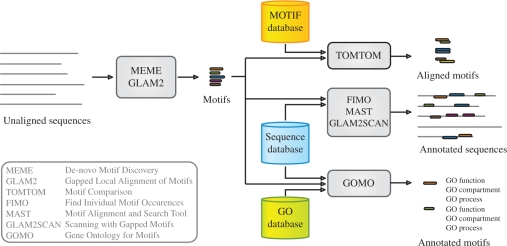
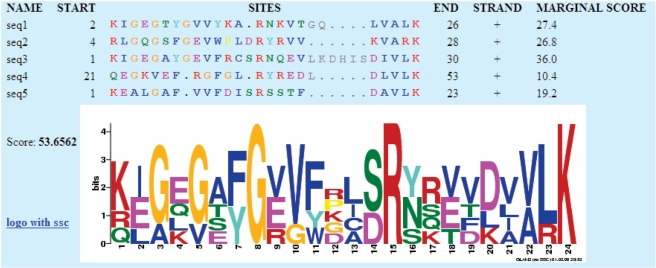
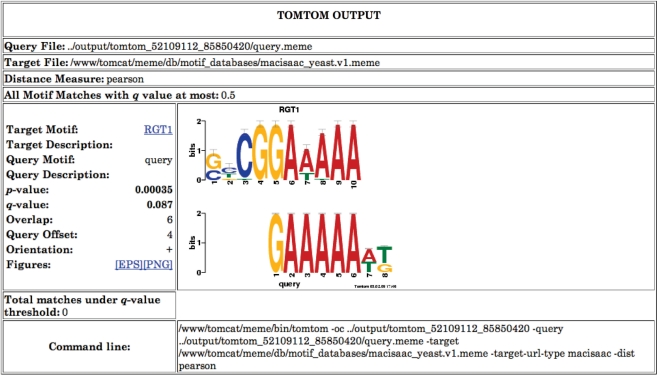
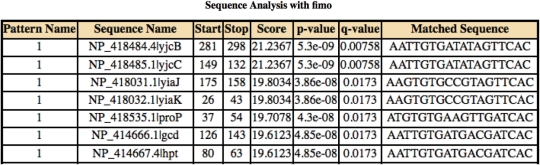
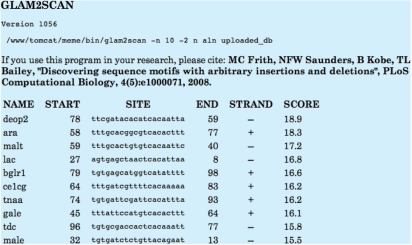
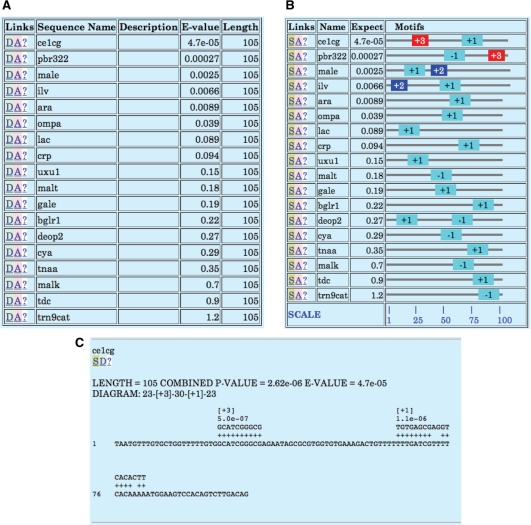
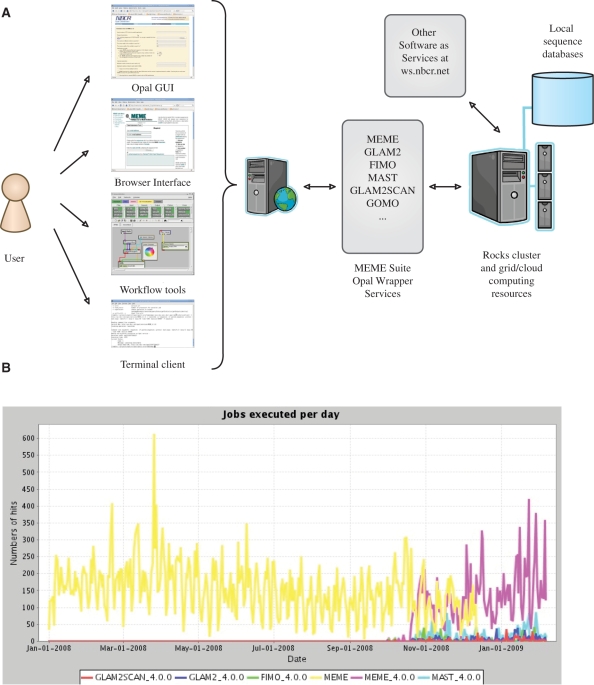
The MEME Suite web server provides a unified portal for online discovery and analysis of sequence motifs representing features such as DNA binding sites and protein interaction domains. The popular MEME motif discovery algorithm is now complemented by the GLAM2 algorithm which allows discovery of motifs containing gaps. Three sequence scanning algorithms--MAST, FIMO and GLAM2SCAN--allow scanning numerous DNA and protein sequence databases for motifs discovered by MEME and GLAM2. Transcription factor motifs (including those discovered using MEME) can be compared with motifs in many popular motif databases using the motif database scanning algorithm TOMTOM. Transcription factor motifs can be further analyzed for putative function by association with Gene Ontology (GO) terms using the motif-GO term association tool GOMO. MEME output now contains sequence LOGOS for each discovered motif, as well as buttons to allow motifs to be conveniently submitted to the sequence and motif database scanning algorithms (MAST, FIMO and TOMTOM), or to GOMO, for further analysis. GLAM2 output similarly contains buttons for further analysis using GLAM2SCAN and for rerunning GLAM2 with different parameters. All of the motif-based tools are now implemented as web services via Opal. Source code, binaries and a web server are freely available for noncommercial use at http://meme.nbcr.net.
Overview
The claims and statistics of this paper haven’t been checked yet.
Free: it reads the open-access text and checks the first 5 claims that cite a source we can check. Create a free account to check every claim.
Integrity signals
Registry
Cites
Statistics
Figures
Verification
Claims the paper makes
The claims and statistics of this paper haven’t been checked yet.
Free: it reads the open-access text and checks the first 5 claims that cite a source we can check. Create a free account to check every claim.
Claims other papers make about this one
Each is checked against this paper’s own text: does it say what the citing paper says it does?
The cited source says what the claim attributes to it.
In the citing paper
“Next, we applied the MEME motif-based sequence analysis tool (36) to investigate sequence elements that were enriched in genes whose TE was decreased by [-]CR-1-31B, which identified 2 significantly enriched 12-mer sequences (CGGCGGCGGCGG and GAGGAGGAGGAG; p = 2.2 × 10⁻²⁰ and p = 6.1 × 10⁻¹¹, respectively; Figure 2F).”
From Targeting eIF4A-dependent translation in genetically complex sarcoma (2026) · cites this paper as [36]
The cited source says what the claim attributes to it.
In the citing paper
“A discriminative motif search of S. salmonicida annexins versus Giardia alpha-giardins with the MEME tool (45) revealed a motif that is identical or highly similar to AB loops (type II Ca2+ coordination sites) in the former.”
From Comparative Cell Biology and Evolution of Annexins in Diplomonads (2016) · cites this paper as [45]
The check wasn’t confident either way, so it gives no verdict — never disputed.
In the citing paper
“The Olink technology allows the measurement of up to 92 proteins in 1 µL of plasma using the proximity extension assay (PEA).”
From Identification of Genetic Variants Regulating the Abundance of Clinically Relevant Plasma Proteins using the Diversity Outbred Mouse Model (2021) · cites this paper as [35]
Experimental — accuracy not yet measured
Self-check
Percentages, sums and reported differences re-computed from the paper’s own numbers.
The self-check needs the paper’s full text.
Citations
Cites
Fitting a mixture model by expectation maximization to discover motifs in biopolymers.
Bailey, T. L., & Elkan, C. (1994) · PubMed · Cited by 5,806
Self-citationA Direct Approach to False Discovery Rates
Storey, J. D. (2002) · Journal of the Royal Statistical Society Series B: Statistical Methodology · doi:10.1111/1467-9868.00346 · Cited by 5,603
MEME: discovering and analyzing DNA and protein sequence motifs
Bailey, T. L., Williams, N., Misleh, C., & Li, W. W. (2006) · Nucleic Acids Research · doi:10.1093/nar/gkl198 · Cited by 2,670 · cited 1×
“It offers a significantly expanded set of programs for these tasks compared with the earlier web server (1).”
BackgroundSelf-citationQuantifying similarity between motifs
Gupta, S., Stamatoyannopoulos, J. A., Bailey, T. L., & Noble, W. S. (2007) · Genome Biology · doi:10.1186/gb-2007-8-2-r24 · Cited by 2,058 · cited 2×
“TOMTOM (4) quantifies the similarity between two motifs, and can be used to search a database of known motifs for matches to motifs found by MEME.”
BackgroundMethodSelf-citationCombining evidence using p-values: application to sequence homology searches.
Bailey, T. L., & Gribskov, M. (1998) · Bioinformatics · doi:10.1093/bioinformatics/14.1.48 · Cited by 1,253
Self-citationSignificance analysis of time course microarray experiments
Storey, J. D., Xiao, W., Leek, J. T., Tompkins, R. G., & Davis, R. W. (2005) · Proceedings of the National Academy of Sciences · doi:10.1073/pnas.0504609102 · Cited by 567
Discovering Sequence Motifs with Arbitrary Insertions and Deletions
Frith, M. C., Saunders, N. F. W., Kobe, B., & Bailey, T. L. (2008) · PLoS Computational Biology · doi:10.1371/journal.pcbi.1000071 · Cited by 390 · cited 2×
“To overcome this limitation, we have incorporated a recent algorithm for gapped motif discovery—GLAM2 (3)—into the MEME suite.”
MethodSelf-citationCheminformatics analysis and learning in a data pipelining environment
Hassan, M., Brown, R. D., Varma-O’Brien, S., & Rogers, D. (2006) · Molecular Diversity · doi:10.1007/s11030-006-9041-5 · Cited by 184 · cited 1×
“A generic user interface may be generated automatically based upon an XML description of the command line syntax through the Opal GUI, either in a standard web browser or from a workflow program such as Vision (14), Kepler (15) or the Pipeline Pilot (16).”
MethodA Component-Based Software Environment for Visualizing Large Macromolecular Assemblies
Sanner, M. F. (2005) · Structure · doi:10.1016/j.str.2005.01.010 · Cited by 86
Score Distributions for Simultaneous Matching to Multiple Motifs
Bailey, T. L., & Gribskov, M. (1997) · Journal of Computational Biology · doi:10.1089/cmb.1997.4.45 · Cited by 59 · cited 10×
“MAST is ‘sequence oriented’, computing a single score for each sequence in the database.”
MethodInfluentialSelf-citation
Research works printed but not linked: 2
- 2005, PNAS, 102, 12837, 10.1073/pnas.0504609102 · DOI · Paper page
- Ludaescher B Altintas I Berkley C Higgins D Jaeger E Jones M Lee EA Tao J Zhao Y Scientific workow management and the Kepler system Concurrency Comput. Pract. Exp. 2005 18 1039 1065
Cited by
Items 601–700 of 1,098
Controlling gene expression with deep generative design of regulatory DNA
Zrimec, J., Fu, X., Muhammad, A. S., Skrekas, C., Jauniskis, V., Speicher, N. K., Börlin, C. S., Verendel, V., Chehreghani, M. H., Dubhashi, D., et al. (2022) · Nature Communications · doi:10.1038/s41467-022-32818-8 · Cited by 97
The PurR regulon in Escherichia coli K-12 MG1655
Cho, B.-K., Federowicz, S. A., Embree, M., Park, Y.-S., Kim, D., & Palsson, B. Ø. (2011) · Nucleic Acids Research · doi:10.1093/nar/gkr307 · Cited by 125
“To identify common DNA sequence motifs of the PurR-binding regions, we used the MEME suite tool (12).”
MethodTripathi, P., Rabara, R., Reese, R. N., Miller, M. A., Rohila, J. S., Subramanian, S., Shen, Q. J., Morandi, D., Bücking, H., Shulaev, V., et al. (2016) · BMC Genomics · doi:10.1186/s12864-016-2420-0 · Cited by 128
“These were analyzed by MEME [24] for the presence of conserved sequence motifs that might serve as components of synthetic drought-inducible promoters for the a b”
BackgroundMethodInfluentialGenome-wide identification and characterization of maize expansin genes expressed in endosperm
Zhang, W., Yan, H., Chen, W., Liu, J., Jiang, C., Jiang, H., Zhu, S., & Cheng, B. (2014) · Molecular Genetics and Genomics · doi:10.1007/s00438-014-0867-8 · Cited by 130
“cgi) (Bailey et al. 2009) using the following parameters: optimum motif width ≥6 and ≤200, and maximum number of motifs = 20 (Lin et al.”
MethodRegulatory analysis of the C. elegans genome with spatiotemporal resolution
Araya, C. L., Kawli, T., Kundaje, A. B., Jiang, L., Wu, B., Vafeados, D. K., Terrell, R., Weisdepp, P., Gevirtzman, L., Mace, D., et al. (2014) · Nature · doi:10.1038/nature13497 · Cited by 127
Meredith, M. M., Liu, K., Kamphorst, A. O., Idoyaga, J., Yamane, A., Guermonprez, P., Rihn, S., Yao, K.-H., Silva, I. T., Oliveira, T. Y., et al. (2012) · Journal of Experimental Medicine · doi:10.1084/jem.20121003 · Cited by 110
“To identify zDC’s DNA binding motif, we used MEME software to identify a consensus motif in the zDC ChIP-seq library (Bailey et al., 2009).”
MethodAjiro, M., Jia, R., Yang, Y., Zhu, J., & Zheng, Z. (2015) · Nucleic Acids Research · doi:10.1093/nar/gkv1500 · Cited by 128
“Enriched motifs were performed by MEME (Multiple Em for Motif Elicitation) (48,49) for the SRSF3-dependent skipping/inclusion of alternative exons on the top list from”
MethodDi, F., Jian, H., Wang, T., Chen, X., Ding, Y., Du, H., Lu, K., Li, J., & Liu, L. (2018) · Genes · doi:10.3390/genes9030156 · Cited by 127
“Motifs were identified in Multiple EM for Motif Elicitation version 4.11.4 (MEME) [31] by analyzing 46 full-length BnPYL protein sequences.”
BackgroundInfluentialSu, H.-G., Zhang, X.-H., Wang, T., Wei, W., Wang, Y., Chen, J., Zhou, Y., Chen, M., Ma, Y., Xu, Z., et al. (2020) · Frontiers in Plant Science · doi:10.3389/fpls.2020.00726 · Cited by 128
“The schematic of conserved motifs of all members is presented in Supplementary Figure S2 based on the analysis of online MEME program, and the maximum number of motifs was set to twenty (Bailey et al., 2009).”
MethodChromatin remodeling in bovine embryos indicates species-specific regulation of genome activation
Halstead, M. M., Ma, X., Zhou, C., Schultz, R. M., & Ross, P. J. (2020) · Nature Communications · doi:10.1038/s41467-020-18508-3 · Cited by 129
Splicing factor SRSF1 promotes breast cancer progression via oncogenic splice switching of PTPMT1
Du, J.-X., Luo, Y., Zhang, S., Wang, B., Chen, C., Zhu, G., Zhu, P., Cai, C.-Z., Wan, J.-L., Cai, J., et al. (2021) · Journal of Experimental & Clinical Cancer Research · doi:10.1186/s13046-021-01978-8 · Cited by 127
“were analyzed according to previously described methods [36], and the Multiple EM for Motif Elicitation (MEME) suite was used to perform motif analysis [37].”
MethodNLR-parser: rapid annotation of plant NLR complements
Steuernagel, B., Jupe, F., Witek, K., Jones, J. D. G., & Wulff, B. B. H. (2015) · Bioinformatics · doi:10.1093/bioinformatics/btv005 · Cited by 126
“It requires a valid Java installation as well as MAST as part of the MEME Suite.”
MethodKo, D. K., Rohozinski, D., Song, Q., Taylor, S. H., Juenger, T., Harmon, F. G., & Chen, Z. J. (2016) · PLoS Genetics · doi:10.1371/journal.pgen.1006197 · Cited by 126
“De novomotif analysis was performed with the total master-peaks using MEME suite [87] in which JASPAR CORE (2014) plants database was selected for motif database.”
MethodCao, Y., Han, Y., Meng, D., Li, D., Jin, Q., Lin, Y., & Cai, Y. (2016) · Frontiers in Plant Science · doi:10.3389/fpls.2016.01874 · Cited by 126
Diao, W., Snyder, J., Wang, S., Liu, J., BaoGui, P., Guo, G., Ge, W., & Dawood, M. (2018) · International Journal of Molecular Sciences · doi:10.3390/ijms19041028 · Cited by 127
“The optimized parameters of MEME were employed as follows: number of repetitions, any; maximum number of motifs, 20; optimum width of each motif, between 6 and 50 residues [40].”
MethodGenome mining strategies for ribosomally synthesised and post-translationally modified peptides
Russell, A. H., & Truman, A. W. (2020) · Computational and Structural Biotechnology Journal · doi:10.1016/j.csbj.2020.06.032 · Cited by 127
Liu, J. F., Huang, T., Chen, W., Ding, C., Zhao, T., Zhao, X., Cai, B., Zhang, Y., Li, S., Zhang, L., et al. (2022) · Nature Communications · doi:10.1038/s41467-022-30210-0 · Cited by 127
A Temperature-Responsive Network Links Cell Shape and Virulence Traits in a Primary Fungal Pathogen
Beyhan, S., Gutierrez, M., Voorhies, M., & Sil, A. (2013) · PLoS Biology · doi:10.1371/journal.pbio.1001614 · Cited by 120
DoriC 5.0: an updated database of oriC regions in both bacterial and archaeal genomes
Gao, F., Luo, H., & Zhang, C. (2012) · Nucleic Acids Research · doi:10.1093/nar/gks990 · Cited by 125
“Consequently, ORB motifs and some new uncharacterized motif sequences have been found by the MEME Suite and are also included in the database.”
MethodInfluentialDetecting N6-methyladenosine sites from RNA transcriptomes using ensemble Support Vector Machines
Chen, W., Xing, P., & Zou, Q. (2017) · Scientific Reports · doi:10.1038/srep40242 · Cited by 122
Vidovic, D., Huynh, T. T., Konda, P., Dean, C. A., Cruickshank, B. M., Sultan, M., Coyle, K. M., Gujar, S. A., & Marcato, P. (2019) · Cell Death and Differentiation · doi:10.1038/s41418-019-0362-1 · Cited by 125
Lee, B. Y., Hogg, E. K. J., Below, C., Kononov, A., Blanco‐Gómez, A., Heider, F., Xu, J., Hutton, C., Zhang, X. M., Scheidt, T., et al. (2021) · Nature Communications · doi:10.1038/s41467-021-27607-8 · Cited by 125
The bromodomain protein BRD4 regulates the KEAP1/NRF2-dependent oxidative stress response
Hussong, M., Börno, S. T., Kerick, M., Wunderlich, A., Franz, A., Sültmann, H., Timmermann, B., Lehrach, H., Hirsch-Kauffmann, M., & Schweiger, M. R. (2014) · Cell Death & Disease · doi:10.1038/cddis.2014.157 · Cited by 120
“motifs, we used the binding regions identified from our ChIPSeq experiments and performed bioinformatics analyses.(31)”
MethodTranscriptional regulation of tocopherol biosynthesis in tomato
Quadrana, L., Almeida, J., Otaiza-González, S. N., Duffy, T., da Silva, J. V. C., de Godoy, F., Asís, R., Bermúdez, L. F., Fernie, A. R., Carrari, F. O., et al. (2012) · Plant Molecular Biology · doi:10.1007/s11103-012-0001-4 · Cited by 126
“Highly similar sequences were searched using Purge (threshold 600) from the MEME Suite (Bailey et al. 2009), but no redundancy was Plant Mol Biol (2013) 81:309–325 321 identified.”
TBC1D24 genotype–phenotype correlation: Epilepsies and other neurologic features
Balestrini, S., Milh, M., Castiglioni, C., Lüthy, K., Finelli, M. J., Verstreken, P., Cardon, A., Stražišar, B. G., Holder, J. L., Lesca, G., et al. (2016) · Neurology · doi:10.1212/wnl.0000000000002807 · Cited by 124
Klähn, S., Schaal, C., Georg, J., Baumgartner, D., Knippen, G., Hagemann, M., Muro-Pastor, A. M., & Hess, W. R. (2015) · Proceedings of the National Academy of Sciences · doi:10.1073/pnas.1508412112 · Cited by 108
Nuclear RNA surveillance: role of TRAMP in controlling exosome specificity
Schmidt, K., & Butler, J. S. (2013) · WIREs RNA · doi:10.1002/wrna.1155 · Cited by 107
Conserved properties of individual Ca 2+ -binding sites in calmodulin
Halling, D. B., Liebeskind, B. J., Hall, A. W., & Aldrich, R. W. (2016) · Proceedings of the National Academy of Sciences · doi:10.1073/pnas.1600385113 · Cited by 113
“We collated CaM from our three groups and used MEME[20] (43) to perform motif discovery on each EF-hand region shown in Fig.”
MethodChen, S., Wang, X., Zhang, L., Lin, S., Liu, D., Wang, Q., Cai, S., El-Tanbouly, R., Gan, L., Wu, H., et al. (2016) · Horticulture Research · doi:10.1038/hortres.2016.59 · Cited by 124
Accurate and sensitive quantification of protein-DNA binding affinity
Rastogi, C., Rube, H. T., Kribelbauer, J. F., Crocker, J., Loker, R. E., Martini, G. D., Laptenko, O., Freed-Pastor, W. A., Prives, C., Stern, D. L., et al. (2018) · Proceedings of the National Academy of Sciences · doi:10.1073/pnas.1714376115 · Cited by 117
“By this metric, the “deep learning” algorithm DeepBind (30) was recently shown to outperform both MEME (31) and the method of Jolma et al.”
MethodMolecular mechanism of directional CTCF recognition of a diverse range of genomic sites
Yin, M., Wang, J., Wang, M., Li, X., Zhang, M., Wu, Q., & Wang, Y. (2017) · Cell Research · doi:10.1038/cr.2017.131 · Cited by 124
Lee, T. A., & Bailey-Serres, J. N. (2019) · The Plant Cell · doi:10.1105/tpc.19.00463 · Cited by 124
KRAB-zinc finger protein gene expansion in response to active retrotransposons in the murine lineage
Wolf, G., Iaco, A. D., Sun, M., Bruno, M., Tinkham, M., Hoang, D., Mitra, A., Ralls, S., Trono, D., & Macfarlan, T. S. (2020) · eLife · doi:10.7554/elife.56337 · Cited by 123
Mammalian evolution of human cis-regulatory elements and transcription factor binding sites
Andrews, G., Fan, K., Pratt, H. E., Phalke, N. N., Karlsson, E. K., Lindblad‐Toh, K., Gazal, S., Moore, J. E., Weng, Z., Andrews, G., et al. (2023) · Science · doi:10.1126/science.abn7930 · Cited by 125
Mining MOOC Clickstreams: Video-Watching Behavior vs. In-Video Quiz Performance
Brinton, C. G., Buccapatnam, S., Chiang, M., & Poor, H. V. (2016) · IEEE Transactions on Signal Processing · doi:10.1109/tsp.2016.2546228 · Cited by 124
“A latent variable is assumed that specifies the probability of a motif occurrence starting at each position in a given sequence [23].”
BackgroundMethodBET inhibition disrupts transcription but retains enhancer-promoter contact
Crump, N. T., Ballabio, E., Godfrey, L., Thorne, R., Repapi, E., Kerry, J., Tapia, M., Hua, P., Lagerholm, C., Filippakopoulos, P., et al. (2021) · Nature Communications · doi:10.1038/s41467-020-20400-z · Cited by 123
Balazadeh, S., Schildhauer, J., Araújo, W. L., Munné‐Bosch, S., Fernie, A. R., Proost, S., Humbeck, K., & Mueller‐Roeber, B. (2014) · Journal of Experimental Botany · doi:10.1093/jxb/eru119 · Cited by 123
Cheng, B., Furtado, A., & Henry, R. J. (2017) · GigaScience · doi:10.1093/gigascience/gix086 · Cited by 124
“Motif analysis was conducted with default parameters except for the “10 motifs” selected with MEME 4.11.2 [27].”
InfluentialRecruitment of BRCA1 limits MYCN-driven accumulation of stalled RNA polymerase
Herold, S., Kalb, J., Büchel, G., Ade, C. P., Baluapuri, A., Xu, J., Köster, J., Solvie, D., Carstensen, A., Klotz, C., et al. (2019) · Nature · doi:10.1038/s41586-019-1030-9 · Cited by 125
Massively multiplex single-molecule oligonucleosome footprinting
Abdulhay, N. J., McNally, C. P., Hsieh, L. J., Kasinathan, S., Keith, A., Estes, L. S., Karimzadeh, M., Underwood, J. G., Goodarzi, H., Narlikar, G. J., et al. (2020) · eLife · doi:10.7554/elife.59404 · Cited by 118
SEdb 2.0: a comprehensive super-enhancer database of human and mouse
Wang, Y., Song, C., Zhao, J., Zhang, Y., Zhao, X., Feng, C., Zhang, G., Zhu, J., Wang, F., Qian, F., et al. (2022) · Nucleic Acids Research · doi:10.1093/nar/gkac968 · Cited by 124
“Second, Find Individ- ual Motif Occurrences (FIMO) (40), which is the part of the MEME (41) Suite software toolkit, was used to scan for the occurrences of motifs within every SE element region.”
MethodGreenPhylDB v2.0: comparative and functional genomics in plants
Rouard, M., Guignon, V., Aluome, C., Laporte, M., Droc, G., Walde, C., Zmasek, C. M., Périn, C., & Conte, M. (2010) · Nucleic Acids Research · doi:10.1093/nar/gkq811 · Cited by 126
“Meme and Mast analyses may be informative when no InterPro domain exists for a gene family.”
MethodHolocentromeres are dispersed point centromeres localized at transcription factor hotspots
Steiner, F. A., & Henikoff, S. (2014) · eLife · doi:10.7554/elife.02025 · Cited by 122
“To determine whether the C. elegans centromeric sites have common sequence properties, we searched for motifs using MEME (Bailey et al., 2009).”
MethodChow, E. W. L., Clancey, S. A., Billmyre, R. B., Averette, A. F., Granek, J. A., Mieczkowski, P., Cardenas, M. E., & Heitman, J. (2017) · PLOS Genetics · doi:10.1371/journal.pgen.1006667 · Cited by 99
MeT-DB V2.0: elucidating context-specific functions of N6-methyl-adenosine methyltranscriptome
Liu, H., Wang, H., Wei, Z., Zhang, S., Hua, G., Zhang, S., Zhang, L., Gao, S., Meng, J., Chen, X., et al. (2017) · Nucleic Acids Research · doi:10.1093/nar/gkx1080 · Cited by 122
“2) (29) suite and the peak distribution at a transcript level was also plotted by the Guitar package (26).”
MethodUnsupervised clustering and epigenetic classification of single cells
Zamanighomi, M., Lin, Z., Daley, T., Chen, X., Duren, Z., Schep, A., Greenleaf, W. J., & Wong, W. H. (2018) · Nature Communications · doi:10.1038/s41467-018-04629-3 · Cited by 120
“We fi rst used TOMTOM tool 42 to identify TFs with similar motifs to those enriched in cluster 1 and 2 ( q -value ≤ 10 − 4 ) and then selected a subset of them that are highly expressed in bulk RNA-seq data (FPKM ≥ 10).”
MethodStone, N. R., Gifford, C. A., Thomas, R., Pratt, K. J. B., Samse-Knapp, K., Mohamed, T. M. A., Radzinsky, E. M., Schricker, A., Ye, L., Yu, P., et al. (2019) · Cell Stem Cell · doi:10.1016/j.stem.2019.06.012 · Cited by 116
Genetic framework for GATA factor function in vascular biology
Linnemann, A. K., O’Geen, H., Keles, S., Farnham, P. J., & Bresnick, E. H. (2011) · Proceedings of the National Academy of Sciences · doi:10.1073/pnas.1108440108 · Cited by 115
“Scanning the GATA-2 peaks with the NF-κB position/weight matrix from the JASPAR database using the FIMO tool (47) revealed that only 9.”
MethodDeGennaro, C. M., Alver, B. H., Marguerat, S., Stepanova, E., Davis, C. P., Bähler, J., Park, P. J., & Winston, F. (2013) · Molecular and Cellular Biology · doi:10.1128/mcb.01068-13 · Cited by 100
“quence motif search tool MEME (48), with over 1,000 randomly selected”
MethodSTAT3-YAP/TAZ signaling in endothelial cells promotes tumor angiogenesis
Shen, Y., Wang, X., Liu, Y., Singhal, M., Gürkaşlar, C., Valls, A. F., Lei, Y., Hu, W., Schermann, G., Adler, H., et al. (2021) · Science Signaling · doi:10.1126/scisignal.abj8393 · Cited by 121
“Motif analysis was done by using MEME suite (38).”
MethodJemt, E., Persson, Ö., Shi, Y., Mehmedovic, M., Uhler, J. P., Dávila López, M., Freyer, C., Gustafsson, C. M., Samuelsson, T., & Falkenberg, M. (2015) · Nucleic Acids Research · doi:10.1093/nar/gkv804 · Cited by 121
“When also the complementary strand was included in the MEME analysis the CSB1 and ETAS1 motifs merged into one.”
MethodInfluentialPersonal and population genomics of human regulatory variation
Vernot, B., Stergachis, A. B., Maurano, M. T., Vierstra, J., Neph, S., Thurman, R. E., Stamatoyannopoulos, J. A., & Akey, J. M. (2012) · Genome Research · doi:10.1101/gr.134890.111 · Cited by 107
Wang, T., Tohge, T., Ivakov, A. A., Mueller‐Roeber, B., Fernie, A. R., Mutwil, M., Schippers, J. H. M., & Persson, S. (2015) · PLANT PHYSIOLOGY · doi:10.1104/pp.15.00962 · Cited by 121
“To see whether some of these cis-elements were present in the promoters of the genes obtained in the expression analyses, we used the online motif analysis tools PLACE andMEME (Higo et al., 1999; Bailey et al., 2009).”
MethodLiu, Z., & Kraus, W. L. (2017) · Molecular Cell · doi:10.1016/j.molcel.2017.01.017 · Cited by 118
“…1.4.2 Zhang et al., 2008 http://liulab.dfci.harvard.edu/MACS/ edgeR Robinson et al., 2010 http://bioconductor.org/packages/release/bioc/ html/edgeR.html FIMO Bailey et al., 2009 http://meme-suite.org/tools/fimo Cluster Eisen et al., 1998 http://bonsai.hgc.jp/ mdehoon/software/cluster/ DANPOS-2.”
InfluentialResolving Heart Regeneration by Replacement Histone Profiling
Goldman, J. A., Kuzu, G., Lee, N., Karasik, J., Gemberling, M., Foglia, M. J., Karra, R., Dickson, A. L., Sun, F., Tolstorukov, M. Y., et al. (2017) · Developmental Cell · doi:10.1016/j.devcel.2017.01.013 · Cited by 118
“3 enrichment regions from regenerating CMs contained sequence motifs potentially recognized by transcriptional regulators, we used theMEMEsoftware suite (Bailey et al., 2009).”
MethodInfluentialGenome-wide identification and characterization of the SBP-box gene family in Petunia
Zhou, Q., Zhang, S., Chen, F., Liu, B., Wu, L., Li, F., Zhang, J., Bao, M., & Liu, G. (2018) · BMC Genomics · doi:10.1186/s12864-018-4537-9 · Cited by 121
“org/tools/meme) was used to predict both conserved and potential motifs of the putative PhSPL protein sequences using the parameter settings: the minimum motif width = 6, the maximum motif width = 50, and the maximum number of motifs = 20 [74].”
MethodMachine learning dissection of human accelerated regions in primate neurodevelopment
Whalen, S., Inoue, F., Ryu, H., Fair, T., Markenscoff-Papadimitriou, E., Keough, K., Kircher, M., Martin, B., Alvarado, B., Elor, O., et al. (2023) · Neuron · doi:10.1016/j.neuron.2022.12.026 · Cited by 115
Lin28A Binds Active Promoters and Recruits Tet1 to Regulate Gene Expression
Zeng, Y., Yao, B., Shin, J., Lin, L., Kim, N., Song, Q., Liu, S., Su, Y., Guo, J. U., Huang, L., et al. (2015) · Molecular Cell · doi:10.1016/j.molcel.2015.11.020 · Cited by 120
“7 (http:// homer.salk.edu/homer/) (Heinz et al., 2010) or MEME suite 4.10.1 (http://meme-suite.org/ tools/meme) (Bailey et al., 2009).”
InfluentialZhou, Y., Xu, D., Jia, L., Huang, X., Ma, G., Wang, S., Zhu, M., Zhang, A., Guan, M., Lu, K., et al. (2017) · Genes · doi:10.3390/genes8100288 · Cited by 120
“org/tools/meme), with the following parameters: number of repetitions, any; maximum number of motifs, 15; and optimum width of each motif, between 6 and 300 residues [36].”
BackgroundSathyan, K. M., McKenna, B. D., Anderson, W. D., Duarte, F. M., Core, L. J., & Guertin, M. J. (2019) · Genes & Development · doi:10.1101/gad.328237.119 · Cited by 121
The Global Regulatory Architecture of Transcription during the Caulobacter Cell Cycle
Zhou, B., Schrader, J. M., Kalogeraki, V. S., Abeliuk, E., Dinh, C. B., Pham, J. Q., Cui, Z. Z., Dill, D. L., McAdams, H. H., & Shapiro, L. (2015) · PLoS Genetics · doi:10.1371/journal.pgen.1004831 · Cited by 120
“3 e 21663) identified by searching in genomic regions 45 bp upstream of 1,667 TSS using MEME [79], see S4 Dataset for the full MEME result summary.”
MethodInfluentialBerest, I., Arnold, C., Reyes-Palomares, A., Palla, G., Rasmussen, K. D., Giles, H., Bruch, P.-M., Huber, W., Dietrich, S., Helin, K., et al. (2019) · Cell Reports · doi:10.1016/j.celrep.2019.10.106 · Cited by 119
Insm1 cooperates with Neurod1 and Foxa2 to maintain mature pancreatic β‐cell function
Jia, S., Ivanov, A., Blasevic, D., Müller, T., Purfürst, B., Sun, W., Chen, W., Poy, M. N., Rajewsky, N., & Birchmeier, C. (2015) · The EMBO Journal · doi:10.15252/embj.201490819 · Cited by 120
“Motif analysis in identified binding regions was done using MEME (Bailey et al , 2009); 500 binding sites containing the highest peak counts were used for analysis.”
Wang, Y., Deng, D., Shi, Y., Miao, N., Bian, Y., & Yin, Z. (2011) · Molecular Biology Reports · doi:10.1007/s11033-011-0991-z · Cited by 122
Ting, Y. T., Petersen, J., Ramarathinam, S. H., Scally, S. W., Loh, K. L., Thomas, R., Suri, A., Baker, D. G., Purcell, A. W., Reid, H. H., et al. (2018) · Journal of Biological Chemistry · doi:10.1074/jbc.ra117.001013 · Cited by 105
“To generate motifs, the minimal core sequences found within nested sets were extracted, and the resulting list of peptides were aligned using MEME, where motif width was set to 9 –15 and motif distribution set to “one per sequence” (49).”
MethodStielow, B., Finkernagel, F., Stiewe, T., Nist, A., & Suske, G. (2018) · PLOS Genetics · doi:10.1371/journal.pgen.1007193 · Cited by 108
Verde, V. L., Dominici, P., & Astegno, A. (2018) · International Journal of Molecular Sciences · doi:10.3390/ijms19051331 · Cited by 121
“org/tools/ meme) [28] with s andard searching parameters, a maximum of four motifs and an opti um motif width between six and 29 amino acids.”
BackgroundNavarro-Mendoza, M. I., Arques, C. P., Panchal, S., Nicolás, F. E., Mondo, S. J., Ganguly, P., Pangilinan, J. L., Grigoriev, I. V., Heitman, J., Sanyal, K., et al. (2019) · Current Biology · doi:10.1016/j.cub.2019.09.024 · Cited by 119
Wang, R., Ma, J., Zhang, Q., Wu, C., Zhao, H., Wu, Y., Yang, G., & He, G. (2019) · BMC Genomics · doi:10.1186/s12864-019-6374-x · Cited by 120
Oka, M., Xu, L., Suzuki, T., Yoshikawa, T., Sakamoto, H., Uemura, H., Yoshizawa, A. C., Suzuki, Y., Nakatsura, T., Ishihama, Y., et al. (2021) · Genome Biology · doi:10.1186/s13059-020-02240-8 · Cited by 108
Global genome analysis reveals a vast and dynamic anellovirus landscape within the human virome
Arze, C., Springer, S. U., Dudas, G., Patel, S., Bhattacharyya, A., Swaminathan, H., Brugnara, C., Delagrave, S., Ong, T., Kahvejian, A., et al. (2021) · Cell Host & Microbe · doi:10.1016/j.chom.2021.07.001 · Cited by 120
Entering the era of bacterial epigenomics with single molecule real time DNA sequencing
Davis, B. M., Chao, M. C., & Waldor, M. K. (2013) · Current Opinion in Microbiology · doi:10.1016/j.mib.2013.01.011 · Cited by 111
Xing, D., Wang, Y., Hamilton, M., Ben‐Hur, A., & Reddy, A. S. N. (2015) · The Plant Cell · doi:10.1105/tpc.15.00641 · Cited by 125
“Analysis of intronless SAR geneswithMEME revealedG/A-richmotifs similar to those in M1 and M4, suggesting that the discrimination of intronless and intron-containing SARs for the SR45 association is not likely defined by these two motifs.”
MethodInfluentialEvolutionary analysis of three gibberellin oxidase genesin rice, Arabidopsis, and soybean
Han, F., & Zhu, B. (2010) · Gene · doi:10.1016/j.gene.2010.10.010 · Cited by 118
Oyserman, B. O., Noguera, D. R., del Rio, T. G., Tringe, S. G., & McMahon, K. D. (2015) · The ISME Journal · doi:10.1038/ismej.2015.155 · Cited by 118
“20e-04; Figure 5c, Supplementary Table S9; Bailey et al., 2009, 1998).”
BackgroundMethodInfluentialLigand-dependent genomic function of glucocorticoid receptor in triple-negative breast cancer
Chen, Z., Lan, X., Wu, D., Sunkel, B. D., Ye, Z., Huang, J., Liu, Z., Clinton, S. K., Jin, V. X., & Wang, Q. (2015) · Nature Communications · doi:10.1038/ncomms9323 · Cited by 119
Latos, P. A., Gonçalves, Â., Oxley, D., Mohammed, H., Turro, E., & Hemberger, M. (2015) · Nature Communications · doi:10.1038/ncomms8776 · Cited by 119
Genome-Wide Identification and Function Analyses of Heat Shock Transcription Factors in Potato
Tang, R., Zhu, W., Song, X., Lin, X., Cai, J., Wang, M., & Yang, Q. (2016) · Frontiers in Plant Science · doi:10.3389/fpls.2016.00490 · Cited by 119
“The program of Multiple Em for Motif Elicitation online (http://meme.sdsc.edu/meme/intro.html) (Bailey et al., 2009) was utilized to analyze the conserved motifs of the predicted StHsf proteins with the following parameters: the number of repetitions, any; the maximum number of motifs, 20; and the…”
MethodTemperate phages both mediate and drive adaptive evolution in pathogen biofilms
Davies, E. V., James, C. E., Williams, D. F., O’Brien, S., Fothergill, J. L., Haldenby, S. T., Paterson, S., Winstanley, C., & Brockhurst, M. A. (2016) · Proceedings of the National Academy of Sciences · doi:10.1073/pnas.1520056113 · Cited by 120
Corbin, C., Drouet, S., Markulin, L., Auguin, D., Lainé, É., Davin, L. B., Cort, J., Lewis, N., & Hano, C. (2018) · Plant Molecular Biology · doi:10.1007/s11103-018-0725-x · Cited by 118
Sacristan, C., Ahmad, M. U. D., Keller, J., Fermie, J., Groenewold, V., Tromer, E., Fish, A., Melero, R., Carazo, J. M., Klumperman, J., et al. (2018) · Nature Cell Biology · doi:10.1038/s41556-018-0130-3 · Cited by 122
Evolution of DNA methylation in the human brain
Jeong, H., Mendizabal, I., Berto, S., Chatterjee, P., Layman, T. S., Usui, N., Toriumi, K., Douglas, C., Singh, D., Huh, I., et al. (2021) · Nature Communications · doi:10.1038/s41467-021-21917-7 · Cited by 119
Yasmeen, E., Wang, J., Riaz, M., Zhang, L., & Zuo, K. (2023) · Plant Communications · doi:10.1016/j.xplc.2023.100558 · Cited by 118
“These databases not only provide experimentally confirmed DNA–protein interactions but also can be used to predict TF candidates that bind to synthetic promoters (Jensen and Liu, 2004; Guo et al., 2008; Bailey et al., 2009; Shahmuradov et al., 2017; Rasskazov et al., 2020).”
BackgroundShao, C., Sun, S., Liu, K., Wang, J., Li, S., Liu, Q., Deagle, B. E., Seim, I., Biscontin, A., Wang, Q., et al. (2023) · Cell · doi:10.1016/j.cell.2023.02.005 · Cited by 119
Herrero-Navarro, Á., Puche-Aroca, L., Moreno-Juan, V., Sempere-Ferràndez, A., Espinosa, A., Susín, R., Torres-Masjoan, L., Leyva-Díaz, E., Karow, M., Figueres-Oñate, M., et al. (2021) · Science Advances · doi:10.1126/sciadv.abe8978 · Cited by 117
Evidence for additive and synergistic action of mammalian enhancers during cell fate determination
Choi, J., Lysakovskaia, K., Stik, G., Demel, C., Söding, J., Tian, T. V., Graf, T., & Cramer, P. (2021) · eLife · doi:10.7554/elife.65381 · Cited by 117
Josset, L., Tchitchek, N., Gralinski, L. E., Ferris, M. T., Eisfeld, A. J., Green, R. R., Thomas, M. J., Tisoncik-Go, J., Schroth, G. P., Kawaoka, Y., et al. (2014) · RNA Biology · doi:10.4161/rna.29442 · Cited by 119
“70 sequences) for the presence of mouse TF motifs contained in the JASPAR CORE(47) and UniPROBE(48) databases using FIMO software(49) from the MEME suite.(50) The presence of a motif in each gene promoter was defined as having a p-value < 10^-4.”
MethodSelective regulation of lymphopoiesis and leukemogenesis by individual zinc fingers of Ikaros
Schjerven, H., McLaughlin, J., Arenzana, T. L., Frietze, S., Cheng, D., Wadsworth, S. E., Lawson, G. W., Bensinger, S. J., Farnham, P. J., Witte, O. N., et al. (2013) · Nature Immunology · doi:10.1038/ni.2707 · Cited by 102
Hu, J., Wang, D., Li, J., Jing, G., Ning, K., & Xu, J. (2014) · Scientific Reports · doi:10.1038/srep05454 · Cited by 106
Krenn, V., Overlack, K., Primorac, I., van Gerwen, S., & Musacchio, A. (2013) · Current Biology · doi:10.1016/j.cub.2013.11.046 · Cited by 117
Chalmel, F., Lardenois, A., Evrard, B., Mathiéu, R., Feig, C., Demougin, P., Gattiker, A., Schulze, W., Jégou, B., Kirchhoff, C., et al. (2012) · Human Reproduction · doi:10.1093/humrep/des301 · Cited by 120
“Enrichments were calculated with CLOVER (Frith et al., 2004), RAMEN (McLeay and Bailey, 2010), DREME (Bailey, 2011) and TOMTOM (Bailey et al., 2009) for 156 TFBS matrices (associated with TFs identified as differentially expressed in our study) from the TRANSFAC Professional (Matys et al., 2006) and JASPAR (Portales-C…”
BackgroundMethodInfluentialGenome-wide identification and characterization of replication origins by deep sequencing
Xu, J., Yanagisawa, Y., Tsankov, A. M., Hart, C., Aoki, K., Kommajosyula, N., Steinmann, K. E., Bochicchio, J., Russ, C., Regev, A., et al. (2012) · Genome Biology · doi:10.1186/gb-2012-13-4-r27 · Cited by 100
“4 to find sequence motifs de novo in the replication origin peaks with parameters nmotifs = 30, minsites= 20, minw = 11, maxw = 17 [48].”
Chanwala, J., Satpati, S., Dixit, A., Parida, A. K., Giri, M. K., & Dey, N. (2020) · BMC Genomics · doi:10.1186/s12864-020-6622-0 · Cited by 118
Su, W., Raza, A., Gao, A., Jia, Z., Zhang, Y., Hussain, M. A., Mehmood, S. S., Cheng, Y., Lv, Y., & Zou, X. (2021) · Antioxidants · doi:10.3390/antiox10081182 · Cited by 118
TFEB induces mitochondrial itaconate synthesis to suppress bacterial growth in macrophages
Schuster, E.-M., Epple, M. W., Glaser, K. M., Mihlan, M., Lucht, K., Zimmermann, J. A., Bremser, A., Polyzou, A., Obier, N., Cabezas‐Wallscheid, N., et al. (2022) · Nature Metabolism · doi:10.1038/s42255-022-00605-w · Cited by 117
Alternative splicing networks regulated by signaling in human T cells
Martínez, N. M., Pan, Q., Cole, B. S., Yarosh, C. A., Babcock, G. A., Heyd, F., Zhu, W., Ajith, S., Blencowe, B. J., & Lynch, K. W. (2012) · RNA · doi:10.1261/rna.032243.112 · Cited by 117
“We therefore queried each of the three categories of genes in Table 2 using the motif finder MEME (Bailey et al. 2009) to search for sequences that are significantly enriched in the regulated exons or their flanking intron sequences (see Materials and Methods).”
MethodRoles of Progesterone Receptor A and B Isoforms During Human Endometrial Decidualization
Kaya-Okur, H. S., Hantak, A. M., Stubbs, L. J., Taylor, R. N., Bagchi, I. C., & Bagchi, M. K. (2015) · Molecular Endocrinology · doi:10.1210/me.2014-1363 · Cited by 117
“tifs in the PGR binding sites identified by ChIP-seq, we applied the de novo motif detection tools MEME (26) and SeqPos (22) to analyze sequences within 100 bp of the summits of PGR-A and PGR-B binding sites.”
MethodSmits, W. K., & Grossman, A. D. (2010) · PLoS Genetics · doi:10.1371/journal.pgen.1001207 · Cited by 117
“A discriminative MEME motif search [36] using the few regions of Rok binding that are close to the average G+C content identified a motif that appears to be overrepresented (Figure S2).”
MethodTaddei, L., Stella, G. R., Rogato, A., Bailleul, B., Fortunato, A. E., Annunziata, R., Sanges, R., Thaler, M., Lepetit, B., Lavaud, J., et al. (2016) · Journal of Experimental Botany · doi:10.1093/jxb/erw198 · Cited by 117
“9.1) tools (Bailey et al. , 2009), with a p -value cut-off of 0.0001.”
InfluentialCross-species analysis of enhancer logic using deep learning
Minnoye, L., Taskiran, I. I., Mauduit, D., Fazio, M., Van Aerschot, L., Hulselmans, G., Christiaens, V., Makhzami, S., Seltenhammer, M., Karras, P., et al. (2020) · Genome Research · doi:10.1101/gr.260844.120 · Cited by 116
“motif discovery tools (Bailey et al. 2009;Heinz et al. 2010; ThomasChollier et al. 2011, 2012; Janky et al. 2014; Imrichová et al. 2015); (2) comparative genomics (Ballester et al.”
Method
Metadata
- Authors
- Bailey, T. L., Boden, M., Buske, F. A., Frith, M., Grant, C. E., Clementi, L., Ren, J., Li, W. W., & Noble, W. S.
- Affiliations
- The University of Queensland (AU)
- Corresponding author
- Bailey, T. L.
- Noble, W. S.
- Venue
- Nucleic Acids Research
- Publisher
- Oxford University Press (OUP)
- Published
- 2009-05-20
- Volume
- 37
- Issue
- Web Server
- Pages
- W202-W208
- ISSN
- 0305-1048 (ISSN-L)
- 1362-4962
- PMC
- PMC2703892
- OpenAlex
- W2157009395
- Semantic Scholar
- f804dfb886b1424571f0446df10074af63c57921
- Cited by
- 10,648
- References
- 15
- Citations by year
- 2026: 635 · 2025: 885 · 2024: 922 · 2023: 999 · 2022: 1146 · 2021: 1349 · 2020: 979 · 2019: 720 · 2018: 613 · 2017: 498 · 2016: 448 · 2015: 456 · 2014: 376 · 2013: 296 · 2012: 184
- FWCI
- 42.64
- Type
- journal article
- Language
- en
- Open access
- gold
- doi.org
- Licence
- Locations
- Nucleic Acids Research (publishedVersion, cc-by-nc)
- PubMed Central (publishedVersion, cc-by-nc)
- PubMed (publishedVersion)
- Funders
- National Institutes of Health (5r01rr021692-06)
- National Center for Research Resources (P41-RR08605, R0-1 RR021692, P41RR008605)
- Topics
- Life Sciences › Biochemistry, Genetics and Molecular Biology › Molecular Biology › Genomics and Chromatin Dynamics
- Life Sciences › Biochemistry, Genetics and Molecular Biology › Molecular Biology › Genomics and Phylogenetic Studies
- Life Sciences › Biochemistry, Genetics and Molecular Biology › Molecular Biology › Bioinformatics and Genomic Networks
- Keywords
- motif discovery, DNA binding sites, protein-protein interaction domains, MAST, TomTom, Gene Ontology, transcription factor binding motifs, sequence logos, web server, motif database, web services
- MeSH terms
- Algorithms, Binding Sites, Software, Transcription Factors, Sequence Analysis, DNA, Internet, Sequence Analysis, Protein, Databases, Genetic, Regulatory Elements, Transcriptional
About these checks
Registry, retraction, Cites and statistics results are computed, not judged, with one exception: a printed reference that no index lists is read once by a model before it counts as a citation error. Claims are extracted by a model and kept only when their quote appears verbatim in the text; each cited source is then checked, with a model’s help, for whether it says what the claim relies on. Those verdicts can be wrong — read the claim’s quote and the cited source before relying on one.
Statistics and arithmetic are recomputed, not judged.
Confidence bands are shown only for fields calibrated on our annotated test set. None is calibrated yet, so no band is shown.
What counts as a claim ›How we measure confidence ›How we check this ›
Are you an author, or do you see a problem with this page? Request a review
Data sources
Bibliographic data: Semantic Scholar, OpenAlex, Crossref.
Contains information from the Semantic Scholar Academic Graph Datasets, made available under the ODC Attribution License (ODC-BY 1.0).
Semantic Scholar’s data is described in: Kinney, R., et al. (2023). The Semantic Scholar Open Data Platform. arXiv:2301.10140.
