

MEME SUITE: tools for motif discovery and searching
Open accessThe DOI matches its Crossref record; 15 of the 15 references it cites were found in a registry or an index.
Abstract
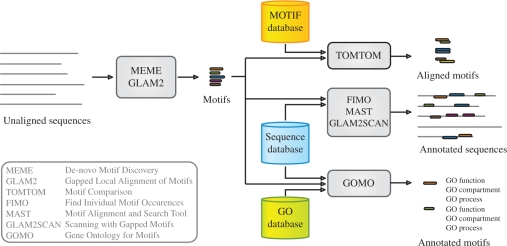
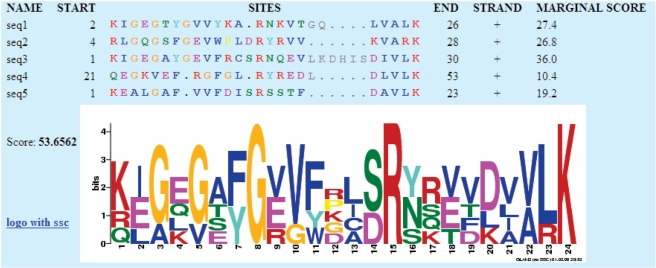
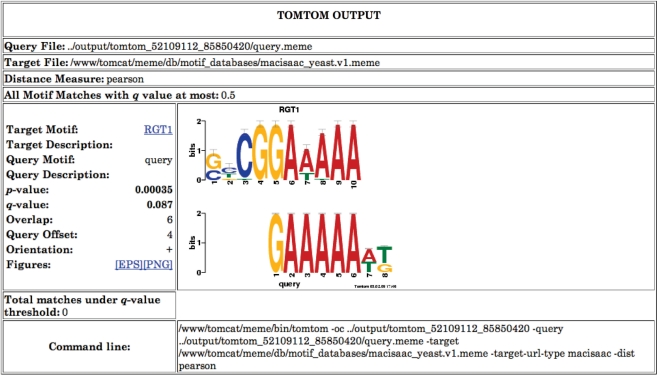
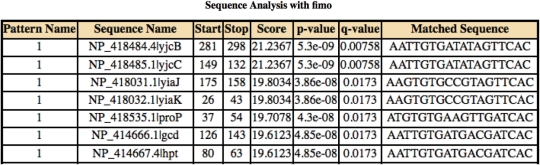
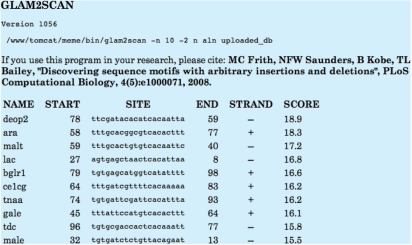
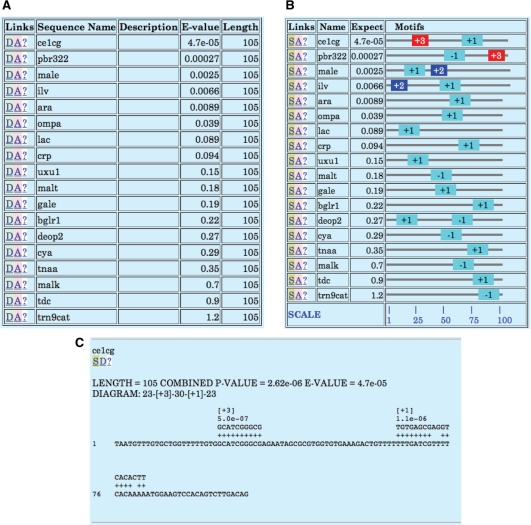
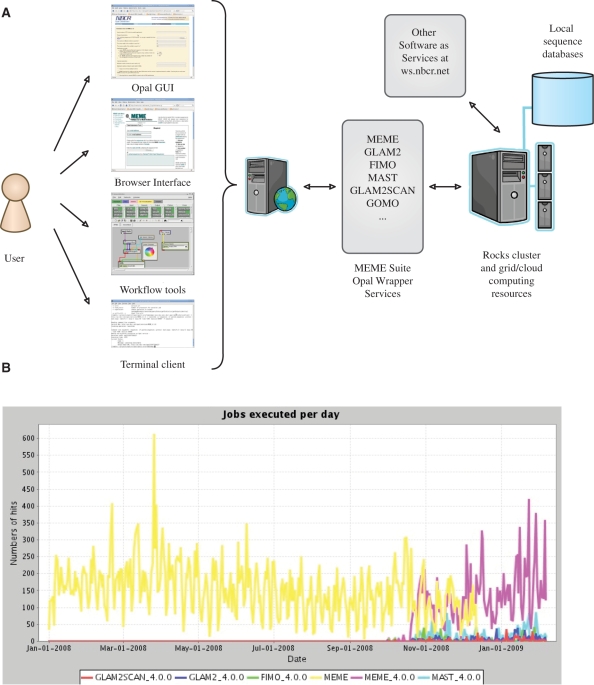
The MEME Suite web server provides a unified portal for online discovery and analysis of sequence motifs representing features such as DNA binding sites and protein interaction domains. The popular MEME motif discovery algorithm is now complemented by the GLAM2 algorithm which allows discovery of motifs containing gaps. Three sequence scanning algorithms--MAST, FIMO and GLAM2SCAN--allow scanning numerous DNA and protein sequence databases for motifs discovered by MEME and GLAM2. Transcription factor motifs (including those discovered using MEME) can be compared with motifs in many popular motif databases using the motif database scanning algorithm TOMTOM. Transcription factor motifs can be further analyzed for putative function by association with Gene Ontology (GO) terms using the motif-GO term association tool GOMO. MEME output now contains sequence LOGOS for each discovered motif, as well as buttons to allow motifs to be conveniently submitted to the sequence and motif database scanning algorithms (MAST, FIMO and TOMTOM), or to GOMO, for further analysis. GLAM2 output similarly contains buttons for further analysis using GLAM2SCAN and for rerunning GLAM2 with different parameters. All of the motif-based tools are now implemented as web services via Opal. Source code, binaries and a web server are freely available for noncommercial use at http://meme.nbcr.net.
Overview
The claims and statistics of this paper haven’t been checked yet.
Free: it reads the open-access text and checks the first 5 claims that cite a source we can check. Create a free account to check every claim.
Integrity signals
Registry
Cites
Statistics
Figures
Verification
Claims the paper makes
The claims and statistics of this paper haven’t been checked yet.
Free: it reads the open-access text and checks the first 5 claims that cite a source we can check. Create a free account to check every claim.
Claims other papers make about this one
Each is checked against this paper’s own text: does it say what the citing paper says it does?
The cited source says what the claim attributes to it.
In the citing paper
“Next, we applied the MEME motif-based sequence analysis tool (36) to investigate sequence elements that were enriched in genes whose TE was decreased by [-]CR-1-31B, which identified 2 significantly enriched 12-mer sequences (CGGCGGCGGCGG and GAGGAGGAGGAG; p = 2.2 × 10⁻²⁰ and p = 6.1 × 10⁻¹¹, respectively; Figure 2F).”
From Targeting eIF4A-dependent translation in genetically complex sarcoma (2026) · cites this paper as [36]
The cited source says what the claim attributes to it.
In the citing paper
“A discriminative motif search of S. salmonicida annexins versus Giardia alpha-giardins with the MEME tool (45) revealed a motif that is identical or highly similar to AB loops (type II Ca2+ coordination sites) in the former.”
From Comparative Cell Biology and Evolution of Annexins in Diplomonads (2016) · cites this paper as [45]
The check wasn’t confident either way, so it gives no verdict — never disputed.
In the citing paper
“The Olink technology allows the measurement of up to 92 proteins in 1 µL of plasma using the proximity extension assay (PEA).”
From Identification of Genetic Variants Regulating the Abundance of Clinically Relevant Plasma Proteins using the Diversity Outbred Mouse Model (2021) · cites this paper as [35]
Experimental — accuracy not yet measured
Self-check
Percentages, sums and reported differences re-computed from the paper’s own numbers.
The self-check needs the paper’s full text.
Citations
Cites
Fitting a mixture model by expectation maximization to discover motifs in biopolymers.
Bailey, T. L., & Elkan, C. (1994) · PubMed · Cited by 5,806
Self-citationA Direct Approach to False Discovery Rates
Storey, J. D. (2002) · Journal of the Royal Statistical Society Series B: Statistical Methodology · doi:10.1111/1467-9868.00346 · Cited by 5,603
MEME: discovering and analyzing DNA and protein sequence motifs
Bailey, T. L., Williams, N., Misleh, C., & Li, W. W. (2006) · Nucleic Acids Research · doi:10.1093/nar/gkl198 · Cited by 2,670 · cited 1×
“It offers a significantly expanded set of programs for these tasks compared with the earlier web server (1).”
BackgroundSelf-citationQuantifying similarity between motifs
Gupta, S., Stamatoyannopoulos, J. A., Bailey, T. L., & Noble, W. S. (2007) · Genome Biology · doi:10.1186/gb-2007-8-2-r24 · Cited by 2,058 · cited 2×
“TOMTOM (4) quantifies the similarity between two motifs, and can be used to search a database of known motifs for matches to motifs found by MEME.”
BackgroundMethodSelf-citationCombining evidence using p-values: application to sequence homology searches.
Bailey, T. L., & Gribskov, M. (1998) · Bioinformatics · doi:10.1093/bioinformatics/14.1.48 · Cited by 1,253
Self-citationSignificance analysis of time course microarray experiments
Storey, J. D., Xiao, W., Leek, J. T., Tompkins, R. G., & Davis, R. W. (2005) · Proceedings of the National Academy of Sciences · doi:10.1073/pnas.0504609102 · Cited by 567
Discovering Sequence Motifs with Arbitrary Insertions and Deletions
Frith, M. C., Saunders, N. F. W., Kobe, B., & Bailey, T. L. (2008) · PLoS Computational Biology · doi:10.1371/journal.pcbi.1000071 · Cited by 390 · cited 2×
“To overcome this limitation, we have incorporated a recent algorithm for gapped motif discovery—GLAM2 (3)—into the MEME suite.”
MethodSelf-citationCheminformatics analysis and learning in a data pipelining environment
Hassan, M., Brown, R. D., Varma-O’Brien, S., & Rogers, D. (2006) · Molecular Diversity · doi:10.1007/s11030-006-9041-5 · Cited by 184 · cited 1×
“A generic user interface may be generated automatically based upon an XML description of the command line syntax through the Opal GUI, either in a standard web browser or from a workflow program such as Vision (14), Kepler (15) or the Pipeline Pilot (16).”
MethodA Component-Based Software Environment for Visualizing Large Macromolecular Assemblies
Sanner, M. F. (2005) · Structure · doi:10.1016/j.str.2005.01.010 · Cited by 86
Score Distributions for Simultaneous Matching to Multiple Motifs
Bailey, T. L., & Gribskov, M. (1997) · Journal of Computational Biology · doi:10.1089/cmb.1997.4.45 · Cited by 59 · cited 10×
“MAST is ‘sequence oriented’, computing a single score for each sequence in the database.”
MethodInfluentialSelf-citation
Research works printed but not linked: 2
- 2005, PNAS, 102, 12837, 10.1073/pnas.0504609102 · DOI · Paper page
- Ludaescher B Altintas I Berkley C Higgins D Jaeger E Jones M Lee EA Tao J Zhao Y Scientific workow management and the Kepler system Concurrency Comput. Pract. Exp. 2005 18 1039 1065
Cited by
Items 101–200 of 1,095
Cotney, J., Muhle, R. A., Sanders, S. J., Liu, L., Willsey, A. J., Niu, W., Liu, W., Klei, L., Lei, J., Yin, J., et al. (2015) · Nature Communications · doi:10.1038/ncomms7404 · Cited by 350
In silico approaches for designing highly effective cell penetrating peptides
Gautam, A., Chaudhary, K., Kumar, R., Sharma, A. B., Kapoor, P., Tyagi, A. K., & Raghava, G. P. S. (2013) · Journal of Translational Medicine · doi:10.1186/1479-5876-11-74 · Cited by 350
“In order to identify motifs in CPPs, we have used MEME/MAST program [32].”
C2H2 zinc finger proteins greatly expand the human regulatory lexicon
Najafabadi, H. S., Mnaimneh, S., Schmitges, F. W., Garton, M., Lam, K. N., Yang, A., Albu, M., Weirauch, M. T., Radovani, E., Kim, P. M., et al. (2015) · Nature Biotechnology · doi:10.1038/nbt.3128 · Cited by 346
Stable recombination hotspots in birds
Singhal, S., Leffler, E. M., Sannareddy, K., Turner, I., Venn, O., Hooper, D. M., Strand, A. I., Li, Q., Raney, B., Balakrishnan, C. N., et al. (2015) · Science · doi:10.1126/science.aad0843 · Cited by 344
Mohammed, H., Hernando-Herraez, I., Savino, A., Scialdone, A., Macaulay, I., Mulas, C., Chandra, T., Voet, T., Dean, W., Nichols, J., et al. (2017) · Cell Reports · doi:10.1016/j.celrep.2017.07.009 · Cited by 340
“We used DREME in conjunction with TOMTOM (Bailey et al., 2009) to identify discriminatory transcription factor binding sites between the promoters (500 bp upstream of the transcription start site [TSS]) of the primitive streak and epiblast cell clusters.”
MethodDevelopmental Fate and Cellular Maturity Encoded in Human Regulatory DNA Landscapes
Stergachis, A. B., Neph, S., Reynolds, A., Humbert, R., Miller, B., Paige, S. L., Vernot, B., Cheng, J. B., Thurman, R. E., Sandstrom, R., et al. (2013) · Cell · doi:10.1016/j.cell.2013.07.020 · Cited by 338
Roe, J.-S., Mercan, F., Rivera, K., Pappin, D. J., & Vakoc, C. R. (2015) · Molecular Cell · doi:10.1016/j.molcel.2015.04.011 · Cited by 337
“To identify TFs that colocalize with BRD4, we analyzed the enrichment of DNA motifs that were present at BRD4-occupied enhancers and promoters using the MEME suite of motif-finding algorithms (Bailey et al., 2009).”
MethodHarr, J. C., Luperchio, T. R., Wong, X., Cohen, E., Wheelan, S. J., & Reddy, K. L. (2015) · Journal of Cell Biology · doi:10.1083/jcb.201405110 · Cited by 336
“MotifSuite: workflow for probabilistic motif detection and assessment.”
InfluentialDi, C., Yuan, J., Wu, Y., Li, J., Lin, H., Hu, L., Zhang, T., Qi, Y., Gerstein, M. B., Guo, Y., et al. (2014) · The Plant Journal · doi:10.1111/tpj.12679 · Cited by 334
Conservation and innovation in the DUX4-family gene network
Whiddon, J. L., Langford, A. T., Wong, C.-J., Zhong, J. W., & Tapscott, S. J. (2017) · Nature Genetics · doi:10.1038/ng.3846 · Cited by 334
AVPpred: collection and prediction of highly effective antiviral peptides.
Thakur, N., Qureshi, A., & Kumar, M. (2012) · Nucleic Acids Research · doi:10.1093/nar/gks450 · Cited by 324
“Correct prediction of MEME/MAST depends on E-values.”
MethodWidespread Co-translational RNA Decay Reveals Ribosome Dynamics
Pelechano, V., Wei, W., & Steinmetz, L. M. (2015) · Cell · doi:10.1016/j.cell.2015.05.008 · Cited by 324
“Our results identify a subtle but generalized pause specifically associated with peptides containing serine at the second position (a pattern given as MSxxxxx; E value, 3.3 , 10 À148 analyzed by MEME) (Bailey et al., 2009; Figures 4C and S4E).”
BackgroundMethodInfluentialLoci associated with skin pigmentation identified in African populations
Crawford, N. G., Kelly, D. E., Hansen, M. E. B., Beltrame, M. H., Fan, S., Bowman, S. L., Jewett, E., Ranciaro, A., Thompson, S., Lo, Y., et al. (2017) · Science · doi:10.1126/science.aan8433 · Cited by 321
Seo, S. W., Kim, D., Latif, H., O’Brien, E. J., Szubin, R., & Palsson, B. O. (2014) · Nature Communications · doi:10.1038/ncomms5910 · Cited by 321
“The Fur-binding motif analysis was completed using the MEME tool from the MEME software suite 48 .”
InfluentialGenome-wide Analysis Reveals SR Protein Cooperation and Competition in Regulated Splicing
Pandit, S., Zhou, Y., Shiue, L., Coutinho-Mansfield, G., Li, H., Qiu, J., Huang, J., Yeo, G. W., Ares, M., & Fu, X.-D. (2013) · Molecular Cell · doi:10.1016/j.molcel.2013.03.001 · Cited by 321
“…we selected deletion-containing tags that were also mapped within SR binding peaks to deduce consensus motifs by using the HOMER (hypergeometric optimization of motif enrichment) software (Heinz et al., 2010), which is related to the MEME motif identification program (Bailey et al., 2009).”
The SARS-CoV-2 RNA–protein interactome in infected human cells
Schmidt, N., Lareau, C. A., Keshishian, H., Ganskih, S., Schneider, C., Hennig, T., Melanson, R., Werner, S., Wei, Y., Zimmer, M., et al. (2020) · Nature Microbiology · doi:10.1038/s41564-020-00846-z · Cited by 319
Transcriptional repressor PRR5 directly regulates clock-output pathways
Nakamichi, N., Kiba, T., Kamioka, M., Suzuki, T., Yamashino, T., Higashiyama, T., Sakakibara, H., & Mizuno, T. (2012) · Proceedings of the National Academy of Sciences · doi:10.1073/pnas.1205156109 · Cited by 319
Combining ATAC-seq with nuclei sorting for discovery of cis-regulatory regions in plant genomes
Lu, Z., Hofmeister, B. T., Vollmers, C., DuBois, R. M., & Schmitz, R. J. (2017) · Nucleic Acids Research · doi:10.1093/nar/gkw1179 · Cited by 318
“Next, the DNA sequence in these footprints were masked (see Materials and Methods) and used to identify conserved motifs with discriminative regular expression motif elicitation (28).”
MethodInfluentialRIC-seq for global in situ profiling of RNA–RNA spatial interactions
Cai, Z., Cao, C., Ji, L., Ye, R., Wang, D., Xia, C., Wang, S., Du, Z., Hu, N., Yu, X., et al. (2020) · Nature · doi:10.1038/s41586-020-2249-1 · Cited by 316
A Genome-wide Map of CTCF Multivalency Redefines the CTCF Code
Nakahashi, H., Kwon, K.-R. K., Resch, W., Vian, L., Dose, M., Stavreva, D., Hakim, O., Pruett, N., Nelson, S., Yamane, A., et al. (2013) · Cell Reports · doi:10.1016/j.celrep.2013.04.024 · Cited by 315
Deregulation of DUX4 and ERG in acute lymphoblastic leukemia
the St. Jude Children's Research Hospital–Washington University Pediatric Cancer Genome Project, Zhang, J., McCastlain, K., Yoshihara, H., Xu, B., Chang, Y., Churchman, M. L., Wu, G., Li, Y., Wei, L., et al. (2016) · Nature Genetics · doi:10.1038/ng.3691 · Cited by 315
Pseudo nucleotide composition or PseKNC: an effective formulation for analyzing genomic sequences
Chen, W., Lin, H., & Chou, K.-C. (2015) · Molecular BioSystems · doi:10.1039/c5mb00155b · Cited by 312
Direct and indirect effects of H-NS and Fis on global gene expression control in Escherichia coli
Kahramanoglou, C., Seshasayee, A. S. N., Prieto, A. I., Ibberson, D., Schmidt, S., Zimmermann, J., Benes, V., Fraser, G. M., & Luscombe, N. M. (2011) · Nucleic Acids Research · doi:10.1093/nar/gkq934 · Cited by 307
“Then the complete sequence of each binding region was searched for the presence of these motifs using the MAST programme (48) with a P 0.”
MethodAccelerated cloning of a potato late blight–resistance gene using RenSeq and SMRT sequencing
Witek, K., Jupe, F., Witek, A. I., Baker, D., Clark, M. D., & Jones, J. D. G. (2016) · Nature Biotechnology · doi:10.1038/nbt.3540 · Cited by 303
Landscape and Regulation of m6A and m6Am Methylome across Human and Mouse Tissues
Liu, J., Li, K., Cai, J., Zhang, M., Zhang, X., Xiong, X., Meng, H., Xu, X., Huang, Z., Peng, J., et al. (2020) · Molecular Cell · doi:10.1016/j.molcel.2019.09.032 · Cited by 299
The role of the DNA-binding One Zinc Finger (DOF) transcription factor family in plants
Noguero, M., Atif, R. M., Ochatt, S., & Thompson, R. D. (2013) · Plant Science · doi:10.1016/j.plantsci.2013.03.016 · Cited by 297
Self-Recognition of an Inducible Host lncRNA by RIG-I Feedback Restricts Innate Immune Response
Jiang, M., Zhang, S., Yang, Z., Lin, H., Zhu, J., Liu, L., Wang, W., Liu, S., Liu, W., Ma, Y., et al. (2018) · Cell · doi:10.1016/j.cell.2018.03.064 · Cited by 297
“The MEME algorithm (Bailey et al., 2009) yieldedGA-richmotifs around cross-link sites”
MethodInfluentialp21 produces a bioactive secretome that places stressed cells under immunosurveillance
Sturmlechner, I., Zhang, C., Sine, C. C., van Deursen, E.-J., Jeganathan, K. B., Hamada, N., Grasic, J., Friedman, D., Stutchman, J. T., Can, I., et al. (2021) · Science · doi:10.1126/science.abb3420 · Cited by 295
“5-kb padding from each end were used as input to MEME-ChIP (50) to detect enrichedmotifs using the HOCOMOCO database (51).”
MethodInfluentialRecombination initiation maps of individual human genomes
Pratto, F., Brick, K., Khil, P., Smagulova, F., Petukhova, G. V., & Camerini-Otero, R. D. (2014) · Science · doi:10.1126/science.1256442 · Cited by 295
GraphProt: modeling binding preferences of RNA-binding proteins
Maticzka, D., Lange, S. J., Costa, F., & Backofen, R. (2014) · Genome Biology · doi:10.1186/gb-2014-15-1-r17 · Cited by 293
“Popular examples are MEME [13], MatrixREDUCE [14] and DRIMust [15].”
MethodAn RNA thermoswitch regulates daytime growth in Arabidopsis
Chung, B. Y. W., Balcerowicz, M., Di Antonio, M., Jaeger, K. E., Geng, F., Franaszek, K., Marriott, P., Brierley, I., Firth, A. E., & Wigge, P. A. (2020) · Nature Plants · doi:10.1038/s41477-020-0633-3 · Cited by 292
AtNIGT1/HRS1 integrates nitrate and phosphate signals at the Arabidopsis root tip
Medici, A., Marshall-Colon, A., Ronzier, E., Szponarski, W., Wang, R., Gojon, A., Crawford, N. M., Ruffel, S., Coruzzi, G. M., & Krouk, G. (2015) · Nature Communications · doi:10.1038/ncomms7274 · Cited by 291
“Five strongly significant motifs were retrieved using the MEME algorithm 41 .”
Keiran, N., Ceperuelo-Mallafré, V., Calvo, E., Hernández-Alvarez, M. I., Ejarque, M., Núñez-Roa, C., Horrillo, D., Maymó-Masip, E., Rodríguez, M. M., Fradera, R., et al. (2019) · Nature Immunology · doi:10.1038/s41590-019-0372-7 · Cited by 290
Polycomb-like proteins link the PRC2 complex to CpG islands
Li, H., Liefke, R., Jiang, J., Kurland, J. V., Tian, W., Deng, P., Zhang, W., He, Q., Patel, D. J., Bulyk, M. L., et al. (2017) · Nature · doi:10.1038/nature23881 · Cited by 289
“Enriched motifs were identified by MEME-ChIP 41 .”
Exonic Transcription Factor Binding Directs Codon Choice and Affects Protein Evolution
Stergachis, A. B., Haugen, E., Shafer, A., Fu, W., Vernot, B., Reynolds, A., Raubitschek, A., Ziegler, S., LeProust, E. M., Akey, J. M., et al. (2013) · Science · doi:10.1126/science.1243490 · Cited by 288
Liu, C.-F., & Lefebvre, V. (2015) · Nucleic Acids Research · doi:10.1093/nar/gkv688 · Cited by 287
“De novo motif discovery was performed by uploading 500-bp sequences centered on SOX peak summits into the MEME suite MEME-ChIP and GLAM2 programs and using default algorithm parameters (42).”
MethodR-Loop Mediated trans Action of the APOLO Long Noncoding RNA
Ariel, F., Lucero, L., Christ, A., Mammarella, M. F., Jegu, T., Veluchamy, A., Mariappan, K., Latrasse, D., Blein, T., Liu, C., et al. (2020) · Molecular Cell · doi:10.1016/j.molcel.2019.12.015 · Cited by 287
Transposable elements are the primary source of novelty in primate gene regulation
Trizzino, M., Park, Y., Holsbach-Beltrame, M., Aracena, K., Mika, K., Caliskan, M., Perry, G. H., Lynch, V. J., & Brown, C. D. (2017) · Genome Research · doi:10.1101/gr.218149.116 · Cited by 285
“We used the MEME Suite (Bailey et al. 2009) to identify sequence motifs enriched in human-specific, ape-specific, and evolutionarily conserved liver CREs.”
Magwanga, R. O., Lu, P., Kirungu, J. N., Lu, H., Wang, X., Cai, X., Zhou, Z., Zhang, Z., Salih, H., Wang, K., et al. (2018) · BMC Genetics · doi:10.1186/s12863-017-0596-1 · Cited by 285
“cgi) [32], was used to identify the conserved protein motifs, with maximum number of different motif at 20; the minimum and largest base sequence width of 6 and 50 respectively.”
MethodEvaluation of Algorithm Performance in ChIP-Seq Peak Detection
Wilbanks, E. G., & Facciotti, M. T. (2010) · PLoS ONE · doi:10.1371/journal.pone.0011471 · Cited by 285
“Using either A) less stringent (p,161025) or B) more stringent (p,161028) thresholds for defining ‘‘significant’’ NRSE2 motifs found by MAST search within 500 bp of the peak did not change the relative ranking of the eleven tested methods.”
BackgroundMethodInfluentialDistinct structural classes of activating FOXA1 alterations in advanced prostate cancer
Parolia, A., Cieslik, M., Chu, S.-C., Xiao, L., Ouchi, T., Zhang, Y., Wang, X., Vats, P., Cao, X., Pitchiaya, S., et al. (2019) · Nature · doi:10.1038/s41586-019-1347-4 · Cited by 284
Chen, Y., Chi, P., Rockowitz, S., Iaquinta, P. J., Shamu, T., Shukla, S., Gao, D., Sirota, I., Carver, B. S., Wongvipat, J., et al. (2013) · Nature Medicine · doi:10.1038/nm.3216 · Cited by 282
“The MEME software suite 23 and DREME 24 were applied for motif analysis using 300-bp sequences centered on either AR or ERG peaks.”
Architecture and Dynamics of the Jasmonic Acid Gene Regulatory Network
Hickman, R., Van Verk, M. C., Van Dijken, A. J. H., Mendes, M. P., Vroegop-Vos, I. A., Caarls, L., Steenbergen, M., Van der Nagel, I., Wesselink, G. J., Jironkin, A., et al. (2017) · The Plant Cell · doi:10.1105/tpc.16.00958 · Cited by 281
“Ingeneral,AP2/ERF-regulatedJAresponses intheERFbranchoftheJApathwayareassociatedwithenhanced resistance to necrotrophic pathogens (Berrocal-Lobo et al.,2002; Lorenzoetal.,2003),whereastheMYCTF-regulatedJAresponses in the MYC branch of the JA pathway are associated with wound response and defense…”
Dugar, G., Herbig, A., Förstner, K. U., Heidrich, N., Reinhardt, R., Nieselt, K., & Sharma, C. M. (2013) · PLoS Genetics · doi:10.1371/journal.pgen.1003495 · Cited by 279
The R2R3-MYB, bHLH, WD40, and related transcription factors in flavonoid biosynthesis
Zhao, L., Gao, L., Wang, H., Chen, X., Wang, Y., Yang, H., Wei, C., Wan, X., & Xia, T. (2013) · Functional & Integrative Genomics · doi:10.1007/s10142-012-0301-4 · Cited by 279
Widespread disruption of host transcription termination in HSV-1 infection
Rutkowski, A. J., Erhard, F., L’Hernault, A., Bonfert, T., Schilhabel, M., Crump, C., Rosenstiel, P., Efstathiou, S., Zimmer, R., Friedel, C. C., et al. (2015) · Nature Communications · doi:10.1038/ncomms8126 · Cited by 275
“Motif search was performed using the DREME (Discriminative DNA Motif Discovery) 62 tool contained in the MEME motif search suite 63 .”
Transcription factors interact with RNA to regulate genes
Oksuz, O., Henninger, J. E., Warneford-Thomson, R., Zheng, M. M., Erb, H., Vancura, A., Overholt, K. J., Hawken, S. W., Banani, S. F., Lauman, R., et al. (2023) · Molecular Cell · doi:10.1016/j.molcel.2023.06.012 · Cited by 275
Genome-wide identification and characterization of functional neuronal activity–dependent enhancers
Malik, A. N., Vierbuchen, T., Hemberg, M., Rubin, A. A., Ling, E., Couch, C. H., Stroud, H., Spiegel, I., Farh, K. K.-H., Harmin, D. A., et al. (2014) · Nature Neuroscience · doi:10.1038/nn.3808 · Cited by 275
Liu, C., Cheng, Y.-J., Wang, J.-W., & Weigel, D. (2017) · Nature Plants · doi:10.1038/s41477-017-0005-9 · Cited by 273
Boulias, K., Toczydłowska-Socha, D., Hawley, B. R., Liberman, N., Takashima, K., Zaccara, S., Guez, T., Vasseur, J.-J., Debart, F., Aravind, L., et al. (2019) · Molecular Cell · doi:10.1016/j.molcel.2019.06.006 · Cited by 273
Microbial enzymes catalyzing keratin degradation: Classification, structure, function
Qiu, J., Wilkens, C., Barrett, K., & Meyer, A. S. (2020) · Biotechnology Advances · doi:10.1016/j.biotechadv.2020.107607 · Cited by 272
Lorenzi, H., Khan, A., Behnke, M. S., Namasivayam, S., Swapna, L. S., Hadjithomas, M., Karamycheva, S., Pinney, D., Brunk, B. P., Ajioka, J. W., et al. (2016) · Nature Communications · doi:10.1038/ncomms10147 · Cited by 271
King, H. W., & Klose, R. J. (2017) · eLife · doi:10.7554/elife.22631 · Cited by 270
“OCT4 motif enrichment analysis was performed using the MEME suite (Bailey et al., 2009).”
MethodFOXA1 mutations alter pioneering activity, differentiation and prostate cancer phenotypes
Adams, E. J., Karthaus, W. R., Hoover, E., Liu, D., Gruet, A., Zhang, Z., Cho, H., DiLoreto, R., Chhangawala, S., Liu, Y., et al. (2019) · Nature · doi:10.1038/s41586-019-1318-9 · Cited by 269
A Common Embryonic Origin of Stem Cells Drives Developmental and Adult Neurogenesis
Berg, D. A., Su, Y., Jimenez-Cyrus, D., Patel, A., Huang, N., Morizet, D., Lee, S., Shah, R., Ringeling, F. R., Jain, R., et al. (2019) · Cell · doi:10.1016/j.cell.2019.02.010 · Cited by 267
“HOMER (Heinz et al., 2010) and MEME (Bailey et al., 2009) were used to annotate those peaks and perform motif discovery analysis.”
MethodInfluentialIRON MAN is a ubiquitous family of peptides that control iron transport in plants
Grillet, L., Lan, P., Li, W., Mokkapati, G., & Schmidt, W. (2018) · Nature Plants · doi:10.1038/s41477-018-0266-y · Cited by 267
Self-citationIn silico method for modelling metabolism and gene product expression at genome scale
Lerman, J. A., Hyduke, D. R., Latif, H., Portnoy, V. A., Lewis, N. E., Orth, J. D., Schrimpe-Rutledge, A. C., Smith, R. D., Adkins, J. N., Zengler, K., et al. (2012) · Nature Communications · doi:10.1038/ncomms1928 · Cited by 266
Impaired Epidermal to Dendritic T Cell Signaling Slows Wound Repair in Aged Skin
Keyes, B. E., Liu, S., Asare, A., Naik, S., Levorse, J., Polak, L., Lu, C. P., Nikolova, M., Pasolli, H. A., & Fuchs, E. (2016) · Cell · doi:10.1016/j.cell.2016.10.052 · Cited by 266
Mapping and Dynamics of Regulatory DNA and Transcription Factor Networks in A. thaliana
Sullivan, A. M., Arsovski, A. A., Lempe, J., Bubb, K. L., Weirauch, M. T., Sabo, P. J., Sandstrom, R., Thurman, R. E., Neph, S., Reynolds, A. P., et al. (2014) · Cell Reports · doi:10.1016/j.celrep.2014.08.019 · Cited by 266
“To determine the PIF3 footprint occupancy in ChIP-‐seq peaks and DHSs, BEDOPS was used to count the number of FIMO p-‐value 1e-‐4 PIF3 motifs (protein binding microarray motif) within different genomic contexts: genome-‐wide, within DHSs, within 1, 2, 3, or 4 ChIP-‐seq peaks respectively, or within 4 ChIP-‐seq replica…”
MethodInfluentialPredicting RNA-seq coverage from DNA sequence as a unifying model of gene regulation
Linder, J., Srivastava, D., Yuan, H., Agarwal, V., & Kelley, D. R. (2025) · Nature Genetics · doi:10.1038/s41588-024-02053-6 · Cited by 418
“We ran TF-MoDISco, a de novo motif clustering tool 51 , for all five tissue gene sets and aligned motif clusters to their most likely database match using the Tomtom MEME suite and HOCOMOCO (v.11) 52,53 .”
InfluentialZhelyazkova, P., Sharma, C. M., Förstner, K. U., Liere, K., Vogel, J., & Börner, T. (2012) · The Plant Cell · doi:10.1105/tpc.111.089441 · Cited by 263
“…to 225-nucleotide and 226- to 250-nucleotide upstream regions of all TSSs mapped in green and white plastids were screened separately for potential promoter motifs with lengths of 3 to 9 nucleotides using the Multiple ExpectationMaximization for Motif Elicitation (MEME) tool (Bailey et al., 2009).”
MethodInfluentialThe Dynamic Epigenetic Landscape of the Retina During Development, Reprogramming, and Tumorigenesis
Aldiri, I., Xu, B., Wang, L., Chen, X., Hiler, D., Griffiths, L., Valentine, M., Shirinifard, A., Thiagarajan, S., Sablauer, A., et al. (2017) · Neuron · doi:10.1016/j.neuron.2017.04.022 · Cited by 262
“1 CMV[Nluc/CMV] Promega N109A Software and Algorithms BWA version 0.5.9-r26-dev Li and Durbin, 2009 http://bio-bwa.sourceforge.net Picard version 1.65(1160) https://broadinstitute.github.io/picard/ https://broadinstitute.github.io/picard samtools version 0.1.18 (r982:295) Li et al., 2009 http://www.htslib.org/ Bedtool…”
BackgroundMethodInfluentialN6-Methyladenosine Inhibits Local Ribonucleolytic Cleavage to Stabilize mRNAs in Arabidopsis
Anderson, S. J., Kramer, M. C., Gosai, S. J., Yu, X., Vandivier, L. E., Nelson, A. D. L., Anderson, Z. D., Beilstein, M. A., Fray, R. G., Lyons, E., et al. (2018) · Cell Reports · doi:10.1016/j.celrep.2018.10.020 · Cited by 262
“(E) A motif discovered within a 15 nt window (7 nt up- and downstream) around the highest cleaved nucleotide within Col-0 m6A peaks using MEME, which appears to be a new m6A motif.”
MethodInfluentialShafik, A. M., Zhang, F., Guo, Z., Dai, Q., Pajdzik, K., Li, Y., Kang, Y., Yao, B., Wu, H., He, C., et al. (2021) · Genome Biology · doi:10.1186/s13059-020-02249-z · Cited by 261
“The consensus sequence motifs enriched in m 6 A peaks were identified by using MEME (version 5.1.1) [66].”
MethodInfluentialChromatin environment, transcriptional regulation, and splicing distinguish lincRNAs and mRNAs
Melé, M., Mattioli, K., Mallard, W., Shechner, D. M., Gerhardinger, C., & Rinn, J. L. (2017) · Genome Research · doi:10.1101/gr.214205.116 · Cited by 260
“We mappedthemtothecorrespond-ing ChIP-seq peaks that overlapped lincRNA or mRNA promoters using the FIMO program (Grant et al. 2011) from the MEME package (Bailey et al. 2009).”
Mouse regulatory DNA landscapes reveal global principles of cis-regulatory evolution
Vierstra, J., Rynes, E., Sandstrom, R., Zhang, M., Canfield, T., Hansen, R. S., Stehling-Sun, S., Sabo, P. J., Byron, R., Humbert, R., et al. (2014) · Science · doi:10.1126/science.1246426 · Cited by 257
Functional classification of long non-coding RNAs by k-mer content
Kirk, J. M., Kim, S. O., Inoue, K., Smola, M. J., Lee, D. M., Schertzer, M. D., Wooten, J. S., Baker, A. R., Sprague, D., Collins, D. W., et al. (2018) · Nature Genetics · doi:10.1038/s41588-018-0207-8 · Cited by 254
“54 ; Supplementary Table 21).”
Epithelial memory of inflammation limits tissue damage while promoting pancreatic tumorigenesis
Del Poggetto, E., Ho, I.-L., Balestrieri, C., Yen, E.-Y., Zhang, S., Citron, F., Shah, R., Corti, D., Diaferia, G. R., Li, C.-Y., et al. (2021) · Science · doi:10.1126/science.abj0486 · Cited by 253
de Abreu‐Neto, J. B., Turchetto‐Zolet, A. C., de Oliveira, L. F. V., Bodanese Zanettini, M. H., & Margis‐Pinheiro, M. (2013) · The FEBS Journal · doi:10.1111/febs.12159 · Cited by 253
m6A Facilitates eIF4F-Independent mRNA Translation
Coots, R. A., Liu, X.-M., Mao, Y., Dong, L., Zhou, J., Wan, J., Zhang, X., & Qian, S.-B. (2017) · Molecular Cell · doi:10.1016/j.molcel.2017.10.002 · Cited by 252
“We used MEME Suite for motif analysis with parameters; -nmotifs3 -maxw6 –minw3 (Bailey et al., 2009).”
Genome-wide discovery of human splicing branchpoints
Mercer, T. R., Clark, M. B., Andersen, S. B., Brunck, M. E., Haerty, W., Crawford, J., Taft, R. J., Nielsen, L. K., Dinger, M. E., & Mattick, J. S. (2015) · Genome Research · doi:10.1101/gr.182899.114 · Cited by 251
Pan, X., Rijnbeek, P., Yan, J., & Shen, H.-B. (2018) · BMC Genomics · doi:10.1186/s12864-018-4889-1 · Cited by 251
“The widely used MEME model fits a mixture model using expectation maximization to discover multiple sequence motifs [8].”
MethodMolecular Anatomy of the Developing Human Retina
Hoshino, A., Ratnapriya, R., Brooks, M. J., Chaitankar, V., Wilken, M. S., Zhang, C., Starostik, M. R., Gieser, L., La Torre, A., Nishio, M., et al. (2017) · Developmental Cell · doi:10.1016/j.devcel.2017.10.029 · Cited by 251
“11.2) suite (Bailey et al., 2009; Grant et al., 2011).”
InfluentialRif1 is a global regulator of timing of replication origin firing in fission yeast
Hayano, M., Kanoh, Y., Matsumoto, S., Renard-Guillet, C., Shirahige, K., & Masai, H. (2012) · Genes & Development · doi:10.1101/gad.178491.111 · Cited by 250
“This potentially new motif was further validated by searching it with FIMO (from the MEME suite) (Bailey et al. 2009) using an E-value threshold at 1 3 10 4 and a FDR threshold (Q-value) of 1%.”
MethodInfluentialDisease-Associated Short Tandem Repeats Co-localize with Chromatin Domain Boundaries
Sun, J. H., Zhou, L., Emerson, D. J., Phyo, S. A., Titus, K. R., Gong, W., Gilgenast, T. G., Beagan, J. A., Davidson, B. L., Tassone, F., et al. (2018) · Cell · doi:10.1016/j.cell.2018.08.005 · Cited by 249
The genome-wide dynamics of the binding of Ldb1 complexes during erythroid differentiation
Soler, E., Andrieu-Soler, C., de Boer, E., Bryne, J. C., Thongjuea, S., Stadhouders, R., Palstra, R.-J., Stevens, M., Kockx, C., van IJcken, W., et al. (2010) · Genes & Development · doi:10.1101/gad.551810 · Cited by 245
“The Tal1binding sites give a different picture: While the published E-box motif consensus is CANNTG (Murre et al. 1991), our motif discovery on the bound sites using MEME (Bailey et al. 2009) revealed a preference for TG dinucleotide upstream of WGATAR, with a preferred consensus (C)TGN7–8WGATAR.”
BackgroundMethodRSAT 2015: Regulatory Sequence Analysis Tools
Medina-Rivera, A., Defrance, M., Sand, O., Herrmann, C., Castro-Mondragon, J. A., Delerce, J., Jaeger, S., Blanchet, C., Vincens, P., Caron, C., et al. (2015) · Nucleic Acids Research · doi:10.1093/nar/gkv362 · Cited by 245
“The main alternative to RSAT is the MEME suite (19), which is limited to motif analyses.”
MethodIL6/STAT3 Signaling Hijacks Estrogen Receptor α Enhancers to Drive Breast Cancer Metastasis
Siersbæk, R., Scabia, V., Nagarajan, S., Chernukhin, I., Papachristou, E. K., Broome, R., Johnston, S. J., Joosten, S. E. P., Green, A. R., Kumar, S., et al. (2020) · Cancer Cell · doi:10.1016/j.ccell.2020.06.007 · Cited by 245
Yang, G., Tang, L., Gong, Y., Xie, J., Fu, Y., Jiang, D., Li, G., Collinge, D. B., Chen, W., & Cheng, J. (2018) · New Phytologist · doi:10.1111/nph.14842 · Cited by 245
Global translational reprogramming is a fundamental layer of immune regulation in plants
Xu, G., Greene, G. H., Yoo, H., Liu, L., Marqués, J., Motley, J., & Dong, X. (2017) · Nature · doi:10.1038/nature22371 · Cited by 244
“The MEME online tool 36 was used to search strand-specific 5 ′ leader sequences for enriched consensuses compared to whole genome 5 ′ leader sequences with default parameters.”
wenzhong, L., & hualan, L. (2020) · ChemRxiv · doi:10.26434/chemrxiv.11938173.v7 · Cited by 244
Chepyshko, H., Lai, C.-P., Huang, L., Liu, J., & Shaw, J. (2012) · BMC Genomics · doi:10.1186/1471-2164-13-309 · Cited by 245
“To identify the additional putative conserved motifs in the rice OsGELP gene family and in 24 plant GDSL esterases/lipases, whose putative functions were recently elucidated, the MEME motif search tool was used [91].”
MethodGupta, S., Kapoor, P., Chaudhary, K., Gautam, A., Kumar, R., & Raghava, G. P. S. (2015) · Methods in Molecular Biology · doi:10.1007/978-1-4939-2285-7_7 · Cited by 243
PeakAnalyzer: Genome-wide annotation of chromatin binding and modification loci
Salmon-Divon, M., Dvinge, H., Tammoja, K., & Bertone, P. (2010) · BMC Bioinformatics · doi:10.1186/1471-2105-11-415 · Cited by 243
Cortijo, S., Charoensawan, V., Brestovitsky, A., Buning, R., Ravarani, C., Rhodes, D., van Noort, J., Jaeger, K. E., & Wigge, P. A. (2017) · Molecular Plant · doi:10.1016/j.molp.2017.08.014 · Cited by 242
“, 2011), as part of the MEME suite (Bailey et al., 2009).”
Shark genomes provide insights into elasmobranch evolution and the origin of vertebrates
Hara, Y., Yamaguchi, K., Onimaru, K., Kadota, M., Koyanagi, M., Keeley, S. D., Tatsumi, K., Tanaka, K., Motone, F., Kageyama, Y., et al. (2018) · Nature Ecology & Evolution · doi:10.1038/s41559-018-0673-5 · Cited by 241
Somatic retrotransposition in human cancer revealed by whole-genome and exome sequencing
Helman, E., Lawrence, M. S., Stewart, C., Sougnez, C., Getz, G., & Meyerson, M. (2014) · Genome Research · doi:10.1101/gr.163659.113 · Cited by 240
“Sequence motifs at insertion breakpoints were computed using the MEME Suite (Bailey et al. 2009).”
MethodAn epigenetic barrier sets the timing of human neuronal maturation
Ciceri, G., Baggiolini, A., Cho, H. S., Kshirsagar, M., Benito-Kwiecinski, S., Walsh, R. M., Aromolaran, K. A., Gonzalez-Hernandez, A. J., Munguba, H., Koo, S. Y., et al. (2024) · Nature · doi:10.1038/s41586-023-06984-8 · Cited by 240
Rodriguez-Celma, J., Lin, W.-D., Fu, G.-M., Abadia, J., Lopez-Millan, A.-F., & Schmidt, W. (2013) · PLANT PHYSIOLOGY · doi:10.1104/pp.113.220426 · Cited by 240
An epigenetic barrier sets the timing of human neuronal maturation
(2022) · doi:10.1101/2022.06.02.490114 · Cited by 240
An inducible long noncoding RNA amplifies DNA damage signaling
Schmitt, A. M., Garcia, J. T., Hung, T., Flynn, R. A., Shen, Y., Qu, K., Payumo, A. Y., Peres-da-Silva, A., Broz, D. K., Baum, R., et al. (2016) · Nature Genetics · doi:10.1038/ng.3673 · Cited by 239
Saunders, D. G. O., Win, J., Cano, L. M., Szabo, L. J., Kamoun, S., & Raffaele, S. (2012) · PLoS ONE · doi:10.1371/journal.pone.0029847 · Cited by 238
“De novo motif analysis reveals several conserved cysteine motifs in secreted proteins of rust fungi To detect conserved motifs in the secretome of M. larici-populina and P. graminis f. sp. tritici we used the program MEME [28].”
MethodSeo, S. W., Kim, D., Szubin, R., & Palsson, B. O. (2015) · Cell Reports · doi:10.1016/j.celrep.2015.07.043 · Cited by 237
“To identify DNA sequence motifs of these OxyR-, SoxR-, and SoxS-binding sites, we used the MEME tool from the MEME software suite (Bailey et al., 2009) with the genomic sequences of binding sites.”
MethodQuantitative profiling of initiating ribosomes in vivo
Gao, X., Wan, J., Liu, B., Ma, M., Shen, B., & Qian, S.-B. (2015) · Nature Methods · doi:10.1038/nmeth.3208 · Cited by 237
A prenylated dsRNA sensor protects against severe COVID-19
Wickenhagen, A., Sugrue, E., Lytras, S., Kuchi, S., Noerenberg, M., Turnbull, M. L., Loney, C., Herder, V., Allan, J., Jarmson, I., et al. (2021) · Science · doi:10.1126/science.abj3624 · Cited by 237
“Themotifs identified by GLAM2 were longer and more heterogeneous.”
BackgroundMethodInfluentialRevilla‐i‐Domingo, R., Bilic, I., Vilagos, B., Tagoh, H., Ebert, A., Tamir, I. M., Smeenk, L., Trupke, J., Sommer, A., Jaritz, M., et al. (2012) · The EMBO Journal · doi:10.1038/emboj.2012.155 · Cited by 235
Transcription Factor Cooperativity in Early Adipogenic Hotspots and Super-Enhancers
Siersbæk, R., Rabiee, A., Nielsen, R., Sidoli, S., Traynor, S., Loft, A., Poulsen, L. L. C., Rogowska-Wrzesinska, A., Jensen, O. N., & Mandrup, S. (2014) · Cell Reports · doi:10.1016/j.celrep.2014.04.042 · Cited by 234
Fusobacterium nucleatum promotes colorectal cancer metastasis by modulating KRT7-AS/KRT7
Chen, S., Su, T., Zhang, Y., Lee, A., He, J., Ge, Q., Wang, L., Si, J., Zhuo, W., & Wang, L. (2020) · Gut Microbes · doi:10.1080/19490976.2019.1695494 · Cited by 232
Zhang, Y., Pitchiaya, S., Cieślik, M., Niknafs, Y. S., Tien, J. C.-Y., Hosono, Y., Iyer, M. K., Yazdani, S., Subramaniam, S., Shukla, S. K., et al. (2018) · Nature Genetics · doi:10.1038/s41588-018-0120-1 · Cited by 232
Master regulators of FGFR2 signalling and breast cancer risk
Fletcher, M. N. C., Castro, M. A. A., Wang, X., de Santiago, I., O’Reilly, M., Chin, S.-F., Rueda, O. M., Caldas, C., Ponder, B. A. J., Markowetz, F., et al. (2013) · Nature Communications · doi:10.1038/ncomms3464 · Cited by 232
Metadata
- Authors
- Bailey, T. L., Boden, M., Buske, F. A., Frith, M., Grant, C. E., Clementi, L., Ren, J., Li, W. W., & Noble, W. S.
- Affiliations
- The University of Queensland (AU)
- Corresponding author
- Bailey, T. L.
- Noble, W. S.
- Venue
- Nucleic Acids Research
- Publisher
- Oxford University Press (OUP)
- Published
- 2009-05-20
- Volume
- 37
- Issue
- Web Server
- Pages
- W202-W208
- ISSN
- 0305-1048 (ISSN-L)
- 1362-4962
- PMC
- PMC2703892
- OpenAlex
- W2157009395
- Cited by
- 10,648
- References
- 15
- Citations by year
- 2026: 635 · 2025: 885 · 2024: 922 · 2023: 999 · 2022: 1146 · 2021: 1349 · 2020: 979 · 2019: 720 · 2018: 613 · 2017: 498 · 2016: 448 · 2015: 456 · 2014: 376 · 2013: 296 · 2012: 184
- FWCI
- 42.64
- Type
- journal article
- Language
- en
- Open access
- gold
- doi.org
- Licence
- Locations
- Nucleic Acids Research (publishedVersion, cc-by-nc)
- PubMed Central (publishedVersion, cc-by-nc)
- PubMed (publishedVersion)
- Funders
- National Institutes of Health (5r01rr021692-06)
- National Center for Research Resources (P41-RR08605, R0-1 RR021692, P41RR008605)
- Topics
- Life Sciences › Biochemistry, Genetics and Molecular Biology › Molecular Biology › Genomics and Chromatin Dynamics
- Life Sciences › Biochemistry, Genetics and Molecular Biology › Molecular Biology › Genomics and Phylogenetic Studies
- Life Sciences › Biochemistry, Genetics and Molecular Biology › Molecular Biology › Bioinformatics and Genomic Networks
- Keywords
- motif discovery, DNA binding sites, protein-protein interaction domains, MAST, TomTom, Gene Ontology, transcription factor binding motifs, sequence logos, web server, motif database, web services
- MeSH terms
- Algorithms, Binding Sites, Software, Transcription Factors, Sequence Analysis, DNA, Internet, Sequence Analysis, Protein, Databases, Genetic, Regulatory Elements, Transcriptional
About these checks
Registry, retraction, Cites and statistics results are computed, not judged, with one exception: a printed reference that no index lists is read once by a model before it counts as a citation error. Claims are extracted by a model and kept only when their quote appears verbatim in the text; each cited source is then checked, with a model’s help, for whether it says what the claim relies on. Those verdicts can be wrong — read the claim’s quote and the cited source before relying on one.
Statistics and arithmetic are recomputed, not judged.
Confidence bands are shown only for fields calibrated on our annotated test set. None is calibrated yet, so no band is shown.
What counts as a claim ›How we measure confidence ›How we check this ›
Are you an author, or do you see a problem with this page? Request a review
Data sources
Bibliographic data: Semantic Scholar, OpenAlex, Crossref.
Contains information from the Semantic Scholar Academic Graph Datasets, made available under the ODC Attribution License (ODC-BY 1.0).
Semantic Scholar’s data is described in: Kinney, R., et al. (2023). The Semantic Scholar Open Data Platform. arXiv:2301.10140.
