

MEME SUITE: tools for motif discovery and searching
Open accessThe DOI matches its Crossref record; 15 of the 15 references it cites were found in a registry or an index.
Abstract
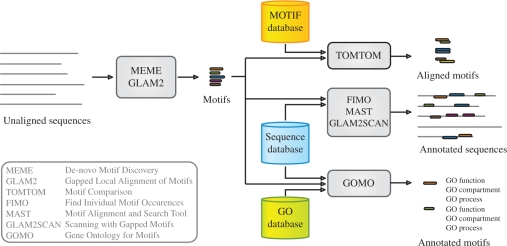
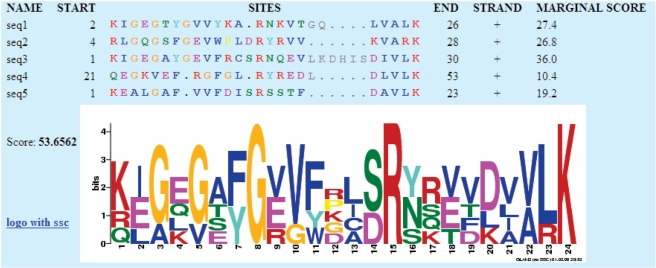
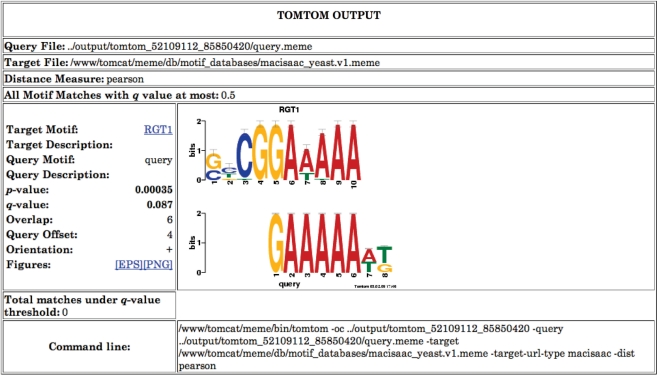
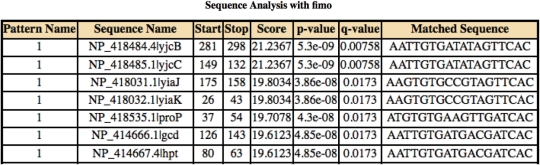
The MEME Suite web server provides a unified portal for online discovery and analysis of sequence motifs representing features such as DNA binding sites and protein interaction domains. The popular MEME motif discovery algorithm is now complemented by the GLAM2 algorithm which allows discovery of motifs containing gaps. Three sequence scanning algorithms--MAST, FIMO and GLAM2SCAN--allow scanning numerous DNA and protein sequence databases for motifs discovered by MEME and GLAM2. Transcription factor motifs (including those discovered using MEME) can be compared with motifs in many popular motif databases using the motif database scanning algorithm TOMTOM. Transcription factor motifs can be further analyzed for putative function by association with Gene Ontology (GO) terms using the motif-GO term association tool GOMO. MEME output now contains sequence LOGOS for each discovered motif, as well as buttons to allow motifs to be conveniently submitted to the sequence and motif database scanning algorithms (MAST, FIMO and TOMTOM), or to GOMO, for further analysis. GLAM2 output similarly contains buttons for further analysis using GLAM2SCAN and for rerunning GLAM2 with different parameters. All of the motif-based tools are now implemented as web services via Opal. Source code, binaries and a web server are freely available for noncommercial use at http://meme.nbcr.net.
Overview
The claims and statistics of this paper haven’t been checked yet.
Free: it reads the open-access text and checks the first 5 claims that cite a source we can check. Create a free account to check every claim.
Integrity signals
Registry
Cites
Statistics
Figures
Verification
Claims the paper makes
The claims and statistics of this paper haven’t been checked yet.
Free: it reads the open-access text and checks the first 5 claims that cite a source we can check. Create a free account to check every claim.
Claims other papers make about this one
Each is checked against this paper’s own text: does it say what the citing paper says it does?
The cited source says what the claim attributes to it.
In the citing paper
“Next, we applied the MEME motif-based sequence analysis tool (36) to investigate sequence elements that were enriched in genes whose TE was decreased by [-]CR-1-31B, which identified 2 significantly enriched 12-mer sequences (CGGCGGCGGCGG and GAGGAGGAGGAG; p = 2.2 × 10⁻²⁰ and p = 6.1 × 10⁻¹¹, respectively; Figure 2F).”
From Targeting eIF4A-dependent translation in genetically complex sarcoma (2026) · cites this paper as [36]
The cited source says what the claim attributes to it.
In the citing paper
“A discriminative motif search of S. salmonicida annexins versus Giardia alpha-giardins with the MEME tool (45) revealed a motif that is identical or highly similar to AB loops (type II Ca2+ coordination sites) in the former.”
From Comparative Cell Biology and Evolution of Annexins in Diplomonads (2016) · cites this paper as [45]
The check wasn’t confident either way, so it gives no verdict — never disputed.
In the citing paper
“The Olink technology allows the measurement of up to 92 proteins in 1 µL of plasma using the proximity extension assay (PEA).”
From Identification of Genetic Variants Regulating the Abundance of Clinically Relevant Plasma Proteins using the Diversity Outbred Mouse Model (2021) · cites this paper as [35]
Experimental — accuracy not yet measured
Self-check
Percentages, sums and reported differences re-computed from the paper’s own numbers.
The self-check needs the paper’s full text.
Citations
Cites
Fitting a mixture model by expectation maximization to discover motifs in biopolymers.
Bailey, T. L., & Elkan, C. (1994) · PubMed · Cited by 5,806
Self-citationA Direct Approach to False Discovery Rates
Storey, J. D. (2002) · Journal of the Royal Statistical Society Series B: Statistical Methodology · doi:10.1111/1467-9868.00346 · Cited by 5,603
MEME: discovering and analyzing DNA and protein sequence motifs
Bailey, T. L., Williams, N., Misleh, C., & Li, W. W. (2006) · Nucleic Acids Research · doi:10.1093/nar/gkl198 · Cited by 2,670 · cited 1×
“It offers a significantly expanded set of programs for these tasks compared with the earlier web server (1).”
BackgroundSelf-citationQuantifying similarity between motifs
Gupta, S., Stamatoyannopoulos, J. A., Bailey, T. L., & Noble, W. S. (2007) · Genome Biology · doi:10.1186/gb-2007-8-2-r24 · Cited by 2,058 · cited 2×
“TOMTOM (4) quantifies the similarity between two motifs, and can be used to search a database of known motifs for matches to motifs found by MEME.”
BackgroundMethodSelf-citationCombining evidence using p-values: application to sequence homology searches.
Bailey, T. L., & Gribskov, M. (1998) · Bioinformatics · doi:10.1093/bioinformatics/14.1.48 · Cited by 1,253
Self-citationSignificance analysis of time course microarray experiments
Storey, J. D., Xiao, W., Leek, J. T., Tompkins, R. G., & Davis, R. W. (2005) · Proceedings of the National Academy of Sciences · doi:10.1073/pnas.0504609102 · Cited by 567
Discovering Sequence Motifs with Arbitrary Insertions and Deletions
Frith, M. C., Saunders, N. F. W., Kobe, B., & Bailey, T. L. (2008) · PLoS Computational Biology · doi:10.1371/journal.pcbi.1000071 · Cited by 390 · cited 2×
“To overcome this limitation, we have incorporated a recent algorithm for gapped motif discovery—GLAM2 (3)—into the MEME suite.”
MethodSelf-citationCheminformatics analysis and learning in a data pipelining environment
Hassan, M., Brown, R. D., Varma-O’Brien, S., & Rogers, D. (2006) · Molecular Diversity · doi:10.1007/s11030-006-9041-5 · Cited by 184 · cited 1×
“A generic user interface may be generated automatically based upon an XML description of the command line syntax through the Opal GUI, either in a standard web browser or from a workflow program such as Vision (14), Kepler (15) or the Pipeline Pilot (16).”
MethodA Component-Based Software Environment for Visualizing Large Macromolecular Assemblies
Sanner, M. F. (2005) · Structure · doi:10.1016/j.str.2005.01.010 · Cited by 86
Score Distributions for Simultaneous Matching to Multiple Motifs
Bailey, T. L., & Gribskov, M. (1997) · Journal of Computational Biology · doi:10.1089/cmb.1997.4.45 · Cited by 59 · cited 10×
“MAST is ‘sequence oriented’, computing a single score for each sequence in the database.”
MethodInfluentialSelf-citation
Research works printed but not linked: 2
- 2005, PNAS, 102, 12837, 10.1073/pnas.0504609102 · DOI · Paper page
- Ludaescher B Altintas I Berkley C Higgins D Jaeger E Jones M Lee EA Tao J Zhao Y Scientific workow management and the Kepler system Concurrency Comput. Pract. Exp. 2005 18 1039 1065
Cited by
Items 301–400 of 1,095
In vitro selection of aptamers and their applications
DeRosa, M. C., Lin, A., Mallikaratchy, P., McConnell, E. M., McKeague, M., Patel, R., & Shigdar, S. (2023) · Nature Reviews Methods Primers · doi:10.1038/s43586-023-00238-7 · Cited by 183
IRF2 transcriptionally induces GSDMD expression for pyroptosis
Kayagaki, N., Lee, B. L., Stowe, I. B., Kornfeld, O. S., O'Rourke, K., Mirrashidi, K. M., Haley, B., Watanabe, C., Roose-Girma, M., Modrusan, Z., et al. (2019) · Science Signaling · doi:10.1126/scisignal.aax4917 · Cited by 183
“The DNA sequences corresponding to the top 100 peak locations served as the input for the MEME (Multiple EM for Motif Elicitation) (40) server to identify the IRF2-binding motifs.”
MethodDosage Compensation via Transposable Element Mediated Rewiring of a Regulatory Network
Ellison, C. E., & Bachtrog, D. (2013) · Science · doi:10.1126/science.1239552 · Cited by 183
Direct GR Binding Sites Potentiate Clusters of TF Binding across the Human Genome
Vockley, C. M., D’Ippolito, A. M., McDowell, I. C., Majoros, W. H., Safi, A., Song, L., Crawford, G. E., & Reddy, T. E. (2016) · Cell · doi:10.1016/j.cell.2016.07.049 · Cited by 182
Prieto, A. I., Kahramanoglou, C., Ali, R. M., Fraser, G. M., Seshasayee, A. S. N., & Luscombe, N. M. (2012) · Nucleic Acids Research · doi:10.1093/nar/gkr1236 · Cited by 182
“Binding motifs were identified using the MEME software and subsequently, binding regions scanned for the occurrence of the motif using MAST (47).”
MethodAttique, S. A., Hassan, M., Usman, M., Atif, R. M., Mahboob, S., Al-Ghanim, K. A., Bilal, M., & Nawaz, M. Z. (2019) · International Journal of Environmental Research and Public Health · doi:10.3390/ijerph16060923 · Cited by 182
“Public Health 2019, 16, x 3 of 17 MEME motif discovery is integrated with the algorithm of GLAM2 [16] which enables users to discover novel motifs having gaps.”
MethodInfluentialNagarajan, S., Rao, S. V., Sutton, J., Cheeseman, D., Dunn, S., Papachristou, E. K., Prada, J.-E. G., Couturier, D.-L., Kumar, S., Kishore, K., et al. (2020) · Nature Genetics · doi:10.1038/s41588-019-0541-5 · Cited by 182
Rowan, B. A., Heavens, D., Feuerborn, T. R., Tock, A. J., Henderson, I. R., & Weigel, D. (2019) · Genetics · doi:10.1534/genetics.119.302406 · Cited by 182
“…variation; double-strand break SEXUAL reproduction generates genetic diversity fromstanding variation because meiotic crossovers (COs) between the maternal and paternal chromosomes provide new combinations of alleles that can be transmitted to the next generation (Barton and Charlesworth 1998).”
BackgroundNfatc1 orchestrates aging in hair follicle stem cells
Keyes, B. E., Segal, J. P., Heller, E., Lien, W.-H., Chang, C.-Y., Guo, X., Oristian, D. S., Zheng, D., & Fuchs, E. (2013) · Proceedings of the National Academy of Sciences · doi:10.1073/pnas.1320301110 · Cited by 182
“The Multiple EM for Motif Elicitation (MEME) software suite (48, 53) was applied to 150-bp sequences around the ChIP-Seq peak summits for enriched motifs, with the program MEME for motif discovery and Motif Alignment and Search Tool (MAST) for motif scanning (P value <0.”
MethodRashid, N. U., Giresi, P. G., Ibrahim, J. G., Sun, W., & Lieb, J. D. (2011) · Genome Biology · doi:10.1186/gb-2011-12-7-r67 · Cited by 181
“The genome-wide set of motifs was identified using FIMO, part of the MEME suite [37], with default parameters.”
MethodAcetylation of Cytidine Residues Boosts HIV-1 Gene Expression by Increasing Viral RNA Stability
Tsai, K., Jaguva Vasudevan, A. A., Martinez Campos, C., Emery, A., Swanstrom, R., & Cullen, B. R. (2020) · Cell Host & Microbe · doi:10.1016/j.chom.2020.05.011 · Cited by 181
Genome-wide analysis and expression profile of the bZIP gene family in poplar
Zhao, K. X., Chen, S., Yao, W., Cheng, Z., Zhou, B., & Jiang, T. (2021) · BMC Plant Biology · doi:10.1186/s12870-021-02879-w · Cited by 181
“Using MEME, we identified conserved motifs contained in the bZIP gene family [19].”
MethodInfluentialThe SOD Gene Family in Tomato: Identification, Phylogenetic Relationships, and Expression Patterns
Feng, K., Yu, J., Cheng, Y., Ruan, M., Wang, R., Ye, Q., Zhou, G., Li, Z., Yao, Z., Yang, Y., et al. (2016) · Frontiers in Plant Science · doi:10.3389/fpls.2016.01279 · Cited by 180
Wang, T., Xun, H., Wang, W., Ding, X., Tian, H., Hussain, S., Dong, Q., Li, Y., Cheng, Y., Wang, C., et al. (2021) · Frontiers in Plant Science · doi:10.3389/fpls.2021.779598 · Cited by 180
“…were subjected to amino acid sequence alignment by using BioEdit with default settings, to motif analysis by using MEME1 with default settings (Bailey et al., 2009), The GmAITR sequences in the Wm82 wild type and the gmaitr mutants were used for three-dimensional protein structures prediction…”
MethodIntegrative model of genomic factors for determining binding site selection by estrogen receptor‐α
Joseph, R., Orlov, Y. L., Huss, M., Sun, W., Li Kong, S., Ukil, L., Fu Pan, Y., Li, G., Lim, M., Thomsen, J. S., et al. (2010) · Molecular Systems Biology · doi:10.1038/msb.2010.109 · Cited by 152
“We also systematically analyzed the set of TFs that modulate estrogen receptor function, by examining co-occupant proteins that might be enriched at the ERE half sites or no-ERE sites defined by TherMoS analysis, using MDscan (Bailey et al, 2009) (see Supplementary Methods).”
BackgroundMethodInfluentialControl of seed dormancy in Arabidopsis by a cis -acting noncoding antisense transcript
Fedak, H., Palusińska, M., Krzyczmonik, K., Brzezniak, L. K., Yatusevich, R., Pietras, Z., Kaczanowski, S., & Świeżewski, S. (2016) · Proceedings of the National Academy of Sciences · doi:10.1073/pnas.1608827113 · Cited by 184
“DNA motifs were identified using the MEME Suite (65).”
MethodDistinct Transcriptional Programs Underlie Sox9 Regulation of the Mammalian Chondrocyte
Ohba, S., He, X., Hojo, H., & McMahon, A. P. (2015) · Cell Reports · doi:10.1016/j.celrep.2015.06.013 · Cited by 179
Pan, X., & Shen, H.-B. (2018) · Bioinformatics · doi:10.1093/bioinformatics/bty364 · Cited by 179
Insulin/IGF1 Signaling Inhibits Age-Dependent Axon Regeneration
Byrne, A. B., Walradt, T., Gardner, K. E., Hubbert, A., Reinke, V., & Hammarlund, M. (2014) · Neuron · doi:10.1016/j.neuron.2013.11.019 · Cited by 157
“Consistent with previous results, the canonical DAF-16 binding element (TGTTTAC; Murphy et al., 2003) was significantly overrepresented in the 500 most enriched sequences in both tissues (e values are 1.3 3 10 À14 for neurons and 1.6 3 10 À43 for intestine) (Bailey et al., 2009).”
InfluentialKourelis, J., Sakai, T., Adachi, H., & Kamoun, S. (2021) · PLOS Biology · doi:10.1371/journal.pbio.3001124 · Cited by 178
Eves-van den Akker, S., Laetsch, D. R., Thorpe, P., Lilley, C. J., Danchin, E. G. J., Da Rocha, M., Rancurel, C., Holroyd, N. E., Cotton, J. A., Szitenberg, A., et al. (2016) · Genome Biology · doi:10.1186/s13059-016-0985-1 · Cited by 178
“1 [66].”
Luo, J., Zhou, J., Li, H., Shi, W., Polle, A., Lu, M., Sun, X., & Luo, Z.-B. (2015) · Tree Physiology · doi:10.1093/treephys/tpv091 · Cited by 178
Regulated aggregative multicellularity in a close unicellular relative of metazoa
Sebé-Pedrós, A., Irimia, M., del Campo, J., Parra-Acero, H., Russ, C., Nusbaum, C., Blencowe, B. J., & Ruiz-Trillo, I. (2013) · eLife · doi:10.7554/elife.01287 · Cited by 178
“Finally, for sequence motif enrichment analyses, full intron sequences were compared using MEME (Bailey et al., 2009).”
MethodInfluentialSauer, M., Juranek, S. A., Marks, J., De Magis, A., Kazemier, H. G., Hilbig, D., Benhalevy, D., Wang, X., Hafner, M., & Paeschke, K. (2019) · Nature Communications · doi:10.1038/s41467-019-10432-5 · Cited by 178
Structural variants in 3000 rice genomes
Fuentes, R. R., Chebotarov, D., Duitama, J., Smith, S., De la Hoz, J. F., Mohiyuddin, M., Wing, R. A., McNally, K. L., Tatarinova, T., Grigoriev, A., et al. (2019) · Genome Research · doi:10.1101/gr.241240.118 · Cited by 177
Adriaenssens, E. M., Van Vaerenbergh, J., Vandenheuvel, D., Dunon, V., Ceyssens, P.-J., De Proft, M., Kropinski, A. M., Noben, J.-P., Maes, M., & Lavigne, R. (2012) · PLoS ONE · doi:10.1371/journal.pone.0033227 · Cited by 177
“Host promoter regions were identified using the Nostradamus prediction program [46], MEME/MAST [47] and PHIRE [48] software and with Fuzznuc [49] based on the promoter consensus sequences of bacteriophage T4.”
MethodRole of Tet1 and 5-hydroxymethylcytosine in cocaine action
Feng, J., Shao, N., Szulwach, K. E., Vialou, V., Huynh, J., Zhong, C., Le, T., Ferguson, D., Cahill, M. E., Li, Y., et al. (2015) · Nature Neuroscience · doi:10.1038/nn.3976 · Cited by 177
Genome-wide analysis of GDSL-type esterases/lipases in Arabidopsis
Lai, C.-P., Huang, L.-M., Chen, L.-F. O., Chan, M., & Shaw, J. F. (2017) · Plant Molecular Biology · doi:10.1007/s11103-017-0648-y · Cited by 177
Kayukawa, T., Jouraku, A., Ito, Y., & Shinoda, T. (2017) · Proceedings of the National Academy of Sciences · doi:10.1073/pnas.1615423114 · Cited by 176
Dynamic reprogramming of chromatin accessibility during Drosophilaembryo development
Thomas, S., Li, X.-Y., Sabo, P. J., Sandstrom, R., Thurman, R. E., Canfield, T. K., Giste, E., Fisher, W., Hammonds, A., Celniker, S. E., et al. (2011) · Genome Biology · doi:10.1186/gb-2011-12-5-r43 · Cited by 176
Transcription factor c-Maf is a checkpoint that programs macrophages in lung cancer
Liu, M., Tong, Z., Ding, C., Luo, F., Wu, S., Wu, C., Albeituni, S., He, L., Hu, X., Tieri, D., et al. (2020) · Journal of Clinical Investigation · doi:10.1172/jci131335 · Cited by 176
“using the OOPS model (1 occurrence per sequence) (68).”
MethodDistinct roles of cohesin-SA1 and cohesin-SA2 in 3D chromosome organization
Kojic, A., Cuadrado, A., De Koninck, M., Giménez-Llorente, D., Rodríguez-Corsino, M., Gómez-López, G., Le Dily, F., Marti-Renom, M. A., & Losada, A. (2018) · Nature Structural & Molecular Biology · doi:10.1038/s41594-018-0070-4 · Cited by 176
“For Motif discovery analysis, whole sequences of cohesin positions were extracted and used for motif enrichment analysis using MEME-ChIP from MEME (38).”
MethodLiang, Y., Xiong, Z., Zheng, J., Xu, D., Zhu, Z., Xiang, J., Gan, J., Raboanatahiry, N. H., Yin, Y., & Li, M. (2016) · Scientific Reports · doi:10.1038/srep24265 · Cited by 178
Transposable elements generate regulatory novelty in a tissue-specific fashion
Trizzino, M., Kapusta, A., & Brown, C. D. (2018) · BMC Genomics · doi:10.1186/s12864-018-4850-3 · Cited by 176
“Motif analyses Motif analyses were performed using the Meme-Suite [68], and specifically with the Meme-ChIP application.”
MethodInfluentialThe general mode of translation inhibition by macrolide antibiotics
Kannan, K., Kanabar, P., Schryer, D., Florin, T., Oh, E., Bahroos, N., Tenson, T., Weissman, J. S., & Mankin, A. S. (2014) · Proceedings of the National Academy of Sciences · doi:10.1073/pnas.1417334111 · Cited by 175
Synthetic RNA-Based Immunomodulatory Gene Circuits for Cancer Immunotherapy
Nissim, L., Wu, M.-R., Pery, E., Binder-Nissim, A., Suzuki, H. I., Stupp, D., Wehrspaun, C., Tabach, Y., Sharp, P. A., & Lu, T. K. (2017) · Cell · doi:10.1016/j.cell.2017.09.049 · Cited by 175
“We then determined the binding motifs for ovarian cancer-enriched TFs using GREAT, MEME, JASPAR and MOTIFMAP (Bailey et al., 2009; Daily et al., 2011; McLean et al., 2010; Sandelin et al., 2004) and assembled them into our synthetic promoters (Figures 4A and 4B).”
Genome Sequencing and Comparative Genomics of the Broad Host-Range Pathogen Rhizoctonia solani AG8
Hane, J. K., Anderson, J. P., Williams, A. H., Sperschneider, J., & Singh, K. B. (2014) · PLoS Genetics · doi:10.1371/journal.pgen.1004281 · Cited by 175
“1 (model = ANR, minsites = 2, maxsites = 300, nmotifs = 50, minwidth = 5, maxwidth = 50) [98] (Supporting Text S3).”
Long non-coding RNAs harboring miRNA seed regions are enriched in prostate cancer exosomes
Ahadi, A., Brennan, S., Kennedy, P. J., Hutvagner, G., & Tran, N. (2016) · Scientific Reports · doi:10.1038/srep24922 · Cited by 175
The NF-κB Genomic Landscape in Lymphoblastoid B Cells
Zhao, B., Barrera, L. A., Ersing, I., Willox, B., Schmidt, S. C. S., Greenfeld, H., Zhou, H., Mollo, S. B., Shi, T. T., Takasaki, K., et al. (2014) · Cell Reports · doi:10.1016/j.celrep.2014.07.037 · Cited by 157
“, 2010) and the MEME-ChIP suite (Bailey et al., 2009) to discover potential regulatory motifs in the NF-kB and ENCODE ChIP-seq data.”
BackgroundDeep and wide digging for binding motifs in ChIP-Seq data
Kulakovskiy, I. V., Boeva, V. A., Favorov, A. V., & Makeev, V. J. (2010) · Bioinformatics · doi:10.1093/bioinformatics/btq488 · Cited by 156
“When the segment length was increased MEME and SeSiMCMC, that did not take the peak shape into account, identified incorrect motifs.”
MethodInfluentialRif1 binds to G quadruplexes and suppresses replication over long distances
Kanoh, Y., Matsumoto, S., Fukatsu, R., Kakusho, N., Kono, N., Renard-Guillet, C., Masuda, K., Iida, K., Nagasawa, K., Shirahige, K., et al. (2015) · Nature Structural & Molecular Biology · doi:10.1038/nsmb.3102 · Cited by 175
Bäckström, D., Yutin, N., Jørgensen, S. L., Dharamshi, J., Homa, F., Zaremba-Niedwiedzka, K., Spang, A., Wolf, Y. I., Koonin, E. V., & Ettema, T. J. G. (2019) · mBio · doi:10.1128/mbio.02497-18 · Cited by 151
“The putative LCV virophage promoter was used as a template to search upstream fragments of LCMiAC01 and LCMiAC02 with the FIMO online tool (127).”
Zrimec, J., Börlin, C. S., Buric, F., Muhammad, A. S., Chen, R., Siewers, V., Verendel, V., Nielsen, J., Töpel, M., & Zelezniak, A. (2020) · Nature Communications · doi:10.1038/s41467-020-19921-4 · Cited by 174
DOOR 2.0: presenting operons and their functions through dynamic and integrated views
Mao, X., Ma, Q., Zhou, C., Chen, X., Zhang, H., Yang, J., Mao, F., Lai, W., & Xu, Y. (2014) · Nucleic Acids Research · doi:10.1093/nar/gkt1048 · Cited by 156
“DOOR 2.0 also provides a de novo TFBS prediction capability for user-selected operons using two programs: BoBro (17,18) and MEME (19,20).”
MethodInfluentialAP4 is a mediator of epithelial–mesenchymal transition and metastasis in colorectal cancer
Jackstadt, R., Röh, S., Neumann, J., Jung, P., Hoffmann, R., Horst, D., Berens, C., Bornkamm, G. W., Kirchner, T., Menssen, A., et al. (2013) · Journal of Experimental Medicine · doi:10.1084/jem.20120812 · Cited by 150
“The MEME software (Bailey et al., 2009) was used for”
Rytz, T. C., Miller, M. J., McLoughlin, F., Augustine, R. C., Marshall, R. S., Juan, Y.-T., Charng, Y., Scalf, M., Smith, L. M., & Vierstra, R. D. (2018) · The Plant Cell · doi:10.1105/tpc.17.00993 · Cited by 175
“4 (Bailey et al., 2009) was used to identify the SUMO binding cKxE/D motif, whereas the prevalence of these sites were predicted by GPS-SUMO v1.”
MethodInfluentialAbdel‐Ghany, S. E., Ullah, F., Ben‐Hur, A., & Reddy, A. S. N. (2020) · International Journal of Molecular Sciences · doi:10.3390/ijms21030772 · Cited by 174
Gene expression is encoded in all parts of a co-evolving interacting gene regulatory structure
Zrimec, J., Buric, F., Muhammad, A. S., Chen, R., Verendel, V., Töpel, M., & Zelezniak, A. (2019) · doi:10.1101/792531 · Cited by 173
Identification of LZTFL1 as a candidate effector gene at a COVID-19 risk locus
Downes, D. J., Cross, A. R., Hua, P., Roberts, N., Schwessinger, R., Cutler, A. J., Munis, A. M., Brown, J., Mielczarek, O., de Andrea, C. E., et al. (2021) · Nature Genetics · doi:10.1038/s41588-021-00955-3 · Cited by 173
Twigg, S. R. F., Vorgia, E., McGowan, S. J., Peraki, I., Fenwick, A. L., Sharma, V. P., Allegra, M., Zaragkoulias, A., Akha, E. S., Knight, S. J. L., et al. (2013) · Nature Genetics · doi:10.1038/ng.2539 · Cited by 173
Wounding induces dedifferentiation of epidermal Gata6+ cells and acquisition of stem cell properties
Donati, G., Rognoni, E., Hiratsuka, T., Liakath-Ali, K., Hoste, E., Kar, G., Kayikci, M., Russell, R., Kretzschmar, K., Mulder, K. W., et al. (2017) · Nature Cell Biology · doi:10.1038/ncb3532 · Cited by 173
Schotanus, K., Soyer, J. L., Connolly, L. R., Grandaubert, J., Happel, P., Smith, K. M., Freitag, M., & Stukenbrock, E. H. (2015) · Epigenetics & Chromatin · doi:10.1186/s13072-015-0033-5 · Cited by 173
“The centromeres of Z. tritici are not defined by a consensus motif To determine if there are conserved motifs within centromeric DNA of Z. tritici, we used BLAST [31] and MEME [32] analyses to search for conserved sequences and motifs.”
MethodSun, T., Germain, A., Giloteaux, L., Hammani, K., Barkan, A., Hanson, M. R., & Bentolila, S. (2013) · Proceedings of the National Academy of Sciences · doi:10.1073/pnas.1220162110 · Cited by 173
“Proc Natl Acad Sci USA 109(22):E1453–E1461.”
MethodRamirez, K., Chandler, K. J., Spaulding, C., Zandi, S., Sigvardsson, M., Graves, B. J., & Kee, B. L. (2012) · Immunity · doi:10.1016/j.immuni.2012.04.006 · Cited by 173
“MEME was run with default setting, except that the minimum motif length was set to 8 and maximum to 15.”
Boeva, V. (2016) · Frontiers in Genetics · doi:10.3389/fgene.2016.00024 · Cited by 174
“Subsequently, several methods were newly created to analyze large sets of sequences resulting from ChIP-seq experiments: HMS (Hu et al., 2010), cERMIT (Georgiev et al., 2010), ChIPMunk (Kulakovskiy et al., 2010), diChIPMunk (Kulakovskiy I. et al., 2013), MEME-ChIP (Machanick and Bailey, 2011), POSMO (Ma et al., 2012),…”
BackgroundMethodInfluentialModelska, A., Turro, E., Russell, R., Beaton, J., Sbarrato, T., Spriggs, K., Miller, J., Gräf, S., Provenzano, E., Blows, F., et al. (2015) · Cell Death & Disease · doi:10.1038/cddis.2014.542 · Cited by 172
“Sequence motifs within the eIF4A-dependent group of transcripts were discovered using the MEME suite of tools.(27,50) Where more than one transcript from one gene was present, only the longest UTR sequence was used; 156 sequences were used in the analysis.”
MethodAkturk, E., Oliveira, H., Santos, S. B., Costa, S., Kuyumcu, S., Melo, L. D. R., & Azeredo, J. (2019) · Antibiotics · doi:10.3390/antibiotics8030103 · Cited by 172
“[50] Transcriptional factors were determined by MEME [51] and ARNold [52] for the promoter and rho-independent terminators, respectively.”
MethodHit-and-run transcriptional control by bZIP1 mediates rapid nutrient signaling in Arabidopsis
Para, A., Li, Y., Marshall-Colón, A., Varala, K., Francoeur, N. J., Moran, T. M., Edwards, M. B., Hackley, C., Bargmann, B. O. R., Birnbaum, K. D., et al. (2014) · Proceedings of the National Academy of Sciences · doi:10.1073/pnas.1404657111 · Cited by 172
“De novo motif identification was performed on 1Kb upstream sequence of the genes regulated by bZIP1 from microarray and ChIP-Seq data separately using the MEME suite (24).”
InfluentialATG8 Expansion: A Driver of Selective Autophagy Diversification?
Kellner, R., De la Concepcion, J. C., Maqbool, A., Kamoun, S., & Dagdas, Y. F. (2017) · Trends in Plant Science · doi:10.1016/j.tplants.2016.11.015 · Cited by 172
The RNA binding protein FMR1 controls selective exosomal miRNA cargo loading during inflammation
Wozniak, A. L., Adams, A., King, K. E., Dunn, W., Christenson, L. K., Hung, W.-T., & Weinman, S. A. (2020) · Journal of Cell Biology · doi:10.1083/jcb.201912074 · Cited by 171
Computational approaches to identify functional genetic variants in cancer genomes
the International Cancer Genome Consortium Mutation Pathways and Consequences Subgroup of the Bioinformatics Analyses Working Group (2013) · Nature Methods · doi:10.1038/nmeth.2562 · Cited by 171
“There are several tools for making such predictions, such as The Meme Suite 36 , and the ENCODE project catalogs relevant experimental data sets 15 .”
MethodCENP-T proteins are conserved centromere receptors of the Ndc80 complex
Schleiffer, A., Maier, M., Litos, G., Lampert, F., Hornung, P., Mechtler, K., & Westermann, S. (2012) · Nature Cell Biology · doi:10.1038/ncb2493 · Cited by 171
Liu, J., Li, Y., Wang, W., Gai, J., & Li, Y. (2016) · BMC Genomics · doi:10.1186/s12864-016-2559-8 · Cited by 171
“Bailey TL, Bodén M, Buske FA, Frith M, Grant CG, Clementi L, et al. MEME SUITE: tools for motif discovery and searching.”
MethodInfluentialThe RNA landscape of the human placenta in health and disease
Gong, S., Gaccioli, F., Dopierala, J., Sovio, U., Cook, E., Volders, P., Martens, L., Kirk, P., Richardson, S. T., Smith, G. C. S., et al. (2021) · Nature Communications · doi:10.1038/s41467-021-22695-y · Cited by 173
Regulation of Arabinose and Xylose Metabolism in Escherichia coli
Desai, T. A., & Rao, C. V. (2010) · Applied and Environmental Microbiology · doi:10.1128/aem.01970-09 · Cited by 170
“We also scanned all upstream sequences in the E. coli genome using FIMO (2) and found that the only significant hits (P 10 10; q 0.01 [41]) were the arabinose and xylose promoters.”
MethodInfluentialMeta-analysis of IDH-mutant cancers identifies EBF1 as an interaction partner for TET2
Guilhamon, P., Eskandarpour, M., Halai, D., Wilson, G. A., Feber, A., Teschendorff, A. E., Gomez, V., Hergovich, A., Tirabosco, R., Fernanda Amary, M., et al. (2013) · Nature Communications · doi:10.1038/ncomms3166 · Cited by 170
A global change in RNA polymerase II pausing during the Drosophila midblastula transition
Chen, K., Johnston, J., Shao, W., Meier, S., Staber, C., & Zeitlinger, J. (2013) · eLife · doi:10.7554/elife.00861 · Cited by 152
“8.1 (Bailey et al., 2009) the fasta files were processed using the following parameters: -mod zoops -dna -nmotifs 50 -revcomp -maxw 12 -maxsize 5000000 -oc meme/ The resulting motifs were then compared against the TRANSFAC 2011.4 database and the Table 3 listed above using the TOMTOM tool also from…”
MethodInfluentialIdentification of β-catenin binding regions in colon cancer cells using ChIP-Seq
Bottomly, D., Kyler, S. L., McWeeney, S. K., & Yochum, G. S. (2010) · Nucleic Acids Research · doi:10.1093/nar/gkq363 · Cited by 155
“(A) Sequence Logos for the identified motifs within b-catenin enriched regions as created by the CEQLOGO program (51).”
MethodZhong, M., Niu, W., Lu, Z. J., Sarov, M., Murray, J. I., Janette, J., Raha, D., Sheaffer, K. L., Lam, H. Y. K., Preston, E., et al. (2010) · PLoS Genetics · doi:10.1371/journal.pgen.1000848 · Cited by 169
“The input data to MAST was the central 1000 bp corresponding to the peak.”
MethodInfluentialDiverse viral proteases activate the NLRP1 inflammasome
Tsu, B. V., Beierschmitt, C., Ryan, A. P., Agarwal, R., Mitchell, P. S., & Daugherty, M. D. (2021) · eLife · doi:10.7554/elife.60609 · Cited by 169
“After removing redundant sequences, we used the MEME Suite (Bailey et al., 2009) to create the following 3C cleavage motif: [A/F]XXQGXXX (where F denotes a hydrophobic residue and X denotes any amino acid), which is broadly consistent with previous studies that have experimentally profiled the substrate specificity of…”
MethodInfluentialThe m6A methylome of SARS-CoV-2 in host cells
Liu, J., Xu, Y.-P., Li, K., Ye, Q., Zhou, H.-Y., Sun, H., Li, X., Yu, L., Deng, Y.-Q., Li, R.-T., et al. (2021) · Cell Research · doi:10.1038/s41422-020-00465-7 · Cited by 169
EPD and EPDnew, high-quality promoter resources in the next-generation sequencing era
Dreos, R., Ambrosini, G., Cavin Périer, R., & Bucher, P. (2013) · Nucleic Acids Research · doi:10.1093/nar/gks1233 · Cited by 168
“The latter is useful to users who would like to search promoters of differentially expressed genes identified by a micro-array experiments for over-represented sequence motifs by tools like MEME (32).”
BackgroundFOXA1 Directs H3K4 Monomethylation at Enhancers via Recruitment of the Methyltransferase MLL3
Jozwik, K. M., Chernukhin, I., Serandour, A. A., Nagarajan, S., & Carroll, J. S. (2016) · Cell Reports · doi:10.1016/j.celrep.2016.11.028 · Cited by 168
Dossa, K., Wei, X., Li, D., Fonceka, D., Zhang, Y., Wang, L., Yu, J., Boshou, L., Diouf, D., Cissé, N., et al. (2016) · BMC Plant Biology · doi:10.1186/s12870-016-0859-4 · Cited by 168
Zhang, H.-N., Yang, L., Ling, J.-Y., Czajkowsky, D. M., Wang, J.-F., Zhang, X.-W., Zhou, Y.-M., Ge, F., Yang, M.-K., Xiong, Q., et al. (2015) · Proceedings of the National Academy of Sciences · doi:10.1073/pnas.1521316112 · Cited by 168
“To assess whether consensus sequences were present within the newly identified arsenic-binding proteins (Dataset S1), we performed a MEME motif search based on the primary amino acid sequences (17).”
MethodThe African Swine Fever Virus Transcriptome
Cackett, G., Matelska, D., Sýkora, M., Portugal, R., Malecki, M., Bähler, J., Dixon, L., & Werner, F. (2020) · Journal of Virology · doi:10.1128/jvi.00119-20 · Cited by 168
“Analysis with MEME and FIMO software (41, 42) identified and located a significant 19-nt motif (Fig.”
MethodFaial, T., Bernardo, A. S., Mendjan, S., Diamanti, E., Ortmann, D., Gentsch, G. E., Mascetti, V. L., Trotter, M. W. B., Smith, J. C., & Pedersen, R. A. (2015) · Development · doi:10.1242/dev.117838 · Cited by 154
“html) (Bailey et al., 2009) using default parameters: MEME-ChIP was used for motif enrichment analysis, and TOMTOM for identification of enriched motifs.”
InfluentialDobrenel, T., Mancera-Martínez, E., Forzani, C., Azzopardi, M., Davanture, M., Moreau, M., Schepetilnikov, M. V., Chicher, J., Langella, O., Zivy, M., et al. (2016) · Frontiers in Plant Science · doi:10.3389/fpls.2016.01611 · Cited by 169
“The identification of the motifs was performed with the online MEME software4 (Bailey et al., 2009) with a motif recognition size comprised between 6 and 50 nt.”
MethodTwo Phages, phiIPLA-RODI and phiIPLA-C1C, Lyse Mono- and Dual-Species Staphylococcal Biofilms
Gutiérrez, D., Vandenheuvel, D., Martínez, B., Rodríguez, A., Lavigne, R., & García, P. (2015) · Applied and Environmental Microbiology · doi:10.1128/aem.03560-14 · Cited by 167
“Putative promoters and Shine-Dalgarno sites were predicted using the software MEME (33) followed by visual inspection.”
MethodMurat, P., Marsico, G., Herdy, B., Ghanbarian, A., Portella, G., & Balasubramanian, S. (2018) · Genome Biology · doi:10.1186/s13059-018-1602-2 · Cited by 167
Veith, P. D., Nor Muhammad, N. A., Dashper, S. G., Likić, V. A., Gorasia, D. G., Chen, D., Byrne, S. J., Catmull, D. V., & Reynolds, E. C. (2013) · Journal of Proteome Research · doi:10.1021/pr400487b · Cited by 147
He, J., Fu, X., Zhang, M., He, F., Li, W., Abdul, M. M., Zhou, J., Sun, L., Chang, C., Li, Y., et al. (2019) · Nature Communications · doi:10.1038/s41467-018-08006-y · Cited by 147
Self-citationThe RNA Helicase DDX6 Controls Cellular Plasticity by Modulating P-Body Homeostasis
Di Stefano, B., Luo, E.-C., Haggerty, C., Aigner, S., Charlton, J., Brumbaugh, J., Ji, F., Rabano Jiménez, I., Clowers, K. J., Huebner, A. J., et al. (2019) · Cell Stem Cell · doi:10.1016/j.stem.2019.08.018 · Cited by 166
“Sequence motifs for differential accessible peaks were identified with MEME-chip (Bailey et al., 2009).”
MethodInfluentialHuang, H., Zhou, P., Wei, J., Long, L., Shi, H., Dhungana, Y., Chapman, N. M., Fu, G., Saravia, J., Raynor, J. L., et al. (2021) · Cell · doi:10.1016/j.cell.2021.02.021 · Cited by 155
“0001’) (Bailey et al., 2009) was used for scanning motifs (TRANSFAC database release 2019, only included Vertebrata and not 3D structure-based) matches in the nucleosome-free regions and two-tailed Fisher’s exact test was used to determine whether a motif was significantly enriched in differentially accessible compare…”
MethodRNA targets of TDP-43 identified by UV-CLIP are deregulated in ALS
Xiao, S., Sanelli, T., Dib, S., Sheps, D., Findlater, J., Bilbao, J., Keith, J., Zinman, L., Rogaeva, E., & Robertson, J. (2011) · Molecular and Cellular Neuroscience · doi:10.1016/j.mcn.2011.02.013 · Cited by 166
“Here the different CLIP tag sequences which bound to TDP-43 were uploaded into MEME Suite (http://www.meme.nbcr.net) to identify statistically significant motif-sequences (Bailey et al., 2009).”
Machine learning guided aptamer refinement and discovery
Bashir, A., Yang, Q., Wang, J., Hoyer, S., Chou, W., McLean, C., Davis, G., Gong, Q., Armstrong, Z., Jang, J., et al. (2021) · Nature Communications · doi:10.1038/s41467-021-22555-9 · Cited by 166
“Using MEME 43 , we obtained a 7 nt motif (consensus motif = TGGATAG, e value = 3.2×10 − 18 ) shown in Supplementary Fig.”
MethodInfluentialTargeting PUS7 suppresses tRNA pseudouridylation and glioblastoma tumorigenesis
Cui, Q., Yin, K., Zhang, X., Ye, P., Chen, X., Chao, J., Meng, H., Wei, J., Roeth, D., Li, L., et al. (2021) · Nature Cancer · doi:10.1038/s43018-021-00238-0 · Cited by 166
Zhang, Z., Zhou, C., Li, X., Barnes, S. D., Deng, S., Hoover, E., Chen, C.-C., Lee, Y. S., Zhang, Y., Wang, C., et al. (2020) · Cancer Cell · doi:10.1016/j.ccell.2020.03.001 · Cited by 166
Liu, C., Xie, T., Chen, C., Luan, A., Long, J., Li, C., Ding, Y., & He, Y. (2017) · BMC Genomics · doi:10.1186/s12864-017-3896-y · Cited by 166
Mobilization of the nonconjugative virulence plasmid from hypervirulent Klebsiella pneumoniae
Xu, Y., Zhang, J., Wang, M., Liu, M., Liu, G., Qu, H., Liu, J., Deng, Z., Sun, J., Ou, H.-Y., et al. (2021) · Genome Medicine · doi:10.1186/s13073-021-00936-5 · Cited by 138
“The subsequent manual curation of the conserved nick site (nic) and the flanking putative inverted repeats (IRs) located within the oriT region was performed using MEME-MAST [33] and Vmatch (http://vmatch.de/), respectively.”
MethodTee, W.-W., Shen, S. S., Oksuz, O., Narendra, V., & Reinberg, D. (2014) · Cell · doi:10.1016/j.cell.2014.01.009 · Cited by 165
Krendl, C., Shaposhnikov, D., Rishko, V., Ori, C., Ziegenhain, C., Sass, S., Simon, L., Müller, N. S., Straub, T., Brooks, K. E., et al. (2017) · Proceedings of the National Academy of Sciences · doi:10.1073/pnas.1708341114 · Cited by 165
Marquez, Y., Höpfler, M., Ayatollahi, Z., Barta, A., & Kalyna, M. (2015) · Genome Research · doi:10.1101/gr.186585.114 · Cited by 165
“De novo motif discovery in the exitron sequences was performed with MEME from the MEME suite (http://meme.nbcr.net/meme/; Bailey et al. 2009).”
MethodSanders, A., Smeester, L., Rojas, D., DeBussycher, T., Wu, M., Wright, F., Zhou, Y.-H., Laine, J., Rager, J., Swamy, G., et al. (2014) · Epigenetics · doi:10.4161/epi.26798 · Cited by 153
“The motif with the highest statistical significance (P value) for each group of differentially methylated genes was compared with known transcription factor binding sites using TOMTOM.65 Validation of MIRA results For gene-specific analysis, DNA from 15 newborn leukocyte samples was selected.”
BackgroundMethodInfluentialEGR1 recruits TET1 to shape the brain methylome during development and upon neuronal activity
Sun, Z., Xu, X., He, J., Murray, A., Sun, M.-A., Wei, X., Wang, X., McCoig, E., Xie, E., Jiang, X., et al. (2019) · Nature Communications · doi:10.1038/s41467-019-11905-3 · Cited by 149
Defining super-enhancer landscape in triple-negative breast cancer by multiomic profiling
Huang, H., Hu, J., Maryam, A., Huang, Q., Zhang, Y., Ramakrishnan, S., Li, J., Ma, H., Victor, W., Cheuk, W., et al. (2021) · Nature Communications · doi:10.1038/s41467-021-22445-0 · Cited by 166
Genome-wide analysis of lectin receptor-like kinase family from Arabidopsis and rice
Vaid, N., Pandey, P. K., & Tuteja, N. (2012) · Plant Molecular Biology · doi:10.1007/s11103-012-9952-8 · Cited by 164
“To identify conserved motifs within lectin domain of L type and G type LecRLKs, MEME Suite-GLAM2 version 4.8.0 (Bailey et al. 2009) was employed (http://meme.nbcr.net/ meme/intro.html) using default settings.”
InfluentialTan, B., Liu, H., Zhang, S., da Silva, S. R., Zhang, L., Meng, J., Cui, X., Yuan, H., Sorel, O., Zhang, S.-W., et al. (2017) · Nature Microbiology · doi:10.1038/s41564-017-0056-8 · Cited by 164
BPTF is required for c-MYC transcriptional activity and in vivo tumorigenesis
Richart, L., Carrillo-de Santa Pau, E., Río-Machín, A., de Andrés, M. P., Cigudosa, J. C., Lobo, V. J. S.-A., & Real, F. X. (2016) · Nature Communications · doi:10.1038/ncomms10153 · Cited by 151
Standage, D., Berens, A. J., Glastad, K. M., Severin, A. J., Brendel, V., & Toth, A. L. (2016) · Molecular Ecology · doi:10.1111/mec.13578 · Cited by 164
Metadata
- Authors
- Bailey, T. L., Boden, M., Buske, F. A., Frith, M., Grant, C. E., Clementi, L., Ren, J., Li, W. W., & Noble, W. S.
- Affiliations
- The University of Queensland (AU)
- Corresponding author
- Bailey, T. L.
- Noble, W. S.
- Venue
- Nucleic Acids Research
- Publisher
- Oxford University Press (OUP)
- Published
- 2009-05-20
- Volume
- 37
- Issue
- Web Server
- Pages
- W202-W208
- ISSN
- 0305-1048 (ISSN-L)
- 1362-4962
- PMC
- PMC2703892
- OpenAlex
- W2157009395
- Cited by
- 10,648
- References
- 15
- Citations by year
- 2026: 635 · 2025: 885 · 2024: 922 · 2023: 999 · 2022: 1146 · 2021: 1349 · 2020: 979 · 2019: 720 · 2018: 613 · 2017: 498 · 2016: 448 · 2015: 456 · 2014: 376 · 2013: 296 · 2012: 184
- FWCI
- 42.64
- Type
- journal article
- Language
- en
- Open access
- gold
- doi.org
- Licence
- Locations
- Nucleic Acids Research (publishedVersion, cc-by-nc)
- PubMed Central (publishedVersion, cc-by-nc)
- PubMed (publishedVersion)
- Funders
- National Institutes of Health (5r01rr021692-06)
- National Center for Research Resources (P41-RR08605, R0-1 RR021692, P41RR008605)
- Topics
- Life Sciences › Biochemistry, Genetics and Molecular Biology › Molecular Biology › Genomics and Chromatin Dynamics
- Life Sciences › Biochemistry, Genetics and Molecular Biology › Molecular Biology › Genomics and Phylogenetic Studies
- Life Sciences › Biochemistry, Genetics and Molecular Biology › Molecular Biology › Bioinformatics and Genomic Networks
- Keywords
- motif discovery, DNA binding sites, protein-protein interaction domains, MAST, TomTom, Gene Ontology, transcription factor binding motifs, sequence logos, web server, motif database, web services
- MeSH terms
- Algorithms, Binding Sites, Software, Transcription Factors, Sequence Analysis, DNA, Internet, Sequence Analysis, Protein, Databases, Genetic, Regulatory Elements, Transcriptional
About these checks
Registry, retraction, Cites and statistics results are computed, not judged, with one exception: a printed reference that no index lists is read once by a model before it counts as a citation error. Claims are extracted by a model and kept only when their quote appears verbatim in the text; each cited source is then checked, with a model’s help, for whether it says what the claim relies on. Those verdicts can be wrong — read the claim’s quote and the cited source before relying on one.
Statistics and arithmetic are recomputed, not judged.
Confidence bands are shown only for fields calibrated on our annotated test set. None is calibrated yet, so no band is shown.
What counts as a claim ›How we measure confidence ›How we check this ›
Are you an author, or do you see a problem with this page? Request a review
Data sources
Bibliographic data: Semantic Scholar, OpenAlex, Crossref.
Contains information from the Semantic Scholar Academic Graph Datasets, made available under the ODC Attribution License (ODC-BY 1.0).
Semantic Scholar’s data is described in: Kinney, R., et al. (2023). The Semantic Scholar Open Data Platform. arXiv:2301.10140.
