

MEME SUITE: tools for motif discovery and searching
Open accessThe DOI matches its Crossref record; 15 of the 15 references it cites were found in a registry or an index.
Abstract
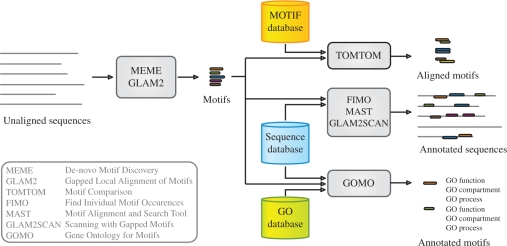
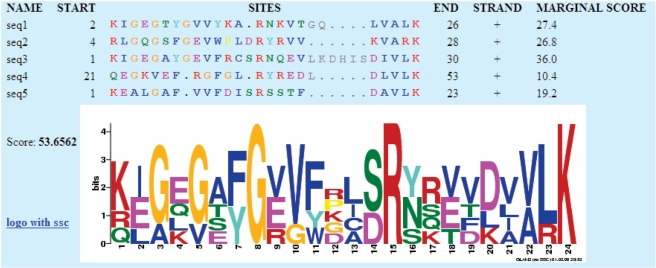
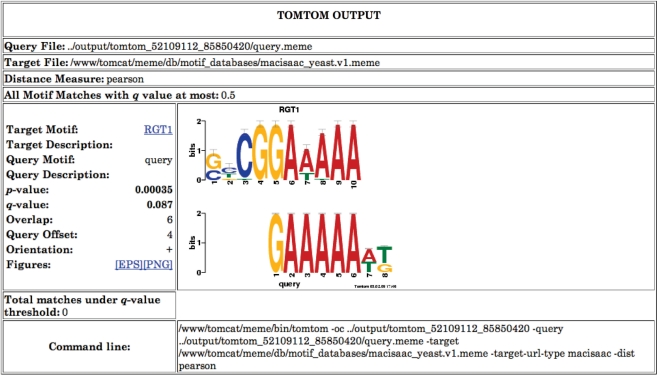
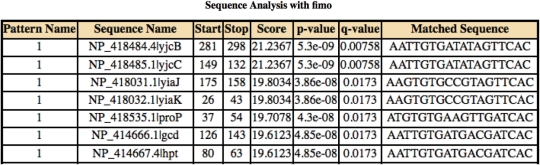
The MEME Suite web server provides a unified portal for online discovery and analysis of sequence motifs representing features such as DNA binding sites and protein interaction domains. The popular MEME motif discovery algorithm is now complemented by the GLAM2 algorithm which allows discovery of motifs containing gaps. Three sequence scanning algorithms--MAST, FIMO and GLAM2SCAN--allow scanning numerous DNA and protein sequence databases for motifs discovered by MEME and GLAM2. Transcription factor motifs (including those discovered using MEME) can be compared with motifs in many popular motif databases using the motif database scanning algorithm TOMTOM. Transcription factor motifs can be further analyzed for putative function by association with Gene Ontology (GO) terms using the motif-GO term association tool GOMO. MEME output now contains sequence LOGOS for each discovered motif, as well as buttons to allow motifs to be conveniently submitted to the sequence and motif database scanning algorithms (MAST, FIMO and TOMTOM), or to GOMO, for further analysis. GLAM2 output similarly contains buttons for further analysis using GLAM2SCAN and for rerunning GLAM2 with different parameters. All of the motif-based tools are now implemented as web services via Opal. Source code, binaries and a web server are freely available for noncommercial use at http://meme.nbcr.net.
Overview
The claims and statistics of this paper haven’t been checked yet.
Free: it reads the open-access text and checks the first 5 claims that cite a source we can check. Create a free account to check every claim.
Integrity signals
Registry
Cites
Statistics
Figures
Verification
Claims the paper makes
The claims and statistics of this paper haven’t been checked yet.
Free: it reads the open-access text and checks the first 5 claims that cite a source we can check. Create a free account to check every claim.
Claims other papers make about this one
Each is checked against this paper’s own text: does it say what the citing paper says it does?
The cited source says what the claim attributes to it.
In the citing paper
“Next, we applied the MEME motif-based sequence analysis tool (36) to investigate sequence elements that were enriched in genes whose TE was decreased by [-]CR-1-31B, which identified 2 significantly enriched 12-mer sequences (CGGCGGCGGCGG and GAGGAGGAGGAG; p = 2.2 × 10⁻²⁰ and p = 6.1 × 10⁻¹¹, respectively; Figure 2F).”
From Targeting eIF4A-dependent translation in genetically complex sarcoma (2026) · cites this paper as [36]
The cited source says what the claim attributes to it.
In the citing paper
“A discriminative motif search of S. salmonicida annexins versus Giardia alpha-giardins with the MEME tool (45) revealed a motif that is identical or highly similar to AB loops (type II Ca2+ coordination sites) in the former.”
From Comparative Cell Biology and Evolution of Annexins in Diplomonads (2016) · cites this paper as [45]
The check wasn’t confident either way, so it gives no verdict — never disputed.
In the citing paper
“The Olink technology allows the measurement of up to 92 proteins in 1 µL of plasma using the proximity extension assay (PEA).”
From Identification of Genetic Variants Regulating the Abundance of Clinically Relevant Plasma Proteins using the Diversity Outbred Mouse Model (2021) · cites this paper as [35]
Experimental — accuracy not yet measured
Self-check
Percentages, sums and reported differences re-computed from the paper’s own numbers.
The self-check needs the paper’s full text.
Citations
Cites
Fitting a mixture model by expectation maximization to discover motifs in biopolymers.
Bailey, T. L., & Elkan, C. (1994) · PubMed · Cited by 5,806
Self-citationA Direct Approach to False Discovery Rates
Storey, J. D. (2002) · Journal of the Royal Statistical Society Series B: Statistical Methodology · doi:10.1111/1467-9868.00346 · Cited by 5,603
MEME: discovering and analyzing DNA and protein sequence motifs
Bailey, T. L., Williams, N., Misleh, C., & Li, W. W. (2006) · Nucleic Acids Research · doi:10.1093/nar/gkl198 · Cited by 2,670 · cited 1×
“It offers a significantly expanded set of programs for these tasks compared with the earlier web server (1).”
BackgroundSelf-citationQuantifying similarity between motifs
Gupta, S., Stamatoyannopoulos, J. A., Bailey, T. L., & Noble, W. S. (2007) · Genome Biology · doi:10.1186/gb-2007-8-2-r24 · Cited by 2,058 · cited 2×
“TOMTOM (4) quantifies the similarity between two motifs, and can be used to search a database of known motifs for matches to motifs found by MEME.”
BackgroundMethodSelf-citationCombining evidence using p-values: application to sequence homology searches.
Bailey, T. L., & Gribskov, M. (1998) · Bioinformatics · doi:10.1093/bioinformatics/14.1.48 · Cited by 1,253
Self-citationSignificance analysis of time course microarray experiments
Storey, J. D., Xiao, W., Leek, J. T., Tompkins, R. G., & Davis, R. W. (2005) · Proceedings of the National Academy of Sciences · doi:10.1073/pnas.0504609102 · Cited by 567
Discovering Sequence Motifs with Arbitrary Insertions and Deletions
Frith, M. C., Saunders, N. F. W., Kobe, B., & Bailey, T. L. (2008) · PLoS Computational Biology · doi:10.1371/journal.pcbi.1000071 · Cited by 390 · cited 2×
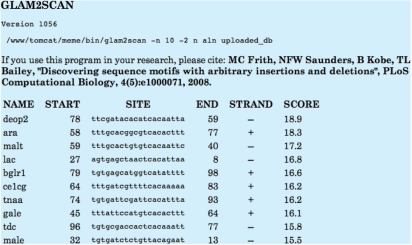
“To overcome this limitation, we have incorporated a recent algorithm for gapped motif discovery—GLAM2 (3)—into the MEME suite.”
MethodSelf-citationCheminformatics analysis and learning in a data pipelining environment
Hassan, M., Brown, R. D., Varma-O’Brien, S., & Rogers, D. (2006) · Molecular Diversity · doi:10.1007/s11030-006-9041-5 · Cited by 184 · cited 1×
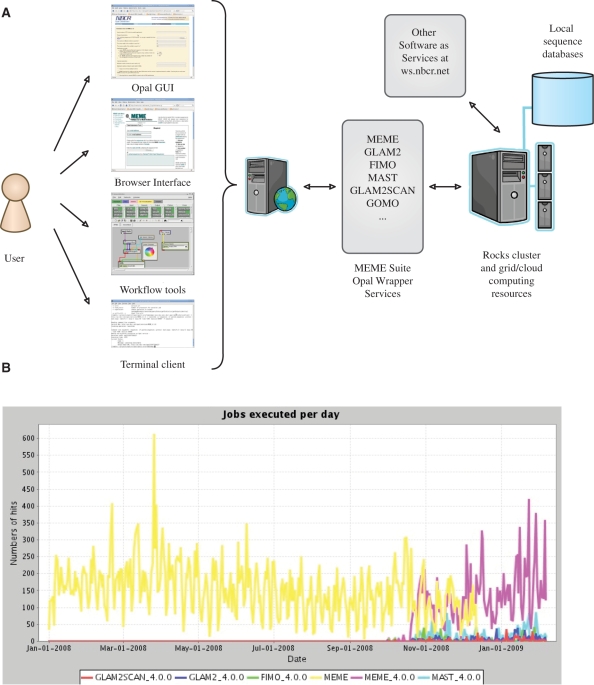
“A generic user interface may be generated automatically based upon an XML description of the command line syntax through the Opal GUI, either in a standard web browser or from a workflow program such as Vision (14), Kepler (15) or the Pipeline Pilot (16).”
MethodA Component-Based Software Environment for Visualizing Large Macromolecular Assemblies
Sanner, M. F. (2005) · Structure · doi:10.1016/j.str.2005.01.010 · Cited by 86
Score Distributions for Simultaneous Matching to Multiple Motifs
Bailey, T. L., & Gribskov, M. (1997) · Journal of Computational Biology · doi:10.1089/cmb.1997.4.45 · Cited by 59 · cited 10×
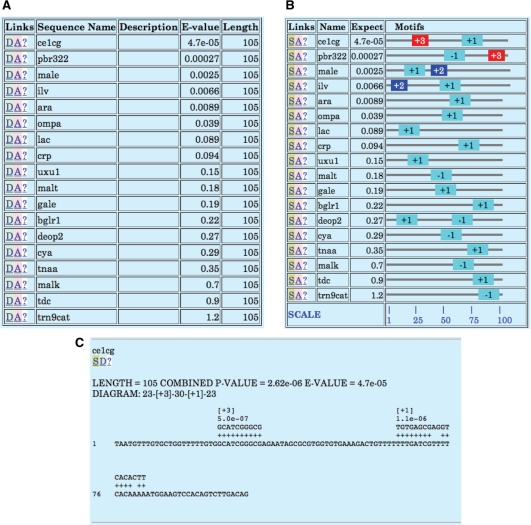
“MAST is ‘sequence oriented’, computing a single score for each sequence in the database.”
MethodInfluentialSelf-citation
Research works printed but not linked: 2
- 2005, PNAS, 102, 12837, 10.1073/pnas.0504609102 · DOI · Paper page
- Ludaescher B Altintas I Berkley C Higgins D Jaeger E Jones M Lee EA Tao J Zhao Y Scientific workow management and the Kepler system Concurrency Comput. Pract. Exp. 2005 18 1039 1065
Cited by
Items 501–600 of 1,095
A prominent and conserved role for YY1 in Xist transcriptional activation
Makhlouf, M., Ouimette, J., Oldfield, A., Navarro, P., Neuillet, D., & Rougeulle, C. (2014) · Nature Communications · doi:10.1038/ncomms5878 · Cited by 147
Wang, J., Hu, Z., Zhao, T., Yang, Y., Chen, T., Mali, Y., Yu, W., & Zhang, B. (2015) · BMC Genomics · doi:10.1186/s12864-015-1249-2 · Cited by 147
Penkov, D., Martín, D. M. S., Fernández, L. C., Rosselló, C. A., Torroja, C., Sánchez‐Cabo, F., Warnatz, H.-J., Sultan, M., Yaspo, M., Gabrieli, A., et al. (2013) · Cell Reports · doi:10.1016/j.celrep.2013.03.029 · Cited by 148
Carraro, N., Matteau, D., Luo, P., Rodrigue, S., & Burrus, V. (2014) · PLoS Genetics · doi:10.1371/journal.pgen.1004714 · Cited by 147
“The fourth track indicates the position of the AcaCD-binding motifs found by MAST [64] within ChIP-exo peaks using the AcaCD logo shown in panel C.”
MethodInfluentialBaquero-Pérez, B., Antanaviciute, A., Yonchev, I. D., Carr, I., Wilson, S. A., & Whitehouse, A. (2019) · eLife · doi:10.7554/elife.47261 · Cited by 149
“The remaining data was then used for enriched sequence motif detection using the MEME software (Bailey et al., 2009), with scrambled sequences used as a control.”
MethodGenome-wide expression analysis suggests glutaredoxin genes response to various stresses in cotton
Malik, W. A., Wang, X., Wang, X., Shu, N., Cui, R., Chen, X., Wang, D., Lu, X., Yin, Z., Wang, J., et al. (2020) · International Journal of Biological Macromolecules · doi:10.1016/j.ijbiomac.2020.03.021 · Cited by 151
Nguyen, C. X., Paddock, K. J., Zhang, Z., & Stacey, M. G. (2020) · New Phytologist · doi:10.1111/nph.16928 · Cited by 147
Memes: A motif analysis environment in R using tools from the MEME Suite
Nystrom, S. L., & McKay, D. J. (2021) · PLoS Computational Biology · doi:10.1371/journal.pcbi.1008991 · Cited by 147
“head(chip_results, 3) ## GRanges object with 3 ranges and 2 metadata columns: ## seqnames ranges strand | id e93_chromatin_response ## <Rle> <IRanges> <Rle> | <character> <character> ## [1] chr2L 5651–5750 � | peak_1 Static ## [2] chr2L 37478–37577 � | peak_3 Increasing ## [3] chr2L 55237–55336 � | peak_4 Static ## --…”
Brueggeman, A. J., Gangadharaiah, D. S., Cserhati, M. F., Casero, D., Weeks, D. P., & Ladunga, I. (2012) · The Plant Cell · doi:10.1105/tpc.111.093435 · Cited by 147
“Putative Novel cis-Regulatory elements: (CA)n Repeats From the promoter regions of all upregulated genes in our experiments, the MEME tool (Bailey et al., 2009) reported new motifs.”
Rendeiro, A. F., Schmidl, C., Strefford, J. C., Walewska, R., Davis, Z., Farlik, M., Oscier, D., & Bock, C. (2016) · Nature Communications · doi:10.1038/ncomms11938 · Cited by 146
Matus, J. T., Cavallini, E., Loyola, R., Höll, J., Finezzo, L., Santo, S. D., Vialet, S., Commisso, M., Roman, F., Schubert, A., et al. (2017) · The Plant Journal · doi:10.1111/tpj.13558 · Cited by 146
Genome-Wide Analysis of Heat-Sensitive Alternative Splicing in Physcomitrella patens
Chang, C., Lin, W., & Tu, S. (2014) · PLANT PHYSIOLOGY · doi:10.1104/pp.113.230540 · Cited by 145
“Motif search involved use of the MEME suite (Bailey et al., 2009).”
MethodPrice, V. J., Huo, W., Sharifi, A., & Palmer, K. L. (2016) · mSphere · doi:10.1128/msphere.00064-16 · Cited by 140
“A total of 15 nucleotides downstream of the protospacer sequence were extracted and subjected to motif detection using MEME (62).”
Liu, F., Xu, Y., Jiang, H., Jiang, C., Du, Y., Gong, C., Wang, W., Zhu, S., Han, G., & Cheng, B. (2016) · International Journal of Molecular Sciences · doi:10.3390/ijms17060930 · Cited by 145
Coordinated regulation of acid resistance in Escherichia coli
Aquino, P., Honda, B., Jaini, S., Lyubetskaya, A., Hosur, K., Chiu, J. G., Ekladious, I., Hu, D., Lin, J., Sayeg, M. K., et al. (2017) · BMC Systems Biology · doi:10.1186/s12918-016-0376-y · Cited by 147
Evolutionarily conserved hierarchical gene regulatory networks for plant salt stress response
Wu, T., Goh, H., Azodi, C. B. D., Krishnamoorthi, S., Liu, M., & Urano, D. (2021) · Nature Plants · doi:10.1038/s41477-021-00929-7 · Cited by 147
Leene, J. V., Eeckhout, D., Gadeyne, A., Matthijs, C., Han, C., Winne, N. D., Persiau, G., Slijke, E. V. D., Persyn, F., Mertens, T., et al. (2022) · Nature Plants · doi:10.1038/s41477-022-01269-w · Cited by 145
Genome-wide analysis of SAUR gene family in Solanaceae species
Wu, J., Liu, S., He, Y., Guan, X., Zhu, X., Cheng, L., Wang, J., & Lu, G. (2012) · Gene · doi:10.1016/j.gene.2012.08.002 · Cited by 144
Kumar, R., Srivastava, A., Kumari, B., & Kumar, M. (2014) · Journal of Theoretical Biology · doi:10.1016/j.jtbi.2014.10.008 · Cited by 145
“The motifs were extracted using the MEME–MAST (Bailey et al., 2009).”
MethodSchulz, S., Eckweiler, D., Bielecka, A., Nicolai, T., Franke, R., Dötsch, A., Hornischer, K., Bruchmann, S., Düvel, J., & Häußler, S. (2015) · PLoS Pathogens · doi:10.1371/journal.ppat.1004744 · Cited by 147
“In general, sigma factor binding motif was identified by applying the MEME suite [53] on promoter regions (300 bp upstream of start codons) whose respective genes (i) showed at least a three-fold sigma factor-dependent down-regulation in PA14Δσ::Gm and at least a three-fold sigma factor-dependent up-regulation in PA14…”
BackgroundMethodInfluentialRombouts, S., Volckaert, A., Venneman, S., Declercq, B., Vandenheuvel, D., Allonsius, C. N., Malderghem, C. V., Jang, H. B., Briers, Y., Noben, J., et al. (2016) · Frontiers in Microbiology · doi:10.3389/fmicb.2016.00279 · Cited by 144
“Probable promoter sequences were identified by looking for conserved intergenic motifs in the 100 bp upstream of every ORF with MEME and PHIRE (Lavigne et al., 2004; Bailey et al., 2009).”
BackgroundLiu, M., Ma, Z., Wang, A., Zheng, T., Huang, L. F., Sun, W., Zhang, Y., Jin, W., Zhan, J., Cai, Y., et al. (2018) · International Journal of Molecular Sciences · doi:10.3390/ijms19113526 · Cited by 144
Sun, S., Gao, T., Pang, B., Su, X., Guo, C., Zhang, R., & Pang, Q. (2022) · Cell Death and Disease · doi:10.1038/s41419-022-04524-2 · Cited by 144
“High enrichment of the “RGAC” motif of NKAP footprints was analyzed by the MEME SUIT web server [40] based on the NKAP-iCLIP public data (GSM3231459) (Fig.”
MethodTransformation of the intestinal epithelium by the MSI2 RNA-binding protein
Wang, S., Li, N., Yousefi, M., Nakauka‐Ddamba, A., Li, F., Parada, K., Rao, S. J., Minuesa, G., Katz, Y., Gregory, B. D., et al. (2015) · Nature Communications · doi:10.1038/ncomms7517 · Cited by 144
Insights into Degron Recognition by APC/C Coactivators from the Structure of an Acm1-Cdh1 Complex
He, J., Chao, W. C. H., Zhang, Z., Yang, J., Cronin, N., & Barford, D. (2013) · Molecular Cell · doi:10.1016/j.molcel.2013.04.024 · Cited by 126
“Sequence motif determined using multiple expectation maximization for motif elicitation (MEME) (Bailey et al., 2009).”
MethodVleugel, M., Tromer, E. C., Omerzu, M., Groenewold, V., Nijenhuis, W., Snel, B., & Kops, G. J. P. L. (2013) · The Journal of Cell Biology · doi:10.1083/jcb.201307016 · Cited by 143
“The repeating modules uncovered by MEME consist of a MELT-like sequence flanked on the C-terminal side by SHT and on the N-terminal side by the sequence TΩ[ST][DE] (where 2007, 2011).”
InfluentialCheedipudi, S. M., Matkovich, S. J., Coarfa, C., Hu, X., Robertson, M. J., Sweet, M., Taylor, M. R. G., Mestroni, L., Cleveland, J. C., Willerson, J. T., et al. (2019) · Circulation Research · doi:10.1161/circresaha.118.314177 · Cited by 145
Li, J., Yuan, S., Norgard, R. J., Yan, F., Sun, Y. H., Kim, I.-K., Merrell, A. J., Sela, Y., Jiang, Y., Bhanu, N. V., et al. (2021) · Cancer Discovery · doi:10.1158/2159-8290.cd-20-0519 · Cited by 133
“Differential genomic regions were then transformed to bed files and used for genomic region annotation using the ChIP-seeker analysis tool (92) as well as the motif analysis using the MEME suite (93).”
MethodDynamic Light Regulation of Translation Status in Arabidopsis thaliana
Juntawong, P., & Bailey-Serres, J. N. (2012) · Frontiers in Plant Science · doi:10.3389/fpls.2012.00066 · Cited by 142
“Over-represented motifs were identified by use of the MEME suite (Multiple EM for Motif Elicitation; Bailey et al., 2009) using the two-component mixture (TCM) model with minimum and maximum widths set at 6 and 50 bases, respectively.”
MethodInfluentialShiriga, K., Sharma, R., Kumar, K., Yadav, S. K., Hossain, F., & Thirunavukkarasu, N. (2014) · Meta Gene · doi:10.1016/j.mgene.2014.05.001 · Cited by 142
“A MEME utility (http://meme.nbcr.net/meme4_1/cgi-bin/meme.cgi) was used for displaying the motifs of ZmNAC proteins from maize, Arabidopsis, rice, and soybean (Bailey et al., 2009).”
BackgroundMethodIslam, S., Rahman, I. A., Islam, T., & Ghosh, A. (2017) · PLoS ONE · doi:10.1371/journal.pone.0187504 · Cited by 143
The negative cofactor 2 complex is a key regulator of drug resistance in Aspergillus fumigatus
Furukawa, T., van Rhijn, N., Fraczek, M., Gsaller, F., Davies, E., Carr, P., Gago, S., Fortune-Grant, R., Rahman, S., Gilsenan, J. M., et al. (2020) · Nature Communications · doi:10.1038/s41467-019-14191-1 · Cited by 139
Li, C., & Lu, S. (2014) · BMC Genomics · doi:10.1186/1471-2164-15-277 · Cited by 141
The CLAMP protein links the MSL complex to the X chromosome during Drosophila dosage compensation
Soruco, M. M. L., Chery, J., Bishop, E. P., Siggers, T., Tolstorukov, M. Y., Leydon, A. R., Sugden, A. U., Goebel, K., Feng, J., Xia, P., et al. (2013) · Genes & Development · doi:10.1101/gad.214585.113 · Cited by 141
“Next, we used the MEME software package (Bailey et al. 2009) to generate a position weight matrix (PWM) representing the most enriched sequence within 500 regions surrounding CLAMP occupancy sites (2 kb each) at the 59 and 39 ends of genes genome-wide.”
MethodPedrosa, A. M., Martins, C. D. P. S., Gonçalves, L. P., & Costa, M. G. C. (2015) · PLoS ONE · doi:10.1371/journal.pone.0145785 · Cited by 142
Agarwal, G., Garg, V., Kudapa, H., Doddamani, D., Pazhamala, L. T., Khan, A. W., Thudi, M., Lee, S., & Varshney, R. K. (2016) · Plant Biotechnology Journal · doi:10.1111/pbi.12520 · Cited by 143
“The conserved motifs of AP2/ERF and HSP90 were predicted using standalone version of motif based sequence analysis tool (MEME) (version 4.9.0) (Bailey et al., 2009) with default parameters, number of motifs set at 25, optimum width of 10–200 amino acids and any number of repetitions of a motif.”
BackgroundMethodInfluentialO’Brien, L. L., Guo, Q., Lee, Y., Tran, T., Bénazet, J.-D., Whitney, P. H., Valouev, A., & McMahon, A. P. (2016) · Development · doi:10.1242/dev.127175 · Cited by 142
“Bailey, T. L., Bodén, M., Buske, F. A., Frith, M., Grant, C. E., Clementi, L., Ren, J., Li, W. W., and Noble, W. S. (2009) MEME SUITE: tools for motif discovery and searching.”
MethodInfluential50 years of amino acid hydrophobicity scales: revisiting the capacity for peptide classification
Simm, S., Einloft, J., Mirus, O., & Schleiff, E. (2016) · Biological Research · doi:10.1186/s40659-016-0092-5 · Cited by 143
“First, the peptide fragments were analyzed for all occurring amino acid patterns of a specific length based on a Markov chain algorithm of the MEME and MAST suite package (fasta-get-markov) [43].”
MethodThe Complexity of Mitochondrial Complex IV: An Update of Cytochrome c Oxidase Biogenesis in Plants
Mansilla, N., Racca, S., Gras, D. E., González, D. H., & Welchen, E. (2018) · International Journal of Molecular Sciences · doi:10.3390/ijms19030662 · Cited by 141
“To achieve this, the sequences corresponding to the first 500 bp upstream of the transcriptional start site of each gene were obtained and loaded in the MEME server [118].”
MethodSCAF4 and SCAF8, mRNA Anti-Terminator Proteins
Gregersen, L. H., Mitter, R., Ugalde, A. P., Nojima, T., Proudfoot, N. J., Agami, R., Stewart, A., & Svejstrup, J. Q. (2019) · Cell · doi:10.1016/j.cell.2019.04.038 · Cited by 140
“12 (Bailey et al., 2009) (meme-chip) against a background of unique Ensembl TSS sites ± 50bp in a strand-aware manner.”
Gaskill, M. M., Gibson, T. J., Larson, E. D., & Harrison, M. M. (2021) · eLife · doi:10.7554/elife.66668 · Cited by 134
Klughammer, J., Romanovskaia, D., Nemc, A., Posautz, A., Seid, C. A., Schuster, L. C., Keinath, M. C., Ramos, J. S. L., Kosack, L., Evankow, A. M., et al. (2023) · Nature Communications · doi:10.1038/s41467-022-34828-y · Cited by 142
Context-dependent deposition and regulation of mRNAs in P-bodies
Wang, C., Schmich, F., Srivatsa, S., Weidner, J., Beerenwinkel, N., & Spang, A. (2018) · eLife · doi:10.7554/elife.29815 · Cited by 140
Roberts, I., Smith, S. L., Rybel, B. D., Broeke, J. V. D., Smet, W., Cokere, S. D., Mispelaere, M., Smet, I. D., & Beeckman, T. (2013) · Journal of Experimental Botany · doi:10.1093/jxb/ert331 · Cited by 139
Lee, C., & Huang, C.-H. (2013) · BioTechniques · doi:10.2144/000113999 · Cited by 138
Zhang, Z., Zhang, J., Chen, Y., Li, R., Wang, H., & Wei, J. (2012) · Molecular Biology Reports · doi:10.1007/s11033-012-1700-2 · Cited by 138
“Multiple expectation maximization for motif elicitation (MEME) utility program [37] was used to display motifs of ZmHAK proteins.”
MethodShilo, S., Melamed‐Bessudo, C., Dorone, Y., Barkai, N., & Levy, A. A. (2015) · The Plant Cell · doi:10.1105/tpc.15.00391 · Cited by 136
“Using the MEME suite (Bailey et al., 2009) (discriminative analysis), a significant enrichment of sequence motifs at CO sites was detected.”
MethodLin, C., Yao, E., Zhang, K., Jiang, X., Croll, S., Thompson-Peer, K. L., & Chuang, P. (2017) · eLife · doi:10.7554/elife.21130 · Cited by 140
“De novo motif discovery was performed in 100 bp windows centered at the peak summits with MEME (Bailey et al., 2009).”
MethodDeepFam: deep learning based alignment-free method for protein family modeling and prediction
Seo, S., Oh, M., Park, Y., & Kim, S. (2018) · Bioinformatics · doi:10.1093/bioinformatics/bty275 · Cited by 134
Hu, F., Zhang, Y., & Guo, J. (2023) · Plant Signaling & Behavior · doi:10.1080/15592324.2023.2215025 · Cited by 138
Foxa3 Induces Goblet Cell Metaplasia and Inhibits Innate Antiviral Immunity
Chen, G., Korfhagen, T. R., Karp, C. L., Impey, S., Xu, Y., Randell, S. H., Kitzmiller, J., Maeda, Y., Haitchi, H. M., Sridharan, A., et al. (2014) · American Journal of Respiratory and Critical Care Medicine · doi:10.1164/rccm.201306-1181oc · Cited by 138
“Weeder and Meme2 algorithms (35, 36) identified a motif similar to the previously described FOXA3 consensus binding site TGTTTAC, consistent with previous findings in HepG2 cells (Figure 9E) (37).”
ResultFrancke, C., Kormelink, T. G., Hagemeijer, Y. P., Overmars, L., Sluijter, V., Moezelaar, R., & Siezen, R. J. (2011) · BMC Genomics · doi:10.1186/1471-2164-12-385 · Cited by 138
“nl/ fgweb/) and the effectiveness of the tool was compared to MAST [158] and Hidden Markov Models [147] using the well-studied CcpA [159] and Spo0A [160] regulons in B.”
MethodInfluentialStructure and evolutionary history of a large family of NLR proteins in the zebrafish
Howe, K., Schiffer, P. H., Zielinski, J., Wiehe, T., Laird, G. K., Marioni, J. C., Soylemez, O., Kondrashov, F., & Leptin, M. (2016) · Open Biology · doi:10.1098/rsob.160009 · Cited by 137
Ecogenomics of virophages and their giant virus hosts assessed through time series metagenomics
Roux, S., Chan, L., Egan, R. S., Malmstrom, R. R., McMahon, K. D., & Sullivan, M. B. (2017) · Nature Communications · doi:10.1038/s41467-017-01086-2 · Cited by 139
Identification of novel rice (Oryza sativa) HPP and HIPP genes tolerant to heavy metal toxicity
Khan, I. U., Rono, J. K., Zhang, B. Q., Liu, X. S., Wang, M. Q., Wang, L. L., Wu, X. C., Chen, X., Cao, H. W., & Yang, Z. M. (2019) · Ecotoxicology and Environmental Safety · doi:10.1016/j.ecoenv.2019.03.040 · Cited by 140
Zhu, Y., Yang, L., Liu, N., Yang, J., Zhou, X., Xia, Y., He, Y., He, Y. H., Gong, H., Ma, D. M., et al. (2019) · BMC Plant Biology · doi:10.1186/s12870-019-1953-1 · Cited by 138
A High-Resolution Map of Human Enhancer RNA Loci Characterizes Super-enhancer Activities in Cancer
Chen, H., & Liang, H. (2020) · Cancer Cell · doi:10.1016/j.ccell.2020.08.020 · Cited by 140
Toker, L., Tran, G. T., Sundaresan, J., Tysnes, O., Alves, G. W., Haugarvoll, K., Nido, G. S., Dölle, C., & Tzoulis, C. (2021) · Molecular Neurodegeneration · doi:10.1186/s13024-021-00450-7 · Cited by 137
“Transcription factor enrichment analysis The genomic sequence of hypo- and hyper-acetylated regions were repeat masked, and the enrichment of transcription factor binding motifs (TFBM) was assessed using the Analysis Motif of Enrichment (AME tool) [25] from the MEME Suite [26] v5.”
MethodAAV integration in human hepatocytes
Dalwadi, D. A., Calabria, A., Tiyaboonchai, A., Posey, J., Naugler, W. E., Montini, E., & Grompe, M. (2021) · Molecular Therapy · doi:10.1016/j.ymthe.2021.08.031 · Cited by 126
Nitzsche, A., Paszkowski-Rogacz, M., Matarese, F., Janssen-Megens, E. M., Hubner, N. C., Schulz, H., de Vries, I., Ding, L., Huebner, N., Mann, M., et al. (2011) · PLoS ONE · doi:10.1371/journal.pone.0019470 · Cited by 119
“The search was performed using FIMO tool from the MEME suite [57].”
MethodDivergent regulation of Arabidopsis SAUR genes: a focus on the SAUR10-clade
van Mourik, H., van Dijk, A. D. J., Stortenbeker, N., Angenent, G. C., & Bemer, M. (2017) · BMC Plant Biology · doi:10.1186/s12870-017-1210-4 · Cited by 136
“Using TOMTOM, we checked for the occurrence of known binding sites in both motifs and found for both a single match with the PIF5 motif.”
Mechanistic studies of a small-molecule modulator of SMN2 splicing
Wang, J., Schultz, P. G., & Johnson, K. A. (2018) · Proceedings of the National Academy of Sciences · doi:10.1073/pnas.1800260115 · Cited by 137
“A de novo motif searching for common sequences was performed within the peaks of the aligned reads using MEME motif discovery algorithm (24).”
BackgroundMethodThe Coding and Noncoding Architecture of the Caulobacter crescentus Genome
Schrader, J. M., Zhou, B., Li, G.-W., Lasker, K., Childers, W. S., Williams, B., Long, T., Crosson, S., McAdams, H. H., Weissman, J. S., et al. (2014) · PLoS Genetics · doi:10.1371/journal.pgen.1004463 · Cited by 126
“Translation initiation site motif derived from all start codons in the genome generated in MEME [77].”
MethodKrishnamoorthy, V., Kannanganat, S., Maienschein-Cline, M., Cook, S. L., Chen, J., Bahroos, N., Sievert, E., Corse, E., Chong, A., & Sciammas, R. (2017) · Immunity · doi:10.1016/j.immuni.2017.09.001 · Cited by 129
“…clustering in R Forgy, 1965; Hartigan and Wong, 1979 https://stat.ethz.ch/R-manual/R-devel/library/ stats/html/kmeans.html bigWigAverageOverBed Kent et al., 2010 http://hgdownload.soe.ucsc.edu/admin/exe/ FIMO Bailey et al., 2009 http://meme-suite.org”
InfluentialAgarwal, P., Baranwal, V. K., & Khurana, P. (2019) · Scientific Reports · doi:10.1038/s41598-019-40659-7 · Cited by 135
Duan, S., Liu, B., Zhang, Y., Li, G., & Guo, X. (2019) · BMC Genomics · doi:10.1186/s12864-019-5617-1 · Cited by 135
Li, B., Gao, Z., Liu, X., Sun, D., & Tang, W. (2019) · The Plant Cell · doi:10.1105/tpc.19.00519 · Cited by 136
Natural Variation in RNA m 6 A Methylation and Its Relationship with Translational Status
Luo, J. L., Wang, Y., Wang, M., Zhang, L., Peng, H., Zhou, Y., Jia, G., & He, Y. (2019) · PLANT PHYSIOLOGY · doi:10.1104/pp.19.00987 · Cited by 136
“Each high confidence peak was annotated to one of these regions using BedTools (Quinlan and Hall 2010). m6A Motif Analysis All m6A peaks were sorted according to fold change and the top 2,000 peaks were chosen for the de novo motif analysis using the both of the two programs MEME v4.”
MethodInfluentialLi, Y., Mukherjee, I., Thum, K. E., Tanurdžić, M., Katari, M. S., Obertello, M., Edwards, M. B., McCombie, W. R., Martienssen, R. A., & Coruzzi, G. M. (2015) · Genome biology · doi:10.1186/s13059-015-0640-2 · Cited by 135
“Bailey TL, Boden M, Buske FA, Frith M, Grant CE, Clementi L, et al. MEME SUITE: tools for motif discovery and searching.”
MethodInfluentialIdentification of B-cell epitopes in an antigen for inducing specific class of antibodies
Gupta, S., Ansari, H. R., Gautam, A., Open Source Drug Discovery Consortium, & Raghava, G. P. (2013) · Biology Direct · doi:10.1186/1745-6150-8-27 · Cited by 120
“This module comprises of two programs: one is MEME, which is used to discover motifs, and other is MAST, used for searching motifs [50,51].”
MethodZhong, Z., & Li, X. (2018) · Scientific Reports · doi:10.1038/s41598-018-33744-w · Cited by 134
Xiao, J., Hu, R., Gu, T., Han, J., Qiu, D., Su, P., Feng, J., Chang, J., Yang, G., & He, G. (2019) · BMC Genomics · doi:10.1186/s12864-019-5632-2 · Cited by 134
An Nfil3–Zeb2–Id2 pathway imposes Irf8 enhancer switching during cDC1 development
Bagadia, P., Huang, X., Liu, T.-T., Durai, V., Grajales-Reyes, G. E., Nitschké, M., Modrusan, Z., Granja, J. M., Satpathy, A. T., Briseño, C. G., et al. (2019) · Nature Immunology · doi:10.1038/s41590-019-0449-3 · Cited by 117
Beh, L. Y., Colwell, L. J., & Francis, N. J. (2012) · Proceedings of the National Academy of Sciences · doi:10.1073/pnas.1118678109 · Cited by 138
“Conserved motif searches within repressive PSC-CTRs were performed using the MEME suite web server (54).”
TFBSshape: a motif database for DNA shape features of transcription factor binding sites
Yang, L., Zhou, T., Dror, I., Mathelier, A., Wasserman, W. W., Gordân, R., & Rohs, R. (2014) · Nucleic Acids Research · doi:10.1093/nar/gkt1087 · Cited by 120
“…are used to derive PFMs that represent the in vitro DNA binding specificities of the TF. TFBSshape retrieves the probe set and PFM from UniPROBE and uses them as input data of the Find Individual Motif Occurrences (FIMO) algorithm (31) from the MEME Suite of motif-based sequence analysis tools (32).”
MethodEvolution of the RALF Gene Family in Plants: Gene Duplication and Selection Patterns
Cao, J. W., & Shi, F. (2012) · Evolutionary Bioinformatics · doi:10.4137/ebo.s9652 · Cited by 133
Huang, X., Meng, B., Iqbal, J., Ding, B. B., Perry, A. M., Cao, W., Smith, L. M., Bi, C., Jiang, C., Greiner, T. C., et al. (2013) · Journal of Clinical Oncology · doi:10.1200/jco.2012.45.6004 · Cited by 122
Dynamic reorganization of open chromatin underlies diverse transcriptomes during spermatogenesis
Maezawa, S., Yukawa, M., Alavattam, K. G., Barski, A., & Namekawa, S. H. (2017) · Nucleic Acids Research · doi:10.1093/nar/gkx1052 · Cited by 133
“8 × 10−57, expected value from the MEME expectation maximization algorithm) (49) contained motifs for SOX10.”
BackgroundBöhme, U., Otto, T. D., Cotton, J. A., Steinbiss, S., Sanders, M. J., Oyola, S. O., Nicot, A., Gandon, S., Patra, K. P., Herd, C., et al. (2018) · Genome Research · doi:10.1101/gr.218123.116 · Cited by 133
Clustered CTCF binding is an evolutionary mechanism to maintain topologically associating domains
Kentepozidou, E., Aitken, S. J., Feig, C., Stefflova, K., Ibarra-Soria, X., Odom, D. T., Roller, M., & Flicek, P. (2020) · Genome Biology · doi:10.1186/s13059-019-1894-x · Cited by 114
“0 (Bailey et al., 2009; Grant et al., 2011) with default parameters.”
MethodInfluentialHussain, R. M., Ali, M., Xing, F., & Li, X. (2017) · BMC Plant Biology · doi:10.1186/s12870-017-1001-y · Cited by 132
Quantitative analysis of cryptic splicing associated with TDP-43 depletion
Humphrey, J., Emmett, W., Fratta, P., Isaacs, A. M., & Plagnol, V. (2017) · BMC Medical Genomics · doi:10.1186/s12920-017-0274-1 · Cited by 115
“Motif enrichment analysis FASTA sequence was generated for the cryptic exons flanked by 100 nucleotides either side and submitted to the MEME web tool under the default settings [31, 51].”
MethodInfluentialVogg, M. C., Beccari, L. L., Ollé, L. I., Rampon, C., Vriz, S., Perruchoud, C., Wenger, Y., & Galliot, B. (2019) · Nature Communications · doi:10.1038/s41467-018-08242-2 · Cited by 131
Ong, E., Cooke, M. F., Huffman, A., Xiang, Z., Wong, M. U., Wang, H., Seetharaman, M., Valdez, N., & He, Y. O. (2021) · Nucleic Acids Research · doi:10.1093/nar/gkab279 · Cited by 132
“The P -value for the predicted epitope binding to PSSMs is calculated by the MAST sequence homology search algorithm (25).”
MethodAn ancient protein-DNA interaction underlying metazoan sex determination
Murphy, M. W., Lee, J. K., Rojo, S., Gearhart, M. D., Kurahashi, K., Banerjee, S., Loeuille, G.-A., Bashamboo, A., McElreavey, K., Zarkower, D., et al. (2015) · Nature Structural & Molecular Biology · doi:10.1038/nsmb.3032 · Cited by 119
Gosai, S. J., Foley, S. W., Wang, D., Silverman, I. M., Selamoglu, N., Nelson, A. D. L., Beilstein, M. A., Daldal, F., Deal, R. B., & Gregory, B. D. (2014) · Molecular Cell · doi:10.1016/j.molcel.2014.12.004 · Cited by 131
“RNA molecules are bound throughout their life cycle by dynamic complexes of proteins that regulate their splicing, polyadenylation, nuclear export, localization, translation, and degradation (Bailey et al., 2009).”
BackgroundMethodInfluentialAdvances in the characterization of RNA‐binding proteins
Marchese, D., de Groot, N. S., Lorenzo-Gotor, N., Livi, C. M., & Tartaglia, G. G. (2016) · Wiley Interdisciplinary Reviews - RNA · doi:10.1002/wrna.1378 · Cited by 132
Rube, H. T., Rastogi, C., Feng, S., Kribelbauer, J. F., Li, A., Becerra, B., Melo, L. A. N., Viet, B., Li, X., Adam, H., et al. (2022) · Nature Biotechnology · doi:10.1038/s41587-022-01307-0 · Cited by 131
The mammalian TRIM-NHL protein TRIM71/LIN-41 is a repressor of mRNA function
Loedige, I., Gaidatzis, D., Sack, R., Meister, G., & Filipowicz, W. (2013) · Nucleic Acids Research · doi:10.1093/nar/gks1032 · Cited by 117
“Supplementary Data are available at NAR Online: Supplementary Tables 1–3, Supplementary Figures 1–8, Supplementary Materials and Methods, Supplementary Results and Supplementary References [46–50].”
BackgroundCho, H.-H., Cargnin, F., Kim, Y., Lee, B., Kwon, R.-J., Nam, H., Shen, R., Barnes, A. P., Lee, J. W., Lee, S., et al. (2014) · PLoS Genetics · doi:10.1371/journal.pgen.1004280 · Cited by 116
“The motif analysis was conducted using Multiple Em for Motif Elicitation (MEME) [47].”
MethodMechanisms Underlying the Dual-Mode Regulation of Microtubule Dynamics by Kip3/Kinesin-8
Su, X., Qiu, W., Gupta, M. L., Pereira-Leal, J. B., Reck-Peterson, S. L., & Pellman, D. (2011) · Molecular Cell · doi:10.1016/j.molcel.2011.06.027 · Cited by 123
“Asterisks indicate the history of the same motor. we identified conserved peptide motifs in the tail domains of all kinesin-8s using MEME (Bailey et al., 2009).”
InfluentialXu, W. F., Chen, Z., Ahmed, N., Han, B., Cui, Q., & Liu, A. (2016) · International Journal of Molecular Sciences · doi:10.3390/ijms17071004 · Cited by 131
“All GRAS proteins identified in castor beans were subjected to MEME analysis [45] to identify conserved motifs.”
MethodDELLA genes restrict inflorescence meristem function independently of plant height
Serrano-Mislata, A., Bencivenga, S., Bush, M., Schiessl, K., Boden, S. A., & Sablowski, R. W. M. (2017) · Nature Plants · doi:10.1038/s41477-017-0003-y · Cited by 130
Ingerslev, L. R., Donkin, I., Fabre, O., Versteyhe, S., Mechta, M., Pattamaprapanont, P., Mortensen, B., Krarup, N. T., & Barrès, R. (2018) · Clinical Epigenetics · doi:10.1186/s13148-018-0446-7 · Cited by 131
“To identify if epigenetically variable genes in sperm carry common sequence features, we searched for motifs surrounding the exercise DMRs found in a low methylation context using the MEME suite [33].”
MethodTombuloğlu, H., Kekeç, G., Sakçalı, M. S., & Ünver, T. (2013) · Molecular Genetics and Genomics · doi:10.1007/s00438-013-0740-1 · Cited by 129
Pierri, C. L., Parisi, G., & Porcelli, V. (2010) · Biochimica et Biophysica Acta (BBA) - Proteins and Proteomics · doi:10.1016/j.bbapap.2010.04.008 · Cited by 131
Dossa, K., Diouf, D., & Cissé, N. (2016) · Frontiers in Plant Science · doi:10.3389/fpls.2016.01522 · Cited by 130
Zhang, L., Yan, J., Fu, Z., Shi, W., Ninkuu, V., Li, G., Yang, X., & Zeng, H. (2021) · Molecular Plant Pathology · doi:10.1111/mpp.13041 · Cited by 129
CpG-Methylation Regulates a Class of Epstein-Barr Virus Promoters
Bergbauer, M., Kalla, M., Schmeinck, A., Göbel, C., Rothbauer, U., Eck, S. H., Benet‐Pagès, A., Strom, T. M., & Hammerschmidt, W. (2010) · PLoS Pathogens · doi:10.1371/journal.ppat.1001114 · Cited by 129
“The outputs of SISSRs or QuEST were used as training sets for MEME, which identifies gapless, local, multiple sequence motifs [59].”
The value of position-specific priors in motif discovery using MEME
Bailey, T. L., Bodén, M., Whitington, T., & Machanick, P. (2010) · BMC Bioinformatics · doi:10.1186/1471-2105-11-179 · Cited by 128
“To compute AMA, we use the AMA program, which is part of the MEME suite of programs [21], using the same background model as we use in motif discovery.”
MethodSelf-citation
Metadata
- Authors
- Bailey, T. L., Boden, M., Buske, F. A., Frith, M., Grant, C. E., Clementi, L., Ren, J., Li, W. W., & Noble, W. S.
- Affiliations
- The University of Queensland (AU)
- Corresponding author
- Bailey, T. L.
- Noble, W. S.
- Venue
- Nucleic Acids Research
- Publisher
- Oxford University Press (OUP)
- Published
- 2009-05-20
- Volume
- 37
- Issue
- Web Server
- Pages
- W202-W208
- ISSN
- 0305-1048 (ISSN-L)
- 1362-4962
- PMC
- PMC2703892
- OpenAlex
- W2157009395
- Cited by
- 10,648
- References
- 15
- Citations by year
- 2026: 635 · 2025: 885 · 2024: 922 · 2023: 999 · 2022: 1146 · 2021: 1349 · 2020: 979 · 2019: 720 · 2018: 613 · 2017: 498 · 2016: 448 · 2015: 456 · 2014: 376 · 2013: 296 · 2012: 184
- FWCI
- 42.64
- Type
- journal article
- Language
- en
- Open access
- gold
- doi.org
- Licence
- Locations
- Nucleic Acids Research (publishedVersion, cc-by-nc)
- PubMed Central (publishedVersion, cc-by-nc)
- PubMed (publishedVersion)
- Funders
- National Institutes of Health (5r01rr021692-06)
- National Center for Research Resources (P41-RR08605, R0-1 RR021692, P41RR008605)
- Topics
- Life Sciences › Biochemistry, Genetics and Molecular Biology › Molecular Biology › Genomics and Chromatin Dynamics
- Life Sciences › Biochemistry, Genetics and Molecular Biology › Molecular Biology › Genomics and Phylogenetic Studies
- Life Sciences › Biochemistry, Genetics and Molecular Biology › Molecular Biology › Bioinformatics and Genomic Networks
- Keywords
- motif discovery, DNA binding sites, protein-protein interaction domains, MAST, TomTom, Gene Ontology, transcription factor binding motifs, sequence logos, web server, motif database, web services
- MeSH terms
- Algorithms, Binding Sites, Software, Transcription Factors, Sequence Analysis, DNA, Internet, Sequence Analysis, Protein, Databases, Genetic, Regulatory Elements, Transcriptional
About these checks
Registry, retraction, Cites and statistics results are computed, not judged, with one exception: a printed reference that no index lists is read once by a model before it counts as a citation error. Claims are extracted by a model and kept only when their quote appears verbatim in the text; each cited source is then checked, with a model’s help, for whether it says what the claim relies on. Those verdicts can be wrong — read the claim’s quote and the cited source before relying on one.
Statistics and arithmetic are recomputed, not judged.
Confidence bands are shown only for fields calibrated on our annotated test set. None is calibrated yet, so no band is shown.
What counts as a claim ›How we measure confidence ›How we check this ›
Are you an author, or do you see a problem with this page? Request a review
Data sources
Bibliographic data: Semantic Scholar, OpenAlex, Crossref.
Contains information from the Semantic Scholar Academic Graph Datasets, made available under the ODC Attribution License (ODC-BY 1.0).
Semantic Scholar’s data is described in: Kinney, R., et al. (2023). The Semantic Scholar Open Data Platform. arXiv:2301.10140.
