

MEME SUITE: tools for motif discovery and searching
Open accessThe DOI matches its Crossref record; 15 of the 15 references it cites were found in a registry or an index.
Abstract
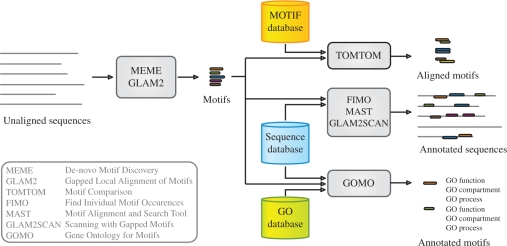
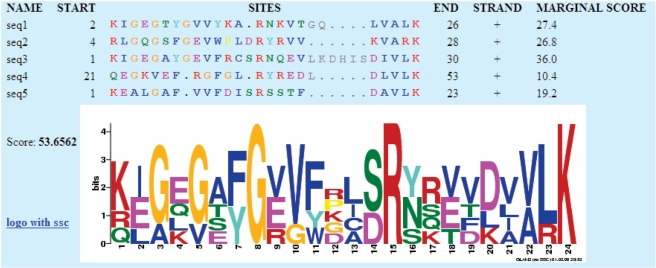
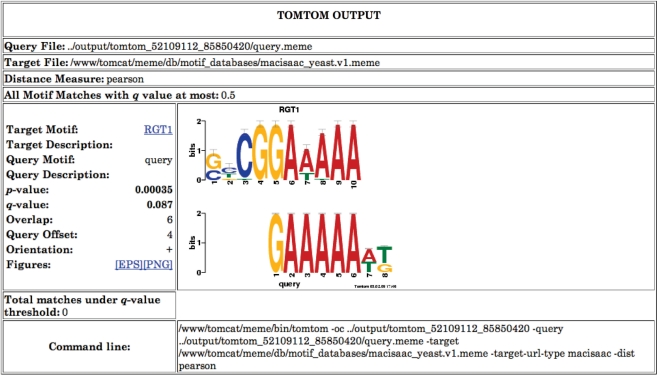
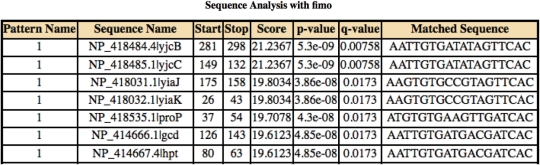
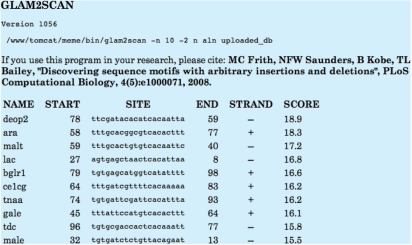
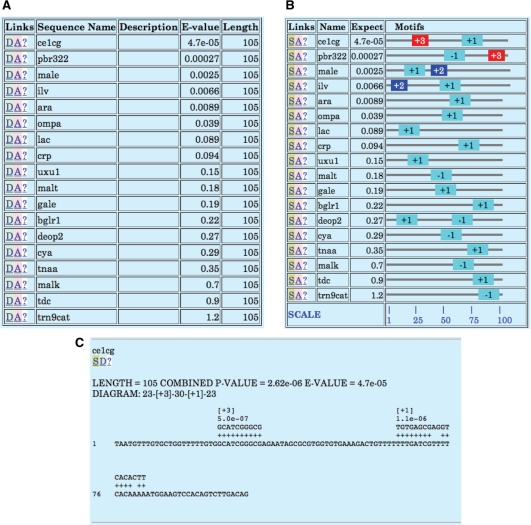
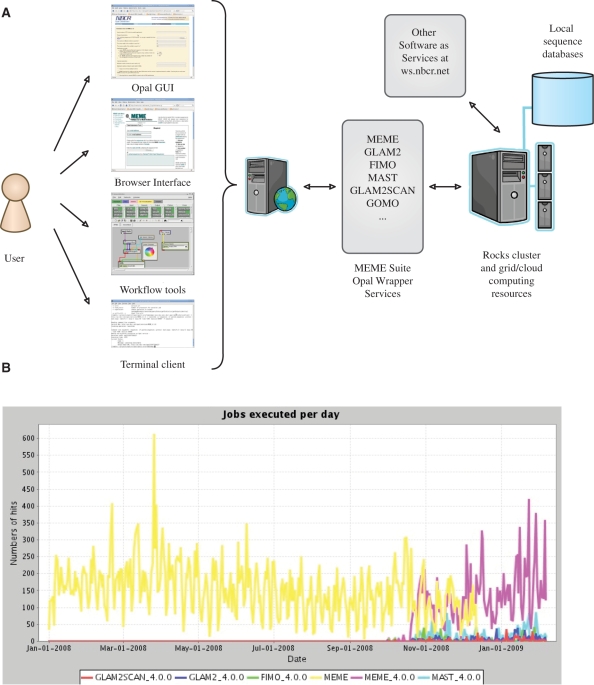
The MEME Suite web server provides a unified portal for online discovery and analysis of sequence motifs representing features such as DNA binding sites and protein interaction domains. The popular MEME motif discovery algorithm is now complemented by the GLAM2 algorithm which allows discovery of motifs containing gaps. Three sequence scanning algorithms--MAST, FIMO and GLAM2SCAN--allow scanning numerous DNA and protein sequence databases for motifs discovered by MEME and GLAM2. Transcription factor motifs (including those discovered using MEME) can be compared with motifs in many popular motif databases using the motif database scanning algorithm TOMTOM. Transcription factor motifs can be further analyzed for putative function by association with Gene Ontology (GO) terms using the motif-GO term association tool GOMO. MEME output now contains sequence LOGOS for each discovered motif, as well as buttons to allow motifs to be conveniently submitted to the sequence and motif database scanning algorithms (MAST, FIMO and TOMTOM), or to GOMO, for further analysis. GLAM2 output similarly contains buttons for further analysis using GLAM2SCAN and for rerunning GLAM2 with different parameters. All of the motif-based tools are now implemented as web services via Opal. Source code, binaries and a web server are freely available for noncommercial use at http://meme.nbcr.net.
Overview
The claims and statistics of this paper haven’t been checked yet.
Free: it reads the open-access text and checks the first 5 claims that cite a source we can check. Create a free account to check every claim.
Integrity signals
Registry
Cites
Statistics
Figures
Verification
Claims the paper makes
The claims and statistics of this paper haven’t been checked yet.
Free: it reads the open-access text and checks the first 5 claims that cite a source we can check. Create a free account to check every claim.
Claims other papers make about this one
Each is checked against this paper’s own text: does it say what the citing paper says it does?
The cited source says what the claim attributes to it.
In the citing paper
“Next, we applied the MEME motif-based sequence analysis tool (36) to investigate sequence elements that were enriched in genes whose TE was decreased by [-]CR-1-31B, which identified 2 significantly enriched 12-mer sequences (CGGCGGCGGCGG and GAGGAGGAGGAG; p = 2.2 × 10⁻²⁰ and p = 6.1 × 10⁻¹¹, respectively; Figure 2F).”
From Targeting eIF4A-dependent translation in genetically complex sarcoma (2026) · cites this paper as [36]
The cited source says what the claim attributes to it.
In the citing paper
“A discriminative motif search of S. salmonicida annexins versus Giardia alpha-giardins with the MEME tool (45) revealed a motif that is identical or highly similar to AB loops (type II Ca2+ coordination sites) in the former.”
From Comparative Cell Biology and Evolution of Annexins in Diplomonads (2016) · cites this paper as [45]
The check wasn’t confident either way, so it gives no verdict — never disputed.
In the citing paper
“The Olink technology allows the measurement of up to 92 proteins in 1 µL of plasma using the proximity extension assay (PEA).”
From Identification of Genetic Variants Regulating the Abundance of Clinically Relevant Plasma Proteins using the Diversity Outbred Mouse Model (2021) · cites this paper as [35]
Experimental — accuracy not yet measured
Self-check
Percentages, sums and reported differences re-computed from the paper’s own numbers.
The self-check needs the paper’s full text.
Citations
Cites
Fitting a mixture model by expectation maximization to discover motifs in biopolymers.
Bailey, T. L., & Elkan, C. (1994) · PubMed · Cited by 5,806
Self-citationA Direct Approach to False Discovery Rates
Storey, J. D. (2002) · Journal of the Royal Statistical Society Series B: Statistical Methodology · doi:10.1111/1467-9868.00346 · Cited by 5,603
MEME: discovering and analyzing DNA and protein sequence motifs
Bailey, T. L., Williams, N., Misleh, C., & Li, W. W. (2006) · Nucleic Acids Research · doi:10.1093/nar/gkl198 · Cited by 2,670 · cited 1×
“It offers a significantly expanded set of programs for these tasks compared with the earlier web server (1).”
BackgroundSelf-citationQuantifying similarity between motifs
Gupta, S., Stamatoyannopoulos, J. A., Bailey, T. L., & Noble, W. S. (2007) · Genome Biology · doi:10.1186/gb-2007-8-2-r24 · Cited by 2,058 · cited 2×
“TOMTOM (4) quantifies the similarity between two motifs, and can be used to search a database of known motifs for matches to motifs found by MEME.”
BackgroundMethodSelf-citationCombining evidence using p-values: application to sequence homology searches.
Bailey, T. L., & Gribskov, M. (1998) · Bioinformatics · doi:10.1093/bioinformatics/14.1.48 · Cited by 1,253
Self-citationSignificance analysis of time course microarray experiments
Storey, J. D., Xiao, W., Leek, J. T., Tompkins, R. G., & Davis, R. W. (2005) · Proceedings of the National Academy of Sciences · doi:10.1073/pnas.0504609102 · Cited by 567
Discovering Sequence Motifs with Arbitrary Insertions and Deletions
Frith, M. C., Saunders, N. F. W., Kobe, B., & Bailey, T. L. (2008) · PLoS Computational Biology · doi:10.1371/journal.pcbi.1000071 · Cited by 390 · cited 2×
“To overcome this limitation, we have incorporated a recent algorithm for gapped motif discovery—GLAM2 (3)—into the MEME suite.”
MethodSelf-citationCheminformatics analysis and learning in a data pipelining environment
Hassan, M., Brown, R. D., Varma-O’Brien, S., & Rogers, D. (2006) · Molecular Diversity · doi:10.1007/s11030-006-9041-5 · Cited by 184 · cited 1×
“A generic user interface may be generated automatically based upon an XML description of the command line syntax through the Opal GUI, either in a standard web browser or from a workflow program such as Vision (14), Kepler (15) or the Pipeline Pilot (16).”
MethodA Component-Based Software Environment for Visualizing Large Macromolecular Assemblies
Sanner, M. F. (2005) · Structure · doi:10.1016/j.str.2005.01.010 · Cited by 86
Score Distributions for Simultaneous Matching to Multiple Motifs
Bailey, T. L., & Gribskov, M. (1997) · Journal of Computational Biology · doi:10.1089/cmb.1997.4.45 · Cited by 59 · cited 10×
“MAST is ‘sequence oriented’, computing a single score for each sequence in the database.”
MethodInfluentialSelf-citation
Research works printed but not linked: 2
- 2005, PNAS, 102, 12837, 10.1073/pnas.0504609102 · DOI · Paper page
- Ludaescher B Altintas I Berkley C Higgins D Jaeger E Jones M Lee EA Tao J Zhao Y Scientific workow management and the Kepler system Concurrency Comput. Pract. Exp. 2005 18 1039 1065
Cited by
Items 1,001–1,098 of 1,098
The RIPK4–IRF6 signalling axis safeguards epidermal differentiation and barrier function
Oberbeck, N., Pham, V. C., Webster, J. D., Reja, R., Huang, C. S., Zhang, Y., Roose-Girma, M., Warming, S., Li, Q., Birnberg, A., et al. (2019) · Nature · doi:10.1038/s41586-019-1615-3 · Cited by 86
PP2A-B′ holoenzyme substrate recognition, regulation and role in cytokinesis
Wu, C.-G., Chen, H., Guo, F., Yadav, V. K., Mcilwain, S. J., Rowse, M., Choudhary, A., Lin, Z., Li, Y., Gu, T., et al. (2017) · Cell Discovery · doi:10.1038/celldisc.2017.27 · Cited by 85
TFAP2 paralogs regulate melanocyte differentiation in parallel with MITF
Seberg, H. E., Van Otterloo, E., Loftus, S. K., Liu, H., Bonde, G., Sompallae, R., Gildea, D. E., Santana, J. F., Manak, J. R., Pavan, W. J., et al. (2017) · PLOS Genetics · doi:10.1371/journal.pgen.1006636 · Cited by 85
Ober-Reynolds, B., Wang, C., Ko, J. M., Rios, E. J., Aasi, S. Z., Davis, M. M., Oro, A. E., & Greenleaf, W. J. (2023) · Nature Genetics · doi:10.1038/s41588-023-01445-4 · Cited by 83
Changes in nucleosome occupancy associated with metabolic alterations in aged mammalian liver
Bochkis, I. M., Przybylski, D., Chen, J., & Regev, A. (2014) · Cell Reports · doi:10.1016/j.celrep.2014.09.048 · Cited by 78
“MEME was used for de novo motif finding (default parameters: zero or one motif per sequence, minimumwidth = 6, maximumwidth = 50, maximum number of motifs = 3) (Bailey et al., 2009).”
MethodInfluentialLim, H. G., Rychel, K., Sastry, A. V., Bentley, G. J., Mueller, J., Schindel, H. S., Larsen, P. E., Laible, P. D., Guss, A. M., Niu, W., et al. (2022) · Metabolic Engineering · doi:10.1016/j.ymben.2022.04.004 · Cited by 80
Recent advances in synthetic biology of cyanobacteria
Sengupta, A., Pakrasi, H. B., & Wangikar, P. P. (2018) · Applied Microbiology and Biotechnology · doi:10.1007/s00253-018-9046-x · Cited by 78
Pundhir, S., Bratt Lauridsen, F. K., Schuster, M. B., Jakobsen, J. S., Ge, Y., Schoof, E. M., Rapin, N., Waage, J., Hasemann, M. S., & Porse, B. T. (2018) · Cell Reports · doi:10.1016/j.celrep.2018.05.012 · Cited by 77
“Enrichment of TF-binding motifs, downloaded from MEME (Bailey et al., 2009), was computed for sequences of interest and for an equal number of randomly selected genomic fragments of the average region size, matched for guanine and cytosine (GC) content and autonormalized to remove bias from…”
MethodTGFβ-induced fibroblast activation requires persistent and targeted HDAC-mediated gene repression
Jones, D. L., Haak, A. J., Caporarello, N., Choi, K. M., Ye, Z., Yan, H., Varelas, X., Ordog, T., Ligresti, G., & Tschumperlin, D. J. (2019) · Journal of Cell Science · doi:10.1242/jcs.233486 · Cited by 77
“1) (Bailey et al., 2009) to scan the 100-bp centered on each of the DHSs within promoters, at a P-value cutoff of 10(3).”
BackgroundGlobal DNA methylation remodeling during direct reprogramming of fibroblasts to neurons
Luo, C., Lee, Q. Y., Wapinski, O., Castanon, R., Nery, J. R., Mall, M., Kareta, M. S., Cullen, S. M., Goodell, M. A., Chang, H. Y., et al. (2019) · eLife · doi:10.7554/elife.40197 · Cited by 76
Lan, J., Rajan, N., Bizet, M., Penning, A., Singh, N. K., Guallar, D., Calonne, E., Li Greci, A., Bonvin, E., Deplus, R., et al. (2020) · Nature Communications · doi:10.1038/s41467-020-18729-6 · Cited by 76
Fortunato, S., Adamski, M., Bergum, B., Guder, C., Jordal, S., Leininger, S., Zwafink, C., Rapp, H. T., & Adamska, M. (2012) · EvoDevo · doi:10.1186/2041-9139-3-14 · Cited by 75
“7 [31] was used to find conserved motifs outside the HMG domain within Sycon and Leucosolenia Sox proteins and their closest homologues from Acropora, Homo, Nematostella, and Amphimedon.”
MethodSarkar, S., Banerjee, A., Chakraborty, N., Soren, K., Chakraborty, P., & Bandopadhyay, R. (2020) · Electronic Journal of Biotechnology · doi:10.1016/j.ejbt.2019.12.004 · Cited by 73
Deconstructing Stepwise Fate Conversion of Human Fibroblasts to Neurons by MicroRNAs
Cates, K., McCoy, M. J., Kwon, J.-S., Liu, Y., Abernathy, D. G., Zhang, B., Liu, S., Gontarz, P., Kim, W. K., Chen, S., et al. (2021) · Cell Stem Cell · doi:10.1016/j.stem.2020.08.015 · Cited by 67
Sahu, B., Pihlajamaa, P., Dubois, V., Kerkhofs, S., Claessens, F., & Jänne, O. A. (2014) · Nucleic Acids Research · doi:10.1093/nar/gkt1401 · Cited by 66
“To this end, we performed de novo motif search analyses using MEME Suite (17) for the three ARB categories: (i) binding sites shared by the two receptors or (ii) preferred by wt AR or (iii) SPARKI AR—on sequences comprising the top 1000 sites spanning±15 bp around the summit of the receptor binding locus.”
MethodInfluentialInterplay among transcription factors Ets21c, Fos and Ftz-F1 drives JNK-mediated tumor malignancy
Külshammer, E., Mundorf, J., Kilinc, M., Frommolt, P., Wagle, P., & Uhlirova, M. (2015) · Disease Models & Mechanisms · doi:10.1242/dmm.020719 · Cited by 65
Weng, C., Xi, J., Li, H., Cui, J., Gu, A., Lai, S., Leskov, K., Ke, L., Jin, F., & Li, Y. (2020) · Nature Metabolism · doi:10.1038/s42255-020-00314-2 · Cited by 65
Iron Regulation in Clostridioides difficile
Berges, M., Michel, A.-M., Lassek, C., Nuss, A. M., Beckstette, M., Dersch, P., Riedel, K., Sievers, S., Becher, D., Otto, A., et al. (2018) · Frontiers in Microbiology · doi:10.3389/fmicb.2018.03183 · Cited by 63
“The phenotypes of C. difficile infections (CDI) range from mild diarrhea to toxic megacolon which ultimately causes death (Bartlett and Gerding, 2008).”
BackgroundPD-1 Imposes Qualitative Control of Cellular Transcriptomes in Response to T Cell Activation
Shimizu, K., Sugiura, D., Okazaki, I.-M., Maruhashi, T., Takegami, Y., Cheng, C., Ozaki, S., & Okazaki, T. (2020) · Molecular Cell · doi:10.1016/j.molcel.2019.12.012 · Cited by 63
Profiling DNA break sites and transcriptional changes in response to contextual fear learning
Stott, R. T., Kritsky, O., & Tsai, L.-H. (2021) · PLOS ONE · doi:10.1371/journal.pone.0249691 · Cited by 62
Wilczynska, A., Gillen, S. L., Schmidt, T., Meijer, H. A., Jukes-Jones, R., Langlais, C., Kopra, K., Lu, W.-T., Godfrey, J. D., Hawley, B. R., et al. (2019) · Genome Biology · doi:10.1186/s13059-019-1857-2 · Cited by 62
Transposon-encoded nucleases use guide RNAs to promote their selfish spread
Meers, C., Le, H. C., Pesari, S. R., Hoffmann, F. T., Walker, M. W. G., Gezelle, J., Tang, S., & Sternberg, S. H. (2023) · Nature · doi:10.1038/s41586-023-06597-1 · Cited by 60
Harnessing genetic engineering to drive economic bioproduct production in algae
Gupta, A., Kang, K., Pathania, R., Saxton, L., Saucedo, B., Malik, A., Torres-Tiji, Y., Diaz, C. J., Dutra Molino, J. V., & Mayfield, S. P. (2024) · Frontiers in Bioengineering and Biotechnology · doi:10.3389/fbioe.2024.1350722 · Cited by 60
Sharma, A., Sharma, H., Rajput, R., Pandey, A., & Upadhyay, S. K. (2022) · Frontiers in Plant Science · doi:10.3389/fpls.2021.807448 · Cited by 59
Ferric Uptake Regulator Fur Control of Putative Iron Acquisition Systems in Clostridium difficile
Ho, T. D., & Ellermeier, C. D. (2015) · Journal of Bacteriology · doi:10.1128/jb.00098-15 · Cited by 56
“The consensus Furbinding sequence for C. difficile was determined by analyzing 250 bp upstream and 50 bp downstream of the predicted translational start site for the first gene each of the 8 Fur-repressed operons encoding transporters using MEME, a motif-based sequence analysis tool (19).”
MethodInfluentialZinc finger protein SALL4 functions through an AT-rich motif to regulate gene expression
Kong, N. R., Bassal, M. A., Tan, H. K., Kurland, J. V., Yong, K. J., Young, J. J., Yang, Y., Li, F., Lee, J. D., Liu, Y., et al. (2021) · Cell Reports · doi:10.1016/j.celrep.2020.108574 · Cited by 56
Multimer Formation Explains Allelic Suppression of PRDM9 Recombination Hotspots
Baker, C. L., Petkova, P., Walker, M., Flachs, P., Mihola, O., Trachtulec, Z., Petkov, P. M., & Paigen, K. (2015) · PLOS Genetics · doi:10.1371/journal.pgen.1005512 · Cited by 54
Loss of Kat2a enhances transcriptional noise and depletes acute myeloid leukemia stem-like cells
Domingues, A. F., Kulkarni, R., Giotopoulos, G., Gupta, S., Vinnenberg, L., Arede, L., Foerner, E., Khalili, M., Adao, R. R., Johns, A., et al. (2020) · eLife · doi:10.7554/elife.51754 · Cited by 52
Yuan, X., Song, M., Devine, P., Bruneau, B. G., Scott, I. C., & Wilson, M. D. (2018) · Nature Communications · doi:10.1038/s41467-018-07451-z · Cited by 51
Pro-neuronal activity of Myod1 due to promiscuous binding to neuronal genes
Lee, Q. Y., Mall, M., Chanda, S., Zhou, B., Sharma, K. S., Schaukowitch, K., Adrian-Segarra, J. M., Grieder, S. D., Kareta, M. S., Wapinski, O. L., et al. (2020) · Nature Cell Biology · doi:10.1038/s41556-020-0490-3 · Cited by 50
Elekwachi, C. O., Wang, Z., Wu, X., Rabee, A., & Forster, R. J. (2017) · Frontiers in Microbiology · doi:10.3389/fmicb.2017.01814 · Cited by 48
“2 (Bailey et al., 2009) toolkit, to 20000, 10000, and 2000 sequences for bacteria, eukaryote and archaea respectively.”
BackgroundMethodInfluentialA novel hybrid iron regulation network combines features from pathogenic and nonpathogenic yeasts
Gerwien, F., Safyan, A., Wisgott, S., Hille, F., Kaemmer, P., Linde, J., Brunke, S., Kasper, L., & Hube, B. (2016) · mBio · doi:10.1128/mbio.01782-16 · Cited by 47
Guerrero-Bosagna, C., Weeks, S., & Skinner, M. K. (2014) · PLoS ONE · doi:10.1371/journal.pone.0100194 · Cited by 45
“The web-based bioinformatics tool GLAM2 (Gapped Local Alignment of Motifs) [41], which is part of MEME suite [42], was used to identify DNA motifs associated with these transgenerational sperm epimutations.”
MethodPaul, S., Bair, T. B., & Moye-Rowley, W. S. (2014) · Antimicrobial Agents and Chemotherapy · doi:10.1128/aac.03921-14 · Cited by 45
“In order to minimize bias in our analysis of these C. glabrata promoters, we used the software tool MEME (27) to examine all of these DNA regions for common elements.”
MethodInfluentialZNF143 is a regulator of chromatin loop
Wen, Z., Huang, Z.-T., Zhang, R., & Peng, C. (2018) · Cell Biology and Toxicology · doi:10.1007/s10565-018-9443-z · Cited by 41
Duru, I. C., Ylinen, A., Belanov, S., Pulido, A. A., Paulin, L., & Auvinen, P. (2021) · BMC Genomics · doi:10.1186/s12864-020-07338-8 · Cited by 40
Targeting eIF4A-Dependent Translation of KRAS Signaling Molecules
Singh, K., Lin, J., Lecomte, N., Mohan, P., Gokce, A., Sanghvi, V. R., Jiang, M., Grbovic-Huezo, O., Burčul, A., Stark, S. G., et al. (2021) · Cancer Research · doi:10.1158/0008-5472.can-20-2929 · Cited by 39
“Next, we applied the MEME (Motif-Based sequence analysis tool) (48) search tool to investigate sequence elements that were either over- or underrepresented in any of the three groups.”
MethodNiu, B., Coslo, D. M., Bataille, A. R., Albert, I., Pugh, B. F., & Omiecinski, C. J. (2018) · Nucleic Acids Research · doi:10.1093/nar/gky692 · Cited by 37
“The top 500 or 1000 merged peakpairs overlapping with primary binding sites were used for de novo motif discovery using the MEME algorithm (31).”
MethodShu, G., Lu, X., Pan, Y., Cen, J., Huang, K., Zhou, M., Lu, J., Dong, J., Han, H., Chen, W., et al. (2023) · Oncogene · doi:10.1038/s41388-023-02678-7 · Cited by 35
“To assess whether QKI binds to SPIRE1 pre-mRNA, we first used MEME SUITE [31] tools for motif discovery and searching, to recognize the QKI binding motif in intron 3 and intron 6 (Tables S7, S8).”
MethodDifferential RNA packaging into small extracellular vesicles by neurons and astrocytes
Luo, X., Jean-Toussaint, R., Sacan, A., & Ajit, S. K. (2021) · Cell Communication and Signaling · doi:10.1186/s12964-021-00757-4 · Cited by 32
“Analysis of over-represented motifs was conducted on enriched miRNAs in sEVs and their respective donor cells using the MEME Suite [43].”
MethodInfluentialModeling methyl-sensitive transcription factor motifs with an expanded epigenetic alphabet
Viner, C., Ishak, C. A., Johnson, J., Walker, N. J., Shi, H., Sjöberg-Herrera, M. K., Shen, S. Y., Lardo, S. M., Adams, D. J., Ferguson-Smith, A. C., et al. (2024) · Genome Biology · doi:10.1186/s13059-023-03070-0 · Cited by 30
Self-citationTan, T. C. J., Kelly, V., Zou, X., Wright, D., Ly, T., & Zamoyska, R. (2022) · Nature Communications · doi:10.1038/s41467-022-35252-y · Cited by 30
Datta, R. R., Ling, J., Kurland, J., Ren, X., Xu, Z., Yucel, G., Moore, J., Shokri, L., Baker, I., Bishop, T., et al. (2018) · Genes & Development · doi:10.1101/gad.311985.118 · Cited by 30
“We used MEME-ChIP (Machanick and Bailey 2011) in the MEME suite (Bailey et al. 2009) to search for overrepresentedmotifs in each ChIP data set.”
Method(2021) · doi:10.1101/2021.06.25.449879 · Cited by 30
Clark, R. R., Judd, J., Lasek-Nesselquist, E., Montgomery, S. A., Hoffmann, J. G., Derbyshire, K. M., & Gray, T. A. (2018) · Proceedings of the National Academy of Sciences · doi:10.1073/pnas.1804227115 · Cited by 29
“A MEME-identified logo (39) appears above, and individual promoter sequences are aligned below.”
BackgroundYe, B.-Y., Shen, W.-L., Wang, D., Li, P., Zhang, Z., Shi, M.-L., Zhang, Y., Zhang, F.-X., & Zhao, Z.-H. (2016) · Molecular Biology · doi:10.1134/s0026893316030031 · Cited by 26
Haider, S., Rehman, S., Ahmad, Y., Raza, A., Tabassum, J., Javed, T., Osman, H. S., & Mahmood, T. (2021) · Agronomy · doi:10.3390/agronomy11112335 · Cited by 26
“org/meme/tools/meme, accessed on 1 August 2021) [51].”
Grünberger, F., Schmid, G., El Ahmad, Z., Fenk, M., Vogl, K., Reichelt, R., Hausner, W., Urlaub, H., Lenz, C., & Grohmann, D. (2023) · mBio · doi:10.1128/mbio.02174-23 · Cited by 24
“Therefore, the sequences from −50 to +10 from the TSS were analyzed via MEME (v. 5.4.1., -mod -mod zoops -minw 8 -maxw 20), resulting in a classification of genes contributing (+promoter) and not contributing (−promoter) to the motif (72).”
MethodInfluentialGrünberger, F., Schmid, G., Ahmad, Z. E., Fenk, M., Vogl, K., Reichelt, R., Hausner, W., Urlaub, H., Lenz, C., & Grohmann, D. (2023) · doi:10.1101/2023.05.02.539125 · Cited by 24
Towards a gene regulatory network shaping the fins of the Princess cichlid
Ahi, E. P., & Sefc, K. M. (2018) · Scientific Reports · doi:10.1038/s41598-018-27977-y · Cited by 23
DNA methylation variations underlie lettuce domestication and divergence
Cao, S., Sawettalake, N., Li, P., Fan, S., & Shen, L. (2024) · Genome Biology · doi:10.1186/s13059-024-03310-x · Cited by 23
“S6a), we further performed MEME motif analysis [39] and found that shared hyper-DMRs possessed a top-scoring motif of GGNGGT GGT GGTGG ( E = 2.9 × 10 − 24 ), while shared hypo-DMRs had a top-scoring motif of GGW GGT GRY GGT GG ( E = 5.6 × 10 − 20 ) (Fig.”
MethodInfluentialIdentifying carbohydrate-active enzymes of Cutaneotrichosporon oleaginosus using systems biology
Fuchs, T., Melcher, F., Rerop, Z. S., Lorenzen, J., Shaigani, P., Awad, D., Haack, M., Prem, S. A., Masri, M., Mehlmer, N., et al. (2021) · Microbial Cell Factories · doi:10.1186/s12934-021-01692-2 · Cited by 22
“1 [88] was used for motif mining and identification in the selected dataset.”
MethodGenomic signatures associated with transitions to viviparity in cyprinodontiformes
Yusuf, L. H., Saldívar Lemus, Y., Thorpe, P., Macías Garcia, C., & Ritchie, M. G. (2023) · Molecular Biology and Evolution · doi:10.1093/molbev/msad208 · Cited by 22
“…showing evidence of accelerated evolution in foreground branches also showed evidence of being putatively regulatory elements, we used Analysis of Motif Enrichment (AME) (Bailey et al. 2009; McLeay and Bailey 2010) to determine whether these regions showed significant enrichment of binding motifs.”
MethodWolfe, M. B., Schagat, T. L., Paulsen, M. T., Magnuson, B., Ljungman, M., Park, D., Zhang, C., Campbell, Z. T., Goldstrohm, A. C., & Freddolino, P. L. (2020) · RNA · doi:10.1261/rna.077362.120 · Cited by 22
Wolfe, M. B., Schagat, T. L., Paulsen, M. T., Magnuson, B., Ljungman, M., Park, D., Zhang, C., Campbell, Z. T., Goldstrohm, A. C., & Freddolino, P. L. (2020) · doi:10.1101/2020.04.01.019836 · Cited by 22
Bonchuk, A. N., Balagurov, K. I., Baradaran, R., Boyko, K. M., Sluchanko, N. N., Khrustaleva, A. M., Burtseva, A. D., Arkova, O. V., Khalisova, K. K., Popov, V. O., et al. (2024) · eLife · doi:10.7554/elife.96832 · Cited by 21
“…the EM algorithm by positional weight matrix (PWM) (at no limit motif E-value threshold and motif size 6–10 aa ( Figure 2a )) in MEME (MEME SUITE) ( Bailey et al., 2009 ), then in FIMO (MEME SUITE) we searched for the motif in the obtained database of orthologous sequences for all Metazoa (the…”
MethodInfluentialMelgar, A. E., & Zelada, A. M. (2021) · Scientific Reports · doi:10.1038/s41598-021-03066-5 · Cited by 21
Exploring a diverse world of effector domains and amyloid signaling motifs in fungal NLR proteins
Wojciechowski, J. W., Tekoglu, E., Gąsior-Głogowska, M., Coustou, V., Szulc, N., Szefczyk, M., Kopaczyńska, M., Saupe, S. J., & Dyrka, W. (2022) · PLOS Computational Biology · doi:10.1371/journal.pcbi.1010787 · Cited by 19
(2023) · doi:10.1007/s11103-023-01348-2 · Cited by 19
“Next, the MEME search (Bailey et al. 2009) was used to identify the 15 most typical motifs in TRBs across the plant kingdom (Supplemental Fig.”
MethodLecaudey, L. A., Singh, P., Sturmbauer, C., Duenser, A., Gessl, W., & Ahi, E. P. (2021) · BMC Genomics · doi:10.1186/s12864-021-07775-z · Cited by 19
“We also performed overrepresentation analysis of TF binding motifs on the regulatory sequences of the DE genes using the MEME algorithm [22].”
MethodKusová, A., Steinbachová, L., Přerovská, T., Drábková, L. Z., Paleček, J., Khan, A., Rigóová, G., Gadiou, Z., Jourdain, C., Stricker, T., et al. (2022) · doi:10.1101/2022.11.23.517682 · Cited by 19
Exploring a diverse world of effector domains and amyloid signaling motifs in fungal NLR proteins
Wojciechowski, J. W., Tekoglu, E., Gąsior-Głogowska, M., Coustou, V., Szulc, N., Szefczyk, M., Kopaczyńska, M., Saupe, S. J., & Dyrka, W. (2022) · doi:10.1101/2022.03.16.484565 · Cited by 19
Kusová, A., Steinbachová, L., Přerovská, T., Drábková, L. Z., Paleček, J., Khan, A., Rigóová, G., Gadiou, Z., Jourdain, C., Stricker, T., et al. (2023) · doi:10.21203/rs.3.rs-2360914/v1 · Cited by 19
Modeling methyl-sensitive transcription factor motifs with an expanded epigenetic alphabet
Viner, C., Ishak, C. A., Johnson, J., Walker, N. J., Shi, H., Sjöberg-Herrera, M. K., Shen, S. Y., Lardo, S. M., Adams, D. J., Ferguson-Smith, A. C., et al. (2016) · doi:10.1101/043794 · Cited by 18
Self-citationChen, X., Koo, J., Kumar Arya, S., & Palli, S. R. (2024) · Proceedings of the National Academy of Sciences · doi:10.1073/pnas.2411286121 · Cited by 18
Genome-Wide Identification and Comparative Analysis of ARF Family Genes in Three Apiaceae Species
Pei, Q., Li, N., Yang, Q., Wu, T., Feng, S., Feng, X., Jing, Z., Zhou, R., Gong, K., Yu, T., et al. (2021) · Frontiers in Genetics · doi:10.3389/fgene.2020.590535 · Cited by 18
Graph convolutional networks for epigenetic state prediction using both sequence and 3D genome data
Lanchantin, J., & Qi, Y. (2020) · Bioinformatics · doi:10.1093/bioinformatics/btaa793 · Cited by 17
(2024) · doi:10.1093/jxb/erae002 · Cited by 17
Fanara, S., Schloesser, M., Joris, M., De Franco, S., Vandevenne, M., Kerff, F., Hanikenne, M., & Motte, P. (2023) · doi:10.1101/2023.08.07.552250 · Cited by 17
Zhang, J., Liu, B., Wu, J., Wang, Z., & Li, J. (2023) · BMC Bioinformatics · doi:10.1186/s12859-023-05469-9 · Cited by 15
“As an extensive DNA transcription factor analysis tool, MEME analyzes DNA sequences by building a maximum expectation model [11].”
MethodSun, W., Yao, M., Wang, Z., Chen, Y., Zhan, J., Yan, J., Jiang, S., Jian, S., Chen, H., Bu, T., et al. (2022) · International Journal of Molecular Sciences · doi:10.3390/ijms23158480 · Cited by 15
“The Multiple Expectation maximization for Motif Elicitation (MEME) online tool was used to determine the motif composition of the Cqexpansin, CqARF, CqIAA, CqGH3 and CqSAUR genes [80].”
MethodTao, Y.-T., Chen, L.-X., Jin, J., Du, Z.-K., & Li, J.-M. (2022) · BMC Genomics · doi:10.1186/s12864-022-08978-8 · Cited by 15
“MEME [56] was used to elucidate conserved motifs.”
MethodInfluentialThe Escherichia coli Fur pan-regulon has few conserved but many unique regulatory targets
Gao, Y., Bang, I., Seif, Y., Kim, D., & Palsson, B. O. (2023) · Nucleic Acids Research · doi:10.1093/nar/gkad253 · Cited by 14
“The sequence motif analysis for Fur binding sites was performed using the MEME software suite (23).”
MethodComparative Cell Biology and Evolution of Annexins in Diplomonads
Einarsson, E., Ástvaldsson, Á., Hultenby, K., Andersson, J. O., Svärd, S. G., & Jerlström-Hultqvist, J. (2016) · mSphere · doi:10.1128/msphere.00032-15 · Cited by 15
“salmonicida annexins versus Giardia alpha-giardins with the MEME tool (45) revealed a motif that is identical or highly similar to AB loops (type II Ca2 coordination sites) in the former.”
MethodWaksmunski, A. R., Grunin, M., Kinzy, T. G., Igo, R. P., Haines, J. L., Cooke Bailey, J. N., & for the International Age-Related Macular Degeneration Genomics Consortium (2019) · Investigative Opthalmology & Visual Science · doi:10.1167/iovs.19-27827 · Cited by 14
“To identify potential sequence motifs for each of these gene sets, we utilized the Multiple Expectation Maximization (EM) for Motif Elucidation (MEME) software suite.(18) Sequences were considered motifs if their lengths were between 6 and 50 nucleotides.”
MethodCao, L., Do, T., Zhu, A., Duan, J., Alam, N., & Link, A. J. (2023) · Journal of the American Chemical Society · doi:10.1021/jacs.3c03991 · Cited by 14
Cao, L., Do, T., Zhu, A. D., Alam, N., & Link, A. J. (2023) · doi:10.1101/2023.04.07.536058 · Cited by 14
Bredemeyer, K. R., Seabury, C. M., Stickney, M. J., McCarrey, J. R., vonHoldt, B. M., & Murphy, W. J. (2021) · Molecular Biology and Evolution · doi:10.1093/molbev/msab274 · Cited by 13
“XCI requires the presence of the lncRNA XIST, as well as a host of long-range chromatin interacting loci (including DXZ4) and epigenetic modifiers (Jégu et al., 2017; Bansal et al., 2020).”
BackgroundInterplay between polymerase II‐ and polymerase III‐assisted expression of overlapping genes
Lukoszek, R., Mueller-Roeber, B., & Ignatova, Z. (2013) · FEBS Letters · doi:10.1016/j.febslet.2013.09.033 · Cited by 11
Action mechanism of a novel agrichemical quinofumelin against Fusarium graminearum
Xiu, Q., Yin, X., Chen, Y., Zhang, Z., Mao, Y., Wang, T., Zhang, J., Zhou, M., & Duan, Y. (2025) · eLife · doi:10.7554/elife.105892.3 · Cited by 11
Action mechanism of a novel agrichemical quinofumelin against Fusarium graminearum
(2025) · doi:10.1101/2025.01.13.632717 · Cited by 11
Li, H., Melnyk, J. E., Fu, B. X. H., Shrestha, R., Zhang, M., Sjöström, M., Feng, S., Anderson, J. A., Han, W., Chesner, L. N., et al. (2025) · Nature Genetics · doi:10.1038/s41588-025-02388-8 · Cited by 10
“The MEME tool 91 was used to discover TF binding motifs de novo.”
The RNA-Binding Domain of hnRNP U Extends beyond the RGG/RG Motifs
(2024) · doi:10.1021/acs.biochem.3c00510 · Cited by 9
The RNA-binding domain of hnRNP U extends beyond the RGG/RG motifs
Kletzien, O. A., Wuttke, D. S., & Batey, R. T. (2023) · doi:10.1101/2023.09.20.558674 · Cited by 9
Sun, Y., Li, J., Huang, J., Li, S., Li, Y., Lu, B., & Deng, X. (2025) · eLife · doi:10.7554/elife.96172.3 · Cited by 6
Jin, X., Yang, Y., Cao, H., Gao, B., & Zhao, Z. (2022) · Environmental Microbiology Reports · doi:10.1111/1758-2229.13036 · Cited by 6
Sun, Y., Li, J., Huang, J., Li, S., Li, Y., Lu, B., & Deng, X. (2024) · doi:10.1101/2024.01.18.576191 · Cited by 6
Sadalge, D., Clasman, J. R., Topal, S., Musser, D., Von der Porten, L., Wu, S., Schultz, S. E., Austin, W., Huang, D., Gao, Y.-D., et al. (2025) · doi:10.1101/2025.08.01.667454 · Cited by 2
CDK8 fine-tunes IL-6 transcriptional activities by limiting STAT3 resident time at the gene loci
Martinez-Fabregas, J., Wang, L., Pohler, E., Cozzani, A., Kazemian, M., Mitra, S., & Moraga, I. (2020) · doi:10.1101/2020.03.19.998351 · Cited by 54
Duenser, A., Singh, P., Lecaudey, L. A., Sturmbauer, C., Albertson, C., Gessl, W., & Ahi, E. P. (2022) · bioRxiv · doi:10.1101/2022.01.13.476207 · Cited by 1
Philtjens, S., Acri, D. J., Kim, B., Kim, H., & Kim, J. (2021) · doi:10.21203/rs.3.rs-171899/v1 · Cited by 2
Action mechanism of a novel agrichemical quinofumelin against Fusarium graminearum
Xiu, Q., Yin, X., Chen, Y., Zhang, Z., Mao, Y., Wang, T., Zhang, J., Zhou, M., & Duan, Y. (2025) · eLife · doi:10.7554/elife.105892 · Cited by 1
“Similar results were observed in other strains of F. graminearum or F. asiaticum ( Figure 4 ; Figure 4—figure supplement 1 ).”
Dubiley, S., Popov, A., Bikmetov, D., Grigoreva, A., Serebryakova, M., Severinov, K., Lippens, G., Wada, A., & Tagami, S. (2025) · doi:10.21203/rs.3.rs-7990798/v1 · Cited by 1
Targeting eIF4A-dependent translation in genetically complex sarcoma
Kim, Y.-M., Mohan, P., Sehrawat, U., Seffar, E., De Queiroz, R. M., Chadalavada, K., Persaud, N., Okada, T., Kulkarni, A., Lin, J., et al. (2026) · JCI Insight · doi:10.1172/jci.insight.192936
Poudel, S., Hyun, J., Hefner, Y., Monk, J., Nizet, V., & Palsson, B. O. (2025) · eLife · doi:10.7554/elife.90668
(2023) · doi:10.1101/2023.07.26.550757
REC protein family expansion by the emergence of a new signaling pathway
Garber, M. E., Frank, V., Kazakov, A. E., Incha, M. R., Nava, A. A., Zhang, H., Valencia, L. E., Keasling, J. D., Rajeev, L., & Mukhopadhyay, A. (2023) · mBio · doi:10.1128/mbio.02622-23
REC protein family expansion by the emergence of a new signaling pathway
(2020) · doi:10.1101/2020.09.30.321588
Metadata
- Authors
- Bailey, T. L., Boden, M., Buske, F. A., Frith, M., Grant, C. E., Clementi, L., Ren, J., Li, W. W., & Noble, W. S.
- Affiliations
- The University of Queensland (AU)
- Corresponding author
- Bailey, T. L.
- Noble, W. S.
- Venue
- Nucleic Acids Research
- Publisher
- Oxford University Press (OUP)
- Published
- 2009-05-20
- Volume
- 37
- Issue
- Web Server
- Pages
- W202-W208
- ISSN
- 0305-1048 (ISSN-L)
- 1362-4962
- PMC
- PMC2703892
- OpenAlex
- W2157009395
- Semantic Scholar
- f804dfb886b1424571f0446df10074af63c57921
- Cited by
- 10,648
- References
- 15
- Citations by year
- 2026: 635 · 2025: 885 · 2024: 922 · 2023: 999 · 2022: 1146 · 2021: 1349 · 2020: 979 · 2019: 720 · 2018: 613 · 2017: 498 · 2016: 448 · 2015: 456 · 2014: 376 · 2013: 296 · 2012: 184
- FWCI
- 42.64
- Type
- journal article
- Language
- en
- Open access
- gold
- doi.org
- Licence
- Locations
- Nucleic Acids Research (publishedVersion, cc-by-nc)
- PubMed Central (publishedVersion, cc-by-nc)
- PubMed (publishedVersion)
- Funders
- National Institutes of Health (5r01rr021692-06)
- National Center for Research Resources (P41-RR08605, R0-1 RR021692, P41RR008605)
- Topics
- Life Sciences › Biochemistry, Genetics and Molecular Biology › Molecular Biology › Genomics and Chromatin Dynamics
- Life Sciences › Biochemistry, Genetics and Molecular Biology › Molecular Biology › Genomics and Phylogenetic Studies
- Life Sciences › Biochemistry, Genetics and Molecular Biology › Molecular Biology › Bioinformatics and Genomic Networks
- Keywords
- motif discovery, DNA binding sites, protein-protein interaction domains, MAST, TomTom, Gene Ontology, transcription factor binding motifs, sequence logos, web server, motif database, web services
- MeSH terms
- Algorithms, Binding Sites, Software, Transcription Factors, Sequence Analysis, DNA, Internet, Sequence Analysis, Protein, Databases, Genetic, Regulatory Elements, Transcriptional
About these checks
Registry, retraction, Cites and statistics results are computed, not judged, with one exception: a printed reference that no index lists is read once by a model before it counts as a citation error. Claims are extracted by a model and kept only when their quote appears verbatim in the text; each cited source is then checked, with a model’s help, for whether it says what the claim relies on. Those verdicts can be wrong — read the claim’s quote and the cited source before relying on one.
Statistics and arithmetic are recomputed, not judged.
Confidence bands are shown only for fields calibrated on our annotated test set. None is calibrated yet, so no band is shown.
What counts as a claim ›How we measure confidence ›How we check this ›
Are you an author, or do you see a problem with this page? Request a review
Data sources
Bibliographic data: Semantic Scholar, OpenAlex, Crossref.
Contains information from the Semantic Scholar Academic Graph Datasets, made available under the ODC Attribution License (ODC-BY 1.0).
Semantic Scholar’s data is described in: Kinney, R., et al. (2023). The Semantic Scholar Open Data Platform. arXiv:2301.10140.
