

MEME SUITE: tools for motif discovery and searching
Open accessThe DOI matches its Crossref record; 15 of the 15 references it cites were found in a registry or an index.
Abstract
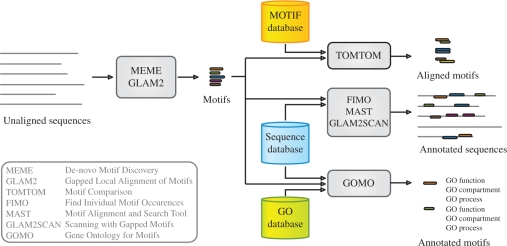
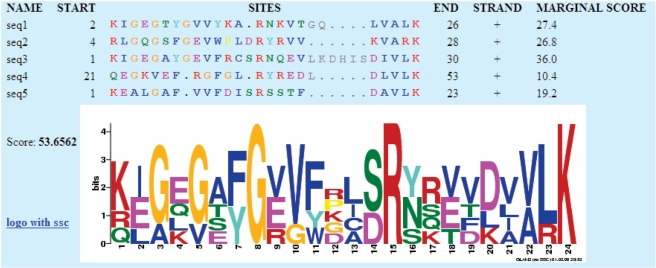
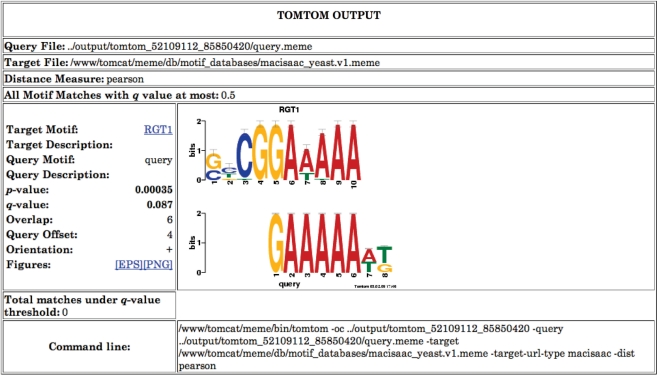
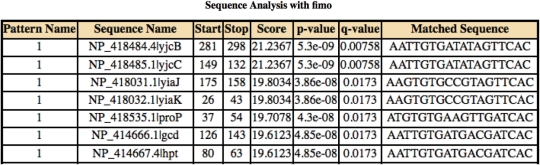
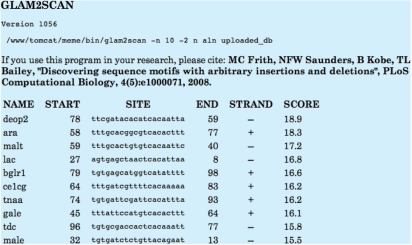
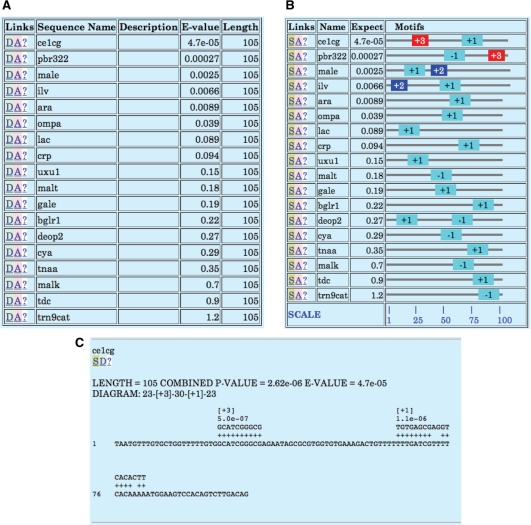
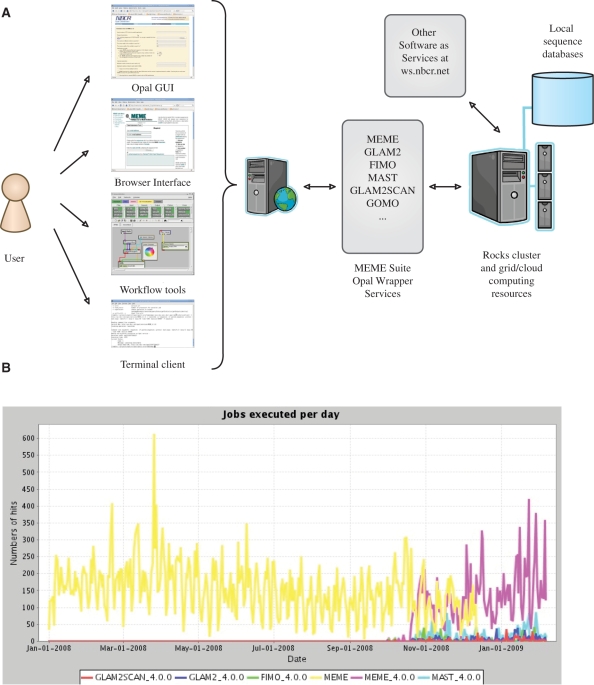
The MEME Suite web server provides a unified portal for online discovery and analysis of sequence motifs representing features such as DNA binding sites and protein interaction domains. The popular MEME motif discovery algorithm is now complemented by the GLAM2 algorithm which allows discovery of motifs containing gaps. Three sequence scanning algorithms--MAST, FIMO and GLAM2SCAN--allow scanning numerous DNA and protein sequence databases for motifs discovered by MEME and GLAM2. Transcription factor motifs (including those discovered using MEME) can be compared with motifs in many popular motif databases using the motif database scanning algorithm TOMTOM. Transcription factor motifs can be further analyzed for putative function by association with Gene Ontology (GO) terms using the motif-GO term association tool GOMO. MEME output now contains sequence LOGOS for each discovered motif, as well as buttons to allow motifs to be conveniently submitted to the sequence and motif database scanning algorithms (MAST, FIMO and TOMTOM), or to GOMO, for further analysis. GLAM2 output similarly contains buttons for further analysis using GLAM2SCAN and for rerunning GLAM2 with different parameters. All of the motif-based tools are now implemented as web services via Opal. Source code, binaries and a web server are freely available for noncommercial use at http://meme.nbcr.net.
Overview
The claims and statistics of this paper haven’t been checked yet.
Free: it reads the open-access text and checks the first 5 claims that cite a source we can check. Create a free account to check every claim.
Integrity signals
Registry
Cites
Statistics
Figures
Verification
Claims the paper makes
The claims and statistics of this paper haven’t been checked yet.
Free: it reads the open-access text and checks the first 5 claims that cite a source we can check. Create a free account to check every claim.
Claims other papers make about this one
Each is checked against this paper’s own text: does it say what the citing paper says it does?
The cited source says what the claim attributes to it.
In the citing paper
“Next, we applied the MEME motif-based sequence analysis tool (36) to investigate sequence elements that were enriched in genes whose TE was decreased by [-]CR-1-31B, which identified 2 significantly enriched 12-mer sequences (CGGCGGCGGCGG and GAGGAGGAGGAG; p = 2.2 × 10⁻²⁰ and p = 6.1 × 10⁻¹¹, respectively; Figure 2F).”
From Targeting eIF4A-dependent translation in genetically complex sarcoma (2026) · cites this paper as [36]
The cited source says what the claim attributes to it.
In the citing paper
“A discriminative motif search of S. salmonicida annexins versus Giardia alpha-giardins with the MEME tool (45) revealed a motif that is identical or highly similar to AB loops (type II Ca2+ coordination sites) in the former.”
From Comparative Cell Biology and Evolution of Annexins in Diplomonads (2016) · cites this paper as [45]
The check wasn’t confident either way, so it gives no verdict — never disputed.
In the citing paper
“The Olink technology allows the measurement of up to 92 proteins in 1 µL of plasma using the proximity extension assay (PEA).”
From Identification of Genetic Variants Regulating the Abundance of Clinically Relevant Plasma Proteins using the Diversity Outbred Mouse Model (2021) · cites this paper as [35]
Experimental — accuracy not yet measured
Self-check
Percentages, sums and reported differences re-computed from the paper’s own numbers.
The self-check needs the paper’s full text.
Citations
Cites
Fitting a mixture model by expectation maximization to discover motifs in biopolymers.
Bailey, T. L., & Elkan, C. (1994) · PubMed · Cited by 5,806
Self-citationA Direct Approach to False Discovery Rates
Storey, J. D. (2002) · Journal of the Royal Statistical Society Series B: Statistical Methodology · doi:10.1111/1467-9868.00346 · Cited by 5,603
MEME: discovering and analyzing DNA and protein sequence motifs
Bailey, T. L., Williams, N., Misleh, C., & Li, W. W. (2006) · Nucleic Acids Research · doi:10.1093/nar/gkl198 · Cited by 2,670 · cited 1×
“It offers a significantly expanded set of programs for these tasks compared with the earlier web server (1).”
BackgroundSelf-citationQuantifying similarity between motifs
Gupta, S., Stamatoyannopoulos, J. A., Bailey, T. L., & Noble, W. S. (2007) · Genome Biology · doi:10.1186/gb-2007-8-2-r24 · Cited by 2,058 · cited 2×
“TOMTOM (4) quantifies the similarity between two motifs, and can be used to search a database of known motifs for matches to motifs found by MEME.”
BackgroundMethodSelf-citationCombining evidence using p-values: application to sequence homology searches.
Bailey, T. L., & Gribskov, M. (1998) · Bioinformatics · doi:10.1093/bioinformatics/14.1.48 · Cited by 1,253
Self-citationSignificance analysis of time course microarray experiments
Storey, J. D., Xiao, W., Leek, J. T., Tompkins, R. G., & Davis, R. W. (2005) · Proceedings of the National Academy of Sciences · doi:10.1073/pnas.0504609102 · Cited by 567
Discovering Sequence Motifs with Arbitrary Insertions and Deletions
Frith, M. C., Saunders, N. F. W., Kobe, B., & Bailey, T. L. (2008) · PLoS Computational Biology · doi:10.1371/journal.pcbi.1000071 · Cited by 390 · cited 2×
“To overcome this limitation, we have incorporated a recent algorithm for gapped motif discovery—GLAM2 (3)—into the MEME suite.”
MethodSelf-citationCheminformatics analysis and learning in a data pipelining environment
Hassan, M., Brown, R. D., Varma-O’Brien, S., & Rogers, D. (2006) · Molecular Diversity · doi:10.1007/s11030-006-9041-5 · Cited by 184 · cited 1×
“A generic user interface may be generated automatically based upon an XML description of the command line syntax through the Opal GUI, either in a standard web browser or from a workflow program such as Vision (14), Kepler (15) or the Pipeline Pilot (16).”
MethodA Component-Based Software Environment for Visualizing Large Macromolecular Assemblies
Sanner, M. F. (2005) · Structure · doi:10.1016/j.str.2005.01.010 · Cited by 86
Score Distributions for Simultaneous Matching to Multiple Motifs
Bailey, T. L., & Gribskov, M. (1997) · Journal of Computational Biology · doi:10.1089/cmb.1997.4.45 · Cited by 59 · cited 10×
“MAST is ‘sequence oriented’, computing a single score for each sequence in the database.”
MethodInfluentialSelf-citation
Research works printed but not linked: 2
- 2005, PNAS, 102, 12837, 10.1073/pnas.0504609102 · DOI · Paper page
- Ludaescher B Altintas I Berkley C Higgins D Jaeger E Jones M Lee EA Tao J Zhao Y Scientific workow management and the Kepler system Concurrency Comput. Pract. Exp. 2005 18 1039 1065
Cited by
Items 201–300 of 1,096
RNA-RNA Interactomes of ProQ and Hfq Reveal Overlapping and Competing Roles
Melamed, S., Adams, P. P., Zhang, A., Zhang, H., & Storz, G. (2020) · Molecular Cell · doi:10.1016/j.molcel.2019.10.022 · Cited by 231
“Recognition of sequence motifs—Common binding motifs of same experiment condition were searched with MEME software (Bailey et al., 2009).”
MethodBabb, P. L., Lahens, N. F., Correa-Garhwal, S. M., Nicholson, D. N., Kim, E. J., Hogenesch, J. B., Kuntner, M., Higgins, L., Hayashi, C. Y., Agnarsson, I., et al. (2017) · Nature Genetics · doi:10.1038/ng.3852 · Cited by 231
Grøntved, L., John, S., Baek, S., Liu, Y., Buckley, J. R., Vinson, C., Aguilera, G., & Hager, G. L. (2013) · The EMBO Journal · doi:10.1038/emboj.2013.106 · Cited by 229
“To identify such factors, we searched for over-represented DNA sequences in GR ChIP-seq peaks using two independent de novo DNA motif analysis algorithms MEME (Multiple Em for Motif Elicitation) (Bailey et al , 2009) and HOMER (Hypergeometric Optimization of Motif EnRichment) (Heinz et al , 2010).”
MYB107 and MYB9 Homologs Regulate Suberin Deposition in Angiosperms
Lashbrooke, J., Cohen, H., Levy-Samocha, D., Tzfadia, O., Panizel, I., Zeisler, V., Massalha, H., Stern, A., Trainotti, L., Schreiber, L., et al. (2016) · The Plant Cell · doi:10.1105/tpc.16.00490 · Cited by 229
“Motif discovery was performed for the identified clade of MYB factors using The MEME Suite (Bailey et al., 2009).”
MethodSOX9: a stem cell transcriptional regulator of secreted niche signaling factors
Kadaja, M., Keyes, B. E., Lin, M., Pasolli, H. A., Genander, M., Polak, L., Stokes, N., Zheng, D., & Fuchs, E. (2014) · Genes & Development · doi:10.1101/gad.233247.113 · Cited by 229
“The MEME software suite (Bailey et al. 2009) was applied to the”
MethodConserved pleiotropy of an ancient plant homeobox gene uncovered by cis-regulatory dissection
Hendelman, A., Zebell, S., Rodriguez-Leal, D., Dukler, N., Robitaille, G., Wu, X., Kostyun, J., Tal, L., Wang, P., Bartlett, M. E., et al. (2021) · Cell · doi:10.1016/j.cell.2021.02.001 · Cited by 229
Evolutionary dynamics of the kinetochore network in eukaryotes as revealed by comparative genomics
van Hooff, J. J., Tromer, E., van Wijk, L. M., Snel, B., & Kops, G. J. (2017) · EMBO reports · doi:10.15252/embr.201744102 · Cited by 229
“In addition, we searched for conserved motifs in the hit sequences using MEME [75] (version 4.9.0), which aided in recognizing conserved positions that could characterize the homologs.”
InfluentialAssigning roles to DNA regulatory motifs using comparative genomics
Buske, F. A., Bodén, M., Bauer, D. C., & Bailey, T. L. (2010) · Bioinformatics · doi:10.1093/bioinformatics/btq049 · Cited by 227
Self-citationThe Escherichia coli transcriptome mostly consists of independently regulated modules
Sastry, A. V., Gao, Y., Szubin, R., Hefner, Y., Xu, S., Kim, D., Choudhary, K. S., Yang, L., King, Z. A., & Palsson, B. O. (2019) · Nature Communications · doi:10.1038/s41467-019-13483-w · Cited by 227
The R-loop is a common chromatin feature of the Arabidopsis genome
Xu, W., Xu, H., Li, K., Fan, Y., Liu, Y., Yang, X., & Sun, Q. (2017) · Nature Plants · doi:10.1038/s41477-017-0004-x · Cited by 227
Rashid, M., Guangyuan, H., Guangxiao, Y., Hussain, J., & Xu, Y. (2012) · Evolutionary Bioinformatics · doi:10.4137/ebo.s9369 · Cited by 226
TP63-mediated enhancer reprogramming drives the squamous subtype of pancreatic ductal adenocarcinoma
Somerville, T. D. D., Xu, Y., Miyabayashi, K., Tiriac, H., Cleary, C. R., Maia-Silva, D., Milazzo, J. P., Tuveson, D. A., & Vakoc, C. R. (2018) · Cell Reports · doi:10.1016/j.celrep.2018.10.051 · Cited by 225
“For TP63 ChIP-seq analysis in BxPC3 cells, motif discovery was performed on all peaks using MEME-ChIP from the MEME Suite (Bailey et al., 2009).”
MethodDeciphering bacterial epigenomes using modern sequencing technologies
Beaulaurier, J., Schadt, E. E., & Fang, G. (2019) · Nature Reviews Genetics · doi:10.1038/s41576-018-0081-3 · Cited by 225
Zhu, L. J., Christensen, R. G., Kazemian, M., Hull, C. J., Enuameh, M. S., Basciotta, M. D., Brasefield, J. A., Zhu, C., Asriyan, Y., Lapointe, D. S., et al. (2011) · Nucleic Acids Research · doi:10.1093/nar/gkq858 · Cited by 225
“The MEME algorithm (29,30) is used to identify enriched sequence motifs within these sequences, which should represent the DNA binding speci-ficity of the assayed TF.”
MethodADAR Regulates RNA Editing, Transcript Stability, and Gene Expression
Wang, I. X., So, E., Devlin, J. L., Zhao, Y., Wu, M., & Cheung, V. G. (2013) · Cell Reports · doi:10.1016/j.celrep.2013.10.002 · Cited by 224
“The MEME program was used to analyze DNA sequences corresponding to 100 nt upstream and downstream of editing sites.”
MethodInfluentialFerritin is secreted via 2 distinct nonclassical vesicular pathways
Truman-Rosentsvit, M., Berenbaum, D., Spektor, L., Cohen, L. A., Belizowsky-Moshe, S., Lifshitz, L., Ma, J., Li, W., Kesselman, E., Abutbul-Ionita, I., et al. (2018) · Blood · doi:10.1182/blood-2017-02-768580 · Cited by 223
Self-citationLate Embryogenesis Abundant (LEA) proteins in legumes
Battaglia, M., & Covarrubias, A. A. (2013) · Frontiers in Plant Science · doi:10.3389/fpls.2013.00190 · Cited by 223
Niu, Q., Li, J., Cai, D., Qian, M., Jia, H., Bai, S., Hussain, S., Liu, G., Teng, Y., & Zheng, X. (2016) · Journal of Experimental Botany · doi:10.1093/jxb/erv454 · Cited by 223
“To assess the diversity and similarity of motif composition among the pear MIKC genes, the MEME tool was used (Bailey et al., 2009) to identify motifs in the 30 predicted MIKC protein sequences.”
MethodChardin, C., Girin, T., Roudier, F., Meyer, C., & Krapp, A. (2014) · Journal of Experimental Botany · doi:10.1093/jxb/eru261 · Cited by 222
Liu, M., Ma, Z., Sun, W., Huang, L. F., Wu, Q., Tang, Z., Bu, T., Li, C., & Chen, H. (2019) · BMC Genomics · doi:10.1186/s12864-019-5500-0 · Cited by 222
Gene regulation by gonadal hormone receptors underlies brain sex differences
Gegenhuber, B., Wu, M. V., Bronstein, R., & Tollkuhn, J. (2022) · Nature · doi:10.1038/s41586-022-04686-1 · Cited by 221
Genome-wide mapping of G-quadruplex structures with CUT&Tag
Lyu, J., Shao, R., Kwong Yung, P. Y., & Elsässer, S. J. (2022) · Nucleic Acids Research · doi:10.1093/nar/gkab1073 · Cited by 220
“29.2) get-fasta command and G4 sequence motifs were searched with MEME suite online tool (62).”
InfluentialPapenfort, K., Förstner, K. U., Cong, J.-P., Sharma, C. M., & Bassler, B. L. (2015) · Proceedings of the National Academy of Sciences · doi:10.1073/pnas.1500203112 · Cited by 220
“We examined the sequences 50 bp upstream of the 7,240 TSSs and used the MEME toolkit (24) to predict conserved transcription control motifs.”
MethodCoordinated alterations in RNA splicing and epigenetic regulation drive leukaemogenesis
Yoshimi, A., Lin, K.-T., Wiseman, D. H., Rahman, M. A., Pastore, A., Wang, B., Lee, S. C.-W., Micol, J.-B., Zhang, X. J., de Botton, S., et al. (2019) · Nature · doi:10.1038/s41586-019-1618-0 · Cited by 220
Kimura, S., Hunter, K., Vaahtera, L., Tran, H. C., Citterico, M., Vaattovaara, A., Rokka, A., Stolze, S. C., Harzen, A., Meißner, L., et al. (2020) · The Plant Cell · doi:10.1105/tpc.19.00525 · Cited by 220
Corrales, A.-R., Nebauer, S. G., Carrillo, L., Fernández-Nohales, P., Marqués, J., Renau-Morata, B., Granell, A., Pollmann, S., Vicente-Carbajosa, J., Molina, R.-V., et al. (2014) · Journal of Experimental Botany · doi:10.1093/jxb/ert451 · Cited by 220
ChIP-seq reveals cell type-specific binding patterns of BMP-specific Smads and a novel binding motif
Morikawa, M., Koinuma, D., Tsutsumi, S., Vasilaki, E., Kanki, Y., Heldin, C.-H., Aburatani, H., & Miyazono, K. (2011) · Nucleic Acids Research · doi:10.1093/nar/gkr572 · Cited by 219
“To elucidate a specific binding motif in Smad1/5 binding regions, a de novo motif prediction was performed using MEME (21).”
InfluentialHuang, H., Wang, Y., Kandpal, M., Zhao, G., Cardenas, H., Ji, Y., Chaparala, A., Tanner, E. J., Chen, J., Davuluri, R. V., et al. (2020) · Cancer Research · doi:10.1158/0008-5472.can-19-4044 · Cited by 219
Matsuda, T., Irie, T., Katsurabayashi, S., Hayashi, Y., Nagai, T., Hamazaki, N., Adefuin, A. M. D., Miura, F., Ito, T., Kimura, H., et al. (2019) · Neuron · doi:10.1016/j.neuron.2018.12.010 · Cited by 219
Dominant protection from HLA-linked autoimmunity by antigen-specific regulatory T cells
Ooi, J. D., Petersen, J., Tan, Y. H., Huynh, M., Willett, Z. J., Ramarathinam, S. H., Eggenhuizen, P. J., Loh, K. L., Watson, K. A., Gan, P. Y., et al. (2017) · Nature · doi:10.1038/nature22329 · Cited by 218
“Minimal core sequences found within nested sets of peptides with either N-or C-terminal extensions were extracted and aligned using MEME (http://meme.nbcr.net/meme/), where motif width was set to 9-15 and motif distribution set to ‘one per sequence’ 31 .”
Li, X.-Y., Thomas, S., Sabo, P. J., Eisen, M. B., Stamatoyannopoulos, J. A., & Biggin, M. D. (2011) · Genome Biology · doi:10.1186/gb-2011-12-4-r34 · Cited by 217
“The same PWMs for the factors derived from in vitro DNA binding data, described above, were employed to identify all sequence matches to these matrices within 75 bp of peaks of accessibility with P 0.003 using Fimo [107] (that is, matches that fell into at least the -3 cohort from Figure 4).”
MethodInfluentialIn vivo transcriptional governance of hair follicle stem cells by canonical Wnt regulators
Lien, W.-H., Polak, L., Lin, M., Lay, K., Zheng, D., & Fuchs, E. (2014) · Nature Cell Biology · doi:10.1038/ncb2903 · Cited by 217
Comprehensive Mapping of the Escherichia coli Flagellar Regulatory Network
Fitzgerald, D. M., Bonocora, R. P., & Wade, J. T. (2014) · PLoS Genetics · doi:10.1371/journal.pgen.1004649 · Cited by 216
“Motifs in C and D were generated using MEME [52].”
InfluentialLi, S., Poulton, N. C., Chang, J. S., Azadian, Z. A., DeJesus, M. A., Ruecker, N., Zimmerman, M. D., Eckartt, K. A., Bosch, B., Engelhart, C. A., et al. (2022) · Nature Microbiology · doi:10.1038/s41564-022-01130-y · Cited by 216
Metabolic heterogeneity underlies reciprocal fates of TH17 cell stemness and plasticity
Karmaus, P. W. F., Chen, X., Lim, S. A., Herrada, A. A., Nguyen, T.-L. M., Xu, B., Dhungana, Y., Rankin, S., Chen, W., Rosencrance, C., et al. (2019) · Nature · doi:10.1038/s41586-018-0806-7 · Cited by 215
Aptamers 101: aptamer discovery and in vitro applications in biosensors and separations
Yang, L. F., Ling, M., Kacherovsky, N., & Pun, S. H. (2023) · Chemical Science · doi:10.1039/d3sc00439b · Cited by 215
Enhancer Interaction Networks as a Means for Singular Olfactory Receptor Expression
Markenscoff-Papadimitriou, E., Allen, W. E., Colquitt, B. M., Goh, T., Murphy, K. K., Monahan, K., Mosley, C. P., Ahituv, N., & Lomvardas, S. (2014) · Cell · doi:10.1016/j.cell.2014.09.033 · Cited by 214
Nitrogen-fixing organelle in a marine alga
Coale, T. H., Loconte, V., Turk-Kubo, K. A., Vanslembrouck, B., Mak, W. K. E., Cheung, S., Ekman, A., Chen, J.-H., Hagino, K., Takano, Y., et al. (2024) · Science · doi:10.1126/science.adk1075 · Cited by 214
Blair, J. D., Yuen, R. K. C., Lim, B. K., McFadden, D. E., von Dadelszen, P., & Robinson, W. P. (2013) · Molecular Human Reproduction · doi:10.1093/molehr/gat044 · Cited by 214
“These sequences were submitted for recurrent motif discovery using multiple em for motif elicitation (MEME) suite (Bailey et al., 2009).”
MethodPiriformospora indica —a mutualistic basidiomycete with an exceptionally large plant host range
QIANG, X., WEISS, M., KOGEL, K., & SCHÄFER, P. (2012) · Molecular Plant Pathology · doi:10.1111/j.1364-3703.2011.00764.x · Cited by 213
“algorithm MEME (Bailey et al., 2009).”
Activin Signaling Targeted by Insulin/dFOXO Regulates Aging and Muscle Proteostasis in Drosophila
Bai, H., Kang, P., Hernandez, A. M., & Tatar, M. (2013) · PLoS Genetics · doi:10.1371/journal.pgen.1003941 · Cited by 213
“org/) and de novo motif analysis was performed using MEME Suite [75].”
Method101 Dothideomycetes genomes: A test case for predicting lifestyles and emergence of pathogens
Haridas, S., Albert, R., Binder, M., Bloem, J., LaButti, K., Salamov, A., Andreopoulos, B., Baker, S. E., Barry, K., Bills, G., et al. (2020) · Studies in Mycology · doi:10.1016/j.simyco.2020.01.003 · Cited by 213
Conservation of trans-acting circuitry during mammalian regulatory evolution
Stergachis, A. B., Neph, S., Sandstrom, R., Haugen, E., Reynolds, A. P., Zhang, M., Byron, R., Canfield, T., Stelhing-Sun, S., Lee, K., et al. (2014) · Nature · doi:10.1038/nature13972 · Cited by 212
Zhang, X., Bolt, M., Guertin, M. J., Chen, W., Zhang, S., Cherrington, B. D., Slade, D. J., Dreyton, C. J., Subramanian, V., Bicker, K. L., et al. (2012) · Proceedings of the National Academy of Sciences · doi:10.1073/pnas.1203280109 · Cited by 211
“MEME was applied with all default parameters to search for overrepresented motifs (19).”
MethodGenome and transcriptome analysis of the grapevine (Vitis vinifera L.) WRKY gene family
Wang, M., Vannozzi, A., Wang, G., Liang, Y.-H., Tornielli, G. B., Zenoni, S., Cavallini, E., Pezzotti, M., & Cheng, Z.-M. (2014) · Horticulture Research · doi:10.1038/hortres.2014.16 · Cited by 211
Stage-specific control of early B cell development by the transcription factor Ikaros
Schwickert, T. A., Tagoh, H., Gültekin, S., Dakic, A., Axelsson, E., Minnich, M., Ebert, A., Werner, B., Roth, M., Cimmino, L., et al. (2014) · Nature Immunology · doi:10.1038/ni.2828 · Cited by 210
Molecular mechanism of cytokinin-activated cell division in Arabidopsis
Yang, W., Cortijo, S., Korsbo, N., Roszak, P., Schiessl, K., Gurzadyan, A., Wightman, R., Jönsson, H., & Meyerowitz, E. (2021) · Science · doi:10.1126/science.abe2305 · Cited by 210
Targeting the MLL complex in castration-resistant prostate cancer
Malik, R., Khan, A. P., Asangani, I. A., Cieślik, M., Prensner, J. R., Wang, X., Iyer, M. K., Jiang, X., Borkin, D., Escara-Wilke, J., et al. (2015) · Nature Medicine · doi:10.1038/nm.3830 · Cited by 210
Liu, P.-L., Du, L., Huang, Y., Gao, S.-M., & Yu, M. (2017) · BMC Evolutionary Biology · doi:10.1186/s12862-017-0891-5 · Cited by 209
Disease-associated mutation in SRSF2 misregulates splicing by altering RNA-binding affinities
Zhang, J., Lieu, Y. K., Ali, A. M., Penson, A., Reggio, K. S., Rabadan, R., Raza, A., Mukherjee, S., & Manley, J. L. (2015) · Proceedings of the National Academy of Sciences · doi:10.1073/pnas.1514105112 · Cited by 208
“Using the program MEME (37), we identified a conserved 10-nt motif containing a USSWG (S = G or C, W = A or U) sequence in 88 of the 109 sites (Fig.”
MethodInfluentialThe Emergence, Evolution, and Diversification of the miR390- TAS3 - ARF Pathway in Land Plants
Xia, R., Xu, J., & Meyers, B. C. (2017) · The Plant Cell · doi:10.1105/tpc.17.00185 · Cited by 210
Chromatin accessibility profiling methods
Minnoye, L., Marinov, G. K., Krausgruber, T., Pan, L., Marand, A. P., Secchia, S., Greenleaf, W. J., Furlong, E. E. M., Zhao, K., Schmitz, R. J., et al. (2021) · Nature Reviews Methods Primers · doi:10.1038/s43586-020-00008-9 · Cited by 206
Ozyigit, I. I., Filiz, E., Vatansever, R., Kurtoglu, K. Y., Koc, I., Öztürk, M. X., & Anjum, N. A. (2016) · Frontiers in Plant Science · doi:10.3389/fpls.2016.00301 · Cited by 206
“The Conserved motif structure of GPX/APX sequences was analyzed using the MEME tool with the following parameter settings: maximum number of motifs to find, 5; minimum width of motif, 6 and maximum width of motif, 50 (Bailey et al., 2009).”
MethodSong, X., Li, Y., & Hou, X. (2013) · BMC Genomics · doi:10.1186/1471-2164-14-573 · Cited by 205
“html) [68].”
Global transcriptional control by glucose and carbon regulator CcpA in Clostridium difficile
Antunes, A., Camiade, E., Monot, M., Courtois, E., Barbut, F., Sernova, N. V., Rodionov, D. A., Martin-Verstraete, I., & Dupuy, B. (2012) · Nucleic Acids Research · doi:10.1093/nar/gks864 · Cited by 204
“The motif was searched in the leader regions from position $250 to+50 relative to the translational start site for the MEME program and $300 and+300 for RegPredict.”
MethodDouglass, A. P., Offei, B., Braun-Galleani, S., Coughlan, A. Y., Martos, A. A. R., Ortiz-Merino, R. A., Byrne, K. P., & Wolfe, K. H. (2018) · PLOS Pathogens · doi:10.1371/journal.ppat.1007138 · Cited by 203
Insights into the Diversification and Evolution of R2R3-MYB Transcription Factors in Plants
Jiang, C.-K., & Rao, G.-Y. (2020) · Plant Physiology · doi:10.1104/pp.19.01082 · Cited by 203
“The logos of binding specificities were illustrated by Ceqlogo in the MEME suite (Bailey et al., 2009).”
MethodÓ’Maoiléidigh, D. S., Wuest, S. E., Rae, L., Raganelli, A., Ryan, P. T., Kwaśniewska, K., Das, P., Lohan, A. J., Loftus, B., Graciet, E., et al. (2013) · The Plant Cell · doi:10.1105/tpc.113.113209 · Cited by 200
“For the detection of motifs at putative AG binding sites, 400-bp core sequences centered around peak locationswere submitted to the browserbased MEME-ChIP analysis suite (http://meme.sdsc.edu/meme/) (Bailey et al., 2009).”
MethodEvolution of a reverse transcriptase to map N1-methyladenosine in human messenger RNA
Zhou, H., Rauch, S., Dai, Q., Cui, X., Zhang, Z., Nachtergaele, S., Sepich, C., He, C., & Dickinson, B. C. (2019) · Nature Methods · doi:10.1038/s41592-019-0550-4 · Cited by 199
Repeat expansions confer WRN dependence in microsatellite-unstable cancers
van Wietmarschen, N., Sridharan, S., Nathan, W. J., Tubbs, A., Chan, E. M., Callen, E., Wu, W., Belinky, F., Tripathi, V., Wong, N., et al. (2020) · Nature · doi:10.1038/s41586-020-2769-8 · Cited by 199
Henriksson, J., Chen, X., Gomes, T., Ullah, U., Meyer, K. B., Miragaia, R., Duddy, G., Pramanik, J., Yusa, K., Lahesmaa, R., et al. (2019) · Cell · doi:10.1016/j.cell.2018.11.044 · Cited by 199
Chronic cocaine-regulated epigenomic changes in mouse nucleus accumbens
Feng, J., Wilkinson, M., Liu, X., Purushothaman, I., Ferguson, D., Vialou, V., Maze, I., Shao, N., Kennedy, P., Koo, J., et al. (2014) · Genome Biology · doi:10.1186/gb-2014-15-4-r65 · Cited by 198
“The motifs found by MEME [42] were first combined using the Bayesian motif clustering [79] method and then matched with known motifs.”
MethodTranscriptional regulators form diverse groups with context-dependent regulatory functions
Stampfel, G., Kazmar, T., Frank, O., Wienerroither, S., Reiter, F., & Stark, A. (2015) · Nature · doi:10.1038/nature15545 · Cited by 198
ApoplastP : prediction of effectors and plant proteins in the apoplast using machine learning
Sperschneider, J., Dodds, P. N., Singh, K. B., & Taylor, J. M. (2018) · New Phytologist · doi:10.1111/nph.14946 · Cited by 198
Cai, Y., Goodman, J. M., Pyc, M., Mullen, R. T., Dyer, J. M., & Chapman, K. D. (2015) · The Plant Cell · doi:10.1105/tpc.15.00588 · Cited by 198
“Motif organization was generated by Multiple Em for Motif Elicitation (MEME) (Bailey et al., 2009).”
MethodLu, D., Wang, T., Persson, S., Mueller‐Roeber, B., & Schippers, J. H. M. (2014) · Nature Communications · doi:10.1038/ncomms4767 · Cited by 198
The Next Generation of Transcription Factor Binding Site Prediction
Mathelier, A., & Wasserman, W. W. (2013) · PLoS Computational Biology · doi:10.1371/journal.pcbi.1003214 · Cited by 197
“Apply MAST [ 44 , 65 ] on the 10 training sets from T using the motif from MEME ( default parameters ) .”
MethodInfluentialZeng, Z., Zhang, W., Marand, A. P., Zhu, B., Buell, C. R., & Jiang, J. (2019) · Genome Biology · doi:10.1186/s13059-019-1731-2 · Cited by 197
LARP1 functions as a molecular switch for mTORC1-mediated translation of an essential class of mRNAs
Hong, S., Freeberg, M. A., Han, T., Kamath, A., Yao, Y., Fukuda, T., Suzuki, T., Kim, J. K., & Inoki, K. (2017) · eLife · doi:10.7554/elife.25237 · Cited by 197
“Sequence motifs were searched for within the 198 and 186 5’UTR LARP1 binding sites found under growing and mTOR inactive conditions, respectively, using MEME with default parameters (Bailey et al., 2009) Binding site sequences were extended by 15nt up- and down-stream for this search.”
MethodRepression of jasmonate signaling by a non‐TIFY JAZ protein in Arabidopsis
Thireault, C., Shyu, C., Yoshida, Y., St. Aubin, B., Campos, M. L., & Howe, G. A. (2015) · The Plant Journal · doi:10.1111/tpj.12841 · Cited by 196
Genome-wide analysis of the GRAS gene family in Chinese cabbage (Brassica rapa ssp. pekinensis)
Song, X., Liu, T., Duan, W., Ma, Q., Ren, J., Wang, Z., Li, Y., & Hou, X. (2013) · Genomics · doi:10.1016/j.ygeno.2013.12.004 · Cited by 196
Self-citationRapid evolutionary turnover underlies conserved lncRNA–genome interactions
Quinn, J. J., Zhang, Q. C., Georgiev, P., Ilik, I. A., Akhtar, A., & Chang, H. Y. (2016) · Genes & Development · doi:10.1101/gad.272187.115 · Cited by 195
“We also counted the percentage of observed or random peaks within 100 bp of a PPT. MRE motif orientation bias analysis We used MEME to identify the position and orientation of the best MRE motif within each ChIRP-seq peak of each species.”
MethodInfluentialFunctional enhancer elements drive subclass-selective expression from mouse to primate neocortex
Mich, J. K., Graybuck, L. T., Hess, E. E., Mahoney, J. T., Kojima, Y., Ding, Y., Somasundaram, S., Miller, J. A., Kalmbach, B. E., Radaelli, C., et al. (2021) · Cell Reports · doi:10.1016/j.celrep.2021.108754 · Cited by 193
“We first performed unbiased de novo identification of DNA sequence element motifs using MEME-CHIP (Bailey et al., 2009), which were then filtered for expression of a possible binding site-correlated TFs by RNA sequencing (RNA-seq) (Figure S4G; Tasic et al.”
MethodInfluentialMultiparameter functional diversity of human C2H2 zinc finger proteins
Schmitges, F. W., Radovani, E., Najafabadi, H. S., Barazandeh, M., Campitelli, L. F., Yin, Y., Jolma, A., Zhong, G., Guo, H., Kanagalingam, T., et al. (2016) · Genome Research · doi:10.1101/gr.209643.116 · Cited by 193
“2015a) or MEME (Bailey et al. 2009), prioritizing motifs derived from RCADE, from non-ERE peaks, and that are enriched in peak sequences.”
BackgroundMethodDynamics of 5-hydroxymethylcytosine during mouse spermatogenesis
Gan, H., Wen, L., Liao, S., Lin, X., Ma, T., Liu, J., Song, C.-X., Wang, M., He, C., Han, C., et al. (2013) · Nature Communications · doi:10.1038/ncomms2995 · Cited by 193
Dynamic GATA4 enhancers shape the chromatin landscape central to heart development and disease
He, A., Gu, F., Hu, Y., Ma, Q., Yi Ye, L., Akiyama, J. A., Visel, A., Pennacchio, L. A., & Pu, W. T. (2014) · Nature Communications · doi:10.1038/ncomms5907 · Cited by 192
Bacteria-mediated phthalic acid esters degradation and related molecular mechanisms
Ren, L., Lin, Z., Liu, H., & Hu, H. (2018) · Applied Microbiology and Biotechnology · doi:10.1007/s00253-017-8687-5 · Cited by 192
Soleimani, V. D., Punch, V. G., Kawabe, Y.-I., Jones, A. E., Palidwor, G. A., Porter, C. J., Cross, J. W., Carvajal, J. J., Kockx, C. E. M., van IJcken, W. F. J., et al. (2012) · Developmental Cell · doi:10.1016/j.devcel.2012.03.014 · Cited by 191
“MEME search was restricted to a 50 base pair window around peak summit.”
MethodInfluentialSoriano-Tárraga, C., Jiménez-Conde, J., Giralt-Steinhauer, E., Mola-Caminal, M., Vivanco-Hidalgo, R. M., Ois, A., Rodríguez-Campello, A., Cuadrado-Godia, E., Sayols-Baixeras, S., Elosua, R., et al. (2016) · Human Molecular Genetics · doi:10.1093/hmg/ddv493 · Cited by 191
“TheMEME Suiteweb server was used to discover and analyze the sequencemotifs representing features such as DNA binding sites and protein interaction domains in TXNIP locus (55).”
MethodHistone H3 lysine 4 monomethylation modulates long-range chromatin interactions at enhancers
Yan, J., Chen, S.-A. A., Local, A., Liu, T., Qiu, Y., Dorighi, K. M., Preissl, S., Rivera, C. M., Wang, C., Ye, Z., et al. (2018) · Cell Research · doi:10.1038/cr.2018.1 · Cited by 191
Chen, Y.-R., Zhong, S., Fei, Z., Hashimoto, Y., Xiang, J. Z., Zhang, S., & Blissard, G. W. (2013) · Journal of Virology · doi:10.1128/jvi.00194-13 · Cited by 191
“The consensus motifs search was carried out using multiple expectation max- 6392 jvi.asm.org Journal of Virology imization for motif elicitation (MEME) (40) from genes in each of the groups (parameters, zero or one motif per sequence and an E value of 0.001) (41, 42).”
BackgroundMethodInfluentialONECUT2 is a targetable master regulator of lethal prostate cancer that suppresses the androgen axis
Rotinen, M., You, S., Yang, J., Coetzee, S. G., Reis-Sobreiro, M., Huang, W.-C., Huang, F., Pan, X., Yáñez, A., Hazelett, D. J., et al. (2018) · Nature Medicine · doi:10.1038/s41591-018-0241-1 · Cited by 191
Nucleotide-resolution analysis of structural variants using BreakSeq and a breakpoint library
Lam, H. Y. K., Mu, X. J., Stütz, A. M., Tanzer, A., Cayting, P. D., Snyder, M., Kim, P. M., Korbel, J. O., & Gerstein, M. B. (2010) · Nature Biotechnology · doi:10.1038/nbt.1600 · Cited by 190
High-Level dCas9 Expression Induces Abnormal Cell Morphology in Escherichia coli
Cho, S., Choe, D., Lee, E., Kim, S. C., Palsson, B., & Cho, B.-K. (2018) · ACS Synthetic Biology · doi:10.1021/acssynbio.7b00462 · Cited by 190
Chiou, J., Zeng, C., Cheng, Z., Han, J. Y., Schlichting, M., Huang, S., Wang, J., Sui, Y., Deogaygay, A., Okino, M.-L., et al. (2019) · doi:10.1101/693671 · Cited by 189
Crocco, C. D., & Botto, J. F. (2013) · Gene · doi:10.1016/j.gene.2013.08.037 · Cited by 189
Pichler, M. J., Yamada, C., Shuoker, B., Alvarez-Silva, C., Gotoh, A., Leth, M. L., Schoof, E., Katoh, T., Sakanaka, M., Katayama, T., et al. (2020) · Nature Communications · doi:10.1038/s41467-020-17075-x · Cited by 189
New insights into replication origin characteristics in metazoans
Cayrou, C., Coulombe, P., Puy, A., Rialle, S., Kaplan, N., Segal, E., & Méchali, M. (2012) · Cell Cycle · doi:10.4161/cc.11.4.19097 · Cited by 188
Malone, L. M., Warring, S. L., Jackson, S. A., Warnecke, C., Gardner, P. P., Gumy, L. F., & Fineran, P. C. (2019) · Nature Microbiology · doi:10.1038/s41564-019-0612-5 · Cited by 188
Brand, L. H., Fischer, N. M., Harter, K., Kohlbacher, O., & Wanke, D. (2013) · Nucleic Acids Research · doi:10.1093/nar/gkt732 · Cited by 187
“To deduce a binding consensus for each WRKY DBD, the forward sequences of all positive probes of each individual experiment were analyzed using Multiple Em for Motif Elicitation (MEME) with settings 0/1 per sequence, 4–6 bp and 3 motifs (72).”
Singh, A. K., Sharma, V., Pal, A. K., Acharya, V., & Ahuja, P. S. (2013) · DNA Research · doi:10.1093/dnares/dst019 · Cited by 187
Wang, T., Wang, H., Cai, D., Gao, Y., Zhang, H., Wang, Y., Lin, C., Ma, L., & Gu, L. (2017) · The Plant Journal · doi:10.1111/tpj.13597 · Cited by 186
“MEME was used for motif searches on the upstream and downstream sequences of polyadenylation sites (Bailey et al., 2009).”
MethodAn experimentally supported model of the Bacillus subtilis global transcriptional regulatory network
Arrieta‐Ortiz, M. L., Hafemeister, C., Bate, A. R., Chu, T., Greenfield, A., Shuster, B., Barry, S. N., Gallitto, M., Liu, B., Kacmarczyk, T., et al. (2015) · Molecular Systems Biology · doi:10.15252/msb.20156236 · Cited by 186
“Computational search for DNA sequence motifs The MEME suite (Bailey et al, 2009) was used for identifying DNA sequence motifs characteristic of binding by individual TFs.”
Chiou, J., Zeng, C., Cheng, Z., Han, J. Y., Schlichting, M., Miller, M., Mendez, R., Huang, S., Wang, J., Sui, Y., et al. (2021) · Nature Genetics · doi:10.1038/s41588-021-00823-0 · Cited by 186
Internal guide RNA interactions interfere with Cas9-mediated cleavage
Thyme, S. B., Akhmetova, L., Montague, T. G., Valen, E., & Schier, A. F. (2016) · Nature Communications · doi:10.1038/ncomms11750 · Cited by 154
Fang, L., Cai, W., Liu, S., Canela-Xandri, O., Gao, Y., Jiang, J., Rawlik, K., Li, B., Schroeder, S. G., Rosen, B. D., et al. (2020) · Genome Research · doi:10.1101/gr.250704.119 · Cited by 185
“We conducted the motif enrichment analyses for the promoter regions (i.e., 1500 bp upstream of and 500 bp downstream from the tran- scriptional start sites [TSSs]) of tissue-specific genes using MEME software (Bailey et al. 2009).”
MethodEvolution of the RNA N6-Methyladenosine Methylome Mediated by Genomic Duplication
Miao, Z., Zhang, T., Qi, Y., Song, J., Han, Z., & Ma, C. (2019) · PLANT PHYSIOLOGY · doi:10.1104/pp.19.00323 · Cited by 185
“Plant Cell 30: 952–967 Bailey TL, Boden M, Buske FA, Frith M, Grant CE, Clementi L, Ren J, Li WW, Noble WS (2009) MEME SUITE: Tools for motif discovery and searching.”
MethodInfluentialSchaffer, B. E., Levin, R. S., Hertz, N. T., Maures, T. J., Schoof, M. L., Hollstein, P. E., Benayoun, B. A., Banko, M. R., Shaw, R. J., Shokat, K. M., et al. (2015) · Cell Metabolism · doi:10.1016/j.cmet.2015.09.009 · Cited by 184
“These tools complement existing resources that scan proteins for specific motifs, such as Scansite (Obenauer et al., 2003) and MEME (FIMO) (Bailey et al., 2009; Grant et al., 2011) (Figure S7G).”
Liu, Y., Hu, W., Murakawa, Y., Yin, J., Wang, G., Landthaler, M., & Yan, J. (2013) · Scientific Reports · doi:10.1038/srep02054 · Cited by 184
Fordyce, P. M., Gerber, D., Tran, D., Zheng, J., Li, H., DeRisi, J. L., & Quake, S. R. (2010) · Nature Biotechnology · doi:10.1038/nbt.1675 · Cited by 184
“To determine if low correlations resulted from binding to additional target sequences, we used BioPROSPECTOR 27 , MDScan 27 , MEME 28 and WEEDER 29 to scan for overrepresented sequences within oligonucleotides with high measured intensity ratios ( Z -score > 25 for Rpn4p or 75 for Cup9p) but low…”
Method
Metadata
- Authors
- Bailey, T. L., Boden, M., Buske, F. A., Frith, M., Grant, C. E., Clementi, L., Ren, J., Li, W. W., & Noble, W. S.
- Affiliations
- The University of Queensland (AU)
- Corresponding author
- Bailey, T. L.
- Noble, W. S.
- Venue
- Nucleic Acids Research
- Publisher
- Oxford University Press (OUP)
- Published
- 2009-05-20
- Volume
- 37
- Issue
- Web Server
- Pages
- W202-W208
- ISSN
- 0305-1048 (ISSN-L)
- 1362-4962
- PMC
- PMC2703892
- OpenAlex
- W2157009395
- Cited by
- 10,648
- References
- 15
- Citations by year
- 2026: 635 · 2025: 885 · 2024: 922 · 2023: 999 · 2022: 1146 · 2021: 1349 · 2020: 979 · 2019: 720 · 2018: 613 · 2017: 498 · 2016: 448 · 2015: 456 · 2014: 376 · 2013: 296 · 2012: 184
- FWCI
- 42.64
- Type
- journal article
- Language
- en
- Open access
- gold
- doi.org
- Licence
- Locations
- Nucleic Acids Research (publishedVersion, cc-by-nc)
- PubMed Central (publishedVersion, cc-by-nc)
- PubMed (publishedVersion)
- Funders
- National Institutes of Health (5r01rr021692-06)
- National Center for Research Resources (P41-RR08605, R0-1 RR021692, P41RR008605)
- Topics
- Life Sciences › Biochemistry, Genetics and Molecular Biology › Molecular Biology › Genomics and Chromatin Dynamics
- Life Sciences › Biochemistry, Genetics and Molecular Biology › Molecular Biology › Genomics and Phylogenetic Studies
- Life Sciences › Biochemistry, Genetics and Molecular Biology › Molecular Biology › Bioinformatics and Genomic Networks
- Keywords
- motif discovery, DNA binding sites, protein-protein interaction domains, MAST, TomTom, Gene Ontology, transcription factor binding motifs, sequence logos, web server, motif database, web services
- MeSH terms
- Algorithms, Binding Sites, Software, Transcription Factors, Sequence Analysis, DNA, Internet, Sequence Analysis, Protein, Databases, Genetic, Regulatory Elements, Transcriptional
About these checks
Registry, retraction, Cites and statistics results are computed, not judged, with one exception: a printed reference that no index lists is read once by a model before it counts as a citation error. Claims are extracted by a model and kept only when their quote appears verbatim in the text; each cited source is then checked, with a model’s help, for whether it says what the claim relies on. Those verdicts can be wrong — read the claim’s quote and the cited source before relying on one.
Statistics and arithmetic are recomputed, not judged.
Confidence bands are shown only for fields calibrated on our annotated test set. None is calibrated yet, so no band is shown.
What counts as a claim ›How we measure confidence ›How we check this ›
Are you an author, or do you see a problem with this page? Request a review
Data sources
Bibliographic data: Semantic Scholar, OpenAlex, Crossref.
Contains information from the Semantic Scholar Academic Graph Datasets, made available under the ODC Attribution License (ODC-BY 1.0).
Semantic Scholar’s data is described in: Kinney, R., et al. (2023). The Semantic Scholar Open Data Platform. arXiv:2301.10140.
