

MEME SUITE: tools for motif discovery and searching
Open accessThe DOI matches its Crossref record; 15 of the 15 references it cites were found in a registry or an index.
Abstract
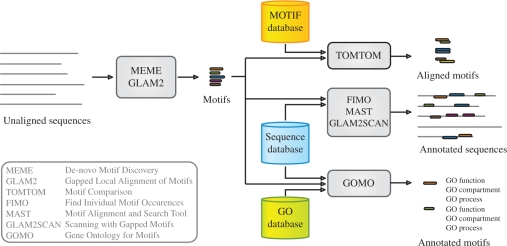
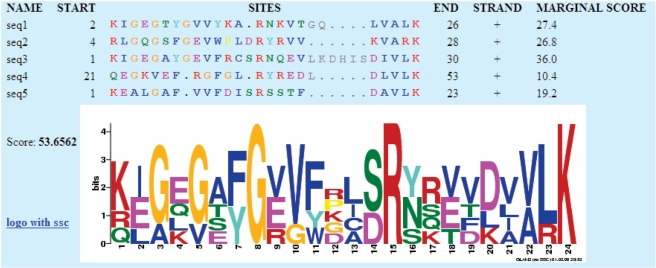
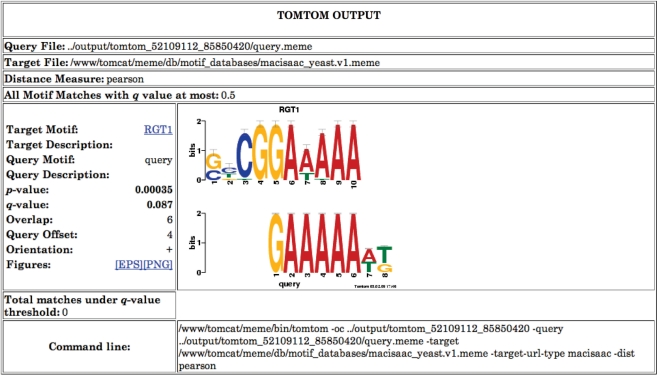
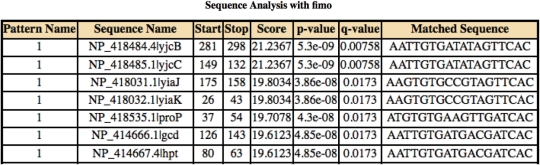
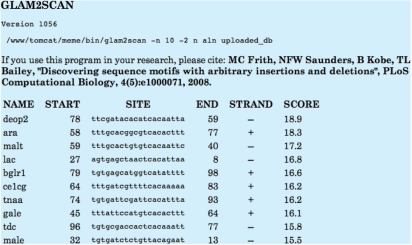
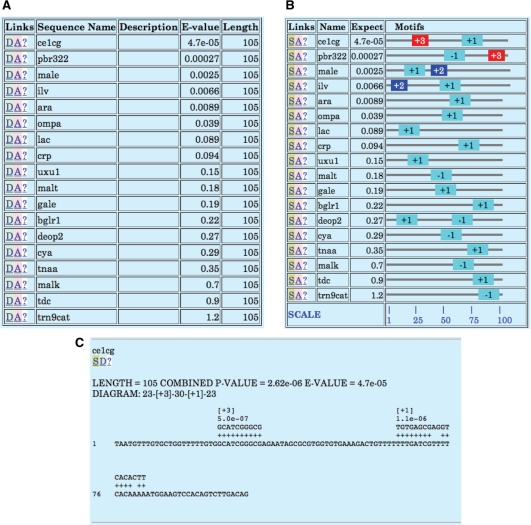
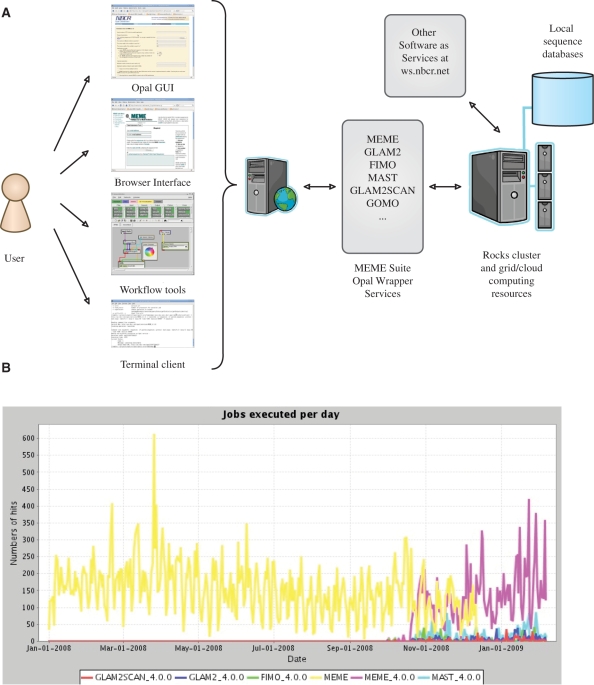
The MEME Suite web server provides a unified portal for online discovery and analysis of sequence motifs representing features such as DNA binding sites and protein interaction domains. The popular MEME motif discovery algorithm is now complemented by the GLAM2 algorithm which allows discovery of motifs containing gaps. Three sequence scanning algorithms--MAST, FIMO and GLAM2SCAN--allow scanning numerous DNA and protein sequence databases for motifs discovered by MEME and GLAM2. Transcription factor motifs (including those discovered using MEME) can be compared with motifs in many popular motif databases using the motif database scanning algorithm TOMTOM. Transcription factor motifs can be further analyzed for putative function by association with Gene Ontology (GO) terms using the motif-GO term association tool GOMO. MEME output now contains sequence LOGOS for each discovered motif, as well as buttons to allow motifs to be conveniently submitted to the sequence and motif database scanning algorithms (MAST, FIMO and TOMTOM), or to GOMO, for further analysis. GLAM2 output similarly contains buttons for further analysis using GLAM2SCAN and for rerunning GLAM2 with different parameters. All of the motif-based tools are now implemented as web services via Opal. Source code, binaries and a web server are freely available for noncommercial use at http://meme.nbcr.net.
Overview
The claims and statistics of this paper haven’t been checked yet.
Free: it reads the open-access text and checks the first 5 claims that cite a source we can check. Create a free account to check every claim.
Integrity signals
Registry
Cites
Statistics
Figures
Verification
Claims the paper makes
The claims and statistics of this paper haven’t been checked yet.
Free: it reads the open-access text and checks the first 5 claims that cite a source we can check. Create a free account to check every claim.
Claims other papers make about this one
Each is checked against this paper’s own text: does it say what the citing paper says it does?
The cited source says what the claim attributes to it.
In the citing paper
“Next, we applied the MEME motif-based sequence analysis tool (36) to investigate sequence elements that were enriched in genes whose TE was decreased by [-]CR-1-31B, which identified 2 significantly enriched 12-mer sequences (CGGCGGCGGCGG and GAGGAGGAGGAG; p = 2.2 × 10⁻²⁰ and p = 6.1 × 10⁻¹¹, respectively; Figure 2F).”
From Targeting eIF4A-dependent translation in genetically complex sarcoma (2026) · cites this paper as [36]
The cited source says what the claim attributes to it.
In the citing paper
“A discriminative motif search of S. salmonicida annexins versus Giardia alpha-giardins with the MEME tool (45) revealed a motif that is identical or highly similar to AB loops (type II Ca2+ coordination sites) in the former.”
From Comparative Cell Biology and Evolution of Annexins in Diplomonads (2016) · cites this paper as [45]
The check wasn’t confident either way, so it gives no verdict — never disputed.
In the citing paper
“The Olink technology allows the measurement of up to 92 proteins in 1 µL of plasma using the proximity extension assay (PEA).”
From Identification of Genetic Variants Regulating the Abundance of Clinically Relevant Plasma Proteins using the Diversity Outbred Mouse Model (2021) · cites this paper as [35]
Experimental — accuracy not yet measured
Self-check
Percentages, sums and reported differences re-computed from the paper’s own numbers.
The self-check needs the paper’s full text.
Citations
Cites
Fitting a mixture model by expectation maximization to discover motifs in biopolymers.
Bailey, T. L., & Elkan, C. (1994) · PubMed · Cited by 5,806
Self-citationA Direct Approach to False Discovery Rates
Storey, J. D. (2002) · Journal of the Royal Statistical Society Series B: Statistical Methodology · doi:10.1111/1467-9868.00346 · Cited by 5,603
MEME: discovering and analyzing DNA and protein sequence motifs
Bailey, T. L., Williams, N., Misleh, C., & Li, W. W. (2006) · Nucleic Acids Research · doi:10.1093/nar/gkl198 · Cited by 2,670 · cited 1×
“It offers a significantly expanded set of programs for these tasks compared with the earlier web server (1).”
BackgroundSelf-citationQuantifying similarity between motifs
Gupta, S., Stamatoyannopoulos, J. A., Bailey, T. L., & Noble, W. S. (2007) · Genome Biology · doi:10.1186/gb-2007-8-2-r24 · Cited by 2,058 · cited 2×
“TOMTOM (4) quantifies the similarity between two motifs, and can be used to search a database of known motifs for matches to motifs found by MEME.”
BackgroundMethodSelf-citationCombining evidence using p-values: application to sequence homology searches.
Bailey, T. L., & Gribskov, M. (1998) · Bioinformatics · doi:10.1093/bioinformatics/14.1.48 · Cited by 1,253
Self-citationSignificance analysis of time course microarray experiments
Storey, J. D., Xiao, W., Leek, J. T., Tompkins, R. G., & Davis, R. W. (2005) · Proceedings of the National Academy of Sciences · doi:10.1073/pnas.0504609102 · Cited by 567
Discovering Sequence Motifs with Arbitrary Insertions and Deletions
Frith, M. C., Saunders, N. F. W., Kobe, B., & Bailey, T. L. (2008) · PLoS Computational Biology · doi:10.1371/journal.pcbi.1000071 · Cited by 390 · cited 2×
“To overcome this limitation, we have incorporated a recent algorithm for gapped motif discovery—GLAM2 (3)—into the MEME suite.”
MethodSelf-citationCheminformatics analysis and learning in a data pipelining environment
Hassan, M., Brown, R. D., Varma-O’Brien, S., & Rogers, D. (2006) · Molecular Diversity · doi:10.1007/s11030-006-9041-5 · Cited by 184 · cited 1×
“A generic user interface may be generated automatically based upon an XML description of the command line syntax through the Opal GUI, either in a standard web browser or from a workflow program such as Vision (14), Kepler (15) or the Pipeline Pilot (16).”
MethodA Component-Based Software Environment for Visualizing Large Macromolecular Assemblies
Sanner, M. F. (2005) · Structure · doi:10.1016/j.str.2005.01.010 · Cited by 86
Score Distributions for Simultaneous Matching to Multiple Motifs
Bailey, T. L., & Gribskov, M. (1997) · Journal of Computational Biology · doi:10.1089/cmb.1997.4.45 · Cited by 59 · cited 10×
“MAST is ‘sequence oriented’, computing a single score for each sequence in the database.”
MethodInfluentialSelf-citation
Research works printed but not linked: 2
- 2005, PNAS, 102, 12837, 10.1073/pnas.0504609102 · DOI · Paper page
- Ludaescher B Altintas I Berkley C Higgins D Jaeger E Jones M Lee EA Tao J Zhao Y Scientific workow management and the Kepler system Concurrency Comput. Pract. Exp. 2005 18 1039 1065
Cited by
TBtools: An Integrative Toolkit Developed for Interactive Analyses of Big Biological Data
Chen, C., Chen, H., Zhang, Y., Thomas, H. R., Frank, M. H., He, Y., & Xia, R. (2020) · Molecular Plant · doi:10.1016/j.molp.2020.06.009 · Cited by 14,517
“Functions in TBtools are, in most cases, coded from scratch using Java, with the exception of a few cross-platform programs, including BLAST (Camacho et al., 2009), MEME (Bailey et al., 2009), HMMER (Mistry et al., 2013), MUSCLE (Edgar, 2004), trimAl (Capella-Gutie´rrez et al., 2009), IQ-TREE (Nguyen et al., 2015), an…”
MethodThe Immune Landscape of Cancer
Thorsson, V., Gibbs, D. L., Brown, S. D., Wolf, D., Bortone, D. S., Ou Yang, T.-H., Porta-Pardo, E., Gao, G. F., Plaisier, C. L., Eddy, J. A., et al. (2018) · Immunity · doi:10.1016/j.immuni.2018.03.023 · Cited by 5,870
Bailey, T. L., Johnson, J., Grant, C. E., & Noble, W. S. (2015) · Nucleic Acids Research · doi:10.1093/nar/gkv416 · Cited by 5,269
“Six of these tools––DREME (3), MEME-ChIP (4), CentriMo (6), AME (7), SpaMo (8) and MCAST (12)––were developed or given web interfaces since the last publication describing the MEME Suite (15).”
MethodSelf-citationFIMO: scanning for occurrences of a given motif
Grant, C. E., Bailey, T. L., & Noble, W. S. (2011) · Bioinformatics · doi:10.1093/bioinformatics/btr064 · Cited by 4,247
“Received on December 17, 2010; revised on January 26, 2011; accepted on February 1, 2011”
Self-citationRushton, P. J., Somssich, I. E., Ringler, P., & Shen, Q. J. (2010) · Trends in Plant Science · doi:10.1016/j.tplants.2010.02.006 · Cited by 2,700
Early allopolyploid evolution in the post-Neolithic Brassica napus oilseed genome
Chalhoub, B., Denoeud, F., Liu, S., Parkin, I. A. P., Tang, H., Wang, X., Chiquet, J., Belcram, H., Tong, C., Samans, B., et al. (2014) · Science · doi:10.1126/science.1253435 · Cited by 2,479
Opportunities and obstacles for deep learning in biology and medicine
Ching, T., Himmelstein, D. S., Beaulieu-Jones, B. K., Kalinin, A. A., Do, B. T., Way, G. P., Ferrero, E., Agapow, P.-M., Zietz, M., Hoffman, M. M., et al. (2018) · Journal of The Royal Society Interface · doi:10.1098/rsif.2017.0387 · Cited by 2,310
Single-nucleotide-resolution mapping of m6A and m6Am throughout the transcriptome
Linder, B., Grozhik, A. V., Olarerin-George, A. O., Meydan, C., Mason, C. E., & Jaffrey, S. R. (2015) · Nature Methods · doi:10.1038/nmeth.3453 · Cited by 1,569
DNA-Binding Specificities of Human Transcription Factors
Jolma, A., Yan, J., Whitington, T., Toivonen, J., Nitta, K. R., Rastas, P., Morgunova, E., Enge, M., Taipale, M., Wei, G., et al. (2013) · Cell · doi:10.1016/j.cell.2012.12.009 · Cited by 1,261
Vu, L. P., Pickering, B. F., Cheng, Y., Zaccara, S., Nguyen, D., Minuesa, G., Chou, T., Chow, A., Saletore, Y., MacKay, M., et al. (2017) · Nature Medicine · doi:10.1038/nm.4416 · Cited by 1,237
Dynamic m6A mRNA methylation directs translational control of heat shock response
Zhou, J., Wan, J., Gao, X., Zhang, X., Jaffrey, S. R., & Qian, S.-B. (2015) · Nature · doi:10.1038/nature15377 · Cited by 1,236
Engineering Quantitative Trait Variation for Crop Improvement by Genome Editing
Rodríguez-Leal, D., Lemmon, Z. H., Man, J., Bartlett, M. E., & Lippman, Z. B. (2017) · Cell · doi:10.1016/j.cell.2017.08.030 · Cited by 1,159
“The MEME (Bailey et al., 2009) global binding profile matrixes for these TFs were used to interrogate the SlCLV3 promoter region for matches using FIMO (Grant et al., 2011).”
MethodPromoter-bound METTL3 maintains myeloid leukaemia by m6A-dependent translation control
Barbieri, I., Tzelepis, K., Pandolfini, L., Shi, J., Millán-Zambrano, G., Robson, S. C., Aspris, D., Migliori, V., Bannister, A. J., Han, N., et al. (2017) · Nature · doi:10.1038/nature24678 · Cited by 1,086
Glucocorticoid Receptor Confers Resistance to Antiandrogens by Bypassing Androgen Receptor Blockade
Arora, V. K., Schenkein, E., Murali, R., Subudhi, S. K., Wongvipat, J., Balbas, M. D., Shah, N., Cai, L., Efstathiou, E., Logothetis, C., et al. (2013) · Cell · doi:10.1016/j.cell.2013.11.012 · Cited by 986
“The MEME software suite (Bailey et al., 2009) was applied to 100-bp sequences around the AR or GR peak summits for finding motifs, with the program MEME for motif discovery and MAST for motif scanning (p value < 0.001).”
InfluentialMathelier, A., Zhao, X., Zhang, A. W., Parcy, F., Worsley-Hunt, R., Arenillas, D. J., Buchman, S., Chen, C.-Y., Chou, A., Ienasescu, H., et al. (2014) · Nucleic Acids Research · doi:10.1093/nar/gkt997 · Cited by 983
“From these studies, we extracted the bound regions, identified over-represented motifs close to the ChIP-seq peak max position (corresponding to the region where the maximum number of ChIP-seq reads are mapped) using the MEME suite (18) and constructed PFMs describing the binding preferences of the TFs (see Supplement…”
MethodControl of somatic tissue differentiation by the long non-coding RNA TINCR
Kretz, M., Siprashvili, Z., Chu, C., Webster, D. E., Zehnder, A., Qu, K., Lee, C. S., Flockhart, R. J., Groff, A. F., Chow, J., et al. (2013) · Nature · doi:10.1038/nature11661 · Cited by 945
Zc3h13 Regulates Nuclear RNA m6A Methylation and Mouse Embryonic Stem Cell Self-Renewal
Wen, J., Lv, R., Ma, H., Shen, H., He, C., Wang, J., Jiao, F., Liu, H., Yang, P., Tan, L., et al. (2018) · Molecular Cell · doi:10.1016/j.molcel.2018.02.015 · Cited by 941
“[PubMed: 24316715] Machanick P, Bailey TL. MEME-ChIP: motif analysis of large DNA datasets.”
MethodInfluentialChromatin states define tumour-specific T cell dysfunction and reprogramming
Philip, M., Fairchild, L., Sun, L., Horste, E. L., Camara, S., Shakiba, M., Scott, A. C., Viale, A., Lauer, P., Merghoub, T., et al. (2017) · Nature · doi:10.1038/nature22367 · Cited by 933
Wang, Y., Coleman-Derr, D., Chen, G., & Gu, Y. Q. (2015) · Nucleic Acids Research · doi:10.1093/nar/gkv487 · Cited by 888
“The conserved motifs in the protein sequences are identified by Multiple Expectation Maximization for Motif Elicitation program (MEME) (30).”
MethodUnderstanding multicellular function and disease with human tissue-specific networks
Greene, C. S., Krishnan, A., Wong, A. K., Ricciotti, E., Zelaya, R. A., Himmelstein, D. S., Zhang, R., Hartmann, B. M., Zaslavsky, E., Sealfon, S. C., et al. (2015) · Nature Genetics · doi:10.1038/ng.3259 · Cited by 832
“Pruning resulted in an ontology containing functional, as opposed to structural, divisions of tissues and cell lineages (Supplementary Table 8).”
A Unified Model for the Function of YTHDF Proteins in Regulating m6A-Modified mRNA
Zaccara, S., & Jaffrey, S. R. (2020) · Cell · doi:10.1016/j.cell.2020.05.012 · Cited by 797
“For each DF1, DF2 and DF3 iCLIP and miCLIP, the enriched motif presented in Figure 1B was obtained using MEME suite (Bailey et al., 2009) as previously described (Patil et al.”
MethodLandscape of Somatic Retrotransposition in Human Cancers
Lee, E., Iskow, R., Yang, L., Gokcumen, O., Haseley, P., Luquette, L. J., Lohr, J. G., Harris, C. C., Ding, L., Wilson, R. K., et al. (2012) · Science · doi:10.1126/science.1222077 · Cited by 762
A Single-Cell Atlas of In Vivo Mammalian Chromatin Accessibility
Cusanovich, D. A., Hill, A. J., Aghamirzaie, D., Daza, R. M., Pliner, H. A., Berletch, J. B., Filippova, G. N., Huang, X., Christiansen, L., DeWitt, W. S., et al. (2018) · Cell · doi:10.1016/j.cell.2018.06.052 · Cited by 759
“TomTom identified knownmotif matches for 278 filters.”
InfluentialComprehensive Genome-wide Protein-DNA Interactions Detected at Single-Nucleotide Resolution
Rhee, H. S., & Pugh, B. F. (2011) · Cell · doi:10.1016/j.cell.2011.11.013 · Cited by 757
“MEME analysis detected three motifs (Figures 4C and S4A) (Bailey et al., 2009).”
MethodAn expansive human regulatory lexicon encoded in transcription factor footprints
Neph, S., Vierstra, J., Stergachis, A. B., Reynolds, A. P., Haugen, E., Vernot, B., Thurman, R. E., John, S., Sandstrom, R., Johnson, A. K., et al. (2012) · Nature · doi:10.1038/nature11212 · Cited by 756
Hendrickson, P. G., Doráis, J. A., Grow, E. J., Whiddon, J. L., Lim, J.-W., Wike, C. L., Weaver, B. D., Pflueger, C., Emery, B. R., Wilcox, A. L., et al. (2017) · Nature Genetics · doi:10.1038/ng.3844 · Cited by 734
The Immune Landscape of Cancer
Thorsson, V., Gibbs, D. L., Brown, S. D., Wolf, D., Bortone, D. S., Ou Yang, T.-H., Porta-Pardo, E., Gao, G. F., Plaisier, C. L., Eddy, J. A., et al. (2019) · Immunity · doi:10.1016/j.immuni.2019.08.004 · Cited by 700
Unexpected role of interferon-γ in regulating neuronal connectivity and social behaviour
Filiano, A. J., Xu, Y., Tustison, N. J., Marsh, R. L., Baker, W., Smirnov, I., Overall, C. C., Gadani, S. P., Turner, S. D., Weng, Z., et al. (2016) · Nature · doi:10.1038/nature18626 · Cited by 697
Motif Enrichment Analysis: a unified framework and an evaluation on ChIP data
McLeay, R. C., & Bailey, T. L. (2010) · BMC Bioinformatics · doi:10.1186/1471-2105-11-165 · Cited by 679
Self-citationTranscription factors as readers and effectors of DNA methylation
Zhu, H., Wang, G., & Qian, J. (2016) · Nature Reviews Genetics · doi:10.1038/nrg.2016.83 · Cited by 649
Hierarchical Mechanisms for Direct Reprogramming of Fibroblasts to Neurons
Wapinski, O. L., Vierbuchen, T., Qu, K., Lee, Q. Y., Chanda, S., Fuentes, D. R., Giresi, P. G., Ng, Y. H., Marro, S., Neff, N. F., et al. (2013) · Cell · doi:10.1016/j.cell.2013.09.028 · Cited by 627
“As has been observed in genome-wide localization studies for Ascl1 and other bHLH transcription factors, the E-box motif CANNTG was highly enriched across its binding sites based on the MEME algorithm (Figure 3B) (Bailey et al., 2009).”
MethodY-box protein 1 is required to sort microRNAs into exosomes in cells and in a cell-free reaction
Shurtleff, M. J., Temoche-Diaz, M. M., Karfilis, K. V., Ri, S., & Schekman, R. (2016) · eLife · doi:10.7554/elife.19276 · Cited by 621
Base-resolution models of transcription-factor binding reveal soft motif syntax
Avsec, Ž., Weilert, M., Shrikumar, A., Krueger, S., Alexandari, A., Dalal, K., Fropf, R., McAnany, C., Gagneur, J., Kundaje, A., et al. (2021) · Nature Genetics · doi:10.1038/s41588-021-00782-6 · Cited by 610
Modeling the language of life – Deep Learning Protein Sequences
Heinzinger, M., Elnaggar, A., Wang, Y., Dallago, C., Nechaev, D., Matthes, F., & Rost, B. (2019) · doi:10.1101/614313 · Cited by 606
“This concept resembles 24 that of using k-mers for database searches [33], clustering [74], motifs [75, 76], and prediction 25 methods [66, 70, 77-81].”
MethodModeling aspects of the language of life through transfer-learning protein sequences
Heinzinger, M., Elnaggar, A., Wang, Y., Dallago, C., Nechaev, D., Matthes, F., & Rost, B. (2019) · BMC Bioinformatics · doi:10.1186/s12859-019-3220-8 · Cited by 606
“This concept resembles that of using k-mers for database searches [33], clustering [81], motifs [82, 83], and prediction methods [72, 76, 84 – 88].”
MethodA survey of the sorghum transcriptome using single-molecule long reads
Abdel-Ghany, S. E., Hamilton, M., Jacobi, J. L., Ngam, P., Devitt, N., Schilkey, F., Ben-Hur, A., & Reddy, A. S. N. (2016) · Nature Communications · doi:10.1038/ncomms11706 · Cited by 602
Sexual-dimorphism in human immune system aging
Márquez, E. J., Chung, C.-H., Marches, R., Rossi, R. J., Nehar-Belaid, D., Eroglu, A., Mellert, D. J., Kuchel, G. A., Banchereau, J., & Ucar, D. (2020) · Nature Communications · doi:10.1038/s41467-020-14396-9 · Cited by 584
JASPAR 2010: the greatly expanded open-access database of transcription factor binding profiles
Portales-Casamar, E., Thongjuea, S., Kwon, A. T., Arenillas, D., Zhao, X., Valen, E., Yusuf, D., Lenhard, B., Wasserman, W. W., & Sandelin, A. (2010) · Nucleic Acids Research · doi:10.1093/nar/gkp950 · Cited by 577
“The resulting set of compiled binding sites for each TF was used as input to the MEME software to obtain a profile.”
MethodInfluentialXia, Z., Donehower, L. A., Cooper, T. A., Neilson, J. R., Wheeler, D. A., Wagner, E. J., & Li, W. (2014) · Nature Communications · doi:10.1038/ncomms6274 · Cited by 576
Self-citationArtifactual variation in randomly amplified polymorphic DNA banding patterns.
Ellsworth, D. L., Rittenhouse, K. D., & Honeycutt, R. L. (1993) · PubMed · Cited by 568
The transcription factor GABP selectively binds and activates the mutant TERT promoter in cancer
Bell, R. J. A., Rube, H. T., Kreig, A., Mancini, A., Fouse, S. D., Nagarajan, R. P., Choi, S., Hong, C., He, D., Pekmezci, M., et al. (2015) · Science · doi:10.1126/science.aab0015 · Cited by 566
Chromatin accessibility profiling by ATAC-seq
Grandi, F. C., Modi, H., Kampman, L., & Corces, M. R. (2022) · Nature Protocols · doi:10.1038/s41596-022-00692-9 · Cited by 557
Synonymous Mutations Frequently Act as Driver Mutations in Human Cancers
Supek, F., Miñana, B., Valcárcel, J., Gabaldón, T., & Lehner, B. (2014) · Cell · doi:10.1016/j.cell.2014.01.051 · Cited by 557
“0 server (Bailey et al., 2009) with motif size = 6–8 and other parameters at default.”
InfluentialProtein–RNA interactions: new genomic technologies and perspectives
König, J., Zarnack, K., Luscombe, N. M., & Ule, J. (2012) · Nature Reviews Genetics · doi:10.1038/nrg3141 · Cited by 555
DeepCpG: accurate prediction of single-cell DNA methylation states using deep learning
Angermueller, C., Lee, H. J., Reik, W., & Stegle, O. (2017) · Genome Biology · doi:10.1186/s13059-017-1189-z · Cited by 536
N6-Methyladenine DNA Modification in the Human Genome
Xiao, C.-L., Zhu, S., He, M., Chen, D., Zhang, Q., Chen, Y., Yu, G., Liu, J., Xie, S.-Q., Luo, F., et al. (2018) · Molecular Cell · doi:10.1016/j.molcel.2018.06.015 · Cited by 531
N6-Methyldeoxyadenosine Marks Active Transcription Start Sites in Chlamydomonas
Fu, Y., Luo, G.-Z., Chen, K., Deng, X., Yu, M., Han, D., Hao, Z., Liu, J., Lu, X., Doré, L. C., et al. (2015) · Cell · doi:10.1016/j.cell.2015.04.010 · Cited by 526
Logomaker: beautiful sequence logos in Python
Tareen, A., & Kinney, J. B. (2020) · Bioinformatics · doi:10.1093/bioinformatics/btz921 · Cited by 526
A Comprehensive Roadmap of Murine Spermatogenesis Defined by Single-Cell RNA-Seq
Green, C. D., Ma, Q., Manske, G. L., Shami, A. N., Zheng, X., Marini, S., Moritz, L., Sultan, C., Gurczynski, S. J., Moore, B. B., et al. (2018) · Developmental Cell · doi:10.1016/j.devcel.2018.07.025 · Cited by 521
“To delineate major transcriptional regulators acting in individual stages we applied comprehensive motif discovery analyses using the putative promoter sequences (1 kb flanking each side of the transcription start site) of genes within each group (Bailey et al., 2009; Machanick and Bailey, 2011).”
MethodNutrient-sensing nuclear receptors coordinate autophagy
Lee, J. M., Wagner, M., Xiao, R., Kim, K. H., Feng, D., Lazar, M. A., & Moore, D. D. (2014) · Nature · doi:10.1038/nature13961 · Cited by 518
A Single-Cell Transcriptomic Atlas of Human Neocortical Development during Mid-gestation
Polioudakis, D., de la Torre-Ubieta, L., Langerman, J., Elkins, A. G., Shi, X., Stein, J. L., Vuong, C. K., Nichterwitz, S., Gevorgian, M., Opland, C. K., et al. (2019) · Neuron · doi:10.1016/j.neuron.2019.06.011 · Cited by 513
Convolutional neural network architectures for predicting DNA–protein binding
Zeng, H., Edwards, M. D., Liu, G., & Gifford, D. K. (2016) · Bioinformatics · doi:10.1093/bioinformatics/btw255 · Cited by 511
The Many Landscapes of Recombination in Drosophila melanogaster
Comeron, J. M., Ratnappan, R., & Bailin, S. (2012) · PLoS Genetics · doi:10.1371/journal.pgen.1002905 · Cited by 509
“1) [147], a software for discovering motifs in sets of DNA sequences, to search for motifs enriched in sequences around CO and GC events.”
BackgroundReorganization of enhancer patterns in transition from naive to primed pluripotency
Buecker, C., Srinivasan, R., Wu, Z., Calo, E., Acampora, D., Faial, T., Simeone, A., Tan, M., Swigut, T., & Wysocka, J. (2014) · Cell Stem Cell · doi:10.1016/j.stem.2014.04.003 · Cited by 507
“Genomic regions ±1 kb relative to anned with FIMO (part of theMEME suite) (Bailey et al., 2009; Grant et al., 2011) ( log (p value)) is plotted.”
MethodTranscription Factor AP1 Potentiates Chromatin Accessibility and Glucocorticoid Receptor Binding
Biddie, S. C., John, S., Sabo, P. J., Thurman, R. E., Johnson, T. A., Schiltz, R. L., Miranda, T. B., Sung, M.-H., Trump, S., Lightman, S. L., et al. (2011) · Molecular Cell · doi:10.1016/j.molcel.2011.06.016 · Cited by 503
“We also observed enrichment of the consensus AP1 binding site (John et al., 2011; Bailey et al., 2009).”
BackgroundLi, X., Xiong, X., Zhang, M., Wang, K., Chen, Y., Zhou, J., Mao, Y., Lv, J., Yi, D., Chen, X.-W., et al. (2017) · Molecular Cell · doi:10.1016/j.molcel.2017.10.019 · Cited by 485
Single-cell CUT&Tag profiles histone modifications and transcription factors in complex tissues
Bartosovic, M., Kabbe, M., & Castelo-Branco, G. (2021) · Nature Biotechnology · doi:10.1038/s41587-021-00869-9 · Cited by 483
Enhancer transcripts mark active estrogen receptor binding sites
Hah, N., Murakami, S., Nagari, A., Danko, C. G., & Kraus, W. L. (2013) · Genome Research · doi:10.1101/gr.152306.112 · Cited by 476
“To determine which transcription factors might underlie the predicted enhancers identified based on the called transcripts from GRO-seq, we performed de novo motif analyses on a 1-kb region around the center of the eRNA overlap using MEME (Bailey et al. 2009).”
MethodInfluentialDirect pathogen-induced assembly of an NLR immune receptor complex to form a holoenzyme
Ma, S., Lapin, D., Liu, L., Sun, Y., Song, W., Zhang, X., Logemann, E., Yu, D., Wang, J., Jirschitzka, J., et al. (2020) · Science · doi:10.1126/science.abe3069 · Cited by 476
From reads to insight: a hitchhiker’s guide to ATAC-seq data analysis
Yan, F., Powell, D. R., Curtis, D. J., & Wong, N. C. (2020) · Genome Biology · doi:10.1186/s13059-020-1929-3 · Cited by 473
Circuitry and Dynamics of Human Transcription Factor Regulatory Networks
Neph, S., Stergachis, A. B., Reynolds, A., Sandstrom, R., Borenstein, E., & Stamatoyannopoulos, J. A. (2012) · Cell · doi:10.1016/j.cell.2012.04.040 · Cited by 467
“We symmetrically padded the TSSs of the remaining genes by 5 kb and scanned for predicted TRANSFAC motif-binding sites using FIMO (Bailey et al., 2009), version 4.”
MethodInfluentialParker, M. T., Knop, K., Sherwood, A. V., Schurch, N. J., Mackinnon, K., Gould, P. D., Hall, A. J., Barton, G. J., & Simpson, G. G. (2020) · eLife · doi:10.7554/elife.49658 · Cited by 466
Nargund, A. M., Fiorese, C. J., Pellegrino, M. W., Deng, P., & Haynes, C. M. (2015) · Molecular Cell · doi:10.1016/j.molcel.2015.02.008 · Cited by 461
“4were examined using theMEMEmotif analysis program (http://meme.sdsc.edu) (Bailey et al., 2009).”
MethodChromatin accessibility: a window into the genome
Tsompana, M., & Buck, M. J. (2014) · Epigenetics & Chromatin · doi:10.1186/1756-8935-7-33 · Cited by 447
“(MEME [154,155], DREME [156], Patser (http://stormo.”
Targeting REGNASE-1 programs long-lived effector T cells for cancer therapy
Wei, J., Long, L., Zheng, W., Dhungana, Y., Lim, S. A., Guy, C., Wang, Y., Wang, Y.-D., Qian, C., Xu, B., et al. (2019) · Nature · doi:10.1038/s41586-019-1821-z · Cited by 447
SMN2 splice modulators enhance U1–pre-mRNA association and rescue SMA mice
Palacino, J., Swalley, S. E., Song, C., Cheung, A. K., Shu, L., Zhang, X., Van Hoosear, M., Shin, Y., Chin, D. N., Keller, C. G., et al. (2015) · Nature Chemical Biology · doi:10.1038/nchembio.1837 · Cited by 432
Scally, S. W., Petersen, J., Law, S. C., Dudek, N. L., Nel, H. J., Loh, K. L., Wijeyewickrema, L. C., Eckle, S. B. G., van Heemst, J., Pike, R. N., et al. (2013) · Journal of Experimental Medicine · doi:10.1084/jem.20131241 · Cited by 429
Endogenous retroviruses function as species-specific enhancer elements in the placenta
Chuong, E. B., Rumi, M. A. K., Soares, M. J., & Baker, J. C. (2013) · Nature Genetics · doi:10.1038/ng.2553 · Cited by 429
PseKNC: A flexible web server for generating pseudo K-tuple nucleotide composition
Chen, W., Lei, T.-Y., Jin, D.-C., Lin, H., & Chou, K.-C. (2014) · Analytical Biochemistry · doi:10.1016/j.ab.2014.04.001 · Cited by 429
“[1,2]).”
Epigenetic Transgenerational Actions of Vinclozolin on Promoter Regions of the Sperm Epigenome
Guerrero-Bosagna, C., Settles, M., Lucker, B., & Skinner, M. K. (2010) · PLoS ONE · doi:10.1371/journal.pone.0013100 · Cited by 427
“Analysis of sequence features For ab initio discovery of motifs in the regions (inside promoters) that presented a transgenerational change in DNA methylation, GLAM2 algorithm, available at MEME suite [87], were used.”
MethodGenome-wide analysis of WRKY transcription factors in Solanum lycopersicum
Huang, S., Gao, Y., Liu, J., Peng, X., Niu, X., Fei, Z., Cao, S., & Liu, Y. (2012) · Molecular Genetics and Genomics · doi:10.1007/s00438-012-0696-6 · Cited by 421
“MEME 4.6.1 online program (http://meme.nbcr.net/meme/ intro.html) (Bailey et al. 2009) was used for the identification of motifs in the 81 Solanum lycopersicum WRKY protein sequences.”
MethodInfluentialNatural selection interacts with recombination to shape the evolution of hybrid genomes
Schumer, M., Xu, C., Powell, D. L., Durvasula, A., Skov, L., Holland, C., Blazier, J. C., Sankararaman, S., Andolfatto, P., Rosenthal, G. G., et al. (2018) · Science · doi:10.1126/science.aar3684 · Cited by 412
“birchmanni genome based on the computationally predicted motif with the polynomial SVM model (71), using the program FIMO with a binding score cutoff of 5 (72).”
MethodThalmann, M., Pazmino, D., Seung, D., Horrer, D., Nigro, A., Meier, T., Kölling, K., Pfeifhofer, H. W., Zeeman, S. C., & Santelia, D. (2016) · The Plant Cell · doi:10.1105/tpc.16.00143 · Cited by 411
“Interestingly, bioinformatics analyses of the promoters of BAM1 and BAM3 orthologs from 30 different plant species using theMEME algorithm (Bailey et al., 2009) revealedanenrichmentofABREelements in theproximityof the ATG codon in all examined BAM1-like gene promoters, with the exception of that of the grasses, where…”
MethodInfluentialThe Human RNA-Binding Proteome and Its Dynamics during Translational Arrest
Trendel, J., Schwarzl, T., Horos, R., Prakash, A., Bateman, A., Hentze, M. W., & Krijgsveld, J. (2019) · Cell · doi:10.1016/j.cell.2018.11.004 · Cited by 403
Connolly, K. A., Kuchroo, M., Venkat, A., Khatun, A., Wang, J., William, I., Hornick, N. I., Fitzgerald, B. L., Damo, M., Kasmani, M. Y., et al. (2021) · Science Immunology · doi:10.1126/sciimmunol.abg7836 · Cited by 402
Li, X. Z., Roy, C. K., Dong, X., Bolcun-Filas, E., Wang, J., Han, B. W., Xu, J., Moore, M. J., Schimenti, J. C., Weng, Z., et al. (2013) · Molecular Cell · doi:10.1016/j.molcel.2013.02.016 · Cited by 400
Grajales-Reyes, G. E., Iwata, A., Albring, J., Wu, X., Tussiwand, R., KC, W., Kretzer, N. M., Briseño, C. G., Durai, V., Bagadia, P., et al. (2015) · Nature Immunology · doi:10.1038/ni.3197 · Cited by 399
the DIAbetes Genetics Replication And Meta-analysis (DIAGRAM) Consortium, Gaulton, K. J., Ferreira, T., Lee, Y., Raimondo, A., Mägi, R., Reschen, M. E., Mahajan, A., Locke, A., William Rayner, N., et al. (2015) · Nature Genetics · doi:10.1038/ng.3437 · Cited by 398
Xie, T., Chen, C., Li, C., Liu, J., Liu, C., & He, Y. (2018) · BMC Genomics · doi:10.1186/s12864-018-4880-x · Cited by 398
“html) for protein sequence analysis was used to identify conserved motifs in the identified pineapple WRKY proteins [62].”
BackgroundHoldt, L. M., Hoffmann, S., Sass, K., Langenberger, D., Scholz, M., Krohn, K., Finstermeier, K., Stahringer, A., Wilfert, W., Beutner, F., et al. (2013) · PLoS Genetics · doi:10.1371/journal.pgen.1003588 · Cited by 397
“The MEME package [57] was used to search for differences in motifs abundance in promoters (5 kb) of differentially regulated genes.”
MethodGlobal Mapping of Small RNA-Target Interactions in Bacteria
Melamed, S., Peer, A., Faigenbaum-Romm, R., Gatt, Y. E., Reiss, N., Bar, A., Altuvia, Y., Argaman, L., & Margalit, H. (2016) · Molecular Cell · doi:10.1016/j.molcel.2016.07.026 · Cited by 396
m6A in mRNA coding regions promotes translation via the RNA helicase-containing YTHDC2
Mao, Y., Dong, L., Liu, X.-M., Guo, J., Ma, H., Shen, B., & Qian, S.-B. (2019) · Nature Communications · doi:10.1038/s41467-019-13317-9 · Cited by 395
Widespread noncoding circular RNA s in plants
Ye, C., Chen, L., Liu, C., Zhu, Q., & Fan, L. (2015) · New Phytologist · doi:10.1111/nph.13585 · Cited by 394
Transcription factor–DNA binding: beyond binding site motifs
Inukai, S., Kock, K. H., & Bulyk, M. L. (2017) · Current Opinion in Genetics & Development · doi:10.1016/j.gde.2017.02.007 · Cited by 392
“org/ Collection of motif databases and web-based tools for motif discovery, enrichment, scanning, and comparison Eukaryotes and prokaryotes Collates external motif and sequence databases for multiple species [104,105]”
Sororin Mediates Sister Chromatid Cohesion by Antagonizing Wapl
Nishiyama, T., Ladurner, R., Schmitz, J., Kreidl, E., Schleiffer, A., Bhaskara, V., Bando, M., Shirahige, K., Hyman, A. A., Mechtler, K., et al. (2010) · Cell · doi:10.1016/j.cell.2010.10.031 · Cited by 391
An atlas of dynamic chromatin landscapes in mouse fetal development
Gorkin, D. U., Barozzi, I., Zhao, Y., Zhang, Y., Huang, H., Lee, A. Y., Li, B., Chiou, J., Wildberg, A., Ding, B., et al. (2020) · Nature · doi:10.1038/s41586-020-2093-3 · Cited by 389
Absolute quantification of single-base m6A methylation in the mammalian transcriptome using GLORI
Liu, C., Sun, H., Yi, Y., Shen, W., Li, K., Xiao, Y., Li, F., Li, Y., Hou, Y., Lu, B., et al. (2023) · Nature Biotechnology · doi:10.1038/s41587-022-01487-9 · Cited by 386
Yan, J., Enge, M., Whitington, T., Dave, K., Liu, J., Sur, I., Schmierer, B., Jolma, A., Kivioja, T., Taipale, M., et al. (2013) · Cell · doi:10.1016/j.cell.2013.07.034 · Cited by 382
Zhang, J., Bai, R., Li, M., Ye, H., Wu, C., Wang, C., Li, S., Tan, L., Mai, D., Li, G., et al. (2019) · Nature Communications · doi:10.1038/s41467-019-09712-x · Cited by 381
Active medulloblastoma enhancers reveal subgroup-specific cellular origins
Lin, C. Y., Erkek, S., Tong, Y., Yin, L., Federation, A. J., Zapatka, M., Haldipur, P., Kawauchi, D., Risch, T., Warnatz, H.-J., et al. (2016) · Nature · doi:10.1038/nature16546 · Cited by 380
Recommendations for the design and analysis of epigenome-wide association studies
Michels, K. B., Binder, A. M., Dedeurwaerder, S., Epstein, C. B., Greally, J. M., Gut, I., Houseman, E. A., Izzi, B., Kelsey, K. T., Meissner, A., et al. (2013) · Nature Methods · doi:10.1038/nmeth.2632 · Cited by 378
Tushev, G., Glock, C., Heumüller, M., Biever, A., Jovanovic, M., & Schuman, E. M. (2018) · Neuron · doi:10.1016/j.neuron.2018.03.030 · Cited by 377
Arabidopsis meiotic crossover hot spots overlap with H2A.Z nucleosomes at gene promoters
Choi, K., Zhao, X., Kelly, K. A., Venn, O., Higgins, J. D., Yelina, N. E., Hardcastle, T. J., Ziolkowski, P. A., Copenhaver, G. P., Franklin, F. C. H., et al. (2013) · Nature Genetics · doi:10.1038/ng.2766 · Cited by 375
Mayer, A., di Iulio, J., Maleri, S., Eser, U., Vierstra, J., Reynolds, A., Sandstrom, R., Stamatoyannopoulos, J. A., & Churchman, L. S. (2015) · Cell · doi:10.1016/j.cell.2015.03.010 · Cited by 367
CLIP and complementary methods
Hafner, M., Katsantoni, M., Köster, T., Marks, J., Mukherjee, J., Staiger, D., Ule, J., & Zavolan, M. (2021) · Nature Reviews Methods Primers · doi:10.1038/s43586-021-00018-1 · Cited by 365
Cavallini, E., Matus, J. T., Finezzo, L., Zenoni, S., Loyola, R., Guzzo, F., Schlechter, R. O., Ageorges, A., Arce‐Johnson, P., & Tornielli, G. B. (2015) · PLANT PHYSIOLOGY · doi:10.1104/pp.114.256172 · Cited by 365
“The online MEME Suite was used to analyze protein sequences and discover motifs with an expected value lower than 2 3 10(230) (http://meme.nbcr.net/; Bailey et al., 2009) using the following search parameters: four to eight residues (minimum to maximum length), zero or one repetition of motifs, and five motifs maximum.”
MethodFang, G., Munera, D., Friedman, D. I., Mandlik, A., Chao, M. C., Banerjee, O., Feng, Z., Losic, B., Mahajan, M. C., Jabado, O. J., et al. (2012) · Nature Biotechnology · doi:10.1038/nbt.2432 · Cited by 360
Martin, G., Gruber, A. R., Keller, W., & Zavolan, M. (2012) · Cell Reports · doi:10.1016/j.celrep.2012.05.003 · Cited by 359
“Sequence Specificities of 30 End Processing Factors We used the MEME software (Bailey et al., 2009) to infer sequence motifs that are over-represented among the 500 most abundantly CLIPed sites from each of the samples and”
MethodInfluentialThe Epigenomic Landscape of Prokaryotes
Blow, M. J., Clark, T. A., Daum, C. G., Deutschbauer, A. M., Fomenkov, A., Fries, R., Froula, J., Kang, D. D., Malmstrom, R. R., Morgan, R. D., et al. (2016) · PLOS Genetics · doi:10.1371/journal.pgen.1005854 · Cited by 358
Recurrent somatic mutations in POLR2A define a distinct subset of meningiomas
Clark, V. E., Harmancı, A. S., Bai, H., Youngblood, M. W., Lee, T. I., Baranoski, J. F., Ercan-Sencicek, A. G., Abraham, B. J., Weintraub, A. S., Hnisz, D., et al. (2016) · Nature Genetics · doi:10.1038/ng.3651 · Cited by 354
Metadata
- Authors
- Bailey, T. L., Boden, M., Buske, F. A., Frith, M., Grant, C. E., Clementi, L., Ren, J., Li, W. W., & Noble, W. S.
- Affiliations
- The University of Queensland (AU)
- Corresponding author
- Bailey, T. L.
- Noble, W. S.
- Venue
- Nucleic Acids Research
- Publisher
- Oxford University Press (OUP)
- Published
- 2009-05-20
- Volume
- 37
- Issue
- Web Server
- Pages
- W202-W208
- ISSN
- 0305-1048 (ISSN-L)
- 1362-4962
- PMC
- PMC2703892
- OpenAlex
- W2157009395
- Semantic Scholar
- f804dfb886b1424571f0446df10074af63c57921
- Cited by
- 10,648
- References
- 15
- Citations by year
- 2026: 635 · 2025: 885 · 2024: 922 · 2023: 999 · 2022: 1146 · 2021: 1349 · 2020: 979 · 2019: 720 · 2018: 613 · 2017: 498 · 2016: 448 · 2015: 456 · 2014: 376 · 2013: 296 · 2012: 184
- FWCI
- 42.64
- Type
- journal article
- Language
- en
- Open access
- gold
- doi.org
- Licence
- Locations
- Nucleic Acids Research (publishedVersion, cc-by-nc)
- PubMed Central (publishedVersion, cc-by-nc)
- PubMed (publishedVersion)
- Funders
- National Institutes of Health (5r01rr021692-06)
- National Center for Research Resources (P41-RR08605, R0-1 RR021692, P41RR008605)
- Topics
- Life Sciences › Biochemistry, Genetics and Molecular Biology › Molecular Biology › Genomics and Chromatin Dynamics
- Life Sciences › Biochemistry, Genetics and Molecular Biology › Molecular Biology › Genomics and Phylogenetic Studies
- Life Sciences › Biochemistry, Genetics and Molecular Biology › Molecular Biology › Bioinformatics and Genomic Networks
- Keywords
- motif discovery, DNA binding sites, protein-protein interaction domains, MAST, TomTom, Gene Ontology, transcription factor binding motifs, sequence logos, web server, motif database, web services
- MeSH terms
- Algorithms, Binding Sites, Software, Transcription Factors, Sequence Analysis, DNA, Internet, Sequence Analysis, Protein, Databases, Genetic, Regulatory Elements, Transcriptional
About these checks
Registry, retraction, Cites and statistics results are computed, not judged, with one exception: a printed reference that no index lists is read once by a model before it counts as a citation error. Claims are extracted by a model and kept only when their quote appears verbatim in the text; each cited source is then checked, with a model’s help, for whether it says what the claim relies on. Those verdicts can be wrong — read the claim’s quote and the cited source before relying on one.
Statistics and arithmetic are recomputed, not judged.
Confidence bands are shown only for fields calibrated on our annotated test set. None is calibrated yet, so no band is shown.
What counts as a claim ›How we measure confidence ›How we check this ›
Are you an author, or do you see a problem with this page? Request a review
Data sources
Bibliographic data: Semantic Scholar, OpenAlex, Crossref.
Contains information from the Semantic Scholar Academic Graph Datasets, made available under the ODC Attribution License (ODC-BY 1.0).
Semantic Scholar’s data is described in: Kinney, R., et al. (2023). The Semantic Scholar Open Data Platform. arXiv:2301.10140.
