

STRING v10: protein–protein interaction networks, integrated over the tree of life
Open accessThe DOI matches its Crossref record; 44 of the 45 references it cites were found in a registry or an index.
Abstract
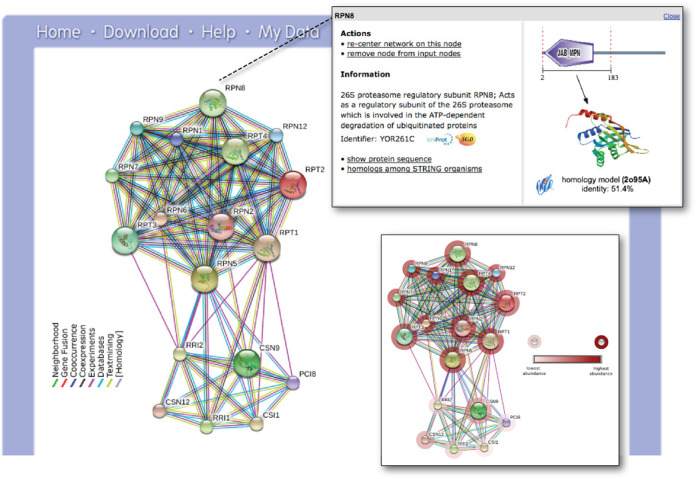
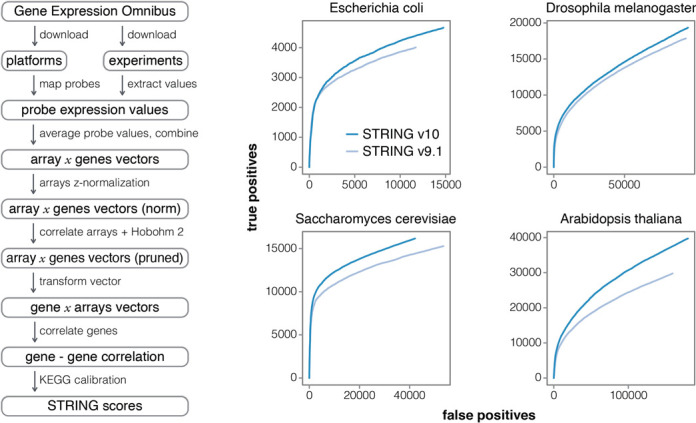
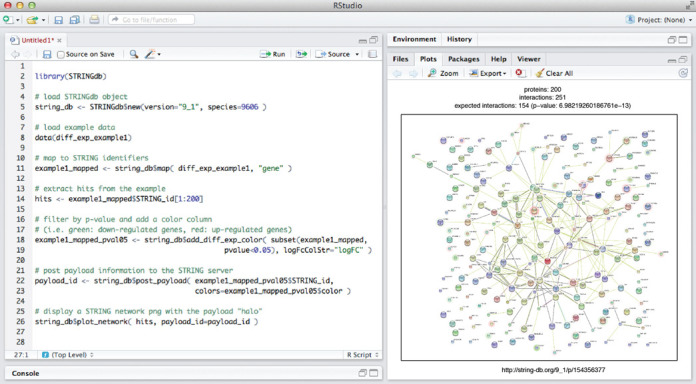
The many functional partnerships and interactions that occur between proteins are at the core of cellular processing and their systematic characterization helps to provide context in molecular systems biology. However, known and predicted interactions are scattered over multiple resources, and the available data exhibit notable differences in terms of quality and completeness. The STRING database (http://string-db.org) aims to provide a critical assessment and integration of protein-protein interactions, including direct (physical) as well as indirect (functional) associations. The new version 10.0 of STRING covers more than 2000 organisms, which has necessitated novel, scalable algorithms for transferring interaction information between organisms. For this purpose, we have introduced hierarchical and self-consistent orthology annotations for all interacting proteins, grouping the proteins into families at various levels of phylogenetic resolution. Further improvements in version 10.0 include a completely redesigned prediction pipeline for inferring protein-protein associations from co-expression data, an API interface for the R computing environment and improved statistical analysis for enrichment tests in user-provided networks.
Overview
The claims and statistics of this paper haven’t been checked yet.
Free: it reads the open-access text and checks the first 5 claims that cite a source we can check. Create a free account to check every claim.
Integrity signals
Registry
Cites
Statistics
Figures
Verification
Claims the paper makes
The claims and statistics of this paper haven’t been checked yet.
Free: it reads the open-access text and checks the first 5 claims that cite a source we can check. Create a free account to check every claim.
Claims other papers make about this one
Each is checked against this paper’s own text: does it say what the citing paper says it does?
The source backs part of the claim, not all of it — or backs it for a different population, condition or comparison.
In the citing paper
“The BioPlex database was developed by the method of affinity purification and mass spectrometry, whereas the STRING and InWeb contain information from various sources.”
From Deep Multilayer Brain Proteomics Identifies Molecular Networks in Alzheimer’s Disease Progression (2020) · cites this paper as Szklarczyk et al., 2015
Experimental — accuracy not yet measuredThe source backs part of the claim, not all of it — or backs it for a different population, condition or comparison.
In the citing paper
“Protein–protein interaction (PPI) networks and weighted gene co-expression network analysis (WGCNA) based on the RNA sequencing and microarray data have been revealed to establish potent organized biological strategies for mining the functional gene modules and detecting novel prognostic biomarkers [11,12].”
From Bioinformatics Analysis and Validation of Potential Markers Associated with Prediction and Prognosis of Gastric Cancer (2024) · cites this paper as [12]
Experimental — accuracy not yet measuredThe cited source says what the claim attributes to it.
In the citing paper
“The bias towards well-described proteins2 is confirmed not only with respect to publications but also with respect to patents, NIH funding patterns, GWAS and mouse phenotype data (data not shown), availability of molecular probes such as antibodies and small molecules, and even queries in the STRING18database”
From Unexplored therapeutic opportunities in the human genome (2018) · cites this paper as [18]
The cited source says what the claim attributes to it.
In the citing paper
“Superimposing these 44 proteins along with APP and TAU onto STRING protein-protein interaction database [61] elucidated 4 protein interaction modules associated with amyloid pathology and mitochondrial functions, while no TAU related protein interaction module was identified with this small list (Fig. 3e).”
From Integrated analysis of ultra-deep proteomes in cortex, cerebrospinal fluid and serum reveals a mitochondrial signature in Alzheimer’s disease (2020) · cites this paper as [61]
The cited source says what the claim attributes to it.
In the citing paper
“We next queried the STRING database of protein-protein interactions27, which revealed numerous groups of physically interacting proteins within this functional category”
From Trisomy 21 causes changes in the circulating proteome indicative of chronic autoinflammation (2017) · cites this paper as [27]
1 more claim about this paper
Create a free account to see every claim other papers make about this one.
Self-check
Percentages, sums and reported differences re-computed from the paper’s own numbers.
The self-check needs the paper’s full text.
Citations
Cites
Gene Ontology: tool for the unification of biology
Ashburner, M., Ball, C. A., Blake, J. A., Botstein, D., Butler, H., Cherry, J. M., Davis, A. P., Dolinski, K., Dwight, S. S., Eppig, J. T., et al. (2000) · Nature Genetics · doi:10.1038/75556 · Cited by 43,206
Cluster analysis and display of genome-wide expression patterns
Eisen, M. B., Spellman, P. T., Brown, P. O., & Botstein, D. (1998) · Proceedings of the National Academy of Sciences · doi:10.1073/pnas.95.25.14863 · Cited by 16,184 · cited 1×
“It has long been established that co-expression is a proxy for co-regulation (35,36) and a strong indicator of functional associations.”
BackgroundBioconductor: open software development for computational biology and bioinformatics
Gentleman, R. C., Carey, V. J., Bates, D. M., Bolstad, B., Dettling, M., Dudoit, S., Ellis, B., Gautier, L., Ge, Y., Gentry, J., et al. (2004) · Genome Biology · doi:10.1186/gb-2004-5-10-r80 · Cited by 12,172 · cited 1×
“0, we have introduced a further option: direct access from the R programming environment, following the Bioconductor standard (39).”
MethodNCBI GEO: archive for functional genomics data sets—update
Barrett, T., Wilhite, S. E., Ledoux, P., Evangelista, C., Kim, I. F., Tomashevsky, M., Marshall, K. A., Phillippy, K. H., Sherman, P. M., Holko, M., et al. (2012) · Nucleic Acids Research · doi:10.1093/nar/gks1193 · Cited by 10,418 · cited 3×
“As of March 2014, GEO consisted of more than 12 000 different platforms (GPL), 45 000 experiments (GSE) and over 1 million matrices (GSM).”
MethodInfluentialThe Reactome pathway Knowledgebase
Fabregat, A., Sidiropoulos, K., Garapati, P., Gillespie, M., Hausmann, K., Haw, R., Jassal, B., Jupe, S., Korninger, F., McKay, S., et al. (2016) · Nucleic Acids Research · doi:10.1093/nar/gkv1351 · Cited by 5,605
STRING v9.1: protein-protein interaction networks, with increased coverage and integration
Franceschini, A., Szklarczyk, D., Frankild, S., Kuhn, M., Simonovic, M., Roth, A., Lin, J., Minguez, P., Bork, P., von Mering, C., et al. (2012) · Nucleic Acids Research · doi:10.1093/nar/gks1094 · Cited by 4,398
Self-citationSzklarczyk, D., Franceschini, A., Kuhn, M., Simonovic, M., Roth, A., Minguez, P., Doerks, T., Stark, M., Muller, J., Bork, P., et al. (2011) · Nucleic Acids Research · doi:10.1093/nar/gkq973 · Cited by 3,460
Self-citationData, information, knowledge and principle: back to metabolism in KEGG
Kanehisa, M., Goto, S., Sato, Y., Kawashima, M., Furumichi, M., & Tanabe, M. (2014) · Nucleic Acids Research · doi:10.1093/nar/gkt1076 · Cited by 3,092 · cited 1×
“All sources of interaction evidence are benchmarked and calibrated against previous knowledge, using the high-level functional groupings provided by the manually curated Kyoto Encyclopedia of Genes and Genomes (KEGG) pathway maps (5).”
MethodSTRING 8--a global view on proteins and their functional interactions in 630 organisms
Jensen, L. J., Kuhn, M., Stark, M., Chaffron, S., Creevey, C., Muller, J., Doerks, T., Julien, P., Roth, A., Simonovic, M., et al. (2009) · Nucleic Acids Research · doi:10.1093/nar/gkn760 · Cited by 2,474
Self-citationThe Database of Interacting Proteins: 2004 update
Salwinski, L. (2004) · Nucleic Acids Research · doi:10.1093/nar/gkh086 · Cited by 2,271
Cited by
Items 901–1,000 of 1,079
Genome-scale CRISPR-Cas9 screen identifies druggable dependencies in TP53 wild-type Ewing sarcoma
Stolte, B., Iniguez, A. B., Dharia, N. V., Robichaud, A. L., Conway, A. S., Morgan, A. M., Alexe, G., Schauer, N. J., Liu, X., Bird, G. H., et al. (2018) · Journal of Experimental Medicine · doi:10.1084/jem.20171066 · Cited by 68
Proteomic Approaches for the Discovery of Biofluid Biomarkers of Neurodegenerative Dementias
Carlyle, B. C., Trombetta, B. A., & Arnold, S. E. (2018) · Proteomes · doi:10.3390/proteomes6030032 · Cited by 60
Kouroupis, D., Bowles, A. C., Willman, M. A., Perucca Orfei, C., Colombini, A., Best, T. M., Kaplan, L. D., & Correa, D. (2019) · Scientific Reports · doi:10.1038/s41598-019-47391-2 · Cited by 66
Phosphorylation-dependent substrate selectivity of protein kinase B (AKT1)
Balasuriya, N., Davey, N. E., Johnson, J. L., Liu, H., Biggar, K. K., Cantley, L. C., Li, S. S. ‐., & O’Donoghue, P. (2020) · Journal of Biological Chemistry · doi:10.1074/jbc.ra119.012425 · Cited by 70
“The abbreviations used are: PKB, protein kinase B; PI3K, phosphatidylinositol 3-kinase; GSK-3 , glycogen synthase kinase 3 ; OPAL, oriented peptide array library; PH, pleckstrin homology; IRAK1, interleukin-1 receptor-associatedkinase 1;TSC2,TSCcomplex subunit 2; PSSM, position-specific scorematrices; PCA, principle c…”
BackgroundPatient genetics is linked to chronic wound microbiome composition and healing
Tipton, C. D., Wolcott, R. D., Sanford, N. E., Miller, C., Pathak, G. A., Silzer, T. K., Sun, J., Fleming, D. F., Rumbaugh, K. P., Little, T. D., et al. (2020) · PLoS Pathogens · doi:10.1371/journal.ppat.1008511 · Cited by 72
Cangelosi, D., Morini, M., Zanardi, N., Sementa, A. R., Muselli, M., Conte, M., Garaventa, A., Pfeffer, U., Bosco, M. C., Varesio, L., et al. (2020) · Cancers · doi:10.3390/cancers12092343 · Cited by 73
Zhang, P., Yang, M., Zhang, Y., Xiao, S., Lai, X., Tan, A., Du, S., & Li, S. (2020) · Cell Reports · doi:10.1016/j.celrep.2020.03.020 · Cited by 71
Erratum: Premature primary tooth eruption in cognitive/motor-delayed ADNP-mutated children
Gozes, I., Van Dijck, A., Hacohen-Kleiman, G., Grigg, I., Karmon, G., Giladi, E., Eger, M., Gabet, Y., Pasmanik-Chor, M., Cappuyns, E., et al. (2017) · Translational Psychiatry · doi:10.1038/tp.2017.128 · Cited by 71
Genome Sequencing Reveals a Large and Diverse Repertoire of Antimicrobial Peptides
Javan, R. R., van Tonder, A. J., King, J. P., Harrold, C. L., & Brueggemann, A. B. (2018) · Frontiers in Microbiology · doi:10.3389/fmicb.2018.02012 · Cited by 69
“Genes of interest were screened against the STRING database (Szklarczyk et al., 2015) to search for any previously reported relationship to other genes.”
MethodWang, Q., Liu, C., Dong, Q., Huang, D., Li, C., Li, P., & Ma, F. (2018) · International Journal of Molecular Sciences · doi:10.3390/ijms19092761 · Cited by 69
“This analysis was based on the amino acid sequences of MdNPF proteins as well as NPF proteins from Arabidopsis and rice [57].”
MethodJaveed, N., Her, T. K., Brown, M., Vanderboom, P. M., Rakshit, K., Egan, A. M., Vella, A. V., Lanza, I. R., & Matveyenko, A. V. (2021) · Cell Reports · doi:10.1016/j.celrep.2021.109613 · Cited by 70
Proteomic characterization of four subtypes of M2 macrophages derived from human THP-1 cells
Li, P., Ma, C., Li, J., You, S., Dang, L., Wu, J., Hao, Z., Li, J., Zhi, Y., Chen, L., et al. (2022) · Journal of Zhejiang University SCIENCE B · doi:10.1631/jzus.b2100930 · Cited by 70
“org) (Szklarczyk et al., 2015), and interactions with a combined score of >0.”
BackgroundSofi, S., Jan, N., Qayoom, H., Alkhanani, M., Almilaibary, A., & Mir, M. A. (2023) · Saudi Journal of Biological Sciences · doi:10.1016/j.sjbs.2023.103774 · Cited by 69
Ergothioneine controls mitochondrial function and exercise performance via direct activation of MPST
Sprenger, H., Mittenbühler, M. J., Sun, Y., Vranken, J. G. V., Schindler, S., Jayaraj, A., Khetarpal, S. A., Smythers, A. L., Vargas‐Castillo, A., Puszynska, A. M., et al. (2025) · Cell Metabolism · doi:10.1016/j.cmet.2025.01.024 · Cited by 69
Language Impairments in ASD Resulting from a Failed Domestication of the Human Brain
Benítez-Burraco, A., Lattanzi, W., & Murphy, E. (2016) · Frontiers in Neuroscience · doi:10.3389/fnins.2016.00373 · Cited by 65
“String 10 predicts associations between proteins that derive from a limited set of databases: genomic context, high-throughput experiments, conserved coexpression, and the knowledge previously gained from text mining (Szklarczyk et al. 2015).”
BackgroundLi, H., Wang, X., Fang, Y., Huo, Z., Lu, X., Zhan, X., Deng, X., Peng, C., & Shen, B. (2017) · Oncotarget · doi:10.18632/oncotarget.16732 · Cited by 69
“Here, the STRING database (http://string-db.org) which can provide a critical assessment and integration of protein–protein interactions, including direct (physical) as well as indirect (functional) associations was used in our study [48].”
Carlson, S. M., Soulette, C. M., Yang, Z., Elias, J. E., Brooks, A. N., & Gozani, O. (2017) · Journal of Biological Chemistry · doi:10.1074/jbc.m117.784371 · Cited by 62
“database to locate cliques of interacting proteins (27).”
BackgroundLiu, J., & Last, R. L. (2017) · Proceedings of the National Academy of Sciences · doi:10.1073/pnas.1712206114 · Cited by 71
“We sought proteins of unknown function that are coregulated with previously established regulatory factors by exploring functional protein association networks in the STRING database (23, 24) (SI Appendix, Fig.”
BackgroundMethodThe TRiC chaperonin controls reovirus replication through outer-capsid folding
Knowlton, J. J., de Castro, I. F., Ashbrook, A. W., Gestaut, D. R., Zamora, P. F., Bauer, J. A., Forrest, J. C., Frydman, J., Risco, C., & Dermody, T. S. (2018) · Nature Microbiology · doi:10.1038/s41564-018-0122-x · Cited by 69
“STRING functional protein association network analysis 61 was conducted using the 242 candidate genes with median robust Z-scores less than or equal to −2.5.”
InfluentialMiryala, S. K., & Ramaiah, S. (2018) · Genomics · doi:10.1016/j.ygeno.2018.06.002 · Cited by 69
Hakeem, M. J., Feng, J., Nilghaz, A., Ma, L., Seah, H. C., Konkel, M. E., & Lu, X. (2020) · Applied and Environmental Microbiology · doi:10.1128/aem.01195-20 · Cited by 71
Fenerty, K. E., Padget, M., Wolfson, B., Gameiro, S. R., Su, Z., Lee, J. H., Rabizadeh, S., Soon-Shiong, P., & Hodge, J. W. (2018) · Journal for ImmunoTherapy of Cancer · doi:10.1186/s40425-018-0445-4 · Cited by 68
The design, analysis and application of mouse clinical trials in oncology drug development
Guo, S., Jiang, X., Mao, B., & Li, Q.-X. (2019) · BMC Cancer · doi:10.1186/s12885-019-5907-7 · Cited by 68
Yuan, Y., Yu, M., Jia, Z., Song, X., Liang, Y., & Zhang, J. (2018) · BMC Genomics · doi:10.1186/s12864-018-5305-6 · Cited by 68
Shen, Y., Liu, J., Zhang, L., Dong, S., Zhang, J., Liu, Y., Zhou, H., & Dong, W. (2019) · BioMed Research International · doi:10.1155/2019/7376034 · Cited by 68
“0 database covers more than 2,000 organisms, almost twice of the previous version [16].”
BackgroundMa, C., Wang, W., Wang, Y., Sun, Y., Kang, L., Zhang, Q., & Jiang, Y. (2019) · Journal of Proteomics · doi:10.1016/j.jprot.2019.103630 · Cited by 68
Yu, Q., Li, C., Zhang, J., Tian, Y., Wang, H., Zhang, Y., Zhang, Z., Xiang, Q., Han, X., & Zhang, L. (2020) · PeerJ · doi:10.7717/peerj.9269 · Cited by 68
Integrative Network Biology Framework Elucidates Molecular Mechanisms of SARS-CoV-2 Pathogenesis
Kumar, N., Mishra, B., Mehmood, A., Athar, M., & Mukhtar, M. S. (2020) · iScience · doi:10.1016/j.isci.2020.101526 · Cited by 68
“To build the human-SARS-CoV-2 interactome, we first assembled a comprehensive human interactome encompassing experimentally validated PPIs from the STRING database (Szklarczyk et al., 2015).”
MethodNon-coding RNAs related to angiogenesis in gynecological cancer
Rahimian, N., Razavi, Z. S., Aslanbeigi, F., Mirkhabbaz, A. M., Piroozmand, H., Shahrzad, M. K., Hamblin, M. R., & Mirzaei, H. (2021) · Gynecologic Oncology · doi:10.1016/j.ygyno.2021.03.020 · Cited by 68
MiR-16-5p suppresses breast cancer proliferation by targeting ANLN
Wang, Z., Hu, S., Li, X., Liu, Z., Han, D., Wang, Y., Wei, L., Zhang, G., & Wang, X. (2021) · BMC Cancer · doi:10.1186/s12885-021-08914-1 · Cited by 68
The NO Answer for Autism Spectrum Disorder
Tripathi, M. K., Ojha, S. K., Kartawy, M., Hamoudi, W., Choudhary, A., Stern, S., Aran, A. A., & Amal, H. (2023) · Advanced Science · doi:10.1002/advs.202205783 · Cited by 68
Li, Y., Meng, D., Li, M., & Cheng, L. (2016) · Tree Genetics & Genomes · doi:10.1007/s11295-016-1043-6 · Cited by 68
Yin, K., Deuis, J. R., Lewis, R. J., & Vetter, I. (2016) · Molecular Pain · doi:10.1177/1744806916665366 · Cited by 68
“STRING diagrams were generated using STRING v10.(20) Following alignment, count output from HTSeq was analysed using the DESeq2 statistical package.”
MethodDelcourt, V., Franck, J., Leblanc, É., Narducci, F., Robin, Y. M., Gimeno, J., Quanico, J. P., Wisztorski, M., Kobeissy, F. H., Jacques, J., et al. (2017) · EBioMedicine · doi:10.1016/j.ebiom.2017.06.001 · Cited by 70
“STRING protein analysis of the tumor region associated with GO term analyses led to the identification of two major pathways (RNA binding (GO: 0003727), and poly(A) RNA binding (GO: 0044822).”
MethodResetting the Yeast Epigenome with Human Nucleosomes
Truong, D. M., & Boeke, J. D. (2017) · Cell · doi:10.1016/j.cell.2017.10.043 · Cited by 68
Integrative Analysis of Omics Big Data
Yu, X., & Zeng, T. (2018) · Methods in molecular biology · doi:10.1007/978-1-4939-7717-8_7 · Cited by 68
Chen, X., Xie, X., Wu, L., Liu, C., Zeng, L., Zhou, X., Luo, F., Wang, G., & Liu, W. (2018) · Frontiers in Plant Science · doi:10.3389/fpls.2018.01064 · Cited by 68
“for Retrieval of Interacting Genes/Proteins (STRING) database (Szklarczyk et al., 2015).”
BackgroundStromberg, Z. R., Van Goor, A., Redweik, G. A. J., Wymore Brand, M. J., Wannemuehler, M. J., & Mellata, M. (2018) · Disease Models & Mechanisms · doi:10.1242/dmm.035063 · Cited by 52
“Protein-protein interaction networks were created in the program STRING (Szklarczyk et al., 2015) with default parameters using DEG lists within each contrast as input data.”
MethodA 3D Atlas of Hematopoietic Stem and Progenitor Cell Expansion by Multi-Dimensional RNA-Seq Analysis
Xue, Y., Liu, D., Cui, G., Ding, Y., Ai, D., Gao, S., Zhang, Y., Suo, S., Wang, X., Lv, P., et al. (2019) · Cell Reports · doi:10.1016/j.celrep.2019.04.030 · Cited by 68
High‐resolution mapping of cancer cell networks using co‐functional interactions
Boyle, E. A., Pritchard, J. K., & Greenleaf, W. J. (2018) · Molecular Systems Biology · doi:10.15252/msb.20188594 · Cited by 63
“This was true for large-scale repositories of experimental data, as curated by the STRING consortium (Szklarczyk et al , 2015) (14-fold among interactions above 500 confidence), and for well-studied protein complexes, as curated in the CORUM core complex resource (Ruepp et al , 2010) (almost…”
Application and evaluation of knowledge graph embeddings in biomedical data
Alshahrani, M., Thafar, M. A., & Essack, M. (2021) · PeerJ Computer Science · doi:10.7717/peerj-cs.341 · Cited by 71
“The graph consists of 29,984 curated disease-genes relations from DisGeNet ( Piñero et al., 2015 ), 432,512 drug-target relations from STITCH ( Kuhn et al., 2012 ), and 240,775 Human protein interactions from STRING ( Szklarczyk et al., 2015 ) fi ltered by the con fi dence score selected above 700.”
MethodGaspar, H. A., & Breen, G. (2017) · Scientific Reports · doi:10.1038/s41598-017-12325-3 · Cited by 67
Prediction of Alzheimer's disease using multi-variants from a Chinese genome-wide association study
Jia, L., Li, F., Wei, C., Zhu, M., Qu, Q., Qin, W., Tang, Y., Shen, L., Wang, Y., Shen, L., et al. (2021) · Brain · doi:10.1093/brain/awaa364 · Cited by 67
“For the Alzheimer’s disease-associated genes in this study, STRING analysis was performed to evaluate protein-protein interactions (Szklarczyk et al. , 2015).”
Guo, S., Zhu, Q., Jiang, T., Wang, R., Shen, Y., Zhu, X. M., Wang, Y., Bai, F., Ding, Q., Zhou, X., et al. (2016) · Modern Rheumatology · doi:10.1080/14397595.2016.1218595 · Cited by 69
Hassani, F. V., Abnous, K., Mehri, S., Jafarian, A. H., Birner‐Gruenberger, R., Yazdian‐Robati, R., & Hosseinzadeh, H. (2017) · Food and Chemical Toxicology · doi:10.1016/j.fct.2017.12.021 · Cited by 68
“The STRING (http://stringdb.org) is a database of known and predicted protein-protein interactions, including direct (physical) as well as indirect (functional) association (Szklarczyk et al., 2015).”
BackgroundMethodInfluentialWang, W., Wang, L., Wang, L., Tan, M., Ogutu, C. O., Yin, Z., Zhou, J., Wang, J., Wang, L., & Yan, X. (2021) · BMC Genomics · doi:10.1186/s12864-021-07416-5 · Cited by 68
Alpizar-Sosa, E. A., Ithnin, N. R., Wei, W., Pountain, A. W., Weidt, S. K., Donachie, A. M., Ritchie, R., Dickie, E. A., Burchmore, R., Denny, P. W., et al. (2022) · PLoS neglected tropical diseases · doi:10.1371/journal.pntd.0010779 · Cited by 67
Paradoxical Activation of Oncogenic Signaling as a Cancer Treatment Strategy
Dias, M. H., Friskes, A., Wang, S., Neto, J. M. F., van Gemert, F. P. A., Mourragui, S. M. C., Papagianni, C., Kuiken, H. J., Mainardi, S., Villanueva, D. A., et al. (2024) · Cancer Discovery · doi:10.1158/2159-8290.cd-23-0216 · Cited by 69
Narayan, N., Morenos, L., Phipson, B., Willis, S. N., Brumatti, G., Eggers, S., Lalaoui, N., Brown, L. M., Kosasih, H. J., Bartolo, R. C., et al. (2016) · Leukemia · doi:10.1038/leu.2016.279 · Cited by 68
Metformin treatment reduces temozolomide resistance of glioblastoma cells
Yang, S. H., Li, S., Lu, G., Xue, H., Kim, D., Zhu, J., & Liu, Y. (2016) · Oncotarget · doi:10.18632/oncotarget.12859 · Cited by 68
“The protein-protein interaction was retrieved from STRING database and reconstructed in Cytoscape software [67, 68].”
MethodPirone, L., Xolalpa, W., Sigurðsson, J. O., Ramírez, J., Pérez, C., González-Lopez, M., de Sabando, A. R., Elortza, F., Rodríguez, M. S., Mayor, U., et al. (2017) · Scientific Reports · doi:10.1038/srep40756 · Cited by 67
“Network association analysis was done using STRING database 83 and analysed using Cytoscape MCODE clusters and Cluster maker Visualizations 84,85 .”
Stenz, L., Escoffier, J., Rahban, R., Nef, S., & Paoloni‐Giacobino, A. (2017) · PLoS ONE · doi:10.1371/journal.pone.0170441 · Cited by 67
Discrete cytosolic macromolecular BRAF complexes exhibit distinct activities and composition
Diedrich, B., Rigbolt, K. T. G., Röring, M., Herr, R., Kaeser-Pebernard, S., Gretzmeier, C., Murphy, R. F., Brummer, T., & Dengjel, J. (2017) · The EMBO Journal · doi:10.15252/embj.201694732 · Cited by 68
“A network of 19 proteins could be constructed using STRING DB (Fig 4B; Szklarczyk et al , 2015).”
Nötzold, L., Frank, L., Gandhi, M., Polycarpou‐Schwarz, M., Groß, M., Gunkel, M., Beil, N., Erfle, H., Harder, N., Rohr, K., et al. (2017) · Scientific Reports · doi:10.1038/s41598-017-02357-0 · Cited by 67
Shinde, M. Y., Sidoli, S., Kulej, K., Mallory, M. J., Radens, C. M., Reicherter, A. L., Myers, R. L., Barash, Y., Lynch, K. W., Garcia, B. A., et al. (2017) · Journal of Biological Chemistry · doi:10.1074/jbc.m117.813527 · Cited by 67
Arciero, E., Kraaijenbrink, T., Asan, Haber, M., Mezzavilla, M., Ayub, Q., Wang, W., Pingcuo, Z., Yang, H., Wang, J., et al. (2018) · Molecular Biology and Evolution · doi:10.1093/molbev/msy094 · Cited by 68
“5) (Szklarczyk et al. 2015) for our top selection candidates.”
MethodInfluentialUnveiling “Musica Universalis” of the Cell: A Brief History of Biological 12-Hour Rhythms
Zhu, B., Dacso, C. C., & O’Malley, B. W. (2018) · Journal of the Endocrine Society · doi:10.1210/js.2018-00113 · Cited by 67
“(G) Predicted interactive network construction of these 280 proteins using STRING [102] with XBP1 highlighted by the arrow.”
MethodInfluentialZhang, T., Guo, J., Gu, J., Wang, Z., Wang, G., Li, H., & Wang, J. (2018) · Oncology Reports · doi:10.3892/or.2018.6840 · Cited by 67
“org) (21) was used to develop a PPI network.”
MethodMorrison, M. D., Fajardo-Cavazos, P., & Nicholson, W. L. (2019) · npj Microgravity · doi:10.1038/s41526-018-0061-0 · Cited by 61
Identification of five hub genes as monitoring biomarkers for breast cancer metastasis in silico
Cai, Y., Mei, J., Xiao, Z., Xu, B., Jiang, X., Zhang, Y., & Zhu, Y. (2019) · Hereditas · doi:10.1186/s41065-019-0096-6 · Cited by 67
“We constructed the protein – protein interaction (PPI) network using the STRING database (https://string-db.org/) to load all the hub genes [20].”
MethodRivera, A. D., & Butt, A. M. (2019) · Translational Psychiatry · doi:10.1038/s41398-019-0542-2 · Cited by 64
Identification of key pathways and genes in PTEN mutation prostate cancer by bioinformatics analysis
Sun, J. M., Li, S., Wang, F., Fan, C., & Wang, J. (2019) · BMC Medical Genetics · doi:10.1186/s12881-019-0923-7 · Cited by 67
Assefa, T., Zhang, J., Chowda-Reddy, R. V., Lauter, A. N. M., Singh, A., O’Rourke, J. A., Graham, M. A., & Singh, A. K. (2020) · BMC Plant Biology · doi:10.1186/s12870-020-2237-5 · Cited by 67
Lobato-Gil, S., Heidelberger, J. B., Maghames, C. M., Bailly, A., Brunello, L., Rodríguez, M. S., Beli, P., & Xirodimas, D. P. (2021) · Cell Reports · doi:10.1016/j.celrep.2020.108635 · Cited by 67
Identification of Nidogen 1 as a lung metastasis protein through secretome analysis
Alečković, M., Wei, Y., LeRoy, G., Sidoli, S., Liu, D. D., Garcia, B. A., & Kang, Y. (2017) · Genes & Development · doi:10.1101/gad.301937.117 · Cited by 66
“To analyze the interactome of the lung metastatic secretome from breast cancer and melanoma, the cancer-specific Up-LMSSs and Down-LMSSs were combined and imported into STRING (version 10) (Szklarczyk et al. 2015).”
Newcombe, E. A., Ruff, K. M., Sethi, A., Ormsby, A. R., Ramdzan, Y. M., Fox, A., Purcell, A. W., Gooley, P. R., Pappu, R. V., & Hatters, D. M. (2018) · Journal of Molecular Biology · doi:10.1016/j.jmb.2018.03.031 · Cited by 66
“None of these proteins are known to interact with each other as assessed by protein-protein interactions with the v10 of the STRING algorithm [53].”
BackgroundStarobova, H., Mueller, A., Deuis, J. R., Carter, D. A., & Vetter, I. (2019) · Journal of Pain · doi:10.1016/j.jpain.2019.06.008 · Cited by 66
“The functional protein association network analysis was performed using STRING database [73] and only interactions with medium or high confidence were shown;”
MethodKaur, H., Bhalla, S., & Raghava, G. P. S. (2019) · PLoS ONE · doi:10.1371/journal.pone.0221476 · Cited by 66
TPM2 as a potential predictive biomarker for atherosclerosis
Meng, L., Shan, M., Qiu, Y., Qi, R., Yu, Z., Guo, P., Di, C., & Gong, T. (2019) · Aging · doi:10.18632/aging.102231 · Cited by 66
“5) [53], the online tool predicted and outlined the PPI network.”
MethodA ubiquitous disordered protein interaction module orchestrates transcription elongation
Cermakova, K., Demeulemeester, J., Lux, V., Nedomova, M., Goldman, S. R., Smith, E. A., Srb, P., Hexnerova, R., Fabry, M., Madlikova, M., et al. (2021) · Science · doi:10.1126/science.abe2913 · Cited by 67
Ding, Z., Greenberg, Z., Serafim, M. F., Ali, S., Jamieson, J. C., Traktuev, D. O., March, K. L., & He, M. (2024) · Extracellular Vesicle · doi:10.1016/j.vesic.2024.100034 · Cited by 66
“27 31 A similar approach was employed to identify significant miRNA markers for BM-MSCs (n = 134), AT-MSCs (n = 689) and UC-MSCs (n = 94) derived EVs with miRPathDB v2.”
MethodYang, Z., Johnson, B. A., Meliopoulos, V., Ju, X., Zhang, P., Hughes, M. P., Wu, J., Koreski, K. P., Clary, J. E., Chang, T., et al. (2024) · Cell Reports · doi:10.1016/j.celrep.2024.113965 · Cited by 68
Nettersheim, D., Arndt, I., Sharma, R. K., Riesenberg, S., Jostes, S., Schneider, S., Hölzel, M., Kristiansen, G., & Schorle, H. (2016) · British Journal of Cancer · doi:10.1038/bjc.2016.187 · Cited by 66
Wood, B., Padula, M. P., Marks, D. C., & Johnson, L. (2016) · Transfusion · doi:10.1111/trf.13723 · Cited by 66
“Additionally, the data demonstrate that refrigeration altered the abundance of several proteins that mediate rearrangement of the PLT cytoskeleton, signal transduction, and protein modification.(19) The proteins Fig.”
BackgroundMethodInfluentialVu, L. D., Stes, E., Bel, M. V., Nelissen, H., Maddelein, D., Inzé, D., Coppens, F., Martens, L., Gevaert, K., & Smet, I. D. (2016) · Journal of Proteome Research · doi:10.1021/acs.jproteome.6b00348 · Cited by 67
Ahmed, S. A. A., Mahmood, Z., Javed, A., Hashmi, S. N., Zerr, I., Zafar, S., & Zahid, S. (2017) · Journal of Molecular Neuroscience · doi:10.1007/s12031-017-0915-z · Cited by 66
A mutant O-GlcNAcase enriches Drosophila developmental regulators
Selvan, N., Williamson, R., Mariappa, D., Campbell, D. G., Gourlay, R., Ferenbach, A. T., Aristotelous, T., Navratilova, I. H., Trost, M., & van Aalten, D. M. F. (2017) · Nature Chemical Biology · doi:10.1038/nchembio.2404 · Cited by 66
“Protein expression and purification 525 Plasmids containing N-terminally Halo-tagged CpOGA (31-618) were transformed into E.”
Proteomic analysis of human follicular fluid associated with successful in vitro fertilization
Shen, X., Liu, X., Zhu, P., Zhang, Y., Wang, J., Wang, Y., Wang, W., Liu, J., Li, N., & Liu, F. (2017) · Reproductive Biology and Endocrinology · doi:10.1186/s12958-017-0277-y · Cited by 66
Exploring the Human-Nipah Virus Protein-Protein Interactome
Martínez‐Gil, L., Vera-Velasco, N. M., & Mingarro, I. (2017) · Journal of Virology · doi:10.1128/jvi.01461-17 · Cited by 66
Sub-minute Phosphoregulation of Cell Cycle Systems during Plasmodium Gamete Formation
Invergo, B. M., Brochet, M., Yu, L., Choudhary, J. S., Beltrão, P., & Billker, O. (2017) · Cell Reports · doi:10.1016/j.celrep.2017.10.071 · Cited by 66
“We investigated whether the regulated phosphoproteins tend to be functionally related to each other in a previously published protein-protein association network, in which associations are predicted from diverse data such as co-expression or co-evolutionary patterns [40].”
BackgroundDrug repositioning: current approaches and their implications in the precision medicine era
Talevi, A. (2018) · Expert Review of Precision Medicine and Drug Development · doi:10.1080/23808993.2018.1424535 · Cited by 67
“co-expression patterns) and in silico predictions (for instance, co-occurrence in biomedical literature) [70]; STITCH integrates experimental and predicted information about interactions between small molecules and targets [71]: it currently holds information on more than 430,000 chemicals retrieved from different sou…”
BackgroundIdentification of FOXM1 as a specific marker for triple‑negative breast cancer
Tan, Y., Wang, Q., Xie, Y., Qiao, X., Zhang, S., Wang, Y., Yang, Y., & Zhang, B. (2018) · International Journal of Oncology · doi:10.3892/ijo.2018.4598 · Cited by 66
“integration of protein‐protein interactions, including direct (physical) and indirect (functional) associations (31).”
The neurodegenerative diseases ALS and SMA are linked at the molecular level via the ASC-1 complex
Chi, B., O’Connell, J. D., Iocolano, A. D., Coady, J. A., Yu, Y., Gangopadhyay, J. P., Gygi, S. P., & Reed, R. (2018) · Nucleic Acids Research · doi:10.1093/nar/gky1093 · Cited by 66
Salleh, S. M., Mazzoni, G., Løvendahl, P., & Kadarmideen, H. N. (2018) · BMC Bioinformatics · doi:10.1186/s12859-018-2553-z · Cited by 68
Benchmarking network propagation methods for disease gene identification
Picart‐Armada, S., Barrett, S. J., Willé, D. R., Perera-Lluna, A., Gutteridge, A., & Dessailly, B. H. (2019) · PLoS Computational Biology · doi:10.1371/journal.pcbi.1007276 · Cited by 66
Wang, Y., Chen, L., Ju, L., Qian, K., Liu, X., Wang, X., & Xiao, Y. (2019) · Frontiers in Oncology · doi:10.3389/fonc.2019.01030 · Cited by 68
“org/) to construct a protein-protein interaction (PPI) network (29).”
BackgroundPRODIGY: personalized prioritization of driver genes
Dinstag, G., & Shamir, R. (2019) · Bioinformatics · doi:10.1093/bioinformatics/btz815 · Cited by 66
Bosisio, F. M., Antoranz, A., van Herck, Y., Bolognesi, M. M., Marcelis, L., Chinello, C., Wouters, J., Magni, F., Alexopoulos, L., Stas, M., et al. (2020) · eLife · doi:10.7554/elife.53008 · Cited by 54
“Pathways were visualized and partially analysed with STRING v10 (Szklarczyk et al., 2015).”
MethodCao, Y., Chen, G., Wu, G., Zhang, X., McDermott, J., Chen, X., Chi, X., Jiang, Q., Chen, Z., Zeng, Y., et al. (2018) · Genome Research · doi:10.1101/gr.235747.118 · Cited by 66
Identification of four hub genes associated with adrenocortical carcinoma progression by WGCNA
Xia, W., Yu, Q., Li, G., Liu, Y.-W., Xiao, F., Yang, L., Rahman, Z. U., Wang, H., & Kong, Q. (2019) · PeerJ · doi:10.7717/peerj.6555 · Cited by 65
“Genes were uploaded to the search tool for the retrieval of interacting genes (STRING) (v10.”
MethodSharmin, R. A., Bhuiyan, M. R., Lv, W., Yu, Z., Chang, F., Kong, J., Bhat, J. A., & Zhao, T. (2019) · Environmental and Experimental Botany · doi:10.1016/j.envexpbot.2019.103906 · Cited by 65
Amato, C. M., Hintzsche, J. D., Wells, K. R., Applegate, A. J., Gorden, N. T., Vorwald, V. M., Tobin, R. P., Nassar, K. W., Shellman, Y. G., Kim, J., et al. (2020) · Cancers · doi:10.3390/cancers12071943 · Cited by 66
Ferrer, I., Andrés‐Benito, P., Ausín, K., Pamplona, R., del Río, J. A., Fernández‐Irigoyen, J., & Santamaría, E. (2021) · Brain Pathology · doi:10.1111/bpa.12996 · Cited by 65
Nigro, P., Vamvini, M. T., Yang, J., Caputo, T., Ho, L., Carbone, N. P., Papadopoulos, D., Conlin, R. H., He, J., Hirshman, M. F., et al. (2023) · Cell Reports · doi:10.1016/j.celrep.2023.112392 · Cited by 65
Ahmad, S., Ali, S., Shah, A. Z., Khan, A., & Faria, S. (2023) · Plant Stress · doi:10.1016/j.stress.2023.100159 · Cited by 65
High-content phenotypic and pathway profiling to advance drug discovery in diseases of unmet need
Hughes, R. E., Elliott, R. J. R., Dawson, J. C., & Carragher, N. O. (2021) · Cell Chemical Biology · doi:10.1016/j.chembiol.2021.02.015 · Cited by 62
Hall-Roberts, H., Agarwal, D., Obst, J., Smith, T. B., Monzón-Sandoval, J., Di Daniel, E., Webber, C., James, W. S., Mead, E., Davis, J. B., et al. (2020) · Alzheimer's Research & Therapy · doi:10.1186/s13195-020-00709-z · Cited by 62
“Membranes were blocked for 0.5–2 h with iBind FD solution (Thermo Fisher) and incubated with primary antibodies in iBind solution overnight at 4 °C. Primary antibodies for TREM2, phospho-SYK (Y525/Y526), total SYK, and GAPDH were purchased from commercial sources and are listed in Table 1.”
BackgroundInfluentialSong, W.-M., Agrawal, P., Von Itter, R., Fontanals-Cirera, B., Wang, M., Zhou, X., Mahal, L. K., Hernando, E., & Zhang, B. (2021) · Nature Communications · doi:10.1038/s41467-021-21457-0 · Cited by 62
Fang, L., Hou, Y., An, J., Li, B., Song, M., Wang, X., Sørensen, P., Dong, Y., Liu, C., Wang, Y., et al. (2016) · Frontiers in Cellular and Infection Microbiology · doi:10.3389/fcimb.2016.00193 · Cited by 62
“The detailed information concerning GeneMANIA and STRING.10 were published previously (Warde-Farley et al., 2010; Szklarczyk et al., 2014).”
BackgroundMethodInfluentialRivera, A. D., Pieropan, F., Chacon‐De‐La‐Rocha, I., Lecca, D., Abbracchio, M. P., Azim, K., & Butt, A. M. (2021) · Aging Cell · doi:10.1111/acel.13335 · Cited by 61
“…that are altered in ageing, which provides a potential mechanism by which the mechanosensitive function of Egfr (Müller- Deubert et al., 2017; Tschumperlin et al., 2004) is transduced via vinculin and gelsolin to regulate cell/integrin/ECM interactions and control oligodendroglial…”
Background
Metadata
- Authors
- Szklarczyk, D., Franceschini, A., Wyder, S., Forslund, K., Heller, D., Huerta-Cepas, J., Simonovic, M., Roth, A., Santos, A., Tsafou, K. P., Kuhn, M., Bork, P., Jensen, L. J., & von Mering, C.
- Affiliations
- SIB Swiss Institute of Bioinformatics (CH)
- University of Copenhagen (DK)
- Max Planck Institute of Molecular Cell Biology and Genetics (DE)
- ORCID
- Venue
- Nucleic Acids Research
- Publisher
- Oxford University Press (OUP)
- Published
- 2014-10-28
- Volume
- 43
- Issue
- D1
- Pages
- D447-D452
- ISSN
- 0305-1048 (ISSN-L)
- 1362-4962
- PMC
- PMC4383874
- OpenAlex
- W2096173332
- Cited by
- 10,436
- References
- 45
- Citations by year
- 2026: 288 · 2025: 545 · 2024: 821 · 2023: 783 · 2022: 996 · 2021: 1183 · 2020: 1406 · 2019: 1348 · 2018: 1177 · 2017: 1054 · 2016: 680 · 2015: 140 · 2014: 4
- FWCI
- 256.77
- Type
- journal article
- Language
- en
- Open access
- gold
- doi.org
- Locations
- Nucleic Acids Research (publishedVersion, cc-by)
- Europe PMC (PubMed Central) (publishedVersion, cc-by)
- PubMed Central (publishedVersion, cc-by)
- PubMed (publishedVersion)
- Research at the University of Copenhagen (University of Copenhagen) (publishedVersion)
- MDC Repository (Max-Delbrueck-Center for Molecular Medicine) (acceptedVersion)
- Zurich Open Repository and Archive (University of Zurich) (acceptedVersion, other-oa)
- reroDoc Digital Library (submittedVersion)
- Zurich Open Repository and Archive (University of Zurich) (submittedVersion, other-oa)
- Zurich Open Repository and Archive (University of Zurich)
- Funders
- European Molecular Biology Laboratory
- Universität Wien
- Novo Nordisk
- Universität Zürich
- Topics
- Life Sciences › Biochemistry, Genetics and Molecular Biology › Molecular Biology › Bioinformatics and Genomic Networks
- Life Sciences › Biochemistry, Genetics and Molecular Biology › Molecular Biology › Genomics and Phylogenetic Studies
- Health Sciences › Medicine › Health Informatics › Biomedical Text Mining and Ontologies
- Keywords
- protein-protein interaction network, STRING database, enrichment analysis, tree of life, R API
- MeSH terms
- Proteins, Software, Internet, Gene Expression Profiling, Protein Interaction Mapping, Databases, Protein
About these checks
Registry, retraction, Cites and statistics results are computed, not judged, with one exception: a printed reference that no index lists is read once by a model before it counts as a citation error. Claims are extracted by a model and kept only when their quote appears verbatim in the text; each cited source is then checked, with a model’s help, for whether it says what the claim relies on. Those verdicts can be wrong — read the claim’s quote and the cited source before relying on one.
Statistics and arithmetic are recomputed, not judged.
Confidence bands are shown only for fields calibrated on our annotated test set. None is calibrated yet, so no band is shown.
What counts as a claim ›How we measure confidence ›How we check this ›
Are you an author, or do you see a problem with this page? Request a review
Data sources
Bibliographic data: Semantic Scholar, OpenAlex, Crossref.
Contains information from the Semantic Scholar Academic Graph Datasets, made available under the ODC Attribution License (ODC-BY 1.0).
Semantic Scholar’s data is described in: Kinney, R., et al. (2023). The Semantic Scholar Open Data Platform. arXiv:2301.10140.
