

STRING v10: protein–protein interaction networks, integrated over the tree of life
Open accessThe DOI matches its Crossref record; 44 of the 45 references it cites were found in a registry or an index.
Abstract
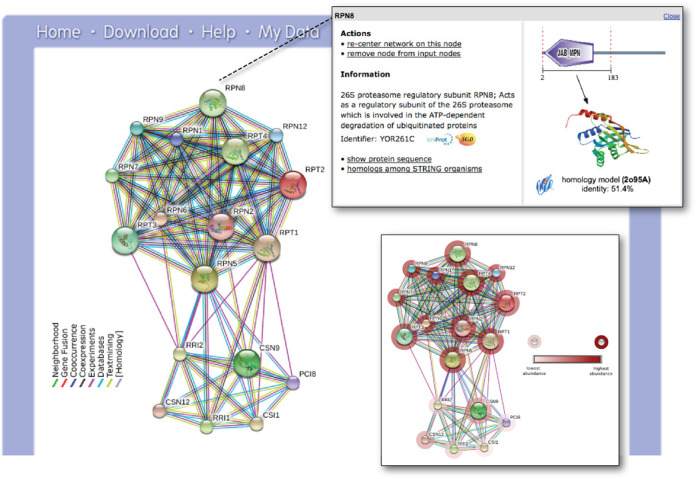
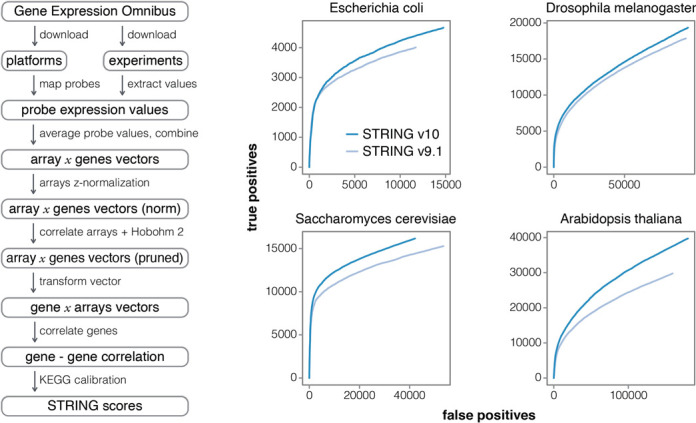
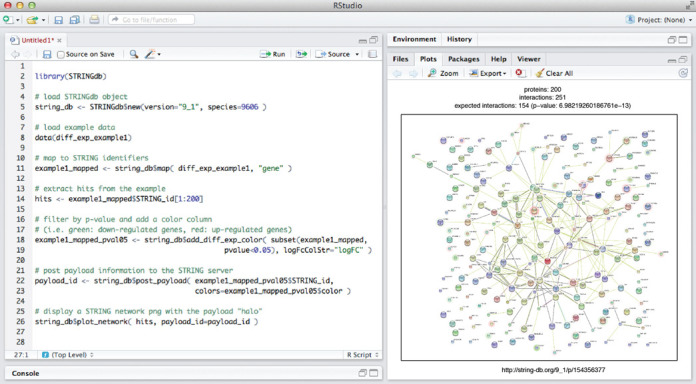
The many functional partnerships and interactions that occur between proteins are at the core of cellular processing and their systematic characterization helps to provide context in molecular systems biology. However, known and predicted interactions are scattered over multiple resources, and the available data exhibit notable differences in terms of quality and completeness. The STRING database (http://string-db.org) aims to provide a critical assessment and integration of protein-protein interactions, including direct (physical) as well as indirect (functional) associations. The new version 10.0 of STRING covers more than 2000 organisms, which has necessitated novel, scalable algorithms for transferring interaction information between organisms. For this purpose, we have introduced hierarchical and self-consistent orthology annotations for all interacting proteins, grouping the proteins into families at various levels of phylogenetic resolution. Further improvements in version 10.0 include a completely redesigned prediction pipeline for inferring protein-protein associations from co-expression data, an API interface for the R computing environment and improved statistical analysis for enrichment tests in user-provided networks.
Overview
The claims and statistics of this paper haven’t been checked yet.
Free: it reads the open-access text and checks the first 5 claims that cite a source we can check. Create a free account to check every claim.
Integrity signals
Registry
Cites
Statistics
Figures
Verification
Claims the paper makes
The claims and statistics of this paper haven’t been checked yet.
Free: it reads the open-access text and checks the first 5 claims that cite a source we can check. Create a free account to check every claim.
Claims other papers make about this one
Each is checked against this paper’s own text: does it say what the citing paper says it does?
The source backs part of the claim, not all of it — or backs it for a different population, condition or comparison.
In the citing paper
“The BioPlex database was developed by the method of affinity purification and mass spectrometry, whereas the STRING and InWeb contain information from various sources.”
From Deep Multilayer Brain Proteomics Identifies Molecular Networks in Alzheimer’s Disease Progression (2020) · cites this paper as Szklarczyk et al., 2015
Experimental — accuracy not yet measuredThe source backs part of the claim, not all of it — or backs it for a different population, condition or comparison.
In the citing paper
“Protein–protein interaction (PPI) networks and weighted gene co-expression network analysis (WGCNA) based on the RNA sequencing and microarray data have been revealed to establish potent organized biological strategies for mining the functional gene modules and detecting novel prognostic biomarkers [11,12].”
From Bioinformatics Analysis and Validation of Potential Markers Associated with Prediction and Prognosis of Gastric Cancer (2024) · cites this paper as [12]
Experimental — accuracy not yet measuredThe cited source says what the claim attributes to it.
In the citing paper
“The bias towards well-described proteins2 is confirmed not only with respect to publications but also with respect to patents, NIH funding patterns, GWAS and mouse phenotype data (data not shown), availability of molecular probes such as antibodies and small molecules, and even queries in the STRING18database”
From Unexplored therapeutic opportunities in the human genome (2018) · cites this paper as [18]
The cited source says what the claim attributes to it.
In the citing paper
“Superimposing these 44 proteins along with APP and TAU onto STRING protein-protein interaction database [61] elucidated 4 protein interaction modules associated with amyloid pathology and mitochondrial functions, while no TAU related protein interaction module was identified with this small list (Fig. 3e).”
From Integrated analysis of ultra-deep proteomes in cortex, cerebrospinal fluid and serum reveals a mitochondrial signature in Alzheimer’s disease (2020) · cites this paper as [61]
The cited source says what the claim attributes to it.
In the citing paper
“We next queried the STRING database of protein-protein interactions27, which revealed numerous groups of physically interacting proteins within this functional category”
From Trisomy 21 causes changes in the circulating proteome indicative of chronic autoinflammation (2017) · cites this paper as [27]
1 more claim about this paper
Create a free account to see every claim other papers make about this one.
Self-check
Percentages, sums and reported differences re-computed from the paper’s own numbers.
The self-check needs the paper’s full text.
Citations
Cites
Gene Ontology: tool for the unification of biology
Ashburner, M., Ball, C. A., Blake, J. A., Botstein, D., Butler, H., Cherry, J. M., Davis, A. P., Dolinski, K., Dwight, S. S., Eppig, J. T., et al. (2000) · Nature Genetics · doi:10.1038/75556 · Cited by 43,206
Cluster analysis and display of genome-wide expression patterns
Eisen, M. B., Spellman, P. T., Brown, P. O., & Botstein, D. (1998) · Proceedings of the National Academy of Sciences · doi:10.1073/pnas.95.25.14863 · Cited by 16,184 · cited 1×
“It has long been established that co-expression is a proxy for co-regulation (35,36) and a strong indicator of functional associations.”
BackgroundBioconductor: open software development for computational biology and bioinformatics
Gentleman, R. C., Carey, V. J., Bates, D. M., Bolstad, B., Dettling, M., Dudoit, S., Ellis, B., Gautier, L., Ge, Y., Gentry, J., et al. (2004) · Genome Biology · doi:10.1186/gb-2004-5-10-r80 · Cited by 12,172 · cited 1×
“0, we have introduced a further option: direct access from the R programming environment, following the Bioconductor standard (39).”
MethodNCBI GEO: archive for functional genomics data sets—update
Barrett, T., Wilhite, S. E., Ledoux, P., Evangelista, C., Kim, I. F., Tomashevsky, M., Marshall, K. A., Phillippy, K. H., Sherman, P. M., Holko, M., et al. (2012) · Nucleic Acids Research · doi:10.1093/nar/gks1193 · Cited by 10,418 · cited 3×
“As of March 2014, GEO consisted of more than 12 000 different platforms (GPL), 45 000 experiments (GSE) and over 1 million matrices (GSM).”
MethodInfluentialThe Reactome pathway Knowledgebase
Fabregat, A., Sidiropoulos, K., Garapati, P., Gillespie, M., Hausmann, K., Haw, R., Jassal, B., Jupe, S., Korninger, F., McKay, S., et al. (2016) · Nucleic Acids Research · doi:10.1093/nar/gkv1351 · Cited by 5,605
STRING v9.1: protein-protein interaction networks, with increased coverage and integration
Franceschini, A., Szklarczyk, D., Frankild, S., Kuhn, M., Simonovic, M., Roth, A., Lin, J., Minguez, P., Bork, P., von Mering, C., et al. (2012) · Nucleic Acids Research · doi:10.1093/nar/gks1094 · Cited by 4,398
Self-citationSzklarczyk, D., Franceschini, A., Kuhn, M., Simonovic, M., Roth, A., Minguez, P., Doerks, T., Stark, M., Muller, J., Bork, P., et al. (2011) · Nucleic Acids Research · doi:10.1093/nar/gkq973 · Cited by 3,460
Self-citationData, information, knowledge and principle: back to metabolism in KEGG
Kanehisa, M., Goto, S., Sato, Y., Kawashima, M., Furumichi, M., & Tanabe, M. (2014) · Nucleic Acids Research · doi:10.1093/nar/gkt1076 · Cited by 3,092 · cited 1×
“All sources of interaction evidence are benchmarked and calibrated against previous knowledge, using the high-level functional groupings provided by the manually curated Kyoto Encyclopedia of Genes and Genomes (KEGG) pathway maps (5).”
MethodSTRING 8--a global view on proteins and their functional interactions in 630 organisms
Jensen, L. J., Kuhn, M., Stark, M., Chaffron, S., Creevey, C., Muller, J., Doerks, T., Julien, P., Roth, A., Simonovic, M., et al. (2009) · Nucleic Acids Research · doi:10.1093/nar/gkn760 · Cited by 2,474
Self-citationThe Database of Interacting Proteins: 2004 update
Salwinski, L. (2004) · Nucleic Acids Research · doi:10.1093/nar/gkh086 · Cited by 2,271
Cited by
Items 401–500 of 1,079
The Model [NiFe]-Hydrogenases of Escherichia coli
Sargent, F. (2016) · Advances in microbial physiology/Advances in Microbial Physiology · doi:10.1016/bs.ampbs.2016.02.008 · Cited by 128
Salleh, M. S. M., Mazzoni, G., Höglund, J., Olijhoek, D., Lund, P., Løvendahl, P., & Kadarmideen, H. N. (2017) · BMC Genomics · doi:10.1186/s12864-017-3622-9 · Cited by 124
“0 [57] was used to identify interesting associations between the significant genes identified in our study.”
MethodGenome-wide meta-analysis reveals shared new loci in systemic seropositive rheumatic diseases
Acosta‐Herrera, M., Kerick, M., González‐Serna, D., Wijmenga, C., Franke, A., Gregersen, P. K., Padyukov, L., Worthington, J., Vyse, T. J., Alarcón-Riquelme, M. E., et al. (2018) · Annals of the Rheumatic Diseases · doi:10.1136/annrheumdis-2018-214127 · Cited by 125
“[30] 156 Drug Target Enrichment Analysis: the target genes of the eQTLs were used to model a 157 protein-protein interaction (PPI) network using String v10.[31] These protein products 158 were then used to query the OpenTargets Platform[32] for drug targets.”
miRTargetLink—miRNAs, Genes and Interaction Networks
Hamberg, M., Backes, C., Fehlmann, T., Hart, M., Meder, B., Meese, E. U., & Keller, A. (2016) · International Journal of Molecular Sciences · doi:10.3390/ijms17040564 · Cited by 123
“Originally implemented as a search tool for recurring instances of neighboring genes [1], STRING v10 has become a comprehensive protein-protein interaction database containing predicted and validated protein-protein target information [2].”
BackgroundAssociation of Omics Features with Histopathology Patterns in Lung Adenocarcinoma
Yu, K.-H., Berry, G. J., Rubin, D. L., Ré, C., Altman, R. B., & Snyder, M. (2017) · Cell Systems · doi:10.1016/j.cels.2017.10.014 · Cited by 118
“To estimate the enrichments in gene-gene interactions, the String Database Tool used a Poisson-Binomial variable tomodel the number of edges connecting the genes, and calculated the P-value of observing the number of gene-gene interactions under the null hypothesis that this gene set did not possess more gene-gene int…”
MethodChristensen, N. R., Čalyševa, J., Fernandes, E. F. A., Lüchow, S., Clemmensen, L. S., Haugaard‐Kedström, L. M., & Strømgaard, K. (2019) · Advanced Therapeutics · doi:10.1002/adtp.201800143 · Cited by 124
Pathway and network analysis of more than 2500 whole cancer genomes
Reyna, M. A., Haan, D., Paczkowska, M., Verbeke, L. P. C., Vazquez, M., Kahraman, A., Pulido-Tamayo, S., Barenboim, J., Wadi, L., Dhingra, P., et al. (2020) · Nature Communications · doi:10.1038/s41467-020-14367-0 · Cited by 112
NOTCH1 activation compensates BRCA1 deficiency and promotes triple-negative breast cancer formation
Miao, K., Lei, J. H., Valecha, M. V., Zhang, A., Xu, J., Wang, L., Lyu, X., Chen, S., Miao, Z., Zhang, X., et al. (2020) · Nature Communications · doi:10.1038/s41467-020-16936-9 · Cited by 123
Genome-wide identification and characterization of bHLH family genes from Ginkgo biloba
Zhou, X., Liao, Y., Kim, S.-U., Chen, Z., Nie, G., Cheng, S., Ye, J., & Xu, F. (2020) · Scientific Reports · doi:10.1038/s41598-020-69305-3 · Cited by 122
García-Marqués, F., Trevisan-Herraz, M., Martínez-Martínez, S., Camafeita, E., Jorge, I., Lopez, J. A., Méndez-Barbero, N., Méndez-Ferrer, S., del Pozo, M. A., Ibáñez, B., et al. (2016) · Molecular & Cellular Proteomics · doi:10.1074/mcp.m115.055905 · Cited by 115
“The proteins showing significant abundance changes were subjected to functional enrichment and network analysis using GOrilla (102) and STRING (103).”
MethodInfluentialHicks, S. D., Johnson, J., Carney, M. C., Bramley, H., Olympia, R. P., Loeffert, A. C., & Thomas, N. J. (2018) · Journal of Neurotrauma · doi:10.1089/neu.2017.5111 · Cited by 112
Zhu, X., Liao, J., Xia, X., Xiong, F., Li, Y., Shen, J., Wen, B., Ma, Y., Wang, Y., & Fang, W. (2019) · BMC Plant Biology · doi:10.1186/s12870-019-1646-9 · Cited by 121
“Protein–protein interaction (PPI) networks was constructed on the basis of the STRING database [31] in order to better understanding on interaction functions of DAPs.”
Ayala‐Nunez, V., Follain, G., Delalande, F., Hirschler, A., Partiot, E., Hale, G., Bollweg, B. C., Roels, J. R. E., Chazal, M., Bakoa, F., et al. (2019) · Nature Communications · doi:10.1038/s41467-019-12408-x · Cited by 124
Meyer, N. E., Henkel, L. M., Linder, B., Zielke, S., Tascher, G., Trautmann, S., Geißlinger, G., Münch, C., Fulda, S., Tegeder, I., et al. (2021) · Autophagy · doi:10.1080/15548627.2021.1874208 · Cited by 122
Spatiotemporal variation of mammalian protein complex stoichiometries
Ori, A., Iskar, M., Buczak, K., Kastritis, P., Parca, L., Andrés-Pons, A., Singer, S., Bork, P., & Beck, M. (2016) · Genome Biology · doi:10.1186/s13059-016-0912-5 · Cited by 112
“Edges between nodes are based on STRING [59] Ori et al.”
MethodInfluentialSelf-citationLi, S., Liu, X., Liu, T., Meng, X., Yin, X., Fang, C., Huang, D., Cao, Y., Weng, H., Zeng, X., et al. (2017) · Frontiers in Physiology · doi:10.3389/fphys.2017.00947 · Cited by 120
“Search Tool for the Retrieval of Interacting Genes (STRING) database (Szklarczyk et al., 2015) was use to construct Frontiers in Physiology | www.frontiersin.org 2 November 2017 | Volume 8 | Article 947 a protein-protein interaction (PPI) network, and then the PPI network was visualized using…”
MethodChaudhury, S., O’Connor, C., Cañete, A., Bittencourt‐Silvestre, J., Sarrou, E., Prendergast, Á. M., Choi, J., Johnston, P., Wells, C. A., Gibson, B. E. S., et al. (2018) · Nature Communications · doi:10.1038/s41467-018-07584-1 · Cited by 121
Starks, R. R., Biswas, A., Jain, A., & Tuteja, G. (2019) · Epigenetics & Chromatin · doi:10.1186/s13072-019-0260-2 · Cited by 105
“Protein–protein interaction networks were built using the STRING database [43] (v.”
Zhang, F., Song, H., Zeng, M., Li, Y., Kurgan, L., & Li, M. (2019) · PROTEOMICS · doi:10.1002/pmic.201900019 · Cited by 120
Human and mouse essentiality screens as a resource for disease gene discovery
Cacheiro, P., Muñoz-Fuentes, V., Murray, S. A., Dickinson, M. E., Bucan, M., Nutter, L. M. J., Peterson, K. A., Haselimashhadi, H., Flenniken, A. M., Morgan, H., et al. (2020) · Nature Communications · doi:10.1038/s41467-020-14284-2 · Cited by 106
Dauth, S., Maoz, B. M., Sheehy, S. P., Hemphill, M. A., Murty, T., Macedonia, M. K., Greer, A. M., Budnik, B., & Parker, K. K. (2016) · Journal of Neurophysiology · doi:10.1152/jn.00575.2016 · Cited by 120
“The STRING database stores information about J Neurophysiol • doi:10.1152/jn.00575.2016 • www.jn.org functional relationships between proteins that are derived from a number of sources.”
MethodInfluentialPooled‐matrix protein interaction screens using Barcode Fusion Genetics
Yachie, N., Petsalaki, E., Mellor, J. C., Weile, J., Jacob, Y., Verby, M., Ozturk, S. B., Li, S., Cote, A. G., Mosca, R., et al. (2016) · Molecular Systems Biology · doi:10.15252/msb.20156660 · Cited by 107
Genome composition and phylogeny of microbes predict their co-occurrence in the environment
Kamneva, O. K. (2017) · PLoS Computational Biology · doi:10.1371/journal.pcbi.1005366 · Cited by 119
A Comprehensive Bioinformatics Analysis of UBE2C in Cancers
Dastsooz, H., Cereda, M., Donna, D., & Oliviero, S. (2019) · International Journal of Molecular Sciences · doi:10.3390/ijms20092228 · Cited by 119
Stitching the synapse: Cross-linking mass spectrometry into resolving synaptic protein interactions
Gonzalez-Lozano, M. A., Koopmans, F., Sullivan, P. F., Protze, J., Krause, G., Verhage, M., Li, K. W., Liu, F., & Smit, A. B. (2020) · Science Advances · doi:10.1126/sciadv.aax5783 · Cited by 121
“Protein interactions known from literature were obtained from three databases: STRING ( 15 ), BioGRID ( 17 ), and InWEB ( 16 ).”
InfluentialLiu, Z., Luo, X., & Wang, Z. (2020) · IEEE Transactions on Neural Networks and Learning Systems · doi:10.1109/tnnls.2020.2990990 · Cited by 119
Decoding the Transcriptional Response to Ischemic Stroke in Young and Aged Mouse Brain
Androvic, P., Kirdajova, D., Tureckova, J., Zucha, D., Rohlova, E., Abaffy, P., Kriska, J., Valny, M., Anderova, M., Kubista, M., et al. (2020) · Cell Reports · doi:10.1016/j.celrep.2020.107777 · Cited by 118
Temperate phages both mediate and drive adaptive evolution in pathogen biofilms
Davies, E. V., James, C. E., Williams, D. F., O’Brien, S., Fothergill, J. L., Haldenby, S. T., Paterson, S., Winstanley, C., & Brockhurst, M. A. (2016) · Proceedings of the National Academy of Sciences · doi:10.1073/pnas.1520056113 · Cited by 120
“ORF annotations from the published sequence were supplemented using the STRING v10 database (52).”
MethodHistone methyltransferase Smyd1 regulates mitochondrial energetics in the heart
Warren, J. S., Tracy, C. M., Miller, M. R., Makaju, A., Szulik, M. W., Oka, S., Yuzyuk, T. N., Cox, J. E., Kumar, A., Lozier, B. K., et al. (2018) · Proceedings of the National Academy of Sciences · doi:10.1073/pnas.1800680115 · Cited by 119
“Using the STRING Database web-based tools (7), the 15 most significantly enriched gene ontology (GO) terms for cellular component and Kyoto Encyclopedia of Genes and Genomes (KEGG) pathways (Datasets S4 and S5) are shown in Fig.”
MethodLiu, J., Zhou, S., Li, S., Jiang, Y., Wan, Y., Ma, X., & Cheng, W. (2019) · Cancer Cell International · doi:10.1186/s12935-019-0859-1 · Cited by 118
“org/) to assess protein–protein interaction (PPI) information [11].”
gene2drug: a computational tool for pathway-based rational drug repositioning
Napolitano, F., Carrella, D., Mandriani, B., Pisonero-Vaquero, S., Sirci, F., Medina, D. L., Brunetti-Pierri, N., & di Bernardo, D. (2018) · Bioinformatics · doi:10.1093/bioinformatics/btx800 · Cited by 108
“LR makes use of a protein-protein interaction (PPI) network as obtained from the STRING database [26].”
MethodProteomic profiling of archaeological human bone
Sawafuji, R., Cappellini, E., Nagaoka, T., Fotakis, A. K., Jersie-Christensen, R. R., Olsen, J. V., Hirata, K., & Ueda, S. (2017) · Royal Society Open Science · doi:10.1098/rsos.161004 · Cited by 117
“We also used the STRING database [39] to create a network of functional relationships between the identified top 30 proteins.”
Carmona, F. D., Vaglio, A., Mackie, S. L., Hernández‐Rodríguez, J., Monach, P. A., Castañeda, S., Solans, R., Morado, I. C., Narváez, J., Ramentol-Sintas, M., et al. (2016) · The American Journal of Human Genetics · doi:10.1016/j.ajhg.2016.11.013 · Cited by 119
Identification of core genes and outcome in gastric cancer using bioinformatics analysis
Sun, C., Yuan, Q., Wu, D., Meng, X., & Wang, B. (2017) · Oncotarget · doi:10.18632/oncotarget.20082 · Cited by 117
“Search Tool for the Retrieval of Interacting Genes (STRING) is online tool designed to evaluate the protein–protein interaction (PPI) information [23].”
MethodData integration and predictive modeling methods for multi-omics datasets
Kim, M., & Tagkopoulos, I. (2017) · Molecular Omics · doi:10.1039/c7mo00051k · Cited by 100
Zhou, C., Li, C., Cai, W., Liu, S., Yin, H. H., Shi, S., Zhang, Q., & Zhang, S. (2019) · Frontiers in Genetics · doi:10.3389/fgene.2019.00072 · Cited by 117
Axon-Seq Decodes the Motor Axon Transcriptome and Its Modulation in Response to ALS
Nijssen, J., Benitez, J. A., Hoogstraaten, R. I., Kee, N., & Hedlund, E. (2018) · Stem Cell Reports · doi:10.1016/j.stemcr.2018.11.005 · Cited by 117
Gene Loss Predictably Drives Evolutionary Adaptation
Helsen, J., Voordeckers, K., Vanderwaeren, L., Santermans, T., Tsontaki, M., Verstrepen, K. J., & Jelier, R. (2020) · Molecular Biology and Evolution · doi:10.1093/molbev/msaa172 · Cited by 104
“0 (Szklarczyk et al. 2015) and visualized using Cytoscape version 3.”
MethodSpatiotemporally resolved colorectal oncogenesis in mini-colons ex vivo
Lorenzo‐Martín, L. F., Hübscher, T., Bowler, A. D., Broguière, N., Langer, J., Tillard, L., Nikolaev, M., Radtke, F., & Lütolf, M. P. (2024) · Nature · doi:10.1038/s41586-024-07330-2 · Cited by 121
Proteomic signature of muscle fibre hyperplasia in response to faba bean intake in grass carp
Yu, E., Zhang, H.-F., Li, Z., Wang, G., Wu, H., Xie, J., Yu, D., Xia, Y. L., Zhang, K., & Gong, W.-B. (2017) · Scientific Reports · doi:10.1038/srep45950 · Cited by 119
Benyamin, B., He, J., Zhao, Q., Gratten, J., Garton, F., Leo, P. J., Liu, Z., Mangelsdorf, M., Al-Chalabi, A., Anderson, L., et al. (2017) · Nature Communications · doi:10.1038/s41467-017-00471-1 · Cited by 110
GWAS for male-pattern baldness identifies 71 susceptibility loci explaining 38% of the risk
Pirastu, N., Joshi, P. K., de Vries, P. S., Cornelis, M. C., McKeigue, P. M., Keum, N., Franceschini, N., Colombo, M., Giovannucci, E. L., Spiliopoulou, A., et al. (2017) · Nature Communications · doi:10.1038/s41467-017-01490-8 · Cited by 104
Moens, T. G., Niccoli, T., Wilson, K. M., Atilano, M. L., Birsa, N., Gittings, L. M., Hölbling, B. V., Dyson, M. C., Thoeng, A., Neeves, J., et al. (2019) · Acta Neuropathologica · doi:10.1007/s00401-018-1946-4 · Cited by 116
Korrapati, S., Taukulis, I., Olszewski, R. T., Pyle, M. P., Gu, S., Singh, R., Griffiths, C., Martín, D., Boger, E. T., Morell, R. J., et al. (2019) · Frontiers in Molecular Neuroscience · doi:10.3389/fnmol.2019.00316 · Cited by 116
“Interaction evidence from all utilized criteria are benchmarked and calibrated against previous knowledge, using the high-level functional groupings provided by the manually curated Kyoto Encyclopedia of Genes and Genomes (KEGG) pathway maps (Szklarczyk et al., 2015).”
MethodCRISPR screens unveil signal hubs for nutrient licensing of T cell immunity
Long, L., Wei, J., Lim, S. A., Raynor, J. L., Shi, H., Connelly, J. P., Wang, H., Guy, C. S., Xie, B., Chapman, N. M., et al. (2021) · Nature · doi:10.1038/s41586-021-04109-7 · Cited by 117
Filamentation of Metabolic Enzymes in Saccharomyces cerevisiae
Shen, Q.-J., Kassim, H., Huang, Y., Li, H., Zhang, J., Li, G., Wang, P.-Y., Yan, J., Ye, F., & Liu, J.-L. (2016) · Journal of Genetics and Genomics · doi:10.1016/j.jgg.2016.03.008 · Cited by 112
Bacterial outer membrane constriction
Egan, A. J. F. (2018) · Molecular Microbiology · doi:10.1111/mmi.13908 · Cited by 109
“The Bacteroidetes phylum have no apparent Lpp or Pal homologue (according to stringent STRING cut-off [Szklarczyk et al., 2015]), but can be found widely distributed in soil, sediments, saline water, as well as the digestive system, mucosa and skin of animals (Shah and Gharbia, 1993).”
MethodChemoproteomic Profiling of Bile Acid Interacting Proteins
Zhuang, S., Li, Q., Cai, L., Wang, C., & Lei, X. (2017) · ACS Central Science · doi:10.1021/acscentsci.7b00134 · Cited by 118
Deep Metaproteomics Approach for the Study of Human Microbiomes
Zhang, X., Chen, W., Ning, Z., Mayne, J., Mack, D., Stintzi, A., Tian, R., & Figeys, D. (2017) · Analytical Chemistry · doi:10.1021/acs.analchem.7b02224 · Cited by 107
Young, P. A., Senkal, C. E., Suchanek, A. L., Grevengoed, T. J., Lin, D. D., Zhao, L., Crunk, A. E., Klett, E. L., Füllekrug, J., Obeid, L. M., et al. (2018) · Journal of Biological Chemistry · doi:10.1074/jbc.ra118.004049 · Cited by 110
“5 (64) to reveal direct (physical) and indirect (functional) interactions and modified for publication using Cytoscape software version 3.”
MethodPramanik, J., Chen, X. X., Kar, G., Henriksson, J., Gomes, T., Park, J.-E., Natarajan, K. N., Meyer, K. B., Miao, Z., McKenzie, A. N. J., et al. (2018) · Genome Medicine · doi:10.1186/s13073-018-0589-3 · Cited by 117
Caudron-Herger, M., Rusin, S. F., Adamo, M. E., Seiler, J., Schmid, V. K., Barreau, E., Kettenbach, A. N., & Diederichs, S. (2019) · Molecular Cell · doi:10.1016/j.molcel.2019.04.018 · Cited by 110
“e (Szklarczyk et al., 2015) representation of the mSIN3A CORUM complex and on peak in the control sample around fraction 18.”
Zhang, Z., Yi, P., Yang, J., Huang, J., Xu, P., Hu, M., Zhang, C., Wang, B., & Peng, W. (2019) · Journal of Ethnopharmacology · doi:10.1016/j.jep.2019.112371 · Cited by 116
Mining TCGA database for tumor mutation burden and their clinical significance in bladder cancer
Lv, J., Zhu, Y., Ji, A., Zhang, Q., & Liao, G. (2020) · Bioscience Reports · doi:10.1042/bsr20194337 · Cited by 115
“DEGs were constructed in the STRING database[18], and the number of core gene nodes in the”
MethodKG-Predict: A knowledge graph computational framework for drug repurposing
Gao, Z., Ding, P., & Xu, R. (2022) · Journal of Biomedical Informatics · doi:10.1016/j.jbi.2022.104133 · Cited by 117
The emerging role of lysine methyltransferase SETD8 in human diseases
Milite, C., Feoli, A., Viviano, M., Rescigno, D., Cianciulli, A., Balzano, A. L., Mai, A., Castellano, S., & Sbardella, G. (2016) · Clinical Epigenetics · doi:10.1186/s13148-016-0268-4 · Cited by 116
“0 [105] using STRING database [106].”
Green, A. G., Elhabashy, H., Brock, K. P., Maddamsetti, R., Kohlbacher, O., & Marks, D. S. (2021) · Nature Communications · doi:10.1038/s41467-021-21636-z · Cited by 114
Genomic Determinants of Protein Abundance Variation in Colorectal Cancer Cells
Roumeliotis, T. I., Williams, S. P., Gonçalves, E., Alsinet, C., Del Castillo Velasco-Herrera, M., Aben, N., Ghavidel, F. Z., Michaut, M., Schubert, M., Price, S., et al. (2017) · Cell Reports · doi:10.1016/j.celrep.2017.08.010 · Cited by 115
“B) STRING network of interconnected MSI-high associated proteins.”
MethodInfluentialCoeliac Disease Immunochip Consortium, Márquez, A., Rheumatoid Arthritis Consortium International for Immunochip (RACI), International Scleroderma Group, Type 1 Diabetes Genetics Consortium, Kerick, M., Zhernakova, A., Gutierrez-Achury, J., Chen, W.-M., Onengut-Gumuscu, S., et al. (2018) · Genome Medicine · doi:10.1186/s13073-018-0604-8 · Cited by 102
Intronic CNVs and gene expression variation in human populations
Rigau, M., Juan, D., Valencia, A., & Rico, D. (2019) · PLoS Genetics · doi:10.1371/journal.pgen.1007902 · Cited by 114
Johnson, C. N., Kogut, M. H., Genovese, K., He, H., Kazemi, S., & Arsenault, R. J. (2019) · Microorganisms · doi:10.3390/microorganisms7080268 · Cited by 100
“Similar to the GO biological process analysis above, we considered the KEGG pathways output from the STRING database.”
BackgroundMethodInfluentialThe genomic landscape of testicular germ cell tumours: from susceptibility to treatment
Litchfield, K., Levy, M., Huddart, R. A., SHIPLEY, J. M., & Turnbull, C. (2016) · Nature Reviews Urology · doi:10.1038/nrurol.2016.107 · Cited by 113
Invasion of Host Cells and Tissues by Uropathogenic Bacteria
Lewis, A. J., Richards, A. C., & Mulvey, M. A. (2016) · Microbiology Spectrum · doi:10.1128/microbiolspec.uti-0026-2016 · Cited by 115
“(198).”
Bélot, A., Rice, G., Omarjee, O., Rouchon, Q., Smith, E. M. D., Moreews, M., Tusseau, M., Frachette, C., Bournhonesque, R., Thielens, N. M., et al. (2020) · The Lancet Rheumatology · doi:10.1016/s2665-9913(19)30142-0 · Cited by 113
Neurological manifestations of COVID-19: available evidences and a new paradigm
Khatoon, F., Prasad, K., & Kumar, V. (2020) · Journal of NeuroVirology · doi:10.1007/s13365-020-00895-4 · Cited by 115
“We retrieved the list of genes interacting with ACE2 and TMPRSS2 receptors from multiple literatures, uniport database, and string database (Wicik et al. 2020; Consortium 2019; Szklarczyk et al. 2015).”
MethodWu, Z., Wu, J., Chen, S., Mantri, N. L., Tao, Z., & Jiang, C. (2016) · Frontiers in Plant Science · doi:10.3389/fpls.2016.01653 · Cited by 113
Determining sequencing depth in a single-cell RNA-seq experiment
Zhang, M. J., Ntranos, V., & Tse, D. (2020) · Nature Communications · doi:10.1038/s41467-020-14482-y · Cited by 112
MicroRNA expression in cervical cancer: Novel diagnostic and prognostic biomarkers
Gao, C., Zhou, C., Zhuang, J., Liu, L., Liu, C., Li, H., Liu, G., Wei, J., & Sun, C. (2018) · Journal of Cellular Biochemistry · doi:10.1002/jcb.27029 · Cited by 112
“org) was used to assess the PPI network information.(18) To further examine the potential relationship between these target genes and related genes, we used STRING to mine and characterize the PPI network, and a confidence score >0.”
MethodLou, W., Liu, J., Ding, B., Chen, D., Xu, L., Ding, J., Jiang, D., Zhou, L., Zheng, S., & Fan, W. (2019) · Journal of Translational Medicine · doi:10.1186/s12967-018-1761-7 · Cited by 112
Costanza, B., Rademaker, G., Tiamiou, A., Tullio, P. D., Leenders, J., Blomme, A., Bellier, J., Bianchi, E., Turtoï, A., Delvenne, P., et al. (2019) · International Journal of Cancer · doi:10.1002/ijc.32247 · Cited by 112
Sambarey, A., Devaprasad, A., Mohan, A., Ahmed, A., Nayak, S., Swaminathan, S., D′Souza, G., Jesuraj, A., Dhar, C., Babu, S., et al. (2016) · EBioMedicine · doi:10.1016/j.ebiom.2016.12.009 · Cited by 111
“Briefly, the Search Tool for The Retrieval of Interacting Genes/Proteins (STRING) version 10 (Szklarczyk et al., 2014) was mined to extract all human interactions with a combined score N900, and the functional nature of these interactions was identified from the protein actions file.”
MethodShameer, K., Glicksberg, B. S., Hodos, R., Johnson, K. W., Badgeley, M. A., Readhead, B., Tomlinson, M. S., O’Connor, T., Miotto, R., Kidd, B. A., et al. (2018) · Briefings in Bioinformatics · doi:10.1093/bib/bbw136 · Cited by 103
“for enrichment of protein–protein interactions using a metadatabase of protein–protein interactions (STRINGv10 [120]).”
MethodProteomic profiling of breast cancer metabolism identifies SHMT2 and ASCT2 as prognostic factors
Bernhardt, S., Bayerlová, M., Vetter, M., Wachter, A., Mitra, D., Hanf, V., Lantzsch, T., Uleer, C., Peschel, S., John, J., et al. (2017) · Breast Cancer Research · doi:10.1186/s13058-017-0905-7 · Cited by 102
Das, C. K., Linder, B., Bonn, F., Rothweiler, F., Đikić, I., Michaelis, M., Cinatl, J. J., Mandal, M., & Kögel, D. (2018) · Neoplasia · doi:10.1016/j.neo.2018.01.001 · Cited by 113
The histone demethylase UTX/KDM6A in cancer: Progress and puzzles
Schulz, W. A., Lang, A., Koch, J., & Greife, A. (2019) · International Journal of Cancer · doi:10.1002/ijc.32116 · Cited by 105
“(b) UTX interaction network as predicted by the STRING database.(18) Colored interaction partners are experimentally proven in humans (green) or in other species (orange) by Co-IP, affinity chromatography, pull-down or enzymatic assays with medium confidence = 0.”
MethodVimentin Coordinates Protein Turnover at the Aggresome during Neural Stem Cell Quiescence Exit
Morrow, C. S., Porter, T. J., Xu, N., Arndt, Z. P., Ako-Asare, K., Heo, H. J., Thompson, E. A. N., & Moore, D. L. (2020) · Cell Stem Cell · doi:10.1016/j.stem.2020.01.018 · Cited by 110
Verschueren, E., Husain, B., Yuen, K. C. Y., Sun, Y. E., Paduchuri, S., Şenbabaoğlu, Y., Lehoux, I. E., Arena, T. A., Wilson, B., Lianoglou, S., et al. (2020) · Cell · doi:10.1016/j.cell.2020.06.007 · Cited by 113
Ascierto, P. A., Casula, M., Bulgarelli, J., Pisano, M., Piccinini, C., Piccin, L., Cossu, A., Mandalà, M., Ferrucci, P. F., Guidoboni, M., et al. (2024) · Nature Communications · doi:10.1038/s41467-023-44475-6 · Cited by 113
Wu, C., Chu, H., Hsu, C., Chang, K., & Liu, H. (2015) · PROTEOMICS · doi:10.1002/pmic.201500157 · Cited by 111
“4 was used as the cut-off criterion [21].”
MethodMultitissue Transcriptomics Delineates the Diversity of Airway T Cell Functions in Asthma
Singhania, A., Wallington, J. C., Smith, C. G., Horowitz, D., Staples, K. J., Howarth, P. H., Gadola, S. D., Djukanović, R., Woelk, C. H., & Hinks, T. (2018) · American Journal of Respiratory Cell and Molecular Biology · doi:10.1165/rcmb.2017-0162oc · Cited by 113
“9) 4 (29) Eczema 2 (11) 7 (47) 5 (29) 2 (14) Hypertension 1 (5.”
BackgroundInfluentialTakahashi, K., Pavlidis, S. P., Kwong, F. N. K., Hoda, U., Rossios, C., Sun, K., Loza, M. J., Baribaud, F., Chanez, P., Fowler, S. J., et al. (2018) · European Respiratory Journal · doi:10.1183/13993003.02173-2017 · Cited by 110
Romero-Garcia, R., Seidlitz, J., Whitaker, K. J., Morgan, S. E., Fonagy, P., Dolan, R. J., Jones, P. B., Goodyer, I. M., Suckling, J., Bullmore, E., et al. (2020) · Biological Psychiatry · doi:10.1016/j.biopsych.2019.12.005 · Cited by 101
“org) (52)] between proteins coded by the 213 genes that were significantly downregulated in schizophrenia (5) and significantly positively weighted in the PLS analysis of SRM (Table S5).”
BackgroundWang, M., Song, W., Chen, M., Wang, Q., Zhou, X., Xu, P., Krek, A., Yoon, Y., Ho, L., Orr, M. E., et al. (2022) · Molecular Neurodegeneration · doi:10.1186/s13024-022-00517-z · Cited by 110
TISSUES 2.0: an integrative web resource on mammalian tissue expression
Palasca, O., Santos, A., Stolte, C., Gorodkin, J., & Jensen, L. J. (2018) · Database · doi:10.1093/database/bay028 · Cited by 110
“We obtained a dictionary of aliases (gene/protein names) and identifiers for protein-coding genes for all four organisms from the STRING database (23).”
MethodSelf-citationPandey, B., Grover, A., & Sharma, P. K. (2018) · BMC Genomics · doi:10.1186/s12864-018-4506-3 · Cited by 109
“Molecular dynamics (MD) simulations of WRKY domain and its complexes The wild-type and variants (I and II) WRKY domain were subjected to MD simulations using Gromacs 5.0 software package [23, 24].”
InfluentialVisualization of Biomedical Data
O’Donoghue, S. I., Baldi, B. F., Clark, S. J., Darling, A. E., Hogan, J. M., Kaur, S., Maier‐Hein, L., McCarthy, D. J., Moore, W. J., Stenau, E., et al. (2018) · Annual Review of Biomedical Data Science · doi:10.1146/annurev-biodatasci-080917-013424 · Cited by 110
“com/ (72); panels b–d were made using STRING (141), Matplotlib (115), and Minardo (https://minardo.”
MethodLukowski, S. W., Patel, J., Andersen, S. B., Sim, S.-L., Wong, H. Y., Tay, J., Winkler, I., Powell, J. E., & Khosrotehrani, K. (2019) · Cell Reports · doi:10.1016/j.celrep.2019.04.102 · Cited by 103
“StringDB (Szklarczyk et al., 2015) analysis further confirmed the enrichment of functions tightly linked to cell adhesion, cell differentiation, and endothelium development (D) and metabolism and vasculature development (EVP; Figures S2, S3, S4, and S5).”
BackgroundExon-Mediated Activation of Transcription Starts
Fiszbein, A., Krick, K. S., Begg, B. E., & Burge, C. B. (2019) · Cell · doi:10.1016/j.cell.2019.11.002 · Cited by 109
Poli‐Neto, O. B., Meola, J., Silva, J. C. R. E., & Tiezzi, D. G. (2020) · Scientific Reports · doi:10.1038/s41598-019-57207-y · Cited by 109
Mongan, D., Föcking, M., Healy, C., Susai, S. R., Heurich, M., Wynne, K. J., Nelson, B., McGorry, P. D., Amminger, G. P., Nordentoft, M., et al. (2020) · JAMA Psychiatry · doi:10.1001/jamapsychiatry.2020.2459 · Cited by 111
Ballesteros, S., Domenech, J., Barguilla, I., Cortés, C., Marcos, R., & Hernández, A. (2020) · Environmental Science Nano · doi:10.1039/d0en00748j · Cited by 110
Machine Learning Predicts the Yeast Metabolome from the Quantitative Proteome of Kinase Knockouts
Zelezniak, A., Vowinckel, J., Capuano, F., Messner, C. B., Demichev, V., Polowsky, N., Mülleder, M., Kamrad, S., Klaus, B., Keller, M. A., et al. (2018) · Cell Systems · doi:10.1016/j.cels.2018.08.001 · Cited by 100
RNF166 determines recruitment of adaptor proteins during antibacterial autophagy
Heath, R. J., Goel, G., Baxt, L. A., Rush, J. S., Mohanan, V., Paulus, G. L. C., Jani, V., Lassen, K. G., & Xavier, R. J. (2016) · Cell Reports · doi:10.1016/j.celrep.2016.11.005 · Cited by 108
“Additionally, analysis from the STRING database suggests that UBE2D2 interacts with 9 of the 48 E3 ligases that scored in our screen, suggesting that UBE2D2 may be an important E2 ubiquitin-conjugating enzyme regulating autophagic processes (Szklarczyk et al., 2015).”
MethodMoskalev, A., Zhikrivetskaya, S. O., Krasnov, G. S., Shaposhnikov, M. V., Proshkina, E., Borisoglebsky, D., Danilov, A., Peregudova, D., Эдмундовна, Ш. И., Dobrovolskaya, E., et al. (2015) · BMC Genomics · doi:10.1186/1471-2164-16-s13-s8 · Cited by 107
“Gene set enrichment analysis (GSEA) was performed using PANTHER and GeneMania [73,74], interaction networks analysis was performed using STRING and GeneMania resources [75,74].”
MethodGalaverni, M., Caniglia, R., Pagani, L., Fabbri, E., Boattini, A., & Randi, E. (2017) · Molecular Biology and Evolution · doi:10.1093/molbev/msx169 · Cited by 108
“Possible functional relationships between the identified genes were searched in STRING v.10 (Szklarczyk et al. 2015), including all the available types of evidences.”
m6A RNA modification modulates PI3K/Akt/mTOR signal pathway in Gastrointestinal Cancer
Zhao, Q., Zhao, Y., Hu, W., Zhang, Y., Wu, X., Lu, J., Li, M., Li, W., Wu, W., Wang, J., et al. (2020) · Theranostics · doi:10.7150/thno.42971 · Cited by 110
“All of the associations available in STRING were denoted with a probability confidence score.”
BackgroundMethodInfluentialGenomic and transcriptomic predictors of response levels to endurance exercise training
Sarzynski, M. A., Ghosh, S., & Bouchard, C. (2017) · The Journal of Physiology · doi:10.1113/jp272559 · Cited by 107
“These gene-sets represent collections of functionally or physically interacting genes (e.g. curated pathways such as Kyoto Encyclopedia of Genes and Genomes (KEGG)) (Kanehisa & Goto, 2000), or protein–protein interaction networks (e.g. STRING) (Szklarczyk et al. 2015).”
BackgroundMetaproteomic data analysis at a glance: advances in computational microbial community proteomics
Muth, T., Renard, B. Y., & Martens, L. (2016) · Expert Review of Proteomics · doi:10.1080/14789450.2016.1209418 · Cited by 92
“Besides providing extensive information on protein – protein interactions, the online STRING database also allows the user to query protein family annotations on the basis of COG [53].”
BackgroundMethodGene expression-based biomarkers for discriminating early and late stage of clear cell renal cancer
Bhalla, S., Chaudhary, K., Kumar, R., Sehgal, M., Kaur, H., Sharma, S., & Raghava, G. P. S. (2017) · Scientific Reports · doi:10.1038/srep44997 · Cited by 108
Amal, H., Barak, B., Bhat, V., Gong, G., Joughin, B. A., Wang, X., Wishnok, J. S., Feng, G., & Tannenbaum, S. R. (2020) · Molecular Psychiatry · doi:10.1038/s41380-018-0113-6 · Cited by 101
Metadata
- Authors
- Szklarczyk, D., Franceschini, A., Wyder, S., Forslund, K., Heller, D., Huerta-Cepas, J., Simonovic, M., Roth, A., Santos, A., Tsafou, K. P., Kuhn, M., Bork, P., Jensen, L. J., & von Mering, C.
- Affiliations
- SIB Swiss Institute of Bioinformatics (CH)
- University of Copenhagen (DK)
- Max Planck Institute of Molecular Cell Biology and Genetics (DE)
- ORCID
- Venue
- Nucleic Acids Research
- Publisher
- Oxford University Press (OUP)
- Published
- 2014-10-28
- Volume
- 43
- Issue
- D1
- Pages
- D447-D452
- ISSN
- 0305-1048 (ISSN-L)
- 1362-4962
- PMC
- PMC4383874
- OpenAlex
- W2096173332
- Cited by
- 10,436
- References
- 45
- Citations by year
- 2026: 288 · 2025: 545 · 2024: 821 · 2023: 783 · 2022: 996 · 2021: 1183 · 2020: 1406 · 2019: 1348 · 2018: 1177 · 2017: 1054 · 2016: 680 · 2015: 140 · 2014: 4
- FWCI
- 256.77
- Type
- journal article
- Language
- en
- Open access
- gold
- doi.org
- Locations
- Nucleic Acids Research (publishedVersion, cc-by)
- Europe PMC (PubMed Central) (publishedVersion, cc-by)
- PubMed Central (publishedVersion, cc-by)
- PubMed (publishedVersion)
- Research at the University of Copenhagen (University of Copenhagen) (publishedVersion)
- MDC Repository (Max-Delbrueck-Center for Molecular Medicine) (acceptedVersion)
- Zurich Open Repository and Archive (University of Zurich) (acceptedVersion, other-oa)
- reroDoc Digital Library (submittedVersion)
- Zurich Open Repository and Archive (University of Zurich) (submittedVersion, other-oa)
- Zurich Open Repository and Archive (University of Zurich)
- Funders
- European Molecular Biology Laboratory
- Universität Wien
- Novo Nordisk
- Universität Zürich
- Topics
- Life Sciences › Biochemistry, Genetics and Molecular Biology › Molecular Biology › Bioinformatics and Genomic Networks
- Life Sciences › Biochemistry, Genetics and Molecular Biology › Molecular Biology › Genomics and Phylogenetic Studies
- Health Sciences › Medicine › Health Informatics › Biomedical Text Mining and Ontologies
- Keywords
- protein-protein interaction network, STRING database, enrichment analysis, tree of life, R API
- MeSH terms
- Proteins, Software, Internet, Gene Expression Profiling, Protein Interaction Mapping, Databases, Protein
About these checks
Registry, retraction, Cites and statistics results are computed, not judged, with one exception: a printed reference that no index lists is read once by a model before it counts as a citation error. Claims are extracted by a model and kept only when their quote appears verbatim in the text; each cited source is then checked, with a model’s help, for whether it says what the claim relies on. Those verdicts can be wrong — read the claim’s quote and the cited source before relying on one.
Statistics and arithmetic are recomputed, not judged.
Confidence bands are shown only for fields calibrated on our annotated test set. None is calibrated yet, so no band is shown.
What counts as a claim ›How we measure confidence ›How we check this ›
Are you an author, or do you see a problem with this page? Request a review
Data sources
Bibliographic data: Semantic Scholar, OpenAlex, Crossref.
Contains information from the Semantic Scholar Academic Graph Datasets, made available under the ODC Attribution License (ODC-BY 1.0).
Semantic Scholar’s data is described in: Kinney, R., et al. (2023). The Semantic Scholar Open Data Platform. arXiv:2301.10140.
