

STRING v10: protein–protein interaction networks, integrated over the tree of life
Open accessThe DOI matches its Crossref record; 44 of the 45 references it cites were found in a registry or an index.
Abstract
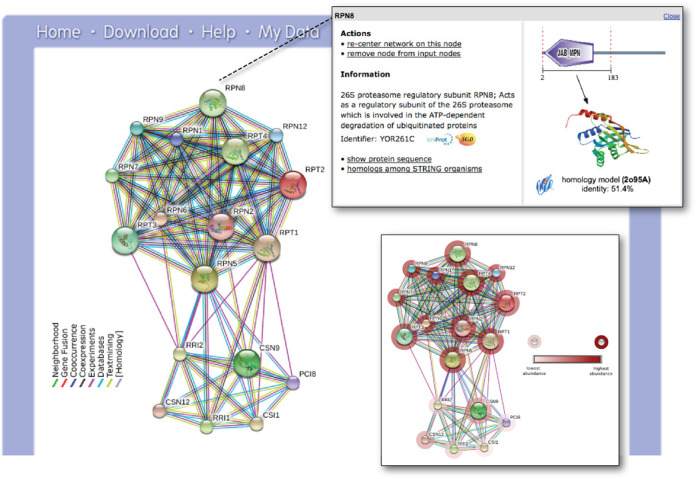
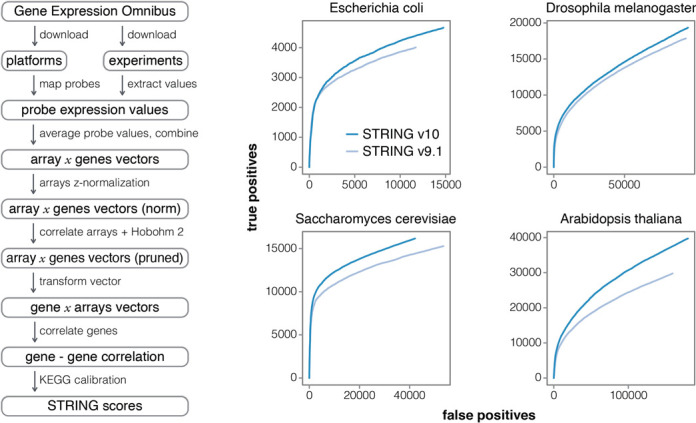
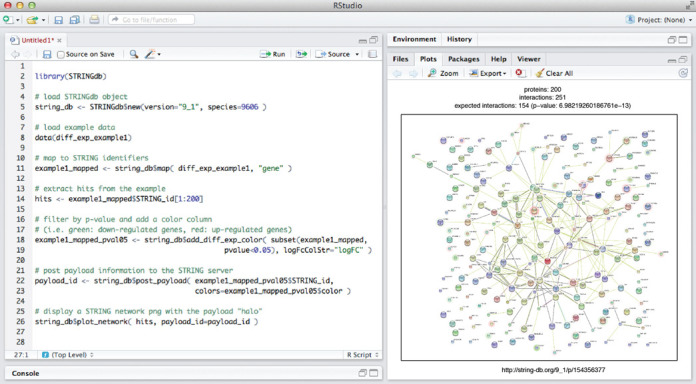
The many functional partnerships and interactions that occur between proteins are at the core of cellular processing and their systematic characterization helps to provide context in molecular systems biology. However, known and predicted interactions are scattered over multiple resources, and the available data exhibit notable differences in terms of quality and completeness. The STRING database (http://string-db.org) aims to provide a critical assessment and integration of protein-protein interactions, including direct (physical) as well as indirect (functional) associations. The new version 10.0 of STRING covers more than 2000 organisms, which has necessitated novel, scalable algorithms for transferring interaction information between organisms. For this purpose, we have introduced hierarchical and self-consistent orthology annotations for all interacting proteins, grouping the proteins into families at various levels of phylogenetic resolution. Further improvements in version 10.0 include a completely redesigned prediction pipeline for inferring protein-protein associations from co-expression data, an API interface for the R computing environment and improved statistical analysis for enrichment tests in user-provided networks.
Overview
The claims and statistics of this paper haven’t been checked yet.
Free: it reads the open-access text and checks the first 5 claims that cite a source we can check. Create a free account to check every claim.
Integrity signals
Registry
Cites
Statistics
Figures
Verification
Claims the paper makes
The claims and statistics of this paper haven’t been checked yet.
Free: it reads the open-access text and checks the first 5 claims that cite a source we can check. Create a free account to check every claim.
Claims other papers make about this one
Each is checked against this paper’s own text: does it say what the citing paper says it does?
The source backs part of the claim, not all of it — or backs it for a different population, condition or comparison.
In the citing paper
“The BioPlex database was developed by the method of affinity purification and mass spectrometry, whereas the STRING and InWeb contain information from various sources.”
From Deep Multilayer Brain Proteomics Identifies Molecular Networks in Alzheimer’s Disease Progression (2020) · cites this paper as Szklarczyk et al., 2015
Experimental — accuracy not yet measuredThe source backs part of the claim, not all of it — or backs it for a different population, condition or comparison.
In the citing paper
“Protein–protein interaction (PPI) networks and weighted gene co-expression network analysis (WGCNA) based on the RNA sequencing and microarray data have been revealed to establish potent organized biological strategies for mining the functional gene modules and detecting novel prognostic biomarkers [11,12].”
From Bioinformatics Analysis and Validation of Potential Markers Associated with Prediction and Prognosis of Gastric Cancer (2024) · cites this paper as [12]
Experimental — accuracy not yet measuredThe cited source says what the claim attributes to it.
In the citing paper
“The bias towards well-described proteins2 is confirmed not only with respect to publications but also with respect to patents, NIH funding patterns, GWAS and mouse phenotype data (data not shown), availability of molecular probes such as antibodies and small molecules, and even queries in the STRING18database”
From Unexplored therapeutic opportunities in the human genome (2018) · cites this paper as [18]
The cited source says what the claim attributes to it.
In the citing paper
“Superimposing these 44 proteins along with APP and TAU onto STRING protein-protein interaction database [61] elucidated 4 protein interaction modules associated with amyloid pathology and mitochondrial functions, while no TAU related protein interaction module was identified with this small list (Fig. 3e).”
From Integrated analysis of ultra-deep proteomes in cortex, cerebrospinal fluid and serum reveals a mitochondrial signature in Alzheimer’s disease (2020) · cites this paper as [61]
The cited source says what the claim attributes to it.
In the citing paper
“We next queried the STRING database of protein-protein interactions27, which revealed numerous groups of physically interacting proteins within this functional category”
From Trisomy 21 causes changes in the circulating proteome indicative of chronic autoinflammation (2017) · cites this paper as [27]
1 more claim about this paper
Create a free account to see every claim other papers make about this one.
Self-check
Percentages, sums and reported differences re-computed from the paper’s own numbers.
The self-check needs the paper’s full text.
Citations
Cites
Gene Ontology: tool for the unification of biology
Ashburner, M., Ball, C. A., Blake, J. A., Botstein, D., Butler, H., Cherry, J. M., Davis, A. P., Dolinski, K., Dwight, S. S., Eppig, J. T., et al. (2000) · Nature Genetics · doi:10.1038/75556 · Cited by 43,206
Cluster analysis and display of genome-wide expression patterns
Eisen, M. B., Spellman, P. T., Brown, P. O., & Botstein, D. (1998) · Proceedings of the National Academy of Sciences · doi:10.1073/pnas.95.25.14863 · Cited by 16,184 · cited 1×
“It has long been established that co-expression is a proxy for co-regulation (35,36) and a strong indicator of functional associations.”
BackgroundBioconductor: open software development for computational biology and bioinformatics
Gentleman, R. C., Carey, V. J., Bates, D. M., Bolstad, B., Dettling, M., Dudoit, S., Ellis, B., Gautier, L., Ge, Y., Gentry, J., et al. (2004) · Genome Biology · doi:10.1186/gb-2004-5-10-r80 · Cited by 12,172 · cited 1×
“0, we have introduced a further option: direct access from the R programming environment, following the Bioconductor standard (39).”
MethodNCBI GEO: archive for functional genomics data sets—update
Barrett, T., Wilhite, S. E., Ledoux, P., Evangelista, C., Kim, I. F., Tomashevsky, M., Marshall, K. A., Phillippy, K. H., Sherman, P. M., Holko, M., et al. (2012) · Nucleic Acids Research · doi:10.1093/nar/gks1193 · Cited by 10,418 · cited 3×
“As of March 2014, GEO consisted of more than 12 000 different platforms (GPL), 45 000 experiments (GSE) and over 1 million matrices (GSM).”
MethodInfluentialThe Reactome pathway Knowledgebase
Fabregat, A., Sidiropoulos, K., Garapati, P., Gillespie, M., Hausmann, K., Haw, R., Jassal, B., Jupe, S., Korninger, F., McKay, S., et al. (2016) · Nucleic Acids Research · doi:10.1093/nar/gkv1351 · Cited by 5,605
STRING v9.1: protein-protein interaction networks, with increased coverage and integration
Franceschini, A., Szklarczyk, D., Frankild, S., Kuhn, M., Simonovic, M., Roth, A., Lin, J., Minguez, P., Bork, P., von Mering, C., et al. (2012) · Nucleic Acids Research · doi:10.1093/nar/gks1094 · Cited by 4,398
Self-citationSzklarczyk, D., Franceschini, A., Kuhn, M., Simonovic, M., Roth, A., Minguez, P., Doerks, T., Stark, M., Muller, J., Bork, P., et al. (2011) · Nucleic Acids Research · doi:10.1093/nar/gkq973 · Cited by 3,460
Self-citationData, information, knowledge and principle: back to metabolism in KEGG
Kanehisa, M., Goto, S., Sato, Y., Kawashima, M., Furumichi, M., & Tanabe, M. (2014) · Nucleic Acids Research · doi:10.1093/nar/gkt1076 · Cited by 3,092 · cited 1×
“All sources of interaction evidence are benchmarked and calibrated against previous knowledge, using the high-level functional groupings provided by the manually curated Kyoto Encyclopedia of Genes and Genomes (KEGG) pathway maps (5).”
MethodSTRING 8--a global view on proteins and their functional interactions in 630 organisms
Jensen, L. J., Kuhn, M., Stark, M., Chaffron, S., Creevey, C., Muller, J., Doerks, T., Julien, P., Roth, A., Simonovic, M., et al. (2009) · Nucleic Acids Research · doi:10.1093/nar/gkn760 · Cited by 2,474
Self-citationThe Database of Interacting Proteins: 2004 update
Salwinski, L. (2004) · Nucleic Acids Research · doi:10.1093/nar/gkh086 · Cited by 2,271
Cited by
Szklarczyk, D., Gable, A. L., Lyon, D., Junge, A., Wyder, S., Huerta-Cepas, J., Simonovic, M., Doncheva, N. T., Morris, J. H., Bork, P., et al. (2019) · Nucleic Acids Research · doi:10.1093/nar/gky1131 · Cited by 17,749
Self-citationSzklarczyk, D., Gable, A. L., Nastou, K. C., Lyon, D., Kirsch, R., Pyysalo, S., Doncheva, N. T., Legeay, M., Fang, T., Bork, P., et al. (2021) · Nucleic Acids Research · doi:10.1093/nar/gkaa1074 · Cited by 8,056
“All interaction evidence that contributes to a given network is benchmarked and scored (31,33–34), and the scores are integrated into a final ‘combined score’.”
BackgroundMethodSelf-citationSzklarczyk, D., Morris, J. H., Cook, H., Kuhn, M., Wyder, S., Simonovic, M., Santos, A., Doncheva, N. T., Roth, A., Bork, P., et al. (2017) · Nucleic Acids Research · doi:10.1093/nar/gkw937 · Cited by 6,980
“STRING has been maintained continuously since the year 2000, and has already been described in several publications (31–34).”
BackgroundMethodSelf-citationShinyGO: a graphical gene-set enrichment tool for animals and plants
Ge, S. X., Jung, D., & Yao, R. (2020) · Bioinformatics · doi:10.1093/bioinformatics/btz931 · Cited by 5,270
Next-generation characterization of the Cancer Cell Line Encyclopedia
Ghandi, M., Huang, F. W., Jané-Valbuena, J., Kryukov, G. V., Lo, C. C., McDonald, E. R., Barretina, J., Gelfand, E. T., Bielski, C. M., Li, H., et al. (2019) · Nature · doi:10.1038/s41586-019-1186-3 · Cited by 3,394
Alzheimer Disease Genetics Consortium (ADGC), Kunkle, B. W., The European Alzheimer’s Disease Initiative (EADI), Cohorts for Heart and Aging Research in Genomic Epidemiology Consortium (CHARGE), Genetic and Environmental Risk in AD/Defining Genetic, P. A. E. R. F. A. D. C. (., Grenier-Boley, B., Sims, R., Bis, J. C., Damotte, V., Naj, A. C., et al. (2019) · Nature Genetics · doi:10.1038/s41588-019-0358-2 · Cited by 2,946
Genomic atlas of the human plasma proteome
Sun, B. B., Maranville, J. C., Peters, J. E., Stacey, D., Staley, J. R., Blackshaw, J., Burgess, S., Jiang, T., Paige, E., Surendran, P., et al. (2018) · Nature · doi:10.1038/s41586-018-0175-2 · Cited by 2,268
Huerta-Cepas, J., Szklarczyk, D., Forslund, K., Cook, H., Heller, D., Walter, M. C., Rattei, T., Mende, D. R., Sunagawa, S., Kuhn, M., et al. (2016) · Nucleic Acids Research · doi:10.1093/nar/gkv1248 · Cited by 2,101
“This step is coordinated with the STRING (27) and STITCH (28) databases so that the underlying set of protein sequences and names is shared among all three resources.”
Self-citationReimand, J., Isserlin, R., Voisin, V., Kucera, M., Tannus-Lopes, C., Rostamianfar, A., Wadi, L., Meyer, M., Wong, J., Xu, C., et al. (2019) · Nature Protocols · doi:10.1038/s41596-018-0103-9 · Cited by 1,970
The SWISS-MODEL Repository—new features and functionality
Bienert, S., Waterhouse, A., de Beer, T. A. P., Tauriello, G., Studer, G., Bordoli, L., & Schwede, T. (2017) · Nucleic Acids Research · doi:10.1093/nar/gkw1132 · Cited by 1,745
“Information about the target protein includes the name of the target protein, links to UniProtKB (26), InterPro (27) and STRING (28).”
BackgroundSTITCH 5: augmenting protein–chemical interaction networks with tissue and affinity data
Szklarczyk, D., Santos, A., von Mering, C., Jensen, L. J., Bork, P., & Kuhn, M. (2016) · Nucleic Acids Research · doi:10.1093/nar/gkv1277 · Cited by 1,687
“STITCH, in its fifth release, shares protein space with STRING v10 (17) and now encompasses more than 9 600 000 proteins from 2031 eukaryotic and prokaryotic genomes.”
BackgroundSelf-citationiDEP: an integrated web application for differential expression and pathway analysis of RNA-Seq data
Ge, S. X., Son, E. W., & Yao, R. (2018) · BMC Bioinformatics · doi:10.1186/s12859-018-2486-6 · Cited by 1,661
Network Pharmacology Databases for Traditional Chinese Medicine: Review and Assessment
Zhang, R., Zhu, X., Bai, H., & Ning, K. (2019) · Frontiers in Pharmacology · doi:10.3389/fphar.2019.00123 · Cited by 1,257
“…et al., 2006), STITCH (Kuhn et al., 2014), ChEMBL (Gaulton et al., 2012), and PubChem (Wang et al., 2009)], target interaction databases [STRING (Szklarczyk et al., 2015), HPRD (Peri et al., 2003), MINT (Zanzoni et al., 2002), IntAct (Kerrien et al., 2012), Reactome (D’Eustachio, 2009), and…”
BackgroundG3BP1 is a tunable switch that triggers phase separation to assemble stress granules
Yang, P., Mathieu, C., Kolaitis, R.-M., Zhang, P., Messing, J., Yurtsever, U., Yang, Z., Wu, J., Li, Y., Pan, Q., et al. (2020) · Cell · doi:10.1016/j.cell.2020.03.046 · Cited by 1,249
“Protein-Protein Interaction Network—A composite protein-protein interaction (PPI) network was built by combining STRING (v10) (Szklarczyk et al., 2015), BioPlex (Huttlin et al.”
The maternal microbiota drives early postnatal innate immune development
Gomez de Agüero, M., Ganal-Vonarburg, S. C., Fuhrer, T., Rupp, S., Uchimura, Y., Li, H., Steinert, A., Heikenwalder, M., Hapfelmeier, S., Sauer, U., et al. (2016) · Science · doi:10.1126/science.aad2571 · Cited by 1,231
NAD(H) and NADP(H) Redox Couples and Cellular Energy Metabolism
Xiao, W., Wang, R.-S., Handy, D. E., & Loscalzo, J. (2018) · Antioxidants & Redox Signaling · doi:10.1089/ars.2017.7216 · Cited by 1,061
“A network of functional associations among the NAD-related proteins mentioned above can be derived from String v10 (125), providing a systems-level view of their functional connections (Fig.”
BackgroundPlatt, F. M., d’Azzo, A., Davidson, B. L., Neufeld, E. F., & Tifft, C. J. (2018) · Nature Reviews Disease Primers · doi:10.1038/s41572-018-0025-4 · Cited by 1,052
Winsor, G. L., Griffiths, E. J., Lo, R., Dhillon, B. K., Shay, J. A., & Brinkman, F. S. L. (2016) · Nucleic Acids Research · doi:10.1093/nar/gkv1227 · Cited by 1,050
“aeruginosa PAO1 oprF annotation gene overview now contains new experimental evidence for its translation and subcellular localization based on multiple studies, a new link to predicted protein–protein interactions in the STRING database (32), new database crossreferences not found in the older version of the database…”
p53 inhibits CRISPR–Cas9 engineering in human pluripotent stem cells
Ihry, R. J., Worringer, K. A., Salick, M. R., Frias, E., Ho, D., Theriault, K., Kommineni, S., Chen, J., Sondey, M., Ye, C., et al. (2018) · Nature Medicine · doi:10.1038/s41591-018-0050-6 · Cited by 978
The BioGRID interaction database: 2017 update
Chatr-aryamontri, A., Oughtred, R., Boucher, L., Rust, J., Chang, C., Kolas, N. K., O'Donnell, L., Oster, S., Theesfeld, C., Sellam, A., et al. (2017) · Nucleic Acids Research · doi:10.1093/nar/gkw1102 · Cited by 965
“BioGRID content is updated on a monthly basis and is made freely accessible via the web interface, through downloadable files in standardized formats, and through dissemination by model organism database (MOD) partners (21–26) and other biological resources (27–32).”
BackgroundZhao, L., Zhang, H., Li, N., Chen, J., Xu, H., Wang, Y., & Liang, Q. (2023) · Journal of Ethnopharmacology · doi:10.1016/j.jep.2023.116306 · Cited by 963
SynGO: An Evidence-Based, Expert-Curated Knowledge Base for the Synapse
Koopmans, F., van Nierop, P., Andres-Alonso, M., Byrnes, A., Cijsouw, T., Coba, M. P., Cornelisse, L. N., Farrell, R. J., Goldschmidt, H. L., Howrigan, D. P., et al. (2019) · Neuron · doi:10.1016/j.neuron.2019.05.002 · Cited by 938
Deep learning in cancer diagnosis, prognosis and treatment selection
Tran, K. A., Kondrashova, O., Bradley, A., Williams, E. D., Pearson, J. V., & Waddell, N. (2021) · Genome Medicine · doi:10.1186/s13073-021-00968-x · Cited by 932
“[18] Utilised a hybrid GCNN model to organise input gene expression profiles into STRING PPI network [16] and predict breast cancer molecular subtypes”
MethodMolecular Identity of Human Outer Radial Glia during Cortical Development
Pollen, A. A., Nowakowski, T. J., Chen, J., Retallack, H., Sandoval-Espinosa, C., Nicholas, C. R., Shuga, J., Liu, S. J., Oldham, M. C., Diaz, A., et al. (2015) · Cell · doi:10.1016/j.cell.2015.09.004 · Cited by 908
“mote neural stem cell maturation by controlling local concentrations of fibroblast and epidermal growth factors (Barros et al., 2011; Garwood et al., 2004; Milev et al., 1998; Szklarczyk et al., 2015).”
Xue, A., Wu, Y., Zhu, Z., Zhang, F., Kemper, K. E., Zheng, Z., Yengo, L., Lloyd-Jones, L. R., Sidorenko, J., Wu, Y., et al. (2018) · Nature Communications · doi:10.1038/s41467-018-04951-w · Cited by 901
Neufeld, E. F. (1991) · Annual Review of Biochemistry · doi:10.1146/annurev.bi.60.070191.001353 · Cited by 900
The target landscape of clinical kinase drugs
Klaeger, S., Heinzlmeir, S., Wilhelm, M., Polzer, H., Vick, B., Koenig, P.-A., Reinecke, M., Ruprecht, B., Petzoldt, S., Meng, C., et al. (2017) · Science · doi:10.1126/science.aan4368 · Cited by 854
Zheng, J., Haberland, V., Baird, D., Walker, V., Haycock, P., Hurle, M., Gutteridge, A., Erola, P., Liu, Y., Luo, S., et al. (2019) · doi:10.1101/627398 · Cited by 812
Manzoni, C., Kia, D. A., Vandrovcova, J., Hardy, J., Wood, N. W., Lewis, P. A., & Ferrari, R. (2018) · Briefings in Bioinformatics · doi:10.1093/bib/bbw114 · Cited by 804
Zallot, R., Oberg, N., & Gerlt, J. A. (2019) · Biochemistry · doi:10.1021/acs.biochem.9b00735 · Cited by 795
Machine Learning in Drug Discovery: A Review
Dara, S., Dhamercherla, S., Jadav, S. S., Babu, C. M., & Ahsan, M. J. (2022) · Artificial Intelligence Review · doi:10.1007/s10462-021-10058-4 · Cited by 792
Role of the CXCL8-CXCR1/2 Axis in Cancer and Inflammatory Diseases
Ha, H., Debnath, B., & Neamati, N. (2017) · Theranostics · doi:10.7150/thno.15625 · Cited by 789
A Comprehensive, CRISPR-based Functional Analysis of Essential Genes in Bacteria
Peters, J. M., Colavin, A., Shi, H., Czarny, T. L., Larson, M. H., Wong, S., Hawkins, J. S., Lu, C. H. S., Koo, B.-M., Marta, E., et al. (2016) · Cell · doi:10.1016/j.cell.2016.05.003 · Cited by 714
A Peptide Encoded by a Putative lncRNA HOXB-AS3 Suppresses Colon Cancer Growth
Huang, J.-Z., Chen, M., Chen, D., Gao, X.-C., Zhu, S., Huang, H., Hu, M., Zhu, H., & Yan, G.-R. (2017) · Molecular Cell · doi:10.1016/j.molcel.2017.09.015 · Cited by 709
Heterogeneous Ribosomes Preferentially Translate Distinct Subpools of mRNAs Genome-wide
Shi, Z., Fujii, K., Kovary, K. M., Genuth, N. R., Röst, H. L., Teruel, M. N., & Barna, M. (2017) · Molecular Cell · doi:10.1016/j.molcel.2017.05.021 · Cited by 655
“…al., 2010) https://bioconductor.org/packages/ release/bioc/html/edgeR.html Manteia (Tassy and Pourquié, 2014) http://manteia.igbmc.fr/ STRING v10 (Szklarczyk et al., 2015) https://string-db.org/ Cytoscape (Shannon et al., 2003) http://www.cytoscape.org/ Other siRNA for Mouse Rpl10a/uL1…”
Kloss, C. C., Lee, J., Zhang, A., Chen, F., Melenhorst, J. J., Lacey, S. F., Maus, M. V., Fraietta, J. A., Zhao, Y., & June, C. H. (2018) · Molecular Therapy · doi:10.1016/j.ymthe.2018.05.003 · Cited by 648
Li, Z., Ivanov, A. A., Su, R., Gonzalez-Pecchi, V., Qi, Q., Liu, S., Webber, P., McMillan, E., Rusnak, L., Pham, C., et al. (2017) · Nature Communications · doi:10.1038/ncomms15350 · Cited by 647
Pastores, G. M. (2012) · Swaiman's Pediatric Neurology · doi:10.1016/b978-1-4377-0435-8.00036-6 · Cited by 633
A scored human protein–protein interaction network to catalyze genomic interpretation
Li, T., Wernersson, R., Hansen, R. B., Horn, H., Mercer, J., Slodkowicz, G., Workman, C. T., Rigina, O., Rapacki, K., Stærfeldt, H. H., et al. (2017) · Nature Methods · doi:10.1038/nmeth.4083 · Cited by 627
Zhang, C., Freddolino, L., & Zhang, Y. (2017) · Nucleic Acids Research · doi:10.1093/nar/gkx366 · Cited by 606
“Finally, the confidence score for GO term λ mapped by PPI is calculated by CscorePPI (λ) = Sq × ∑N(λ) k=1 strk (λ)∑N k=1 strk (6) where N is the number of interacting partners, strk is the confidence score of interaction between query and the kth interaction partner as assigned by the STRING database and Sq is the seq…”
MethodInfluentialDeveloping a pro-regenerative biomaterial scaffold microenvironment requires T helper 2 cells
Sadtler, K., Estrellas, K., Allen, B. W., Wolf, M. T., Fan, H., Tam, A. J., Patel, C. H., Luber, B. S., Wang, H., Wagner, K. R., et al. (2016) · Science · doi:10.1126/science.aad9272 · Cited by 605
Deep Multilayer Brain Proteomics Identifies Molecular Networks in Alzheimer’s Disease Progression
Bai, B., Wang, X., Li, Y., Chen, P.-C., Yu, K., Dey, K. K., Yarbro, J. M., Han, X., Lutz, B. M., Rao, S., et al. (2020) · Neuron · doi:10.1016/j.neuron.2019.12.015 · Cited by 565
“Protein-Protein Interaction (PPI) Network Analysis—Proteins in each WPC were superimposed onto a composite PPI database by combining STRING (v10) (Szklarczyk et al., 2015), BioPlex (Huttlin et al.”
MethodKulmanov, M., Khan, M. A., & Hoehndorf, R. (2018) · Bioinformatics · doi:10.1093/bioinformatics/btx624 · Cited by 558
Duchamp de Lageneste, O., Julien, A., Abou-Khalil, R., Frangi, G., Carvalho, C., Cagnard, N., Cordier, C., Conway, S. J., & Colnot, C. (2018) · Nature Communications · doi:10.1038/s41467-018-03124-z · Cited by 555
Wang, M., Herrmann, C. J., Simonovic, M., Szklarczyk, D., & von Mering, C. (2015) · PROTEOMICS · doi:10.1002/pmic.201400441 · Cited by 537
“To compute this score, we first import protein–protein interaction information from the STRING database [22], separately for each organism in PaxDb.”
MethodSelf-citationHIPPIE v2.0: enhancing meaningfulness and reliability of protein–protein interaction networks
Alanis-Lobato, G., Andrade-Navarro, M. A., & Schaefer, M. H. (2017) · Nucleic Acids Research · doi:10.1093/nar/gkw985 · Cited by 531
“There are other resources integrating PPIs and gene functional interactions (40,41), and some of them make it possible to generate tissue-specific (42,43) or more general context-specific networks (44).”
BackgroundThe outer mucus layer hosts a distinct intestinal microbial niche
Li, H., Limenitakis, J. P., Fuhrer, T., Geuking, M. B., Lawson, M. A., Wyss, M., Brugiroux, S., Keller, I., Macpherson, J. A., Rupp, S., et al. (2015) · Nature Communications · doi:10.1038/ncomms9292 · Cited by 511
Molecular Choreography of Acute Exercise
Contrepois, K., Wu, S., Moneghetti, K. J., Hornburg, D., Ahadi, S., Tsai, M.-S., Metwally, A. A., Wei, E., Lee-McMullen, B., Quijada, J. V., et al. (2020) · Cell · doi:10.1016/j.cell.2020.04.043 · Cited by 502
Genome-wide associations for birth weight and correlations with adult disease
CHARGE Consortium Hematology Working Group, Horikoshi, M., Early Growth Genetics (EGG) Consortium, Beaumont, R. N., Day, F. R., Warrington, N. M., Kooijman, M. N., Fernandez-Tajes, J., Feenstra, B., van Zuydam, N. R., et al. (2016) · Nature · doi:10.1038/nature19806 · Cited by 499
Han, K., Jeng, E. E., Hess, G. T., Morgens, D. W., Li, A., & Bassik, M. C. (2017) · Nature Biotechnology · doi:10.1038/nbt.3834 · Cited by 498
Artificial intelligence in drug development
Zhang, K., Yang, X., Wang, Y., Yu, Y., Huang, N., Li, G., Li, X., Wu, J. C., & Yang, S. (2025) · Nature Medicine · doi:10.1038/s41591-024-03434-4 · Cited by 498
A Longitudinal Big Data Approach for Precision Health
Schüssler-Fiorenza Rose, S. M., Contrepois, K., Moneghetti, K. J., Zhou, W., Mishra, T., Mataraso, S., Dagan-Rosenfeld, O., Ganz, A. B., Dunn, J., Hornburg, D., et al. (2019) · Nature Medicine · doi:10.1038/s41591-019-0414-6 · Cited by 494
An Optimized Shotgun Strategy for the Rapid Generation of Comprehensive Human Proteomes
Bekker-Jensen, D. B., Kelstrup, C. D., Batth, T. S., Larsen, S. C., Haldrup, C., Bramsen, J. B., Sørensen, K. D., Høyer, S., Ørntoft, T. F., Andersen, C. L., et al. (2017) · Cell Systems · doi:10.1016/j.cels.2017.05.009 · Cited by 490
“REAGENT or RESOURCE SOURCE IDENTIFIER String v10 N/A http://string-db.org/ Cytoscape N/A www.cytoscape.org IceLogo N/A http://iomics.ugent.be/icelogoserver/ index.html”
Leidal, A. M., Huang, H. H., Marsh, T., Solvik, T., Zhang, D., Ye, J., Kai, F., Goldsmith, J., Liu, J. Y., Huang, Y.-H., et al. (2020) · Nature Cell Biology · doi:10.1038/s41556-019-0450-y · Cited by 486
Zhang, P., Yang, M., Zhang, Y., Xiao, S., Lai, X., Tan, A., Du, S., & Li, S. (2019) · Cell Reports · doi:10.1016/j.celrep.2019.04.052 · Cited by 478
Network-based prediction of protein interactions
Kovács, I. A., Luck, K., Spirohn, K., Wang, Y., Pollis, C., Schlabach, S., Bian, W., Kim, D.-K., Kishore, N., Hao, T., et al. (2019) · Nature Communications · doi:10.1038/s41467-019-09177-y · Cited by 471
Zhou, N., Jiang, Y., Bergquist, T. R., Lee, A. J., Kacsoh, B. Z., Crocker, A. W., Lewis, K. A., Georghiou, G., Nguyen, H. N., Hamid, M. N., et al. (2019) · Genome Biology · doi:10.1186/s13059-019-1835-8 · Cited by 452
Study, T. I., Sifrim, A., the UK10K Consortium, Study, T. D. D. D., Hitz, M.-P., Wilsdon, A., Breckpot, J., Turki, S. H. A., Thienpont, B., McRae, J., et al. (2016) · Nature Genetics · doi:10.1038/ng.3627 · Cited by 449
The Symbiodinium kawagutii genome illuminates dinoflagellate gene expression and coral symbiosis
Lin, S., Cheng, S., Song, B., Zhong, X., Lin, X., Li, W., Li, L., Zhang, Y., Zhang, H., Ji, Z., et al. (2015) · Science · doi:10.1126/science.aad0408 · Cited by 448
Szklarczyk, D., Gable, A. L., Nastou, K. C., Lyon, D., Kirsch, R., Pyysalo, S., Doncheva, N. T., Legeay, M., Fang, T., Bork, P., et al. (2021) · Nucleic Acids Research · doi:10.1093/nar/gkab835 · Cited by 446
Self-citationdos Santos, E. C., Pirovani, C. P., Correa, S., Micheli, F., & Gramacho, K. P. (2020) · BMC Plant Biology · doi:10.1186/s12870-019-2170-7 · Cited by 446
Sex Differences in Gene Expression and Regulatory Networks across 29 Human Tissues
Lopes-Ramos, C. M., Chen, C.-Y., Kuijjer, M. L., Paulson, J. N., Sonawane, A. R., Fagny, M., Platig, J., Glass, K., Quackenbush, J., & DeMeo, D. L. (2020) · Cell Reports · doi:10.1016/j.celrep.2020.107795 · Cited by 445
“, 2014), gene expression profiles (GTEx), and protein-protein interactions (StringDB) (Szklarczyk et al., 2015).”
Drug repurposing for cancer therapy
Xia, Y., Sun, M., Huang, H., & Jin, W.-L. (2024) · Signal Transduction and Targeted Therapy · doi:10.1038/s41392-024-01808-1 · Cited by 443
Artificial intelligence in cancer target identification and drug discovery
You, Y., Lai, X., Pan, Y., Zheng, H., Vera, J., Liu, S., Deng, S., & Zhang, L. (2022) · Signal Transduction and Targeted Therapy · doi:10.1038/s41392-022-00994-0 · Cited by 435
“Firstly, the authors collected the drug-induced gene expression data from the LINCS project 250 as well as the drug-drug links information from the STITCH database 251 .”
BackgroundProtein Carbonylation and Glycation in Legume Nodules
Matamoros, M. A., Kim, A., Peñuelas, M., Ihling, C. H., Griesser, E., Hoffmann, R., Fedorova, M., Frolov, A., & Becana, M. (2018) · PLANT PHYSIOLOGY · doi:10.1104/pp.18.00533 · Cited by 429
“To investigate whether carbonylation preferentially affects certain metabolic and/or signaling pathways, we used STRING, a database of physical and functional protein interactions (Szklarczyk et al., 2015).”
MethodMaoz, B. M., Herland, A., FitzGerald, E. A., Grevesse, T., Vidoudez, C., Pacheco, A. R., Sheehy, S. P., Park, T.-E., Dauth, S., Mannix, R., et al. (2018) · Nature Biotechnology · doi:10.1038/nbt.4226 · Cited by 425
Understanding Tissue-Specific Gene Regulation
Sonawane, A. R., Platig, J., Fagny, M., Chen, C.-Y., Paulson, J. N., Lopes-Ramos, C. M., DeMeo, D. L., Quackenbush, J., Glass, K., & Kuijjer, M. L. (2017) · Cell Reports · doi:10.1016/j.celrep.2017.10.001 · Cited by 421
Graph convolutional networks for computational drug development and discovery
Sun, M., Zhao, S., Gilvary, C., Elemento, O., Zhou, J., & Wang, F. (2020) · Briefings in Bioinformatics · doi:10.1093/bib/bbz042 · Cited by 413
“The protein space is shared with STRING [100], a protein–protein network database.”
BackgroundMolecular and Translational Classifications of DAMPs in Immunogenic Cell Death
Garg, A. D., Galluzzi, L., Apetoh, L., Baert, T., Birge, R. B., Bravo-San Pedro, J. M., Breckpot, K., Brough, D., Chaurio, R., Cirone, M., et al. (2015) · Frontiers in Immunology · doi:10.3389/fimmu.2015.00588 · Cited by 410
Different Modes of Hydrogen Peroxide Action During Seed Germination
Wojtyla, Ł., Lechowska, K., Kubala, S., & Garnczarska, M. (2016) · Frontiers in Plant Science · doi:10.3389/fpls.2016.00066 · Cited by 400
“In silico analysis suggests the presence of possible interactions between SnRK2 and RACK1, which may participate in signal transduction pathways that regulate seed dormancy and germination (Szklarczyk et al., 2015).”
BackgroundHashimoto, T., Horikawa, D. D., Saito, Y., Kuwahara, H., Kozuka-Hata, H., Shin-I, T., Minakuchi, Y., Ohishi, K., Motoyama, A., Aizu, T., et al. (2016) · Nature Communications · doi:10.1038/ncomms12808 · Cited by 394
Graph embedding on biomedical networks: methods, applications and evaluations
Yue, X., Wang, Z., Huang, J., Parthasarathy, S., Moosavinasab, S., Huang, Y., Lin, S. M., Zhang, W., Zhang, P., & Sun, H. (2020) · Bioinformatics · doi:10.1093/bioinformatics/btz718 · Cited by 386
“We extract Homo sapiens PPIs from STRING database (Szklarczyk et al., 2014).”
Mills, R. H., Dulai, P. S., Vázquez-Baeza, Y., Sauceda, C., Daniel, N., Gerner, R. R., Batachari, L. E., Malfavon, M., Zhu, Q., Weldon, K., et al. (2022) · Nature Microbiology · doi:10.1038/s41564-021-01050-3 · Cited by 385
Social network architecture of human immune cells unveiled by quantitative proteomics
Rieckmann, J. C., Geiger, R., Hornburg, D., Wolf, T., Kveler, K., Jarrossay, D., Sallusto, F., Shen-Orr, S. S., Lanzavecchia, A., Mann, M., et al. (2017) · Nature Immunology · doi:10.1038/ni.3693 · Cited by 385
Unexplored therapeutic opportunities in the human genome
Oprea, T. I., Bologa, C. G., Brunak, S., Campbell, A., Gan, G. N., Gaulton, A., Gomez, S. M., Guha, R., Hersey, A., Holmes, J., et al. (2018) · Nature Reviews Drug Discovery · doi:10.1038/nrd.2018.14 · Cited by 378
Self-citationKar, S. P., Quiros, P. M., Gu, M., Jiang, T., Mitchell, J., Langdon, R., Iyer, V., Barcena, C., Vijayabaskar, M. S., Fabre, M. A., et al. (2022) · Nature Genetics · doi:10.1038/s41588-022-01121-z · Cited by 377
Cell-Cycle Regulation Accounts for Variability in Ki-67 Expression Levels
Sobecki, M., Mrouj, K., Colinge, J., Gerbe, F., Jay, P., Krasinska, L., Dulic, V., & Fisher, D. (2017) · Cancer Research · doi:10.1158/0008-5472.can-16-0707 · Cited by 375
Alva, V., Nam, S.-Z., Söding, J., & Lupas, A. N. (2016) · Nucleic Acids Research · doi:10.1093/nar/gkw348 · Cited by 373
“For example, in the ‘Sequence Analysis’ section, we provide links to the function prediction servers The Seed (21) and String (22), and to the de-novo repeat detections servers RADAR (23) and TRUST (24).”
MethodPredicting Protein–Protein Interactions from the Molecular to the Proteome Level
Keskin, O., Tuncbag, N., & Gursoy, A. (2016) · Chemical Reviews · doi:10.1021/acs.chemrev.5b00683 · Cited by 369
Deep learning in mental health outcome research: a scoping review
Su, C., Xu, Z., Pathak, J., & Wang, F. (2020) · Translational Psychiatry · doi:10.1038/s41398-020-0780-3 · Cited by 368
Applications of Network Pharmacology in Traditional Chinese Medicine Research
Zhou, Z., Chen, B., Chen, S., Lin, M., Chen, Y., Jin, S., Chen, W., & Zhang, Y. (2020) · Evidence-Based Complementary and Alternative Medicine · doi:10.1155/2020/1646905 · Cited by 356
“Common tools of network pharmacology include databases like DrugBank [15], STITCH [16], and TCM chemical information databases [17] containing data on drug molecules, databases related to active ingredients such as PubChem [18] and ChEMBL [19], KEGG [20], and Target database, gene-related databases like OMIM [21], pro…”
Jin, Y., Andersen, G., Yorgov, D., Ferrara, T. M., Ben, S., Brownson, K. M., Holland, P. J., Birlea, S. A., Siebert, J., Hartmann, A., et al. (2016) · Nature Genetics · doi:10.1038/ng.3680 · Cited by 355
Phosphorylation Is a Central Mechanism for Circadian Control of Metabolism and Physiology
Robles, M. S., Humphrey, S. J., & Mann, M. (2017) · Cell Metabolism · doi:10.1016/j.cmet.2016.10.004 · Cited by 353
Genome-wide pleiotropy between Parkinson disease and autoimmune diseases
Witoelar, A., Jansen, I. E., Wang, Y., Desikan, R. S., Gibbs, J. R., Blauwendraat, C., Thompson, W. K., Hernandez, D. G., Djurovic, S., Schork, A. J., et al. (2017) · JAMA Neurology · doi:10.1001/jamaneurol.2017.0469 · Cited by 352
Mining TCGA database for genes of prognostic value in glioblastoma microenvironment
Jia, D., Li, S., Li, D., Xue, H., Yang, D., & Liu, Y. (2018) · Aging · doi:10.18632/aging.101415 · Cited by 352
Split-TurboID enables contact-dependent proximity labeling in cells
Cho, K. F., Branon, T. C., Rajeev, S., Svinkina, T., Udeshi, N. D., Thoudam, T., Kwak, C., Rhee, H.-W., Lee, I.-K., Carr, S. A., et al. (2020) · Proceedings of the National Academy of Sciences · doi:10.1073/pnas.1919528117 · Cited by 352
Artificial Intelligence and Machine Learning Technology Driven Modern Drug Discovery and Development
Sarkar, C., Das, B., Rawat, V. S., Wahlang, J. B., Nongpiur, A., Tiewsoh, I., Lyngdoh, N. M., Das, D., Bidarolli, M., & Sony, H. T. (2023) · International Journal of Molecular Sciences · doi:10.3390/ijms24032026 · Cited by 347
Argentieri, M. A., Xiao, S., Bennett, D., Winchester, L., Nevado-Holgado, A. J., Ghose, U., Albukhari, A., Yao, P., Mazidi, M., Lv, J., et al. (2024) · Nature Medicine · doi:10.1038/s41591-024-03164-7 · Cited by 347
Mapping of 79 loci for 83 plasma protein biomarkers in cardiovascular disease
Folkersen, L., Fauman, E., Sabater-Lleal, M., Strawbridge, R. J., Frånberg, M., Sennblad, B., Baldassarre, D., Veglia, F., Humphries, S. E., Rauramaa, R., et al. (2017) · PLOS Genetics · doi:10.1371/journal.pgen.1006706 · Cited by 343
Multi-omics integration in biomedical research – A metabolomics-centric review
Wörheide, M. A., Krumsiek, J., Kastenmüller, G., & Arnold, M. (2021) · Analytica Chimica Acta · doi:10.1016/j.aca.2020.10.038 · Cited by 334
“Depending on the source, this information is either based on experimental data [70], collected from scientific literature (manually or by using automated text-mining techniques) [71], or derived from computational prediction approaches [72].”
BackgroundMethodInfluentialRandom walk with restart on multiplex and heterogeneous biological networks
Valdeolivas, A., Tichit, L., Navarro, C., Perrin, S., Odelin, G., Levy, N., Cau, P., Remy, E., & Baudot, A. (2019) · Bioinformatics · doi:10.1093/bioinformatics/bty637 · Cited by 333
“For instance, STRING database stores scored protein-protein interactions indicating its confidence based on the evidences (Szklarczyk et al., 2015).”
BackgroundFischer, M., Grossmann, P., Padi, M., & DeCaprio, J. A. (2016) · Nucleic Acids Research · doi:10.1093/nar/gkw523 · Cited by 330
“The protein–protein interaction links were extracted from the STRING database (68).”
MethodORY-1001, a Potent and Selective Covalent KDM1A Inhibitor, for the Treatment of Acute Leukemia
Maes, T., Mascaró, C., Tirapu, I., Estiarte, A., Ciceri, F., Lunardi, S., Guibourt, N., Perdones, A., Lufino, M. M. P., Somervaille, T. C. P., et al. (2018) · Cancer Cell · doi:10.1016/j.ccell.2018.02.002 · Cited by 323
The Sigma-1 Receptor as a Pluripotent Modulator in Living Systems
Su, T.-P., Su, T.-C., Nakamura, Y., & Tsai, S.-Y. (2016) · Trends in Pharmacological Sciences · doi:10.1016/j.tips.2016.01.003 · Cited by 320
Proteome-wide analysis of arginine monomethylation reveals widespread occurrence in human cells
Larsen, S. C., Sylvestersen, K. B., Mund, A., Lyon, D., Mullari, M., Madsen, M. V., Daniel, J. A., Jensen, L. J., & Nielsen, M. L. (2016) · Science Signaling · doi:10.1126/scisignal.aaf7329 · Cited by 320
“1F), we next used the Search Tool for the Retrieval of Interacting Genes/Proteins (STRING) database of physical and functional interactions to quantify the protein interaction properties of arginine-methylated proteins (15).”
MethodSelf-citationPavlyukov, M. S., Yu, H., Bastola, S., Minata, M., Shender, V. O., Lee, Y., Zhang, S., Wang, J., Komarova, S., Wang, J., et al. (2018) · Cancer Cell · doi:10.1016/j.ccell.2018.05.012 · Cited by 320
Copy number variation is highly correlated with differential gene expression: a pan-cancer study
Shao, X., Lv, N., Liao, J., Long, J., Xue, R., Ai, N., Xu, D., & Fan, X. (2019) · BMC Medical Genetics · doi:10.1186/s12881-019-0909-5 · Cited by 320
“Thus, we used STRING platform [34] to analyze the protein-protein interaction (PPI) relationships of FYTTD1 (Fig.”
MethodLiang, J. R., Lingeman, E., Luong, T., Ahmed, S., Muhar, M., Nguyen, T., Olzmann, J. A., & Corn, J. E. (2020) · Cell · doi:10.1016/j.cell.2020.02.017 · Cited by 318
“We integrated the highconfidence genetic hits against physical interaction databases to create a putative physical network of ER-phagy (Chatr-Aryamontri et al., 2017; Szklarczyk et al., 2015) (Figure 1D).”
Image Data Resource: a bioimage data integration and publication platform
Williams, E., Moore, J., Li, S. W., Rustici, G., Tarkowska, A., Chessel, A., Leo, S., Antal, B., Ferguson, R. K., Sarkans, U., et al. (2017) · Nature Methods · doi:10.1038/nmeth.4326 · Cited by 314
Moss, D. J. H., Pardiñas, A. F., Langbehn, D., Lo, K., Leavitt, B. R., Roos, R., Durr, A., Mead, S., Coleman, A., Santos, R. D., et al. (2017) · The Lancet Neurology · doi:10.1016/s1474-4422(17)30161-8 · Cited by 312
“org/cgi/ accessed October 2016 and January 2017 (37).”
Background
Metadata
- Authors
- Szklarczyk, D., Franceschini, A., Wyder, S., Forslund, K., Heller, D., Huerta-Cepas, J., Simonovic, M., Roth, A., Santos, A., Tsafou, K. P., Kuhn, M., Bork, P., Jensen, L. J., & von Mering, C.
- Affiliations
- SIB Swiss Institute of Bioinformatics (CH)
- University of Copenhagen (DK)
- Max Planck Institute of Molecular Cell Biology and Genetics (DE)
- ORCID
- Venue
- Nucleic Acids Research
- Publisher
- Oxford University Press (OUP)
- Published
- 2014-10-28
- Volume
- 43
- Issue
- D1
- Pages
- D447-D452
- ISSN
- 0305-1048 (ISSN-L)
- 1362-4962
- PMC
- PMC4383874
- OpenAlex
- W2096173332
- Cited by
- 10,436
- References
- 45
- Citations by year
- 2026: 288 · 2025: 545 · 2024: 821 · 2023: 783 · 2022: 996 · 2021: 1183 · 2020: 1406 · 2019: 1348 · 2018: 1177 · 2017: 1054 · 2016: 680 · 2015: 140 · 2014: 4
- FWCI
- 256.77
- Type
- journal article
- Language
- en
- Open access
- gold
- doi.org
- Locations
- Nucleic Acids Research (publishedVersion, cc-by)
- Europe PMC (PubMed Central) (publishedVersion, cc-by)
- PubMed Central (publishedVersion, cc-by)
- PubMed (publishedVersion)
- Research at the University of Copenhagen (University of Copenhagen) (publishedVersion)
- MDC Repository (Max-Delbrueck-Center for Molecular Medicine) (acceptedVersion)
- Zurich Open Repository and Archive (University of Zurich) (acceptedVersion, other-oa)
- reroDoc Digital Library (submittedVersion)
- Zurich Open Repository and Archive (University of Zurich) (submittedVersion, other-oa)
- Zurich Open Repository and Archive (University of Zurich)
- Funders
- European Molecular Biology Laboratory
- Universität Wien
- Novo Nordisk
- Universität Zürich
- Topics
- Life Sciences › Biochemistry, Genetics and Molecular Biology › Molecular Biology › Bioinformatics and Genomic Networks
- Life Sciences › Biochemistry, Genetics and Molecular Biology › Molecular Biology › Genomics and Phylogenetic Studies
- Health Sciences › Medicine › Health Informatics › Biomedical Text Mining and Ontologies
- Keywords
- protein-protein interaction network, STRING database, enrichment analysis, tree of life, R API
- MeSH terms
- Proteins, Software, Internet, Gene Expression Profiling, Protein Interaction Mapping, Databases, Protein
About these checks
Registry, retraction, Cites and statistics results are computed, not judged, with one exception: a printed reference that no index lists is read once by a model before it counts as a citation error. Claims are extracted by a model and kept only when their quote appears verbatim in the text; each cited source is then checked, with a model’s help, for whether it says what the claim relies on. Those verdicts can be wrong — read the claim’s quote and the cited source before relying on one.
Statistics and arithmetic are recomputed, not judged.
Confidence bands are shown only for fields calibrated on our annotated test set. None is calibrated yet, so no band is shown.
What counts as a claim ›How we measure confidence ›How we check this ›
Are you an author, or do you see a problem with this page? Request a review
Data sources
Bibliographic data: Semantic Scholar, OpenAlex, Crossref.
Contains information from the Semantic Scholar Academic Graph Datasets, made available under the ODC Attribution License (ODC-BY 1.0).
Semantic Scholar’s data is described in: Kinney, R., et al. (2023). The Semantic Scholar Open Data Platform. arXiv:2301.10140.
