

STRING v10: protein–protein interaction networks, integrated over the tree of life
Open accessThe DOI matches its Crossref record; 44 of the 45 references it cites were found in a registry or an index.
Abstract
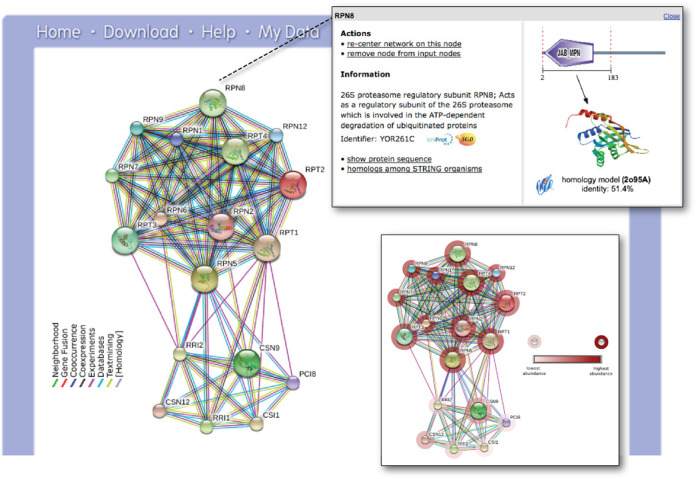
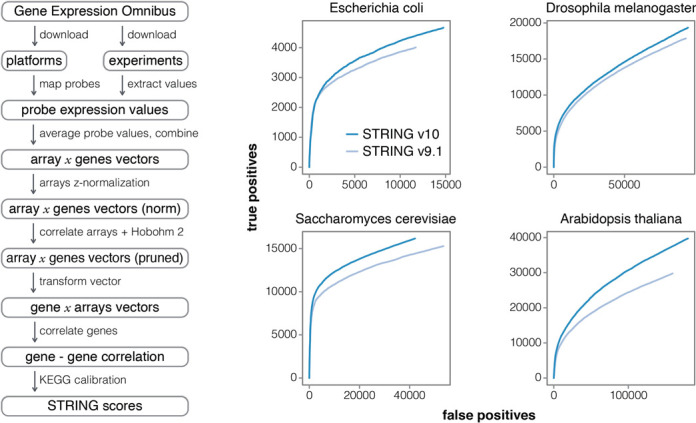
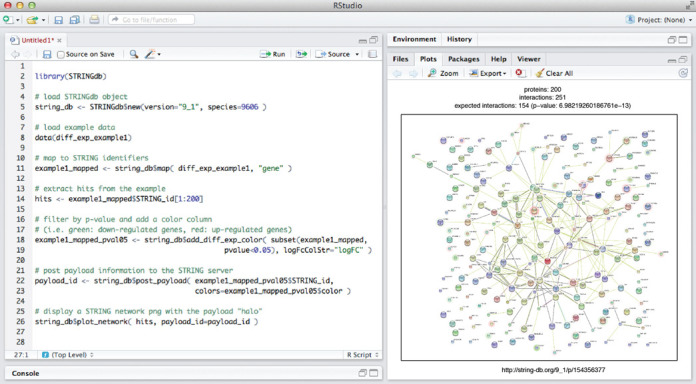
The many functional partnerships and interactions that occur between proteins are at the core of cellular processing and their systematic characterization helps to provide context in molecular systems biology. However, known and predicted interactions are scattered over multiple resources, and the available data exhibit notable differences in terms of quality and completeness. The STRING database (http://string-db.org) aims to provide a critical assessment and integration of protein-protein interactions, including direct (physical) as well as indirect (functional) associations. The new version 10.0 of STRING covers more than 2000 organisms, which has necessitated novel, scalable algorithms for transferring interaction information between organisms. For this purpose, we have introduced hierarchical and self-consistent orthology annotations for all interacting proteins, grouping the proteins into families at various levels of phylogenetic resolution. Further improvements in version 10.0 include a completely redesigned prediction pipeline for inferring protein-protein associations from co-expression data, an API interface for the R computing environment and improved statistical analysis for enrichment tests in user-provided networks.
Overview
The claims and statistics of this paper haven’t been checked yet.
Free: it reads the open-access text and checks the first 5 claims that cite a source we can check. Create a free account to check every claim.
Integrity signals
Registry
Cites
Statistics
Figures
Verification
Claims the paper makes
The claims and statistics of this paper haven’t been checked yet.
Free: it reads the open-access text and checks the first 5 claims that cite a source we can check. Create a free account to check every claim.
Claims other papers make about this one
Each is checked against this paper’s own text: does it say what the citing paper says it does?
The source backs part of the claim, not all of it — or backs it for a different population, condition or comparison.
In the citing paper
“The BioPlex database was developed by the method of affinity purification and mass spectrometry, whereas the STRING and InWeb contain information from various sources.”
From Deep Multilayer Brain Proteomics Identifies Molecular Networks in Alzheimer’s Disease Progression (2020) · cites this paper as Szklarczyk et al., 2015
Experimental — accuracy not yet measuredThe source backs part of the claim, not all of it — or backs it for a different population, condition or comparison.
In the citing paper
“Protein–protein interaction (PPI) networks and weighted gene co-expression network analysis (WGCNA) based on the RNA sequencing and microarray data have been revealed to establish potent organized biological strategies for mining the functional gene modules and detecting novel prognostic biomarkers [11,12].”
From Bioinformatics Analysis and Validation of Potential Markers Associated with Prediction and Prognosis of Gastric Cancer (2024) · cites this paper as [12]
Experimental — accuracy not yet measuredThe cited source says what the claim attributes to it.
In the citing paper
“The bias towards well-described proteins2 is confirmed not only with respect to publications but also with respect to patents, NIH funding patterns, GWAS and mouse phenotype data (data not shown), availability of molecular probes such as antibodies and small molecules, and even queries in the STRING18database”
From Unexplored therapeutic opportunities in the human genome (2018) · cites this paper as [18]
The cited source says what the claim attributes to it.
In the citing paper
“Superimposing these 44 proteins along with APP and TAU onto STRING protein-protein interaction database [61] elucidated 4 protein interaction modules associated with amyloid pathology and mitochondrial functions, while no TAU related protein interaction module was identified with this small list (Fig. 3e).”
From Integrated analysis of ultra-deep proteomes in cortex, cerebrospinal fluid and serum reveals a mitochondrial signature in Alzheimer’s disease (2020) · cites this paper as [61]
The cited source says what the claim attributes to it.
In the citing paper
“We next queried the STRING database of protein-protein interactions27, which revealed numerous groups of physically interacting proteins within this functional category”
From Trisomy 21 causes changes in the circulating proteome indicative of chronic autoinflammation (2017) · cites this paper as [27]
1 more claim about this paper
Create a free account to see every claim other papers make about this one.
Self-check
Percentages, sums and reported differences re-computed from the paper’s own numbers.
The self-check needs the paper’s full text.
Citations
Cites
Gene Ontology: tool for the unification of biology
Ashburner, M., Ball, C. A., Blake, J. A., Botstein, D., Butler, H., Cherry, J. M., Davis, A. P., Dolinski, K., Dwight, S. S., Eppig, J. T., et al. (2000) · Nature Genetics · doi:10.1038/75556 · Cited by 43,206
Cluster analysis and display of genome-wide expression patterns
Eisen, M. B., Spellman, P. T., Brown, P. O., & Botstein, D. (1998) · Proceedings of the National Academy of Sciences · doi:10.1073/pnas.95.25.14863 · Cited by 16,184 · cited 1×
“It has long been established that co-expression is a proxy for co-regulation (35,36) and a strong indicator of functional associations.”
BackgroundBioconductor: open software development for computational biology and bioinformatics
Gentleman, R. C., Carey, V. J., Bates, D. M., Bolstad, B., Dettling, M., Dudoit, S., Ellis, B., Gautier, L., Ge, Y., Gentry, J., et al. (2004) · Genome Biology · doi:10.1186/gb-2004-5-10-r80 · Cited by 12,172 · cited 1×
“0, we have introduced a further option: direct access from the R programming environment, following the Bioconductor standard (39).”
MethodNCBI GEO: archive for functional genomics data sets—update
Barrett, T., Wilhite, S. E., Ledoux, P., Evangelista, C., Kim, I. F., Tomashevsky, M., Marshall, K. A., Phillippy, K. H., Sherman, P. M., Holko, M., et al. (2012) · Nucleic Acids Research · doi:10.1093/nar/gks1193 · Cited by 10,418 · cited 3×
“As of March 2014, GEO consisted of more than 12 000 different platforms (GPL), 45 000 experiments (GSE) and over 1 million matrices (GSM).”
MethodInfluentialThe Reactome pathway Knowledgebase
Fabregat, A., Sidiropoulos, K., Garapati, P., Gillespie, M., Hausmann, K., Haw, R., Jassal, B., Jupe, S., Korninger, F., McKay, S., et al. (2016) · Nucleic Acids Research · doi:10.1093/nar/gkv1351 · Cited by 5,605
STRING v9.1: protein-protein interaction networks, with increased coverage and integration
Franceschini, A., Szklarczyk, D., Frankild, S., Kuhn, M., Simonovic, M., Roth, A., Lin, J., Minguez, P., Bork, P., von Mering, C., et al. (2012) · Nucleic Acids Research · doi:10.1093/nar/gks1094 · Cited by 4,398
Self-citationSzklarczyk, D., Franceschini, A., Kuhn, M., Simonovic, M., Roth, A., Minguez, P., Doerks, T., Stark, M., Muller, J., Bork, P., et al. (2011) · Nucleic Acids Research · doi:10.1093/nar/gkq973 · Cited by 3,460
Self-citationData, information, knowledge and principle: back to metabolism in KEGG
Kanehisa, M., Goto, S., Sato, Y., Kawashima, M., Furumichi, M., & Tanabe, M. (2014) · Nucleic Acids Research · doi:10.1093/nar/gkt1076 · Cited by 3,092 · cited 1×
“All sources of interaction evidence are benchmarked and calibrated against previous knowledge, using the high-level functional groupings provided by the manually curated Kyoto Encyclopedia of Genes and Genomes (KEGG) pathway maps (5).”
MethodSTRING 8--a global view on proteins and their functional interactions in 630 organisms
Jensen, L. J., Kuhn, M., Stark, M., Chaffron, S., Creevey, C., Muller, J., Doerks, T., Julien, P., Roth, A., Simonovic, M., et al. (2009) · Nucleic Acids Research · doi:10.1093/nar/gkn760 · Cited by 2,474
Self-citationThe Database of Interacting Proteins: 2004 update
Salwinski, L. (2004) · Nucleic Acids Research · doi:10.1093/nar/gkh086 · Cited by 2,271
Cited by
Items 101–200 of 1,079
Erratum: Unexplored therapeutic opportunities in the human genome
Oprea, T. I., Bologa, C. G., Brunak, S., Campbell, A., Gan, G. N., Gaulton, A., Gomez, S. M., Guha, R., Hersey, A., Holmes, J., et al. (2018) · Nature Reviews Drug Discovery · doi:10.1038/nrd.2018.52 · Cited by 311
Self-citationErshaid, N., Sharon, Y., Doron, H., Raz, Y., Shani, O., Cohen, N., Monteran, L., Leider-Trejo, L., Ben-Shmuel, A., Yassin, M., et al. (2019) · Nature Communications · doi:10.1038/s41467-019-12370-8 · Cited by 310
Learning from Co-expression Networks: Possibilities and Challenges
Serin, E. A. R., Nijveen, H., Hilhorst, H. W. M., & Ligterink, W. (2016) · Frontiers in Plant Science · doi:10.3389/fpls.2016.00444 · Cited by 304
“The InterProScan (Quevillon et al., 2005) or STRING (Szklarczyk et al., 2014) databases can be investigated to retrieve known physical interactions, both structurally resolved and experimentally validated.”
BackgroundConstructing knowledge graphs and their biomedical applications
Nicholson, D. N., & Greene, C. S. (2020) · Computational and Structural Biotechnology Journal · doi:10.1016/j.csbj.2020.05.017 · Cited by 299
Murillo, O. D., Thistlethwaite, W., Rozowsky, J., Subramanian, S. L., Lucero, R., Shah, N., Jackson, A. R., Srinivasan, S., Chung, A., Laurent, C. D., et al. (2019) · Cell · doi:10.1016/j.cell.2019.02.018 · Cited by 298
Fundamentals of protein interaction network mapping
Snider, J., Kotlyar, M., Saraon, P., Yao, Z., Jurisica, I., & Stagljar, I. (2015) · Molecular Systems Biology · doi:10.15252/msb.20156351 · Cited by 298
“Some databases now include computationally predicted interactions (e.g., STRING (Szklarczyk et al , 2015), FpClass (Kotlyar et al , 2015), IID (Kotlyar et al , 2016)), functionally related protein pairs (e.g., STRING (Szklarczyk et al , 2015)), interactions between proteins and other molecule types (e.g., BIND (Bader…”
BackgroundAutomated sample preparation with SP 3 for low‐input clinical proteomics
Müller, T., Kalxdorf, M., Longuespée, R., Kazdal, D. N., Stenzinger, A., & Krijgsveld, J. (2020) · Molecular Systems Biology · doi:10.15252/msb.20199111 · Cited by 295
Proteogenomic Characterization of Human Early-Onset Gastric Cancer
Mun, D.-G., Bhin, J., Kim, S., Kim, H., Jung, J. H., Jung, Y., Jang, Y. E., Park, J. M., Kim, H., Jung, Y., et al. (2019) · Cancer Cell · doi:10.1016/j.ccell.2018.12.003 · Cited by 294
Assessment of network module identification across complex diseases
The DREAM Module Identification Challenge Consortium, Choobdar, S., Ahsen, M. E., Crawford, J., Tomasoni, M., Fang, T., Lamparter, D., Lin, J., Hescott, B., Hu, X., et al. (2019) · Nature Methods · doi:10.1038/s41592-019-0509-5 · Cited by 294
Mosaic RAS/MAPK variants cause sporadic vascular malformations which respond to targeted therapy
Al-Olabi, L., Polubothu, S., Dowsett, K., Andrews, K. A., Stadnik, P., Joseph, A. P., Knox, R., Pittman, A., Clark, G., Baird, W., et al. (2018) · Journal of Clinical Investigation · doi:10.1172/jci98589 · Cited by 292
Systematic Evaluation of Molecular Networks for Discovery of Disease Genes
Huang, J. K., Carlin, D. E., Yu, M. K., Zhang, W., Kreisberg, J. F., Tamayo, P., & Ideker, T. (2018) · Cell Systems · doi:10.1016/j.cels.2018.03.001 · Cited by 289
Understanding Society Scientific Group, Wain, L. V., Geisinger-Regeneron DiscovEHR Collaboration, Shrine, N., Artigas, M. S., Erzurumluoglu, A. M., Noyvert, B., Bossini-Castillo, L., Obeidat, M., Henry, A. P., et al. (2017) · Nature Genetics · doi:10.1038/ng.3787 · Cited by 288
Kinome screen of ferroptosis reveals a novel role of ATM in regulating iron metabolism
Chen, P.-H., Wu, J., Ding, C.-K. C., Lin, C.-C., Pan, S., Bossa, N., Xu, Y., Yang, W.-H., Mathey-Prevot, B., & Chi, J.-T. (2020) · Cell Death & Differentiation · doi:10.1038/s41418-019-0393-7 · Cited by 287
“To examine whether the gene products corresponding to these hits might interact with each other as part of interacting networks, we used STRING analysis [22] (Fig.”
Method863 genomes reveal the origin and domestication of chicken
Wang, M.-S., Thakur, M., Peng, M.-S., Jiang, Y., Frantz, L. A. F., Li, M., Zhang, J.-J., Wang, S., Peters, J., Otecko, N. O., et al. (2020) · Cell Research · doi:10.1038/s41422-020-0349-y · Cited by 286
“Additional information: Online content: Any materials and methods, research reporting summaries, additional references and Supplementary information, Xigures (1-68) and tables (1-12) are available at online Supplementary Xile.”
MethodDurbin, A. D., Zimmerman, M. W., Dharia, N. V., Abraham, B. J., Iniguez, A. B., Weichert-Leahey, N., He, S., Krill-Burger, J. M., Root, D. E., Vazquez, F., et al. (2018) · Nature Genetics · doi:10.1038/s41588-018-0191-z · Cited by 283
Position-Transitional Particle Swarm Optimization-Incorporated Latent Factor Analysis
Luo, X., Yuan, Y., Chen, S., Zeng, N., & Wang, Z. (2022) · IEEE Transactions on Knowledge and Data Engineering · doi:10.1109/tkde.2020.3033324 · Cited by 264
“An HiDS matrix is commonly adopted to describe such specific relationships among them [4 ‐ 15], where only a small fractions of its entries are given and the most others are unknown.”
MethodTrouble is coming: Signaling pathways that regulate general stress responses in bacteria
Gottesman, S. (2019) · Journal of Biological Chemistry · doi:10.1074/jbc.rev119.005593 · Cited by 262
“This organization is well-conserved in many gammaproteobacteria (and beyond) (21), although the basis for this relationship is not currently known.”
BackgroundTranslation control of the immune checkpoint in cancer and its therapeutic targeting
Xu, Y., Poggio, M., Jin, H. Y., Shi, Z., Forester, C. M., Wang, Y., Stumpf, C. R., Xue, L., Devericks, E., So, L., et al. (2019) · Nature Medicine · doi:10.1038/s41591-018-0321-2 · Cited by 261
Genetic architecture of subcortical brain structures in 38,851 individuals
Satizabal, C. L., Adams, H. H. H., Hibar, D. P., White, C. C., Knol, M. J., Stein, J. L., Scholz, M., Sargurupremraj, M., Jahanshad, N., Roshchupkin, G. V., et al. (2019) · Nature Genetics · doi:10.1038/s41588-019-0511-y · Cited by 260
“To explore potential functional relationships between proteins encoded by our set of genes, we conducted protein–protein interaction analyses in STRING 32 .”
MethodNetwork pharmacology: a crucial approach in traditional Chinese medicine research
Zhai, Y., Liu, L., Zhang, F., Chen, X., Wang, H., Zhou, J., Chai, K., Liu, J., Lei, H., Lu, P., et al. (2025) · Chinese Medicine · doi:10.1186/s13020-024-01056-z · Cited by 260
Artificial intelligence in drug design
Zhong, F., Xing, J., Li, X., Liu, X., Fu, Z., Xiong, Z., Lu, D., Wu, X., Zhao, J., Tan, X., et al. (2018) · Science China Life Sciences · doi:10.1007/s11427-018-9342-2 · Cited by 259
The Landscape of Isoform Switches in Human Cancers
Vitting-Seerup, K., & Sandelin, A. (2017) · Molecular Cancer Research · doi:10.1158/1541-7786.mcr-16-0459 · Cited by 256
“The protein network analysis was done via the STRING (39) webserver (http://string-db.org/) only considering "high confidence" interactions (interaction score > 0.7).”
MethodInfluentialIdentification of cancer driver genes based on nucleotide context
Dietlein, F., Weghorn, D., Taylor-Weiner, A., Richters, A., Reardon, B., Liu, D., Lander, E. S., Van Allen, E. M., & Sunyaev, S. R. (2020) · Nature Genetics · doi:10.1038/s41588-019-0572-y · Cited by 255
“49 .”
BackgroundMethodIntegrated interactions database: tissue-specific view of the human and model organism interactomes
Kotlyar, M., Pastrello, C., Sheahan, N., & Jurisica, I. (2016) · Nucleic Acids Research · doi:10.1093/nar/gkv1115 · Cited by 254
“This number can be further extended with predicted PPIs (23–25) but databases tend to focus on either detected or predicted interactions, though STRING (21) includes predictions of functional interactions.”
BackgroundBiological network analysis with deep learning
Muzio, G., O’Bray, L., & Borgwardt, K. (2021) · Briefings in Bioinformatics · doi:10.1093/bib/bbaa257 · Cited by 248
“org/pina STRING [70] Database of PPIs and tool for obtaining functional enriched PPI networks for multiple model organisms [71], [55], [72], [41], [46]”
Exome sequencing of 457 autism families recruited online provides evidence for autism risk genes
Feliciano, P., Zhou, X., Astrovskaya, I., Turner, T. N., Wang, T., Brueggeman, L., Barnard, R., Hsieh, A., Snyder, L. G., Muzny, D. M., et al. (2019) · npj Genomic Medicine · doi:10.1038/s41525-019-0093-8 · Cited by 247
Male Sterility in Maize after Transient Heat Stress during the Tetrad Stage of Pollen Development
Begcy, K., Nosenko, T., Zhou, L.-Z., Fragner, L., Weckwerth, W., & Dresselhaus, T. (2019) · Plant Physiology · doi:10.1104/pp.19.00707 · Cited by 247
“GRMZM2G167613 is thought to encode a protein that may function in the pollen cell wall during pollen tube stigma coupling (Yue et al., 2014) and that is induced in response to Ustilago maydis infection (Tanaka et al., 2014).”
BackgroundHuang, J., Liu, X., Li, D., Shao, Z., Cao, H., Zhang, Y., Trompouki, E., Bowman, T. V., Zon, L. I., Yuan, G.-C., et al. (2016) · Developmental Cell · doi:10.1016/j.devcel.2015.12.014 · Cited by 247
“To validate the network predictions, we first compared the network-identified interactions with known protein-protein interactions (PPIs) from Lit-BM-13 (Rolland et al., 2014) and STRING (Szklarczyk et al., 2015) databases.”
MethodInfluentialCancer Associated Fibroblasts: The Architects of Stroma Remodeling
Santi, A., Kugeratski, F. G., & Zanivan, S. (2018) · PROTEOMICS · doi:10.1002/pmic.201700167 · Cited by 244
Wang, H., Dey, K. K., Chen, P.-C., Li, Y., Niu, M., Cho, J.-H., Wang, X., Bai, B., Jiao, Y., Chepyala, S. R., et al. (2020) · Molecular Neurodegeneration · doi:10.1186/s13024-020-00384-6 · Cited by 243
“Superimposing these 44 proteins along with APP and TAU onto STRING protein-protein interaction database [61] elucidated 4 protein interaction modules associated with amyloid pathology and mitochondrial functions, while no TAU related protein interaction module was identified with this small list (Fig.”
Protein interaction networks revealed by proteome coevolution
Cong, Q., Anishchenko, I., Ovchinnikov, S., & Baker, D. (2019) · Science · doi:10.1126/science.aaw6718 · Cited by 241
Deng, J.-L., Xu, Y.-H., & Wang, G. (2019) · Frontiers in Genetics · doi:10.3389/fgene.2019.00695 · Cited by 240
“The Search Tool for the Retrieval of Interacting Genes (STRING; http://string.embl.de/) is a biological database designed to construct a PPI network of DEGs based on the known and predicted PPIs, and then analyze the functional interactions between proteins (Szklarczyk et al., 2015).”
BackgroundChen, S., & Mar, J. C. (2018) · BMC Bioinformatics · doi:10.1186/s12859-018-2217-z · Cited by 235
“These networks represent potential interactions that are derived from evidence based on experimental results, metabolic and signal transduction pathway databases, text-mining and other sources of information [39] .”
BackgroundSynergistic effects of common schizophrenia risk variants
Schrode, N., Ho, S.-M., Yamamuro, K., Dobbyn, A., Huckins, L., Matos, M. R., Cheng, E., Deans, P. J. M., Flaherty, E., Barretto, N., et al. (2019) · Nature Genetics · doi:10.1038/s41588-019-0497-5 · Cited by 234
TCM-Mesh: The database and analytical system for network pharmacology analysis for TCM preparations
Zhang, R.-Z., Yu, S.-J., Bai, H., & Ning, K. (2017) · Scientific Reports · doi:10.1038/s41598-017-03039-7 · Cited by 233
Garg, A. D., De Ruysscher, D., & Agostinis, P. (2016) · OncoImmunology · doi:10.1080/2162402x.2015.1069938 · Cited by 230
Microglia affect α-synuclein cell-to-cell transfer in a mouse model of Parkinson’s disease
George, S., Rey, N. L., Tyson, T., Esquibel, C., Meyerdirk, L., Schulz, E., Pierce, S., Burmeister, A. R., Madaj, Z., Steiner, J. A., et al. (2019) · Molecular Neurodegeneration · doi:10.1186/s13024-019-0335-3 · Cited by 229
Shen, J., Cao, B., Wang, Y., Ma, C., Zeng, Z., Liu, L., Li, X., Tao, D., Gong, J., & Xie, D. (2018) · Journal of Experimental & Clinical Cancer Research · doi:10.1186/s13046-018-0850-z · Cited by 229
Trisomy 21 causes changes in the circulating proteome indicative of chronic autoinflammation
Sullivan, K. D., Evans, D., Pandey, A., Hraha, T. H., Smith, K. P., Markham, N., Rachubinski, A. L., Wolter-Warmerdam, K., Hickey, F., Espinosa, J. M., et al. (2017) · Scientific Reports · doi:10.1038/s41598-017-13858-3 · Cited by 228
Stowers, R. S., Shcherbina, A., Israeli, J., Gruber, J. J., Chang, J., Nam, S., Rabiee, A., Teruel, M. N., Snyder, M. P., Kundaje, A., et al. (2019) · Nature Biomedical Engineering · doi:10.1038/s41551-019-0420-5 · Cited by 226
Revisiting the role of dihydroorotate dehydrogenase as a therapeutic target for cancer
Madak, J. T., Bankhead, A., Cuthbertson, C. R., Showalter, H. D., & Neamati, N. (2019) · Pharmacology & Therapeutics · doi:10.1016/j.pharmthera.2018.10.012 · Cited by 225
Multiomics to elucidate inflammatory bowel disease risk factors and pathways
Agrawal, M., Allin, K. H., Petralia, F., Colombel, J.-F., & Jess, T. (2022) · Nature Reviews Gastroenterology & Hepatology · doi:10.1038/s41575-022-00593-y · Cited by 225
Structural, functional and evolutionary diversity of 4-coumarate-CoA ligase in plants
Lavhale, S. G., Kalunke, R. M., & Giri, A. P. (2018) · Planta · doi:10.1007/s00425-018-2965-z · Cited by 225
Self-Organization of Mouse Stem Cells into an Extended Potential Blastoid
Sozen, B., Cox, A. L., De Jonghe, J., Bao, M., Hollfelder, F., Glover, D. M., & Zernicka-Goetz, M. (2019) · Developmental Cell · doi:10.1016/j.devcel.2019.11.014 · Cited by 225
Leday, G. G. R., Vértes, P. E., Richardson, S., Greene, J. R., Regan, T., Khan, S., Henderson, R., Freeman, T. C., Pariante, C. M., Harrison, N. A., et al. (2018) · Biological Psychiatry · doi:10.1016/j.biopsych.2017.01.021 · Cited by 222
“We used Search Tool for the Retrieval of Interacting Genes/ Proteins analysis (37) to visualize the network of protein– protein interactions between the proteins coded by the MDD-165 consensus set.”
BackgroundMethodGene expression variability across cells and species shapes innate immunity
Hagai, T., Chen, X., Miragaia, R. J., Rostom, R., Gomes, T., Kunowska, N., Henriksson, J., Park, J.-E., Proserpio, V., Donati, G., et al. (2018) · Nature · doi:10.1038/s41586-018-0657-2 · Cited by 220
Neuron-specific signatures in the chromosomal connectome associated with schizophrenia risk
Rajarajan, P., Borrman, T., Liao, W., Schrode, N., Flaherty, E., Casiño, C., Powell, S., Yashaswini, C., LaMarca, E. A., Kassim, B., et al. (2018) · Science · doi:10.1126/science.aat4311 · Cited by 219
Protein Bioinformatics Databases and Resources
Chen, C., Huang, H., & Wu, C. H. (2017) · Methods in Molecular Biology · doi:10.1007/978-1-4939-6783-4_1 · Cited by 219
Li, Z., Ivanov, A. A., Su, R., Gonzalez-Pecchi, V., Qi, Q., Liu, S., Webber, P., McMillan, E., Rusnak, L., Pham, C., et al. (2017) · Nature Communications · doi:10.1038/ncomms14356 · Cited by 219
p300-Mediated Lysine 2-Hydroxyisobutyrylation Regulates Glycolysis
Huang, H., Tang, S., Ji, M., Tang, Z., Shimada, M., Liu, X., Qi, S., Locasale, J. W., Roeder, R. G., Zhao, Y., et al. (2018) · Molecular Cell · doi:10.1016/j.molcel.2018.04.011 · Cited by 219
“Consistent with the enriched KEGG pathways, the protein interaction networks of p300-regulated Khib proteins, based on the Search Tool for the Retrieval of Interacting Genes/Proteins (STRING) database (Szklarczyk et al., 2015), showed several functional clusters, including glycolysis/gluconeogenesis (Figure 3D).”
Wu, M., Li, X., Zhang, T., Liu, Z., & Zhao, Y. (2019) · Frontiers in Oncology · doi:10.3389/fonc.2019.00996 · Cited by 217
RAID v2.0: an updated resource of RNA-associated interactions across organisms
Yi, Y., Zhao, Y., Li, C., Zhang, L., Huang, H., Li, Y., Liu, L., Hou, P., Cui, T., Tan, P., et al. (2017) · Nucleic Acids Research · doi:10.1093/nar/gkw1052 · Cited by 217
Yang, Q., Li, B., Tang, J., Cui, X., Wang, Y., Li, X., Hu, J., Chen, Y., Xue, W., Lou, Y., et al. (2020) · Briefings in Bioinformatics · doi:10.1093/bib/bbz049 · Cited by 217
“(iii) The role in SCZ played by the hub genes identified from Protein-protein interaction (PPI) network STRING database [60] was applied to construct PPI network with high confidence level ( > 0.7).”
BackgroundInfluentialIntegrative methods for analyzing big data in precision medicine
Gligorijević, V., Malod‐Dognin, N., & Pržulj, N. (2016) · PROTEOMICS · doi:10.1002/pmic.201500396 · Cited by 216
Proteome-wide identification of the endogenous ADP-ribosylome of mammalian cells and tissue
Martello, R., Leutert, M., Jungmichel, S., Bilan, V., Larsen, S. C., Young, C., Hottiger, M. O., & Nielsen, M. L. (2016) · Nature Communications · doi:10.1038/ncomms12917 · Cited by 214
Characterization and Genetic Analyses of New Genes Coding for NOD2 Interacting Proteins
Thiébaut, R., Esmiol, S., Lecine, P., Mahfouz, B., Hermant, A., Nicoletti, C., Parnis, S., Perroy, J., Borg, J.-P., Pascoe, L., et al. (2016) · PLOS ONE · doi:10.1371/journal.pone.0165420 · Cited by 212
Jean Beltran, P. M., Federspiel, J. D., Sheng, X., & Cristea, I. M. (2017) · Molecular Systems Biology · doi:10.15252/msb.20167062 · Cited by 212
“Common resources for network visualization include STRING (Szklarczyk et al , 2015) and Cytoscape (Cline et al , 2007), and we point the readers to a protocol guiding users through IP-MS data analysis (Morris et al , 2014).”
Zemek, R. M., De Jong, E., Chin, W. L., Schuster, I. S., Fear, V. S., Casey, T. H., Forbes, C., Dart, S. J., Leslie, C., Zaitouny, A., et al. (2019) · Science Translational Medicine · doi:10.1126/scitranslmed.aav7816 · Cited by 212
“Protein- protein interactions of the differentially expressed genes were created using InnateDB network analysis tool (unfiltered) and network created using NetworkAnalyst (29), with STRING interactome, confidence cutoff of 900 (51).”
MethodMolecular networks in Network Medicine: Development and applications
Silverman, E. K., Schmidt, H. H. H. W., Anastasiadou, E., Altucci, L., Angelini, M., Badimon, L., Balligand, J., Benincasa, G., Capasso, G., Conte, F., et al. (2020) · WIREs Systems Biology and Medicine · doi:10.1002/wsbm.1489 · Cited by 211
“…above steps also hold true when reusing publicly available data (when performing a meta-analysis combining several data sets, for example) or other resources providing large-scale genomic information (e.g., accessing protein – protein interaction from the STRING database; Szklarczyk et al., 2015).”
BackgroundInfluentialProtein synthesis rates and ribosome occupancies reveal determinants of translation elongation rates
Riba, A., Di Nanni, N., Mittal, N., Arhné, E., Schmidt, A., & Zavolan, M. (2019) · Proceedings of the National Academy of Sciences · doi:10.1073/pnas.1817299116 · Cited by 209
“Gene ontology and KEGG pathway enrichments have been performed through the STRING database (68).”
MethodCharacterization of Human Cancer Cell Lines by Reverse-phase Protein Arrays
Li, J., Zhao, W., Akbani, R., Liu, W., Ju, Z., Ling, S., Vellano, C. P., Roebuck, P., Yu, Q., Eterovic, A. K., et al. (2017) · Cancer Cell · doi:10.1016/j.ccell.2017.01.005 · Cited by 209
“…expression with its interacting partners in protein interaction networks derived from databases such as HPRD and STRING (Stelzl et al., 2005; Szklarczyk et al., 2015) arker classifiers using the AUC scores. ghlighted, with green representing negative correlations and red representing (A)…”
MethodYoon, K.-J., Song, G., Qian, X., Pan, J., Xu, D., Rho, H.-S., Kim, N.-S., Habela, C., Zheng, L., Jacob, F., et al. (2017) · Cell Stem Cell · doi:10.1016/j.stem.2017.07.014 · Cited by 208
“…Bitplane http://www.bitplane.com/imaris/imaris MATLAB MathWorks https://www.mathworks.com/products/matlab.html STRING 10.0 database (Szklarczyk et al., 2015) http://string-db.org/ DAVID 6.8 (Huang da et al., 2009) https://david.ncifcrf.gov/ Other SuperSignal West Dura Extended…”
MethodInfluentialCRISPR Activation Screens Systematically Identify Factors that Drive Neuronal Fate and Reprogramming
Liu, Y., Yu, C., Daley, T. P., Wang, F., Cao, W. S., Bhate, S., Lin, X., Still, C., Liu, H., Zhao, D., et al. (2018) · Cell Stem Cell · doi:10.1016/j.stem.2018.09.003 · Cited by 207
Blattner, M., Liu, D., Robinson, B. D., Huang, D., Poliakov, A., Gao, D., Nataraj, S., Deonarine, L. D., Augello, M. A., Sailer, V., et al. (2017) · Cancer Cell · doi:10.1016/j.ccell.2017.02.004 · Cited by 204
“Finally, to gain insight to the associations among proteins deregulated by SPOP-F133V, we performed a network analysis of up- and down-regulated proteins using STRING, a database of known and predicted protein-protein interactions (Szklarczyk et al., 2015).”
Kim-Hellmuth, S., Bechheim, M., Pütz, B., Mohammadi, P., Nédélec, Y., Giangreco, N., Becker, J., Kaiser, V., Fricker, N., Beier, E., et al. (2017) · Nature Communications · doi:10.1038/s41467-017-00366-1 · Cited by 203
HMOX1 upregulation promotes ferroptosis in diabetic atherosclerosis
Meng, Z., Liang, H., Zhao, J., Gao, J., Liu, C., Ma, X., Liu, J., Liang, B., Jiao, X., Cao, J., et al. (2021) · Life Sciences · doi:10.1016/j.lfs.2021.119935 · Cited by 202
Kalkat, M., Resetca, D., Lourenco, C., Chan, P.-K., Wei, Y., Shiah, Y.-J., Vitkin, N., Tong, Y., Sunnerhagen, M., Done, S. J., et al. (2018) · Molecular Cell · doi:10.1016/j.molcel.2018.09.031 · Cited by 201
The Dengue Virus NS5 Protein Intrudes in the Cellular Spliceosome and Modulates Splicing
De Maio, F. A., Risso, G., Iglesias, N. G., Shah, P., Pozzi, B., Gebhard, L. G., Mammi, P., Mancini, E., Yanovsky, M. J., Andino, R., et al. (2016) · PLOS Pathogens · doi:10.1371/journal.ppat.1005841 · Cited by 201
Kelley, K. W., Nakao-Inoue, H., Molofsky, A. V., & Oldham, M. C. (2018) · Nature Neuroscience · doi:10.1038/s41593-018-0216-z · Cited by 198
Spatiotemporal dissection of the cell cycle with single-cell proteogenomics
Mahdessian, D., Cesnik, A. J., Gnann, C., Danielsson, F., Stenström, L., Arif, M., Zhang, C., Le, T., Johansson, F., Schutten, R., et al. (2021) · Nature · doi:10.1038/s41586-021-03232-9 · Cited by 198
Genic insights from integrated human proteomics in GeneCards
Fishilevich, S., Zimmerman, S., Kohn, A., Iny Stein, T., Olender, T., Kolker, E., Safran, M., & Lancet, D. (2016) · Database · doi:10.1093/database/baw030 · Cited by 197
“Previous attempts to similarly annotate gene–gene expression partners or establish expression-based gene networks, focused on RNA expression datasets and antibody-based proteomics, analyzing across-tissue patterns (13, 14, 18, 47) or time-scale and subcellular localization, as was done in yeast (48).”
BackgroundMethodInfluentialForbes, T. A., Howden, S. E., Lawlor, K., Phipson, B., Maksimovic, J., Hale, L., Wilson, S., Quinlan, C., Ho, G., Holman, K., et al. (2018) · The American Journal of Human Genetics · doi:10.1016/j.ajhg.2018.03.014 · Cited by 194
Mineo, M., Ricklefs, F., Rooj, A. K., Lyons, S. M., Ivanov, P., Ansari, K. I., Nakano, I., Chiocca, E. A., Godlewski, J., & Bronisz, A. (2016) · Cell Reports · doi:10.1016/j.celrep.2016.05.018 · Cited by 194
“gov) and STRING v10 protein-protein interaction networks software (Szklarczyk et al., 2015).”
Toledo, C. M., Ding, Y., Hoellerbauer, P., Davis, R. J., Basom, R., Girard, E. J., Lee, E., Corrin, P., Hart, T., Bolouri, H., et al. (2015) · Cell Reports · doi:10.1016/j.celrep.2015.11.021 · Cited by 194
“(D) STRING network (Szklarczyk et al., 2015) representations of GSC-specific hits scoring in pooled retest assays, along with other GSC-specific hits either scoring in CRISPR-Cas9 or shRNA genome-wide screens (see text and also Figure S5 for details of sgRNA and shRNA screen comparisons).”
Haraden, C. A., Huebner, J. L., Hsueh, M.-F., Li, Y.-J., & Kraus, V. B. (2019) · Arthritis Research & Therapy · doi:10.1186/s13075-019-1923-x · Cited by 193
Schopp, I. M., Amaya Ramirez, C. C., Debeljak, J., Kreibich, E., Skribbe, M., Wild, K., & Béthune, J. (2017) · Nature Communications · doi:10.1038/ncomms15690 · Cited by 193
Tumor matrix stiffness promotes metastatic cancer cell interaction with the endothelium
Reid, S. E., Kay, E. J., Neilson, L. J., Henze, A., Serneels, J., McGhee, E. J., Dhayade, S., Nixon, C., Mackey, J. B., Santi, A., et al. (2017) · The EMBO Journal · doi:10.15252/embj.201694912 · Cited by 192
“The subset of significantly regulated proteins was analyzed with STRING (version 10.0; Szklarczyk et al , 2015).”
InfluentialBRCA2 abrogation triggers innate immune responses potentiated by treatment with PARP inhibitors
Reisländer, T., Lombardi, E. P., Groelly, F. J., Miar, A., Porru, M., Di Vito, S., Wright, B., Lockstone, H., Biroccio, A., Harris, A., et al. (2019) · Nature Communications · doi:10.1038/s41467-019-11048-5 · Cited by 192
Hoang, S. A., Oseini, A., Feaver, R. E., Cole, B. K., Asgharpour, A., Vincent, R., Siddiqui, M., Lawson, M. J., Day, N. C., Taylor, J. M., et al. (2019) · Scientific Reports · doi:10.1038/s41598-019-48746-5 · Cited by 192
The molecular origin and taxonomy of mucinous ovarian carcinoma
Cheasley, D., Wakefield, M. J., Ryland, G. L., Allan, P. E., Alsop, K., Amarasinghe, K. C., Ananda, S., Anglesio, M. S., Au-Yeung, G., Böhm, M., et al. (2019) · Nature Communications · doi:10.1038/s41467-019-11862-x · Cited by 191
Westergaard, D., Stærfeldt, H.-H., Tønsberg, C., Jensen, L. J., & Brunak, S. (2018) · PLOS Computational Biology · doi:10.1371/journal.pcbi.1005962 · Cited by 190
Self-citationRole of the ERO1-PDI interaction in oxidative protein folding and disease
Shergalis, A. G., Hu, S., Bankhead, A., & Neamati, N. (2020) · Pharmacology & Therapeutics · doi:10.1016/j.pharmthera.2020.107525 · Cited by 190
m1A Regulated Genes Modulate PI3K/AKT/mTOR and ErbB Pathways in Gastrointestinal Cancer
Zhao, Y., Zhao, Q., Kaboli, P. J., Shen, J., Li, M., Wu, X., Yin, J., Zhang, H., Wu, Y., Lin, L., et al. (2019) · Translational Oncology · doi:10.1016/j.tranon.2019.06.007 · Cited by 187
V'kovski, P., Gerber, M., Kelly, J., Pfaender, S., Ebert, N., Braga Lagache, S., Simillion, C., Portmann, J., Stalder, H., Gaschen, V., et al. (2019) · eLife · doi:10.7554/elife.42037 · Cited by 186
“The MCL clustering algorithm was applied to each STRING network using an inflation parameter of 3 (Szklarczyk et al., 2017; Szklarczyk et al., 2015). siRNA screen A custom siRNA library targeting each individual RTC-proximal factor (On Target Plus, SMART pool, 96-well plate format, Dharmacon, GE…”
MethodExpanding PROTACtable genome universe of E3 ligases
Liu, Y., Yang, J., Wang, T., Luo, M., Chen, Y., Chen, C., Ronai, Z., Zhou, Y., Ruppin, E., & Han, L. (2023) · Nature Communications · doi:10.1038/s41467-023-42233-2 · Cited by 186
A Fast Non-Negative Latent Factor Model Based on Generalized Momentum Method
Luo, X., Liu, Z., Li, S., Shang, M., & Wang, Z. (2021) · IEEE Transactions on Systems, Man, and Cybernetics: Systems · doi:10.1109/tsmc.2018.2875452 · Cited by 186
“Note that industrial data like rating data in a recommender system [4]–[6] and interaction weights in protein interactome mapping [7]–[9] are commonly defined to be non-negative.”
BackgroundULK1 and ULK2 Regulate Stress Granule Disassembly Through Phosphorylation and Activation of VCP/p97
Wang, B., Maxwell, B. A., Joo, J. H., Gwon, Y., Messing, J., Mishra, A., Shaw, T. I., Ward, A. L., Quan, H., Sakurada, S. M., et al. (2019) · Molecular Cell · doi:10.1016/j.molcel.2019.03.027 · Cited by 185
Infiltrative and drug‐resistant slow‐cycling cells support metabolic heterogeneity in glioblastoma
Hoang‐Minh, L. B., Siebzehnrubl, F. A., Yang, C., Suzuki‐Hatano, S., Dajac, K., Loche, T., Andrews, N., Schmoll Massari, M., Patel, J., Amin, K., et al. (2018) · The EMBO Journal · doi:10.15252/embj.201798772 · Cited by 185
“Using the String database (Szklarczyk et al , 2015), we found that lipid metabolism was one of the top 5 most significantly enriched gene pathway groups in GBM recurrent tumors (GO:0033993, Fig EV2A and Table EV2).”
Sanchez, M.-P., Govignon-Gion, A., Croiseau, P., Fritz, S., Hozé, C., Miranda, G., Martin, P., Barbat, A., Letaïef, R., Rocha, D., et al. (2017) · Genetics Selection Evolution · doi:10.1186/s12711-017-0344-z · Cited by 187
“0 database of protein–protein interaction (PPI) networks [23].”
BackgroundZerihun, M., Sukumaran, S., & Qvit, N. (2023) · International Journal of Molecular Sciences · doi:10.3390/ijms24065785 · Cited by 184
Chen, L., Lu, D., Sun, K., Xu, Y., Hu, P., Li, X., & Xu, F. (2019) · Gene · doi:10.1016/j.gene.2019.01.001 · Cited by 183
Characterization of the direct targets of FOXO transcription factors throughout evolution
Webb, A. E., Kundaje, A., & Brunet, A. (2016) · Aging Cell · doi:10.1111/acel.12479 · Cited by 182
“Network analysis was performed using STRING (v10) (Szklarczyk et al., 2015) and displayed using confidence view.”
MethodTISSUES 2.0: an integrative web resource on mammalian tissue expression
Palasca, O., Santos, A., Stolte, C., Gorodkin, J., & Jensen, L. J. (2018) · Database · doi:10.1093/database/bay003 · Cited by 182
“We obtained a dictionary of aliases (gene/protein names) and identifiers for protein-coding genes for all four organisms from the STRING database (23).”
MethodSelf-citationNamed Entity Recognition and Relation Detection for Biomedical Information Extraction
Perera, N., Dehmer, M., & Emmert-Streib, F. (2020) · Frontiers in Cell and Developmental Biology · doi:10.3389/fcell.2020.00673 · Cited by 181
“Databases for known Entity-Relations in Biomedical research include DISEASES (Pletscher-Frankild et al., 2015) and DisGeNet (Bauer-Mehren et al., 2010) providing gene-disease relations, CTD (Davis et al., 2012) with relations between chemicals, genes, phenotypes, diseases, exposures and pathways, SIDER (Kuhn et al., 2…”
BackgroundRegional protein expression in human Alzheimer’s brain correlates with disease severity
Xu, J., Patassini, S., Rustogi, N., Riba-Garcia, I., Hale, B. D., Phillips, A. M., Waldvogel, H., Haines, R., Bradbury, P., Stevens, A., et al. (2019) · Communications Biology · doi:10.1038/s42003-018-0254-9 · Cited by 181
Spatial and Temporal Mapping of Human Innate Lymphoid Cells Reveals Elements of Tissue Specificity
Yudanin, N. A., Schmitz, F., Flamar, A.-L., Thome, J. J. C., Tait Wojno, E., Moeller, J. B., Schirmer, M., Latorre, I. J., Xavier, R. J., Farber, D. L., et al. (2019) · Immunity · doi:10.1016/j.immuni.2019.01.012 · Cited by 180
Losartan ameliorates dystrophic epidermolysis bullosa and uncovers new disease mechanisms
Nyström, A., Thriene, K., Mittapalli, V., Kern, J. S., Kiritsi, D., Dengjel, J., & Bruckner‐Tuderman, L. (2015) · EMBO Molecular Medicine · doi:10.15252/emmm.201505061 · Cited by 180
“B Proteins from cluster 5 carrying GO terms related to inflammation were short-listed and analyzed on potential interactions using default settings in STRING DB (confidence score 0.4) (Szklarczyk et al, 2015).”
MethodInfluentialGenome-wide methylation patterns predict clinical benefit of immunotherapy in lung cancer
Kim, J. Y., Choi, J. K., & Jung, H. (2020) · Clinical Epigenetics · doi:10.1186/s13148-020-00907-4 · Cited by 179
“Networks of mutually exclusive genes were created using STRING and GeneMANIA, tools that predict functional interaction networks using multiple databases [54, 55].”
Functional Metabolomics Describes the Yeast Biosynthetic Regulome
Mülleder, M., Calvani, E., Alam, M. T., Wang, R. K., Eckerstorfer, F., Zelezniak, A., & Ralser, M. (2016) · Cell · doi:10.1016/j.cell.2016.09.007 · Cited by 178
Larsen, S. C., Hendriks, I. A., Lyon, D., Jensen, L. J., & Nielsen, M. L. (2018) · Cell Reports · doi:10.1016/j.celrep.2018.07.083 · Cited by 178
Self-citation
Metadata
- Authors
- Szklarczyk, D., Franceschini, A., Wyder, S., Forslund, K., Heller, D., Huerta-Cepas, J., Simonovic, M., Roth, A., Santos, A., Tsafou, K. P., Kuhn, M., Bork, P., Jensen, L. J., & von Mering, C.
- Affiliations
- SIB Swiss Institute of Bioinformatics (CH)
- University of Copenhagen (DK)
- Max Planck Institute of Molecular Cell Biology and Genetics (DE)
- ORCID
- Venue
- Nucleic Acids Research
- Publisher
- Oxford University Press (OUP)
- Published
- 2014-10-28
- Volume
- 43
- Issue
- D1
- Pages
- D447-D452
- ISSN
- 0305-1048 (ISSN-L)
- 1362-4962
- PMC
- PMC4383874
- OpenAlex
- W2096173332
- Cited by
- 10,436
- References
- 45
- Citations by year
- 2026: 288 · 2025: 545 · 2024: 821 · 2023: 783 · 2022: 996 · 2021: 1183 · 2020: 1406 · 2019: 1348 · 2018: 1177 · 2017: 1054 · 2016: 680 · 2015: 140 · 2014: 4
- FWCI
- 256.77
- Type
- journal article
- Language
- en
- Open access
- gold
- doi.org
- Locations
- Nucleic Acids Research (publishedVersion, cc-by)
- Europe PMC (PubMed Central) (publishedVersion, cc-by)
- PubMed Central (publishedVersion, cc-by)
- PubMed (publishedVersion)
- Research at the University of Copenhagen (University of Copenhagen) (publishedVersion)
- MDC Repository (Max-Delbrueck-Center for Molecular Medicine) (acceptedVersion)
- Zurich Open Repository and Archive (University of Zurich) (acceptedVersion, other-oa)
- reroDoc Digital Library (submittedVersion)
- Zurich Open Repository and Archive (University of Zurich) (submittedVersion, other-oa)
- Zurich Open Repository and Archive (University of Zurich)
- Funders
- European Molecular Biology Laboratory
- Universität Wien
- Novo Nordisk
- Universität Zürich
- Topics
- Life Sciences › Biochemistry, Genetics and Molecular Biology › Molecular Biology › Bioinformatics and Genomic Networks
- Life Sciences › Biochemistry, Genetics and Molecular Biology › Molecular Biology › Genomics and Phylogenetic Studies
- Health Sciences › Medicine › Health Informatics › Biomedical Text Mining and Ontologies
- Keywords
- protein-protein interaction network, STRING database, enrichment analysis, tree of life, R API
- MeSH terms
- Proteins, Software, Internet, Gene Expression Profiling, Protein Interaction Mapping, Databases, Protein
About these checks
Registry, retraction, Cites and statistics results are computed, not judged, with one exception: a printed reference that no index lists is read once by a model before it counts as a citation error. Claims are extracted by a model and kept only when their quote appears verbatim in the text; each cited source is then checked, with a model’s help, for whether it says what the claim relies on. Those verdicts can be wrong — read the claim’s quote and the cited source before relying on one.
Statistics and arithmetic are recomputed, not judged.
Confidence bands are shown only for fields calibrated on our annotated test set. None is calibrated yet, so no band is shown.
What counts as a claim ›How we measure confidence ›How we check this ›
Are you an author, or do you see a problem with this page? Request a review
Data sources
Bibliographic data: Semantic Scholar, OpenAlex, Crossref.
Contains information from the Semantic Scholar Academic Graph Datasets, made available under the ODC Attribution License (ODC-BY 1.0).
Semantic Scholar’s data is described in: Kinney, R., et al. (2023). The Semantic Scholar Open Data Platform. arXiv:2301.10140.
