

STRING v10: protein–protein interaction networks, integrated over the tree of life
Open accessThe DOI matches its Crossref record; 44 of the 45 references it cites were found in a registry or an index.
Abstract
The many functional partnerships and interactions that occur between proteins are at the core of cellular processing and their systematic characterization helps to provide context in molecular systems biology. However, known and predicted interactions are scattered over multiple resources, and the available data exhibit notable differences in terms of quality and completeness. The STRING database (http://string-db.org) aims to provide a critical assessment and integration of protein-protein interactions, including direct (physical) as well as indirect (functional) associations. The new version 10.0 of STRING covers more than 2000 organisms, which has necessitated novel, scalable algorithms for transferring interaction information between organisms. For this purpose, we have introduced hierarchical and self-consistent orthology annotations for all interacting proteins, grouping the proteins into families at various levels of phylogenetic resolution. Further improvements in version 10.0 include a completely redesigned prediction pipeline for inferring protein-protein associations from co-expression data, an API interface for the R computing environment and improved statistical analysis for enrichment tests in user-provided networks.
Overview
The claims and statistics of this paper haven’t been checked yet.
Free: it reads the open-access text and checks the first 5 claims that cite a source we can check. Create a free account to check every claim.
Integrity signals
Registry
Cites
Statistics
Figures
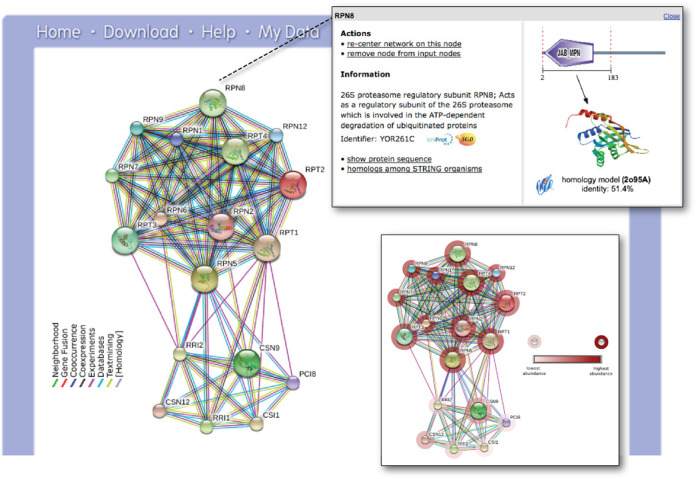
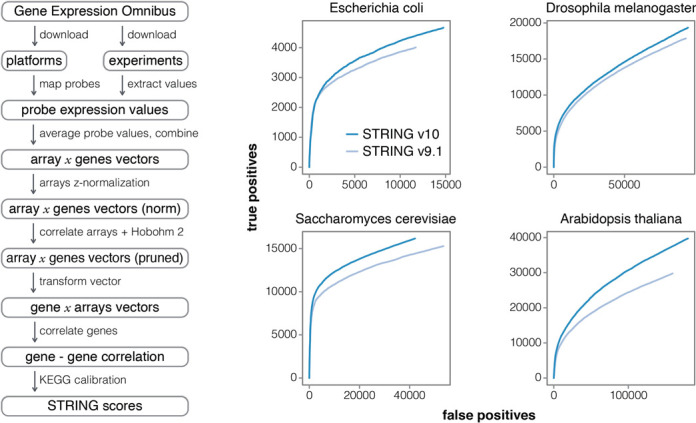
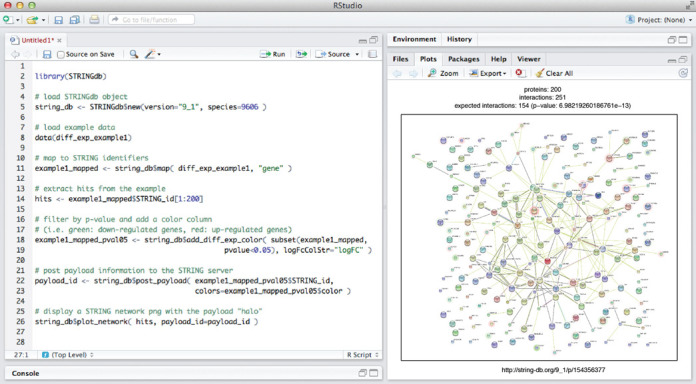
Verification
Claims the paper makes
The claims and statistics of this paper haven’t been checked yet.
Free: it reads the open-access text and checks the first 5 claims that cite a source we can check. Create a free account to check every claim.
Claims other papers make about this one
Each is checked against this paper’s own text: does it say what the citing paper says it does?
The source backs part of the claim, not all of it — or backs it for a different population, condition or comparison.
In the citing paper
“The BioPlex database was developed by the method of affinity purification and mass spectrometry, whereas the STRING and InWeb contain information from various sources.”
From Deep Multilayer Brain Proteomics Identifies Molecular Networks in Alzheimer’s Disease Progression (2020) · cites this paper as Szklarczyk et al., 2015
Experimental — accuracy not yet measuredThe source backs part of the claim, not all of it — or backs it for a different population, condition or comparison.
In the citing paper
“Protein–protein interaction (PPI) networks and weighted gene co-expression network analysis (WGCNA) based on the RNA sequencing and microarray data have been revealed to establish potent organized biological strategies for mining the functional gene modules and detecting novel prognostic biomarkers [11,12].”
From Bioinformatics Analysis and Validation of Potential Markers Associated with Prediction and Prognosis of Gastric Cancer (2024) · cites this paper as [12]
Experimental — accuracy not yet measuredThe cited source says what the claim attributes to it.
In the citing paper
“The bias towards well-described proteins2 is confirmed not only with respect to publications but also with respect to patents, NIH funding patterns, GWAS and mouse phenotype data (data not shown), availability of molecular probes such as antibodies and small molecules, and even queries in the STRING18database”
From Unexplored therapeutic opportunities in the human genome (2018) · cites this paper as [18]
The cited source says what the claim attributes to it.
In the citing paper
“Superimposing these 44 proteins along with APP and TAU onto STRING protein-protein interaction database [61] elucidated 4 protein interaction modules associated with amyloid pathology and mitochondrial functions, while no TAU related protein interaction module was identified with this small list (Fig. 3e).”
From Integrated analysis of ultra-deep proteomes in cortex, cerebrospinal fluid and serum reveals a mitochondrial signature in Alzheimer’s disease (2020) · cites this paper as [61]
The cited source says what the claim attributes to it.
In the citing paper
“We next queried the STRING database of protein-protein interactions27, which revealed numerous groups of physically interacting proteins within this functional category”
From Trisomy 21 causes changes in the circulating proteome indicative of chronic autoinflammation (2017) · cites this paper as [27]
1 more claim about this paper
Create a free account to see every claim other papers make about this one.
Self-check
Percentages, sums and reported differences re-computed from the paper’s own numbers.
The self-check needs the paper’s full text.
Citations
Cites
Gene Ontology: tool for the unification of biology
Ashburner, M., Ball, C. A., Blake, J. A., Botstein, D., Butler, H., Cherry, J. M., Davis, A. P., Dolinski, K., Dwight, S. S., Eppig, J. T., et al. (2000) · Nature Genetics · doi:10.1038/75556 · Cited by 43,206
Cluster analysis and display of genome-wide expression patterns
Eisen, M. B., Spellman, P. T., Brown, P. O., & Botstein, D. (1998) · Proceedings of the National Academy of Sciences · doi:10.1073/pnas.95.25.14863 · Cited by 16,184 · cited 1×
“It has long been established that co-expression is a proxy for co-regulation (35,36) and a strong indicator of functional associations.”
BackgroundBioconductor: open software development for computational biology and bioinformatics
Gentleman, R. C., Carey, V. J., Bates, D. M., Bolstad, B., Dettling, M., Dudoit, S., Ellis, B., Gautier, L., Ge, Y., Gentry, J., et al. (2004) · Genome Biology · doi:10.1186/gb-2004-5-10-r80 · Cited by 12,172 · cited 1×
“0, we have introduced a further option: direct access from the R programming environment, following the Bioconductor standard (39).”
MethodNCBI GEO: archive for functional genomics data sets—update
Barrett, T., Wilhite, S. E., Ledoux, P., Evangelista, C., Kim, I. F., Tomashevsky, M., Marshall, K. A., Phillippy, K. H., Sherman, P. M., Holko, M., et al. (2012) · Nucleic Acids Research · doi:10.1093/nar/gks1193 · Cited by 10,418 · cited 3×
“As of March 2014, GEO consisted of more than 12 000 different platforms (GPL), 45 000 experiments (GSE) and over 1 million matrices (GSM).”
MethodInfluentialThe Reactome pathway Knowledgebase
Fabregat, A., Sidiropoulos, K., Garapati, P., Gillespie, M., Hausmann, K., Haw, R., Jassal, B., Jupe, S., Korninger, F., McKay, S., et al. (2016) · Nucleic Acids Research · doi:10.1093/nar/gkv1351 · Cited by 5,605
STRING v9.1: protein-protein interaction networks, with increased coverage and integration
Franceschini, A., Szklarczyk, D., Frankild, S., Kuhn, M., Simonovic, M., Roth, A., Lin, J., Minguez, P., Bork, P., von Mering, C., et al. (2012) · Nucleic Acids Research · doi:10.1093/nar/gks1094 · Cited by 4,398
Self-citationSzklarczyk, D., Franceschini, A., Kuhn, M., Simonovic, M., Roth, A., Minguez, P., Doerks, T., Stark, M., Muller, J., Bork, P., et al. (2011) · Nucleic Acids Research · doi:10.1093/nar/gkq973 · Cited by 3,460
Self-citationData, information, knowledge and principle: back to metabolism in KEGG
Kanehisa, M., Goto, S., Sato, Y., Kawashima, M., Furumichi, M., & Tanabe, M. (2014) · Nucleic Acids Research · doi:10.1093/nar/gkt1076 · Cited by 3,092 · cited 1×
“All sources of interaction evidence are benchmarked and calibrated against previous knowledge, using the high-level functional groupings provided by the manually curated Kyoto Encyclopedia of Genes and Genomes (KEGG) pathway maps (5).”
MethodSTRING 8--a global view on proteins and their functional interactions in 630 organisms
Jensen, L. J., Kuhn, M., Stark, M., Chaffron, S., Creevey, C., Muller, J., Doerks, T., Julien, P., Roth, A., Simonovic, M., et al. (2009) · Nucleic Acids Research · doi:10.1093/nar/gkn760 · Cited by 2,474
Self-citationThe Database of Interacting Proteins: 2004 update
Salwinski, L. (2004) · Nucleic Acids Research · doi:10.1093/nar/gkh086 · Cited by 2,271
Cited by
Items 701–800 of 1,079
Taye, N., Karoulias, S. Z., & Hubmacher, D. (2019) · Journal of Orthopaedic Research® · doi:10.1002/jor.24440 · Cited by 83
“org/) which is a curated database that draws information from multiple experimental databases and by text mining.(172) The network was visualized using Cytoscape (https://cytoscape.”
MethodLi, X., Gao, Y., Xu, Z., Zhang, Z., Zheng, Y., & Qi, F. (2019) · Cancer Medicine · doi:10.1002/cam4.2774 · Cited by 83
Rahman, M. H., Peng, S., Hu, X., Chen, C., Rahman, M. R., Uddin, S., Quinn, J. M. W., & Moni, M. A. (2020) · International Journal of Environmental Research and Public Health · doi:10.3390/ijerph17031035 · Cited by 83
“We also generated protein-protein interaction (PPI) networks based on the physical interaction of the proteins of DEGs by using information from the STRING database [62] via Network Analyst using the confidence score 900, where proteins are represented by nodes and protein interactions represented by edges.”
Methodm 6 A modification patterns and tumor immune landscape in clear cell renal carcinoma
Zhong, J., Liu, Z., Cai, C., Duan, X., Deng, T., & Zeng, G. (2021) · Journal for ImmunoTherapy of Cancer · doi:10.1136/jitc-2020-001646 · Cited by 83
Oleanolic Acid Induces Autophagy and Apoptosis via the AMPK-mTOR Signaling Pathway in Colon Cancer
Hu, C., Cao, Y., Li, P., Tang, X., Yang, M., Gu, S., Xiong, K., Li, T. X., & Xiao, T. (2021) · Journal of Oncology · doi:10.1155/2021/8281718 · Cited by 83
Chen, S., Jiang, H., Cao, Y. W., Wang, Y., Hu, Z., Zhu, Z., & Chai, Y. (2016) · Scientific Reports · doi:10.1038/srep24245 · Cited by 83
Lorey, M. B., Rossi, K., Eklund, K. K., Nyman, T. A., & Matikainen, S. (2017) · Molecular & Cellular Proteomics · doi:10.1074/mcp.m116.064840 · Cited by 83
Meena, M., Aamir, M., Kumar, V., Swapnil, P., & Upadhyay, R. S. (2018) · Environmental and Experimental Botany · doi:10.1016/j.envexpbot.2018.01.007 · Cited by 83
Inhibition of REST Suppresses Proliferation and Migration in Glioblastoma Cells
Zhang, D., Li, Y., Wang, R., Li, Y., Shi, P., Kan, Z., & Pang, X. (2016) · International Journal of Molecular Sciences · doi:10.3390/ijms17050664 · Cited by 82
“The interactomes of genes/proteins were analyzed by using Search Tool for the Retrieval of Interacting Genes/Proteins (STRING) database [15], followed by biological process (GO) analysis and KEGG (Kyoto Encyclopedia of Genes and Genomes) pathways analysis.”
MethodA single dividing cell population with imbalanced fate drives oesophageal tumour growth
Frede, J., Greulich, P., Nagy, T., Simons, B. D., & Jones, P. H. (2016) · Nature Cell Biology · doi:10.1038/ncb3400 · Cited by 78
Expanding horizons: new roles for non-canonical RNA-binding proteins in cancer
Moore, S., Järvelin, A. I., Davis, I., Bond, G. L., & Castelló, A. (2017) · Current Opinion in Genetics & Development · doi:10.1016/j.gde.2017.11.006 · Cited by 82
“(a) STRING [61] with links to cancer based on annotations in COSMIC, OMIM, and GO (see showing breakdown of cancer-linked RBPs by RBD classification (i.”
BackgroundInfluentialWu, Y., Tan, X., Liu, P., Yang, Y., Huang, Y., Liu, X., Meng, X., Yu, B., Wu, M., & Jin, H. (2019) · Experimental Cell Research · doi:10.1016/j.yexcr.2019.03.022 · Cited by 82
A Non-amyloid Prion Particle that Activates a Heritable Gene Expression Program
Chakravarty, A. K., Smejkal, T., Itakura, A. K., Garcia, D. M., & Jarosz, D. F. (2019) · Molecular Cell · doi:10.1016/j.molcel.2019.10.028 · Cited by 82
Gong, W., Song, Q., Ji, K., Gong, S., Wang, L., Chen, L., Zhang, J., & Yuan, D. (2020) · Journal of Agricultural and Food Chemistry · doi:10.1021/acs.jafc.0c05381 · Cited by 82
LR-GNN: a graph neural network based on link representation for predicting molecular associations
Kang, C., Zhang, H., Liu, Z., Huang, S., & Yin, Y. (2021) · Briefings in Bioinformatics · doi:10.1093/bib/bbab513 · Cited by 83
The use of Gene Ontology terms and KEGG pathways for analysis and prediction of oncogenes
Xing, Z., Chu, C., Chen, L., & Kong, X. (2016) · Biochimica et Biophysica Acta (BBA) - General Subjects · doi:10.1016/j.bbagen.2016.01.012 · Cited by 83
Matz-Soja, M., Rennert, C., Schönefeld, K., Aleithe, S., Boettger, J., Schmidt-Heck, W., Weiss, T. S., Hovhannisyan, A., Zellmer, S., Klöting, N., et al. (2016) · eLife · doi:10.7554/elife.13308 · Cited by 81
Two's company: studying interspecies relationships with dual RNA-seq
Wolf, T., Kämmer, P., Brunke, S., & Linde, J. (2017) · Current Opinion in Microbiology · doi:10.1016/j.mib.2017.09.001 · Cited by 83
Erban, T., Shcherbachenko, E., Talacko, P., & Harant, K. (2019) · Journal of Natural Products · doi:10.1021/acs.jnatprod.8b00968 · Cited by 83
A novel circRNA-miRNA-mRNA network identifies circ-YOD1 as a biomarker for coronary artery disease
Miao, L., Yin, R., Zhang, Q., Liao, P.-J., Wang, Y., Nie, R.-J., & Li, H. (2019) · Scientific Reports · doi:10.1038/s41598-019-54603-2 · Cited by 84
Natural proteome diversity links aneuploidy tolerance to protein turnover
Muenzner, J., Trébulle, P., Agostini, F., Zauber, H., Messner, C. B., Steger, M., Kilian, C., Lau, K., Barthel, N., Lehmann, A., et al. (2024) · Nature · doi:10.1038/s41586-024-07442-9 · Cited by 81
“…membership: Complex Portal of the EBI (accessed December 2020) 73 ; protein–protein interactions (PPIs): STRING database (accessed November 2022) 74 ; prediction of protein disorder and linear interacting peptides by Alpha-Fold, MobiDB and anchor: MobiDB (accessed October 2022) 75 ; GC content…”
BackgroundEfficient pathway enrichment and network analysis of GWAS summary data using GSA-SNP2
Yoon, S., Nguyen, H. C. T., Yoo, Y. J., Kim, J., Baik, B., Kim, S., Kim, J., Kim, S., & Nam, D. (2018) · Nucleic Acids Research · doi:10.1093/nar/gky175 · Cited by 81
“Note that many of the interaction edges in the STRING networks were generated from the text-mining of the literature including GWAS papers, and should be carefully analyzed to avoid circular argument.”
MethodInfluentialGene3D: expanding the utility of domain assignments
Lam, S. D., Dawson, N. L., Das, S., Sillitoe, I., Ashford, P., Lee, D., Lehtinen, S., Orengo, C. A., & Lees, J. G. (2016) · Nucleic Acids Research · doi:10.1093/nar/gkv1231 · Cited by 68
“There are many high quality protein interaction resources available with advanced network display tools (14,22).”
BackgroundZhou, Y. G., Gao, Y., Xu, C., Shen, H., Tian, Q., & Deng, H. (2018) · Scientific Reports · doi:10.1038/s41598-018-19196-2 · Cited by 81
Proteome‐wide analysis of phospho‐regulated PDZ domain interactions
Sundell, G. N., Arnold, R., Ali, M., Naksukpaiboon, P., Orts, J., Güntert, P., Chi, C. N., & Ivarsson, Y. (2018) · Molecular Systems Biology · doi:10.15252/msb.20178129 · Cited by 75
Song, B., Du, J., Song, D., Ren, J.-C., & Ye, F. (2018) · Biological Research · doi:10.1186/s40659-018-0192-5 · Cited by 81
“org/) database provides the functional associations between proteins for more than 200 organisms [26].”
BackgroundWei, C., Zhu, M.-X., Lu, N., Peng, R., Yang, X., Zhang, P.-F., Wang, L., & Gu, J. (2018) · Oncogene · doi:10.1038/s41388-018-0531-6 · Cited by 81
Effect Sizes of Deletions and Duplications on Autism Risk Across the Genome
Douard, E., Zeribi, A., Schramm, C., Tamer, P., Loum, M. A., Nowak, S., Saci, Z., Lord, M.-P., Rodríguez-Herreros, B., Jean-Louis, M., et al. (2021) · American Journal of Psychiatry · doi:10.1176/appi.ajp.2020.19080834 · Cited by 72
Advances in protein-protein interaction network analysis for Parkinson's disease
Tomkins, J. E., & Manzoni, C. (2021) · Neurobiology of Disease · doi:10.1016/j.nbd.2021.105395 · Cited by 84
“Protein interaction query tools such as STRING, PINOT, HIPPIE and MIST, together with network visualisation software such as Cytoscape (Shannon et al., 2003), facilitate PPI network analysis.”
Hjorth, M., Norheim, F., Meen, A. J., Pourteymour, S., Lee, S., Holen, T., Jensen, J., Birkeland, K. I., Martinov, V. N., Langleite, T. M., et al. (2015) · Physiological Reports · doi:10.14814/phy2.12473 · Cited by 65
“SERPINE1 is a serine protease inhibitor and is a predicted functional partner of SRGN in the STRING database (Korpetinou et al. 2014; Szklarczyk et al. 2015).”
BackgroundLibro, R., Scionti, D., Diomede, F., Marchisio, M., Grassi, G., Pollastro, F., Piattelli, A., Bramanti, P., Mazzon, E., & Trubiani, O. (2016) · Frontiers in Physiology · doi:10.3389/fphys.2016.00559 · Cited by 81
“Once identified the genes differentially expressed between CTRhGMSCs and CBD-hGMSCs, the enrichment analyses of the Gene Ontology processes (GO) and the pathway analyses were conducted using the online free databases such as bioDBnet (Mudunuri et al., 2009), STRING (Szklarczyk et al., 2015) and KEEG (Kanehisa et al.,…”
MethodInfluentialMesnage, R., Agapito-Tenfen, S. Z., Vilperte, V., Renney, G., Ward, M. A., Séralini, G., Nodari, R. O., & Antoniou, M. N. (2016) · Scientific Reports · doi:10.1038/srep37855 · Cited by 82
Jia, X., Chen, J., Megger, D. A., Zhang, X., Kozlowski, M., Zhang, L., Fang, Z., Li, J., Chu, Q., Wu, M., et al. (2017) · Molecular & Cellular Proteomics · doi:10.1074/mcp.m116.063503 · Cited by 74
Vegter, E. L., Ovchinnikova, E. S., van Veldhuisen, D. J., Jaarsma, T., Berezikov, E., van der Meer, P., & Voors, A. A. (2017) · Clinical Research in Cardiology · doi:10.1007/s00392-017-1096-z · Cited by 82
“Next, an interaction network of the overlapping miRNA targets (i.e. genes targeted by more than one of the investigated miRNAs) was created using STRING v.10 [22].”
Global analysis of protein lysine succinylation profiles in common wheat
Zhang, Y., Wang, G., Song, L., Mu, P., Wang, S., Liang, W., & Lin, Q. F. (2017) · BMC Genomics · doi:10.1186/s12864-017-3698-2 · Cited by 81
“Protein-protein interaction (PPI) for the identified succinylated proteins were performed using Cytoscape software and a PPI network was generated from the STRING database according to the methods described previously [22, 23].”
Plasma-derived extracellular vesicle proteins as a source of biomarkers for lung adenocarcinoma
Vykoukal, J. V., Sun, N., Aguilar-Bonavides, C., Katayama, H., Tanaka, I., Fahrmann, J. F., Capello, M., Fujimoto, J., Aguilar, M., Wistuba, I. I., et al. (2017) · Oncotarget · doi:10.18632/oncotarget.20748 · Cited by 81
“Gene ontology (GO) enrichment analysis [14] of the high abundance proteins (Table 2C) revealed that the top three cellular component terms for the group were: blood microparticle, extracellular space and extracellular exosome (FDR = 4.”
BackgroundMethodInfluentialMSD1 regulates pedicellate spikelet fertility in sorghum through the jasmonic acid pathway
Jiao, Y., Lee, Y. K., Gladman, N. P., Chopra, R., Christensen, S. A., Regulski, M., Burow, G. B., Hayes, C. M., BURKE, J. J., Ware, D., et al. (2018) · Nature Communications · doi:10.1038/s41467-018-03238-4 · Cited by 81
Li, S.-L., Ye, Y., & Wang, S. (2018) · PLoS ONE · doi:10.1371/journal.pone.0198055 · Cited by 82
Lee, M.-S., Han, H.-J., Han, S. Y., Kim, I. Y., Chae, S., Lee, C.-S., Kim, S. E., Yoon, S. G., Park, J.-W., Kim, J.-H., et al. (2018) · Nature Communications · doi:10.1038/s41467-018-05721-4 · Cited by 81
Mutations in Chromatin Modifier and Ephrin Signaling Genes in Vein of Galen Malformation
Durán, D., Zeng, X. Q., Jin, S. C., Choi, J., Nelson-Williams, C. J., Yatsula, B. A., Gaillard, J. R., Furey, C. G., Lu, Q., Timberlake, A. T., et al. (2018) · Neuron · doi:10.1016/j.neuron.2018.11.041 · Cited by 81
PyMINEr Finds Gene and Autocrine-Paracrine Networks from Human Islet scRNA-Seq
Tyler, S. R., Rotti, P. G., Sun, X., Yi, Y., Xie, W., Winter, M. C., Flamme-Wiese, M. J., Tucker, B. A., Mullins, R. F., Norris, A. W., et al. (2019) · Cell Reports · doi:10.1016/j.celrep.2019.01.063 · Cited by 80
“To test this hypothesis, we compared the transcriptional graph network defined by PyMINEr with previously annotated protein-protein interactions (Szklarczyk et al., 2015).”
Influentialde Paz, A. M., Khajavi, L., Martin, H., Claveria‐Gimeno, R., Dieck, S. T., Cheema, M. S., Sanchez-Mut, J. V., Moksa, M. M., Carles, A., Brodie, N. I., et al. (2019) · Epigenetics & Chromatin · doi:10.1186/s13072-019-0298-1 · Cited by 83
“Functional network analysis (STRINGv10 [42]) revealed a higher than expected number of connections between all E1 and E2 interactors (Additional file 4: Fig.”
BackgroundTamošiūnė, I., Stanienė, G., Haimi, P., Stanys, V., Rugienius, R., & Baniulis, D. (2018) · Frontiers in Plant Science · doi:10.3389/fpls.2018.00889 · Cited by 81
“2-w1 and their interactions were assessed using the String database with default settings (Szklarczyk et al., 2015).”
MethodZhang, C., Zheng, W., Freddolino, L., & Zhang, Y. (2018) · Journal of Molecular Biology · doi:10.1016/j.jmb.2018.03.004 · Cited by 80
“In the first approach, the query sequence is mapped to its closest BLAST hit in STRING PPI database [38].”
Construction and Analysis of Protein-Protein Interaction Network of Heroin Use Disorder
Chen, S.-J., Liao, D., Chen, C., Wang, T., & Chen, K.-C. (2019) · Scientific Reports · doi:10.1038/s41598-019-41552-z · Cited by 80
Inactivation of NUPR1 promotes cell death by coupling ER-stress responses with necrosis
Santofimia‐Castaño, P., Lan, W., Bintz, J., Gayet, O., Carrier, A., Lomberk, G. A., Neira, J. L., González, A., Urrutia, R. A., Soubeyran, P., et al. (2018) · Scientific Reports · doi:10.1038/s41598-018-35020-3 · Cited by 80
Jiang, Y., Rong, Y., Cheng, H., Huang, X. S., Zhao, K., & Huang, J. (2022) · Proceedings of the VLDB Endowment · doi:10.14778/3514061.3514070 · Cited by 80
“, attributes) are more likely to interact with each other [39].”
BackgroundIdentifying Cancer Subtypes from miRNA-TF-mRNA Regulatory Networks and Expression Data
Xu, T., Le, T. D., Liu, L., Wang, R., Sun, B., & Li, J. (2016) · PLoS ONE · doi:10.1371/journal.pone.0152792 · Cited by 81
“0 [27].”
Liu, H., Zeng, L., Yang, K., & Zhang, G. (2016) · Evidence-based Complementary and Alternative Medicine · doi:10.1155/2016/2960372 · Cited by 81
“The data of proteinprotein interaction (PPI) come fromString [30] (http://stringdb.”
Individual-specific edge-network analysis for disease prediction
Yu, X., Zhang, J., Sun, S., Zhou, X., Zeng, T., & Chen, L. (2017) · Nucleic Acids Research · doi:10.1093/nar/gkx787 · Cited by 80
“Hence, we only focused on the edges from STRING database (29) to reduce computational complexity in biological context.”
MethodYuan, L., Zeng, G., Chen, L., Wang, G., Wang, X., Cao, X., Lü, M., Liu, X., Qian, G., Xiao, Y., et al. (2018) · International Journal of Biological Sciences · doi:10.7150/ijbs.23574 · Cited by 80
Liebelt, F., Jansen, N. S., Kumar, S., Gracheva, E., Claessens, L. A., Vries, M. V., Willemstein, E., & Vertegaal, A. C. O. (2019) · Nature Communications · doi:10.1038/s41467-019-11773-x · Cited by 80
Deoxynivalenol Induces Inflammation in IPEC-J2 Cells by Activating P38 Mapk And Erk1/2
Zhang, H., Deng, X., Zhou, C., Wu, W., & Zhang, H. (2020) · Toxins · doi:10.3390/toxins12030180 · Cited by 80
Saggau, C., Bacher, P., Esser, D., Rasa, M., Meise, S., Mohr, N., Kohlstedt, N., Hutloff, A., Schacht, S.-S., Dargvainiene, J., et al. (2024) · Immunity · doi:10.1016/j.immuni.2024.08.005 · Cited by 79
LRRK2 mediates microglial neurotoxicity via NFATc2 in rodent models of synucleinopathies
Kim, C., Beilina, A., Smith, N., Li, Y., Kim, M., Kumaran, R., Kaganovich, A., Mamais, A., Adame, A., Iba, M., et al. (2020) · Science Translational Medicine · doi:10.1126/scitranslmed.aay0399 · Cited by 79
Guo, W., Wang, Q., Zhan, Y., Chen, X., Qi, Y., Zhang, J., Wang, Y., Xu, X., & Zhu, L. (2016) · Scientific Reports · doi:10.1038/srep27931 · Cited by 79
Kao, P. Y. P., Leung, K. H., Chan, L., Yip, S. P., & Yap, M. K. H. (2016) · Biochimica et Biophysica Acta (BBA) - General Subjects · doi:10.1016/j.bbagen.2016.11.030 · Cited by 80
Identification of key candidate genes involved in melanoma metastasis
Chen, J., Wu, F., Shi, Y., Yang, D., Xu, M., Lai, Y., & Liu, Y. (2019) · Molecular Medicine Reports · doi:10.3892/mmr.2019.10314 · Cited by 79
“org/) is an online database that assesses and integrates ppis (13).”
BackgroundFarhadian, M., Rafat, S. A., Panahi, B., & Mayack, C. (2021) · Scientific Reports · doi:10.1038/s41598-021-81888-z · Cited by 79
Wu, J., Shao, X., Shen, J., Lin, Q., Zhu, X., Li, S., Li, J., Zhou, W., Qi, C., & Ni, Z. (2021) · International Journal of Biological Sciences · doi:10.7150/ijbs.74675 · Cited by 81
“org/)[26] and analyzed using cytoHubba, with 12 algorithms applied to evaluate hub genes.”
MethodLi, W., Tang, S., Zhang, S., Shan, J., Tang, C., Chen, Q., Jia, G., Han, Y., Zhi, H., & Diao, X. (2015) · Physiologia Plantarum · doi:10.1111/ppl.12405 · Cited by 79
Proteomic analysis of the TerC interactome: Novel links to tellurite resistance and pathogenicity
Turkovičová, L., Šmidák, R., Jung, G., Turňa, J., Lübec, G., & Aradska, J. (2016) · Journal of Proteomics · doi:10.1016/j.jprot.2016.01.003 · Cited by 79
PROXiMATE: a database of mutant protein–protein complex thermodynamics and kinetics
Jemimah, S., Yugandhar, K., & Michael Gromiha, M. (2017) · Bioinformatics · doi:10.1093/bioinformatics/btx312 · Cited by 75
Dou, Y., Yang, X., Li, Z., Wang, S., Zhang, Z., Ye, A. Y., Yan, L., Yang, C., Wu, Q., Li, J., et al. (2017) · Human Mutation · doi:10.1002/humu.23255 · Cited by 79
“Network analysis using two additional tools, STITCH (Kuhn et al., 2008) and STRING (Szklarczyk et al., 2015), confirmed our results.”
MethodResultInfluentialSpitzhorn, L., Rahman, M. S., Schwindt, L., Ho, H.-T., Wruck, W., Bohndorf, M., Wehrmeyer, S., Ncube, A., Beyer, I., Hagenbeck, C., et al. (2017) · Stem Cells International · doi:10.1155/2017/5932706 · Cited by 79
Choudhary, N., & Singh, V. (2018) · PLoS ONE · doi:10.1371/journal.pone.0191006 · Cited by 79
The Emerging Immunogenetic Architecture of Schizophrenia
Pouget, J. G. (2018) · Schizophrenia Bulletin · doi:10.1093/schbul/sby038 · Cited by 78
Hüttenrauch, M., Brauß, A., Kurdakova, A., Borgers, H., Klinker, F., Liebetanz, D., Salinas-Riester, G., Wiltfang, J., Klafki, H. W., & Wirths, O. (2016) · Translational Psychiatry · doi:10.1038/tp.2016.65 · Cited by 78
“28 Reverse transcription-PCRs Real-time reverse transcription-polymerase chain reaction was used to con fi rm deep sequencing results for a subset of randomly selected genes from those ful fi lling the criteria of signi fi cant expression differences ( P o 0.05).”
InfluentialPittman, M. E., Edwards, S. W., Ives, C., & Mortensen, H. M. (2018) · Toxicology and Applied Pharmacology · doi:10.1016/j.taap.2018.02.006 · Cited by 78
Deep Multilayer Brain Proteomics Identifies Molecular Networks in Alzheimer’s Disease Progression
Bai, B., Wang, X., Li, Y., Chen, P.-C., Yu, K., Dey, K. K., Yarbro, J. M., Han, X., Lutz, B. M., Rao, S., et al. (2020) · Neuron · doi:10.1016/j.neuron.2020.04.031 · Cited by 78
A bacterial aromatic aldehyde dehydrogenase critical for the efficient catabolism of syringaldehyde
Kamimura, N., Goto, T., Takahashi, K., Kasai, D., Otsuka, Y., Nakamura, M., Katayama, Y., Fukuda, M., & Masai, E. (2017) · Scientific Reports · doi:10.1038/srep44422 · Cited by 78
Identification and expression of CAMTA genes in Populus trichocarpa under biotic and abiotic stress
Wei, M., Xu, X., & Li, C. (2017) · Scientific Reports · doi:10.1038/s41598-017-18219-8 · Cited by 79
Bhat, S. A., Ahmad, S. M., Ibeagha-Awemu, E. M., Bhat, B. A., Dar, M. A., Mumtaz, P. T., Shah, R. A., & Ganai, N. A. (2019) · PLoS ONE · doi:10.1371/journal.pone.0211773 · Cited by 78
Crespo, D., Assis, L. H. C., Furmanek, T., Bogerd, J., & Schulz, R. W. (2016) · Molecular and Cellular Endocrinology · doi:10.1016/j.mce.2016.08.033 · Cited by 78
Lecca, D., Marangon, D., Coppolino, G. T., Méndez, A. M., Finardi, A., Costa, G. D., Martinelli, V., Furlan, R., & Abbracchio, M. P. (2016) · Scientific Reports · doi:10.1038/srep34503 · Cited by 77
Erhardt, S., Pocivavsek, A., Repici, M., Liu, X.-C., Imbeault, S., Maddison, D. C., Thomas, M. A. R., Smalley, J. L., Larsson, M. K., Muchowski, P. J., et al. (2016) · Biological Psychiatry · doi:10.1016/j.biopsych.2016.12.011 · Cited by 78
“(36) All 7 active prediction methods were employed for the analysis (Neighborhood, Gene Fusion, Co-occurrence, Co-expression, Experiments, Databases, Textmining), with a required confidence level of medium (0.”
Musante, L., Püttmann, L., Kahrizi, K., Garshasbi, M., Hu, H., Stehr, H., Lipkowitz, B., Otto, S., Jensen, L. R., Tzschach, A., et al. (2017) · Human Mutation · doi:10.1002/humu.23205 · Cited by 78
“org, (Szklarczyk et al., 2015), last accessed07/2016) database showed.”
MethodSelf-citationMeta-analysis of transcriptomic responses to biotic and abiotic stress in tomato
Ashrafi‐Dehkordi, E., Alemzadeh, A., Tanaka, N., & Razi, H. (2018) · PeerJ · doi:10.7717/peerj.4631 · Cited by 78
“html) (Szklarczyk et al., 2014) database was used to figure out all functional relations between the genes and their occurrence patterns across various genomes.”
MethodRandall, E. C., Emdal, K. B., Laramy, J. K., Kim, M., Roos, A., Calligaris, D., Regan, M. S., Gupta, S. K., Mladek, A. C., Carlson, B. L., et al. (2018) · Nature Communications · doi:10.1038/s41467-018-07334-3 · Cited by 79
Mangé, A., Coyaud, É., Desmetz, C., Laurent, E. M. N., Béganton, B., Coopman, P. J., Raught, B., & Solassol, J. (2019) · Theranostics · doi:10.7150/thno.35561 · Cited by 79
“The STRING (http://string-db.org/) database (version 10.0) was utilized to search reported protein-protein interaction network within the FKBP4 interactome [33].”
MethodInfluentialPremature primary tooth eruption in cognitive/motor-delayed ADNP-mutated children
Gozes, I., Van Dijck, A., Hacohen-Kleiman, G., Grigg, I., Karmon, G., Giladi, E., Eger, M., Gabet, Y., Pasmanik-Chor, M., Cappuyns, E., et al. (2017) · Translational Psychiatry · doi:10.1038/tp.2017.27 · Cited by 73
RNA-Sequencing for profiling goat milk transcriptome in colostrum and mature milk
Crisà, A., Ferrè, F., Chillemi, G., & Moioli, B. (2016) · BMC Veterinary Research · doi:10.1186/s12917-016-0881-7 · Cited by 79
“1) database and web tool [56] was used to provide a critical assessment and integration of protein-protein interactions, including direct (physical) as well indirect (functional) associations.”
MethodAhmad, S., Ranaghan, K. E., & Azam, S. S. (2019) · European Journal of Pharmaceutical Sciences · doi:10.1016/j.ejps.2019.02.023 · Cited by 77
Srikanth, K., Lee, S.-H., Chung, K.-Y., Park, J.-E., Jang, G.-W., Park, M.-R., Kim, N. Y., Kim, T.-H., Chai, H.-H., Park, W. C., et al. (2020) · Genes · doi:10.3390/genes11030316 · Cited by 61
Immune-related prognosis biomarkers associated with osteosarcoma microenvironment
Hong, W., Yuan, H., Gu, Y., Liu, M., Ji, Y., Huang, Z., Yang, J., & Ma, L. (2020) · Cancer Cell International · doi:10.1186/s12935-020-1165-7 · Cited by 70
Protein-protein interactions: Methods, databases, and applications in virus-host study
Farooq, Q. U. A., Shaukat, Z., Aiman, S., & Li, C. (2021) · World Journal of Virology · doi:10.5501/wjv.v10.i6.288 · Cited by 78
Zou, A., Nadeau, K., Xiong, X., Wang, P. W., Copeland, J. K., Lee, J. Y., Pierre, J. S., Ty, M., Taj, B., Brumell, J. H., et al. (2022) · Microbiome · doi:10.1186/s40168-022-01319-7 · Cited by 77
“Links between nodes indicate a functional interaction as defined by the STRING protein interaction database [75], with those in green also found in the previously described E.”
MethodBlasco‐Baqué, V., Coupé, B., Fabre, A., Handgraaf, S., Gourdy, P., Arnal, J., Courtney, M., Schuster, C., Guardiola, B., Tercé, F., et al. (2017) · Diabetologia · doi:10.1007/s00125-017-4209-3 · Cited by 77
“To provide insight on the functional consequences of hepatic miR-21 expression on hepatic metabolic pathways, we performed a String analysis [30] of the network of genes targeted by this miRNA, which were identified by miRTarBase [25].”
MethodZadora, P. K., Chumduri, C., Imami, K., Berger, H., Mi, Y., Selbach, M., Meyer, T. F., & Gurumurthy, R. K. (2018) · Cell Reports · doi:10.1016/j.celrep.2019.01.006 · Cited by 78
Identifying noncoding risk variants using disease-relevant gene regulatory networks
Gao, L., Uzun, Y., Gao, P., He, B., Ma, X., Wang, J., Han, S., & Tan, K. (2018) · Nature Communications · doi:10.1038/s41467-018-03133-y · Cited by 77
Global H3.3 dynamic deposition defines its bimodal role in cell fate transition
Fang, H., Farran, C. A. E., Xing, Q. R., Zhang, L., Li, H., Lim, B., & Loh, Y. (2018) · Nature Communications · doi:10.1038/s41467-018-03904-7 · Cited by 78
Measuring rank robustness in scored protein interaction networks
Bozhilova, L. V., Whitmore, A. V., Wray, J., Reinert, G., & Deane, C. M. (2019) · BMC Bioinformatics · doi:10.1186/s12859-019-3036-6 · Cited by 77
Deng, X., Lin, D., Zhang, X., Shen, X., Yang, Z., Yang, L., Lu, X., Yu, L., Zhang, N., & Lin, J. J. (2020) · Journal of Cellular Physiology · doi:10.1002/jcp.29633 · Cited by 77
“The PPI network was constructed using the Search Tool for the Retrieval of Interacting Gene (STRING) database (Szklarczyk et al., 2015), and visualized via Cytoscape software (Shannon et al.”
MethodLi, Q. S., & Muynck, L. D. (2021) · Brain Behavior & Immunity - Health · doi:10.1016/j.bbih.2021.100227 · Cited by 77
Order and disorder in intermediate filament proteins
Kornreich, M., Avinery, R., Malka-Gibor, E., Laser-Azogui, A., & Beck, R. (2015) · FEBS Letters · doi:10.1016/j.febslet.2015.07.024 · Cited by 76
“and organelles interacting with IFs [41,160,161], and their intertwined expression and regulation mechanisms in vivo, our discus-”
BackgroundGenetics of PCOS: A systematic bioinformatics approach to unveil the proteins responsible for PCOS
Panda, P. K., Rane, R., Ravichandran, R., Singh, S., & Panchal, H. (2016) · Genomics Data · doi:10.1016/j.gdata.2016.03.008 · Cited by 76
Wolthers, B. O., Frandsen, T. L., Abrahamsson, J., Albertsen, B. K., Helt, L. R., Heyman, M. M., Jónsson, Ó. G., Kõrgvee, L. T., Lund, B., Raja, R. A., et al. (2016) · Leukemia · doi:10.1038/leu.2016.203 · Cited by 76
Myoferlin is a novel exosomal protein and functional regulator of cancer-derived exosomes
Blomme, A., Fahmy, K., Peulen, O., Costanza, B., Fontaine, M., Struman, I., Baiwir, D., Pauw, E. D., Thiry, M., Bellahcène, A., et al. (2016) · Oncotarget · doi:10.18632/oncotarget.13276 · Cited by 76
“Enrichment of GO biological pathways as well as the network analysis among the modulated proteins was conducted using the STRING program (http://string-db. org/) [50].”
Chen, M., Liu, X., Du, J., Wang, X., & Xia, L. (2016) · Oncotarget · doi:10.18632/oncotarget.13346 · Cited by 76
Robb, M., Hobbs, J. K., Woodiga, S. A., Shapiro-Ward, S., Suits, M. D. L., McGregor, N. G. S., Brumer, H., Yeşilkaya, H., King, S. J., & Boraston, A. B. (2017) · PLoS Pathogens · doi:10.1371/journal.ppat.1006090 · Cited by 76
Metadata
- Authors
- Szklarczyk, D., Franceschini, A., Wyder, S., Forslund, K., Heller, D., Huerta-Cepas, J., Simonovic, M., Roth, A., Santos, A., Tsafou, K. P., Kuhn, M., Bork, P., Jensen, L. J., & von Mering, C.
- Affiliations
- SIB Swiss Institute of Bioinformatics (CH)
- University of Copenhagen (DK)
- Max Planck Institute of Molecular Cell Biology and Genetics (DE)
- ORCID
- Venue
- Nucleic Acids Research
- Publisher
- Oxford University Press (OUP)
- Published
- 2014-10-28
- Volume
- 43
- Issue
- D1
- Pages
- D447-D452
- ISSN
- 0305-1048 (ISSN-L)
- 1362-4962
- PMC
- PMC4383874
- OpenAlex
- W2096173332
- Cited by
- 10,436
- References
- 45
- Citations by year
- 2026: 288 · 2025: 545 · 2024: 821 · 2023: 783 · 2022: 996 · 2021: 1183 · 2020: 1406 · 2019: 1348 · 2018: 1177 · 2017: 1054 · 2016: 680 · 2015: 140 · 2014: 4
- FWCI
- 256.77
- Type
- journal article
- Language
- en
- Open access
- gold
- doi.org
- Locations
- Nucleic Acids Research (publishedVersion, cc-by)
- Europe PMC (PubMed Central) (publishedVersion, cc-by)
- PubMed Central (publishedVersion, cc-by)
- PubMed (publishedVersion)
- Research at the University of Copenhagen (University of Copenhagen) (publishedVersion)
- MDC Repository (Max-Delbrueck-Center for Molecular Medicine) (acceptedVersion)
- Zurich Open Repository and Archive (University of Zurich) (acceptedVersion, other-oa)
- reroDoc Digital Library (submittedVersion)
- Zurich Open Repository and Archive (University of Zurich) (submittedVersion, other-oa)
- Zurich Open Repository and Archive (University of Zurich)
- Funders
- European Molecular Biology Laboratory
- Universität Wien
- Novo Nordisk
- Universität Zürich
- Topics
- Life Sciences › Biochemistry, Genetics and Molecular Biology › Molecular Biology › Bioinformatics and Genomic Networks
- Life Sciences › Biochemistry, Genetics and Molecular Biology › Molecular Biology › Genomics and Phylogenetic Studies
- Health Sciences › Medicine › Health Informatics › Biomedical Text Mining and Ontologies
- Keywords
- protein-protein interaction network, STRING database, enrichment analysis, tree of life, R API
- MeSH terms
- Proteins, Software, Internet, Gene Expression Profiling, Protein Interaction Mapping, Databases, Protein
About these checks
Registry, retraction, Cites and statistics results are computed, not judged, with one exception: a printed reference that no index lists is read once by a model before it counts as a citation error. Claims are extracted by a model and kept only when their quote appears verbatim in the text; each cited source is then checked, with a model’s help, for whether it says what the claim relies on. Those verdicts can be wrong — read the claim’s quote and the cited source before relying on one.
Statistics and arithmetic are recomputed, not judged.
Confidence bands are shown only for fields calibrated on our annotated test set. None is calibrated yet, so no band is shown.
What counts as a claim ›How we measure confidence ›How we check this ›
Are you an author, or do you see a problem with this page? Request a review
Data sources
Bibliographic data: Semantic Scholar, OpenAlex, Crossref.
Contains information from the Semantic Scholar Academic Graph Datasets, made available under the ODC Attribution License (ODC-BY 1.0).
Semantic Scholar’s data is described in: Kinney, R., et al. (2023). The Semantic Scholar Open Data Platform. arXiv:2301.10140.
