

STRING v10: protein–protein interaction networks, integrated over the tree of life
Open accessThe DOI matches its Crossref record; 44 of the 45 references it cites were found in a registry or an index.
Abstract
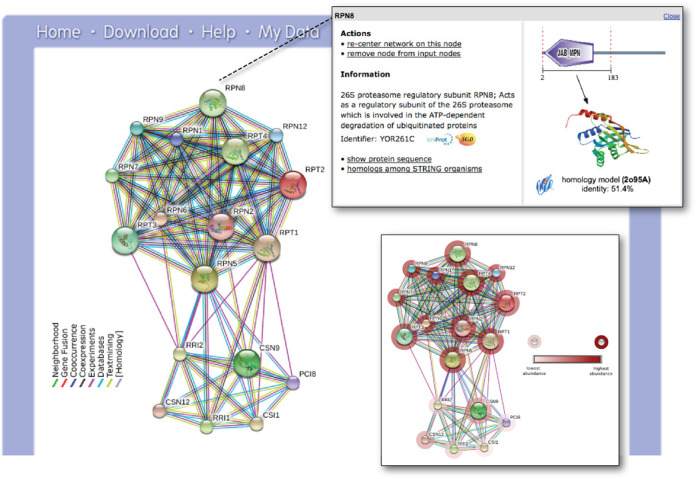
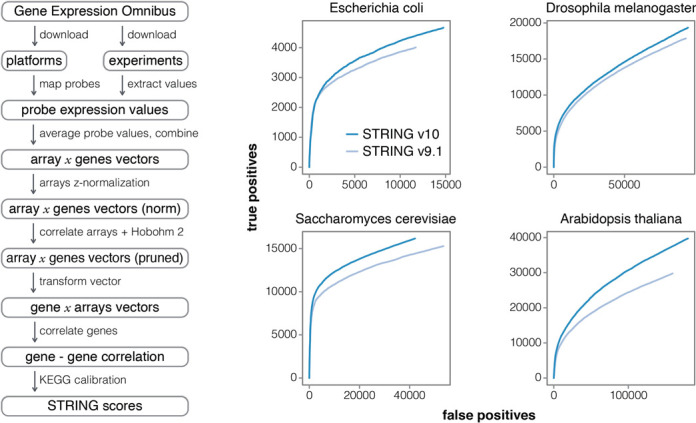
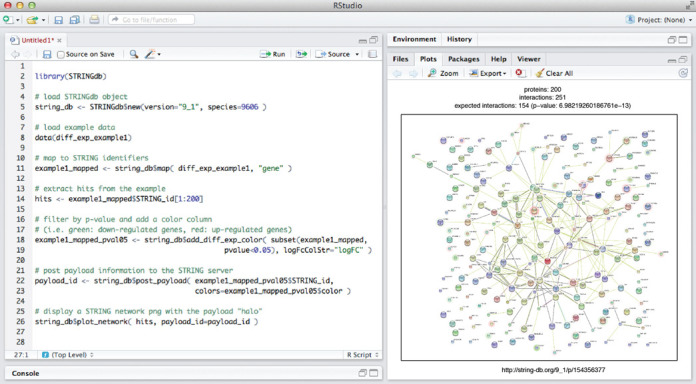
The many functional partnerships and interactions that occur between proteins are at the core of cellular processing and their systematic characterization helps to provide context in molecular systems biology. However, known and predicted interactions are scattered over multiple resources, and the available data exhibit notable differences in terms of quality and completeness. The STRING database (http://string-db.org) aims to provide a critical assessment and integration of protein-protein interactions, including direct (physical) as well as indirect (functional) associations. The new version 10.0 of STRING covers more than 2000 organisms, which has necessitated novel, scalable algorithms for transferring interaction information between organisms. For this purpose, we have introduced hierarchical and self-consistent orthology annotations for all interacting proteins, grouping the proteins into families at various levels of phylogenetic resolution. Further improvements in version 10.0 include a completely redesigned prediction pipeline for inferring protein-protein associations from co-expression data, an API interface for the R computing environment and improved statistical analysis for enrichment tests in user-provided networks.
Overview
The claims and statistics of this paper haven’t been checked yet.
Free: it reads the open-access text and checks the first 5 claims that cite a source we can check. Create a free account to check every claim.
Integrity signals
Registry
Cites
Statistics
Figures
Verification
Claims the paper makes
The claims and statistics of this paper haven’t been checked yet.
Free: it reads the open-access text and checks the first 5 claims that cite a source we can check. Create a free account to check every claim.
Claims other papers make about this one
Each is checked against this paper’s own text: does it say what the citing paper says it does?
The source backs part of the claim, not all of it — or backs it for a different population, condition or comparison.
In the citing paper
“The BioPlex database was developed by the method of affinity purification and mass spectrometry, whereas the STRING and InWeb contain information from various sources.”
From Deep Multilayer Brain Proteomics Identifies Molecular Networks in Alzheimer’s Disease Progression (2020) · cites this paper as Szklarczyk et al., 2015
Experimental — accuracy not yet measuredThe source backs part of the claim, not all of it — or backs it for a different population, condition or comparison.
In the citing paper
“Protein–protein interaction (PPI) networks and weighted gene co-expression network analysis (WGCNA) based on the RNA sequencing and microarray data have been revealed to establish potent organized biological strategies for mining the functional gene modules and detecting novel prognostic biomarkers [11,12].”
From Bioinformatics Analysis and Validation of Potential Markers Associated with Prediction and Prognosis of Gastric Cancer (2024) · cites this paper as [12]
Experimental — accuracy not yet measuredThe cited source says what the claim attributes to it.
In the citing paper
“The bias towards well-described proteins2 is confirmed not only with respect to publications but also with respect to patents, NIH funding patterns, GWAS and mouse phenotype data (data not shown), availability of molecular probes such as antibodies and small molecules, and even queries in the STRING18database”
From Unexplored therapeutic opportunities in the human genome (2018) · cites this paper as [18]
The cited source says what the claim attributes to it.
In the citing paper
“Superimposing these 44 proteins along with APP and TAU onto STRING protein-protein interaction database [61] elucidated 4 protein interaction modules associated with amyloid pathology and mitochondrial functions, while no TAU related protein interaction module was identified with this small list (Fig. 3e).”
From Integrated analysis of ultra-deep proteomes in cortex, cerebrospinal fluid and serum reveals a mitochondrial signature in Alzheimer’s disease (2020) · cites this paper as [61]
The cited source says what the claim attributes to it.
In the citing paper
“We next queried the STRING database of protein-protein interactions27, which revealed numerous groups of physically interacting proteins within this functional category”
From Trisomy 21 causes changes in the circulating proteome indicative of chronic autoinflammation (2017) · cites this paper as [27]
1 more claim about this paper
Create a free account to see every claim other papers make about this one.
Self-check
Percentages, sums and reported differences re-computed from the paper’s own numbers.
The self-check needs the paper’s full text.
Citations
Cites
Gene Ontology: tool for the unification of biology
Ashburner, M., Ball, C. A., Blake, J. A., Botstein, D., Butler, H., Cherry, J. M., Davis, A. P., Dolinski, K., Dwight, S. S., Eppig, J. T., et al. (2000) · Nature Genetics · doi:10.1038/75556 · Cited by 43,206
Cluster analysis and display of genome-wide expression patterns
Eisen, M. B., Spellman, P. T., Brown, P. O., & Botstein, D. (1998) · Proceedings of the National Academy of Sciences · doi:10.1073/pnas.95.25.14863 · Cited by 16,184 · cited 1×
“It has long been established that co-expression is a proxy for co-regulation (35,36) and a strong indicator of functional associations.”
BackgroundBioconductor: open software development for computational biology and bioinformatics
Gentleman, R. C., Carey, V. J., Bates, D. M., Bolstad, B., Dettling, M., Dudoit, S., Ellis, B., Gautier, L., Ge, Y., Gentry, J., et al. (2004) · Genome Biology · doi:10.1186/gb-2004-5-10-r80 · Cited by 12,172 · cited 1×
“0, we have introduced a further option: direct access from the R programming environment, following the Bioconductor standard (39).”
MethodNCBI GEO: archive for functional genomics data sets—update
Barrett, T., Wilhite, S. E., Ledoux, P., Evangelista, C., Kim, I. F., Tomashevsky, M., Marshall, K. A., Phillippy, K. H., Sherman, P. M., Holko, M., et al. (2012) · Nucleic Acids Research · doi:10.1093/nar/gks1193 · Cited by 10,418 · cited 3×
“As of March 2014, GEO consisted of more than 12 000 different platforms (GPL), 45 000 experiments (GSE) and over 1 million matrices (GSM).”
MethodInfluentialThe Reactome pathway Knowledgebase
Fabregat, A., Sidiropoulos, K., Garapati, P., Gillespie, M., Hausmann, K., Haw, R., Jassal, B., Jupe, S., Korninger, F., McKay, S., et al. (2016) · Nucleic Acids Research · doi:10.1093/nar/gkv1351 · Cited by 5,605
STRING v9.1: protein-protein interaction networks, with increased coverage and integration
Franceschini, A., Szklarczyk, D., Frankild, S., Kuhn, M., Simonovic, M., Roth, A., Lin, J., Minguez, P., Bork, P., von Mering, C., et al. (2012) · Nucleic Acids Research · doi:10.1093/nar/gks1094 · Cited by 4,398
Self-citationSzklarczyk, D., Franceschini, A., Kuhn, M., Simonovic, M., Roth, A., Minguez, P., Doerks, T., Stark, M., Muller, J., Bork, P., et al. (2011) · Nucleic Acids Research · doi:10.1093/nar/gkq973 · Cited by 3,460
Self-citationData, information, knowledge and principle: back to metabolism in KEGG
Kanehisa, M., Goto, S., Sato, Y., Kawashima, M., Furumichi, M., & Tanabe, M. (2014) · Nucleic Acids Research · doi:10.1093/nar/gkt1076 · Cited by 3,092 · cited 1×
“All sources of interaction evidence are benchmarked and calibrated against previous knowledge, using the high-level functional groupings provided by the manually curated Kyoto Encyclopedia of Genes and Genomes (KEGG) pathway maps (5).”
MethodSTRING 8--a global view on proteins and their functional interactions in 630 organisms
Jensen, L. J., Kuhn, M., Stark, M., Chaffron, S., Creevey, C., Muller, J., Doerks, T., Julien, P., Roth, A., Simonovic, M., et al. (2009) · Nucleic Acids Research · doi:10.1093/nar/gkn760 · Cited by 2,474
Self-citationThe Database of Interacting Proteins: 2004 update
Salwinski, L. (2004) · Nucleic Acids Research · doi:10.1093/nar/gkh086 · Cited by 2,271
Cited by
Items 801–900 of 1,079
Characterization of transcriptional modules related to fibrosing-NAFLD progression
Lou, Y., Tian, G., Song, Y., Liu, Y., Chen, Y., Shi, J., & Yang, J. (2017) · Scientific Reports · doi:10.1038/s41598-017-05044-2 · Cited by 78
eDGAR: a database of Disease-Gene Associations with annotated Relationships among genes
Babbi, G., Martelli, P. L., Profiti, G., Bovo, S., Savojardo, C., & Casadio, R. (2017) · BMC Genomics · doi:10.1186/s12864-017-3911-3 · Cited by 76
“The following features are considered: Protein-protein interactions, as derived from the multimeric structures deposited at the PDB (February 2016 release) [16], from STRING (version 10.0) [26] and from the experimental data available in BIOGRID (version 3.4) [27].”
MethodInfluentialVitale, G., Gitto, S., Raimondi, F., Mattiaccio, A., Mantovani, V., Vukotic, R., D’Errico, A., Seri, M., Russell, R. B., & Andreoné, P. (2017) · Journal of Gastroenterology · doi:10.1007/s00535-017-1423-1 · Cited by 76
“These three genes are predicted, but equivalents in non-human species, to interact both physically and functionally [30].”
Backgroundvan der Putten, B. C. L., Remondini, D., Pasquini, G., Janes, V. A., Matamoros, S., & Schultsz, C. (2018) · Journal of Antimicrobial Chemotherapy · doi:10.1093/jac/dky417 · Cited by 76
CD56 regulates human NK cell cytotoxicity through Pyk2
Gunesch, J. T., Dixon, A. L., Ebrahim, T. A. M., Berrien-Elliott, M. M., Tatineni, S., Kumar, T., Hegewisch-Solloa, E., Fehniger, T. A., & Mace, E. M. (2020) · eLife · doi:10.7554/elife.57346 · Cited by 76
Ahmed, F. (2020) · Frontiers in Immunology · doi:10.3389/fimmu.2020.590459 · Cited by 75
González‐Prieto, R., Eifler, K., Claessens, L. A., Willemstein, E., Xiao, Z., Ormeño, C. M. P. T., Ovaa, H., Ulrich, H. D., & Vertegaal, A. C. O. (2021) · Cell Reports · doi:10.1016/j.celrep.2021.108691 · Cited by 75
“Interacting proteins with a preference for SUMO1, SUMO2, or SUMO2 trimer To study interactions between the 83 SUMO1-binding proteins in more detail (Figure 1B; Data S1, Dataset 1), we performed STRING analysis (Szklarczyk et al., 2015), followed by a search for highly interconnected clusters (Figure 2A).”
Node similarity-based graph convolution for link prediction in biological networks
Coşkun, M., & Koyutürk, M. (2021) · Bioinformatics · doi:10.1093/bioinformatics/btab464 · Cited by 75
Xu, D., Ji, Z., & Qiang, L. (2021) · Frontiers in Medicine · doi:10.3389/fmed.2021.702638 · Cited by 75
“org) and their interaction pairs were obtained (20).”
BackgroundShaw, C. A., Hess, M., & Weimer, B. C. (2023) · Microorganisms · doi:10.3390/microorganisms11071825 · Cited by 77
Casarini, L., Reiter, É., & Simoni, M. (2016) · Molecular and Cellular Endocrinology · doi:10.1016/j.mce.2016.08.005 · Cited by 75
Hussain, A., Yadav, M., Bose, S., Wang, J., Lim, D., Song, Y.-K., Ko, S., & Kim, H. (2016) · PLoS ONE · doi:10.1371/journal.pone.0165483 · Cited by 75
Ragupathy, R., Ravichandran, S., Mahdi, M. S. R., Huang, D., Reimer, E., Domaratzki, M., & Cloutier, S. (2016) · Scientific Reports · doi:10.1038/srep39373 · Cited by 75
Mitochondria-targeted antioxidants as highly effective antibiotics
Nazarov, P. A., Osterman, I. А., Tokarchuk, A. V., Karakozova, M. V., Korshunova, G. A., Lyamzaev, K. G., Skulachev, M. V., Kotova, Е. А., Skulachev, V. P., & Antonenko, Y. N. (2017) · Scientific Reports · doi:10.1038/s41598-017-00802-8 · Cited by 76
Tian, F., Chang, E., Li, Y., Sun, P., Hu, J., & Zhang, J. (2017) · Scientific Reports · doi:10.1038/s41598-017-02894-8 · Cited by 77
Sancisi, V., Manzotti, G., Gugnoni, M., Rossi, T., Gandolfi, G., Gobbi, G., Torricelli, F., Catellani, F., do Valle, Í. F., Remondini, D., et al. (2017) · Nucleic Acids Research · doi:10.1093/nar/gkx802 · Cited by 75
A Cell-Line-Specific Atlas of PARP-Mediated Protein Asp/Glu-ADP-Ribosylation in Breast Cancer
Zhen, Y., Zhang, Y., & Yu, Y. (2017) · Cell Reports · doi:10.1016/j.celrep.2017.10.106 · Cited by 75
“…biological function of the ADP-ribosylated proteins, we mapped these proteins to the Search Tool for the Retrieval of Interacting Genes/ Proteins (STRING) database (Szklarczyk et al., 2015) to identify protein communities that have physical and functional connections (Figure 4A, 4B and 4C).”
MethodHepatitis C virus enters liver cells using the CD81 receptor complex proteins calpain-5 and CBLB
Bruening, J., Laßwitz, L., Banse, P., Kahl, S., Marinach, C., Vondran, F. W. R., Kaderali, L., Silvie, O., Pietschmann, T., Meissner, F., et al. (2018) · PLoS Pathogens · doi:10.1371/journal.ppat.1007111 · Cited by 75
HCN Regulates Cellular Processes through Posttranslational Modification of Proteins by S-cyanylation
García, I., Arenas-Alfonseca, L., Moreno, I., Gotor, C., & Romero, L. C. (2018) · PLANT PHYSIOLOGY · doi:10.1104/pp.18.01083 · Cited by 75
“5 (Szklarczyk et al., 2015) to analyze the protein-protein interaction network of the 353 proteins with increased abundance in cas-c1 compared to the wild type to determine functional association of those proteins.”
BackgroundMethodTargeting p53 and histone methyltransferases restores exhausted CD8+ T cells in HCV infection
Barili, V., Fisicaro, P., Montanini, B., Acerbi, G., Filippi, A., Forleo, G., Romualdi, C., Ferracin, M., Guerrieri, F., Pedrazzi, G., et al. (2020) · Nature Communications · doi:10.1038/s41467-019-14137-7 · Cited by 75
Scrambled eggs: Proteomic portraits and novel biomarkers of egg quality in zebrafish (Danio rerio)
Yılmaz, Ö., Patinote, A., Nguyen, T., Com, E., Lavigne, R., Pineau, C., Sullivan, C. V., & Bobe, J. (2017) · PLoS ONE · doi:10.1371/journal.pone.0188084 · Cited by 75
Pang, B., Xu, X., Lu, Y. P., Han, J., Yang, R., Jiang, C., Shao, D., Liu, Y., & Shi, J. (2019) · Food & Function · doi:10.1039/c9fo01168d · Cited by 76
Bartas, M., Brázda, V., Bohálová, N., Cantara, A., Volná, A., Stachurová, T., Malachová, K., Jagelská, E. B., Porubiaková, O., Červeň, J., et al. (2020) · Frontiers in Microbiology · doi:10.3389/fmicb.2020.01583 · Cited by 74
“The proteins SRSF7, HNRNPA1, and TRA2A are involved in mRNA splicing via the spliceosome pathway (Szklarczyk et al., 2015).”
BackgroundPecanPy: a fast, efficient and parallelized Python implementation of node2vec
Liu, R., & Krishnan, A. (2021) · Bioinformatics · doi:10.1093/bioinformatics/btab202 · Cited by 75
“First, due to inefficient memory usage and data structure, they do not scale to large and dense networks produced by integrating several data sources on a genome-scale (17–26k nodes and 3–300mi edges) (Greene et al., 2015; Szklarczyk et al., 2015).”
BackgroundProteomic differences in the hippocampus and cortex of epilepsy brain tissue
Pires, G., Leitner, D., Drummond, E., Kanshin, E., Nayak, S., Askenazi, M., Faustin, A., Friedman, D. J., Debure, L., Ueberheide, B. M., et al. (2021) · Brain Communications · doi:10.1093/braincomms/fcab021 · Cited by 75
Lin, H., Shi, X., Li, H., Hui, J., Liu, R., Chen, Z., Lu, Y., & Tan, W. (2021) · BMC Cancer · doi:10.1186/s12885-021-08926-x · Cited by 74
“In addition, a Protein-Protein Interaction (PPI) network was constructed to reveal the hub genes of the potential target genes on STRING, a web portal for undermining the integrated function of multiple genes [29].”
BackgroundPutative Biomarkers in Tears for Diabetic Retinopathy Diagnosis
Amorim, M., Martins, B. D., Caramelo, F. J., Gonçalves, C., Trindade, G., Simão, J., Barreto, P., Marques, I. P., Leal, E. C., Carvalho, E., et al. (2022) · Frontiers in Medicine · doi:10.3389/fmed.2022.873483 · Cited by 74
Jia, Z., Liu, Y., Guan, N., Bo, X., Luo, Z., & Barnes, M. R. (2016) · BMC Genomics · doi:10.1186/s12864-016-2737-8 · Cited by 74
“The expected interaction and p value are calculated based on a random background model that preserves the degree distribution of the input proteins [39, 40], implemented via the get_- summary function in the STRINGdb package.”
MethodComplex Sources of Variation in Tissue Expression Data: Analysis of the GTEx Lung Transcriptome
McCall, M. N., Illei, P. B., & Halushka, M. K. (2016) · The American Journal of Human Genetics · doi:10.1016/j.ajhg.2016.07.007 · Cited by 73
Kumar, R., Verma, H., Haider, S., Bajaj, A., Sood, U., Ponnusamy, K., Nagar, S., Shakarad, M., Negi, R. K., Singh, Y. P., et al. (2017) · mSystems · doi:10.1128/msystems.00020-17 · Cited by 74
“In order to construct the protein-protein interactions (PPIs), HSP sequences of Novosphingobium strains were searched against the STRING Database (v10) (71).”
MethodLimpose, K. L., Corbett, A. H., & Doetsch, P. W. (2017) · DNA Repair · doi:10.1016/j.dnarep.2017.06.007 · Cited by 66
Dissection of iron signaling and iron accumulation by overexpression of subgroup Ib bHLH039 protein
Naranjo-Arcos, M. A., Maurer, F., Meiser, J., Pateyron, S., Fink‐Straube, C., & Bauer, P. (2017) · Scientific Reports · doi:10.1038/s41598-017-11171-7 · Cited by 74
Wang, Z., Arat, S., Magid-Slav, M., & Brown, J. R. (2018) · BMC Systems Biology · doi:10.1186/s12918-017-0524-z · Cited by 74
“Protein-protein interaction (PPI) network analysis was performed based on the STRING interactome using NetworkAnalyst [16, 26].”
MethodInfluentialANNOgesic: a Swiss army knife for the RNA-seq based annotation of bacterial/archaeal genomes
Yu, S., Vogel, J., & Förstner, K. U. (2018) · GigaScience · doi:10.1093/gigascience/giy096 · Cited by 75
“Additionally, the protein entries are enriched by protein-protein interaction information retrieved from STRING [60] and PIE [61] (examples in Supplementary Fig.”
Zhou, Y., Li, Y., Zhang, X., Chen, R., Chen, X., Tang, W., & Zhang, M. (2019) · BioMed Research International · doi:10.1155/2019/6581576 · Cited by 74
“The Search Tool for the Retrieval of Interacting Genes [11] (STRING: https://string-db.org/) is an online tool to show the known and predicted interaction relationship between the candidate genes; we used it to develop the overlapped DEGs’ s interaction network.”
BackgroundOvercoming hypoxia-induced functional suppression of NK cells
Solocinski, K., Padget, M. R., Fabian, K. P., Wolfson, B., Cecchi, F., Hembrough, T., Benz, S. C., Rabizadeh, S., Soon‐Shiong, P., Schlom, J., et al. (2020) · Journal for ImmunoTherapy of Cancer · doi:10.1136/jitc-2019-000246 · Cited by 74
Network modeling of single-cell omics data: challenges, opportunities, and progresses
Blencowe, M., Arneson, D., Ding, J., Chen, Y.-W., Saleem, Z., & Yang, X. (2019) · Emerging Topics in Life Sciences · doi:10.1042/etls20180176 · Cited by 73
“As the amount and types of biological data continue to grow at an exponential rate, so too do the number and types of biological networks including protein–protein interaction networks [1], metabolic networks [2], genetic interaction networks [3], gene/transcriptional regulatory networks (GRNs) [4], and cell signaling…”
BackgroundGenetic study of multimodal imaging Alzheimer’s disease progression score implicates novel loci
Scelsi, M. A., Khan, R. R., Lorenzi, M., Christopher, L., Greicius, M. D., Schott, J. M., Ourselin, S., & Altmann, A. (2018) · Brain · doi:10.1093/brain/awy141 · Cited by 73
“Furthermore, the CTBP1/BARS com- plex co-localizes with amyloid precursor protein (APP) in macropinosomes at the cell surface (Tang et al., 2015).”
InfluentialData- and knowledge-based modeling of gene regulatory networks: an update
Linde, J., Schulze, S., Henkel, S. G., & Guthke, R. (2015) · EXCLI journal · doi:10.17179/excli2015-168 · Cited by 73
“STRING (Szklarczyk et al., 2015)), others are species specific such as the Candida Genome Database (Binkley et al.”
BackgroundDi (2-ethylhexyl) phthalate impairs steroidogenesis in ovarian follicular cells of prepuberal mice
Lai, F.-N., Liu, J., Li, L., Ma, J., Liu, X.-L., Liu, Y., Zhang, X., Chen, H., Felici, M. D., Dyce, P. W., et al. (2016) · Archives of Toxicology · doi:10.1007/s00204-016-1790-z · Cited by 73
Centrality in the host–pathogen interactome is associated with pathogen fitness during infection
Asensio, N. C., Giner, E. M., de Groot, N. S., & Torrent, M. (2017) · Nature Communications · doi:10.1038/ncomms14092 · Cited by 73
Insights into Ciliary Genes and Evolution from Multi-Level Phylogenetic Profiling
Nevers, Y., Prasad, M. K., Poidevin, L., Chennen, K., Allot, A., Kress, A., Ripp, R., Thompson, J. D., Dollfus, H., Poch, O., et al. (2017) · Molecular Biology and Evolution · doi:10.1093/molbev/msx146 · Cited by 70
“7) with at least two ciliary genes in the version ten of the STRING database (Szklarczyk et al. 2015).”
BackgroundInfluentialMurillo, J. R., Goto‐Silva, L., Sánchez, A., Nogueira, F. C. S., Domont, G. B., & Junqueira, M. (2017) · EuPA Open Proteomics · doi:10.1016/j.euprot.2017.06.001 · Cited by 74
Akay, A., Domenico, T. D., Suen, K. M., Nabih, A., Parada, G. E., Larance, M., Medhi, R., Berkyurek, A. C., Zhang, X., Wedeles, C. J., et al. (2017) · Developmental Cell · doi:10.1016/j.devcel.2017.07.002 · Cited by 73
“We used the STRING database (Szklarczyk et al., 2015) to identify known protein complexes between these factors.”
MethodProteomic and Metaproteomic Approaches to Understand Host–Microbe Interactions
Starr, A. E., Deeke, S. A., Li, L., Zhang, X., Daoud, R., Ryan, J., Ning, Z., Cheng, K., Nguyen, L. V. H., Abou-Samra, E., et al. (2017) · Analytical Chemistry · doi:10.1021/acs.analchem.7b04340 · Cited by 74
English, J. A., Lopez, L. M., O’Gorman, A., Föcking, M., Hryniewiecka, M., Scaife, C., Sabherwal, S., Wynne, K. J., Dicker, P., Rutten, B. P. F., et al. (2017) · Schizophrenia Bulletin · doi:10.1093/schbul/sbx075 · Cited by 75
ICE1 promotes the link between splicing and nonsense-mediated mRNA decay
Baird, T. D., Cheng, K. C.-C., Chen, Y., Buehler, E. C., Martin, S. E., Inglese, J., & Hogg, J. R. (2018) · eLife · doi:10.7554/elife.33178 · Cited by 73
Murphy, E., & Benítez‐Burraco, A. (2016) · Neuroscience & Biobehavioral Reviews · doi:10.1016/j.neubiorev.2016.07.029 · Cited by 73
“String 10 predicts associations between proteins that derive from a limited set of databases: genomic context, high-throughput experiments, conserved co-expression, and the knowledge previously gained from text mining (Szklarczyk et al. 2015).”
BackgroundDe novo variants in exomes of congenital heart disease patients identify risk genes and pathways
Bayrak, Ç. S., Zhang, P., Tristani‐Firouzi, M., Gelb, B. D., & Itan, Y. (2020) · Genome Medicine · doi:10.1186/s13073-019-0709-8 · Cited by 73
An, L., Lin, Y., Li, L., Kong, M., Lou, Y., Wu, J., & Liu, Z. (2021) · Frontiers in Pharmacology · doi:10.3389/fphar.2020.618262 · Cited by 73
“org/) was utilized to construct the measureable targets of the protein-protein interaction (PPI) network for those main components to treat HF (Szklarczyk et al., 2015).”
MethodJiang, C. H., Yuan, X., Li, J. F., Xie, Y., Zhang, A. Z., Wang, X. L., Yang, L., Liu, C. X., Liang, W. H., Pang, L. J., et al. (2020) · Journal of Translational Medicine · doi:10.1186/s12967-020-02229-8 · Cited by 72
Cipriani, V., Pontikos, N., Arno, G., Sergouniotis, P. I., Lenassi, E., Thawong, P., Daniš, D., Michaelides, M., Webster, A. R., Moore, A. T., et al. (2020) · Genes · doi:10.3390/genes11040460 · Cited by 73
Ding, S., Qiao, N., Zhu, Q., Tong, Y., Wang, S., Chen, X., Tian, Q., Xiao, Y., & Shen, K. (2023) · 癌症:英文版 · doi:10.1002/cac2.12429 · Cited by 74
“org/) [35, 36], preserving active credible interaction that excluded text mining interaction sources.”
BackgroundA comprehensive quantitative phosphoproteome analysis of rice in response to bacterial blight
Hou, Y., Qiu, J., Tong, X., Wei, X., Nallamilli, B. R. R., Wu, W., Huang, S., & Zhang, J. (2015) · BMC Plant Biology · doi:10.1186/s12870-015-0541-2 · Cited by 72
“org/) [35].”
Gene Expression Dynamics Accompanying the Sponge Thermal Stress Response
Guzman, C., & Conaco, C. (2016) · PLoS ONE · doi:10.1371/journal.pone.0165368 · Cited by 72
Complex association patterns for inflammatory mediators in induced sputum from subjects with asthma
Hastie, A. T., Steele, C. H., Dunaway, C. W., Moore, W. C., Rector, B. M., Ampleford, E. J., Li, H., Denlinger, L. C., Jarjour, N. N., Meyers, D. A., et al. (2018) · Clinical & Experimental Allergy · doi:10.1111/cea.13129 · Cited by 72
The Identification of Core Gene Expression Signature in Hepatocellular Carcinoma
Li, N., Li, L., & Chen, Y. (2018) · Oxidative Medicine and Cellular Longevity · doi:10.1155/2018/3478305 · Cited by 72
“0 [17] To evaluate the interactional correlation of these DEGs, we first drew DEGs by STRING and then utilized the Cytoscape software to construct a PPI network.”
MethodLeutert, M., Menzel, S., Braren, R., Rissiek, B., Hopp, A.-K., Nowak, K., Bisceglie, L., Gehrig, P., Li, H. Z., Żółkiewska, A., et al. (2018) · Cell Reports · doi:10.1016/j.celrep.2018.07.048 · Cited by 72
“7) between the ADP-ribosylated proteins identified above using the STRING database of physical and functional protein interactions (Szklarczyk et al., 2015).”
MethodQTL Alignment for Seed Yield and Yield Related Traits in Brassica napus
Raboanatahiry, N. H., Chao, H., Hou, D., Pu, S., Yan, W., Yu, L., Wang, B., & Li, M. (2018) · Frontiers in Plant Science · doi:10.3389/fpls.2018.01127 · Cited by 72
“Interaction of proteins was predicted using STRING5 (Szklarczyk et al., 2015), clustered using Mapman software (Thimm et al., 2004) and then visualized with Cytoscape_V3.”
MethodFunctional random forest with applications in dose-response predictions
Rahman, R., Dhruba, S. R., Ghosh, S., & Pal, R. (2019) · Scientific Reports · doi:10.1038/s41598-018-38231-w · Cited by 63
Hommel, B., Sturny-Leclère, A., Volant, S., Veluppillai, N., Duchateau, M., Yu, C.-H. A., Hourdel, V., Varet, H., Matondo, M., Perfect, J. R., et al. (2019) · PLoS Pathogens · doi:10.1371/journal.ppat.1007945 · Cited by 73
Zeng, H., Hamlin, S. K., Safratowich, B. D., Cheng, W., & Johnson, L. K. (2020) · Nutrition Research · doi:10.1016/j.nutres.2020.08.009 · Cited by 72
Mudaliar, M., Tassi, R., Thomas, F. C., McNeilly, T. N., Weidt, S. K., McLaughlin, M., Wilson, D., Burchmore, R., Herzyk, P., Eckersall, P. D., et al. (2016) · Molecular BioSystems · doi:10.1039/c6mb00290k · Cited by 71
Zhang, T., Dengfeng, T., Zhang, L., Zhang, X., & Han, Z. (2017) · Agri Gene · doi:10.1016/j.aggene.2017.01.001 · Cited by 73
Agarwal, R., Narayan, J., Bhattacharyya, A., Saraswat, M., & Tomar, A. K. (2017) · Cancer Genetics · doi:10.1016/j.cancergen.2017.06.002 · Cited by 71
Shi, X., Huang, T., Wang, J., Liang, Y., Gu, C., Xu, Y., Sun, J. P., Lu, Y., Sun, K., Chen, S., et al. (2018) · EBioMedicine · doi:10.1016/j.ebiom.2018.11.008 · Cited by 71
“org) can critically assess and integrate protein– protein interactions (PPI), including both direct (physical) and indirect (functional) associations [21].”
BackgroundAhmed, F. (2019) · Frontiers in Oncology · doi:10.3389/fonc.2019.01011 · Cited by 71
Hou, X., Zhang, X., Wu, X. Z., Lu, M., Wang, D., Xu, M., Wang, H., Liang, T., Dai, J., Duan, H., et al. (2020) · Molecular & Cellular Proteomics · doi:10.1074/mcp.rp120.002128 · Cited by 72
Exploring the genetic architecture of feed efficiency traits in chickens
Marchesi, J. A. P., Ono, R. K., Cantão, M. E., Ibelli, A. M. G., Peixoto, J. D. O., Moreira, G. C. M., Godoy, T. F., Coutinho, L. L., Munari, D. P., & Ledur, M. C. (2021) · Scientific Reports · doi:10.1038/s41598-021-84125-9 · Cited by 71
Seah, C., Breen, M. S., Rusielewicz, T., Bader, H. N., Xu, C., Hunter, C. J., McCarthy, B., Deans, P. J. M., Chattopadhyay, M., Goldberg, J., et al. (2022) · Nature Neuroscience · doi:10.1038/s41593-022-01161-y · Cited by 71
Luo, L., Deng, L., Chen, Y., Ding, R., & Li, X. (2023) · Antioxidants · doi:10.3390/antiox12010186 · Cited by 77
Shao, Y., Lan, Y., Chai, X., Gao, S., Zheng, J., Huang, R., Shi, Y., Xiang, Y., Guo, H., Xi, Y., et al. (2023) · The FASEB Journal · doi:10.1096/fj.202201982rrr · Cited by 71
Survey of Natural Language Processing Techniques in Bioinformatics
Zeng, Z., Shi, H. W., Wu, Y., & Hong, Z. (2015) · Computational and Mathematical Methods in Medicine · doi:10.1155/2015/674296 · Cited by 71
“STRING [37] and BioGRID [38] are built for proteinprotein interaction with literature mining.”
MethodBottom-Up Proteomics (2013–2015): Keeping up in the Era of Systems Biology
Mayne, J., Ning, Z., Zhang, X., Starr, A. E., Chen, R., Deeke, S. A., Chiang, C., Xu, B., Wen, M., Cheng, K., et al. (2015) · Analytical Chemistry · doi:10.1021/acs.analchem.5b04230 · Cited by 71
Larance, M., Kirkwood, K. J., Tinti, M., Brenes Murillo, A., Ferguson, M. A. J., & Lamond, A. I. (2016) · Molecular & Cellular Proteomics · doi:10.1074/mcp.o115.055467 · Cited by 64
“The String score was taken from the STRING database (version 10) (28) and was normalized to have values from 0 to 1.”
MethodGlobal Profiling of the Cellular Alternative RNA Splicing Landscape during Virus-Host Interactions
Boudreault, S., Martenon-Brodeur, C., Caron, M., Garant, J., Tremblay, M.-P., Armero, V. E. S., Durand, M., Lapointe, E., Thibault, P., Tremblay-Létourneau, M., et al. (2016) · PLoS ONE · doi:10.1371/journal.pone.0161914 · Cited by 71
“Using the STRING database [77] (version 10), genes were submitted for generation of proteinprotein interaction network from theMus musculus interactome.”
MethodComputational identification of the selenocysteine tRNA (tRNASec) in genomes
Santesmasses, D., Mariotti, M., & Guigó, R. (2017) · PLoS Computational Biology · doi:10.1371/journal.pcbi.1005383 · Cited by 72
“A search in STRING database [65] revealed that the genes from this protein family commonly neighbour genes from other selenoprotein families such as thioredoxin reductases, alkyl hydrogen peroxide reductase, peroxiredoxins, and other oxidoreductases.”
Size-based detection of sarcoma circulating tumor cells and cell clusters
Hayashi, M., Zhu, P., McCarty, G., Meyer, C. F., Pratilas, C. A., Levin, A., Morris, C. D., Albert, C. M., Jackson, K. W., Tang, C.-M., et al. (2017) · Oncotarget · doi:10.18632/oncotarget.20697 · Cited by 66
Schanzenbächer, C. T., Langer, J. D., & Schuman, E. M. (2018) · eLife · doi:10.7554/elife.33322 · Cited by 61
“F) were analyzed using the String interactome (v. 10.0, string-db. org, Szklarczyk et al., 2015) with databases only as interaction source and high confidence of interactions (score >0.700).”
MethodInfluentialMartínez-Montes, Á. M., Fernández, A., Muñoz, M., Noguera, J. L., Folch, J. M., & Fernández, A. I. (2018) · PLoS ONE · doi:10.1371/journal.pone.0190184 · Cited by 72
Wang, K., Wang, Y., Wang, X., Ren, Q., Han, S., Ding, L., Li, Z., Zhou, X., Li, W., & Zhang, L. (2018) · Journal of Translational Medicine · doi:10.1186/s12967-018-1388-8 · Cited by 71
Lee, I., & Nam, H. (2018) · BMC Bioinformatics · doi:10.1186/s12859-018-2199-x · Cited by 71
“To examine why pazopanib showed target pairs which were predicted well with high scores, we queried pazopanib and the corresponding positively predicted targets using STITCH [27].”
MethodYao, Z., Guo, Z., Wang, Y., Li, W., Fu, Y., Lin, Y., Lin, W., & Lin, X. (2018) · Molecular & Cellular Proteomics · doi:10.1074/mcp.ra118.001035 · Cited by 71
Chacón-Solano, E., León, C., Díaz, F. L., Garcia‐García, F., García, M., Escamez, M. J., Guerrero‐Aspizua, S., Conti, C. J., Mencía, Á., Martínez‐Santamaría, L., et al. (2019) · British Journal of Dermatology · doi:10.1111/bjd.17698 · Cited by 71
Pattappa, G., Zellner, J., Johnstone, B., Docheva, D., & Angele, P. (2019) · European Cells and Materials · doi:10.22203/ecm.v037a22 · Cited by 71
Tolios, A., Rivas, J. D. L., Hovig, E. J., Trouillas, P., Scorilas, A., & Mohr, T. T. (2019) · Drug Resistance Updates · doi:10.1016/j.drup.2019.100662 · Cited by 74
Mosaic RAS/MAPK variants cause sporadic vascular malformations which respond to targeted therapy
Al-Olabi, L., Polubothu, S., Dowsett, K., Andrews, K. A., Stadnik, P., Joseph, A. P., Knox, R. G., Pittman, A. M., Clark, G. R., Baird, W., et al. (2018) · Journal of Clinical Investigation · doi:10.1172/jci124649 · Cited by 71
Biological Relevance and Therapeutic Potential of the Hypusine Modification System
Pällmann, N., Braig, M., Sievert, H., Preukschas, M., Hermans‐Borgmeyer, I., Schweizer, M., Nagel, C., Neumann, M., Wild, P. J., Haralambieva, E., et al. (2015) · Journal of Biological Chemistry · doi:10.1074/jbc.m115.664490 · Cited by 74
“0 was used as resource for contraction of PPI networks (36).”
MethodLi, H., Rukina, D., David, F. P. A., Li, T. Y., Oh, C., Gao, A. W., Katsyuba, E., Sleiman, M. S. B., Komljenović, A., Huang, Q. D., et al. (2019) · Genome Research · doi:10.1101/gr.251983.119 · Cited by 72
“Integration of GeneBridge with other well-established databases, such as BioGRID (Stark et al. 2006) and STRING (Szklarczyk et al. 2015), will facilitate the investigation of the connections be-tween genes, modules, and diseases.”
12-h clock regulation of genetic information flow by XBP1s
Pan, Y., Ballance, H., Meng, H., Gonzalez, N., Kim, S.-M., Abdurehman, L., York, B., Chen, X., Schnytzer, Y., Levy, O., et al. (2020) · PLOS Biology · doi:10.1371/journal.pbio.3000580 · Cited by 70
“Computationally constructing predicted interactive networks using the overlapping 12-h cycling genes in both species via Search Tool for the Retrieval of Interacting Genes/Proteins (STRING) [49] or by traditional GO analysis revealed sub-hubs involved in different steps of CEDIF (Fig 7B, S6B Fig, and S16 Table).”
MethodInfluentialNieuwenhuis, M. A. E., Siedliński, M., van den Berge, M., Granell, R., Li, X., Niens, M., van der Vlies, P., Altmüller, J., Nürnberg, P., Kerkhof, M., et al. (2016) · Allergy · doi:10.1111/all.12990 · Cited by 70
“All these genes were entered in a pathway analysis using STRING (32).”
Identification of Candidate Casein Kinase 2 Substrates in Mitosis by Quantitative Phosphoproteomics
Rusin, S. F., Adamo, M. E., & Kettenbach, A. N. (2017) · Frontiers in Cell and Developmental Biology · doi:10.3389/fcell.2017.00097 · Cited by 70
“Protein-protein interactions of proteins belonging to phosphopeptides with significant increase in phosphorylation occupancy were determined using the STRING database and analyzed in Cytoscape (Shannon et al., 2003; Szklarczyk et al., 2015).”
MethodInfluentialcircRNA/lncRNA-miRNA-mRNA Network in Oxidized, Low-Density, Lipoprotein-Induced Foam Cells
Wang, L., Zheng, Z., Feng, X., Zang, X., Ding, W., Wu, F., & Zhao, Q. (2019) · DNA and Cell Biology · doi:10.1089/dna.2019.4865 · Cited by 70
“The Search Tool for the Retrieval of Interacting Genes/ Proteins (STRING; version 10.0) database (Szklarczyk et al. , 2015) was used to retrieve the protein interactions between DEGs identified in GSE54666 and GSE54039 datasets.”
InfluentialXing, X., Yang, F., Li, H., Zhang, J., Zhao, Y., Gao, M., Huang, J., & Yao, J. (2022) · Bioinformatics · doi:10.1093/bioinformatics/btac088 · Cited by 71
Mittenbühler, M. J., Jedrychowski, M. P., Vranken, J. G. V., Sprenger, H., Wilensky, S. E., Dumesic, P. A., Sun, Y., Tartaglia, A., Laznik-Bogoslavski, D., Mu, A., et al. (2023) · Cell Metabolism · doi:10.1016/j.cmet.2022.12.014 · Cited by 71
Yu, P., Baldauf, J. A., Lithio, A., Marcon, C., Nettleton, D. S., Li, C., & Hochholdinger, F. (2016) · PLANT PHYSIOLOGY · doi:10.1104/pp.15.01885 · Cited by 70
“Association networks of the identified genes significantly enriched in MapMan bins (“RNA,” “DNA,” “signaling,” “cell,” and “transport”) were constructed with the aid of the online analysis tool STRING v10 (Szklarczyk et al., 2015).”
MethodThe SIB Swiss Institute of Bioinformatics’ resources: focus on curated databases
(2016) · Nucleic Acids Research · doi:10.1093/nar/gkv1310 · Cited by 65
“Mapping annotation and cross-references from resources such as UniProt and STRING allows interpretation of sequence-based annotation in the context of 3D structures.”
BackgroundInfluentialA Survey of Computational Methods for Protein Function Prediction
Shehu, A., Barbará, D., & Molloy, K. (2016) · Springer eBooks · doi:10.1007/978-3-319-41279-5_7 · Cited by 70
“Known and Predicted Protein-Protein Interactions (STRING) [334], and the Unified Human Interactome (UniHI) [161].”
BackgroundRodríguez, R. M. A., Suárez-Álvarez, B., Lavín, J. L., Mosén-Ansorena, D., Raneros, A. B., Márquez‐Kisinousky, L., Aransay, A. M., & López‐Larrea, C. (2017) · The Journal of Immunology · doi:10.4049/jimmunol.1601102 · Cited by 70
“The functional proteininteraction network was built using STRING v10 and Cytoscape software (17, 18) and then exported and visualized in Gephi software (19).”
MethodIdentification of Drivers of Aneuploidy in Breast Tumors
Pfister, K. E., Pipka, J. L., Chiang, C., Liu, Y., Clark, R. A., Keller, R. E., Skoglund, P., Guertin, M. J., Hall, I. M., & Stukenberg, P. T. (2018) · Cell Reports · doi:10.1016/j.celrep.2018.04.102 · Cited by 70
Metadata
- Authors
- Szklarczyk, D., Franceschini, A., Wyder, S., Forslund, K., Heller, D., Huerta-Cepas, J., Simonovic, M., Roth, A., Santos, A., Tsafou, K. P., Kuhn, M., Bork, P., Jensen, L. J., & von Mering, C.
- Affiliations
- SIB Swiss Institute of Bioinformatics (CH)
- University of Copenhagen (DK)
- Max Planck Institute of Molecular Cell Biology and Genetics (DE)
- ORCID
- Venue
- Nucleic Acids Research
- Publisher
- Oxford University Press (OUP)
- Published
- 2014-10-28
- Volume
- 43
- Issue
- D1
- Pages
- D447-D452
- ISSN
- 0305-1048 (ISSN-L)
- 1362-4962
- PMC
- PMC4383874
- OpenAlex
- W2096173332
- Cited by
- 10,436
- References
- 45
- Citations by year
- 2026: 288 · 2025: 545 · 2024: 821 · 2023: 783 · 2022: 996 · 2021: 1183 · 2020: 1406 · 2019: 1348 · 2018: 1177 · 2017: 1054 · 2016: 680 · 2015: 140 · 2014: 4
- FWCI
- 256.77
- Type
- journal article
- Language
- en
- Open access
- gold
- doi.org
- Locations
- Nucleic Acids Research (publishedVersion, cc-by)
- Europe PMC (PubMed Central) (publishedVersion, cc-by)
- PubMed Central (publishedVersion, cc-by)
- PubMed (publishedVersion)
- Research at the University of Copenhagen (University of Copenhagen) (publishedVersion)
- MDC Repository (Max-Delbrueck-Center for Molecular Medicine) (acceptedVersion)
- Zurich Open Repository and Archive (University of Zurich) (acceptedVersion, other-oa)
- reroDoc Digital Library (submittedVersion)
- Zurich Open Repository and Archive (University of Zurich) (submittedVersion, other-oa)
- Zurich Open Repository and Archive (University of Zurich)
- Funders
- European Molecular Biology Laboratory
- Universität Wien
- Novo Nordisk
- Universität Zürich
- Topics
- Life Sciences › Biochemistry, Genetics and Molecular Biology › Molecular Biology › Bioinformatics and Genomic Networks
- Life Sciences › Biochemistry, Genetics and Molecular Biology › Molecular Biology › Genomics and Phylogenetic Studies
- Health Sciences › Medicine › Health Informatics › Biomedical Text Mining and Ontologies
- Keywords
- protein-protein interaction network, STRING database, enrichment analysis, tree of life, R API
- MeSH terms
- Proteins, Software, Internet, Gene Expression Profiling, Protein Interaction Mapping, Databases, Protein
About these checks
Registry, retraction, Cites and statistics results are computed, not judged, with one exception: a printed reference that no index lists is read once by a model before it counts as a citation error. Claims are extracted by a model and kept only when their quote appears verbatim in the text; each cited source is then checked, with a model’s help, for whether it says what the claim relies on. Those verdicts can be wrong — read the claim’s quote and the cited source before relying on one.
Statistics and arithmetic are recomputed, not judged.
Confidence bands are shown only for fields calibrated on our annotated test set. None is calibrated yet, so no band is shown.
What counts as a claim ›How we measure confidence ›How we check this ›
Are you an author, or do you see a problem with this page? Request a review
Data sources
Bibliographic data: Semantic Scholar, OpenAlex, Crossref.
Contains information from the Semantic Scholar Academic Graph Datasets, made available under the ODC Attribution License (ODC-BY 1.0).
Semantic Scholar’s data is described in: Kinney, R., et al. (2023). The Semantic Scholar Open Data Platform. arXiv:2301.10140.
