

STRING v10: protein–protein interaction networks, integrated over the tree of life
Open accessThe DOI matches its Crossref record; 44 of the 45 references it cites were found in a registry or an index.
Abstract
The many functional partnerships and interactions that occur between proteins are at the core of cellular processing and their systematic characterization helps to provide context in molecular systems biology. However, known and predicted interactions are scattered over multiple resources, and the available data exhibit notable differences in terms of quality and completeness. The STRING database (http://string-db.org) aims to provide a critical assessment and integration of protein-protein interactions, including direct (physical) as well as indirect (functional) associations. The new version 10.0 of STRING covers more than 2000 organisms, which has necessitated novel, scalable algorithms for transferring interaction information between organisms. For this purpose, we have introduced hierarchical and self-consistent orthology annotations for all interacting proteins, grouping the proteins into families at various levels of phylogenetic resolution. Further improvements in version 10.0 include a completely redesigned prediction pipeline for inferring protein-protein associations from co-expression data, an API interface for the R computing environment and improved statistical analysis for enrichment tests in user-provided networks.
Overview
The claims and statistics of this paper haven’t been checked yet.
Free: it reads the open-access text and checks the first 5 claims that cite a source we can check. Create a free account to check every claim.
Integrity signals
Registry
Cites
Statistics
Figures
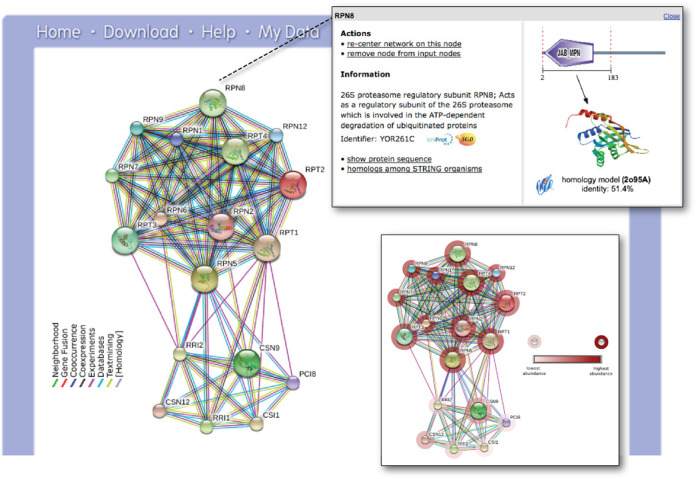
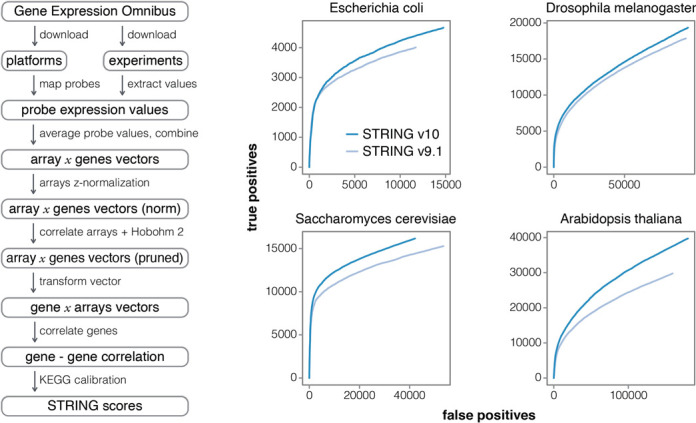
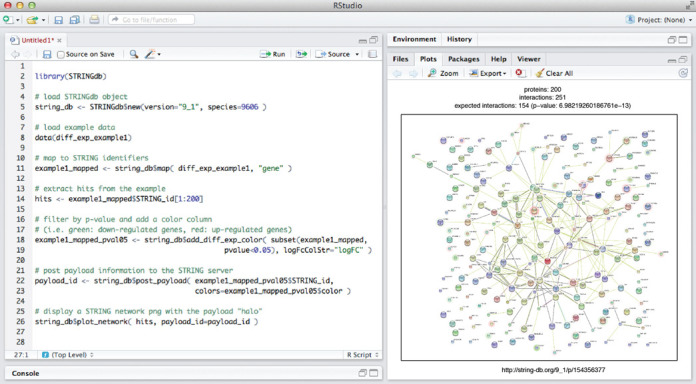
Verification
Claims the paper makes
The claims and statistics of this paper haven’t been checked yet.
Free: it reads the open-access text and checks the first 5 claims that cite a source we can check. Create a free account to check every claim.
Claims other papers make about this one
Each is checked against this paper’s own text: does it say what the citing paper says it does?
The source backs part of the claim, not all of it — or backs it for a different population, condition or comparison.
In the citing paper
“The BioPlex database was developed by the method of affinity purification and mass spectrometry, whereas the STRING and InWeb contain information from various sources.”
From Deep Multilayer Brain Proteomics Identifies Molecular Networks in Alzheimer’s Disease Progression (2020) · cites this paper as Szklarczyk et al., 2015
Experimental — accuracy not yet measuredThe source backs part of the claim, not all of it — or backs it for a different population, condition or comparison.
In the citing paper
“Protein–protein interaction (PPI) networks and weighted gene co-expression network analysis (WGCNA) based on the RNA sequencing and microarray data have been revealed to establish potent organized biological strategies for mining the functional gene modules and detecting novel prognostic biomarkers [11,12].”
From Bioinformatics Analysis and Validation of Potential Markers Associated with Prediction and Prognosis of Gastric Cancer (2024) · cites this paper as [12]
Experimental — accuracy not yet measuredThe cited source says what the claim attributes to it.
In the citing paper
“The bias towards well-described proteins2 is confirmed not only with respect to publications but also with respect to patents, NIH funding patterns, GWAS and mouse phenotype data (data not shown), availability of molecular probes such as antibodies and small molecules, and even queries in the STRING18database”
From Unexplored therapeutic opportunities in the human genome (2018) · cites this paper as [18]
The cited source says what the claim attributes to it.
In the citing paper
“Superimposing these 44 proteins along with APP and TAU onto STRING protein-protein interaction database [61] elucidated 4 protein interaction modules associated with amyloid pathology and mitochondrial functions, while no TAU related protein interaction module was identified with this small list (Fig. 3e).”
From Integrated analysis of ultra-deep proteomes in cortex, cerebrospinal fluid and serum reveals a mitochondrial signature in Alzheimer’s disease (2020) · cites this paper as [61]
The cited source says what the claim attributes to it.
In the citing paper
“We next queried the STRING database of protein-protein interactions27, which revealed numerous groups of physically interacting proteins within this functional category”
From Trisomy 21 causes changes in the circulating proteome indicative of chronic autoinflammation (2017) · cites this paper as [27]
1 more claim about this paper
Create a free account to see every claim other papers make about this one.
Self-check
Percentages, sums and reported differences re-computed from the paper’s own numbers.
The self-check needs the paper’s full text.
Citations
Cites
Gene Ontology: tool for the unification of biology
Ashburner, M., Ball, C. A., Blake, J. A., Botstein, D., Butler, H., Cherry, J. M., Davis, A. P., Dolinski, K., Dwight, S. S., Eppig, J. T., et al. (2000) · Nature Genetics · doi:10.1038/75556 · Cited by 43,206
Cluster analysis and display of genome-wide expression patterns
Eisen, M. B., Spellman, P. T., Brown, P. O., & Botstein, D. (1998) · Proceedings of the National Academy of Sciences · doi:10.1073/pnas.95.25.14863 · Cited by 16,184 · cited 1×
“It has long been established that co-expression is a proxy for co-regulation (35,36) and a strong indicator of functional associations.”
BackgroundBioconductor: open software development for computational biology and bioinformatics
Gentleman, R. C., Carey, V. J., Bates, D. M., Bolstad, B., Dettling, M., Dudoit, S., Ellis, B., Gautier, L., Ge, Y., Gentry, J., et al. (2004) · Genome Biology · doi:10.1186/gb-2004-5-10-r80 · Cited by 12,172 · cited 1×
“0, we have introduced a further option: direct access from the R programming environment, following the Bioconductor standard (39).”
MethodNCBI GEO: archive for functional genomics data sets—update
Barrett, T., Wilhite, S. E., Ledoux, P., Evangelista, C., Kim, I. F., Tomashevsky, M., Marshall, K. A., Phillippy, K. H., Sherman, P. M., Holko, M., et al. (2012) · Nucleic Acids Research · doi:10.1093/nar/gks1193 · Cited by 10,418 · cited 3×
“As of March 2014, GEO consisted of more than 12 000 different platforms (GPL), 45 000 experiments (GSE) and over 1 million matrices (GSM).”
MethodInfluentialThe Reactome pathway Knowledgebase
Fabregat, A., Sidiropoulos, K., Garapati, P., Gillespie, M., Hausmann, K., Haw, R., Jassal, B., Jupe, S., Korninger, F., McKay, S., et al. (2016) · Nucleic Acids Research · doi:10.1093/nar/gkv1351 · Cited by 5,605
STRING v9.1: protein-protein interaction networks, with increased coverage and integration
Franceschini, A., Szklarczyk, D., Frankild, S., Kuhn, M., Simonovic, M., Roth, A., Lin, J., Minguez, P., Bork, P., von Mering, C., et al. (2012) · Nucleic Acids Research · doi:10.1093/nar/gks1094 · Cited by 4,398
Self-citationSzklarczyk, D., Franceschini, A., Kuhn, M., Simonovic, M., Roth, A., Minguez, P., Doerks, T., Stark, M., Muller, J., Bork, P., et al. (2011) · Nucleic Acids Research · doi:10.1093/nar/gkq973 · Cited by 3,460
Self-citationData, information, knowledge and principle: back to metabolism in KEGG
Kanehisa, M., Goto, S., Sato, Y., Kawashima, M., Furumichi, M., & Tanabe, M. (2014) · Nucleic Acids Research · doi:10.1093/nar/gkt1076 · Cited by 3,092 · cited 1×
“All sources of interaction evidence are benchmarked and calibrated against previous knowledge, using the high-level functional groupings provided by the manually curated Kyoto Encyclopedia of Genes and Genomes (KEGG) pathway maps (5).”
MethodSTRING 8--a global view on proteins and their functional interactions in 630 organisms
Jensen, L. J., Kuhn, M., Stark, M., Chaffron, S., Creevey, C., Muller, J., Doerks, T., Julien, P., Roth, A., Simonovic, M., et al. (2009) · Nucleic Acids Research · doi:10.1093/nar/gkn760 · Cited by 2,474
Self-citationThe Database of Interacting Proteins: 2004 update
Salwinski, L. (2004) · Nucleic Acids Research · doi:10.1093/nar/gkh086 · Cited by 2,271
Cited by
Items 1,001–1,079 of 1,079
Sinha, S., Eisenhaber, B., Jensen, L. J., Kalbuaji, B., & Eisenhaber, F. (2018) · PROTEOMICS · doi:10.1002/pmic.201800093 · Cited by 60
Self-citationPentraxin-2 suppresses c-Jun/AP-1 signaling to inhibit progressive fibrotic disease
Nakagawa, N., Barron, L., Gomez, I. G., Johnson, B. G., Roach, A. M., Kameoka, S., Jack, R. M., Lupher, M. L., Gharib, S. A., & Duffield, J. S. (2016) · JCI Insight · doi:10.1172/jci.insight.87446 · Cited by 59
“Intriguingly, a protein network analysis by Search Tool for the Retrieval of Interacting Genes/Proteins (STRING) (28) predicted that many of these suppressed factors formed an interrelated network, centered near c-Jun and ringed with other transcription factors that either are also AP-1 family members (Jun-B, Fosl2) o…”
BackgroundInfluentialSREBP2 contributes to cisplatin resistance in ovarian cancer cells
Zheng, L., Li, L., Lu, Y., Jiang, F., & Yang, X.-A. (2018) · Experimental Biology and Medicine · doi:10.1177/1535370218760283 · Cited by 59
Brubaker, D. K., Paulo, J. A., Sheth, S., Poulin, E. J., Popow, O., Joughin, B. A., Strasser, S. D., Starchenko, A., Gygi, S. P., Lauffenburger, D. A., et al. (2019) · Cell Systems · doi:10.1016/j.cels.2019.07.006 · Cited by 57
“80), to characterize KrasG12D differential oncogenic signaling (Figure 2E) (Szklarczyk et al., 2015).”
BackgroundChang, Y.-C., Hu, Z., Rachlin, J., Anton, B. P., Kasif, S., Roberts, R. J., & Steffen, M. (2016) · Nucleic Acids Research · doi:10.1093/nar/gkv1324 · Cited by 56
Hill, M. A., & Gammie, S. C. (2022) · Scientific Reports · doi:10.1038/s41598-022-22179-z · Cited by 56
Verbrugge, S. A. J., Schönfelder, M., Becker, L., Yaghoob Nezhad, F., Hrabě de Angelis, M., & Wackerhage, H. (2018) · Frontiers in Physiology · doi:10.3389/fphys.2018.00553 · Cited by 56
“This is defined as “a specific and productive functional relationship between two proteins, likely contributing to a common biological purpose” (Szklarczyk et al., 2015).”
BackgroundMethodFootprint-based functional analysis of multiomic data
Dugourd, A., & Saez-Rodriguez, J. (2019) · Current Opinion in Systems Biology · doi:10.1016/j.coisb.2019.04.002 · Cited by 53
Deep learning methods for protein function prediction
Boadu, F., Lee, A., & Cheng, J. (2025) · PROTEOMICS · doi:10.1002/pmic.202300471 · Cited by 53
“…(e.g., structures retrieved from the AlphaFoldDB [17] and the Protein Data Bank [PDB] [18]), protein–protein interaction from the STRING database [19], protein family and domain information from the Interpro database [20], and the textual description of proteins in the literature such as UniProt…”
Jiang, J., Ding, Y., Wu, M., Lyu, X., Wang, H., Chen, Y., Wang, H., & Teng, L. (2020) · Frontiers in Oncology · doi:10.3389/fonc.2020.01765 · Cited by 52
“4 considered statistically significant (6).”
BackgroundExploiting Bacterial Operons To Illuminate Human Iron–Sulfur Proteins
Andreini, C., Banci, L., & Rosato, A. (2016) · Journal of Proteome Research · doi:10.1021/acs.jproteome.6b00045 · Cited by 48
Apostolopoulou, M., Kiehl, T. R., Winter, M., Cardenas De La Hoz, E., Boles, N. C., Bjornsson, C. S., Zuloaga, K. L., Goderie, S. K., Wang, Y., Cohen, A. R., et al. (2017) · Stem Cell Reports · doi:10.1016/j.stemcr.2017.10.005 · Cited by 46
Disease Association and Druggability of WD40 Repeat Proteins
Song, R., Wang, Z.-D., & Schapira, M. (2017) · Journal of Proteome Research · doi:10.1021/acs.jproteome.7b00451 · Cited by 45
Callegaro, G., Kunnen, S. J., Trairatphisan, P., Grosdidier, S., Niemeijer, M., den Hollander, W., Guney, E., Piñero Gonzalez, J., Furlong, L., Webster, Y. W., et al. (2021) · Archives of Toxicology · doi:10.1007/s00204-021-03141-w · Cited by 43
“Edge weights are proportional to the combined score of the nodes that the edges connect (Szklarczyk et al. 2015).”
BackgroundMethodA novel prognostic index of hepatocellular carcinoma based on immunogenomic landscape analysis
Xiao, H., Wang, B., Xiong, H., Guan, J., Wang, J., Tan, T., Lin, K., Zou, S., Hu, Z., & Wang, K. (2021) · Journal of Cellular Physiology · doi:10.1002/jcp.30015 · Cited by 43
“org/) was constructed based on the data collected from the STRING v10 database, as previously described (Szklarczyk et al., 2015).”
MethodIncorporating biological structure into machine learning models in biomedicine
Crawford, J., & Greene, C. S. (2020) · Current Opinion in Biotechnology · doi:10.1016/j.copbio.2019.12.021 · Cited by 41
The heparin-binding proteome in normal pancreas and murine experimental acute pancreatitis
Nunes, Q. M., Su, D., Brownridge, P. J., Simpson, D. M., Sun, C., Li, Y., Bui, T. P., Zhang, X., Huang, W., Rigden, D. J., et al. (2019) · PLOS ONE · doi:10.1371/journal.pone.0217633 · Cited by 42
Ross, J. M., Coppotelli, G., Branca, R. M., Kim, K. M., Lehtiö, J., Sinclair, D. A., & Olson, L. (2019) · Aging Cell · doi:10.1111/acel.13029 · Cited by 41
Rajagopalan, P., Jain, A. P., Nanjappa, V., Patel, K., Mangalaparthi, K. K., Babu, N., Cavusoglu, N., Roy, N., Soeur, J., Breton, L., et al. (2018) · Journal of Dermatological Science · doi:10.1016/j.jdermsci.2018.05.003 · Cited by 41
Dittmar, G., Hernandez, D. P., Kowenz-Leutz, E., Kirchner, M., Kahlert, G., Wesolowski, R., Baum, K., Knoblich, M., Hofstätter, M., Muller, A., et al. (2019) · iScience · doi:10.1016/j.isci.2019.02.026 · Cited by 41
“For each of the ensemblp identifiers, interactions were extracted from the STRING resource (Szklarczyk et al., 2015).”
MethodDong, T. N., Brogden, G., Gerold, G., & Khosla, M. (2021) · BMC Bioinformatics · doi:10.1186/s12859-021-04484-y · Cited by 39
“More specifically, we directly predict zhh′—the normalized confidence scores for interaction between two human proteins as collected from STRING [53] database.”
MethodSparse dictionary learning recovers pleiotropy from human cell fitness screens
Pan, J., Kwon, J. J., Talamas, J. A., Borah, A. A., Vazquez, F., Boehm, J. S., Tsherniak, A., Zitnik, M., McFarland, J. M., & Hahn, W. C. (2022) · Cell Systems · doi:10.1016/j.cels.2021.12.005 · Cited by 37
“STRING v10: protein–protein interaction networks, integrated over the tree of life.”
MethodTREX reveals proteins that bind to specific RNA regions in living cells
(2024) · doi:10.1038/s41592-024-02181-1 · Cited by 36
TREX reveals proteins that bind to specific RNA regions in living cells
Dodel, M., Guiducci, G., Dermit, M., Krishnamurthy, S., Stojic, L., & Mardakheh, F. K. (2023) · doi:10.1101/2023.06.30.547259 · Cited by 36
Sen, M. K., Almuslehi, M. S. M., Gyengesi, E., Myers, S. J., Shortland, P. J., Mahns, D. A., & Coorssen, J. R. (2019) · Cells · doi:10.3390/cells8111314 · Cited by 35
“org) to identify potential protein–protein interactions (PPI, [84]).”
BackgroundKunkle, B., Grenier-Boley, B., Sims, R., Bis, J., Naj, A., Boland, A., Vronskaya, M., van der Lee, S., Amlie-Wolf, A., Bellenguez, C., et al. (2018) · doi:10.1101/294629 · Cited by 35
A cross-talk between nitric oxide and the glutamatergic system in a Shank3 mouse model of autism
Hamoudi, W., Tripathi, M. K., Ojha, S. K., & Amal, H. (2022) · Free Radical Biology and Medicine · doi:10.1016/j.freeradbiomed.2022.06.007 · Cited by 34
Baker, P. R., Patinkin, Z. W., Shapiro, A. L. B., de la Houssaye, B. A., Janssen, R. C., Vanderlinden, L. A., Dabelea, D., & Friedman, J. E. (2017) · Scientific Reports · doi:10.1038/s41598-017-17588-4 · Cited by 33
Ray-Jones, H., Duffus, K., McGovern, A., Martin, P., Shi, C., Hankinson, J., Gough, O., Yarwood, A., Morris, A. P., Adamson, A., et al. (2020) · BMC Biology · doi:10.1186/s12915-020-00779-3 · Cited by 31
Harnessing Machine Learning To Unravel Protein Degradation in Escherichia coli
Nagar, N., Ecker, N., Loewenthal, G., Avram, O., Ben-Meir, D., Biran, D., Ron, E., & Pupko, T. (2021) · mSystems · doi:10.1128/msystems.01296-20 · Cited by 31
Screening-based approaches to identify small molecules that inhibit protein–protein interactions
Choi, S., & Choi, K.-Y. (2017) · Expert Opinion on Drug Discovery · doi:10.1080/17460441.2017.1280456 · Cited by 29
“Most biological processes and disease states are regulated by multi-protein complexes which are mediated by specific protein–protein interactions (PPIs) [1-4].”
BackgroundSokolowski, M., & Wasserman, D. (2020) · European Neuropsychopharmacology · doi:10.1016/j.euroneuro.2020.06.002 · Cited by 29
Drug repurposing: An emerging strategy in alleviating skin cancer
Kumbhar, P., Kole, K., Yadav, T., Bhavar, A., Waghmare, P., Bhokare, R., Manjappa, A., Jha, N. K., Chellappan, D. K., Shinde, S., et al. (2022) · European Journal of Pharmacology · doi:10.1016/j.ejphar.2022.175031 · Cited by 28
A large-scale benchmark for network inference from single-cell perturbation data
Chevalley, M., Roohani, Y. H., Mehrjou, A., Leskovec, J., & Schwab, P. (2025) · Communications Biology · doi:10.1038/s42003-025-07764-y · Cited by 26
Lancaster, M. S., Kim, B., Doud, E. H., Tate, M. D., Sharify, A. D., Gao, H., Chen, D., Simpson, E., Gillespie, P., Chu, X., et al. (2023) · Cell Reports · doi:10.1016/j.celrep.2023.113241 · Cited by 32
Shen, Y., Kim, A. L., Du, R., & Liu, L. (2016) · PLOS ONE · doi:10.1371/journal.pone.0163054 · Cited by 24
“1) [28] based on the known and predicted protein interactions available in the STRING database (version 10) [29].”
BackgroundTampe, B., Tampe, D., Nyamsuren, G., Klöpper, F., Rapp, G., Kauffels, A., Lorf, T., Zeisberg, E. M., Müller, G. A., Kalluri, R., et al. (2018) · Journal of Clinical Investigation · doi:10.1172/jci89632 · Cited by 24
The role of miR-106p-5p in cervical cancer: from expression to molecular mechanism
Yi, Y., Liu, Y., Wu, W., Wu, K., & Zhang, W. (2018) · Cell Death Discovery · doi:10.1038/s41420-018-0096-8 · Cited by 23
Telpoukhovskaia, M. A., Liu, K., Sayed, F. A., Etchegaray, J. I., Xie, M., Zhan, L., Li, Y., Zhou, Y., Le, D., Bahr, B. A., et al. (2020) · Scientific Reports · doi:10.1038/s41598-020-70534-9 · Cited by 23
Zhang, C., Lane, L., Omenn, G. S., & Zhang, Y. (2019) · Journal of Proteome Research · doi:10.1021/acs.jproteome.9b00537 · Cited by 22
Menendez, D., Anand, J. R., Murphy, C. C., Bell, W. J., Fu, J., Slepushkina, N., Buehler, E., Martin, S. E., Lal-Nag, M., Nitiss, J. L., et al. (2022) · Oncotarget · doi:10.18632/oncotarget.28195 · Cited by 22
“In silico protein-protein interaction and pathway analysis Ingenuity Pathway Analysis (IPA, QIAGEN, RRID:SCR_008653) and STRING (RRID:SCR_005223) [23] analyses were performed to identify enriched pathways and protein–protein interactions among these 42 candidates.”
MethodInfluentialSolomon, L. A., Podder, S., He, J., Jackson-Chornenki, N. L., Gibson, K., Ziliotto, R. G., Rhee, J., & DeKoter, R. P. (2017) · Molecular and Cellular Biology · doi:10.1128/mcb.00013-17 · Cited by 22
Oh, J. W., Kim, S. K., Cho, K., Kim, M., Suh, C. S., Lee, J. R., & Kim, K. P. (2017) · PROTEOMICS · doi:10.1002/pmic.201600333 · Cited by 22
Genomic signatures associated with transitions to viviparity in cyprinodontiformes
Yusuf, L. H., Saldívar Lemus, Y., Thorpe, P., Macías Garcia, C., & Ritchie, M. G. (2023) · Molecular Biology and Evolution · doi:10.1093/molbev/msad208 · Cited by 22
“We also looked for protein-protein interactions using STRING, with zebrafish as a background gene set (Szklarczyk et al. 2015).”
MethodMattox, A. K., Yang, B., Douville, C., Lo, S.-F., Sciubba, D., Wolinsky, J. P., Gokaslan, Z. L., Robison, J., Blair, C., Jiao, Y., et al. (2021) · Neuro-Oncology Advances · doi:10.1093/noajnl/vdaa173 · Cited by 21
Liu, M., Luo, M., Sun, H., Ni, B., & Shao, Y. (2017) · The Tohoku Journal of Experimental Medicine · doi:10.1620/tjem.243.263 · Cited by 20
“(STRING) (Szklarczyk et al. 2015) database (https://string-db.”
MethodADAMTS12 acts as a tumor microenvironment related cancer promoter in gastric cancer
Hou, Y., Xu, Y., & Wu, D. (2021) · Scientific Reports · doi:10.1038/s41598-021-90330-3 · Cited by 19
Hao, Y., Wu, Y., Wang, S., Wang, C., Qu, S., Li, L., Yu, G., Liu, Z., Zhao, Z., Fan, P., et al. (2021) · Journal of Ethnopharmacology · doi:10.1016/j.jep.2021.113780 · Cited by 19
Broad functional profiling of fission yeast proteins using phenomics and machine learning
Rodríguez-López, M., Bordin, N., Lees, J., Scholes, H., Hassan, S., Saintain, Q., Kamrad, S., Orengo, C., & Bähler, J. (2023) · eLife · doi:10.7554/elife.88229.3 · Cited by 18
Nonlinear transcriptional responses to gradual modulation of transcription factor dosage
Domingo, J., Minaeva, M., Morris, J. A., Ghatan, S., Ziosi, M., Sanjana, N. E., & Lappalainen, T. (2024) · doi:10.1101/2024.03.01.582837 · Cited by 18
“Below, we address each of the concerns raised:”
CURTAIN—A unique web-based tool for exploration and sharing of MS-based proteomics data
Phung, T. K., Berndsen, K., Shastry, R., Phan, T. L. C. H. B., Muqit, M. M. K., Alessi, D. R., & Nirujogi, R. S. (2024) · Proceedings of the National Academy of Sciences · doi:10.1073/pnas.2312676121 · Cited by 18
Deep Learning for Integrated Analysis of Breast Cancer Subtype Specific Multi-omics Data
Rakshit, S., Saha, I., Chakraborty, S. S., & Plewczyski, D. (2018) · TENCON 2018 - 2018 IEEE Region 10 Conference · doi:10.1109/tencon.2018.8650144 · Cited by 16
“The PPI network of these TFs (named as per gene name) is generated using STRING database [21] and shown in Figure 3(b).”
MethodEssential role of conserved DUF177A protein in plastid 23S rRNA accumulation and plant embryogenesis
Yang, J., Suzuki, M., & McCarty, D. R. (2016) · Journal of Experimental Botany · doi:10.1093/jxb/erw311 · Cited by 16
“A comparative genomic analysis utilizing the SEED (Overbeek et al. , 2005) and STRING (Szklarczyk et al. , 2015) databases was used to explore possible functions of DUF177 proteins.”
Reversing radiation-induced immunosuppression using a new therapeutic modality
Courtney, C. M., Sharma, S., Fallgren, C., Weil, M. M., Chatterjee, A., & Nagpal, P. (2022) · Life Sciences in Space Research · doi:10.1016/j.lssr.2022.05.002 · Cited by 16
PGxMine: Text mining for curation of PharmGKB
Lever, J., Barbarino, J. M., Gong, L., Huddart, R., Sangkuhl, K., Whaley, R., Whirl-Carrillo, M., Woon, M., Klein, T. E., & Altman, R. B. (2019) · Biocomputing 2020 · doi:10.1142/9789811215636_0054 · Cited by 16
Guo, Z., Zhu, Y., Xiao, H., Dai, R., Yang, W., Xue, W., Zhang, X., Hao, B., & Liao, S. (2023) · Biological Research · doi:10.1186/s40659-023-00474-x · Cited by 15
“To build the interaction network of DEGs, the online functional protein association networks analysis platform STRING v.11.5 (https:// string-db. org/) was applied [29].”
MethodInfluentialTranslation efficiency covariation identifies conserved coordination patterns across cell types
Liu, Y., Rao, S., Hoskins, I., Geng, M., Zhao, Q., Chacko, J., Ghatpande, V., Qi, K., Persyn, L., Wang, J., et al. (2026) · Nature Biotechnology · doi:10.1038/s41587-025-02718-5 · Cited by 15
“Proteins that physically interact tend to be co-expressed at the RNA level 14,72,73 , and many protein complexes are assembled co-translationally 74 , leading us to hypothesize that the TE of interacting proteins may be coordinated across cell types.”
Waksmunski, A. R., Grunin, M., Kinzy, T. G., Igo, R. P., Haines, J. L., Cooke Bailey, J. N., & for the International Age-Related Macular Degeneration Genomics Consortium (2019) · Investigative Opthalmology & Visual Science · doi:10.1167/iovs.19-27827 · Cited by 14
Drug Target Prioritization for Alzheimer's Disease Using Protein Interaction Network Analysis
Podder, A., Pandit, M., & Narayanan, L. (2018) · OMICS: A Journal of Integrative Biology · doi:10.1089/omi.2018.0131 · Cited by 14
Liu, Y., Department of Colorectal and Anal Surgery, T. F. H. O. J. U., Cheng, L., Song, X., Li, C., Zhang, J., Wang, L., Department of Orthopedics, T. F. H. O. J. U., & Department of Hepatobiliary and Pancreatic Surgery, T. F. H. O. J. U. (2022) · Mathematical Biosciences and Engineering · doi:10.3934/mbe.2022010 · Cited by 14
Pulcrano, S., De Gregorio, R., De Sanctis, C., Volpicelli, F., Piscitelli, R. M., Speranza, L., Perrone-Capano, C., di Porzio, U., Caiazzo, M., Martini, A., et al. (2023) · The Journal of Neuroscience · doi:10.1523/jneurosci.0431-23.2023 · Cited by 12
Fritsche, K., Boccellato, F., Schlaermann, P., Koeppel, M., Denecke, C., Link, A., Malfertheiner, P., Gut, I., Meyer, T. F., & Berger, H. (2022) · Clinical Epigenetics · doi:10.1186/s13148-022-01406-4 · Cited by 12
“B Table of selected gene ontology (GO) terms enriched in antrum vs. fundus, determined with StringDB [85].”
MethodBioinformatics analysis of microarray data to reveal the pathogenesis of brain ischemia
He, J., Gao, Y., Wu, G., Lei, X., Zhang, Y., Pan, W., & Yu, H. (2018) · Molecular Medicine Reports · doi:10.3892/mmr.2018.9000 · Cited by 11
Nim, H. T., Dang, L., Thiyagarajah, H., Bakopoulos, D., See, M., Charitakis, N., Sibbritt, T., Eichenlaub, M. P., Archer, S. K., Fossat, N., et al. (2021) · Genome Biology · doi:10.1186/s13059-021-02539-0 · Cited by 11
“(5) The gene regulatory network was constructed from the STRING database and arranged using a force-directed layout [19].”
BackgroundMethodInfluentialCrowgey, E. L., Matlock, A., Venkatraman, V., Fert-Bober, J., & Van Eyk, J. E. (2017) · Methods in Molecular Biology · doi:10.1007/978-1-4939-6783-4_19 · Cited by 9
Santos, E. C., Binato, R., Fernandes, P. V., Ferreira, M. A., & Abdelhay, E. (2022) · Cancer Biomarkers · doi:10.3233/cbm-203225 · Cited by 9
“Protein-protein interaction (PPI) analyses were predicted using Search Tool for the Retrieval of Interacting Genes/Proteins (STRING) version 11.0 [15] against the human database.”
InfluentialHossen, M. A., Jahan, U. M. S., Hossain, M. A., Asif, K. H., Rahman, A., Ahmed, S., Uddin, M. M., Amin, M. F., Barik, M. A., Islam, M. J., et al. (2025) · PLOS One · doi:10.1371/journal.pone.0320550 · Cited by 8
Hierarchical cortical transcriptome disorganization in autism
Lombardo, M. V., Courchesne, E., Lewis, N. E., & Pramparo, T. (2016) · doi:10.1101/042937 · Cited by 7
Zhang, B., Zhong, W., Yang, B., Li, Y., Duan, S., Huang, J., & Mao, Y. (2022) · Bioengineered · doi:10.1080/21655979.2022.2040872 · Cited by 6
“In order to find the essential genes related to the CUMS model and analyze them at the mRNA level, we used [33] STRING (http://string-db.”
MethodNon-linear transcriptional responses to gradual modulation of transcription factor dosage
Domingo, J., Minaeva, M., Morris, J. A., Ghatan, S., Ziosi, M., Sanjana, N. E., & Lappalainen, T. (2024) · doi:10.7554/elife.100555.1 · Cited by 6
Saxena, A., & Sachin, K. (2018) · Current Genomics · doi:10.2174/1389202919666180726125645 · Cited by 5
“To identify most important regulatory mediators of these meta-genes, a functional interaction network for protein products of these genes was created using stringApp that provides access to STRING (Search Tool for the Retrieval of Interacting Genes/Proteins) database [14].”
Method(2020) · Database · doi:10.1093/database/baaa086 · Cited by 5
“Others provided the predicted interactions of rats, including MIST (33), STRING (34) and HitPredict (35).”
InfluentialLearning chemical sensitivity reveals mechanisms of cellular response
Connell, W., Garcia, K., Goodarzi, H., & Keiser, M. J. (2024) · Communications Biology · doi:10.1038/s42003-024-06865-4 · Cited by 4
Structure-Based Deep Learning Framework for Modeling Human–Gut Bacterial Protein Interactions
Kiouri, D. P., Batsis, G. C., & Chasapis, C. T. (2025) · Proteomes · doi:10.3390/proteomes13010010 · Cited by 3
“This function allows the model to focus on misclassified or difficult samples (i.e., the interacting pairs that are far fewer than the non-interacting pairs), thereby improving overall performance in imbalanced datasets.”
Trendel, J., Prokofeva, P., Chen, Z. A., Horn, L., Trendel, S., Mema, M., Stuiver, M., Rappsilber, J., & Kuster, B. (2026) · Nucleic Acids Research · doi:10.1093/nar/gkag339 · Cited by 3
“For example, the interaction of a protein with DNA [ 1 –5 ], RNA [ 1 , 6 –12 ], or another protein [ 13 , 14 ] can indicate the biological function of that protein as part of a complex or phase-separated compartment.”
Broad functional profiling of fission yeast proteins using phenomics and machine learning
Rodríguez-López, M., Bordin, N., Lees, J., Scholes, H., Hassan, S., Saintain, Q., Kamrad, S., Orengo, C., & Bähler, J. (2023) · doi:10.1101/2023.04.05.535764 · Cited by 2
Quantitative Analysis of Global Protein Stability Rates in Tissues
McClatchy, D. B., Gao, Y., Lavallée-Adam, M., & Yates, J. R. (2019) · doi:10.1101/520494 · Cited by 1
“functional) interacting proteins[29].”
Houessou, U., Zamani, P., Manikpurage, H. D., Li, Z., Gaudreault, N., Dahmene, M., Dagenais, F., Couture, C., Clavel, M.-A., Pibarot, P., et al. (2026) · Atherosclerosis · doi:10.1016/j.atherosclerosis.2026.120791 · Cited by 1
Broad functional profiling of fission yeast proteins using phenomics and machine learning
Rodríguez-López, M., Bordin, N., Lees, J., Scholes, H., Hassan, S., Saintain, Q., Kamrad, S., Orengo, C., & Bähler, J. (2023) · doi:10.7554/elife.88229.2
Metadata
- Authors
- Szklarczyk, D., Franceschini, A., Wyder, S., Forslund, K., Heller, D., Huerta-Cepas, J., Simonovic, M., Roth, A., Santos, A., Tsafou, K. P., Kuhn, M., Bork, P., Jensen, L. J., & von Mering, C.
- Affiliations
- SIB Swiss Institute of Bioinformatics (CH)
- University of Copenhagen (DK)
- Max Planck Institute of Molecular Cell Biology and Genetics (DE)
- ORCID
- Venue
- Nucleic Acids Research
- Publisher
- Oxford University Press (OUP)
- Published
- 2014-10-28
- Volume
- 43
- Issue
- D1
- Pages
- D447-D452
- ISSN
- 0305-1048 (ISSN-L)
- 1362-4962
- PMC
- PMC4383874
- OpenAlex
- W2096173332
- Cited by
- 10,436
- References
- 45
- Citations by year
- 2026: 288 · 2025: 545 · 2024: 821 · 2023: 783 · 2022: 996 · 2021: 1183 · 2020: 1406 · 2019: 1348 · 2018: 1177 · 2017: 1054 · 2016: 680 · 2015: 140 · 2014: 4
- FWCI
- 256.77
- Type
- journal article
- Language
- en
- Open access
- gold
- doi.org
- Locations
- Nucleic Acids Research (publishedVersion, cc-by)
- Europe PMC (PubMed Central) (publishedVersion, cc-by)
- PubMed Central (publishedVersion, cc-by)
- PubMed (publishedVersion)
- Research at the University of Copenhagen (University of Copenhagen) (publishedVersion)
- MDC Repository (Max-Delbrueck-Center for Molecular Medicine) (acceptedVersion)
- Zurich Open Repository and Archive (University of Zurich) (acceptedVersion, other-oa)
- reroDoc Digital Library (submittedVersion)
- Zurich Open Repository and Archive (University of Zurich) (submittedVersion, other-oa)
- Zurich Open Repository and Archive (University of Zurich)
- Funders
- European Molecular Biology Laboratory
- Universität Wien
- Novo Nordisk
- Universität Zürich
- Topics
- Life Sciences › Biochemistry, Genetics and Molecular Biology › Molecular Biology › Bioinformatics and Genomic Networks
- Life Sciences › Biochemistry, Genetics and Molecular Biology › Molecular Biology › Genomics and Phylogenetic Studies
- Health Sciences › Medicine › Health Informatics › Biomedical Text Mining and Ontologies
- Keywords
- protein-protein interaction network, STRING database, enrichment analysis, tree of life, R API
- MeSH terms
- Proteins, Software, Internet, Gene Expression Profiling, Protein Interaction Mapping, Databases, Protein
About these checks
Registry, retraction, Cites and statistics results are computed, not judged, with one exception: a printed reference that no index lists is read once by a model before it counts as a citation error. Claims are extracted by a model and kept only when their quote appears verbatim in the text; each cited source is then checked, with a model’s help, for whether it says what the claim relies on. Those verdicts can be wrong — read the claim’s quote and the cited source before relying on one.
Statistics and arithmetic are recomputed, not judged.
Confidence bands are shown only for fields calibrated on our annotated test set. None is calibrated yet, so no band is shown.
What counts as a claim ›How we measure confidence ›How we check this ›
Are you an author, or do you see a problem with this page? Request a review
Data sources
Bibliographic data: Semantic Scholar, OpenAlex, Crossref.
Contains information from the Semantic Scholar Academic Graph Datasets, made available under the ODC Attribution License (ODC-BY 1.0).
Semantic Scholar’s data is described in: Kinney, R., et al. (2023). The Semantic Scholar Open Data Platform. arXiv:2301.10140.
