

STRING v10: protein–protein interaction networks, integrated over the tree of life
Open accessThe DOI matches its Crossref record; 44 of the 45 references it cites were found in a registry or an index.
Abstract
The many functional partnerships and interactions that occur between proteins are at the core of cellular processing and their systematic characterization helps to provide context in molecular systems biology. However, known and predicted interactions are scattered over multiple resources, and the available data exhibit notable differences in terms of quality and completeness. The STRING database (http://string-db.org) aims to provide a critical assessment and integration of protein-protein interactions, including direct (physical) as well as indirect (functional) associations. The new version 10.0 of STRING covers more than 2000 organisms, which has necessitated novel, scalable algorithms for transferring interaction information between organisms. For this purpose, we have introduced hierarchical and self-consistent orthology annotations for all interacting proteins, grouping the proteins into families at various levels of phylogenetic resolution. Further improvements in version 10.0 include a completely redesigned prediction pipeline for inferring protein-protein associations from co-expression data, an API interface for the R computing environment and improved statistical analysis for enrichment tests in user-provided networks.
Overview
The claims and statistics of this paper haven’t been checked yet.
Free: it reads the open-access text and checks the first 5 claims that cite a source we can check. Create a free account to check every claim.
Integrity signals
Registry
Cites
Statistics
Figures
Verification
Claims the paper makes
The claims and statistics of this paper haven’t been checked yet.
Free: it reads the open-access text and checks the first 5 claims that cite a source we can check. Create a free account to check every claim.
Claims other papers make about this one
Each is checked against this paper’s own text: does it say what the citing paper says it does?
The source backs part of the claim, not all of it — or backs it for a different population, condition or comparison.
In the citing paper
“The BioPlex database was developed by the method of affinity purification and mass spectrometry, whereas the STRING and InWeb contain information from various sources.”
From Deep Multilayer Brain Proteomics Identifies Molecular Networks in Alzheimer’s Disease Progression (2020) · cites this paper as Szklarczyk et al., 2015
Experimental — accuracy not yet measuredThe source backs part of the claim, not all of it — or backs it for a different population, condition or comparison.
In the citing paper
“Protein–protein interaction (PPI) networks and weighted gene co-expression network analysis (WGCNA) based on the RNA sequencing and microarray data have been revealed to establish potent organized biological strategies for mining the functional gene modules and detecting novel prognostic biomarkers [11,12].”
From Bioinformatics Analysis and Validation of Potential Markers Associated with Prediction and Prognosis of Gastric Cancer (2024) · cites this paper as [12]
Experimental — accuracy not yet measuredThe cited source says what the claim attributes to it.
In the citing paper
“The bias towards well-described proteins2 is confirmed not only with respect to publications but also with respect to patents, NIH funding patterns, GWAS and mouse phenotype data (data not shown), availability of molecular probes such as antibodies and small molecules, and even queries in the STRING18database”
From Unexplored therapeutic opportunities in the human genome (2018) · cites this paper as [18]
The cited source says what the claim attributes to it.
In the citing paper
“Superimposing these 44 proteins along with APP and TAU onto STRING protein-protein interaction database [61] elucidated 4 protein interaction modules associated with amyloid pathology and mitochondrial functions, while no TAU related protein interaction module was identified with this small list (Fig. 3e).”
From Integrated analysis of ultra-deep proteomes in cortex, cerebrospinal fluid and serum reveals a mitochondrial signature in Alzheimer’s disease (2020) · cites this paper as [61]
The cited source says what the claim attributes to it.
In the citing paper
“We next queried the STRING database of protein-protein interactions27, which revealed numerous groups of physically interacting proteins within this functional category”
From Trisomy 21 causes changes in the circulating proteome indicative of chronic autoinflammation (2017) · cites this paper as [27]
1 more claim about this paper
Create a free account to see every claim other papers make about this one.
Self-check
Percentages, sums and reported differences re-computed from the paper’s own numbers.
The self-check needs the paper’s full text.
Citations
Cites
Gene Ontology: tool for the unification of biology
Ashburner, M., Ball, C. A., Blake, J. A., Botstein, D., Butler, H., Cherry, J. M., Davis, A. P., Dolinski, K., Dwight, S. S., Eppig, J. T., et al. (2000) · Nature Genetics · doi:10.1038/75556 · Cited by 43,206
Cluster analysis and display of genome-wide expression patterns
Eisen, M. B., Spellman, P. T., Brown, P. O., & Botstein, D. (1998) · Proceedings of the National Academy of Sciences · doi:10.1073/pnas.95.25.14863 · Cited by 16,184 · cited 1×
“It has long been established that co-expression is a proxy for co-regulation (35,36) and a strong indicator of functional associations.”
BackgroundBioconductor: open software development for computational biology and bioinformatics
Gentleman, R. C., Carey, V. J., Bates, D. M., Bolstad, B., Dettling, M., Dudoit, S., Ellis, B., Gautier, L., Ge, Y., Gentry, J., et al. (2004) · Genome Biology · doi:10.1186/gb-2004-5-10-r80 · Cited by 12,172 · cited 1×
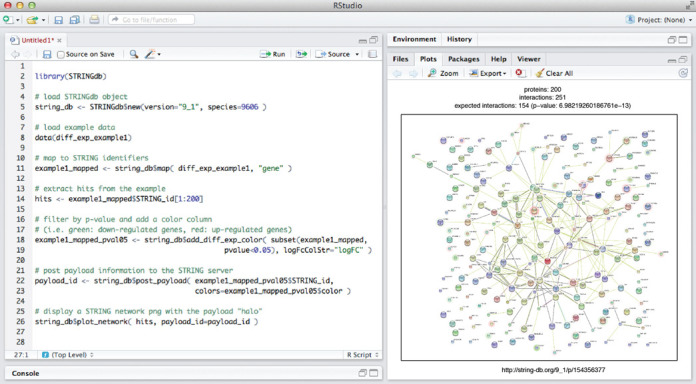
“0, we have introduced a further option: direct access from the R programming environment, following the Bioconductor standard (39).”
MethodNCBI GEO: archive for functional genomics data sets—update
Barrett, T., Wilhite, S. E., Ledoux, P., Evangelista, C., Kim, I. F., Tomashevsky, M., Marshall, K. A., Phillippy, K. H., Sherman, P. M., Holko, M., et al. (2012) · Nucleic Acids Research · doi:10.1093/nar/gks1193 · Cited by 10,418 · cited 3×
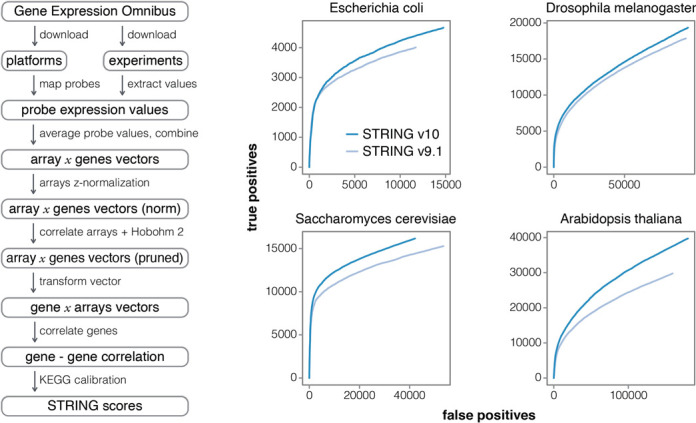
“As of March 2014, GEO consisted of more than 12 000 different platforms (GPL), 45 000 experiments (GSE) and over 1 million matrices (GSM).”
MethodInfluentialThe Reactome pathway Knowledgebase
Fabregat, A., Sidiropoulos, K., Garapati, P., Gillespie, M., Hausmann, K., Haw, R., Jassal, B., Jupe, S., Korninger, F., McKay, S., et al. (2016) · Nucleic Acids Research · doi:10.1093/nar/gkv1351 · Cited by 5,605
STRING v9.1: protein-protein interaction networks, with increased coverage and integration
Franceschini, A., Szklarczyk, D., Frankild, S., Kuhn, M., Simonovic, M., Roth, A., Lin, J., Minguez, P., Bork, P., von Mering, C., et al. (2012) · Nucleic Acids Research · doi:10.1093/nar/gks1094 · Cited by 4,398
Self-citationSzklarczyk, D., Franceschini, A., Kuhn, M., Simonovic, M., Roth, A., Minguez, P., Doerks, T., Stark, M., Muller, J., Bork, P., et al. (2011) · Nucleic Acids Research · doi:10.1093/nar/gkq973 · Cited by 3,460
Self-citationData, information, knowledge and principle: back to metabolism in KEGG
Kanehisa, M., Goto, S., Sato, Y., Kawashima, M., Furumichi, M., & Tanabe, M. (2014) · Nucleic Acids Research · doi:10.1093/nar/gkt1076 · Cited by 3,092 · cited 1×
“All sources of interaction evidence are benchmarked and calibrated against previous knowledge, using the high-level functional groupings provided by the manually curated Kyoto Encyclopedia of Genes and Genomes (KEGG) pathway maps (5).”
MethodSTRING 8--a global view on proteins and their functional interactions in 630 organisms
Jensen, L. J., Kuhn, M., Stark, M., Chaffron, S., Creevey, C., Muller, J., Doerks, T., Julien, P., Roth, A., Simonovic, M., et al. (2009) · Nucleic Acids Research · doi:10.1093/nar/gkn760 · Cited by 2,474
Self-citationThe Database of Interacting Proteins: 2004 update
Salwinski, L. (2004) · Nucleic Acids Research · doi:10.1093/nar/gkh086 · Cited by 2,271
Cited by
Items 501–600 of 1,079
Identification of Core Gene Expression Signature and Key Pathways in Colorectal Cancer
Ding, X., Duan, H., & Luo, H. (2020) · Frontiers in Genetics · doi:10.3389/fgene.2020.00045 · Cited by 110
Ma, H., He, Z., Chen, J., Zhang, X., & Song, P. (2021) · Scientific Reports · doi:10.1038/s41598-020-79235-9 · Cited by 107
Zonneveld, M. I., van Herwijnen, M. J. C., Fernandez‐Gutierrez, M. M., Giovanazzi, A., de Groot, A. M., Kleinjan, M., van Capel, T. M. M., Sijts, A. J. A. M., Taams, L. S., Garssen, J., et al. (2021) · Journal of Extracellular Vesicles · doi:10.1002/jev2.12071 · Cited by 99
“5) protein-protein interaction network analysis tool (Szklarczyk et al., 2015), of which 362 proteins matched the STRING database (Supplementary File 3).”
MethodXu, M., Zheng, J., Hou, T., Lin, H., Wang, T., Wang, S., Lu, J., Zhao, Z., Li, M., Xu, Y., et al. (2022) · Diabetes Care · doi:10.2337/dc22-0323 · Cited by 108
“Integration of Genetic and Biological Pathway Evidence We further integrated the genetic evidence generated in this study with protein-protein interaction (PPI) information from the STRING database for better understanding of the causal mechanisms linking SGLT2 inhibition with the two cardiometabolic diseases (33).”
MethodStress-related biomolecular condensates in plants
Solís-Miranda, J., Chodasiewicz, M., Skirycz, A., Fernie, A. R., Moschou, P. N., Bozhkov, P. V., & Gutiérrez-Beltrán, E. (2023) · The Plant Cell · doi:10.1093/plcell/koad127 · Cited by 109
“To retrieve protein–protein interaction data, the STRING database (V10) was used (Szklarczyk et al. 2015).”
MethodReduced generation of lung tissue–resident memory T cells during infancy
Zens, K. D., Chen, J. K., Guyer, R. S., Wu, F. L., Cvetkovski, F., Miron, M., & Färber, D. L. (2017) · The Journal of Experimental Medicine · doi:10.1084/jem.20170521 · Cited by 109
“GO data were evaluated using the protein–protein interaction database Search Tool for the Retrieval of Interacting Genes/Proteins (STR ING; Szklarczyk et al., 2015) using the top 200 genes differentially expressed between infant and adult samples by logFC (P < 0.”
MethodInfluentialLi, W., Wang, K., Liu, Y., Wu, H., He, Y., Li, C., Wang, Q., Su, X., Yan, S., Su, W., et al. (2022) · Frontiers in Immunology · doi:10.3389/fimmu.2022.912933 · Cited by 106
DNA repair in the trinucleotide repeat disorders
Jones, L., Houlden, H., & Tabrizi, S. J. (2016) · The Lancet Neurology · doi:10.1016/s1474-4422(16)30350-7 · Cited by 106
Triggering MSR1 promotes JNK‐mediated inflammation in IL‐4‐activated macrophages
Guo, M., Härtlova, A., Gierliński, M., Prescott, A., Castellvi, J., Losa, J. H., Petersen, S. K., Wenzel, U. A., Dill, B. D., Emmerich, C. H., et al. (2019) · The EMBO Journal · doi:10.15252/embj.2018100299 · Cited by 96
“Protein networks were extracted from STRING database v10 (Szklarczyk et al , 2015) using only “experiment” and “text-mining” data.”
Nine quick tips for pathway enrichment analysis
Chicco, D., & Agapito, G. (2022) · PLoS Computational Biology · doi:10.1371/journal.pcbi.1010348 · Cited by 108
Ma, T., & Zhang, A. (2019) · BMC Genomics · doi:10.1186/s12864-019-6285-x · Cited by 105
“Denote G ∈ R p × p as the interaction matrix among p genomic features, which can be obtained from biological databases such as STRING [26] and Reactome [27].”
BackgroundMethodInfluentialJain, P., Singh, P. K., Kapoor, R., Khanna, A., Solanke, A. U., Krishnan, S. G., SINGH, A. K., Sharma, V., & Sharma, T. R. (2017) · Frontiers in Plant Science · doi:10.3389/fpls.2017.00093 · Cited by 105
Thirstrup, K., Dächsel, J. C., Oppermann, F. S., Williamson, D. S., Smith, G. P., Fog, K., & Christensen, K. V. (2017) · Scientific Reports · doi:10.1038/s41598-017-10501-z · Cited by 101
Arsenault, R. J., LEE, J., Latham, R., Carter, B., & Kogut, M. H. (2017) · Poultry Science · doi:10.3382/ps/pex246 · Cited by 105
Bacteria-to-Human Protein Networks Reveal Origins of Endogenous DNA Damage
Xia, J., Chiu, L.-Y., Nehring, R. B., Núñez, M. A. B., Mei, Q., Perez, M., Zhai, Y., Fitzgerald, D. M., Pribis, J. P., Wang, Y., et al. (2019) · Cell · doi:10.1016/j.cell.2018.12.008 · Cited by 107
Lacombe, J., Sima, C., Amundson, S. A., & Zenhausern, F. (2018) · PLoS ONE · doi:10.1371/journal.pone.0198851 · Cited by 104
Rougeot, J., Torraca, V., Zakrzewska, A., Kanwal, Z., Jansen, H. J., Sommer, F., Spaink, H. P., & Meijer, A. H. (2019) · Frontiers in Immunology · doi:10.3389/fimmu.2019.00832 · Cited by 105
Yilmaz, A., & Benvenisty, N. (2019) · Cell stem cell · doi:10.1016/j.stem.2019.06.010 · Cited by 105
Xu, Z., Zhou, Y., Cao, Y., Dinh, T. L. A., Wan, J., & Zhao, M. (2016) · Medical Oncology · doi:10.1007/s12032-016-0840-y · Cited by 103
“de/) database and subsequently was visualized using Cytoscape [15, 16].”
MethodPolypharmacology-based ceritinib repurposing using integrated functional proteomics
Kuenzi, B. M., Rix, L. L. R., Stewart, P. A., Fang, B., Kinose, F., Bryant, A. T., Boyle, T. A., Koomen, J. M., Haura, E. B., & Rix, U. (2017) · Nature Chemical Biology · doi:10.1038/nchembio.2489 · Cited by 103
The Anti-Apoptotic Effect of ASC-Exosomes in an In Vitro ALS Model and Their Proteomic Analysis
Bonafede, R., Brandi, J., Manfredi, M., Scambi, I., Schiaffino, L., Merigo, F., Turano, E., Bonetti, B., Marengo, E., Cecconi, D., et al. (2019) · Cells · doi:10.3390/cells8091087 · Cited by 99
Mao, Z., Li, T., Zhao, H., Qin, Y., Wang, X., & Kang, Y. (2020) · Journal of Human Genetics · doi:10.1038/s10038-020-0819-6 · Cited by 103
Link Prediction on Complex Networks: An Experimental Survey
Wu, H., Song, C., Ge, Y., & Ge, T. (2022) · Data Science and Engineering · doi:10.1007/s41019-022-00188-2 · Cited by 103
Reconstruction and Application of Protein–Protein Interaction Network
Hao, T., Peng, W., Wang, Q., Wang, B., & Sun, J. (2016) · International Journal of Molecular Sciences · doi:10.3390/ijms17060907 · Cited by 103
“org 919,186,040 2031 C [89]”
Transcriptome of interstitial cells of Cajal reveals unique and selective gene signatures
Lee, M. Y., Ha, S. E., Park, C., Park, P. J., Fuchs, R., Wei, L., Jorgensen, B. G., Redelman, D., Ward, S. M., Sanders, K. M., et al. (2017) · PLOS ONE · doi:10.1371/journal.pone.0176031 · Cited by 94
Shen, W., Li, H., Teng, R., Wang, Y., Wang, W., & Zhuang, J. (2018) · Genomics · doi:10.1016/j.ygeno.2018.07.009 · Cited by 102
Reconstruction and analysis of circRNA‑miRNA‑mRNA network in the pathology of cervical cancer
Yi, Y., Liu, Y., Wu, W., Wu, K., & Zhang, W. (2019) · Oncology Reports · doi:10.3892/or.2019.7028 · Cited by 102
“org/) (36) was used to predict the association between target genes in regulatory network analysis.”
MethodMeng, D., Dong, B., Niu, L., Song, Z., Wang, L., Amin, R., Cao, H., Li, H., Yang, Q., & Fu, Y. (2021) · The Plant Journal · doi:10.1111/tpj.15234 · Cited by 102
Identification of genetic variants affecting reproduction traits in Vrindavani cattle
Gangwar, M., Kumar, S., Ahmad, S. F., Singh, A., Agrawal, S., L, A. P., & Kumar, A. (2023) · Mammalian Genome · doi:10.1007/s00335-023-10023-2 · Cited by 102
“The functional protein–protein interactions (PPIs) of candidate genes and the enrichment of gene ontology (GO) were undertaken using the STRING Genomics 10.0 database (Szklarczyk et al. 2015).”
InfluentialO’Connell, K. S., McGregor, N. W., Löchner, C., Emsley, R. A., & Warnich, L. (2018) · Molecular and Cellular Neuroscience · doi:10.1016/j.mcn.2018.02.010 · Cited by 106
“org) was used to produce a network diagram of the genes common to ASD, BD, SCZ and OCD (Szklarczyk et al., 2015).”
Saha, S. K., Islam, S. M. R., Abdullah-Al-Wadud, M., Islam, M. S., Ali, F., & Park, K. S. (2019) · Journal of Clinical Medicine · doi:10.3390/jcm8030355 · Cited by 107
“org/) is a web-based tool that provides a critical assessment and integration of protein-protein interactions [19].”
BackgroundCollins, E. J., Cervantes-Silva, M. P., Timmons, G. A., O'Siorain, J. R., Curtis, A. M., & Hurley, J. M. (2021) · Genome Research · doi:10.1101/gr.263814.120 · Cited by 97
Network ethnopharmacological evaluation of the immunomodulatory activity of Withania somnifera
Chandran, U., & Patwardhan, B. (2016) · Journal of Ethnopharmacology · doi:10.1016/j.jep.2016.07.080 · Cited by 103
Active chromatin marks drive spatial sequestration of heterochromatin in C. elegans nuclei
Cabianca, D. S., Muñoz-Jiménez, C. M., Kalck, V., Gaidatzis, D., Padeken, J., Seeber, A., Askjaer, P., & Gasser, S. M. (2019) · Nature · doi:10.1038/s41586-019-1243-y · Cited by 103
SDN2GO: An Integrated Deep Learning Model for Protein Function Prediction
Cai, Y., Wang, J., & Deng, L. (2020) · Frontiers in Bioengineering and Biotechnology · doi:10.3389/fbioe.2020.00391 · Cited by 86
“• Protein-Protein interaction (PPI) Network Data We have added protein-protein interaction (PPI) network data, which is derived from the STRING database v10 (https:// string-db.org/) (Szklarczyk et al., 2015), to improve the performance of the experiment.”
MethodDYRK1A regulates B cell acute lymphoblastic leukemia through phosphorylation of FOXO1 and STAT3
Bhansali, R. S., Rammohan, M., Lee, P., Laurent, A. P., Wen, Q., Suraneni, P., Yip, B. H., Tsai, Y.-C., Jenni, S., Bornhauser, B., et al. (2021) · Journal of Clinical Investigation · doi:10.1172/jci135937 · Cited by 90
“Using the STRING database (36), we visualized the interactomes of both dephosphorylated and hyperphosphorylated protein data sets and separated them into 5 functionally related groups using KMEANS clustering (Supplemental Figure 4, C and D).”
MethodRobust inference of kinase activity using functional networks
Yılmaz, S., Ayati, M., Schlatzer, D., Çiçek, A. E., Chance, M. R., & Koyutürk, M. (2021) · Nature Communications · doi:10.1038/s41467-021-21211-6 · Cited by 103
“Our framework, Robust Kinase Activity Inference (RoKAI), uses a heterogeneous network model to integrate relevant sources of functional information, including: (i) kinase-substrate associations from PhosphositePlus [32], (ii) co-evolution and structural distance evidence between phosphosites from PTMcode [33], and (ii…”
MethodInfluentialImmunogenetics of rheumatoid arthritis: Understanding functional implications
Messemaker, T. C., Huizinga, T. W. J., & Kurreeman, F. A. S. (2015) · Journal of Autoimmunity · doi:10.1016/j.jaut.2015.07.007 · Cited by 106
ErbB2 regulates autophagic flux to modulate the proteostasis of APP-CTFs in Alzheimer’s disease
Wang, B.-J., Her, G. M., Hu, M.-K., Chen, Y.-W., Tung, Y.-T., Wu, P.-Y., Hsu, W.-M., Lee, H., Jin, L.-W., Hwang, S.-P. L., et al. (2017) · Proceedings of the National Academy of Sciences · doi:10.1073/pnas.1618804114 · Cited by 91
“Further analysis using STRING software [version 10 (29)] at the highest stringency (0.”
MethodCrosara, K. T. B., Moffa, E. B., Xiao, Y., & Siqueira, W. L. (2017) · Journal of Proteomics · doi:10.1016/j.jprot.2017.08.002 · Cited by 100
Yu, P., Wang, C., Baldauf, J. A., Tai, H., Gutjahr, C., Hochholdinger, F., & Li, C. (2017) · New Phytologist · doi:10.1111/nph.14893 · Cited by 102
Multiomics and spatial mapping characterizes human CD8 + T cell states in cancer
Naulaerts, S., Datsi, A., Borràs, D., Antoranz, A., Messiaen, J., Vanmeerbeek, I., Sprooten, J., Laureano, R. S., Govaerts, J., Panovska, D., et al. (2023) · Science Translational Medicine · doi:10.1126/scitranslmed.add1016 · Cited by 102
Didangelos, A., Puglia, M., Iberl, M., Sanchez-Bellot, C., Roschitzki, B., & Bradbury, E. J. (2016) · Scientific Reports · doi:10.1038/srep21607 · Cited by 96
Mining the human urine proteome for monitoring renal transplant injury
Sigdel, T. K., Gao, Y., He, J., Wang, A., Nicora, C., Fillmore, T., Shi, T., Webb‐Robertson, B., Smith, R. D., Qian, W., et al. (2016) · Kidney International · doi:10.1016/j.kint.2015.12.049 · Cited by 101
A Practical Guide To Filtering and Prioritizing Genetic Variants
Dashti, M. J. S., & Gamieldien, J. (2017) · BioTechniques · doi:10.2144/000114492 · Cited by 101
Cold acclimation triggers major transcriptional changes in Drosophila suzukii
Enriquez, T., & Colinet, H. (2019) · BMC Genomics · doi:10.1186/s12864-019-5745-7 · Cited by 99
“Gene Ontology (GO) enrichment analyses were also performed in STRING (considering false discovery rate, i.e. FDR, 0.05) and provided exactly same output as GO:term finder analyses (these results are available in Additional file 2: Tables S9 and S10).”
BackgroundMethodResultInfluentialLi, Y., Sun, C., Tan, Y., Zhang, H., Li, Y., & Zou, H. (2021) · International Journal of Biological Sciences · doi:10.7150/ijbs.52319 · Cited by 100
“The genes that participate in DNA-DSB response pathways were downloaded from the PathCards database [52], and we constructed a protein–protein interaction (PPI) network for ITGB1 with these genes using the STRING database [53].”
MethodiDEP Web Application for RNA-Seq Data Analysis
Ge, X. (2021) · Methods in molecular biology · doi:10.1007/978-1-0716-1307-8_22 · Cited by 102
Enhanced BCAT1 activity and BCAA metabolism promotes RhoC activity in cancer progression
Lin, Q., Li, N., Lu, X.-C., Xu, M., Liu, Y., Li, K., Zhang, Y., Hu, K., Qi, Y.-T., Yao, J., et al. (2023) · Nature Metabolism · doi:10.1038/s42255-023-00818-7 · Cited by 98
Maffioli, E., Nonnis, S., Angioni, R., Santagata, F., Calì, B., Zanotti, L., Negri, A. L., Viola, A., & Tedeschi, G. (2017) · Journal of Proteomics · doi:10.1016/j.jprot.2017.07.012 · Cited by 102
Kakar, K. U., Nawaz, Z., Kakar, K., Ali, E., Almoneafy, A., Ullah, R., Ren, X., & Shu, Q. (2017) · BMC Genomics · doi:10.1186/s12864-017-4244-y · Cited by 98
“To explore the relationships among different BoCNGC proteins, a hypothetical protein–protein interaction network was in silico predicted with the STRING program (accessed in April 2016) [36] and AtPID (Arabidopsis thaliana Protein Interactome Database), using using Fig.”
MethodPoleti, M., Regitano, L. C. D. A., Souza, G. H. M. F., César, A. S. M., Simas, R. C., Silva‐Vignato, B., de Oliveira, G. B., Andrade, S. C. S., Cameron, L. C., & Coutinho, L. L. (2018) · Journal of Proteomics · doi:10.1016/j.jprot.2018.02.028 · Cited by 100
High-throughput proteomic profiling of the fish liver following bacterial infection
Causey, D. R., Pohl, M., Stead, D., Martín, S., Secombes, C. J., & Macqueen, D. J. (2018) · BMC Genomics · doi:10.1186/s12864-018-5092-0 · Cited by 99
“org/) that determines both physical and functional associations between proteins [129].”
BackgroundWang, L., Yao, L., Hao, X., Li, N., Wang, Y., Ding, C., Lei, L., Qian, W., Zeng, J., Yang, Y., et al. (2018) · Environmental and Experimental Botany · doi:10.1016/j.envexpbot.2018.11.011 · Cited by 98
Christou, S., Wehrens, S. M. T., Isherwood, C., Möller‐Levet, C. S., Wu, H., Revell, V. L., Bucca, G., Skene, D. J., Laing, E., Archer, S. N., et al. (2019) · Scientific Reports · doi:10.1038/s41598-019-39668-3 · Cited by 98
Ye, J.-Z., Lin, X., Cheng, Z.-X., Su, Y., Li, W., Ali, F., Zheng, J., & Peng, B. (2018) · Journal of Proteomics · doi:10.1016/j.jprot.2018.05.006 · Cited by 99
Reim, D., Distler, U., Halbedl, S., Verpelli, C., Sala, C., Bockmann, J., Tenzer, S., Boeckers, T. M., & Schmeisser, M. J. (2017) · Frontiers in Molecular Neuroscience · doi:10.3389/fnmol.2017.00026 · Cited by 80
“05 was used (Szklarczyk et al., 2015).”
Confronting the catalytic dark matter encoded by sequenced genomes
Ellens, K. W., Christian, N., Singh, C., Satagopam, V. P., May, P., & Linster, C. L. (2017) · Nucleic Acids Research · doi:10.1093/nar/gkx937 · Cited by 88
“Databases such as the STRING database (101) include known and predicted protein-protein interactions, which can also be used to derive functional associations.”
Backgroundstudy, L. C., Zhernakova, D. V., BIOS consortium, Le, T. H., Kurilshikov, A., Atanasovska, B., Bonder, M. J., Sanna, S., Claringbould, A., Võsa, U., et al. (2018) · Nature Genetics · doi:10.1038/s41588-018-0224-7 · Cited by 100
Chen, Z., He, S., Zhan, Y., He, A., Fang, D., Gong, Y., Li, X., & Zhou, L. (2019) · EBioMedicine · doi:10.1016/j.ebiom.2019.08.012 · Cited by 97
“The assessment and integration of protein–protein interactions were conducted using the STRING database [28] and modelled using Cytoscape [29].”
MethodLi, J., Rao, B., Yang, J., Liu, L., Huang, M., Liu, X., Cui, G., Li, C., Han, Q., Yang, H., et al. (2020) · Frontiers in Oncology · doi:10.3389/fonc.2020.00769 · Cited by 97
Vidotti, A. D. S., Riaño‐Pachón, D. M., Mattiello, L., Giraldi, L. A., Winck, F. V., & Franco, T. T. (2020) · Algal Research · doi:10.1016/j.algal.2020.102060 · Cited by 97
Huguet, G., Schramm, C., Douard, E., Jiang, L., Labbe, A., Tihy, F., Mathonnet, G., Nizard, S., Lemyre, E., Mathieu, A., et al. (2018) · JAMA Psychiatry · doi:10.1001/jamapsychiatry.2018.0039 · Cited by 96
“A study performed13 in the general population of Iceland found that 26 psychiatric CNVs reduce, in aggregate, IQ by 15 points or 1 SD.”
InfluentialZhou, X., Chen, Y., Mok, K. Y., Zhao, Q., Chen, K., Chen, Y., Hardy, J., Li, Y., Fu, A. K. Y., Guo, Q., et al. (2018) · Proceedings of the National Academy of Sciences · doi:10.1073/pnas.1715554115 · Cited by 96
“We used the R GenABEL package (43) for data normalization, then mapped the regulatory effects of our candidate variants using R coding and generated network analysis of the top regulatory genes in STRINGdb (44).”
MethodSelf-citationDong, J., Tay, F. P., Swa, H. L. F., Gunaratne, J., LEUNG, T. K. C., Burke, B. E., & Manser, E. (2016) · Science Signaling · doi:10.1126/scisignal.aaf3572 · Cited by 96
“Unsupervised STRING analysis (40) of this data set was used to assess their connectivity based on previously validated protein-protein interactions.”
MethodCaloric Restriction Engages Hepatic RNA Processing Mechanisms in Rhesus Monkeys
Rhoads, T. W., Burhans, M. S., Chen, V. B., Hutchins, P. D., Rush, M. J. P., Clark, J. P., Stark, J. L., McIlwain, S. J., Eghbalnia, H. R., Pavelec, D. M., et al. (2018) · Cell Metabolism · doi:10.1016/j.cmet.2018.01.014 · Cited by 81
“String analysis of the CR enriched proteome revealed a higher than expected level of interconnectivity among proteins (Szklarczyk et al., 2015) (Fig.”
BackgroundInfluentialAlanine Enhances Aminoglycosides-Induced ROS Production as Revealed by Proteomic Analysis
Ye, J.-Z., Su, Y., Lin, X., Lai, S., Li, W., Ali, F., Zheng, J., & Peng, B. (2018) · Frontiers in Microbiology · doi:10.3389/fmicb.2018.00029 · Cited by 96
“The protein– protein interaction prediction network was analyzed by online software STRING v102 and revised using Cytoscape 3.5.0 version3 (Shannon et al., 2003; Szklarczyk et al., 2015).”
MethodInfluentialGomez‐Lopez, N., Garcia‐Flores, V., Chin, P. Y., Groome, H. M., Bijland, M. T., Diener, K. R., Romero, R. J., & Robertson, S. A. (2021) · JCI Insight · doi:10.1172/jci.insight.146089 · Cited by 98
Intein Clustering Suggests Functional Importance in Different Domains of Life
Novikova, O., Jayachandran, P., LeSassier, D. S., Morton, Z., Merwin, S., Topilina, N. I., & Belfort, M. (2015) · Molecular Biology and Evolution · doi:10.1093/molbev/msv271 · Cited by 96
“Network was reconstructed using STRING database of known and predicted protein interactions (http://string-db.org/; Szklarczyk et al. 2015).”
MethodChen, L., Cao, Y. W., Zhang, H., Lv, D., Zhao, Y., Liu, Y., Ye, G., & Chai, Y. (2018) · Journal of Ethnopharmacology · doi:10.1016/j.jep.2017.12.011 · Cited by 98
Kim, D. K., Park, J., Han, D., Yang, J., Kim, A., Woo, J., Kim, Y., & Mook-Jung, I. (2018) · Molecular Neurodegeneration · doi:10.1186/s13024-017-0234-4 · Cited by 95
Boivin, V., Deschamps-Francoeur, G., Couture, S., Nottingham, R. M., Bouchard-Bourelle, P., Lambowitz, A. M., Scott, M. S., & Abou-Elela, S. (2018) · RNA · doi:10.1261/rna.064493.117 · Cited by 95
“Genes producing RNAs with more than 100 TPM were identified, and their functional, genetic, and physical interactions obtained from STRING (Szklarczyk et al. 2015) and illustrated as an interaction network.”
MethodSoyNet: a database of co-functional networks for soybeanGlycine max
Kim, E., Hwang, S., & Lee, I. (2016) · Nucleic Acids Research · doi:10.1093/nar/gkw704 · Cited by 95
“We demonstrated the superiority of SoyNet in pathway predictions and crop traits over other previously published networks of soybean genes, PlaNet (6) and STRING v10 (7), using benchmarking based on independent test data.”
BackgroundMethodTranscriptional memory contributes to drought tolerance in coffee (Coffea canephora) plants
Guedes, F. A. D. F., Nobres, P., Ferreira, D. C. R., Menezes‐Silva, P. E., Alves, M. R., Corrêa, R. L., DaMatta, F. M., & Alves‐Ferreira, M. (2017) · Environmental and Experimental Botany · doi:10.1016/j.envexpbot.2017.12.004 · Cited by 95
“Finally, an interolog-based network was constructed for coffee memory genes through their assigned ATcodes, gathering the protein–protein interaction and co-expression evidence available at STRING version 10 (Szklarczyk et al., 2014).”
MethodComprehensive Analysis of the Chitinase Family Genes in Tomato (Solanum lycopersicum)
Cao, J. W., & Tan, X. (2019) · Plants · doi:10.3390/plants8030052 · Cited by 95
Li, J., Zhang, Y., Lu, T., Liang, R., Wu, Z., Liu, M., Qin, L., Chen, H., Yan, X., Deng, S., et al. (2022) · Frontiers in Immunology · doi:10.3389/fimmu.2022.1037318 · Cited by 97
“org) was used for Gene Ontology (GO) (21)enrichment analysis and protein– protein interaction network construction (22).”
MethodKozlov, S. V., Waardenberg, A. J., Engholm-Keller, K., Arthur, J. W., Graham, M. E., & Lavin, M. (2016) · Molecular & Cellular Proteomics · doi:10.1074/mcp.m115.055723 · Cited by 90
“It is not clear at the moment to what extent overlapping sets of substrates are involved in ATM signaling in response to DNA double strand breaks compared with ATM signaling in response to oxidative stress damage response; HMGA1, high mobility group AT-hook 1 protein; UIMCI/RAP80, BRCA1-A complex subunit RAP80 protein…”
MethodDelahaye-Duriez, A., Srivastava, P., Shkura, K., Langley, S. R., Laaniste, L., Moreno-Moral, A., Danis, B., Mazzuferi, M., Foerch, P., Gazina, E. V., et al. (2016) · Genome Biology · doi:10.1186/s13059-016-1097-7 · Cited by 86
“First, selecting sources of protein-protein interaction (PPI) from the STRING database [49], we found highly significant enrichment for PPI among M30 genes (expected number of PPI = 120, observed number of PPI = 217, enrichment P = 1.”
MethodIdentification and validation of key genes associated with non‐small‐cell lung cancer
Ma, Q., Xu, Y., Liao, H., Cai, Y., Xu, L., Xiao, D., Liu, C., Pu, W.-J., Zhong, X., & Guo, X. (2019) · Journal of Cellular Physiology · doi:10.1002/jcp.28839 · Cited by 94
“Gene ontology (GO), Kyoto Encyclopedia of Genes and Genomes (KEGG) pathway enrichment analysis, and the interactions among the DEGs were explored with the Search Tool for the Retrieval of Interacting Genes/Proteins database (STRING; https://string‐db.org/; Szklarczyk et al., 2015).”
MethodPaccMann: a web service for interpretable anticancer compound sensitivity prediction
Cadow, J., Born, J., Manica, M., Oskooei, A., & Rodríguez Martínez, M. (2020) · Nucleic Acids Research · doi:10.1093/nar/gkaa327 · Cited by 80
“In order to sub-select the most informative genes, a network propagation procedure (17) was applied over the PPI network STRING (18).”
MethodAskarian, F., Uchiyama, S., Masson, H., Sørensen, H. V., Golten, O., Bunæs, A. C., Mekasha, S., Røhr, Å. K., Kommedal, E., Ludviksen, J. A., et al. (2021) · Nature Communications · doi:10.1038/s41467-021-21473-0 · Cited by 93
He, S., Wang, H., Hao, X., Wu, Y., Bian, X., Yin, M., Zhang, Y., Fan, W., Dai, H., Yuan, L., et al. (2021) · The Plant Journal · doi:10.1111/tpj.15478 · Cited by 95
Laskar, R. S., Qu, C., Huyghe, J. R., Harrison, T. A., Hayes, R. B., Cao, Y., Campbell, P. T., Steinfelder, R. S., Talukdar, F. R., Brenner, H., et al. (2024) · Annals of Oncology · doi:10.1016/j.annonc.2024.02.008 · Cited by 94
Distinct microenvironmental cues stimulate divergent TLR4-mediated signaling pathways in macrophages
Piccinini, A. M., Zuliani-Alvarez, L., Lim, J. M. P., & Midwood, K. S. (2016) · Science Signaling · doi:10.1126/scisignal.aaf3596 · Cited by 82
Ultra High-Dimensional Nonlinear Feature Selection for Big Biological Data
Yamada, M., Tang, J., Lugo-Martinez, J., Hodzic, E., Shrestha, R., Saha, A., Ouyang, H. J., Yin, D., Mamitsuka, H., Şahinalp, S. C., et al. (2018) · IEEE Transactions on Knowledge and Data Engineering · doi:10.1109/tkde.2018.2789451 · Cited by 94
“Using OptDis [39], we extracted connected subnetworks of maximum size 7 from the STRING v10 protein-protein interaction network [40] using only edges with score above 0.”
MethodPotting, C., Crochemore, C., Moretti, F., Nigsch, F., Schmidt, I., Manneville, C., Carbone, W., Knehr, J., DeJesus, R., Lindeman, A., et al. (2018) · Proceedings of the National Academy of Sciences · doi:10.1073/pnas.1711023115 · Cited by 93
Mai, H.-J., Pateyron, S., & Bauer, P. (2016) · BMC Plant Biology · doi:10.1186/s12870-016-0899-9 · Cited by 87
“Prominent publicly available tools for such network analyses are ATTED II [26] and STRING [27].”
InfluentialPrediction of lncRNA-protein interactions using HeteSim scores based on heterogeneous networks
Xiao, Y., Zhang, J., & Deng, L. (2017) · Scientific Reports · doi:10.1038/s41598-017-03986-1 · Cited by 89
Circulating ectosomes: Determination of angiogenic microRNAs in type 2 diabetes
Stępień, E. Ł., Durak-Kozica, M., Kamińska, A., Targosz‐Korecka, M., Libera, M., Tylko, G., Opalinska, A., Kapusta, M., Solnica, B., Georgescu, A., et al. (2018) · Theranostics · doi:10.7150/thno.23334 · Cited by 94
“Validated miRNA–target relationships were determined using miRNet database [31].”
MethodNuclear TARBP2 Drives Oncogenic Dysregulation of RNA Splicing and Decay
Fish, L., Navickas, A., Culbertson, B., Xu, Y., Nguyen, H. C. B., Zhang, S., Hochman, M., Okimoto, R. A., Dill, B. D., Molina, H., et al. (2019) · Molecular Cell · doi:10.1016/j.molcel.2019.06.001 · Cited by 92
“We searched for RNA-binding protein complexes that were significantly overrepresented in the TARBP2 immunoprecipitation samples compared to IgG co-precipitated proteins (StringDB; (Szklarczyk et al., 2015)).”
BackgroundEffect of cadmium in the microalga Chlorella sorokiniana: A proteomic study
León-Vaz, A., Romero, L. C., Gotor, C., León, R., & Vigara, J. (2021) · Ecotoxicology and Environmental Safety · doi:10.1016/j.ecoenv.2020.111301 · Cited by 86
Essential control of early B-cell development by Mef2 transcription factors
Herglotz, J., Unrau, L., Hauschildt, F., Fischer, M., Kriebitzsch, N., Alawi, M., Indenbirken, D., Spohn, M., Müller, U., Ziegler, M., et al. (2015) · Blood · doi:10.1182/blood-2015-04-643270 · Cited by 93
Exploration of the platelet proteome in patients with early-stage cancer
Sabrkhany, S., Kuijpers, M. J. E., Knol, J. C., Damink, S. W. M. O., Dingemans, A. C., Verheul, H. M. W., Piersma, S. R., Pham, T. V., Griffioen, A. W., Egbrink, M. G. A. O., et al. (2018) · Journal of Proteomics · doi:10.1016/j.jprot.2018.02.011 · Cited by 94
Microglia activation in Niemann–Pick disease, type C1 is amendable to therapeutic intervention
Cougnoux, A., Drummond, R. A., Collar, A. L., Iben, J., Salman, A., Westgarth, H. J., Wassif, C. A., Cawley, N. X., Farhat, N. Y., Ozato, K., et al. (2018) · Human Molecular Genetics · doi:10.1093/hmg/ddy112 · Cited by 92
Ralston, K., Newman, C., Clauson, A. L., Guthrie, J. F., & Buzby, J. C. (2008) · Cited by 100
Network Pharmacology-based Approaches Capture Essence of Chinese Herbal Medicines
Zhang, Y., Mao, X., Guo, Q., Lin, N., & Li, S. (2016) · Chinese Herbal Medicines · doi:10.1016/s1674-6384(16)60018-7 · Cited by 93
Pramanik, K., Ghosh, P. K., Ray, S., Sarkar, A., Mitra, S., & Maiti, T. K. (2017) · Journal of Genetic Engineering and Biotechnology · doi:10.1016/j.jgeb.2017.05.003 · Cited by 93
Cater, J. H., Kumita, J. R., Zeineddine, R., Zhao, G., Bernardo-Gancedo, A., Henry, A., Winata, W., Chi, M., Grenyer, B. F. S., Townsend, M. L., et al. (2019) · Proceedings of the National Academy of Sciences · doi:10.1073/pnas.1817298116 · Cited by 92
“Using STRING analysis (76), nuclear importins 7 and 8 are predicted to bind to PZP with medium confidence, although further studies are needed to examine this possibility.”
Shen, Q., Połom, K., Williams, C., de Oliveira, F. M. S., Guergova-Kuras, M., Lisacek, F., Karlsson, N. G., Roviello, F., & Kamali‐Moghaddam, M. (2019) · EBioMedicine · doi:10.1016/j.ebiom.2019.05.044 · Cited by 92
Liu, Q., He, D., & Xie, L. (2019) · PLOS Computational Biology · doi:10.1371/journal.pcbi.1007480 · Cited by 81
“Cell-specific network-based gene property NetExpress score integrated both gene-gene interaction network information from STRING [69] and gene expression data from Broad Institute Cancer Cell Line Encyclopedia (CCLE) [70] or The Encyclopedia of DNA Element (ENCODE) [30].”
Background
Metadata
- Authors
- Szklarczyk, D., Franceschini, A., Wyder, S., Forslund, K., Heller, D., Huerta-Cepas, J., Simonovic, M., Roth, A., Santos, A., Tsafou, K. P., Kuhn, M., Bork, P., Jensen, L. J., & von Mering, C.
- Affiliations
- SIB Swiss Institute of Bioinformatics (CH)
- University of Copenhagen (DK)
- Max Planck Institute of Molecular Cell Biology and Genetics (DE)
- ORCID
- Venue
- Nucleic Acids Research
- Publisher
- Oxford University Press (OUP)
- Published
- 2014-10-28
- Volume
- 43
- Issue
- D1
- Pages
- D447-D452
- ISSN
- 0305-1048 (ISSN-L)
- 1362-4962
- PMC
- PMC4383874
- OpenAlex
- W2096173332
- Cited by
- 10,436
- References
- 45
- Citations by year
- 2026: 288 · 2025: 545 · 2024: 821 · 2023: 783 · 2022: 996 · 2021: 1183 · 2020: 1406 · 2019: 1348 · 2018: 1177 · 2017: 1054 · 2016: 680 · 2015: 140 · 2014: 4
- FWCI
- 256.77
- Type
- journal article
- Language
- en
- Open access
- gold
- doi.org
- Locations
- Nucleic Acids Research (publishedVersion, cc-by)
- Europe PMC (PubMed Central) (publishedVersion, cc-by)
- PubMed Central (publishedVersion, cc-by)
- PubMed (publishedVersion)
- Research at the University of Copenhagen (University of Copenhagen) (publishedVersion)
- MDC Repository (Max-Delbrueck-Center for Molecular Medicine) (acceptedVersion)
- Zurich Open Repository and Archive (University of Zurich) (acceptedVersion, other-oa)
- reroDoc Digital Library (submittedVersion)
- Zurich Open Repository and Archive (University of Zurich) (submittedVersion, other-oa)
- Zurich Open Repository and Archive (University of Zurich)
- Funders
- European Molecular Biology Laboratory
- Universität Wien
- Novo Nordisk
- Universität Zürich
- Topics
- Life Sciences › Biochemistry, Genetics and Molecular Biology › Molecular Biology › Bioinformatics and Genomic Networks
- Life Sciences › Biochemistry, Genetics and Molecular Biology › Molecular Biology › Genomics and Phylogenetic Studies
- Health Sciences › Medicine › Health Informatics › Biomedical Text Mining and Ontologies
- Keywords
- protein-protein interaction network, STRING database, enrichment analysis, tree of life, R API
- MeSH terms
- Proteins, Software, Internet, Gene Expression Profiling, Protein Interaction Mapping, Databases, Protein
About these checks
Registry, retraction, Cites and statistics results are computed, not judged, with one exception: a printed reference that no index lists is read once by a model before it counts as a citation error. Claims are extracted by a model and kept only when their quote appears verbatim in the text; each cited source is then checked, with a model’s help, for whether it says what the claim relies on. Those verdicts can be wrong — read the claim’s quote and the cited source before relying on one.
Statistics and arithmetic are recomputed, not judged.
Confidence bands are shown only for fields calibrated on our annotated test set. None is calibrated yet, so no band is shown.
What counts as a claim ›How we measure confidence ›How we check this ›
Are you an author, or do you see a problem with this page? Request a review
Data sources
Bibliographic data: Semantic Scholar, OpenAlex, Crossref.
Contains information from the Semantic Scholar Academic Graph Datasets, made available under the ODC Attribution License (ODC-BY 1.0).
Semantic Scholar’s data is described in: Kinney, R., et al. (2023). The Semantic Scholar Open Data Platform. arXiv:2301.10140.
