

The Association of Cigarette Smoking With Depression and Anxiety: A Systematic Review
Open accessThe DOI matches its Crossref record; 172 of the 174 references it cites were found in a registry or an index, and 2 are not checked yet.
Abstract
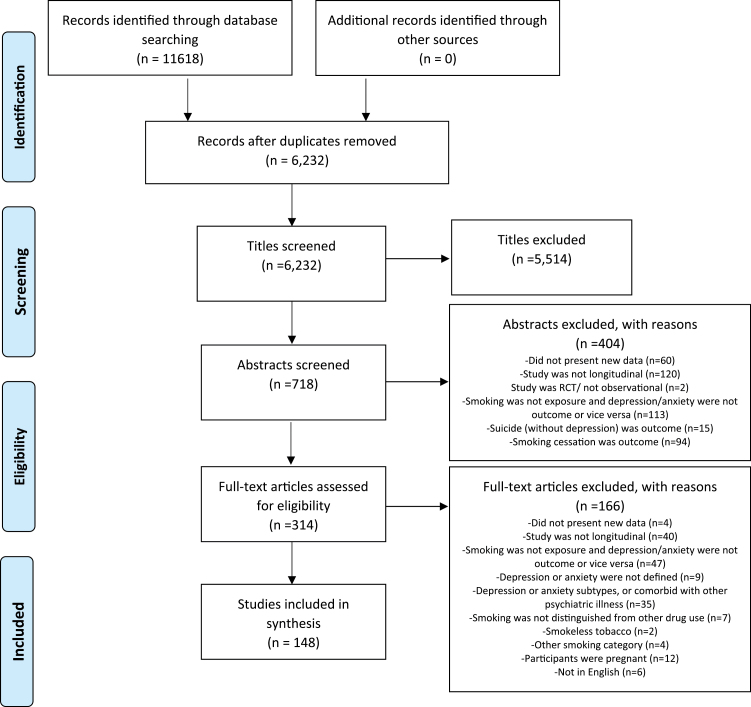
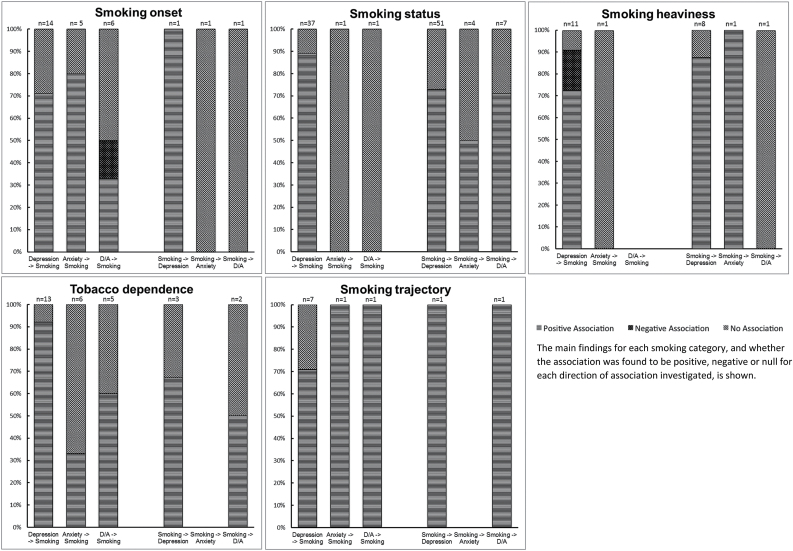
BACKGROUND: Many studies report a positive association between smoking and mental illness. However, the literature remains mixed regarding the direction of this association. We therefore conducted a systematic review evaluating the association of smoking and depression and/or anxiety in longitudinal studies. METHODS: Studies were identified by searching PubMed, Scopus, and Web of Science and were included if they: (1) used human participants, (2) were longitudinal, (3) reported primary data, (4) had smoking as an exposure and depression and/or anxiety as an outcome, or (5) had depression and/or anxiety as the exposure and smoking as an outcome. RESULTS: Outcomes from 148 studies were categorized into: smoking onset, smoking status, smoking heaviness, tobacco dependence, and smoking trajectory. The results for each category varied substantially, with evidence for positive associations in both directions (smoking to later mental health and mental health to later smoking) as well as null findings. Overall, nearly half the studies reported that baseline depression/anxiety was associated with some type of later smoking behavior, while over a third found evidence that a smoking exposure was associated with later depression/anxiety. However, there were few studies directly supporting a bidirectional model of smoking and anxiety, and very few studies reporting null results. CONCLUSIONS: The literature on the prospective association between smoking and depression and anxiety is inconsistent in terms of the direction of association most strongly supported. This suggests the need for future studies that employ different methodologies, such as Mendelian randomization (MR), which will allow us to draw stronger causal inferences. IMPLICATIONS: We systematically reviewed longitudinal studies on the association of different aspects of smoking behavior with depression and anxiety. The results varied considerably, with evidence for smoking both associated with subsequent depression and anxiety, and vice versa. Few studies supported a bidirectional relationship, or reported null results, and no clear patterns by gender, ethnicity, clinical status, length to follow-up, or diagnostic test. Suggesting that despite advantages of longitudinal studies, they cannot alone provide strong evidence of causality. Therefore, future studies investigating this association should employ different methods allowing for stronger causal inferences to be made, such as MR.
Overview
The claims and statistics of this paper haven’t been checked yet.
Free: it reads the open-access text and checks the first 5 claims that cite a source we can check. Create a free account to check every claim.
Integrity signals
Registry
Cites
Statistics
Figures
Verification
Claims the paper makes
The claims and statistics of this paper haven’t been checked yet.
Free: it reads the open-access text and checks the first 5 claims that cite a source we can check. Create a free account to check every claim.
Claims other papers make about this one
Each is checked against this paper’s own text: does it say what the citing paper says it does?
The source backs part of the claim, not all of it — or backs it for a different population, condition or comparison.
In the citing paper
“due to the high comorbidity between nicotine addiction and several anxiety-related disorders (Fluharty et al., 2016)”
From Age-dependent Effects of Tobacco Smoke and Nicotine on Cognition and the Brain: A Systematic Review of the Human and Animal Literature Comparing Adolescents and Adults. (2023) · cites this paper as Fluharty et al., 2016
Experimental — accuracy not yet measuredIn the citing paper
“Depressive disorders are heritable conditions with heritability rates of approximately 40% 12”
From Depressive symptoms predict clinical recurrence of inflammatory bowel disease (2022) · cites this paper as [12]
In the citing paper
“Importantly, there were no studies showing that smoking was associated with a later reduction in anxiety or depression rates.”
From An application of the stress-diathesis model: A review about the association between smoking tobacco, smoking cessation, and mental health (2023) · cites this paper as Fluharty et al. (2017)
In the citing paper
“Over a third of studies found that smoking at baseline led to later onset of anxiety or depression.”
From An application of the stress-diathesis model: A review about the association between smoking tobacco, smoking cessation, and mental health (2023) · cites this paper as Fluharty et al. (2017)
Self-check
Percentages, sums and reported differences re-computed from the paper’s own numbers.
The self-check needs the paper’s full text.
Citations
Cites
Diagnostic and Statistical Manual of Mental Disorders
Williams, J. B. W., & First, M. (2013) · Encyclopedia of Social Work · doi:10.1093/acrefore/9780199975839.013.104 · Cited by 109,519
Power failure: why small sample size undermines the reliability of neuroscience
Button, K. S., Ioannidis, J. P. A., Mokrysz, C., Nosek, B. A., Flint, J., Robinson, E. S. J., & Munafò, M. R. (2013) · Nature Reviews Neuroscience · doi:10.1038/nrn3475 · Cited by 7,641
A mega-analysis of genome-wide association studies for major depressive disorder
Major Depressive Disorder Working Group of the Psychiatric GWAS Consortium, Ripke, S., Wray, N. R., Lewis, C. M., Hamilton, S. P., Weissman, M. M., Breen, G., Byrne, E. M., Blackwood, D. H. R., Boomsma, D. I., et al. (2013) · Molecular Psychiatry · doi:10.1038/mp.2012.21 · Cited by 1,120
Life course outcomes of young people with anxiety disorders in adolescence
WOODWARD, L. J., & FERGUSSON, D. M. (2001) · Journal of the American Academy of Child & Adolescent Psychiatry · doi:10.1097/00004583-200109000-00018 · Cited by 1,051
Change in mental health after smoking cessation: systematic review and meta-analysis
Taylor, G., McNeill, A., Girling, A., Farley, A., Lindson-Hawley, N., & Aveyard, P. (2014) · BMJ · doi:10.1136/bmj.g1151 · Cited by 1,039
Smoking and Major Depression: A Causal Analysis
Kendler, K. S. (1993) · Archives of General Psychiatry · doi:10.1001/archpsyc.1993.01820130038007 · Cited by 792
Neurobiological similarities in depression and drug dependence: a self-medication hypothesis
Markou, A. (1998) · Neuropsychopharmacology · doi:10.1016/s0893-133x(97)00113-9 · Cited by 767
Adult Sequelae of Adolescent Depressive Symptoms
Kandel, D. B. (1986) · Archives of General Psychiatry · doi:10.1001/archpsyc.1986.01800030073007 · Cited by 638
Major Depression and Stages of Smoking: A Longitudinal Investigation
Breslau, N., Peterson, E. L., Schultz, L. R., Chilcoat, H. D., & Andreski, P. (1998) · Archives of General Psychiatry · doi:10.1001/archpsyc.55.2.161 · Cited by 633
Swendsen, J., Conway, K. P., Degenhardt, L., Glantz, M., Jin, R., Merikangas, K. R., Sampson, N., & Kessler, R. C. (2010) · Addiction · doi:10.1111/j.1360-0443.2010.02902.x · Cited by 597
Cited by
Items 901–1,000 of 1,000
Short, B., Giles, L., Karageorge, A., & Bauer, L. (2021) · Australasian Psychiatry · doi:10.1177/10398562211037321 · Cited by 1
Ristea, S., Schenker, R. A., Stovicek, P. O., Pîrlog, M. C., & Marinescu, D. (2021) · Romanian Journal of Morphology and Embryology · doi:10.47162/rjme.62.3.19 · Cited by 1
Zou, L., Li, X., Chen, Q., Lv, F., & Min, S. (2022) · BMC Anesthesiology · doi:10.1186/s12871-022-01686-6 · Cited by 1
“Smoking has an impact on vascular disease and lung disease, aggravating these diseases [47, 48].”
BackgroundŞahbaz, Y., & Yeldan, İ. (2022) · Gümüşhane Üniversitesi Sağlık Bilimleri Dergisi · doi:10.37989/gumussagbil.947078 · Cited by 1
Mohana, R., Vetha Merlin Kumari, H., Nalini Sofia, H., Kantham, T. L., & Meenakumari, R. (2023) · International Journal of Research in Ayurveda and Pharmacy · doi:10.7897/2277-4343.140385 · Cited by 1
Alsmeheen, F. A., Ghazawat, A. A., & التلاهين, ف. م. ر. (2023) · International Journal of ADVANCED AND APPLIED SCIENCES · doi:10.21833/ijaas.2023.08.010 · Cited by 1
Koenig, H. G., VanderWeele, T. J., & Peteet, J. R. (2023) · Oxford University Press eBooks · doi:10.1093/oso/9780190088859.003.0025 · Cited by 1
Koenig, H. G., VanderWeele, T. J., & Peteet, J. R. (2023) · Oxford University Press eBooks · doi:10.1093/oso/9780190088859.003.0003 · Cited by 1
Koenig, H. G., VanderWeele, T. J., & Peteet, J. R. (2023) · Oxford University Press eBooks · doi:10.1093/oso/9780190088859.003.0015 · Cited by 1
Sayem, M. A., Khan, M. K. R., Ministry of Liberation War Affairs, D., Husain, M. A., Ministry of Health and Family Welfare, D., Zahid, S. A., Management Sciences for Health, D., Rahman, M. M., & Hossain, M. G. (2024) · SciBase epidemiology and public health. · doi:10.52768/epidemiology/1017 · Cited by 1
“Along with effect of present disease, some drugs, some associated diseases and some personal or behavioral factors thus causing depression may instigate or contribute to patient’s dissatisfaction such as anti-TB drugs, diabetes and smoking behavior [12-15].”
BackgroundREPRESENTASI DEPRESI DALAM FILM AFTERSUN
Apriliana, L. D. N., & Tandyonomanu, D. (2023) · The Commercium. · doi:10.26740/tc.v7i3.57057 · Cited by 4
“Di mana daerah otak yang terlibat adalah daerah yang mengatur respon stress, kecemasan, dan depresi, sehingga memengaruhi tingkat kecemasan dan suasana hati (Fluharty et al., 2017).”
BackgroundLee, C., Yang, S., Lian, I., Chang, Y., Jhan, Y.-N., & Chang, C. (2024) · Frontiers in Medicine · doi:10.3389/fmed.2024.1376938 · Cited by 2
Azevedo, A. C., Dantas, C. G. L. C., Cardoso, T. N., Santos, M. D. S., de Oliveira, M. G. B., & Seabra, M. S. D. M. (2024) · Caderno Pedagógico · doi:10.54033/cadpedv21n13-070 · Cited by 1
Meijer, E. (2025) · Discover Mental Health · doi:10.1007/s44192-025-00135-3 · Cited by 1
Wu, M., Zhang, Y., Mawditt, C., & Liao, J. (2025) · Journal of Affective Disorders · doi:10.1016/j.jad.2024.12.112 · Cited by 1
Psychological burden of smoking in women: Experiences of anxiety and social stigma
Tandoğan, Ö., Ak, E. Y., & Şen, M. A. (2025) · Journal of Ethnicity in Substance Abuse · doi:10.1080/15332640.2025.2466711 · Cited by 1
“For example, in one study, the relationship between cigarette addiction and anxiety was examined and it was found that long-term smoking increased addiction levels (Fluharty et al., 2017).”
Sünkel, E. T., Machulska, A., Neubert, M., & Klucken, T. (2025) · Trials · doi:10.1186/s13063-025-08781-2 · Cited by 1
“Various theories aim to explain the high prevalence of smoking among individuals with mental disorders, such as self-medication theories [14, 22, 35], neurobiological [19, 37] or bidirectional theories [12, 31, 39].”
Ruokolainen, O., Ollila, H., Sandström, P., Härkänen, T., & Rautanen, M. (2025) · Drug and Alcohol Review · doi:10.1111/dar.14051 · Cited by 1
van Hooijdonk, K. J. M., van den Broek, N., Tan, C.-H. N., Vink, J. M., & Larsen, J. K. (2025) · International Journal of Mental Health and Addiction · doi:10.1007/s11469-025-01484-4 · Cited by 2
Yin, J., Jiang, L., Zhang, H., Zhang, J., Zhang, J., Yao, N., Shi, Y., & Han, Z. (2025) · Journal of Psychosomatic Research · doi:10.1016/j.jpsychores.2025.112131 · Cited by 1
Yusuf, M. H. M., Zambri, S. N., Tajuddin, N. A. A., & Hairi, F. M. (2025) · IntechOpen eBooks · doi:10.5772/intechopen.1010561 · Cited by 2
He, S., Li, H., Xie, F., Li, W. S., Wan, L., & Zhang, H. (2025) · Frontiers in Psychiatry · doi:10.3389/fpsyt.2025.1595829 · Cited by 1
Pengpid, S., Peltzer, K., & Efraime, B. (2025) · International Journal of Social Psychiatry · doi:10.1177/00207640251337957 · Cited by 1
“While smoking behavior was linked to depression and anxiety in more than half of 148 studies in a systematic review, our study did not find a significant correlation between substance use and MDD and/or GAD (Fluharty et al., 2017).”
Lu, C.-L., Wang, Q.-Y., Zheng, R.-X., Pan, X.-R., Chen, X.-Y., Qiao, S.-Y., Wei, X.-H., Liu, X., Xue, X., Liang, L., et al. (2025) · The Journal of Smoking Cessation · doi:10.48130/jsc-0025-0005 · Cited by 1
Nabil, A. K., Amo, C., Barry, A. E., & Patterson, M. S. (2025) · Journal of Drug Education · doi:10.1177/00472379251352054 · Cited by 1
“This is counterintuitive given depression and anxiety are often associated with tobacco smoking among young adults (Fluharty et al., 2017; Jamal et al., 2012).”
Li, S., Chen, L., Ma, M., Hu, Y., Wang, F., Luο, X., Chen, Y.-H., Gao, H., Ren, Y., Hu, W., et al. (2025) · Acta Neuropsychiatrica · doi:10.1017/neu.2025.10028 · Cited by 1
“As we all known, people with depression are more likely to be smokers (Richards et al ., 2013; Fluharty et al ., 2017; Li et al ., 2022) and nicotine dependent (Dierker & Donny, 2008; Sweitzer et al ., 2008).”
Zou, P., Li, J., Chen, L., Liu, M., & Zhang, Y. (2025) · Journal of Affective Disorders · doi:10.1016/j.jad.2025.119938 · Cited by 1
Abufarsakh, B., Okoli, C. T. C., Williams, L. B., Darville, A. K., Garcia, A. R., & Martin, C. A. (2025) · Journal of the American Psychiatric Nurses Association · doi:10.1177/10783903251356617 · Cited by 1
“…mechanisms linking ND and depressive symptoms have been established (Quattrocki et al., 2000), there remains an inconsistency in defining the direction in which variable leads to the relationship between the two (i.e., which one comes first; Fluharty et al., 2016, 2017; Taylor et al., 2014).”
He, F., Li, X., Xu, X., Bao, S., Chen, Y., Liu, H., & Chen, Y. Y. (2025) · PLoS ONE · doi:10.1371/journal.pone.0325912 · Cited by 1
“…place additional stress on women, with sexual violence [62], sexual abuse [60], interpersonal violence, stress exposure and stress susceptibility [33] at the micro level, and gender inequality [63,64] at the macro level, all of which increase the risk for the development of depressive states in…”
The role of C-reactive proteins in tobacco smoke exposure and the risk of depression
Yan, B., Hu, J., Xi, J., Luo, L., Zheng, X., Luo, S., & Hu, W. (2025) · Psychology Health & Medicine · doi:10.1080/13548506.2025.2565525 · Cited by 1
Li, K., Yin, C., Yang, H., Gao, Z., Wang, D., & Jin, J. J. (2025) · Global Heart · doi:10.5334/gh.1483 · Cited by 1
Ahmed, N., Ahmed, M., Ragab, A., Kamal, M., Elsayed, A., & Sayed, M. (2025) · BMC Pharmacology and Toxicology · doi:10.1186/s40360-025-01004-z · Cited by 1
“Moreover, multiple studies highlighted a multifaced link between smoking and emotional psychopathology, especially depression [10].”
Clusters of Comorbidities in Multiple Sclerosis and Their Influence on Healthcare Resource Usage
Cárdenas‐Robledo, S., Otero‐Romero, S., García, J. D., López, N., Carbonell‐Mirabent, P., Rodríguez, M., Guío‐Sánchez, C., Carvajal, R., Passarell‐Bacradit, M. A., Sastre‐Garriga, J., et al. (2025) · European Journal of Neurology · doi:10.1111/ene.70386 · Cited by 1
Sun, W.-X., Sun, C., Zhang, H., Sun, P., Song, H., Wu, X., Chen, J., Fang, Y., & Zhang, X. (2025) · European Archives of Psychiatry and Clinical Neuroscience · doi:10.1007/s00406-025-02153-2 · Cited by 1
“…mediators and depression, including personality traits, educational attainment [29], cognitive functioning [30], subjective well-being [31], household traits [32], physical health [33, 34], lifestyle habits [35–38], sleep quality [39, 40], and inflammatory response [41], is provided in Table 1.”
Cannabis and Tobacco Product Use Classes and Psychosocial Correlates Among US Young Adults
Speer, M. B., Cui, Y., McCready, D. M., LoParco, C. R., Romm, K. F., Wang, Y., Schubel, L., Howlader, A., Williams, J., Thakkar, S., et al. (2025) · Nicotine & Tobacco Research · doi:10.1093/ntr/ntaf238 · Cited by 1
Mental health status and cardiovascular outcomes across Life's Essential 8 categories
Li, E., Zhou, L., He, L., Zuo, S., Li, S., Liu, X., Sang, C., Dong, J., Guo, X., & Ma, C. (2025) · International Journal of Cardiology Cardiovascular Risk and Prevention · doi:10.1016/j.ijcrp.2025.200545 · Cited by 1
“Individuals with anxiety disorders may exhibit suboptimal dietary adherence to cardioprotective foods or engage in tobacco use initiation as maladaptive coping strategies for negative affect [29].”
Heilat, H. B., Mashagba, S., Said, M., Nemrawi, R. I. M., Alkhawaja, F., Alrefai, E. A., AlElaimat, M., Nassr, S. B., & Oudat, D. (2025) · Future Science OA · doi:10.1080/20565623.2025.2601632 · Cited by 1
“…of depression, anxiety, and low self-esteem in young people [9], and smoking itself is more prevalent in individuals with depressive and anxiety disorders, where it may function as a maladaptive coping strategy for psychological distress rather than being driven primarily by weight concerns [58].”
Smoking and the comorbidity trajectory of cardiometabolic and mental disorders: A multi-state model
Zhang, C., Zhang, Y., Ling, Z., Xiao, Y., Shen, M., & Xiao, S. (2026) · General Hospital Psychiatry · doi:10.1016/j.genhosppsych.2026.01.007 · Cited by 1
Uchida, M., Kano, M., Ozaki, N., Yoshimi, A., & Noda, Y. (2026) · Neurochemistry International · doi:10.1016/j.neuint.2026.106121 · Cited by 1
López‐López, A., Pérez‐González, A., Alonso-Domínguez, J., Ocampo, A., Álvarez, C. M., Morano, L. E., Aguayo-Arjona, J., de Castro, N. M. L., & Poveda, E. (2026) · Scientific Reports · doi:10.1038/s41598-026-36832-4 · Cited by 2
“While a relationship between smoking and depression or anxiety has been established, the causal direction of this association remains unclear 46 .”
Ansari, A. A., Akbar, D., Saleh, D. A., Qehs, D. A., Kandari, H. A., Duwailah, R. A., Rashdan, S. A., Mutairi, Y. A., & Ziyab, A. H. (2026) · Tobacco Use Insights · doi:10.1177/1179173x261424137 · Cited by 1
Preaubert, A., Dupret‐Bories, A., Chabrillac, E., Sordes, F., & Raynal, P. (2026) · Behavioral Sciences · doi:10.3390/bs16020293 · Cited by 1
“This aligns with evidence that psychological processes such as distress, coping, and psychological flexibility exert a more dynamic influence on smoking outcomes (Fluharty et al., 2017; Guimond et al., 2017; Hakuli-nen et al., 2015; Kock et al., 2022; Lespine et al., 2025).”
Frailty, depressive symptoms, and incident respiratory disease: a CHARLS cohort study
Wang, Y., Sun, J., Zhu, X., Yu, H., & Zhao, X. (2026) · BMC Pulmonary Medicine · doi:10.1186/s12890-026-04199-x · Cited by 1
“In parallel, depression is commonly associated with adverse health behaviors— including higher smoking rates, physical inactivity, poor diet, sleep disturbance, and suboptimal adherence to chronic therapies—that directly and indirectly damage respiratory health [37, 38].”
Boormans, A. J. M. G., Meijer, E., Dijkstra, B. A. G., Schellekens, A. F. A., & Markus, W. (2026) · Current Psychology · doi:10.1007/s12144-026-09054-0 · Cited by 1
“In addition, long-term smoking increases the risk of depression, anxiety and cognitive impairment (Campos et al., 2017 ; Fluharty et al., 2016 ).”
Alameer, M. B., Emam, O. A., Yakoub‐Agha, L., Alkadi, S., Azzawi, M. E. A. S. A., Haidar, N., Habeeb, R., & Jawich, K. (2026) · Health Science Reports · doi:10.1002/hsr2.72035 · Cited by 1
Popiołek, A. K., Brzoszczyk, B., Niemczuk, E., Borkowska, A., Jarzemski, P., & Bieliński, M. K. (2026) · Research and Reports in Urology · doi:10.2147/rru.s572735 · Cited by 1
“23 Some researchers propose a dual mechanism: smoking may contribute to subsequent depression or anxiety, whereas heightened anxiety sensitivity may promote smoking behavior.”
Early smoking onset and temporomandibular disorder symptoms later in life
Oliveira, L. M., Oliveira, J. P. M., & Pelissari, T. R. (2026) · CRANIO® · doi:10.1080/08869634.2026.2669198 · Cited by 1
“…were conducted using depressive symptoms and insomnia as positive control outcomes, and dengue as a negative control outcome [26]—conditions causally [27,28] and not causally associated with smoking, respectively, and assumed to share a similar confounding structure to the relationship with TMD.”
Duru, S. A., Kerem, B., Demirkaya, A., & Aydın, G. (2026) · Tobacco Induced Diseases · doi:10.18332/tid/219641 · Cited by 1
“Large-scale longitudinal cohort studies and Mendelian randomization analyses indicate that cigarette smoking may contribute to the development and persistence of depressive symptoms, while baseline psychological distress may also increase susceptibility to smoking initiation and maintenance 12,24 .”
Liu, X., Liu, X., Li, J., & Zhang, D. (2026) · European Archives of Psychiatry and Clinical Neuroscience · doi:10.1007/s00406-026-02213-1 · Cited by 2
“Smoking has likewise been linked to depressive symptoms, with evidence supporting a bidirec - tional relationship between nicotine dependence and mood disorders [ 31 ].”
Genetic perspectives on the comorbidity of anxiety and mood disorders with cardiovascular disease
de Geus, E. J. C., Treur, J. L., & Penninx, B. W. J. H. (2026) · Nature Cardiovascular Research · doi:10.1038/s44161-026-00822-6 · Cited by 1
“These can all independently exert detrimental effects on mental 113–117 and cardiovascular 118–121 health.”
Palo, M. P. D., Amato, M., Vecchione, C., Ciccarelli, M., Garofano, M., Spirito, F. D., Mignogna, M. D., Corallo, F., Pagano, M. C., Cappadona, I., et al. (2026) · Healthcare · doi:10.3390/healthcare14142055 · Cited by 1
Méndez-López, F., Oliván‐Blázquez, B., García, M. D., del Hoyo, Y. L., Casado‐Vicente, V., Martí‐Lluch, R., & Magallón-Botaya, R. M. (2026) · Frontiers in Public Health · doi:10.3389/fpubh.2026.1886431 · Cited by 1
Comparison of Nicotine Dependence and Cotinine Levels by Tobacco Product Type in Korean Adults
Kim, Y., An, H.-J., Lee, S., Lee, H. K., & Paek, Y. (2026) · Journal of the Korean Society for Research on Nicotine and Tobacco · doi:10.25055/jksrnt.2026.17.3.118 · Cited by 1
Özel, Y. (2023) · Acibadem Universitesi Saglik Bilimleri Dergisi · doi:10.31067/acusaglik.1240658 · Cited by 1
Desvelando misterios: un viaje por la depresión y las posibles soluciones
Mondragón-García, A., Hernández-Vázquez, F., Ramírez, C. D. F., Garduño, J., & López, S. H. (2023) · Revista Digital Universitaria · doi:10.22201/cuaieed.16076079e.2023.24.6.16 · Cited by 1
Moss-Alonso, E., Rodríguez‐Cano, R., Martínez-Vispo, C., López‐Durán, A., & Becoña, E. (2025) · Addictive Behaviors · doi:10.1016/j.addbeh.2025.108439 · Cited by 1
Mourya, G. S., Sikarwar, V., & Bhatt, C. P. (2025) · Cureus · doi:10.7759/cureus.88912 · Cited by 1
“Studies such as that by Fluharty et al. have demonstrated a bidirectional relationship between smoking and depression, wherein smoking increases the risk of developing depression, and depression, in turn, increases the likelihood of smoking [23].”
Sadeghi, N., Shams, S., Mirlohian, R.-S., Haerifar, F., Bakhshi-Kashi, M., & Ghaderi, A. (2025) · BMC Complementary Medicine and Therapies · doi:10.1186/s12906-025-05232-y · Cited by 1
Hubungan Mental Health dengan Perilaku Merokok pada Remaja: Tinjauan Sistematis Literatur
Ayu Sri Rahayu, A. R., & Sumarni, N. (2026) · Malahayati Nursing Journal · doi:10.33024/mnj.v8i3.24499 · Cited by 1
Effects of nicotine use on event-based prospective memory and the role of delayed response strategy
Li, R., Liu, Y., Chen, Y., Gan, J., & Guo, Y. (2026) · Drug and Alcohol Dependence · doi:10.1016/j.drugalcdep.2026.113133 · Cited by 1
Adam, G. K., Alharbi, H. Y., Alwabili, A., & Adam, I. (2026) · BMC Public Health · doi:10.1186/s12889-026-27126-5 · Cited by 1
“This finding is consistent with a substantial body of evidence linking smoking to an increased risk of depression [34–36].”
Keçili, M. Ç. (2026) · Discover Public Health · doi:10.1186/s12982-026-01982-3 · Cited by 1
Lee, H. J., Shin, W., Han, J. Y., Choi, H. Z., Kang, J., & Woo, S.-Y. (2026) · BMC Women s Health · doi:10.1186/s12905-026-04506-y · Cited by 1
“These findings are consistent with previous studies suggesting a close relationship between smoking and depression, although the direction of this relationship may be complex and bidirectional [18].”
Chen, X. (2026) · Annals of General Psychiatry · doi:10.1186/s12991-026-00675-0 · Cited by 1
“The relationship between smoking and depressive symptoms represents one of the most robust associations in psychiatric epidemiology, with mounting evidence suggesting a complex bidirectional relationship that extends beyond simple behavioral comorbidity [1].”
Bazrafshan, M.-R., Zare, R., Debashi, L., & Delam, H. (2026) · Mental Illness · doi:10.1155/mij/8595049 · Cited by 1
Chen, Y., Zhao, X., Li, G., Wang, Y., Lan, J., Chen, G., & Chan, K. (2026) · Tobacco Induced Diseases · doi:10.18332/tid/221660 · Cited by 1
“Mean depressive symptoms in the highly susceptible class exceeded the conventional clinical threshold 21-23 , raising the question – to be addressed by future longitudinal work – of whether linking tobacco-prevention research with campus mental-health services would be informative; the present…”
Urbanowicz, A., Zimny-Zając, A., Dróżdż, M., Agrawal, S., & Mazur, G. (2026) · BMC Public Health · doi:10.1186/s12889-026-28469-9 · Cited by 1
Rivas, M. G., López‐González, Á. A., Carrasco, D. G., Busquets-Cortés, C., Cañellas, L. R., & Ramírez‐Manent, J. I. (2026) · Nutrients · doi:10.3390/nu18172754 · Cited by 1
“Despite the widespread perception that smoking may alleviate stress, epidemiological evidence consistently indicates that smokers tend to report higher levels of perceived stress, anxiety, and psychological distress than non-smokers [14,15].”
Lin, D., Rizi, M. M., O’Neill, C., Lotz, J. C., Anderson, P. E., & Espin, A. T. (2026) · Journal of Biomedical Informatics · doi:10.1016/j.jbi.2026.105102 · Cited by 1
Varga, I., Andraković, M., Crljić, P., Đaković, M., Antunović, M., Kojić, M. T., & Agić, D. (2026) · Plants · doi:10.3390/plants15182888 · Cited by 2
Karjalainen, V., Koivisto, A., Rantanen, A., Joronen, K., & Matikka, A. (2017) · Hoitotiede · Cited by 9
ALTERNATIVE TOBACCO PRODUCTS & DEPRESSIVE SYMPTOMS AMONG YOUNG ADULTS
Marsden, D. (2018) · Digital Commons-TMC (Texas Medical Center) · Cited by 1
Does Current General Mental Health Status Relate to Current Smoking Status in Pregnant Women?
Liu, D., Younger, E., Baker, S. L., Touch, S., Willmoth, T., & Hartos, J. L. (2019) · Journal of Pregnancy · doi:10.1155/2019/7801465 · Cited by 2
“Finally, direction of causality could not be determined in this study and research is mixed onwhether mental health issues contribute to smoking or the other way around [16].”
BackgroundLee, J. O., Horwood, L. J., Lee, W. J., Hackman, D. A., McLeod, G. F. H., & Boden, J. M. (2019) · Nicotine & Tobacco Research · doi:10.1093/ntr/ntz131 · Cited by 1
SINTOMATOLOGÍA DEPRESIVA Y CONSUMO DE SUSTANCIAS EN UNIVERSITARIOS DE VERACRUZ MÉXICO
Casarín, A. G. V., Morales, K. D., Flores, M. M. M., & da Cruz, P. L. (2019) · Revista Electrónica de Psicología Iztacala · Cited by 1
Substance Abuse and Anxiety in Children
Nabors, L. (2020) · Springer series on child and family studies · doi:10.1007/978-3-030-35606-4_4 · Cited by 1
Troubles anxieux, troubles dépressifs, conduites suicidaires et cannabis
Dervaux, A., Carvalho, C. D., & Cottencin, O. (2020) · La Presse Médicale Formation · doi:10.1016/j.lpmfor.2020.09.015 · Cited by 4
Gender-Dependent Effects and Neurobiological Mechanisms in Nicotine Withdrawal Syndrome
王, 雪. (2021) · Advances in Psychology · doi:10.12677/ap.2021.111028 · Cited by 2
Predictors of Shisha Consumption among Students in Tertiary Institutions: A Systematic Review
Allahdad, A. H., Kibiti, C. M., Yusuf, R. U., & Budambula, V. (2021) · Multidisciplinary Journal of Technical University of Mombasa · doi:10.48039/mjtum.v1i2.37 · Cited by 1
“Depression is a known risk factor for tobacco use at the same time tobacco use heightens the odds for depressive episodes (Primack et al., 2013; Fluharty et al., 2017).”
BackgroundSex differences in psychiatric disorders and their implication for dementia
Biskup, E. M., Jordan, V., Nasta, B., & Rauen, K. (2021) · Elsevier eBooks · doi:10.1016/b978-0-12-819344-0.00005-3 · Cited by 2
Endrighi, R., Zhao, Y., Hughes, R. B., Kumar, D., & Borrelli, B. (2021) · Annals of Behavioral Medicine · doi:10.1093/abm/kaab077 · Cited by 1
Khan, S. P., Naqvi, S., Rizwan, R., Ansari, M., Emad, S., Khan, H. U. R., Akhtar, A., Syed, M., Ehsan, N., & Moorad, A. (2021) · Annals of Psychophysiology · doi:10.29052/2412-3188.v8.i1.2021.24-33 · Cited by 1
Screening for depression among geriatrics in the rural community, Gharbia Governorate, Egypt
zorkany, A. K. A., Sherbiny, A., Sawy, H. D. F. A., & Shalaby, S. (2020) · Tanta Medical Journal · doi:10.4103/tmj.tmj_2_21 · Cited by 2
Smoking blunts sertraline response in depression: A prospective observational cohort study
Mohan, P., Chatterjee, K., Sinha, S., Saini, R. K., Sharma, A. K., & Waikole, S. (2022) · Medical Journal Armed Forces India · doi:10.1016/j.mjafi.2021.10.015 · Cited by 1
Robinson, J. D., Karam‐Hage, M., Kypriotakis, G., Beneventi, D., Blalock, J. A., Cui, Y., González, R. O., Tayar, J. H., Chaftari, P. S., & Cinciripini, P. M. (2022) · American Journal on Addictions · doi:10.1111/ajad.13282 · Cited by 1
HASTANE ÇALIŞANLARINDA KORONAVİRÜS ANKSİYETESİNİN İŞ-AİLE ÇATIŞMASINA ETKİSİ
Bülez, A., ÖZEL, İ., & GÜL, K. (2022) · Karya Journal of Health Science · doi:10.52831/kjhs.1027487 · Cited by 3
Psychological Maltreatment of Children in Family Relationships
杨, 娅. (2021) · Advances in Psychology · doi:10.12677/ap.2021.117190 · Cited by 1
Thompson, T., Evbuoma-Fike, E. I., Garg, R., McQueen, A., Caburnay, C. A., & Kreuter, M. W. (2022) · Journal of Community Health · doi:10.1007/s10900-022-01094-4 · Cited by 1
“They have been associated with smoking status or cessation attempts (Fluharty et al., 2017; Poghosyan et al., 2019; Schäfer et al., 2022; Thompson et al., 2019; van den Brand et al., 2019), and qualitative research has suggested social support may be a facilitator of establishing and maintaining a smoke-free home (Pas…”
BackgroundNanayakkara, G. L., Krincic, L., Lightfoot, R., Reinhardt, W., Silva, K. D., Senaratne, J. M., & SENARATNE, M. P. J. (2022) · Medicine · doi:10.1097/md.0000000000030470 · Cited by 1
“[38] Regardless, there may be a beneficial association between quitting smoking and improved BDI-II scores or alternatively one must have a higher suspicion that there may be underlying depression in continued smokers and treating the depression may potentially improve the smoking quit rate.”
BackgroundFlores-Guerrero, C. M., Romero-Ogawa, T., de Santillana, I. A. E., & Torres-Escobar, I. (2023) · Revista Internacional de Investigación en Adicciones · doi:10.28931/riiad.2023.1.05 · Cited by 1
“Dichas correlaciones han sido con somatización, ansiedad, depresión y hostilidad (Fluharty et al., 2017), y por tal motivo fueron los síntomas que se analizaron en el presente estudio.”
BackgroundHow does the Excise Tax Affect Secondhand Smokers and the Health Consequences of such Addiction?
(2023) · ADIKTOLOGIE Journal · doi:10.35198/01-2023-001-0005 · Cited by 1
Çol, B. K., Başaran, A. G., & Pekmezci, H. (2023) · AIMS Public Health · doi:10.3934/publichealth.2023036 · Cited by 1
“A relationship between smoking and depression [40], anxiety [41], and stress [42] is highlighted in the literature.”
Predictors of Female Smokers’ Empowerment to Quit Smoking Cigarettes
Suh, K. (2023) · International Journal of Mental Health and Addiction · doi:10.1007/s11469-023-01102-1 · Cited by 1
“Although a causal relationship has not been definitively concluded, several studies have found that depression is related to smoking (Fluharty et al., 2017).”
Nowak, M. P., & Pawełczyk, T. (2023) · Psychiatria i Psychologia Kliniczna · doi:10.15557/pipk.2023.0004 · Cited by 2
“The relationship between major depression epidemiology and behavioural phenotypes was repeatedly observed, including the sleep chronotype (Garbazza et al., 2022), smoking (Fluharty et al., 2017), alcohol consumption (Schick et al., 2022), and pain (IsHak et al., 2018).”
BackgroundAssari, S., Pallera, J. A., & Najand, B. (2023) · Journal of Lung Health and Diseases · doi:10.29245/2689-999x/2023/1.1181 · Cited by 3
Liu, X., Li, H., Zeng, S., & Luo, X. (2023) · Current Psychology · doi:10.1007/s12144-023-04969-4 · Cited by 2
“In turn, depression has been consistently shown to be generally accompanied by smoking (Mathew et al., 2017), presumably due to individuals with depressive symptoms may be prone to treat smoking as a self-medication way (Fluharty et al., 2017).”
Adolescent’s Attitude to Cigarettes and Smoking Behavior in Kota Kretek
Aisah, A., Subandi, S., & Susetyo, Y. F. (2023) · Proceedings of International Conference on Psychological Studies (ICPsyche) · doi:10.58959/icpsyche.v4i1.58 · Cited by 1
“…(Niederberger, 2019), gum diseases causing some problems, such as teeth decay and damages to soft tissue and teeth-supporting bones (Leite et al., 2018), low life quality; with depression as the mediating variable (Milic et al., 2020) and depression and anxiety disorder (Fluharty et al., 2017).”
BackgroundCurry, L. E., Guillory, J. E., Henes, A., Saunders, M. E., MacMonegle, A. J., Nonnemaker, J. M., Mekos, D., Vigorita, M. W., McDonald, E. A., Wagner, D. E., et al. (2023) · American Journal of Health Behavior · doi:10.5993/ajhb.47.4.20 · Cited by 1
Koenig, H. G., VanderWeele, T. J., & Peteet, J. R. (2023) · Oxford University Press eBooks · doi:10.1093/oso/9780190088859.003.0005 · Cited by 1
Koenig, H. G., VanderWeele, T. J., & Peteet, J. R. (2023) · Oxford University Press eBooks · doi:10.1093/oso/9780190088859.003.0027 · Cited by 1
Metadata
- Authors
- Fluharty, M., Taylor, A. E., Grabski, M., & Munafò, M. R.
- Affiliations
- University of Bristol (GB)
- Corresponding author
- Fluharty, Meg
- Venue
- Nicotine & Tobacco Research
- Publisher
- Oxford University Press (OUP)
- Published
- 2016-05-19
- Volume
- 19
- Issue
- 1
- Pages
- 3-13
- ISSN
- 1462-2203 (ISSN-L)
- 1469-994X
- PMC
- PMC5157710
- OpenAlex
- W2407654663
- Semantic Scholar
- addb21010e31f40cbf5d94796e74ad8c4f684175
- Cited by
- 1,299
- References
- 173
- Citations by year
- 2026: 128 · 2025: 185 · 2024: 155 · 2023: 217 · 2022: 166 · 2021: 176 · 2020: 133 · 2019: 76 · 2018: 38 · 2017: 19 · 2016: 6
- FWCI
- 5.44
- Type
- journal article
- Language
- en
- Open access
- hybrid
- doi.org
- Licence
- Locations
- Nicotine & Tobacco Research (publishedVersion, cc-by)
- PubMed Central (publishedVersion, cc-by)
- PubMed (publishedVersion)
- Explore Bristol Research (submittedVersion, cc-by)
- UCL Discovery (University College London) (submittedVersion)
- HighWire Press Open Archive (submittedVersion)
- Bristol Research (University of Bristol) (submittedVersion, cc-by)
- Funders
- University of Bristol
- Medical Research Council (MC_UU_12013/6)
- Topics
- Health Sciences › Medicine › Public Health, Environmental and Occupational Health › Smoking Behavior and Cessation
- Health Sciences › Medicine › Psychiatry and Mental health › Mental Health Treatment and Access
- Health Sciences › Medicine › Epidemiology › Substance Abuse Treatment and Outcomes
- Keywords
- cigarette smoking, depression, anxiety, bidirectional relationship, smoking onset, tobacco dependence, smoking heaviness, smoking trajectories, mental health, causal inference, Mendelian randomization
- MeSH terms
- Anxiety, Anxiety Disorders, Depression, Depressive Disorder, Humans, Prospective Studies, Sex Characteristics, Smoking, Tobacco Use Disorder
About these checks
Registry, retraction, Cites and statistics results are computed, not judged, with one exception: a printed reference that no index lists is read once by a model before it counts as a citation error. Claims are extracted by a model and kept only when their quote appears verbatim in the text; each cited source is then checked, with a model’s help, for whether it says what the claim relies on. Those verdicts can be wrong — read the claim’s quote and the cited source before relying on one.
Statistics and arithmetic are recomputed, not judged.
Confidence bands are shown only for fields calibrated on our annotated test set. None is calibrated yet, so no band is shown.
What counts as a claim ›How we measure confidence ›How we check this ›
Are you an author, or do you see a problem with this page? Request a review
Data sources
Bibliographic data: Semantic Scholar, OpenAlex, Crossref.
Contains information from the Semantic Scholar Academic Graph Datasets, made available under the ODC Attribution License (ODC-BY 1.0).
Semantic Scholar’s data is described in: Kinney, R., et al. (2023). The Semantic Scholar Open Data Platform. arXiv:2301.10140.
