

The Association of Cigarette Smoking With Depression and Anxiety: A Systematic Review
Open accessThe DOI matches its Crossref record; 172 of the 174 references it cites were found in a registry or an index, and 2 are not checked yet.
Abstract
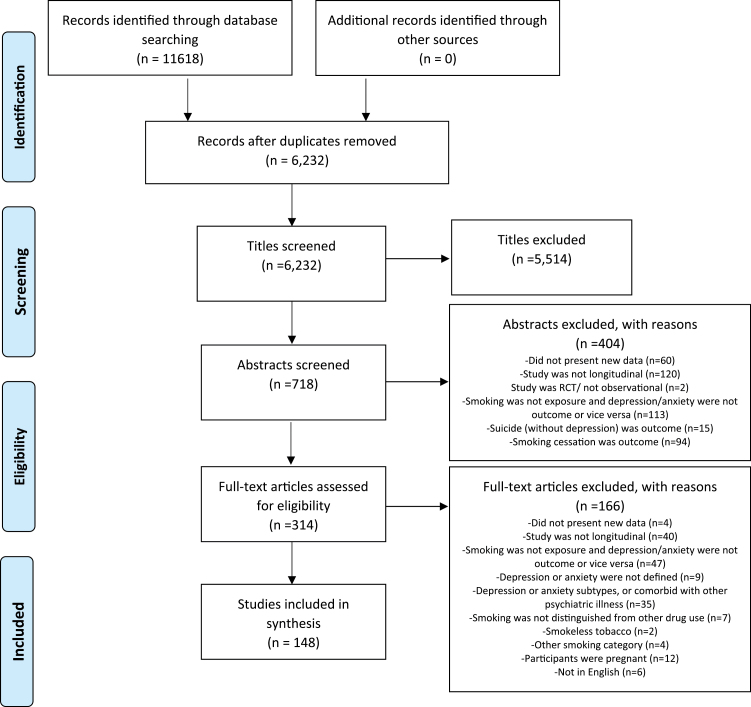
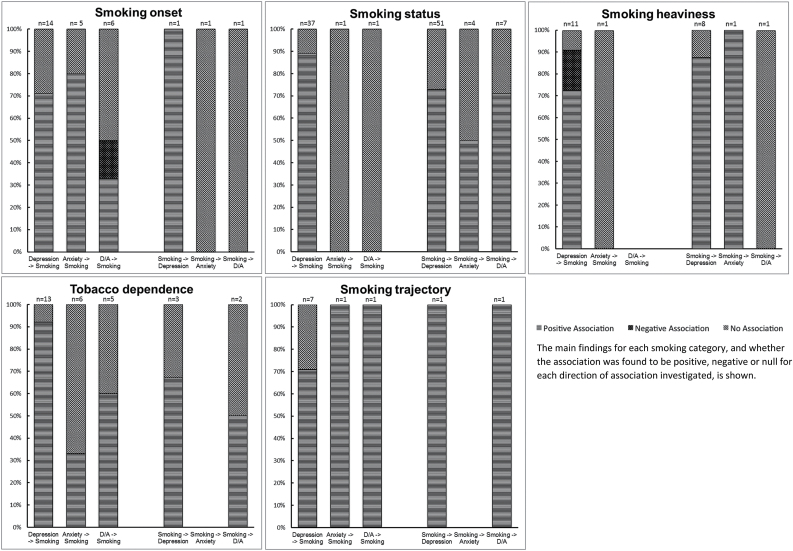
BACKGROUND: Many studies report a positive association between smoking and mental illness. However, the literature remains mixed regarding the direction of this association. We therefore conducted a systematic review evaluating the association of smoking and depression and/or anxiety in longitudinal studies. METHODS: Studies were identified by searching PubMed, Scopus, and Web of Science and were included if they: (1) used human participants, (2) were longitudinal, (3) reported primary data, (4) had smoking as an exposure and depression and/or anxiety as an outcome, or (5) had depression and/or anxiety as the exposure and smoking as an outcome. RESULTS: Outcomes from 148 studies were categorized into: smoking onset, smoking status, smoking heaviness, tobacco dependence, and smoking trajectory. The results for each category varied substantially, with evidence for positive associations in both directions (smoking to later mental health and mental health to later smoking) as well as null findings. Overall, nearly half the studies reported that baseline depression/anxiety was associated with some type of later smoking behavior, while over a third found evidence that a smoking exposure was associated with later depression/anxiety. However, there were few studies directly supporting a bidirectional model of smoking and anxiety, and very few studies reporting null results. CONCLUSIONS: The literature on the prospective association between smoking and depression and anxiety is inconsistent in terms of the direction of association most strongly supported. This suggests the need for future studies that employ different methodologies, such as Mendelian randomization (MR), which will allow us to draw stronger causal inferences. IMPLICATIONS: We systematically reviewed longitudinal studies on the association of different aspects of smoking behavior with depression and anxiety. The results varied considerably, with evidence for smoking both associated with subsequent depression and anxiety, and vice versa. Few studies supported a bidirectional relationship, or reported null results, and no clear patterns by gender, ethnicity, clinical status, length to follow-up, or diagnostic test. Suggesting that despite advantages of longitudinal studies, they cannot alone provide strong evidence of causality. Therefore, future studies investigating this association should employ different methods allowing for stronger causal inferences to be made, such as MR.
Overview
The claims and statistics of this paper haven’t been checked yet.
Free: it reads the open-access text and checks the first 5 claims that cite a source we can check. Create a free account to check every claim.
Integrity signals
Registry
Cites
Statistics
Figures
Verification
Claims the paper makes
The claims and statistics of this paper haven’t been checked yet.
Free: it reads the open-access text and checks the first 5 claims that cite a source we can check. Create a free account to check every claim.
Claims other papers make about this one
Each is checked against this paper’s own text: does it say what the citing paper says it does?
The source backs part of the claim, not all of it — or backs it for a different population, condition or comparison.
In the citing paper
“due to the high comorbidity between nicotine addiction and several anxiety-related disorders (Fluharty et al., 2016)”
From Age-dependent Effects of Tobacco Smoke and Nicotine on Cognition and the Brain: A Systematic Review of the Human and Animal Literature Comparing Adolescents and Adults. (2023) · cites this paper as Fluharty et al., 2016
Experimental — accuracy not yet measuredIn the citing paper
“Depressive disorders are heritable conditions with heritability rates of approximately 40% 12”
From Depressive symptoms predict clinical recurrence of inflammatory bowel disease (2022) · cites this paper as [12]
In the citing paper
“Importantly, there were no studies showing that smoking was associated with a later reduction in anxiety or depression rates.”
From An application of the stress-diathesis model: A review about the association between smoking tobacco, smoking cessation, and mental health (2023) · cites this paper as Fluharty et al. (2017)
In the citing paper
“Over a third of studies found that smoking at baseline led to later onset of anxiety or depression.”
From An application of the stress-diathesis model: A review about the association between smoking tobacco, smoking cessation, and mental health (2023) · cites this paper as Fluharty et al. (2017)
Self-check
Percentages, sums and reported differences re-computed from the paper’s own numbers.
The self-check needs the paper’s full text.
Citations
Cites
Diagnostic and Statistical Manual of Mental Disorders
Williams, J. B. W., & First, M. (2013) · Encyclopedia of Social Work · doi:10.1093/acrefore/9780199975839.013.104 · Cited by 109,519
Power failure: why small sample size undermines the reliability of neuroscience
Button, K. S., Ioannidis, J. P. A., Mokrysz, C., Nosek, B. A., Flint, J., Robinson, E. S. J., & Munafò, M. R. (2013) · Nature Reviews Neuroscience · doi:10.1038/nrn3475 · Cited by 7,641
A mega-analysis of genome-wide association studies for major depressive disorder
Major Depressive Disorder Working Group of the Psychiatric GWAS Consortium, Ripke, S., Wray, N. R., Lewis, C. M., Hamilton, S. P., Weissman, M. M., Breen, G., Byrne, E. M., Blackwood, D. H. R., Boomsma, D. I., et al. (2013) · Molecular Psychiatry · doi:10.1038/mp.2012.21 · Cited by 1,120
Life course outcomes of young people with anxiety disorders in adolescence
WOODWARD, L. J., & FERGUSSON, D. M. (2001) · Journal of the American Academy of Child & Adolescent Psychiatry · doi:10.1097/00004583-200109000-00018 · Cited by 1,051
Change in mental health after smoking cessation: systematic review and meta-analysis
Taylor, G., McNeill, A., Girling, A., Farley, A., Lindson-Hawley, N., & Aveyard, P. (2014) · BMJ · doi:10.1136/bmj.g1151 · Cited by 1,039
Smoking and Major Depression: A Causal Analysis
Kendler, K. S. (1993) · Archives of General Psychiatry · doi:10.1001/archpsyc.1993.01820130038007 · Cited by 792
Neurobiological similarities in depression and drug dependence: a self-medication hypothesis
Markou, A. (1998) · Neuropsychopharmacology · doi:10.1016/s0893-133x(97)00113-9 · Cited by 767
Adult Sequelae of Adolescent Depressive Symptoms
Kandel, D. B. (1986) · Archives of General Psychiatry · doi:10.1001/archpsyc.1986.01800030073007 · Cited by 638
Major Depression and Stages of Smoking: A Longitudinal Investigation
Breslau, N., Peterson, E. L., Schultz, L. R., Chilcoat, H. D., & Andreski, P. (1998) · Archives of General Psychiatry · doi:10.1001/archpsyc.55.2.161 · Cited by 633
Swendsen, J., Conway, K. P., Degenhardt, L., Glantz, M., Jin, R., Merikangas, K. R., Sampson, N., & Kessler, R. C. (2010) · Addiction · doi:10.1111/j.1360-0443.2010.02902.x · Cited by 597
Cited by
Items 801–900 of 1,000
A simple test to assess the emotional status of smokers
Monteschi, M., de Pádua, A. I., Perez, C. R., Castellano, M. V. C. D. O., Cedano, S., Rodrigues, A. L., & Martínez, J. A. B. (2018) · The Clinical Respiratory Journal · doi:10.1111/crj.12964 · Cited by 3
Nicotine and e-cigarettes addiction
Badayai, A. R. A., Wahab, S. B., Basri, N. A., & Essau, C. A. (2020) · Elsevier eBooks · doi:10.1016/b978-0-12-818626-8.00005-0 · Cited by 3
Effects of smoking behaviour changes on depression in older people: a retrospective study
Son, H.-G. (2020) · Australian Journal on Ageing · doi:10.1111/ajag.12842 · Cited by 3
Hoang, D. V., Yamamoto, S., Miki, T., Fukunaga, A., Islam, Z., Konishi, M., & Mizoue, T. (2021) · PLoS ONE · doi:10.1371/journal.pone.0256441 · Cited by 4
“We selected the following covariates based on the epidemiological evidence for their association with the risk of depression: body mass index (BMI) [21], smoking status [22], alcohol consumption [23, 24], leisure-time physical activity [25], comorbid chronic conditions [26], occupation [4], working hours [27], and sle…”
MethodNorth, C. E., Marti, C. N., & Loukas, A. (2021) · International Journal of Environmental Research and Public Health · doi:10.3390/ijerph182111077 · Cited by 3
“However, little is known regarding the longitudinal associations between depressive symptoms and tobacco product use, including the number of products used during young adulthood [18], when not only are the prevalence of tobacco use and past-year depression highest [1,27] but when there are also frequent changes in to…”
BackgroundInfluentialZvolensky, M. J., Clausen, B. K., Shepherd, J. M., Redmond, B. Y., Garey, L., Heggeness, L. F., Bizier, A., Brown, R. A., Bogiaizian, D., & Salazar, P. L. (2023) · International Journal of Environmental Research and Public Health · doi:10.3390/ijerph20043277 · Cited by 3
“Among emotional phenotypes, anxiety states and disorders are among the most common in the general population and frequently co-occur with smoking [13], as smoking is often used as a mean to escape and/or avoid anxiety-related symptoms and sensations [14].”
BackgroundElucidating directionality between smoking and depression
Carroll, A. J. (2019) · Journal of Psychosomatic Research · doi:10.1016/j.jpsychores.2019.109790 · Cited by 3
Pearson, J. (2020) · Nicotine & Tobacco Research · doi:10.1093/ntr/ntaa274 · Cited by 3
“Adults with a psychiatric diagnosis or who use illicit substances are more likely to smoke cigarettes and less likely to quit than otherwise similar adults.(4-6) As in the adult literature, authors of these three articles are careful avoid making causal statements about the relationship between e-cigarette use, other…”
BackgroundNoormal, A. S., & Peltzer, K. (2023) · Research Square · doi:10.21203/rs.3.rs-3741243/v1 · Cited by 3
Andrees, V., der Kellen, R. B., Augustin, M., Gallinat, J., Harth, V., Hoven, H., Kühn, S., Lautenbach, A., Magnussen, C., Mohr, N., et al. (2024) · PLoS ONE · doi:10.1371/journal.pone.0301475 · Cited by 2
Association between forced displacement and cigarette smoking among Colombian adolescents
Campo‐Arias, A., & Caballero‐Domínguez, C. C. (2024) · Journal of Substance Use · doi:10.1080/14659891.2024.2351014 · Cited by 2
“Depression is a personal variable that can increase the risk of cigarette smoking (Chaiton et al., 2009; Farooqui et al., 2023; Fluharty et al., 2016).”
Richter, L., Bergunde, L., Karl, M., Jaramillo, I., Weise, V., Mack, J. T., Weidner, K., Gao, W., von Soest, T., Garthus‐Niegel, S., et al. (2025) · Progress in Neuro-Psychopharmacology and Biological Psychiatry · doi:10.1016/j.pnpbp.2024.111245 · Cited by 2
“Some studies found associations of smoking with depression (Fluharty et al., 2017), thus, this drop-out might led to reduction of variability of paternal PPDS.”
Carnevalli, S. V. B., Cláudino, R., de Almeida, L. S. N., Sarmento, T., Gaia, J. W. P., & Matias, T. S. (2025) · Mental health and physical activity · doi:10.1016/j.mhpa.2025.100672 · Cited by 2
Cannabis and mental health in adolescents: changes in associations over 15 years
Valter, R., Nézet, O. L., Obradović, I., Spilka, S., Falissard, B., Josseran, L., Gautier, S., & Airagnes, G. (2025) · Social Psychiatry and Psychiatric Epidemiology · doi:10.1007/s00127-025-02859-7 · Cited by 2
Prevalence and Associated Factors for Depression Among Patients With Sarcoma
Robinson, M. J., Nguyen, S. M., Friedman, D. L., Schremp, E. A., Wang, L. L., Borinstein, S. C., Davis, E. J., Pal, T., Park, B. H., & Shu, X. (2025) · JCO Oncology Practice · doi:10.1200/op.24.00163 · Cited by 4
Hsieh, M., Nfor, O. N., Hsu, S., & Liaw, Y. (2025) · Frontiers in Public Health · doi:10.3389/fpubh.2025.1483615 · Cited by 2
Halladay, J. E., Visontay, R., Sunderland, M., Rowe, A., Smout, S., Devine, E. K., Stockings, E., Andrews, J. L., Champion, K. E., Gardner, L. A., et al. (2025) · Addictive Behaviors · doi:10.1016/j.addbeh.2025.108380 · Cited by 2
Neural Networks and Chemical Messengers: Insights into Tobacco Addiction
Sun, J., Lv, Q., Dang, J., Zhang, M., Tao, Q., Kang, Y., Ma, L., Mei, B., Wang, W., Han, S., et al. (2025) · Brain Topography · doi:10.1007/s10548-025-01117-y · Cited by 2
Bijani, A., Samakush, F. S., Hosseini, S. R., & Mouodi, S. (2025) · Discover Public Health · doi:10.1186/s12982-025-00662-y · Cited by 2
“Some systematic review studies reported that baseline depression might be associated with some type of later smoking behavior [21]; also, a smoking exposure can be associated with later depression [21, 22].”
Impact of lifestyle in chronic pain and depression: a propensity score analysis in UK biobank
Casey, H., Wright, H. R., King, J. P. J., Adams, M. J., McIntosh, A. M., Strawbridge, R. J., Fallon, M., Smıth, D. J., Murray, A. L., & Whalley, H. C. (2025) · Wellcome Open Research · doi:10.12688/wellcomeopenres.23982.1 · Cited by 2
Khan, M. T. F., Mazumder, S., Rana, M. S., & Rahman, M. M. (2025) · International Journal of Mental Health and Addiction · doi:10.1007/s11469-025-01520-3 · Cited by 3
“This result is consistent with several other studies that reported tobacco as a risk factor for mental illness, such as depression and anxiety disorders (Fluharty et al., 2017; Lasser et al., 2000; Lawrence et al., 2009).”
Li, Y., Yuan, Z., & Pan, Q. (2025) · BMC Public Health · doi:10.1186/s12889-025-23511-8 · Cited by 2
“Observational studies and a Mendelian randomization study have highlighted the adverse effects of smoking on mental health [61, 62].”
Jacobs, W., Qin, W. A., Jafarzadeh, N. S., Barrington‐Trimis, J. L., & Leventhal, A. M. (2025) · Nicotine & Tobacco Research · doi:10.1093/ntr/ntaf150 · Cited by 2
Impact of Physical Activity on Smoking, Sleep Disorders, and Depression Among U.S. Adults
Park, J.-H., Prochnow, T. M., Lee, J. M., & Roh, T. (2025) · Health Education & Behavior · doi:10.1177/10901981251362818 · Cited by 2
“Nicotine dependence and associated bio-chemical changes can worsen mood and exacerbate depressive symptoms (Fluharty et al., 2016).”
The impact of the COVID-19 pandemic on smoking in adolescents: a scoping review
Fang, J., Xu, J., Zhou, X., Wang, Z., Guo, X., Zhang, Y., Jiang, Y., Xu, Y., Zhou, X., Cust, H., et al. (2025) · BMC Public Health · doi:10.1186/s12889-025-22456-2 · Cited by 2
“Previous literature shows strong evidence of association between poor mental health and smoking, with unclear evidence on the causal direction [2].”
Jiang, M., & Dai, B. (2025) · Journal of Affective Disorders · doi:10.1016/j.jad.2025.120598 · Cited by 4
Cao, D., Yu, R., Liu, C., Li, F., Xie, W., Tuo, C., He, J., Hu, C., Luo, B., Liu, Y., et al. (2025) · Annali Italiani di Chirurgia · doi:10.62713/aic.4344 · Cited by 2
Thomas, J. E., Pasch, K. E., Marti, C. N., & Loukas, A. (2025) · Nicotine & Tobacco Research · doi:10.1093/ntr/ntaf226 · Cited by 2
Jończyk, K., Kicman, A., Michalska‐Falkowska, A., Śniadach, J., & Waszkiewicz, N. (2025) · Frontiers in Molecular Biosciences · doi:10.3389/fmolb.2025.1675523 · Cited by 2
Alcohol consumption patterns and Long-Term Anxiety: The influence of Sex, Age, and income
D’Aquino, S., Riordan, B. C., Cook, M., & Callinan, S. (2026) · Addictive Behaviors · doi:10.1016/j.addbeh.2026.108594 · Cited by 2
Mansouri, S. A., Salehi, A., Ardekani, M. S., & Shekouh, D. (2026) · PubMed Central · doi:10.30476/ijms.2025.105529.3935 · Cited by 2
“11 These findings were consistent with previous research, which demonstrated a strong association between mental health issues and ASS use.”
Risk factors for treatment resistance among women with postpartum depression in a nationwide study
Chen, Y., Bränn, E., Bendix, M., Joyce, E. E., Fransson, E., Lu, Y., Skalkidou, A., & Lu, D. (2026) · Nature Mental Health · doi:10.1038/s44220-026-00587-8 · Cited by 4
“Possibly, smoking individuals have more severe depressive symptoms 28 , or smokers may receive bupropion for smoking cessation 29 ; thus, they might receive more antidepressants while not being depressed.”
Wang, Z.-Y., Li, Y.-S., Meng, F.-S., Zhang, Y., & Zhou, J. (2026) · BMC Public Health · doi:10.1186/s12889-026-26604-0 · Cited by 2
“Cigarette smoking and depression are highly correlated [5], but the evidence regarding the directionality and maintenance patterns between smoking and depression remains inconclusive [29].”
Hu, J., Grasby, K. L., & Mitchell, B. L. (2026) · Psychological Medicine · doi:10.1017/s0033291726103195 · Cited by 2
Zhou, D., & Lin, L.-M. (2026) · Acta Psychologica · doi:10.1016/j.actpsy.2026.106624 · Cited by 2
Shah, M. N., Aboalshamat, K. T., Badri, H. M., Khan, W. A. A., Banah, O. A., Elamin, M. O., & Quronfulah, B. S. (2026) · Journal of Family Medicine and Primary Care · doi:10.4103/jfmpc.jfmpc_1226_25 · Cited by 2
Rodolpho, J. M. D. A., de Godoy, K. F., Fragelli, B. D. D. L., Bianchi, J., Duarte, F. O., Camillo, L., Silva, G. B., de Andrade, P. H. M., Prado, J. A., Ribeiro, E. T., et al. (2026) · Frontiers in Immunology · doi:10.3389/fimmu.2026.1800205 · Cited by 2
“These observations agree with previous studies suggesting that smoking and alcohol use are associated with higher in fl ammatory burden and neuroendocrine dysregulation, especially in psychiatric populations (35).”
Erinoso, O. A., & Kasza, K. A. (2026) · Addiction · doi:10.1111/add.70436 · Cited by 3
Tobacco dependence severity, cessation legacy and serial mediation in aging China
Li, W., Liu, M., & Du, W. (2026) · Tobacco Induced Diseases · doi:10.18332/tid/221187 · Cited by 2
“Higher dependence is associated with lower physical activity and elevated depressive symptoms, both established NCD risk factors 14,15 .”
Funciones ejecutivas como predictoras del consumo y la dependencia al tabaco
García, M. R., Morales, S. E. C., & Mandujano, J. L. (2018) · Cuadernos de neuropsicología · doi:10.7714/cnps/12.3.202 · Cited by 2
Exploring the Risk Factors for Depressive Symptoms Among Chinese Rural Older Adults
Yan, Z., Lu, R., Li, Y., & Zheng, Z. (2019) · Journal of Psychosocial Nursing and Mental Health Services · doi:10.3928/02793695-20191030-01 · Cited by 2
Jo, S. E., Hwang, H. R., Kim, Y. J., Lee, S. Y., Lee, J. G., Yi, Y. H., Cho, Y. H., Tak, Y. J., Lee, S. H., Park, E. J., et al. (2020) · Korean Journal of Family Medicine · doi:10.4082/kjfm.19.0103 · Cited by 2
The Correlation between Nicotine Dependence Level and Anxiety in Indonesian Adolescent Smokers
Fahrizal, Y., Risdiana, N., & Rustyawati, F. (2021) · Open Access Macedonian Journal of Medical Sciences · doi:10.3889/oamjms.2021.5862 · Cited by 3
“Eventually, they will experience more difficulties in quitting smoking [2], [4], [5].”
BackgroundKim, H. J., Lee, B., Song, M. K., & Lee, J. (2021) · Research in Community and Public Health Nursing · doi:10.12799/jkachn.2021.32.2.186 · Cited by 2
Nadalin, S., Peitl, V., Karlović, D., Huskić, S., Zatković, L., & Buretić‐Tomljanović, A. (2023) · Archives of Psychiatry Research · doi:10.20471/dec.2023.59.02.07 · Cited by 2
“This apparent protective effect of smoking on the severity of negative and depressive symptoms among patients with psychosis is reportedly attributed to restoration of dopaminergic neurotransmission in the prefrontal cortex via nicotine’s central effects on the dopaminergic system and supports the self-medication hypo…”
Underner, M., Perriot, J., de Chazeron, I., Brousse, G., Peiffer, G., Gherras, A., Harika‐Germaneau, G., & Jaafari, N. (2022) · L Encéphale · doi:10.1016/j.encep.2022.06.006 · Cited by 2
Kawabata, Y., Dalisay, F. S., Santos, J. M., & Pokhrel, P. (2023) · Asian American Journal of Psychology · doi:10.1037/aap0000303 · Cited by 2
Changes in cigarette consumption and intention to quit in response to the COVID-19 pandemic in China
Mao, Y., Zhao, Y., Eriksen, M. P., Huang, J., Redmon, P. B., Spears, C. A., & Zheng, P. (2023) · Tobacco Induced Diseases · doi:10.18332/tid/160064 · Cited by 2
Influência de Fatores Psicológicos e Sociais nos Comportamentos Preventivos de Saúde dos Homens
Falcão-Lima, G. O., Silva-Santos, L. C., & Faro, A. (2023) · Revista Psicologia e Saúde · doi:10.20435/pssa.v14i4.1862 · Cited by 2
McLeish, A. C., Walker, K. L., Keith, R. J., & Hart, J. L. (2023) · Substance Use & Misuse · doi:10.1080/10826084.2023.2215331 · Cited by 2
Wojnar, M., Wierzbiński, P., Samochowiec, J., Rymaszewska, J., Filipiak, K. J., Wichniak, A., Mróz, R. M., Mamcarz, A., & Dudek, D. (2024) · Psychiatria Polska · doi:10.12740/pp/onlinefirst/161773 · Cited by 3
Pang, R. D., Tucker, C. J., Guillot, C. R., Belcher, B. R., & Kirkpatrick, M. G. (2023) · Addictive Behaviors · doi:10.1016/j.addbeh.2023.107801 · Cited by 2
de Sousa, T. M., Caldeira, T. C. M., Soares, M. M., & Claro, R. M. (2023) · Journal of Psychiatric Research · doi:10.1016/j.jpsychires.2023.07.002 · Cited by 3
Prevalence of depression among elderly people in the Al-Nasiriya province
Shareef, S. T., & Kadhem, Q. I. (2023) · Family Medicine & Primary Care Review · doi:10.5114/fmpcr.2023.127680 · Cited by 2
AVALIAÇÃO DA RELAÇÃO DO USO DE CIGARRO ELETRÔNICO COM TRANSTORNOS PSICOLÓGICOS
Ito, G. I., Bianchini, V. F., & Vargas, R. (2023) · Revista Contemporânea · doi:10.56083/rcv3n8-027 · Cited by 6
Gupta, A., Mahapatra, S. S., Sarkar, D., & Chakraborty, S. (2023) · Asian Journal of Medical Sciences · doi:10.3126/ajms.v14i11.56229 · Cited by 2
Barrett, B. W., Meanley, S., Brennan‐Ing, M., Haberlen, S., Ware, D. P., Detels, R., Friedman, M. R., & Plankey, M. W. (2023) · Journal of Aging and Health · doi:10.1177/08982643231215475 · Cited by 2
“…& Wilson, 2003), as well as improve psychological well-being, including among PLWH (Piliavin & Siegl, 2007; Samson et al., 2009) — both of which are associated with alcohol misuse (Abraham & Fava, 1999; Phillips-Howard et al., 2010) and smoking tobacco (Fluharty et al., 2017; Lappan et al., 2020).”
Substance Use and Substance Use Disorders
Koenig, H. G., VanderWeele, T. J., & Peteet, J. R. (2023) · Oxford University Press eBooks · doi:10.1093/oso/9780190088859.003.0010 · Cited by 2
Psychological Well-Being and Positive Emotions
Koenig, H. G., VanderWeele, T. J., & Peteet, J. R. (2023) · Oxford University Press eBooks · doi:10.1093/oso/9780190088859.003.0012 · Cited by 2
Koenig, H. G., VanderWeele, T. J., & Peteet, J. R. (2023) · Oxford University Press eBooks · doi:10.1093/oso/9780190088859.003.0008 · Cited by 2
Hillebrand, J. F., Ziólkiewicz, O. A., Zsuffa, J. A., Horvath, A. A., & Katz, S. (2023) · Orvosi Hetilap · doi:10.1556/650.2023.32940 · Cited by 5
Interactions Between Depression, Alcohol Intake, and Smoking on the Risk of Acute Coronary Syndrome
Jung, E., Ryu, H. H., Cho, Y. J., & Chun, B. J. (2024) · Psychiatry Investigation · doi:10.30773/pi.2023.0245 · Cited by 2
“19 By exploring the effect of depression on alcohol intake and smoking within the context of the risk of coronary artery disease, we aim to improve the understanding of these complex interactions, which would inform targeted interventions and preventive strategies.”
BackgroundYazd, S. D., Karaman, M. A., Fathi, S., Alsarraf, A., Alajmi, S., Rutabian, S., & Aladwani, M. (2024) · Mental Health and Social Inclusion · doi:10.1108/mhsi-11-2023-0119 · Cited by 2
Evaluation of alexithymia, anger and anxiety depression levels in smokers
Alagöz, Y., Cihan, F. G., Kutlu, R., Alagöz, C., Eren, İ., & Ecirli, Ş. (2024) · Journal of Substance Use · doi:10.1080/14659891.2024.2312375 · Cited by 2
“Apart from the theory that smoking causes anxiety and depression, there is also the hypothesis that depression and anxiety cause smoking (Fluharty et al., 2016).”
Breakfast Frequency and Smoking Initiation in University Students: A Retrospective Cohort Study
Mori, R., Yamamoto, R., Shinzawa, M., Otsuki, N., Matsumura, Y., Nakamura, Y., Li, Q., Sakaguchi, Y., Matsui, I., Mizui, M., et al. (2024) · Nutrients · doi:10.3390/nu16142361 · Cited by 2
“A systematic review identified depression as a predictor of some types of smoking behavior [29].”
BackgroundInternalized Homonegativity is Indirectly Associated with Smoking Status through Somatic Anxiety
Robinson, T., Smith, N. G., Obasi, E. M., & Reitzel, L. R. (2024) · Health Behavior and Policy Review · doi:10.14485/hbpr.11.3.1 · Cited by 2
Unraveling the Tapestry of Depression: A Cross-Sectional Study
Gandhi, R. B., Kotecha, I. S., Damor, K. K. R., & Yogesh, M. (2024) · Cureus · doi:10.7759/cureus.66987 · Cited by 4
Domínguez, R., & Faytong‐Haro, M. (2024) · PLoS ONE · doi:10.1371/journal.pone.0310448 · Cited by 2
Huang, H.-L., & Noor, A. E. (2025) · Liaquat National Journal of Primary Care · doi:10.37184/lnjpc.2707-3521.7.57 · Cited by 2
Kiseļova, V. D., Ozoliņa, K., Zolovs, M., Nagle, E., & Reine, I. (2025) · Medicina · doi:10.3390/medicina61040687 · Cited by 3
“Psychological conditions, including emotional and conduct problems, as well as anxiety, depression, and behavioural disorders, have also been identified as important predictors of smoking [5,6].”
Zhang, J., Yang, J., Chen, S., Feng, C., & Wang, S. (2025) · Frontiers in Psychiatry · doi:10.3389/fpsyt.2025.1570681 · Cited by 3
Younas, A., Vayolipoyil, S., Raghib, S., Bano, S., Wandala, A., Khan, A. A., Amin, A., Khan, A. A., Ali, S. M., Iqbal, J., et al. (2025) · Cureus · doi:10.7759/cureus.83757 · Cited by 2
“Unemployed participants also demonstrated higher smoking rates (p = 0.001, χ ² = 33.5), suggesting that job-related stress and financial challenges increase smoking behavior among young adults [32].”
InfluentialRetractedThe Relationship of Nicotine (Cigarette) Addiction with Anxiety and Depression
AKGÖZ, E. (2025) · Topkapı Sosyal Bilimler Dergisi · doi:10.15659/tjss.2025.018 · Cited by 2
Al-Aghbari, N., Widyaningsih, V., & Probandari, A. N. (2025) · BMC Public Health · doi:10.1186/s12889-025-23866-y · Cited by 3
“This aligns with cross-sectional evidence among the general population [15].”
InfluentialMandal, B., & Pradhan, K. C. (2025) · Scientific Reports · doi:10.1038/s41598-025-14489-9 · Cited by 2
“This association aligns with existing literature highlighting the adverse impact of smoking on mental health 85–87 .”
Kanthiya, K. (2026) · Thai Journal of Obstetrics and Gynaecology · doi:10.14456/tjog.2026.2 · Cited by 2
Han, J., & Lee, H. (2019) · Journal of Korean Academy of Nursing · doi:10.4040/jkan.2019.49.1.69 · Cited by 2
Cho, B. (2019) · The Journal of Behavioral Health Services & Research · doi:10.1007/s11414-019-09655-7 · Cited by 2
Nadalin, S., Rebić, J., Jengić, V. Š., Peitl, V., Karlović, D., & Buretić‐Tomljanović, A. (2019) · Prostaglandins Leukotrienes and Essential Fatty Acids · doi:10.1016/j.plefa.2019.07.005 · Cited by 3
Joseph, C. L. M., Mahajan, P., Stokes‐Buzzelli, S., Jacobsen, G., Johnson, D. A., Duffy, E. A., Williams, R., Havstad, S. L., Zoratti, E. M., Ownby, D. R., et al. (2019) · Journal of Asthma · doi:10.1080/02770903.2019.1690661 · Cited by 3
Jassal, M. S., Lewis-Land, C. J., Thompson, R. E., & Butz, A. M. (2020) · International Journal of Environmental Research and Public Health · doi:10.3390/ijerph17228502 · Cited by 2
“Adjusted odds ratios applied logistic regression modelling using variables previously described as correlates of adult smoking behaviors [40,41].”
MethodMonshouwer, K., ten Have, M., de Graaf, R., Blankers, M., & van Laar, M. (2021) · Clinical Psychological Science · doi:10.1177/2167702620959287 · Cited by 2
“For example, of the 51 studies that investigated the association between smoking status and later depression, 37 (73%) found evidence to support this association, whereas 14 studies (23%) found no evidence (Fluharty et al., 2017).”
BackgroundResultInfluentialSimanek, A. M., Meier, H. C. S., D’Aloisio, A. A., & Sandler, D. P. (2021) · Social Psychiatry and Psychiatric Epidemiology · doi:10.1007/s00127-020-02013-5 · Cited by 2
Prevalence of Anxiety in Smoking Cessation: A Worldwide Systematic Review and Meta-analysis
Amiri, S. (2021) · Addictive Disorders & Their Treatment · doi:10.1097/adt.0000000000000263 · Cited by 2
Claverie, D., Rutka, R., Verhoef, V. T. R., Canini, F., Hot, P., & Sonia Pellissier, A. (2021) · International Journal of Psychophysiology · doi:10.1016/j.ijpsycho.2021.08.009 · Cited by 2
Cigarette smoking and misperceived norms among adults in rural Uganda: a population-based study
Perkins, J. M., Kakuhikire, B., Baguma, C., Evans, C. Q., Rasmussen, J. D., Satinsky, E. N., Kyokunda, V., Juliet, M., Ninsiima, I., Bangsberg, D. R., et al. (2021) · Tobacco Control · doi:10.1136/tobaccocontrol-2021-056470 · Cited by 2
Diagnostic Evaluation of Depression Screening Tools in Asian New Zealanders
Montayre, J., Liu, M. F., Wang, T., Zhao, I. Y., Dimalapang, E., Chang, H., & Ho, M. (2022) · Clinical Nursing Research · doi:10.1177/10547738221114013 · Cited by 2
Cohen, A., Szepsenwol, O., & Haimov, I. (2022) · Behavioral Sleep Medicine · doi:10.1080/15402002.2022.2147934 · Cited by 2
Smoking Cessation in Those with Mental Illness
Asharani, P. V., & Subramaniam, M. (2022) · Springer eBooks · doi:10.1007/978-3-030-92392-1_40 · Cited by 2
Yan, K., Feng, Y., Liu, Z., Shi, W., Jiang, Y., & Liu, J. (2023) · Psychological Reports · doi:10.1177/00332941231216894 · Cited by 2
“Several systematic reviews of the relationship between depressive symptoms and smoking have concluded that depressive symptoms are predictive of smoking behavior in early adolescence (Fluharty et al., 2017; Weinberger et al., 2017).”
Ok, J., & Lim, J. S. (2023) · Journal of the Korean Society for Research on Nicotine and Tobacco · doi:10.25055/jksrnt.2023.14.4.166 · Cited by 2
Morikawa, K., Nomura, K., Onozawa, D., Sasaki, H., & Morikawa, Y. (2024) · BMC Public Health · doi:10.1186/s12889-024-18538-2 · Cited by 2
“The relationship between depression and smoking has been extensively studied, and a causal inference has been argued; however, a consensus has not yet been reached [32].”
BackgroundAggression Caused by Anxiety in Smokers and Non Smokers
-, P. C., & Juneja, A. (2024) · International Journal For Multidisciplinary Research · doi:10.36948/ijfmr.2024.v06i03.19350 · Cited by 2
“Fluharty, M., Taylor, A. E., (2016).”
Hypólito, T. M. (2021) · Digital Library of Theses and Dissertations (Universidade de São Paulo) · doi:10.11606/t.6.2021.tde-24062021-193148 · Cited by 3
Mariños, R. M. R., & Baca, A. I. A. (2020) · Universidad Peruana de Ciencias Aplicadas (UPC) · doi:10.19083/tesis/654734 · Cited by 2
Burke, C., Freeman, T. P., Sallis, H., Wootton, R. E., & Taylor, G. M. J. (2024) · medRxiv · doi:10.1101/2024.07.17.24310564 · Cited by 2
“Tobacco smoking and cannabis use are both prospectively associated with increased risk of depression in conventional observational studies [4–10].”
BackgroundResultSingh, M., Hunter, M. D., Assary, E., Verhulst, B., Peterson, R. E., MAES, H. H. M., Dolan, C. V., Eley, T. C., & Neale, M. C. (2025) · medRxiv · doi:10.1101/2025.11.18.25340516 · Cited by 2
“Likewise, smoking predicts subsequent depressive symptoms, suggesting reciprocal causal effects (Fluharty et al., 2016).”
Hong, S. W. (2023) · Massey Research Online (Massey University) · Cited by 2
Serrano, A. B. F. (2022) · RIUCAM · Cited by 2
Geindreau, D. (2024) · theses.fr (ABES) · doi:10.70675/ea177142zd824z4174za0f7z8c57c35cb775 · Cited by 2
Metadata
- Authors
- Fluharty, M., Taylor, A. E., Grabski, M., & Munafò, M. R.
- Affiliations
- University of Bristol (GB)
- Corresponding author
- Fluharty, Meg
- Venue
- Nicotine & Tobacco Research
- Publisher
- Oxford University Press (OUP)
- Published
- 2016-05-19
- Volume
- 19
- Issue
- 1
- Pages
- 3-13
- ISSN
- 1462-2203 (ISSN-L)
- 1469-994X
- PMC
- PMC5157710
- OpenAlex
- W2407654663
- Semantic Scholar
- addb21010e31f40cbf5d94796e74ad8c4f684175
- Cited by
- 1,299
- References
- 173
- Citations by year
- 2026: 128 · 2025: 185 · 2024: 155 · 2023: 217 · 2022: 166 · 2021: 176 · 2020: 133 · 2019: 76 · 2018: 38 · 2017: 19 · 2016: 6
- FWCI
- 5.44
- Type
- journal article
- Language
- en
- Open access
- hybrid
- doi.org
- Licence
- Locations
- Nicotine & Tobacco Research (publishedVersion, cc-by)
- PubMed Central (publishedVersion, cc-by)
- PubMed (publishedVersion)
- Explore Bristol Research (submittedVersion, cc-by)
- UCL Discovery (University College London) (submittedVersion)
- HighWire Press Open Archive (submittedVersion)
- Bristol Research (University of Bristol) (submittedVersion, cc-by)
- Funders
- University of Bristol
- Medical Research Council (MC_UU_12013/6)
- Topics
- Health Sciences › Medicine › Public Health, Environmental and Occupational Health › Smoking Behavior and Cessation
- Health Sciences › Medicine › Psychiatry and Mental health › Mental Health Treatment and Access
- Health Sciences › Medicine › Epidemiology › Substance Abuse Treatment and Outcomes
- Keywords
- cigarette smoking, depression, anxiety, bidirectional relationship, smoking onset, tobacco dependence, smoking heaviness, smoking trajectories, mental health, causal inference, Mendelian randomization
- MeSH terms
- Anxiety, Anxiety Disorders, Depression, Depressive Disorder, Humans, Prospective Studies, Sex Characteristics, Smoking, Tobacco Use Disorder
About these checks
Registry, retraction, Cites and statistics results are computed, not judged, with one exception: a printed reference that no index lists is read once by a model before it counts as a citation error. Claims are extracted by a model and kept only when their quote appears verbatim in the text; each cited source is then checked, with a model’s help, for whether it says what the claim relies on. Those verdicts can be wrong — read the claim’s quote and the cited source before relying on one.
Statistics and arithmetic are recomputed, not judged.
Confidence bands are shown only for fields calibrated on our annotated test set. None is calibrated yet, so no band is shown.
What counts as a claim ›How we measure confidence ›How we check this ›
Are you an author, or do you see a problem with this page? Request a review
Data sources
Bibliographic data: Semantic Scholar, OpenAlex, Crossref.
Contains information from the Semantic Scholar Academic Graph Datasets, made available under the ODC Attribution License (ODC-BY 1.0).
Semantic Scholar’s data is described in: Kinney, R., et al. (2023). The Semantic Scholar Open Data Platform. arXiv:2301.10140.
