

Fundamentals of glycogen metabolism for coaches and athletes
Open accessThe DOI matches its Crossref record; 148 of the 149 references it cites were found in a registry or an index.
Abstract
The ability of athletes to train day after day depends in large part on adequate restoration of muscle glycogen stores, a process that requires the consumption of sufficient dietary carbohydrates and ample time. Providing effective guidance to athletes and others wishing to enhance training adaptations and improve performance requires an understanding of the normal variations in muscle glycogen content in response to training and diet; the time required for adequate restoration of glycogen stores; the influence of the amount, type, and timing of carbohydrate intake on glycogen resynthesis; and the impact of other nutrients on glycogenesis. This review highlights the practical implications of the latest research related to glycogen metabolism in physically active individuals to help sports dietitians, coaches, personal trainers, and other sports health professionals gain a fundamental understanding of glycogen metabolism, as well as related practical applications for enhancing training adaptations and preparing for competition.
Overview
The claims and statistics of this paper haven’t been checked yet.
Free: it reads the open-access text and checks the first 5 claims that cite a source we can check. Create a free account to check every claim.
Integrity signals
Registry
Cites
Statistics
Figures
Verification
Claims the paper makes
The claims and statistics of this paper haven’t been checked yet.
Free: it reads the open-access text and checks the first 5 claims that cite a source we can check. Create a free account to check every claim.
Claims other papers make about this one
Each is checked against this paper’s own text: does it say what the citing paper says it does?
The source backs part of the claim, not all of it — or backs it for a different population, condition or comparison.
In the citing paper
“Complete replenishment of muscle glycogen stores typically unfolds over a 24–36 h period post-exercise, provided that 7–12 g·kg−1 carbohydrate are consumed per day [15–18].”
From Nutritional Strategies to Improve Post-exercise Recovery and Subsequent Exercise Performance: A Narrative Review (2025) · cites this paper as [17]
Experimental — accuracy not yet measuredThe source backs part of the claim, not all of it — or backs it for a different population, condition or comparison.
In the citing paper
“research suggests that carbohydrate intake is often insufficient among youth athletes, particularly those engaged in aerobic or team-based sports [47,48].”
From Optimizing Performance Nutrition for Adolescent Athletes: A Review of Dietary Needs, Risks, and Practical Strategies (2025) · cites this paper as [47]
Experimental — accuracy not yet measuredThe cited source says what the claim attributes to it.
In the citing paper
“Thus, carbohydrates are fundamental for supporting high‐intensity exercise performance, providing the substrate for rapid ATP resynthesis during short maximal efforts dependent on anaerobic glycolysis, as well as during prolonged intense exercise characterized by high rates of carbohydrate oxidation [2].”
From Carbohydrate Storage and Supplementation Strategies for Peak Performance in Cross-Country Skiing (2026) · cites this paper as [2]
The check wasn’t confident either way, so it gives no verdict — never disputed.
In the citing paper
“Studies have shown that the depletion of muscle glycogen occurs faster in young athletes than in adult athletes (58, 59).”
From Junior athletes’ nutritional demands: a narrative review of consumption and prevalence of eating disorders (2024) · cites this paper as [58]
Experimental — accuracy not yet measuredIn the citing paper
“Additionally, compared to carbohydrate ingestion alone, multiday supplementation with creatine monohydrate along with an adequate amount of carbohydrates has been reported to have a higher positive impact on muscle glycogen synthesis [40].”
From The 4R’s Framework of Nutritional Strategies for Post-Exercise Recovery: A Review with Emphasis on New Generation of Carbohydrates (2020) · cites this paper as [40]
1 more claim about this paper
Create a free account to see every claim other papers make about this one.
Self-check
Percentages, sums and reported differences re-computed from the paper’s own numbers.
The self-check needs the paper’s full text.
Citations
Cites
Trumbo, P., Schlicker, S., Yates, A. A., & Poos, M. (2002) · Journal of the American Dietetic Association · doi:10.1016/s0002-8223(02)90346-9 · Cited by 5,993
Glycemic index of foods: a physiological basis for carbohydrate exchange
Jenkins, D. J., Wolever, T. M., Taylor, R. H., Barker, H., Fielden, H., Baldwin, J. M., Bowling, A. C., Newman, H. C., Jenkins, A. L., & Goff, D. V. (1981) · The American Journal of Clinical Nutrition · doi:10.1093/ajcn/34.3.362 · Cited by 3,857
Diet, muscle glycogen and physical performance.
Bergström, J., Hermansen, L., Hultman, E., & Saltin, B. (1967) · Acta Physiologica Scandinavica · doi:10.1111/j.1748-1716.1967.tb03720.x · Cited by 1,740
(2010) · Cited by 1,697
Nutrition and Athletic Performance
(2016) · Medicine & Science in Sports & Exercise · doi:10.1249/mss.0000000000000852 · Cited by 1,305
Nutrition and Athletic Performance
(2009) · Medicine & Science in Sports & Exercise · doi:10.1249/mss.0b013e31890eb86 · Cited by 1,084
Muscle glycogen utilization during prolonged strenuous exercise when fed carbohydrate
Coyle, E. F., Coggan, A. R., Hemmert, M. K., & Ivy, J. L. (1986) · Journal of Applied Physiology · doi:10.1152/jappl.1986.61.1.165 · Cited by 1,022 · cited 1×
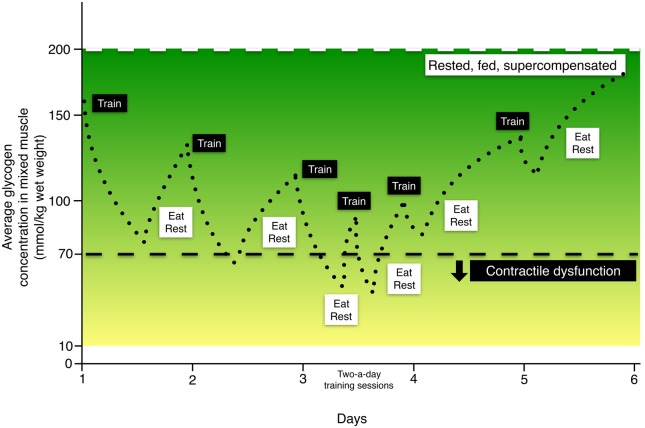
“muscle glycogen might fall to < 50 mmol/kg wet weight.(4,84) When muscle glycogen falls to < 70 mmol/”
BackgroundCarbohydrates for training and competition
Burke, L. M., Hawley, J. A., Wong, S. H. S., & Jeukendrup, A. E. (2011) · Journal of Sports Sciences · doi:10.1080/02640414.2011.585473 · Cited by 985 · cited 1×
“When 24 hours of rest occur between exercise sessions, ingesting a total of 10 g/kg BW, along with enough energy (calories) to maintain energy balance, will maximize glycogen restoration.(4,65,97) As noted above, timing of carbohydrate intake following physical activity is very important during training and competitio…”
BackgroundDietary Guidelines for Americans: Implications for Primary Care Providers
Mosher, A. L., Piercy, K. L., Webber, B. J., Goodwin, S. K., Casavale, K. O., & Olson, R. D. (2016) · American Journal of Lifestyle Medicine · doi:10.1177/1559827614521755 · Cited by 868
Muscle Glycogen during Prolonged Severe Exercise
Hermansen, L., Hultman, E., & Saltin, B. (1967) · Acta Physiologica Scandinavica · doi:10.1111/j.1748-1716.1967.tb03719.x · Cited by 752
Research works printed but not linked: 6
- 40. Hargreaves M. The metabolic systems: carbohydrate metabolism. In: Farrell P, ed. ACSM's Advanced Exercise Physiology. 2nd ed. Philadelphia: Lippincott Williams & Wilkins; 2012:379-391.
- 41. Ivy J. The regulation and synthesis of muscle glycogen by means of nutrient in- tervention. In: Maughan R, ed. Sports Nutrition. Vol. 19. West Sussex, UK: Wiley Blackwell; 2014:113-125.
- 60. Hawley J. Manipulating carbohydrate availability to promote training adaptation. Sports Sci Exchange. 2014;27:1-7.
- US Department of Health and Human Services; US Department of Agriculture, 2015, 2015–2020 Dietary Guidelines for Americans.
- US Department of Agriculture, National Nutrition Database.
- Zelman, Web MD Portion Size Guide.
Cited by
Items 101–200 of 308
Peos, J., Helms, E. R., Fournier, P. A., Krieger, J. W., & Sainsbury, A. (2021) · PLoS ONE · doi:10.1371/journal.pone.0247292 · Cited by 9
Discriminating the salivary profile of athletes using ATR-FTIR spectroscopy and chemometrics
Chrimatopoulos, C., Pavlou, E., Kourkoumelis, N., & Sakkas, V. A. (2022) · Chemometrics and Intelligent Laboratory Systems · doi:10.1016/j.chemolab.2022.104660 · Cited by 9
Exercise Recovery Practices of Wheelchair Court Sports Athletes
Murphy, C. J., Mason, B. S., & Goosey-Tolfrey, V. L. (2020) · The Journal of Strength and Conditioning Research · doi:10.1519/jsc.0000000000003926 · Cited by 9
“Prolonged or strenuous exercise is accompanied by glycogen utilization and fluid loss (2,28) both of which can limit subsequent performance if not replenished (1,33).”
BackgroundDiretrizes de Prática Clínica para Nutrição Esportiva: Associação Brasileira de Nutrição Esportiva
Quaresma, M. V. L. D. S., Trindade, M. C. D. C., de Oliveira, E. P., Dátilo, M., Pimentel, G. D., de Barros, A. R. Z., Barrella, A. B., Mendes, R. R., Campanholi, R. A., Alvarenga, M. L., et al. (2025) · journal of physical education · doi:10.4025/jphyseduc.v36i1.3605 · Cited by 8
Renner, A., Helms, E. R., Kwan, K., & Csapo, R. (2025) · Journal of the International Society of Sports Nutrition · doi:10.1080/15502783.2025.2591783 · Cited by 8
“Well-adapted athletes may use glycogen depleting exercise if it aligns with their tapering practices [7,50,54].”
Lake, I. (2021) · Current Opinion in Endocrinology Diabetes and Obesity · doi:10.1097/med.0000000000000666 · Cited by 8
“One almost universal assumption about energy transfer is that one needs to consume sugar or carbohydrates to fuel the body during exercise [3,17].”
BackgroundSediment pollutant exposures caused hepatotoxicity and disturbed glycogenesis
Lin, M., Yu, X., Chen, J.-Y., Wei, Y., Chen, H.-Y., Tsai, Y.-T., Lin, L., Liao, E., Kung, H.-Y., Young, S.-S., et al. (2023) · Ecotoxicology and Environmental Safety · doi:10.1016/j.ecoenv.2023.114559 · Cited by 8
Optimally controlling nutrition and propulsion force in a long distance running race
Cook, C., Chen, G., Hager, W. W., & Lenhart, S. (2023) · Frontiers in Nutrition · doi:10.3389/fnut.2023.1096194 · Cited by 8
“(24) confirmed that blood glucose concentrations were linked to fatigue and that eating hard candies during a race prevented weakness and fatigue during a race (21).”
BackgroundLin, W., Kuo, Y., Lin, J., Lin, C.-H., Chen, J., Tsai, S., Lee, M., Hsu, Y.-J., Huang, C., Tsou, Y., et al. (2022) · Nutrients · doi:10.3390/nu14061270 · Cited by 8
“Glycogen stores, especially muscle glycogen stores, constitute a crucial contributor to exercise performance [25].”
BackgroundJiménez‐Martínez, P., Alix‐Fages, C., Janicijevic, D. N., Miras‐Moreno, S., Chacón‐Ventura, S., Martín-Olmedo, J. J., de la Cruz-Márquez, J. C., Osuna‐Prieto, F. J., Jurado‐Fasoli, L., Amaro‐Gahete, F. J., et al. (2023) · Frontiers in Physiology · doi:10.3389/fphys.2023.1190345 · Cited by 8
“This finding may be important due to the relevant link between muscle glycogen and performance in aerobic sports (Murray and Rosenbloom, 2018).”
BackgroundKostrakiewicz-Gierałt, K. (2023) · Sports · doi:10.3390/sports11110211 · Cited by 8
Kużdżał, A., Bilianskyi, O., Wroński, Z., Magoń, G., Olaniszyn, G., Hagner–Derengowska, M., & Michalska, A. (2025) · Journal of Functional Morphology and Kinesiology · doi:10.3390/jfmk10030319 · Cited by 7
“…with higher baseline metabolic rates and greater muscle glycogen stores, may exhibit greater resilience to RWL-induced stress, such as dehydration or energy deficits, compared to older competitors whose reduced lean mass and slower recovery rates could exacerbate fatigue and injury risk [33,34].”
Acevedo, A. M., Sanctuary, C. E., Aitken, R. J., Wilkins, A., Harrison, N., & Naughton, M. R. (2025) · Frontiers in Nutrition · doi:10.3389/fnut.2025.1674446 · Cited by 7
Lakhani, H. A., Biswas, D., Kuruvila, M., Chava, M. S., Raj, K., Varghese, J. T., & Swathi, N. (2025) · Primary care diabetes · doi:10.1016/j.pcd.2025.02.006 · Cited by 7
Triathlon: Ergo Nutrition for Training, Competing, and Recovering
Miguel‐Ortega, Á., Rodríguez-Rodrigo, M.-A., Mielgo‐Ayuso, J., & Calleja-González, J. (2025) · Nutrients · doi:10.3390/nu17111846 · Cited by 8
“Glucose derived from CHO stores in the muscles (glycogen) and liver is the main source of energy during these activities, with fat acting as a secondary source [90].”
Eslami, Z., Roshandel, G., & Mirghani, S. J. (2025) · Chonnam Medical Journal · doi:10.4068/cmj.2025.61.1.9 · Cited by 7
Ingestion of a drink containing carbohydrate increases the number of bench press repetitions
Pinto, M. P., Spineli, H., Bastos‐Silva, V. J., LEARSI, S. K., & de Araújo, G. G. (2019) · Revista de Nutrição · doi:10.1590/1678-9865201932e180056 · Cited by 8
“Based on such individual response to CHO ingestion, a definitive conclusion about deleterious effects of CHO prior to exercising should not be made [30] because other studies [32,33] have observed a positive effect of CHO ingestion before exercising.”
BackgroundHydration Status in Adolescent Alpine Skiers During a Training Camp
Aerenhouts, D., Chapelle, L., Clarys, P., & Zinzen, E. (2021) · Journal of Human Kinetics · doi:10.2478/hukin-2021-0062 · Cited by 8
“Equally important is re-hydrating during recovery because a decreased intracellular fluid volume is reported to impair glycogen and protein resynthesis (Keller et al., 2003; Murray and Rosenbloom, 2018).”
BackgroundNutrition-Related considerations for health and performance in female Volleyball: A narrative review
Miguel‐Ortega, Á., Calleja-González, J., & Mielgo‐Ayuso, J. (2023) · Journal of Human Sport and Exercise · doi:10.14198/jhse.2023.182.16 · Cited by 7
“Generally, female athletes are recommended to consume around 60% of energy from CHO, assuming that energy intake is adequate to meet existing needs, which translates into a range of 6 to 10 g CHO/kg body mass per day to achieve optimal muscle glycogen storage (Murray & Rosenbloom, 2018).”
BackgroundReposición del Glucógeno Muscular en la Recuperación del Deportista
Ordóñez, F. M., Grimaldi-Puyana, M., & Sánchez-Oliver, A. J. (2019) · SPORT TK-Revista EuroAmericana de Ciencias del Deporte · doi:10.6018/sportk.362071 · Cited by 11
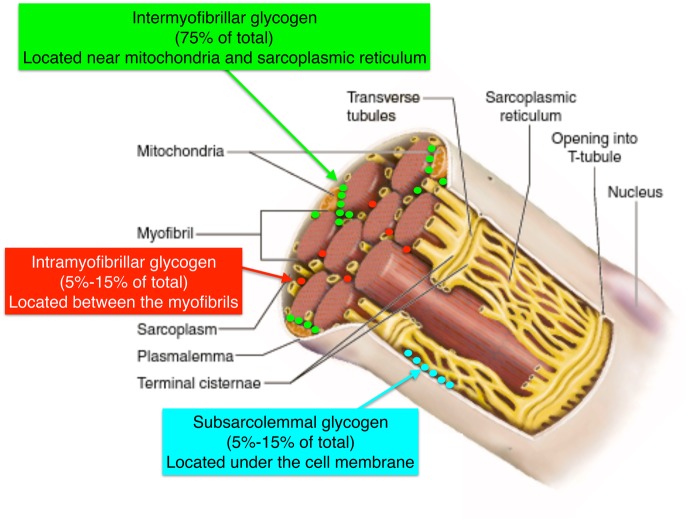
“En cuanto a su localización intracelular, el glucógeno se ha visto se encuentra distribuido en tres compartimentos (intramiofrilar, intermiofibrilar y subsarcolemal), siendo usado de forma diferente durante el ejercicio en cada uno de ellos (Murray & Rosenbloom, 2018).”
BackgroundInfluentialWilburn, D. T., Machek, S. B., Cardaci, T. D., & Willoughby, D. S. (2020) · Nutrients · doi:10.3390/nu12103145 · Cited by 7
Dudley-Rode, H., Zinn, C., Plews, D. J., Charoensap, T., & Maunder, E. (2025) · European Journal of Applied Physiology · doi:10.1007/s00421-024-05687-w · Cited by 6
“…that the positive effect of carbohydrate ingestion on metabolic power and therefore durability of the moderate-to-heavy intensity transition was mediated by improved regulation of blood glucose concentration due to liver glycogen-sparing (Hargreaves & Spriet 2020; Murray & Rosenbloom 2018).”
Abulmeaty, M. M. A., Almajwal, A. M., Elsayed, M., Hassan, H., Alsager, T., & Aldossari, Z. (2024) · Metabolites · doi:10.3390/metabo14030167 · Cited by 6
Nutrition for European Elite Fencers: A Practical Tool for Coaches and Athletes
Lomazzi, M. (2024) · Nutrients · doi:10.3390/nu16081104 · Cited by 6
“Post-exercise carbohydrate consumption is essential for enhancing recovery and restoring glycogen levels depleted during training, and high-glycemic products might facilitate faster restoration of muscle and liver glycogen stores compared to complex carbohydrates [27].”
BackgroundEffects of 24-week Polarized Training vs. Threshold Training in Obese Male Adults
D’Alleva, M., Giovanelli, N., Graniero, F., Billat, V. L., Fiori, F., Marinoni, M., Parpinel, M. T., & Lazzer, S. (2023) · International Journal of Sports Medicine · doi:10.1055/a-2123-0851 · Cited by 6
“…adaptations to endurance training, such as increasing skeletal muscle capacity for fatty acid uptake and oxidation and concomitant increases in glycogen content and glycogen utilization with higher levels of glycolytic enzymes [44], which are typically im - paired in obese individuals [45].”
BackgroundRegenerationsmanagement und Ernährung
Wiewelhove, T. (2020) · Springer eBooks · doi:10.1007/978-3-662-58227-5_9 · Cited by 6
Heiestad, H., Myklebust, G., Bahr, R., & Moseid, C. H. (2025) · BMJ Open Sport & Exercise Medicine · doi:10.1136/bmjsem-2024-002388 · Cited by 5
Dietary and hydration patterns as indicators of overtraining in elite adolescent sprinters
Campbell, E., White-Barrow, V., McFarlane, S., Dilworth, L., & Irving, R. R. (2022) · Human Nutrition & Metabolism · doi:10.1016/j.hnm.2022.200170 · Cited by 5
McAdam, J. S., Lyons, K. D., Beck, D. T., Haun, C. T., Romero, M. A., Mumford, P. W., Roberson, P. A., Young, K. C., Lohse, K. R., Roberts, M. D., et al. (2022) · Frontiers in Nutrition · doi:10.3389/fnut.2022.807928 · Cited by 5
Energy Expenditure of Special Forces Soldiers in Relation to Equipment Load and Movement Speed
Zadarko, E., Marszałek, P., Zadarko-Domaradzka, M., Penar-Zadarko, B., & Przednówek, K. (2025) · Nutrients · doi:10.3390/nu18010027 · Cited by 4
“It is necessary to adequately rebuild muscle and liver glycogen stores on a daily basis in order to maintain the ability to exercise continuously and engage in intense activity [48].”
The Myokine FGF-21 Responds in a Time-Dependent Manner to Three Different Types of Acute Exercise
Thrones, M., Rawliuk, T., Cordingley, D. M., & Cornish, S. M. (2026) · Muscles · doi:10.3390/muscles5010003 · Cited by 4
“Our current study may not have been of sufficient exercise intensity or duration to reduce intramuscular glycogen stores to an appreciable amount that would have resulted in the systemic release of IL-6 [21].”
The nutritional and physiological effect of carbohydrates, their influences on sports nutrition
Fritz, P., Katona, S., & Ignits, D. (2018) · Recreation · doi:10.21486/recreation.2018.8.2.1 · Cited by 4
Alshuwaier, G. O., Ghazzawi, H., Alaqil, A. I., Alsharif, Y. R., Alibrahim, M. S., & Aljaloud, K. S. (2022) · Open Access Journal of Sports Medicine · doi:10.2147/oajsm.s356075 · Cited by 4
“Even though fasting blood glucose levels are not directly related to physical performance, competitors will, in general, have lower fasting blood glucose levels, which are related to the intensity of their training routine.(13) During short-duration, low-to-moderate-intensity exercise (60% VO2 max), blood glucose leve…”
BackgroundLee, M., Hsu, Y.-J., Ho, C.-S., Tsai, Y., Chen, C., & Huang, C. (2024) · Foods · doi:10.3390/foods13071030 · Cited by 4
“It is catabolized by glycogen to produce adenosine triphosphate (ATP), which provides the primary fuel source for muscles during exercise [49].”
BackgroundD’Alleva, M., Lazzer, S., Martino, M. D., Mari, L., Rejc, E., Zaccaron, S., Stafuzza, J., Isola, M., Bondesan, A., Caroli, D., et al. (2025) · Frontiers in Nutrition · doi:10.3389/fnut.2025.1624696 · Cited by 3
“Moreover, skeletal muscle, the main component of FFM, serves as a primary site for glucose disposal and lipid oxidation, playing a central role in maintaining metabolic homeostasis (49, 50).”
Lee, M., Cheng, T.-Y., Lin, P.-J., Lin, T.-C., Chou, C.-H., Chen, C., & Huang, C. (2025) · Nutrients · doi:10.3390/nu17152568 · Cited by 3
“Furthermore, these augmented glycogen stores likely accelerate post-exercise recovery by facilitating rapid ATP resynthesis [46].”
van Wijk, K., & Nakajima, O. (2025) · Life · doi:10.3390/life15081259 · Cited by 3
“This excess intramuscular glycogen may interfere with insulin-mediated glucose uptake [28].”
Zheng, L., Wang, Y., Xiao, Z., Rao, Z., & Shi, R. (2025) · International Journal of Molecular Sciences · doi:10.3390/ijms27010412 · Cited by 3
“In addition, increasing glycogen contents before exercise is an important strategy to improve exercise performance and prevent exercise fatigue [58,62,63]. α -Klotho was reported to play a role in regulating the metabolism [12,13].”
Bezuglov, E., Achkasov, E. E., Vakhidov, T., Kapralova, E., Kuznetsova, Y., Manina, M. A., & Ильинична, Э. С. (2026) · Sport Sciences for Health · doi:10.1007/s11332-026-01661-5 · Cited by 4
“Additionally, even when accounting for pre-exercise food intake [45, 49, 50, 55] it is evident that consuming even large carbohydrate doses 1–2 h prior cannot substantially alter liver and muscle glycogen depots or significantly influence overall carbohydrate status [66, 67].”
A Mini Review of Healthy Bars – Purchasing Motives and Challenges: Towards Halalan Toyyiban Approach
Noor, N. A. M., Hazahari, N. Y., & Shahidan, N. (2022) · Halalsphere · doi:10.31436/hs.v2i1.43 · Cited by 3
“This is because carbohydrates can enhance fluid retention in human bodies through a reasonable mechanism, (Murray & Rosenbloom, 2018).”
BackgroundFitriani, A., Setiarini, A., Ahmad, E. K., Purwaningtyas, D. R., & Fitria, F. (2023) · Malaysian Journal of Nutrition · doi:10.31246/mjn-2022-0086 · Cited by 3
Development of Edible Carbohydrate–Protein Sports Gels to Optimize the Muscle Glycogen Re-Synthesis
Verma, V., Gill, V., Kumar, A., & Singh, S. P. (2025) · Gels · doi:10.3390/gels11050341 · Cited by 3
“…after a workout or training, the insulin released from the pancreas in response to the glucose increment in blood, insulin sensitivity in muscle cells initiates the glucose uptake from blood; this increases the glucose synthase activity [25,26], and this response stays for as long as 48 h [27,28].”
Wibawa, C., Huang, Y., Patterson, D. H., Feng, Z., & Serventi, L. (2023) · Sustainable development goals series · doi:10.1007/978-3-031-12358-0_2 · Cited by 3
Glucose: Metabolism and homeostasis
Jones, J. M. (2022) · Elsevier eBooks · doi:10.1016/b978-0-12-821848-8.00130-x · Cited by 3
Energy and Key Micronutrient Intake in Amateur Swimmers: A Pilot Study
Gonçalves, S., Vicente, F., & Pereira, P. M. D. C. C. (2025) · Nutrients · doi:10.3390/nu17040664 · Cited by 2
“These facts highlight the importance of diet considering that food intake must meet the recommendations according to the season-specific phase [1,16].”
Adams, A. T., Davis, Z. G., Browder, K. F., Dearth, C. L., & Goldman, S. M. (2025) · Frontiers in Physiology · doi:10.3389/fphys.2025.1555199 · Cited by 2
“During endurance training, capillary supply to muscles increases, mitochondria presence increases and degraded mitochondria are removed with greater efficiency, and glycogen stores are increased to handle the load (Yan et al., 2012; Hearris et al., 2018; Murray and Rosenbloom, 2018).”
Nebl, J., Bruns, P., Meier, M., Mayer, F., Smollich, M., & Keller, M. (2025) · Nutrients · doi:10.3390/nu17142351 · Cited by 2
“Neither group reached the recommended daily carbohydrate intake of ≥ 55% of daily energy to adequately replenish glycogen stores [69].”
Karikachery, A. R., Katti, K. K., Thipe, V. C., Hegde, P., Prakash, D., Hegde, A., Chesne, A. M., & Katti, K. V. (2025) · Nanotechnology Science and Applications · doi:10.2147/nsa.s536454 · Cited by 2
“In this context, our application of biocompatible and non-toxic plant-based materials as effective and natural crosslinking agents for protein nanoparticle formulations are unprecedented (Figure 13).”
InfluentialFleitas‐Paniagua, P. R., Rasica, L., Azevedo, R. A., Alvares, T. S., Zagatto, A. M., & Murias, J. M. (2026) · Scandinavian Journal of Medicine and Science in Sports · doi:10.1111/sms.70240 · Cited by 2
24-Hour Ultra-Marathon Running: A Narrative Review of Performance Factors and Physiological Impacts
Knechtle, B., Braschler, L., Weiss, K., Scheer, V., Đurić, S., Leite, L. B., Forte, P. M., Nikolaidis, P. Τ., Chlíbková, D., & Rosemann, T. J. (2026) · Sports Medicine - Open · doi:10.1186/s40798-026-00997-z · Cited by 2
“Because glycogen binds water, its loss leads to reduced muscle volume, additional water loss and a further reduction in body mass [157].”
Bedoui, M. R., Ltifi, M. A., Bourezgui, A., Şufaru, C., Pavel, S. I., Sandovici, A., Alexe, D. I., & Aouadi, R. (2026) · Frontiers in Physiology · doi:10.3389/fphys.2026.1778885 · Cited by 2
“As fasting progressed, reduced glycogen availability, increased perceived exertion, and sleep disruption could plausibly interact with the observed performance decrements (Rockwell et al., 2003; Murray and Rosenbloom, 2018; Triki et al., 2024).”
Fleitas‐Paniagua, P. R., Rasica, L., Azevedo, R. D. A., Iannetta, D., Alvares, T. S., Zagatto, A. M., & Murias, J. M. (2026) · Scandinavian Journal of Medicine and Science in Sports · doi:10.1111/sms.70288 · Cited by 2
“Participants were instructed to be consistent with their food choices for at least 48 h before each visit to ensure muscle glycogen replenishment [47].”
Effect of Honeybee Products on Exercise Performance and Blood Chemistry Characteristics in Gymnasts
Sarıtaş, N., Soylu, M., Akdoğan, H., & Sılıcı, S. (2023) · Spor Bilimleri Araştırmaları Dergisi · doi:10.25307/jssr.1325446 · Cited by 2
Sweeteners and Sugar- Their Impact on Human Metabolic Health and Chronic Diseases
Dutta, A. J., Sinha, D., Konwar, S., Pegu, B. K., & Baruah, S. (2024) · Biosciences Biotechnology Research Asia · doi:10.13005/bbra/3306 · Cited by 2
van der Weyden, M. S., Martin, J. R., Rodriguez, J., & Boolani, A. (2023) · Sports · doi:10.3390/sports11040088 · Cited by 2
“Another potentially confounding factor, which may have contributed to inconsistent results, is that high-intensity exercise rapidly depletes glycogen stores [16].”
BackgroundNichols, J., Olsen, E., & Lareau, S. A. (2023) · Physician Assistant Clinics · doi:10.1016/j.cpha.2023.08.009 · Cited by 2
Saxena, R. R., & Saxena, R. (2023) · IJRDO - Journal of Biological Science · doi:10.53555/bs.v1i1.5937 · Cited by 2
“32 Such reduction of adipose tissue in the body can help with obesity.”
Dietary Carbohydrates Influence the Performance Outcomes of Short-Term Heat Acclimation
Rosbrook, P., Looney, D. P., Margolis, L. M., Yudin, S. P., Hostler, D. P., Pryor, R. R., & Pryor, J. L. (2025) · Medicine & Science in Sports & Exercise · doi:10.1249/mss.0000000000003726 · Cited by 2
Mattsson, S., Edin, F., Trinh, J., Adolfsson, P., JENDLE, J. H., & Pettersson, S. (2025) · Journal of the International Society of Sports Nutrition · doi:10.1080/15502783.2025.2494839 · Cited by 2
“Furthermore, the depletion of liver glycogen is associated with an increase in the risk of hypoglycemia [10,11], coupled with the subsequent increase in cortisol secretion, which may induce short-term insulin resistance [12] (IR) and skeletal muscle proteolysis [13–17], and emphasizes the…”
Recommandations nutritionnelles pour le triathlète
Pieters, S. (2019) · Journal de Traumatologie du Sport · doi:10.1016/j.jts.2019.07.006 · Cited by 2
Lactato como substrato energético e a atividade carcinogênica
Souza, D. P. D., do Sacramento, M. D. S., Santos, P. H. S., & Gardenghi, G. (2020) · Revista Brasileira de Fisiologia do Exercício · doi:10.33233/rbfe.v19i1.3988 · Cited by 2
Wang, J., & Mohammed, A. K. (2021) · Journal of Healthcare Engineering · doi:10.1155/2021/7600835 · Cited by 2
“pumped out in large quantities and broken down into blood [14].”
BackgroundRetractedBarreto, G. (2022) · Physician Assistant Clinics · doi:10.1016/j.cpha.2022.06.004 · Cited by 2
Hollands, T., & Drury, L. (2023) · CABI eBooks · doi:10.1079/9781789245134.0012 · Cited by 2
Chess and eSports Nutrition: Dietary Habits, Lifestyles and Hydration Status
Ribeiro, F. J. V. (2024) · Portuguese National Funding Agency for Science, Research and Technology (RCAAP Project by FCT) · doi:10.34626/c69n-fb38 · Cited by 2
Carbohydrate Storage and Supplementation Strategies for Peak Performance in Cross-Country Skiing
Ørtenblad, N., Holmberg, H. ‐., Nybo, L., & Gejl, K. D. (2026) · Scandinavian Journal of Medicine & Science in Sports · doi:10.1111/sms.70242 · Cited by 1
“…carbohydrates are fundamental for supporting high-intensity exercise performance, providing the substrate for rapid ATP resynthesis during short maximal efforts dependent on anaerobic glycolysis, as well as during prolonged intense exercise characterized by high rates of carbohydrate oxidation [2].”
Drummer, D. J., Carrigan, C. T., Murphy, N. E., Wilson, M. A., Michalak, J., Whitney, C. C., Rivas, D. A., Pasiakos, S. M., & Margolis, L. M. (2024) · Physiological Genomics · doi:10.1152/physiolgenomics.00107.2024 · Cited by 1
Souissi, N., Zouita, A., Abedelmalek, S., Ammar, A., Ezzedine, G., Trabelsi, K., Dziri, K., Clark, C. C. T., Souissi, N., & Chamari, K. (2025) · Sport Sciences for Health · doi:10.1007/s11332-025-01415-9 · Cited by 1
“Given that prolonged fasting may lead to decreased glycogen availability, known to contribute to neuromuscular fatigue [39], reduced movement efficiency in the WA test could reflect lower muscle energy stores and diminished coordination during Ramadan.”
Berisha, M., Deva, E., Karaçam, A., & Orhan, B. E. (2025) · Physical Education Theory and Methodology · doi:10.17309/tmfv.2025.4.01 · Cited by 1
Impact of Ramadan Intermittent Fasting on Cardiovascular Health and Disease
Naqeeb, H., Alam, I., AlBlooshi, S., Faris, M. E., & Zeb, F. (2025) · Springer eBooks · doi:10.1007/978-981-96-6783-3_7 · Cited by 1
Targeting differential energy substrate metabolism on a therapeutic ketogenic diet: a case report
Russell, K. J., & SCHWARTZ, S. H. (2025) · Frontiers in Nutrition · doi:10.3389/fnut.2025.1623217 · Cited by 1
“When on a ketogenic diet for several weeks, muscles adapt to conserve glycogen (12, 20) [also known as glycogen sparing (24)], greatly reducing glycogen usage at low and medium exercise intensities.”
The Metabolic Adaptation to Exercise Following Intensity-Specific Aerobic Training in Female Rats
Mereu, J., Sammut, M. J., Tijo, T., & Melling, C. W. J. (2025) · Medicine & Science in Sports & Exercise · doi:10.1249/mss.0000000000003846 · Cited by 1
Deru, L. S., Hales, K. E., Gipson, E. Z., Chan, H., & Bailey, B. W. (2025) · European Journal of Sport Science · doi:10.1002/ejsc.70075 · Cited by 1
“This approach leads to lower circulating glucose and liver glycogen levels within 10–14 h, stimulating the upregulation of fatty acids for metabolic fuel (Murray and Rosenbloom 2018).”
Sports nutrition decoded: mechanistic perspectives on dietary components and athletic performance
Kumar, M., Kaushik, D., Kaur, H., Öz, E., Kumar, V., Proestos, C., Sharma, A., Özmen, H. K., Brennan, C. S., & Öz, F. (2025) · International Journal of Food Science & Technology · doi:10.1093/ijfood/vvaf208 · Cited by 1
Rahim, A. M., & Nasrulloh, A. (2024) · International Journal of Multicultural and Multireligious Understanding · doi:10.18415/ijmmu.v11i11.6208 · Cited by 1
Xu, S. Q., Gong, W., Li, J., Qin, W., Dang, D. X., Yu, Y., & Chung, D.-H. (2026) · Frontiers in Nutrition · doi:10.3389/fnut.2025.1657205 · Cited by 1
“Larger muscles generally possess a greater capacity for glycogen storage, allowing for more sustained energy output during physical activity (75).”
Pernigoni, M., Cesanelli, L., Cesanelli, E., Bakienė, R., Polzonetti, V., & Lukonaitienė, I. (2026) · Food & Function · doi:10.1039/d5fo05127d · Cited by 1
Zhang, Y., Liao, H., Zhu, S., Zhao, Y., Li, F. Y., Li, X., & Li, Y. (2026) · Processes · doi:10.3390/pr14081196 · Cited by 1
Zhou, Q., Chen, X., Shangguan, H., Gong, L., Wang, Y., Zhong, B., Chen, H., Dai, X., Hou, Q., Gao, X., et al. (2026) · Medicine · doi:10.1097/md.0000000000048712 · Cited by 1
“[28,29] In this setting, efficient peripheral glucose disposal becomes particularly important.”
Eggleston, R. W., Jr. (2026) · Digital Commons (Liberty University) · Cited by 1
Enoh, J. E. (2026) · F1000Research · doi:10.12688/f1000research.185917.1 · Cited by 1
Analisis Pengaruh Faktor Individu dan Kebiasaan Olahraga dengan Kelelahan Kerja
Saputri, J., Wicaksono, U., & Ridhani, A. (2024) · Indonesian Journal of Nursing and Health Sciences · doi:10.37287/ijnhs.v5i2.5565 · Cited by 1
RELATIONSHIP BETWEEN DIETARY FAT AND PHYSICAL FITNESS AMONG ATHLETES
Pakistan Sports Board. Islamabad Pakistan, Hussein, S. A., Haseeb, M., Pakistan Sports Board. Islamabad Pakistan, Chaudhary, A., Ashraf, M., & Pakistan Sports Board. Islamabad Pakistan (2020) · The Rehabilitation Journal · doi:10.52567/trj.v4i02.5 · Cited by 2
THE ROLE OF PSYCHOLOGY IN DEVELOPMENT AND DEALING OF FEAR IN HUMANS.
Jain, N. N., & Attarwala, M. Z. (2021) · GLOBAL JOURNAL FOR RESEARCH ANALYSIS · doi:10.36106/gjra/6108975 · Cited by 1
Seimetz, L. G., & Zanella, P. B. (2023) · Science & Sports · doi:10.1016/j.scispo.2022.07.017 · Cited by 1
Zdzieblik, D., Jerger, H., Gollhofer, A., & König, D. (2024) · Advanced Exercise and Health Science · doi:10.1016/j.aehs.2024.05.004 · Cited by 1
Mohammed, S. G. S., Hussein, M., & Kulais, S. M. A. (2025) · Yemeni Journal For Medical Sciences · doi:10.20428/yjms.v19i3.2761 · Cited by 1
“Carbohydrates are a critical energy source, particularly for athletes or individuals involved in high-intensity exercise (10).”
Dewi, L., Nugraheni, K., Mustakim, M., Rosidi, A., Yogaswara, A., & Muhibbi, M. (2025) · Jurnal Keolahragaan · doi:10.21831/jk.v13i1.77883 · Cited by 1
“Carbohydrates are well-known for the primary macronutrient that stimulate blood glucose response, which facilitates the rapid uptake of glucose by exercised muscles to replenish glycogen stores (Murray & Rosenbloom, 2018).”
Romão, B., & Sasaki, C. A. L. (2023) · Scire Salutis · doi:10.6008/cbpc2236-9600.2023.002.0012 · Cited by 1
Relationship of Nutrition Knowledge and Dietary Intake Among Collegiate Female Athletes
Skinner, J. D. (2020) · Arizona State University Library Digital Repository (Arizona State University) · Cited by 1
Estratégias nutricionais adequadas na perda de peso aguda em desportos de combate
Costa, M. M. D. M. P. (2021) · Portuguese National Funding Agency for Science, Research and Technology (RCAAP Project by FCT) · Cited by 1
EASTHAM, I. (2022) · Durham e-Theses (Durham University) · Cited by 1
Richards, A. J. (2024) · YorkSpace (York University) · Cited by 1
Kirkpatrick, E. (2024) · Nottingham ePrints (University of Nottingham) · Cited by 1
Nutrition for young athletes in early to middle childhood: A narrative review
Chowdhury, M. H., Ferdouse, R., Khandaker, M., Azam, M. N., & Hossain, M. B. (2025) · GSC Advanced Research and Reviews · doi:10.30574/gscarr.2025.24.2.0247
Figueroa, Y. L., & PERRY, A. C. (2023) · International Journal of Strength and Conditioning · doi:10.47206/ijsc.v3i1.144
“A review by Murray and Rosenbloom (2018) concluded that if adequate glycogen levels are not maintained, exercise intensity and performance decreases.”
BackgroundFlynn, S. (2019) · ScholarWorks at University of Montana
Clamp, L. D. (2019) · Open University of Cape Town (University of Cape Town)
Interval Training Using the Lactate Retention Method: A Pilot Study
Dundore, T. (2020)
Jõgiste, K. L. (2019) · DSpace repository (University of Tartu)
Metadata
- Authors
- Murray, B., & Rosenbloom, C.
- Affiliations
- Sports Science Insights, LLC, Crystal Lake, Illinois, USA
- Georgia State University (US)
- Corresponding author
- Murray, Bob
- ORCID
- Murray, Bob
- Venue
- Nutrition Reviews
- Publisher
- Oxford University Press (OUP)
- Published
- 2018-02-10
- Volume
- 76
- Issue
- 4
- Pages
- 243-259
- ISSN
- 0029-6643 (ISSN-L)
- 1753-4887
- PMC
- PMC6019055
- OpenAlex
- W2792179056
- Semantic Scholar
- 926db46bc3f6eac98a99debb4d3500305b65ca76
- Cited by
- 224
- References
- 149
- Citations by year
- 2026: 28 · 2025: 47 · 2024: 27 · 2023: 34 · 2022: 29 · 2021: 27 · 2020: 16 · 2019: 15 · 2018: 1
- FWCI
- 1.66
- Type
- journal article
- Language
- en
- Open access
- hybrid
- doi.org
- Licence
- Locations
- Nutrition Reviews (publishedVersion, cc-by-nc-nd)
- Europe PMC (PubMed Central) (publishedVersion, cc-by-nc-nd)
- PubMed Central (publishedVersion, cc-by-nc-nd)
- PubMed (publishedVersion)
- Topics
- Health Sciences › Nursing › Nutrition and Dietetics › Muscle metabolism and nutrition
- Health Sciences › Medicine › Orthopedics and Sports Medicine › Sports Performance and Training
- Life Sciences › Biochemistry, Genetics and Molecular Biology › Molecular Biology › Metabolism, Diabetes, and Cancer
- Keywords
- glycogen metabolism, muscle glycogen, glycogen resynthesis, carbohydrate intake, glycogen synthesis, training effects, athletic performance, sports nutrition, post-exercise recovery
- MeSH terms
- Diet, Dietary Carbohydrates, Glycogen, Humans, Sports, Time Factors, Exercise, Muscle, Skeletal, Athletes
About these checks
Registry, retraction, Cites and statistics results are computed, not judged, with one exception: a printed reference that no index lists is read once by a model before it counts as a citation error. Claims are extracted by a model and kept only when their quote appears verbatim in the text; each cited source is then checked, with a model’s help, for whether it says what the claim relies on. Those verdicts can be wrong — read the claim’s quote and the cited source before relying on one.
Statistics and arithmetic are recomputed, not judged.
Confidence bands are shown only for fields calibrated on our annotated test set. None is calibrated yet, so no band is shown.
What counts as a claim ›How we measure confidence ›How we check this ›
Are you an author, or do you see a problem with this page? Request a review
Data sources
Bibliographic data: Semantic Scholar, OpenAlex, Crossref.
Contains information from the Semantic Scholar Academic Graph Datasets, made available under the ODC Attribution License (ODC-BY 1.0).
Semantic Scholar’s data is described in: Kinney, R., et al. (2023). The Semantic Scholar Open Data Platform. arXiv:2301.10140.
