

Explicit and implicit emotion regulation: a multi-level framework
Open accessThe DOI matches its Crossref record; 156 of the 161 references it cites were found in a registry or an index; 33 of the 110 sources its claims cite were checked for support.
Abstract
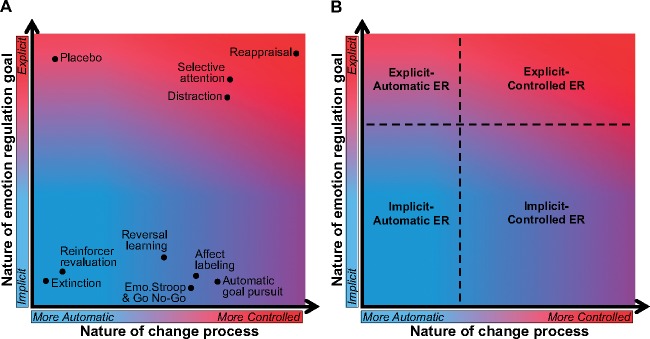
The ability to adaptively regulate emotion is essential for mental and physical well-being. How should we organize the myriad ways people attempt to regulate their emotions? We explore the utility of a framework that distinguishes among four fundamental classes of emotion regulation strategies. The framework describes each strategy class in terms their behavioral characteristics, underlying psychological processes and supporting neural systems. A key feature of this multi-level framework is its conceptualization of the psychological processes in terms of two orthogonal dimensions that describe (i) the nature of the emotion regulation goal (ranging from to implicit to explicit) and (ii) the nature of the emotion change process (ranging from more automatic to more controlled). After describing the core elements of the framework, we use it to review human and animal research on the neural bases of emotion regulation and to suggest key directions for future research on emotion regulation.
Overview
CoChat Summary
TL;DR
The paper proposes a multi-level framework that organizes emotion regulation strategies by crossing two orthogonal dimensions: implicit vs explicit regulation goals and automatic vs controlled change processes. It reviews behavioral and neural evidence for the resulting four classes—explicit-controlled, implicit-automatic, implicit-controlled, and explicit-automatic—and identifies unresolved questions about their neural bases.
Key findings
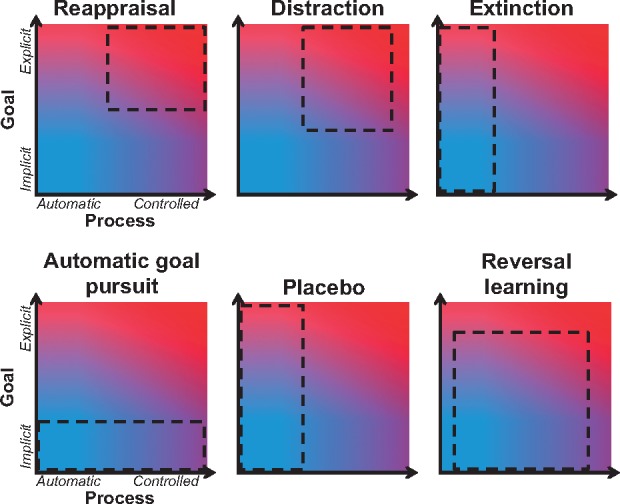
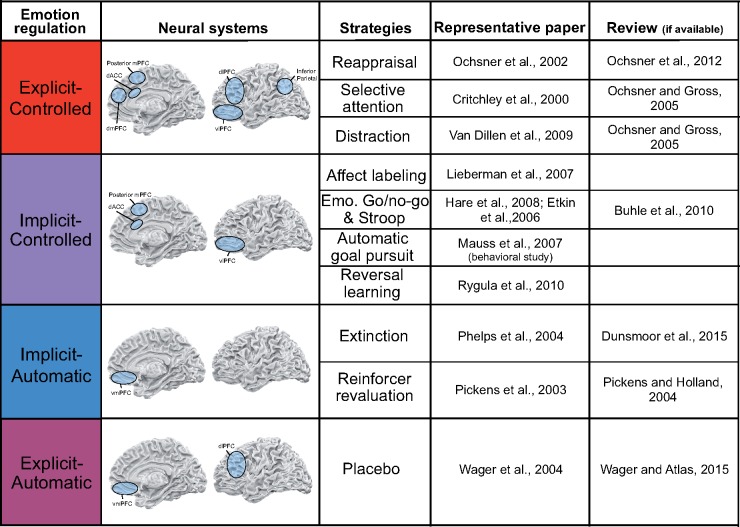
- The framework defines four classes of emotion regulation: explicit-controlled (explicit goal + controlled process), implicit-automatic (implicit goal + automatic process), implicit-controlled (implicit goal + controlled process), and explicit-automatic (explicit goal + automatic process).
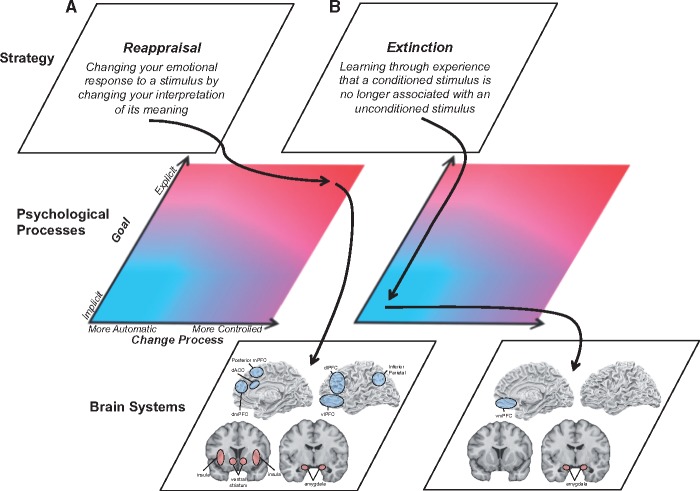
- Explicit-controlled regulation is best studied via selective attention, distraction, and reappraisal; it implicates dlPFC, vlPFC, dACC, and dmPFC, and modulates amygdala, ventral striatum, and insula activity.
- Implicit-automatic regulation is exemplified by extinction and reinforcer revaluation and is supported primarily by vmPFC, which integrates context, goals, motivational states, and learning history to update affective value.
- The paper notes a 40-fold increase in papers including “emotion regulation” between 2002 and 2012, and argues that hybrid classes—implicit-controlled (e.g., affect labeling, reversal learning) and explicit-automatic (e.g., placebo effects)—are less systematically studied.
Methods
- Conceptual/review article, not an empirical study; no primary sample, dataset, or experimental design is reported.
- It synthesizes human and animal behavioral, neuroimaging, lesion, and structural research to describe each strategy class at behavioral, psychological-process, and neural-system levels.
- Main analysis is narrative theoretical integration, using prior findings to constrain a two-dimensional framework and to identify knowledge gaps.
Limitations
- The paper states that current brain data are ambiguous about whether specific prefrontal systems implement explicit vs implicit regulatory goals or controlled vs automatic change processes, and that behavioral data are currently best for classifying strategies.
- The paper states that there are too few studies of each hybrid strategy, with methods differing in multiple ways, to draw firm conclusions.
- Evident from the text: the framework is theoretical and does not provide systematic or meta-analytic quantification; it is limited to self-regulation of emotion, with social/interpersonal emotion regulation acknowledged but not reviewed.
Model-written summary. Check it against the paper before relying on it.
Integrity signals
Registry
Cites
Statistics
Figures
Verification
Claims the paper makes
19 Valid · 5 Not valid · 40 Not checked · 21 Own results and interpretations
At least one cited source doesn’t support this claim or points to a different paper, and none confirmed it — see the verdicts below.
In the paper
“and decreases for devalued stimuli (Gottfried et al., 2003; Kerfoot et al., 2007).”
§ Explicit and implicit emotion regulation: a multi-level framework > Implicit-automatic emotion regulation
What the sources say
- Not checked yetcites Gottfried et al., 2003 matched to “Encoding Predictive Reward Value in Human Amygdala and Orbitofrontal Cortex” (2003) source
- Disputedcites Kerfoot et al., 2007 matched to “Control of appetitive and aversive taste-reactivity responses by an auditory conditioned stimulus in a devaluation task: A FOS and behavioral analysis” (2007) sourceExperimental — accuracy not yet measured
Kerfoot et al. (2007) report the opposite direction: in the FOS immunocytochemistry results, FOS expression in BLA, OFC and GC was greater in group Devalue than in group Maintain or Control (OFC F(2,11)=11.82, P=0.0018), and the Discussion states explicitly that this 'contrasts with the results of recent human imaging experiments, in which the blood oxygenation-level-dependent response in BLA and OFC to a visual cue for a particular food was reduced after devaluation' — a decrease the paper credits to Gottfried et al. (2003), not to itself. Moreover, our copy measures lateral OFC, BLA, GC, CeA, ACB and LH; it contains no vmPFC/medial prefrontal assessment (searched: vmPFC, medial prefrontal, orbitofrontal devaluation FOS), so the region named in the claim is not addressed by this paper at all. The attributed point (activity decreases for devalued stimuli) is therefore contradicted by the source's own findings. (LLM, conf=0.85)
Checked by a reasoning model — may be wrong.
plainstates a cause- Asserted: passes — The authors put it forward as true.
- Checkable: passes — It can be checked against evidence.
- Load-bearing: unclear — It is unclear whether the paper’s conclusions depend on it.
- Based: passes — The paper gives a reason why it holds.
The cited sources support only part of this claim — read each source’s verdict below.
In the paper
“there may be instances where one rethinks the meaning of a situation without having the conscious intention to change emotion or where the reliance of reappraisal on controlled processes diminishes—for example, after some degree of reappraisal training and/or practice”
§ Explicit and implicit emotion regulation: a multi-level framework > A multi-level framework for explicit and implicit emotion regulation > Differentiating classes of regulatory strategies
What the sources say
- Supportedcites Denny and Ochsner, 2014 matched to “Behavioral effects of longitudinal training in cognitive reappraisal.” (2014) source
The Discussion (Implications for differential effects of reappraisal training tactics; page unavailable) suggests that distancing became more habitual or automatic after training, including when participants were not instructed to reappraise. This supports the citing sentence’s hedged example of reduced reliance on controlled processes, specifically for distancing rather than all reappraisal tactics. (LLM, conf=0.88)
- Partly supportedcites Denny et al., 2015 matched to “Getting Over It: Long-Lasting Effects of Emotion Regulation on Amygdala Response” (2015) sourceExperimental — accuracy not yet measured
The Discussion reports that, after four reappraisals, reduced amygdala responses persisted during passive viewing without evidence of ongoing prefrontal control (page not available in our copy). This supports the possibility that the effects of practiced reappraisal need less ongoing control, but the paper does not show that performing reappraisal itself becomes less reliant on controlled processes after training or practice. (LLM, conf=0.87)
hedgedstates a possible cause- Asserted: passes — The authors put it forward as true.
- Checkable: passes — It can be checked against evidence.
- Load-bearing: passes — The paper’s conclusions depend on it.
- Based: passes — The paper gives a reason why it holds.
- Rests on 2 assumptions not shown here.
- Supported
The cited sources support only part of this claim — read each source’s verdict below.
In the paper
“these reviews offer differing descriptions of ‘implicit’ regulation, sometimes focusing on the lack of a conscious and explicit goal to regulate and other times arguing that it occurs automatically and/or without need for cognitive control.”
§ Explicit and implicit emotion regulation: a multi-level framework > Introduction
What the sources say
- Not checked yetcites Berkman and Lieberman, 2009
- Partly supportedcites Gyurak et al., 2011 matched to “Explicit and implicit emotion regulation: a dual-process framework.” (2011) sourceExperimental — accuracy not yet measured
In “Defining Emotion Regulation” (page unavailable), the paper describes implicit processes as automatically evoked and able to proceed without monitoring or awareness; its discussion of regulatory goals also says they can operate outside awareness. These passages support the descriptions of implicit regulation, but the paper does not establish that different reviews favor different descriptions or that implicit regulation requires no cognitive control. (LLM, conf=0.78)
- Not checked yetcites Etkin et al., 2015 matched to “The neural bases of emotion regulation” (2015) source
plain- Asserted: passes — The authors put it forward as true.
- Checkable: passes — It can be checked against evidence.
- Load-bearing: passes — The paper’s conclusions depend on it.
- Based: passes — The paper gives a reason why it holds.
The cited sources support only part of this claim — read each source’s verdict below.
In the paper
“Four such control systems (Figures 3 and 4) have been most strongly implicated in explicit-controlled emotion regulation: dorsolateral prefrontal cortex (dlPFC), ventrolateral prefrontal cortex (vlPFC), dorsal anterior cingulate cortex (dACC) and dorsal medial prefrontal cortex (dmPFC)”
§ Explicit and implicit emotion regulation: a multi-level framework > Explicit-controlled emotion regulation
What the sources say
- Not checked yetcites Diekhof et al., 2011 matched to “Fear is only as deep as the mind allows” (2011) source
- Supportedcites Ochsner et al., 2012 matched to “Functional imaging studies of emotion regulation: a synthetic review and evolving model of the cognitive control of emotion” (2012) source
The “Mechanisms of Emotion Regulation” section identifies dorsolateral prefrontal cortex, dorsal anterior cingulate cortex, ventrolateral prefrontal cortex, and dorsomedial prefrontal regions as involved in cognitive control of emotion via reappraisal. It qualifies dorsomedial involvement as depending on whether reappraisal involves interpreting emotional states. No page number is provided in our copy. (LLM, conf=0.92)
- Partly supportedcites Buhle et al., 2014 matched to “Cognitive Reappraisal of Emotion: A Meta-Analysis of Human Neuroimaging Studies” (2014) sourceExperimental — accuracy not yet measured
The Discussion reports that reappraisal consistently activated dlPFC, vlPFC and dmPFC. It does not identify dACC as a fourth control region; instead, it lists posterior parietal cortex. The paper also examines cognitive reappraisal specifically, rather than explicit-controlled emotion regulation generally. (LLM, conf=0.86)
boostedstates an association- Asserted: passes — The authors put it forward as true.
- Checkable: passes — It can be checked against evidence.
- Load-bearing: passes — The paper’s conclusions depend on it.
- Based: passes — The paper gives a reason why it holds.
The cited sources support only part of this claim — read each source’s verdict below.
In the paper
“Meta-analyses of human imaging studies have demonstrated that vmPFC is the primary (but not only) region whose activity tracks the current subjective value of food, money or various goods (Chib et al., 2009)”
§ Explicit and implicit emotion regulation: a multi-level framework > Implicit-automatic emotion regulation
What the sources say
- Partly supportedcites Chib et al., 2009 matched to “Evidence for a Common Representation of Decision Values for Dissimilar Goods in Human Ventromedial Prefrontal Cortex” (2009) sourceExperimental — accuracy not yet measured
The substantive core is supported: the Abstract and Discussion (pp. 1, Discussion) of Chib et al. (2009) report that human fMRI activity in vmPFC/mOFC correlates with subjects' decision value (WTP) for each of three categories of good — monetary gambles/prizes, trinkets (nonfood consumables), and food — with a single vmPFC area common to all. However, this is an original two-experiment fMRI study that describes itself as providing 'the first direct evidence' of a common vmPFC value region, not a meta-analysis of imaging studies; the Discussion only narrates individual prior studies (Knutson 2001; O'Doherty 2001; Kim 2006; Daw 2006; Kable & Glimcher 2007; Plassmann 2007; Tom 2007; Hare 2008). Nor does the paper state vmPFC is the 'primary (but not only)' value region — it hedges that valuation is mediated 'at least in part' by this region and notes overlapping value activity in striatum in another study (Izuma et al., 2008). The 'meta-analyses have demonstrated' framing and the primacy claim are therefore not attributable to this source. (LLM, conf=0.75)
boostedstates an association- Asserted: passes — The authors put it forward as true.
- Checkable: passes — It can be checked against evidence.
- Load-bearing: unclear — It is unclear whether the paper’s conclusions depend on it.
- Based: passes — The paper gives a reason why it holds.
- Partly supported
50 more claims · 9 with their cited sources checked
Create a free account to see all 85 claims and to verify the 77 references still open.
- It may state two separate claims as one. 16
- Probably not a substantial claim. 15
Claims other papers make about this one
Each is checked against this paper’s own text: does it say what the citing paper says it does?
The cited source says what the claim attributes to it.
In the citing paper
“Our findings can be conceptualized within a recent framework of emotion regulation along two dimensions: the goal, ranging from implicit to explicit, and the change process, ranging from automatic to controlled (Braunstein, Gross, & Ochsner, 2017).”
From Changes in functional connectivity with cognitive behavioral therapy for social anxiety disorder predict outcomes at follow-up (2020) · cites this paper as Braunstein, Gross, & Ochsner, 2017
In the citing paper
“Furthermore, ER can be explicit or implicit, as well as controlled or automatic (Braunstein et al., 2017).”
From New Technologies for the Understanding, Assessment, and Intervention of Emotion Regulation (2019) · cites this paper as Braunstein et al., 2017
Self-check
Percentages, sums and reported differences re-computed from the paper’s own numbers.
Each contradiction between two passages listed here was confirmed by an independent check.
Rated minor: it would not touch a result — a value no result rests on, a p-value that stays on the same side of the significance level, or a conflict that is clerical, resolved elsewhere in the paper, or outside its own findings.
In the paper
§ Explicit and implicit emotion regulation: a multi-level framework > Explicit-automatic emotion regulation
“placebo treatment is generally accompanied by increased recruitment of several regions, including vmPFC, dlPFC, lateral OFC, ventral striatum and periaqueductal gray”
§ Explicit and implicit emotion regulation: a multi-level framework > Explicit-automatic emotion regulation
“Accompanying these activity increases are reductions in activity in pain-sensitive brain regions including the medial thalamus, anterior insula, and dACC, periaqueductal gray and secondary somatosensory cortex-dorsal posterior insula”
Citations
Cites
An Integrative Theory of Prefrontal Cortex Function
Miller, E. K., & Cohen, J. D. (2001) · Annual Review of Neuroscience · doi:10.1146/annurev.neuro.24.1.167 · Cited by 12,803 · cited 10×
“selecting/inhibiting responses, and posterior mPFC/dACC regions important for performance monitoring and evaluating the need for cognitive control (Miller and Cohen, 2001; Wager and Smith, 2003; Shenhav et al., 2016).”
BackgroundInfluentialGross, J. J., & John, O. P. (2003) · Journal of Personality and Social Psychology · doi:10.1037/0022-3514.85.2.348 · Cited by 11,929 · cited 2×
“ance in maintaining mental and physical well-being (Gross and John, 2003; Diener, 2009), emotion regulation has increasingly been the focus of behavioral and neuroscience research.”
BackgroundSelf-citationThe emerging field of emotion regulation: an integrative review
Gross, J. J. (1998) · Review of General Psychology · doi:10.1037/1089-2680.2.3.271 · Cited by 9,916 · cited 4×
“Reappraisal (Figures 1A and 2) involves intentionally changing how we think about and describe a stimulus’s meaning so as to alter our emotional response to it (Gross, 1998).”
BackgroundMethodInfluentialSelf-citationA neural substrate of prediction and reward
Schultz, W., Dayan, P., & Montague, P. R. (1997) · Science · doi:10.1126/science.275.5306.1593 · Cited by 9,388 · cited 3×
“The second is a chronically active goal that is important for survival, such as the goal to identify, respond to and accurately represent the value of goal-relevant stimuli (Schultz et al., 1997; Ledoux, 2012).”
BackgroundConflict monitoring and cognitive control
Botvinick, M. M., Braver, T. S., Barch, D. M., Carter, C. S., & Cohen, J. D. (2001) · Psychological Review · doi:10.1037/0033-295x.108.3.624 · Cited by 7,351 · cited 2×
“…et al., 2014) engage the dACC and adjacent posterior dmPFC, which monitor conflicts between intended and actual behavioral outcomes and signal when appropriate adjustments in control are needed (Botvinick et al., 2001; Badre and Wagner, 2004; Botvinick et al., 2004; Carter and Van Veen, 2007).”
BackgroundHow do you feel — now? The anterior insula and human awareness
(Bud) Craig, A. D. (2009) · Nature Reviews Neuroscience · doi:10.1038/nrn2555 · Cited by 6,657 · cited 2×
“…Brosch, 2012; Janak and Tye, 2015); the ventral striatum, involved in learning the reinforcement/reward value of stimuli (O’doherty, 2004; Delgado, 2007) and the insula, which may support awareness of body states in the context of emotion (Critchley et al., 2004; Craig, 2009; Zaki et al., 2012).”
BackgroundEmotion regulation: current status and future prospects
Gross, J. J. (2015) · Psychological Inquiry · doi:10.1080/1047840x.2014.940781 · Cited by 5,229 · cited 4×
“…be distinguished in many ways (Ochsner and Gross, 2005; Berkman and Lieberman, 2009; Hartley and Phelps, 2009; Gyurak et al., 2011; Ochsner et al., 2012; Gross, 2015), we focus on a high-level classification scheme that trades on the distinction between explicit and implicit forms of regulation.”
BackgroundMethodInfluentialSelf-citationThe cognitive control of emotion
OCHSNER, K., & GROSS, J. (2005) · Trends in Cognitive Sciences · doi:10.1016/j.tics.2005.03.010 · Cited by 4,495 · cited 9×
“Selective attention studies have used a disparate array of methods that often lack behavioral measures verifying how well attention has been controlled (Ochsner and Gross, 2005; Buhle et al., 2010), thereby limiting the conclusions that”
BackgroundInfluentialSelf-citationThe reward circuit: linking primate anatomy and human imaging
Haber, S. N., & Knutson, B. (2010) · Neuropsychopharmacology · doi:10.1038/npp.2009.129 · Cited by 3,718 · cited 3×
“…the initial valuation of these stimuli and their features— including the amygdala (Amaral and Price, 1984) and ventral striatum (Öngür and Price, 2000; Haber and Knutson, 2010), which provide information about the relevance of stimuli to affective goals and (iii) provide important contextual…”
BackgroundConflict monitoring and anterior cingulate cortex: an update
Botvinick, M. M., Cohen, J. D., & Carter, C. S. (2004) · Trends in Cognitive Sciences · doi:10.1016/j.tics.2004.10.003 · Cited by 3,623 · cited 2×
“…et al., 2014) engage the dACC and adjacent posterior dmPFC, which monitor conflicts between intended and actual behavioral outcomes and signal when appropriate adjustments in control are needed (Botvinick et al., 2001; Badre and Wagner, 2004; Botvinick et al., 2004; Carter and Van Veen, 2007).”
Background
Research works printed but not linked: 1
- Ochsner, 2014, Handbook of Emotion Regulation
Cited by
Adolescence as a pivotal period for emotion regulation development
Silvers, J. A. (2022) · Current Opinion in Psychology · doi:10.1016/j.copsyc.2021.09.023 · Cited by 381
Alexander, R., Aragón, O. R., Bookwala, J., Cherbuin, N., Gatt, J. M., Kahrilas, I. J., Kästner, N., Lawrence, A., Lowe, L., Morrison, R. G., et al. (2021) · Neuroscience & Biobehavioral Reviews · doi:10.1016/j.neubiorev.2020.12.002 · Cited by 303
Mental illness and well‐being: an affect regulation perspective
Gross, J. J., Uusberg, H., & Uusberg, A. (2019) · World Psychiatry · doi:10.1002/wps.20618 · Cited by 240
Self-citationA cognitive control framework for understanding emotion regulation flexibility.
Pruessner, L., Barnow, S., Holt, D. V., Joormann, J., & Schulze, K. (2020) · Emotion · doi:10.1037/emo0000658 · Cited by 235
Dolcos, F., Katsumi, Y., Moore, M., Berggren, N., de Gelder, B., Derakshan, N., Hamm, A. O., Koster, E. H. W., Ladouceur, C. D., Okon-Singer, H., et al. (2020) · Neuroscience & Biobehavioral Reviews · doi:10.1016/j.neubiorev.2019.08.017 · Cited by 221
Uusberg, A., Taxer, J. L., Yih, J., Uusberg, H., & Gross, J. J. (2019) · Emotion Review · doi:10.1177/1754073919862617 · Cited by 185
Self-citationThe affective benefits of nature exposure
Bratman, G. N., Olvera‐Alvarez, H. A., & Gross, J. J. (2021) · Social and Personality Psychology Compass · doi:10.1111/spc3.12630 · Cited by 177
Self-citationFancourt, D., Garnett, C., Spiro, N., West, R., & Müllensiefen, D. (2019) · PLOS ONE · doi:10.1371/journal.pone.0211362 · Cited by 157
Wadley, G., Smith, W., Koval, P., & Gross, J. J. (2020) · Current Directions in Psychological Science · doi:10.1177/0963721420920592 · Cited by 148
“Another important distinction is between explicit (effortful, consciously intended) and implicit (automatic, without conscious insight or awareness) regulation (Braunstein et al., 2017; Gyurak et al., 2011).”
BackgroundSelf-citationThe neurobiology of human fear generalization: meta-analysis and working neural model
Webler, R. D., Berg, H. E., Fhong, K., Tuominen, L. J., Holt, D. J., Morey, R. A., Lange, I., Burton, P. C., Fullana, M. A., Raduà, J., et al. (2021) · Neuroscience & Biobehavioral Reviews · doi:10.1016/j.neubiorev.2021.06.035 · Cited by 159
“A second interpretation receives support from the well documented role of dlPFC and vlPFC in emotion regulation (Braunstein et al., 2017).”
Digital Technologies for Emotion-Regulation Assessment and Intervention: A Conceptual Review
Bettis, A. H., Burke, T. A., Nesi, J., & Liu, R. T. (2022) · Clinical Psychological Science · doi:10.1177/21677026211011982 · Cited by 133
Dissociation and emotion regulation strategies: A meta-analytic review
Cavicchioli, M., Scalabrini, A., Northoff, G., Mucci, C., Ogliari, A., & Maffei, C. (2021) · Journal of Psychiatric Research · doi:10.1016/j.jpsychires.2021.09.011 · Cited by 146
Cognitive and Affective Empathy Relate Differentially to Emotion Regulation
Thompson, N. M., van Reekum, C. M., & Chakrabarti, B. (2022) · Affective Science · doi:10.1007/s42761-021-00062-w · Cited by 136
(2020) · Advances in Experimental Social Psychology · doi:10.1016/bs.aesp.2019.09.003 · Cited by 116
Hogeveen, J., & Grafman, J. H. (2021) · Handbook of clinical neurology · doi:10.1016/b978-0-12-822290-4.00004-9 · Cited by 196
Neural Correlates of Emotion Regulation in Adolescents and Emerging Adults: A Meta-analytic Study
Pozzi, E., Vijayakumar, N., Rakesh, D., & Whittle, S. (2021) · Biological Psychiatry · doi:10.1016/j.biopsych.2020.08.006 · Cited by 115
Human Social Evolution: Self-Domestication or Self-Control?
Shilton, D., Breski, M., Dor, D., & Jablonka, E. (2020) · Frontiers in Psychology · doi:10.3389/fpsyg.2020.00134 · Cited by 139
Deep brain stimulation for psychiatric disorders: From focal brain targets to cognitive networks
Sullivan, C. R. P., Olsen, S., & Widge, A. S. (2021) · NeuroImage · doi:10.1016/j.neuroimage.2020.117515 · Cited by 112
Picó-Pérez, M., Alemany-Navarro, M., Dunsmoor, J. E., Radua, J., Albajes-Eizagirre, A., Vervliet, B., Cardoner, N., Benet, O., Harrison, B. J., Soriano-Mas, C., et al. (2019) · Neuroscience & Biobehavioral Reviews · doi:10.1016/j.neubiorev.2019.06.029 · Cited by 102
Anderson, M. C., & Floresco, S. B. (2022) · Neuropsychopharmacology · doi:10.1038/s41386-021-01131-1 · Cited by 105
“Indeed, emotion regulation theorists in psychology often classify extinction as implicit emotion regulation, in which emotional changes arise without any conscious intention or involvement of cognitive control processes [143].”
BackgroundCapacity and tendency: A neuroscientific framework for the study of emotion regulation
Silvers, J. A., & Guassi Moreira, J. F. (2019) · Neuroscience Letters · doi:10.1016/j.neulet.2017.09.017 · Cited by 91
“plicit and explicit forms of emotion regulation [11,32], prevailing models have not yet taken into account the complementary significance of regulatory capacity and tendency [25,78,82,93].”
BackgroundSurviving the emotional rollercoaster called entrepreneurship: The role of emotion regulation
Cock, R. D., Denoo, L., & Clarysse, B. (2019) · Journal of Business Venturing · doi:10.1016/j.jbusvent.2019.04.004 · Cited by 121
Better together: a unified perspective on appraisal and emotion regulation
Yih, J., Uusberg, A., Taxer, J. L., & Gross, J. J. (2018) · Cognition & Emotion · doi:10.1080/02699931.2018.1504749 · Cited by 113
Self-citationLaboratory models of post-traumatic stress disorder: The elusive bridge to translation
Dunsmoor, J. E., Cisler, J. M., Fonzo, G. A., Creech, S. K., & Nemeroff, C. B. (2022) · Neuron · doi:10.1016/j.neuron.2022.03.001 · Cited by 104
Emotional control, reappraised
Koch, S. B. J., Mars, R. B., Toni, I., & Roelofs, K. (2018) · Neuroscience & Biobehavioral Reviews · doi:10.1016/j.neubiorev.2018.11.003 · Cited by 84
“Surprisingly however, the aPFC is typically not discussed in neuroimaging studies on emotion regulation, which emphasize involvement of frontoparietal and dorsal midline cortices during implementation of cognitive emotional control strategies (Braunstein et al., 2017; Buhle et al., 2014; Frank et al., 2014; Kanske et…”
Bauer, C. C. C., Caballero, C., Scherer, E., West, M. R., Mrazek, M. D., Phillips, D. T., Whitfield-Gabrieli, S., & Gabrieli, J. D. E. (2019) · Behavioral Neuroscience · doi:10.1037/bne0000337 · Cited by 85
Scharnowski, F., Nicholson, A. A., Pichon, S., Rosa, M. J., Rey, G., Eickhoff, S. B., Van De Ville, D., Vuilleumier, P., & Koush, Y. (2020) · Human Brain Mapping · doi:10.1002/hbm.25001 · Cited by 78
“This rapid passive viewing run was designed to limit participant self-referential engagement with the content of presented scenes, with the goal to simulate an automatic emotion regulation process (Braunstein et al., 2017; Diano, Celeghin, Bagnis, & Tamietto, 2016).”
BackgroundMethodInfluentialRodriguez, M., & Kross, E. F. (2023) · Trends in Cognitive Sciences · doi:10.1016/j.tics.2023.01.008 · Cited by 101
“Another framework distinguishes between implicit (e.g., affect labeling) and explicit (e.g., reappraisal) forms of emotion regulation [5].”
Kökönyei, G., Kocsel, N., Király, O., Griffiths, M. D., Galambos, A., Magi, A., Paksi, B., & Demetrovics, Z. (2019) · Frontiers in Psychiatry · doi:10.3389/fpsyt.2019.00273 · Cited by 82
“ER refers to any implicit or explicit processes or strategies (47, 48) that act during emotion generation to alter the timing,”
BackgroundEffortful Emotion Regulation as a Unique Form of Cybernetic Control
Tamir, M. (2020) · Perspectives on Psychological Science · doi:10.1177/1745691620922199 · Cited by 101
Differential involvement of frontoparietal network and insula cortex in emotion regulation
Li, W., Yang, P., Ngetich, R. K., Zhang, J., Jin, Z., & Li, L. (2021) · Neuropsychologia · doi:10.1016/j.neuropsychologia.2021.107991 · Cited by 85
A biological framework for emotional dysregulation in alcohol misuse: from gut to brain
Carbia, C., Lannoy, S., Maurage, P., López‐Caneda, E., O’Riordan, K. J., Dinan, T. G., & Cryan, J. F. (2020) · Molecular Psychiatry · doi:10.1038/s41380-020-00970-6 · Cited by 86
Placebos without deception reduce self-report and neural measures of emotional distress
Guevarra, D. A., Moser, J. S., Wager, T. D., & Kross, E. F. (2020) · Nature Communications · doi:10.1038/s41467-020-17654-y · Cited by 79
New Technologies for the Understanding, Assessment, and Intervention of Emotion Regulation
Colombo, D., Fernández-Álvarez, J., García Palacios, A., Cipresso, P., Botella, C., & Riva, G. (2019) · Frontiers in Psychology · doi:10.3389/fpsyg.2019.01261 · Cited by 75
“Furthermore, ER can be explicit or implicit, as well as controlled or automatic (Braunstein et al., 2017).”
BackgroundHe, Z., Li, S., Mo, L., Zheng, Z., Li, Y., Li, H., & Zhang, D. (2023) · Journal of Neuroscience · doi:10.1523/jneurosci.1337-22.2023 · Cited by 85
“Gross and colleagues (Gyurak et al., 2011; Braunstein et al., 2017) proposed that ER could be automatic/implicit or voluntary/explicit.”
BackgroundIs it me or the music? Stress reduction and the role of regulation strategies and music
Baltazar, M., Västfjäll, D., Asutay, E., Koppel, L., & Saarikallio, S. H. (2019) · Music & Science · doi:10.1177/2059204319844161 · Cited by 87
Nashiro, K., Min, J., Yoo, H. J., Cho, C., Bachman, S. L., Dutt, S., Thayer, J. F., Lehrer, P. M., Feng, T., Mercer, N., et al. (2022) · Cognitive Affective & Behavioral Neuroscience · doi:10.3758/s13415-022-01032-w · Cited by 83
“, 2013)? Implicit emotion regulation processes also play a key role in well-being (Braunstein et al., 2017).”
BackgroundWang, Z., Zhou, R., He, Y., & Guo, X.-M. (2020) · IEEE Transactions on Cognitive and Developmental Systems · doi:10.1109/tcds.2020.3001642 · Cited by 75
Quaglia, J. T., Zeidan, F. Z., Grossenbacher, P. G., Freeman, S. P., Braun, S. E., Martelli, A. M., Goodman, R. J., & Brown, K. W. (2019) · PLoS ONE · doi:10.1371/journal.pone.0219862 · Cited by 79
“Implicit-controlled emotion regulation [18] is a form of rapid emotion regulation, often preceding explicit strategy use, that requires holding in mind rules for selecting or inhibiting behavior when encountering emotional information (e.”
BackgroundRoberts, C., Sahakian, B. J., & Robbins, T. W. (2020) · Neuroscience & Biobehavioral Reviews · doi:10.1016/j.neubiorev.2020.09.001 · Cited by 65
EEG-based detection of emotional valence towards a reproducible measurement of emotions
Apicella, A., Arpaïa, P., Mastrati, G., & Moccaldi, N. (2021) · Scientific Reports · doi:10.1038/s41598-021-00812-7 · Cited by 77
Mohammed, A., Kosonogov, V., & Lyusin, D. (2021) · International Journal of Psychophysiology · doi:10.1016/j.ijpsycho.2021.06.007 · Cited by 82
Volkaert, B., Wante, L., Beveren, M. V., Vervoort, L., & Braet, C. (2019) · Cognitive Therapy and Research · doi:10.1007/s10608-019-10073-4 · Cited by 89
Bielak, J., & Mystkowska‐Wiertelak, A. (2020) · System · doi:10.1016/j.system.2020.102208 · Cited by 90
Emotion regulation across the life span
Helion, C., Krueger, S. M., & Ochsner, K. N. (2019) · Handbook of clinical neurology · doi:10.1016/b978-0-12-804281-6.00014-8 · Cited by 88
“The vmPFC seems to be critically involved in coding the affective value of stimuli within the current situational and temporal context (Ochsner and Gross, 2014; Braunstein et al., 2017).”
BackgroundInfluentialSelf-citationNook, E. C., Satpute, A. B., & Ochsner, K. N. (2021) · Affective Science · doi:10.1007/s42761-021-00036-y · Cited by 91
Self-citationBeatty, G. F., & Janelle, C. M. (2019) · International Review of Sport and Exercise Psychology · doi:10.1080/1750984x.2019.1695140 · Cited by 92
Feng, C., Becker, B., Huang, W., Wu, X., Eickhoff, S. B., & Chen, T. (2018) · NeuroImage · doi:10.1016/j.neuroimage.2018.02.023 · Cited by 58
“This type of cognitive control is specifically employed when emotional significance needs to be regulated for ongoing cognitive challenges (Braunstein et al., 2017), as in the EST (e.”
Cognitive processes of emotional regulation, burnout and work engagement
Castellano, E. J., Muñoz‐Navarro, R., Toledo, M. C., Spontón, C., & Medrano, L. A. (2019) · Psicothema · doi:10.7334/psicothema2018.228 · Cited by 99
Effortless training of attention and self-control: mechanisms and applications
Tang, Y.-Y., Tang, R., Posner, M. I., & Gross, J. J. (2022) · Trends in Cognitive Sciences · doi:10.1016/j.tics.2022.04.006 · Cited by 60
“Finally, other less effortful and effective training approaches that focus on different domains – such as emotion regulation [105 – 107] and physical health [108] – require further investigation.”
BackgroundSelf-citationSocial baseline theory: state of the science and new directions
Beckes, L., & Sbarra, D. A. (2022) · Current Opinion in Psychology · doi:10.1016/j.copsyc.2021.06.004 · Cited by 60
A sensorimotor control framework for understanding emotional communication and regulation
Williams, J. H. G., Huggins, C. F., Zupan, B., Willis, M. L., Rheenen, T. E. V., Sato, W., Palermo, R., Ortner, C. N. M., Krippl, M., Kret, M. E., et al. (2020) · Neuroscience & Biobehavioral Reviews · doi:10.1016/j.neubiorev.2020.02.014 · Cited by 65
Reconsidering the roots, structure, and implications of gambling motives: An integrative approach
Barrada, J. R., Navas, J. F., de Lara, C. M. R., Billieux, J., Devos, G., & Perales, J. C. (2019) · PLoS ONE · doi:10.1371/journal.pone.0212695 · Cited by 75
“Research has consistently shown that individuals suffering from Gambling Disorder (GD) are prone to gamble to manage negative affect, which is consistent with the hypothesis that gambling activities are partially maintained by negative reinforcement-related processes [8].”
BackgroundMontecinos, S. C., Björklund, F., & Lindholm, T. (2020) · Frontiers in Psychology · doi:10.3389/fpsyg.2020.540081 · Cited by 80
Linguistic Shifts: A Relatively Effortless Route to Emotion Regulation?
Orvell, A., Ayduk, Ö., Moser, J. S., Gelman, S. A., & Kross, E. (2019) · Current Directions in Psychological Science · doi:10.1177/0963721419861411 · Cited by 53
“These findings contribute to a growing body of research on effortless, automatic, and habitual routes to selfregulation (e.g., Braunstein et al., 2017; Fishbach & Shah, 2006; Fitzsimons & Bargh, 2004; Fujita & Han, 2009).”
BackgroundMin, J., Nashiro, K., Yoo, H. J., Cho, C., Nasseri, P., Bachman, S. L., Porat, S., Thayer, J. F., Chang, C., Lee, T.-H., et al. (2022) · Journal of Neuroscience · doi:10.1523/jneurosci.1865-21.2022 · Cited by 62
“, 2019), which can be up- or down-modulated by the control system (Ochsner et al., 2012; Braunstein et al., 2017).”
BackgroundAaron, R. V., Finan, P. H., Wegener, S. T., Keefe, F. J., & Lumley, M. A. (2020) · American Psychologist · doi:10.1037/amp0000678 · Cited by 56
Milojevich, H. M., Machlin, L., & Sheridan, M. A. (2020) · Development and Psychopathology · doi:10.1017/s0954579420001273 · Cited by 56
“Automatic emotion regulation processes typically involve affective learning, where a person updates information about a stimulus due to a shift in the context associated with a stimulus, as seen in fear extinction (Braunstein et al., 2017).”
BackgroundInhibitory control of emotional processing: Theoretical and empirical considerations
Bartholomew, M. E., Heller, W., & Miller, G. A. (2021) · International Journal of Psychophysiology · doi:10.1016/j.ijpsycho.2019.03.015 · Cited by 51
Mazefsky, C. A., Conner, C. M., Breitenfeldt, K. E., Leezenbaum, N. B., Chen, Q., Bylsma, L. M., & Pilkonis, P. A. (2021) · Journal of Clinical Child & Adolescent Psychology · doi:10.1080/15374416.2021.1955372 · Cited by 61
“Importantly, ER may be implicit (automatic) or explicit (controlled) (Braunstein et al., 2017).”
BackgroundDynamic Neural Interactions Supporting the Cognitive Reappraisal of Emotion
Steward, T., Davey, C. G., Jamieson, A. J., Stephanou, K., Soriano-Mas, C., Felmingham, K. L., & Harrison, B. J. (2021) · Cerebral Cortex · doi:10.1093/cercor/bhaa268 · Cited by 52
Implicit Cognition and Psychopathology: Looking Back and Looking Forward
Teachman, B. A., Clerkin, E. M., Cunningham, W. A., Dreyer-Oren, S. E., & Werntz, A. J. (2019) · Annual Review of Clinical Psychology · doi:10.1146/annurev-clinpsy-050718-095718 · Cited by 55
Resilience, Defense Mechanisms, and Implicit Emotion Regulation in Psychodynamic Child Psychotherapy
Prout, T. A., Malone, A., Rice, T., & Hoffman, L. (2019) · Journal of Contemporary Psychotherapy · doi:10.1007/s10879-019-09423-w · Cited by 70
Prefrontal Regulation of Threat-Elicited Behaviors: A Pathway to Translation
Roberts, A. C. (2020) · Annual Review of Psychology · doi:10.1146/annurev-psych-010419-050905 · Cited by 50
“…automatic and goal-directed strategies that regulate emotional responding (Ochsner & Gross 2005,Hartley & Phelps 2010, Okon-Singer et al. 2015, Braunstein et al. 2017), and executive functions such as working memory, attentional set-shifting, and response inhibition have all been hypothesized…”
BackgroundAt the intersection of anger, chronic pain, and the brain: A mini-review
Yarns, B. C., Cassidy, J. T., & Jimenez, A. M. (2022) · Neuroscience & Biobehavioral Reviews · doi:10.1016/j.neubiorev.2022.104558 · Cited by 55
Breath-focused mindfulness alters early and late components during emotion regulation
Zhang, W., Ouyang, Y., Tang, F., Chen, J., & Li, H. (2019) · Brain and Cognition · doi:10.1016/j.bandc.2019.103585 · Cited by 46
Closing the loop in psychiatric deep brain stimulation: physiology, psychometrics, and plasticity
Widge, A. S. (2023) · Neuropsychopharmacology · doi:10.1038/s41386-023-01643-y · Cited by 56
“To extend to other key functional domains, such as emotion regulation [130, 131] or reward motivation [83, 132], new targets and reliable behavioral tasks may need to be developed.”
BackgroundBrandl, F., Corbi, Z. L. H., Bratec, S. M., & Sorg, C. (2019) · NeuroImage · doi:10.1016/j.neuroimage.2019.07.008 · Cited by 46
Deficits in explicit emotion regulation in bipolar disorder: a systematic review
Kurtz, M., Mohring, P., Förster, K., Bauer, M., & Kanske, P. (2021) · International Journal of Bipolar Disorders · doi:10.1186/s40345-021-00221-9 · Cited by 49
Zhang, Y., Padmanabhan, A., Gross, J. J., & Menon, V. (2019) · Journal of Neuroscience · doi:10.1523/jneurosci.0220-19.2019 · Cited by 43
“…et al., 2003; Blakemore, 2008), and the frontoparietal (FP) “central executive network” is involved in attention, reappraisal, and regulation of reactivity to emotional stimuli (Dosenbach et al., 2007; Gyurak et al., 2011; Tupak et al., 2014; Braunstein et al., 2017; Sperduti et al., 2017).”
BackgroundSelf-citationChen, L., Oei, T. P. S., & Zhou, R. (2023) · Journal of Affective Disorders · doi:10.1016/j.jad.2023.03.059 · Cited by 49
Raugh, I. M., & Strauss, G. P. (2024) · Emotion · doi:10.1037/emo0001308 · Cited by 47
Jansen, J. M., van den Heuvel, O. A., van der Werf, Y. D., de Wit, S. J., Veltman, D. J., van den Brink, W., & Goudriaan, A. E. (2019) · Frontiers in Psychiatry · doi:10.3389/fpsyt.2019.00272 · Cited by 48
Song, X., Long, J., Wang, C., Zhang, R., & Lee, T. M. C. (2022) · Psychoradiology · doi:10.1093/psyrad/kkac002 · Cited by 50
“However, inhibitory control is regarded as an implicit or automatic means in emotion regulation (Braunstein et al. , 2017), and it is necessary to further explore the mechanism of rumination in combination with explicit emotion regulation strategies such as reappraisal (Aldao et al. , 2010).”
BackgroundHow can neurobiology of fear extinction inform treatment?
Craske, M. G., Sandman, C. F., & Stein, M. B. (2022) · Neuroscience & Biobehavioral Reviews · doi:10.1016/j.neubiorev.2022.104923 · Cited by 48
Brown, K. W., Berry, D. R., Eichel, K., Михайловна, Б. П., Rahrig, H., & Britton, W. B. (2022) · Psychophysiology · doi:10.1111/psyp.14024 · Cited by 54
Chronic stress, executive functioning, and real‐life self‐control: An experience sampling study
Wolff, M., Enge, S., Kräplin, A., Krönke, K., Bühringer, G., Smolka, M. N., & Goschke, T. (2020) · Journal of Personality · doi:10.1111/jopy.12587 · Cited by 53
Affect and emotions in placebo and nocebo effects: What do we know so far?
Geers, A. L., Faasse, K., Guevarra, D. A., Clemens, K. S., Helfer, S. G., & Colagiuri, B. (2020) · Social and Personality Psychology Compass · doi:10.1111/spc3.12575 · Cited by 58
Donati, G., Meaburn, E., & Dumontheil, I. (2021) · Cognition and Emotion · doi:10.1080/02699931.2021.1918644 · Cited by 40
“…largely use EF tasks with emotional stimuli (Schweizer et al., 2013) and behavioural studies often use self-regulation tasks that are emotionally charged (e.g. Carlson & Wang, 2007), potentially overestimating the correlations between EF and emotion regulation (e.g. see Braunstein et al., 2017).”
Treating Depression With Repetitive Transcranial Magnetic Stimulation: A Clinician’s Guide
Chen, L., Fukuda, A. M., Jiang, S., Leuchter, M. K., van Rooij, S. J. H., Widge, A. S., McDonald, W. M., & Carpenter, L. L. (2025) · American Journal of Psychiatry · doi:10.1176/appi.ajp.20240859 · Cited by 49
Flores-Kanter, P. E., García-Batista, Z. E., Moretti, L. S., & Medrano, L. A. (2019) · The Spanish Journal of Psychology · doi:10.1017/sjp.2019.45 · Cited by 40
Tully, J., Gabay, A. S., Brown, D., Murphy, D., & Blackwood, N. (2017) · Psychiatry Research Neuroimaging · doi:10.1016/j.pscychresns.2017.11.017 · Cited by 42
“Debate persists about whether implicit or explicit responses to emotion are optimal measures of facial emotional processing, and many argue that they should be conceptualised and measured separately (Braunstein et al., 2017; Kliemann et al., 2013).”
BackgroundSingh, A., Dandona, A., Sharma, V., & Zaidi, S. Z. H. (2022) · Annals of Neurosciences · doi:10.1177/09727531221120356 · Cited by 52
Jara-Rizzo, M. F., Navas, J. F., Catena, A., & Perales, J. C. (2019) · Journal of Gambling Studies · doi:10.1007/s10899-019-09868-7 · Cited by 52
Shahane, A. D., Lopez, R. B., & Denny, B. T. (2018) · Cognitive Affective & Behavioral Neuroscience · doi:10.3758/s13415-018-00676-x · Cited by 38
“…regulation to greater emotion regulation efficacy (Goldin, McRae, Ramel, & Gross, 2008; Kim & Hamann, 2007; Ochsner et al., 2012; Wager, Davidson, Hughes, Lindquist, & Ochsner, 2008), even when the goal to regulate is implicit and people are not instructed to do so (Braunstein et al., 2017).”
BackgroundCortisol promotes the cognitive regulation of high intensive emotions independent of timing
Langer, K., Jentsch, V. L., & Wolf, O. T. (2021) · European Journal of Neuroscience · doi:10.1111/ejn.15182 · Cited by 43
“Emotion regulation comprises all implicit as well as deliberate attempts to modulate emotional responding (Braunstein et al., 2017).”
BackgroundThe emotion paradox in the aging body and brain
Mather, M. (2024) · Annals of the New York Academy of Sciences · doi:10.1111/nyas.15138 · Cited by 45
Labaki, R., & D’Allura, G. M. (2021) · Entrepreneurship Research Journal · doi:10.1515/erj-2021-2089 · Cited by 45
Materna, L., Wiesner, C. D., Shushakova, A., Trieloff, J., Weber, N., Engell, A., Schubotz, R. I., Bauer, J., Pedersen, A., & Ohrmann, P. (2019) · Journal of Psychiatry and Neuroscience · doi:10.1503/jpn.180139 · Cited by 47
Brain networks for engaging oneself in positive-social emotion regulation
Koush, Y., Pichon, S., Eickhoff, S. B., Ville, D. V. D., Vuilleumier, P. O., & Scharnowski, F. (2018) · NeuroImage · doi:10.1016/j.neuroimage.2018.12.049 · Cited by 39
“According to these models, successful emotion regulation is strongly dependent on the modulation of stimulus-driven bottom-up responses by cognitive top-down processes (Braunstein et al., 2017; Gross, 2002).”
InfluentialRaschle, N. M., Fehlbaum, L. V., Menks, W. M., Martinelli, A., Prätzlich, M., Bernhard, A., Ackermann, K., Freitag, C. M., Brito, S. A. D., Fairchild, G. F., et al. (2019) · Biological Psychiatry Cognitive Neuroscience and Neuroimaging · doi:10.1016/j.bpsc.2019.05.003 · Cited by 38
Neural basis of positive and negative emotion regulation in remitted depression
van Kleef, R. S., Marsman, J.-B. C., van Valen, E., Bockting, C., Aleman, A., & van Tol, M. (2022) · NeuroImage Clinical · doi:10.1016/j.nicl.2022.102988 · Cited by 38
“Emotion regulation takes place on a continuum from implicit and automatic (for example automatic selective attention or habitual responses), to more explicit and controlled (for example cognitive reappraisal) (Braunstein et al., 2017; Gyurak et al., 2011).”
BackgroundRoelofs, K., Bramson, B., & Toni, I. (2023) · Annals of the New York Academy of Sciences · doi:10.1111/nyas.15003 · Cited by 50
Altered frontal cortex functioning in emotion regulation and hopelessness in bipolar disorder
Sankar, A., Purves, K. L., Čolić, L., Lippard, E., Millard, H., Fan, S., Spencer, L., Wang, F., Pittman, B. P., Constable, R. T., et al. (2020) · Bipolar Disorders · doi:10.1111/bdi.12954 · Cited by 39
Self-citationThe associative underpinnings of negative urgency and its role in problematic gambling behavior
Quintero, M. J., Navas, J. F., & Perales, J. C. (2020) · Addictive Behaviors · doi:10.1016/j.addbeh.2020.106533 · Cited by 42
CISDA: Changes in Integration for Social Decisions in Aging
Frazier, I. R., Lighthall, N. R., Horta, M., Perez, E., & Ebner, N. C. (2019) · Wiley Interdisciplinary Reviews Cognitive Science · doi:10.1002/wcs.1490 · Cited by 37
Emotional Context Sculpts Action Goal Representations in the Lateral Frontal Pole
Lapate, R. C., Ballard, I. C., Heckner, M. K., & D’Esposito, M. (2021) · Journal of Neuroscience · doi:10.1523/jneurosci.1522-21.2021 · Cited by 36
Adamczyk, A. K., & Wyczesany, M. (2023) · Journal of Cognitive Neuroscience · doi:10.1162/jocn_a_02034 · Cited by 43
The Effect of Emotion Regulation on Executive Function
Koay, J. M., & Meter, A. V. (2023) · Journal of Cognitive Psychology · doi:10.1080/20445911.2023.2172417 · Cited by 37
“Braunstein et al. (2017) reported that emotion regulation strategies can be either explicit or implicit and the amount of cognitive effort used in the implementation of these strategies can differ.”
BackgroundWang, H., You, H.-L., Song, C., Zhou, L., Wang, S.-Y., Li, X., Liang, Z., & Zhang, B.-W. (2024) · Journal of Affective Disorders · doi:10.1016/j.jad.2024.03.032 · Cited by 38
Metadata
- Authors
- Braunstein, L. M., Gross, J. J., & Ochsner, K. N.
- Affiliations
- Columbia University (US)
- Stanford University (US)
- Corresponding author
- Ochsner, Kevin N
- Venue
- Social Cognitive and Affective Neuroscience
- Publisher
- Oxford University Press (OUP)
- Published
- 2017-09-15
- Volume
- 12
- Issue
- 10
- Pages
- 1545-1557
- ISSN
- 1749-5016 (ISSN-L)
- 1749-5024
- PMC
- PMC5647798
- OpenAlex
- W2755931351
- Cited by
- 539
- References
- 161
- Citations by year
- 2026: 56 · 2025: 73 · 2024: 71 · 2023: 58 · 2022: 62 · 2021: 61 · 2020: 68 · 2019: 71 · 2018: 16 · 2017: 2
- FWCI
- 4.80
- Type
- journal article
- Language
- en
- Open access
- gold
- doi.org
- Licence
- Locations
- Social Cognitive and Affective Neuroscience (publishedVersion, cc-by-nc)
- PubMed Central (publishedVersion, cc-by-nc)
- PubMed (publishedVersion)
- Funders
- National Institute on Aging (AG043463)
- National Institute of Child Health and Human Development (HD069178)
- National Institute of Mental Health (MH090964)
- National Institute on Alcohol Abuse and Alcoholism (AA023704)
- Topics
- Life Sciences › Neuroscience › Cognitive Neuroscience › Neural and Behavioral Psychology Studies
- Social Sciences › Psychology › Social Psychology › Emotions and Moral Behavior
- Social Sciences › Psychology › Experimental and Cognitive Psychology › Anxiety, Depression, Psychometrics, Treatment, Cognitive Processes
- Keywords
- emotion regulation, implicit emotion regulation, multi-level framework, emotion regulation strategies
- MeSH terms
- Animals, Behavior, Emotions, Humans
About these checks
Registry, retraction, Cites and statistics results are computed, not judged, with one exception: a printed reference that no index lists is read once by a model before it counts as a citation error. Claims are extracted by a model and kept only when their quote appears verbatim in the text; each cited source is then checked, with a model’s help, for whether it says what the claim relies on. Those verdicts can be wrong — read the claim’s quote and the cited source before relying on one.
The claim verdicts this report counts are experimental: their accuracy is not yet measured.
A language model drew the claims from the paper on 2026-10-06, under version 3 of the claim definition (model deepseek-v4.1-flash, prompt extract-v3).
A second model labelled each claim on 2026-10-06 (model jev-1.13-20260917, definition revision gold-guideline-v0.2).
Cited sources are checked with a language model’s help (qwen3.8-omni-flash and gpt-6-sol).
Statistics and arithmetic are recomputed, not judged.
Confidence bands are shown only for fields calibrated on our annotated test set. None is calibrated yet, so no band is shown.
What counts as a claim ›How we measure confidence ›How we check this ›
Are you an author, or do you see a problem with this page? Request a review
Data sources
Bibliographic data: Semantic Scholar, OpenAlex, Crossref.
Contains information from the Semantic Scholar Academic Graph Datasets, made available under the ODC Attribution License (ODC-BY 1.0).
Semantic Scholar’s data is described in: Kinney, R., et al. (2023). The Semantic Scholar Open Data Platform. arXiv:2301.10140.
