

Terrace Aware Data Structure for Phylogenomic Inference from Supermatrices
Open accessThe DOI matches its Crossref record; 43 of the 43 references it cites were found in a registry or an index.
Abstract
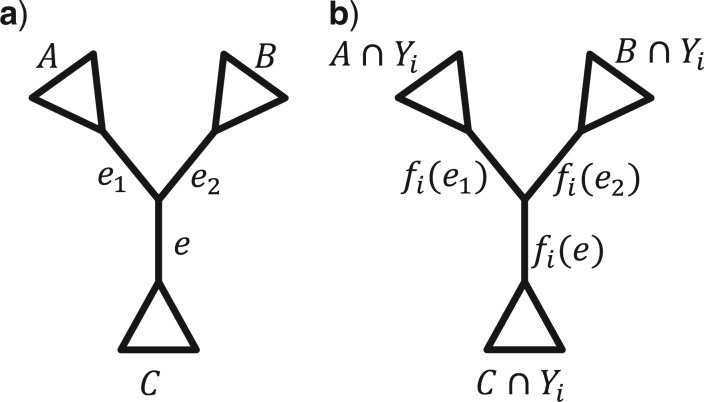
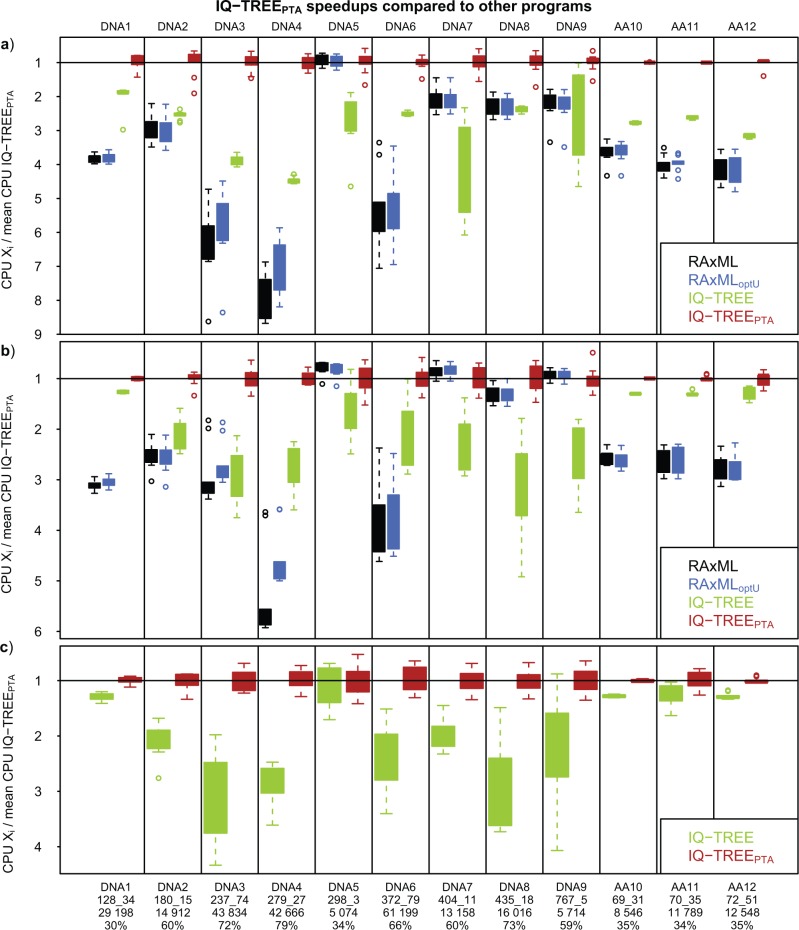
In phylogenomics the analysis of concatenated gene alignments, the so-called supermatrix, is commonly accompanied by the assumption of partition models. Under such models each gene, or more generally partition, is allowed to evolve under its own evolutionary model. Although partition models provide a more comprehensive analysis of supermatrices, missing data may hamper the tree search algorithms due to the existence of phylogenetic (partial) terraces. Here, we introduce the phylogenetic terrace aware (PTA) data structure for the efficient analysis under partition models. In the presence of missing data PTA exploits (partial) terraces and induced partition trees to save computation time. We show that an implementation of PTA in IQ-TREE leads to a substantial speedup of up to 4.5 and 8 times compared with the standard IQ-TREE and RAxML implementations, respectively. PTA is generally applicable to all types of partition models and common topological rearrangements thus can be employed by all phylogenomic inference software.
Overview
The claims and statistics of this paper haven’t been checked yet.
Free: it reads the open-access text and checks the first 5 claims that cite a source we can check. Create a free account to check every claim.
Integrity signals
Registry
Cites
Statistics
Figures



Verification
Claims the paper makes
The claims and statistics of this paper haven’t been checked yet.
Free: it reads the open-access text and checks the first 5 claims that cite a source we can check. Create a free account to check every claim.
Claims other papers make about this one
Each is checked against this paper’s own text: does it say what the citing paper says it does?
The source backs part of the claim, not all of it — or backs it for a different population, condition or comparison.
In the citing paper
“IQ-TREE 2 exploits partial terraces to improve tree search under partitioned models and achieves up to 4.5- and 8-fold speedups compared with IQ-TREE 1 and RAxML, respectively (Chernomor et al. 2016).”
From IQ-TREE 2: New Models and Efficient Methods for Phylogenetic Inference in the Genomic Era (2020) · cites this paper as Chernomor et al. 2016
Experimental — accuracy not yet measuredIn the citing paper
“This finding might not be entirely surprising because IQ-TREE represents the latest development in fast phylogenetic programs and has implemented a novel data structure to facilitate concatenation analysis (Chernomor et al. 2016).”
From Evaluating fast maximum likelihood-based phylogenetic programs using empirical phylogenomic data sets (2018) · cites this paper as Chernomor et al. 2016
Self-check
Percentages, sums and reported differences re-computed from the paper’s own numbers.
The self-check needs the paper’s full text.
Citations
Cites
1 retracted
RETRACTED ARTICLE: TREEFINDER: a powerful graphical analysis environment for molecular phylogenetics
Jobb, G., von Haeseler, A., & Strimmer, K. (2004) · BMC Evolutionary Biology · doi:10.1186/1471-2148-4-18 · Cited by 1,112
RetractedRAxML version 8: a tool for phylogenetic analysis and post-analysis of large phylogenies
Stamatakis, A. (2014) · Bioinformatics · doi:10.1093/bioinformatics/btu033 · Cited by 32,291 · cited 1×
“RAxML (Stamatakis 2014) x x TreeFinder ( IQ-TREE ( Jobb et al. 2004) x x x Nguyen et al. 2015) x x x EL, edge-linked; EUL, which yielded a substantial computation time and memory saving.”
MethodIQ-TREE: A Fast and Effective Stochastic Algorithm for Estimating Maximum-Likelihood Phylogenies
Nguyen, L.-T., Schmidt, H. A., von Haeseler, A., & Minh, B. Q. (2015) · Molecular Biology and Evolution · doi:10.1093/molbev/msu300 · Cited by 26,046 · cited 6×
“RAxML (Stamatakis 2014) x x TreeFinder ( IQ-TREE ( Jobb et al. 2004) x x x Nguyen et al. 2015) x x x EL, edge-linked; EUL, which yielded a substantial computation time and memory saving.”
BackgroundMethodInfluentialSelf-citationGuindon, S., Dufayard, J.-F., Lefort, V., Anisimova, M., Hordijk, W., & Gascuel, O. (2010) · Systematic Biology · doi:10.1093/sysbio/syq010 · Cited by 18,376
RAxML-VI-HPC: maximum likelihood-based phylogenetic analyses with thousands of taxa and mixed models
Stamatakis, A. (2006) · Bioinformatics · doi:10.1093/bioinformatics/btl446 · Cited by 15,582
Lanfear, R., Calcott, B., Ho, S. Y. W., & Guindon, S. (2012) · Molecular Biology and Evolution · doi:10.1093/molbev/mss020 · Cited by 5,732
Zwickl, D. J. (2006) · Texas ScholarWorks (Texas Digital Library) · Cited by 3,530
An Improved General Amino Acid Replacement Matrix
Le, S. Q., & Gascuel, O. (2008) · Molecular Biology and Evolution · doi:10.1093/molbev/msn067 · Cited by 3,127 · cited 1×
“For all partition models we assumed the GTR+ (Lanave et al. 1984; Yang 1994) and the LG+ (Yang 1994; Le and Gascuel 2008) models for all genes in the DNA and the AA alignments, respectively.”
MethodYang, Z. (1994) · Journal of Molecular Evolution · doi:10.1007/bf00160154 · Cited by 2,960 · cited 3×
“1984; Yang 1994) and the LG+ (Yang 1994; Le and Gascuel 2008) models for all genes in the DNA and the AA alignments, respectively.”
BackgroundMethodBroad phylogenomic sampling improves resolution of the animal tree of life
Dunn, C. W., Hejnol, A., Matus, D. Q., Pang, K., Browne, W. E., Smith, S. A., Seaver, E., Rouse, G. W., Obst, M., Edgecombe, G. D., et al. (2008) · Nature · doi:10.1038/nature06614 · Cited by 1,921
Cited by
IQ-TREE 2: New Models and Efficient Methods for Phylogenetic Inference in the Genomic Era
Minh, B. Q., Schmidt, H. A., Chernomor, O., Schrempf, D., Woodhams, M. D., von Haeseler, A., & Lanfear, R. (2020) · Molecular Biology and Evolution · doi:10.1093/molbev/msaa015 · Cited by 16,873
“Moreover, IQ-TREE 2 offers a number of advanced models for phylogenomic data including partitioned models (Lanfear et al. 2012; Chernomor et al. 2016), mixture models (Le et al.”
BackgroundMethodSelf-citationUFBoot2: Improving the Ultrafast Bootstrap Approximation
Hoang, D. T., Chernomor, O., von Haeseler, A., Minh, B. Q., & Vinh, L. S. (2018) · Molecular Biology and Evolution · doi:10.1093/molbev/msx281 · Cited by 10,881
“Figure 2 shows the ML tree inferred with IQTREE under edge-unlinked partition model (Chernomor et al. 2016), which allows separate sets of branch lengths across partitions.”
MethodSelf-citationPhylogenomics reveals the evolutionary timing and pattern of butterflies and moths
Kawahara, A. Y., Plotkin, D., Espeland, M., Meusemann, K., Toussaint, E. F. A., Donath, A., Gimnich, F., Frandsen, P. B., Zwick, A., dos Reis, M., et al. (2019) · Proceedings of the National Academy of Sciences · doi:10.1073/pnas.1907847116 · Cited by 517
Alves, R. J. E., Minh, B. Q., Urich, T., von Haeseler, A., & Schleper, C. (2018) · Nature Communications · doi:10.1038/s41467-018-03861-1 · Cited by 344
Self-citationA Comprehensive and Dated Phylogenomic Analysis of Butterflies
Espeland, M., Breinholt, J., Willmott, K. R., Warren, A. D., Vila, R., Toussaint, E. F. A., Maunsell, S. C., Aduse-Poku, K., Talavera, G., Eastwood, R., et al. (2018) · Current Biology · doi:10.1016/j.cub.2018.01.061 · Cited by 337
“The best partitioning scheme was then used as input for model selection in IQ-TREE 1.4.2 using the parameter TESTNEWONLY, [7, 92].”
InfluentialBurbrink, F. T., Grazziotin, F. G., Pyron, R. A., Cundall, D., Donnellan, S., Irish, F., Keogh, J. S., Kraus, F., Murphy, R. W., Noonan, B., et al. (2020) · Systematic Biology · doi:10.1093/sysbio/syz062 · Cited by 317
“We estimated models of substitution for each locus using ModelFinder (Chernomor et al., 2016; Kalyaanamoorthy et al., 2017), which uses maximum likelihood to fit 22 substitutional models including up to 6 free-rate gamma categories.”
MethodZhang, R., Wang, Y.-H., Jin, J.-J., Stull, G. W., Bruneau, A., Cardoso, D., De Queiroz, L. P., Moore, M. J., Zhang, S.-D., Chen, S.-Y., et al. (2020) · Systematic Biology · doi:10.1093/sysbio/syaa013 · Cited by 273
“We generated phylogenetic trees for each of the 26 concatenated data matrices (Supplementary Table S3 available on Dryad) as well as for individual genes and spacers using IQ-TREE (Nguyen et al. 2015; Chernomor et al. 2016; Hoang et al. 2018).”
MethodFungal Planet description sheets: 320–370
Crous, P. W., Wingfield, M. J., Guarro, J., Hernández-Restrepo, M., Sutton, D. A., Acharya, K., Barber, P. A., Boekhout, T., Dimitrov, R. A., Dueñas, M., et al. (2015) · Persoonia - Molecular Phylogeny and Evolution of Fungi · doi:10.3767/003158515x688433 · Cited by 255
Hu, G., Feng, J., Xiang, X., Wang, J., Salojärvi, J., Liu, C., Wu, Z., Zhang, J., Liang, X., Jiang, Z., et al. (2022) · Nature Genetics · doi:10.1038/s41588-021-00971-3 · Cited by 244
A multigene phylogeny toward a new phylogenetic classification of Leotiomycetes
Johnston, P. R., Quijada, L., Smith, C. A., Baral, H.-O., Hosoya, T., Baschien, C., Pärtel, K., Zhuang, W.-Y., Haelewaters, D., Park, D., et al. (2019) · IMA Fungus · doi:10.1186/s43008-019-0002-x · Cited by 229
Geiser, D. M., Al-Hatmi, A. M. S., Aoki, T., Arie, T., Balmas, V., Barnes, I., Bergstrom, G. C., Bhattacharyya, M. K., Blomquist, C. L., Bowden, R. L., et al. (2021) · Phytopathology® · doi:10.1094/phyto-08-20-0330-le · Cited by 212
Montero‐Pau, J., Blanca, J., Bombarely, A., Ziarsolo, P., Esteras, C., Martí‐Gómez, C., Ferriol, M., Gómez, P., Jamilena, M., Mueller, L., et al. (2018) · Plant Biotechnology Journal · doi:10.1111/pbi.12860 · Cited by 209
“, 2015) using a nucleotide substitution model for each gene (Chernomor et al., 2016).”
MethodInfluentialInsights into the Diversification and Evolution of R2R3-MYB Transcription Factors in Plants
Jiang, C.-K., & Rao, G.-Y. (2020) · Plant Physiology · doi:10.1104/pp.19.01082 · Cited by 203
“The best-fit substitution model and partitioning schemes for each alignment were determined by PartitionFinder2 (Lanfear et al., 2017) and/or modelFinder (Chernomor et al., 2016; Kalyaanamoorthy et al., 2017) according to the Bayesian information criterion.”
MethodFungal Planet description sheets: 1284–1382
Crous, P. W., Osieck, E. R., Jurjević, Ž., Boers, J., van Iperen, A. L., Starink-Willemse, M., Dima, B., Balashov, S. V., Bulgakov, T. S., Johnston, P. R., et al. (2021) · Persoonia - Molecular Phylogeny and Evolution of Fungi · doi:10.3767/persoonia.2021.47.06 · Cited by 194
Incongruence between gene trees and species trees and phylogenetic signal variation in plastid genes
Gonçalves, D. J. P., Simpson, B. B., Ortiz, E. M., Shimizu, G. H., & Jansen, R. K. (2019) · Molecular Phylogenetics and Evolution · doi:10.1016/j.ympev.2019.05.022 · Cited by 191
The Prevalence and Impact of Model Violations in Phylogenetic Analysis
Naser-Khdour, S., Minh, B. Q., Zhang, W., Stone, E. A., & Lanfear, R. (2019) · Genome Biology and Evolution · doi:10.1093/gbe/evz193 · Cited by 184
“(Chernomor et al. 2016), which allows each partition to have its own evolutionary model and edge-linked rate determined by ModelFinder (Kalyaanamoorthy et al.”
BackgroundSelf-citationFrantzeskakis, L., Kracher, B., Kusch, S., Yoshikawa-Maekawa, M., Bauer, S., Pedersen, C., Spanu, P. D., Maekawa, T., Schulze-Lefert, P., & Panstruga, R. (2018) · BMC Genomics · doi:10.1186/s12864-018-4750-6 · Cited by 183
Stull, G. W., Qu, X.-J., Parins-Fukuchi, C., Yang, Y.-Y., Yang, J.-B., Yang, Z.-Y., Hu, Y., Ma, H., Soltis, P. S., Soltis, D. E., et al. (2021) · Nature Plants · doi:10.1038/s41477-021-00964-4 · Cited by 178
Evolution of Termite Symbiosis Informed by Transcriptome-Based Phylogenies
Bucek, A., Šobotník, J., He, S., Shi, M., McMahon, D. P., Holmes, E. C., Roisin, Y., Lo, N., & Bourguignon, T. (2019) · Current Biology · doi:10.1016/j.cub.2019.08.076 · Cited by 169
“We used the edgeproportional partition model [64], and the relaxed hierarchical clustering partition scheme [65].”
MethodBayesian Estimation of Past Population Dynamics in BEAST 1.10 Using the Skygrid Coalescent Model
Hill, V., & Baele, G. (2019) · Molecular Biology and Evolution · doi:10.1093/molbev/msz172 · Cited by 168
“We here specify partitions according to codon position for the coding region of our data set in order to allow different evolutionary rates across codon positions (Chernomor et al. 2016), as specified in the previous section.”
MethodThe critically endangered vaquita is not doomed to extinction by inbreeding depression
Robinson, J. A., Kyriazis, C. C., Nigenda-Morales, S. F., Beichman, A. C., Rojas-Bracho, L., Robertson, K. M., Fontaine, M. C., Wayne, R. K., Lohmueller, K. E., Taylor, B. L., et al. (2022) · Science · doi:10.1126/science.abm1742 · Cited by 148
Zhang, M., Xue, C., Hu, H., Li, J., Xue, Y., Wang, R., Fan, J., Zou, C., Tao, S., Qin, M., et al. (2021) · Nature Communications · doi:10.1038/s41467-021-21378-y · Cited by 165
Zhou, X., Shen, X.-X., Hittinger, C. T., & Rokas, A. (2018) · Molecular Biology and Evolution · doi:10.1093/molbev/msx302 · Cited by 164
“In these studies, RAxML and PhyML showed largely similar performance in identifying trees of higher likelihood scores (Guindon et al. 2010; Money and Whelan 2012), whereas IQ-TREE exhibited improved efficiency compared with both RAxML and PhyML (Nguyen et al. 2015; Chernomor et al. 2016).”
BackgroundMethodResultInfluentialBallesteros, J. A., & Sharma, P. P. (2019) · Systematic Biology · doi:10.1093/sysbio/syz011 · Cited by 162
Evolutionary dynamics of host specialization in wood-decay fungi
Krah, F.-S., Bässler, C., Heibl, C., Soghigian, J., Schaefer, H., & Hibbett, D. S. (2018) · BMC Evolutionary Biology · doi:10.1186/s12862-018-1229-7 · Cited by 159
Phylogenomics of Orchidaceae based on plastid and mitochondrial genomes
Li, Y., Zhang-hai, L., Schuiteman, A., Chase, M. W., Li, J., Huang, W., Hidayat, A., Wu, S., & Jin, X. (2019) · Molecular Phylogenetics and Evolution · doi:10.1016/j.ympev.2019.106540 · Cited by 156
Releasing a sugar brake generates sweeter tomato without yield penalty
Zhang, J., Lyu, H., Chen, J., Cao, X., Du, R., Ma, L., Wang, N., Zhu, Z., Rao, J., Wang, J., et al. (2024) · Nature · doi:10.1038/s41586-024-08186-2 · Cited by 154
Analysis of Spounaviruses as a Case Study for the Overdue Reclassification of Tailed Phages
Barylski, J., Enault, F., Dutilh, B. E., Schuller, M. B. P., Edwards, R. A., Gillis, A., Klumpp, J., Knežević, P., Krupovìč, M., Kuhn, J. H., et al. (2019) · Systematic Biology · doi:10.1093/sysbio/syz036 · Cited by 149
Steenwyk, J. L., Shen, X., Lind, A., Goldman, G. H., & Rokas, A. (2019) · mBio · doi:10.1128/mbio.00925-19 · Cited by 144
“More specifically, we created a nexus-format partition file that was used as input with the “-spp” parameter, which allows each gene partition in the data matrix to have its set of evolutionary rates (Chernomor et al. 2016).”
MethodNeoproterozoic origin and multiple transitions to macroscopic growth in green seaweeds
Del Cortona, A., Jackson, C. J., Bucchini, F., Van Bel, M., D’hondt, S., Škaloud, P., Delwiche, C. F., Knoll, A. H., Raven, J. A., Verbruggen, H., et al. (2020) · Proceedings of the National Academy of Sciences · doi:10.1073/pnas.1910060117 · Cited by 134
“Maximum-likelihood (ML) supermatrix analyses were performed using IQtree with two settings: 1) A gene-wise partitioned analysis (84) was performed, assigning the best substitution model inferred to each partition; 2) an analysis using mixture models was performed using an LG+F+G plus a C20-profile mixture model of sub…”
MethodRedmond, A. K., & McLysaght, A. (2021) · Nature Communications · doi:10.1038/s41467-021-22074-7 · Cited by 139
Fishbein, M., Livshultz, T., Straub, S. C. K., Simões, A. O., Boutte, J., McDonnell, A., & Foote, A. (2018) · American Journal of Botany · doi:10.1002/ajb2.1067 · Cited by 128
Fungal Planet description sheets: 1478–1549
Crous, P. W., Osieck, E. R., Shivas, R. G., Tan, Y. P., Bishop-Hurley, S. L., Esteve-Raventós, F., Larsson, E., Luangsa-ard, J. J., Pancorbo, F., Balashov, S. V., et al. (2023) · Persoonia - Molecular Phylogeny and Evolution of Fungi · doi:10.3767/persoonia.2023.50.05 · Cited by 128
Phytophthora : taxonomic and phylogenetic revision of the genus
Abad, Z. G., Burgess, T. I., Bourret, T. B., Bensch, K., Cacciola, S. O., Scanu, B., Mathew, R., Kasiborski, B., Srivastava, S., Kageyama, K., et al. (2023) · Studies in Mycology · doi:10.3114/sim.2023.106.05 · Cited by 126
Nuclear protein phylogenies support the monophyly of the three bryophyte groups (Bryophyta Schimp.)
Sousa, F., Foster, P. G., Donoghue, P. C. J., Schneider, H., & Cox, C. J. (2018) · New Phytologist · doi:10.1111/nph.15587 · Cited by 125
“To test the effect of data partitioning under maximum likelihood, genes were grouped into partitions using the ‘greedy’ algorithm in I QTREE (M ULTICORE v.1.5.3; Nguyen et al. , 2015; Chernomor et al. , 2016).”
MethodInfluentialLow, S. J., Džunková, M., Chaumeil, P.-A., Parks, D. H., & Hugenholtz, P. (2019) · Nature Microbiology · doi:10.1038/s41564-019-0448-z · Cited by 127
Phylogeny and classification of Odonata using targeted genomics
Bybee, S., Kalkman, V. J., Erickson, R. J., Frandsen, P. B., Breinholt, J. W., Suvorov, A., Dijkstra, K. B., Cordero‐Rivera, A., Skevington, J. H., Abbott, J. C., et al. (2021) · Molecular Phylogenetics and Evolution · doi:10.1016/j.ympev.2021.107115 · Cited by 124
Simon, S., Letsch, H. O., Bank-Aubin, S., Buckley, T. R., Donath, A., Liu, S., Machida, R., Meusemann, K., Misof, B. Y., Podsiadłowski, L., et al. (2019) · Frontiers in Ecology and Evolution · doi:10.3389/fevo.2019.00345 · Cited by 123
Laraba, I., McCormick, S. P., Vaughan, M. M., Geiser, D. M., & O'Donnell, K. L. (2021) · PLoS ONE · doi:10.1371/journal.pone.0245037 · Cited by 123
“Using the Bayesian information criterion scores, ModelFinder [68] identified TIMe+I+G4, TNe+G4, and TIM2e+G4, respectively, as the best-fit models of molecular evolution for the RPB1, RPB2, and TEF1 partitions [69].”
MethodPhylogeny of Anophelinae using mitochondrial protein coding genes
Foster, P. G., Oliveira, T. M. P., Bergo, E. S., Conn, J. E., Sant’Ana, D. C., Nagaki, S. S., Nihei, S. S., Lamas, C. J. E., González, C. R., Moreira, C. C., et al. (2017) · Royal Society Open Science · doi:10.1098/rsos.170758 · Cited by 118
Maurin, O., Anest, A., Bellot, S., Biffin, E., Brewer, G. E., Charles‐Dominique, T., Cowan, R. S., Dodsworth, S., Epitawalage, N., Gallego, B., et al. (2021) · American Journal of Botany · doi:10.1002/ajb2.1699 · Cited by 118
Comparative genomics reveals the origin of fungal hyphae and multicellularity
Kiss, E., Hegedüs, B., Virágh, M., Varga, T., Merényi, Z., Kószó, T., Bálint, B., Prasanna, A. N., Krizsán, K., Kocsubé́, S., et al. (2019) · Nature Communications · doi:10.1038/s41467-019-12085-w · Cited by 117
“Signaling Actin cytoskeleton Cell wall biogenesis/ remodeling Microtubules Vesicle transport (107) Actin cytoskeleton (55)”
BackgroundHigher-Level Phylogeny and Reclassification of Lampyridae (Coleoptera: Elateroidea)
Martin, G. J., Stanger‐Hall, K. F., Branham, M. A., da Silveira, L. F. L., Lower, S. E., Hall, D. W., Li, X., Lemmon, A. R., Lemmon, E. M., & Bybee, S. (2019) · Insect Systematics and Diversity · doi:10.1093/isd/ixz024 · Cited by 117
A congruent topology for deep gastropod relationships
Cunha, T. J., & Giribet, G. (2019) · Proceedings of the Royal Society B Biological Sciences · doi:10.1098/rspb.2018.2776 · Cited by 114
Wibberg, D., Stadler, M., Lambert, C. R., Bunk, B., Spröer, C., Rückert, C., Kalinowski, J., Cox, R. J., & Kuhnert, E. (2020) · Fungal Diversity · doi:10.1007/s13225-020-00447-5 · Cited by 113
A critical re-evaluation of multilocus sequence typing (MLST) efforts in Wolbachia
Bleidorn, C., & Gerth, M. (2017) · FEMS Microbiology Ecology · doi:10.1093/femsec/fix163 · Cited by 111
Imhoff, J. F., Rahn, T., Künzel, S., & Neulinger, S. C. (2018) · Frontiers in Microbiology · doi:10.3389/fmicb.2017.02679 · Cited by 110
“4.4 (Nguyen et al., 2014), using separate substitution models for PufL and PufM alignment parts (so-called partition models, Chernomor et al., 2016).”
MethodInfluentialAllio, R., Nabholz, B., Wanke, S., Chomicki, G., Pérez-Escobar, O. A., Cotton, A. M., Clamens, A., Kergoat, G. J., Sperling, F. A. H., & Condamine, F. L. (2021) · Nature Communications · doi:10.1038/s41467-020-20507-3 · Cited by 110
Two Basidiomycete Fungi in the Cortex of Wolf Lichens
Tuovinen, V., Ekman, S., Thor, G., Vanderpool, D., Spribille, T., & Johannesson, H. (2019) · Current Biology · doi:10.1016/j.cub.2018.12.022 · Cited by 108
Primate phylogenomics uncovers multiple rapid radiations and ancient interspecific introgression
Vanderpool, D., Minh, B. Q., Lanfear, R., Hughes, D., Murali, S. C., Harris, R. A., Raveendran, M., Muzny, D. M., Hibbins, M. S., Williamson, R. J., et al. (2020) · PLoS Biology · doi:10.1371/journal.pbio.3000954 · Cited by 106
“This resulted in 1,730 loci for the full analysis (see S8 IQ-TREE v2-rc1 was used with all 1,730 aligned loci to estimate a maximum likelihood concatenated tree with an edge-linked, proportional-partition model, and 1,000 ultrafast boot-strap replicates [132,133].”
MethodSelf-citationA phylogenomic analysis of Nepenthes (Nepenthaceae)
Murphy, B., Forest, F., Barraclough, T. G., Rosindell, J., Bellot, S., Cowan, R. S., Golos, M. R., Jebb, M., & Cheek, M. (2019) · Molecular Phylogenetics and Evolution · doi:10.1016/j.ympev.2019.106668 · Cited by 103
Whole-genome analysis of giraffe supports four distinct species
Coimbra, R. T. F., Winter, S., Kumar, V., Koepfli, K.-P., Gooley, R. M., Dobrynin, P., Fennessy, J., & Janke, A. (2021) · Current Biology · doi:10.1016/j.cub.2021.04.033 · Cited by 102
A reliable Epstein-Barr Virus classification based on phylogenomic and population analyses
Zanella, L., Riquelme, I., Buchegger, K., Abanto, M., Ili, C., & Brebi, P. (2019) · Scientific Reports · doi:10.1038/s41598-019-45986-3 · Cited by 101
Gene flow creates a mirage of cryptic species in a Southeast Asian spotted stream frog complex
Chan, K. O., Hutter, C. R., Wood, P. L., Grismer, L. L., Das, I., & Brown, R. M. (2020) · Molecular Ecology · doi:10.1111/mec.15603 · Cited by 101
New data from Monoplacophora and a carefully-curated dataset resolve molluscan relationships
Kocot, K. M., Poustka, A. J., Stöger, I., Halanych, K. M., & Schrödl, M. (2020) · Scientific Reports · doi:10.1038/s41598-019-56728-w · Cited by 100
Manganese oxides in Phragmites rhizosphere accelerates ammonia oxidation in constructed wetlands
Wang, D., Lin, H., Ma, Q., Bai, Y., & Qu, J. (2021) · Water Research · doi:10.1016/j.watres.2021.117688 · Cited by 100
Lemer, S., Bieler, R., & Giribet, G. (2019) · Proceedings of the Royal Society B Biological Sciences · doi:10.1098/rspb.2018.2684 · Cited by 100
“Additionally, maximum-likelihood inference was also computed for Matrices 1 , 3i and 4i with partitioned data using IQ TREE 1.6.1 [38–40].”
InfluentialOntano, A. Z., Gainett, G., Aharon, S., Ballesteros, J. A., Benavides, L. R., Corbett, K. F., Gavish‐Regev, E., Harvey, M. S., Monsma, S. A., Santibáñez‐López, C. E., et al. (2021) · Molecular Biology and Evolution · doi:10.1093/molbev/msab038 · Cited by 99
“8 (Nguyen et al. 2015; Chernomor et al. 2016), coupled with model selection of substitution and rate heterogeneity based on the Bayesian Information Criterion (Kalyaanamoorthy et al.”
MethodAspergillus is monophyletic: Evidence from multiple gene phylogenies and extrolites profiles
Kocsubé́, S., Perrone, G., Magistà, D., Houbraken, J., Varga, J., Szigeti, G., Hubka, V., Hong, S., Frisvad, J. C., & Samson, R. A. (2016) · Studies in Mycology · doi:10.1016/j.simyco.2016.11.006 · Cited by 97
“4.1) (Minh et al. 2013, Nguyen et al. 2015, Chernomor et al. 2016) for UFML (Ultra Fast Maximul Likelihood) support (Ibs).”
BackgroundInfluentialFragoso-Martínez, I., Martínez-Gordillo, M. J., Salazar, G. A., Sazatornil, F. D., Jenks, A. A., García-Peña, M. D. R., Barrera-Aveleida, G. B., Benitez‐Vieyra, S., Magallón, S., Cornejo‐Tenorio, G., et al. (2017) · Plant Systematics and Evolution · doi:10.1007/s00606-017-1445-4 · Cited by 96
“The matrices were uploaded implementing the ‘auto’ model selection option, which evaluates 22 substitution models per partition (Chernomor et al. 2016).”
MethodSolomon, R., Wein, T., Levy, B., Eshed, S., Dror, R., Reiss, V., Zehavi, T., Furman, O., Mizrahi, I., & Jami, E. (2021) · The ISME Journal · doi:10.1038/s41396-021-01170-y · Cited by 95
“The resulting multiple sequence alignment was used for the reconstruction of a maximum-likelihood phylogenetic tree using IQTree [53], with LG model and 1000 bootstrap replicates.”
MethodUsing Core Genome Alignments To Assign Bacterial Species
Chung, M. C., Munro, J. B., Tettelin, H., & Hotopp, J. C. D. (2018) · mSystems · doi:10.1128/msystems.00236-18 · Cited by 95
“For every protein alignment, the best model of evolution was identified using ModelFinder (73), and phylogenomic trees were constructed using an edge-proportional partition model (80) with IQ-TREE v1.”
MethodHedin, M. C., Derkarabetian, S., Alfaro, A., Ramírez, M. J., & Bond, J. E. (2019) · PeerJ · doi:10.7717/peerj.6864 · Cited by 93
A second view on the evolution of flight in stick and leaf insects (Phasmatodea)
Bank-Aubin, S., & Bradler, S. (2022) · BMC Ecology and Evolution · doi:10.1186/s12862-022-02018-5 · Cited by 90
Toward a Stable Global Noctuidae (Lepidoptera) Taxonomy
Keegan, K. L., Rota, J., Zahiri, R., Zilli, A., Wahlberg, N., Schmidt, C., Lafontaine, J. D., Goldstein, P. Z., & Wagner, D. L. (2021) · Insect Systematics and Diversity · doi:10.1093/isd/ixab005 · Cited by 89
Mapping glycoprotein structure reveals Flaviviridae evolutionary history
Mifsud, J. C. O., Lytras, S., Oliver, M. R., Toon, K., Costa, V. A., Holmes, E. C., & Grove, J. (2024) · Nature · doi:10.1038/s41586-024-07899-8 · Cited by 65
“…acid homology by combining the corresponding pairs of 3Di and amino acid MSAs and performing a partition model IQ-TREE 2 phylogenetic inference 104 , in which the two partitions correspond to the 3Di and the amino acid MSAs and each partition uses the best-fit substitution model of its…”
MethodVyskočilová, S., Tay, W. T., van Brunschot, S., Seal, S., & Colvin, J. (2018) · Scientific Reports · doi:10.1038/s41598-018-29305-w · Cited by 88
Shastri, J. S., Parikh, S., Aggarwal, V., Agrawal, S. R., Chatterjee, N., Shah, R. J., Devi, P., Mehta, P., & Pandey, R. (2021) · Frontiers in Medicine · doi:10.3389/fmed.2021.737007 · Cited by 88
Characterization of Aspergillus niger Isolated from the International Space Station
Romsdahl, J., Blachowicz, A., Chiang, A. J., Singh, N. K., Stajich, J., Kalkum, M., Venkateswaran, K. J., & Wang, C. C. C. (2018) · mSystems · doi:10.1128/msystems.00112-18 · Cited by 87
Ying, H., Cooke, I., Sprungala, S., Wang, W., Hayward, D. C., Tang, Y., Huttley, G. A., Ball, E. E., Forêt, S., & Miller, D. J. (2018) · Genome biology · doi:10.1186/s13059-018-1552-8 · Cited by 88
“The same topology was obtained using IQ-TREE built-in amino acid models under partition mode (Additional file 3: Figure S4) [35, 36].”
MethodKohli, M. K., Letsch, H. O., Greve, C., Béthoux, O., Deregnaucourt, I., Liu, S., Zhou, X. Y., Donath, A., Mayer, C., Podsiadłowski, L., et al. (2021) · iScience · doi:10.1016/j.isci.2021.103324 · Cited by 86
“, 2015; Chernomor et al., 2016) using the best partition scheme and selected models. We applied the edge-proportional partition model allowing different evolutionary rates across partitions (option –ssp). We performed 50 independent tree searches with random starting trees, using the median approximation for Gamma rat…”
InfluentialBukhari, K., Mulley, G., Gulyaeva, A. A., Zhao, L., Shu, G., Jiang, J., & Neuman, B. W. (2018) · Virology · doi:10.1016/j.virol.2018.08.010 · Cited by 86
“Phylogeny was reconstructed by IQ Tree 1.5.5 using a partition model where the evolutionary model for each of the five domains was selected by ModelFinder (Chernomor et al., 2016; Kalyaanamoorthy et al., 2017; Nguyen et al., 2015) .”
MethodInfluentialWang, H.-C., Susko, E., & Roger, A. J. (2019) · Systematic Biology · doi:10.1093/sysbio/syz021 · Cited by 85
Fungal Planet description sheets: 1550–1613
Crous, P. W., Costa, M. M., Kandemir, H., Vermaas, M., Vu, D., Zhao, L., Arumugam, E., Flakus, A., Jurjević, Ž., Kaliyaperumal, M., et al. (2023) · Persoonia - Molecular Phylogeny and Evolution of Fungi · doi:10.3767/persoonia.2023.51.08 · Cited by 85
Adding leaves to the Lepidoptera tree: capturing hundreds of nuclear genes from old museum specimens
Mayer, C., Dietz, L., Call, E., Kukowka, S., Martín, S., & Espeland, M. (2021) · Systematic Entomology · doi:10.1111/syen.12481 · Cited by 84
“Partition merging and substitution models selection was done using ModelFinder (Chernomor et al., 2016; Kalyaanamoorthy et al., 2017) in IQ-TREE 2.”
MethodInfluentialCopilaş‐Ciocianu, D., Sídorov, D., & Gontcharov, A. A. (2019) · Organisms Diversity & Evolution · doi:10.1007/s13127-019-00401-7 · Cited by 84
“The ML analysis was performed on the W-IQ-TREE web server (http://iqtree.cibiv.univie.ac.at/; (Trifinopoulos et al. 2016) which implements the edge-linked partition model in IQ-TREE 1.6 (Chernomor et al. 2016; Nguyen et al. 2015).”
MethodInfluentialTang, K. L., Stiassny, M. L. J., Mayden, R. L., & DeSalle, R. (2021) · Ichthyology & Herpetology · doi:10.1643/i2020105 · Cited by 82
Smith, B. T., Merwin, J. T., Provost, K. L., Thom, G., Brumfield, R. T., Ferreira, M., Mauck, W. M., Moyle, R. G., Wright, T. F., & Joseph, L. (2022) · Systematic Biology · doi:10.1093/sysbio/syac055 · Cited by 81
Genomic data provide insights into the classification of extant termites
Hellemans, S., Rocha, M. M., Wang, M., Arias, J. R., Aanen, D. K., Bagnères, A., Buček, A., Carrijo, T. F., Chouvenc, T., Cuezzo, C., et al. (2024) · Nature Communications · doi:10.1038/s41467-024-51028-y · Cited by 83
“The models were either applied to the unpartitioned supermatrix or the loci-partitioned supermatrix by examining the top 10% of partitioning schemes using the fast relaxed clustering approach 110,111 .”
The coevolution of fungus-ant agriculture
Schultz, T. R., Sosa‐Calvo, J., Kweskin, M., Lloyd, M. W., Dentinger, B. T. M., Kooij, P. W., Vellinga, E. C., Rehner, S. A., Rodrigues, A. L., Montoya, Q. V., et al. (2024) · Science · doi:10.1126/science.adn7179 · Cited by 81
The DNA methylation landscape of giant viruses
Jeudy, S., Rigou, S., Alempic, J.-M., Claverie, J., Abergel, C., & Legendre, M. (2020) · Nature Communications · doi:10.1038/s41467-020-16414-2 · Cited by 81
Rapid Phenotypic and Metabolomic Domestication of Wild Penicillium Molds on Cheese
Bodinaku, I., Shaffer, J., Connors, A. B., Steenwyk, J. L., Biango‐Daniels, M. N., Kastman, E. K., Rokas, A., Robbat, A., & Wolfe, B. E. (2019) · mBio · doi:10.1128/mbio.02445-19 · Cited by 80
Multiple Introductions of SARS-CoV-2 Alpha and Delta Variants into White-Tailed Deer in Pennsylvania
Marques, A. D., Sherrill-Mix, S. A., Everett, J. K., Adhikari, H., Reddy, S. G., Ellis, J. C., Zeliff, H., Greening, S. S., Cannuscio, C. C., Strelau, K. M., et al. (2022) · mBio · doi:10.1128/mbio.02101-22 · Cited by 80
“12) was used to infer a tree using maximum-likelihood methods using 1,000 bootstrap replicates (55).”
MethodGenomic adaptations to chemosymbiosis in the deep-sea seep-dwelling tubeworm Lamellibrachia luymesi
Li, Y., Tassia, M. G., Waits, D. S., Bogantes, V. E., David, K. T., & Halanych, K. M. (2019) · BMC Biology · doi:10.1186/s12915-019-0713-x · Cited by 79
Data Types and the Phylogeny of Neoaves
Braun, E. L., & Kimball, R. T. (2021) · Birds · doi:10.3390/birds2010001 · Cited by 79
Antonelli, A., Clarkson, J. J., Kainulainen, K., Maurin, O., Brewer, G. E., Davis, A. P., Epitawalage, N., Goyder, D. J., Livshultz, T., Persson, C., et al. (2021) · American Journal of Botany · doi:10.1002/ajb2.1697 · Cited by 79
Lee, C., Choi, I., Cardoso, D., de Lima, H. C., de Queiroz, L. P., Wojciechowski, M. F., Jansen, R. K., & Ruhlman, T. A. (2021) · The Plant Journal · doi:10.1111/tpj.15351 · Cited by 78
Microhabitat change drives diversification in pholcid spiders
Eberle, J., Dimitrov, D., Valdez‐Mondragón, A., & Huber, B. A. (2018) · BMC Evolutionary Biology · doi:10.1186/s12862-018-1244-8 · Cited by 77
“multiple times [76, 77] with two different algorithms: RAxML v.”
MethodIntegrative taxonomy reveals hidden species within a common fungal parasite of ladybirds
Haelewaters, D., Kesel, A. D., & Pfister, D. H. (2018) · Scientific Reports · doi:10.1038/s41598-018-34319-5 · Cited by 77
The evolution of social parasitism in Formica ants revealed by a global phylogeny
Borowiec, M. L., Cover, S. P., & Rabeling, C. (2021) · Proceedings of the National Academy of Sciences · doi:10.1073/pnas.2026029118 · Cited by 76
“These models were then used for by-locus partitioned analysis of concatenated data matrix (38).”
MethodSpread and Evolution of Respiratory Syncytial Virus A Genotype ON1, Coastal Kenya, 2010–2015
Otieno, J. R., Kamau, E., Agoti, C. N., Lewa, C., Otieno, G. P., Bett, A., Ngama, M., Cane, P. A., & Nokes, D. J. (2017) · Emerging infectious diseases · doi:10.3201/eid2302.161149 · Cited by 76
Reanalyzing the Palaeoptera problem – The origin of insect flight remains obscure
Simon, S., Blanke, A., & Meusemann, K. (2018) · Arthropod Structure & Development · doi:10.1016/j.asd.2018.05.002 · Cited by 75
Chen, H., Lahey, Z. J., Talamas, E. J., Valerio, A., Popovici, O. A., Musetti, L., Klompen, H., Polaszek, A., Masner, L., Austin, A. D., et al. (2021) · Systematic Entomology · doi:10.1111/syen.12511 · Cited by 75
“The supermatrix was partitioned by gene (Chernomor et al., 2016), and the best protein substitution model for each partition was estimated with modelfinder (Kalyaanamoorthy et al., 2017). modelfinder was run with the following command line options: -spp [partition file], −st AA, −m MF, −msub…”
MethodInfluentialWu, F., Speth, D. R., Philosof, A., Crémière, A., Narayanan, A., Barco, R. A., Connon, S. A., Amend, J. P., Antoshechkin, I. A., & Orphan, V. J. (2022) · Nature Microbiology · doi:10.1038/s41564-021-01039-y · Cited by 71
The Rab5 effector FERRY links early endosomes with mRNA localization
Schuhmacher, J. S., tom Dieck, S., Christoforidis, S., Landerer, C., Davila Gallesio, J., Hersemann, L., Seifert, S., Schäfer, R., Giner, A., Toth-Petroczy, A., et al. (2023) · Molecular Cell · doi:10.1016/j.molcel.2023.05.012 · Cited by 67
“The maximum likelihood (ML) tree was estimated using IQTree(58) whereby each protein was represented as a partition.(59) TheWhelan andGoldmanmatrix(60) withMLoptimized amino acid frequencies (WAG+FO) was used as commonmodel for all partitions.”
MethodUneven Missing Data Skew Phylogenomic Relationships within the Lories and Lorikeets
Smith, B. T., Mauck, W. M., Benz, B. W., & Andersen, M. J. (2020) · Genome Biology and Evolution · doi:10.1093/gbe/evaa113 · Cited by 67
Ancient Demographics Determine the Effectiveness of Genetic Purging in Endangered Lizards
Xie, H., Liang, X., Chen, Z., Li, W.-M., Mi, C., Li, M., Wu, Z., Zhou, X., & Du, W. (2021) · Molecular Biology and Evolution · doi:10.1093/molbev/msab359 · Cited by 74
Inflammatory microbes and genes as potential biomarkers of Parkinson’s disease
Nie, S., Wang, J., Deng, Y., Ye, Z., & Ge, Y. (2022) · npj Biofilms and Microbiomes · doi:10.1038/s41522-022-00367-z · Cited by 72
Phylogenomics reveals an extensive history of genome duplication in diatoms (Bacillariophyta)
Parks, M., Nakov, T., Ruck, E. C., Wickett, N. J., & Alverson, A. J. (2018) · American Journal of Botany · doi:10.1002/ajb2.1056 · Cited by 72
Insect Mitochondrial Genomics: A Decade of Progress
Cameron, S. L. (2024) · Annual Review of Entomology · doi:10.1146/annurev-ento-013024-015553 · Cited by 71
Metadata
- Authors
- Chernomor, O., von Haeseler, A., & Minh, B. Q.
- Affiliations
- University of Vienna (AT)
- ORCID
- Chernomor, Olga
- Venue
- Systematic Biology
- Publisher
- Oxford University Press (OUP)
- Published
- 2016-04-26
- Volume
- 65
- Issue
- 6
- Pages
- 997-1008
- ISSN
- 1063-5157 (ISSN-L)
- 1076-836X
- PMC
- PMC5066062
- OpenAlex
- W2344940607
- Cited by
- 2,252
- References
- 41
- Citations by year
- 2026: 240 · 2025: 285 · 2024: 328 · 2023: 322 · 2022: 289 · 2021: 331 · 2020: 214 · 2019: 134 · 2018: 75 · 2017: 31 · 2016: 3
- FWCI
- 42.08
- Type
- journal article
- Language
- en
- Open access
- hybrid
- doi.org
- Licence
- cc-by-nc
- Locations
- Systematic Biology (publishedVersion, cc-by-nc)
- PubMed Central (publishedVersion, cc-by-nc)
- PubMed (publishedVersion)
- HighWire Press Open Archive (submittedVersion)
- Funders
- Austrian Science Fund (I-2805-B29, I-1824-B22)
- Topics
- Life Sciences › Biochemistry, Genetics and Molecular Biology › Molecular Biology › Genomics and Phylogenetic Studies
- Life Sciences › Biochemistry, Genetics and Molecular Biology › Molecular Biology › RNA and protein synthesis mechanisms
- Life Sciences › Agricultural and Biological Sciences › Ecology, Evolution, Behavior and Systematics › Plant Diversity and Evolution
- Keywords
- partition model, supermatrix, missing data, phylogenetic tree search, IQ-TREE, RAxML, data structures
- MeSH terms
- Algorithms, Classification, Biological Evolution, Models, Biological, Phylogeny, Software, Sequence Analysis, DNA
About these checks
Registry, retraction, Cites and statistics results are computed, not judged, with one exception: a printed reference that no index lists is read once by a model before it counts as a citation error. Claims are extracted by a model and kept only when their quote appears verbatim in the text; each cited source is then checked, with a model’s help, for whether it says what the claim relies on. Those verdicts can be wrong — read the claim’s quote and the cited source before relying on one.
Statistics and arithmetic are recomputed, not judged.
Confidence bands are shown only for fields calibrated on our annotated test set. None is calibrated yet, so no band is shown.
What counts as a claim ›How we measure confidence ›How we check this ›
Are you an author, or do you see a problem with this page? Request a review
Data sources
Bibliographic data: Semantic Scholar, OpenAlex, Crossref.
Contains information from the Semantic Scholar Academic Graph Datasets, made available under the ODC Attribution License (ODC-BY 1.0).
Semantic Scholar’s data is described in: Kinney, R., et al. (2023). The Semantic Scholar Open Data Platform. arXiv:2301.10140.
