

The DOI matches its Crossref record; 33 of the 34 references it cites were found in a registry or an index.
Neuropathic pain: an updated grading system for research and clinical practice
Open accessAbstract
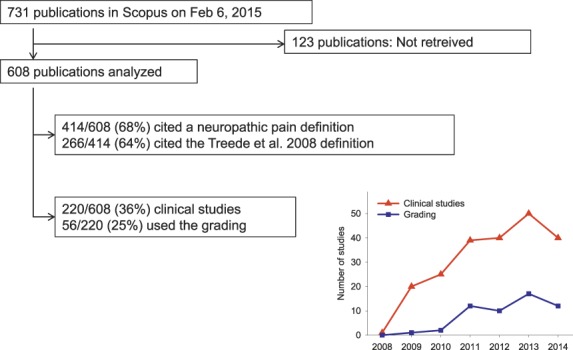
The redefinition of neuropathic pain as “pain arising as a direct consequence of a lesion or disease affecting the somatosensory system,” which was suggested by the International Association for the Study of Pain (IASP) Special Interest Group on Neuropathic Pain (NeuPSIG) in 2008, has been widely accepted. In contrast, the proposed grading system of possible, probable, and definite neuropathic pain from 2008 has been used to a lesser extent. Here, we report a citation analysis of the original NeuPSIG grading paper of 2008, followed by an analysis of its use by an expert panel and recommendations for an improved grading system. As of February, 2015, 608 eligible articles in Scopus cited the paper, 414 of which cited the neuropathic pain definition. Of 220 clinical studies citing the paper, 56 had used the grading system. The percentage using the grading system increased from 5% in 2009 to 30% in 2014. Obstacles to a wider use of the grading system were identified, including (1) questions about the relative significance of confirmatory tests, (2) the role of screening tools, and (3) uncertainties about what is considered a neuroanatomically plausible pain distribution. Here, we present a revised grading system with an adjusted order, better reflecting clinical practice, improvements in the specifications, and a word of caution that even the “definite” level of neuropathic pain does not always indicate causality. In addition, we add a table illustrating the area of pain and sensory abnormalities in common neuropathic pain conditions and propose areas for further research.
Overview
The claims and statistics of this paper haven’t been checked yet.
Run the check — free, no account needed. It reads the open-access text and checks the sources it cites.
Integrity signals
Registry
Cites
Statistics
Figures
Verification
Claims the paper makes
The claims and statistics of this paper haven’t been checked yet.
Run the check — free, no account needed. It reads the open-access text and checks the sources it cites.
Claims other papers make about this one
Each is checked against this paper’s own text: does it say what the citing paper says it does?
The source backs part of the claim, not all of it — or backs it for a different population, condition or comparison.
In the citing paper
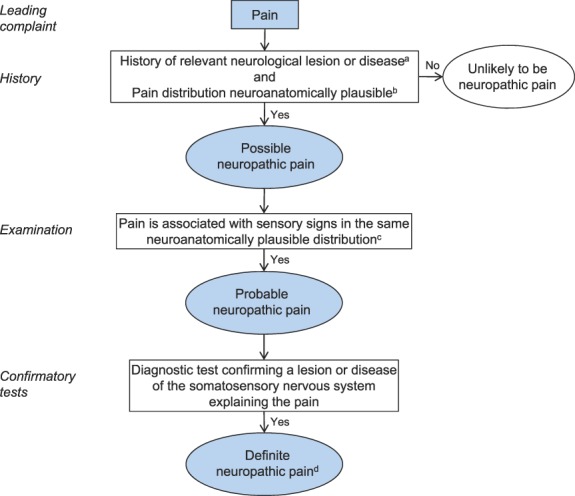
“To indicate probable neuropathic pain, pain must also be associated with sensory abnormalities (i.e., clinical signs such as allodynia and/or hyperalgesia) in the same neuroanatomical plausible distribution (Finnerup et al. 2016; Schmid et al. 2023).”
From The Prevalence of Neuropathic Pain in Multiple Sclerosis—A Systematic Review and Meta‐Analysis Using the NeuPSIG Algorithm (2026) · cites this paper as Finnerup et al. 2016
Experimental — accuracy not yet measuredThe cited source says what the claim attributes to it.
In the citing paper
“Lastly, to establish definite neuropathic pain, additional objective confirmation of a lesion or disease in the somatosensory nervous system that may explain the pain is required (Finnerup et al. 2016; Schmid et al. 2023).”
From The Prevalence of Neuropathic Pain in Multiple Sclerosis—A Systematic Review and Meta‐Analysis Using the NeuPSIG Algorithm (2026) · cites this paper as Finnerup et al. 2016
The cited source says what the claim attributes to it.
In the citing paper
“To indicate possible neuropathic pain, patients must meet two criteria. First, the medical history should prompt a possible explanation for neuropathic pain, and patients should present with clinical symptoms. Second, the experienced pain distribution must be neuroanatomically plausible (i.e., the experienced pain is likely to correspond to the patient's neurological damage) (Finnerup et al. 2016;”
From The Prevalence of Neuropathic Pain in Multiple Sclerosis—A Systematic Review and Meta‐Analysis Using the NeuPSIG Algorithm (2026) · cites this paper as Finnerup et al. 2016
The cited source says what the claim attributes to it.
In the citing paper
“the Neuropathic Pain Special Interest Group (NeuPSIG) has developed a grading system for the identification of neuropathic pain (Finnerup et al. 2016; Schmid et al. 2023)”
From The Prevalence of Neuropathic Pain in Multiple Sclerosis—A Systematic Review and Meta‐Analysis Using the NeuPSIG Algorithm (2026) · cites this paper as Finnerup et al. 2016
The cited source says what the claim attributes to it.
In the citing paper
“Importantly, a possible diagnosis cannot replace the probable and definite certainty provided by NeuPSIG in clinical practice (Finnerup et al. 2016).”
From The Prevalence of Neuropathic Pain in Multiple Sclerosis—A Systematic Review and Meta‐Analysis Using the NeuPSIG Algorithm (2026) · cites this paper as Finnerup et al. 2016
The cited source says what the claim attributes to it.
In the citing paper
“Importantly, the algorithms used across diagnostic certainty levels do not yield a definitive diagnosis of neuropathic pain (i.e., not to be confused with definite neuropathic pain). Instead, the grading system evaluate the probability that the experienced pain is caused by neurological damage, with increasing certainty as more criteria are met (Finnerup et al. 2016).”
From The Prevalence of Neuropathic Pain in Multiple Sclerosis—A Systematic Review and Meta‐Analysis Using the NeuPSIG Algorithm (2026) · cites this paper as Finnerup et al. 2016
The cited source says what the claim attributes to it.
In the citing paper
“Given these considerations and in line with existing guidelines, the establishment of a probable diagnosis of neuropathic pain may be adequate for prompting analgesic treatments in pwMS, provided that the patient has a valid diagnosis of MS (Finnerup et al. 2016; Treede et al. 2019).”
From The Prevalence of Neuropathic Pain in Multiple Sclerosis—A Systematic Review and Meta‐Analysis Using the NeuPSIG Algorithm (2026) · cites this paper as Finnerup et al. 2016
The cited source says what the claim attributes to it.
In the citing paper
“Hence, achieving definite diagnostic certainty does not constitute absolute proof of central neuropathic pain but should rather be interpreted as a strong indication within the context of best clinical practice (Finnerup et al. 2016).”
From The Prevalence of Neuropathic Pain in Multiple Sclerosis—A Systematic Review and Meta‐Analysis Using the NeuPSIG Algorithm (2026) · cites this paper as Finnerup et al. 2016
Self-check
Percentages, sums and reported differences re-computed from the paper’s own numbers.
The self-check needs the paper’s full text.
Citations
Cites
Central sensitization: implications for the diagnosis and treatment of pain
Woolf, C. J. (2011) · Pain · doi:10.1016/j.pain.2010.09.030 · Cited by 4,771 · cited 1×
“Because of central sensitization phenomena, the areas of allodynia and hyperalgesia may extend beyond the innervation territory.(35) Table 1”
BackgroundPharmacotherapy for neuropathic pain in adults: a systematic review and meta-analysis
Finnerup, N. B., Attal, N., Haroutounian, S., McNicol, E., Baron, R., Dworkin, R. H., Gilron, I., Haanpää, M., Hansson, P., Jensen, T. S., et al. (2015) · The Lancet Neurology · doi:10.1016/s1474-4422(14)70251-0 · Cited by 3,980
Self-citationBouhassira, D., Attal, N., Alchaar, H., Boureau, F., Brochet, B., Bruxelle, J., Cunin, G., Fermanian, J., Giniès, P., Grun-Overdyking, A., et al. (2005) · Pain · doi:10.1016/j.pain.2004.12.010 · Cited by 2,834
Self-citationA classification of chronic pain for ICD-11
Treede, R.-D., Rief, W., Barke, A., Aziz, Q., Bennett, M. I., Benoliel, R., Cohen, M., Evers, S., Finnerup, N. B., First, M. B., et al. (2015) · Pain · doi:10.1097/j.pain.0000000000000160 · Cited by 2,822
Self-citationTreede (2008) · doi:10.1212/01.wnl.0000282763.29778.59 · Cited by 2,746
Self-citationFreynhagen, R., Baron, R., Gockel, U., & Tölle, T. R. (2006) · Current Medical Research and Opinion · doi:10.1185/030079906x132488 · Cited by 2,280
Self-citationA new definition of neuropathic pain
Jensen, T., Baron, R., Haanpää, M., Kalso, E., Loeser, J., Rice, A., & Treede, R. (2011) · Pain · doi:10.1016/j.pain.2011.06.017 · Cited by 1,343
Self-citationThe LANSS Pain Scale: the Leeds assessment of neuropathic symptoms and signs
Bennett, M. (2001) · Pain · doi:10.1016/s0304-3959(00)00482-6 · Cited by 1,165
NeuPSIG guidelines on neuropathic pain assessment
Haanpää, M., Attal, N., Backonja, M., Baron, R., Bennett, M., Bouhassira, D., Cruccu, G., Hansson, P., Haythornthwaite, J. A., Iannetti, G. D., et al. (2011) · Pain · doi:10.1016/j.pain.2010.07.031 · Cited by 1,060
Self-citationMaier, C., Baron, R., Tölle, T. R., Binder, A., Birbaumer, N., Birklein, F., Gierthmühlen, J., Flor, H., Geber, C., Huge, V., et al. (2010) · Pain · doi:10.1016/j.pain.2010.05.002 · Cited by 1,021
Self-citation
Cited by
Sorted by citations
Items 501–600 of 999
Taranta, V., Saporito, G., Ornello, R., Splendiani, A., Bruno, F., Sucapane, P., Masciocchi, C., Marinangeli, F., Cacchio, A., Cesare, E. D., et al. (2023) · Therapeutic Advances in Neurological Disorders · doi:10.1177/17562864231180729 · Cited by 23
Topical capsaicin 8% patch in peripheral neuropathic pain: Efficacy and quality of life
Santos, M. P., Lemos, F., Gomes, J., Romão, J. M., & Veiga, D. (2023) · British Journal of Pain · doi:10.1177/20494637231201502 · Cited by 13
Blocking Palmitoylation of Apelin Receptor Alleviates Morphine Tolerance in Neuropathic Cancer Pain
Fan, X., Gong, M., Zhang, S., et al. (2023) · International Journal of Biological Sciences · doi:10.7150/ijbs.86888 · Cited by 12
“The NCP model was established as described previously [24,25].”
Dunker, Ø., Uglem, M., Kvaløy, M. B., Løseth, S., Hjelland, I. E., Allen, S. M., Vigeland, M. D., Kleggetveit, I. P., Sand, T., & Nilsen, K. B. (2023) · BMJ Open Diabetes Research & Care · doi:10.1136/bmjdrc-2023-003545 · Cited by 11
“However, sample size calculation for the logistic regression was conducted to ascertain how much raw NCS data on included patients needed to be retrieved from hospital databases.”
MethodHuo, L., Liu, G., Deng, B., Xu, L., Mo, Y., Jiang, S., Tao, J., Bai, H., Wang, L., Yang, X., et al. (2023) · Inflammopharmacology · doi:10.1007/s10787-023-01405-8 · Cited by 12
“…nociceptive pain (including pain in the bones, muscles and skin, such as acute post-operative pain (APSP), etc. (Cohen et al. 2021)) or neuropathic pain [such as herpes zoster, acute lumbar radiculopathy, etc. (Finnerup et al. 2016)], with a duration of no more than 3 months before the first visit.”
BackgroundWang, Y. (2024) · Entertainment Computing · doi:10.1016/j.entcom.2024.100730 · Cited by 12
Recommendations for Pharmacologic Therapy of Neuropathic Pain
Haroutounian, S., & Finnerup, N. B. (2018) · Elsevier eBooks · doi:10.1016/b978-0-323-40196-8.00050-4 · Cited by 12
Self-citationLandmann, G., Stockinger, L., Gerber, B. R., Benrath, J., Schmelz, M., & Rukwied, R. (2022) · PLoS ONE · doi:10.1371/journal.pone.0271327 · Cited by 12
“Diagnosis of peripheral neuropathic pain was made according the medical history, clinical examination and concomitant current criteria of neuropathic pain [22].”
BackgroundMethodInfluentialHaenen, V., Dams, L., Meeus, M., & Groef, A. D. (2022) · The Anatomical Record · doi:10.1002/ar.25121 · Cited by 13
Knežević, A., Kovačević, M., Jeremić-Knežević, M., Nikolašević, Ž., Tomašević-Todorović, S., Živanović, Ž., Spasojević, T., Garipi, E., Vojnović, L., Popović, D., et al. (2023) · Neurophysiologie Clinique · doi:10.1016/j.neucli.2022.102841 · Cited by 11
Shin, J. C., Kim, N. Y., Chang, S. H., Lee, J. J., & Park, H.-K. (2017) · Annals of Rehabilitation Medicine · doi:10.5535/arm.2017.41.4.621 · Cited by 12
Tronnier, V. M., Eldabe, S. S., Franke, J., Huygen, F. J. P. M., Rigoard, P., Ares, J. D. A., Assaker, R., Gómez-Rice, A., Grua, M. L., Moens, M., et al. (2018) · European Spine Journal · doi:10.1007/s00586-018-5711-0 · Cited by 11
Zhu, B., Gao, J., Ouyang, Y., et al. (2019) · Journal of Pain Research · doi:10.2147/jpr.s219462 · Cited by 12
“clinical practice because of the complicated mechanism of its initiation and maintenance.(1,2) In addition, the poor curative effects and severe side effects of traditional therapeutic methods hinder their wide and long-term application.”
BackgroundTsuji, O., Kosugi, S., Suzuki, S. O., Nori, S., Nagoshi, N., Okada, E., Fujita, N., Yagi, M., Nakamura, M., Matsumoto, M., et al. (2020) · Asian Spine Journal · doi:10.31616/asj.2020.0191 · Cited by 12
“The residual neuropathic disorders (pain and/ or numbness) were definitely diagnosed according to the grading system for the diagnosis of neuropathic pain, which was advocated by the Special Interest Group on Neuropathic Pain of the International Association for the Study of Pain [13,14].”
MethodOxaliplatin Neuropathy: Predictive Values of Skin Biopsy, QST and Nerve Conduction
Krøigård, T., Svendsen, T. K., Wirenfeldt, M., et al. (2021) · Journal of Neuromuscular Diseases · doi:10.3233/jnd-210630 · Cited by 12
Beyond Inflammation: Why Understanding the Brain Matters in Inflammatory Arthritis
Kelleher, E. M., Meouchi, R., & Irani, A. (2025) · Arthritis Care & Research · doi:10.1002/acr.25694 · Cited by 12
Cold‐evoked potentials in clinical practice: A head‐to‐head contrast with laser‐evoked responses
Perchet, C., Hagiwara, K., Salameh, C., et al. (2023) · European Journal of Pain · doi:10.1002/ejp.2142 · Cited by 11
“Diagnosis of neuropathic pain (NP) relies on a neurologically plausible distribution of pain in regions with abnormal somatosensory function (Finnerup et al., 2016; Treede et al., 2008).”
BackgroundBartkowiak-Wieczorek, J., Bienert, A., Czora-Poczwardowska, K., Kujawski, R., Szulc, M., Mikołajczak, P. Ł., Wizner, A.-M., Jamka, M., Hołysz, M., Wielgus, K., et al. (2024) · Biomolecules · doi:10.3390/biom14091065 · Cited by 12
“Neuropathic pain is caused by damage or dysfunction of the somatosensory part of the nervous system [1,2] and is characterised by the formation of pathological foci of stimulation in the peripheral and central nervous systems.”
BackgroundBohren, Y., Cachemaille, M., Timbolschi, D. I., & Perruchoud, C. (2025) · CardioVascular and Interventional Radiology · doi:10.1007/s00270-024-03920-9 · Cited by 11
“Neuropathic pain is defined as pain resulting from injury or disease affecting the somatosensory system [31].”
Brock, C., Andersen, H., Alibegovic, A. C., Andersen, S. R. D., Andreasen, L., Charles, M., Christensen, D. H., Drewes, A. M., Gall, M.-A., Gylfadottir, S. S., et al. (2025) · Diabetes Research and Clinical Practice · doi:10.1016/j.diabres.2025.112010 · Cited by 12
Self-citationGalosi, E., Falco, P., Pietro, G. D., Esposito, N., Stefano, G. D., Evangelisti, E., Leone, C. M., Litewczuk, D., Tramontana, L., Stefano, G. D., et al. (2025) · Pain · doi:10.1097/j.pain.0000000000003541 · Cited by 13
Evidence for peripheral neuroinflammation after acute whiplash
Ridehalgh, C., Fundaun, J., Bremner, S. A., Cercignani, M., Koushesh, S., Young, R. C. D., Novak, A., Greening, J., Schmid, A. B., & Dilley, A. (2025) · Pain · doi:10.1097/j.pain.0000000000003560 · Cited by 11
Hasvik, E., Haugen, A. J., Haukeland-Parker, S., Rimehaug, S. A., Gjerstad, J., & Grøvle, L. (2019) · Spine · doi:10.1097/brs.0000000000002976 · Cited by 11
“In a former study on a subset of the present population, selected only based on being the first enrolled, 88% fulfilled the criteria for definite and 12% fulfilled the criteria for probable neuropathic pain according to the present NeuPSIG grading system.(34,35) The patients in the present study should therefore, to a…”
MethodHasvik, E., Haugen, A. J., & Grøvle, L. (2020) · Clinical Orthopaedics and Related Research · doi:10.1097/corr.0000000000001605 · Cited by 11
“Quantitative sensory testing (QST) is considered an effective method to assess patients with possible neuropathic pain [4, 8, 13, 40], but it is time consuming and requires specialized equipment and personnel.”
BackgroundMethodInfluentialPerrot, S., Pickering, G. P., Lantéri‐Minet, M., & Attal, N. (2021) · Pain Medicine · doi:10.1093/pm/pnaa443 · Cited by 11
Leren, L., Eide, H., Johansen, E. A., Jelnes, R., & Ljosaa, T. M. (2021) · International Wound Journal · doi:10.1111/iwj.13730 · Cited by 10
“The use of descriptors in combination with a thorough history taking and clinical examination can guide clinicians in determining type of pain and choosing appropriate pain management.(69,70) The fact that nine participants reported ‘no pain’ in the last 24 hours is in concordance with the finding that most participan…”
BackgroundResultFoley, P., Kong, Y., Dirvanskiene, R., valdes-Hernandez, M., Bastiani, M., Murnane, J., Sellar, R., Roberts, N., Pernet, C., Weir, C., et al. (2022) · Brain Communications · doi:10.1093/braincomms/fcac124 · Cited by 11
“) furthermore excluded alternative aetiologies of pain by history and examination and confirmed presence of neuropathic pain by research criteria.(26) Control group participants confirmed absence of pain, including previous experience of chronic pain, at interviewwith a single investigator (P.”
BackgroundResultRepetitive transcranial magnetic stimulation for neuropathic pain
Kim, S., Lee, E. K., & Sohn, E. H. (2022) · Annals of Clinical Neurophysiology · doi:10.14253/acn.2022.24.2.53 · Cited by 11
Ultrasound-Controlled Cryoneurolysis for Peripheral Mononeuropathies: A Retrospective Cohort Study
Nemecek, Z., Sturm, C., Rauen, A. C., Reisig, F., Streitberger, K., & Harnik, M. A. (2023) · Pain Management · doi:10.2217/pmt-2023-0053 · Cited by 11
Dainese, P., Mits, S. D., Wittoek, R., Ginckel, A. V., Huysse, W. C. J., Mahieu, H., Stautemas, J., & Calders, P. (2023) · European Journal of Physical and Rehabilitation Medicine · doi:10.23736/s1973-9087.23.07877-2 · Cited by 11
“4 However, as clear lesions of the somatosensory system have not been identified in the context of OA, the term ‘neuropathic-like pain’ was introduced to describe patients reporting symptoms suggestive of a neuropathic cause.”
Sensory symptom profiles differ between trigeminal and thoracolumbar postherpetic neuralgia
Rehm, S., Groβkopf, M., Kabelitz, M., Keller, T., Freynhagen, R., Tölle, T. R., & Baron, R. (2018) · PAIN Reports · doi:10.1097/pr9.0000000000000636 · Cited by 11
Self-citationCesa, S. L., Sammartino, P., Mollica, C., Cascialli, G., Cruccu, G., Truini, A., & Framarino‐dei‐Malatesta, M. (2018) · Neurological Sciences · doi:10.1007/s10072-018-3418-y · Cited by 11
Self-citationPsychological factors can cause false pain classification on painDETECT
Tampin, B., Royle, J., Bharat, C., Trevenen, M., Olsen, L., & Goucke, R. C. (2019) · Scandinavian Journal of Pain · doi:10.1515/sjpain-2018-0355 · Cited by 11
Analysis of the association between the severity of ocular and systemic pain
Yamanishi, R., Uchino, M., Kawashima, M., et al. (2019) · The Ocular Surface · doi:10.1016/j.jtos.2019.05.008 · Cited by 11
Identification of Neuropathic Pain Severity based on Linear and Non-Linear EEG Features
Zolezzi, D. M., Alonso-Valerdi, L. M., Naal-Ruiz, N. E., et al. (2021) · Proceedings of the Annual International Conference of the IEEE Engineering in Medicine and Biology Society · doi:10.1109/embc46164.2021.9630101 · Cited by 11
“This has hindered an accurate clinical management of NP patients [2].”
BackgroundLapa, J. D. D. S., da Cunha, P. H. M., Teixeira, M. J., Medeiros, V. M. B., Fernandes, A. M., de Morais, A. D. S., Graven‐Nielsen, T., Cury, R. G., & de Andrade, D. C. (2022) · Neuromodulation Technology at the Neural Interface · doi:10.1016/j.neurom.2022.10.043 · Cited by 11
Szewczyk, A. K., Jamróz-Wiśniewska, A., & Rejdak, K. (2022) · Diagnostics · doi:10.3390/diagnostics13010108 · Cited by 11
“The creation of a screening tool for the grading system in NeP by IASP is intended to help clinicians, neurologists and non-neurologists, to determine the level of certainty of the neuropathic nature of observed pain and to enable the appropriate therapeutic decisions to be made [7].”
BackgroundMethodCheng, Q., Zhang, W., Lü, Y., et al. (2019) · Experimental and Therapeutic Medicine · doi:10.3892/etm.2019.7776 · Cited by 11
“According to the Finnerup pain score (2), the highest pain level occurs during delivery.”
Laigaard, J., Aljuboori, S. M. S., Nikolajsen, L., Mathiesen, O., Lunn, T. H., Lindberg‐Larsen, M., & Overgaard, S. (2025) · Acta Orthopaedica · doi:10.2340/17453674.2025.44898 · Cited by 11
Medhat, R. M., Kotb, O., & Baecker, D. (2026) · Molecules · doi:10.3390/molecules31020358 · Cited by 12
“Notably, neuropathic pain arises from a lesion or disease affecting the somatosensory nervous system, leading to persistent pain signaling [90,91].”
Unraveling Chronic Pain: From Mechanisms and Risks to Diagnosis and Treatment
Dai, X., Wang, C., Jiang, P., & Mei, X. (2026) · MedComm · doi:10.1002/mco2.70685 · Cited by 15
Schweiger, V., Nocini, R., Santis, D. D., et al. (2022) · Journal of Clinical Medicine · doi:10.3390/jcm11133821 · Cited by 10
“While a neuropathic feature has been postulated, the absence of neurological lesions or diseases make this diagnosis unlikely according to the more recent neuropathic pain guidelines [4].”
BackgroundCrul, T. C., Post, M. W. M., Visser‐Meily, J. M. A., & Stolwijk-Swüste, J. M. (2022) · Archives of Physical Medicine and Rehabilitation · doi:10.1016/j.apmr.2022.07.005 · Cited by 10
de la Rosa-Díaz, I., Barrero-Santiago, L., Acosta-Ramírez, P., Martín-Peces-Barba, M., Iglesias-Hernández, E., Plisset, B., Lutinier, N., Belzanne, M., Touche, R. L., & Grande‐Alonso, M. (2022) · Life · doi:10.3390/life12091328 · Cited by 10
“Women with a LANSS score ≥12 were classified as having pain with neuropathic features, not as having neuropathic pain, since confirmatory diagnostic tests of somatosensory lesion or disease are needed to diagnose neuropathic pain [22,23].”
BackgroundMethodWang, Y., Jia, Y., Wang, Z., Feng, G., Ma, Y., Fan, Z., Liu, M., Feng, K., & Wang, T. (2024) · Journal of Pain Research · doi:10.2147/jpr.s439909 · Cited by 11
Discordant dry eye disease and chronic pain: A systematic review and meta-analysis
Hoffmann, M., Farrell, S. F., Colorado, L. H., & Edwards, K. (2024) · Contact Lens and Anterior Eye · doi:10.1016/j.clae.2024.102248 · Cited by 10
Finn, E. L., Parinder, A., Nyman, E., & Dahlin, L. B. (2024) · PAIN Reports · doi:10.1097/pr9.0000000000001180 · Cited by 10
Xin, H., Yang, B., Jia, Y., Qi, Q., Wang, Y., Wang, L., Chen, X., Li, F., Lu, J., & Chen, N. (2024) · Journal of Pain Research · doi:10.2147/jpr.s483466 · Cited by 10
Villa, S., Aasvang, E. K., Attal, N., Baron, R., Bourinet, E., Calvo, M., Finnerup, N. B., Galosi, E., Hockley, J. R. F., Karlsson, P., et al. (2024) · Pain · doi:10.1097/j.pain.0000000000003445 · Cited by 11
“20 However, the group acknowledged that a definite diagnosis may not always be possible because of time or financial constraints or because of the absence of a valid diagnostic test, eg, in the case of radicular pain.”
Self-citationChronic orofacial pain and pharmacological management: a clinical guide
Guan, G., Polonowita, A., Mei, L., Polonowita, D. A., & Polonowita, A. D. (2025) · Oral Surgery Oral Medicine Oral Pathology and Oral Radiology · doi:10.1016/j.oooo.2025.02.005 · Cited by 11
A Review of Nonsurgical Neurolytic Procedures for Neuropathic Pain
Gupta, M., Abdallah, R. T., Abd-Elsayed, A. A., Chakravarthy, K. V., Day, M. R., Deer, T. R., Diwan, S. A., Knežević, N. N., Mehta, N. D., Schatman, M. E., et al. (2025) · Journal of Pain Research · doi:10.2147/jpr.s491330 · Cited by 10
Hodges, P. W., Sánchez, R., Pritchard, S., Turnbull, A., Hahne, A. J., & Ford, J. J. (2025) · Clinical Journal of Pain · doi:10.1097/ajp.0000000000001281 · Cited by 10
Neuropathische Schmerzsyndrome bei Ionenkanalerkrankungen
Dohrn, M. F., Lampert, A., Üçeyler, N., & Kurth, I. (2018) · Der Internist · doi:10.1007/s00108-018-0535-x · Cited by 10
Antolak, S. J. (2018) · Pain Physician · doi:10.36076/ppj.2018.2.e125 · Cited by 10
Lütolf, R., Rösner, J., Curt, A. E. P., & Hubli, M. (2021) · Journal of Neurotrauma · doi:10.1089/neu.2021.0280 · Cited by 10
“34,35 The NP subtype was classified as at-or below-level according to the International Spinal Cord Injury Pain criteria.”
Nemenov, M. I., Alaverdyan, H., Burk, C., et al. (2021) · Journal of Pain · doi:10.1016/j.jpain.2021.11.011 · Cited by 10
Self-citationMiclescu, A. A., Granlund, P., Butler, S. H., & Gordh, T. (2022) · Scandinavian Journal of Pain · doi:10.1515/sjpain-2021-0195 · Cited by 9
“The con fi rming sensory impairment on examination of the somatosensory system with pain in the innervation territory of a previous intraoperatively veri fi ed injured nerve, strongly indicated a diagnosis of “ de fi nite neuropathic pain ” for all the subjects with pain [22, 23].”
Vollert, J., Fardo, F., Attal, N., et al. (2023) · Pain · doi:10.1097/j.pain.0000000000003014 · Cited by 10
“We included patients with confirmed peripheral neuropathic pain 9,31 due to polyneuropathy or unilateral peripheral lesions (peripheral nerve injury, postherpetic neuralgia, or radiculopathy); patients with central neuropathic pain due to spinal cord injury, syringomyelia, or stroke; and patients…”
BackgroundSelf-citationWalker, S. M., Peters, J., Verriotis, M., Farag, F., Jay, M. A., & Howard, R. F. (2023) · Journal of Pain · doi:10.1016/j.jpain.2023.09.006 · Cited by 10
Bazika-Gerasch, B., Maier, C., Kumowski, N., Fiege, C., Kaisler, M., Vollert, J., & Dietrich, J. W. (2019) · Pain · doi:10.1097/j.pain.0000000000001520 · Cited by 11
“mean 6 SD (range) 38 6 39 (4-156) 58 6 73 (3-342) 0.”
Noma, D., Fujita, S., Zama, M., et al. (2019) · Brain Research · doi:10.1016/j.brainres.2019.146588 · Cited by 10
Katagiri, A., & Kato, T. (2020) · Journal of Oral Science · doi:10.2334/josnusd.19-0432 · Cited by 11
“The definition of neuropathic pain is “pain arising as a direct consequence of a lesion or disease affecting the somatosensory system” [1].”
BackgroundBöttger, K., Ballenberger, N., Landmann, G., Stockinger, L., Tampin, B., & Schmid, A. B. (2020) · Musculoskeletal Science and Practice · doi:10.1016/j.msksp.2020.102261 · Cited by 10
de Leeuw, T. G., van der Zanden, T. M., Ravera, S., et al. (2020) · Children · doi:10.3390/children7110208 · Cited by 10
“Members of the European Society for Paediatric Anaesthesiology (ESPA), the IASP Special Interest Group on Pain in Children, and the Pediatric Pain List received an invitation by email with a link to the questionnaire.”
BackgroundMethodInfluentialSchembri, E. (2021) · Ağrı - The Journal of The Turkish Society of Algology · doi:10.14744/agri.2021.79836 · Cited by 12
Small fiber involvement is independent from clinical pain in late-onset Pompe disease
Enax‐Krumova, E., Dahlhaus, I., Görlach, J., et al. (2022) · Orphanet Journal of Rare Diseases · doi:10.1186/s13023-022-02327-4 · Cited by 10
“This prevents final conclusions about the presence of small fiber neuropathy or neuropathic pain per definition [36, 52, 53].”
BackgroundA Review on Autophagy in Orofacial Neuropathic Pain
Shrivastava, M., & Ye, L. (2022) · Cells · doi:10.3390/cells11233842 · Cited by 11
“Recently, a grading system that classified neuropathic pain as possible, probable, and definite was updated [11].”
BackgroundAssessment of neuropathic pain following cancer treatment
Moloney, N. A., & Lenoir, D. (2023) · The Anatomical Record · doi:10.1002/ar.25161 · Cited by 11
“Therefore, partial or complete loss to one or several sensory modalities (touch, vibration, cold or heat detection) can be regarded as more decisive and should be observed in regions that are neuro-anatomically plausible (Finnerup et al., 2016).”
BackgroundMethodInfluentialUnderstanding Pain in Order to Treat Patients in Pain
Catley, M. J., Moseley, G. L., & Jones, M. A. (2019) · Elsevier eBooks · doi:10.1016/b978-0-7020-5976-6.00007-3 · Cited by 10
Xie, J., Ren, J., Liu, N., Wu, C., Xiao, D., Luo, H., & Du, J. (2019) · Stem Cells International · doi:10.1155/2019/7025473 · Cited by 9
da Silva, M. L., Fernandes, A. M., da Silva, V. A., Galhardoni, R., Felau, V., Araujo, J. O., Rosí, J., Brock, R. S., Kubota, G. T., Teixeira, M. J., et al. (2023) · Neurophysiologie Clinique · doi:10.1016/j.neucli.2023.102853 · Cited by 9
Lascurain‐Aguirrebeña, I., Dominguez, L., Villanueva-Ruiz, I., Ballesteros, J., Rueda-Etxebarria, M., Rueda, J.-R., Casado-Zumeta, X., Araolaza-Arrieta, M., Etxarri, A. A., & Tampin, B. (2023) · Pain · doi:10.1097/j.pain.0000000000003071 · Cited by 11
Clinimetrics: Douleur Neuropathique en 4 Questions (DN4)
Ferraro, M. C., & McAuley, J. H. (2024) · Journal of physiotherapy · doi:10.1016/j.jphys.2024.02.010 · Cited by 9
ElMeligie, M. M., Gomaa, Y. S., Taha, E., et al. (2025) · BioMed Research International · doi:10.1155/bmri/5328365 · Cited by 9
Cannabis-based medicines for chronic neuropathic pain in adults
Ateş, G., Welsch, P., Klose, P., Phillips, T., Lambers, B., Häuser, W., & Radbruch, L. (2026) · Cochrane Database of Systematic Reviews · doi:10.1002/14651858.cd012182.pub3 · Cited by 11
Prevalent neuropathy in a cohort of HIV-infected Kenyan sex workers using antiretroviral drugs
Ndakala, F. N., Oyugi, J. O., Oluka, M. N., et al. (2016) · Pan African Medical Journal · doi:10.11604/pamj.2016.25.14.9699 · Cited by 9
Kapitza, C., Lüdtke, K., Tampin, B., & Ballenberger, N. (2020) · PLoS ONE · doi:10.1371/journal.pone.0244137 · Cited by 9
“In the absence of neurological deficits/signs of a nerve lesion, the underlying pain type is, by definition, a nociceptive pain [7,9,10].”
BackgroundWang, H., Quan, J., Deng, Y., et al. (2022) · Toxicology Mechanisms and Methods · doi:10.1080/15376516.2022.2069531 · Cited by 9
“Neuropathic pain is a chronic debilitating condition caused by a dysfunction or injury of the somatosensory system which induces the occurrence of pain response to touch stimuli (allodynia), abnormal and unpleasant feelings (dysesthesia), and painful stimuli (hyperalgesia) (Finnerup et al. 2016).”
BackgroundWu, L., & Tang, H. (2023) · Biomedicine & Pharmacotherapy · doi:10.1016/j.biopha.2023.115398 · Cited by 9
A clinical approach to the investigation and management of long COVID associated neuropathic pain
Shil, R. S. K., Hughes, T., Sargent, B., Huang, Y., Tamborska, A., Frank, B., Ellul, M. A., & Michael, B. D. (2023) · European Archives of Psychiatry and Clinical Neuroscience · doi:10.1007/s00406-023-01721-8 · Cited by 9
“To support this, grading systems to both identify neuropathic pain in clinical and research settings and to aid in appropriate diagnostic evaluation and prompt treatment consideration can often be useful [41].”
Psychologically based interventions for adults with chronic neuropathic pain: a scoping review
Oguchi, M., Nicholas, M. K., Asghari, A., Sanders, D., & Wrigley, P. J. (2024) · Pain Medicine · doi:10.1093/pm/pnae006 · Cited by 9
“…conditions, studies were limited to those providing diagnoses conforming to the NeuP criteria used in ICD-11, 22 or where documented completion of clinical assessments (including a clear history of lesion or disease of the nervous system) was provided, or where the NeuP grading system 23 was used.”
Li, J., Chen, X., Li, X., Hu, R., Yao, W., Mei, W., Wan, L., Gui, L., & Zhang, C. (2019) · Neurochemistry International · doi:10.1016/j.neuint.2019.104613 · Cited by 9
Gerken, J., Fritzsche, T., Denke, C., et al. (2020) · Pain Research and Management · doi:10.1155/2020/6042941 · Cited by 9
“, TGN and trigeminal post-herpetic neuralgia) [35, 36] or pain syndromes with neuropathic characteristics in the head and neck area (e.”
BackgroundProdoehl, J., & Kahnert, E. (2021) · Frontiers of Oral and Maxillofacial Medicine · doi:10.21037/fomm-20-44 · Cited by 8
Heutehaus, L., Schuld, C., Solinas, D., et al. (2021) · Frontiers in Neurology · doi:10.3389/fneur.2021.677888 · Cited by 9
Lactoferrin and Its Potential Impact for the Relief of Pain: A Preclinical Approach
Godínez‐Chaparro, B., Guzmán‐Mejía, F., & Drago-Serrano, M. E. (2021) · Pharmaceuticals · doi:10.3390/ph14090868 · Cited by 10
“Currently, the first line of treatment for neuropathic pain is based on the use of antidepressant drugs such as amitriptyline and duloxetine, as well as anticonvulsant drugs such as gabapentin and pregabalin [13].”
BackgroundPergolizzi, J. V., LeQuang, J. A., Coluzzi, F., Magnusson, P., Lara-Solares, A., & Varrassi, G. (2023) · Cureus · doi:10.7759/cureus.40804 · Cited by 9
“Suggestive symptoms, such as burning or shooting pain, numbness, “pins and needles,” and so on, do not specifically confirm neuropathic pain, so an assessment is needed [80].”
BackgroundEvaluating a sensitive issue: reliability of a clinical evaluation for allodynia severity
Packham, T., Spicher, C. J., MacDermid, J. C., Quintal, I., & Buckley, N. (2019) · Somatosensory & Motor Research · doi:10.1080/08990220.2019.1704242 · Cited by 9
“…2019); b. strategically considering the peripheral nerve branches residing in the painful territory to form a plausible neuroanatomic hypothesis (Finnerup et al. 2016; de Andrade Melo Knaut et al. 2017; Spicher et al. 2017) and c. categorisation of the severity of the SMA with a series of…”
BackgroundSazuka, S., & Koitabashi, T. (2020) · Journal of Anesthesia · doi:10.1007/s00540-020-02821-8 · Cited by 9
Ramnarine, S., Dougherty, P. M., Rolke, R., Williams, L. J., Alessi‐Fox, C., Coleman, A. J., Longo, C., Colvin, L., & Fallon, M. (2022) · The Oncologist · doi:10.1093/oncolo/oyac106 · Cited by 8
Wu, Y., & Wang, F. (2023) · Molecular Pain · doi:10.1177/17448069231159855 · Cited by 8
“Neuropathic pain (NP) is highly prevalent following spinal cord injury (SCI) and problematic in approximately 61%– 85% of patients.(1,2) NP is a kind of intractable chronic pain induced by injury or dysfunction of the nervous system.”
BackgroundInfluentialZinboonyahgoon, N., & Luansritisakul, C. (2023) · The Korean journal of pain · doi:10.3344/kjp.22392 · Cited by 8
“Furthermore, according to the proposed definition of neuropathic pain by the International Association for the Study of Pain, the diagnosis of neuropathic pain should be based on the neuropathic pain grading system [36,37].”
BackgroundMills, E. P., Bosma, R., Rogachov, A., Cheng, J. C., Osborne, N., Kim, J. A., Besik, A., Bhatia, A., & Davis, K. D. (2024) · Journal of Pain · doi:10.1016/j.jpain.2024.104536 · Cited by 6
Tesfaye, S. H., Saravanan, P., Ehler, E., Zinek, K., Palka-Kisielowska, I., Nastaj, M., Sérusclat, P., Lipone, P., Vergallo, A., Quarchioni, E., et al. (2024) · Pain and Therapy · doi:10.1007/s40122-024-00624-3 · Cited by 8
“…psychological factors and lack of biomarker‑based: eligibility criteria, phenotypic profiling and outcome measures (to name a few) – which are all likely to influ‑ ence treatment outcomes and may account for the moderate trial outcomes and dilute results through large placebo responses [31, 32].”
ResultNinneman, J. V., Roberge, G. A., Stegner, A. J., & Cook, D. B. (2024) · Current topics in behavioral neurosciences · doi:10.1007/7854_2024_504 · Cited by 9
Määttä, L. L., Andersen, S. T., Parkner, T., Hviid, C. V. B., Witte, D. R., John, J., Pascal, M. M. V., Ferris, E., Baskozos, G., Ramirez, J. D., et al. (2025) · Diabetes Research and Clinical Practice · doi:10.1016/j.diabres.2025.112098 · Cited by 9
Self-citationNalamachu, S. R., Mallick‐Searle, T., Adler, J. A., Chan, E. K., Borgersen, W., & Lissin, D. (2025) · Pain and Therapy · doi:10.1007/s40122-025-00733-7 · Cited by 8
Zheng, X., Wang, F., Ding, H., Li, H., Yang, X. W., Li, X., Dou, Z., Hu, W., Han, W., Li, Z., et al. (2025) · Pain · doi:10.1097/j.pain.0000000000003624 · Cited by 8
Qi, P., Li, Q., Han, M., Cui, Y., Zhou, X., Sun, Z., Ding, S., Yu, M., Zhang, H., & Yin, H. (2025) · Frontiers in Neurology · doi:10.3389/fneur.2025.1587471 · Cited by 10
Phenotyping Chronic Pain and Neuropathic Pain in Population Studies
Liang, I. J., Senaratne, D. N. S., & Smith, B. H. (2025) · European Journal of Pain · doi:10.1002/ejp.70146 · Cited by 8
“The IASP's Special Interest Group on Neuropathic Pain (NeuPSIG) developed a grading system for neuropathic pain (Finnerup et al. 2016) that parallels the pyramid model of phenotyping (Figure 1).”
Self-citation
Metadata
- Authors
- Finnerup, N. B., Haroutounian, S., Kamerman, P., Baron, R., Bennett, D. L. H., Bouhassira, D., Cruccu, G., Freeman, R., Hansson, P., Nurmikko, T., Raja, S. N., Rice, A. S. C., Serra, J., Smith, B. H., Treede, R.-D., & Jensen, T. S.
- Affiliations
- Aarhus University (DK)
- Washington University in St. Louis (US)
- University of the Witwatersrand (ZA)
- University Hospital Schleswig-Holstein (DE)
- University of Oxford (GB)
- Inserm (FR)
- Sapienza University of Rome (IT)
- Beth Israel Deaconess Medical Center (US)
- Oslo University Hospital (NO)
- Walton Centre (GB)
- Johns Hopkins University (US)
- Chelsea and Westminster Hospital NHS Foundation Trust (GB)
- Neuroscience Technologies, Ltd, Barcelona, Spain
- University of Dundee (GB)
- Heidelberg University (DE)
- Corresponding author
- Finnerup, Nanna B.
- ORCID
- Venue
- Pain
- Published
- 2016-01-13
- Volume
- 157
- Issue
- 8
- Pages
- 1599-1606
- ISSN
- 0304-3959 (ISSN-L)
- 1872-6623
- PMC
- PMC4949003
- OpenAlex
- W2316569153
- Semantic Scholar
- 4d1325782b7eb15e39a0a2fafbff56c6b01dbb4c
- Cited by
- 1,332
- References
- 34
- Citations by year
- 2026: 116 · 2025: 155 · 2024: 134 · 2023: 198 · 2022: 138 · 2021: 164 · 2020: 131 · 2019: 120 · 2018: 97 · 2017: 57 · 2016: 17
- FWCI
- 11.40
- Type
- journal article
- Language
- en
- Open access
- hybrid
- doi.org
- Locations
- Pain (publishedVersion, cc-by)
- Europe PMC (PubMed Central) (publishedVersion, cc-by)
- PubMed Central (publishedVersion, cc-by)
- PubMed (publishedVersion)
- Discovery Research Portal (University of Dundee) (publishedVersion, cc-by)
- Digital Commons@Becker (Washington University School of Medicine) (submittedVersion)
- IRIS Research product catalog (Sapienza University of Rome) (submittedVersion, cc-by)
- Digital Access to Scholarship at Harvard (DASH) (Harvard University) (submittedVersion, cc-by)
- Spiral (Imperial College London) (submittedVersion, other-oa)
- Funders
- Eli Lilly and Company
- Pfizer
- AstraZeneca
- Sanofi
- International Association for the Study of Pain
- Teva Pharmaceutical Industries
- Glenmark Pharmaceuticals
- European Commission (633491, HORIZON2020)
- Deutsche Forschungsgemeinschaft
- Bundesministerium für Bildung und Forschung
- Eisai
- Novo Nordisk (NNF14SA0006)
- Astellas Pharma
- Novo Nordisk Fonden (NNF14SA000 6, NNF14OC0011633)
- Allergan
- Sanofi Pasteur
- National Institute of General Medical Sciences
- Daiichi Sankyo Europe
- Topics
- Health Sciences › Medicine › Physiology (medical) › Pain Mechanisms and Treatments
- Health Sciences › Medicine › Anesthesiology and Pain Medicine › Pain Management and Treatment
- Health Sciences › Health Professions › Physical Therapy, Sports Therapy and Rehabilitation › Musculoskeletal pain and rehabilitation
- Keywords
- neuropathic pain, neuropathic pain diagnosis, pain distribution, sensory disturbances, confirmatory testing, screening tool
- MeSH terms
- Humans, Neuralgia, Pain Measurement, Surveys and Questionnaires, Research, Pain Management
About these checks
Registry, retraction, Cites and statistics results are computed, not judged, with one exception: a printed reference that no index lists is read once by a model before it counts as a citation error. Claims are extracted by a model and kept only when their quote appears verbatim in the text; each cited source is then checked, with a model’s help, for whether it says what the claim relies on. Those verdicts can be wrong — read the claim’s quote and the cited source before relying on one.
Statistics and arithmetic are recomputed, not judged.
Confidence bands are shown only for fields calibrated on our annotated test set. None is calibrated yet, so no band is shown.
What counts as a claim ›How we measure confidence ›How we check this ›
Are you an author, or do you see a problem with this page? Request a review
