

The DOI matches its Crossref record; 33 of the 34 references it cites were found in a registry or an index.
Neuropathic pain: an updated grading system for research and clinical practice
Open accessAbstract
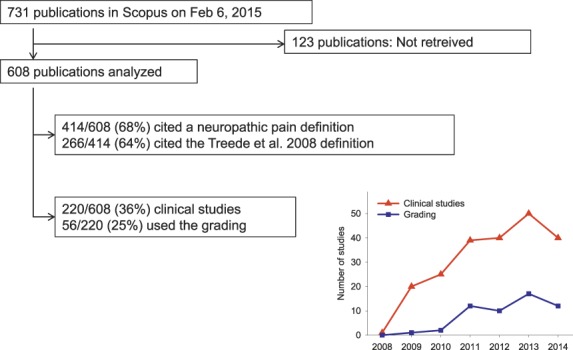
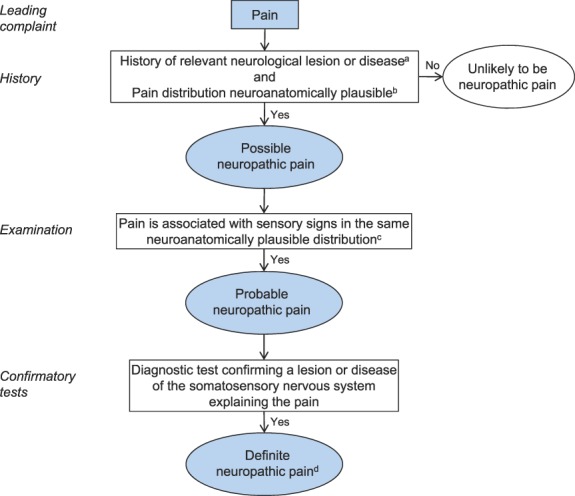
The redefinition of neuropathic pain as “pain arising as a direct consequence of a lesion or disease affecting the somatosensory system,” which was suggested by the International Association for the Study of Pain (IASP) Special Interest Group on Neuropathic Pain (NeuPSIG) in 2008, has been widely accepted. In contrast, the proposed grading system of possible, probable, and definite neuropathic pain from 2008 has been used to a lesser extent. Here, we report a citation analysis of the original NeuPSIG grading paper of 2008, followed by an analysis of its use by an expert panel and recommendations for an improved grading system. As of February, 2015, 608 eligible articles in Scopus cited the paper, 414 of which cited the neuropathic pain definition. Of 220 clinical studies citing the paper, 56 had used the grading system. The percentage using the grading system increased from 5% in 2009 to 30% in 2014. Obstacles to a wider use of the grading system were identified, including (1) questions about the relative significance of confirmatory tests, (2) the role of screening tools, and (3) uncertainties about what is considered a neuroanatomically plausible pain distribution. Here, we present a revised grading system with an adjusted order, better reflecting clinical practice, improvements in the specifications, and a word of caution that even the “definite” level of neuropathic pain does not always indicate causality. In addition, we add a table illustrating the area of pain and sensory abnormalities in common neuropathic pain conditions and propose areas for further research.
Overview
The claims and statistics of this paper haven’t been checked yet.
Run the check — free, no account needed. It reads the open-access text and checks the sources it cites.
Integrity signals
Registry
Cites
Statistics
Figures
Verification
Claims the paper makes
The claims and statistics of this paper haven’t been checked yet.
Run the check — free, no account needed. It reads the open-access text and checks the sources it cites.
Claims other papers make about this one
Each is checked against this paper’s own text: does it say what the citing paper says it does?
The source backs part of the claim, not all of it — or backs it for a different population, condition or comparison.
In the citing paper
“To indicate probable neuropathic pain, pain must also be associated with sensory abnormalities (i.e., clinical signs such as allodynia and/or hyperalgesia) in the same neuroanatomical plausible distribution (Finnerup et al. 2016; Schmid et al. 2023).”
From The Prevalence of Neuropathic Pain in Multiple Sclerosis—A Systematic Review and Meta‐Analysis Using the NeuPSIG Algorithm (2026) · cites this paper as Finnerup et al. 2016
Experimental — accuracy not yet measuredThe cited source says what the claim attributes to it.
In the citing paper
“Lastly, to establish definite neuropathic pain, additional objective confirmation of a lesion or disease in the somatosensory nervous system that may explain the pain is required (Finnerup et al. 2016; Schmid et al. 2023).”
From The Prevalence of Neuropathic Pain in Multiple Sclerosis—A Systematic Review and Meta‐Analysis Using the NeuPSIG Algorithm (2026) · cites this paper as Finnerup et al. 2016
The cited source says what the claim attributes to it.
In the citing paper
“To indicate possible neuropathic pain, patients must meet two criteria. First, the medical history should prompt a possible explanation for neuropathic pain, and patients should present with clinical symptoms. Second, the experienced pain distribution must be neuroanatomically plausible (i.e., the experienced pain is likely to correspond to the patient's neurological damage) (Finnerup et al. 2016;”
From The Prevalence of Neuropathic Pain in Multiple Sclerosis—A Systematic Review and Meta‐Analysis Using the NeuPSIG Algorithm (2026) · cites this paper as Finnerup et al. 2016
The cited source says what the claim attributes to it.
In the citing paper
“the Neuropathic Pain Special Interest Group (NeuPSIG) has developed a grading system for the identification of neuropathic pain (Finnerup et al. 2016; Schmid et al. 2023)”
From The Prevalence of Neuropathic Pain in Multiple Sclerosis—A Systematic Review and Meta‐Analysis Using the NeuPSIG Algorithm (2026) · cites this paper as Finnerup et al. 2016
The cited source says what the claim attributes to it.
In the citing paper
“Importantly, a possible diagnosis cannot replace the probable and definite certainty provided by NeuPSIG in clinical practice (Finnerup et al. 2016).”
From The Prevalence of Neuropathic Pain in Multiple Sclerosis—A Systematic Review and Meta‐Analysis Using the NeuPSIG Algorithm (2026) · cites this paper as Finnerup et al. 2016
The cited source says what the claim attributes to it.
In the citing paper
“Importantly, the algorithms used across diagnostic certainty levels do not yield a definitive diagnosis of neuropathic pain (i.e., not to be confused with definite neuropathic pain). Instead, the grading system evaluate the probability that the experienced pain is caused by neurological damage, with increasing certainty as more criteria are met (Finnerup et al. 2016).”
From The Prevalence of Neuropathic Pain in Multiple Sclerosis—A Systematic Review and Meta‐Analysis Using the NeuPSIG Algorithm (2026) · cites this paper as Finnerup et al. 2016
The cited source says what the claim attributes to it.
In the citing paper
“Given these considerations and in line with existing guidelines, the establishment of a probable diagnosis of neuropathic pain may be adequate for prompting analgesic treatments in pwMS, provided that the patient has a valid diagnosis of MS (Finnerup et al. 2016; Treede et al. 2019).”
From The Prevalence of Neuropathic Pain in Multiple Sclerosis—A Systematic Review and Meta‐Analysis Using the NeuPSIG Algorithm (2026) · cites this paper as Finnerup et al. 2016
The cited source says what the claim attributes to it.
In the citing paper
“Hence, achieving definite diagnostic certainty does not constitute absolute proof of central neuropathic pain but should rather be interpreted as a strong indication within the context of best clinical practice (Finnerup et al. 2016).”
From The Prevalence of Neuropathic Pain in Multiple Sclerosis—A Systematic Review and Meta‐Analysis Using the NeuPSIG Algorithm (2026) · cites this paper as Finnerup et al. 2016
Self-check
Percentages, sums and reported differences re-computed from the paper’s own numbers.
The self-check needs the paper’s full text.
Citations
Cites
Central sensitization: implications for the diagnosis and treatment of pain
Woolf, C. J. (2011) · Pain · doi:10.1016/j.pain.2010.09.030 · Cited by 4,771 · cited 1×
“Because of central sensitization phenomena, the areas of allodynia and hyperalgesia may extend beyond the innervation territory.(35) Table 1”
BackgroundPharmacotherapy for neuropathic pain in adults: a systematic review and meta-analysis
Finnerup, N. B., Attal, N., Haroutounian, S., McNicol, E., Baron, R., Dworkin, R. H., Gilron, I., Haanpää, M., Hansson, P., Jensen, T. S., et al. (2015) · The Lancet Neurology · doi:10.1016/s1474-4422(14)70251-0 · Cited by 3,980
Self-citationBouhassira, D., Attal, N., Alchaar, H., Boureau, F., Brochet, B., Bruxelle, J., Cunin, G., Fermanian, J., Giniès, P., Grun-Overdyking, A., et al. (2005) · Pain · doi:10.1016/j.pain.2004.12.010 · Cited by 2,834
Self-citationA classification of chronic pain for ICD-11
Treede, R.-D., Rief, W., Barke, A., Aziz, Q., Bennett, M. I., Benoliel, R., Cohen, M., Evers, S., Finnerup, N. B., First, M. B., et al. (2015) · Pain · doi:10.1097/j.pain.0000000000000160 · Cited by 2,822
Self-citationTreede (2008) · doi:10.1212/01.wnl.0000282763.29778.59 · Cited by 2,746
Self-citationFreynhagen, R., Baron, R., Gockel, U., & Tölle, T. R. (2006) · Current Medical Research and Opinion · doi:10.1185/030079906x132488 · Cited by 2,280
Self-citationA new definition of neuropathic pain
Jensen, T., Baron, R., Haanpää, M., Kalso, E., Loeser, J., Rice, A., & Treede, R. (2011) · Pain · doi:10.1016/j.pain.2011.06.017 · Cited by 1,343
Self-citationThe LANSS Pain Scale: the Leeds assessment of neuropathic symptoms and signs
Bennett, M. (2001) · Pain · doi:10.1016/s0304-3959(00)00482-6 · Cited by 1,165
NeuPSIG guidelines on neuropathic pain assessment
Haanpää, M., Attal, N., Backonja, M., Baron, R., Bennett, M., Bouhassira, D., Cruccu, G., Hansson, P., Haythornthwaite, J. A., Iannetti, G. D., et al. (2011) · Pain · doi:10.1016/j.pain.2010.07.031 · Cited by 1,060
Self-citationMaier, C., Baron, R., Tölle, T. R., Binder, A., Birbaumer, N., Birklein, F., Gierthmühlen, J., Flor, H., Geber, C., Huge, V., et al. (2010) · Pain · doi:10.1016/j.pain.2010.05.002 · Cited by 1,021
Self-citation
Cited by
Sorted by citations
Items 801–900 of 999
Cold-evoked potentials in Fabry disease and polyneuropathy
Kersebaum, D., Sendel, M., Lassen, J., Fabig, S., Forstenpointner, J., Reimer, M., Canaan‐Kühl, S., Gaedeke, J., Rehm, S., Gierthmühlen, J., et al. (2024) · Frontiers in Pain Research · doi:10.3389/fpain.2024.1352711 · Cited by 3
Self-citationGierthmühlen, J., Attal, N., Baskozos, G., Bennedsgaard, K., Bennett, D., Bouhassira, D., Crombez, G., Finnerup, N. B., Granovsky, Y., Jensen, T. S., et al. (2024) · Pain · doi:10.1097/j.pain.0000000000003310 · Cited by 11
Self-citationAntolak, S. J. (2024) · Neurourology and Urodynamics · doi:10.1002/nau.25555 · Cited by 3
Pinilla-Fernández, I., Ríos‐León, M., Deelchand, D. K., Garrido, L., Llacsa, M. T., García-García, F., Vidorreta, M., Ip, I. B., Bridge, H., Taylor, J., et al. (2024) · Frontiers in Medicine · doi:10.3389/fmed.2024.1404939 · Cited by 3
Update in the Treatment of Neuropathic Pain
Zhang, Y., Li, X., & Huang, Y. (2024) · Springer eBooks · doi:10.1007/978-981-99-8921-8_12 · Cited by 2
METHA-NeP: effectiveness and safety of methadone for neuropathic pain: a controlled randomized trial
Júnior, J. A. M. P., Barbosa, M. M., Kubota, G. T., Martins, P. N., Moreira, L. I., Fernandes, A. M., da Silva, V. A., Júnior, J. R., Yeng, L. T., Teixeira, M. J., et al. (2024) · Pain · doi:10.1097/j.pain.0000000000003413 · Cited by 5
The clinical value of EMG and SSEP in diagnosing chronic pelvic pain syndrome; a systematic review
Wissing, M. C., van der Wal, S. E. I., Bongarts, S., Aarnink, J., Notten, K. J. B., van Kuijk, S. M. J., Dam, A. H. D. M., Vissers, K. C. P., Kluivers, K. B., & van Alfen, N. (2025) · Pain Practice · doi:10.1111/papr.70028 · Cited by 2
“21,22 In the case of a nerve lesion, the stimulus will lead to a diminished or absent response of the muscle or sensory nerve fibers, sometimes accompanied by a decrease in nerve conduction velocity.”
Sandonís, C. V., Vázquez, A., Nieto, L. V., Plaza, E. M., Blanco‐Vázquez, M., Sobas, E. M., Calonge, M., Ortega, E., Enríquez‐de‐Salamanca, A., & González-García, M. J. (2025) · Journal of Clinical Medicine · doi:10.3390/jcm14134406 · Cited by 3
“…NOP when patients met at least 3 out of the following 5 diagnostic criteria: (1) evidence of damage or injury to the somatosensory nervous system [27]; (2) minimal signs of corneal staining (Oxford score ≤ 1) [28]; (3) a report of at least two characteristic descriptors associated with…”
Rheumatische Erkrankungen und neuropathischer Schmerz
Lassen, J., & Baron, R. (2020) · Zeitschrift für Rheumatologie · doi:10.1007/s00393-020-00950-9 · Cited by 3
“Zur Definition neuropathischer Schmerzen zählt das Vorliegen einerSchädigungdesnozizeptivenSystems [6, 16, 29].”
BackgroundSelf-citationDolor neuropático en pacientes diabéticos insulinodependientes
Pérez-Guirola, Y., Rojas, A. L., & Cordero-Escobar, I. (2021) · Revista Mexicana de Anestesiología · doi:10.35366/97777 · Cited by 3
Raicher, I., Zandonai, A. P., Anghinah, I. W., Frassetto, M., Stump, P., Trindade, M. Â. B., Harnik, S. B., de Oliveira, R. A., Macarenco, R., Doppler, K., et al. (2022) · Pain · doi:10.1097/j.pain.0000000000002757 · Cited by 3
Oh, D., Cheong, S. H., Choi, Y. G., et al. (2022) · Journal of Anesthesia · doi:10.1007/s00540-022-03122-y · Cited by 3
“In particular, the combination of several screening descriptors has a high discriminant value and can help alert clinicians to patients who may be experiencing neuropathic pain [23].”
BackgroundPosttraumatic Trigeminal Neuropathic Pain in Association with Dental Implant Surgery
Renton, T. F., & der Cruyssen, F. V. (2022) · Dental Clinics of North America · doi:10.1016/j.cden.2022.07.007 · Cited by 4
Young, B., Stephenson, J. R., Islam, B., Burke, N. N., Jennings, E. M., Finn, D. P., & McHugh, P. (2022) · Molecular Neurobiology · doi:10.1007/s12035-022-03124-7 · Cited by 3
“Neuropathic pain is managed with drugs available for other disorders, which demonstrate varying efficacies in pain management across different types of neuropathic pain [11].”
BackgroundJeon, H., Lee, S., Kim, S.-A., et al. (2022) · Medicine · doi:10.1097/md.0000000000032484 · Cited by 3
“[2] Neuropathic pain, such as PHN, is often associated with other complications, such as functional loss, anxiety, depression, and sleep disturbances, reducing quality of life (QoL) more than nociceptive pain.[3,4] PHN is difficult to treat because various symptoms are intertwined with severe pain.”
BackgroundApproach to Painful Diabetic Peripheral Neuropathy
Lumpatki, S. B., Kavitha, K. V., Manohar, M., & Unnikrishnan, A. G. (2022) · Chronicle of Diabetes Research and Practice · doi:10.4103/cdrp.cdrp_4_22 · Cited by 3
Smith, S. D., Aldington, D. J., Hay, G., et al. (2023) · PAIN Reports · doi:10.1097/pr9.0000000000001094 · Cited by 3
Self-citationHaenen, V., Meeus, M., Devoogdt, N., Morlion, B. J., Dams, L., Groote, A. D., Foubert, A., & Groef, A. D. (2024) · Scandinavian Journal of Pain · doi:10.1515/sjpain-2023-0093 · Cited by 3
Reliability of a clinical sensory test battery in patients with spine‐related leg and arm pain
Bender, C., Karstens, S., Muth, F., Baskozos, G., & Schmid, A. B. (2024) · European Journal of Pain · doi:10.1002/ejp.2267 · Cited by 3
“%) were identified to have definite neuropathic pain (Finnerup et al., 2016).”
BackgroundMethodEvaluation of Washout Periods After Dorsal Root Ganglion Stimulation Trial
Chapman, K. B., Amireh, A., van Helmond, N., et al. (2024) · Neuromodulation Technology at the Neural Interface · doi:10.1016/j.neurom.2024.02.005 · Cited by 3
Farnes, N., Jacobsen, H. B., Stubhaug, A., & Vambheim, S. M. (2024) · Frontiers in Psychiatry · doi:10.3389/fpsyt.2024.1401008 · Cited by 3
von Piekartz, H., Stein, Y., Wenneker, L., Hall, T. M., & Ballenberger, N. (2024) · CRANIO® · doi:10.1080/08869634.2024.2408032 · Cited by 3
“Additional required features for this category include signs of hypoalgesia and motor loss [1,17].”
Tailliez, N., Planche, L., Dorion, A., et al. (2024) · Pain Management Nursing · doi:10.1016/j.pmn.2024.09.001 · Cited by 3
Clinical pharmacology of neuropathic pain
Rösner, J., Attal, N., & Finnerup, N. B. (2024) · International review of neurobiology · doi:10.1016/bs.irn.2024.10.012 · Cited by 3
Self-citationAnimal Models in Translational Pain Research
Wang, Z., Xiang, L., Wang, X., Tan, X., & Xiang, A. (2024) · IntechOpen eBooks · doi:10.5772/intechopen.1007514 · Cited by 3
Bartkowiak-Wieczorek, J., Jamka, M., Kujawski, R., Hołysz, M., Bienert, A., Czora-Poczwardowska, K., Szulc, M., Mikołajczak, P. Ł., Bogacz, A., Wizner, A.-M., et al. (2025) · Molecules · doi:10.3390/molecules30010194 · Cited by 3
“Neuropathic pain results from harm or abnormal functioning in the part of the nervous system responsible for sensing touch and physical sensations [1,2], and its development is based on an imbalance between pro-inflammatory and anti-inflammatory cytokines [3].”
Koç, E. R., Sarıdaş, F., Yetkin, M. F., et al. (2025) · Neurological Sciences · doi:10.1007/s10072-025-08277-6 · Cited by 3
“Notably, we did not require the lesion to produce overt sensory deficits; as Finnerup et al. (2016) emphasizes, “sensory loss is not a prerequisite for a neuropathic pain condition” [ 14] and documentation of an anatomically appropriate (even asymptomatic) lesion was accepted as sufficient evidence…”
Mesaroli, G., Davis, A. M., Perruccio, A. V., Davidge, K. M., Campbell, F. A., Sun, N., Walker, S. M., Hess, C. W., Simons, L. E., Logan, D., et al. (2025) · Pain · doi:10.1097/j.pain.0000000000003682 · Cited by 3
Painful Peripheral Neuropathies
Endrizzi, S. A., Rathmell, J. P., & Hurley, R. W. (2018) · Elsevier eBooks · doi:10.1016/b978-0-323-40196-8.00032-2 · Cited by 3
Davidoff, C., & Leung, E. (2020) · Elsevier eBooks · doi:10.1016/b978-0-323-72216-2.00003-x · Cited by 3
Chebini, A., Marzoughi, S., Randhawa, J., Guh, D. P., Wiseman, S., Fedoroff, I. C., & Ong, M. (2021) · Pain Management · doi:10.2217/pmt-2021-0064 · Cited by 3
Bakhtadze, M. A., Kukushkin, M. L., Kuzminov, K. O., Bolotov, D. A., & Neimatov, E. M. (2021) · Russian Journal of Pain · doi:10.17116/pain20211904110 · Cited by 3
Perioperative medicine role in painful knee prosthesis prevention
Cuñat, T., Martinez-Pastor, J. C., Dürsteler, C., Hernández, C., & Sala‐Blanch, X. (2022) · Revista Española de Anestesiología y Reanimación (English Edition) · doi:10.1016/j.redare.2022.07.002 · Cited by 3
Cross-sectional study examining the epidemiology of chronic pain in Nepal
Higgins, C., Sharma, S., Bimali, I., Hales, T. G., Cameron, P. A., Smith, B. H., & Colvin, L. (2023) · PAIN Reports · doi:10.1097/pr9.0000000000001067 · Cited by 3
Self-citationThe Diversity of Neuropathic Pain
Finnerup, N. B., & Attal, N. (2018) · Oxford University Press eBooks · doi:10.1093/oxfordhb/9780190860509.013.22 · Cited by 3
Self-citationJin, S., Xu, S., Wang, R., et al. (2019) · Iranian Red Crescent Medical Journal · doi:10.5812/ircmj.94716 · Cited by 3
“As a form of chronic pain, neuropathic pain is characterized by spontaneous pain, hyperalgesia, allodynia, abnormal pain, and paresthesia (1-3).”
BackgroundLefaucheur, J. P., Hajj, C., Valeyrie‐Allanore, L., et al. (2020) · Journal of the European Academy of Dermatology and Venereology · doi:10.1111/jdv.16940 · Cited by 3
Pang, E. K., & Rudd‐Barnard, G. (2020) · Elsevier eBooks · doi:10.1016/b978-0-323-72216-2.00005-3 · Cited by 3
Sessle, B. J., Baad‐Hansen, L., Exposto, F. G., et al. (2022) · doi:10.1002/9781119701170.ch33 · Cited by 3
A novel role for microtubule affinity‐regulating kinases in neuropathic pain
Shi, Y., Sun, Z., Wang, Z., Su, C., Zhang, W., Yu, L., Xu, Y., Gao, Y., Wang, H., Tian, J., et al. (2023) · British Journal of Pharmacology · doi:10.1111/bph.16303 · Cited by 2
“…by an increased response to painful stimuli (hyperalgesia) or a painful response to normally non-painful stimuli (allo-dynia) (IASP, 2015) (Finnerup et al., 2016), usually originating from spinal cord trauma (Nakajima et al., 2022), afflicting 7% – 10% of the human population worldwide…”
BackgroundAssessing suicide risk in chronic pain management: a narrative review across drug classes
Brezić, N., Gligorevic, S., Candido, K. D., & Knežević, N. N. (2024) · Expert Opinion on Drug Safety · doi:10.1080/14740338.2024.2391999 · Cited by 2
“Nociplastic pain arises from abnormal pain signal processing without clear tissue damage, encompassing conditions such as fibromyalgia and irritable bowel syndrome [21].”
Screening and Impact of Neuropathic Pain in Young Individuals With Sickle Cell Disease
Adly, A. A. M., Mohammed, M., Aboata, A. M. A., et al. (2024) · Pediatric Blood & Cancer · doi:10.1002/pbc.31493 · Cited by 2
“It divided NP based on relevant history, pain distribution, sensory signs, and confirmed diagnostic tests into three categories: possible, probable, and definite [5].”
Задорожна, Б. В., & Bohdan, A. (2025) · INTERNATIONAL NEUROLOGICAL JOURNAL · doi:10.22141/2224-0713.20.8.2024.1131 · Cited by 2
Ukrainian National Consensus on Botulinum Therapy for Neuropathic Pain
Biloshytsky, V. V., Biloshytska, M. V., Гаврецький, А. І., Dmytrіiev, D., Cregg, R., Medytskyi, A. B., Romanenko, V. I., Sanotsky, Y., Segin, N., Fedoryshyn, L., et al. (2025) · Ukrainian Neurosurgical Journal · doi:10.25305/unj.313858 · Cited by 2
Nociplastic pain criteria must evolve to reduce the problem of “not-classifiable” pain
Clark, J. R., Assimakopoulos, D., & Mailis, A. (2025) · Pain · doi:10.1097/j.pain.0000000000003667 · Cited by 3
Complex regional pain syndrome and use of psychotropic drugs as a proxy for psychological health
Dahlin, L. B., Perez, R., Nyman, E., Zimmerman, M., & Merlo, J. (2025) · Scientific Reports · doi:10.1038/s41598-025-09701-9 · Cited by 2
Coding of postsurgical pain in ICD-11: between conceptual richness and practical constraints
Martinez, V., Spagna, A., & Attal, N. (2025) · British Journal of Anaesthesia · doi:10.1016/j.bja.2025.05.028 · Cited by 2
Ritter, J., Prahm, C., Büttcher, M., Wuttke, T. V., Daigeler, A., Lauer, H., Heinzel, J. C., & Kolbenschlag, J. (2025) · Frontiers in Neuroscience · doi:10.3389/fnins.2025.1602524 · Cited by 2
Prevalence and characteristics of neuropathic pain in adolescent survivors of childhood cancer
Mesaroli, G., Olaizola, S., Nair, A., Nishat, F., Pizzo, A., Nathan, P. C., Alberts, N. M., & Stinson, J. (2025) · Journal of Cancer Survivorship · doi:10.1007/s11764-025-01892-4 · Cited by 2
May, A., Ciancia, V., & Basedau, H. (2025) · The Journal of Headache and Pain · doi:10.1186/s10194-025-02133-w · Cited by 3
“Those diagnosed with neuropathic facial pain were selected based on established diagnostic criteria evidencing nerve-related lesions [6, 7].”
Ridehalgh, C., Fundaun, J., Bremner, S. A., Cercignani, M., Koushesh, S., Schmid, A. B., & Dilley, A. (2025) · Pain · doi:10.1097/j.pain.0000000000003816 · Cited by 2
Genome-wide association study of neuropathic pain
Spildrejorde, M., Dunker, Ø., Allen, S. M., Kvaløy, M. B., Uglem, M., Hjelland, I. E., Løseth, S., Bennett, D., Zwart, J., Winsvold, B. S., et al. (2025) · Pain · doi:10.1097/j.pain.0000000000003848 · Cited by 2
Self-citationComplex regional pain syndrome and migraine: Clinical relationships and possible common aetiology
Drummond, P. D., & Finch, P. M. (2025) · Cephalalgia · doi:10.1177/03331024251404910 · Cited by 2
“…(i.e., sensory disturbances were identi fi ed in an anatomically-plausible nerve distribution given the site and nature of the triggering event, or a nerve injury was veri fi ed during surgical examination or by a con fi rmatory electrophysiological test) (33) were considered to have CRPS type II.”
A corticospinal signature for interindividual pain sensitivity
Lin, X., Guo, L., Ni, B., Zhang, J., Zhang, L., Zhang, L.-B., Wei, Z., Duan, Y., Hu, L., Zhang, J., et al. (2025) · Nature Communications · doi:10.1038/s41467-025-67132-6 · Cited by 4
Ridehalgh, C., Fundaun, J., & Farrell, S. F. (2025) · Musculoskeletal Science and Practice · doi:10.1016/j.msksp.2025.103468 · Cited by 2
Wang, S., Barry, A. M., Lee, Y., Young, N., Shim, S. W., Wang, X.-Y., Kim, H., Stirling-Barros, L., González-Cano, R., Costigan, M., et al. (2025) · bioRxiv · doi:10.1186/s12974-025-03675-1 · Cited by 3
Self-citationRíos‐León, M., Labarga, B. H., Castillo-Aguilar, I., Segura‐Fragoso, A., López‐Dolado, E., & Taylor, J. (2025) · Pain · doi:10.1097/j.pain.0000000000003822 · Cited by 2
Piotrowska, A., Starnowska-Sokół, J., Ciapała, K., Barut, J., Ciechanowska, A., Kwiatkowski, K., Rojewska, E., Pawlik, K., Kreiner, G., & Mika, J. (2026) · Biochemical Pharmacology · doi:10.1016/j.bcp.2026.117773 · Cited by 2
Stop guessing: A clinician's guide to demystifying spine-related arm pain in primary care
Hage, R., Denis, C., Fourré, A., Finucane, L., Rynkowski, M., Pitance, L., Hoegh, M., & Dierick, F. (2026) · Musculoskeletal Science and Practice · doi:10.1016/j.msksp.2026.103549 · Cited by 2
Lefaucheur, J. (2026) · Frontiers in Pain Research · doi:10.3389/fpain.2026.1820678 · Cited by 2
“…the IASP Specialist Interest Group on Neuropathic Pain (NeuPSIG) has proposed a grading of the diagnosis of neuropathic pain into possible, probable, and definite, with the diagnosis of “definite” neuropathic pain based on confirmation of somatosensory nervous system lesion by complementary tests (9).”
Khashan, M., Brill, S., Hochberg, Y., & Hochberg, U. (2026) · Frontiers in Medicine · doi:10.3389/fmed.2026.1733623 · Cited by 2
“A total of 120 patients were included (mean [SD] age, 57.9 [12.5] years).”
InfluentialBarrios, I., Thomas, S. A., Hernandez, Y. L., Pagan, A., Munoz, E., Cespedes, K., & Aggarwal, S. (2026) · Cancers · doi:10.3390/cancers18091476 · Cited by 3
“Conversely, the peripheral neuropathic pain predominantly involves abnormalities in peripheral afferent fibers, specifically small, unmyelinated C-fibers and myelinated A-fibers (A β and A δ ) [17].”
Lebel, A., Stambouli, I., & Boucher, Y. (2026) · Journal of Oral Rehabilitation · doi:10.1111/joor.70209 · Cited by 2
“Neuropathic characteristics were appraised according to the NeuPSIG grading system [43], and using the Douleur Neuropathique 4 (DN4), a questionnaire designed to screen for neuropathic pain components (0–10; screening cutoff ≥ 4).”
Gierthmühlen, J., Bultitude, J. H., Baron, R., Birklein, F., Júnior, D. A., Drummond, P. D., Ferraro, M. C., Göebel, A., Harden, N., Maihöfner, C., et al. (2026) · Pain · doi:10.1097/j.pain.0000000000003943 · Cited by 2
Self-citationWisløff‐Aase, K., Raeder, J. C., Månum, G., Løvstad, M., Schanke, A., Dyb, G. A., Ekeberg, Ø., & Stanghelle, J. K. (2019) · Acta Anaesthesiologica Scandinavica · doi:10.1111/aas.13373 · Cited by 2
““probable” or “unlikely” neuropathic pain (34-36).”
Papel de la medicina perioperatoria en la prevención de la prótesis de rodilla dolorosa
Cuñat, T., Martinez-Pastor, J. C., Dürsteler, C., Hernández, C., & Sala‐Blanch, X. (2021) · Revista Española de Anestesiología y Reanimación · doi:10.1016/j.redar.2021.03.011 · Cited by 2
Zhang, H., Liu, L., Song, Z.-P., et al. (2021) · Journal of Molecular Neuroscience · doi:10.1007/s12031-021-01911-w · Cited by 2
Assessing pain after cancer treatment
Gehr, N. L., Bennedsgaard, K., Ventzel, L., et al. (2022) · Scandinavian Journal of Pain · doi:10.1515/sjpain-2022-0093 · Cited by 2
Self-citationKemp, H. I., Vollert, J., Davies, N. W. S., Moyle, G. J., & Rice, A. S. C. (2022) · Journal of Pain · doi:10.1016/j.jpain.2022.09.005 · Cited by 2
Self-citationCharacteristics and Treatment of Painful Diabetic Neuropathy
Gylfadottir, S. S., & Finnerup, N. B. (2023) · Contemporary diabetes · doi:10.1007/978-3-031-15613-7_25 · Cited by 2
Self-citationMatesanz-García, L. (2023) · Journal of MOVE and Therapeutic Science · doi:10.37382/jomts.v5i1.914 · Cited by 2
Zhang, C., Wang, J., Zhu, X.-Y., et al. (2023) · Journal of College of Physicians And Surgeons Pakistan · doi:10.29271/jcpsp.2023.10.1130 · Cited by 2
Dorsal Root Ganglion Stimulation to Treat Chronic Shoulder Pain: A Case Report
Chapman, K. B., Tupper, C. J., Yousef, T., et al. (2023) · A&A Practice · doi:10.1213/xaa.0000000000001718 · Cited by 2
Die Rolle der Physiotherapie bei neuropathischen Schmerzen
Taxer, B. (2024) · Schmerz Nachrichten · doi:10.1007/s44180-024-00177-z · Cited by 2
Die EAN-NeuPSIG-Leitlinie zur Diagnostik bei neuropathischen Schmerzen – eine Kurzfassung
Sommer, C., Baron, R., Sachau, J., Papagianni, A. E., Özgül, Ö. S., & Enax‐Krumova, E. (2024) · Der Schmerz · doi:10.1007/s00482-024-00806-0 · Cited by 2
“…Symptome können validierte Fragebö-gen jedoch dabei helfen, eine mögliche Diagnose neuropathischer Schmerzen zu stellen, insbesondere wenn sie mit einem Körperschema zur Detektion eines neuroanatomisch plausiblen Areals der Symptomlokalisation kombiniert werden (Schritt 1 im Algorithmus bei [3]).”
Self-citationA Cross-Sectional Study on Neuropathic Pain Associated With Quality of Sleep in Spondylosis Patients
Das, S., Singh, R., Agrawal, U., Nishad, S., Ranjan, G., & Jamal, F. (2024) · Cureus · doi:10.7759/cureus.59242 · Cited by 2
Emotion Processing in Peripheral Neuropathic Pain: An Observational Study
Isoardo, G., Adenzato, M., Ciullo, S., Fontana, E., Stura, I., Migliaretti, G., Titolo, P., Matteoni, E., Calvo, A., Laino, F., et al. (2024) · Medical Sciences · doi:10.3390/medsci12020027 · Cited by 2
“Inclusion criteria were chronic (of more than 3 months duration) PNP [13,14,24] and diagnosis of carpal tunnel syndrome (CTS), brachial plexopathy, painful cervical radiculopathy, ulnar neuropathy at the elbow, or hypertrophic post-burn scars (PBHS).”
BackgroundMethodJirachaipitak, S., Euasobhon, P., Cenpakdee, S., et al. (2024) · Medical Science Monitor · doi:10.12659/msm.945612 · Cited by 2
“…adults aged 18 to 65 years with a diagnosis of NPS who were classified as having probable or definite neuropathic pain according to the grading system for neuropathic pain [22], confirmed by a certified pain physician, and with an average numeric rating scale (NRS) score of at least 4 out of 10.”
MethodWang, H., Chen, G., Gong, Q., Wu, J., & Chen, P. (2024) · International Immunopharmacology · doi:10.1016/j.intimp.2024.113466 · Cited by 2
Clinical neurophysiology of neuropathic pain
Hubli, M., & Leone, C. M. (2024) · International review of neurobiology · doi:10.1016/bs.irn.2024.10.005 · Cited by 2
Yilmazer, C., D’haeseleer, M., Soler, B., Wijmeersch, B. V., Solaro, C. M., Ciampi, E., Cárcamo, C., Asch, P. V., Cambron, M., Lamers, I., et al. (2025) · Multiple Sclerosis Journal · doi:10.1177/13524585241310139 · Cited by 2
“For the accuracy analyses specifically, a limitation was that we did not employ the Neuropathic Pain Special Interest Group (NeuPSIG) guidelines 57 for neuropathic pain diagnosis.”
Enhancer profiling uncovers Jmjd1c as an essential suppressor in neuropathic pain by targeting Socs3
Zhang, L., Xie, Y., Wang, S., Gong, M., Chen, Z., Wang, C., & Li, P. (2025) · Genes & Diseases · doi:10.1016/j.gendis.2025.101545 · Cited by 2
Mechanistic approach and therapeutic strategies in menstrual and non-menstrual migraine
Mani, T., Murtaza, M., Begum, R. F., Gayathri, H., & Sumithra, M. (2025) · Future Science OA · doi:10.1080/20565623.2025.2468109 · Cited by 2
“…to the control group, plasma 8-OHdG levels were found to be considerably higher in migraine patients; this rise was more pronounced in cases of migraine without aura than in those with aura [70]. the findings revealed that migraine sufferers may have DNA damage related to oxidative stress [71].”
Mustonen, L., Nieminen, J. K., Koskela, S., Kaunisto, M. A., Kalso, E. A., Tienari, P. J., & Harno, H. (2025) · European Journal of Pain · doi:10.1002/ejp.70009 · Cited by 2
“At the follow-up visit, a detailed sensory examination was performed to classify the patients by stepwise NP grading (Finnerup et al. 2016; Mustonen et al. 2019).”
Spatial distribution of pain in complex regional pain syndrome
Drummond, P. D., Rossen-Abercromby, M., Quartermaine, A., et al. (2025) · Pain · doi:10.1097/j.pain.0000000000003623 · Cited by 2
A longitudinal study of paradoxical heat sensation in 420 individuals
Schaldemose, E. L., Brask‐Thomsen, P. K., Itani, M., et al. (2025) · Pain · doi:10.1097/j.pain.0000000000003652 · Cited by 2
Self-citationInvestigating brain dysfunction in neuropathic pain with MRI
Peyron, R., Corvin, S., Fauchon, C., & Faillenot, I. (2025) · Brain Communications · doi:10.1093/braincomms/fcaf196 · Cited by 2
“A new series of 39 patients were selected for the present study based on clinical criteria of a demonstrated neuropathic pain 10 of peripheral ( n = 4) or central ( n = 35) origin.”
Central and Peripheral Mechanisms of Neuropathic Pain
Forstenpointner, J., Sendel, M., & Baron, R. (2025) · Neurologic Clinics · doi:10.1016/j.ncl.2025.04.002 · Cited by 2
Self-citationJin, Y., Aravamudhan, A., Cebulla, N., Schirmer, D., Runau, E., Flamm, L., Terhorst, C., Jähnel, L., Güse, J., Giordani, N., et al. (2025) · Pain · doi:10.1097/j.pain.0000000000003709 · Cited by 3
Distinction and mutual Influences between Parkinson's Disease‐related and unrelated Chronic Pain
Hunger, J., Brugger, F., Kägi, G., Möller, J. C., Hollenstein, N., Benninger, D. H., Tinazzi, M., Bally, J. F., Gonzenbach, R. R., de Andrade, D. C., et al. (2025) · Movement Disorders Clinical Practice · doi:10.1002/mdc3.70262 · Cited by 2
“30 When the pain syndrome does not ful fi ll these criteria, the patient will be screened for nociceptive pain if the pain is perceived in muscles, tendons, or fascia or if the patient has painful rigidity or palpation thereof is painful.”
Electrophysiological Evidence for Impaired Central Pain Modulation in Parkinson's Disease
Kersebaum, D., Lassen, J., Forstenpointner, J., Sendel, M., Fabig, S., Nölker, S., Sachau, J., Paschen, S., Berg, D., Baron, R., et al. (2025) · Movement Disorders · doi:10.1002/mds.70004 · Cited by 2
Self-citationZhou, D., Shen, F., Rong, H., Bei-Miao, & Yang, J.-K. (2022) · Journal of Healthcare Engineering · doi:10.1155/2022/8313415 · Cited by 2
“Neuropathic pain is defined as pain caused by a lesion or disease affecting the somatosensory system [31], and the main difference of neuropathic pain to others is the paradoxical combination of sensory loss and pain with or without hypersensitive phenomena to one or several sensory modalities in the painful area [2].”
BackgroundRetractedHidden Neuropathic Pain in Chronic Low Back Pain: Prevalence, Pattern, and Impact on Quality of Life
Luksanapruksa, P., Zinboonyahgoon, N., Ruangchainikom, M., et al. (2022) · Siriraj Medical Journal/San Sirirat · doi:10.33192/smj.2022.57 · Cited by 2
Yang, M., Mu, Y., Wang, W., Tan, B., Chen, Y. S., Li, Y.-P., Zhu, D., Li, W., Cui, J. G., & Yu, L. (2022) · Journal of Pain Research · doi:10.2147/jpr.s385913 · Cited by 2
“Herpes zoster is a viral skin disease that often causes severe pain.1 Postherpetic neuralgia (PHN) is defined as persistent or recurrent neuropathic pain (NeP) for more than three months after clinical healing of the rash.2 PHN incidence in patients with herpes zoster is approximately 5 to 30% and approximately 30–50%…”
BackgroundChemotherapie-induzierte periphere Neuropathie und neuropathischer Schmerz
Schuler, U. S., & Heller, S. C. (2017) · Der Schmerz · doi:10.1007/s00482-017-0198-x · Cited by 3
Spinal Cord Stimulation for Peripheral Neuropathic Pain
Brouwer, B. A., Joosten, E. A. J., & van Kleef, M. (2018) · Elsevier eBooks · doi:10.1016/b978-0-12-805353-9.00049-8 · Cited by 2
Martin, E. (2018) · Perspectives in nursing management and care for older adults · doi:10.1007/978-3-319-71694-7_2 · Cited by 2
Vigneri, S., Sindaco, G., Grua, M. L., et al. (2020) · Pain Practice · doi:10.1111/papr.12955 · Cited by 2
“subjects suffering from single-leg radiating pain of definite or probable neuropathic origin in agreement with recent grading for > 6 months and unresponsive to medications, physical therapy, or ultrasound-guided caudal or periradicular injections.(9) Radicular involvement was considered if pain was running through th…”
ResultGilbert, S. E. (2020) · Springer eBooks · doi:10.1007/978-3-030-36391-8_87 · Cited by 2
Szewczyk, J. B., Nguyen, B. H., Villamizar, N. R., & Nguyen, D. M. (2020) · Journal of Anesthesiology and Pain Therapy · doi:10.29245/2768-5365/2020/3.1110 · Cited by 2
Metadata
- Authors
- Finnerup, N. B., Haroutounian, S., Kamerman, P., Baron, R., Bennett, D. L. H., Bouhassira, D., Cruccu, G., Freeman, R., Hansson, P., Nurmikko, T., Raja, S. N., Rice, A. S. C., Serra, J., Smith, B. H., Treede, R.-D., & Jensen, T. S.
- Affiliations
- Aarhus University (DK)
- Washington University in St. Louis (US)
- University of the Witwatersrand (ZA)
- University Hospital Schleswig-Holstein (DE)
- University of Oxford (GB)
- Inserm (FR)
- Sapienza University of Rome (IT)
- Beth Israel Deaconess Medical Center (US)
- Oslo University Hospital (NO)
- Walton Centre (GB)
- Johns Hopkins University (US)
- Chelsea and Westminster Hospital NHS Foundation Trust (GB)
- Neuroscience Technologies, Ltd, Barcelona, Spain
- University of Dundee (GB)
- Heidelberg University (DE)
- Corresponding author
- Finnerup, Nanna B.
- ORCID
- Venue
- Pain
- Published
- 2016-01-13
- Volume
- 157
- Issue
- 8
- Pages
- 1599-1606
- ISSN
- 0304-3959 (ISSN-L)
- 1872-6623
- PMC
- PMC4949003
- OpenAlex
- W2316569153
- Semantic Scholar
- 4d1325782b7eb15e39a0a2fafbff56c6b01dbb4c
- Cited by
- 1,332
- References
- 34
- Citations by year
- 2026: 116 · 2025: 155 · 2024: 134 · 2023: 198 · 2022: 138 · 2021: 164 · 2020: 131 · 2019: 120 · 2018: 97 · 2017: 57 · 2016: 17
- FWCI
- 11.40
- Type
- journal article
- Language
- en
- Open access
- hybrid
- doi.org
- Locations
- Pain (publishedVersion, cc-by)
- Europe PMC (PubMed Central) (publishedVersion, cc-by)
- PubMed Central (publishedVersion, cc-by)
- PubMed (publishedVersion)
- Discovery Research Portal (University of Dundee) (publishedVersion, cc-by)
- Digital Commons@Becker (Washington University School of Medicine) (submittedVersion)
- IRIS Research product catalog (Sapienza University of Rome) (submittedVersion, cc-by)
- Digital Access to Scholarship at Harvard (DASH) (Harvard University) (submittedVersion, cc-by)
- Spiral (Imperial College London) (submittedVersion, other-oa)
- Funders
- Eli Lilly and Company
- Pfizer
- AstraZeneca
- Sanofi
- International Association for the Study of Pain
- Teva Pharmaceutical Industries
- Glenmark Pharmaceuticals
- European Commission (633491, HORIZON2020)
- Deutsche Forschungsgemeinschaft
- Bundesministerium für Bildung und Forschung
- Eisai
- Novo Nordisk (NNF14SA0006)
- Astellas Pharma
- Novo Nordisk Fonden (NNF14SA000 6, NNF14OC0011633)
- Allergan
- Sanofi Pasteur
- National Institute of General Medical Sciences
- Daiichi Sankyo Europe
- Topics
- Health Sciences › Medicine › Physiology (medical) › Pain Mechanisms and Treatments
- Health Sciences › Medicine › Anesthesiology and Pain Medicine › Pain Management and Treatment
- Health Sciences › Health Professions › Physical Therapy, Sports Therapy and Rehabilitation › Musculoskeletal pain and rehabilitation
- Keywords
- neuropathic pain, neuropathic pain diagnosis, pain distribution, sensory disturbances, confirmatory testing, screening tool
- MeSH terms
- Humans, Neuralgia, Pain Measurement, Surveys and Questionnaires, Research, Pain Management
About these checks
Registry, retraction, Cites and statistics results are computed, not judged, with one exception: a printed reference that no index lists is read once by a model before it counts as a citation error. Claims are extracted by a model and kept only when their quote appears verbatim in the text; each cited source is then checked, with a model’s help, for whether it says what the claim relies on. Those verdicts can be wrong — read the claim’s quote and the cited source before relying on one.
Statistics and arithmetic are recomputed, not judged.
Confidence bands are shown only for fields calibrated on our annotated test set. None is calibrated yet, so no band is shown.
What counts as a claim ›How we measure confidence ›How we check this ›
Are you an author, or do you see a problem with this page? Request a review
