

The DOI matches its Crossref record; 33 of the 34 references it cites were found in a registry or an index.
Neuropathic pain: an updated grading system for research and clinical practice
Open accessAbstract
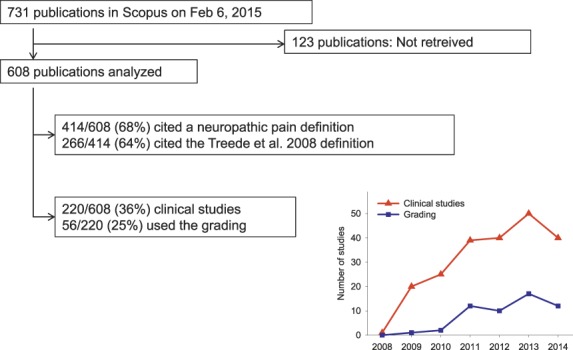
The redefinition of neuropathic pain as “pain arising as a direct consequence of a lesion or disease affecting the somatosensory system,” which was suggested by the International Association for the Study of Pain (IASP) Special Interest Group on Neuropathic Pain (NeuPSIG) in 2008, has been widely accepted. In contrast, the proposed grading system of possible, probable, and definite neuropathic pain from 2008 has been used to a lesser extent. Here, we report a citation analysis of the original NeuPSIG grading paper of 2008, followed by an analysis of its use by an expert panel and recommendations for an improved grading system. As of February, 2015, 608 eligible articles in Scopus cited the paper, 414 of which cited the neuropathic pain definition. Of 220 clinical studies citing the paper, 56 had used the grading system. The percentage using the grading system increased from 5% in 2009 to 30% in 2014. Obstacles to a wider use of the grading system were identified, including (1) questions about the relative significance of confirmatory tests, (2) the role of screening tools, and (3) uncertainties about what is considered a neuroanatomically plausible pain distribution. Here, we present a revised grading system with an adjusted order, better reflecting clinical practice, improvements in the specifications, and a word of caution that even the “definite” level of neuropathic pain does not always indicate causality. In addition, we add a table illustrating the area of pain and sensory abnormalities in common neuropathic pain conditions and propose areas for further research.
Overview
The claims and statistics of this paper haven’t been checked yet.
Run the check — free, no account needed. It reads the open-access text and checks the sources it cites.
Integrity signals
Registry
Cites
Statistics
Figures
Verification
Claims the paper makes
The claims and statistics of this paper haven’t been checked yet.
Run the check — free, no account needed. It reads the open-access text and checks the sources it cites.
Claims other papers make about this one
Each is checked against this paper’s own text: does it say what the citing paper says it does?
The source backs part of the claim, not all of it — or backs it for a different population, condition or comparison.
In the citing paper
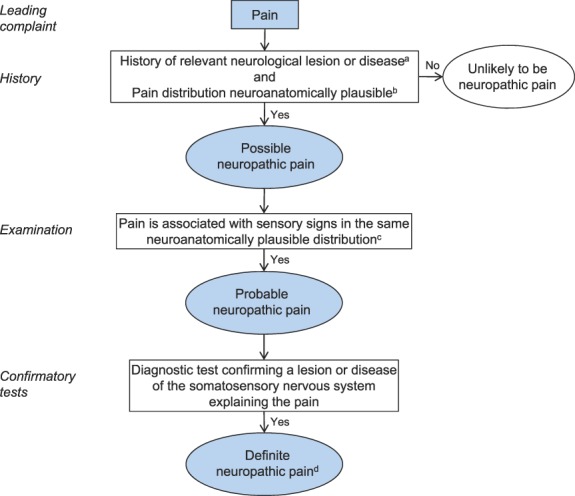
“To indicate probable neuropathic pain, pain must also be associated with sensory abnormalities (i.e., clinical signs such as allodynia and/or hyperalgesia) in the same neuroanatomical plausible distribution (Finnerup et al. 2016; Schmid et al. 2023).”
From The Prevalence of Neuropathic Pain in Multiple Sclerosis—A Systematic Review and Meta‐Analysis Using the NeuPSIG Algorithm (2026) · cites this paper as Finnerup et al. 2016
Experimental — accuracy not yet measuredThe cited source says what the claim attributes to it.
In the citing paper
“Lastly, to establish definite neuropathic pain, additional objective confirmation of a lesion or disease in the somatosensory nervous system that may explain the pain is required (Finnerup et al. 2016; Schmid et al. 2023).”
From The Prevalence of Neuropathic Pain in Multiple Sclerosis—A Systematic Review and Meta‐Analysis Using the NeuPSIG Algorithm (2026) · cites this paper as Finnerup et al. 2016
The cited source says what the claim attributes to it.
In the citing paper
“To indicate possible neuropathic pain, patients must meet two criteria. First, the medical history should prompt a possible explanation for neuropathic pain, and patients should present with clinical symptoms. Second, the experienced pain distribution must be neuroanatomically plausible (i.e., the experienced pain is likely to correspond to the patient's neurological damage) (Finnerup et al. 2016;”
From The Prevalence of Neuropathic Pain in Multiple Sclerosis—A Systematic Review and Meta‐Analysis Using the NeuPSIG Algorithm (2026) · cites this paper as Finnerup et al. 2016
The cited source says what the claim attributes to it.
In the citing paper
“the Neuropathic Pain Special Interest Group (NeuPSIG) has developed a grading system for the identification of neuropathic pain (Finnerup et al. 2016; Schmid et al. 2023)”
From The Prevalence of Neuropathic Pain in Multiple Sclerosis—A Systematic Review and Meta‐Analysis Using the NeuPSIG Algorithm (2026) · cites this paper as Finnerup et al. 2016
The cited source says what the claim attributes to it.
In the citing paper
“Importantly, a possible diagnosis cannot replace the probable and definite certainty provided by NeuPSIG in clinical practice (Finnerup et al. 2016).”
From The Prevalence of Neuropathic Pain in Multiple Sclerosis—A Systematic Review and Meta‐Analysis Using the NeuPSIG Algorithm (2026) · cites this paper as Finnerup et al. 2016
The cited source says what the claim attributes to it.
In the citing paper
“Importantly, the algorithms used across diagnostic certainty levels do not yield a definitive diagnosis of neuropathic pain (i.e., not to be confused with definite neuropathic pain). Instead, the grading system evaluate the probability that the experienced pain is caused by neurological damage, with increasing certainty as more criteria are met (Finnerup et al. 2016).”
From The Prevalence of Neuropathic Pain in Multiple Sclerosis—A Systematic Review and Meta‐Analysis Using the NeuPSIG Algorithm (2026) · cites this paper as Finnerup et al. 2016
The cited source says what the claim attributes to it.
In the citing paper
“Given these considerations and in line with existing guidelines, the establishment of a probable diagnosis of neuropathic pain may be adequate for prompting analgesic treatments in pwMS, provided that the patient has a valid diagnosis of MS (Finnerup et al. 2016; Treede et al. 2019).”
From The Prevalence of Neuropathic Pain in Multiple Sclerosis—A Systematic Review and Meta‐Analysis Using the NeuPSIG Algorithm (2026) · cites this paper as Finnerup et al. 2016
The cited source says what the claim attributes to it.
In the citing paper
“Hence, achieving definite diagnostic certainty does not constitute absolute proof of central neuropathic pain but should rather be interpreted as a strong indication within the context of best clinical practice (Finnerup et al. 2016).”
From The Prevalence of Neuropathic Pain in Multiple Sclerosis—A Systematic Review and Meta‐Analysis Using the NeuPSIG Algorithm (2026) · cites this paper as Finnerup et al. 2016
Self-check
Percentages, sums and reported differences re-computed from the paper’s own numbers.
The self-check needs the paper’s full text.
Citations
Cites
Central sensitization: implications for the diagnosis and treatment of pain
Woolf, C. J. (2011) · Pain · doi:10.1016/j.pain.2010.09.030 · Cited by 4,771 · cited 1×
“Because of central sensitization phenomena, the areas of allodynia and hyperalgesia may extend beyond the innervation territory.(35) Table 1”
BackgroundPharmacotherapy for neuropathic pain in adults: a systematic review and meta-analysis
Finnerup, N. B., Attal, N., Haroutounian, S., McNicol, E., Baron, R., Dworkin, R. H., Gilron, I., Haanpää, M., Hansson, P., Jensen, T. S., et al. (2015) · The Lancet Neurology · doi:10.1016/s1474-4422(14)70251-0 · Cited by 3,980
Self-citationBouhassira, D., Attal, N., Alchaar, H., Boureau, F., Brochet, B., Bruxelle, J., Cunin, G., Fermanian, J., Giniès, P., Grun-Overdyking, A., et al. (2005) · Pain · doi:10.1016/j.pain.2004.12.010 · Cited by 2,834
Self-citationA classification of chronic pain for ICD-11
Treede, R.-D., Rief, W., Barke, A., Aziz, Q., Bennett, M. I., Benoliel, R., Cohen, M., Evers, S., Finnerup, N. B., First, M. B., et al. (2015) · Pain · doi:10.1097/j.pain.0000000000000160 · Cited by 2,822
Self-citationTreede (2008) · doi:10.1212/01.wnl.0000282763.29778.59 · Cited by 2,746
Self-citationFreynhagen, R., Baron, R., Gockel, U., & Tölle, T. R. (2006) · Current Medical Research and Opinion · doi:10.1185/030079906x132488 · Cited by 2,280
Self-citationA new definition of neuropathic pain
Jensen, T., Baron, R., Haanpää, M., Kalso, E., Loeser, J., Rice, A., & Treede, R. (2011) · Pain · doi:10.1016/j.pain.2011.06.017 · Cited by 1,343
Self-citationThe LANSS Pain Scale: the Leeds assessment of neuropathic symptoms and signs
Bennett, M. (2001) · Pain · doi:10.1016/s0304-3959(00)00482-6 · Cited by 1,165
NeuPSIG guidelines on neuropathic pain assessment
Haanpää, M., Attal, N., Backonja, M., Baron, R., Bennett, M., Bouhassira, D., Cruccu, G., Hansson, P., Haythornthwaite, J. A., Iannetti, G. D., et al. (2011) · Pain · doi:10.1016/j.pain.2010.07.031 · Cited by 1,060
Self-citationMaier, C., Baron, R., Tölle, T. R., Binder, A., Birbaumer, N., Birklein, F., Gierthmühlen, J., Flor, H., Geber, C., Huge, V., et al. (2010) · Pain · doi:10.1016/j.pain.2010.05.002 · Cited by 1,021
Self-citation
Cited by
Sorted by citations
Items 101–200 of 999
Emerging concepts on the use of ketamine for chronic pain
Yang, Y., Maher, D. P., & Cohen, S. P. (2020) · Expert Review of Clinical Pharmacology · doi:10.1080/17512433.2020.1717947 · Cited by 73
“Neuropathic pain can be central, peripheral or mixed and is defined as pain caused by a lesion or disease affecting the somatosensory system[17].”
BackgroundPart of pain labelled neuropathic in rheumatic disease might be rather nociplastic
Bailly, F., Cantagrel, A., Bertin, P., Perrot, S., Thomas, T., Lansaman, T., Grange, L., Wendling, D., Dovico, C., & Trouvin, A.-P. (2020) · RMD Open · doi:10.1136/rmdopen-2020-001326 · Cited by 73
“17 The algorithm highlighted the need to evaluate if the pain distribution was neuroanatomically possible and if history suggested relevant lesion or disease.”
Long-Term Sequelae of Frostbite—A Scoping Review
Regli, I. B., Strapazzon, G., Falla, M., Oberhammer, R., & Brugger, H. (2021) · International Journal of Environmental Research and Public Health · doi:10.3390/ijerph18189655 · Cited by 73
“In patients with freezing cold injuries, a loss of small and large neuronal fibre function has been evidenced, suggesting that pain has its origin in neuropathy [76].”
BackgroundScott, W., Arkuter, C., Kioskli, K., Kemp, H. I., McCracken, L. M., Rice, A. S. C., & Williams, A. C. D. C. (2018) · Pain · doi:10.1097/j.pain.0000000000001369 · Cited by 76
Self-citationThe Role of Autophagy and Apoptosis in Neuropathic Pain Formation
Liao, M., Lu, K., Hsu, J., Lee, C., Cheng, M.-Y., & Ro, L. (2022) · International Journal of Molecular Sciences · doi:10.3390/ijms23052685 · Cited by 82
“Neuropathic pain is induced by damage to the somatosensory nervous system [1].”
BackgroundSchlereth, T. (2020) · Neurological Research and Practice · doi:10.1186/s42466-020-00063-3 · Cited by 75
Recessive dystrophic epidermolysis bullosa results in painful small fibre neuropathy
Sofía von Bischhoffshausen, P., Ivulic, D., Alvarez, P., Schuffeneger, V. C., Idiaquez, J. F., Fuentes, C., Morandé, P., Fuentes, I., Francis Palisson, E., Bennett, D., et al. (2017) · Brain · doi:10.1093/brain/awx069 · Cited by 70
“…neuropathic pain in RDEB patients using the IASP NeuPSIG grading system Because of the lack of a specific diagnostic tool for neuropathic pain, a grading system of definite, probable, and possible neuropathic pain has been proposed and recently updated (Treede et al., 2008; Finnerup et al., 2016).”
BackgroundMethodInfluentialSelf-citationSex‐specific transcriptome of spinal microglia in neuropathic pain due to peripheral nerve injury
Fiore, N. T., Yin, Z., Güneykaya, D., Gauthier, C. D., Hayes, J. P., D’Hary, A., Butovsky, O., & Moalem‐Taylor, G. (2022) · Glia · doi:10.1002/glia.24133 · Cited by 73
Mulvey, M. R., Boland, E. G., Bouhassira, D., Freynhagen, R., Hardy, J. R., Hjermstad, M. J., Mercadante, S., Pérez, C., & Bennett, M. (2017) · British Journal of Anaesthesia · doi:10.1093/bja/aex175 · Cited by 70
“The criteria are: (1) history of a relevant neurological lesion or disease of the somatosensory nervous system and pain in a plausible neuroanatomical distribution; (2) pain associated with sensory signs in the same plausible neuroanatomical distribution; and (3) confirmatory diagnostic tests indicate the presence of…”
BackgroundMethodInfluentialSelf-citationUtility of lidocaine as a topical analgesic and improvements in patch delivery systems
Gudin, J., & Nalamachu, S. R. (2020) · Postgraduate Medicine · doi:10.1080/00325481.2019.1702296 · Cited by 75
“Neuropathic pain (NP) is a pathological process in the peripheral or central nervous system (CNS) defined by International Association for the Study of Pain (IASP) as pain caused by a lesion or disease of the somatosensory nervous system [12].”
BackgroundQuercetin Alleviates Neuropathic Pain in the Rat CCI Model by Mediating AMPK/MAPK Pathway
Ye, G., Lin, C., Zhang, Y., et al. (2021) · Journal of Pain Research · doi:10.2147/jpr.s298727 · Cited by 69
Neuropathic pain: preclinical and early clinical progress with voltage-gated sodium channel blockers
Kushnarev, M., Pirvulescu, I., Candido, K. D., & Knežević, N. N. (2020) · Expert Opinion on Investigational Drugs · doi:10.1080/13543784.2020.1728254 · Cited by 69
Bouhassira, D., Branders, S., Attal, N., Fernandes, A. M., Demolle, D., Barbour, J., de Andrade, D. C., & Pereira, A. (2020) · Pain · doi:10.1097/j.pain.0000000000002130 · Cited by 70
Self-citationCurrent understanding of nociplastic pain
Yoo, Y. M., & Kim, K.-H. (2024) · The Korean journal of pain · doi:10.3344/kjp.23326 · Cited by 85
Chronic non-freezing cold injury results in neuropathic pain due to a sensory neuropathy
Vale, T. A., Symmonds, M., Polydefkis, M. J., Byrnes, K., Rice, A. S. C., Themistocleous, A. C., & Bennett, D. (2017) · Brain · doi:10.1093/brain/awx215 · Cited by 68
Self-citationIn Vitro and In Vivo Effects of Flavonoids on Peripheral Neuropathic Pain
Basu, P., & Basu, A. (2020) · Molecules · doi:10.3390/molecules25051171 · Cited by 67
Phenotyping nociceptive, neuropathic, and nociplastic pain: who, how, & why?
Nijs, J., Baets, L. D., & Hodges, P. W. (2023) · Brazilian Journal of Physical Therapy · doi:10.1016/j.bjpt.2023.100537 · Cited by 79
“19 The neuropathic pain criteria specify that a lesion or disease of the nervous system (either central or peripheral) is identi fi able and that pain and sensory symptoms (e.g., numbness) are limited to a ‘ neuroanatomically plausible ’ distribution.”
BackgroundInfluentialTuning in C‐nociceptors to reveal mechanisms in chronic neuropathic pain
Jonas, R., Namer, B., Stockinger, L., et al. (2018) · Annals of Neurology · doi:10.1002/ana.25231 · Cited by 65
Functions of Circular RNA in Human Diseases and Illnesses
Gu, A., Jaijyan, D. K., Yang, S., Zeng, M., Pei, S., & Zhu, H. (2023) · Non-Coding RNA · doi:10.3390/ncrna9040038 · Cited by 65
“A deteriorating nervous system can cause neuropathic pain [134].”
BackgroundS2k-Leitlinie: Diagnose und nicht interventionelle Therapie neuropathischer Schmerzen
Schlereth, T. (2019) · DGNeurologie · doi:10.1007/s42451-019-00139-8 · Cited by 65
Renton, T. F. (2019) · Headache The Journal of Head and Face Pain · doi:10.1111/head.13689 · Cited by 72
“HOW CAN NEUROPATHIC PAIN MIMIC TOOTHACHE OR VICE VERSA? NP is the result of injury or disease of sensory nerve fibres due to various causes including toxic, traumatic, ischemic, metabolic, infectious or compressive damage.(42) The diagnosis of NP is primarily based on patient history and physical examination.”
BackgroundThe Treatment of Painful Diabetic Neuropathy
SLOAN, G. P., Alam, U., Selvarajah, D., & Tesfaye, S. H. (2021) · Current Diabetes Reviews · doi:10.2174/1573399817666210707112413 · Cited by 67
Nathan, H. J., Poulin, P., Wozny, D., Taljaard, M., Smyth, C., Gilron, I., Sorisky, A., Lochnan, H., & Shergill, Y. (2017) · Clinical Diabetes · doi:10.2337/cd17-0077 · Cited by 61
“Up to 25% of patients with DPN develop neuropathic pain (3), defined as “pain arising as a direct consequence of a lesion or disease affecting the somatosensory system” (4).”
BackgroundMustonen, L., Aho, T., Harno, H., Sipilä, R. M., Meretoja, T. J., & Kalso, E. A. (2018) · Pain · doi:10.1097/j.pain.0000000000001398 · Cited by 61
“BDI II preoperatively, median (IQR){ 9 (4-13) 5 (2-9) 0.”
Tapentadol for neuropathic pain: a review of clinical studies
Freo, U., Romualdi, P., & Kress, H. G. (2019) · Journal of Pain Research · doi:10.2147/jpr.s190162 · Cited by 61
“NP grading has been used more in research than in the clinical setting, and has not yet been advocated by IASP.(2,7,8) As a consequence, a substantial number of patients with mixed pain may not receive appropriate treatment for NP.”
MethodInfluentialPhenotyping Post-COVID Pain as a Nociceptive, Neuropathic, or Nociplastic Pain Condition
Fernández‐de‐las‐Peñas, C., Nijs, J., Neblett, R., Polli, A., Moens, M., Goudman, L., Patil, M. S., Knaggs, R., Pickering, G. P., & Arendt‐Nielsen, L. (2022) · Biomedicines · doi:10.3390/biomedicines10102562 · Cited by 63
“This includes either diagnosing or refuting neuropathic origin [57] as the dominant post-COVID pain phenotype.”
BackgroundDiagnostic accuracy of laser-evoked potentials in diabetic neuropathy
Stefano, G. D., Cesa, S. L., Leone, C. M., Pepe, A., Galosi, E., Fiorelli, M., Valeriani, M., Lacerenza, M. R., Pergolini, M., Biasiotta, A., et al. (2017) · Pain · doi:10.1097/j.pain.0000000000000889 · Cited by 60
Self-citationDiagnosis and Treatment of Ocular Pain: the Ophthalmologist’s Perspective
Jacobs, D. S. (2017) · Current Ophthalmology Reports · doi:10.1007/s40135-017-0152-1 · Cited by 60
“Indeed, even within the field of pain medicine, the taxonomy of pain syndromes and the definition of neuropathic pain continue to evolve [8].”
BackgroundKarlsson, P., Hincker, A. M., Jensen, T. S., Freeman, R. L., & Haroutounian, S. (2018) · Pain · doi:10.1097/j.pain.0000000000001381 · Cited by 60
Self-citationPain and the immune system: emerging concepts of IgG-mediated autoimmune pain and immunotherapies
Xu, M. J., Bennett, D., Querol, L., Wu, L., Irani, S. R., Watson, J. C., Pittock, S. J., & Klein, C. J. (2018) · Journal of Neurology Neurosurgery & Psychiatry · doi:10.1136/jnnp-2018-318556 · Cited by 62
Self-citationAlpha-Lipoic Acid as an Antioxidant Strategy for Managing Neuropathic Pain
Viana, M. D. M., Lauria, P. S. S., de Lima, A. A., Opretzka, L. C. F., Marcelino, H. R., & Villarreal, C. F. (2022) · Antioxidants · doi:10.3390/antiox11122420 · Cited by 59
“As chronic painful conditions, including NP, have a prominent central sensitization component, they are often irresponsive to pharmacological treatments with conventional analgesic drugs since their onset [2].”
BackgroundAdvances in diagnosis, classification, and management of pain in Parkinson's disease
Tinazzi, M., Gandolfi, M., Artusi, C. A., Bannister, K., Rukavina, K., Brefel-Courbon, C., de Andrade, D. C., Perez-Lloret, S., & Mylius, V. (2025) · The Lancet Neurology · doi:10.1016/s1474-4422(25)00033-x · Cited by 60
Salvo, E., Campana, W. M., Scheff, N. N., Tu, N. H., Jeong, S.-H., Wall, I., Wu, A. K., Zhang, S., Kim, H., Bhattacharya, A., et al. (2020) · Pain · doi:10.1097/j.pain.0000000000001986 · Cited by 60
Combination Therapy for Neuropathic Pain: A Review of Recent Evidence
Afonso, A. S., Carnaval, T., & Videla, S. (2021) · Journal of Clinical Medicine · doi:10.3390/jcm10163533 · Cited by 59
“The treatment of NP is effective in less than 50% of patients and is also associated with significant adverse drug effects [9].”
BackgroundMurphy, K., Bethea, J. R., & Fischer, R. (2017) · Codon Publications eBooks · doi:10.15586/codon.multiplesclerosis.2017.ch4 · Cited by 59
on behalf of the Neuropathic Pain Special Interest Group of the Italian Neurological Society, Solaro, C. M., Cella, M., Signori, A., Martinelli, V., Radaelli, M., Centonze, D., Sica, F., Grasso, M. G., Clemenzi, A., et al. (2018) · Journal of Neurology · doi:10.1007/s00415-018-8758-2 · Cited by 58
Self-citationSpahr, N., Hodkinson, D. J., Jolly, K. B., Williams, S., Howard, M. A., & Thacker, M. A. (2016) · Musculoskeletal Science and Practice · doi:10.1016/j.msksp.2016.12.006 · Cited by 59
Miclescu, A. A., Straatmann, A., Gkatziani, P., Butler, S. H., Karlsten, R., & Gordh, T. (2019) · Scandinavian Journal of Pain · doi:10.1515/sjpain-2019-0111 · Cited by 59
Maximizing treatment efficacy through patient stratification in neuropathic pain trials
Baron, R., Dickenson, A. H., Calvo, M., Dib‐Hajj, S. D., & Bennett, D. (2022) · Nature Reviews Neurology · doi:10.1038/s41582-022-00741-7 · Cited by 66
Self-citationGuo, S.-H., Lin, J.-P., Huang, L., Yang, Y., Chen, C., Li, N., Su, M.-Y., Zhao, X., Zhu, S., & Yao, Y.-X. (2019) · Scientific Reports · doi:10.1038/s41598-019-39184-4 · Cited by 55
Electroacupuncture may alleviate neuropathic pain via suppressing P2X7R expression
Wu, Q., Yue, J., Lin, L., Yu, X., Zhou, Y. H., Ying, X., Chen, X., Tu, W., Lou, X., Yang, G., et al. (2021) · Molecular Pain · doi:10.1177/1744806921997654 · Cited by 54
“It is a type of chronic pain that is typically characterized by allodynia, hyperalgesia and spontaneous pain.(1,2) Chronic neuropathic”
BackgroundDongyang, L., Fernandes, A. M., da Cunha, P. H. M., Tibes, R., Sato, J. R., Listik, C., Dale, C. S., Kubota, G. T., Galhardoni, R., Teixeira, M. J., et al. (2021) · Neurophysiologie Clinique · doi:10.1016/j.neucli.2021.06.003 · Cited by 55
Baskozos, G., Themistocleous, A. C., Hébert, H. L., Pascal, M. M. V., John, J., Callaghan, B. C., Laycock, H. C., Granovsky, Y., Crombez, G., Yarnitsky, D., et al. (2022) · BMC Medical Informatics and Decision Making · doi:10.1186/s12911-022-01890-x · Cited by 57
“For the training datasets one or more physicians have defined phenotypes after detailed clinical examination and grading of neuropathic pain as discussed above and in line with IASP and NeuPSIG definitions [47, 53].”
Self-citationHeld, M., Karl, F., Vlčková, E., Rajdová, A., Escolano‐Lozano, F., Stetter, C., Bharti, R., Förstner, K. U., Leinders, M., Dušek, L., et al. (2019) · Pain · doi:10.1097/j.pain.0000000000001623 · Cited by 53
“Median age (y) 53 (18-80) 50 (34-73) 51 (20-78)”
Gylfadottir, S. S., Itani, M., Krøigård, T., Kristensen, A. G., Christensen, D. H., Nicolaisen, S. K., Karlsson, P., Callaghan, B. C., Bennett, D., Andersen, H., et al. (2020) · European Journal of Neurology · doi:10.1111/ene.14469 · Cited by 55
Self-citationWei, J., Zhu, X., Yang, G., Shen, J., Xie, P., Zuo, X., Xia, L., Han, Q., & Zhao, Y. (2019) · Brain and Behavior · doi:10.1002/brb3.1409 · Cited by 52
“Neuropathic pain is defined as pain caused by a lesion or disease of the somatosensory system and affects 7%–10% of the general pop‐ ulation (Colloca et al., 2017; Finnerup et al., 2016).”
BackgroundPotential mechanisms of acupuncture for neuropathic pain based on somatosensory system
Ma, X., Chen, W., Yang, N., Wang, L., Hao, X.-W., Tan, C.-X., Li, H., & Liu, C. (2022) · Frontiers in Neuroscience · doi:10.3389/fnins.2022.940343 · Cited by 59
“Acupuncture mechanisms on neuropathic pain Neuropathic pain is divided into two major categories: peripheral and central, depending on the location of the lesion or disease (Finnerup et al., 2016; Scholz et al., 2019; Figure 4).”
BackgroundSchmid, A. B., Tampin, B., Baron, R., Finnerup, N. B., Hansson, P., Hietaharju, A., Konstantinou, K., Lin, C.-W. C., Markman, J., Price, C., et al. (2023) · Pain · doi:10.1097/j.pain.0000000000002919 · Cited by 51
Self-citationClinical neurophysiology of pain
Lefaucheur, J. (2019) · Handbook of clinical neurology · doi:10.1016/b978-0-444-64142-7.00045-x · Cited by 51
Neuropathic pain and chronic pain as an underestimated interdisciplinary problem
Szewczyk, A. K., Jamróz-Wiśniewska, A., Haratym, N., & Rejdak, K. (2022) · International Journal of Occupational Medicine and Environmental Health · doi:10.13075/ijomeh.1896.01676 · Cited by 66
Si, W., Li, X., Jing, B., Chang, S., Zheng, Y., Chen, Z., Zhao, G., & Zhang, D. (2023) · Phytotherapy Research · doi:10.1002/ptr.8039 · Cited by 53
Leishmania infection: painful or painless?
Borghi, S. M., Fattori, V., Costa, I. C., Pinge‐Filho, P., Pavanelli, W. R., & Verri, W. A., Jr. (2016) · Parasitology Research · doi:10.1007/s00436-016-5340-7 · Cited by 48
“Peripheral neuropathic pain, as caused by a lesion or disease of the peripheral somatosensory nervous system (Finnerup et al. 2016), is one of the most common neurological manifestations of visceral leishmaniasis (VL).”
BackgroundSun, W., Kou, D., Yu, Z., Yang, S., Jiang, C., Xiong, D., Xiao, L., Deng, Q., Xie, H., & Hao, Y. (2019) · NeuroMolecular Medicine · doi:10.1007/s12017-019-08581-3 · Cited by 48
Alter, B. J., Anderson, N. P., Gillman, A. G., Yin, Q., Jeong, J., & Wasan, A. D. (2021) · PLoS ONE · doi:10.1371/journal.pone.0254862 · Cited by 45
“High values of PainDetect should prompt a clinical evaluation including a history probing for a neurological lesion resulting in neuroanatomically plausible symptom distribution, an examination with findings supporting the history, and confirmatory testing for a formal diagnosis of definite neuropathic pain [51].”
BackgroundBaron, R., Allegri, M., Correa‐Illanes, G., Hans, G. H., Serpell, M. G., Mick, G., & Mayoral, V. (2016) · Pain and Therapy · doi:10.1007/s40122-016-0060-3 · Cited by 47
“Neuropathic pain is defined by the International Association for the Study of Pain (IASP) as ‘‘pain arising as a direct consequence of a lesion or disease affecting the somatosensory system’’ [35, 36].”
BackgroundSelf-citationAho, T., Mustonen, L., Kalso, E. A., et al. (2019) · European Journal of Pain · doi:10.1002/ejp.1498 · Cited by 46
“There, we examined the patients at a research visit and used the NP grading system (Finnerup et al., 2016) to identify pNP and dNP.”
BackgroundMethodInfluentialThe Downregulation of Opioid Receptors and Neuropathic Pain
Li, L., Chen, J., & Li, Y.-Q. (2023) · International Journal of Molecular Sciences · doi:10.3390/ijms24065981 · Cited by 46
Using stratified medicine to understand, diagnose, and treat neuropathic pain
Themistocleous, A. C., Crombez, G., Baskozos, G., & Bennett, D. (2018) · Pain · doi:10.1097/j.pain.0000000000001301 · Cited by 47
Self-citationNeuropathic pain in individuals with sickle cell disease
Sharma, D., & Brandow, A. M. (2019) · Neuroscience Letters · doi:10.1016/j.neulet.2019.134445 · Cited by 45
Betancur, D. F. A., Tarragó, M. D. G. L., Torres, I. L. D. S., Fregni, F., & Caumo, W. (2021) · Frontiers in Neurology · doi:10.3389/fneur.2021.678198 · Cited by 45
Gylfadottir, S. S., Itani, M., Kristensen, A. G., Tankisi, H., Jensen, T. S., Sindrup, S. H., Bennett, D., Nyengaard, J. R., Finnerup, N. B., & Karlsson, P. (2021) · Neurology Neuroimmunology & Neuroinflammation · doi:10.1212/nxi.0000000000001111 · Cited by 46
Self-citationNijs, J., Lahousse, A., Fernández‐de‐las‐Peñas, C., Madeleine, P., Fontaine, C., Nishigami, T., Desmedt, C., Vanhoeij, M., Mostaqim, K., Vargas, A. I. C., et al. (2023) · British Journal of Anaesthesia · doi:10.1016/j.bja.2022.12.013 · Cited by 49
Borbjerg, M. K., Wegeberg, A., Nikontovic, A., Mørch, C. D., Arendt‐Nielsen, L., Ejskjær, N., Brock, C., Vestergaard, P., & Røikjer, J. (2025) · Diabetes Care · doi:10.2337/dc24-2287 · Cited by 52
Harrisson, S. A., Stynes, S. M., Dunn, K. M., Foster, N. E., & Konstantinou, K. (2017) · Journal of Pain · doi:10.1016/j.jpain.2017.04.012 · Cited by 49
Morellini, N. M., Finch, P. M., Göebel, A., & Drummond, P. D. (2018) · Pain · doi:10.1097/j.pain.0000000000001304 · Cited by 44
“probable or definite peripheral nerve injury [13] and CRPS II [16] (Table 1).”
BackgroundElectrophysiology in diagnosis and management of neuropathic pain
Garcı́a-Larrea, L., & Hagiwara, K. (2018) · Revue Neurologique · doi:10.1016/j.neurol.2018.09.015 · Cited by 45
Oxaliplatin‐ and docetaxel‐induced polyneuropathy: clinical and neurophysiological characteristics
Bennedsgaard, K., Ventzel, L., Andersen, N. T., Themistocleous, A. C., Bennett, D., Jensen, T. S., Tankişi, H., & Finnerup, N. B. (2020) · Journal of the Peripheral Nervous System · doi:10.1111/jns.12413 · Cited by 47
“Neuropathic pain was graded as “possible”, “probable”, or “definite” in accordance with the NeuPSIG grading system.(40)”
Self-citationWu, Q., Zheng, Y., Yu, J., et al. (2023) · International Immunopharmacology · doi:10.1016/j.intimp.2023.110764 · Cited by 44
A Literature Review: The Mechanisms and Treatment of Neuropathic Pain—A Brief Discussion
Rugnath, R., Orzechowicz, C., Newell, C., et al. (2024) · Biomedicines · doi:10.3390/biomedicines12010204 · Cited by 44
“The hallmark signs and symptoms of neuropathic pain are a coupling of sensory disturbance or loss and associated pain with or without hypersensitivity at the site of pain [3,4].”
BackgroundKoulidis, K., Veremis, Y., Anderson, C. N., & Heneghan, N. R. (2019) · Musculoskeletal Science and Practice · doi:10.1016/j.msksp.2019.01.001 · Cited by 44
Cavalcanti, M. R. M., Passos, F. R. S., Monteiro, B. S., Gandhi, S. R., Heimfarth, L., Lima, B. S., do Nascimento, Y. M., Duarte, M. C., Araújo, A. A. D. S., de Menezes, I. R. A., et al. (2020) · Journal of Ethnopharmacology · doi:10.1016/j.jep.2020.113338 · Cited by 46
Neuropathic pain in children: Steps towards improved recognition and management
Walker, S. M. (2020) · EBioMedicine · doi:10.1016/j.ebiom.2020.103124 · Cited by 44
“Designation as neuropathic pain requires a relevant neurological disease or lesion and a neuroanatomically plausible distribution of pain [4], whereas altered nociception and sensitisation without clear evidence of peripheral nociceptor activation or somatosensory nerve disease/lesion is classified as nociplastic pain…”
BackgroundInfluentialAAPT Diagnostic Criteria for Central Neuropathic Pain
Widerström-Noga, E. G., Loeser, J. D., Jensen, T. S., & Finnerup, N. B. (2017) · Journal of Pain · doi:10.1016/j.jpain.2017.06.003 · Cited by 43
Self-citationTurri, M., Teatini, F., Donato, F., Zanette, G., Tugnoli, V., Deotto, L., Bonetti, B., & Squintani, G. M. (2018) · Medicines · doi:10.3390/medicines5030059 · Cited by 43
“For this reason, we repeated the statistical analysis by selecting only those patients with pure neuropathic or mixed (both neuropathic and nociceptive) pain according to the definition of neuropathic pain [29].”
MethodPain and Opioid Use After Thoracic Surgery: Where We Are and Where We Need To Go
Brown, L. M., Kratz, A. L., Verba, S., Tancredi, D. J., Clauw, D. J., Palmieri, T. L., & Williams, D. A. (2020) · The Annals of Thoracic Surgery · doi:10.1016/j.athoracsur.2020.01.056 · Cited by 44
Gallay, M. N., Moser, D., & Jeanmonod, D. (2020) · Frontiers in Neurology · doi:10.3389/fneur.2020.00271 · Cited by 42
Karlsson, P., Provitera, V., Caporaso, G., Stancanelli, A., Saltalamacchia, A. M., Borreca, I., Manganelli, F., Santoro, L., Jensen, T. S., & Nolano, M. (2020) · Pain · doi:10.1097/j.pain.0000000000002054 · Cited by 43
“negative, such as numbness and sensory loss to one or several sensory modalities or both.(20,24) It is possible to distinguish between affection of the different nerve fiber types using neuropathological and neurophysiological meth-”
BackgroundSelf-citationZhang, W., Yang, L., Li, L., & Feng, W. S. (2020) · Annals of Translational Medicine · doi:10.21037/atm-20-5838 · Cited by 42
“Introduction Neuropathic pain is a chronic pain disease which arises from impairment or disease in the somatosensory nervous system (1-3).”
BackgroundParavertebral block for the prevention of chronic postsurgical pain after breast cancer surgery
Harkouk, H., Fletcher, D., & Martinez, V. (2021) · Regional Anesthesia & Pain Medicine · doi:10.1136/rapm-2020-102040 · Cited by 44
Impact of Dose, Sex, and Strain on Oxaliplatin-Induced Peripheral Neuropathy in Mice
Warncke, U. O., Toma, W. B., Meade, J. A., Park, A. J., Thompson, D., Caillaud, M., Bigbee, J. W., Bryant, C. D., & Damaj, M. I. (2021) · Frontiers in Pain Research · doi:10.3389/fpain.2021.683168 · Cited by 42
Adrenergic signalling in osteoarthritis
Sohn, R. E., Rösch, G., Junker, M., Meurer, A., Zaucke, F., & Jenei‐Lanzl, Z. (2021) · Cellular Signalling · doi:10.1016/j.cellsig.2021.109948 · Cited by 41
Bechakra, M., Nieuwenhoff, M. D., van Rosmalen, J., Groeneveld, G. J., Boer, M. S., Sonneveld, P., van Doorn, P. A., Zeeuw, C. I. D., & Jongen, J. L. M. (2018) · Molecular Pain · doi:10.1177/1744806918797042 · Cited by 43
Predicting factors of outcome in multidisciplinary treatment of chronic neuropathic pain
Shaygan, M., Böger, A., & Kröner‐Herwig, B. (2018) · Journal of Pain Research · doi:10.2147/jpr.s175817 · Cited by 41
“Patients were included in the program if they met the following criteria: • patients aged ≥ 18 years, • patients diagnosed with probable or definite chronic neuropathic pain according to revised grading criteria for neuropathic pain, 30 which was assessed by pain specialists.”
Gierthmühlen, J., Schneider, U., Seemann, M., Freitag‐Wolf, S., Maihöfner, C., Enax‐Krumova, E., Azad, S. C., Üçeyler, N., Birklein, F., Maier, C., et al. (2019) · Pain · doi:10.1097/j.pain.0000000000001601 · Cited by 42
Self-citationKretzschmar, M., Reining, M., & Schwarz, M. (2020) · Neuromodulation (Malden, Mass.) · doi:10.1111/ner.13222 · Cited by 53
Characteristics and Risk Factors of Persistent Neuropathic Pain in Recovered COVID-19 Patients
Magdy, R., Eid, R. A., Fathy, W., Abdel-Aziz, M. M., Ibrahim, R. E., Ismaeel, A. Y., Sheemy, M. S., & Hussein, M. (2021) · Pain Medicine · doi:10.1093/pm/pnab341 · Cited by 42
Kumar, A., Soliman, N., Gan, Z., Cullinan, P., Vollert, J., Rice, A. S. C., & Kemp, H. I. (2023) · Pain · doi:10.1097/j.pain.0000000000003094 · Cited by 40
“28 Only 2 studies in our review used validated tools and described cutoff scores for a positive case definition of neuropathic pain.”
Self-citationPascal, M. M. V., Themistocleous, A. C., Baron, R., Binder, A., Bouhassira, D., Crombez, G., Finnerup, N. B., Gierthmühlen, J., Granovsky, Y., Groop, L., et al. (2018) · Wellcome Open Research · doi:10.12688/wellcomeopenres.14576.2 · Cited by 45
Self-citationGonzález, S. L., Meyer, L., Raggio, M. C., Taleb, O., Coronel, M. F., Patte‐Mensah, C., & Mensah‐Nyagan, A. G. (2018) · Cellular and Molecular Neurobiology · doi:10.1007/s10571-018-0618-1 · Cited by 42
Salmon, J. (2019) · Postgraduate Medicine · doi:10.1080/00325481.2019.1587564 · Cited by 40
“categorization commonly applied in pain management centers [25].”
BackgroundOta, Y., Connolly, M., Srinivasan, A., Kim, J., Capizzano, A. A., & Moritani, T. (2020) · Radiographics · doi:10.1148/rg.2020190185 · Cited by 40
The changing face of trigeminal neuralgia—A narrative review
Maarbjerg, S., & Benoliel, R. (2021) · Headache The Journal of Head and Face Pain · doi:10.1111/head.14144 · Cited by 40
Transition from acute to chronic pain: a misleading concept?
Finnerup, N. B., Nikolajsen, L., & Rice, A. S. C. (2022) · Pain · doi:10.1097/j.pain.0000000000002631 · Cited by 42
Self-citationHaenen, V., Evenepoel, M., Baerdemaecker, T. D., Meeus, M., Devoogdt, N., Morlion, B. J., Dams, L., Dijck, S. V., der Gucht, E. V., Vrieze, T. D., et al. (2022) · Supportive Care in Cancer · doi:10.1007/s00520-022-07491-8 · Cited by 40
Regenerative Peripheral Nerve Interface Surgery: Anatomic and Technical Guide
Leach, G. A., Dean, R. A., Kumar, N. G., Tsai, C., Chiarappa, F. E., Cederna, P. S., Kung, T. A., & Reid, C. M. (2023) · Plastic & Reconstructive Surgery Global Open · doi:10.1097/gox.0000000000005127 · Cited by 41
Sex differences in the transition to chronic pain
Smith, A. F., Plumb, A. N., Berardi, G., & Sluka, K. A. (2025) · Journal of Clinical Investigation · doi:10.1172/jci191931 · Cited by 43
Gudala, K., Ghai, B., & Bansal, D. (2016) · The Korean journal of pain · doi:10.3344/kjp.2017.30.1.51 · Cited by 39
“Clinical examination for the contribution of the NeP component (NePC) requires a stepwise procedure [3].”
MethodA Novel Autoantibody against Plexin D 1 in Patients with Neuropathic Pain
Fujii, T., Yamasaki, R., Iinuma, K., Tsuchimoto, D., Hayashi, Y., Saitoh, B., Matsushita, T., Kido, M. A., Aishima, S., Nakanishi, H., et al. (2018) · Annals of Neurology · doi:10.1002/ana.25279 · Cited by 38
Drummond, P. D., Morellini, N. M., Finch, P. M., et al. (2018) · Pain · doi:10.1097/j.pain.0000000000001335 · Cited by 39
“The grading system for neuropathic pain put forward by Finnerup et al.24 was used to differentiate between CRPS I and CRPS II.”
MethodCompounds of traditional Chinese medicine and neuropathic pain
Li, S., Li, L., Yang, R., & Liang, S. (2020) · Chinese Journal of Natural Medicines · doi:10.1016/s1875-5364(20)30002-9 · Cited by 39
Metadata
- Authors
- Finnerup, N. B., Haroutounian, S., Kamerman, P., Baron, R., Bennett, D. L. H., Bouhassira, D., Cruccu, G., Freeman, R., Hansson, P., Nurmikko, T., Raja, S. N., Rice, A. S. C., Serra, J., Smith, B. H., Treede, R.-D., & Jensen, T. S.
- Affiliations
- Aarhus University (DK)
- Washington University in St. Louis (US)
- University of the Witwatersrand (ZA)
- University Hospital Schleswig-Holstein (DE)
- University of Oxford (GB)
- Inserm (FR)
- Sapienza University of Rome (IT)
- Beth Israel Deaconess Medical Center (US)
- Oslo University Hospital (NO)
- Walton Centre (GB)
- Johns Hopkins University (US)
- Chelsea and Westminster Hospital NHS Foundation Trust (GB)
- Neuroscience Technologies, Ltd, Barcelona, Spain
- University of Dundee (GB)
- Heidelberg University (DE)
- Corresponding author
- Finnerup, Nanna B.
- ORCID
- Venue
- Pain
- Published
- 2016-01-13
- Volume
- 157
- Issue
- 8
- Pages
- 1599-1606
- ISSN
- 0304-3959 (ISSN-L)
- 1872-6623
- PMC
- PMC4949003
- OpenAlex
- W2316569153
- Semantic Scholar
- 4d1325782b7eb15e39a0a2fafbff56c6b01dbb4c
- Cited by
- 1,332
- References
- 34
- Citations by year
- 2026: 116 · 2025: 155 · 2024: 134 · 2023: 198 · 2022: 138 · 2021: 164 · 2020: 131 · 2019: 120 · 2018: 97 · 2017: 57 · 2016: 17
- FWCI
- 11.40
- Type
- journal article
- Language
- en
- Open access
- hybrid
- doi.org
- Locations
- Pain (publishedVersion, cc-by)
- Europe PMC (PubMed Central) (publishedVersion, cc-by)
- PubMed Central (publishedVersion, cc-by)
- PubMed (publishedVersion)
- Discovery Research Portal (University of Dundee) (publishedVersion, cc-by)
- Digital Commons@Becker (Washington University School of Medicine) (submittedVersion)
- IRIS Research product catalog (Sapienza University of Rome) (submittedVersion, cc-by)
- Digital Access to Scholarship at Harvard (DASH) (Harvard University) (submittedVersion, cc-by)
- Spiral (Imperial College London) (submittedVersion, other-oa)
- Funders
- Eli Lilly and Company
- Pfizer
- AstraZeneca
- Sanofi
- International Association for the Study of Pain
- Teva Pharmaceutical Industries
- Glenmark Pharmaceuticals
- European Commission (633491, HORIZON2020)
- Deutsche Forschungsgemeinschaft
- Bundesministerium für Bildung und Forschung
- Eisai
- Novo Nordisk (NNF14SA0006)
- Astellas Pharma
- Novo Nordisk Fonden (NNF14SA000 6, NNF14OC0011633)
- Allergan
- Sanofi Pasteur
- National Institute of General Medical Sciences
- Daiichi Sankyo Europe
- Topics
- Health Sciences › Medicine › Physiology (medical) › Pain Mechanisms and Treatments
- Health Sciences › Medicine › Anesthesiology and Pain Medicine › Pain Management and Treatment
- Health Sciences › Health Professions › Physical Therapy, Sports Therapy and Rehabilitation › Musculoskeletal pain and rehabilitation
- Keywords
- neuropathic pain, neuropathic pain diagnosis, pain distribution, sensory disturbances, confirmatory testing, screening tool
- MeSH terms
- Humans, Neuralgia, Pain Measurement, Surveys and Questionnaires, Research, Pain Management
About these checks
Registry, retraction, Cites and statistics results are computed, not judged, with one exception: a printed reference that no index lists is read once by a model before it counts as a citation error. Claims are extracted by a model and kept only when their quote appears verbatim in the text; each cited source is then checked, with a model’s help, for whether it says what the claim relies on. Those verdicts can be wrong — read the claim’s quote and the cited source before relying on one.
Statistics and arithmetic are recomputed, not judged.
Confidence bands are shown only for fields calibrated on our annotated test set. None is calibrated yet, so no band is shown.
What counts as a claim ›How we measure confidence ›How we check this ›
Are you an author, or do you see a problem with this page? Request a review
