

The DOI matches its Crossref record; 33 of the 34 references it cites were found in a registry or an index.
Neuropathic pain: an updated grading system for research and clinical practice
Open accessAbstract
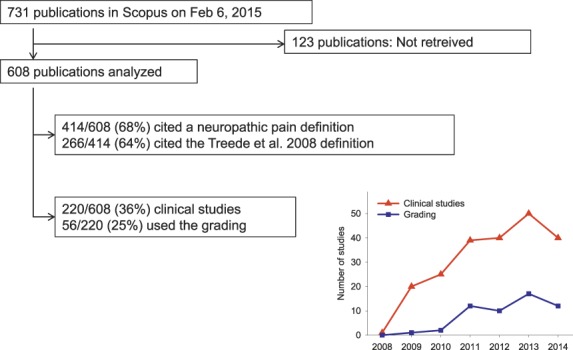
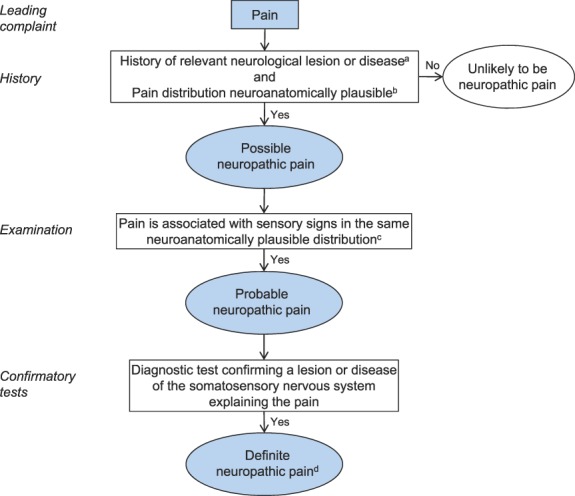
The redefinition of neuropathic pain as “pain arising as a direct consequence of a lesion or disease affecting the somatosensory system,” which was suggested by the International Association for the Study of Pain (IASP) Special Interest Group on Neuropathic Pain (NeuPSIG) in 2008, has been widely accepted. In contrast, the proposed grading system of possible, probable, and definite neuropathic pain from 2008 has been used to a lesser extent. Here, we report a citation analysis of the original NeuPSIG grading paper of 2008, followed by an analysis of its use by an expert panel and recommendations for an improved grading system. As of February, 2015, 608 eligible articles in Scopus cited the paper, 414 of which cited the neuropathic pain definition. Of 220 clinical studies citing the paper, 56 had used the grading system. The percentage using the grading system increased from 5% in 2009 to 30% in 2014. Obstacles to a wider use of the grading system were identified, including (1) questions about the relative significance of confirmatory tests, (2) the role of screening tools, and (3) uncertainties about what is considered a neuroanatomically plausible pain distribution. Here, we present a revised grading system with an adjusted order, better reflecting clinical practice, improvements in the specifications, and a word of caution that even the “definite” level of neuropathic pain does not always indicate causality. In addition, we add a table illustrating the area of pain and sensory abnormalities in common neuropathic pain conditions and propose areas for further research.
Overview
The claims and statistics of this paper haven’t been checked yet.
Run the check — free, no account needed. It reads the open-access text and checks the sources it cites.
Integrity signals
Registry
Cites
Statistics
Figures
Verification
Claims the paper makes
The claims and statistics of this paper haven’t been checked yet.
Run the check — free, no account needed. It reads the open-access text and checks the sources it cites.
Claims other papers make about this one
Each is checked against this paper’s own text: does it say what the citing paper says it does?
The source backs part of the claim, not all of it — or backs it for a different population, condition or comparison.
In the citing paper
“To indicate probable neuropathic pain, pain must also be associated with sensory abnormalities (i.e., clinical signs such as allodynia and/or hyperalgesia) in the same neuroanatomical plausible distribution (Finnerup et al. 2016; Schmid et al. 2023).”
From The Prevalence of Neuropathic Pain in Multiple Sclerosis—A Systematic Review and Meta‐Analysis Using the NeuPSIG Algorithm (2026) · cites this paper as Finnerup et al. 2016
Experimental — accuracy not yet measuredThe cited source says what the claim attributes to it.
In the citing paper
“Lastly, to establish definite neuropathic pain, additional objective confirmation of a lesion or disease in the somatosensory nervous system that may explain the pain is required (Finnerup et al. 2016; Schmid et al. 2023).”
From The Prevalence of Neuropathic Pain in Multiple Sclerosis—A Systematic Review and Meta‐Analysis Using the NeuPSIG Algorithm (2026) · cites this paper as Finnerup et al. 2016
The cited source says what the claim attributes to it.
In the citing paper
“To indicate possible neuropathic pain, patients must meet two criteria. First, the medical history should prompt a possible explanation for neuropathic pain, and patients should present with clinical symptoms. Second, the experienced pain distribution must be neuroanatomically plausible (i.e., the experienced pain is likely to correspond to the patient's neurological damage) (Finnerup et al. 2016;”
From The Prevalence of Neuropathic Pain in Multiple Sclerosis—A Systematic Review and Meta‐Analysis Using the NeuPSIG Algorithm (2026) · cites this paper as Finnerup et al. 2016
The cited source says what the claim attributes to it.
In the citing paper
“the Neuropathic Pain Special Interest Group (NeuPSIG) has developed a grading system for the identification of neuropathic pain (Finnerup et al. 2016; Schmid et al. 2023)”
From The Prevalence of Neuropathic Pain in Multiple Sclerosis—A Systematic Review and Meta‐Analysis Using the NeuPSIG Algorithm (2026) · cites this paper as Finnerup et al. 2016
The cited source says what the claim attributes to it.
In the citing paper
“Importantly, a possible diagnosis cannot replace the probable and definite certainty provided by NeuPSIG in clinical practice (Finnerup et al. 2016).”
From The Prevalence of Neuropathic Pain in Multiple Sclerosis—A Systematic Review and Meta‐Analysis Using the NeuPSIG Algorithm (2026) · cites this paper as Finnerup et al. 2016
The cited source says what the claim attributes to it.
In the citing paper
“Importantly, the algorithms used across diagnostic certainty levels do not yield a definitive diagnosis of neuropathic pain (i.e., not to be confused with definite neuropathic pain). Instead, the grading system evaluate the probability that the experienced pain is caused by neurological damage, with increasing certainty as more criteria are met (Finnerup et al. 2016).”
From The Prevalence of Neuropathic Pain in Multiple Sclerosis—A Systematic Review and Meta‐Analysis Using the NeuPSIG Algorithm (2026) · cites this paper as Finnerup et al. 2016
The cited source says what the claim attributes to it.
In the citing paper
“Given these considerations and in line with existing guidelines, the establishment of a probable diagnosis of neuropathic pain may be adequate for prompting analgesic treatments in pwMS, provided that the patient has a valid diagnosis of MS (Finnerup et al. 2016; Treede et al. 2019).”
From The Prevalence of Neuropathic Pain in Multiple Sclerosis—A Systematic Review and Meta‐Analysis Using the NeuPSIG Algorithm (2026) · cites this paper as Finnerup et al. 2016
The cited source says what the claim attributes to it.
In the citing paper
“Hence, achieving definite diagnostic certainty does not constitute absolute proof of central neuropathic pain but should rather be interpreted as a strong indication within the context of best clinical practice (Finnerup et al. 2016).”
From The Prevalence of Neuropathic Pain in Multiple Sclerosis—A Systematic Review and Meta‐Analysis Using the NeuPSIG Algorithm (2026) · cites this paper as Finnerup et al. 2016
Self-check
Percentages, sums and reported differences re-computed from the paper’s own numbers.
The self-check needs the paper’s full text.
Citations
Cites
Central sensitization: implications for the diagnosis and treatment of pain
Woolf, C. J. (2011) · Pain · doi:10.1016/j.pain.2010.09.030 · Cited by 4,771 · cited 1×
“Because of central sensitization phenomena, the areas of allodynia and hyperalgesia may extend beyond the innervation territory.(35) Table 1”
BackgroundPharmacotherapy for neuropathic pain in adults: a systematic review and meta-analysis
Finnerup, N. B., Attal, N., Haroutounian, S., McNicol, E., Baron, R., Dworkin, R. H., Gilron, I., Haanpää, M., Hansson, P., Jensen, T. S., et al. (2015) · The Lancet Neurology · doi:10.1016/s1474-4422(14)70251-0 · Cited by 3,980
Self-citationBouhassira, D., Attal, N., Alchaar, H., Boureau, F., Brochet, B., Bruxelle, J., Cunin, G., Fermanian, J., Giniès, P., Grun-Overdyking, A., et al. (2005) · Pain · doi:10.1016/j.pain.2004.12.010 · Cited by 2,834
Self-citationA classification of chronic pain for ICD-11
Treede, R.-D., Rief, W., Barke, A., Aziz, Q., Bennett, M. I., Benoliel, R., Cohen, M., Evers, S., Finnerup, N. B., First, M. B., et al. (2015) · Pain · doi:10.1097/j.pain.0000000000000160 · Cited by 2,822
Self-citationTreede (2008) · doi:10.1212/01.wnl.0000282763.29778.59 · Cited by 2,746
Self-citationFreynhagen, R., Baron, R., Gockel, U., & Tölle, T. R. (2006) · Current Medical Research and Opinion · doi:10.1185/030079906x132488 · Cited by 2,280
Self-citationA new definition of neuropathic pain
Jensen, T., Baron, R., Haanpää, M., Kalso, E., Loeser, J., Rice, A., & Treede, R. (2011) · Pain · doi:10.1016/j.pain.2011.06.017 · Cited by 1,343
Self-citationThe LANSS Pain Scale: the Leeds assessment of neuropathic symptoms and signs
Bennett, M. (2001) · Pain · doi:10.1016/s0304-3959(00)00482-6 · Cited by 1,165
NeuPSIG guidelines on neuropathic pain assessment
Haanpää, M., Attal, N., Backonja, M., Baron, R., Bennett, M., Bouhassira, D., Cruccu, G., Hansson, P., Haythornthwaite, J. A., Iannetti, G. D., et al. (2011) · Pain · doi:10.1016/j.pain.2010.07.031 · Cited by 1,060
Self-citationMaier, C., Baron, R., Tölle, T. R., Binder, A., Birbaumer, N., Birklein, F., Gierthmühlen, J., Flor, H., Geber, C., Huge, V., et al. (2010) · Pain · doi:10.1016/j.pain.2010.05.002 · Cited by 1,021
Self-citation
Cited by
Sorted by citations
Items 401–500 of 999
Abolkhair, A. B., El-Kabbani, A. O., Al-Mulhem, A., AlFattani, A. A. G., Al-Hammadi, A., Alghamdi, H. A., Haddara, M. M., AlRaffa, A., Kamal, A. S., Alsaigh, R. N., et al. (2021) · Saudi Journal of Anaesthesia · doi:10.4103/sja.sja_352_21 · Cited by 21
Development of a Screening Tool for Pediatric Neuropathic Pain and Complex Regional Pain Syndrome
Mesaroli, G., Campbell, F. A., Hundert, A. S., Birnie, K. A., Sun, N., Davidge, K. M., Lalloo, C., Davies-Chalmers, C., Harris, L. S., & Stinson, J. (2021) · Clinical Journal of Pain · doi:10.1097/ajp.0000000000000993 · Cited by 18
“1-6 mo 2 (8) 6-12 mo 4 (16) 1-3 y 7 (28) > 3 y 7 (28)”
Lötsch, J., Mustonen, L., Harno, H., & Kalso, E. A. (2022) · International Journal of Molecular Sciences · doi:10.3390/ijms23073488 · Cited by 18
“Persistent postsurgical neuropathic pain (PPSNP), defined as pain caused by a lesion of the somatosensory system associated with the surgical procedure [1], poses clinical challenges due to its intensity, relative resistance to current pharmacologic treatments, and”
BackgroundMethodAnti‐ and Pro‐Nociceptive mechanisms in neuropathic pain after human spinal cord injury
Lütolf, R., Schoenmacker, I. D., Rösner, J., Sirucek, L., Schweinhardt, P., Curt, A. E. P., & Hubli, M. (2022) · European Journal of Pain · doi:10.1002/ejp.2029 · Cited by 19
“Inclusion criteria for the SCI cohort were a thoracolumbar SCI for at least 1 year and the presence of NP according to the current diagnostic criteria (Finnerup et al., 2016).”
MethodContinuum of sensory profiles in diabetes mellitus patients with and without neuropathy and pain
Raputová, J., Rajdová, A., Vollert, J., et al. (2022) · European Journal of Pain · doi:10.1002/ejp.2034 · Cited by 17
“Confirmation of a lesion or disease of the somatosensory system by various tests increases the degree of certainty of the diagnosis of neuropathic pain in the context of a relevant history, pain characteristics and distribution and results of clinical sensory testing (Finnerup et al., 2016).”
BackgroundMethodInfluentialElectroencephalography functional connectivity—A biomarker for painful polyneuropathy
Topaz, L. S., Frid, A., Granovsky, Y., Zubidat, R., Crystal, S., Buxbaum, C., Bosak, N., Hadad, R., Domany, E., Alon, T., et al. (2022) · European Journal of Neurology · doi:10.1111/ene.15575 · Cited by 17
Self-citationThe Epidemiology of Diabetic Neuropathy
Hansen, C. S., Määttä, L. L., Andersen, S. T., & Charles, M. H. (2023) · Contemporary Diabetes · doi:10.1007/978-3-031-15613-7_2 · Cited by 17
Combining Human and Rodent Genetics to Identify New Analgesics
Latrémolière, A., & Costigan, M. (2017) · Neuroscience Bulletin · doi:10.1007/s12264-017-0152-z · Cited by 17
Validation of diagnostic methods for traumatic sensory neuropathy and neuropathic pain
Teerijoki‐Oksa, T., Forssell, H., & Jääskeläinen, S. K. (2018) · Muscle & Nerve · doi:10.1002/mus.26400 · Cited by 17
Bozdağ, M., Poli, G., Angeli, A., et al. (2019) · Bioorganic Chemistry · doi:10.1016/j.bioorg.2019.103033 · Cited by 17
Hegazy, N., Rezq, S., & Fahmy, A. (2020) · Basic & Clinical Pharmacology & Toxicology · doi:10.1111/bcpt.13453 · Cited by 17
Zucchella, C., Mantovani, E., Icco, R. D., Tassorelli, C., Sandrini, G., & Tamburin, S. (2020) · Frontiers in Neuroscience · doi:10.3389/fnins.2020.547069 · Cited by 17
“In contrast, neuropathic pain is due to a lesion or disease of the peripheral or central parts of the somatosensory system (Finnerup et al., 2016).”
BackgroundRakhshandeh, H., Pourbagher‐Shahri, A. M., Hasanpour, M., Iranshahi, M., & Forouzanfar, F. (2022) · Metabolic Brain Disease · doi:10.1007/s11011-022-01094-2 · Cited by 17
Matsuki, Y., Sukenaga, N., Miyagi, K., Tsunetoh, T., Mizogami, M., Shigemi, K., Maeda, L., & Hirose, M. (2018) · Journal of Anesthesia · doi:10.1007/s00540-018-2495-7 · Cited by 16
Tuem, K. B., Gebremeskel, L. G., Hiluf, K., Arko, K., & Hailu, H. G. (2020) · Journal of Oncology · doi:10.1155/2020/2903542 · Cited by 17
Ceronie, B., Strippel, C., Uy, C. E., et al. (2025) · Annals of Neurology · doi:10.1002/ana.27177 · Cited by 16
Self-citationBlack, S. R., King, J. B., Mahan, M. A., Anderson, J. S., & Butson, C. R. (2021) · Frontiers in Neurology · doi:10.3389/fneur.2021.613630 · Cited by 16
“Overall, this exploratory study has [1] presented a novel task approach to identify regions of the brain associated with chronic NP; [2] identified regions of increased task-based activation associated with NP after SCI within the insula, prefrontal, and medial inferior parietal cortices; and [3] identified regions of…”
BackgroundMethodNeuropathic pain prevalence and risk factors in head and neck cancer survivors
Rojo, R. D., Ren, J. L., Lipe, D. N., Badr, H., Shete, S. S., Hanna, E. Y., & Reyes‐Gibby, C. C. (2022) · Head & Neck · doi:10.1002/hed.27199 · Cited by 16
“Patients with a compressed nerve, as is the case for radiculopathy and herniated disc, may be more likely to develop NP because compression induces denervation over time.(101) Osteoarthritis was also a significant covariate of NP in our study.”
BackgroundMiclescu, A. A., Gkatziani, P., Granlund, P., Butler, S. H., & Gordh, T. (2022) · PAIN Reports · doi:10.1097/pr9.0000000000001033 · Cited by 16
“After clinical evaluation and additional tests (nerve conduction studies before the visit, QST), pain was classified as neuropathic or nonneuropathic using the International Association for the Study of Pain/Neuropathic Pain Special Interest Group grading system.(11) Sensory examination testing was for touch with a ca…”
BackgroundMethodFlor, H., Noguchi, K., Treede, R., & Turk, D. C. (2023) · Pain · doi:10.1097/j.pain.0000000000003063 · Cited by 16
Self-citationShaker, E. H., Elshal, M. M., Gamal, R. M., Zayed, N. O. A., Samy, S. F., Reyad, R. M., Shaaban, M. H., Alrahman, A. A. M. A., & Abdelgalil, A. S. (2023) · PAIN Reports · doi:10.1097/pr9.0000000000001106 · Cited by 16
Advancements in Modern Treatment Approaches for Central Post-Stroke Pain: A Narrative Review
Asadauskas, A., Stieger, A., Luedi, M. M., & Andereggen, L. (2024) · Journal of Clinical Medicine · doi:10.3390/jcm13185377 · Cited by 17
“Anticonvulsants, such as pregabalin and gabapentin, are commonly prescribed due to their ability to modulate neuronal excitability and reduce pain signals [8,32,33].”
BackgroundLandmann, G., Berger, M. F., Stockinger, L., & Opsommer, E. (2017) · Spinal Cord · doi:10.1038/sc.2016.191 · Cited by 16
Identification of the key genes associated with neuropathic pain
Liu, H., Xia, T., Xu, F., Ma, Z., & Gu, X. (2018) · Molecular Medicine Reports · doi:10.3892/mmr.2018.8718 · Cited by 16
Mayoral, V., Pérez, C., Muro, I., Leal, A., Villoria, J., & Esquivias, A. (2018) · Current Medical Research and Opinion · doi:10.1080/03007995.2018.1465905 · Cited by 16
Bordeleau, M., Léonard, G., Gauthier, L. R., Ferland, C. E., Bačkonja, M., Vollert, J., Marchand, S., Jackson, P. L., Cantin, L., & Prud'Homme, M. (2021) · Journal of Pain Research · doi:10.2147/jpr.s301655 · Cited by 19
McParland, A., Bhatia, A., Matelski, J. J., Tian, C., Diep, C., Clarke, H. A., Kapustin, D., Triveda, A., Brull, R., & Singh, M. (2022) · Regional Anesthesia & Pain Medicine · doi:10.1136/rapm-2021-103431 · Cited by 16
Kubota, G. T., Soares, F. H. C., da Fonseca, A. S., Rosa, T. D. S., da Silva, V. A., Gouveia, G. R., Faria, V. G., da Cunha, P. H. M., Brunoni, A. R., Teixeira, M. J., et al. (2023) · European Journal of Pain · doi:10.1002/ejp.2094 · Cited by 18
Šrotová, I., Kočica, J., Vollert, J., Kolčava, J., Hulová, M., Jarkovský, J., Dušek, L., Bednařík, J., & Vlčková, E. (2020) · European Journal of Pain · doi:10.1002/ejp.1695 · Cited by 16
“In addition to ‘neuropathic’ DN4 score, all patients complied with a diagnosis of definite neuropathic pain (Finnerup et al., 2016; Treede et al., 2008) based on plausible neuro-anatomical distribution, exclusion of other likely causes of pain, and an appropriate demyelinating lesion on imaging.”
BackgroundPatients with persistent idiopathic dentoalveolar pain in dental practice
Sanner, F., Sonntag, D., Hambrock, N., et al. (2021) · International Endodontic Journal · doi:10.1111/iej.13664 · Cited by 15
“In addition to nociceptive and inflammatory pain, as is the case with odontogenic pain, from a pathophysiological point of view, there are two other pain types frequently implicated in chronic pain, namely neuropathic pain (Finnerup et al., 2016) and neuroplastic pain (Kosek et al., 2016).”
BackgroundThemistocleous, A. C., Kristensen, A. G., Solà, R., Gylfadottir, S. S., Bennedsgaard, K., Itani, M., Krøigård, T., Ventzel, L., Sindrup, S. H., Jensen, T. S., et al. (2022) · Annals of Neurology · doi:10.1002/ana.26319 · Cited by 15
Self-citationGhafouri, N., Bäckryd, E., Dragioti, E., Fischer, M. R., Ringqvist, Å., & Gerdle, B. U. C. (2023) · BMC Musculoskeletal Disorders · doi:10.1186/s12891-023-06462-2 · Cited by 16
“Neuropathic pain is defined as pain that arises as a direct consequence of a lesion or disease affecting the somatosensory system [6] and is widely recognized as being one of three major pain mechanisms, along with nociceptive pain and nociplastic pain [7].”
BackgroundMethodThe emerging role of pyroptosis in neuropathic pain
Li, B., Guo, J., Zhou, X., Li, W., Wang, N., Cao, R., & Cui, S. (2023) · International Immunopharmacology · doi:10.1016/j.intimp.2023.110562 · Cited by 14
Stress specifically deteriorates working memory in peripheral neuropathic pain and fibromyalgia
Jacobsen, H. B., Brun, A., Stubhaug, A., & Rème, S. E. (2023) · Brain Communications · doi:10.1093/braincomms/fcad194 · Cited by 15
“A patient was classified as having PNP if they had peripheral pain and a history of a relevant lesion or disease, which could be assessed by a test, as well as current plausible somatosensory disturbances.(30) Patients that reported chronic widespread pain, meaning pain in both the left and right side as well as upper…”
BackgroundBaptista, F., Nery, E. C. H. P., Cruz, E. B., Afreixo, V. M. A., & Silva, A. G. (2023) · Clinical Rehabilitation · doi:10.1177/02692155231215216 · Cited by 15
“103 In addition, future studies should describe the intervention in detail, as well as to perform follow-up evaluations to verify the duration of effect, as few studies have performed these assessments.”
BackgroundThe blink reflex and its modulation – Part 2: Pathophysiology and clinical utility
Gündüz, A., Valls‐Solé, J., Serranová, T., Coppola, G., Köfler, M., & Jääskeläinen, S. K. (2024) · Clinical Neurophysiology · doi:10.1016/j.clinph.2024.02.006 · Cited by 14
Experiences of patients with advanced cancer coping with chronic pain: a qualitative analysis
Xia, W., Ou, M., Chen, Y., Chen, F., Yan, M., Xiao, Z., & Xu, X. (2024) · BMC Palliative Care · doi:10.1186/s12904-024-01418-2 · Cited by 20
“Nociceptive pain, which includes somatic and visceral pain, is caused by actual or threatened damage to non-neural tissues caused by nociception stimulation [5], while neuropathic pain arises from lesions or damage to the somatosensory nervous system [6].”
BackgroundGandhi, W., Pomares, F. B., Naso, L., Asenjo, J. F., & Schweinhardt, P. (2020) · European Journal of Pain · doi:10.1002/ejp.1569 · Cited by 16
“In addition to a history of a relevant neurological lesion and/or a neuroanatomically plausible pain distribution, the diagnosis of neuropathic pain requires the presence of sensory signs (Finnerup et al., 2016).”
BackgroundEpstein, M. E. (2020) · Veterinary Clinics of North America Small Animal Practice · doi:10.1016/j.cvsm.2020.02.004 · Cited by 16
Salman, A., Abbas, D. N., Elrawas, M. M., Kamel, M. A., Mohammed, A. M., Soud, A. H. A. A., & Abdelgalil, A. S. (2021) · Minerva Anestesiologica · doi:10.23736/s0375-9393.21.15112-0 · Cited by 16
Hansen, J. S., Hansen, R. M., Petersen, T., Gustavsen, S., Oturai, A. B., Sellebjerg, F. T., Sædder, E. A., Kasch, H., Rasmussen, P. V., Finnerup, N. B., et al. (2021) · Brain Sciences · doi:10.3390/brainsci11091212 · Cited by 15
“Disease or acquired damage to the central nervous system (CNS) may entail disabling spasticity and central neuropathic pain (NP) [1].”
BackgroundSelf-citationNeuPSIG: investing in solutions to the growing global challenge of neuropathic pain
Smith, B. H., & Raja, S. N. (2017) · British Journal of Anaesthesia · doi:10.1093/bja/aex276 · Cited by 15
Self-citationDelage, N., Morel, V., Picard, P., Marcaillou, F., Pereira, B., & Pickering, G. P. (2017) · Trials · doi:10.1186/s13063-017-2254-3 · Cited by 15
“Neuropathic pain (NP), whatever the etiology or topography, presents with a number of clinical characteristics: sensory deficit, hypoesthesia, electric shock-like pain, allodynia, or hyperalgesia [1].”
BackgroundHansson, P. T., Baron, R., & Stubhaug, A. (2019) · Pain · doi:10.1097/j.pain.0000000000001650 · Cited by 15
“”(2) The IASP special interest group on NeP has recently refined their previous identification algorithm for NeP and emphasizes the neuroanatomical distribution of pain and findings of sensory aberrations in the painful area.(8) With such a perspective, identifying a projected NeP in a geographically distant area to a…”
BackgroundSelf-citationPigatto, G. R., Quinteiro, M. H. S., Nunes‐de‐Souza, R. L., et al. (2019) · Pain Practice · doi:10.1111/papr.12862 · Cited by 15
“nonsteroidal anti-inflammatory drugs, chronic pain is more distressing than nociceptive pain and has a greater negative impact on the life and health of patients, depending on its severity and underlying cause.(2,3) New statistics released by the International Association for the Study of Pain (IASP) and the European…”
BackgroundMistry, J., Falla, D., Noblet, T., Heneghan, N. R., & Rushton, A. B. (2020) · BMC Musculoskeletal Disorders · doi:10.1186/s12891-020-03600-y · Cited by 15
Diagnostik und Therapie neuropathischer Schmerzen
Goßrau, G., & Sabatowski, R. (2021) · Der Anaesthesist · doi:10.1007/s00101-021-01039-x · Cited by 15
Mori, N., Hosomi, K., Nishi, A., Matsugi, A., Dong, D., Oshino, S., Kishima, H., & Saitoh, Y. (2021) · PAIN Reports · doi:10.1097/pr9.0000000000000964 · Cited by 14
Gehr, N. L., Timm, S., Bennedsgaard, K., et al. (2025) · The Breast · doi:10.1016/j.breast.2025.104424 · Cited by 14
“The approach is inspired by the grading system of neuropathic pain from the International Association for the Study of Pain, Special Interest Group on Neuropathic Pain [23].”
Self-citationSchipholt, I. J. L., Scholten-Peeters, G. G. M., Koop, M. A., Bonnet, P., Bontkes, H. J., & Coppieters, M. W. (2022) · Frontiers in Molecular Neuroscience · doi:10.3389/fnmol.2022.1003821 · Cited by 15
“The diagnosis cervical radiculopathy was based on clinical signs and symptoms [including radicular pain (Finnerup et al., 2016)] that concurred with nerve root compression identified via MRI.”
The Pharmacological Treatment of Neuropathic Pain in Children
Einhorn, L. M., Hudon, J., & Ingelmo, P. M. (2023) · Current Neuropharmacology · doi:10.2174/1570159x21666230804110858 · Cited by 14
“However, no study has shown that these applications are valid, reliable, and generalizable to a range of conditions, with differing severity, over time [19, 23-25].”
BackgroundVela, J., Dreyer, L., Petersen, K. K., Arendt‐Nielsen, L., Duch, K. S., Amris, K., & Kristensen, S. (2023) · European Journal of Pain · doi:10.1002/ejp.2183 · Cited by 15
Sex-Gender Differences Are Completely Neglected in Treatments for Neuropathic Pain
Salis, F., Sardo, S., Finco, G., Gessa, G. L., Franconi, F., & Agabio, R. (2024) · Pharmaceuticals · doi:10.3390/ph17070838 · Cited by 14
“The management of pharmacological strategies for the treatment of chronic neuropathic pain encompasses a pharmacotherapeutic armamentarium in addition to adjunctive measures, including physical therapy and, in select cases, surgical interventions [2,16–18].”
BackgroundThe presence and prognosis of nerve pathology following whiplash injury: a prospective cohort study
Fundaun, J., Ridehalgh, C., Koushesh, S., Novak, A., Tejos‐Bravo, M., Bremner, S. A., Baskozos, G., Dilley, A., & Schmid, A. B. (2025) · Brain · doi:10.1093/brain/awaf088 · Cited by 14
“…and corresponding cut-off thresholds included: NfL z -score > 1.5 39 ; QST z -scores of < − 1.96 in at least one parameter 42 ; at least possible neuropathic pain using the NeuPSIG grading system 29 ; and bedside neurological assessment including at least one measure with loss-of-function.”
InfluentialTampin, B., Broe, R. E., Seow, L. L., George, S. G., Tan, J.-J., Menon, R., Jacques, A., & Slater, H. (2019) · Scandinavian Journal of Pain · doi:10.1515/sjpain-2018-0348 · Cited by 14
Lind, A., Just, D., Mikus, M. S., Fredolini, C., Ioannou, M., Gerdle, B. U. C., Ghafouri, B., Bäckryd, E., Tanum, L., Gordh, T., et al. (2019) · Journal of Pain Research · doi:10.2147/jpr.s215348 · Cited by 15
“descending control and changes in key neurotransmitters associated with central sensitization.(10) However, altered”
BackgroundEffect of Neural Mobilization on Nerve-Related Neck and Arm Pain: A Randomized Controlled Trial
Basson, A., Stewart, A., Mudzi, W., & Musenge, E. (2019) · Physiotherapy Canada · doi:10.3138/ptc-2018-0056 · Cited by 16
Kaur, N., Kumar, R., Jain, A., & Saxena, A. K. (2020) · Indian Journal of Surgical Oncology · doi:10.1007/s13193-020-01193-5 · Cited by 18
Pain complications of oral implants: Is that an issue?
Conti, P. C. R., Bonjardim, L. R., Stuginski‐Barbosa, J., et al. (2020) · Journal of Oral Rehabilitation · doi:10.1111/joor.13112 · Cited by 14
dos Santos, D. N., Sá, K. N., de Queirós, F. C., Paixão, A. B., Santos, K. O. B., Andrade, R., Camatti, J. R., & Baptista, A. F. (2021) · Journal of NeuroVirology · doi:10.1007/s13365-020-00914-4 · Cited by 14
Xiao, H., Ma, K., Huang, D., Liu, X., Liu, T., Liu, Q., Liu, G., Song, T., Tao, W., Wu, D., et al. (2021) · World Journal of Clinical Cases · doi:10.12998/wjcc.v9.i9.2100 · Cited by 14
Gillving, M., Demant, D. T., Holbech, J. V., Vase, L., Bach, F. W., Jensen, T. S., Finnerup, N. B., & Sindrup, S. H. (2021) · Pain · doi:10.1097/j.pain.0000000000002374 · Cited by 14
Self-citationAdler, M., & Taxer, B. (2021) · Der Schmerz · doi:10.1007/s00482-021-00576-z · Cited by 14
“Neuropathische Schmerzsyndrome treten nach einer Erkrankung oder Läsion des somatosensorischen Nervensystems auf [21].”
BackgroundBontinck, J., Lenoir, D., Cagnie, B. J., Murillo, C., Timmers, I., Cnockaert, E., Bernaers, L., Meeus, M., & Coppieters, I. (2021) · European Journal of Pain · doi:10.1002/ejp.1858 · Cited by 14
Jin, G.-J., Peng, X., Chen, Z., Wang, Y., & Liao, W.-J. (2021) · Journal of Natural Medicines · doi:10.1007/s11418-021-01564-4 · Cited by 15
Research Accessibility Team (RAT) (2021) · Cardiovascular Endocrinology & Metabolism · doi:10.1097/xce.0000000000000253 · Cited by 14
Wheeler, P. C. (2022) · BMJ Open Sport & Exercise Medicine · doi:10.1136/bmjsem-2021-001297 · Cited by 14
A qualitative study of the experience and impact of neuropathic pain in people living with HIV
Scott, W., del Solar, M. G. C. M., Kemp, H. I., McCracken, L. M., Williams, A. C. D. C., & Rice, A. S. C. (2019) · Pain · doi:10.1097/j.pain.0000000000001783 · Cited by 14
Self-citationGuo, Q., Mizuno, K., Okuyama, K., et al. (2020) · Biomedicine & Pharmacotherapy · doi:10.1016/j.biopha.2020.109812 · Cited by 14
Long noncoding RNA LOC100911498 is a novel regulator of neuropathic pain in rats
Tang, W., Zhang, L., & Li, Z. (2021) · Brain and Behavior · doi:10.1002/brb3.1966 · Cited by 14
“Neuropathic pain (NP) is a debilitating pain condition directly caused by injury or disease of the somatosensory nervous system and a serious condition that can cause a series of symptoms, such as allodynia, hyperalgesia, and spontaneous pain (Finnerup et al., 2016).”
BackgroundAndersen, K. G. (2019) · Pain Physician · doi:10.36076/ppj/2019.22.e81 · Cited by 14
Livni, L., Keating, B. A., Fiore, N. T., Lees, J. G., Goldstein, D., & Moalem‐Taylor, G. (2021) · Pain · doi:10.1097/j.pain.0000000000002384 · Cited by 13
Doi, R., Miyazaki, T., Tsuchiya, T., Matsumoto, K., Tomoshige, K., Machino, R., Mizoguchi, S., Matsumoto, T., Yamaguchi, K., Takatsuna, H., et al. (2021) · Journal of Thoracic Disease · doi:10.21037/jtd-21-741 · Cited by 13
Neuropathic pain in Charcot–Marie‐Tooth disease: A clinical and laser‐evoked potential study
Peretti, A., Squintani, G. M., Taioli, F., et al. (2022) · European Journal of Pain · doi:10.1002/ejp.1922 · Cited by 13
Feng, B., Chen, G., You, L., Lin, Y., Wang, Y., Ip, W., & Wang, Y. (2023) · Journal of Pain Research · doi:10.2147/jpr.s441786 · Cited by 13
Bäckryd, E., Ghafouri, N., Gerdle, B. U. C., & Dragioti, E. (2024) · Journal of Rehabilitation Medicine · doi:10.2340/jrm.v56.40188 · Cited by 15
Shipman, W. D., Fonseca, R., Dominguez, M., Bhayani, S., Gilligan, C. J., Diwan, S. A., Rosenblum, D., Ashina, S., Tolba, R., Abd-Elsayed, A. A., et al. (2024) · Current Pain and Headache Reports · doi:10.1007/s11916-024-01309-4 · Cited by 13
“Neuropathic pain is resulting pain caused by a lesion or disease of the somatosensory system that is associated with the coupling of sensory disturbance or loss and associated pain with or without hypersensitivity at the site of pain [41–44].”
Progress in treatment of pathological neuropathic pain after spinal cord injury
Li, J., Kang, W., Wang, X., & Pan, F. (2024) · Frontiers in Neurology · doi:10.3389/fneur.2024.1430288 · Cited by 15
Emerging role of macrophages in neuropathic pain
Tong, S.-H., Liu, D., Liao, P., Zhang, S.-Y., Zhou, J., Yao, Z., Zhang, C.-Q., Huang, Y., & Gao, J. (2025) · Journal of Orthopaedic Translation · doi:10.1016/j.jot.2025.01.016 · Cited by 15
“…a major component of chronic pain, is defined as “ pain arising as a direct consequence of a lesion or disease affecting the somatosensory system ” by the International Association for the Study of Pain (IASP) [7], having a highly prevalent occurring in about 7 – 10 % of the general population [8].”
The Pain Dynamics of Small Fiber Neuropathy
Brouwer, B. A., van Kuijk, S. M. J., Bouwhuis, A., Faber, C. G., van Kleef, M., Merkies, I. S. J., & Hoeijmakers, J. G. J. (2018) · Journal of Pain · doi:10.1016/j.jpain.2018.11.009 · Cited by 13
Liu, P., Song, C., Wang, C., Li, Y., Su, L., Li, J., Zhao, Q., Wang, Z., Shen, M., Wang, G., et al. (2019) · Neuroscience Letters · doi:10.1016/j.neulet.2019.134616 · Cited by 13
Chronic BDNF simultaneously inhibits and unmasks superficial dorsal horn neuronal activity
Alles, S. R. A., Odem, M. A., Lu, V. B., et al. (2021) · Scientific Reports · doi:10.1038/s41598-021-81269-6 · Cited by 13
Falo, C. P., Benítez, R., Caro, M., Morell, M. H., Forte‐Lago, I., Hernández‐Cortés, P., Sanchez-Gonzalez, C., O’Valle, F., Delgado, M., & González‐Rey, E. (2021) · Pharmaceutics · doi:10.3390/pharmaceutics13070947 · Cited by 13
Flowers, K. M., Beck, M. R., Colebaugh, C. A., Haroutounian, S., Edwards, R. R., & Schreiber, K. L. (2021) · PAIN Reports · doi:10.1097/pr9.0000000000000976 · Cited by 13
Self-citationHochberg, U., Brill, S., Ofir, D., et al. (2022) · Journal of Clinical Medicine · doi:10.3390/jcm11164902 · Cited by 13
“The neuropathic pain type was defined using strict criteria, following the current International Association for the Study of Pain (IASP) definition of “definite neuropathic pain” [13].”
MethodExploration of Quantitative Sensory Testing in Latent Trigger Points and Referred Pain Areas
Ambite‐Quesada, S., Arias‐Buría, J. L., Courtney, C. A., Arendt‐Nielsen, L., & Fernández‐de‐las‐Peñas, C. (2017) · Clinical Journal of Pain · doi:10.1097/ajp.0000000000000560 · Cited by 13
Efficacy of tapentadol for first-line opioid-resistant neuropathic pain in Japan
Sugiyama, Y., Kataoka, T., Tasaki, Y., Kondo, Y., Sato, N., Naiki, T., Sakamoto, N., Akechi, T., & Kimura, K. (2018) · Japanese Journal of Clinical Oncology · doi:10.1093/jjco/hyy023 · Cited by 14
Hiraoka, Y., Akashi, M., Wanifuchi, S., Kusumoto, J., Shigeoka, M., Hasegawa, T., Hashikawa, K., Terashi, H., & Komori, T. (2018) · Oral Surgery Oral Medicine Oral Pathology and Oral Radiology · doi:10.1016/j.oooo.2018.03.017 · Cited by 13
A scoping review of novel spinal cord stimulation modes for complex regional pain syndrome
Hoydonckx, Y., Costanzi, M., & Bhatia, A. (2019) · Canadian Journal of Pain · doi:10.1080/24740527.2019.1574536 · Cited by 13
“Further, though CRPS type II is a neuropathic pain syndrome, CRPS type I does not meet the most recent IASP definition of neuropathic pain due to the absence of an identifiable nerve injury.(39) However, both types of CRPS have a phenotype that is similar to the presentation of neuropathic pain syndromes.”
BackgroundRozworska, K. A., Poulin, P. A., Carson, A., Tasca, G. A., & Nathan, H. J. (2019) · Journal of Behavioral Medicine · doi:10.1007/s10865-019-00079-4 · Cited by 15
Packham, T., Spicher, C. J., MacDermid, J. C., & Buckley, N. (2019) · Pain Medicine · doi:10.1093/pm/pnz045 · Cited by 12
“A positive allodynography, combined with the formation of clinical neuroanatomic hypothesis, meets the diagnostic standards for a probable diagnosis of neuropathic pain [14].”
BackgroundMethodLi, Y., Jiao, H.-N., Ren, W., et al. (2019) · Molecular Pain · doi:10.1177/1744806919882511 · Cited by 13
Pastrana-Quintos, T., Salgado‐Moreno, G., Pérez‐Ramos, J., et al. (2020) · BMC Complementary Medicine and Therapies · doi:10.1186/s12906-020-2867-z · Cited by 13
Identification of the Hub Genes Related to Nerve Injury-Induced Neuropathic Pain
Wang, K., Duan, Y., Yu, Z., Zhu, B., Li, S., & Liu, X. (2020) · Frontiers in Neuroscience · doi:10.3389/fnins.2020.00488 · Cited by 13
“Neuropathic pain (NP) is a kind of chronic pain induced by the injury or dysfunction of the central or peripheral nervous system (Jensen et al., 2011; Finnerup et al., 2016; Watson and Sandroni, 2016).”
BackgroundA Review on the Management of Symptoms in Patients with Incurable Cancer
Gonçalves, F., Gaudêncio, M., Rocha, A. M. D. N., Paiva, I., Rêgo, F. M. P. D. S., & Nunes, R. (2025) · Current Oncology · doi:10.3390/curroncol32080433 · Cited by 13
“…of certainty that pain is neuropathic in nature, classifying it into three levels: possible (compatible clinical history and location), probable (when associated with neurological dysfunction), and definite (when complementary diagnostic tests confirm the presence of somatosensory injury) [42].”
Pain Phenotype in Knee Osteoarthritis: Implications for Mechanism‐Based Therapy
He, C. Q., Li, Q., Huang, R., Gao, X., Li, L., & Fan, P. (2025) · Orthopaedic Surgery · doi:10.1111/os.70161 · Cited by 14
Nociplastic Pain: Facts, Controversies and Future Tasks
Häuser, W., & Kosek, E. (2025) · European Journal of Pain · doi:10.1002/ejp.70175 · Cited by 17
“There is a grading system available to diagnose possible, probable and definite neuropathic pain (Finnerup et al. 2016), but there is no grading system available to diagnose nociceptive pain.”
Trends in Gabapentin and Pregabalin Prescribing in a Tertiary Pediatric Medical Center
Donado, C., Nedeljkovic, K., Wangnamthip, S., Solodiuk, J. C., Bourgeois, F. T., & Berde, C. B. (2021) · Hospital Pediatrics · doi:10.1542/hpeds.2020-003582 · Cited by 12
Characterization of Hyperacute Neuropathic Pain after Spinal Cord Injury: A Prospective Study
Rösner, J., Negraeff, M., Bélanger, L. M., et al. (2021) · Journal of Pain · doi:10.1016/j.jpain.2021.06.013 · Cited by 12
Self-citationKodia, K., Alnajar, A., Szewczyk, J. B., Stephens-McDonnough, J. A., Villamizar, N. R., & Nguyen, D. M. (2022) · JTCVS Open · doi:10.1016/j.xjon.2021.09.051 · Cited by 12
Metadata
- Authors
- Finnerup, N. B., Haroutounian, S., Kamerman, P., Baron, R., Bennett, D. L. H., Bouhassira, D., Cruccu, G., Freeman, R., Hansson, P., Nurmikko, T., Raja, S. N., Rice, A. S. C., Serra, J., Smith, B. H., Treede, R.-D., & Jensen, T. S.
- Affiliations
- Aarhus University (DK)
- Washington University in St. Louis (US)
- University of the Witwatersrand (ZA)
- University Hospital Schleswig-Holstein (DE)
- University of Oxford (GB)
- Inserm (FR)
- Sapienza University of Rome (IT)
- Beth Israel Deaconess Medical Center (US)
- Oslo University Hospital (NO)
- Walton Centre (GB)
- Johns Hopkins University (US)
- Chelsea and Westminster Hospital NHS Foundation Trust (GB)
- Neuroscience Technologies, Ltd, Barcelona, Spain
- University of Dundee (GB)
- Heidelberg University (DE)
- Corresponding author
- Finnerup, Nanna B.
- ORCID
- Venue
- Pain
- Published
- 2016-01-13
- Volume
- 157
- Issue
- 8
- Pages
- 1599-1606
- ISSN
- 0304-3959 (ISSN-L)
- 1872-6623
- PMC
- PMC4949003
- OpenAlex
- W2316569153
- Semantic Scholar
- 4d1325782b7eb15e39a0a2fafbff56c6b01dbb4c
- Cited by
- 1,332
- References
- 34
- Citations by year
- 2026: 116 · 2025: 155 · 2024: 134 · 2023: 198 · 2022: 138 · 2021: 164 · 2020: 131 · 2019: 120 · 2018: 97 · 2017: 57 · 2016: 17
- FWCI
- 11.40
- Type
- journal article
- Language
- en
- Open access
- hybrid
- doi.org
- Locations
- Pain (publishedVersion, cc-by)
- Europe PMC (PubMed Central) (publishedVersion, cc-by)
- PubMed Central (publishedVersion, cc-by)
- PubMed (publishedVersion)
- Discovery Research Portal (University of Dundee) (publishedVersion, cc-by)
- Digital Commons@Becker (Washington University School of Medicine) (submittedVersion)
- IRIS Research product catalog (Sapienza University of Rome) (submittedVersion, cc-by)
- Digital Access to Scholarship at Harvard (DASH) (Harvard University) (submittedVersion, cc-by)
- Spiral (Imperial College London) (submittedVersion, other-oa)
- Funders
- Eli Lilly and Company
- Pfizer
- AstraZeneca
- Sanofi
- International Association for the Study of Pain
- Teva Pharmaceutical Industries
- Glenmark Pharmaceuticals
- European Commission (633491, HORIZON2020)
- Deutsche Forschungsgemeinschaft
- Bundesministerium für Bildung und Forschung
- Eisai
- Novo Nordisk (NNF14SA0006)
- Astellas Pharma
- Novo Nordisk Fonden (NNF14SA000 6, NNF14OC0011633)
- Allergan
- Sanofi Pasteur
- National Institute of General Medical Sciences
- Daiichi Sankyo Europe
- Topics
- Health Sciences › Medicine › Physiology (medical) › Pain Mechanisms and Treatments
- Health Sciences › Medicine › Anesthesiology and Pain Medicine › Pain Management and Treatment
- Health Sciences › Health Professions › Physical Therapy, Sports Therapy and Rehabilitation › Musculoskeletal pain and rehabilitation
- Keywords
- neuropathic pain, neuropathic pain diagnosis, pain distribution, sensory disturbances, confirmatory testing, screening tool
- MeSH terms
- Humans, Neuralgia, Pain Measurement, Surveys and Questionnaires, Research, Pain Management
About these checks
Registry, retraction, Cites and statistics results are computed, not judged, with one exception: a printed reference that no index lists is read once by a model before it counts as a citation error. Claims are extracted by a model and kept only when their quote appears verbatim in the text; each cited source is then checked, with a model’s help, for whether it says what the claim relies on. Those verdicts can be wrong — read the claim’s quote and the cited source before relying on one.
Statistics and arithmetic are recomputed, not judged.
Confidence bands are shown only for fields calibrated on our annotated test set. None is calibrated yet, so no band is shown.
What counts as a claim ›How we measure confidence ›How we check this ›
Are you an author, or do you see a problem with this page? Request a review
