

Proteome-wide copy-number estimation from transcriptomics
Open accessPreprint — published as 10.1038/s44320-024-00064-3 · Paper page
The DOI matches its Crossref record; 1 of the 1 references it cites were found in a registry or an index.
Abstract
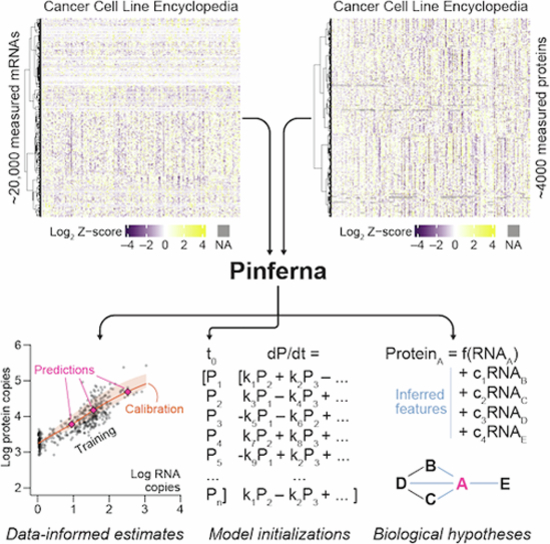
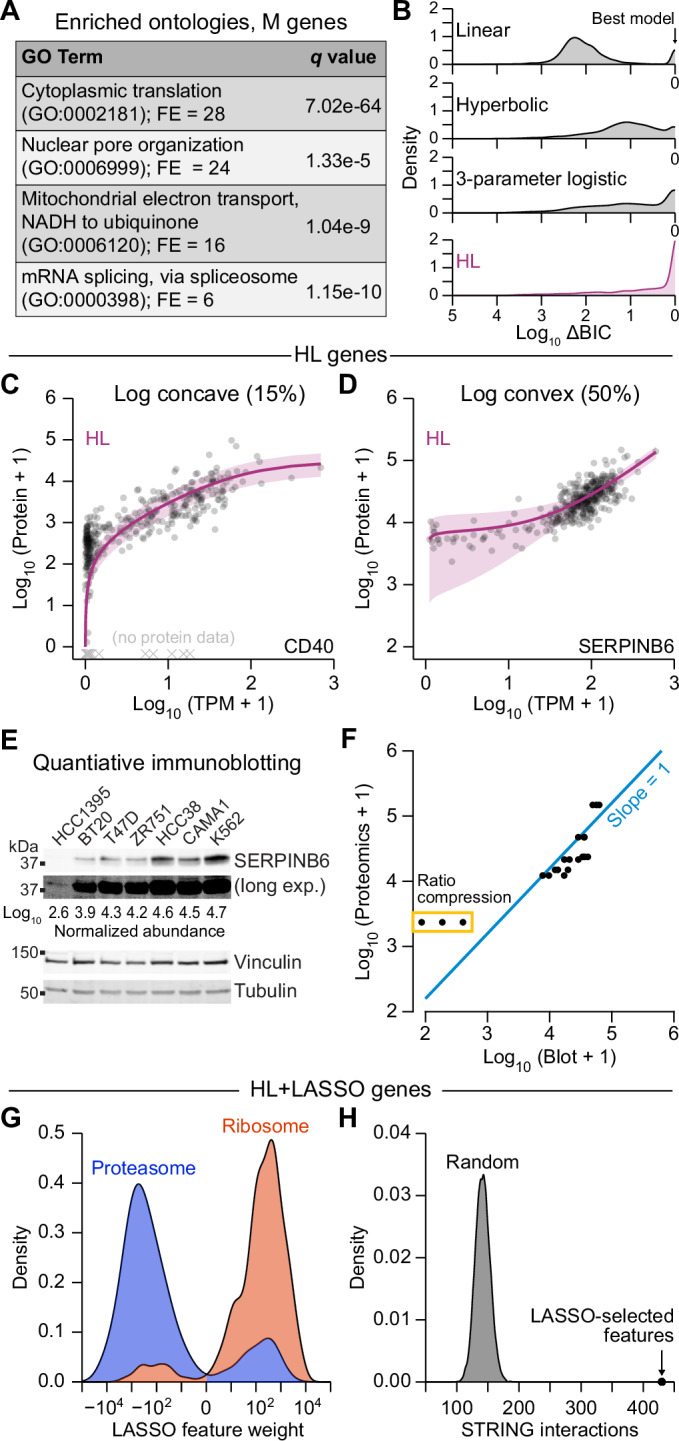
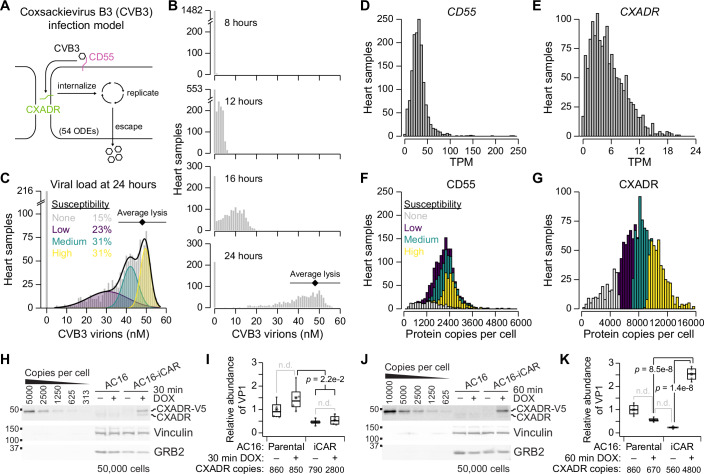
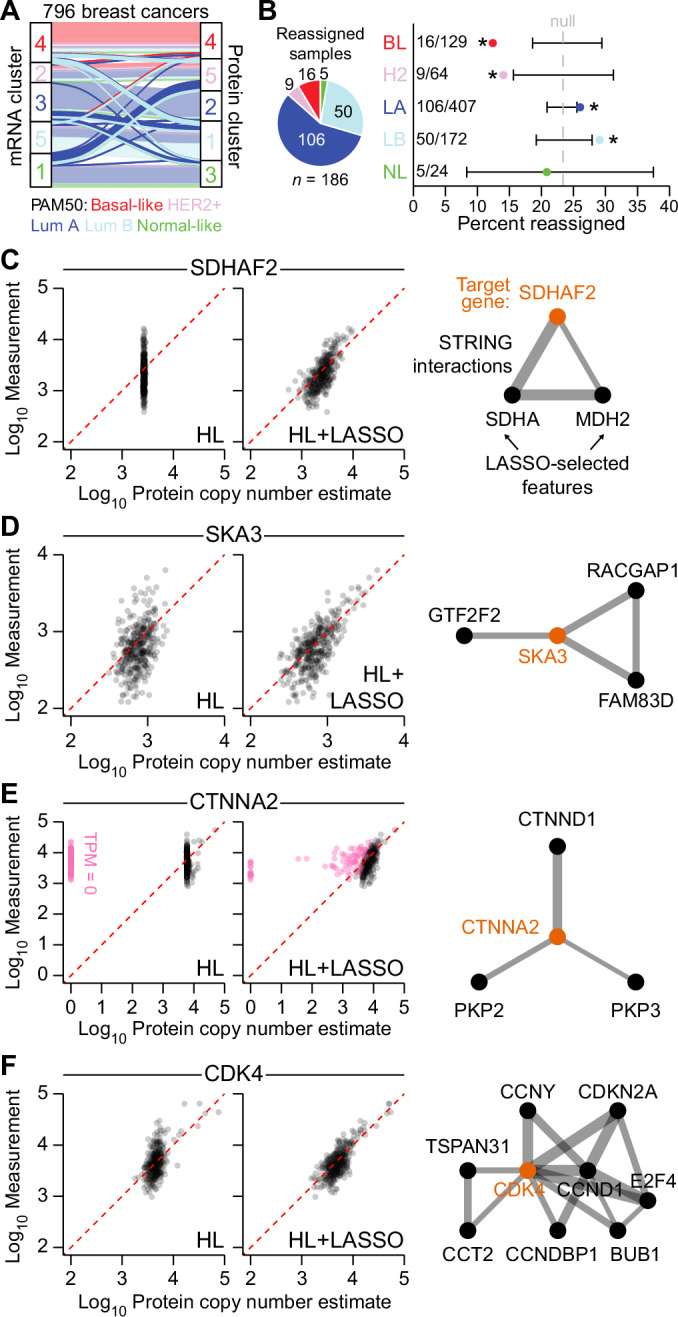
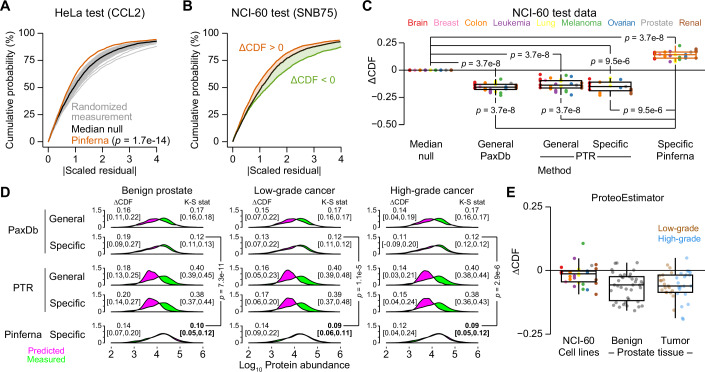
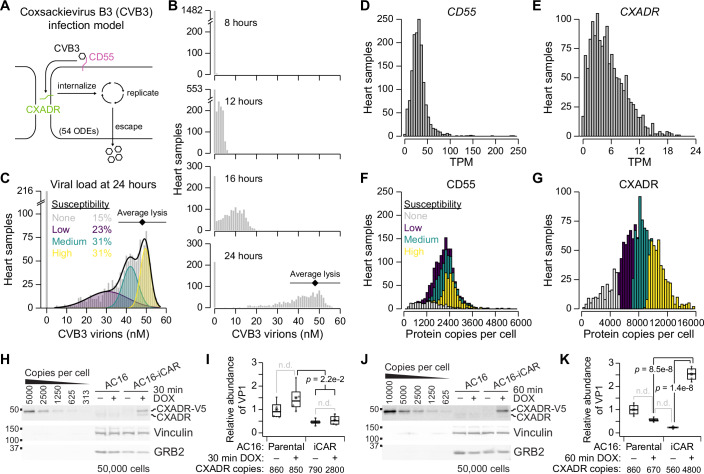
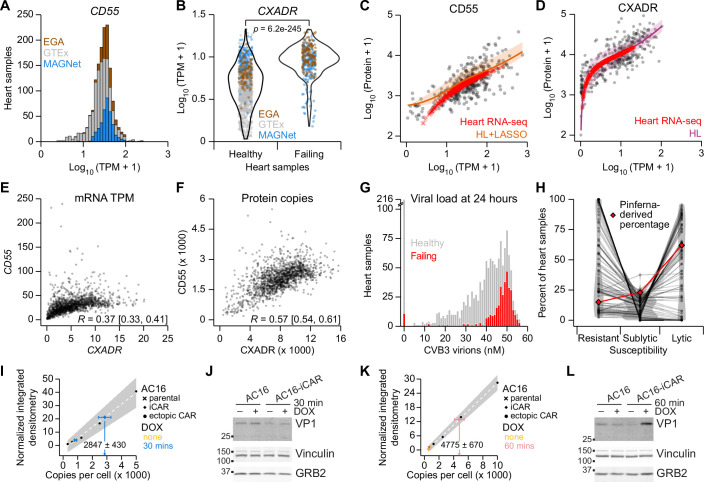
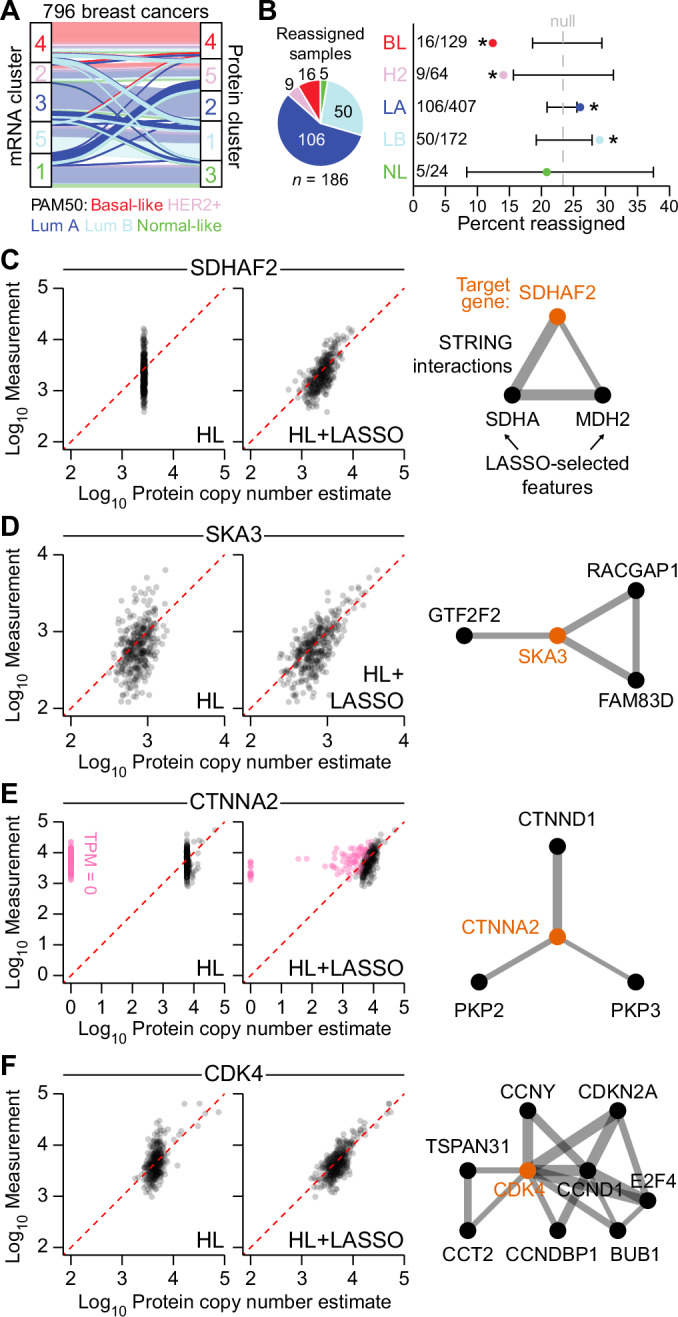
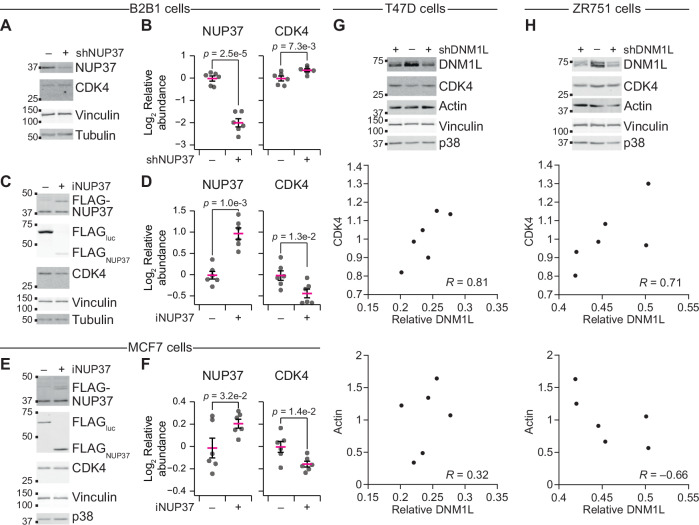
Protein copy numbers constrain systems-level properties of regulatory networks, but absolute proteomic data remain scarce compared to transcriptomics obtained by RNA sequencing. We addressed this persistent gap by relating mRNA to protein statistically using best-available data from quantitative proteomics–transcriptomics for 4366 genes in 369 cell lines. The approach starts with a central estimate of protein copy number and hierarchically appends mRNA-protein and mRNA-mRNA dependencies to define an optimal gene-specific model that links mRNAs to protein. For dozens of independent cell lines and primary prostate samples, these protein inferences from mRNA outmatch stringent null models, a count-based protein-abundance repository, and empirical protein-to-mRNA ratios. The optimal mRNA-to-protein relationships capture biological processes along with hundreds of known protein-protein interaction complexes, suggesting mechanistic relationships are embedded. We use the method to estimate viral-receptor abundances of CD55–CXADR from human heart transcriptomes and build 1489 systems-biology models of coxsackievirus B3 infection susceptibility. When applied to 796 RNA sequencing profiles of breast cancer from The Cancer Genome Atlas, inferred copy-number estimates collectively reclassify 26% of Luminal A and 29% of Luminal B tumors. Protein-based reassignments strongly involve a pharmacologic target for luminal breast cancer (CDK4) and an α-catenin that is often undetectable at the mRNA level (CTTNA2). Thus, by adopting a gene-centered perspective of mRNA-protein covariation across different biological contexts, we achieve accuracies comparable to the technical reproducibility limits of contemporary proteomics. The collection of gene-specific models is assembled as a web tool for users seeking mRNA-guided predictions of absolute protein abundance ( http://janeslab.shinyapps.io/Pinferna ). Significance statement: It is easier to quantify mRNA in cells than it is to quantify protein, but proteins are what execute most cellular functions. Even though protein is synthesized from mRNA in cells, relating a cellular quantity of mRNA to a quantity of protein is challenging. Here, we bring together quantitative measures of mRNA and protein for 4366 genes in 369 different cultured cell types to build equations that predict protein abundance from the abundance of mRNAs expressed. These equations capture facets of biological regulation and work better than existing alternatives that rely on consensus values or ratios. Since mRNA measurements are more widespread than protein, this study makes new analyses possible by protein estimation from mRNA.
Overview
The claims and statistics of this paper haven’t been checked yet.
Free: it reads the open-access text and checks the first 5 claims that cite a source we can check. Create a free account to check every claim.
Integrity signals
Registry
Cites
Statistics
Figures

Verification
Claims the paper makes
The claims and statistics of this paper haven’t been checked yet.
Free: it reads the open-access text and checks the first 5 claims that cite a source we can check. Create a free account to check every claim.
Self-check
Percentages, sums and reported differences re-computed from the paper’s own numbers.
The self-check needs the paper’s full text.
Citations
Cites
Global quantification of mammalian gene expression control
Schwanhäusser, B., Busse, D., Li, N., Dittmar, G., Schuchhardt, J., Wolf, J., Chen, W., & Selbach, M. (2011) · Nature · doi:10.1038/nature10098 · Cited by 6,566 · cited 3×
“The mRNA-to-protein relationship classes used here distill the major findings of prior models that were more fine grained (41, 64, 65).”
Research works printed but not linked: 89
- 10.1073/pnas.0907732106 · DOI · Paper page
- 10.1038/nrg2484 · DOI · Paper page
- 10.1093/nar/gks1193 · DOI · Paper page
- 10.1038/ng.3173 · DOI · Paper page
- 10.1073/pnas.1704553114 · DOI · Paper page
- 10.1038/nature13438 · DOI · Paper page
- 10.1038/nature18003 · DOI · Paper page
- 2021, Personalized Genome-Scale Metabolic Models Identify Targets of Redox Metabolism in Radiation-Resistant Tumors, Cell Syst, 12, 68, 10.1016/j.cels.2020.12.001 · DOI · Paper page
- 10.1126/scisignal.aba4200 · DOI
- A. Montagud et al., Patient-specific Boolean models of signalling networks guide personalised treatments. Elife 11, (2022). · DOI
- 2019, A Review on Quantitative Multiplexed Proteomics, ChemBioChem, 20, 1210, 10.1002/cbic.201800650 · DOI · Paper page
- 10.1021/ac0262560 · DOI · Paper page
- 10.1158/2159-8290.CD-13-0219 · DOI · Paper page
- 10.1074/mcp.O111.016717 · DOI · Paper page
- 10.1093/nar/gky1106 · DOI · Paper page
- 10.1038/ng.3593 · DOI · Paper page
- 10.1038/nature13319 · DOI · Paper page
- 10.1038/nature22293 · DOI · Paper page
- 2020, mRNAs, proteins and the emerging principles of gene expression control, Nat. Rev. Genet, 21, 630, 10.1038/s41576-020-0258-4 · DOI · Paper page
- 10.1038/s41467-022-28280-1 · DOI · Paper page
- 2020, Keeping the Proportions of Protein Complex Components in Check, Cell Syst, 10, 125, 10.1016/j.cels.2020.01.004 · DOI · Paper page
- 10.15252/msb.20188792 · DOI · Paper page
- 10.1093/nar/gky973 · DOI · Paper page
- 2021, Modeling the complete kinetics of coxsackievirus B3 reveals human determinants of host-cell feedback, Cell Syst, 12, 304, 10.1016/j.cels.2021.02.004 · DOI
- 2021, Simulating coxsackievirus B3 infection with an accessible computational model of its complete kinetics, STAR Protoc, 2, 100940, 10.1016/j.xpro.2021.100940 · DOI
- 10.1016/j.cell.2015.09.033 · DOI · Paper page
- 10.1016/j.cell.2019.12.023 · DOI · Paper page
- 10.1016/j.celrep.2017.07.025 · DOI · Paper page
- 2014, A repository of assays to quantify 10,000 human proteins by SWATH-MS, Sci Data, 1, 140031, 10.1038/sdata.2014.31 · DOI · Paper page
- 2022, Protein prediction models support widespread post-transcriptional regulation of protein abundance by interacting partners, PLoS Comput. Biol, 18, e1010702, 10.1371/journal.pcbi.1010702 · DOI
- 10.1038/s41586-019-1186-3 · DOI · Paper page
- 10.1016/j.ccell.2018.12.003 · DOI · Paper page
- 10.1093/nar/gkp914 · DOI · Paper page
- 10.3758/BF03206482 · DOI · Paper page
- 10.1016/j.cub.2014.05.044 · DOI · Paper page
- 2023, The STRING database in 2023: protein-protein association networks and functional enrichment analyses for any sequenced genome of interest, Nucleic Acids Res, 51, D638, 10.1093/nar/gkac1000 · DOI · Paper page
- 10.1038/s41587-019-0037-y · DOI · Paper page
- 2021, A combined approach for single-cell mRNA and intracellular protein expression analysis, Commun Biol, 4, 624, 10.1038/s42003-021-02142-w · DOI · Paper page
- 10.15252/msb.202110798 · DOI · Paper page
- 10.1002/pmic.201400441 · DOI · Paper page
- 10.15252/msb.20188513 · DOI · Paper page
- 10.1158/1538-7445.SABCS18-3514 · DOI
- 2019, Quantitative Proteome Landscape of the NCI-60 Cancer Cell Lines, iScience, 21, 664, 10.1016/j.isci.2019.10.059 · DOI · Paper page
- 10.1186/s13059-020-02188-9 · DOI
- 10.1021/pr900634c · DOI · Paper page
- 10.1126/scisignal.2005966 · DOI · Paper page
- 10.1002/rmv.326 · DOI · Paper page
- 10.1126/science.aaz1776 · DOI · Paper page
- 2021, Whole-Transcriptome Profiling of Human Heart Tissues Reveals the Potential Novel Players and Regulatory Networks in Different Cardiomyopathy Subtypes of Heart Failure, Circ Genom Precis Med, 14, e003142, 10.1161/CIRCGEN.120.003142 · DOI
- 10.1186/s13059-017-1286-z · DOI
- 10.1161/01.CIR.0000050150.27478.C5 · DOI
- 2012, Expression of coxsackievirus and adenovirus receptor and its cellular localization in myocardial tissues of dilated cardiomyopathy, Exp. Clin. Cardiol, 17, 183
- 1958, Correlation of the yield of poliovirus with the size of isolated tissue cultured cells, Virology, 6, 8, 10.1016/0042-6822(58)90055-2 · DOI
- 10.1016/j.cell.2018.03.022 · DOI · Paper page
- R. A. Neff et al., Molecular subtyping of Alzheimer’s disease using RNA sequencing data reveals novel mechanisms and targets. Sci Adv 7, (2021). · DOI · Paper page
- 2021, Consensus Transcriptional Landscape of Human End-Stage Heart Failure, J Am Heart Assoc, 10, e019667, 10.1161/JAHA.120.019667 · DOI · Paper page
- 10.1038/35021093 · DOI · Paper page
- 10.1200/JCO.2008.18.1370 · DOI · Paper page
- 10.1038/nature11412 · DOI · Paper page
- 10.1056/NEJMoa1607303 · DOI · Paper page
- 10.1056/NEJMoa1911149 · DOI · Paper page
- 10.1158/1078-0432.CCR-19-0751 · DOI · Paper page
- 2019, Cyclin E1 Expression and Palbociclib Efficacy in Previously Treated Hormone Receptor-Positive Metastatic Breast Cancer, J. Clin. Oncol, 37, 1169, 10.1200/JCO.18.00925 · DOI · Paper page
- 10.1038/msb.2010.59 · DOI · Paper page
- 10.1073/pnas.1408886111 · DOI · Paper page
- 2016, Regularization, Nat. Methods, 13, 803, 10.1038/nmeth.4014 · DOI
- 10.1038/nature04701 · DOI · Paper page
- 1987, Information compression in biological systems, Biol. Cybern, 56, 11, 10.1007/BF00333063 · DOI
- 10.1038/nbt.4072 · DOI · Paper page
- 10.1371/journal.pcbi.1000082 · DOI · Paper page
- 10.1371/journal.pcbi.1002518 · DOI · Paper page
- 2017, A Systematic Evaluation of Methods for Tailoring Genome-Scale Metabolic Models, Cell Syst, 4, 318, 10.1016/j.cels.2017.01.010 · DOI · Paper page
- 2020, Generation of a murine SWATH-MS spectral library to quantify more than 11,000 proteins, Sci Data, 7, 104, 10.1038/s41597-020-0449-z · DOI
- 10.1126/science.253.5018.390 · DOI · Paper page
- R. Gao et al., Delineating copy number and clonal substructure in human tumors from single-cell transcriptomes. Nat. Biotechnol. (2021). · DOI · Paper page
- 10.1038/s41587-019-0071-9 · DOI · Paper page
- 10.1038/nbt.2377 · DOI · Paper page
- 10.1038/nmeth.3959 · DOI · Paper page
- 10.1093/bioinformatics/btu686 · DOI · Paper page
- 10.1038/nmeth.3954 · DOI · Paper page
- 10.1093/nar/gkq1019 · DOI · Paper page
- 10.1038/s41587-019-0201-4 · DOI · Paper page
- 10.1093/bioinformatics/btp352 · DOI · Paper page
- 10.1186/s13059-019-1910-1 · DOI · Paper page
- 2022, Analysing high-throughput sequencing data in Python with HTSeq 2.0, Bioinformatics, 38, 2943, 10.1093/bioinformatics/btac166 · DOI · Paper page
- 10.1038/s41586-022-04558-8 · DOI · Paper page
- D. P. Nusinow , S. P. Gygi , A Guide to the Quantitative Proteomic Profiles of the Cancer Cell Line Encyclopedia. bioRxiv 2020.2002.2003.932384 (2020). · DOI
- 2019, Comparative analysis of mRNA and protein degradation in prostate tissues indicates high stability of proteins, Nat Commun, 10, 2524, 10.1038/s41467-019-10513-5 · DOI · Paper page
- 2020, M3C: Monte Carlo reference-based consensus clustering, Sci. Rep, 10, 1816, 10.1038/s41598-020-58766-1 · DOI · Paper page
Metadata
- Authors
- Sweatt, A. J., Griffiths, C. D., Paudel, B. B., & Janes, K. A.
- Affiliations
- University of Virginia (US)
- Corresponding author
- Janes, Kevin A.
- Venue
- Molecular Systems Biology
- Publisher
- openRxiv
- Published
- 2023-07-11
- Volume
- 20
- Issue
- 11
- Pages
- 1230-1256
- ISSN
- 1744-4292 (ISSN-L)
- PMC
- PMC11535397
- OpenAlex
- W4402923124
- Cited by
- 5
- References
- 1
- Citations by year
- 2026: 1 · 2025: 3 · 2024: 1
- FWCI
- 0.68
- Type
- journal article
- Language
- en
- Open access
- gold
- doi.org
- Licence
- cc-by
- Locations
- Molecular Systems Biology (publishedVersion, cc-by)
- bioRxiv (Cold Spring Harbor Laboratory) (acceptedVersion, cc-by-nc-nd)
- PubMed Central (publishedVersion, cc-by)
- PubMed (publishedVersion)
- PubMed Central (submittedVersion, cc-by-nc-nd)
- DOAJ (DOAJ: Directory of Open Access Journals) (submittedVersion, cc-by-sa)
- Funders
- David and Lucile Packard Foundation (2009-34710)
- University of Virginia
- Human Frontier Science Program (LT000469/2021-L)
- National Institutes of Health (HL007284, CA274499, U54 CA274499)
- National Heart, Lung, and Blood Institute (T32HL007284)
- National Cancer Institute (U54CA274499, R50CA265089, P30CA044579)
- National Institute of General Medical Sciences (T32GM145443)
- National Institute of Allergy and Infectious Diseases (R01AI186222)
- Topics
- Life Sciences › Biochemistry, Genetics and Molecular Biology › Molecular Biology › Bioinformatics and Genomic Networks
- Physical Sciences › Chemistry › Spectroscopy › Advanced Proteomics Techniques and Applications
- Life Sciences › Biochemistry, Genetics and Molecular Biology › Molecular Biology › Gene Regulatory Network Analysis
- Keywords
- transcriptomics, proteomics, cell lines, breast cancer, luminal tumors, protein-protein complex, proteogenomics
About these checks
Registry, retraction, Cites and statistics results are computed, not judged, with one exception: a printed reference that no index lists is read once by a model before it counts as a citation error. Claims are extracted by a model and kept only when their quote appears verbatim in the text; each cited source is then checked, with a model’s help, for whether it says what the claim relies on. Those verdicts can be wrong — read the claim’s quote and the cited source before relying on one.
Statistics and arithmetic are recomputed, not judged.
Confidence bands are shown only for fields calibrated on our annotated test set. None is calibrated yet, so no band is shown.
What counts as a claim ›How we measure confidence ›How we check this ›
Are you an author, or do you see a problem with this page? Request a review
Data sources
Bibliographic data: Semantic Scholar, OpenAlex, Crossref.
Contains information from the Semantic Scholar Academic Graph Datasets, made available under the ODC Attribution License (ODC-BY 1.0).
Semantic Scholar’s data is described in: Kinney, R., et al. (2023). The Semantic Scholar Open Data Platform. arXiv:2301.10140.
