

An Introduction to Deep Learning for the Physical Layer
Open accessThe DOI matches its Crossref record; 90 of the 92 references it cites were found in a registry or an index, and 2 are not checked yet; 8 of the 32 sources its claims cite were checked for support.
Abstract
We present and discuss several novel applications of deep learning for the physical layer. By interpreting a communications system as an autoencoder, we develop a fundamental new way to think about communications system design as an end-to-end reconstruction task that seeks to jointly optimize transmitter and receiver components in a single process. We show how this idea can be extended to networks of multiple transmitters and receivers and present the concept of radio transformer networks as a means to incorporate expert domain knowledge in the machine learning model. Lastly, we demonstrate the application of convolutional neural networks on raw IQ samples for modulation classification which achieves competitive accuracy with respect to traditional schemes relying on expert features. This paper is concluded with a discussion of open challenges and areas for future investigation.
Verified 2026-11-19 · 2 references not checked yet
Overview
CoChat Summary
TL;DR
The paper introduces deep learning for the physical layer by treating a communications system as an autoencoder that jointly learns transmitter and receiver implementations end-to-end. It also extends this idea to multi-user interference channels, proposes radio transformer networks (RTNs) to inject expert domain knowledge, and shows CNNs on raw IQ samples can outperform expert-feature modulation classifiers.
Key findings
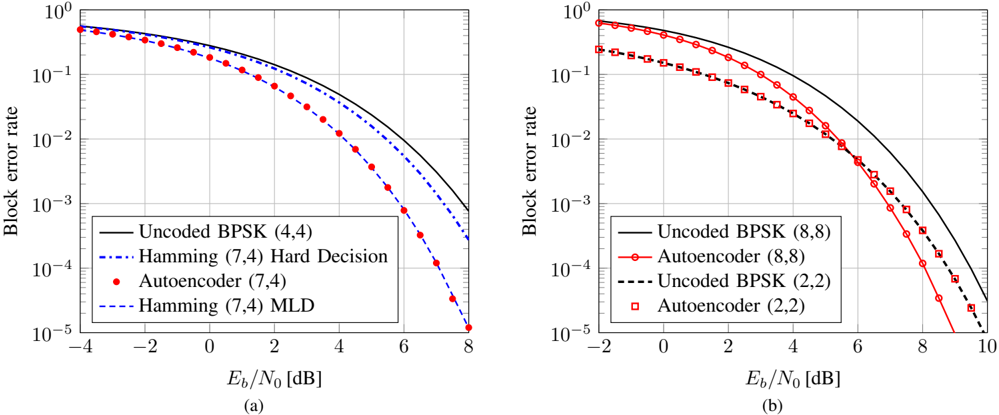
- A learned autoencoder for a (7,4) system at rate R = 4/7 achieves the same block error rate (BLER) as a Hamming (7,4) code with maximum likelihood decoding, while an (8,8) autoencoder outperforms uncoded BPSK over the full E_b/N_0 range, indicating learned joint coding and modulation.
- For the two-user AWGN interference channel, the autoencoder matches time-sharing for (1,1) and (2,2), but achieves gains of about 0.7 dB for (4,4) and 1 dB for (4,8) at a BLER of 10^-3.
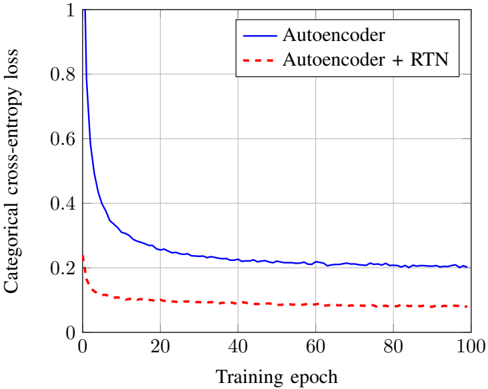
- An autoencoder (8,4) with an RTN over a multipath fading channel with L = 3 Rayleigh taps outperforms differential BPSK with maximum likelihood sequence estimation and a Hamming (7,4) code, whereas the plain autoencoder struggles to match it; RTNs also show faster training convergence.
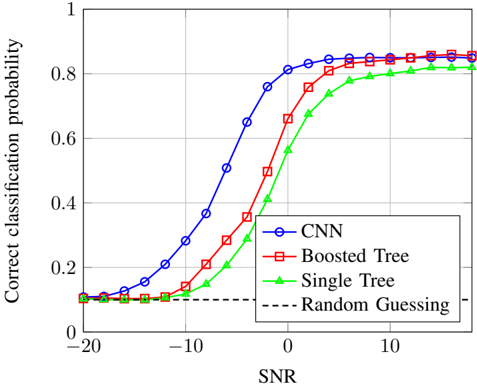
- For modulation classification on 1.2M sequences of 128 complex-valued IQ samples across ten modulation schemes and SNRs from -20 dB to 18 dB, the CNN outperforms a boosted expert-feature classifier by around 4 dB in the low-to-medium SNR range, with almost identical high-SNR performance; a single tree is about 6 dB worse at medium SNR and 3.5% worse at high SNR.
Methods
- The transmitter, channel, and receiver are represented as one deep neural network trained as an autoencoder: one-hot message input, dense layers, normalization layer for transmit constraints, additive noise channel layer, and softmax receiver output, trained with categorical cross-entropy using SGD/Adam at learning rate 0.001 and fixed E_b/N_0 = 7 dB.
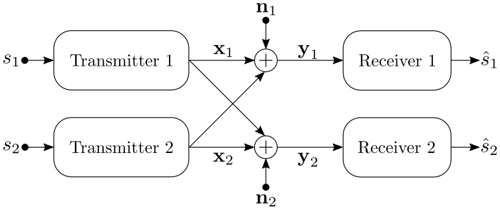
- The autoencoder concept is extended to multiple transmitter-receiver pairs in a two-user interference channel, with dynamic loss weights α_t per mini-batch to balance the two cross-entropy losses; performance is compared against 2^{2k/n}-QAM with time-sharing.
- RTNs combine a learned parameter estimator, a differentiable parametric transform, and a discriminative network; the paper demonstrates phase-offset compensation and multipath inverse filtering. For modulation classification, a VGG-like CNN with 324,330 trainable parameters is trained on the RML2016.10b dataset.
Limitations
- The paper states that scalability to large message sets M is a major challenge: for k = 100 bits, training complexity is prohibitive because the autoencoder must see at least every message once.
- The paper states that optimal data representations, loss functions, training SNR, and hyperparameters are not well understood; training at one SNR does not necessarily generalize to others, and no common communications benchmarks or datasets comparable to MNIST or ImageNet exist.
- The paper states that end-to-end learning over real channels requires system identification because backpropagation assumes a known channel transfer function; complex-valued neural networks are not supported by current DL libraries. Evident from the text: the reported results are simulation-based, use small (n,k) settings, assume known channel models during training, and the paper explicitly leaves detailed performance comparisons for various channel types and parameters to future work.
Model-written summary. Check it against the paper before relying on it.
Integrity signals
Registry
Cites
Statistics
Figures






Verification
Claims the paper makes
6 Valid · 4 Not valid · 18 Not checked · 65 Own results and interpretations
Every source the paper cites for this claim was checked and supports it.
In the paper
“For instance in [22], it was shown that training with a single codeword is sufficient since the structure of the code is embedded in the NN through the Tanner graph.”
What the sources say
- Supportedcites [22] [22] E. Nachmani, Y. Be'ery, and D. Burshtein, 'Learning to decode linear codes using deep learning,' in Proc. IEEE Annu. Allerton Conf. Commun., Control, and Computing (Allerton) , 2016, pp. 341-346. - source
The Introduction says the decoder uses a Tanner graph representing the code and that one codeword suffices for training. Section III explains the precise condition: over a binary memoryless symmetric channel, the decoder’s error rate is independent of the transmitted codeword, so training can use noisy versions of a single codeword. (LLM, conf=0.91)
boostedstates a cause- Asserted: passes — The authors put it forward as true.
- Checkable: passes — It can be checked against evidence.
- Load-bearing: unclear — It is unclear whether the paper’s conclusions depend on it.
- Based: passes — The paper gives a reason why it holds.
- Supported
A result the paper reports from its own data — it cites no other source for it, so there is none to check. The quote shows it is in the paper.
In the paper
“We study the use of NNs on complex-valued IQ samples for the problem of modulation classification and show that convolutional neural networks (CNNs), which are the cornerstone of most DL systems for computer vision, can outperform traditional classification techniques based on expert features.”
plainstates a cause- Asserted: passes — The authors put it forward as true.
- Checkable: passes — It can be checked against evidence.
- Load-bearing: passes — The paper’s conclusions depend on it.
- Based: passes — The paper gives a reason why it holds.
The paper states this without a source or data behind it here, so there is nothing to check it against. The quote shows it is in the paper.
In the paper
“Training at low SNR for instance does not allow for the discovery of structure important in higher SNR scenarios.”
plainstates a cause- Asserted: passes — The authors put it forward as true.
- Checkable: passes — It can be checked against evidence.
- Load-bearing: unclear — It is unclear whether the paper’s conclusions depend on it.
- Based: unclear — It is unclear why the paper says it holds.
A result the paper reports from its own data — it cites no other source for it, so there is none to check. The quote shows it is in the paper.
In the paper
“Another advantage of RTNs is faster training convergence which can be seen from Fig. 10 that compares the validation loss of the autoencoder with and without RTN as a function of the training epochs.”
plainstates a cause- Asserted: passes — The authors put it forward as true.
- Checkable: passes — It can be checked against evidence.
- Load-bearing: unclear — It is unclear whether the paper’s conclusions depend on it.
- Based: passes — The paper gives a reason why it holds.
A result the paper reports from its own data — it cites no other source for it, so there is none to check. The quote shows it is in the paper.
In the paper
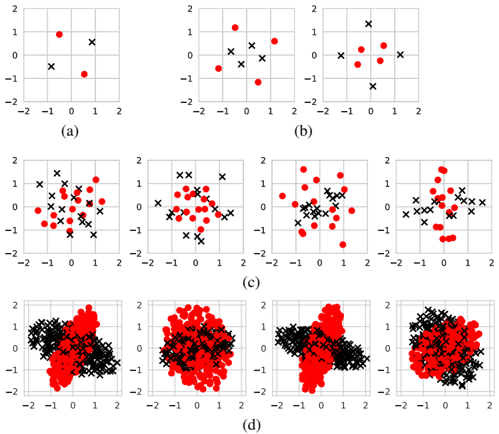
“Similarly, Fig. 4b shows a (4 , 2) system which leads to a rotated 16-PSK constellation.”
plainstates a cause- Asserted: passes — The authors put it forward as true.
- Checkable: passes — It can be checked against evidence.
- Load-bearing: unclear — It is unclear whether the paper’s conclusions depend on it.
- Based: passes — The paper gives a reason why it holds.
39 more claims
Create a free account to see all 93 claims and to verify the 4 references still open.
- Probably not a substantial claim. 29
- It may state two separate claims as one. 24
Self-check
Percentages, sums and reported differences re-computed from the paper’s own numbers.
Each contradiction between two passages listed here was confirmed by an independent check.
Rated minor: it would not touch a result — a value no result rests on, a p-value that stays on the same side of the significance level, or a conflict that is clerical, resolved elsewhere in the paper, or outside its own findings.
In the paper
§ A. Autoencoders for end-to-end communications systems · p. 5
“Similarly, Fig. 4b shows a (4 , 2) system which leads to a rotated 16-PSK constellation.”
§ A. Autoencoders for end-to-end communications systems · p. 6
“Figure 4: Constellations produced by autoencoders using parameters ( n, k ) : (a) (2 , 2) (b) (2 , 4) , (c) (2 , 4) with average power constraint, (d) (7 , 4) 2-dimensional t-SNE embedding of received symbols.”
Citations
Cites
Very Deep Convolutional Networks for Large-Scale Image Recognition
Simonyan, K., & Zisserman, A. (2014) · arXiv · doi:10.48550/arxiv.1409.1556 · Cited by 114,148 · cited 1×
“dense/fully-connected layers and terminated with a dense softmax layer for our classifier (similar to a VGG architecture [55]).”
BackgroundAdam: A Method for Stochastic Optimization
Kingma, D. P., & Ba, J. (2014) · arXiv · doi:10.48550/arxiv.1412.6980 · Cited by 98,946 · cited 4×
“Training was done at a fixed value of Eb/N0 = 7 dB (see Section IV-B) using Adam [46] with learning rate 0.”
BackgroundMethodInfluentialA Mathematical Theory of Communication
Shannon, C. E. (1948) · Bell System Technical Journal · doi:10.1002/j.1538-7305.1948.tb01338.x · Cited by 88,486
Scikit-learn: Machine Learning in Python
Pedregosa, F., Varoquaux, G., Gramfort, A., Michel, V., Thirion, B., Grisel, O., Blondel, M., Müller, A., Nothman, J., Louppe, G., et al. (2012) · arXiv · doi:10.48550/arxiv.1201.0490 · Cited by 71,016 · cited 1×
“11, we compare the classification accuracy of the CNN against that of extreme gradient boosting7 with 1000 estimators, as well as a single scikit-learn decision tree [56], operating on a mix of 16 analog and cumulant expert features as proposed in [53] and [57].”
Method(2014) · Cited by 33,419
(2008) · Journal of Machine Learning Research · Cited by 33,051
Human-level control through deep reinforcement learning
Mnih, V., Kavukcuoglu, K., Silver, D., Rusu, A. A., Veness, J., Bellemare, M. G., Graves, A., Riedmiller, M., Fidjeland, A. K., Ostrovski, G., et al. (2015) · Nature · doi:10.1038/nature14236 · Cited by 30,357
(2007) · Electronics: A First Course · doi:10.4324/9780080477527-64 · Cited by 24,923
Pan, S. J., & Yang, Q. (2010) · IEEE Transactions on Knowledge and Data Engineering · doi:10.1109/tkde.2009.191 · Cited by 23,387 · cited 1×
“learning [64] is one appealing candidate for adapting an endto-end communications system trained on a statistical model to”
BackgroundMultilayer feedforward networks are universal approximators
Hornik, K., Stinchcombe, M., & White, H. (1989) · Neural Networks · doi:10.1016/0893-6080(89)90020-8 · Cited by 21,728 · cited 1×
“Third, it has been shown that NNs are universal function approximators [13] and recent work has shown a remarkable”
Background
Research works printed but not linked: 2
- [35] I. Goodfellow, Y. Bengio, and A. Courville, Deep Learning . MIT Press, 2016. -
- [52] J. Estaran et al. , 'Artificial neural networks for linear and non-linear impairment mitigation in high-baudrate IM/DD systems,' in Proc. 42nd European Conf. Optical Commun. (ECOC) . VDE, 2016, pp. 1-3. -
Cited by
Items 2,601–2,700 of 2,995
Enhancing K -User Interference Alignment for Discrete Constellations via Learning
Mishra, R., Jafar, S. A., Vishwanath, S., & Kim, H. (2025) · IEEE Journal on Selected Areas in Communications · doi:10.1109/jsac.2025.3559122 · Cited by 1
“A centralized autoencoder framework for two-user interference channels was introduced in [24].”
Enhancing Robustness of OFDM Systems Using LSTM‐Based Autoencoders
Rajarajan, P., & Sahaai, M. B. (2025) · International Journal of Communication Systems · doi:10.1002/dac.70090
RT-DETR-Based Wideband Signal Detection and Modulation Classification
Cao, M., Chu, P., Ma, P., & Fang, B. (2025) · Frontiers in Computing and Intelligent Systems · doi:10.54097/1b1a7k36
“Despite these advantages, many existing deep learning-based methods still face trade-offs between model complexity, computational efficiency, and recognition accuracy[3].”
End-to-End Learning of Optical Communications via Nelder-Mead-Based Alternative Training
Dong, S., Zhu, J., & Lim, C. (2024) · Opto-Electronics and Communications Conference (OECC) · doi:10.1109/oecc54135.2024.10975577
“End-to-end learning was initially introduced to physical layer in [1], where the entire communication system, including the chain of transmitter, channel model, and receiver, was implemented as a learnable neural network (NN).”
Deep Learning-Driven Frequency Hopping for IEEE 802.11a Wi-Fi in the Presence of an Eavesdropper
Rogers, J. A., Fadul, M. K. M., & Reising, D. R. (2025) · IEEE Consumer Communications and Networking Conference · doi:10.1109/ccnc54725.2025.10975948
Deep Reinforcement Algorithms in RIS‐Empowered Wireless Communication Systems
Nguyen, D. N. T. (2025) · Wiley eBooks · doi:10.1002/9781394250141.ch14 · Cited by 1
Learning Robust Representations for Communications over Interference-Limited Channels
Paul, S., Senthil, S., Seshadri, P., Seshadri, N., & Koilpillai, R. D. (2025) · IEEE Wireless Communications and Networking Conference · doi:10.1109/wcnc61545.2025.10978389
“O’Shea explores this in [4].”
6G and AI: Viewpoints, Processes, and Technologies
Shoyusupov, S. A., Lanitha, B., Goyal, S., Goyal, V., Husain, S. O., & Sharma, P. (2024) · International Conference on Communication, Computing and Energy Efficient Technologies (I3CEET) · doi:10.1109/i3ceet61722.2024.10993761
Deep Learning-Driven Classification of 5G and LTE Signals for Next-Generation Wireless Networks
Paudyal, R., & Wijesekera, D. (2025) · International Conference on Information Networking · doi:10.1109/icoin63865.2025.10992736
“DL has become a promising approach in the field of wireless communications by demonstrating its effectiveness in tasks like signal identification, channel estimation, channel coding, and resource allocation [12].”
Transformers—Messages in disguise
Tyler, J. H., Reising, D. R., & Fadul, M. K. M. (2025) · Machine Learning with Applications · doi:10.1016/j.mlwa.2025.100669 · Cited by 1
Equidistant Power Allocation in Downlink AE‐NOMA: A Deep Learning Approach
Choubey, N., Trivedi, A., & Bhatia, R. (2025) · International Journal of Communication Systems · doi:10.1002/dac.70132
Advances in Artificial Intelligence for Next-Generation Wireless Transmission
Tran, A. T., & Tran, K. H. (2025) · Journal of Computing and Electronic Information Management · doi:10.54097/3fkgwa24 · Cited by 1
Ye, N., Cao, X., Pan, J., Liu, W., & Hou, X. (2025) · IEEE Signal Processing Letters · doi:10.1109/lsp.2025.3576666
Pang, S., & Zhang, W. (2025) · IEEE Transactions on Communications · doi:10.1109/tcomm.2025.3578829
“This is in sharp contrast to end-to-end learning based transceivers (e.g., [35], [36], [37], [38]).”
Deep learning detector for downlink IM-NOMA
Gian, T., Pham, N.-H., Pham, V.-C., Nguyễn, T. H., Nguyen, T. T., & Luong, T. V. (2025) · Wireless Networks · doi:10.1007/s11276-025-03985-5
End-to-End UWA OFDM Communication System Based on LSTM-DRSN
Ma, X., Yan, C., He, S., Khan, R., Shen, Z., & Wu, J. (2025) · International Conference on Electrical, Electronic Information and Communication Engineering (EEICE) · doi:10.1109/eeice65049.2025.11033781
“In [7], an autoencoder-based end-to-end communication system was first proposed, where the transmitter, channel model, and receiver were modeled as a deep neural network (DNN) and formulated as an end-to-end reconstruction optimization task.”
Neural Network Approaches to Wireless Network Optimization
Lurdhumary, J., Parte, Y. K., Ramya, M., Prasad, R., Kumar, M. J., & Arularasan, A. N. (2025) · International Conference on Frontier Technologies and Solutions (ICFTS) · doi:10.1109/icfts62006.2025.11031533
“Several of the aforementioned preprocessing stretched the scalability of DRL architecture in order to incorporate big data solutions [6].”
Xia, K., Zhou, B., Li, B., & Zhu, L. (2025) · International Conference on Cloud Computing and Big Data Analytics (ICCCBDA) · doi:10.1109/icccbda64898.2025.11030421
“As a critical component of cognitive radio, Automatic Modulation Classification (AMC) provides the capability to automatically identify modulation types in non-cooperative communication scenarios, with extensive applications in both military and civilian communications[1].”
Variable Step-Size Adversarial Attacks Against Deep Learning Based End-to-End Autoencoder
Jiang, H., Zhang, J., Liu, M., Zhao, N., Nallanathan, A., & Li, Y. (2025) · IEEE Transactions on Vehicular Technology · doi:10.1109/tvt.2025.3582045
Allani, M., Kaddoum, G., & Barka, H. (2025) · International Wireless Communications and Mobile Computing Conference (IWCMC) · doi:10.1109/iwcmc65282.2025.11059525
“The work in [2] proposed a trainable transceiver with a deep neural network (DNN) architecture composed of dense layers.”
Distributed Detection of DDoS Attack on 5G Network SlicesPreprint
Hasan, M. M., Said, A. B., & Shahriar, N. (2025) · Research Square · doi:10.21203/rs.3.rs-6449209/v1 · Cited by 1
Scalable and Modular Deep Learning Framework for Adaptive Communication in Critical Applications
Shahanaz, M. A., Bhavanam, S. N., & Midasala, V. (2025) · International Conference on Radio Frequency Communication and Networks (RFCoN) · doi:10.1109/rfcon62306.2025.11085382
Neural Network-Based Adaptive Error Correction for High-Capacity Massive MIMO Systems
(2025) · National Journal Of Antennas And Propagation · doi:10.31838/njap/07.01.35
Jing, R., Liu, H., Chen, Z., Wen, H., Peng, Y., & Liu, T. (2025) · Journal of Physics Conference Series · doi:10.1088/1742-6596/3069/1/012005
Machine Learning Techniques for Signal Processing
Thanki, R. M., Borisagar, K. R., & Diwan, A. (2025) · Synthesis lectures on communications · doi:10.1007/978-3-031-94117-7_2
Fiber channel modeling based on CGAN and three-dimensional geometric shaping based on E2EDL
Ma, J., Yao, Y., Lu, J., Liu, J., Zeng, X., & Luo, M. (2025) · Optical Fiber Technology · doi:10.1016/j.yofte.2025.104369
Accurate Off-Grid TOA Estimation Based on Deep Convolution Networks
Li, H., & Chai, Y. (2024) · IEEE International Conference on Underwater System Technology: Theory and Applications (USYS) · doi:10.1109/usys62456.2024.11116323
Dua, M., Tailor, A., Dua, S., & Chakravarty, N. (2025) · IETE Journal of Research · doi:10.1080/03772063.2025.2547999
“To navigate these challenges, Automatic Modulation Classification (AMC) has emerged as a vital enabler in cognitive radios, spectrum sensing and adaptive communication systems [1,2].”
Support vector machines for optimal channel decoding
Rovella, G. D. B., Benammar, M., Benaddi, T., & Méric, H. (2025) · EURASIP Journal on Wireless Communications and Networking · doi:10.1186/s13638-025-02493-6 · Cited by 1
“This would not be a straightforward application in regular neural network-based solutions, which would likely overfit their decision regions to noiseless transmission and generalize poorly to noisier conditions as shown in [23] and analyzed in [24].”
Channel Estimation Using Machine Learning Techniques for CRSN with NOMA
Kolasani, V., Matam, P., Devunoori, A. S., Abboju, P., & Malgireddy, U. R. (2025) · International Conference on Data Intelligence and Cognitive Informatics (ICDICI) · doi:10.1109/icdici66477.2025.11135265
“NOMA has emerged as an important method in 5G and future systems to improve spectral efficiency even further [6].”
Accelerated Over-The-Air Neural Receiver Training Using Self-Contrastive Learning
Cooke, C. D., Neel, N. C., Waddle, H. T., Mann, D. A., & McCormick, T. W. (2025) · IEEE International Conference on Machine Learning for Communication and Networking (ICMLCN) · doi:10.1109/icmlcn64995.2025.11140337
“Deep learning has been proposed as a tool for optimizing communications protocols at many layers of the protocol stack, including the physical layer [1].”
MinGRU-Based Encoder for Turbo Autoencoder Frameworks
Fritschek, R., & Schaefer, R. F. (2025) · IEEE International Conference on Machine Learning for Communication and Networking (ICMLCN) · doi:10.1109/icmlcn64995.2025.11140162
“The initial work used dense neural networks in conjunction with one-hot encoded signals and cross-entropy loss [7].”
Dibbo, S. V., YOSHIMURA, H., & Vhaduri, S. (2025) · doi:10.36227/techrxiv.175695784.48831183/v1
Yuan, W., Liu, Y., Dong, B., Qin, G., Li, Y., Chen, C., Zhang, H., Shen, C., Zhang, J., Chi, N., et al. (2025) · International Conference on Optical Communications and Networks (ICOCN) · doi:10.1109/icocn67308.2025.11145493
Alnaseri, O., Himeur, Y., Alkhazaleh, H. A., Atalla, S., & Mansoor, W. (2025) · International Conference on Communication, Computing, Networking, and Control in Cyber-Physical Systems (CCNCPS) · doi:10.1109/ccncps66785.2025.11135915
“This limitation has motivated the exploration of machine learning and deep learning techniques to optimize the adaptability and resilience of wireless communication in CPS [3], [8].”
Deep Unrolling for Near-Field Channel Estimation: Challenges and Opportunities
Sun, L., Da, Z., Fu, L., Wan, L., He, J., Ning, Z., Wang, J., & Lin, Y. (2025) · IEEE Network · doi:10.1109/mnet.2025.3600908
“Unlike traditional black-box models [4], deep unrolling offers an interpretable architecture by translating each iteration of traditional iterative optimization algorithms including gradient descent, the alternating direction method of multipliers (ADMM) [5], or sparse Bayesian learning onto…”
Comparison of BLER in Neural Receivers Utilizing a Novel OFDM Framework System
Rojas, A. C., Azurdia-Meza, C. A., & Játiva, P. P. (2025) · IEEE International Conference on Communications workshops · doi:10.1109/iccworkshops67674.2025.11162327
“CDL is a multipath model in which paths are sorted into clusters depending on the path they take [6].”
InfluentialKharin, A., & Karamov, S. (2025) · IEEE International Conference on Communication Software and Networks · doi:10.1109/iccsn66511.2025.11172477
“However, in practice, the observed data can also contain some interference signals [15]– [17].”
Next Generation Reference Signal Design Using Non-Orthogonal Space-Time Codes
Chen, Y., & Hottinen, A. (2025) · IEEE Vehicular Technology Conference · doi:10.1109/vtc2025-spring65109.2025.11174774
“Especially, it was demonstrated in literature [2]–[3] that AI/ML can benefit the PHYsical layer (PHY), which is fundamentally constrained by the physical Channel Capacity , also referred to as Shannon Limit [4].”
End-to-End Learning for RIS Profile Design and Channel Parameter Estimation under Pixel Failures
Ilter, M. C., Keskin, M. F., Mateos-Ramos, J. M., Häger, C., Valkama, M., & Wymeersch, H. (2025) · IEEE Vehicular Technology Conference · doi:10.1109/vtc2025-spring65109.2025.11174809
“One notable method for jointly designing transmitter and receiver entities is end-to-end (E2E) learning, which models the entire system as an autoencoder (AE) with a suitable loss function [18].”
Kopyto, D., Tietze, M., & Bauch, G. (2025) · IEEE Vehicular Technology Conference · doi:10.1109/vtc2025-spring65109.2025.11174412
“Hence, this paper proposes a joint approach by leveraging communication autoencoders [8], [9].”
Liu, T., Chen, Y., Xin, J., Du, C., Hu, C., & Wang, S. (2025) · IEEE Transactions on Cognitive Communications and Networking · doi:10.1109/tccn.2025.3620345
“This distribution is consistent with the single-user results described in [13].”
Zhu, C., Liu, P., Shen, Y., Xun, W., Xu, B., & Zhao, H. (2025) · International Conference on Computer Communication and Artificial Intelligence (CCAI) · doi:10.1109/ccai65422.2025.11189530 · Cited by 1
Aboelazm, M. A. (2025) · International Telecommunications Conference (ITC-Egypt) · doi:10.1109/itc-egypt66095.2025.11186594
“Rectified Linear Unit (ReLU) and Scaled Exponential Linear Unit (SELU) are both activation functions, but ReLU is more commonly used in basic Convolutional Neural Networks (CNNs), while SELU is often preferred in deeper networks like ResNets due to its self-normalizing properties [7, 8].”
InfluentialA Suitable Wireless Channel Status Determination by Using Deep Learning for 6G Communications
Laxmaiah, B., Arya, M., Mukherjee, A., & Kondalu, B. (2025) · Lecture notes in networks and systems · doi:10.1007/978-981-96-7477-0_55
Sindal, S. S., & Trivedi, Y. N. (2025) · doi:10.1109/icoict66265.2025.11192916
“Inspired by this methodology, E2E learning-based communication system was introduced in [4], where both the transmitter and receiver are represented by deep NNs, interpreted as autoencoders (AEs).”
Design Intelligent Air Interface of MIMO Systems
Jian-hua, G., Li, R., Liu, G., Hu, Z., Zhang, Y., Li, F., Dai, G., Xue, J., Thompson, J., & Xu, Z. (2025) · IEEE Transactions on Wireless Communications · doi:10.1109/twc.2025.3620862 · Cited by 1
“Inspired by E2E learning, the E2E method employs an auto-encoder architecture to model the entire physical layer link for over-the-air transmission, where the transmitter and receiver are formulated as the encoder and decoder components, respectively [38], [39], [40].”
Adaptive Enhanced Conditional Generative Adversarial Approach for Wireless Channel Modeling
Zhang, S., & Feng, Z. (2025) · International Conference on Intelligent Communications and Computing (ICICC) · doi:10.1109/icicc66840.2025.11199722
“Three neural networks are employed: encoder f(s,θf) (encodes symbol s to transmitted value x), channel approximation network h(s,θh) (simulates random channel transmission as y = h(x), with p(y|x) optimized for better model-free results), and decoder g(y,θ g) (recovers s from received sample y [6]).”
From Data to Dynamics: A Control-Theoretic Approach for MIMO Channel Modeling
Venkatesh, H. H., Roy, S. S., & Ghosal, S. (2025) · IEEE Communications Letters · doi:10.1109/lcomm.2025.3625671
“In addition to these classical baselines, we also implemented a deep learning (DL) benchmark inspired by recent works on data-driven channel estimation [23], [24], [25].”
Adaptive deep joint source-channel coding via meta learning for semantic communication
Huang, J., Wang, X., Xia, J., & Li, C. (2025) · Physical Communication · doi:10.1016/j.phycom.2025.102899 · Cited by 1
An Adaptive Measurement Method Combining MSE and SSIM for Image Transmission
Cui, H., Qiu, S., Xu, J., & Xu, Y. (2025) · IEEE International Conference on High Performance Computing and Communications; IEEE International Conference on Smart City; IEEE International Conference on Data Science and Systems (HPCC/SmartCity/DSS) · doi:10.1109/hpcc67675.2025.00204
Machine Learning for Optical Network: A Survey
Srivastava, S., Singh, A., Verma, P. K., Kumar, L., Vishwakarma, P., & Pandey, D. (2025) · Lecture notes in electrical engineering · doi:10.1007/978-981-96-7249-3_33
Sakacı, F. H., & Yıldırım, T. (2025) · Computer Networks · doi:10.1016/j.comnet.2025.111849
ABAE-RTN: A Deep Learning Framework for Robust Physical Layer Security in Radio Transformer Networks
Sagar, N. V., Kamble, A., Shukla, M. K., Anjali, A., & Pandey, O. J. (2025) · IEEE Transactions on Artificial Intelligence · doi:10.1109/tai.2025.3630644
“In recent years, DL has emerged as a powerful tool to address the limitations of conventional physical layer techniques [14].”
Multicarrier Modulation Classification Using STFT Spectrogram and Xception Model
Tailor, A., & Dua, M. (2025) · Lecture notes in electrical engineering · doi:10.1007/978-981-95-0473-2_25
Akhter, U. N., Zhu, W.-P., Diniz, P. S. R., & Mohebbi, A. (2025) · IEEE International Conference on Wireless for Space and Extreme Environments (WiSEE) · doi:10.1109/wisee57913.2025.11229859
“This design is motivated by recent work in deep learning for wireless communications that demonstrates improved robustness under channel impairments [1], [2].”
RADE: A Neural Codec for Transmitting Speech over HF Radio Channels
Rowe, D., & Valin, J.-M. (2025) · IEEE Workshop on Applications of Signal Processing to Audio and Acoustics (WASPAA) · doi:10.1109/waspaa66052.2025.11230928 · Cited by 1
“2), a RADio autoEncoder [4] designed to efficiently transmit speech over HF radio channels inspired by the RDO-VAE structure from DRED [5].”
Leblebici, M., Çalhan, A., & Cicioğlu, M. (2025) · Transactions on Emerging Telecommunications Technologies · doi:10.1002/ett.70292
BER Analysis of NOMA-CRS with ML-Aided PS-PA Power Optimization Over Nakagami-m Channels
Pechetti, N., Sekhar, A. G., Buddanti, P. S. K., & Bitra, H. (2025) · Artificial Intelligence and Smart Technologies for Sustainability Conference (AISTS) · doi:10.1109/aists66100.2025.11232793
“Traditional exhaustive search is computationally expensive; thus, we employ a machine learning model to approximate optimal parameters [4].”
Sub-THz PA EVM Measurements with Ultra-Wideband Test Signals
Teyssier, J.-P., Gillet, V., Ericsson, J., & Schoenthal, G. S. (2025) · European Microwave Conference (EuMC) · doi:10.23919/eumc65286.2025.11235030
“AI powered design will be key for many related activities [1].”
RCANet-Based User Partitioning Channel Estimation for RIS-Assisted mmWave MIMO Systems
Wang, J., Zhou, X., Wang, C., & Bai, Z. (2025) · IEEE Transactions on Green Communications and Networking · doi:10.1109/tgcn.2025.3634827
“The non-linear mapping capability of DL o ff ers better performance and lower complexity than conventional methods, making it a valuable addition to the field [19].”
Keys in the Weights: Transformer Authentication Using Model-Bound Latent Representations
Okatan, A. S., Akbaş, M. İ., Kandel, L. N., & Peköz, B. (2025) · Cyber Awareness and Research Symposium (CARS) · doi:10.1109/cars67163.2025.11337776
“End-to-end learned communication uses autoencoders to co-design modulation and decoding under channel models [29].”
Constellation Design in NOMA Communication Systems
Balić, M., Radić, J., & Šarić, M. (2025) · International Conference on Software, Telecommunications and Computer Networks (SoftCOM) · doi:10.23919/softcom66362.2025.11197366
Guo, Y., Tan, J., Zeng, R., Yang, S., Wang, J., & Pan, C. (2025) · International Conference on Electrical Engineering and Photonics (EExPolytech) · doi:10.1109/eexpolytech66949.2025.11252434
“This enables holistic optimization and adaptive learning for specific channel conditions, outperforming traditional designs [5].”
AI-Enhanced Channel Identification in 5G and Future Wireless Systems
Osman, K. A. Y. A., & Shah, A. F. M. S. (2025) · Wireless Personal Communications · doi:10.1007/s11277-025-11883-4
“Consequently, essential modifications in communica - tion protocols may be executed autonomously, hence enhancing the system’s efficiency and dependability [5– 9 ].”
Communication System with Walsh Transform-Based End-to-End Autoencoder
Knyva, M., Ruseckas, J., & Juršėnas, A. (2025) · Electronics · doi:10.3390/electronics14234738
Nam, L. H., & Phương, N. T. (2025) · International Conference on Advanced Technologies for Communications · doi:10.1109/atc67618.2025.11268810
“The advent of deep learning has introduced a paradigm shift in communication system design [15], [16].”
Neural Network-based Information-Theoretic Transceivers for High-Order Modulation Schemes
Pham, N. L., & Do, T. N. (2025) · International Conference on Advanced Technologies for Communications · doi:10.1109/atc67618.2025.11268561
“1 Recent research on NN-based systems in the physical layer has demonstrated their ability to learn robust input-output mappings under non-ideal channel conditions, achieving performance comparable to traditional decoding methods, particularly for lower modulation orders [1]–[3].”
Zhu, Z., Han, D., Gong, J., & Jiang, J. (2026) · Modern Physics Letters B · doi:10.1142/s0217984926501782
Joint Source Detection and Modulation Classification with Neural Networks
Vijayamohanan, J., Gupta, A. K., & Christodoulou, C. (2025) · Digest - IEEE Antennas and Propagation Society. International Symposium · doi:10.1109/ap-s/cnc-usnc-ursi55537.2025.11266132
“Feature-based machine learning and deep learning methods trained on large datasets to achieve superior generalization have been successful in recent years [3], [4], [7], [14]–[16].”
Deep-Learning-Assisted Vector Symbol Decoding
Suwannapeng, T., & Tuntoolavest, U. (2025) · Asia-Pacific Conference on Communications (APCC) · doi:10.23919/apcc64555.2025.11279869
“Additionally, end-to-end DL architectures were introduced that jointly optimize both encoder and decoder networks [17].”
Adversarial End-to-End Learning Encryption over Fading Channels for Secure Wireless Communication
Yahya, Z. Z., & Ali, D. M. (2025) · IEEE International RF and Microwave Conference · doi:10.1109/rfm67034.2025.11284494
A Framework of an Intelligent Communication Anti-Interference System Based on Swin Transformer
Peng, Y., Wen, H., Wang, Y., Yang, M., Liu, H., & Jia, S. (2025) · International Conference on Artificial Intelligence and Computer Information Technology (AICIT) · doi:10.1109/aicit65974.2025.11282877
“As shown in Figure 3, from the perspective of DL, this simple "Transmitter - Channel - Receiver" initial model can be regarded as an Auto-Encoder (AE) in particular [8][9] .”
Combine method and algorithms of object detection in video transmission over optical network
Beknazarova, S. S., Жаумытбаева, М., Abdullayev, Y., Baymuhamedova, D. B., & Zaitov, S. R. (2025) · Advanced Materials for Optics and Photonics: Chemistry and Engineering Perspectives (AMOP) · doi:10.1117/12.3093620
“Convolutional Neural Networks (CNNs) have several hidden layers, each containing two-dimensional arrays of neurones that function autonomously, according to certain researchers [4, 5].”
Autoencoders for variable active antenna spatial modulation in MIMO systems
Phương, N. T., & Linh, N. T. K. (2025) · AEU - International Journal of Electronics and Communications · doi:10.1016/j.aeue.2025.155944 · Cited by 1
Efficient Deployment of Deep MIMO Detection Using Learngene
Zhang, J., Guo, J., Li, X., Wen, C.-K., Geng, X., & Jin, S. (2025) · IEEE Transactions on Wireless Communications · doi:10.1109/twc.2025.3610771 · Cited by 1
“As system complexity increases, AI-native communication systems have emerged [9], and redesigning physical layer modules using deep learning (DL) has demonstrated significant e ffi cacy [10], [11], [12], [13], [14].”
Development of pruning methods for a lightweight yet efficient AE-based communication system
Huynh, T. N. T., Dao, T.-N., & Ta, C. H. (2025) · Physical Communication · doi:10.1016/j.phycom.2025.102844
Enhancing Neural Receiver Performance through Novel Training Strategies
Durfee, B., Ocampo, J. S. D., Nguyen, N., Tadik, S., & Durgin, G. D. (2025) · IEEE Opportunity Research Scholars Symposium (ORSS) · doi:10.1109/orss66051.2025.11121643
“One approach involves using neural networks as autoencoders, where the receiver learns robust message representations to mitigate noise, fading, and distortion, achieving comparable performance to traditional communication systems without prior knowledge [2].”
Uncertainty-Based Multi-task Semantic Communications with Selective Feedback for Efficient TrainingPreprint
Won, D., Lee, Y., Kim, J., Song, C., Noh, W., & Cho, S. (2025) · SSRN Electronic Journal · doi:10.2139/ssrn.5572309
Bargaje, A., Stillman, M., Vijay, V., Ghosh, S., Kinney, J., Davids, C., & Gurbani, V. K. (2025) · IEEE International Conference and Expo on Real Time Communications at IIT (RTC) · doi:10.1109/rtc66985.2025.11211714
“The general background on the use of deep learning techniques to design communications systems can be found in [4]; the literature review specific to work we are conducting can be divided into two categories.”
Channel Estimation and Pilot Signal Design Using Deep Neural Networks: A Review
Ghosh, S., & Kamath, H. S. (2026) · Lecture notes in networks and systems · doi:10.1007/978-981-96-8895-1_1 · Cited by 1
Learning Binary Autoencoder-Based Codes with Progressive Training
Ninković, V., & Vukobratović, D. (2025) · Telecommunications Forum (TELFOR) · doi:10.1109/telfor67910.2025.11314356
“The conventional digital communication system described above can be reformulated as an AE [3], where the transmitter and receiver correspond to the encoder and decoder networks, respectively, as shown in Fig.”
Anusha, C., & Sundru, A. (2026) · Transactions on Emerging Telecommunications Technologies · doi:10.1002/ett.70346
Unsupervised Neural Beamforming for Uplink MU-SIMO in 3GPP-Compliant Wireless Channels
Vahapoglu, C., O'Shea, T. J., Liu, W., Roy, T., & Ulukus, S. (2026) · Italian National Conference on Sensors · doi:10.3390/s26020366
Self-citationZayegh, A., & Refai, H. H. (2026) · IEEE Access · doi:10.1109/access.2026.3652491
Data-Driven Joint Optimization of Channel Estimation and Signal Detection for Robust OFDM Receivers
Ou, R., & Li, R. (2025) · IEEE Symposium on Computers and Communications (ISCC) · doi:10.1109/iscc65549.2025.11326381
“Recent advances in deep learning have led to the development of neural receivers, which aim to directly map received signals to decoded symbols through end-to-end learning [2].”
NNUT: NN-Based Wi-Fi Universal Transmitter for Cross-Technology Communication
Gao, D., Cao, Z., Wang, W., Han, Z., & Liu, Y. (2025) · IEEE International Conference on Parallel and Distributed Systems (ICPADS) · doi:10.1109/icpads67057.2025.11323189
“Physical-layer adaptations require specialized transceivers [13].”
Real-Time Radio Signal Classification Based on Spectrograms
Kirakosyan, L., Navoyan, M. V., Melkonyan, V., С., С. А., & Sargsyan, S. S. (2025) · Programming and Computer Software · doi:10.1134/s0361768825700331
“In [3], the effectiveness of CNNs for automatic modulation classification in wireless networks was demonstrated.”
Чирков, О. Н., Борисович, А. А., Dushkin, A. V., & Shcherbakov, V. A. (2025) · Computational nanotechnology · doi:10.33693/2313-223x-2025-12-4-124-130
A Knowledge-Driven Deep Neural Network for Automatic Modulation Recognition
Wang, Y., Ma, H., Zhang, X., & Yan, X. (2025) · IEEE Advanced Information Management, Communicates, Electronic and Automation Control Conference (IMCEC) · doi:10.1109/imcec66174.2025.11331839
Resilient OFDM Communication Against Noise Jamming Using Learning-Based Restoration
Özgen, R. E., Eren, T., & Özdemir, M. K. (2025) · National Conference on Electrical and Electronics Engineering (ELECO) · doi:10.1109/eleco69582.2025.11329307
“…clean counterpart; the restored waveform is then processed by a conventional receiver (cyclic-prefix (CP) removal, fast fourier transform (FFT), pilot-aided channel estimation, and equalization), and success is measured by communication-level outcomes such as SNR recovery and BER reduction [11].”
Performance Optimization of IRS-Assisted NOMA Systems Using Deep Learning Techniques
Katta, K., Mishra, R. C., Saharia, N., & Ch, N. (2025) · IEEE Silchar Subsection Conference (SILCON) · doi:10.1109/silcon67893.2025.11326991
“In particular, [7] jointly optimized transmit beamforming and IRS phase shifters and it was revealed that the joint control of the two parameters can result in significant sum rate gains.”
An Innovative Multimodal Strategy for Classifying Modulation Schemes Using Diverse CNN Models
Ersoy, O., & Mintemur, Ö. (2025) · National Conference on Electrical and Electronics Engineering (ELECO) · doi:10.1109/eleco69582.2025.11329381
“Finally, it is demonstrated that CNN-based modulation classification trained on raw IQ data can achieve accuracy levels comparable to those of traditional methods [1].”
Liu, G., Qin, F., Zhang, J., Sun, C., Wu, J., Duan, X., Cai, L., Sun, S., & Yang, N. (2026) · Springer eBooks · doi:10.1007/978-981-96-7579-1_5
A Design of Wireless Meta Semantic Communication System: An Abstract Approach
Guo, Y., Gong, L., Yu, F. R., & Leung, V. C. M. (2025) · International Conference on Wireless Communications and Signal Processing (WCSP) · doi:10.1109/wcsp68525.2025.1010289
“Currently, the existing wireless semantic communication design work are mainly based on machine learning (ML) techniques and can be roughly classified into two categories: data-oriented [5], [6] and task-oriented [7]–[9].”
Guo, L., Wu, D., Guan, X., Yang, W., Yang, X., & Li, B. (2025) · International Conference on Wireless Communications and Signal Processing (WCSP) · doi:10.1109/wcsp68525.2025.1010121
“Since then, various architectural advancements—such as hybrid ResNet-DenseNet models [11], [12], attention mechanisms [13], [14], and LSTM autoen-coders [15]—have continually improved recognition accuracy.”
Comparison of CNN-Based Bit-Level Detection Performance in NOMA and IM-NOMA Systems
Peeka, U. B., Prabhakara Rao, P., & Sundru, A. (2025) · IEEE International Conference on Intelligent Signal Processing and Effective Communication Technologies (INSPECT) · doi:10.1109/inspect67393.2025.11350422
“In contrast, deep learning-based solutions, particularly convolutional neural networks (CNNs), have shown strong capability in directly learning discriminative patterns from in-phase and quadrature (I/Q) samples without explicit channel modeling [3], [4].”
A Comprehensive Study in 5G MU-MIMO Beamforming: From 3GPP Codebook to AI-Based Precoding Techniques
Tran, Q. T., Pham, H. A., Dong, Q. T., Nguyen, M.-T., & Thanh, B. L. (2026) · International Conference on Ubiquitous Information Management and Communication (IMCOM) · doi:10.1109/imcom69009.2026.11360890
“Physical Layer (PHY) signal processing is essential to wireless communications, addressing vital challenges such as waveform design, signal detection, channel modeling, equalization, and beamforming to provide reliable data [1].”
Shah, S. A. A., Noor, A., Liang, R., & Zadran, R. U. (2026) · TELKOMNIKA (Telecommunication Computing Electronics and Control) · doi:10.12928/telkomnika.v24i1.27340
Metadata
- Authors
- O'Shea, T., & Hoydis, J.
- Affiliations
- Nokia (France) (FR)
- Venue
- IEEE Transactions on Cognitive Communications and Networking
- Published
- 2017-12
- Volume
- 3
- Issue
- 4
- Pages
- 563-575
- ISSN
- 2332-7731 (ISSN-L)
- OpenAlex
- W2734408173
- Semantic Scholar
- 78989616eeeac55b202e3e4205225e7135054185
- Cited by
- 2,980
- References
- 69
- Citations by year
- 2026: 307 · 2025: 327 · 2024: 305 · 2023: 368 · 2022: 432 · 2021: 409 · 2020: 406 · 2019: 322 · 2018: 95 · 2017: 9
- FWCI
- 122.29
- Type
- journal article
- Language
- en
- Open access
- green
- arxiv.org
- Locations
- IEEE Transactions on Cognitive Communications and Networking (publishedVersion)
- arXiv (Cornell University) (submittedVersion)
- arXiv (Cornell University)
- Topics
- Physical Sciences › Computer Science › Artificial Intelligence › Wireless Signal Modulation Classification
- Physical Sciences › Engineering › Electrical and Electronic Engineering › Advanced Wireless Communication Techniques
- Physical Sciences › Engineering › Electrical and Electronic Engineering › Advanced Wireless Communication Technologies
- Keywords
- end-to-end reconstruction, domain knowledge integration, convolutional neural networks, automatic modulation classification, IQ samples
About these checks
Registry, retraction, Cites and statistics results are computed, not judged, with one exception: a printed reference that no index lists is read once by a model before it counts as a citation error. Claims are extracted by a model and kept only when their quote appears verbatim in the text; each cited source is then checked, with a model’s help, for whether it says what the claim relies on. Those verdicts can be wrong — read the claim’s quote and the cited source before relying on one.
The claim verdicts this report counts are experimental: their accuracy is not yet measured.
A language model drew the claims from the paper on 2026-11-07, under version 3 of the claim definition (model deepseek-v4.1-flash, prompt extract-v3).
A second model labelled each claim on 2026-11-07 (model jev-1.13-20260917, definition revision gold-guideline-v0.2).
Cited sources are checked with a language model’s help (gpt-6-sol).
Statistics and arithmetic are recomputed, not judged.
Confidence bands are shown only for fields calibrated on our annotated test set. None is calibrated yet, so no band is shown.
What counts as a claim ›How we measure confidence ›How we check this ›
Are you an author, or do you see a problem with this page? Request a review
Data sources
Bibliographic data: Semantic Scholar, OpenAlex, Crossref.
Contains information from the Semantic Scholar Academic Graph Datasets, made available under the ODC Attribution License (ODC-BY 1.0).
Semantic Scholar’s data is described in: Kinney, R., et al. (2023). The Semantic Scholar Open Data Platform. arXiv:2301.10140.
