

An Introduction to Deep Learning for the Physical Layer
Open accessThe DOI matches its Crossref record; 90 of the 92 references it cites were found in a registry or an index, and 2 are not checked yet; 8 of the 32 sources its claims cite were checked for support.
Abstract
We present and discuss several novel applications of deep learning for the physical layer. By interpreting a communications system as an autoencoder, we develop a fundamental new way to think about communications system design as an end-to-end reconstruction task that seeks to jointly optimize transmitter and receiver components in a single process. We show how this idea can be extended to networks of multiple transmitters and receivers and present the concept of radio transformer networks as a means to incorporate expert domain knowledge in the machine learning model. Lastly, we demonstrate the application of convolutional neural networks on raw IQ samples for modulation classification which achieves competitive accuracy with respect to traditional schemes relying on expert features. This paper is concluded with a discussion of open challenges and areas for future investigation.
Verified 2026-11-19 · 2 references not checked yet
Overview
CoChat Summary
TL;DR
The paper introduces deep learning for the physical layer by treating a communications system as an autoencoder that jointly learns transmitter and receiver implementations end-to-end. It also extends this idea to multi-user interference channels, proposes radio transformer networks (RTNs) to inject expert domain knowledge, and shows CNNs on raw IQ samples can outperform expert-feature modulation classifiers.
Key findings
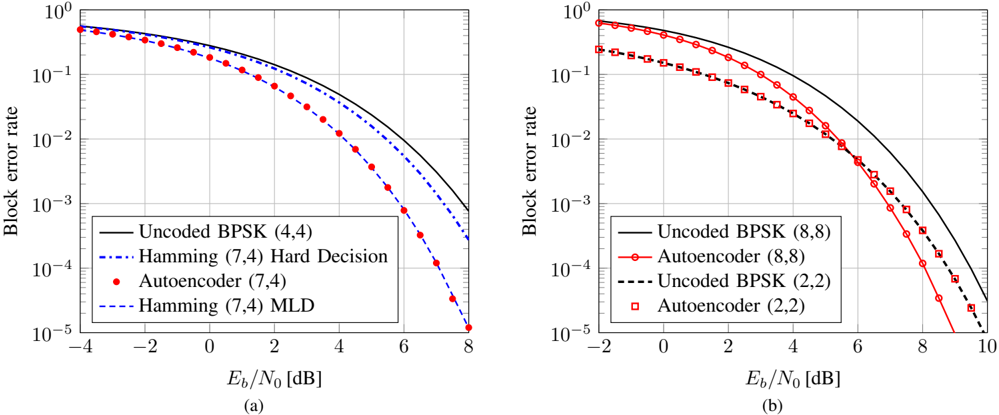
- A learned autoencoder for a (7,4) system at rate R = 4/7 achieves the same block error rate (BLER) as a Hamming (7,4) code with maximum likelihood decoding, while an (8,8) autoencoder outperforms uncoded BPSK over the full E_b/N_0 range, indicating learned joint coding and modulation.
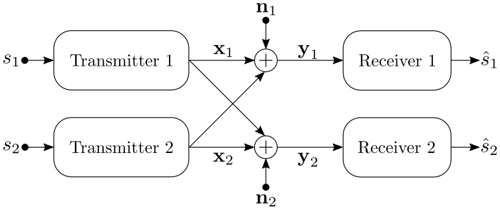
- For the two-user AWGN interference channel, the autoencoder matches time-sharing for (1,1) and (2,2), but achieves gains of about 0.7 dB for (4,4) and 1 dB for (4,8) at a BLER of 10^-3.
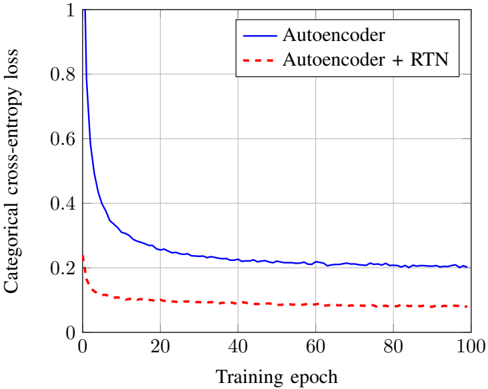
- An autoencoder (8,4) with an RTN over a multipath fading channel with L = 3 Rayleigh taps outperforms differential BPSK with maximum likelihood sequence estimation and a Hamming (7,4) code, whereas the plain autoencoder struggles to match it; RTNs also show faster training convergence.
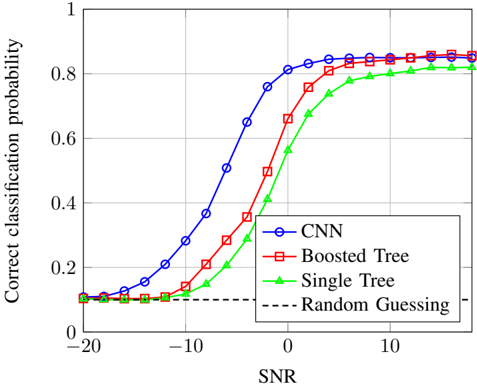
- For modulation classification on 1.2M sequences of 128 complex-valued IQ samples across ten modulation schemes and SNRs from -20 dB to 18 dB, the CNN outperforms a boosted expert-feature classifier by around 4 dB in the low-to-medium SNR range, with almost identical high-SNR performance; a single tree is about 6 dB worse at medium SNR and 3.5% worse at high SNR.
Methods
- The transmitter, channel, and receiver are represented as one deep neural network trained as an autoencoder: one-hot message input, dense layers, normalization layer for transmit constraints, additive noise channel layer, and softmax receiver output, trained with categorical cross-entropy using SGD/Adam at learning rate 0.001 and fixed E_b/N_0 = 7 dB.
- The autoencoder concept is extended to multiple transmitter-receiver pairs in a two-user interference channel, with dynamic loss weights α_t per mini-batch to balance the two cross-entropy losses; performance is compared against 2^{2k/n}-QAM with time-sharing.
- RTNs combine a learned parameter estimator, a differentiable parametric transform, and a discriminative network; the paper demonstrates phase-offset compensation and multipath inverse filtering. For modulation classification, a VGG-like CNN with 324,330 trainable parameters is trained on the RML2016.10b dataset.
Limitations
- The paper states that scalability to large message sets M is a major challenge: for k = 100 bits, training complexity is prohibitive because the autoencoder must see at least every message once.
- The paper states that optimal data representations, loss functions, training SNR, and hyperparameters are not well understood; training at one SNR does not necessarily generalize to others, and no common communications benchmarks or datasets comparable to MNIST or ImageNet exist.
- The paper states that end-to-end learning over real channels requires system identification because backpropagation assumes a known channel transfer function; complex-valued neural networks are not supported by current DL libraries. Evident from the text: the reported results are simulation-based, use small (n,k) settings, assume known channel models during training, and the paper explicitly leaves detailed performance comparisons for various channel types and parameters to future work.
Model-written summary. Check it against the paper before relying on it.
Integrity signals
Registry
Cites
Statistics
Figures






Verification
Claims the paper makes
6 Valid · 4 Not valid · 18 Not checked · 65 Own results and interpretations
Every source the paper cites for this claim was checked and supports it.
In the paper
“For instance in [22], it was shown that training with a single codeword is sufficient since the structure of the code is embedded in the NN through the Tanner graph.”
What the sources say
- Supportedcites [22] [22] E. Nachmani, Y. Be'ery, and D. Burshtein, 'Learning to decode linear codes using deep learning,' in Proc. IEEE Annu. Allerton Conf. Commun., Control, and Computing (Allerton) , 2016, pp. 341-346. - source
The Introduction says the decoder uses a Tanner graph representing the code and that one codeword suffices for training. Section III explains the precise condition: over a binary memoryless symmetric channel, the decoder’s error rate is independent of the transmitted codeword, so training can use noisy versions of a single codeword. (LLM, conf=0.91)
boostedstates a cause- Asserted: passes — The authors put it forward as true.
- Checkable: passes — It can be checked against evidence.
- Load-bearing: unclear — It is unclear whether the paper’s conclusions depend on it.
- Based: passes — The paper gives a reason why it holds.
- Supported
A result the paper reports from its own data — it cites no other source for it, so there is none to check. The quote shows it is in the paper.
In the paper
“We study the use of NNs on complex-valued IQ samples for the problem of modulation classification and show that convolutional neural networks (CNNs), which are the cornerstone of most DL systems for computer vision, can outperform traditional classification techniques based on expert features.”
plainstates a cause- Asserted: passes — The authors put it forward as true.
- Checkable: passes — It can be checked against evidence.
- Load-bearing: passes — The paper’s conclusions depend on it.
- Based: passes — The paper gives a reason why it holds.
The paper states this without a source or data behind it here, so there is nothing to check it against. The quote shows it is in the paper.
In the paper
“Training at low SNR for instance does not allow for the discovery of structure important in higher SNR scenarios.”
plainstates a cause- Asserted: passes — The authors put it forward as true.
- Checkable: passes — It can be checked against evidence.
- Load-bearing: unclear — It is unclear whether the paper’s conclusions depend on it.
- Based: unclear — It is unclear why the paper says it holds.
A result the paper reports from its own data — it cites no other source for it, so there is none to check. The quote shows it is in the paper.
In the paper
“Another advantage of RTNs is faster training convergence which can be seen from Fig. 10 that compares the validation loss of the autoencoder with and without RTN as a function of the training epochs.”
plainstates a cause- Asserted: passes — The authors put it forward as true.
- Checkable: passes — It can be checked against evidence.
- Load-bearing: unclear — It is unclear whether the paper’s conclusions depend on it.
- Based: passes — The paper gives a reason why it holds.
A result the paper reports from its own data — it cites no other source for it, so there is none to check. The quote shows it is in the paper.
In the paper
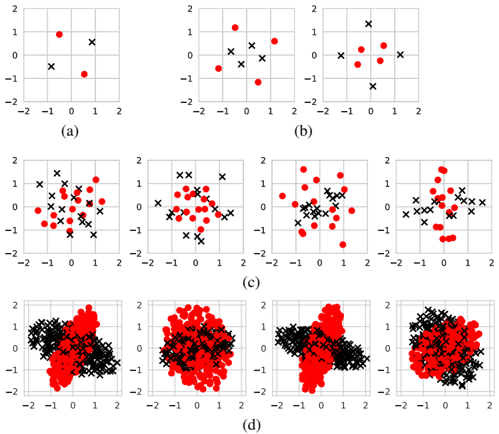
“Similarly, Fig. 4b shows a (4 , 2) system which leads to a rotated 16-PSK constellation.”
plainstates a cause- Asserted: passes — The authors put it forward as true.
- Checkable: passes — It can be checked against evidence.
- Load-bearing: unclear — It is unclear whether the paper’s conclusions depend on it.
- Based: passes — The paper gives a reason why it holds.
39 more claims
Create a free account to see all 93 claims and to verify the 4 references still open.
- Probably not a substantial claim. 29
- It may state two separate claims as one. 24
Self-check
Percentages, sums and reported differences re-computed from the paper’s own numbers.
Each contradiction between two passages listed here was confirmed by an independent check.
Rated minor: it would not touch a result — a value no result rests on, a p-value that stays on the same side of the significance level, or a conflict that is clerical, resolved elsewhere in the paper, or outside its own findings.
In the paper
§ A. Autoencoders for end-to-end communications systems · p. 5
“Similarly, Fig. 4b shows a (4 , 2) system which leads to a rotated 16-PSK constellation.”
§ A. Autoencoders for end-to-end communications systems · p. 6
“Figure 4: Constellations produced by autoencoders using parameters ( n, k ) : (a) (2 , 2) (b) (2 , 4) , (c) (2 , 4) with average power constraint, (d) (7 , 4) 2-dimensional t-SNE embedding of received symbols.”
Citations
Cites
Very Deep Convolutional Networks for Large-Scale Image Recognition
Simonyan, K., & Zisserman, A. (2014) · arXiv · doi:10.48550/arxiv.1409.1556 · Cited by 114,148 · cited 1×
“dense/fully-connected layers and terminated with a dense softmax layer for our classifier (similar to a VGG architecture [55]).”
BackgroundAdam: A Method for Stochastic Optimization
Kingma, D. P., & Ba, J. (2014) · arXiv · doi:10.48550/arxiv.1412.6980 · Cited by 98,946 · cited 4×
“Training was done at a fixed value of Eb/N0 = 7 dB (see Section IV-B) using Adam [46] with learning rate 0.”
BackgroundMethodInfluentialA Mathematical Theory of Communication
Shannon, C. E. (1948) · Bell System Technical Journal · doi:10.1002/j.1538-7305.1948.tb01338.x · Cited by 88,486
Scikit-learn: Machine Learning in Python
Pedregosa, F., Varoquaux, G., Gramfort, A., Michel, V., Thirion, B., Grisel, O., Blondel, M., Müller, A., Nothman, J., Louppe, G., et al. (2012) · arXiv · doi:10.48550/arxiv.1201.0490 · Cited by 71,016 · cited 1×
“11, we compare the classification accuracy of the CNN against that of extreme gradient boosting7 with 1000 estimators, as well as a single scikit-learn decision tree [56], operating on a mix of 16 analog and cumulant expert features as proposed in [53] and [57].”
Method(2014) · Cited by 33,419
(2008) · Journal of Machine Learning Research · Cited by 33,051
Human-level control through deep reinforcement learning
Mnih, V., Kavukcuoglu, K., Silver, D., Rusu, A. A., Veness, J., Bellemare, M. G., Graves, A., Riedmiller, M., Fidjeland, A. K., Ostrovski, G., et al. (2015) · Nature · doi:10.1038/nature14236 · Cited by 30,357
(2007) · Electronics: A First Course · doi:10.4324/9780080477527-64 · Cited by 24,923
Pan, S. J., & Yang, Q. (2010) · IEEE Transactions on Knowledge and Data Engineering · doi:10.1109/tkde.2009.191 · Cited by 23,387 · cited 1×
“learning [64] is one appealing candidate for adapting an endto-end communications system trained on a statistical model to”
BackgroundMultilayer feedforward networks are universal approximators
Hornik, K., Stinchcombe, M., & White, H. (1989) · Neural Networks · doi:10.1016/0893-6080(89)90020-8 · Cited by 21,728 · cited 1×
“Third, it has been shown that NNs are universal function approximators [13] and recent work has shown a remarkable”
Background
Research works printed but not linked: 2
- [35] I. Goodfellow, Y. Bengio, and A. Courville, Deep Learning . MIT Press, 2016. -
- [52] J. Estaran et al. , 'Artificial neural networks for linear and non-linear impairment mitigation in high-baudrate IM/DD systems,' in Proc. 42nd European Conf. Optical Commun. (ECOC) . VDE, 2016, pp. 1-3. -
Cited by
Items 601–700 of 2,995
AI for 5G: research directions and paradigms
You, X., Wu, H., Tan, X., Jin, S., & Zhang, C. (2018) · Scientia Sinica Informationis · doi:10.1360/n112018-00174 · Cited by 34
Deep Learning-Based Channel Reciprocity Learning for Physical Layer Secret Key Generation
He, H., Chen, Y., Huang, X., Xing, M., Li, Y., Xing, B., & Chen, L. (2022) · Security and Communication Networks · doi:10.1155/2022/1844345 · Cited by 28
“O’Shea and Hoydis [28] 2 Security and Communication Networks”
BackgroundMethodInfluentialWong, L. J., Clark, W. H., Flowers, B., Buehrer, R. M., Michaels, A. J., & Headley, W. C. (2020) · arXiv (Cornell University) · doi:10.48550/arxiv.2010.00432 · Cited by 32
“Spectrum sensing is primarily made up of the following Digital Signal Processing (DSP) tasks: signal detection [23]–[41], [87]–[89], [118], signal parameter estimation [13], [92]–[97], signal classifica-”
BackgroundToward the Realization of Encoder and Decoder Using Deep Neural Networks
Kim, M., Lee, W., Yoon, J., & Jo, O. (2019) · IEEE Communications Magazine · doi:10.1109/mcom.2019.1900093 · Cited by 28
“In [4], an autoencoder structure was proposed to encode and decode Hamming code without any prior knowledge using FCnets.”
MethodAskri, A., & Othman, G. R.-B. (2019) · IEEE International Symposium on Information Theory (ISIT) · doi:10.1109/isit.2019.8849786 · Cited by 33
Deep Learning Based Precoding for the MIMO Gaussian Wiretap Channel
Zhang, X., & Vaezi, M. (2019) · IEEE Globecom Workshops (GC Wkshps) · doi:10.1109/gcwkshps45667.2019.9024579 · Cited by 28
“Motivate by the above shortcomings and recent successful applications of deep learning (DL) in communication over the physical layer [12], in this work, we exploit DL for a secure and reliable signaling design in the MIMO Gaussian wiretap channel.”
BackgroundMethodAttention Guided Multi-Task Network for Joint CFO and Channel Estimation in OFDM Systems
Chen, Z., Liu, Z., Geng, X., Zhao, Y., & Wu, H. (2023) · IEEE Transactions on Wireless Communications · doi:10.1109/twc.2023.3277561 · Cited by 29
“…years, inspired by the great success of deep learning (DL), the applications of DL in wireless communications have gained more and more attention [13], [14], [15], [16] and a lot of efforts have been made in frequency synchronization [17], [18], channel estimation [19], [20] and signal detection…”
BackgroundPrivacy-Encoded Federated Learning Against Gradient-Based Data Reconstruction Attacks
Liu, H., Li, B., Gao, C., Xie, P., & Zhao, C. (2023) · IEEE Transactions on Information Forensics and Security · doi:10.1109/tifs.2023.3309095 · Cited by 27
Knowledge Distillation-Based Semantic Communications for Multiple Users
Liu, C., Zhou, Y., Chen, Y., & Yang, S. (2023) · IEEE Transactions on Wireless Communications · doi:10.1109/twc.2023.3336941 · Cited by 38
“To explore how learning-based algorithms can transform the communications system for lower complexity and better performance, representative works were conducted in [17], [21], [22], and [23].”
BackgroundMethodTan, H., Zhang, Z., Li, Y., Shi, X., Wang, L., Yang, X., & Zhou, F. (2024) · IEEE Transactions on Wireless Communications · doi:10.1109/twc.2024.3458980 · Cited by 31
“Alternatively, using I/Q data directly as input has shown satisfactory results [16], [17].”
Deep Learning based Channel Code Recognition using TextCNN
Qin, X., Peng, S., Yang, X. D., & Yao, Y. (2019) · IEEE International Symposium on Dynamic Spectrum Access Networks · doi:10.1109/dyspan.2019.8935805 · Cited by 36
“Fortunately, the communications systems generate massive data all the time, which facilitates the use of DL to solve communications problems [14], [15], such as modulation classification [4], channel estimation [16] and channel code decoding [17], [18].”
BackgroundJoint Learning of Probabilistic and Geometric Shaping for Coded Modulation Systems
Aoudia, F. A., & Hoydis, J. (2020) · Globecom · doi:10.1109/globecom42002.2020.9348032 · Cited by 27
“In this work, a new architecture for BICM systems is proposed which leverages the recent idea of trainable communication systems [4].”
BackgroundSelf-citationZang, K., & Ma, Z. (2020) · IEEE Access · doi:10.1109/access.2020.3039543 · Cited by 30
Ramasubramanian, M., Banerjee, C., Roy, D., Pasiliao, E., & Mukherjee, T. (2021) · IEEE Journal of Radio Frequency Identification · doi:10.1109/jrfid.2021.3051901 · Cited by 28
“In [33] the authors have demonstrated the use of NN for modulation detection.”
An Empirical Analysis of Deep Learning Architectures for Vehicle Make and Model Recognition
Hassan, A., Ali, M., Durrani, M., & Tahir, M. A. (2021) · IEEE Access · doi:10.1109/access.2021.3090766 · Cited by 27
Predictive UAV Base Station Deployment and Service Offloading With Distributed Edge Learning
Zhao, Z., Pacheco, L., Santos, H., Liu, M., Maio, A. D., Rosário, D., Cerqueira, E., Braun, T. I., & Cao, X. (2021) · IEEE Transactions on Network and Service Management · doi:10.1109/tnsm.2021.3123216 · Cited by 32
Deep Learning Based Detection for Communications Systems With Radar Interference
Liu, C., Chen, Y., & Yang, S. (2022) · IEEE Transactions on Vehicular Technology · doi:10.1109/tvt.2022.3158692 · Cited by 32
“Some representative works on deep learning in communications signal detection are summarized in [17] and [18].”
BackgroundConstellation Design for Deep Joint Source-Channel Coding
Wang, M., Li, J., Ma, M., & Fan, X. (2022) · IEEE Signal Processing Letters · doi:10.1109/lsp.2022.3184251 · Cited by 30
“Inspired by [15], a higher-order constellation design model was implemented by FCNN in [16].”
MethodA Multi-Task Semantic Communication System for Natural Language Processing
Sheng, Y., Li, F., Liang, L., & Jin, S. (2022) · IEEE Vehicular Technology Conference · doi:10.1109/vtc2022-fall57202.2022.10013075 · Cited by 31
“…by the impressive results of the Fang Li is the corresponding author (lifang@gdcni.cn). deep learning (DL) and the end-to-end (E2E) communication systems [3], [4], some initial efforts have been to recover data at the semantic level, including for texts [2], [5], images [6], [7], and speech [8].”
BackgroundSRLoRa: Neural-enhanced LoRa Weak Signal Decoding with Multi-gateway Super Resolution
Du, J., Ren, Y., Zhu, Z., Li, C., Cao, Z., Ma, Q., & Liu, Y. (2023) · ACM International Symposium on Theory, Algorithmic Foundations, and Protocol Design for Mobile Networks and Mobile Computing (MobiHoc) · doi:10.1145/3565287.3610254 · Cited by 28
Aleatory uncertainty quantification based on multi-fidelity deep neural networks
Li, Z., & Montomoli, F. (2024) · Reliability Engineering & System Safety · doi:10.1016/j.ress.2024.109975 · Cited by 29
“Deep learning technique has been applied recently to a wide range of applications to model physical [1-2], communications [3] and biological systems [4].”
Data Augmentation Aided Few-Shot Learning for Specific Emitter Identification
Zhang, X., Wang, Y., Zhang, Y., Lin, Y., Gui, G., Ohtsuki, T. O., & Sari, H. (2022) · IEEE Vehicular Technology Conference · doi:10.1109/vtc2022-fall57202.2022.10012809 · Cited by 29
“As a new research method in the field of machine learning, deep learning (DL) has great advantages in efficiently extracting and distinguishing the characteristics of different specific emitters from target signals [7].”
MethodLearning to Rest: A Q-Learning Approach to Flying Base Station Trajectory Design with Landing Spots
Bayerlein, H., Gangula, R., & Gesbert, D. (2018) · Asilomar Conference on Signals, Systems and Computers (ACSSC) · doi:10.1109/acssc.2018.8645103 · Cited by 28
“Note that the DNNs we envision for message sharing maybe compared with DNNs used in autoencoder fashion in [8].”
MethodFreire, P. J., Prilepsky, J. E., Osadchuk, Y., Turitsyn, S. K., & Aref, V. (2022) · IEEE Transactions on Communications · doi:10.1109/tcomm.2022.3213284 · Cited by 28
“Additionally, the end-to-end learning designs [16] that deal with coherent constellation optimization have been intensively studied in the literature [17], [18], [19], [20], [21], [22], [23]: in these works, the end-to-end system is typically composed as an auto-encoder trained with the cross-entropy loss (CEL) functi…”
BackgroundDeep Neural Network Assisted Approach for Antenna Selection in Untrusted Relay Networks
Yao, R., Zhang, Y., Wang, S., Qi, N., Miridakis, N. I., & Tsiftsis, T. A. (2019) · IEEE Wireless Communications Letters · doi:10.1109/lwc.2019.2933392 · Cited by 27
“Particularly, the machine learning (ML) approach has become one of the key AI technologies in physical layer security [3].”
A Survey on Machine Learning for Optical Communication [Machine Learning View]Preprint
Amirabadi, M. A. (2019) · arXiv (Cornell University) · doi:10.48550/arxiv.1909.05148 · Cited by 44
“2 Network (ANN) [32-72], Deep (DNN) [73-89], and Convolutional Neural Network (CNN) [90-98], k-Nearest Neighbors (KNN) [99-102], Random Forest [103-105], Regression [106-112], (in unsupervised category [113-132]:) k-means [117126], Principal Component Analysis (PCA) [127-132], (in Reinforcement Learning category [133-…”
MethodAichernig, B. K., Bloem, R., Ebrahimi, M., Horn, M., Pernkopf, F., Roth, W., Rupp, A., Tappler, M., & Tranninger, M. (2019) · Lecture notes in computer science · doi:10.1007/978-3-030-31280-0_1 · Cited by 26
A Deep Learning Approach to Universal Binary Visible Light Communication Transceiver
Lee, H., Quek, T. Q. S., & Lee, S. H. (2019) · IEEE Transactions on Wireless Communications · doi:10.1109/twc.2019.2950026 · Cited by 29
“Compared to the RF counterparts in [16]–[18], the”
BackgroundMethodResultInfluentialDeep neural network approach to estimation of power production for an organic Rankine cycle system
Mert, İ., Bilgiç, H. H., Yağlı, H., & Koç, Y. (2020) · Journal of the Brazilian Society of Mechanical Sciences and Engineering · doi:10.1007/s40430-020-02701-y · Cited by 26
Pilot-Assisted SIMO-NOMA Signal Detection With Learnable Successive Interference Cancellation
Wang, X., Zhu, P., Li, D., Xu, Y., & You, X. (2021) · IEEE Communications Letters · doi:10.1109/lcomm.2021.3070705 · Cited by 28
Duan, Y., Zhang, W., Huang, P. F., He, G., & Guo, H. (2021) · Remote Sensing · doi:10.3390/rs13224576 · Cited by 30
“Moreover, CNN is also applied to network traffic classification [35] and communications systems [36].”
MethodDeep Learning Empowered MAC Protocol Identification With Squeeze-and-Excitation Networks
Zhang, X., Ding, G., Li, J., Wang, W., & Wu, Q. (2021) · IEEE Transactions on Cognitive Communications and Networking · doi:10.1109/tccn.2021.3126306 · Cited by 28
Virtual Adversarial Training‐Based Semisupervised Specific Emitter Identification
Xie, C., Zhang, L., & Zhong, Z. (2022) · Wireless Communications and Mobile Computing · doi:10.1155/2022/6309958 · Cited by 27
User-Centric Online Gossip Training for Autoencoder-Based CSI Feedback
Guo, J., Zuo, Y., Wen, C.-K., & Jin, S. (2022) · IEEE Journal of Selected Topics in Signal Processing · doi:10.1109/jstsp.2022.3160268 · Cited by 31
Signal Augmentations Oriented to Modulation Recognition in the Realistic Scenarios
Dong, G., & Liu, H. (2023) · IEEE Transactions on Communications · doi:10.1109/tcomm.2023.3236379 · Cited by 27
Arnold, M., Dörner, S., Cammerer, S., Hoydis, J., & ten Brink, S. (2019) · Asilomar Conference on Signals, Systems and Computers (ACSSC) · doi:10.1109/ieeeconf44664.2019.9048863 · Cited by 26
Self-citationDeepJSCC-f: Deep Joint Source-Channel Coding of Images with FeedbackPreprint
Kurka, D. B., & Gündüz, D. (2019) · arXiv (Cornell University) · doi:10.48550/arxiv.1911.11174 · Cited by 26
“This was later extended to the joint design of the encoder and the decoder using an autoencoder structure [26].”
MethodAutoencoder-Based Optical Wireless Communications Systems
Soltani, M., Fatnassi, W., Aboutaleb, A., Rezki, Z., Bhuyan, A., & Titus, P. (2018) · IEEE Globecom Workshops (GC Wkshps) · doi:10.1109/glocomw.2018.8644104 · Cited by 31
“Recently, machine learning (ML) and deep learning (DL) approaches have been proposed for problems related to the physical layer of the communications network, such as modulation classifications [5], [6], coding and decoding [6]–[8], detection of the transmitted symbols [8], [9], channel estimation and equalization [8]…”
BackgroundArtificial intelligence and wireless communications
Wang, J., Li, R., Wang, J., Ge, Y., Zhang, Q., & Shi, W. (2020) · Frontiers of Information Technology & Electronic Engineering · doi:10.1631/fitee.1900527 · Cited by 33
End-to-End Learning of Neuromorphic Wireless Systems for Low-Power Edge Artificial Intelligence
Skatchkovsky, N., Jang, H., & Simeone, O. (2020) · Asilomar Conference on Signals, Systems and Computers (ACSSC) · doi:10.1109/ieeeconf51394.2020.9443351 · Cited by 34
“Following a recent line of research [13], [14], [15], [16], we propose to train the system in Fig.”
MethodToward intelligent wireless communications: Deep learning - based physical layer technologies
Liu, S., Wang, T., & Wang, S. (2021) · Digital Communications and Networks · doi:10.1016/j.dcan.2021.09.014 · Cited by 31
“The one-hot vector is considered in the AE-based E2E system, and it simpli fi es the data representation on both the input and output tensors [10].”
MethodInfluentialError Analysis of Free Space Communication System Using Machine Learning
Altalbe, A. A., Khan, M. N., & Tahir, M. (2023) · IEEE Access · doi:10.1109/access.2023.3238099 · Cited by 26
“More recently, researchers have considered using an unsupervised learning framework called autoencoders for the joint design of coding and modulation schemes to remedy the channel impairments [60], [61].”
BackgroundAn, Y., Wang, S., Li, Z., Ji, Z., & Ганчев, И. (2023) · IEEE Access · doi:10.1109/access.2023.3245330 · Cited by 27
“In the communication systems designed in [13] and [16], the channel is represented by the conditional probability density function p(y|x).”
BackgroundSnoap, J. A., Popescu, D. C., Latshaw, J. A., & Spooner, C. M. (2023) · Sensors · doi:10.3390/s23125735 · Cited by 30
“As an alternative to the conventional methods mentioned above, in recent years, deep-learning (DL)-based techniques employing neural networks (NNs) have been explored for classifying signals using specific features that can be extracted from the data [17–22].”
Model-Driven End-to-End Learning for Integrated Sensing and Communication
Mateos-Ramos, J. M., Häger, C., Keskin, M. F., Magoarou, L. L., & Wymeersch, H. (2022) · ICC 2023 - IEEE International Conference on Communications · doi:10.1109/icc45041.2023.10278889 · Cited by 20
“Finally, in our previous work [15], we developed an end-toend approach for the ISAC problem, applying an autoencoder (AE) [17] to account for hardware impairments.”
MethodZhang, T., Liu, S., Xiang, W., Xu, L., Qin, K., & Yan, X. L. (2019) · Sensors · doi:10.3390/s19163541 · Cited by 30
“In the field of wireless communication, deep learning has been used for modulation detection [15], channel encoding and decoding [16,17], and channel estimation [18,19].”
BackgroundMethodVarasteh, M., Hoydis, J., & Clerckx, B. (2020) · IEEE Transactions on Communications · doi:10.1109/tcomm.2020.3017020 · Cited by 33
“Some examples of such designs include decoder design for existing channel codes [15], blind channel equalization [16], learning physical layer signal representation for SISO [13] and MIMO systems [17] and OFDM systems [18], [19].”
BackgroundMethodSelf-citationDeep learning in physical layer communications: Evolution and prospects in 5G and 6G networks
Mao, C., Mu, Z., Liang, Q., Schizas, I. D., & Pan, C. (2023) · IET Communications · doi:10.1049/cmu2.12669 · Cited by 32
Identification of smart jammers: Learning-based approaches using wavelet preprocessing
Topal, O. A., Geçgel, S., Ekşioğlu, E. M., & Kurt, G. K. (2020) · Physical Communication · doi:10.1016/j.phycom.2020.101029 · Cited by 26
Deep Autoencoder Learning for Relay-Assisted Cooperative Communication Systems
Lu, Y., Cheng, P., Chen, Z., Li, Y., Mow, W. H., & Vucetic, B. S. (2020) · IEEE Transactions on Communications · doi:10.1109/tcomm.2020.2998538 · Cited by 28
“The offline training and online deployment approach is adopted by most of the literature on the deep learning applications in physical layer communications [8], [13], [17], [21].”
BackgroundMethodPrimary User Activity Prediction in DSA Networks using Recurrent Structures
Roy, D., Mukherjee, T., Chatterjee, M., & Pasiliao, E. (2019) · IEEE International Symposium on Dynamic Spectrum Access Networks · doi:10.1109/dyspan.2019.8935716 · Cited by 25
Residual-Aided End-to-End Learning of Communication System Without Known Channel
Jiang, H., Bi, S., Dai, L., Wang, H., & Zhang, J. (2022) · IEEE Transactions on Cognitive Communications and Networking · doi:10.1109/tccn.2022.3161936 · Cited by 35
Wong, L. J., Clark, W. H., Flowers, B., Buehrer, R. M., Headley, W. C., & Michaels, A. J. (2021) · IEEE Open Journal of the Communications Society · doi:10.1109/ojcoms.2021.3112939 · Cited by 29
HybNet: A Hybrid Deep Learning-Matched Filter Approach for IoT Signal Detection
Dakic, K., Homssi, B. A., Lech, M., & Al‐Hourani, A. (2023) · IEEE Transactions on Machine Learning in Communications and Networking · doi:10.1109/tmlcn.2023.3270131 · Cited by 30
“Many more applications of ML in communications exist, which are reviewed in [16] for the physi-”
BackgroundDeep Learning for Radar Signal Detection in the 3.5 GHz CBRS Band
Caromi, R., Lackpour, A., Kallas, K., Nguyen, T. T., & Souryal, M. R. (2021) · IEEE International Symposium on Dynamic Spectrum Access Networks · doi:10.1109/dyspan53946.2021.9677280 · Cited by 28
Deep Learning-Assisted Secure UAV-Relaying Networks With Channel Uncertainties
Tang, X., Liu, N., Zhang, R., & Han, Z. (2022) · IEEE Transactions on Vehicular Technology · doi:10.1109/tvt.2022.3151471 · Cited by 29
“one of the emerging research directions in the field of wireless communications, artificial intelligence is committed to seeking key technological breakthroughs, reducing the implementation complexity, and further improving the transmission performance of communication systems [18].”
BackgroundNonlinear Transforms in Learned Image Compression From a Communication Perspective
Bao, Y., Meng, F., Li, C., Ma, S., Tian, Y., & Liang, Y. (2022) · IEEE Transactions on Circuits and Systems for Video Technology · doi:10.1109/tcsvt.2022.3216713 · Cited by 30
“The concept of interpreting a communications system as an autoencoder (AE) is first introduced in [42].”
BackgroundNeuro-Symbolic Artificial Intelligence (AI) for Intent based Semantic Communication
Thomas, C. K., & Saad, W. (2022) · Globecom · doi:10.1109/globecom48099.2022.10001097 · Cited by 25
“The speaker’s encoder is a DNN with multiple dense layers followed by a normalization layer that meets the physical constraints on u, [14].”
BackgroundCollaborative Artificial Intelligence (AI) for User-Cell Association in Ultra-Dense Cellular Systems
Hamidouche, K., Kasgari, A. T. Z., Saad, W., Bennis, M., & Debbah, M. A. (2018) · IEEE International Conference on Communications workshops · doi:10.1109/iccw.2018.8403664 · Cited by 27
Performance Analysis of Deep Learning based on Recurrent Neural Networks for Channel Coding
Sattiraju, R., Weinand, A., & Schotten, H. D. (2018) · IEEE International Conference on Advanced Networks and Telecommunications Systems · doi:10.1109/ants.2018.8710159 · Cited by 26
“Initially applied to upper layers, such as resource management [5], link adaptation [6], [7], obstacle detection [8] and localization [9], ML has recently found applications also at the Physical Layer (PHY) functions such as channel coding [10], [11], modulation recognition [12], [13], physical layer security [14], an…”
BackgroundGradient-free training of autoencoders for non-differentiable communication channels
Jovanovic, O., Yankov, M. P., Ros, F. D., & Zibar, D. (2021) · Technical University of Denmark, DTU Orbit (Technical University of Denmark, DTU) · Cited by 25
Estimation of Ground Water Level (GWL) for Tropical Peatland Forest Using Machine Learning
Li, L., Sali, A. B., Liew, J. T., Saleh, N. L., Ahmad, S. M. S., Ali, A. M., Nuruddin, A. A. B., Aziz, N. A., Sitanggang, I. S., Syaufina, L., et al. (2022) · IEEE Access · doi:10.1109/access.2022.3225906 · Cited by 27
“The dense layer is selected because it can allow a more complex mathematical model [27].”
BackgroundLink adaptation in Underwater Wireless Optical Communications based on deep learning
Zhao, X., Qi, Z., & Pompili, D. (2024) · Computer Networks · doi:10.1016/j.comnet.2024.110233 · Cited by 33
Shah, M. H., & Dang, X. (2020) · Digital Signal Processing · doi:10.1016/j.dsp.2020.102656 · Cited by 25
Geometric Constellation Shaping for Fiber Optic Communication Systems via End-to-end LearningPreprint
Jones, R. T., Eriksson, T. A., Yankov, M. P., Puttnam, B. J., Rademacher, G., Luis, R. S., & Zibar, D. (2018) · arXiv (Cornell University) · doi:10.48550/arxiv.1810.00774 · Cited by 25
“The gradient is used to update the parameters such that the loss is minimized [24]: where η is the learning rate, j is the training step iteration and ∇ θ (cid:101) L ( · ) is the estimate of the gradient.”
MethodLearning to Denoise and Decode: A Novel Residual Neural Network Decoder for Polar Codes
Zhu, H., Cao, Z., Zhao, Y., & Li, D. (2020) · IEEE Transactions on Vehicular Technology · doi:10.1109/tvt.2020.3000345 · Cited by 25
“Applications of DL in the communication physical layer have a long history covering a wide range of aspects [10].”
BackgroundLearning modulation filter networks for weak signal detection in noise
Zhang, D., Ding, W., Zhang, B., Liu, C., Han, J., & Doermann, D. (2020) · Pattern Recognition · doi:10.1016/j.patcog.2020.107590 · Cited by 28
A lightweight and efficient neural network for modulation recognition
Shi, F., Yue, C., & Han, C. (2022) · Digital Signal Processing · doi:10.1016/j.dsp.2022.103444 · Cited by 25
Near Maximum Likelihood Decoding with Deep LearningPreprint
Nachmani, E., Bachar, Y., Marciano, E., Burshtein, D., & Be'ery, Y. (2018) · arXiv (Cornell University) · doi:10.3929/ethz-b-000245051 · Cited by 29
A Digital Signal Recovery Technique Using DNNs for LEO Satellite Communication Systems
Zhang, Y., Wang, Z., Huang, Y., Wei, W., Pedersen, G. F., & Shen, M. (2020) · IEEE Transactions on Industrial Electronics · doi:10.1109/tie.2020.2994873 · Cited by 29
Towards a Learning-Based Framework for Self-Driving Design of Networking Protocols
Pasandi, H. B., & Nadeem, T. (2021) · IEEE Access · doi:10.1109/access.2021.3061729 · Cited by 28
“[44], MAC [32], [46], and upper layers [6].”
BackgroundSpace–Air–Ground–Sea Integrated Network with Federated Learning
Zhao, H., Ji, F., Wang, Y., Yao, K., & Chen, F. (2024) · Remote Sensing · doi:10.3390/rs16091640 · Cited by 30
“In recent years, artificial intelligence (AI), e.g., deep learning (DL), has enhanced applications by playing an excellent role in different industries, such as natural language processing, image classification, and even traditional communication systems [1].”
On Recurrent Neural Networks for Sequence-based Processing in Communications
Tandler, D., Dörner, S., Cammerer, S., & ten Brink, S. (2019) · Asilomar Conference on Signals, Systems and Computers (ACSSC) · doi:10.1109/ieeeconf44664.2019.9048728 · Cited by 24
“Moreover, we believe both NN structures and the training procedure, as shown for convolutional codes in this paper, are of significant practical importance in many other deeplearning-based communication applications like equalization, continuous channel state information (CSI) prediction and also with regard to the sc…”
BackgroundNeural Network Assisted Geometric Shaping for 800Gbit/s and 1Tbit/s Optical Transmission
Schaedler, M., Calabrò, S., Pittalà, F., Böcherer, G., Kuschnerov, M., Bluemm, C., & Pachnicke, S. M. (2020) · Optical Fiber Communication Conference · doi:10.1364/ofc.2020.m1g.1 · Cited by 24
“In [1] the authors use an auto-encoder to improve communication over an AWGN channel, while in [2] the auto-encoder is combined with the Gaussian noise (GN)-model to optimize the constellation design for amplified long-haul scenarios.”
MethodWiST ID—Deep Learning-Based Large Scale Wireless Standard Technology Identification
Behura, S., Kedia, S., Hiremath, S. M., & Patra, S. K. (2020) · IEEE Transactions on Cognitive Communications and Networking · doi:10.1109/tccn.2020.2985375 · Cited by 24
“Deep learning can turn out to be a dark horse in communication system design as well, as in recent years it has been incorporated in the PHY layer [19] and MAC layer algorithms [20].”
MethodChen, J., & Jiang, M. Y. (2021) · IEEE Wireless Communications Letters · doi:10.1109/lwc.2021.3111075 · Cited by 26
Model-Based End-to-End Learning for WDM Systems With Transceiver Hardware Impairments
Song, J., Häger, C., Schröder, J., Amat, A. G. I., & Wymeersch, H. (2022) · IEEE Journal of Selected Topics in Quantum Electronics · doi:10.1109/jstqe.2022.3163474 · Cited by 30
“• We highlight the potential pitfalls when using end-to-end AE-learning for designing hardware-impaired communication systems.”
InfluentialWang, X., Liu, D., Zhang, Y., Li, Y., & Wu, S. (2022) · Digital Signal Processing · doi:10.1016/j.dsp.2022.103703 · Cited by 27
End-to-End Learning-Based Full-Duplex Amplify-and-Forward Relay Networks
Gupta, A. K., Sellathurai, M., & Ratnarajah, T. (2022) · IEEE Transactions on Communications · doi:10.1109/tcomm.2022.3225460 · Cited by 31
“literature [1], [5], [6], [7], [8], [9], [10] that have analyzed AE frameworks with the rate R = 4/7, 8/7.”
BackgroundMethodInfluentialMarappan, R., Vardhini, P. A. H., Kaur, G., Murugesan, S. B. P., Kathiravan, M., Bharathiraja, N., & Venkatesan, R. (2023) · Soft Computing · doi:10.1007/s00500-023-08623-w · Cited by 25
“…to improve the energy efficiency in different wireless sensor networks (Du et al. 2014; Nguyen et al. 2015; Goodfellow et al. 2016; LeCun et al. 2015; O’Shea and Hoydis 2017; Liu et al. 2018a, b, 2019a, b, c, 2021; Sun et al. 2018; Lee et al. 2018a; Chai et al. 2021; Lee 2018; Boyd and…”
BackgroundInfluentialRetractedA Communication Channel Density Estimating Generative Adversarial Network
Smith, A. D., & Downey, J. A. (2019) · IEEE Cognitive Communications for Aerospace Applications Workshop (CCAAW) · doi:10.1109/ccaaw.2019.8904907 · Cited by 24
“This system was first proposed in [1], where the authors interpret the transmitter as an encoder that maps incoming messages s to transmitted symbols x .”
BackgroundComparison of different techniques for estimation of incoming longwave radiation
Bilgiç, H. H., & Mert, İ. (2020) · International Journal of Environmental Science and Technology · doi:10.1007/s13762-020-02923-6 · Cited by 24
Shi, S., Cai, Y., Hu, Q., Champagne, B., & Hanzo, L. (2022) · IEEE Transactions on Vehicular Technology · doi:10.1109/tvt.2022.3201961 · Cited by 31
“To improve the performance at a reduced complexity, researchers have recently turned their attention to machine learning techniques for solving a variety of problems, such as channel decoding [20], end-to-end communication [21], [22], and channel estimation [23].”
BackgroundA Review of NLIDB With Deep Learning: Findings, Challenges and Open Issues
Abbas, S., Khan, M. U., Lee, S. U.-J., Abbas, A., & Bashir, A. K. (2022) · IEEE Access · doi:10.1109/access.2022.3147586 · Cited by 26
“Even though communication is a mature field and got a higher bar for Deep learning to exhibit the required potential, DL (Deep Learning) methods have been proved to be the competitor of state of the art techniques [4].”
BackgroundDeep Learning Based OFDM Channel Estimation Using Frequency-Time Division and Attention Mechanism
Yang, A., Sun, P., Rakesh, T., Sun, B., & Qin, F. (2021) · IEEE Globecom Workshops (GC Wkshps) · doi:10.1109/gcwkshps52748.2021.9682149 · Cited by 27
Deep learning and expert knowledge based underwater acoustic OFDM receiver
Zhang, Y., Chang, J., Liu, Y., Xing, L., & Shen, X. (2023) · Physical Communication · doi:10.1016/j.phycom.2023.102041 · Cited by 24
Haq, S. A. U., Gizzini, A. K., Shrey, S., Darak, S. J., Saurabh, S., & Chafii, M. (2023) · IEEE Transactions on Very Large Scale Integration (VLSI) Systems · doi:10.1109/tvlsi.2023.3274555 · Cited by 27
“respective DL architectures [38], [39] and 2) independent DL blocks for each sub-block or combination of sub-blocks in PHY [20], [21], [31], [40], [41].”
MethodData-Driven Intelligent Receiver for OTFS Communication in Internet of Vehicles
Wang, B., Yuan, Z., Zheng, S., & Liu, Y. (2023) · IEEE Transactions on Vehicular Technology · doi:10.1109/tvt.2023.3347522 · Cited by 25
Buffer-aware Wireless Scheduling based on Deep Reinforcement Learning
Chen, X., Wang, J., Yu, T., Kong, C., Huangfu, Y., Li, R., Ge, Y., & Wang, J. (2020) · IEEE Wireless Communications and Networking Conference · doi:10.1109/wcnc45663.2020.9120729 · Cited by 28
“For example, instead of optimizing multiple signal processing blocks independently in traditional communication systems, an autoencoder based system is introduced to obtain a joint design architecture and finally achieves better end-to-end performance [1].”
MethodTime–Frequency-Analysis-Based Blind Modulation Classification for Multiple-Antenna Systems
Jiang, W., Wu, X., Wang, Y., Chen, B., Feng, W., & Jin, Y. (2021) · Sensors · doi:10.3390/s21010231 · Cited by 24
“With the rapid rise of artificial intelligence and the emerging requirements of intelligent wireless communication, deep learning-based approaches are now becoming widely studied and used in different aspects of wireless communication, such as the transceiver design at the physical layer [12] and BMC problems [13] [14…”
BackgroundAutomatic Arrangement of Sports Dance Movement Based on Deep Learning
Feng, H., Zhao, X. J., & Zhang, X. (2022) · Computational Intelligence and Neuroscience · doi:10.1155/2022/9722558 · Cited by 24
“By interpreting the communication system as an autoencoder, we have developed a basic new method that treats the communication system design as an end-to-end reconstruction task, aiming to jointly optimize the transmitter and receiver components in a single process [8].”
MethodNwufo, C., Simpson, O., & Sun, Y. (2025) · Transactions on Emerging Telecommunications Technologies · doi:10.1002/ett.70164 · Cited by 35
Uplink NOMA signal transmission with convolutional neural networks approach
Lin, C., Chang, Q., & Xianxu, L. (2020) · Journal of Systems Engineering and Electronics · doi:10.23919/jsee.2020.000068 · Cited by 25
Deep Kernel Learning-Based Channel Estimation in Ultra-Massive MIMO Communications at 0.06-10 THz
Nie, S., & Akyildiz, I. F. (2019) · IEEE Globecom Workshops (GC Wkshps) · doi:10.1109/gcwkshps45667.2019.9024624 · Cited by 27
“Recognizing the deficiencies of conventional linear estimators in handling large-scale data, some recent research has focused on utilizing deep learning to perform channel estimation and multiple user detection [9], [10].”
Deep Neural Network Symbol Detection for Millimeter Wave Communications
Liao, Y., Farsad, N., Shlezinger, N., Eldar, Y. C., & Goldsmith, A. J. (2019) · Globecom · doi:10.1109/globecom38437.2019.9013468 · Cited by 26
End-to-End Deep Multi-Modal Physiological Authentication With Smartbands
Ekiz, D., Can, Y. S., Dardagan, Y. C., Aydar, F., Kose, R. D., & Ersoy, C. (2021) · IEEE Sensors Journal · doi:10.1109/jsen.2021.3073888 · Cited by 26
A DNN-based OTFS Transceiver with Delay-Doppler Channel Training and IQI Compensation
Naikoti, A., & Chockalingam, A. (2021) · IEEE International Symposium on Personal, Indoor and Mobile Radio Communications (PIMRC) · doi:10.1109/pimrc50174.2021.9569634 · Cited by 27
Attention Mechanism Based ResNeXt Network for Automatic Modulation Classification
Liang, Z. J., Wang, L., Tao, M., Xie, J. B., & Yang, X. (2021) · IEEE Globecom Workshops (GC Wkshps) · doi:10.1109/gcwkshps52748.2021.9682126 · Cited by 23
“…framework is observed to perform well at high and medium SNRs. AM-DSB, WBFM and GFSK cannot be easily distinguished as the signals exhibit silent periods with only carrier, while the short signal observation window in this dataset results in the excessive loss of modulation information [19].”
BackgroundGaballa, M., Abbod, M., & Aldallal, A. S. (2022) · Sensors · doi:10.3390/s22103666 · Cited by 26
“On the other hand, traditional RNN based on backpropagation through time (BTT) experiences slow learning and a vanishing gradient problem [28].”
BackgroundDeepTx: Deep Learning Beamforming With Channel Prediction
Huttunen, J. M. J., Korpi, D., & Honkala, M. (2022) · IEEE Transactions on Wireless Communications · doi:10.1109/twc.2022.3207055 · Cited by 23
Metadata
- Authors
- O'Shea, T., & Hoydis, J.
- Affiliations
- Nokia (France) (FR)
- Venue
- IEEE Transactions on Cognitive Communications and Networking
- Published
- 2017-12
- Volume
- 3
- Issue
- 4
- Pages
- 563-575
- ISSN
- 2332-7731 (ISSN-L)
- OpenAlex
- W2734408173
- Semantic Scholar
- 78989616eeeac55b202e3e4205225e7135054185
- Cited by
- 2,980
- References
- 69
- Citations by year
- 2026: 307 · 2025: 327 · 2024: 305 · 2023: 368 · 2022: 432 · 2021: 409 · 2020: 406 · 2019: 322 · 2018: 95 · 2017: 9
- FWCI
- 122.29
- Type
- journal article
- Language
- en
- Open access
- green
- arxiv.org
- Locations
- IEEE Transactions on Cognitive Communications and Networking (publishedVersion)
- arXiv (Cornell University) (submittedVersion)
- arXiv (Cornell University)
- Topics
- Physical Sciences › Computer Science › Artificial Intelligence › Wireless Signal Modulation Classification
- Physical Sciences › Engineering › Electrical and Electronic Engineering › Advanced Wireless Communication Techniques
- Physical Sciences › Engineering › Electrical and Electronic Engineering › Advanced Wireless Communication Technologies
- Keywords
- end-to-end reconstruction, domain knowledge integration, convolutional neural networks, automatic modulation classification, IQ samples
About these checks
Registry, retraction, Cites and statistics results are computed, not judged, with one exception: a printed reference that no index lists is read once by a model before it counts as a citation error. Claims are extracted by a model and kept only when their quote appears verbatim in the text; each cited source is then checked, with a model’s help, for whether it says what the claim relies on. Those verdicts can be wrong — read the claim’s quote and the cited source before relying on one.
The claim verdicts this report counts are experimental: their accuracy is not yet measured.
A language model drew the claims from the paper on 2026-11-07, under version 3 of the claim definition (model deepseek-v4.1-flash, prompt extract-v3).
A second model labelled each claim on 2026-11-07 (model jev-1.13-20260917, definition revision gold-guideline-v0.2).
Cited sources are checked with a language model’s help (gpt-6-sol).
Statistics and arithmetic are recomputed, not judged.
Confidence bands are shown only for fields calibrated on our annotated test set. None is calibrated yet, so no band is shown.
What counts as a claim ›How we measure confidence ›How we check this ›
Are you an author, or do you see a problem with this page? Request a review
Data sources
Bibliographic data: Semantic Scholar, OpenAlex, Crossref.
Contains information from the Semantic Scholar Academic Graph Datasets, made available under the ODC Attribution License (ODC-BY 1.0).
Semantic Scholar’s data is described in: Kinney, R., et al. (2023). The Semantic Scholar Open Data Platform. arXiv:2301.10140.
