

The DOI matches its Crossref record; 3 of the 3 references it cites were found in a registry or an index.
The evolution of IgE‐mediated type I hypersensitivity and its immunological value
Abstract
The allergic phenotype manifests itself in a spectrum of troublesome to life‐threatening diseases, from seasonal hay fever, through the food allergies, atopic eczema, asthma, to anaphylaxis. Allergy, that is an overreaction to allergen in hypersensitive individuals, results from the production of IgE, mast cell and basophil sensitisation and degranulation, requiring a range of medications to manage the conditions. Yet it is highly likely that allergy evolved for a purpose and that allergic diseases are accidental consequences of an insufficiently regulated immune response. This article presents a viewpoint from which to restore the immunological reputation of the allergic phenotype. We consider the evolutionary origins of potential allergens, toxins and parasites, and how they might have influenced early‐mammal species in existence when IgE first developed. We conclude that the allergic phenotype has likely saved the lives of many more mammals than have ever died from allergy, so justifying the positive role of IgE in our evolution.
Overview
The claims and statistics of this paper haven’t been checked yet.
Run the check — free, no account needed. It reads the open-access text and checks the sources it cites.
Integrity signals
Registry
Cites
Statistics
Figures

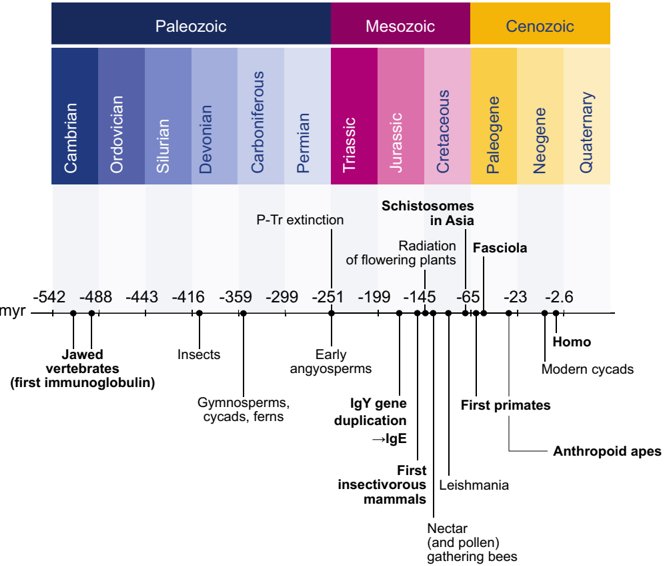
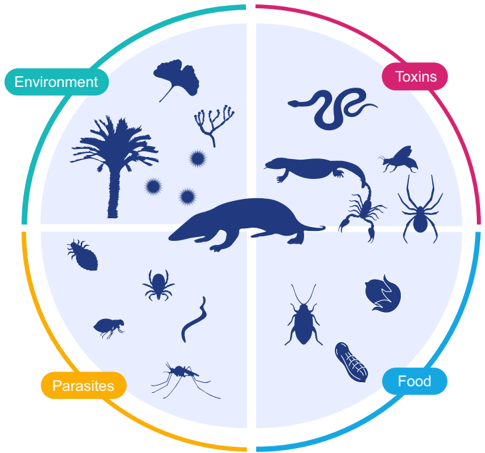
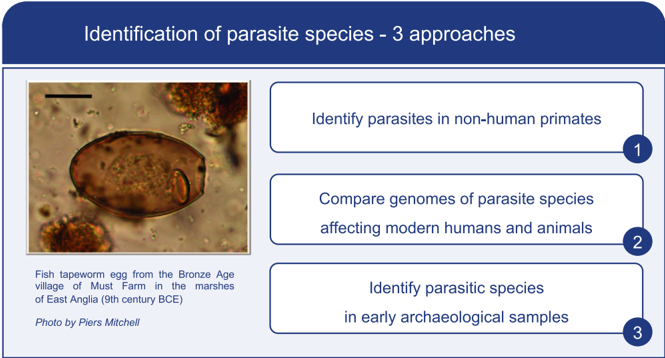

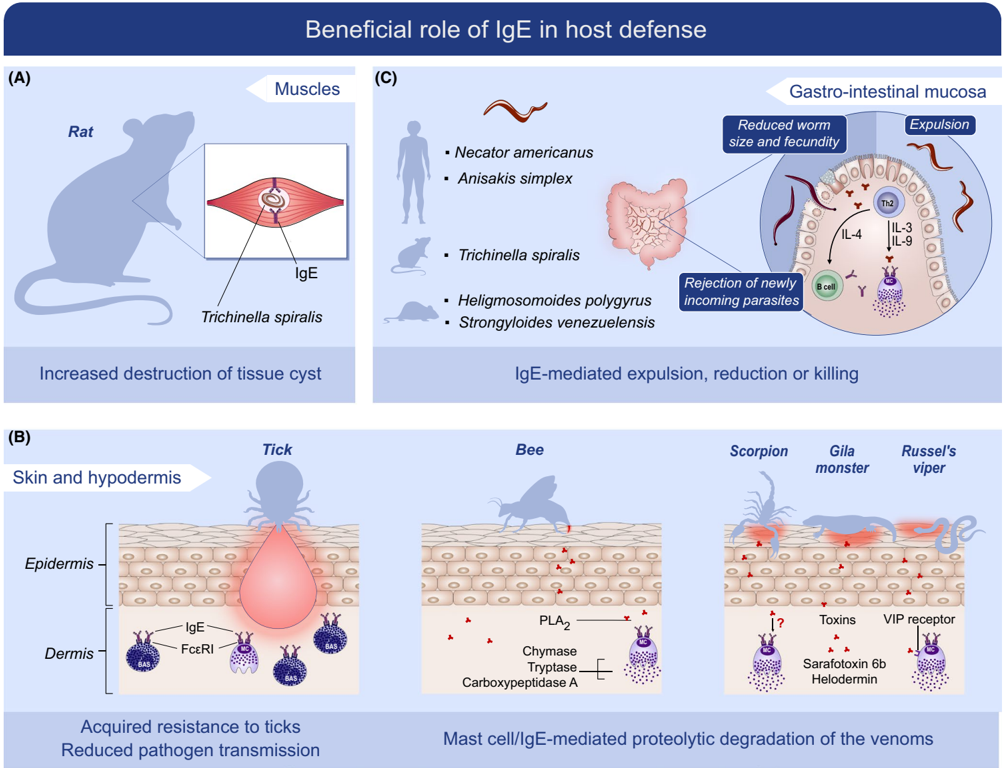


Verification
Claims the paper makes
The claims and statistics of this paper haven’t been checked yet.
Run the check — free, no account needed. It reads the open-access text and checks the sources it cites.
Claims other papers make about this one
Each is checked against this paper’s own text: does it say what the citing paper says it does?
In the citing paper
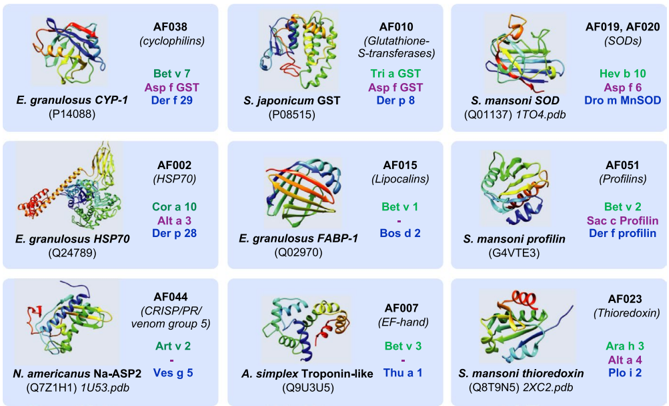
“This is particularly important for protein families such as tropomyosin, arginine kinase, and heat shock proteins, which are widely distributed across different taxonomic groups”
From Parasites and allergies: a complex bidirectional relationship from evolutionary origins to modern therapeutics (2026) · cites this paper as Pritchard et al. 2021
In the citing paper
“Insect-derived allergens may share molecular similarities with allergens from mites, crustaceans, mollusks, fungi, plants, animal venoms, and parasites.”
From Parasites and allergies: a complex bidirectional relationship from evolutionary origins to modern therapeutics (2026) · cites this paper as Pritchard et al. 2021
In the citing paper
“which are widely distributed across different taxonomic groups and may contribute to broad patterns of IgE cross-reactivity”
From Parasites and allergies: a complex bidirectional relationship from evolutionary origins to modern therapeutics (2026) · cites this paper as Pritchard et al. 2021
Self-check
Percentages, sums and reported differences re-computed from the paper’s own numbers.
The self-check needs the paper’s full text.
Citations
Cites
Stratigraphic placement and age of modern humans from Kibish, Ethiopia
McDougall, I., Brown, F. H., & Fleagle, J. G. (2005) · Nature · doi:10.1038/nature03258 · Cited by 1,023
The origin and evolution of Homo sapiens
Stringer, C. (2016) · Philosophical Transactions of the Royal Society B: Biological Sciences · doi:10.1098/rstb.2015.0237 · Cited by 395
Mast cells and IgE in defense against venoms: Possible “good side” of allergy?
Galli, S. J., Starkl, P., Marichal, T., & Tsai, M. (2016) · Allergology International · doi:10.1016/j.alit.2015.09.002 · Cited by 73
Research works printed but not linked: 120
- 10.1038/nri2692 · DOI
- 10.1111/j.1365-2796.2010.02316.x · DOI
- 10.1016/j.coi.2014.09.004 · DOI
- 10.1038/nri3786 · DOI
- 10.1016/j.iac.2006.02.004 · DOI
- 10.1111/j.1398-9995.2010.02367.x · DOI
- 10.1182/blood-2007-07-102111 · DOI
- 10.1016/S0923-2494(05)80009-4 · DOI
- Foster S, 2011, How can you help people with allergies, Pharm J., 286, 535
- 10.1098/rstb.1972.0008 · DOI
- 10.3389/fimmu.2017.01749 · DOI
- 10.1016/0167-5699(95)80008-5 · DOI
- 10.1016/S0145-305X(03)00084-3 · DOI
- 10.1016/S1471-4922(00)01846-8 · DOI
- 10.1016/B978-0-12-386037-8.00006-5 · DOI
- 10.1371/journal.pone.0096903 · DOI
- 10.1146/annurev.immunol.25.022106.141541 · DOI
- 10.1016/j.vetmic.2004.12.001 · DOI
- 10.1017/S0031182006000138 · DOI
- 10.1590/S0074-02762007005000070 · DOI
- 10.3389/fimmu.2014.00061 · DOI · Paper page
- 10.1177/003591576305600329 · DOI
- 10.4168/aair.2015.7.3.205 · DOI
- 10.1111/j.1365-3024.2010.01270.x · DOI
- 10.1046/j.1365-2249.2002.01807.x · DOI · Paper page
- 10.1002/mnfr.201700030 · DOI
- 10.1016/j.molimm.2018.03.015 · DOI · Paper page
- 10.1126/science.164.3877.295 · DOI
- 10.1007/s00114-002-0330-2 · DOI
- 10.1007/s11882-009-0055-9 · DOI
- 10.1007/s10453-011-9209-z · DOI
- 10.1126/science.1209926 · DOI
- 10.1146/annurev-earth-042711-105313 · DOI · Paper page
- Baker RA, 2003, How old are bees?‐A look at the fossil record, J Apic Sci., 47, 79
- 10.1016/j.cub.2013.02.049 · DOI
- 10.1086/417049 · DOI · Paper page
- Higginbotham RD, 1965, Mast cells and local resistance to Russell’s viper venom, J Immunol., 95, 867, 10.4049/jimmunol.95.5.867 · DOI · Paper page
- 10.1353/pbm.1974.0027 · DOI · Paper page
- 10.1038/nature11047 · DOI · Paper page
- 10.1016/S0091-6749(85)80022-1 · DOI
- 10.1126/science.1128877 · DOI · Paper page
- 10.1016/j.immuni.2013.10.005 · DOI · Paper page
- 10.1172/JCI46139 · DOI · Paper page
- 10.1016/j.coi.2015.07.001 · DOI
- 10.1126/science.1236451 · DOI
- 10.1016/j.jprot.2015.01.004 · DOI
- Galli SJ, 2017, Mast Cells and IgE can Enhance Survival During Innate and Acquired Host Responses to Venoms, Trans Am Clin Climatol Assoc., 128, 193
- 10.1016/j.toxicon.2017.10.026 · DOI
- 10.1016/j.toxicon.2015.03.007 · DOI
- 10.1016/0041-0101(84)90145-4 · DOI
- 10.1016/0041-0101(91)90191-S · DOI
- 10.1016/S0065-2776(07)95006-3 · DOI
- 10.1016/bs.apar.2015.07.001 · DOI
- 10.1023/A:1025824702816 · DOI
- 10.1038/nature10839 · DOI
- 10.1186/s12862-015-0568-x · DOI
- 10.1016/j.pt.2009.07.004 · DOI · Paper page
- 10.1098/rspb.2000.1579 · DOI
- 10.1016/j.ijpara.2014.03.013 · DOI
- 10.1017/S0031182007003411 · DOI
- 10.1186/1756-3305-4-131 · DOI
- 10.4269/ajtmh.2008.79.248 · DOI
- 10.1098/rstb.2015.0229 · DOI
- 10.1016/j.ijpp.2013.08.003 · DOI
- 10.1002/oa.2786 · DOI
- 10.1016/j.tree.2008.09.008 · DOI
- 10.1001/jama.294.21.2772-a · DOI
- Bouchet F, 1996, Paléoparasitologie en contexte pleistocène : premières observations à la Grande Grotte d’Arcy‐sur‐Cure (Yonne), France, C R Acad Sci Paris Sér., 319, 147
- 10.3406/paleo.2005.5124 · DOI
- 10.15184/aqy.2019.61 · DOI
- Dounias E, 2006, When forest‐based hunter‐gatherers become sedentary: consequences for diet and health, Unasylva., 57, 26
- 10.1002/ajhb.22503 · DOI
- 10.1172/JCI42680 · DOI · Paper page
- 10.4049/jimmunol.129.2.790 · DOI · Paper page
- 10.1186/1742-9994-11-47 · DOI
- 10.2147/IJGM.S73791 · DOI
- Ahmad A, 1991, A role for IgE in intestinal immunity: Expression of rapid expulsion of Trichinella spiralis in rats transfused with IgE and thoracic duct lymphocytes, J Immunol., 146, 3563, 10.4049/jimmunol.146.10.3563 · DOI
- 10.1073/pnas.1412663111 · DOI · Paper page
- 10.1111/j.1365-3024.1989.tb00667.x · DOI
- 10.1038/349243a0 · DOI
- 10.1086/595792 · DOI
- 10.1111/j.1365-3024.1995.tb00968.x · DOI
- 10.1016/j.pt.2006.09.010 · DOI
- 10.1053/j.gastro.2006.05.019 · DOI
- 10.1111/j.1445-5994.1988.tb01643.x · DOI
- 10.1186/1475-2875-6-1 · DOI
- 10.1016/S0169-4758(99)01477-5 · DOI
- 10.7150/ijms.8.239 · DOI
- 10.1038/381075a0 · DOI
- 10.1371/journal.pone.0027564 · DOI
- 10.1016/j.jaci.2017.04.034 · DOI
- 10.1186/1939-4551-7-12 · DOI
- 10.1097/ACI.0b013e32834ec13b · DOI
- 10.3390/antib8010019 · DOI
- 10.1016/S0140-6736(01)06579-5 · DOI
- 10.1111/j.1365-2222.2011.03911.x · DOI
- 10.1136/gut.2004.041749 · DOI · Paper page
- 10.1111/j.1572-0241.2003.07660.x · DOI
- 10.1186/s12865-015-0074-3 · DOI · Paper page
- Garg SK, 2014, Helminth therapy (worms) for induction of remission in inflammatory bowel disease, Cochrane Database Syst Rev., 2014, CD009400
- 10.3389/fmicb.2017.02164 · DOI
- 10.1111/imm.13190 · DOI · Paper page
- 10.4049/jimmunol.172.2.1139 · DOI
- 10.1080/00034983.1980.11687318 · DOI
- Starkl P, 2015, IgE antibodies, FcεRIα, and IgE‐mediated local anaphylaxis can limit snake venom toxicity, J Allergy Clin Immunol., 2, 25
- 10.3389/fimmu.2014.00118 · DOI
- 10.1016/j.pt.2005.02.010 · DOI
- 10.1084/jem.153.2.423 · DOI
- 10.1016/j.pt.2011.10.001 · DOI
- 10.1016/j.jaci.2005.12.1357 · DOI
- 10.1128/CMR.00012-07 · DOI
- 10.1016/j.ijpara.2013.08.001 · DOI
- 10.1038/nprot.2015.053 · DOI · Paper page
- 10.1016/j.jaci.2008.01.025 · DOI · Paper page
- 10.1371/journal.pcbi.1004546 · DOI · Paper page
- 10.1016/j.molimm.2018.03.014 · DOI
- 10.3389/fimmu.2015.00026 · DOI · Paper page
- 10.1111/all.12325 · DOI · Paper page
- 10.3389/fimmu.2013.00492 · DOI
- 10.1371/journal.ppat.1002003 · DOI
Cited by
Sorted by citations
Understanding the Type 2 Immunity: An Evolving View Beyond Allergic Diseases
Jiménez‐Saiz, R., Iborra, S., Blanco, C., González‐Pérez, R., Nuñez‐Borque, E., Zeyneloglu, C., Babayev, H., Göksel, O., Göksel, T., Khaitov, M., et al. (2026) · Allergy · doi:10.1111/all.70512 · Cited by 2
Packi, K., Świerczewski, D., Klimczak, S., Ochab, D., Gałęziewska, J., Gromek, P., Kruczkowska, W., Płuciennik, E., Kałuzińska-Kołat, Ż., & Kołat, D. (2026) · Antonie van Leeuwenhoek · doi:10.1007/s10482-026-02425-4
Metadata
- Authors
- Pritchard, D. I., Falcone, F. H., & Mitchell, P. D.
- Venue
- Allergy
- Publisher
- Wiley
- Published
- 2020-09-22
- Volume
- 76
- Issue
- 4
- Pages
- 1024-1040
- ISSN
- 0105-4538
- 1398-9995
- Cited by
- 48
- References
- 3
- Language
- en
About these checks
Registry, retraction, Cites and statistics results are computed, not judged, with one exception: a printed reference that no index lists is read once by a model before it counts as a citation error. Claims are extracted by a model and kept only when their quote appears verbatim in the text; each cited source is then checked, with a model’s help, for whether it says what the claim relies on. Those verdicts can be wrong — read the claim’s quote and the cited source before relying on one.
Statistics and arithmetic are recomputed, not judged.
Confidence bands are shown only for fields calibrated on our annotated test set. None is calibrated yet, so no band is shown.
What counts as a claim ›How we measure confidence ›How we check this ›
Are you an author, or do you see a problem with this page? Request a review
