

Alterations in Gut Microbiome Composition and Function in Irritable Bowel Syndrome and Increased Probiotic Abundance with Daily Supplementation
Open accessPublished version of a preprint
The DOI matches its Crossref record; 97 of the 97 references it cites were found in a registry or an index.
Abstract
An estimated 35 million people in the United States and 11.5% of the population globally are affected by IBS. Immunity, genetics, environment, diet, small intestinal bacterial overgrowth (SIBO), and the gut microbiome are all factors that contribute to the onset or triggers of IBS.
Overview
The claims and statistics of this paper haven’t been checked yet.
Free: it reads the open-access text and checks the first 5 claims that cite a source we can check. Create a free account to check every claim.
Integrity signals
Registry
Cites
Statistics
Figures



Verification
Claims the paper makes
The claims and statistics of this paper haven’t been checked yet.
Free: it reads the open-access text and checks the first 5 claims that cite a source we can check. Create a free account to check every claim.
Claims other papers make about this one
Each is checked against this paper’s own text: does it say what the citing paper says it does?
The cited source says what the claim attributes to it.
In the citing paper
“Specifically, IBS patients had significantly lower alpha diversity and enrichment of Gram-negative bacteria with reduction in pathways associated short-chain fatty acid, differentiating microbial features in healthy and IBS subtypes43.”
From Association between attention-deficit/hyperactivity disorders and intestinal disorders: A systematic review and Meta-analysis (2025) · cites this paper as [43]
Self-check
Percentages, sums and reported differences re-computed from the paper’s own numbers.
The self-check needs the paper’s full text.
Citations
Cites
Sokol, H., Pigneur, B., Watterlot, L., Lakhdari, O., Bermúdez-Humarán, L. G., Gratadoux, J.-J., Blugeon, S., Bridonneau, C., Furet, J.-P., Corthier, G., et al. (2008) · Proceedings of the National Academy of Sciences · doi:10.1073/pnas.0804812105 · Cited by 4,413 · cited 1×
“short-chain fatty acid (SCFA) essential for gut health (29, 32, 38, 39).”
BackgroundLacy, B. E., Mearin, F., Chang, L., Chey, W. D., Lembo, A. J., Simren, M., & Spiller, R. (2016) · Gastroenterology · doi:10.1053/j.gastro.2016.02.031 · Cited by 2,866
Multivariable association discovery in population-scale meta-omics studies
Mallick, H., Rahnavard, A., McIver, L. J., Ma, S., Zhang, Y., Nguyen, L. H., Tickle, T. L., Weingart, G., Ren, B., Schwager, E. H., et al. (2021) · PLOS Computational Biology · doi:10.1371/journal.pcbi.1009442 · Cited by 2,596 · cited 1×
“MaasLin2 was used for distinguishing pathway features between healthy and IBS subtypes (82).”
MethodFunctional Gastrointestinal Disorders: History, Pathophysiology, Clinical Features, and Rome IV
Drossman, D. A. (2016) · Gastroenterology · doi:10.1053/j.gastro.2016.02.032 · Cited by 2,430
Beghini, F., McIver, L. J., Blanco-Míguez, A., Dubois, L., Asnicar, F., Maharjan, S., Mailyan, A., Manghi, P., Scholz, M., Thomas, A. M., et al. (2021) · eLife · doi:10.7554/elife.65088 · Cited by 2,303
Sperber, A. D., Bangdiwala, S. I., Drossman, D. A., Ghoshal, U. C., Simren, M., Tack, J., Whitehead, W. E., Dumitrascu, D. L., Fang, X., Fukudo, S., et al. (2021) · Gastroenterology · doi:10.1053/j.gastro.2020.04.014 · Cited by 2,263
Expansion of intestinal Prevotella copri correlates with enhanced susceptibility to arthritis
Scher, J. U., Sczesnak, A., Longman, R. S., Segata, N., Ubeda, C., Bielski, C., Rostron, T., Cerundolo, V., Pamer, E. G., Abramson, S. B., et al. (2013) · eLife · doi:10.7554/elife.01202 · Cited by 2,047 · cited 1×
“tion (51) but have also been associated with chronic inflammatory conditions (52, 53).”
BackgroundThrough Ageing, and Beyond: Gut Microbiota and Inflammatory Status in Seniors and Centenarians
Biagi, E., Nylund, L., Candela, M., Ostan, R., Bucci, L., Pini, E., Nikkïla, J., Monti, D., Satokari, R., Franceschi, C., et al. (2010) · PLoS ONE · doi:10.1371/journal.pone.0010667 · Cited by 1,483 · cited 2×
“Ruminococcus lactaris is negatively correlated to IL-8 (45) and is more abundant in a non-chronic kidney disease cohort (46), but has also been shown to be associated with a high-fat diet in a murine diabetes model (47).”
BackgroundLow counts of Faecalibacterium prausnitzii in colitis microbiota
Sokol, H., Seksik, P., Furet, J. P., Firmesse, O., Nion-Larmurier, I., Beaugerie, L., Cosnes, J., Corthier, G., Marteau, P., & Doré, J. (2009) · Inflammatory Bowel Diseases · doi:10.1002/ibd.20903 · Cited by 1,275
Rajilić–Stojanović, M., Biagi, E., Heilig, H. G. H. J., Kajander, K., Kekkonen, R. A., Tims, S., & de Vos, W. M. (2011) · Gastroenterology · doi:10.1053/j.gastro.2011.07.043 · Cited by 1,041
Carbohydrate metabolism in Bifidobacteria
Pokusaeva, K., Fitzgerald, G. F., & van Sinderen, D. (2011) · Genes & Nutrition · doi:10.1007/s12263-010-0206-6 · Cited by 846
Schmulson, M. J., & Drossman, D. A. (2017) · Journal of Neurogastroenterology and Motility · doi:10.5056/jnm16214 · Cited by 788
Hungin, A. P. S., Whorwell, P. J., Tack, J., & Mearin, F. (2003) · Alimentary Pharmacology & Therapeutics · doi:10.1046/j.1365-2036.2003.01456.x · Cited by 781 · cited 1×
“5% of the population, depending on the country or region (1).”
BackgroundThe human gut microbiota: Metabolism and perspective in obesity
Gomes, A. C., Hoffmann, C., & Mota, J. F. (2018) · Gut Microbes · doi:10.1080/19490976.2018.1465157 · Cited by 727
Phenotypic Landscape of a Bacterial Cell
Nichols, R. J., Sen, S., Choo, Y. J., Beltrao, P., Zietek, M., Chaba, R., Lee, S., Kazmierczak, K. M., Lee, K. J., Wong, A., et al. (2011) · Cell · doi:10.1016/j.cell.2010.11.052 · Cited by 713
Role of gut microbiota-generated short-chain fatty acids in metabolic and cardiovascular health
Chambers, E. S., Preston, T., Frost, G., & Morrison, D. J. (2018) · Current Nutrition Reports · doi:10.1007/s13668-018-0248-8 · Cited by 691
Nagpal, R., Neth, B. J., Wang, S., Craft, S., & Yadav, H. (2019) · EBioMedicine · doi:10.1016/j.ebiom.2019.08.032 · Cited by 653
Tap, J., Derrien, M., Törnblom, H., Brazeilles, R., Cools-Portier, S., Doré, J., Störsrud, S., Le Nevé, B., Öhman, L., & Simrén, M. (2017) · Gastroenterology · doi:10.1053/j.gastro.2016.09.049 · Cited by 642 · cited 1×
“richness; and the presence of methanogens in IBS (12, 13).”
BackgroundNovel bile acid biosynthetic pathways are enriched in the microbiome of centenarians
Sato, Y., Atarashi, K., Plichta, D. R., Arai, Y., Sasajima, S., Kearney, S. M., Suda, W., Takeshita, K., Sasaki, T., Okamoto, S., et al. (2021) · Nature · doi:10.1038/s41586-021-03832-5 · Cited by 632
Ford, A. C., Lacy, B. E., & Talley, N. J. (2017) · New England Journal of Medicine · doi:10.1056/nejmra1607547 · Cited by 587
Martínez, I., Stegen, J. C., Maldonado-Gómez, M. X., Eren, A. M., Siba, P. M., Greenhill, A. R., & Walter, J. (2015) · Cell Reports · doi:10.1016/j.celrep.2015.03.049 · Cited by 576 · cited 1×
“common in non-Western plant-rich diets (50) and decreased in individuals with constipa-”
BackgroundMaldonado-Gómez, M. X., Martínez, I., Bottacini, F., O’Callaghan, A., Ventura, M., van Sinderen, D., Hillmann, B., Vangay, P., Knights, D., Hutkins, R. W., et al. (2016) · Cell Host & Microbe · doi:10.1016/j.chom.2016.09.001 · Cited by 517 · cited 1×
“through probiotic supplementation (24).”
Klem, F., Wadhwa, A., Prokop, L. J., Sundt, W. J., Farrugia, G., Camilleri, M., Singh, S., & Grover, M. (2017) · Gastroenterology · doi:10.1053/j.gastro.2016.12.039 · Cited by 474
Vazquez–Roque, M. I., Camilleri, M., Smyrk, T., Murray, J. A., Marietta, E., O'Neill, J., Carlson, P., Lamsam, J., Janzow, D., Eckert, D., et al. (2013) · Gastroenterology · doi:10.1053/j.gastro.2013.01.049 · Cited by 451
Structural changes in the gut microbiome of constipated patients
Zhu, L., Liu, W., Alkhouri, R., Baker, R. D., Bard, J. E., Quigley, E. M., & Baker, S. S. (2014) · Physiological Genomics · doi:10.1152/physiolgenomics.00082.2014 · Cited by 381
Falony, G., Vlachou, A., Verbrugghe, K., & Vuyst, L. D. (2006) · Applied and Environmental Microbiology · doi:10.1128/aem.01296-06 · Cited by 358 · cited 1×
“longum may still promote gut health through cross-feeding mechanisms that lead to the production of short-chain fatty acids (70, 71).”
BackgroundThiamine deficiency disorders: Diagnosis, prevalence, and a roadmap for global control programs
Whitfield, K. C., Bourassa, M. W., Adamolekun, B., Bergeron, G., Bettendorff, L., Brown, K. H., Cox, L., Fattal‐Valevski, A., Fischer, P. R., Frank, E. L., et al. (2018) · Annals of the New York Academy of Sciences · doi:10.1111/nyas.13919 · Cited by 336
Pozuelo, M., Panda, S., Santiago, A., Mendez, S., Accarino, A., Santos, J., Guarner, F., Azpiroz, F., & Manichanh, C. (2015) · Scientific Reports · doi:10.1038/srep12693 · Cited by 325 · cited 10×
“Further studies have shown that in subjects with IBS-D and treated with Bifidobacterium longum, B. bifidum, B. lactis, B. infantis, and Lactobacillus acidophilus, there is a change in inflammation-related metabolites (25).”
ResultInfluentialLembo, A., Pimentel, M., Rao, S. S., Schoenfeld, P., Cash, B., Weinstock, L. B., Paterson, C., Bortey, E., & Forbes, W. P. (2016) · Gastroenterology · doi:10.1053/j.gastro.2016.08.003 · Cited by 310
The human gut Firmicute Roseburia intestinalis is a primary degrader of dietary β-mannans
La Rosa, S. L., Leth, M. L., Michalak, L., Hansen, M. E., Pudlo, N. A., Glowacki, R., Pereira, G., Workman, C. T., Arntzen, M. Ø., Pope, P. B., et al. (2019) · Nature Communications · doi:10.1038/s41467-019-08812-y · Cited by 302
Duboc, H., Rainteau, D., Rajca, S., Humbert, L., Farabos, D., Maubert, M., Grondin, V., Jouet, P., Bouhassira, D., Seksik, P., et al. (2012) · Neurogastroenterology & Motility · doi:10.1111/j.1365-2982.2012.01893.x · Cited by 256
Varela, E., Manichanh, C., Gallart, M., Torrejón, A., Borruel, N., Casellas, F., Guarner, F., & Antolin, M. (2013) · Alimentary Pharmacology & Therapeutics · doi:10.1111/apt.12365 · Cited by 249
Bacterial methionine biosynthesis
Ferla, M. P., & Patrick, W. M. (2014) · Microbiology · doi:10.1099/mic.0.077826-0 · Cited by 239
The Degree of Breath Methane Production in IBS Correlates With the Severity of Constipation
Chatterjee, S., Park, S., Low, K., Kong, Y., & Pimentel, M. (2007) · The American Journal of Gastroenterology · doi:10.1111/j.1572-0241.2007.01072.x · Cited by 232 · cited 1×
“verity of constipation (54) and may be useful as a diagnostic indicator of constipation-predominant IBS (55, 56).”
BackgroundFecal and Mucosal Microbiota Profiling in Irritable Bowel Syndrome and Inflammatory Bowel Disease
Lo Presti, A., Zorzi, F., Del Chierico, F., Altomare, A., Cocca, S., Avola, A., De Biasio, F., Russo, A., Cella, E., Reddel, S., et al. (2019) · Frontiers in Microbiology · doi:10.3389/fmicb.2019.01655 · Cited by 224
Gut microbiome production of short-chain fatty acids and obesity in children
Murugesan, S., Nirmalkar, K., Hoyo-Vadillo, C., García-Espitia, M., Ramírez-Sánchez, D., & García-Mena, J. (2018) · European Journal of Clinical Microbiology & Infectious Diseases · doi:10.1007/s10096-017-3143-0 · Cited by 220
Rivière, A., Gagnon, M., Weckx, S., Roy, D., & De Vuyst, L. (2015) · Applied and Environmental Microbiology · doi:10.1128/aem.02089-15 · Cited by 219 · cited 1×
“longum may still promote gut health through cross-feeding mechanisms that lead to the production of short-chain fatty acids (70, 71).”
BackgroundDillon, S. M., Lee, E. J., Kotter, C. V., Austin, G. L., Gianella, S., Siewe, B., Smith, D. M., Landay, A. L., McManus, M. C., Robertson, C. E., et al. (2016) · Mucosal Immunology · doi:10.1038/mi.2015.33 · Cited by 216 · cited 1×
“tion (51) but have also been associated with chronic inflammatory conditions (52, 53).”
BackgroundRigsbee, L., Agans, R., Shankar, V., Kenche, H., Khamis, H. J., Michail, S., & Paliy, O. (2012) · American Journal of Gastroenterology · doi:10.1038/ajg.2012.287 · Cited by 207
Effect of probiotic Lactobacillus strains in young children hospitalized with acute diarrhea
ROSENFELDT, V., MICHAELSEN, K. F., JAKOBSEN, M., LARSEN, C. N., MØLLER, P. L., PEDERSEN, P., TVEDE, M., WEYREHTER, H., VALERIUS, N. H., & PÆRREGAARD, A. (2002) · The Pediatric Infectious Disease Journal · doi:10.1097/00006454-200205000-00012 · Cited by 207
Recent insights into Shigella: a major contributor to the global diarrhoeal disease burden
Baker, S., & The, H. C. (2018) · Current Opinion in Infectious Diseases · doi:10.1097/qco.0000000000000475 · Cited by 198
Brigidi, P., Vitali, B., Swennen, E., Bazzocchi, G., & Matteuzzi, D. (2001) · Research in Microbiology · doi:10.1016/s0923-2508(01)01254-2 · Cited by 188 · cited 1×
“patients with and without IBS (22, 23), depending on their endogenous microbiome”
BackgroundCysteine-derived hydrogen sulfide and gut health: a matter of endogenous or bacterial origin
Blachier, F., Beaumont, M., & Kim, E. (2019) · Current Opinion in Clinical Nutrition & Metabolic Care · doi:10.1097/mco.0000000000000526 · Cited by 182
Alander, M., Mättö, J., Kneifel, W., Johansson, M., Kögler, B., Crittenden, R., Mattila-Sandholm, T., & Saarela, M. (2001) · International Dairy Journal · doi:10.1016/s0958-6946(01)00100-5 · Cited by 175
Ecology and metabolism of the beneficial intestinal commensal bacterium Faecalibacterium prausnitzii
Miquel, S., Martín, R., Bridonneau, C., Robert, V., Sokol, H., Bermúdez-Humarán, L. G., Thomas, M., & Langella, P. (2014) · Gut Microbes · doi:10.4161/gmic.27651 · Cited by 170 · cited 1×
“short-chain fatty acid (SCFA) essential for gut health (29, 32, 38, 39).”
BackgroundKim, G., Deepinder, F., Morales, W., Hwang, L., Weitsman, S., Chang, C., Gunsalus, R., & Pimentel, M. (2012) · Digestive Diseases and Sciences · doi:10.1007/s10620-012-2197-1 · Cited by 169 · cited 1×
“verity of constipation (54) and may be useful as a diagnostic indicator of constipation-predominant IBS (55, 56).”
BackgroundROSENFELDT, V., MICHAELSEN, K. F., JAKOBSEN, M., LARSEN, C. N., MØLLER, P. L., TVEDE, M., WEYREHTER, H., VALERIUS, N. H., & PÆRREGAARD, A. (2002) · The Pediatric Infectious Disease Journal · doi:10.1097/00006454-200205000-00013 · Cited by 164
Post‐infectious irritable bowel syndrome in patients with Shigella infection
JI, S., PARK, H., LEE, D., SONG, Y. K., CHOI, J. P., & LEE, S. (2005) · Journal of Gastroenterology and Hepatology · doi:10.1111/j.1440-1746.2005.03574.x · Cited by 158 · cited 1×
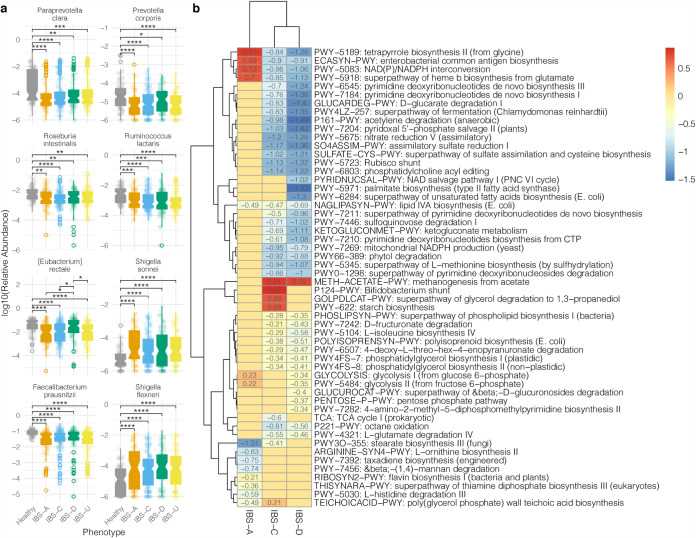
“postinfectious IBS (43), were found to be increased in the IBS subtypes (Fig.”
BackgroundSulfur Cycling and the Intestinal Microbiome
Barton, L. L., Ritz, N. L., Fauque, G. D., & Lin, H. C. (2017) · Digestive Diseases and Sciences · doi:10.1007/s10620-017-4689-5 · Cited by 156
Drouault-Holowacz, S., Bieuvelet, S., Burckel, A., Cazaubiel, M., Dray, X., & Marteau, P. (2008) · Gastroentérologie Clinique et Biologique · doi:10.1016/j.gcb.2007.06.001 · Cited by 151
Francavilla, R., Piccolo, M., Francavilla, A., Polimeno, L., Semeraro, F., Cristofori, F., Castellaneta, S., Barone, M., Indrio, F., Gobbetti, M., et al. (2019) · Journal of Clinical Gastroenterology · doi:10.1097/mcg.0000000000001023 · Cited by 150 · cited 2×
“studies that administer probiotics to individuals with IBS have shown reduced symptom severity and gut discomfort (25, 27, 28).”
BackgroundZhu, C., Song, K., Shen, Z., Quan, Y., Tan, B., Luo, W., Wu, S., Tang, K., Yang, Z., & Wang, X. (2018) · Molecular Medicine Reports · doi:10.3892/mmr.2018.8833 · Cited by 144
Antibiotic Treatment of Constipation-Predominant Irritable Bowel Syndrome
Pimentel, M., Chang, C., Chua, K. S., Mirocha, J., DiBaise, J., Rao, S., & Amichai, M. (2014) · Digestive Diseases and Sciences · doi:10.1007/s10620-014-3157-8 · Cited by 143
Pathway of Glucose Fermentation in Relation to the Taxonomy of Bifidobacteria
de Vries, W., & Stouthamer, A. H. (1967) · Journal of Bacteriology · doi:10.1128/jb.93.2.574-576.1967 · Cited by 136
Shen, Z., Zhu, C., Quan, Y., Yang, J., Yuan, W., Yang, Z., Wu, S., Luo, W., Tan, B., & Wang, X. (2018) · Journal of Gastroenterology and Hepatology · doi:10.1111/jgh.14144 · Cited by 133
Role for Salmonella enterica Enterobacterial Common Antigen in Bile Resistance and Virulence
Ramos‐Morales, F., Prieto, A. I., Beuzón, C. R., Holden, D. W., & Casadesús, J. (2003) · Journal of Bacteriology · doi:10.1128/jb.185.17.5328-5332.2003 · Cited by 133
Irritable bowel syndrome: a disease still searching for pathogenesis, diagnosis and therapy.
(2014) · PubMed Central · doi:10.3748/wjg.v20.i27.8807 · Cited by 132 · cited 3×
“In individuals with IBS, there is correlative depletion of Bifidobacterium and Lactobacillus (8).”
BackgroundInfluentialZhang, C., Jiang, J., Tian, F., Zhao, J., Zhang, H., Zhai, Q., & Chen, W. (2020) · Clinical Nutrition · doi:10.1016/j.clnu.2020.01.005 · Cited by 131 · cited 1×
“in stool frequency and consistency (66, 67).”
Enterobacterial Common Antigen: Synthesis and Function of an Enigmatic Molecule
Rai, A. K., & Mitchell, A. M. (2020) · mBio · doi:10.1128/mbio.01914-20 · Cited by 121
Hydrogen sulfide: an agent of stability at the microbiome-mucosa interface
Wallace, J. L., Motta, J.-P., & Buret, A. G. (2018) · American Journal of Physiology-Gastrointestinal and Liver Physiology · doi:10.1152/ajpgi.00249.2017 · Cited by 120
Probiotic-directed modulation of gut microbiota is basal microbiome dependent
Hou, Q., Zhao, F., Liu, W., Lv, R., Khine, W. W. T., Han, J., Sun, Z., Lee, Y.-K., & Zhang, H. (2020) · Gut Microbes · doi:10.1080/19490976.2020.1736974 · Cited by 119 · cited 1×
“patients with and without IBS (22, 23), depending on their endogenous microbiome”
BackgroundKarcher, N., Pasolli, E., Asnicar, F., Huang, K. D., Tett, A., Manara, S., Armanini, F., Bain, D., Duncan, S. H., Louis, P., et al. (2020) · Genome Biology · doi:10.1186/s13059-020-02042-y · Cited by 116 · cited 1×
“revealing differences in subspecies physiologies and metabolisms (49).”
BackgroundFaecalibacterium prausnitzii: A Next-Generation Probiotic in Gut Disease Improvement
He, X., Zhao, S., & Li, Y. (2021) · Canadian Journal of Infectious Diseases and Medical Microbiology · doi:10.1155/2021/6666114 · Cited by 116 · cited 1×
“short-chain fatty acid (SCFA) essential for gut health (29, 32, 38, 39).”
BackgroundThe duodenal microbiome is altered in small intestinal bacterial overgrowth
Leite, G., Morales, W., Weitsman, S., Celly, S., Parodi, G., Mathur, R., Barlow, G. M., Sedighi, R., Millan, M. J. V., Rezaie, A., et al. (2020) · PLOS ONE · doi:10.1371/journal.pone.0234906 · Cited by 116
Basu, S., Paul, D. K., Ganguly, S., Chatterjee, M., & Chandra, P. K. (2009) · Journal of Clinical Gastroenterology · doi:10.1097/mcg.0b013e31815a5780 · Cited by 111
Algera, J., Colomier, E., & Simrén, M. (2019) · Nutrients · doi:10.3390/nu11092162 · Cited by 109
Zhang, S., Dogan, B., Guo, C., Herlekar, D., Stewart, K., Scherl, E., & Simpson, K. W. (2020) · Antibiotics · doi:10.3390/antibiotics9080462 · Cited by 107
Short-Chain Fatty Acid in the Human Colon
D’Argenio, G., & Mazzacca, G. (1999) · Advances in experimental medicine and biology · doi:10.1007/978-1-4757-3230-6_13 · Cited by 106
No distinct microbiome signature of irritable bowel syndrome found in a Swedish random population
Hugerth, L. W., Andreasson, A., Talley, N. J., Forsberg, A. M., Kjellström, L., Schmidt, P. T., Agreus, L., & Engstrand, L. (2020) · Gut · doi:10.1136/gutjnl-2019-318717 · Cited by 102 · cited 1×
“have not shown a difference between a healthy cohort and individuals with IBS (14).”
BackgroundCharbonneau, D., Gibb, R. D., & Quigley, E. M. M. (2013) · Gut Microbes · doi:10.4161/gmic.24196 · Cited by 99
Pant, N., Marcotte, H., Bruessow, H., Svensson, L., & Hammarstrom, L. (2007) · BMC Microbiology · doi:10.1186/1471-2180-7-86 · Cited by 98
Evaluating Breath Methane as a Diagnostic Test for Constipation-Predominant IBS
Hwang, L. J., Low, K., Khoshini, R., Melmed, G., Sahakian, A. B., Makhani, M. D., Pokkunuri, V. B., & Pimentel, M. (2009) · Digestive Diseases and Sciences · doi:10.1007/s10620-009-0778-4 · Cited by 96 · cited 1×
“verity of constipation (54) and may be useful as a diagnostic indicator of constipation-predominant IBS (55, 56).”
BackgroundNilsen, M., Madelen Saunders, C., Leena Angell, I., Arntzen, M. Ø., Lødrup Carlsen, K. C., Carlsen, K.-H., Haugen, G., Heldal Hagen, L., Carlsen, M. H., Hedlin, G., et al. (2020) · Genes · doi:10.3390/genes11111245 · Cited by 94 · cited 1×
“associated with infant gut microbiome development (47) but is also associated with obe-”
BackgroundThiamine deficiency and cardiovascular disorders
Eshak, E. S., & Arafa, A. (2018) · Nutrition Metabolism and Cardiovascular Diseases · doi:10.1016/j.numecd.2018.06.013 · Cited by 94
Fukui, H., Nishida, A., Matsuda, S., Kira, F., Watanabe, S., Kuriyama, M., Kawakami, K., Aikawa, Y., Oda, N., Arai, K., et al. (2020) · Journal of Clinical Medicine · doi:10.3390/jcm9082403 · Cited by 88
Halpert, A. D., Dalton, C. B., Palsson, O. S., Morris, C. B., Hu, Y., Bangdiwala, S. I., Hankins, J. S., Norton, N. J., & Drossman, D. A. (2009) · Digestive Diseases and Sciences · doi:10.1007/s10620-009-0855-8 · Cited by 69
Azagra-Boronat, I., Massot‐Cladera, M., Knipping, K., Garssen, J., Amor, K. B., Knol, J., Franch, À., Castell, M., Rodríguez-Lagunas, M. J., & Pérez-Cano, F. J. (2020) · Nutrients · doi:10.3390/nu12020498 · Cited by 69
Patcharatrakul, T., Juntrapirat, A., Lakananurak, N., & Gonlachanvit, S. (2019) · Nutrients · doi:10.3390/nu11122856 · Cited by 66
Paula, H., Grover, M., Halder, S. L., Locke, G. R., Schleck, C. D., Zinsmeister, A. R., & Talley, N. J. (2015) · Neurogastroenterology & Motility · doi:10.1111/nmo.12655 · Cited by 63
Metagenomic profiling of gut microbiome in early chronic kidney disease
Sato, N., Kakuta, M., Hasegawa, T., Yamaguchi, R., Uchino, E., Murashita, K., Nakaji, S., Imoto, S., Yanagita, M., & Okuno, Y. (2020) · Nephrology Dialysis Transplantation · doi:10.1093/ndt/gfaa122 · Cited by 62 · cited 1×
“non-chronic kidney disease cohort (45) but has also been shown to be associated with a”
BackgroundJalanka, J., Salonen, A., Fuentes, S., & de Vos, W. M. (2015) · Gut Microbes · doi:10.1080/19490976.2015.1096486 · Cited by 61
Fan, Y.-J., Chen, S.-J., Yu, Y.-C., Si, J.-M., & Liu, B. (2006) · Journal of Zhejiang University SCIENCE B · doi:10.1631/jzus.2006.b0987 · Cited by 60 · cited 2×
“studies that administer probiotics to individuals with IBS have shown reduced symptom severity and gut discomfort (25, 27, 28).”
BackgroundMethodJayasimhan, S., Yap, N.-Y., Roest, Y., Rajandram, R., & Chin, K.-F. (2013) · Clinical Nutrition · doi:10.1016/j.clnu.2013.03.004 · Cited by 54 · cited 1×
“in stool frequency and consistency (66, 67).”
Li, Y., Hong, G., Yang, M. J., Li, G., Jin, Y. T., Xiong, H., Qian, W., & Hou, X. (2020) · Pharmacological Research · doi:10.1016/j.phrs.2020.104936 · Cited by 54
Diet and gut microbiome interactions of relevance for symptoms in irritable bowel syndrome
Tap, J., Störsrud, S., Nevé, B. L., Cotillard, A., Pons, N., Dore, J. M., Öhman, L., Törnblom, H., Derrien, M., & Simrén, M. (2021) · Microbiome · doi:10.1186/s40168-021-01018-9 · Cited by 50
Krieger‐Grübel, C., Hutter, S., Hiestand, M., Brenner, I., Güsewell, S., & Borovicka, J. (2020) · Clinical Nutrition ESPEN · doi:10.1016/j.clnesp.2020.09.020 · Cited by 47
Chung, E., Elmassry, M. M., Kottapalli, P., Kottapalli, K. R., Kaur, G., Dufour, J. M., Wright, K., Ramalingam, L., Moustaïd‐Moussa, N., Wang, R., et al. (2020) · Nutrition Research · doi:10.1016/j.nutres.2020.04.001 · Cited by 47
Rattanaprasert, M., Roos, S., Hutkins, R. W., & Walter, J. (2014) · Journal of Functional Foods · doi:10.1016/j.jff.2014.05.017 · Cited by 44
Yang, B. K., Huang, Z. J., He, Z., Yue, Y., Zhou, Y., Ross, R. P., Stanton, C., Zhang, H., Zhao, J., & Chen, W. (2021) · Food & Function · doi:10.1039/d1fo00504a · Cited by 43 · cited 1×
“arrhea because it has been demonstrated to reduce severity and incidence of diarrhea (68, 69).”
BackgroundGut microbiome composition and risk factors in a large cross-sectional IBS cohort
Agnello, M., Carroll, L. N., Imam, N., Pino, R., Palmer, C., Varas, I., Greene, C. C., Hitschfeld, M., Gupta, S., Almonacid, D. E., et al. (2020) · BMJ Open Gastroenterology · doi:10.1136/bmjgast-2019-000345 · Cited by 40 · cited 2×
“short-chain fatty acid (SCFA) essential for gut health (29, 32, 38, 39).”
BackgroundCanavan, C., West, J., & Card, T. R. (2015) · PLoS ONE · doi:10.1371/journal.pone.0139389 · Cited by 34
Antibiotics: a risk factor for irritable bowel syndrome in a population-based cohort
Krogsgaard, L. R., Engsbro, A. L., & Bytzer, P. (2018) · Scandinavian Journal of Gastroenterology · doi:10.1080/00365521.2018.1500638 · Cited by 33
Kim, J., Cho, K., Kim, J. S., Jung, H. C., Kim, B., Park, M. S., Ji, G. E., Cho, J., & Hong, K. S. (2019) · Food Science and Biotechnology · doi:10.1007/s10068-019-00717-2 · Cited by 33
Poulsen, C. H., Eplov, L. F., Hjorthøj, C., Hastrup, L. H., Eliasen, M., Dantoft, T. M., Schröder, A., & Jørgensen, T. (2019) · Scandinavian Journal of Public Health · doi:10.1177/1403494818776168 · Cited by 32
Improved gastrointestinal health for irritable bowel syndrome with metagenome-guided interventions
Meydan, C., Afshinnekoo, E., Rickard, N., Daniels, G., Kunces, L. J., Hardy, T. M., Lili, L., Pesce, S., Jacobson, P., Mason, C. E., et al. (2020) · Precision Clinical Medicine · doi:10.1093/pcmedi/pbaa013 · Cited by 24
Sabaté, J., Rivière, S., Jouet, P., Gastaldi‐Ménager, C., Fagot‐Campagna, A., & Tuppin, P. (2019) · BMC Gastroenterology · doi:10.1186/s12876-019-1031-z · Cited by 22
Automatic Categorization of Health Indices for Risk Quantification
Kanemura, A., Lipowski, G., Komine, H., & Akaho, S. (2015) · Procedia Computer Science · doi:10.1016/j.procs.2015.08.350 · Cited by 2
Cited by
Probiotics Mechanism of Action on Immune Cells and Beneficial Effects on Human Health
Mazziotta, C., Tognon, M., Martini, F., Torreggiani, E., & Rotondo, J. C. (2023) · Cells · doi:10.3390/cells12010184 · Cited by 889
Jacobs, J. P., Lagishetty, V., Hauer, M. C., Labus, J. S., Dong, T. S., Toma, R., Vuyisich, M., Naliboff, B. D., Lackner, J. M., Gupta, A., et al. (2023) · Microbiome · doi:10.1186/s40168-022-01450-5 · Cited by 120
Zhou, Y., Zhang, F., Mao, L., Feng, T., Wang, R. C., Xu, M., Lv, B., & Wang, X. (2022) · European Journal of Nutrition · doi:10.1007/s00394-022-02958-0 · Cited by 64
Chen, Y., Shen, X., Ma, T., Yu, X., Kwok, L. Y., Li, Y., Sun, Z., Li, D., & Zhang, H. (2023) · mSystems · doi:10.1128/msystems.01300-22 · Cited by 55
“alpha diversity of gut microbes is commonly observed in various chronic diseases such as Parkinson’s disease and irritable bowel syndrome (36, 37).”
BackgroundMicrobiome Shifts and Their Impact on Gut Physiology in Irritable Bowel Syndrome
Aggeletopoulou, I., & Triantos, C. K. (2024) · International Journal of Molecular Sciences · doi:10.3390/ijms252212395 · Cited by 56
Metadata
- Authors
- Phan, J., Nair, D., Jain, S., Montagne, T., Flores, D. V., Nguyen, A., Dietsche, S., Gombar, S., & Cotter, P.
- Affiliations
- Sun Genomics, Inc., San Diego, California, USA
- Atropos Health, Palo Alto, California, USA
- ResearchDx, Inc., Irvine, California, USA
- Corresponding author
- Phan, Joann
- ORCID
- Gombar, Saurabh
- Venue
- mSystems
- Publisher
- American Society for Microbiology
- Published
- 2021-12-21
- Volume
- 6
- Issue
- 6
- Pages
- e0121521-e0121521
- ISSN
- 2379-5077 (ISSN-L)
- PMC
- PMC8562475
- OpenAlex
- W3211292548
- Cited by
- 33
- References
- 97
- Citations by year
- 2026: 3 · 2025: 7 · 2024: 12 · 2023: 8 · 2022: 3
- FWCI
- 1.81
- Type
- journal article
- Language
- en
- Open access
- gold
- doi.org
- Licence
- cc-by
- creativecommons.org/licenses/by/4.0/ (vor)
- journals.asm.org/non-commercial-tdm-license (tdm)
- Locations
- mSystems (publishedVersion, cc-by)
- bioRxiv (Cold Spring Harbor Laboratory) (acceptedVersion)
- Europe PMC (PubMed Central) (publishedVersion, other-oa)
- PubMed Central (publishedVersion, cc-by)
- PubMed (publishedVersion)
- DOAJ (DOAJ: Directory of Open Access Journals) (submittedVersion, cc-by-sa)
- Topics
- Life Sciences › Biochemistry, Genetics and Molecular Biology › Molecular Biology › Gut microbiota and health
- Health Sciences › Medicine › Gastroenterology › Gastrointestinal motility and disorders
- Life Sciences › Agricultural and Biological Sciences › Food Science › Probiotics and Fermented Foods
- Keywords
- irritable bowel syndrome, gut microbiota, probiotics, probiotic supplementation, small intestinal bacterial overgrowth, microbiota composition, microbiome function, IBS symptom severity
About these checks
Registry, retraction, Cites and statistics results are computed, not judged, with one exception: a printed reference that no index lists is read once by a model before it counts as a citation error. Claims are extracted by a model and kept only when their quote appears verbatim in the text; each cited source is then checked, with a model’s help, for whether it says what the claim relies on. Those verdicts can be wrong — read the claim’s quote and the cited source before relying on one.
Statistics and arithmetic are recomputed, not judged.
Confidence bands are shown only for fields calibrated on our annotated test set. None is calibrated yet, so no band is shown.
What counts as a claim ›How we measure confidence ›How we check this ›
Are you an author, or do you see a problem with this page? Request a review
Data sources
Bibliographic data: Semantic Scholar, OpenAlex, Crossref.
Contains information from the Semantic Scholar Academic Graph Datasets, made available under the ODC Attribution License (ODC-BY 1.0).
Semantic Scholar’s data is described in: Kinney, R., et al. (2023). The Semantic Scholar Open Data Platform. arXiv:2301.10140.
