

Methods and dimensions of electronic health record data quality assessment: enabling reuse for clinical research
Open accessThe DOI matches its Crossref record; 113 of the 114 references it cites were found in a registry or an index; 9 of the 41 sources its claims cite were checked for support.
Abstract
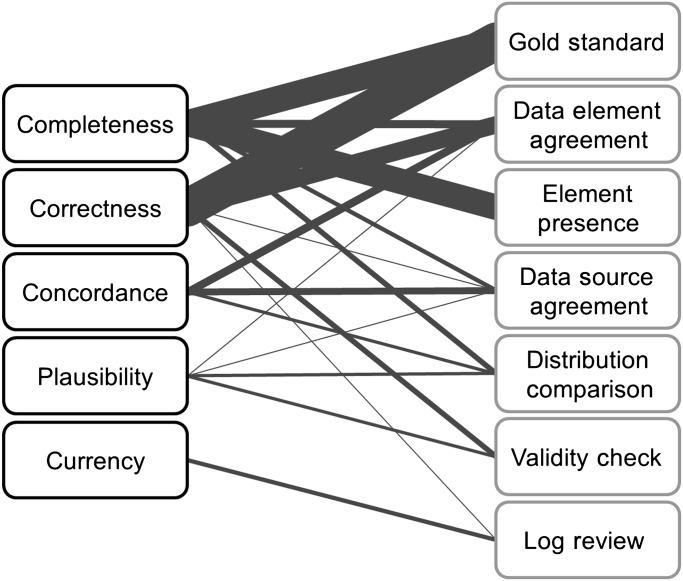
OBJECTIVE: To review the methods and dimensions of data quality assessment in the context of electronic health record (EHR) data reuse for research. MATERIALS AND METHODS: A review of the clinical research literature discussing data quality assessment methodology for EHR data was performed. Using an iterative process, the aspects of data quality being measured were abstracted and categorized, as well as the methods of assessment used. RESULTS: Five dimensions of data quality were identified, which are completeness, correctness, concordance, plausibility, and currency, and seven broad categories of data quality assessment methods: comparison with gold standards, data element agreement, data source agreement, distribution comparison, validity checks, log review, and element presence. DISCUSSION: Examination of the methods by which clinical researchers have investigated the quality and suitability of EHR data for research shows that there are fundamental features of data quality, which may be difficult to measure, as well as proxy dimensions. Researchers interested in the reuse of EHR data for clinical research are recommended to consider the adoption of a consistent taxonomy of EHR data quality, to remain aware of the task-dependence of data quality, to integrate work on data quality assessment from other fields, and to adopt systematic, empirically driven, statistically based methods of data quality assessment. CONCLUSION: There is currently little consistency or potential generalizability in the methods used to assess EHR data quality. If the reuse of EHR data for clinical research is to become accepted, researchers should adopt validated, systematic methods of EHR data quality assessment.
Overview
CoChat Summary
TL;DR
This review identifies five dimensions of electronic health record (EHR) data quality—completeness, correctness, concordance, plausibility, and currency—and seven broad categories of assessment methods. It concludes that EHR data quality assessment for research lacks consistency and generalizability, and recommends validated, systematic, statistically based methods.
Key findings
- Five data quality dimensions were derived: completeness, correctness, concordance, plausibility, and currency. Seven assessment method categories were identified: comparison with gold standards, data element agreement, data source agreement, distribution comparison, validity checks, log review, and element presence.
- Completeness was the most commonly assessed dimension, in 61 (64%) of 95 articles, followed by correctness in 57 (60%), concordance in 16 (17%), plausibility in 7 (7%), and currency in 4 (4%).
- Gold standard comparison was used in 37 of 95 articles; element presence was used only for completeness, while currency was assessed only through log review.
- The authors argue that only correctness, completeness, and currency are fundamental dimensions; concordance and plausibility appear to serve as proxies when fundamental dimensions cannot be assessed directly.
Methods
- Literature search performed on PubMed in February 2012, using data quality terms and EHR-related terms; the search produced 230 articles, which were manually reviewed.
- Inclusion criteria retained original research using data quality assessment methods, focused on EHR-derived data, and published in peer-reviewed journals; administrative claims databases were excluded. This yielded 44 articles, and an ancestor search added 51 more, for a final pool of 95 articles.
- From each article, the authors abstracted data quality features, assessment methods, and descriptive information; through iterative review, they inductively derived dimensions and method categories, then recategorized all 95 articles by dimension and assessment strategy.
Limitations
- The paper states the search was limited: lack of MeSH terms for data quality and variation in terminology may have caused relevant articles to be missed, though reference review was believed to improve saturation.
- The paper states classification was largely subjective and performed by only one author, so original researchers might disagree with the interpretations.
- The paper states that underreporting likely affected results, because routine data checking such as distributions and summary statistics is rarely described in publications; evident from the text, the review is descriptive and does not empirically validate the proposed taxonomy.
Model-written summary. Check it against the paper before relying on it.
Integrity signals
Registry
Cites
Statistics
Figures
Verification
Claims the paper makes
8 Valid · 1 Not valid · 16 Not checked · 59 Own results and interpretations
Every source the paper cites for this claim was checked and supports it.
In the paper
“Thiru et al,9 in calculating the sensitivity of different types of EHR data in the literature, found values ranging between 0.26 and 1.00.”
§ Methods and dimensions of electronic health record data quality assessment: enabling reuse for clinical research > Abstract > Conclusion
What the sources say
- Supportedcites [9] Thiru K Hassey A Sullivan F Systematic review of scope and quality of electronic patient record data in primary care. BMJ 2003; 326: 1070 12750210 PMC155692 source
Table 3 (Results) lists sensitivities for different types of electronic patient record data. The values range from 26% for socioeconomic data to 100% for several categories, matching 0.26–1.00. (LLM, conf=0.94)
plain- Asserted: passes — The authors put it forward as true.
- Checkable: passes — It can be checked against evidence.
- Load-bearing: passes — The paper’s conclusions depend on it.
- Based: passes — The paper gives a reason why it holds.
- Supported
The cited sources support only part of this claim — read each source’s verdict below.
In the paper
“Hogan and Wagner8 suggested specific statistical measures of the correctness and completeness of EHR elements that have been adopted by other researchers.”
§ Methods and dimensions of electronic health record data quality assessment: enabling reuse for clinical research > Discussion > Data quality assessment methodology
What the sources say
- Partly supportedcites [8] Hogan WR Wagner MM Accuracy of data in computer-based patient records. J Am Med Inform Assoc 1997; 4: 342– 55 9292840 PMC61252 sourceExperimental — accuracy not yet measured
The Methodological Recommendations section (page not provided) defines correctness and completeness as specific proportions and recommends that future studies report numerical measures of both. The paper does not establish the claim that other researchers subsequently adopted those measures. (LLM, conf=0.88)
plainstates a cause- Asserted: passes — The authors put it forward as true.
- Checkable: passes — It can be checked against evidence.
- Load-bearing: unclear — It is unclear whether the paper’s conclusions depend on it.
- Based: passes — The paper gives a reason why it holds.
- Partly supported
The sources with a verdict support this claim; the rest weren’t checked yet, have no full text we could read, or their verdicts aren’t rated yet.
In the paper
“Some researchers looking at the quality of research databases pulled from general practices in the UK have adopted relatively consistent approaches to comparing the distributions of data concerning specific clinical phenomena to information from registries and surveys.31 98 99 102”
§ Methods and dimensions of electronic health record data quality assessment: enabling reuse for clinical research > Discussion > Data quality assessment methodology
What the sources say
- Not checked — no full text of the sourcecites [31] Lewis JD Brensinger C Agreement between GPRD smoking data: a survey of general practitioners and a population-based survey. Pharmacoepidemiol Drug Saf 2004; 13: 437– 41 15269927 source
- Not checked — no full text of the sourcecites [98] Haynes K Forde KA Schinnar R Cancer incidence in The Health Improvement Network. Pharmacoepidemiol Drug Saf 2009; 18: 730– 6 19479713 source
- Supportedcites [99] Iyen-Omofoman B Hubbard RB Smith CJ The distribution of lung cancer across sectors of society in the United Kingdom: a study using national primary care data. BMC Public Health 2011; 11: 857 22074413 PMC3282683 source
The Methods and Discussion > Lung cancer Incidence describe comparing lung cancer data from the UK general-practice database THIN with national cancer registry and National Lung Cancer Audit data to assess its representativeness. This paper therefore exemplifies the comparison approach attributed to the cited group of researchers; the sentence does not require each cited study to use both registries and surveys. (LLM, conf=0.85)
plain- Asserted: passes — The authors put it forward as true.
- Checkable: passes — It can be checked against evidence.
- Load-bearing: unclear — It is unclear whether the paper’s conclusions depend on it.
- Based: passes — The paper gives a reason why it holds.
The cited sources support only part of this claim — read each source’s verdict below.
In the paper
“In three of the four, researchers reviewed whether desired data were entered into the EHR within a set time limit.36 46 52”
§ Methods and dimensions of electronic health record data quality assessment: enabling reuse for clinical research > Results > Currency
What the sources say
- Not checked — no full text of the sourcecites [36] Ndira SP Rosenberger KD Wetter T Assessment of data quality of and staff satisfaction with an electronic health record system in a developing country (Uganda): a qualitative and quantitative comparative study. Methods Inf Med 2008; 47: 489– 98 19057805 source
- Partly supportedcites [46] Vawdrey DK Gardner RM Evans RS Assessing data quality in manual entry of ventilator settings. J Am Med Inform Assoc 2007; 14: 295– 303 17329731 PMC2244881 sourceExperimental — accuracy not yet measured
The Methods (Data Analysis; page unavailable) say the researchers measured charting delay—the interval between observing ventilator settings and entering them into the computer—to assess timeliness. The Results report an average delay of 6.1 minutes, but the study does not assess whether entries met a set time limit. The 30-minute limit in the Background describes an earlier study by East et al., not this study's measure. (LLM, conf=0.85)
- Not checked — no full text of the sourcecites [52] Faulconer ER de Lusignan S An eight-step method for assessing diagnostic data quality in practice: chronic obstructive pulmonary disease as an exemplar. Inform Prim Care 2004; 12: 243– 54 15808026 source
plain- Asserted: passes — The authors put it forward as true.
- Checkable: passes — It can be checked against evidence.
- Load-bearing: unclear — It is unclear whether the paper’s conclusions depend on it.
- Based: passes — The paper gives a reason why it holds.
A result the paper reports from its own data — it cites no other source for it, so there is none to check. The quote shows it is in the paper.
In the paper
“For example, 37 of the 95 articles in our sample relied on a gold standard to assess data quality.”
§ Methods and dimensions of electronic health record data quality assessment: enabling reuse for clinical research > Discussion > Data quality assessment methodology
plainn = 95- Asserted: passes — The authors put it forward as true.
- Checkable: passes — It can be checked against evidence.
- Load-bearing: unclear — It is unclear whether the paper’s conclusions depend on it.
- Based: passes — The paper gives a reason why it holds.
40 more claims
Create a free account to see all 84 claims and every source verdict.
- It may state two separate claims as one. 23
- Probably not a substantial claim. 24
Claims other papers make about this one
Each is checked against this paper’s own text: does it say what the citing paper says it does?
The source backs part of the claim, not all of it — or backs it for a different population, condition or comparison.
In the citing paper
“While these developments have advanced the understanding of data quality in the context of medical applications, frameworks for EHR frequently focus on the data quality of individual patients86,87, neglecting data quality aspects for the overall population.”
From The METRIC-framework for assessing data quality for trustworthy AI in medicine: A systematic review (2024) · cites this paper as [87]
Experimental — accuracy not yet measuredThe cited source says what the claim attributes to it.
In the citing paper
“The current DQ literature is inconsistent in the use of terms that describe the complex multidimensional aspects of DQ.42–51”
From A harmonized data quality assessment terminology and framework for the secondary use of electronic health record data (2016) · cites this paper as [45]
The cited source says what the claim attributes to it.
In the citing paper
“In particular, representativeness is often not a factor86,87 while it is a crucial property for secondary use of data in clinical studies88 or when reusing medical data as training data for ML applications.”
From The METRIC-framework for assessing data quality for trustworthy AI in medicine: A systematic review (2024) · cites this paper as [87]
Self-check
Percentages, sums and reported differences re-computed from the paper’s own numbers.
Each contradiction between two passages listed here was confirmed by an independent check.
Rated minor: it would not touch a result — a value no result rests on, a p-value that stays on the same side of the significance level, or a conflict that is clerical, resolved elsewhere in the paper, or outside its own findings.
In the paper
§ Methods and dimensions of electronic health record data quality assessment: enabling reuse for clinical research > Results > Plausibility
“The most common approach to assessing the plausibility of EHR data was to perform some sort of validity check to determine if specific elements within the EHR were likely to be true or not.”
§ Methods and dimensions of electronic health record data quality assessment: enabling reuse for clinical research > Results
“| Distribution comparison | 97–100 | | 31 57 97 | 50 101 102 103 | | 10 | | Validity checks | | 32 62 104 105 106 | | 73 89 | | 7 |”
Citations
Cites
A General Inductive Approach for Analyzing Qualitative Evaluation Data
Thomas, D. R. (2006) · American Journal of Evaluation · doi:10.1177/1098214005283748 · Cited by 10,858 · cited 1×
“Furthermore, using an existing model to guide analysis is a deductive approach, which has the potential to obscure information contained in the data.(11) By imposing an existing model from a different discipline, we would have run the risk of missing important findings.”
MethodBeyond Accuracy: What Data Quality Means to Data Consumers
Wang, R. Y., & Strong, D. M. (1996) · Journal of Management Information Systems · doi:10.1080/07421222.1996.11518099 · Cited by 4,672
(2020) · Journal of Medical Education · doi:10.5812/jme · Cited by 3,490
The American Journal of Managed Care
(2020) · The American Journal of Managed Care · doi:10.37765/ajmc · Cited by 3,237
Pipino, L. L., Lee, Y. W., & Wang, R. Y. (2002) · Communications of the ACM · doi:10.1145/505248.506010 · Cited by 1,724
Juran's Quality Control Handbook
Ziegel, E. R. (1990) · Technometrics · doi:10.1080/00401706.1990.10484602 · Cited by 1,384
Jick, H., Jick, S. S., & Derby, L. E. (1991) · BMJ · doi:10.1136/bmj.302.6779.766 · Cited by 839
Safran, C., Bloomrosen, M., Hammond, W. E., Labkoff, S., Markel-Fox, S., Tang, P. C., & Detmer, D. E. (2007) · Journal of the American Medical Informatics Association · doi:10.1197/jamia.m2273 · Cited by 705 · cited 1×
“As the adoption of electronic health records (EHRs) has made it easier to access and aggregate clinical data, there has been growing interest in conducting research with data collected during the course of clinical care.(1) 2 The Natonal Institutes of Health has called for increasing the reuse of electronic records fo…”
MethodInformatics in Primary Care: Strategies in Information Management for the Healthcare Provider
(2002) · Health Informatics · doi:10.1007/978-1-4613-0069-4 · Cited by 422
Accuracy of Data in Computer-based Patient Records
Hogan, W. R., & Wagner, M. M. (1997) · Journal of the American Medical Informatics Association · doi:10.1136/jamia.1997.0040342 · Cited by 389 · cited 5×
“As observed by Hogan and Wagner in their literature review, there is no medical subheadings (MeSH) term fi ‘ ’ ‘ ’ ‘ ’ ‘ consistency ’ , ‘ data completeness ’ , and ‘ data error ’ .”
BackgroundInfluential
Research works printed but not linked: 14
- 1997, Journal of the American Medical Informatics Association, 4, 342, 10.1136/jamia.1997.0040342 · DOI · Paper page
- 2006, Journal of the American Medical Informatics Association, 13, 12, 10.1197/jamia.M1813 · DOI · Paper page
- 2000, Journal of the American Medical Informatics Association, 7, 55, 10.1136/jamia.2000.0070055 · DOI · Paper page
- 1996, Journal of the American Medical Informatics Association, 3, 234, 10.1136/jamia.1996.96310637 · DOI · Paper page
- 2007, Journal of the American Medical Informatics Association, 14, 295, 10.1197/jamia.M2219 · DOI · Paper page
- 2007, Journal of the American Medical Informatics Association, 14, 10, 10.1197/jamia.M2198 · DOI · Paper page
- Harabagiu, 2010, 2010, 1
- 2004, Journal of the American Medical Informatics Association, 11, 351, 10.1197/jamia.M1498 · DOI · Paper page
- 2000, Journal of the American Medical Informatics Association, 7, 42, 10.1136/jamia.2000.0070042 · DOI · Paper page
- 2010, Family Practice, 27, 121, 10.1093/fampra/cmp068 · DOI
- 2004, Journal of the American Medical Informatics Association, 11, 78, 10.1197/jamia.M1362 · DOI
- 1999, Journal of the American Medical Informatics Association, 6, 245, 10.1136/jamia.1999.0060245 · DOI · Paper page
- 2003, Journal of the American Medical Informatics Association, 10, 470, 10.1197/jamia.M1290 · DOI · Paper page
- Committee on Improving the Patient Record Institute of Medicine The Computer-Based Patient Record: An Essential Technology for Health Care, Revised Edition. Institute of Medicine. The National Academies Press, 1997 http://iom.edu/Reports/1997/The-Computer-Based-Patient-Record-An-Essential-Technology-for-Health-Care-Revised-Edition.aspx 25121222
Cited by
Items 401–500 of 1,209
Interstitial lung disease in a veterans affairs regional network; a retrospective cohort study
Bedoya, A., Pleasants, R. A., Boggan, J. C., Seaman, D. M., Reihman, A. E., Howard, L. E., Kundich, R., Welty‐Wolf, K. E., & Tighe, R. M. (2021) · PLoS ONE · doi:10.1371/journal.pone.0247316 · Cited by 16
Douthit, B. J., Fiol, G. D., Staes, C. J., Docherty, S. L., & Richesson, R. (2021) · Applied Clinical Informatics · doi:10.1055/s-0041-1732423 · Cited by 14
“The act of analyzing terminology in informatics is not new; the exploration of “ data quality ” by Weiskopf and Weng 4 showed that a standard de fi nition of a concept is important when attempting to operationalize measurement, having real-world implications for research and quality improvement.”
BackgroundNelson, S. J., Drury, B., Hood, D., Harper, J. R., Bernard, T., Weng, C., Kennedy, N., LaSalle, B., Gouripeddi, R., Wilkins, C. H., et al. (2021) · Journal of the American Medical Informatics Association · doi:10.1093/jamia/ocab265 · Cited by 16
Self-citationDevine, E. B., Eaton, E. G. V., Zadworny, M. E., Symons, R. G., Devlin, A., Yanez, D., Yetişgen, M., Keyloun, K. R., Daniel Capurro, N., Alfonso‐Cristancho, R., et al. (2018) · eGEMs (Generating Evidence & Methods to improve patient outcomes) · doi:10.5334/egems.211 · Cited by 15
Long-term preservation of biomedical research data
Navale, V., & McAuliffe, M. (2018) · F1000Research · doi:10.12688/f1000research.16015.1 · Cited by 15
“The data quality assessment of these dimensions has been carried out by one or more of the seven categories: comparison with gold standards, data element agreement, data source agreement, distribution comparison, validity checks, log review, and element presence 23 .”
MethodHuser, V., Li, X., Zhang, Z., Sungjae, J., Woong, P. R., Banda, J. M., Razzaghi, H., Londhe, A. A., & Karthik, N. (2019) · Studies in health technology and informatics · doi:10.3233/shti190498 · Cited by 17
Lost in Translation: Diagnosis Records Show More Inaccuracies After Biopsy in Oncology Care EHRs.
Diaz‐Garelli, F., Strowd, R. E., III, Wells, B. J., Ahmed, T., Merrill, R., & Topaloĝlu, Ü. (2019) · PubMed · Cited by 16
South African 2004 ICT Sector Performance Review
Gillwald, A. N., & Esselaar, S. (2004) · Cited by 27
Fu, A., Shen, T., Roberts, S. B., Liu, W., Vaidyanathan, S., Marchena-Romero, K.-J., Lam, Y. Y. P., Shah, K., Mak, D. Y. F., GEMINI Investigators, et al. (2025) · Journal of the American Medical Informatics Association · doi:10.1093/jamia/ocaf042 · Cited by 14
Quality analysis of a breast thermal images database
Pérez‐Martín, J., & Sánchez‐Cauce, R. (2023) · Health Informatics Journal · doi:10.1177/14604582231153779 · Cited by 14
“These desirable features can be expanded into five dimensions that all databases must guarantee: completeness, correctness, concordance, plausibility, and currency.(11) Compliance with each of these dimensions must be measured according to the specific goal for which data was collected.”
BackgroundMethodRemediation practices for health profession students and clinicians: An integrative review
Immonen, J. A., Richardson, S., Bassett, A. M. S., Garg, H., Lau, J. D., & Nguyen, L. M. (2023) · Nurse Education Today · doi:10.1016/j.nedt.2023.105841 · Cited by 18
Alzghaibi, H. (2023) · Frontiers in Public Health · doi:10.3389/fpubh.2023.1121327 · Cited by 29
MBSAQIP database: are the data reliable?
Clapp, B. L., Lu, L. Y., Corbett, J., et al. (2023) · Surgery for Obesity and Related Diseases · doi:10.1016/j.soard.2023.08.018 · Cited by 14
Challenges in Outcome Measurement: Clinical Research Perspective
O’Connor, D. P., & Brinker, M. R. (2013) · Clinical Orthopaedics and Related Research · doi:10.1007/s11999-013-3194-1 · Cited by 18
Data Quality Assessment in Emergency Medical Services: What Are the Stakeholders' Perspectives?
Mashoufi, M., Ayatollahi, H., & Khorasani-Zavareh, A. D. (2019) · Europe PMC (PubMed Central) · Cited by 19
Hubbard, R. A., Xu, J., Siegel, R., Chen, Y., & Eneli, I. (2020) · Journal of Biomedical Informatics · doi:10.1016/j.jbi.2020.103654 · Cited by 13
Auffenberg, G. B., Gonzalez, C. M., Wolf, J. S., Clemens, J. Q., Meeks, W. D., & McVary, K. T. (2014) · The Journal of Urology · doi:10.1016/j.juro.2014.06.016 · Cited by 14
Nie, X., Zhang, Y., Wu, Z., Jia, L., Wang, X., Langan, S., Benchimol, E. I., & Peng, X. (2018) · Expert Opinion on Drug Safety · doi:10.1080/14740338.2018.1484106 · Cited by 14
“The description of data cleaning methods should include range and outlier checks, checks for duplicate records, and handling of repeated measures [40,41].”
BackgroundQuality Informatics: The Convergence of Healthcare Data, Analytics, and Clinical Excellence
Coppersmith, N. A., Sarkar, I. N., & Chen, E. S. (2019) · Applied Clinical Informatics · doi:10.1055/s-0039-1685221 · Cited by 17
Good Practice Data Linkage (GPD): A Translation of the German Version
March, S., Andrich, S., Drepper, J., Horenkamp‐Sonntag, D., Icks, A., Ihle, P., Kieschke, J., Kollhorst, B., Maier, B., Meyer, I., et al. (2020) · International Journal of Environmental Research and Public Health · doi:10.3390/ijerph17217852 · Cited by 16
“When assessing the individual data sources and their contents, related quality criteria such as completeness and an absence of errors [32] should be taken into account [33].”
BackgroundUsing the CER Hub to ensure data quality in a multi-institution smoking cessation study
Walker, K. L., Kirillova, O., Gillespie, S. E., Hsiao, D., Pishchalenko, V., Pai, A. K., Puro, J. E., Plumley, R., Kudyakov, R., Hu, W., et al. (2014) · Journal of the American Medical Informatics Association · doi:10.1136/amiajnl-2013-002629 · Cited by 13
Wurster, F., Herrmann, C., Beckmann, M., Cecon, N., Dittmer, K., Hansen, T. J., Jaschke, J., Köberlein–Neu, J., Okumu, M.-R., Pfaff, H., et al. (2024) · BMC Medical Informatics and Decision Making · doi:10.1186/s12911-024-02667-0 · Cited by 25
“It is therefore only consistent that completeness has been the most frequently investigated dimension of data quality regarding the documentation in EMRs since their emergence [22] and is still today [25].”
BackgroundMethodSaffari, S. E., Ning, Y., Xie, F., Chakraborty, B., Volovici, V., VAUGHAN, R. D., Ong, M. E. H., & Liu, N. (2022) · BMC Medical Research Methodology · doi:10.1186/s12874-022-01770-y · Cited by 15
“EHR data includes detailed patient information and clinical outcome variables which can be a unique data source for risk model development [12, 13].”
BackgroundMohammed, S., Matos, J., Doutreligne, M., Celi, L. A., & Struja, T. (2023) · The Yale Journal of Biology and Medicine · doi:10.59249/wdji8829 · Cited by 13
“However, most of these studies come from claims-based databases that are prone to variable mis-classification or do not contain important timestamped information [15-17].”
Kjær, J., Milling, L., Wittrock, D., Nielsen, L. B., & Mikkelsen, S. S. (2023) · PLoS ONE · doi:10.1371/journal.pone.0293577 · Cited by 20
“We assessed the data quality based on two dimensions of data quality identified by Weis-kopf and Weng; completeness and correctness [15].”
BackgroundMethodInfluentialForbes, A., Hinton, W., Feher, M. D., Elson, W. H. D., Ordóñez-Mena, J. M., Joy, M., Fan, X., Banerjee, D., Cole, N. I., Munro, N. M., et al. (2024) · Nephrology Dialysis Transplantation · doi:10.1093/ndt/gfae071 · Cited by 12
“A limitation of identifying trial eligibility criteria from primary care data is missing data and misclassification bias arising from absent or incorrect coding [29 ].”
Wang, Y., Guan, X., Uğurel, E., Chen, C., Huang, S., & Wang, Q. (2024) · Journal of Transport Geography · doi:10.1016/j.jtrangeo.2024.104108 · Cited by 22
Exhaustividad de la estadística de mortalidad de Navarra
Moreno‐Iribas, C., Guevara, M., Díaz-González, J. A., Álvarez-Arruti, N., Casado, I., Delfrade, J., Larumbe, E., Aguirre, J., & Floristán, Y. (2013) · Revista Española de Salud Pública · doi:10.4321/s1135-57272013000600009 · Cited by 17
Advancing care for acute gastrointestinal bleeding using artificial intelligence
Shung, D. L. (2021) · Journal of Gastroenterology and Hepatology · doi:10.1111/jgh.15372 · Cited by 16
“35,36 In order to utilize machine learning appropriately to help improve management of acute gastrointestinal bleeding, one must consider issues under the broad framework of infrastructure (what you need) and implementation (how to do it) (Table 1).”
BackgroundData quality assessment of a South African electronic registry for drug-resistant TB, 2015–2016
Manesen, R., Mekler, K. A., Molobi, T. R., Tyiki, A. A., Madlavu, M. J., Velen, K., Charalambous, S., & van der Heijden, Y. F. (2021) · Public Health Action · doi:10.5588/pha.20.0031 · Cited by 13
DPARD: rationale, design and initial results from the Dutch national diabetes registry
Bak, J. C. G., Mul, D., Serné, E. H., de Valk, H. W., Sas, T., Geelhoed-Duijvestijn, P. H. L. M., Kramer, M. H. H., Nieuwdorp, M., & Verheugt, C. L. (2021) · BMC Endocrine Disorders · doi:10.1186/s12902-021-00782-x · Cited by 18
Tahar, K., Martin, T., Mou, Y., Verbuecheln, R., Graeßner, H., & Krefting, D. (2023) · Methods of Information in Medicine · doi:10.1055/a-2006-1018 · Cited by 19
García-de-León-Chocano, R., Sáez, C., Muñoz‐Soler, V., García‐de‐León‐González, R., & Garcia-Gomez, J. M. (2015) · Computers in Biology and Medicine · doi:10.1016/j.compbiomed.2015.09.024 · Cited by 14
Cole, A., Stephens, K. A., Keppel, G. A., Estiri, H., & Baldwin, L. (2016) · eGEMs (Generating Evidence & Methods to improve patient outcomes) · doi:10.13063/2327-9214.1206 · Cited by 14
“This process requires complex coordination across multiple domains, including: 1) understanding the context of EHR data; 2) creating and maintaining a governance structure to support exchange of EHR data; and 3) defining data parameters that are used in order to extract data from the EHR.1,2,3,4 We use the Northwest-A…”
BackgroundMethodInfluentialValidating Health Information Exchange (HIE) Data For Quality Measurement Across Four Hospitals.
Garg, N., Kuperman, G. J., Onyile, A., Lowry, T., Genes, N. G., DiMaggio, C. J., Richardson, L. D., Husk, G. A., & Shapiro, J. S. (2014) · PubMed · Cited by 14
Diagnosis, misdiagnosis, lucky guess, hearsay, and more: an ontological analysis
Hogan, W. R., & Ceusters, W. M. (2016) · Journal of Biomedical Semantics · doi:10.1186/s13326-016-0098-5 · Cited by 17
“Additionally, a recent review article on the methods for assessing quality of EHR data for clinical research found that: Most of the studies included in this review presented assessment methodologies that were developed with a minimal empirical or theoretical basis [24].”
BackgroundKovach, C. R. (2011) · Springer eBooks · doi:10.1007/978-1-4419-1651-8_10 · Cited by 17
Corrected ROC analysis for misclassified binary outcomes
Zawistowski, M., Sussman, J. B., Hofer, T. P., Bentley, D. R., Hayward, R. A., & Wiitala, W. L. (2017) · Statistics in Medicine · doi:10.1002/sim.7260 · Cited by 15
Assessing primary care data quality
Lim, Y. M. F., Yusof, M. M., & Sivasampu, S. (2018) · International Journal of Health Care Quality Assurance · doi:10.1108/ijhcqa-08-2016-0111 · Cited by 12
Bruns, E. J., Hook, A. N., Parker, E. M. L., Esposito, I., Sather, A. K., Parigoris, R. M., Lyon, A. R., & Hyde, K. L. (2018) · Journal of Medical Internet Research · doi:10.2196/10197 · Cited by 15
“Background Electronic health record (EHR) systems are a type of health information technology (HIT) that has been widely proposed as a mechanism for improving the quality and positive impact of health care services [1-4].”
Big Data: Challenge and Opportunity for Translational and Industrial Research in Healthcare
Rossi, R. L., & Grifantini, R. (2018) · Frontiers in Digital Humanities · doi:10.3389/fdigh.2018.00013 · Cited by 18
Design of a human-centric de-identification framework for utilizing various clinical research data
Lee, J., Jung, J., Park, P., Chung, S.-H., & Cha, H. (2018) · Human-centric Computing and Information Sciences · doi:10.1186/s13673-018-0142-9 · Cited by 13
Wiitala, W. L., Vincent, B. M., Burns, J., Prescott, H. C., Waljee, A. K., Cohen, G. R., & Iwashyna, T. J. (2018) · Medical Care · doi:10.1097/mlr.0000000000000996 · Cited by 14
Medication Accuracy in Electronic Health Records for Microbial Keratitis
Ashfaq, H. A., Lester, C. A., Ballouz, D., Errickson, J., & Woodward, M. A. (2019) · JAMA Ophthalmology · doi:10.1001/jamaophthalmol.2019.1444 · Cited by 13
Rockenschaub, P., Nguyen, V. G., Aldridge, R. W., Acosta, D., Garcia-Gomez, J. M., & Sáez, C. (2020) · BMJ Open · doi:10.1136/bmjopen-2019-034396 · Cited by 14
Liu, Y., Zhang, Q., Zhao, G., Liu, G., & Liu, Z. (2020) · Diabetes Metabolic Syndrome and Obesity · doi:10.2147/dmso.s242585 · Cited by 15
Kortuem, K., Müller, M., Hirneiß, C., Babenko, A., Nasseh, D., Kern, C., Kampik, A., Priglinger, S. G., & Kreutzer, T. C. (2016) · Der Ophthalmologe · doi:10.1007/s00347-016-0272-2 · Cited by 13
Wåhlberg, H., Valle, P. C., Malm, S., Hovde, Ø., & Broderstad, A. R. (2017) · BMC Health Services Research · doi:10.1186/s12913-017-2127-1 · Cited by 15
“Electronic health records have facilitated documentation, but the quality and completeness of the data is still under debate [89].”
BackgroundDiscovering Most Important Data Quality Dimensions Using Latent Semantic Analysis
Juddoo, S., & George, C. E. (2018) · International Conference on Artificial Intelligence, Big Data, Computing and Data Communication Systems (icABCD) · doi:10.1109/icabcd.2018.8465129 · Cited by 14
“The first step in in any data quality activity is to express the properties of data quality; those properties are termed as data quality dimensions (DQDs) [2][17][8][5].”
BackgroundInokuchi, R., Satō, H., Iwagami, M., Komaru, Y., Iwai, S., Gunshin, M., Nakamura, K., Shinohara, K., Kitsuta, Y., Nakajima, S., et al. (2015) · Medicine · doi:10.1097/md.0000000000000856 · Cited by 16
Innovation tactics for implementing an ML application in healthcare: A long and winding road
Gyldenkærne, C. H., Hansen, J. U., Hertzum, M., & Mønsted, T. (2023) · International Journal of Human-Computer Studies · doi:10.1016/j.ijhcs.2023.103162 · Cited by 13
“However, several studies find that the quality of the available data is inadequate (Edmondson and Reimer, 2020; Weiskopf and Weng, 2013).”
BackgroundEffective data quality management for electronic medical record data using SMART DATA
Lee, S., Roh, G.-H., Kim, J., Lee, Y. H., Woo, H., & Lee, S. (2023) · International Journal of Medical Informatics · doi:10.1016/j.ijmedinf.2023.105262 · Cited by 15
Canaway, R., Chidgey, C., Hallinan, C. M., Daniel Capurro, N., & Boyle, D. I. (2024) · BMC Medical Informatics and Decision Making · doi:10.1186/s12911-024-02560-w · Cited by 21
“International evidence indicates doctors need to record free-text to accurately capture the context of their observations [6].”
BackgroundPirmani, A., Oldenhof, M., Peeters, L. M., Brouwer, E. D., & Moreau, Y. (2024) · JMIR Formative Research · doi:10.2196/55496 · Cited by 16
“Thus, the capacity to harness these fragmented data sources for evidence-based health care decision-making is hindered and must be improved [4,5].”
BackgroundThe Venus score for the assessment of the quality and trustworthiness of biomedical datasets
Chicco, D., Fabris, A., & Jurman, G. (2025) · BioData Mining · doi:10.1186/s13040-024-00412-x · Cited by 19
“…aspects are covered: as major issues we list the minimal consistency and potential generalizability in the methods used to assess EHR data quality [19], calling for the installment of automatic, scalable and flexible guidelines to improve the efficiency, trans-parency, comparability, and…”
Pain research using Veterans Health Administration electronic and administrative data sources
Abel, E. A., Brandt, C., Czlapinski, R. A., & Goulet, J. L. (2016) · The Journal of Rehabilitation Research and Development · doi:10.1682/jrrd.2014.10.0246 · Cited by 14
Content and Quality of Free-Text Occupation Documentation in the Electronic Health Record.
Aldekhyyel, R. N., Chen, E. S., Rajamani, S., Wang, Y., & Melton, G. B. (2016) · PubMed · Cited by 12
Learning Deep Representations from Heterogeneous Patient Data for Predictive Diagnosis
Zhou, C., Jia, Y., Motani, M., & Chew, J. (2017) · ACM International Conference on Bioinformatics, Computational Biology, and Health Informatics (ACM-BCB) · doi:10.1145/3107411.3107433 · Cited by 17
“This kind of irregularity and heterogeneity in the patient data make feature selection and representation learning even more challenging [8, 20].”
BackgroundData Cleaning in the Evaluation of a Multi-Site Intervention Project
Welch, G., von Recklinghausen, F. M., Taenzer, A. H., Savitz, L. A., & Weiss, L. (2017) · eGEMs (Generating Evidence & Methods to improve patient outcomes) · doi:10.5334/egems.196 · Cited by 12
“Weiskopf and Weng [3] note that how EHR data was checked and cleaned prior to analysis is rarely described in published papers.”
BackgroundAnthony, M. S., Armstrong, M. A., Getahun, D., et al. (2019) · Clinical Epidemiology · doi:10.2147/clep.s201044 · Cited by 12
“Undetermined, n (%) 0 (0) 0 (0) 2 (8) 3 (100) 5 (6)”
Virdee, P. S., Fuller, A., Jacobs, M., Holt, T., & Birks, J. (2020) · Journal Of Big Data · doi:10.1186/s40537-020-00375-w · Cited by 12
A pragmatic approach for measuring data quality in primary care databases
Dungey, S., Beloff, N., Puri, S., Boggon, R., Williams, T. J., & Tate, A. R. (2014) · IEEE-EMBS International Conference on Biomedical and Health Informatics (BHI ...) · doi:10.1109/bhi.2014.6864484 · Cited by 12
“We excluded all patients who had only ever been temporarily registered with the practices and events that had been recorded to have occurred before the date of a patient’s first permanent registration at the practice.”
BackgroundReconceptualising failure to rescue in midwifery: A concept analysis
Hastings‐Tolsma, M., & Nolte, A. (2014) · Midwifery · doi:10.1016/j.midw.2014.02.005 · Cited by 13
“, 2007), are improved the patient record can become a valid source for clinical midwifery research (Weiskopf and Weng, 2011).”
BackgroundAdvancing the Use of Administrative Data for Emergency Department Diagnostic Imaging Research
Kuehl, D., Berdahl, C. T., Jackson, T. D., et al. (2015) · Academic Emergency Medicine · doi:10.1111/acem.12827 · Cited by 12
Rashidian, S., Abell-Hart, K., Hajagos, J., Moffitt, R. A., Lingam, V., Garcia, V. L., Tsai, C.-W., Wang, F., Dong, X., Sun, S., et al. (2020) · JMIR Medical Informatics · doi:10.2196/22649 · Cited by 15
“However, EHR data are often incomplete, inaccurate, fragmented, and heterogeneously structured, reflecting the challenges of real-world information gathering, extraction, and interpretation [1,4,13].”
BackgroundPeer, K., Adams, W. G., Legler, A., Sandel, M. T., Levy, J. I., Boynton‐Jarrett, R., Kim, C., Leibler, J. H., & Fabian, M. P. (2020) · Journal of Allergy and Clinical Immunology · doi:10.1016/j.jaci.2020.11.045 · Cited by 12
Tian, Q., Han, Z., Yu, P., An, J., Lü, X., & Duan, H. (2021) · BMC Medical Informatics and Decision Making · doi:10.1186/s12911-021-01481-2 · Cited by 12
Wang, H., Belitskaya‐Lévy, I., Wu, F., Lee, J. S., Shih, M., Tsao, P. S., Lü, Y., & Program, O. B. O. V. M. V. (2021) · BMC Medical Informatics and Decision Making · doi:10.1186/s12911-021-01643-2 · Cited by 13
“There is considerable effort for bringing forth automated quality assessment procedures to screen and clean EHR data [12, 13], but no standard is yet established.”
BackgroundWhat is the Impact of Electronic Health Records on the Quality of Health Data?
Callen, J. L. (2014) · Health Information Management Journal · doi:10.1177/183335831404300106 · Cited by 14
Prevalence and Characterization of Yoga Mentions in the Electronic Health Record
Penrod, N. M., Lynch, S., Thomas, S., Seshadri, N., & Moore, J. H. (2019) · The Journal of the American Board of Family Medicine · doi:10.3122/jabfm.2019.06.190115 · Cited by 15
Teaching data science fundamentals through realistic synthetic clinical cardiovascular dataPreprint
Laderas, T., Vasilevsky, N., Pederson, B., Haendel, M. A., McWeeney, S. K., & Dorr, D. A. (2017) · bioRxiv (Cold Spring Harbor Laboratory) · doi:10.1101/232611 · Cited by 15
“[20] We plan on developing more workshops leveraging this approach and making the course material available as additional open educational resources (OERs).”
BackgroundTarumi, S., Takeuchi, W., Qi, R., Ning, X., Ruppert, L., Ban, H., Robertson, D. H., Schleyer, T., & Kawamoto, K. (2022) · Journal of Biomedical Informatics · doi:10.1016/j.jbi.2022.104001 · Cited by 12
Semantic Interoperability and Data Mapping in EHR Systems
Janaswamy, S., & Kent, R. D. (2016) · 2016 IEEE 6th International Conference on Advanced Computing (IACC) · doi:10.1109/iacc.2016.31 · Cited by 11
“1: Terms to describe 5 common dimensions [54] .”
BackgroundHao, X., Wang, Y., Li, K., Zhu, T., & Herasevich, V. (2025) · Anesthesiology and Perioperative Science · doi:10.1007/s44254-025-00136-z · Cited by 20
“This process involves evaluating the accuracy, completeness, consistency, timeliness, accessibility, and relevance of perioperative healthcare data [20, 63].”
Tasks and Visualizations Used for Data Profiling: A Survey and Interview Study
Ruddle, R. A., Cheshire, J. A., & Fernstad, S. J. (2023) · IEEE Transactions on Visualization and Computer Graphics · doi:10.1109/tvcg.2023.3234337 · Cited by 17
“2) that is more comprehensive than those published elsewhere [11], [12], [15], [23].”
A scoping review of preprocessing methods for unstructured text data to assess data quality.
Nesca, M., Katz, A., Leung, C. K.-S., et al. (2022) · PubMed · doi:10.23889/ijpds.v6i1.1757 · Cited by 11
Nitayavardhana, P., Liu, K., Fukaguchi, K., Fujisawa, M., Koike, I., Tominaga, A., Iwamoto, Y., Goto, T., Suen, J. Y., Fraser, J. F., et al. (2025) · Critical Care · doi:10.1186/s13054-025-05347-1 · Cited by 21
“Studies have shown that the redundancy and inconsistency between different datasets necessitate repeated efforts to ensure data accuracy and completeness before meaningful analyses can be performed and conclusions can be drawn [8, 9].”
Wang, J., Ferguson, E. L., Buto, P. T., Chen, R., Pederson, A. M., Choi, M., Stokes, A., Blacker, D., & Glymour, M. M. (2025) · American Journal of Epidemiology · doi:10.1093/aje/kwaf118 · Cited by 11
The DoD Trauma Registry Versus the Electronic Health Record
Spott, M. A., Kurkowski, C. R., Burelison, D. R., et al. (2018) · Military Medicine · doi:10.1093/milmed/usy150 · Cited by 11
Diaz‐Garelli, F., Strowd, R. E., III, Ahmed, T., Wells, B. J., Merrill, R., Laurini, J. A., Pasche, B., & Topaloĝlu, Ü. (2019) · JAMIA Open · doi:10.1093/jamiaopen/ooz020 · Cited by 11
Kim, H. H., Park, Y. R., Lee, S., & Kim, J. H. (2020) · BMC Medical Informatics and Decision Making · doi:10.1186/s12911-020-01168-0 · Cited by 11
“The strategies used to assess the dimensions of DQ fell into seven DQ methods such as gold standard, data element agreement, element presence, data source agreement, distribution comparison, and validity check as a future work [34].”
MethodMulti-Center Healthcare Data Quality Measurement Model and Assessment Using OMOP CDM
Kim, K., Choi, W., Ko, S., Chang, D. J., Chung, Y. W., Chang, S., Kim, J. K., Kim, D., & Choi, I. (2021) · Applied Sciences · doi:10.3390/app11199188 · Cited by 12
“Timeliness [9,31,32,34] Currency [20,33] etc.”
BackgroundInfluentialLyu, T., Liang, C., Liu, J., Campbell, B. A., Hung, P., Shih, Y.-W., Ghumman, N., & Li, X. (2022) · PLoS ONE · doi:10.1371/journal.pone.0276923 · Cited by 15
Fadahunsi, K. P., Wark, P. A., Mastellos, N., Neves, A. L., Gallagher, J., Majeed, A., Webster, A. P., Smith, A., Choo‐Kang, B., Leon, C., et al. (2022) · Journal of Medical Internet Research · doi:10.2196/41889 · Cited by 12
“Finally, the CLIQ framework is applicable to different DHTs, while existing frameworks are only applicable to specific DHTs, such as electronic health records [16,17,19,20,22].”
Sáez, C., Robles, M., & Garcia-Gomez, J. M. (2013) · doi:10.1109/embc.2013.6610228 · Cited by 11
“In [18], several studies on biomedical DQ are reviewed.”
BackgroundShaha, S. H., Sayeed, Z., Anoushiravani, A. A., El‐Othmani, M. M., & Saleh, K. J. (2016) · Orthopedic Clinics of North America · doi:10.1016/j.ocl.2016.05.009 · Cited by 11
Pérez‐Benito, F. J., Sáez, C., Conejero, J. A., Tortajada, S., Valdivieso, B., & Garcia-Gomez, J. M. (2019) · PLoS ONE · doi:10.1371/journal.pone.0220369 · Cited by 14
González-Ferrer, A., Seara, G., Cháfer, J., & Mayol, J. M. (2017) · International Journal of Interactive Multimedia and Artificial Intelligence · doi:10.9781/ijimai.2017.03.006 · Cited by 12
“This means that we need to ensure mechanisms to guarantee the quality and completeness of the data collected [31] , [32] in normalized repositories, if we want to have success in applying these techniques and obtaining valuable healthcare results.”
BackgroundZhao, Y., Weroha, S. J., Goode, E. L., Liu, H., & Wang, C. (2021) · BMC Medical Informatics and Decision Making · doi:10.1186/s12911-020-01364-y · Cited by 10
Wray, C. M. (2021) · Federal Practitioner · doi:10.12788/fp.0080 · Cited by 11
Fate or coincidence: do COPD and major depression share genetic risk factors?
Martucci, V. L., Richmond, B. W., Davis, L. K., Blackwell, T. S., Cox, N. J., Samuels, D. C., Edwards, D. R. V., & Aldrich, M. C. (2021) · Human Molecular Genetics · doi:10.1093/hmg/ddab068 · Cited by 16
Herrera, C., Oblath, R., & Duncan, A. M. (2023) · JAMA Network Open · doi:10.1001/jamanetworkopen.2023.21798 · Cited by 14
Reporting and Transparency in Big Data: The Nexus of Ethics and Methodology
Nicholls, S. G., Langan, S., & Benchimol, E. I. (2016) · Law, governance and technology series · doi:10.1007/978-3-319-33525-4_15 · Cited by 15
A Shared Opportunity for Improving Electronic Medical Record Data
Baier, A. W., Snyder, D., Leahy, I. C., Patak, L. S., & Brustowicz, R. M. (2017) · Anesthesia & Analgesia · doi:10.1213/ane.0000000000002134 · Cited by 11
Data Quality in Clinical Research
Zozus, M. N., Kahn, M. G., & Weiskopf, N. G. (2019) · Health informatics · doi:10.1007/978-3-319-98779-8_11 · Cited by 18
Self-citationTherapeutic Drug Monitoring and Point-of-Care Technologies: Opportunities and Current Challenges
Carrara, S., Widmer, N., Rodino, F., Du, L., Briki, M., Decosterd, L. A., Marzolini, C., Buclin, T., Thoma, Y., & Guidi, M. (2025) · Therapeutic Drug Monitoring · doi:10.1097/ftd.0000000000001384 · Cited by 13
“162,163 Typically, institutions should impose numeric fi elds where a value is expected (dose value, duration, and measurement) and only authorize valid units in the corresponding fi elds.”
Lamer, A., Fruchart, M., Paris, N., Popoff, B., Payen, A., Balcaen, T., Gacquer, W., Bouzillé, G., Cuggia, M., Doutreligne, M., et al. (2022) · JMIR Medical Informatics · doi:10.2196/38936 · Cited by 13
“First, data reuse encounters data quality problems that arise from the manner in which the data were entered or collected [12-16], and it requires a phase of data cleaning to deduplicate, filter, homogenize, or convert raw data [17,18].”
BackgroundArtificial Intelligence Applied to Forced Spirometry in Primary Care
Mendez, R. M., Marín, A., Ferrando, J. R., Castro, G. R., Madrigal, S. C., Agostini, G., & Catalán, P. (2024) · Open Respiratory Archives · doi:10.1016/j.opresp.2024.100313 · Cited by 15
Fruchart, M., Quindroit, P., Jacquemont, C., Beuscart, J., Calafiore, M., & Lamer, A. (2024) · JMIR Medical Informatics · doi:10.2196/49542 · Cited by 18
What makes clinical machine learning fair? A practical ethics framework
Hoche, M., Mineeva, O., Rätsch, G., Vayena, E., & Blasimme, A. (2025) · PLOS Digital Health · doi:10.1371/journal.pdig.0000728 · Cited by 21
“…patients), concordance (whether information about patients is consistent across different datasets), plausibility (whether data make sense in light of other data or information about a patient), currency (whether data are up to date), and accessibility (whether data are equally accessible) [49].”
Metadata
- Authors
- Weiskopf, N. G., & Weng, C.
- Affiliations
- Columbia University (US)
- Corresponding author
- Weiskopf, N. G.
- Venue
- Journal of the American Medical Informatics Association
- Publisher
- Oxford University Press (OUP)
- Published
- 2013-01-01
- Volume
- 20
- Issue
- 1
- Pages
- 144-151
- ISSN
- 1067-5027 (ISSN-L)
- 1527-974X
- PMC
- PMC3555312
- OpenAlex
- W2158939484
- Cited by
- 1,216
- References
- 114
- Citations by year
- 2026: 153 · 2025: 102 · 2024: 97 · 2023: 92 · 2022: 88 · 2021: 108 · 2020: 88 · 2019: 106 · 2018: 102 · 2017: 88 · 2016: 70 · 2015: 54 · 2014: 38 · 2013: 23
- FWCI
- 6.18
- Type
- journal article
- Language
- en
- Open access
- hybrid
- doi.org
- Licence
- cc-by-nc
- Locations
- Journal of the American Medical Informatics Association (publishedVersion, cc-by-nc)
- Europe PMC (PubMed Central) (publishedVersion, cc-by-nc)
- PubMed Central (publishedVersion, cc-by-nc)
- PubMed (publishedVersion)
- Funders
- U.S. National Library of Medicine (R01LM010815, R01LM009886, T15LM007079)
- Topics
- Health Sciences › Health Professions › Health Information Management › Electronic Health Records Systems
- Health Sciences › Health Professions › Health Information Management › Medical Coding and Health Information
- Physical Sciences › Computer Science › Information Systems › Data Quality and Management
- Keywords
- electronic health records, data quality assessment, clinical research data, data completeness, data correctness, concordance, plausibility, data currency, gold standard comparison, data source agreement, validity testing
- MeSH terms
- Data Collection, Humans, Quality Control, Research Design, Reproducibility of Results, Information Dissemination, Electronic Health Records
About these checks
Registry, retraction, Cites and statistics results are computed, not judged, with one exception: a printed reference that no index lists is read once by a model before it counts as a citation error. Claims are extracted by a model and kept only when their quote appears verbatim in the text; each cited source is then checked, with a model’s help, for whether it says what the claim relies on. Those verdicts can be wrong — read the claim’s quote and the cited source before relying on one.
The claim verdicts this report counts are experimental: their accuracy is not yet measured.
A language model drew the claims from the paper on 2026-09-30, under version 3 of the claim definition (model deepseek-v4.1-flash, prompt extract-v3).
A second model labelled each claim on 2026-09-30 (model jev-1.13-20260917, definition revision gold-guideline-v0.2).
Cited sources are checked with a language model’s help (gpt-6-sol).
Statistics and arithmetic are recomputed, not judged.
Confidence bands are shown only for fields calibrated on our annotated test set. None is calibrated yet, so no band is shown.
What counts as a claim ›How we measure confidence ›How we check this ›
Are you an author, or do you see a problem with this page? Request a review
Data sources
Bibliographic data: Semantic Scholar, OpenAlex, Crossref.
Contains information from the Semantic Scholar Academic Graph Datasets, made available under the ODC Attribution License (ODC-BY 1.0).
Semantic Scholar’s data is described in: Kinney, R., et al. (2023). The Semantic Scholar Open Data Platform. arXiv:2301.10140.
