

Methods and dimensions of electronic health record data quality assessment: enabling reuse for clinical research
Open accessThe DOI matches its Crossref record; 113 of the 114 references it cites were found in a registry or an index; 9 of the 41 sources its claims cite were checked for support.
Abstract
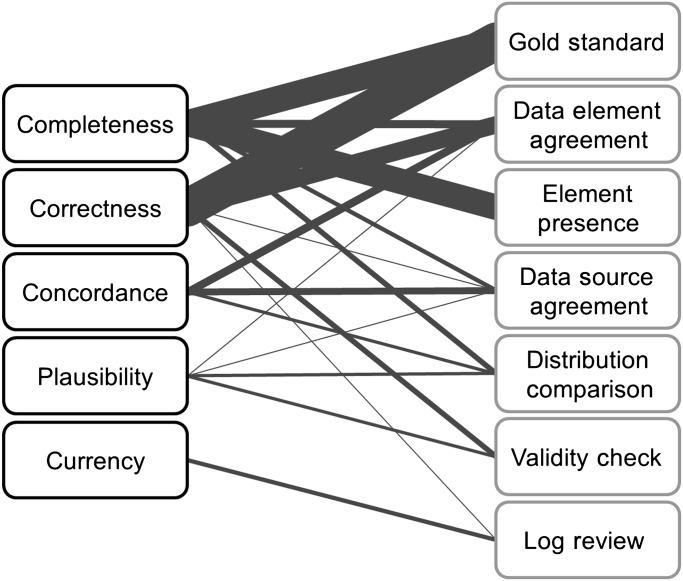
OBJECTIVE: To review the methods and dimensions of data quality assessment in the context of electronic health record (EHR) data reuse for research. MATERIALS AND METHODS: A review of the clinical research literature discussing data quality assessment methodology for EHR data was performed. Using an iterative process, the aspects of data quality being measured were abstracted and categorized, as well as the methods of assessment used. RESULTS: Five dimensions of data quality were identified, which are completeness, correctness, concordance, plausibility, and currency, and seven broad categories of data quality assessment methods: comparison with gold standards, data element agreement, data source agreement, distribution comparison, validity checks, log review, and element presence. DISCUSSION: Examination of the methods by which clinical researchers have investigated the quality and suitability of EHR data for research shows that there are fundamental features of data quality, which may be difficult to measure, as well as proxy dimensions. Researchers interested in the reuse of EHR data for clinical research are recommended to consider the adoption of a consistent taxonomy of EHR data quality, to remain aware of the task-dependence of data quality, to integrate work on data quality assessment from other fields, and to adopt systematic, empirically driven, statistically based methods of data quality assessment. CONCLUSION: There is currently little consistency or potential generalizability in the methods used to assess EHR data quality. If the reuse of EHR data for clinical research is to become accepted, researchers should adopt validated, systematic methods of EHR data quality assessment.
Overview
CoChat Summary
TL;DR
This review identifies five dimensions of electronic health record (EHR) data quality—completeness, correctness, concordance, plausibility, and currency—and seven broad categories of assessment methods. It concludes that EHR data quality assessment for research lacks consistency and generalizability, and recommends validated, systematic, statistically based methods.
Key findings
- Five data quality dimensions were derived: completeness, correctness, concordance, plausibility, and currency. Seven assessment method categories were identified: comparison with gold standards, data element agreement, data source agreement, distribution comparison, validity checks, log review, and element presence.
- Completeness was the most commonly assessed dimension, in 61 (64%) of 95 articles, followed by correctness in 57 (60%), concordance in 16 (17%), plausibility in 7 (7%), and currency in 4 (4%).
- Gold standard comparison was used in 37 of 95 articles; element presence was used only for completeness, while currency was assessed only through log review.
- The authors argue that only correctness, completeness, and currency are fundamental dimensions; concordance and plausibility appear to serve as proxies when fundamental dimensions cannot be assessed directly.
Methods
- Literature search performed on PubMed in February 2012, using data quality terms and EHR-related terms; the search produced 230 articles, which were manually reviewed.
- Inclusion criteria retained original research using data quality assessment methods, focused on EHR-derived data, and published in peer-reviewed journals; administrative claims databases were excluded. This yielded 44 articles, and an ancestor search added 51 more, for a final pool of 95 articles.
- From each article, the authors abstracted data quality features, assessment methods, and descriptive information; through iterative review, they inductively derived dimensions and method categories, then recategorized all 95 articles by dimension and assessment strategy.
Limitations
- The paper states the search was limited: lack of MeSH terms for data quality and variation in terminology may have caused relevant articles to be missed, though reference review was believed to improve saturation.
- The paper states classification was largely subjective and performed by only one author, so original researchers might disagree with the interpretations.
- The paper states that underreporting likely affected results, because routine data checking such as distributions and summary statistics is rarely described in publications; evident from the text, the review is descriptive and does not empirically validate the proposed taxonomy.
Model-written summary. Check it against the paper before relying on it.
Integrity signals
Registry
Cites
Statistics
Figures
Verification
Claims the paper makes
8 Valid · 1 Not valid · 16 Not checked · 59 Own results and interpretations
Every source the paper cites for this claim was checked and supports it.
In the paper
“Thiru et al,9 in calculating the sensitivity of different types of EHR data in the literature, found values ranging between 0.26 and 1.00.”
§ Methods and dimensions of electronic health record data quality assessment: enabling reuse for clinical research > Abstract > Conclusion
What the sources say
- Supportedcites [9] Thiru K Hassey A Sullivan F Systematic review of scope and quality of electronic patient record data in primary care. BMJ 2003; 326: 1070 12750210 PMC155692 source
Table 3 (Results) lists sensitivities for different types of electronic patient record data. The values range from 26% for socioeconomic data to 100% for several categories, matching 0.26–1.00. (LLM, conf=0.94)
plain- Asserted: passes — The authors put it forward as true.
- Checkable: passes — It can be checked against evidence.
- Load-bearing: passes — The paper’s conclusions depend on it.
- Based: passes — The paper gives a reason why it holds.
- Supported
The cited sources support only part of this claim — read each source’s verdict below.
In the paper
“Hogan and Wagner8 suggested specific statistical measures of the correctness and completeness of EHR elements that have been adopted by other researchers.”
§ Methods and dimensions of electronic health record data quality assessment: enabling reuse for clinical research > Discussion > Data quality assessment methodology
What the sources say
- Partly supportedcites [8] Hogan WR Wagner MM Accuracy of data in computer-based patient records. J Am Med Inform Assoc 1997; 4: 342– 55 9292840 PMC61252 sourceExperimental — accuracy not yet measured
The Methodological Recommendations section (page not provided) defines correctness and completeness as specific proportions and recommends that future studies report numerical measures of both. The paper does not establish the claim that other researchers subsequently adopted those measures. (LLM, conf=0.88)
plainstates a cause- Asserted: passes — The authors put it forward as true.
- Checkable: passes — It can be checked against evidence.
- Load-bearing: unclear — It is unclear whether the paper’s conclusions depend on it.
- Based: passes — The paper gives a reason why it holds.
- Partly supported
The sources with a verdict support this claim; the rest weren’t checked yet, have no full text we could read, or their verdicts aren’t rated yet.
In the paper
“Some researchers looking at the quality of research databases pulled from general practices in the UK have adopted relatively consistent approaches to comparing the distributions of data concerning specific clinical phenomena to information from registries and surveys.31 98 99 102”
§ Methods and dimensions of electronic health record data quality assessment: enabling reuse for clinical research > Discussion > Data quality assessment methodology
What the sources say
- Not checked — no full text of the sourcecites [31] Lewis JD Brensinger C Agreement between GPRD smoking data: a survey of general practitioners and a population-based survey. Pharmacoepidemiol Drug Saf 2004; 13: 437– 41 15269927 source
- Not checked — no full text of the sourcecites [98] Haynes K Forde KA Schinnar R Cancer incidence in The Health Improvement Network. Pharmacoepidemiol Drug Saf 2009; 18: 730– 6 19479713 source
- Supportedcites [99] Iyen-Omofoman B Hubbard RB Smith CJ The distribution of lung cancer across sectors of society in the United Kingdom: a study using national primary care data. BMC Public Health 2011; 11: 857 22074413 PMC3282683 source
The Methods and Discussion > Lung cancer Incidence describe comparing lung cancer data from the UK general-practice database THIN with national cancer registry and National Lung Cancer Audit data to assess its representativeness. This paper therefore exemplifies the comparison approach attributed to the cited group of researchers; the sentence does not require each cited study to use both registries and surveys. (LLM, conf=0.85)
plain- Asserted: passes — The authors put it forward as true.
- Checkable: passes — It can be checked against evidence.
- Load-bearing: unclear — It is unclear whether the paper’s conclusions depend on it.
- Based: passes — The paper gives a reason why it holds.
The cited sources support only part of this claim — read each source’s verdict below.
In the paper
“In three of the four, researchers reviewed whether desired data were entered into the EHR within a set time limit.36 46 52”
§ Methods and dimensions of electronic health record data quality assessment: enabling reuse for clinical research > Results > Currency
What the sources say
- Not checked — no full text of the sourcecites [36] Ndira SP Rosenberger KD Wetter T Assessment of data quality of and staff satisfaction with an electronic health record system in a developing country (Uganda): a qualitative and quantitative comparative study. Methods Inf Med 2008; 47: 489– 98 19057805 source
- Partly supportedcites [46] Vawdrey DK Gardner RM Evans RS Assessing data quality in manual entry of ventilator settings. J Am Med Inform Assoc 2007; 14: 295– 303 17329731 PMC2244881 sourceExperimental — accuracy not yet measured
The Methods (Data Analysis; page unavailable) say the researchers measured charting delay—the interval between observing ventilator settings and entering them into the computer—to assess timeliness. The Results report an average delay of 6.1 minutes, but the study does not assess whether entries met a set time limit. The 30-minute limit in the Background describes an earlier study by East et al., not this study's measure. (LLM, conf=0.85)
- Not checked — no full text of the sourcecites [52] Faulconer ER de Lusignan S An eight-step method for assessing diagnostic data quality in practice: chronic obstructive pulmonary disease as an exemplar. Inform Prim Care 2004; 12: 243– 54 15808026 source
plain- Asserted: passes — The authors put it forward as true.
- Checkable: passes — It can be checked against evidence.
- Load-bearing: unclear — It is unclear whether the paper’s conclusions depend on it.
- Based: passes — The paper gives a reason why it holds.
A result the paper reports from its own data — it cites no other source for it, so there is none to check. The quote shows it is in the paper.
In the paper
“For example, 37 of the 95 articles in our sample relied on a gold standard to assess data quality.”
§ Methods and dimensions of electronic health record data quality assessment: enabling reuse for clinical research > Discussion > Data quality assessment methodology
plainn = 95- Asserted: passes — The authors put it forward as true.
- Checkable: passes — It can be checked against evidence.
- Load-bearing: unclear — It is unclear whether the paper’s conclusions depend on it.
- Based: passes — The paper gives a reason why it holds.
40 more claims
Create a free account to see all 84 claims and every source verdict.
- It may state two separate claims as one. 23
- Probably not a substantial claim. 24
Claims other papers make about this one
Each is checked against this paper’s own text: does it say what the citing paper says it does?
The source backs part of the claim, not all of it — or backs it for a different population, condition or comparison.
In the citing paper
“While these developments have advanced the understanding of data quality in the context of medical applications, frameworks for EHR frequently focus on the data quality of individual patients86,87, neglecting data quality aspects for the overall population.”
From The METRIC-framework for assessing data quality for trustworthy AI in medicine: A systematic review (2024) · cites this paper as [87]
Experimental — accuracy not yet measuredThe cited source says what the claim attributes to it.
In the citing paper
“The current DQ literature is inconsistent in the use of terms that describe the complex multidimensional aspects of DQ.42–51”
From A harmonized data quality assessment terminology and framework for the secondary use of electronic health record data (2016) · cites this paper as [45]
The cited source says what the claim attributes to it.
In the citing paper
“In particular, representativeness is often not a factor86,87 while it is a crucial property for secondary use of data in clinical studies88 or when reusing medical data as training data for ML applications.”
From The METRIC-framework for assessing data quality for trustworthy AI in medicine: A systematic review (2024) · cites this paper as [87]
Self-check
Percentages, sums and reported differences re-computed from the paper’s own numbers.
Each contradiction between two passages listed here was confirmed by an independent check.
Rated minor: it would not touch a result — a value no result rests on, a p-value that stays on the same side of the significance level, or a conflict that is clerical, resolved elsewhere in the paper, or outside its own findings.
In the paper
§ Methods and dimensions of electronic health record data quality assessment: enabling reuse for clinical research > Results > Plausibility
“The most common approach to assessing the plausibility of EHR data was to perform some sort of validity check to determine if specific elements within the EHR were likely to be true or not.”
§ Methods and dimensions of electronic health record data quality assessment: enabling reuse for clinical research > Results
“| Distribution comparison | 97–100 | | 31 57 97 | 50 101 102 103 | | 10 | | Validity checks | | 32 62 104 105 106 | | 73 89 | | 7 |”
Citations
Cites
A General Inductive Approach for Analyzing Qualitative Evaluation Data
Thomas, D. R. (2006) · American Journal of Evaluation · doi:10.1177/1098214005283748 · Cited by 10,858 · cited 1×
“Furthermore, using an existing model to guide analysis is a deductive approach, which has the potential to obscure information contained in the data.(11) By imposing an existing model from a different discipline, we would have run the risk of missing important findings.”
MethodBeyond Accuracy: What Data Quality Means to Data Consumers
Wang, R. Y., & Strong, D. M. (1996) · Journal of Management Information Systems · doi:10.1080/07421222.1996.11518099 · Cited by 4,672
(2020) · Journal of Medical Education · doi:10.5812/jme · Cited by 3,490
The American Journal of Managed Care
(2020) · The American Journal of Managed Care · doi:10.37765/ajmc · Cited by 3,237
Pipino, L. L., Lee, Y. W., & Wang, R. Y. (2002) · Communications of the ACM · doi:10.1145/505248.506010 · Cited by 1,724
Juran's Quality Control Handbook
Ziegel, E. R. (1990) · Technometrics · doi:10.1080/00401706.1990.10484602 · Cited by 1,384
Jick, H., Jick, S. S., & Derby, L. E. (1991) · BMJ · doi:10.1136/bmj.302.6779.766 · Cited by 839
Safran, C., Bloomrosen, M., Hammond, W. E., Labkoff, S., Markel-Fox, S., Tang, P. C., & Detmer, D. E. (2007) · Journal of the American Medical Informatics Association · doi:10.1197/jamia.m2273 · Cited by 705 · cited 1×
“As the adoption of electronic health records (EHRs) has made it easier to access and aggregate clinical data, there has been growing interest in conducting research with data collected during the course of clinical care.(1) 2 The Natonal Institutes of Health has called for increasing the reuse of electronic records fo…”
MethodInformatics in Primary Care: Strategies in Information Management for the Healthcare Provider
(2002) · Health Informatics · doi:10.1007/978-1-4613-0069-4 · Cited by 422
Accuracy of Data in Computer-based Patient Records
Hogan, W. R., & Wagner, M. M. (1997) · Journal of the American Medical Informatics Association · doi:10.1136/jamia.1997.0040342 · Cited by 389 · cited 5×
“As observed by Hogan and Wagner in their literature review, there is no medical subheadings (MeSH) term fi ‘ ’ ‘ ’ ‘ ’ ‘ consistency ’ , ‘ data completeness ’ , and ‘ data error ’ .”
BackgroundInfluential
Research works printed but not linked: 14
- 1997, Journal of the American Medical Informatics Association, 4, 342, 10.1136/jamia.1997.0040342 · DOI · Paper page
- 2006, Journal of the American Medical Informatics Association, 13, 12, 10.1197/jamia.M1813 · DOI · Paper page
- 2000, Journal of the American Medical Informatics Association, 7, 55, 10.1136/jamia.2000.0070055 · DOI · Paper page
- 1996, Journal of the American Medical Informatics Association, 3, 234, 10.1136/jamia.1996.96310637 · DOI · Paper page
- 2007, Journal of the American Medical Informatics Association, 14, 295, 10.1197/jamia.M2219 · DOI · Paper page
- 2007, Journal of the American Medical Informatics Association, 14, 10, 10.1197/jamia.M2198 · DOI · Paper page
- Harabagiu, 2010, 2010, 1
- 2004, Journal of the American Medical Informatics Association, 11, 351, 10.1197/jamia.M1498 · DOI · Paper page
- 2000, Journal of the American Medical Informatics Association, 7, 42, 10.1136/jamia.2000.0070042 · DOI · Paper page
- 2010, Family Practice, 27, 121, 10.1093/fampra/cmp068 · DOI
- 2004, Journal of the American Medical Informatics Association, 11, 78, 10.1197/jamia.M1362 · DOI
- 1999, Journal of the American Medical Informatics Association, 6, 245, 10.1136/jamia.1999.0060245 · DOI · Paper page
- 2003, Journal of the American Medical Informatics Association, 10, 470, 10.1197/jamia.M1290 · DOI · Paper page
- Committee on Improving the Patient Record Institute of Medicine The Computer-Based Patient Record: An Essential Technology for Health Care, Revised Edition. Institute of Medicine. The National Academies Press, 1997 http://iom.edu/Reports/1997/The-Computer-Based-Patient-Record-An-Essential-Technology-for-Health-Care-Revised-Edition.aspx 25121222
Cited by
Benchimol, E. I., Smeeth, L., Guttmann, A., Harron, K., Moher, D., Petersen, I., Sørensen, H. T., von Elm, E., Langan, S. M., & RECORD Working Committee (2015) · PLOS Medicine · doi:10.1371/journal.pmed.1001885 · Cited by 5,749
“The description of data cleaning methods at different stages of the study should include those used to screen for erroneous and missing data, including range checks, checks for duplicate records, and handling of repeated measures [47,48].”
MethodOpportunities and obstacles for deep learning in biology and medicine
Ching, T., Himmelstein, D. S., Beaulieu-Jones, B. K., Kalinin, A. A., Do, B. T., Way, G. P., Ferrero, E., Agapow, P.-M., Zietz, M., Hoffman, M. M., et al. (2018) · Journal of The Royal Society Interface · doi:10.1098/rsif.2017.0387 · Cited by 2,310
“literature around EHR data quality and the impact on research [98], we focus on three types of challenges: local bias, wider standards, and legal issues.”
BackgroundMiotto, R., Li, L., Kidd, B. A., & Dudley, J. T. (2016) · Scientific Reports · doi:10.1038/srep26094 · Cited by 1,710
“EHR data is challenging to represent and model due to its high dimensionality, noise, heterogeneity, sparseness, incompleteness, random errors, and systematic biases 7,10,11 .”
BackgroundNext-generation phenotyping of electronic health records
Hripcsak, G., & Albers, D. J. (2013) · Journal of the American Medical Informatics Association · doi:10.1136/amiajnl-2012-001145 · Cited by 795
“CHALLENGES Unfortunately, the EHR carries many challenges.(2)”
Electronic health records to facilitate clinical research
Cowie, M. R., Blomster, J. I., Curtis, L. H., Duclaux, S., Ford, I., Fritz, F., Goldman, S., Janmohamed, S., Kreuzer, J., Leenay, M., et al. (2017) · Clinical Research in Cardiology · doi:10.1007/s00392-016-1025-6 · Cited by 651
“and completeness have not yet been adopted [46], but validation is a critical factor for the regulatory acceptance of EHR data.”
BackgroundKahn, M. G., Callahan, T. J., Barnard, J., Bauck, A. E., Brown, J., Davidson, B. N., Estiri, H., Goerg, C., Holve, E., Johnson, S. G., et al. (2016) · eGEMs (Generating Evidence & Methods to improve patient outcomes) · doi:10.13063/2327-9214.1244 · Cited by 697
“45 Other approaches, such as the ontological methods by Liaw 46 and Johnson, 51 have been used to develop alternative DQ terms.”
MethodSelf-citationHersh, W. R., Weiner, M. G., Embi, P. J., Logan, J. R., Payne, P. R. O., Bernstam, E. V., Lehmann, H. P., Hripcsak, G., Hartzog, T. H., Cimino, J. J., et al. (2013) · Medical Care · doi:10.1097/mlr.0b013e31829b1dbd · Cited by 567
“A review of the literature of studies evaluating the data quality of EHRs for clinical research identified 5 dimensions of data quality assessed: completeness, correctness, concordance, plausibility, and currency.(26) The authors identified many studies with a wide variety of techniques to assess these dimensions and,…”
The National COVID Cohort Collaborative (N3C): Rationale, design, infrastructure, and deployment
Haendel, M. A., Chute, C. G., Bennett, T. D., Eichmann, D. A., Guinney, J., Kibbe, W. A., Payne, P. R. O., Pfaff, E. R., Robinson, P. N., Saltz, J. H., et al. (2021) · Journal of the American Medical Informatics Association · doi:10.1093/jamia/ocaa196 · Cited by 553
“73,74 77 For N3C, we developed an approach to DQ that addresses the downstream application of the data for machine learning and statistical analytics.”
Method(2013) · Europe PMC (PubMed Central) · Cited by 396
Agniel, D., Kohane, I. S., & Weber, G. M. (2018) · BMJ · doi:10.1136/bmj.k1479 · Cited by 391
Defining and measuring completeness of electronic health records for secondary use
Weiskopf, N. G., Hripcsak, G., Swaminathan, S., & Weng, C. (2013) · Journal of Biomedical Informatics · doi:10.1016/j.jbi.2013.06.010 · Cited by 367
“Completeness was the most commonly assessed dimension of data quality in the set of articles we reviewed [3].”
Self-citationReal-world Data for Clinical Evidence Generation in Oncology
Khozin, S., Blumenthal, G. M., & Pazdur, R. (2017) · JNCI: Journal of the National Cancer Institute · doi:10.1093/jnci/djx187 · Cited by 346
Electronic health records: new opportunities for clinical research
Coorevits, P., Sundgren, M., Klein, G. O., Bahr, A., Claerhout, B., Daniel, C., Dugas, M., Dupont, D., Schmidt, A., Singleton, P., et al. (2013) · Journal of Internal Medicine · doi:10.1111/joim.12119 · Cited by 348
–Omic and Electronic Health Record Big Data Analytics for Precision Medicine
Wu, P.-Y., Cheng, C.-W., Kaddi, C. D., Venugopalan, J., Hoffman, R., & Wang, M. D. (2017) · IEEE Transactions on Biomedical Engineering · doi:10.1109/tbme.2016.2573285 · Cited by 303
“In EHR data, quality issues include missing data because recorded clinical variables vary with each clinical encounter and depend on clinical team’s assessment of the patient’s condition [48], and erroneous data entries happening due to data entry mistakes or misinterpretation of original documents when entering [49].”
Machine Learning for Clinical Outcome Prediction
Shamout, F., Zhu, T., & Clifton, D. A. (2021) · IEEE Reviews in Biomedical Engineering · doi:10.1109/rbme.2020.3007816 · Cited by 239
“Finally, it is important to verify whether the data was recorded within a reasonable period of time [31].”
BackgroundMethods of Information in Medicine
(1988) · Methods of Information in Medicine · doi:10.1055/s-0038-1636640 · Cited by 238
Digital health technologies: opportunities and challenges in rheumatology
Solomon, D. H., & Rudin, R. S. (2020) · Nature Reviews Rheumatology · doi:10.1038/s41584-020-0461-x · Cited by 228
Advances in Electronic Phenotyping: From Rule-Based Definitions to Machine Learning Models
Banda, J. M., Seneviratne, M., Hernandez-Boussard, T., & Shah, N. H. (2018) · Annual Review of Biomedical Data Science · doi:10.1146/annurev-biodatasci-080917-013315 · Cited by 221
“Despite the multitude of use cases, identifying phenotypes in EHRs represents a significant informatics challenge because of the heterogeneity, incompleteness, and dynamic nature of EHR data (16).”
BackgroundRichesson, R. L., Hammond, W. E., Nahm, M., Wixted, D., Simon, G. E., Robinson, J. G., Bauck, A. E., Cifelli, D., Smerek, M. M., Dickerson, J., et al. (2013) · Journal of the American Medical Informatics Association · doi:10.1136/amiajnl-2013-001926 · Cited by 208
Clinical Data Reuse or Secondary Use: Current Status and Potential Future Progress
Meystre, S. M., Lovis, C., Bürkle, T., Tognola, G., Budrionis, A., & Lehmann, C. U. (2017) · Yearbook of Medical Informatics · doi:10.15265/iy-2017-007 · Cited by 204
“These limitations have motivated several research teams to propose approaches for data quality assessment [47-49].”
BackgroundTreatment decisions in multiple sclerosis — insights from real-world observational studies
Trojano, M., Tintore, M., Montalban, X., Hillert, J., Kalincik, T., Iaffaldano, P., Spelman, T., Sormani, M. P., & Butzkueven, H. (2017) · Nature Reviews Neurology · doi:10.1038/nrneurol.2016.188 · Cited by 191
A model for the analysis of data-driven innovation and value generation in smart cities' ecosystems
Abella, A., Ortiz-de-Urbina-Criado, M., & De-Pablos-Heredero, C. (2017) · Cities · doi:10.1016/j.cities.2017.01.011 · Cited by 185
Using electronic health records for clinical research: the case of the EHR4CR project
De Moor, G., Sundgren, M., Kalra, D., Schmidt, A., Dugas, M., Claerhout, B., Karakoyun, T., Ohmann, C., Lastic, P.-Y., Ammour, N., et al. (2015) · Journal of Biomedical Informatics · doi:10.1016/j.jbi.2014.10.006 · Cited by 181
“$ 8 4D 0 3 4 56 5 7 !”
Informatics and Computational Methods in Natural Product Drug Discovery: A Review and Perspectives
Romano, J. D., & Tatonetti, N. P. (2019) · Frontiers in Genetics · doi:10.3389/fgene.2019.00368 · Cited by 175
“EHR data are complex, multimodal, and subject to many unique biases and ethical/legal constraints (Weiskopf and Weng, 2013).”
BackgroundThe Evolving Use of Electronic Health Records (EHR) for Research
Kim, E., Rubinstein, S. M., Nead, K. T., Wojcieszynski, A. P., Gabriel, P. E., & Warner, J. L. (2019) · Seminars in Radiation Oncology · doi:10.1016/j.semradonc.2019.05.010 · Cited by 172
The METRIC-framework for assessing data quality for trustworthy AI in medicine: A systematic review
Schwabe, D., Becker, K., Seyferth, M., Klaß, A., & Schaeffter, T. (2024) · npj Digital Medicine · doi:10.1038/s41746-024-01196-4 · Cited by 169
“In particular, representativeness is often not a factor 86,87 while it is a crucial property for secondary use of data in clinical studies 88 or when reusing medical data as training data for ML applications.”
BackgroundInfluentialLeveraging electronic health records for data science: common pitfalls and how to avoid them
Sauer, C. M., Chen, L.-C., Hyland, S. L., Girbes, A., Elbers, P., & Celi, L. A. (2022) · The Lancet Digital Health · doi:10.1016/s2589-7500(22)00154-6 · Cited by 166
Electronic Health Record Data Quality Assessment and Tools: A Systematic Review
Lewis, A. E., Weiskopf, N., Abrams, Z. B., Foraker, R., Lai, A. M., Payne, P. R. O., & Gupta, A. (2023) · Journal of the American Medical Informatics Association · doi:10.1093/jamia/ocad120 · Cited by 171
“8 Similarly, there was an increase in the proportion of papers in which each method was used.”
InfluentialSelf-citationBeaulieu-Jones, B. K., Yuan, W., Brat, G. A., Beam, A. L., Weber, G., Ruffin, M., & Kohane, I. S. (2021) · npj Digital Medicine · doi:10.1038/s41746-021-00426-3 · Cited by 155
Methods of information in medicine
(2014) · Methods of Information in Medicine · doi:10.3414/me · Cited by 157
van Staa, T.-P., Dyson, L., McCann, G., Padmanabhan, S., Belatri, R., Goldacre, B., Cassell, J., Pirmohamed, M., Torgerson, D., Ronaldson, S., et al. (2014) · Health Technology Assessment · doi:10.3310/hta18430 · Cited by 155
“There is a clear research need to develop and adopt systematic, statistically based methods of data quality assessment.(176) Furthermore, the development of common data models and dictionaries could simplify research across different EHR research databases.”
BackgroundApplications of business analytics in healthcare
Ward, M. J., Marsolo, K. A., & Froehle, C. M. (2014) · Business Horizons · doi:10.1016/j.bushor.2014.06.003 · Cited by 154
“As a result, there is a growing awareness about the role of data quality in EHR-based analytics and a need to characterize the data’s “fitness for use” before utilizing it for any ancillary purposes (Weiskopf and Weng, 2013).”
BackgroundThe quality of social determinants data in the electronic health record: a systematic review
Cook, L. A., Sachs, J., & Weiskopf, N. G. (2021) · Journal of the American Medical Informatics Association · doi:10.1093/jamia/ocab199 · Cited by 153
Self-citationA Data Quality Assessment Guideline for Electronic Health Record Data Reuse
Weiskopf, N. G., Bakken, S., Hripcsak, G., & Weng, C. (2017) · eGEMs (Generating Evidence & Methods to improve patient outcomes) · doi:10.5334/egems.218 · Cited by 152
“The details of this study can be found in Weiskopf and Weng, 2013.17 Our inclusion criteria were that the papers must describe methods of data quality assessment, that they focus on EHR- derived data, and that they were peer-reviewed.”
BackgroundMethodInfluentialSelf-citationData Quality in Electronic Health Records Research: Quality Domains and Assessment Methods
Feder, S. L. (2018) · Western Journal of Nursing Research · doi:10.1177/0193945916689084 · Cited by 147
“Similar to data triangulation for data accuracy, the inclusion of multiple data sources, including paper charts when feasible, allows for the comparison and potential replacement of missing variables (Chan et al., 2010; Weiskopf & Weng, 2013).”
BackgroundMethodInfluentialBirth month affects lifetime disease risk: a phenome-wide method
Boland, M. R., Shahn, Z., Madigan, D., Hripcsak, G. M., & Tatonetti, N. P. (2015) · Journal of the American Medical Informatics Association · doi:10.1093/jamia/ocv046 · Cited by 153
Implementing machine learning in medicine
Verma, A. A., Murray, J., Greiner, R., Cohen, J. P., Shojania, K. G., Ghassemi, M., Straus, S. E., Pou-Prom, C., & Mamdani, M. (2021) · Canadian Medical Association Journal · doi:10.1503/cmaj.202434 · Cited by 136
“The quality of input data can be assessed for completeness, correctness, concordance, plausibility and currency 18 through relatively simple, automated approaches and targeted manual validation.”
MethodRule, A., Chiang, M. F., & Hribar, M. R. (2020) · Journal of the American Medical Informatics Association · doi:10.1093/jamia/ocz196 · Cited by 136
Inception U-Net Architecture for Semantic Segmentation to Identify Nuclei in Microscopy Cell Images
Punn, N. S., & Agarwal, S. (2020) · ACM Transactions on Multimedia Computing Communications and Applications · doi:10.1145/3376922 · Cited by 146
“In recent years, deep learning algorithms have shown their significance in the healthcare sector with the utilization of a patient’s electronic health records (EHRs) [35].”
BackgroundPhipps, H. W., Mondello, S., Wilson, A. G., Dittmer, T. A., Rohde, N. N., Schroeder, P. J., Nichols, J., McGirt, C., Hoffman, J., Tanksley, K., et al. (2020) · Frontiers in Neurology · doi:10.3389/fneur.2020.559318 · Cited by 142
“Data Quality Correctness, completeness, and currency are fundamental factors that describe the core concepts of health record data quality: if data is truthful, available, and the most recent available data (149, 150).”
BackgroundSchmidt, C. O., Struckmann, S., Enzenbach, C., Reineke, A., Stausberg, J., Damerow, S., Huebner, M., Schmidt, B., Sauerbrei, W., & Richter, A. (2021) · BMC Medical Research Methodology · doi:10.1186/s12874-021-01252-7 · Cited by 126
Brundin-Mather, R., Soo, A., Zuege, D. J., Niven, D. J., Fiest, K., Doig, C. J., Zygun, D., Boyd, J. M., Parsons Leigh, J., Bagshaw, S. M., et al. (2018) · Journal of Critical Care · doi:10.1016/j.jcrc.2018.07.021 · Cited by 127
Transparent Reporting of Data Quality in Distributed Data Networks
Kahn, M. G., Brown, J. S., Chun, A. T., Davidson, B. N., Meeker, D., Ryan, P. B., Schilling, L. M., Weiskopf, N. G., Williams, A. E., & Zozus, M. N. (2015) · eGEMs (Generating Evidence & Methods to improve patient outcomes) · doi:10.13063/2327-9214.1052 · Cited by 126
Self-citationHatef, E., Rouhizadeh, M., Tia, I., Lasser, E., Hill-Briggs, F., Marsteller, J., & Kharrazi, H. (2019) · JMIR Medical Informatics · doi:10.2196/13802 · Cited by 125
“…should be addressed to make EHRs a reliable source of SBDH data on a population-level: immaturity of EHRs to collect and organize SBDH data [31,32,49], EHR data quality issues including missing data [50,51], and the need for complex methods to extract SBDH from EHR’s free text [12,30-32].”
Hripcsak, G., Bloomrosen, M., FlatelyBrennan, P., Chute, C. G., Cimino, J., Detmer, D. E., Edmunds, M., Embi, P. J., Goldstein, M. M., Hammond, W. E., et al. (2014) · Journal of the American Medical Informatics Association · doi:10.1136/amiajnl-2013-002117 · Cited by 119
What we talk about when we talk about (big) data
Jones, M. (2019) · The Journal of Strategic Information Systems · doi:10.1016/j.jsis.2018.10.005 · Cited by 121
Haneuse, S., & Daniels, M. (2016) · eGEMs (Generating Evidence & Methods to improve patient outcomes) · doi:10.13063/2327-9214.1203 · Cited by 119
“Electronic health records (EHR) are playing an increasingly prominent role in comparative effectiveness research (CER) with key benefits including that they often contain rich information on large populations over long time frames, are relatively inexpensive to obtain, and can be updated in near real time.(1-4) Recogn…”
BackgroundDigital Health Data Quality Issues: Systematic Review
Syed, R., Eden, R., Makasi, T., Chukwudi, I., Mamudu, A., Kamalpour, M., Kapugama Geeganage, D., Sadeghianasl, S., Leemans, S. J. J., Goel, K., et al. (2023) · Journal of Medical Internet Research · doi:10.2196/42615 · Cited by 120
“Weiskopf and Weng [17] identified 5 dimensions of DQ spanning completeness, correctness, concordance, plausibility, and currency.”
A comparison of a multistate inpatient EHR database to the HCUP Nationwide Inpatient Sample
DeShazo, J. P., & Hoffman, M. A. (2015) · BMC Health Services Research · doi:10.1186/s12913-015-1025-7 · Cited by 116
“However, researchers have noted significant challenges with using EHR data including privacy issues, variation in EHR data sources, inconsistent case definitions, poor data quality, and questionable representativeness of patient populations [8, 14, 15].”
BackgroundDisease Heritability Inferred from Familial Relationships Reported in Medical Records
Polubriaginof, F. C. G., Vanguri, R., Quinnies, K., Belbin, G. M., Yahi, A., Salmasian, H., Lorberbaum, T., Nwankwo, V., Li, L., Shervey, M. M., et al. (2018) · Cell · doi:10.1016/j.cell.2018.04.032 · Cited by 111
Tsopra, R., Fernandez, X., Luchinat, C., Alberghina, L., Lehrach, H., Vanoni, M., Dreher, F., Sezerman, O. U., Cuggia, M., de Tayrac, M., et al. (2021) · BMC Medical Informatics and Decision Making · doi:10.1186/s12911-021-01634-3 · Cited by 116
Artificial Intelligence in Medicine: Chances and Challenges for Wide Clinical Adoption
Varghese, J. (2020) · Visceral Medicine · doi:10.1159/000511930 · Cited by 113
“As for all data analyses, data quality indicators, such as data availability, completeness, correctness, and plausibility, should be well investigated [42, 43].”
Kohane, I. S., Aronow, B. J., Avillach, P., Beaulieu-Jones, B. K., Bellazzi, R., Bradford, R. L., Brat, G. A., Cannataro, M., Cimino, J. J., García-Barrio, N., et al. (2021) · Journal of Medical Internet Research · doi:10.2196/22219 · Cited by 113
“as this viewpoint is not focused on reviewing specific methodological options for investigators using EHR-derived data, which has been reviewed in detail previously [9-11].”
BackgroundNg, K., Ghoting, A., Steinhubl, S. R., Stewart, W. F., Malin, B., & Sun, J. (2014) · Journal of Biomedical Informatics · doi:10.1016/j.jbi.2013.12.012 · Cited by 110
“, billing) and is not necessarily curated for biomedical research [8,9].”
BackgroundSmith, M. J., Lix, L. M., Azimaee, M., Enns, J. E., Orr, J., Hong, S. P., & Roos, L. L. (2017) · Journal of the American Medical Informatics Association · doi:10.1093/jamia/ocx078 · Cited by 119
“Administrative data, generally described as data derived from the operation of administrative systems (eg, the health care system) for the purpose of registration, transaction, and/or record-keeping,(2) are advantageous for research because they do not require time-consuming participant consent or primary data collect…”
BackgroundUse of Epic Electronic Health Record System for Health Care Research: Scoping Review
Chishtie, J., Sapiro, N., Wiebe, N., Rabatach, L., Lorenzetti, D., Leung, A. A. C., Rabi, D. M., Quan, H., & Eastwood, C. A. (2023) · Journal of Medical Internet Research · doi:10.2196/51003 · Cited by 155
“[277].”
Impacts of structuring nursing records: a systematic review
Saranto, K., Kinnunen, U., Kivekäs, E., Lappalainen, A., Liljamo, P., Rajalahti, E., & Hyppönen, H. (2013) · Scandinavian Journal of Caring Sciences · doi:10.1111/scs.12094 · Cited by 183
Data Paradoxes: The Politics of Intensified Data Sourcing in Contemporary Healthcare
Hoeyer, K. (2023) · The MIT Press eBooks · doi:10.7551/mitpress/14926.001.0001 · Cited by 196
Köpcke, F., Trinczek, B., Majeed, R. W., Schreiweis, B., Wenk, J., Leusch, T., Ganslandt, T., Ohmann, C., Bergh, B., Röhrig, R., et al. (2013) · BMC Medical Informatics and Decision Making · doi:10.1186/1472-6947-13-37 · Cited by 101
“A comprehensive review can be found by Weng et al. [7].”
MethodVerma, A. A., Pasricha, S. V., Jung, H. Y., Kushnir, V., Mak, D. Y. F., Koppula, R., Guo, Y., Kwan, J. L., Lapointe-Shaw, L., Rawal, S., et al. (2021) · Journal of the American Medical Informatics Association · doi:10.1093/jamia/ocaa225 · Cited by 99
Fitzpatrick, T., Perrier, L., Shakik, S., Cairncross, Z., Tricco, A. C., Lix, L., Zwarenstein, M., Rosella, L., & Henry, D. (2018) · JAMA Network Open · doi:10.1001/jamanetworkopen.2018.6019 · Cited by 100
Quality assessment of real-world data repositories across the data life cycle: A literature review
Liaw, S., Guo, J., Ansari, S., Jonnagaddala, J., Godinho, M. A., Borelli, A. J., de Lusignan, S., Daniel Capurro, N., Liyanage, H., Bhattal, N., et al. (2020) · Journal of the American Medical Informatics Association · doi:10.1093/jamia/ocaa340 · Cited by 104
Pezoulas, V. C., Kourou, K. D., Kalatzis, F., Exarchos, T. P., Venetsanopoulou, A., Zampeli, E., Gandolfo, S., Skopouli, F., De Vita, S., Tzioufas, A. G., et al. (2019) · Computers in Biology and Medicine · doi:10.1016/j.compbiomed.2019.03.001 · Cited by 96
Leal, F., Chis, A. E., Caton, S., González–Vélez, H., García–Gómez, J. M., Durá, M., Sánchez–García, A., Sáez, C., Karageorgos, A., Gerogiannis, V. C., et al. (2021) · Big Data Research · doi:10.1016/j.bdr.2020.100172 · Cited by 96
“Multi-source variability analysis use statistics [32,33] to describe variable distributions [34], or to compare data with a reference data set [26].”
BackgroundMethodElsaleh, T., Enshaeifar, S., Rezvani, R., Acton, S. T., Janeiko, V., & Bermudez-Edo, M. (2020) · Sensors · doi:10.3390/s20040953 · Cited by 96
“There are five common metrics: Completeness, Correctness, Concordance, Currency, Plausibility [18], and Security [19].”
BackgroundSick patients have more data: the non-random completeness of electronic health records.
Weiskopf, N. G., Rusanov, A., & Weng, C. (2013) · Europe PMC (PubMed Central) · Cited by 132
Self-citationBenchimol, E. I., Smeeth, L. L., Guttmann, A., Harron, K. L., Hemkens, L. G., Moher, D., Petersen, I., Sørensen, H. T., von Elm, E. B., & Langan, S. (2016) · Zeitschrift für Evidenz Fortbildung und Qualität im Gesundheitswesen · doi:10.1016/j.zefq.2016.07.010 · Cited by 107
Bian, J., Lyu, T., Loiacono, A., Viramontes, T. M., Lipori, G., Guo, Y., Wu, Y., Prosperi, M., George, T. J., Harle, C. A., et al. (2020) · Journal of the American Medical Informatics Association · doi:10.1093/jamia/ocaa245 · Cited by 92
Understanding the Nature of Metadata: Systematic Review
Ulrich, H., Kock-Schoppenhauer, A.-K., Deppenwiese, N., Gött, R., Kern, J., Lablans, M., Majeed, R. W., Stöhr, M. R., Stausberg, J., Varghese, J., et al. (2022) · Journal of Medical Internet Research · doi:10.2196/25440 · Cited by 91
Guidelines on clinical research evaluation of artificial intelligence in ophthalmology (2023)
Yang, W., & Xu, Y. (2023) · International Journal of Ophthalmology · doi:10.18240/ijo.2023.09.02 · Cited by 102
Data quality assessment framework to assess electronic medical record data for use in research
Reimer, A. P., Milinovich, A., & Madigan, E. A. (2016) · International Journal of Medical Informatics · doi:10.1016/j.ijmedinf.2016.03.006 · Cited by 86
“Lastly, data source agreement is an extension of data element agreement and is defined as “data from the data domains or sources are compared with data from another domain or source to determine if they are in agreement”[6].”
BackgroundMethodInfluentialA longitudinal analysis of data quality in a large pediatric data research network
Khare, R., Utidjian, L., Ruth, B. J., Kahn, M. G., Burrows, E., Marsolo, K., Patibandla, N., Razzaghi, H., Colvin, R., Ranade, D., et al. (2017) · Journal of the American Medical Informatics Association · doi:10.1093/jamia/ocx033 · Cited by 81
“Although defined from an end user’s perspective, data quality is often accounted for from the perspective of the data producer.(5) Through this work, we provide a broad summary of the current state of data quality of PEDSnet, which could be consumed by any investigator interested in using this network to conduct resea…”
BackgroundBeinke, J. H., Fitte, C., & Teuteberg, F. (2019) · Journal of Medical Internet Research · doi:10.2196/13585 · Cited by 100
“These data could be useful for statistical analyses about specific diseases, the efficiency of therapies (R32), and clinical research (R33) [31].”
Cohen, J. A., Trojano, M., Mowry, E. M., Uitdehaag, B. M. J., Reingold, S. C., & Marrie, R. A. (2019) · Multiple Sclerosis Journal · doi:10.1177/1352458519892555 · Cited by 84
Liu, C., Zeinomar, N., Chung, W. K., Kiryluk, K., Gharavi, A. G., Hripcsak, G. M., Crew, K. D., Shang, N., Khan, A., Fasel, D. A., et al. (2021) · JAMA Network Open · doi:10.1001/jamanetworkopen.2021.19084 · Cited by 75
Self-citationCDSS-RM: a clinical decision support system reference model
Zikos, D., & DeLellis, N. (2018) · BMC Medical Research Methodology · doi:10.1186/s12874-018-0587-6 · Cited by 78
Bishop‐Fitzpatrick, L., Movaghar, A., Greenberg, J. S., Page, D., DaWalt, L. S., Brilliant, M. H., & Mailick, M. R. (2018) · Autism Research · doi:10.1002/aur.1960 · Cited by 77
“First, as is the case with all EHR data, EHR data from the Marshfield Clinic may contain inaccurate or incomplete data [Hersh et al., 2013; Weiskopf & Weng, 2013] and may more accurately capture serious diseases (i.e., diabetes, colon cancer, epilepsy) than other disorders that are more difficult to…”
BackgroundMethodInformation Quality Frameworks for Digital Health Technologies: Systematic Review
Fadahunsi, K. P., O’Connor, S., Akinlua, J. T., Wark, P. A., Gallagher, J., Carroll, C., Car, J., Majeed, A., & O’Donoghue, J. (2021) · Journal of Medical Internet Research · doi:10.2196/23479 · Cited by 97
“of the frameworks were on EHRs [13,14,28,32,33], one each on electronic medical records [35], primary care databases [29], CDSSs [31], mobile and web-based apps for telemedicine [36], and cloud-based health information systems [34].”
BackgroundMethodResultInfluentialPfaff, E. R., Girvin, A. T., Gabriel, D. L., Kostka, K., Morris, M., Palchuk, M. B., Lehmann, H. P., Amor, B., Bissell, M., Bradwell, K. R., et al. (2022) · Journal of the American Medical Informatics Association · doi:10.1093/jamia/ocab217 · Cited by 73
“17,19 22 DQ evaluations must take into account the initial purpose of the data in their source systems, as well as the intended use of these data once harmonization processes have transformed them for use in secondary research.”
Tate, A. R., Beloff, N., Al-Radwan, B., Wickson, J., Puri, S., Williams, T., van Staa, T. P., & Bleach, A. (2013) · Journal of the American Medical Informatics Association · doi:10.1136/amiajnl-2013-001847 · Cited by 73
Identifying health outcomes in healthcare databases
Lanes, S., Brown, J. S., Haynes, K., Pollack, M., & Walker, A. M. (2015) · Pharmacoepidemiology and Drug Safety · doi:10.1002/pds.3856 · Cited by 72
“21 While EHR databases include information for medical encounters that occur within the system that maintains the EHR, care may extend to other systems.”
BackgroundA New Insight Into Missing Data in Intensive Care Unit Patient Profiles: Observational Study
Sharafoddini, A., Dubin, J. A., Maslove, D. M., & Lee, J. (2019) · JMIR Medical Informatics · doi:10.2196/11605 · Cited by 70
“The increased adoption of electronic health record (EHR) systems has boosted interest in the secondary use of EHR data [1].”
BackgroundValidating the extract, transform, load process used to populate a large clinical research database
Denney, M. J., Long, D. M., Armistead, M. G., et al. (2016) · International Journal of Medical Informatics · doi:10.1016/j.ijmedinf.2016.07.009 · Cited by 71
“(3, 8, 9) However, as typical clinical data warehouses such as the IDR extract data from multiple sources, it is important to ensure that there is no breakdown in the integrity of the data during the ETL process since each instance of data migration introduces the possibility of extraction and…”
BackgroundWang, M., Li, S., Zheng, T., Li, N., Shi, Q., Zhuo, X., Ding, R., & Huang, Y. (2022) · JMIR Medical Informatics · doi:10.2196/36481 · Cited by 80
“Fully referring to the evaluation and grading standards of electronic medical records issued by the National Health Commission of China and research findings by experts in the field of health care [29-31], we developed a standard system for data quality control using the dimensions consistency, integrity, integrabilit…”
MethodAutomating Electronic Health Record Data Quality Assessment
Ozonze, O., Scott, P. J., & Hopgood, A. A. (2023) · Journal of Medical Systems · doi:10.1007/s10916-022-01892-2 · Cited by 69
“For instance, several frameworks like the Total Data Quality Management (TDQM) framework describe best practices for improving overall DQ and conducting DQA from a general perspective [29, 30, 54–57] and a few others tailored explicitly for EHR data [10, 11, 32, 52].”
BackgroundMethodInfluentialTu, K., Widdifield, J., Young, J., Oud, W., Ivers, N. M., Butt, D. A., Leaver, C. A., & Jaakkimainen, L. (2015) · BMC Medical Informatics and Decision Making · doi:10.1186/s12911-015-0195-x · Cited by 75
“While we studied completeness of fields as a measure for EMR usage, we recognize that completeness is only one dimension of data quality [32].”
Shortreed, S. M., Cook, A. J., Coley, R. Y., Bobb, J. F., & Nelson, J. C. (2019) · American Journal of Epidemiology · doi:10.1093/aje/kwy292 · Cited by 67
The seven key challenges for the future of computer-aided diagnosis in medicine
Yanase, J., & Triantaphyllou, E. (2019) · International Journal of Medical Informatics · doi:10.1016/j.ijmedinf.2019.06.017 · Cited by 78
Application of an Ontology for Characterizing Data Quality for a Secondary Use of EHR Data
Speedie, S., Simon, G., Kumar, V., Westra, B., & Johnson, S. (2016) · Applied Clinical Informatics · doi:10.4338/aci-2015-08-ra-0107 · Cited by 63
Mc Cord, K. A., Ewald, H., Agarwal, A., Glinz, D., Aghlmandi, S., Ioannidis, J. P. A., & Hemkens, L. G. (2021) · BMJ · doi:10.1136/bmj.n450 · Cited by 61
Kurniati, A. P., Rojas, E., Hogg, D., Hall, G. D., & Johnson, O. A. (2018) · Health Informatics Journal · doi:10.1177/1460458218810760 · Cited by 82
Diagnosis and Analysis of Diabetic Retinopathy Based on Electronic Health Records
Sun, Y., & Zhang, D. (2019) · IEEE Access · doi:10.1109/access.2019.2918625 · Cited by 70
“But EHR data is challenging to represent and model due to its high dimensionality, noise heterogeneity, sparseness, incompleteness, random errors, and systematic biases [7]–[10].”
BackgroundAgreement of Ocular Symptom Reporting Between Patient-Reported Outcomes and Medical Records
Valikodath, N. G., Newman-Casey, P. A., Lee, P. P., Musch, D. C., Niziol, L. M., & Woodward, M. A. (2017) · JAMA Ophthalmology · doi:10.1001/jamaophthalmol.2016.5551 · Cited by 63
“The quality of documentation is critical not only for patient care but also for assessment measurements and clinical studies.(19) In ophthalmology, the Intelligent Research in Sight (IRIS) Registry can be used to evaluate patient-level data to improvepatientoutcomesandpracticeperformance, but it reliesonobjectively co…”
BackgroundThe impact of routine data quality assessments on electronic medical record data quality in Kenya
Muthee, V., Bochner, A. F., Osterman, A., Liku, N., Akhwale, W., Kwach, J., Prachi, M., Wamicwe, J., Odhiambo, J., Onyango, F., et al. (2018) · PLOS ONE · doi:10.1371/journal.pone.0195362 · Cited by 64
BMI-for-Age and Weight-for-Length in Children 0 to 2 Years
Furlong, K., Anderson, L. N., Kang, H., Lebovic, G., Parkin, P. C., Maguire, J. L., O’Connor, D. L., & Birken, C. S. (2016) · PEDIATRICS · doi:10.1542/peds.2015-3809 · Cited by 79
Rasmussen, L. V., Thompson, W. K., Pacheco, J. A., Kho, A., Carrell, D., Pathak, J., Peissig, P. L., Tromp, G., Denny, J. C., & Starren, J. B. (2014) · Journal of Biomedical Informatics · doi:10.1016/j.jbi.2014.06.007 · Cited by 63
“[27, 40] One lesson from eMERGE is that the process of developing a phenotype algorithm is best done as an iterative process, involving a diverse team that understands how the information is captured clinically, how it is represented by the EHR, and how that data should be extracted and interpreted.”
BackgroundNgusie, H. S., Kassie, S. Y., Chereka, A. A., & Enyew, E. B. (2022) · BMC Health Services Research · doi:10.1186/s12913-022-07688-x · Cited by 104
Ryan, P. B., Zhang, Y., Liu, F., Gao, J., Bigger, J. T., Hripcsak, G. M., Weng, C., & Li, Y. (2014) · Applied Clinical Informatics · doi:10.4338/aci-2013-12-ra-0105 · Cited by 64
“Given the significant data quality problems in EHR data [34], such as information incompleteness [35], inconsistency, and inaccuracy, both structured and unstructured clinical data, including diagnosis codes, clinical notes, medication orders, and laboratory test results, should be used together to identify Type 2 dia…”
BackgroundSelf-citationA Data Quality Ontology for the Secondary Use of EHR Data.
(2015) · PubMed Central · Cited by 66
Leveraging electronic health records for predictive modeling of post-surgical complications
Weller, G. B., Lovely, J., Larson, D. W., Earnshaw, B. A., & Huebner, M. (2018) · Statistical Methods in Medical Research · doi:10.1177/0962280217696115 · Cited by 61
Metadata
- Authors
- Weiskopf, N. G., & Weng, C.
- Affiliations
- Columbia University (US)
- Corresponding author
- Weiskopf, N. G.
- Venue
- Journal of the American Medical Informatics Association
- Publisher
- Oxford University Press (OUP)
- Published
- 2013-01-01
- Volume
- 20
- Issue
- 1
- Pages
- 144-151
- ISSN
- 1067-5027 (ISSN-L)
- 1527-974X
- PMC
- PMC3555312
- OpenAlex
- W2158939484
- Cited by
- 1,216
- References
- 114
- Citations by year
- 2026: 153 · 2025: 102 · 2024: 97 · 2023: 92 · 2022: 88 · 2021: 108 · 2020: 88 · 2019: 106 · 2018: 102 · 2017: 88 · 2016: 70 · 2015: 54 · 2014: 38 · 2013: 23
- FWCI
- 6.18
- Type
- journal article
- Language
- en
- Open access
- hybrid
- doi.org
- Licence
- cc-by-nc
- Locations
- Journal of the American Medical Informatics Association (publishedVersion, cc-by-nc)
- Europe PMC (PubMed Central) (publishedVersion, cc-by-nc)
- PubMed Central (publishedVersion, cc-by-nc)
- PubMed (publishedVersion)
- Funders
- U.S. National Library of Medicine (R01LM010815, R01LM009886, T15LM007079)
- Topics
- Health Sciences › Health Professions › Health Information Management › Electronic Health Records Systems
- Health Sciences › Health Professions › Health Information Management › Medical Coding and Health Information
- Physical Sciences › Computer Science › Information Systems › Data Quality and Management
- Keywords
- electronic health records, data quality assessment, clinical research data, data completeness, data correctness, concordance, plausibility, data currency, gold standard comparison, data source agreement, validity testing
- MeSH terms
- Data Collection, Humans, Quality Control, Research Design, Reproducibility of Results, Information Dissemination, Electronic Health Records
About these checks
Registry, retraction, Cites and statistics results are computed, not judged, with one exception: a printed reference that no index lists is read once by a model before it counts as a citation error. Claims are extracted by a model and kept only when their quote appears verbatim in the text; each cited source is then checked, with a model’s help, for whether it says what the claim relies on. Those verdicts can be wrong — read the claim’s quote and the cited source before relying on one.
The claim verdicts this report counts are experimental: their accuracy is not yet measured.
A language model drew the claims from the paper on 2026-09-30, under version 3 of the claim definition (model deepseek-v4.1-flash, prompt extract-v3).
A second model labelled each claim on 2026-09-30 (model jev-1.13-20260917, definition revision gold-guideline-v0.2).
Cited sources are checked with a language model’s help (gpt-6-sol).
Statistics and arithmetic are recomputed, not judged.
Confidence bands are shown only for fields calibrated on our annotated test set. None is calibrated yet, so no band is shown.
What counts as a claim ›How we measure confidence ›How we check this ›
Are you an author, or do you see a problem with this page? Request a review
Data sources
Bibliographic data: Semantic Scholar, OpenAlex, Crossref.
Contains information from the Semantic Scholar Academic Graph Datasets, made available under the ODC Attribution License (ODC-BY 1.0).
Semantic Scholar’s data is described in: Kinney, R., et al. (2023). The Semantic Scholar Open Data Platform. arXiv:2301.10140.
