

Methods and dimensions of electronic health record data quality assessment: enabling reuse for clinical research
Open accessThe DOI matches its Crossref record; 113 of the 114 references it cites were found in a registry or an index; 9 of the 41 sources its claims cite were checked for support.
Abstract
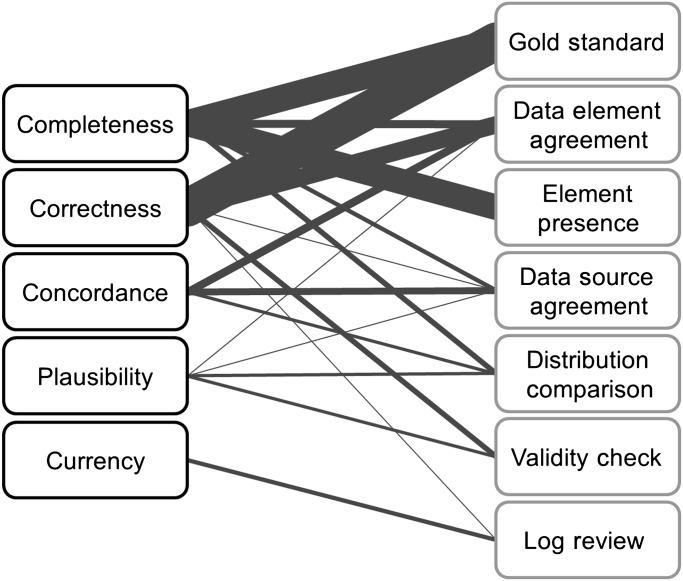
OBJECTIVE: To review the methods and dimensions of data quality assessment in the context of electronic health record (EHR) data reuse for research. MATERIALS AND METHODS: A review of the clinical research literature discussing data quality assessment methodology for EHR data was performed. Using an iterative process, the aspects of data quality being measured were abstracted and categorized, as well as the methods of assessment used. RESULTS: Five dimensions of data quality were identified, which are completeness, correctness, concordance, plausibility, and currency, and seven broad categories of data quality assessment methods: comparison with gold standards, data element agreement, data source agreement, distribution comparison, validity checks, log review, and element presence. DISCUSSION: Examination of the methods by which clinical researchers have investigated the quality and suitability of EHR data for research shows that there are fundamental features of data quality, which may be difficult to measure, as well as proxy dimensions. Researchers interested in the reuse of EHR data for clinical research are recommended to consider the adoption of a consistent taxonomy of EHR data quality, to remain aware of the task-dependence of data quality, to integrate work on data quality assessment from other fields, and to adopt systematic, empirically driven, statistically based methods of data quality assessment. CONCLUSION: There is currently little consistency or potential generalizability in the methods used to assess EHR data quality. If the reuse of EHR data for clinical research is to become accepted, researchers should adopt validated, systematic methods of EHR data quality assessment.
Overview
CoChat Summary
TL;DR
This review identifies five dimensions of electronic health record (EHR) data quality—completeness, correctness, concordance, plausibility, and currency—and seven broad categories of assessment methods. It concludes that EHR data quality assessment for research lacks consistency and generalizability, and recommends validated, systematic, statistically based methods.
Key findings
- Five data quality dimensions were derived: completeness, correctness, concordance, plausibility, and currency. Seven assessment method categories were identified: comparison with gold standards, data element agreement, data source agreement, distribution comparison, validity checks, log review, and element presence.
- Completeness was the most commonly assessed dimension, in 61 (64%) of 95 articles, followed by correctness in 57 (60%), concordance in 16 (17%), plausibility in 7 (7%), and currency in 4 (4%).
- Gold standard comparison was used in 37 of 95 articles; element presence was used only for completeness, while currency was assessed only through log review.
- The authors argue that only correctness, completeness, and currency are fundamental dimensions; concordance and plausibility appear to serve as proxies when fundamental dimensions cannot be assessed directly.
Methods
- Literature search performed on PubMed in February 2012, using data quality terms and EHR-related terms; the search produced 230 articles, which were manually reviewed.
- Inclusion criteria retained original research using data quality assessment methods, focused on EHR-derived data, and published in peer-reviewed journals; administrative claims databases were excluded. This yielded 44 articles, and an ancestor search added 51 more, for a final pool of 95 articles.
- From each article, the authors abstracted data quality features, assessment methods, and descriptive information; through iterative review, they inductively derived dimensions and method categories, then recategorized all 95 articles by dimension and assessment strategy.
Limitations
- The paper states the search was limited: lack of MeSH terms for data quality and variation in terminology may have caused relevant articles to be missed, though reference review was believed to improve saturation.
- The paper states classification was largely subjective and performed by only one author, so original researchers might disagree with the interpretations.
- The paper states that underreporting likely affected results, because routine data checking such as distributions and summary statistics is rarely described in publications; evident from the text, the review is descriptive and does not empirically validate the proposed taxonomy.
Model-written summary. Check it against the paper before relying on it.
Integrity signals
Registry
Cites
Statistics
Figures
Verification
Claims the paper makes
8 Valid · 1 Not valid · 16 Not checked · 59 Own results and interpretations
Every source the paper cites for this claim was checked and supports it.
In the paper
“Thiru et al,9 in calculating the sensitivity of different types of EHR data in the literature, found values ranging between 0.26 and 1.00.”
§ Methods and dimensions of electronic health record data quality assessment: enabling reuse for clinical research > Abstract > Conclusion
What the sources say
- Supportedcites [9] Thiru K Hassey A Sullivan F Systematic review of scope and quality of electronic patient record data in primary care. BMJ 2003; 326: 1070 12750210 PMC155692 source
Table 3 (Results) lists sensitivities for different types of electronic patient record data. The values range from 26% for socioeconomic data to 100% for several categories, matching 0.26–1.00. (LLM, conf=0.94)
plain- Asserted: passes — The authors put it forward as true.
- Checkable: passes — It can be checked against evidence.
- Load-bearing: passes — The paper’s conclusions depend on it.
- Based: passes — The paper gives a reason why it holds.
- Supported
The cited sources support only part of this claim — read each source’s verdict below.
In the paper
“Hogan and Wagner8 suggested specific statistical measures of the correctness and completeness of EHR elements that have been adopted by other researchers.”
§ Methods and dimensions of electronic health record data quality assessment: enabling reuse for clinical research > Discussion > Data quality assessment methodology
What the sources say
- Partly supportedcites [8] Hogan WR Wagner MM Accuracy of data in computer-based patient records. J Am Med Inform Assoc 1997; 4: 342– 55 9292840 PMC61252 sourceExperimental — accuracy not yet measured
The Methodological Recommendations section (page not provided) defines correctness and completeness as specific proportions and recommends that future studies report numerical measures of both. The paper does not establish the claim that other researchers subsequently adopted those measures. (LLM, conf=0.88)
plainstates a cause- Asserted: passes — The authors put it forward as true.
- Checkable: passes — It can be checked against evidence.
- Load-bearing: unclear — It is unclear whether the paper’s conclusions depend on it.
- Based: passes — The paper gives a reason why it holds.
- Partly supported
The sources with a verdict support this claim; the rest weren’t checked yet, have no full text we could read, or their verdicts aren’t rated yet.
In the paper
“Some researchers looking at the quality of research databases pulled from general practices in the UK have adopted relatively consistent approaches to comparing the distributions of data concerning specific clinical phenomena to information from registries and surveys.31 98 99 102”
§ Methods and dimensions of electronic health record data quality assessment: enabling reuse for clinical research > Discussion > Data quality assessment methodology
What the sources say
- Not checked — no full text of the sourcecites [31] Lewis JD Brensinger C Agreement between GPRD smoking data: a survey of general practitioners and a population-based survey. Pharmacoepidemiol Drug Saf 2004; 13: 437– 41 15269927 source
- Not checked — no full text of the sourcecites [98] Haynes K Forde KA Schinnar R Cancer incidence in The Health Improvement Network. Pharmacoepidemiol Drug Saf 2009; 18: 730– 6 19479713 source
- Supportedcites [99] Iyen-Omofoman B Hubbard RB Smith CJ The distribution of lung cancer across sectors of society in the United Kingdom: a study using national primary care data. BMC Public Health 2011; 11: 857 22074413 PMC3282683 source
The Methods and Discussion > Lung cancer Incidence describe comparing lung cancer data from the UK general-practice database THIN with national cancer registry and National Lung Cancer Audit data to assess its representativeness. This paper therefore exemplifies the comparison approach attributed to the cited group of researchers; the sentence does not require each cited study to use both registries and surveys. (LLM, conf=0.85)
plain- Asserted: passes — The authors put it forward as true.
- Checkable: passes — It can be checked against evidence.
- Load-bearing: unclear — It is unclear whether the paper’s conclusions depend on it.
- Based: passes — The paper gives a reason why it holds.
The cited sources support only part of this claim — read each source’s verdict below.
In the paper
“In three of the four, researchers reviewed whether desired data were entered into the EHR within a set time limit.36 46 52”
§ Methods and dimensions of electronic health record data quality assessment: enabling reuse for clinical research > Results > Currency
What the sources say
- Not checked — no full text of the sourcecites [36] Ndira SP Rosenberger KD Wetter T Assessment of data quality of and staff satisfaction with an electronic health record system in a developing country (Uganda): a qualitative and quantitative comparative study. Methods Inf Med 2008; 47: 489– 98 19057805 source
- Partly supportedcites [46] Vawdrey DK Gardner RM Evans RS Assessing data quality in manual entry of ventilator settings. J Am Med Inform Assoc 2007; 14: 295– 303 17329731 PMC2244881 sourceExperimental — accuracy not yet measured
The Methods (Data Analysis; page unavailable) say the researchers measured charting delay—the interval between observing ventilator settings and entering them into the computer—to assess timeliness. The Results report an average delay of 6.1 minutes, but the study does not assess whether entries met a set time limit. The 30-minute limit in the Background describes an earlier study by East et al., not this study's measure. (LLM, conf=0.85)
- Not checked — no full text of the sourcecites [52] Faulconer ER de Lusignan S An eight-step method for assessing diagnostic data quality in practice: chronic obstructive pulmonary disease as an exemplar. Inform Prim Care 2004; 12: 243– 54 15808026 source
plain- Asserted: passes — The authors put it forward as true.
- Checkable: passes — It can be checked against evidence.
- Load-bearing: unclear — It is unclear whether the paper’s conclusions depend on it.
- Based: passes — The paper gives a reason why it holds.
A result the paper reports from its own data — it cites no other source for it, so there is none to check. The quote shows it is in the paper.
In the paper
“For example, 37 of the 95 articles in our sample relied on a gold standard to assess data quality.”
§ Methods and dimensions of electronic health record data quality assessment: enabling reuse for clinical research > Discussion > Data quality assessment methodology
plainn = 95- Asserted: passes — The authors put it forward as true.
- Checkable: passes — It can be checked against evidence.
- Load-bearing: unclear — It is unclear whether the paper’s conclusions depend on it.
- Based: passes — The paper gives a reason why it holds.
40 more claims
Create a free account to see all 84 claims and every source verdict.
- It may state two separate claims as one. 23
- Probably not a substantial claim. 24
Claims other papers make about this one
Each is checked against this paper’s own text: does it say what the citing paper says it does?
The source backs part of the claim, not all of it — or backs it for a different population, condition or comparison.
In the citing paper
“While these developments have advanced the understanding of data quality in the context of medical applications, frameworks for EHR frequently focus on the data quality of individual patients86,87, neglecting data quality aspects for the overall population.”
From The METRIC-framework for assessing data quality for trustworthy AI in medicine: A systematic review (2024) · cites this paper as [87]
Experimental — accuracy not yet measuredThe cited source says what the claim attributes to it.
In the citing paper
“The current DQ literature is inconsistent in the use of terms that describe the complex multidimensional aspects of DQ.42–51”
From A harmonized data quality assessment terminology and framework for the secondary use of electronic health record data (2016) · cites this paper as [45]
The cited source says what the claim attributes to it.
In the citing paper
“In particular, representativeness is often not a factor86,87 while it is a crucial property for secondary use of data in clinical studies88 or when reusing medical data as training data for ML applications.”
From The METRIC-framework for assessing data quality for trustworthy AI in medicine: A systematic review (2024) · cites this paper as [87]
Self-check
Percentages, sums and reported differences re-computed from the paper’s own numbers.
Each contradiction between two passages listed here was confirmed by an independent check.
Rated minor: it would not touch a result — a value no result rests on, a p-value that stays on the same side of the significance level, or a conflict that is clerical, resolved elsewhere in the paper, or outside its own findings.
In the paper
§ Methods and dimensions of electronic health record data quality assessment: enabling reuse for clinical research > Results > Plausibility
“The most common approach to assessing the plausibility of EHR data was to perform some sort of validity check to determine if specific elements within the EHR were likely to be true or not.”
§ Methods and dimensions of electronic health record data quality assessment: enabling reuse for clinical research > Results
“| Distribution comparison | 97–100 | | 31 57 97 | 50 101 102 103 | | 10 | | Validity checks | | 32 62 104 105 106 | | 73 89 | | 7 |”
Citations
Cites
A General Inductive Approach for Analyzing Qualitative Evaluation Data
Thomas, D. R. (2006) · American Journal of Evaluation · doi:10.1177/1098214005283748 · Cited by 10,858 · cited 1×
“Furthermore, using an existing model to guide analysis is a deductive approach, which has the potential to obscure information contained in the data.(11) By imposing an existing model from a different discipline, we would have run the risk of missing important findings.”
MethodBeyond Accuracy: What Data Quality Means to Data Consumers
Wang, R. Y., & Strong, D. M. (1996) · Journal of Management Information Systems · doi:10.1080/07421222.1996.11518099 · Cited by 4,672
(2020) · Journal of Medical Education · doi:10.5812/jme · Cited by 3,490
The American Journal of Managed Care
(2020) · The American Journal of Managed Care · doi:10.37765/ajmc · Cited by 3,237
Pipino, L. L., Lee, Y. W., & Wang, R. Y. (2002) · Communications of the ACM · doi:10.1145/505248.506010 · Cited by 1,724
Juran's Quality Control Handbook
Ziegel, E. R. (1990) · Technometrics · doi:10.1080/00401706.1990.10484602 · Cited by 1,384
Jick, H., Jick, S. S., & Derby, L. E. (1991) · BMJ · doi:10.1136/bmj.302.6779.766 · Cited by 839
Safran, C., Bloomrosen, M., Hammond, W. E., Labkoff, S., Markel-Fox, S., Tang, P. C., & Detmer, D. E. (2007) · Journal of the American Medical Informatics Association · doi:10.1197/jamia.m2273 · Cited by 705 · cited 1×
“As the adoption of electronic health records (EHRs) has made it easier to access and aggregate clinical data, there has been growing interest in conducting research with data collected during the course of clinical care.(1) 2 The Natonal Institutes of Health has called for increasing the reuse of electronic records fo…”
MethodInformatics in Primary Care: Strategies in Information Management for the Healthcare Provider
(2002) · Health Informatics · doi:10.1007/978-1-4613-0069-4 · Cited by 422
Accuracy of Data in Computer-based Patient Records
Hogan, W. R., & Wagner, M. M. (1997) · Journal of the American Medical Informatics Association · doi:10.1136/jamia.1997.0040342 · Cited by 389 · cited 5×
“As observed by Hogan and Wagner in their literature review, there is no medical subheadings (MeSH) term fi ‘ ’ ‘ ’ ‘ ’ ‘ consistency ’ , ‘ data completeness ’ , and ‘ data error ’ .”
BackgroundInfluential
Research works printed but not linked: 14
- 1997, Journal of the American Medical Informatics Association, 4, 342, 10.1136/jamia.1997.0040342 · DOI · Paper page
- 2006, Journal of the American Medical Informatics Association, 13, 12, 10.1197/jamia.M1813 · DOI · Paper page
- 2000, Journal of the American Medical Informatics Association, 7, 55, 10.1136/jamia.2000.0070055 · DOI · Paper page
- 1996, Journal of the American Medical Informatics Association, 3, 234, 10.1136/jamia.1996.96310637 · DOI · Paper page
- 2007, Journal of the American Medical Informatics Association, 14, 295, 10.1197/jamia.M2219 · DOI · Paper page
- 2007, Journal of the American Medical Informatics Association, 14, 10, 10.1197/jamia.M2198 · DOI · Paper page
- Harabagiu, 2010, 2010, 1
- 2004, Journal of the American Medical Informatics Association, 11, 351, 10.1197/jamia.M1498 · DOI · Paper page
- 2000, Journal of the American Medical Informatics Association, 7, 42, 10.1136/jamia.2000.0070042 · DOI · Paper page
- 2010, Family Practice, 27, 121, 10.1093/fampra/cmp068 · DOI
- 2004, Journal of the American Medical Informatics Association, 11, 78, 10.1197/jamia.M1362 · DOI
- 1999, Journal of the American Medical Informatics Association, 6, 245, 10.1136/jamia.1999.0060245 · DOI · Paper page
- 2003, Journal of the American Medical Informatics Association, 10, 470, 10.1197/jamia.M1290 · DOI · Paper page
- Committee on Improving the Patient Record Institute of Medicine The Computer-Based Patient Record: An Essential Technology for Health Care, Revised Edition. Institute of Medicine. The National Academies Press, 1997 http://iom.edu/Reports/1997/The-Computer-Based-Patient-Record-An-Essential-Technology-for-Health-Care-Revised-Edition.aspx 25121222
Cited by
Items 101–200 of 1,209
Hersh, W., Cimino, J., Payne, P. R. O., Embi, P., Logan, J., Weiner, M., Bernstam, E. V., Lehmann, H., Hripcsak, G., Hartzog, T., et al. (2013) · eGEMs (Generating Evidence & Methods to improve patient outcomes) · doi:10.13063/2327-9214.1018 · Cited by 61
“correctness, concordance, plausibility, and currency [25].”
A basic model for assessing primary health care electronic medical record data quality
Terry, A. L., Stewart, M., Cejic, S., Marshall, J. N., de Lusignan, S., Chesworth, B. M., Chevendra, V., Maddocks, H., Shadd, J., Burge, F., et al. (2019) · BMC Medical Informatics and Decision Making · doi:10.1186/s12911-019-0740-0 · Cited by 61
Ahmad, F. S., Chan, C., Rosenman, M. B., Post, W. S., Fort, D. G., Greenland, P., Liu, K. J., Kho, A. N., & Allen, N. B. (2017) · Circulation · doi:10.1161/circulationaha.117.027436 · Cited by 60
Building bridges across electronic health record systems through inferred phenotypic topics
Chen, Y., Ghosh, J., Bejan, C. A., Gunter, C. A., Gupta, S., Kho, A., Liebovitz, D., Sun, J., Denny, J., & Malin, B. (2015) · Journal of Biomedical Informatics · doi:10.1016/j.jbi.2015.03.011 · Cited by 57
“At the same time, there are significant challenges to reusing EHR data, including a lack of common standards to merge clinical data and translate clinical concepts between disparate healthcare systems [1,15,16].”
Kurian, A. W., Mitani, A., Desai, M., Yu, P. P., Seto, T., Weber, S., Olson, C., Kenkare, P., Gomez, S. L., de Bruin, M. A., et al. (2013) · Cancer · doi:10.1002/cncr.28395 · Cited by 67
“Given the unique potential of EMRs to enhance the understanding of cancer outcomes, studies to optimize the clinical and research uses of EMRs should remain a high priority.(33,34) Some limitations may be addressed through EMR changes, with structured fields facilitating data extraction; others require new data source…”
BackgroundData science for mental health: a UK perspective on a global challenge
McIntosh, A. M., Stewart, R., John, A., Smith, D. J., Davis, K., Sudlow, C., Corvin, A., Nicodemus, K. K., Kingdon, D., Hassan, L., et al. (2016) · The Lancet Psychiatry · doi:10.1016/s2215-0366(16)30089-x · Cited by 59
How to Address the Data Quality Issues in Regression Models: A Guided Process for Data Cleaning
Corrales, D., Corrales, J., & Ledezma, A. (2018) · Symmetry · doi:10.3390/sym10040099 · Cited by 58
Kaufman, D. R., Sheehan, B., Stetson, P., Bhatt, A. R., Field, A. I., Patel, C., & Maisel, J. M. (2016) · JMIR Medical Informatics · doi:10.2196/medinform.5544 · Cited by 58
“The measure of the quality and completeness of data in the EHR represents a challenging issue [19,20].”
BackgroundAlolayyan, M. N., Alyahya, M. S. I., AlAlawin, A. H., Shoukat, A., & Nusairat, F. T. (2020) · Heliyon · doi:10.1016/j.heliyon.2020.e05040 · Cited by 90
“Also there is as yet no agreement on what "health data quality" means in the context of records e-health (Weiskopf and Weng, 2013).”
BackgroundAppelbaum, L., Cambronero, J., Stevens, J. P., Horng, S., Pollick, K., Silva, G., Haneuse, S., Piatkowski, G., Benhaga, N., Duey, S., et al. (2020) · European Journal of Cancer · doi:10.1016/j.ejca.2020.10.019 · Cited by 65
Clinical Research Informatics and Electronic Health Record Data
Horvath, M. M., Rusincovitch, S. A., & Richesson, R. L. (2014) · Yearbook of Medical Informatics · doi:10.15265/iy-2014-0009 · Cited by 57
“Weiskopf presents a multi-dimensional (completeness, correctness, concordance, plausibility, and currency) model of data quality, as well as common data quality assessment methods that include comparison with gold standards, data source agreement, distribution comparison, and validity checks [50].”
BackgroundAris, I. M., Rifas‐Shiman, S. L., Li, L., Yang, S., Belfort, M. B., Thompson, J., Hivert, M., Patel, R., Martin, R. M., Kramer, M. S., et al. (2018) · JAMA Network Open · doi:10.1001/jamanetworkopen.2018.2460 · Cited by 68
Unlocking the Power of Artificial Intelligence and Big Data in Medicine
Lovis, C. (2019) · Journal of Medical Internet Research · doi:10.2196/16607 · Cited by 69
“However, most of this work tries to describe dimensions able to assess the “intrinsic” or “absolute” quality of data [24-28].”
BackgroundAssessing race and ethnicity data quality across cancer registries and EMRs in two hospitals
Lee, S. J. C., Grobe, J. E., & Tiro, J. A. (2016) · Journal of the American Medical Informatics Association · doi:10.1093/jamia/ocv156 · Cited by 57
“Data quality can be examined on multiple dimensions, and various taxonomies have been suggested to guide quality assessments.(21) We assessed the extent of data availability, or completeness, along with agreement, or concordance, across five clinical information systems that store race and ethnicity data for two healt…”
BackgroundGuerra, M. A., & Shealy, T. (2018) · Journal of Professional Issues in Engineering Education and Practice · doi:10.1061/(asce)ei.1943-5541.0000385 · Cited by 65
Electronic health records in IS research: Quality issues, essential thresholds and remedial actions
Jetley, G., & Zhang, H. (2019) · Decision Support Systems · doi:10.1016/j.dss.2019.113137 · Cited by 63
Keller‐McNulty, S., Korkmaz, G., Orr, M., Schroeder, A. D., & Shipp, S. S. (2017) · Annual Review of Statistics and Its Application · doi:10.1146/annurev-statistics-060116-054114 · Cited by 82
Forbes, A., Hinton, W., Feher, M. D., Elson, W. H. D., Joy, M., Ordóñez-Mena, J. M., Fan, X., Cole, N. I., Banerjee, D., Suckling, R., et al. (2024) · EClinicalMedicine · doi:10.1016/j.eclinm.2024.102426 · Cited by 59
“28 31 Ontologies describe key concepts within a domain and their relationships, recognising that clinical concepts can be represented differently within a terminology, and ensuring the process of code set development is explicit and robust.”
BackgroundEnhancing Patient Safety Event Reporting: A Systematic Review of System Design Features
Kang, H., Wu, X., Hua, L., & Gong, Y. (2017) · Applied Clinical Informatics · doi:10.4338/aci-2016-02-r-0023 · Cited by 62
Primary care electronic medical records: a new data source for research in Canada
Birtwhistle, R., & Williamson, T. S. (2014) · Canadian Medical Association Journal · doi:10.1503/cmaj.140473 · Cited by 54
Process mining applications in the healthcare domain: A comprehensive review
Guzzo, A., Rullo, A., & Vocaturo, E. (2021) · Wiley Interdisciplinary Reviews Data Mining and Knowledge Discovery · doi:10.1002/widm.1442 · Cited by 67
“A P. Kurniati et al. (2019) provided an assessment of the MIMIC III data quality in terms of missing data, incorrect data, imprecise data, and irrelevant data, following the method presented by Weiskopf and Weng (2013).”
MethodA European inventory of common electronic health record data elements for clinical trial feasibility
Doods, J., Botteri, F. M., Dugas, M., & Fritz, F. (2014) · Trials · doi:10.1186/1745-6215-15-18 · Cited by 55
“Weiskopf and Weng [22] identified five common dimensions of data quality reviewing 95 articles (completeness, correctness, plausibility, concordance and currency).”
BackgroundQuality of input data in emergency department simulations: Framework and assessment techniques
Vanbrabant, L., Martin, N., Ramaekers, K. M., & Braekers, K. (2018) · Simulation Modelling Practice and Theory · doi:10.1016/j.simpat.2018.12.002 · Cited by 58
“Since the approach used in the framework of Mans et al. [36] is rather general (i.e. a value is either missing, incorrect, imprecise or irrelevant) and the frameworks of Kahn et al. [27] and Weiskopf and Weng [17] focus on the reuse of EHR data in clinical research, there are still deficiencies with regard to the use…”
BackgroundMethodInfluentialSkyttberg, N., Vicente, J., Chen, R., Blomqvist, H., & Koch, S. (2016) · BMC Medical Informatics and Decision Making · doi:10.1186/s12911-016-0305-4 · Cited by 59
“A comprehensive review by Weiskopf and Weng describes these three main data quality categories as; Correctness, Completeness, and Currency [24], where the correctness of the data indicates to how true the documented vital signs are, completeness refers to whether all expected vital signs are actually registered in the…”
BackgroundCPRD Aurum database: Assessment of data quality and completeness of three important comorbidities
Persson, R., Vasilakis‐Scaramozza, C., Hagberg, K. W., Sponholtz, T. R., Williams, T. J., Myles, P. R., & Jick, S. S. (2020) · Pharmacoepidemiology and Drug Safety · doi:10.1002/pds.5135 · Cited by 55
“# days cholesterol value >ULN, median (IQR) 8 (6-11) 7 (6-10)”
InfluentialOlaker, V. R., Fry, S., Terebuh, P., Davis, P. B., Tisch, D. J., Xu, R., Miller, M. G., Dorney, I., Palchuk, M. B., & Kaelber, D. C. (2024) · Clinical and Translational Science · doi:10.1111/cts.70093 · Cited by 58
Prabhu, D. F., Gurupur, V. P., Stone, A. V., & Trader, E. A. (2025) · Healthcare · doi:10.3390/healthcare13212753 · Cited by 80
“This is identified as a complex, multifaceted problem arising from critical bottlenecks in data collection processes within the healthcare ecosystem [28].”
Gibson, C. J., Abrams, K. R., & Dixon, B. E. (2015) · Applied Clinical Informatics · doi:10.4338/aci-2014-09-ra-0077 · Cited by 66
Informatics and machine learning to define the phenotype
Basile, A. O., & Ritchie, M. D. (2018) · Expert Review of Molecular Diagnostics · doi:10.1080/14737159.2018.1439380 · Cited by 61
“According to Weiskopf et al. [62], comparison of EHR data to a ‘ gold standard ’ is the most frequently used method for assessing data accuracy.”
MethodLeveraging electronic health records for clinical research
Raman, S. R., Curtis, L. H., Temple, R., Andersson, T., Ezekowitz, J. A., Ford, I., James, S. K., Marsolo, K. A., Mirhaji, P., Rocca, M., et al. (2018) · American Heart Journal · doi:10.1016/j.ahj.2018.04.015 · Cited by 60
A Data Quality Framework for Process Mining of Electronic Health Record Data
Fox, F., Aggarwal, V. R., Whelton, H. P., & Johnson, O. A. (2018) · IEEE International Conference on Healthcare Informatics (ICHI) · doi:10.1109/ichi.2018.00009 · Cited by 52
“Greater transparency around data cleaning and checking steps is also advised [1].”
BackgroundMethodInfluentialSibbett, R. A., Russ, T. C., Deary, I. J., & Starr, J. M. (2017) · BMC Psychiatry · doi:10.1186/s12888-017-1401-4 · Cited by 49
“Concordance between two sources increases the likelihood of correctness, and completeness, but it should be recognised that no source can be assumed to be completely accurate – there is no true “gold-standard” [49].”
BackgroundA Framework for Data Quality Assessment in Clinical Research Datasets.
Lee, K., Weiskopf, N. G., & Pathak, J. (2017) · PubMed · Cited by 76
Self-citationA clustering approach for detecting implausible observation values in electronic health records data
Estiri, H., Klann, J. G., & Murphy, S. N. (2019) · BMC Medical Informatics and Decision Making · doi:10.1186/s12911-019-0852-6 · Cited by 59
“[1,2] The increasing throughput of EHR data constantly deposited into clinical data research networks have cultivated new opportunities for utilizing innovative statistical learning methods to improve quality.”
BackgroundGute Praxis Datenlinkage (GPD)
March, S., Andrich, S., Drepper, J., Horenkamp‐Sonntag, D., Icks, A., Ihle, P., Kieschke, J., Kollhorst, B., Maier, B., Meyer, I., et al. (2019) · Das Gesundheitswesen · doi:10.1055/a-0962-9933 · Cited by 54
Kolossváry, E., Ferenci, T., Kováts, T., et al. (2015) · European Journal of Vascular and Endovascular Surgery · doi:10.1016/j.ejvs.2015.02.019 · Cited by 47
Bugeja, L. C., Ibrahim, J., Ferrah, N., Murphy, B., Willoughby, M., & Ranson, D. (2016) · Health Research Policy and Systems · doi:10.1186/s12961-016-0096-1 · Cited by 50
“This includes assessing whether the whole dataset or certain elements are consistent with another source, whether expected data elements are present, and whether summary statistics derived from the database fit the expected distribution for a given clinical concept [87].”
BackgroundHsu, W. W. Y., El-Saden, S. M., & Taira, R. K. (2016) · Advances in experimental medicine and biology · doi:10.1007/978-981-10-1503-8_8 · Cited by 48
Sáez, C., Zurriaga, Ó., Pérez‐Panadés, J., Melchor, I., Robles, M., & Garcia-Gomez, J. M. (2016) · Journal of the American Medical Informatics Association · doi:10.1093/jamia/ocw010 · Cited by 46
“These reasons support the current need for generalizable, systematic, empirically driven, statistics-based, and validated DQ assessment methods for the reuse of electronic health records.(12) Meeting the requirements mentioned above, we developed 2 sets of methods for both multisource and temporal variability assessme…”
Maudsley, S. R., Devanarayan, V., Martin, B., Geerts, H., & (BHMI), O. B. O. T. B. H. M. I. (2018) · Alzheimer s & Dementia · doi:10.1016/j.jalz.2018.01.014 · Cited by 50
“…connection of medicinal compound effects to complex human phenotypic responses, there are still significant challenges that need to be overcome, including a lack of common standards for the merging of clinical data for the translation of clinical concepts between disparate health care systems [70].”
BackgroundA theoretical framework to improve the quality of manually acquired data
Haegemans, T., Snoeck, M., & Lemahieu, W. (2018) · Information & Management · doi:10.1016/j.im.2018.05.014 · Cited by 53
A Comparison of Data Quality Assessment Checks in Six Data Sharing Networks
Callahan, T. J., Bauck, A. E., Bertoch, D., Brown, J. S., Khare, R., Ryan, P. B., Staab, J., Zozus, M. N., & Kahn, M. G. (2017) · eGEMs (Generating Evidence & Methods to improve patient outcomes) · doi:10.5334/egems.223 · Cited by 52
“of published data quality assessment (DQA) methods for secondary use found that, of the 95 articles examined, there were over 20 unique dimensions used to assess DQ.(19) Finally, a recent review by Chen et al.”
MethodInfluentialTaksler, G. B., Dalton, J. E., Perzynski, A. T., Rothberg, M. B., Milinovich, A., Krieger, N. I., Dawson, N. V., Roach, M. J., Lewis, M. D., & Einstadter, D. (2020) · Medical Decision Making · doi:10.1177/0272989x20954403 · Cited by 49
Rogers, J. R., Liu, C., Hripcsak, G. M., Cheung, Y. K., & Weng, C. (2021) · JAMA Network Open · doi:10.1001/jamanetworkopen.2021.4732 · Cited by 47
Self-citationGüngör, D. Ö., & Akdağ, H. C. (2018) · Technology in Society · doi:10.1016/j.techsoc.2018.03.006 · Cited by 51
Nikiforova, A. (2020) · Baltic Journal of Modern Computing · doi:10.22364/bjmc.2020.8.3.02 · Cited by 44
“…2009), (Sigurdardottir et al., 2012), (Larsen et al., 2009), (Parkin et al., 2009), (Tomic et al., 2015) etc.); healthcare ((Dahbi et al., 2018), (Weiskopf et al., 2013), (Van den Berghe et al., 2017), (Schmidt et al., 2015), (Kerr, 2007a, 2007b) etc.); chemical hazard and risk assessments…”
Freitas, J. K. D., Johnson, K. W., Golden, E., Nadkarni, G. N., Dudley, J. T., Böttinger, E. P., Glicksberg, B. S., & Miotto, R. (2021) · Patterns · doi:10.1016/j.patter.2021.100337 · Cited by 52
“Input errors, coding and reporting biases, data availability, sparsity, and data structure also present further challenges to accurately identifying patient cohorts.(2) Acknowledging these challenges, EHR-based phenotyping is a computational task to identify key medical concepts in the patient data that consistently a…”
BackgroundEdmondson, M. E., & Reimer, A. P. (2020) · CIN Computers Informatics Nursing · doi:10.1097/cin.0000000000000609 · Cited by 52
Assessing real-world medication data completeness
Evans, L., London, J., & Palchuk, M. B. (2021) · Journal of Biomedical Informatics · doi:10.1016/j.jbi.2021.103847 · Cited by 45
Kuchinke, W., Ohmann, C., Verheij, R. A., van Veen, E.-B., Arvanitis, T. N., Taweel, A., & Delaney, B. C. (2014) · International Journal of Medical Informatics · doi:10.1016/j.ijmedinf.2014.08.009 · Cited by 48
“[57] N.”
BackgroundBruland, P., McGilchrist, M. M., Zapletal, É., Acosta, D., Proeve, J., Askin, S., Ganslandt, T., Doods, J., & Dugas, M. (2016) · BMC Medical Research Methodology · doi:10.1186/s12874-016-0259-3 · Cited by 49
“documentation remains at times unknown and is also controversially discussed in the literature [10, 39].”
BackgroundÉthier, J., Ćurčin, V., McGilchrist, M., Keung, S. N. L. C., Zhao, L., Andréasson, A., Bródka, P., Michalski, R., Arvanitis, T. N., Mastellos, N., et al. (2017) · International Journal of Medical Informatics · doi:10.1016/j.ijmedinf.2017.06.006 · Cited by 43
“earches of the EHR at study end, as a very high proportion of primary care encounters are coded, enabling efficient measurement of patients meeting the eligibility criteria in each arm across centres.[31][32] The secondary outcomes were recruitment per week per site and data completeness. The practices in the TRANSFoR…”
MethodJuddoo, S., George, C., Duquenoy, P., & Windridge, D. (2018) · Applied System Innovation · doi:10.3390/asi1040043 · Cited by 43
“On the other hand, IHC or similar integrative reviews of literature are research methods which have already been applied in the context of health and data [11] and in the context of Big Data quality [8].”
BackgroundMethodImplementing Evidence-Based Strategies to Improve HPV Vaccine Delivery
Gilkey, M. B., Parks, M. J., Margolis, M. A., McRee, A., & Terk, J. V. (2019) · PEDIATRICS · doi:10.1542/peds.2018-2500 · Cited by 45
“Using validity checks and distribution analysis, we identified outliers according to dfbeta and rstudent metrics.(22,24) This approach was used to identify physicians with large changes in the size of their patient panel over the study period.”
MethodMind the clinical-analytic gap: Electronic health records and COVID-19 pandemic response
Sudat, S. E. K., Robinson, S. C., Mudiganti, S., Mani, A., & Pressman, A. R. (2021) · Journal of Biomedical Informatics · doi:10.1016/j.jbi.2021.103715 · Cited by 44
“While much focus is typically given to new analytic methods, conversations regarding data quality tend to be limited and under-emphasized, despite the existence of multiple conceptual frameworks for electronic health record (EHR) data quality assessment [4 – 13].”
BackgroundValidation of asthma recording in electronic health records: a systematic review
Nissen, F., Quint, J. K., Wilkinson, S., Müllerová, H., Smeeth, L. L., & Douglas, I. (2017) · Clinical Epidemiology · doi:10.2147/clep.s143718 · Cited by 42
“Validity of coding is generally assessed by comparing a code (or algorithm) to 1) the diagnosis as verified by the treating physician either by manual review of the chart notes or in clinic, 2) a reference standard such as another linked dataset, or 3) a patient questionnaire.(10) A previous systematic review by Shari…”
Getz, K., Hubbard, R. A., & Linn, K. A. (2022) · Epidemiology · doi:10.1097/ede.0000000000001578 · Cited by 54
“The objectives of the current study were (1) to conduct a head to head comparison of multiple imputation using multiple imputation with chained equations, random forests, and denoising autoencoders; (2) to use plasmode simulations based on real-world EHR-derived data to evaluate methods in a…”
MethodNi, K., Chu, H., Zeng, L., Li, N., & Zhao, Y. (2019) · BMJ Open · doi:10.1136/bmjopen-2019-029314 · Cited by 53
“However, there are still inconsistencies in the dimensions of data quality and the methods used to assess these dimensions both in China and in other parts of the world.13 38 The lack of consistency of methods and processes of data quality assessment (DQA) makes it difficult to compare the results of DQAs.13 39 Thus,…”
InfluentialPrice, M., Davies, I., Rusk, R., Lesperance, M., & Weber, J. (2017) · JMIR Medical Informatics · doi:10.2196/medinform.6226 · Cited by 41
“Data quality is often discussed in terms of data use in research [33]; however, data quality is also foundational to CDS [34].”
BackgroundBian, J., Loiacono, A. T., Sura, A., Mendoza, T., Lipori, G. P., Guo, Y. M., Shenkman, E. A., & Hogan, W. R. (2019) · JAMIA Open · doi:10.1093/jamiaopen/ooz050 · Cited by 40
“18”
Challenges and recommendations for high quality research using electronic health records
Honeyford, K., Expert, P., Mendelsohn, E., Post, B., Faisal, A. A., Glampson, B., Mayer, E. K., & Costelloe, C. (2022) · Frontiers in Digital Health · doi:10.3389/fdgth.2022.940330 · Cited by 55
“The data entered into patients’ EHRs needs to be credible, complete, available for all patients, current and using a uniformised reference language (38).”
BackgroundSeamless EMR data access: Integrated governance, digital health and the OMOP-CDM
Hallinan, C. M., Ward, R., Hart, G. K., Sullivan, C. M., Pratt, N. L., Ng, A. P., Daniel Capurro, N., van der Vegt, A. H., Liaw, S., Daly, J. O., et al. (2024) · BMJ Health & Care Informatics · doi:10.1136/bmjhci-2023-100953 · Cited by 41
“5 For highly powered collaborative research, where large volumes of EMR data are combined, use is further constrained by the heterogeneity of each institution’s EMR schema 6 ; concern over data sharing and privacy breaches and lack of clarity over governance and consent.”
BackgroundOptimizing Clinical Research Participant Selection with Informatics
Weng, C. (2015) · Trends in Pharmacological Sciences · doi:10.1016/j.tips.2015.08.007 · Cited by 38
“In addition, sampling bias and data incompleteness are two major barriers to reusing existing electronic patient data to understand the real-world patients [14, 15].”
BackgroundSelf-citationSollie, A., Roskam, J., Sijmons, R. H., Numans, M. E., & Helsper, C. W. (2016) · BMJ Open · doi:10.1136/bmjopen-2016-012669 · Cited by 39
“Unanswered questions and future research Future research should, besides correctness and completeness, evaluate other dimensions of data quality; concordance, plausibility and currency.(9) Also, quality of other key data items besides the diagnosis should be studied, for instance risk factors, treatment and allergies.”
BackgroundRodgers, L. R., Weedon, M. N., Henley, W., Hattersley, A. T., & Shields, B. M. (2017) · BMJ Open · doi:10.1136/bmjopen-2017-017989 · Cited by 41
Understanding the process of data reuse: An extensive review
Wang, X., Duan, Q., & Liang, M. (2021) · Journal of the Association for Information Science and Technology · doi:10.1002/asi.24483 · Cited by 56
“The extraction and conceptualization of specific elements, such as data evaluation, barriers, supporting tools, and rights issues, also focus (Benitez-Paez et al., 2018; Boté & Térmens, 2019; Weiskopf & Weng, 2013; Williams et al., 2017; Zhang et al., 2018).”
BackgroundMethodJohnson, K. E., Kamineni, A., Fuller, S., Olmstead, D., & Wernli, K. J. (2014) · eGEMs (Generating Evidence & Methods to improve patient outcomes) · doi:10.13063/2327-9214.1058 · Cited by 39
How to validate a diagnosis recorded in electronic health records
Nissen, F., Quint, J. K., Morales, D. R., & Douglas, I. (2019) · Breathe · doi:10.1183/20734735.0344-2018 · Cited by 45
“Measuring data validity is therefore needed to establish whether the values “make sense” [5, 6].”
Sayón-Orea, C., Moreno‐Iribas, C., Delfrade, J., Sanchez-Echenique, M., Amiano, P., Ardanáz, E., Gorricho, J., Basterra, G., Nuín, M., & Guevara, M. (2020) · BMC Medical Informatics and Decision Making · doi:10.1186/s12911-020-1020-8 · Cited by 43
The qualculative dimension of healthcare data interoperability
Pine, K. H. (2019) · Health Informatics Journal · doi:10.1177/1460458219833095 · Cited by 37
“24 Due to such difficulties with data extraction and ensuring data quality 25 and the effort it takes to overcome them, clinical data from EHRs are not yet widely used for second-order research purposes.”
BackgroundLi, R., Niu, Y., Scott, S. R., Zhou, C., Lan, L., Liang, Z., & Li, J. (2021) · JMIR Medical Informatics · doi:10.2196/24405 · Cited by 51
“Some analyses have aimed to develop assessment frameworks to ensure data quality across studies [43], but there are few studies that quantitatively explore how and to what extent EMR or EHR data are being collected and used in China.”
BackgroundMining the Electronic Health Record for Disease Knowledge
Chen, E. S., & Sarkar, I. N. (2014) · Methods in molecular biology · doi:10.1007/978-1-4939-0709-0_15 · Cited by 40
Dziadkowiec, O., Callahan, T., Ozkaynak, M., Reeder, B., & Welton, J. (2016) · eGEMs (Generating Evidence & Methods to improve patient outcomes) · doi:10.13063/2327-9214.1201 · Cited by 37
Ethics and subsequent use of electronic health record data
Lee, L. M. (2017) · Journal of Biomedical Informatics · doi:10.1016/j.jbi.2017.05.022 · Cited by 43
“Still, there is little agreement or consistency on how to assess the quality of EHR data [9].”
Valid.IoT: a framework for sensor data quality analysis and interpolation
Kuemper, D., Iggena, T., Toenjes, R., & Pulvermueller, E. (2018) · Proceedings of the 9th ACM Multimedia Systems Conference · doi:10.1145/3204949.3204972 · Cited by 36
“[29] provides a table of different terms used to describe one of the dimensions of data quality.”
Moving Towards an EHR Data Quality Framework: The MIRACUM Approach
Kapsner, L. A., Kampf, M. O., Seuchter, S. A., Wabo, G. K., Gradinger, T., Ganslandt, T., Mate, S., Gruendner, J., Kraska, D., & Prokosch, H. (2019) · Studies in health technology and informatics · doi:10.3233/shti190834 · Cited by 40
Memorandum Register für die Versorgungsforschung: Update 2019
Stausberg, J., Maier, B., Bestehorn, K. P., Gothe, H., Groene, O., Jacke, C. O., Jänicke, M., Kostuj, T., Mathes, T., Niemeyer, A., et al. (2020) · Das Gesundheitswesen · doi:10.1055/a-1083-6417 · Cited by 51
Guidelines for Data Acquisition, Quality and Curation for Observational Research Designs (DAQCORD)
Ercole, A., Brinck, V., George, P., Hicks, R. R., Huijben, J. A., Jarrett, M., Vassar, M. J., Wilson, L., & collaborators, T. D. (2020) · Journal of Clinical and Translational Science · doi:10.1017/cts.2020.24 · Cited by 48
“We carried out an initial exercise within the Steering Committee to categorise questions on the data quality factors of completeness, correctness, concordance, plausibility and currency (Weiskopf andWeng [7], see Table 1 for definitions of these terms) and evaluate the importance of individual items.”
Matheny, M. E., Ricket, I. M., Goodrich, C. A., Shah, R. U., Stabler, M. E., Perkins, A. M., Dorn, C. A., Denton, J. N., Bray, B. E., Gouripeddi, R., et al. (2021) · JAMA Network Open · doi:10.1001/jamanetworkopen.2020.35782 · Cited by 53
“The area under the receiver operating characteristic curve (AUROC), 95% CIs, and SE were calculated from the test set for each imputed data set (1-20) for each model.”
MethodPedrera‐Jiménez, M., Barrio, N. G., Rojo, J. C., Terriza-Torres, A. I., López-Jiménez, E. A., Boyero, F. C., Jiménez-Cerezo, M. J., Blanco-Martínez, A., Roig-Domínguez, G., Cruz-Bermúdez, J. L., et al. (2021) · Journal of Biomedical Informatics · doi:10.1016/j.jbi.2021.103697 · Cited by 41
“The full definition of the information model and its constraints ensure the completeness and consistency of EHR extracts [32].”
Spiranovic, C., Matthews, A., Scanlan, J., & Kirkby, K. C. (2016) · Advances in Mental Health · doi:10.1080/18387357.2015.1063635 · Cited by 37
“Weiskopf and Weng (2012) proposed five dimensions of data quality: completeness, correctness, concordance, plausibility and currency.”
BackgroundCardiovascular Care Innovation through Data-Driven Discoveries in the Electronic Health Record
Dhingra, L. S., Shen, M., Mangla, A., & Khera, R. (2023) · The American Journal of Cardiology · doi:10.1016/j.amjcard.2023.06.104 · Cited by 47
Health Information Exchange in Emergency Medicine
Shapiro, J. S., Crowley, D., Hoxhaj, S., Langabeer, J. R., Panik, B., Taylor, T. B., Weltge, A. F., & Nielson, J. A. (2015) · Annals of Emergency Medicine · doi:10.1016/j.annemergmed.2015.06.018 · Cited by 39
Data quality challenges for person-generated health and wellness data
Codella, J., Partovian, C., Chang, H.-Y., & Chen, C.-H. (2018) · IBM Journal of Research and Development · doi:10.1147/jrd.2017.2762218 · Cited by 37
The ClearPath Method for Care Pathway Process Mining and Simulation
Johnson, O. A., Dhafari, T. B., Kurniati, A. P., Fox, F., & Rojas, E. (2019) · Lecture notes in business information processing · doi:10.1007/978-3-030-11641-5_19 · Cited by 40
Linking Ambulance Records with Hospital and Death Index Data to Evaluate Patient Outcomes
Nehme, E., Cox, S., & Smith, K. (2022) · International Journal of General Medicine · doi:10.2147/ijgm.s328149 · Cited by 36
“Importantly, raw health record data is generally accepted to be of lower quality and accuracy than data collected specifically for research purposes, given differing priorities at the time of data collection.(12) This is particularly true in the prehospital setting where paramedics may encounter any number of challeng…”
BackgroundSáez, C., Ferri, P., & García-Gómez, J. M. (2024) · Journal of Medical Internet Research · doi:10.2196/50295 · Cited by 36
“Most data-related barriers in training are categorized as DQ issues [17-19], including missing, implausible, or outlier data.”
Jick, S. S., Hagberg, K. W., Persson, R., Vasilakis‐Scaramozza, C., Williams, T. J., Crellin, E., & Myles, P. R. (2020) · Pharmacoepidemiology and Drug Safety · doi:10.1002/pds.4996 · Cited by 38
“This is the first of several validation assessments to describe CPRD Aurum data using data quality assessment methodologies described by Weiskopf and Weng.(9) The objective of this study was to evaluate correctness (eg, quality and accuracy of diagnoses) and completeness (eg, presence or missingness of diagnoses) of d…”
MethodInfluentialAhmad, F. S., Ricket, I. M., Hammill, B. G., Eskenazi, L., Robertson, H. R., Curtis, L. H., Dobi, C. D., Girotra, S. R., Haynes, K., Kizer, J. R., et al. (2020) · Circulation Cardiovascular Quality and Outcomes · doi:10.1161/circoutcomes.119.006292 · Cited by 40
Sáez, C., Robles, M., & Garcia-Gomez, J. M. (2016) · Statistical Methods in Medical Research · doi:10.1177/0962280214545122 · Cited by 41
“Weiskopf et al.(5) carried out a systematic review on the methods and dimensions of data quality assessment in the context of reuse of electronic health records (EHRs) for research.”
BackgroundMethodInfluentialA scoping review of preprocessing methods for unstructured text data to assess data quality
Nesca, M., Katz, A., Leung, C. K.-S., & Lix, L. M. (2022) · International Journal for Population Data Science · doi:10.23889/ijpds.v7i1.1757 · Cited by 72
“’s scoping review to discover methods and dimensions [70], the scoping review could be used to develop definitions for dimensions of data quality for UTD.”
Scholte, M., van Dulmen, S. A., der Steen, C. N.-V., van der Wees, P. J., der Sanden, M. W. G. N., & Braspenning, J. C. C. (2016) · BMC Medical Informatics and Decision Making · doi:10.1186/s12911-016-0382-4 · Cited by 40
“In a recent review on methods and dimensions of quality assessment of EHR data, out of 95 reviewed articles 57 conducted comparative research of which only nine compared EHR data to survey data or patient interviews [7].”
BackgroundMethodWorkgroup, T. V. M.-A. M., Calhoun, P. S., Wilson, S. M., Hertzberg, J. S., Kirby, A. C., McDonald, S. D., Dennis, P. A., Bastian, L. A., Dedert, E. A., & Beckham, J. C. (2017) · Journal of General Internal Medicine · doi:10.1007/s11606-017-4144-5 · Cited by 36
Sáez, C., & Garcia-Gomez, J. M. (2018) · International Journal of Medical Informatics · doi:10.1016/j.ijmedinf.2018.09.015 · Cited by 37
Chen, Y., Wang, J., Chubak, J., & Hubbard, R. A. (2018) · Pharmacoepidemiology and Drug Safety · doi:10.1002/pds.4680 · Cited by 35
The used theories for the adoption of electronic health record: a systematic literature review
Sadoughi, F., Khodaveisi, T., & Ahmadi, H. (2018) · Health and Technology · doi:10.1007/s12553-018-0277-8 · Cited by 47
“…social and clinical [8], include improving the quality and safety of care [9, 10], reducing costs of research, accelerating new medical exploration [11], quick and easy access to a large amount of information in short time, quickly filter information according to need, preventing and mitigating…”
BackgroundNovel Data Imputation for Multiple Types of Missing Data in Intensive Care Units
Venugopalan, J., Chanani, N. K., Maher, K., & Wang, M. D. (2019) · IEEE Journal of Biomedical and Health Informatics · doi:10.1109/jbhi.2018.2883606 · Cited by 39
Patterns and Determinants of Prescribing for Parkinson’s Disease: A Systematic Literature Review
Orayj, K. M., & Lane, E. L. (2019) · Parkinson s Disease · doi:10.1155/2019/9237181 · Cited by 42
“However, to avoid the inherent drawbacks of EMR (missing data and data entry errors), it is essential to validate these electronic medical records against standard criteria such as the actual paper files of the patients, GP questionnaires, or linking data to other databases [87, 88].”
BackgroundAn automated data cleaning method for Electronic Health Records by incorporating clinical knowledge
Shi, X., Prins, C., Pottelbergh, G. V., Mamouris, P., Vaes, B., & Moor, B. D. (2021) · BMC Medical Informatics and Decision Making · doi:10.1186/s12911-021-01630-7 · Cited by 44
Meloda, métrica para evaluar la reutilización de datos abiertos
Abella, A., Ortiz‐de‐Urbina‐Criado, M., & De‐Pablos‐Heredero, C. (2014) · El Profesional de la Informacion · doi:10.3145/epi.2014.nov.04 · Cited by 48
Metadata
- Authors
- Weiskopf, N. G., & Weng, C.
- Affiliations
- Columbia University (US)
- Corresponding author
- Weiskopf, N. G.
- Venue
- Journal of the American Medical Informatics Association
- Publisher
- Oxford University Press (OUP)
- Published
- 2013-01-01
- Volume
- 20
- Issue
- 1
- Pages
- 144-151
- ISSN
- 1067-5027 (ISSN-L)
- 1527-974X
- PMC
- PMC3555312
- OpenAlex
- W2158939484
- Cited by
- 1,216
- References
- 114
- Citations by year
- 2026: 153 · 2025: 102 · 2024: 97 · 2023: 92 · 2022: 88 · 2021: 108 · 2020: 88 · 2019: 106 · 2018: 102 · 2017: 88 · 2016: 70 · 2015: 54 · 2014: 38 · 2013: 23
- FWCI
- 6.18
- Type
- journal article
- Language
- en
- Open access
- hybrid
- doi.org
- Licence
- cc-by-nc
- Locations
- Journal of the American Medical Informatics Association (publishedVersion, cc-by-nc)
- Europe PMC (PubMed Central) (publishedVersion, cc-by-nc)
- PubMed Central (publishedVersion, cc-by-nc)
- PubMed (publishedVersion)
- Funders
- U.S. National Library of Medicine (R01LM010815, R01LM009886, T15LM007079)
- Topics
- Health Sciences › Health Professions › Health Information Management › Electronic Health Records Systems
- Health Sciences › Health Professions › Health Information Management › Medical Coding and Health Information
- Physical Sciences › Computer Science › Information Systems › Data Quality and Management
- Keywords
- electronic health records, data quality assessment, clinical research data, data completeness, data correctness, concordance, plausibility, data currency, gold standard comparison, data source agreement, validity testing
- MeSH terms
- Data Collection, Humans, Quality Control, Research Design, Reproducibility of Results, Information Dissemination, Electronic Health Records
About these checks
Registry, retraction, Cites and statistics results are computed, not judged, with one exception: a printed reference that no index lists is read once by a model before it counts as a citation error. Claims are extracted by a model and kept only when their quote appears verbatim in the text; each cited source is then checked, with a model’s help, for whether it says what the claim relies on. Those verdicts can be wrong — read the claim’s quote and the cited source before relying on one.
The claim verdicts this report counts are experimental: their accuracy is not yet measured.
A language model drew the claims from the paper on 2026-09-30, under version 3 of the claim definition (model deepseek-v4.1-flash, prompt extract-v3).
A second model labelled each claim on 2026-09-30 (model jev-1.13-20260917, definition revision gold-guideline-v0.2).
Cited sources are checked with a language model’s help (gpt-6-sol).
Statistics and arithmetic are recomputed, not judged.
Confidence bands are shown only for fields calibrated on our annotated test set. None is calibrated yet, so no band is shown.
What counts as a claim ›How we measure confidence ›How we check this ›
Are you an author, or do you see a problem with this page? Request a review
Data sources
Bibliographic data: Semantic Scholar, OpenAlex, Crossref.
Contains information from the Semantic Scholar Academic Graph Datasets, made available under the ODC Attribution License (ODC-BY 1.0).
Semantic Scholar’s data is described in: Kinney, R., et al. (2023). The Semantic Scholar Open Data Platform. arXiv:2301.10140.
