

Methods and dimensions of electronic health record data quality assessment: enabling reuse for clinical research
Open accessThe DOI matches its Crossref record; 113 of the 114 references it cites were found in a registry or an index; 9 of the 41 sources its claims cite were checked for support.
Abstract
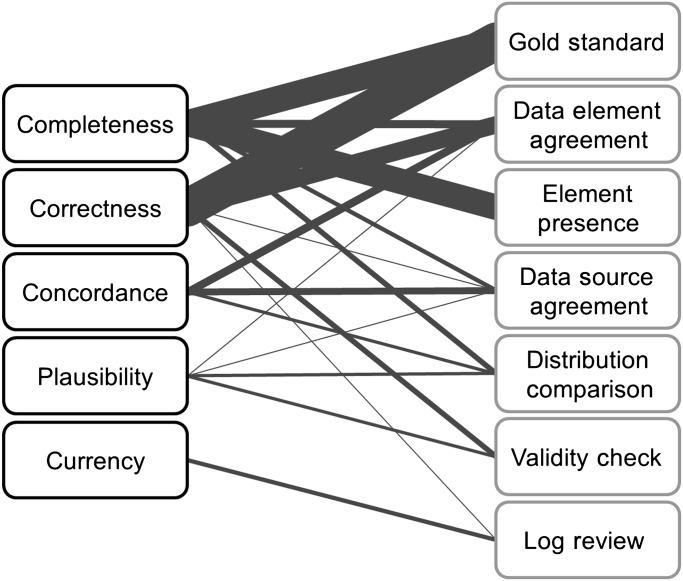
OBJECTIVE: To review the methods and dimensions of data quality assessment in the context of electronic health record (EHR) data reuse for research. MATERIALS AND METHODS: A review of the clinical research literature discussing data quality assessment methodology for EHR data was performed. Using an iterative process, the aspects of data quality being measured were abstracted and categorized, as well as the methods of assessment used. RESULTS: Five dimensions of data quality were identified, which are completeness, correctness, concordance, plausibility, and currency, and seven broad categories of data quality assessment methods: comparison with gold standards, data element agreement, data source agreement, distribution comparison, validity checks, log review, and element presence. DISCUSSION: Examination of the methods by which clinical researchers have investigated the quality and suitability of EHR data for research shows that there are fundamental features of data quality, which may be difficult to measure, as well as proxy dimensions. Researchers interested in the reuse of EHR data for clinical research are recommended to consider the adoption of a consistent taxonomy of EHR data quality, to remain aware of the task-dependence of data quality, to integrate work on data quality assessment from other fields, and to adopt systematic, empirically driven, statistically based methods of data quality assessment. CONCLUSION: There is currently little consistency or potential generalizability in the methods used to assess EHR data quality. If the reuse of EHR data for clinical research is to become accepted, researchers should adopt validated, systematic methods of EHR data quality assessment.
Overview
CoChat Summary
TL;DR
This review identifies five dimensions of electronic health record (EHR) data quality—completeness, correctness, concordance, plausibility, and currency—and seven broad categories of assessment methods. It concludes that EHR data quality assessment for research lacks consistency and generalizability, and recommends validated, systematic, statistically based methods.
Key findings
- Five data quality dimensions were derived: completeness, correctness, concordance, plausibility, and currency. Seven assessment method categories were identified: comparison with gold standards, data element agreement, data source agreement, distribution comparison, validity checks, log review, and element presence.
- Completeness was the most commonly assessed dimension, in 61 (64%) of 95 articles, followed by correctness in 57 (60%), concordance in 16 (17%), plausibility in 7 (7%), and currency in 4 (4%).
- Gold standard comparison was used in 37 of 95 articles; element presence was used only for completeness, while currency was assessed only through log review.
- The authors argue that only correctness, completeness, and currency are fundamental dimensions; concordance and plausibility appear to serve as proxies when fundamental dimensions cannot be assessed directly.
Methods
- Literature search performed on PubMed in February 2012, using data quality terms and EHR-related terms; the search produced 230 articles, which were manually reviewed.
- Inclusion criteria retained original research using data quality assessment methods, focused on EHR-derived data, and published in peer-reviewed journals; administrative claims databases were excluded. This yielded 44 articles, and an ancestor search added 51 more, for a final pool of 95 articles.
- From each article, the authors abstracted data quality features, assessment methods, and descriptive information; through iterative review, they inductively derived dimensions and method categories, then recategorized all 95 articles by dimension and assessment strategy.
Limitations
- The paper states the search was limited: lack of MeSH terms for data quality and variation in terminology may have caused relevant articles to be missed, though reference review was believed to improve saturation.
- The paper states classification was largely subjective and performed by only one author, so original researchers might disagree with the interpretations.
- The paper states that underreporting likely affected results, because routine data checking such as distributions and summary statistics is rarely described in publications; evident from the text, the review is descriptive and does not empirically validate the proposed taxonomy.
Model-written summary. Check it against the paper before relying on it.
Integrity signals
Registry
Cites
Statistics
Figures
Verification
Claims the paper makes
8 Valid · 1 Not valid · 16 Not checked · 59 Own results and interpretations
Every source the paper cites for this claim was checked and supports it.
In the paper
“Thiru et al,9 in calculating the sensitivity of different types of EHR data in the literature, found values ranging between 0.26 and 1.00.”
§ Methods and dimensions of electronic health record data quality assessment: enabling reuse for clinical research > Abstract > Conclusion
What the sources say
- Supportedcites [9] Thiru K Hassey A Sullivan F Systematic review of scope and quality of electronic patient record data in primary care. BMJ 2003; 326: 1070 12750210 PMC155692 source
Table 3 (Results) lists sensitivities for different types of electronic patient record data. The values range from 26% for socioeconomic data to 100% for several categories, matching 0.26–1.00. (LLM, conf=0.94)
plain- Asserted: passes — The authors put it forward as true.
- Checkable: passes — It can be checked against evidence.
- Load-bearing: passes — The paper’s conclusions depend on it.
- Based: passes — The paper gives a reason why it holds.
- Supported
The cited sources support only part of this claim — read each source’s verdict below.
In the paper
“Hogan and Wagner8 suggested specific statistical measures of the correctness and completeness of EHR elements that have been adopted by other researchers.”
§ Methods and dimensions of electronic health record data quality assessment: enabling reuse for clinical research > Discussion > Data quality assessment methodology
What the sources say
- Partly supportedcites [8] Hogan WR Wagner MM Accuracy of data in computer-based patient records. J Am Med Inform Assoc 1997; 4: 342– 55 9292840 PMC61252 sourceExperimental — accuracy not yet measured
The Methodological Recommendations section (page not provided) defines correctness and completeness as specific proportions and recommends that future studies report numerical measures of both. The paper does not establish the claim that other researchers subsequently adopted those measures. (LLM, conf=0.88)
plainstates a cause- Asserted: passes — The authors put it forward as true.
- Checkable: passes — It can be checked against evidence.
- Load-bearing: unclear — It is unclear whether the paper’s conclusions depend on it.
- Based: passes — The paper gives a reason why it holds.
- Partly supported
The sources with a verdict support this claim; the rest weren’t checked yet, have no full text we could read, or their verdicts aren’t rated yet.
In the paper
“Some researchers looking at the quality of research databases pulled from general practices in the UK have adopted relatively consistent approaches to comparing the distributions of data concerning specific clinical phenomena to information from registries and surveys.31 98 99 102”
§ Methods and dimensions of electronic health record data quality assessment: enabling reuse for clinical research > Discussion > Data quality assessment methodology
What the sources say
- Not checked — no full text of the sourcecites [31] Lewis JD Brensinger C Agreement between GPRD smoking data: a survey of general practitioners and a population-based survey. Pharmacoepidemiol Drug Saf 2004; 13: 437– 41 15269927 source
- Not checked — no full text of the sourcecites [98] Haynes K Forde KA Schinnar R Cancer incidence in The Health Improvement Network. Pharmacoepidemiol Drug Saf 2009; 18: 730– 6 19479713 source
- Supportedcites [99] Iyen-Omofoman B Hubbard RB Smith CJ The distribution of lung cancer across sectors of society in the United Kingdom: a study using national primary care data. BMC Public Health 2011; 11: 857 22074413 PMC3282683 source
The Methods and Discussion > Lung cancer Incidence describe comparing lung cancer data from the UK general-practice database THIN with national cancer registry and National Lung Cancer Audit data to assess its representativeness. This paper therefore exemplifies the comparison approach attributed to the cited group of researchers; the sentence does not require each cited study to use both registries and surveys. (LLM, conf=0.85)
plain- Asserted: passes — The authors put it forward as true.
- Checkable: passes — It can be checked against evidence.
- Load-bearing: unclear — It is unclear whether the paper’s conclusions depend on it.
- Based: passes — The paper gives a reason why it holds.
The cited sources support only part of this claim — read each source’s verdict below.
In the paper
“In three of the four, researchers reviewed whether desired data were entered into the EHR within a set time limit.36 46 52”
§ Methods and dimensions of electronic health record data quality assessment: enabling reuse for clinical research > Results > Currency
What the sources say
- Not checked — no full text of the sourcecites [36] Ndira SP Rosenberger KD Wetter T Assessment of data quality of and staff satisfaction with an electronic health record system in a developing country (Uganda): a qualitative and quantitative comparative study. Methods Inf Med 2008; 47: 489– 98 19057805 source
- Partly supportedcites [46] Vawdrey DK Gardner RM Evans RS Assessing data quality in manual entry of ventilator settings. J Am Med Inform Assoc 2007; 14: 295– 303 17329731 PMC2244881 sourceExperimental — accuracy not yet measured
The Methods (Data Analysis; page unavailable) say the researchers measured charting delay—the interval between observing ventilator settings and entering them into the computer—to assess timeliness. The Results report an average delay of 6.1 minutes, but the study does not assess whether entries met a set time limit. The 30-minute limit in the Background describes an earlier study by East et al., not this study's measure. (LLM, conf=0.85)
- Not checked — no full text of the sourcecites [52] Faulconer ER de Lusignan S An eight-step method for assessing diagnostic data quality in practice: chronic obstructive pulmonary disease as an exemplar. Inform Prim Care 2004; 12: 243– 54 15808026 source
plain- Asserted: passes — The authors put it forward as true.
- Checkable: passes — It can be checked against evidence.
- Load-bearing: unclear — It is unclear whether the paper’s conclusions depend on it.
- Based: passes — The paper gives a reason why it holds.
A result the paper reports from its own data — it cites no other source for it, so there is none to check. The quote shows it is in the paper.
In the paper
“For example, 37 of the 95 articles in our sample relied on a gold standard to assess data quality.”
§ Methods and dimensions of electronic health record data quality assessment: enabling reuse for clinical research > Discussion > Data quality assessment methodology
plainn = 95- Asserted: passes — The authors put it forward as true.
- Checkable: passes — It can be checked against evidence.
- Load-bearing: unclear — It is unclear whether the paper’s conclusions depend on it.
- Based: passes — The paper gives a reason why it holds.
40 more claims
Create a free account to see all 84 claims and every source verdict.
- It may state two separate claims as one. 23
- Probably not a substantial claim. 24
Claims other papers make about this one
Each is checked against this paper’s own text: does it say what the citing paper says it does?
The source backs part of the claim, not all of it — or backs it for a different population, condition or comparison.
In the citing paper
“While these developments have advanced the understanding of data quality in the context of medical applications, frameworks for EHR frequently focus on the data quality of individual patients86,87, neglecting data quality aspects for the overall population.”
From The METRIC-framework for assessing data quality for trustworthy AI in medicine: A systematic review (2024) · cites this paper as [87]
Experimental — accuracy not yet measuredThe cited source says what the claim attributes to it.
In the citing paper
“The current DQ literature is inconsistent in the use of terms that describe the complex multidimensional aspects of DQ.42–51”
From A harmonized data quality assessment terminology and framework for the secondary use of electronic health record data (2016) · cites this paper as [45]
The cited source says what the claim attributes to it.
In the citing paper
“In particular, representativeness is often not a factor86,87 while it is a crucial property for secondary use of data in clinical studies88 or when reusing medical data as training data for ML applications.”
From The METRIC-framework for assessing data quality for trustworthy AI in medicine: A systematic review (2024) · cites this paper as [87]
Self-check
Percentages, sums and reported differences re-computed from the paper’s own numbers.
Each contradiction between two passages listed here was confirmed by an independent check.
Rated minor: it would not touch a result — a value no result rests on, a p-value that stays on the same side of the significance level, or a conflict that is clerical, resolved elsewhere in the paper, or outside its own findings.
In the paper
§ Methods and dimensions of electronic health record data quality assessment: enabling reuse for clinical research > Results > Plausibility
“The most common approach to assessing the plausibility of EHR data was to perform some sort of validity check to determine if specific elements within the EHR were likely to be true or not.”
§ Methods and dimensions of electronic health record data quality assessment: enabling reuse for clinical research > Results
“| Distribution comparison | 97–100 | | 31 57 97 | 50 101 102 103 | | 10 | | Validity checks | | 32 62 104 105 106 | | 73 89 | | 7 |”
Citations
Cites
A General Inductive Approach for Analyzing Qualitative Evaluation Data
Thomas, D. R. (2006) · American Journal of Evaluation · doi:10.1177/1098214005283748 · Cited by 10,858 · cited 1×
“Furthermore, using an existing model to guide analysis is a deductive approach, which has the potential to obscure information contained in the data.(11) By imposing an existing model from a different discipline, we would have run the risk of missing important findings.”
MethodBeyond Accuracy: What Data Quality Means to Data Consumers
Wang, R. Y., & Strong, D. M. (1996) · Journal of Management Information Systems · doi:10.1080/07421222.1996.11518099 · Cited by 4,672
(2020) · Journal of Medical Education · doi:10.5812/jme · Cited by 3,490
The American Journal of Managed Care
(2020) · The American Journal of Managed Care · doi:10.37765/ajmc · Cited by 3,237
Pipino, L. L., Lee, Y. W., & Wang, R. Y. (2002) · Communications of the ACM · doi:10.1145/505248.506010 · Cited by 1,724
Juran's Quality Control Handbook
Ziegel, E. R. (1990) · Technometrics · doi:10.1080/00401706.1990.10484602 · Cited by 1,384
Jick, H., Jick, S. S., & Derby, L. E. (1991) · BMJ · doi:10.1136/bmj.302.6779.766 · Cited by 839
Safran, C., Bloomrosen, M., Hammond, W. E., Labkoff, S., Markel-Fox, S., Tang, P. C., & Detmer, D. E. (2007) · Journal of the American Medical Informatics Association · doi:10.1197/jamia.m2273 · Cited by 705 · cited 1×
“As the adoption of electronic health records (EHRs) has made it easier to access and aggregate clinical data, there has been growing interest in conducting research with data collected during the course of clinical care.(1) 2 The Natonal Institutes of Health has called for increasing the reuse of electronic records fo…”
MethodInformatics in Primary Care: Strategies in Information Management for the Healthcare Provider
(2002) · Health Informatics · doi:10.1007/978-1-4613-0069-4 · Cited by 422
Accuracy of Data in Computer-based Patient Records
Hogan, W. R., & Wagner, M. M. (1997) · Journal of the American Medical Informatics Association · doi:10.1136/jamia.1997.0040342 · Cited by 389 · cited 5×
“As observed by Hogan and Wagner in their literature review, there is no medical subheadings (MeSH) term fi ‘ ’ ‘ ’ ‘ ’ ‘ consistency ’ , ‘ data completeness ’ , and ‘ data error ’ .”
BackgroundInfluential
Research works printed but not linked: 14
- 1997, Journal of the American Medical Informatics Association, 4, 342, 10.1136/jamia.1997.0040342 · DOI · Paper page
- 2006, Journal of the American Medical Informatics Association, 13, 12, 10.1197/jamia.M1813 · DOI · Paper page
- 2000, Journal of the American Medical Informatics Association, 7, 55, 10.1136/jamia.2000.0070055 · DOI · Paper page
- 1996, Journal of the American Medical Informatics Association, 3, 234, 10.1136/jamia.1996.96310637 · DOI · Paper page
- 2007, Journal of the American Medical Informatics Association, 14, 295, 10.1197/jamia.M2219 · DOI · Paper page
- 2007, Journal of the American Medical Informatics Association, 14, 10, 10.1197/jamia.M2198 · DOI · Paper page
- Harabagiu, 2010, 2010, 1
- 2004, Journal of the American Medical Informatics Association, 11, 351, 10.1197/jamia.M1498 · DOI · Paper page
- 2000, Journal of the American Medical Informatics Association, 7, 42, 10.1136/jamia.2000.0070042 · DOI · Paper page
- 2010, Family Practice, 27, 121, 10.1093/fampra/cmp068 · DOI
- 2004, Journal of the American Medical Informatics Association, 11, 78, 10.1197/jamia.M1362 · DOI
- 1999, Journal of the American Medical Informatics Association, 6, 245, 10.1136/jamia.1999.0060245 · DOI · Paper page
- 2003, Journal of the American Medical Informatics Association, 10, 470, 10.1197/jamia.M1290 · DOI · Paper page
- Committee on Improving the Patient Record Institute of Medicine The Computer-Based Patient Record: An Essential Technology for Health Care, Revised Edition. Institute of Medicine. The National Academies Press, 1997 http://iom.edu/Reports/1997/The-Computer-Based-Patient-Record-An-Essential-Technology-for-Health-Care-Revised-Edition.aspx 25121222
Cited by
Items 201–300 of 1,209
Analysis of the quality of hospital information systems audit trails
Cruz-Correia, R. J., Boldt, I., Lapão, L. V., Santos-Pereira, C., Rodrigues, P. P., Ferreira, A., & Freitas, A. (2013) · BMC Medical Informatics and Decision Making · doi:10.1186/1472-6947-13-84 · Cited by 37
“For instance, Weiskopf and Weng [38] the literature and identified five common dimensions (completeness, correctness, concordance, plausibility, and currency) for the assessment of data quality in the context of electronic health record data re-use for research, and found a great variability and overlap in the terms u…”
BackgroundCipparone, C. W., Withiam-Leitch, M. L., Kimminau, K. S., Fox, C. H., Singh, R. K. P. G., & Kahn, L. (2015) · The Journal of the American Board of Family Medicine · doi:10.3122/jabfm.2015.05.140136 · Cited by 34
“Outcomes research may be tainted and irreproducible if the patients identified in these registries do not have the disease in question.(4) In addition, if the prevalence of misdiagnosis we observed in this patient cohort is present in other populations, thousands of patients may be mismanaged.”
BackgroundMethodAller, M.-B., Vargas, Í., Coderch, J., Calero, S., Cots, F., Abizanda, M., Farré, J., Llopart, J. R., Colomés, L., & Vázquez, M. L. (2015) · BMC Health Services Research · doi:10.1186/s12913-015-0968-z · Cited by 45
Callahan, T. J., Barnard, J. G., Helmkamp, L. J., Maertens, J., & Kahn, M. G. (2017) · eGEMs (Generating Evidence & Methods to improve patient outcomes) · doi:10.5334/egems.214 · Cited by 41
A Framework for Current and New Data Quality Dimensions: An Overview
Miller, R., Whelan, H., Chrubasik, M., Whittaker, D., Duncan, P., & Gregório, J. (2024) · Data · doi:10.3390/data9120151 · Cited by 33
“Discoverability (or findability ) [107] and clear definition [54] are closely tied to accessibility [6,17,29,33,46,49,54–56, 59”
InfluentialAn automated data verification approach for improving data quality in a clinical registry
Tian, Q., Liu, M., Min, L., An, J., Lü, X., & Duan, H. (2019) · Computer Methods and Programs in Biomedicine · doi:10.1016/j.cmpb.2019.01.012 · Cited by 35
Newcomer, S. R., Xu, S., Kulldorff, M., Daley, M. F., FIREMAN, B. H., & Glanz, J. M. (2019) · Journal of the American Medical Informatics Association · doi:10.1093/jamia/ocz094 · Cited by 38
“5 In this tutorial, our objective is to provide a concise review of methods from the discipline of epidemiology for quantifying the bias caused by outcome mis-classification.”
MethodCrampton, N. H. (2019) · Healthcare Management Forum · doi:10.1177/0840470419872775 · Cited by 32
“Meanwhile, the laboriously entered data in EMR, whether entered by the clinician or a scribe, are often incomplete and inconsistent, which have meant from a computational perspective that there is wide variability in the quality of EMR data.(7) Free-text typing in EMRs is the main cause for this incomplete and inconsi…”
BackgroundAerts, H., Kalra, D., Sáez, C., Ramírez‐Anguita, J. M., Mayer, M. Á., Garcia-Gomez, J. M., Durá, M., Thienpont, G., & Coorevits, P. L. (2021) · JMIR Medical Informatics · doi:10.2196/27842 · Cited by 41
“and measure the complex multidimensional aspects of data quality [14,17-20].”
BackgroundMethodInfluentialBettencourt‐Silva, J. H., Clark, J., Cooper, C. S., Mills, R., Rayward-Smith, V. J., & de la Iglesia, B. (2015) · JMIR Medical Informatics · doi:10.2196/medinform.4221 · Cited by 47
“Additionally, the framework presented made possible the inspection of data quality dimensions similar to those described in [11], including those that are least often assessed.”
InfluentialValidity of type 2 diabetes diagnosis in a population-based electronic health record database
Moreno‐Iribas, C., Sayón-Orea, C., Delfrade, J., Ardanáz, E., Gorricho, J., Burgui, R., Nuín, M., & Guevara, M. (2017) · BMC Medical Informatics and Decision Making · doi:10.1186/s12911-017-0439-z · Cited by 34
“quire bespoke data collection or patient recruitment [15], provides data for large populations and could be cost-”
BackgroundDocumentation Errors and Deficiencies in Medical Records: A Systematic Review
Shahbodaghi, A., Moghaddasi, H., Asadi, F., & Hosseini, A. (2024) · Journal of Health Management · doi:10.1177/09720634241229545 · Cited by 32
“…to categorise the documentation errors and deficiencies, the most common quality dimensions mentioned in the literature were used (Chen, Hailey, et al., 2014; Chen, Yu, et al., 2014; Davoudi et al., 2015; Kahn et al., 2016; Moghaddasi & Rahimi, 2016; Wager et al., 2017; Weiskopf & Weng, 2013).”
MethodIngram, M., Doubleday, K., Bell, M. L., Lohr, A. M., Murrieta, L., Velasco, M. C., Blackburn, J., Sabo, S. J., de Zapien, J. G., & Carvajal, S. C. (2017) · American Journal of Public Health · doi:10.2105/ajph.2017.303934 · Cited by 37
The Camden & Islington Research Database: Using electronic mental health records for research
Werbeloff, N., Osborn, D., Patel, R., Taylor, M. J., Stewart, R. J., Broadbent, M. T. M., & Hayes, J. (2018) · PLoS ONE · doi:10.1371/journal.pone.0190703 · Cited by 35
“The secondary use of data collected in EHRs can dramatically increase the breadth and depth of information available for research [3, 4].”
BackgroundHow much can we trust electronic health record data?
Savitz, S. T., Savitz, L. A., Fleming, N. S., Shah, N. D., & Go, A. S. (2020) · Healthcare · doi:10.1016/j.hjdsi.2020.100444 · Cited by 42
Manemann, S. M., Sauver, J. L. S., Liu, H., Larson, N. B., Moon, S., Takahashi, P. Y., Olson, J. E., Rocca, W. A., Miller, V. M., Therneau, T. M., et al. (2021) · BMJ Open · doi:10.1136/bmjopen-2020-044353 · Cited by 33
Data Quality in Clinical Research
Nahm, M. (2012) · Health Informatics · doi:10.1007/978-1-84882-448-5_10 · Cited by 32
Information Quality in Healthcare
Cabitza, F., & Batini, C. (2016) · Data-centric systems and applications · doi:10.1007/978-3-319-24106-7_13 · Cited by 40
Moglia, V., Johnson, O. A., Cook, G., de Kamps, M., & Smith, L. (2025) · BMC Medical Research Methodology · doi:10.1186/s12874-025-02473-w · Cited by 46
“The challenges of using EHR data for prediction models are well documented [8], primarily relating to data quality issues and inconsistent recording between different clinicians and sites [67].”
Tan, W. S., Ahmad, A., Feber, A., Mostafid, H. A., Cresswell, J., Fankhauser, C. D., Waisbrod, S., Hermanns, T., Sasieni, P. D., Kelly, J. D., et al. (2018) · Journal of Internal Medicine · doi:10.1111/joim.12868 · Cited by 30
EMIF Catalogue: A collaborative platform for sharing and reusing biomedical data
Oliveira, J. L., Trifan, A., & Silva, L. A. B. (2019) · International Journal of Medical Informatics · doi:10.1016/j.ijmedinf.2019.02.006 · Cited by 37
Cohen, R., Sheeder, J. L., & Teal, S. B. (2019) · Journal of Adolescent Health · doi:10.1016/j.jadohealth.2019.02.020 · Cited by 31
Local–Global Memory Neural Network for Medication Prediction
Song, J., Wang, Y., Tang, S., Zhang⋆, Y., Chen, Z., Zhang, Z. M., Zhang, T., & Wu, F. Q. (2020) · IEEE Transactions on Neural Networks and Learning Systems · doi:10.1109/tnnls.2020.2989364 · Cited by 33
“However, there are great challenges of mining practical knowledge from EMRs, which mainly lie in the high dimensionality, noise, heterogeneity, sparseness, incompleteness, and random errors in data [5]–[7].”
BackgroundDentler, K., Ronald Cornet, A., ten Teije, A., Tanis, P. J., Klinkenbijl, J. H. G., Tytgat, K. M. A. J., & de Keizer, N. F. (2014) · BMC Medical Informatics and Decision Making · doi:10.1186/1472-6947-14-32 · Cited by 36
“For data items that are available in a structured format, we focus on the quality dimensions completeness and correctness [15].”
BackgroundEvaluating risk-prediction models using data from electronic health records
Wang, L., Shaw, P. A., Mathelier, H. M., Kimmel, S. E., & French, B. C. (2016) · The Annals of Applied Statistics · doi:10.1214/15-aoas891 · Cited by 32
“Integrated EHR systems, for which technology capacity is rapidly progressing, provide unprecedented opportunities for medical discovery [Weiskopf and Weng (2013)].”
BackgroundNicholls, S. G., Langan, S., Sørensen, H. T., Petersen, I., & Benchimol, E. I. (2016) · Clinical Epidemiology · doi:10.2147/clep.s110528 · Cited by 33
Next Generation Internet of Things
Vermesan, O., & Bacquet, J. (2018) · doi:10.13052/rp-9788770220071 · Cited by 31
Karp, E. L., Freeman, R., Simpson, K. N., & Simpson, A. N. (2019) · CIN: Computers, Informatics, Nursing · doi:10.1097/cin.0000000000000516 · Cited by 30
“The first step is to assess the characteristics of EHR systems and redesign them to optimize nursing processes by including only essential documentation to support clinical practice.(11) Automation of clinical workflows in EHRs has created new opportunities for clinical informaticists to measure and evaluate the impac…”
BackgroundBeauchemin, M., Roth, M. E., & Parsons, S. K. (2023) · Journal of Adolescent and Young Adult Oncology · doi:10.1089/jayao.2022.0136 · Cited by 40
“29,30 These data will allow a deeper examination of the mechanisms and drivers of outcome disparities among AYAs with cancer.”
Yin, A. L., Guo, W. L., Sholle, E., Rajan, M., Alshak, M. N., Choi, J. J., Goyal, P., Jabri, A., Li, H. A., Pinheiro, L. C., et al. (2021) · International Journal of Medical Informatics · doi:10.1016/j.ijmedinf.2021.104622 · Cited by 40
Rousidis, D., Garoufallou, E., Balatsoukas, P., et al. (2014) · Information Services & Use · doi:10.3233/isu-140746 · Cited by 30
Chen, R., Blomqvist, H., Koch, S., & Skyttberg, N. (2017) · Applied Clinical Informatics · doi:10.4338/aci-2017-05-ra-0075 · Cited by 28
“Which data quality aspect is directly related to electronic documentation or data capture of vital signs? a. Currency b. Correctness c. Plausibility d. Concordance Answer a. is correct.”
BackgroundMethodResultInfluentialDeclerck, J., Kalra, D., Stichele, R. V., & Coorevits, P. L. (2024) · JMIR Medical Informatics · doi:10.2196/51560 · Cited by 44
“[4,29-43].”
BackgroundInfluentialAre ICD codes reliable for observational studies? Assessing coding consistency for data quality
Nelson, S. J., Yin, Y., Rivera, E. A. T., Shao, Y., Ma, P., Tuttle, M. S., Garvin, J. H., & Zeng‐Treitler, Q. (2024) · Digital Health · doi:10.1177/20552076241297056 · Cited by 36
Exploring completeness in clinical data research networks with DQe-c
Estiri, H., Stephens, K. A., Klann, J. G., & Murphy, S. N. (2017) · Journal of the American Medical Informatics Association · doi:10.1093/jamia/ocx109 · Cited by 30
“Among these categories, completeness has garnered more attention.(6,26) Completeness has often been measured in the EHR data quality assessment research by missing and/or blank data values.”
BackgroundIndicadores de calidad de datos abiertos: el caso del portal de datos abiertos de Barcelona
Abella, A., Ortiz‐de‐Urbina‐Criado, M., & De‐Pablos‐Heredero, C. (2018) · El Profesional de la Informacion · doi:10.3145/epi.2018.mar.16 · Cited by 44
Optimizing Autoencoders for Learning Deep Representations from Health Data
Zhou, C., Jia, Y., & Motani, M. (2019) · IEEE Journal of Biomedical and Health Informatics · doi:10.1109/jbhi.2018.2856820 · Cited by 29
“ments and the clinical tests conducted will vary among different patients [6], [15].”
Towards augmenting structured EHR data: a comparison of manual chart review and patient self-report.
Weiskopf, N. G., Cohen, A. M., Hannan, J., Jarmon, T., & Dorr, D. A. (2019) · PubMed · Cited by 33
Self-citationGreen, S., Hillersdal, L., Holt, J., Hoeyer, K., & Wadmann, S. (2022) · Medicine Health Care and Philosophy · doi:10.1007/s11019-022-10128-6 · Cited by 41
Madandola, O. O., Bjarnadóttir, R. I., Yao, Y., Ansell, M., Santos, F. C. D., Cho, H., Lopez, K. D., Macieira, T. G. R., & Keenan, G. M. (2023) · Journal of the American Medical Informatics Association · doi:10.1093/jamia/ocad188 · Cited by 37
Bruland, P., Förster, C., Breil, B., Ständer, S., Dugas, M., & Fritz, F. (2014) · International Journal of Medical Informatics · doi:10.1016/j.ijmedinf.2014.08.007 · Cited by 28
“A further point which is still controversially discussed in literature [15,37] is the reuse of routinely collected patient care data the purpose of which is unknown.”
BackgroundMethodInfluentialThompson, C. A., Kurian, A. W., & Luft, H. S. (2015) · eGEMs (Generating Evidence & Methods to improve patient outcomes) · doi:10.13063/2327-9214.1127 · Cited by 40
Identifying Data Quality Dimensions for Person-Generated Wearable Device Data: Multi-Method Study
Cho, S., Weng, C., Kahn, M. G., & Natarajan, K. (2021) · JMIR mHealth and uHealth · doi:10.2196/31618 · Cited by 28
“They both abstracted data quality attributes from studies on EHR data quality and then derived broad dimensions of data quality [13,15].”
BackgroundSelf-citationSollie, A., Sijmons, R. H., Helsper, C. W., & Numans, M. E. (2016) · International Journal of Medical Informatics · doi:10.1016/j.ijmedinf.2016.08.004 · Cited by 28
Natural language processing of lifestyle modification documentation
Shoenbill, K. A., Song, Y., Gress, L., Johnson, H. M., Smith, M. A., & Mendonça, E. A. (2019) · Health Informatics Journal · doi:10.1177/1460458218824742 · Cited by 29
Werbeloff, N., Thygesen, J. H., Hayes, J., Viding, E. M., Johnson, S., & Osborn, D. (2021) · Acta Psychiatrica Scandinavica · doi:10.1111/acps.13302 · Cited by 31
Electronic Health Record (EHR) Abstraction.
Alzu'bi, A. A., Watzlaf, V. J. M., & Sheridan, P. T. (2021) · PubMed · Cited by 34
Yang, L. W. Y., Ng, W. Y., Foo, L. L., Liu, Y., Yan, M., Lei, X., Zhang, X., & Ting, D. S. W. (2021) · Current Opinion in Ophthalmology · doi:10.1097/icu.0000000000000789 · Cited by 31
“Even though the use of EMR is prolific, the often painstakingly entered data may contain discrepancies and incompleteness, translating to inconsistencies in data fed forward into an AI algorithm [40].”
MethodBig Data Compliance for Innovative Clinical Models
Giacalone, M., Cusatelli, C., & Santarcangelo, V. (2018) · Big Data Research · doi:10.1016/j.bdr.2018.02.001 · Cited by 28
Epstein, R. H., & Dexter, F. (2018) · Anesthesia & Analgesia · doi:10.1213/ane.0000000000003324 · Cited by 28
Fahr, P., Buchanan, J. P., & Wordsworth, S. (2019) · Applied Health Economics and Health Policy · doi:10.1007/s40258-019-00474-7 · Cited by 33
Members of the UCC-CVRM Study Group, Groenhof, T. K. J., Rittersma, Z. H., Bots, M. L., Brandjes, M., Jacobs, J. J. L., Grobbee, D. E., van Solinge, W. W., Visseren, F. L. J., Haitjema, S., et al. (2019) · Netherlands Heart Journal · doi:10.1007/s12471-019-01308-w · Cited by 37
Liu, S., Wang, Y., Wen, A., Wang, L., Hong, N., Shen, F., Bedrick, S. D., Hersh, W., & Liu, H. (2020) · JMIR Medical Informatics · doi:10.2196/17376 · Cited by 38
Verma, S., Kameswari, Y. L., & Kumar, S. (2024) · BioNanoScience · doi:10.1007/s12668-024-01358-4 · Cited by 46
“The precision and dependability of the data collected are helped by well-defined procedures, standardised measurement methods, and suitable equipments [85].”
Yoon, D., Han, C., Kim, D. W., Kim, S., Bae, S., Ryu, J. A., & Choi, Y. (2024) · Journal of Medical Internet Research · doi:10.2196/56614 · Cited by 43
“One is a notable risk of information loss from the original data during standardization [12,13].”
BackgroundWu, J., He, K., Mao, R., Shang, X., & Cambria, E. (2025) · Information Fusion · doi:10.1016/j.inffus.2025.103283 · Cited by 40
Low Concordance of Patient-Reported Outcomes With Clinical and Clinical Trial Documentation
Fares, C. M., Williamson, T. J., Theisen, M. K., Cummings, A. L., Bornazyan, K., Carroll, J., Spiegel, M. L., Stanton, A. L., & Garon, E. B. (2018) · JCO Clinical Cancer Informatics · doi:10.1200/cci.18.00059 · Cited by 29
Towards a content agnostic computable knowledge repository for data quality assessment
Rajan, N. S., Gouripeddi, R., Mo, P., Madsen, R., & Facelli, J. C. (2019) · Computer Methods and Programs in Biomedicine · doi:10.1016/j.cmpb.2019.05.017 · Cited by 33
Broadening horizons: the case for capturing function and the role of health informatics in its use
Newman-Griffis, D. R., Porcino, J., Zirikly, A., Thieu, T., Maldonado, J. C., Ho, P., Ding, M., Chan, L. E., & Rasch, E. K. (2019) · BMC Public Health · doi:10.1186/s12889-019-7630-3 · Cited by 30
A method for interoperable knowledge-based data quality assessment
Tute, E., Scheffner, I., & Marschollek, M. (2021) · BMC Medical Informatics and Decision Making · doi:10.1186/s12911-021-01458-1 · Cited by 28
Haug, A. (2021) · Industrial Management & Data Systems · doi:10.1108/imds-12-2020-0756 · Cited by 40
Current state of dental informatics in the field of health information systems: a scoping review
Ballester, B., Bukiet, F., & Dufour, J.-C. (2022) · BMC Oral Health · doi:10.1186/s12903-022-02163-9 · Cited by 27
“Indeed, it is generally accepted that due to differences in priorities between clinical practice and research, clinical data are not recorded with the same care as research data [21].”
BackgroundLong-Term Trends in Psychiatric Emergency Services Delivered by the Boston Emergency Services Team
Oblath, R., Herrera, C., Were, L. P. O., Syeda, H. S., Duncan, A. M., Ferguson, T., Kalesan, B., Perez, D. C., Taglieri, J., Borba, C. P. C., et al. (2022) · Community Mental Health Journal · doi:10.1007/s10597-022-01015-8 · Cited by 31
“The administrators and providers who collect and record the data in EHRs vary in how they obtain sociodemographic information, their comprehensiveness in documenting clinical information, and their accuracy in medical coding (Spiranovic et al., 2016; Weiskopf & Weng, 2013).”
BackgroundExploring facilitators of the implementation of electronic health records in Saudi Arabia
Alzghaibi, H., & Hutchings, H. A. (2022) · BMC Medical Informatics and Decision Making · doi:10.1186/s12911-022-02072-5 · Cited by 40
Ramakrishnaiah, Y., Maćešić, N., Webb, G. I., Peleg, A. Y., & Tyagi, S. (2023) · Journal of Biomedical Informatics · doi:10.1016/j.jbi.2023.104509 · Cited by 39
Haneuse, S., Bogart, A., Jazić, I., Westbrook, E. O., Boudreau, D. M., Theis, M. K., Simon, G. E., & Arterburn, D. E. (2015) · Epidemiology · doi:10.1097/ede.0000000000000393 · Cited by 35
“Sleep disorder 698 (8) 131 (6) 81 (7) 8”
Automating the Capture of Structured Pathology Data for Prostate Cancer Clinical Care and Research
Odisho, A. Y., Bridge, M., Webb, M. A., Ameli, N., Eapen, R. S., Stauf, F., Cowan, J. E., Washington, S. L., Herlemann, A., Carroll, P. R., et al. (2019) · JCO Clinical Cancer Informatics · doi:10.1200/cci.18.00084 · Cited by 30
“9,10 However, EHR data have been shown to contain errors, 11-13 and secondary data collected from clinical care are of lower quality than those collected speci fi cally for research.”
BackgroundGesicho, M. B., Were, M. C., & Babić, A. (2020) · BMC Medical Informatics and Decision Making · doi:10.1186/s12911-020-01315-7 · Cited by 35
Centralized and Federated Models for the Analysis of Clinical Data
Li, R., Romano, J. D., Chen, Y., & Moore, J. H. (2024) · Annual Review of Biomedical Data Science · doi:10.1146/annurev-biodatasci-122220-115746 · Cited by 39
“These are sources of bias (7, 8) that should be considered and/or corrected to uncover the true patterns of human health that are present in the data.”
Challenges for Data Quality in the Clinical Data Life Cycle: Systematic Review
An, D., Lim, M., & Lee, S. (2025) · Journal of Medical Internet Research · doi:10.2196/60709 · Cited by 41
“The definition of completeness alone can vary the completeness ratio of data depending on the type of data or the purpose for which quality is defined [28,86].”
Lee, M., Kim, K., Shin, Y., Lee, Y. K., & Kim, T. J. (2025) · Cancers · doi:10.3390/cancers17091552 · Cited by 50
“These problems are exacerbated in systems where patients receive care across unlinked facilities, limiting longitudinal data access and reducing the utility of EMRs in trials that require continuous follow-up or comprehensive endpoint tracking [88].”
Towards a Data Quality Framework for Heterogeneous Data
Micic, N., Neagu, D. C., Campean, F., & Zadeh, E. H. (2017) · IEEE International Conference on Internet of Things (iThings) and IEEE Green Computing and Communications (GreenCom) and IEEE Cyber, Physical and Social Computing (CPSCom) and IEEE Smart Data (SmartData) · doi:10.1109/ithings-greencom-cpscom-smartdata.2017.28 · Cited by 29
“[42] Clinical Research Records Rules Deficiencies Observed, Aid User Decisions Inter-Data Heterogeneity, Attribute Homogeneity [18] Supply chain data Rules Deficiencies Observed, Aid User Decisions Attribute Homogeneity, Attribute Heterogeneity, Inter-Data Heterogeneity [29] Longitudinal data DQM, Rules Data Cleaning,…”
Implementation Guidelines for Mass Customization: A Researcher-Oriented View
Suzić, N., Sandrin, E., Suzić, S., Forza, C., Trentin, A., & Anišić, Z. (2018) · International Journal of Industrial Engineering and Management · doi:10.24867/ijiem-2018-4-229 · Cited by 32
Linking a Consortium-Wide Data Quality Assessment Tool with the MIRACUM Metadata Repository
Kapsner, L. A., Mang, J. M., Mate, S., Seuchter, S. A., Vengadeswaran, A., Bathelt, F., Deppenwiese, N., Kadioglu, D., Kraska, D., & Prokosch, H. (2021) · Applied Clinical Informatics · doi:10.1055/s-0041-1733847 · Cited by 30
Ford, E., Carroll, J., Smith, H., Davies, K., Koeling, R., Petersen, I., Rait, G., & Cassell, J. (2016) · BMJ Open · doi:10.1136/bmjopen-2015-010393 · Cited by 26
Replicating Cardiovascular Condition-Birth Month Associations
Li, L., Boland, M. R., Miotto, R., Tatonetti, N. P., & Dudley, J. T. (2016) · Scientific Reports · doi:10.1038/srep33166 · Cited by 27
“Distinct SNOMED-CT codes per patient 3 (1, 8) 5 (2, 10)”
Martin, S., Wagner, J., Lupulescu‐Mann, N., Ramsey, K., Cohen, A. A., Graven, P. F., Weiskopf, N. G., & Dorr, D. A. (2017) · Applied Clinical Informatics · doi:10.4338/aci-2016-12-ra-0210 · Cited by 26
“, a gold standard chart review) should improve a risk score’s predictive ability by reducing inaccuracies and inconsistencies from any individual EHR documentation location [5].”
BackgroundSelf-citationThree controversies in health data science
Peek, N. B., & Rodrigues, P. P. (2018) · International Journal of Data Science and Analytics · doi:10.1007/s41060-018-0109-y · Cited by 33
“The 1st Law of Medical Informatics is supported by a vast list of known data quality issues that surround EHRs and other routine databases in health care [47].”
BackgroundDiaz‐Garelli, F., Bernstam, E. V., Lee, M., Hwang, K. O., Rahbar, M. H., & Johnson, T. R. (2019) · eGEMs (Generating Evidence & Methods to improve patient outcomes) · doi:10.5334/egems.286 · Cited by 30
“thorough definition of DQ requirements and (2) existing DQ dimensions and approaches for assessing them [15, 39, 55, 56].”
BackgroundSpengler, H., Gatz, I., Kohlmayer, F., Kuhn, K. A., & Praßer, F. (2020) · Proceedings - IEEE Symposium on Computer-Based Medical Systems · doi:10.1109/cbms49503.2020.00085 · Cited by 27
“To solve the problem, a number of data quality frameworks have been proposed [14], [18]–[20].”
BackgroundValidation of multisource electronic health record data: an application to blood transfusion data
Hoeven, L. V., de Bruijne, M. C., Kemper, P. F., Koopman, M. M. W., Rondeel, J. M. M., Leyte, A., Koffijberg, H., Janssen, M. P., & Roes, K. C. B. (2017) · BMC Medical Informatics and Decision Making · doi:10.1186/s12911-017-0504-7 · Cited by 26
“However, as noted previously [3]: There is currently little consistency”
InfluentialPeng, M., Sundararajan, V., Williamson, T. S., Minty, E. P., Smith, T. C., Doktorchik, C. T. A., & Quan, H. (2018) · Journal of Biomedical Informatics · doi:10.1016/j.jbi.2018.02.001 · Cited by 31
Yili, Z., & Koru, G. (2019) · Journal of the American Medical Informatics Association · doi:10.1093/jamia/ocz201 · Cited by 30
“15 Incorrect, inconsistent, or missing data are examples of data quality problems.”
BackgroundIdentifying return visits to the Emergency Department: A multi-centre study
Hutchinson, C. L., Curtis, K. A., McCloughen, A., Qian, S., Yu, P., & Fethney, J. (2020) · Australasian Emergency Care · doi:10.1016/j.auec.2020.05.007 · Cited by 25
Automatic phenotyping of electronical health record: PheVis algorithm
Ferté, T., Cossin, S., Schaeverbeke, T., Barnetche, T., Jouhet, V., & Hejblum, B. P. (2021) · Journal of Biomedical Informatics · doi:10.1016/j.jbi.2021.103746 · Cited by 36
Improving condition severity classification with an efficient active learning based framework
Nissim, N., Boland, M. R., Tatonetti, N. P., Elovici, Y., Hripcsak, G. M., Shahar, Y., & Moskovitch, R. (2016) · Journal of Biomedical Informatics · doi:10.1016/j.jbi.2016.03.016 · Cited by 30
“Hurdles faced by experts when defining phenotype-extraction algorithms include overcoming definition discrepancies [4], data sparseness, data quality [5], bias [6], and healthcare process effects [7].”
BackgroundLeveraging hospital big data to monitor flu epidemics
Bouzillé, G., Poirier, C., Campillo‐Gimenez, B., Aubert, M.-L., Chabot, M., Chazard, E., Lavenu, A., & Cuggia, M. (2017) · Computer Methods and Programs in Biomedicine · doi:10.1016/j.cmpb.2017.11.012 · Cited by 35
Feasibility analysis of conducting observational studies with the electronic health record
von Lucadou, M., Ganslandt, T., Prokosch, H., & Toddenroth, D. (2019) · BMC Medical Informatics and Decision Making · doi:10.1186/s12911-019-0939-0 · Cited by 29
“We categorized our findings according to four data quality dimensions and adopting the definitions proposed by Weiskopf et al. [36 – 38], and thus analyzed how well structured EHR data are “ sufficient in quantity ” (completeness), “ free from error ” (correctness), “ recorded at the desired…”
MethodSáez, C., Rodrigues, P. P., da Gama, J. M. P., Robles, M., & Garcia-Gomez, J. M. (2014) · Data Mining and Knowledge Discovery · doi:10.1007/s10618-014-0378-6 · Cited by 28
“Recently, Weiskopf and Weng (2013) performed a systematic review on methods and dimensions of biomedical data quality assessment.”
BackgroundInfluentialData Quality–Driven Improvement in Health Care: Systematic Literature Review (Preprint)
(2024) · doi:10.2196/preprints.57615 · Cited by 25
Recommendations to promote fairness and inclusion in biomedical AI research and clinical use
Griffin, A. C., Wang, K., Leung, T. I., & Facelli, J. C. (2024) · Journal of Biomedical Informatics · doi:10.1016/j.jbi.2024.104693 · Cited by 29
Berlin, R. B., Gruen, R. L., & Best, J. D. (2018) · Frontiers in Bioengineering and Biotechnology · doi:10.3389/fbioe.2018.00112 · Cited by 26
Maximizing data value for biopharma through FAIR and quality implementation: FAIR plus Q
Harrow, I., Balakrishnan, R., McGinty, H. K., Plasterer, T., & Romacker, M. (2022) · Drug Discovery Today · doi:10.1016/j.drudis.2022.01.006 · Cited by 27
Overbeek, J. A., Swart, K. M. A., Houben, E., Beest, F. J. P.-V., & Herings, R. M. C. (2023) · Clinical Epidemiology · doi:10.2147/clep.s389598 · Cited by 26
Castillo, E. G., Olfson, M., Pincus, H. A., Vawdrey, D. K., & Stroup, T. S. (2014) · Psychiatric Services · doi:10.1176/appi.ps.201400200 · Cited by 23
Spatio-temporal autoencoder for feature learning in patient data with missing observations
Jia, Y., Zhou, C., & Motani, M. (2017) · IEEE International Conference on Bioinformatics and Biomedicine (BIBM) · doi:10.1109/bibm.2017.8217773 · Cited by 34
“With missing values, feature learning in patient data becomes even more challenging [3], [8].”
BackgroundA Bayesian latent class approach for EHR‐based phenotyping
Hubbard, R. A., Huang, J. Y., Harton, J. G., Oganisian, A., Choi, G. H., Utidjian, L., Eneli, I., Bailey, L. C., & Chen, Y. (2018) · Statistics in Medicine · doi:10.1002/sim.7953 · Cited by 27
“This dichotomous classification for the latent phenotype approach was compared to classification based on (1) biomarkers only, (2) codes only, (3) biomarkers and codes, (4) biomarkers with missing values replaced via MI, and (5) biomarkers and codes with missing biomarker values replaced via MI.”
MethodTAQIH, a tool for tabular data quality assessment and improvement in the context of health data
Álvarez, R., Beristain, A., Epelde, G., & Carlin, P. F. (2018) · Computer Methods and Programs in Biomedicine · doi:10.1016/j.cmpb.2018.12.029 · Cited by 25
Alwhaibi, M., Balkhi, B. S., Alshammari, T. M., Alqahtani, N., Mahmoud, M. A., AlMetwazi, M. S., Ata, S. I., Basyoni, M., & Alhawassi, T. M. (2019) · Saudi Pharmaceutical Journal · doi:10.1016/j.jsps.2019.01.013 · Cited by 32
An integrated, ontology-driven approach to constructing observational databases for research
Hsu, W. W. Y., Gonzalez, N. R., Chien, A., Villablanca, J. P., Pajukanta, P., Viñuela, F. V., & Bui, A. A. T. (2015) · Journal of Biomedical Informatics · doi:10.1016/j.jbi.2015.03.008 · Cited by 26
“Table 4 summarizes how the ontology is being applied to handle various dimensions of data quality assessment [4].”
Background
Metadata
- Authors
- Weiskopf, N. G., & Weng, C.
- Affiliations
- Columbia University (US)
- Corresponding author
- Weiskopf, N. G.
- Venue
- Journal of the American Medical Informatics Association
- Publisher
- Oxford University Press (OUP)
- Published
- 2013-01-01
- Volume
- 20
- Issue
- 1
- Pages
- 144-151
- ISSN
- 1067-5027 (ISSN-L)
- 1527-974X
- PMC
- PMC3555312
- OpenAlex
- W2158939484
- Cited by
- 1,216
- References
- 114
- Citations by year
- 2026: 153 · 2025: 102 · 2024: 97 · 2023: 92 · 2022: 88 · 2021: 108 · 2020: 88 · 2019: 106 · 2018: 102 · 2017: 88 · 2016: 70 · 2015: 54 · 2014: 38 · 2013: 23
- FWCI
- 6.18
- Type
- journal article
- Language
- en
- Open access
- hybrid
- doi.org
- Licence
- cc-by-nc
- Locations
- Journal of the American Medical Informatics Association (publishedVersion, cc-by-nc)
- Europe PMC (PubMed Central) (publishedVersion, cc-by-nc)
- PubMed Central (publishedVersion, cc-by-nc)
- PubMed (publishedVersion)
- Funders
- U.S. National Library of Medicine (R01LM010815, R01LM009886, T15LM007079)
- Topics
- Health Sciences › Health Professions › Health Information Management › Electronic Health Records Systems
- Health Sciences › Health Professions › Health Information Management › Medical Coding and Health Information
- Physical Sciences › Computer Science › Information Systems › Data Quality and Management
- Keywords
- electronic health records, data quality assessment, clinical research data, data completeness, data correctness, concordance, plausibility, data currency, gold standard comparison, data source agreement, validity testing
- MeSH terms
- Data Collection, Humans, Quality Control, Research Design, Reproducibility of Results, Information Dissemination, Electronic Health Records
About these checks
Registry, retraction, Cites and statistics results are computed, not judged, with one exception: a printed reference that no index lists is read once by a model before it counts as a citation error. Claims are extracted by a model and kept only when their quote appears verbatim in the text; each cited source is then checked, with a model’s help, for whether it says what the claim relies on. Those verdicts can be wrong — read the claim’s quote and the cited source before relying on one.
The claim verdicts this report counts are experimental: their accuracy is not yet measured.
A language model drew the claims from the paper on 2026-09-30, under version 3 of the claim definition (model deepseek-v4.1-flash, prompt extract-v3).
A second model labelled each claim on 2026-09-30 (model jev-1.13-20260917, definition revision gold-guideline-v0.2).
Cited sources are checked with a language model’s help (gpt-6-sol).
Statistics and arithmetic are recomputed, not judged.
Confidence bands are shown only for fields calibrated on our annotated test set. None is calibrated yet, so no band is shown.
What counts as a claim ›How we measure confidence ›How we check this ›
Are you an author, or do you see a problem with this page? Request a review
Data sources
Bibliographic data: Semantic Scholar, OpenAlex, Crossref.
Contains information from the Semantic Scholar Academic Graph Datasets, made available under the ODC Attribution License (ODC-BY 1.0).
Semantic Scholar’s data is described in: Kinney, R., et al. (2023). The Semantic Scholar Open Data Platform. arXiv:2301.10140.
