

Methods and dimensions of electronic health record data quality assessment: enabling reuse for clinical research
Open accessThe DOI matches its Crossref record; 113 of the 114 references it cites were found in a registry or an index; 9 of the 41 sources its claims cite were checked for support.
Abstract
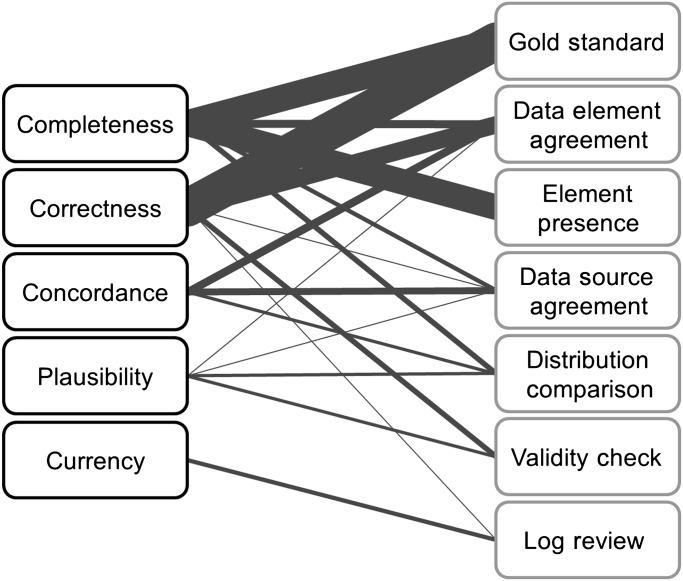
OBJECTIVE: To review the methods and dimensions of data quality assessment in the context of electronic health record (EHR) data reuse for research. MATERIALS AND METHODS: A review of the clinical research literature discussing data quality assessment methodology for EHR data was performed. Using an iterative process, the aspects of data quality being measured were abstracted and categorized, as well as the methods of assessment used. RESULTS: Five dimensions of data quality were identified, which are completeness, correctness, concordance, plausibility, and currency, and seven broad categories of data quality assessment methods: comparison with gold standards, data element agreement, data source agreement, distribution comparison, validity checks, log review, and element presence. DISCUSSION: Examination of the methods by which clinical researchers have investigated the quality and suitability of EHR data for research shows that there are fundamental features of data quality, which may be difficult to measure, as well as proxy dimensions. Researchers interested in the reuse of EHR data for clinical research are recommended to consider the adoption of a consistent taxonomy of EHR data quality, to remain aware of the task-dependence of data quality, to integrate work on data quality assessment from other fields, and to adopt systematic, empirically driven, statistically based methods of data quality assessment. CONCLUSION: There is currently little consistency or potential generalizability in the methods used to assess EHR data quality. If the reuse of EHR data for clinical research is to become accepted, researchers should adopt validated, systematic methods of EHR data quality assessment.
Overview
CoChat Summary
TL;DR
This review identifies five dimensions of electronic health record (EHR) data quality—completeness, correctness, concordance, plausibility, and currency—and seven broad categories of assessment methods. It concludes that EHR data quality assessment for research lacks consistency and generalizability, and recommends validated, systematic, statistically based methods.
Key findings
- Five data quality dimensions were derived: completeness, correctness, concordance, plausibility, and currency. Seven assessment method categories were identified: comparison with gold standards, data element agreement, data source agreement, distribution comparison, validity checks, log review, and element presence.
- Completeness was the most commonly assessed dimension, in 61 (64%) of 95 articles, followed by correctness in 57 (60%), concordance in 16 (17%), plausibility in 7 (7%), and currency in 4 (4%).
- Gold standard comparison was used in 37 of 95 articles; element presence was used only for completeness, while currency was assessed only through log review.
- The authors argue that only correctness, completeness, and currency are fundamental dimensions; concordance and plausibility appear to serve as proxies when fundamental dimensions cannot be assessed directly.
Methods
- Literature search performed on PubMed in February 2012, using data quality terms and EHR-related terms; the search produced 230 articles, which were manually reviewed.
- Inclusion criteria retained original research using data quality assessment methods, focused on EHR-derived data, and published in peer-reviewed journals; administrative claims databases were excluded. This yielded 44 articles, and an ancestor search added 51 more, for a final pool of 95 articles.
- From each article, the authors abstracted data quality features, assessment methods, and descriptive information; through iterative review, they inductively derived dimensions and method categories, then recategorized all 95 articles by dimension and assessment strategy.
Limitations
- The paper states the search was limited: lack of MeSH terms for data quality and variation in terminology may have caused relevant articles to be missed, though reference review was believed to improve saturation.
- The paper states classification was largely subjective and performed by only one author, so original researchers might disagree with the interpretations.
- The paper states that underreporting likely affected results, because routine data checking such as distributions and summary statistics is rarely described in publications; evident from the text, the review is descriptive and does not empirically validate the proposed taxonomy.
Model-written summary. Check it against the paper before relying on it.
Integrity signals
Registry
Cites
Statistics
Figures
Verification
Claims the paper makes
8 Valid · 1 Not valid · 16 Not checked · 59 Own results and interpretations
Every source the paper cites for this claim was checked and supports it.
In the paper
“Thiru et al,9 in calculating the sensitivity of different types of EHR data in the literature, found values ranging between 0.26 and 1.00.”
§ Methods and dimensions of electronic health record data quality assessment: enabling reuse for clinical research > Abstract > Conclusion
What the sources say
- Supportedcites [9] Thiru K Hassey A Sullivan F Systematic review of scope and quality of electronic patient record data in primary care. BMJ 2003; 326: 1070 12750210 PMC155692 source
Table 3 (Results) lists sensitivities for different types of electronic patient record data. The values range from 26% for socioeconomic data to 100% for several categories, matching 0.26–1.00. (LLM, conf=0.94)
plain- Asserted: passes — The authors put it forward as true.
- Checkable: passes — It can be checked against evidence.
- Load-bearing: passes — The paper’s conclusions depend on it.
- Based: passes — The paper gives a reason why it holds.
- Supported
The cited sources support only part of this claim — read each source’s verdict below.
In the paper
“Hogan and Wagner8 suggested specific statistical measures of the correctness and completeness of EHR elements that have been adopted by other researchers.”
§ Methods and dimensions of electronic health record data quality assessment: enabling reuse for clinical research > Discussion > Data quality assessment methodology
What the sources say
- Partly supportedcites [8] Hogan WR Wagner MM Accuracy of data in computer-based patient records. J Am Med Inform Assoc 1997; 4: 342– 55 9292840 PMC61252 sourceExperimental — accuracy not yet measured
The Methodological Recommendations section (page not provided) defines correctness and completeness as specific proportions and recommends that future studies report numerical measures of both. The paper does not establish the claim that other researchers subsequently adopted those measures. (LLM, conf=0.88)
plainstates a cause- Asserted: passes — The authors put it forward as true.
- Checkable: passes — It can be checked against evidence.
- Load-bearing: unclear — It is unclear whether the paper’s conclusions depend on it.
- Based: passes — The paper gives a reason why it holds.
- Partly supported
The sources with a verdict support this claim; the rest weren’t checked yet, have no full text we could read, or their verdicts aren’t rated yet.
In the paper
“Some researchers looking at the quality of research databases pulled from general practices in the UK have adopted relatively consistent approaches to comparing the distributions of data concerning specific clinical phenomena to information from registries and surveys.31 98 99 102”
§ Methods and dimensions of electronic health record data quality assessment: enabling reuse for clinical research > Discussion > Data quality assessment methodology
What the sources say
- Not checked — no full text of the sourcecites [31] Lewis JD Brensinger C Agreement between GPRD smoking data: a survey of general practitioners and a population-based survey. Pharmacoepidemiol Drug Saf 2004; 13: 437– 41 15269927 source
- Not checked — no full text of the sourcecites [98] Haynes K Forde KA Schinnar R Cancer incidence in The Health Improvement Network. Pharmacoepidemiol Drug Saf 2009; 18: 730– 6 19479713 source
- Supportedcites [99] Iyen-Omofoman B Hubbard RB Smith CJ The distribution of lung cancer across sectors of society in the United Kingdom: a study using national primary care data. BMC Public Health 2011; 11: 857 22074413 PMC3282683 source
The Methods and Discussion > Lung cancer Incidence describe comparing lung cancer data from the UK general-practice database THIN with national cancer registry and National Lung Cancer Audit data to assess its representativeness. This paper therefore exemplifies the comparison approach attributed to the cited group of researchers; the sentence does not require each cited study to use both registries and surveys. (LLM, conf=0.85)
plain- Asserted: passes — The authors put it forward as true.
- Checkable: passes — It can be checked against evidence.
- Load-bearing: unclear — It is unclear whether the paper’s conclusions depend on it.
- Based: passes — The paper gives a reason why it holds.
The cited sources support only part of this claim — read each source’s verdict below.
In the paper
“In three of the four, researchers reviewed whether desired data were entered into the EHR within a set time limit.36 46 52”
§ Methods and dimensions of electronic health record data quality assessment: enabling reuse for clinical research > Results > Currency
What the sources say
- Not checked — no full text of the sourcecites [36] Ndira SP Rosenberger KD Wetter T Assessment of data quality of and staff satisfaction with an electronic health record system in a developing country (Uganda): a qualitative and quantitative comparative study. Methods Inf Med 2008; 47: 489– 98 19057805 source
- Partly supportedcites [46] Vawdrey DK Gardner RM Evans RS Assessing data quality in manual entry of ventilator settings. J Am Med Inform Assoc 2007; 14: 295– 303 17329731 PMC2244881 sourceExperimental — accuracy not yet measured
The Methods (Data Analysis; page unavailable) say the researchers measured charting delay—the interval between observing ventilator settings and entering them into the computer—to assess timeliness. The Results report an average delay of 6.1 minutes, but the study does not assess whether entries met a set time limit. The 30-minute limit in the Background describes an earlier study by East et al., not this study's measure. (LLM, conf=0.85)
- Not checked — no full text of the sourcecites [52] Faulconer ER de Lusignan S An eight-step method for assessing diagnostic data quality in practice: chronic obstructive pulmonary disease as an exemplar. Inform Prim Care 2004; 12: 243– 54 15808026 source
plain- Asserted: passes — The authors put it forward as true.
- Checkable: passes — It can be checked against evidence.
- Load-bearing: unclear — It is unclear whether the paper’s conclusions depend on it.
- Based: passes — The paper gives a reason why it holds.
A result the paper reports from its own data — it cites no other source for it, so there is none to check. The quote shows it is in the paper.
In the paper
“For example, 37 of the 95 articles in our sample relied on a gold standard to assess data quality.”
§ Methods and dimensions of electronic health record data quality assessment: enabling reuse for clinical research > Discussion > Data quality assessment methodology
plainn = 95- Asserted: passes — The authors put it forward as true.
- Checkable: passes — It can be checked against evidence.
- Load-bearing: unclear — It is unclear whether the paper’s conclusions depend on it.
- Based: passes — The paper gives a reason why it holds.
40 more claims
Create a free account to see all 84 claims and every source verdict.
- It may state two separate claims as one. 23
- Probably not a substantial claim. 24
Claims other papers make about this one
Each is checked against this paper’s own text: does it say what the citing paper says it does?
The source backs part of the claim, not all of it — or backs it for a different population, condition or comparison.
In the citing paper
“While these developments have advanced the understanding of data quality in the context of medical applications, frameworks for EHR frequently focus on the data quality of individual patients86,87, neglecting data quality aspects for the overall population.”
From The METRIC-framework for assessing data quality for trustworthy AI in medicine: A systematic review (2024) · cites this paper as [87]
Experimental — accuracy not yet measuredThe cited source says what the claim attributes to it.
In the citing paper
“The current DQ literature is inconsistent in the use of terms that describe the complex multidimensional aspects of DQ.42–51”
From A harmonized data quality assessment terminology and framework for the secondary use of electronic health record data (2016) · cites this paper as [45]
The cited source says what the claim attributes to it.
In the citing paper
“In particular, representativeness is often not a factor86,87 while it is a crucial property for secondary use of data in clinical studies88 or when reusing medical data as training data for ML applications.”
From The METRIC-framework for assessing data quality for trustworthy AI in medicine: A systematic review (2024) · cites this paper as [87]
Self-check
Percentages, sums and reported differences re-computed from the paper’s own numbers.
Each contradiction between two passages listed here was confirmed by an independent check.
Rated minor: it would not touch a result — a value no result rests on, a p-value that stays on the same side of the significance level, or a conflict that is clerical, resolved elsewhere in the paper, or outside its own findings.
In the paper
§ Methods and dimensions of electronic health record data quality assessment: enabling reuse for clinical research > Results > Plausibility
“The most common approach to assessing the plausibility of EHR data was to perform some sort of validity check to determine if specific elements within the EHR were likely to be true or not.”
§ Methods and dimensions of electronic health record data quality assessment: enabling reuse for clinical research > Results
“| Distribution comparison | 97–100 | | 31 57 97 | 50 101 102 103 | | 10 | | Validity checks | | 32 62 104 105 106 | | 73 89 | | 7 |”
Citations
Cites
A General Inductive Approach for Analyzing Qualitative Evaluation Data
Thomas, D. R. (2006) · American Journal of Evaluation · doi:10.1177/1098214005283748 · Cited by 10,858 · cited 1×
“Furthermore, using an existing model to guide analysis is a deductive approach, which has the potential to obscure information contained in the data.(11) By imposing an existing model from a different discipline, we would have run the risk of missing important findings.”
MethodBeyond Accuracy: What Data Quality Means to Data Consumers
Wang, R. Y., & Strong, D. M. (1996) · Journal of Management Information Systems · doi:10.1080/07421222.1996.11518099 · Cited by 4,672
(2020) · Journal of Medical Education · doi:10.5812/jme · Cited by 3,490
The American Journal of Managed Care
(2020) · The American Journal of Managed Care · doi:10.37765/ajmc · Cited by 3,237
Pipino, L. L., Lee, Y. W., & Wang, R. Y. (2002) · Communications of the ACM · doi:10.1145/505248.506010 · Cited by 1,724
Juran's Quality Control Handbook
Ziegel, E. R. (1990) · Technometrics · doi:10.1080/00401706.1990.10484602 · Cited by 1,384
Jick, H., Jick, S. S., & Derby, L. E. (1991) · BMJ · doi:10.1136/bmj.302.6779.766 · Cited by 839
Safran, C., Bloomrosen, M., Hammond, W. E., Labkoff, S., Markel-Fox, S., Tang, P. C., & Detmer, D. E. (2007) · Journal of the American Medical Informatics Association · doi:10.1197/jamia.m2273 · Cited by 705 · cited 1×
“As the adoption of electronic health records (EHRs) has made it easier to access and aggregate clinical data, there has been growing interest in conducting research with data collected during the course of clinical care.(1) 2 The Natonal Institutes of Health has called for increasing the reuse of electronic records fo…”
MethodInformatics in Primary Care: Strategies in Information Management for the Healthcare Provider
(2002) · Health Informatics · doi:10.1007/978-1-4613-0069-4 · Cited by 422
Accuracy of Data in Computer-based Patient Records
Hogan, W. R., & Wagner, M. M. (1997) · Journal of the American Medical Informatics Association · doi:10.1136/jamia.1997.0040342 · Cited by 389 · cited 5×
“As observed by Hogan and Wagner in their literature review, there is no medical subheadings (MeSH) term fi ‘ ’ ‘ ’ ‘ ’ ‘ consistency ’ , ‘ data completeness ’ , and ‘ data error ’ .”
BackgroundInfluential
Research works printed but not linked: 14
- 1997, Journal of the American Medical Informatics Association, 4, 342, 10.1136/jamia.1997.0040342 · DOI · Paper page
- 2006, Journal of the American Medical Informatics Association, 13, 12, 10.1197/jamia.M1813 · DOI · Paper page
- 2000, Journal of the American Medical Informatics Association, 7, 55, 10.1136/jamia.2000.0070055 · DOI · Paper page
- 1996, Journal of the American Medical Informatics Association, 3, 234, 10.1136/jamia.1996.96310637 · DOI · Paper page
- 2007, Journal of the American Medical Informatics Association, 14, 295, 10.1197/jamia.M2219 · DOI · Paper page
- 2007, Journal of the American Medical Informatics Association, 14, 10, 10.1197/jamia.M2198 · DOI · Paper page
- Harabagiu, 2010, 2010, 1
- 2004, Journal of the American Medical Informatics Association, 11, 351, 10.1197/jamia.M1498 · DOI · Paper page
- 2000, Journal of the American Medical Informatics Association, 7, 42, 10.1136/jamia.2000.0070042 · DOI · Paper page
- 2010, Family Practice, 27, 121, 10.1093/fampra/cmp068 · DOI
- 2004, Journal of the American Medical Informatics Association, 11, 78, 10.1197/jamia.M1362 · DOI
- 1999, Journal of the American Medical Informatics Association, 6, 245, 10.1136/jamia.1999.0060245 · DOI · Paper page
- 2003, Journal of the American Medical Informatics Association, 10, 470, 10.1197/jamia.M1290 · DOI · Paper page
- Committee on Improving the Patient Record Institute of Medicine The Computer-Based Patient Record: An Essential Technology for Health Care, Revised Edition. Institute of Medicine. The National Academies Press, 1997 http://iom.edu/Reports/1997/The-Computer-Based-Patient-Record-An-Essential-Technology-for-Health-Care-Revised-Edition.aspx 25121222
Cited by
Items 501–600 of 1,209
Albu, E., Gao, S., Stijnen, P., Rademakers, F. E., van Bussel, B. C. T., Collyer, T. A., Hernandez‐Boussard, T., Wynants, L., & CALSTER, B. V. (2025) · Journal of Medical Internet Research · doi:10.2196/73987 · Cited by 19
“We provide mapping of the items to both the Weiskopf and Weng framework [23] and the METRIC framework [24], whenever applicable.”
InfluentialEnabling personalized decision support with patient-generated data and attributable components
Mitchell, E. G., Tabak, E. G., Levine, M. E., Mamykina, L., & Albers, D. J. (2020) · Journal of Biomedical Informatics · doi:10.1016/j.jbi.2020.103639 · Cited by 12
“Data accuracy is a central concern in assessing the quality of electronic health data [12, 13], especially for patient-generated health data, when patients are directly entering data points [40].”
BackgroundMachine Learning Challenges in Pharmacogenomic Research
Wei, W., Zhao, J., Roden, D. M., & Peterson, J. F. (2021) · Clinical Pharmacology & Therapeutics · doi:10.1002/cpt.2329 · Cited by 12
“Although several data quality dimensions have been proposed, there still lacks a consistent and generalizable method to assess EHR data quality.(10) Understanding and cleaning data properly are probably the most critical steps of applying ML to biomedical data.”
MethodCitywide quality of health information system through text mining of electronic health records
Funkner, A. A., Egorov, M. P., Fokin, S. A., Орлов, Г. М., & Kovalchuk, S. V. (2021) · Applied Network Science · doi:10.1007/s41109-021-00395-2 · Cited by 11
Quantifying Electronic Health Record Data Quality in Telehealth and Office-Based Diabetes Care
Wiley, K., Mendonça, E. A., Blackburn, J. L., Menachemi, N., de Groot, M., & Vest, J. R. (2022) · Applied Clinical Informatics · doi:10.1055/s-0042-1758737 · Cited by 13
Database quality assessment in research in paramedicine: a scoping review
McDonald, N., Little, N., Kriellaars, D. J., Doupe, M. B., Giesbrecht, G. G., & Pryce, R. T. (2023) · Scandinavian Journal of Trauma Resuscitation and Emergency Medicine · doi:10.1186/s13049-023-01145-2 · Cited by 12
“Other healthcare professions have addressed these goals by developing conceptual tools for assessing data quality [23, 24].”
A substitution method to improve completeness of events documentation in anesthesia records
Lamer, A., de Jonckheere, J., Marcilly, R., Tavernier, B., Vallet, B., Jeanne, M., & Logier, R. (2015) · Journal of clinical monitoring and computing · doi:10.1007/s10877-015-9661-3 · Cited by 9
“Data quality refers to different dimensions [15–18]: completeness, correctness, concordance, plausibility and currency.”
BackgroundRahmad, A. H. A., & Junaidi, J. (2020) · Jurnal Kesehatan · doi:10.26630/jk.v11i1.1872 · Cited by 10
“…perangkat keras (hardware), perangkat lunak (soffware), data (data dan pengetahuan dasar) dan jaringan yang melakukan proses pemasukkan, pemrosessan, pengeluaran penyimpanan dan aktifitas pengendalian yang mengubah data mentah menjadi suatu hasil berupa informasi (Weiskopf & Weng, 2013).”
BackgroundLaaksonen, N., Varjonen, J.-M., Blomster, M., Palomäki, A., Vasankari, T., Airaksinen, J. K. E., Huupponen, R., Scheinin, M., & Blomster, J. (2020) · Contemporary Clinical Trials Communications · doi:10.1016/j.conctc.2020.100692 · Cited by 11
“There are local and national regulations on the quality and characteristics of EHR systems in general, but there is a lack of unified descriptions for EHR data, and the functionality requirements of EHR systems are not enforced in a systematic manner [16].”
BackgroundRaphael, J., Hutchinson, T., Haddock, G., Emsley, R., Bucci, S., Lovell, K., Edge, D., Price, O., Udachina, A., Day, C., et al. (2021) · Clinical Psychology & Psychotherapy · doi:10.1002/cpp.2597 · Cited by 14
“These types of systems are known to suffer from a range of limitations, and the presence of incomplete records has been well-documented (Chan et al., 2010; Thiru et al., 2003; Weiskopf & Weng, 2013).”
BackgroundImputEHR: A Visualization Tool of Imputation for the Prediction of Biomedical Data
Zhou, Y., & Saghapour, E. (2021) · Frontiers in Genetics · doi:10.3389/fgene.2021.691274 · Cited by 16
“Although we are seeing improvements in the overall quality of EHR-derived datasets, data missingness remains a substantial and unavoidable issue (Chan et al., 2010; Weiskopf and Weng, 2013).”
BackgroundCONCEPTUALIZING BIG DATA QUALITY FRAMEWORK FROM A SYSTEMATIC LITERATURE REVIEW PERSPECTIVE
Ijab, M. T., Salwana, E., & Nayan, N. M. (2019) · Malaysian Journal of Computer Science · doi:10.22452/mjcs.sp2019no1.2 · Cited by 16
A data driven learning approach for the assessment of data quality
Tute, E., Ganapathy, N., & Wulff, A. (2021) · BMC Medical Informatics and Decision Making · doi:10.1186/s12911-021-01656-x · Cited by 11
García-de-León-Chocano, R., Muñoz‐Soler, V., Sáez, C., García‐de‐León‐González, R., & Garcia-Gomez, J. M. (2016) · Computers in Biology and Medicine · doi:10.1016/j.compbiomed.2016.01.007 · Cited by 9
“In this respect, EHR are the ideal data source, when their data quality (DQ) can be assured [14], as they provide uninterrupted population coverage and would allow benchmarking if their registers were standardized [15].”
BackgroundBettencourt‐Silva, J. H., Mannu, G., & de la Iglesia, B. (2016) · Lecture notes in computer science · doi:10.1007/978-3-319-50478-0_5 · Cited by 11
“Methods for the evaluation of data quality dimensions are lacking [54] and visualisation tools can play an important role in quality assurance.”
BackgroundValidation of asthma recording in electronic health records: protocol for a systematic review
Nissen, F., Quint, J., Wilkinson, S., Mullerova, H., Smeeth, L., & Douglas, I. (2017) · BMJ Open · doi:10.1136/bmjopen-2016-014694 · Cited by 9
“The most common method to assess the validity of algorithms is to compare them with a gold standard such as another linkable data set or request a verification from the treating physician or the patient via a questionnaire.(10) Another approach is active case detection where the databases are constantly screened to id…”
MethodAutomated abstraction of myocardial perfusion imaging reports using natural language processing
Zheng, C., Sun, B., Wu, Y., Ferencik, M., Lee, M. S., Redberg, R. F., Kawatkar, A. A., Musigdilok, V. V., & Sharp, A. L. (2020) · Journal of Nuclear Cardiology · doi:10.1007/s12350-020-02401-z · Cited by 11
Imputation Strategies Under Clinical Presence: Impact on Algorithmic FairnessPreprint
Jeanselme, V., De‐Arteaga, M., Zhang, Z., Tom, B. D. M., & Barrett, J. (2023) · SSRN Electronic Journal · doi:10.2139/ssrn.4496874 · Cited by 17
Lee, K. H., Jang, S., Kim, G. J., Park, S., Kim, D., Kwon, O. J., Lee, J., & Kim, Y. (2025) · JMIR Medical Informatics · doi:10.2196/71252 · Cited by 18
“Expert evaluation ensures clinical meaningfulness and safety, confirming that generated queries align with clinical intent and follow appropriate medical logic [35].”
An electronic health record cohort of Veterans with amyotrophic lateral sclerosis
Reimer, R. J., Gonçalves, A. R., Soper, B., Pico, J. E. C., Wilson, J. L., Gryshuk, A. L., Suarez, P., Osborne, T. F., Grimes, K., & Ray, P. (2023) · Amyotrophic Lateral Sclerosis and Frontotemporal Degeneration · doi:10.1080/21678421.2023.2239300 · Cited by 9
“Despite these types of limitations, EHR data are an invaluable source for real-world clinical information and can be useful for understanding diseases and their treatments when analyzed appropriately (29,30).”
BackgroundPater, J. A., Chopra, S., Carroll, J., Zaccour, J., Nova, F. F., Toscos, T., Guha, S., & Chang, F. L. (2024) · CHI Conference on Human Factors in Computing Systems · doi:10.1145/3613904.3642827 · Cited by 11
“Within the health informatics field, it is common to have multiple sources of health data integrated into the study design [20, 118].”
Burden, M. A., McBeth, L. J., & Keniston, A. (2024) · Journal of Hospital Medicine · doi:10.1002/jhm.13366 · Cited by 11
Afkanpour, M., Dehkordy, D. T., Momeni, M., & Tabesh, H. (2025) · BMC Medical Research Methodology · doi:10.1186/s12874-025-02496-3 · Cited by 15
“…22, 25, 26, 30–34, 37, 39, 42, 44–46, 48, 49, 52–57], these values served as predictors; in 3 studies [2, 4, 24], they were regarded as outcomes; and in 23 studies [5, 8, 11, 13, 14, 16–18, 20, 23, 27–29, 35, 36, 38, 40, 41, 43, 47, 50, 51, 58], they were recognized as both predictors and outcomes.”
A Way to Understand Inpatients Based on the Electronic Medical Records in the Big Data Environment
Mao, H., & Sun, Y. (2017) · International Journal of Telemedicine and Applications · doi:10.1155/2017/9185686 · Cited by 13
“This policy hasmade it easier to aggregate inpatients’ data [10].”
BackgroundThériault, F. L., Hawes, R. A., Garber, B. G., Momoli, F., Gardner, W. P., Zamorski, M. A., & Colman, I. (2019) · Social Psychiatry and Psychiatric Epidemiology · doi:10.1007/s00127-019-01754-2 · Cited by 13
“Data source agreement is an accepted method for assessing the quality of case definitions in health administrative data research [18], and a large cross-sectional survey recently estimated that 6.”
MethodAssessing EHR Data for Use in Clinical Improvement and Research
Lyons, A., Dimas, J. B., Richardson, S., & Sward, K. A. (2022) · AJN American Journal of Nursing · doi:10.1097/01.naj.0000832728.09164.3f · Cited by 9
“com and outcomes representative of actual patients and real-world environments.(8) The data have also been used for safety monitoring and quality measurement, facility accreditation, marketing, and other business purposes.”
BackgroundMethodInfluentialEngstrom, C. J., Adelaine, S., Liao, F., Jacobsohn, G. C., & Patterson, B. W. (2022) · Frontiers in Digital Health · doi:10.3389/fdgth.2022.958663 · Cited by 10
“This empirical issue is sometimes referred to as “data latency” or “time travel”, where the retrospective data set does not appropriately reflect the real-time availability of the features (16, 17).”
BackgroundEmdad, F. B., Tian, S., Nandy, E., Hanna, K., & He, Z. (2023) · PubMed Central · Cited by 22
A Standard Framework for Evaluating Large Health Care Data and Related Resources
Félix, S. E. B., Yusuf, H. R., Ritchey, M. D., Romano, S. D., Namulanda, G., Wilkins, N. J., & Boehmer, T. K. (2024) · MMWR Supplements · doi:10.15585/mmwr.su7303a1 · Cited by 19
Deployment of Analytics into the Healthcare Safety Net: Lessons Learned
Hartzband, D., & Jacobs, F. (2016) · Online Journal of Public Health Informatics · doi:10.5210/ojphi.v8i3.7000 · Cited by 9
A method of electronic health data quality assessment: Enabling data provenance
Sun, Y., Lu, T., & Gu, N. (2017) · International Conference on Computer Supported Cooperative Work in Design (CSCWD) · doi:10.1109/cscwd.2017.8066700 · Cited by 13
“They identify five dimensions of health data quality, including completeness, correctness, concordance, plausibility and currency [10].”
BackgroundMethodTapuria, A., Bruland, P., Delaney, B. C., Kalra, D., & Ćurčin, V. (2018) · Digital Health · doi:10.1177/2055207618777676 · Cited by 9
“43,44 In this regard, medical experts need to be involved in the process of identifying the required data in the appropriate clinical context.”
BackgroundDiaz‐Garelli, F., Wells, B. J., Yelton, C., Strowd, R. E., III, & Topaloĝlu, Ü. (2018) · PubMed Central · Cited by 10
Koffman, L. J., Levis, A. W., Arterburn, D. E., Coleman, K. J., Herrinton, L. J., Cooper, J., Ewing, J. J., Fischer, H. J., Fraser, J. R. P., Johnson, E., et al. (2021) · Obesity Surgery · doi:10.1007/s11695-021-05226-y · Cited by 9
Data Quality in health records: A literature review
Iturry, M. D., Alves-Souza, S. N., Ito, M., & da Silva, S. A. (2021) · Iberian Conference on Information Systems and Technologies (CISTI) · doi:10.23919/cisti52073.2021.9476536 · Cited by 22
“The problems of having different definitions for one dimension and having overlapping definitions were evidenced in past researches [2], [8], [21], which concurrently proposed a set of dimensions and corresponding definitions to serve as basis for future researchers.”
BackgroundMethodResultGong, J., Sihag, V., Kong, Q., & Zhao, L. (2021) · JMIR Medical Informatics · doi:10.2196/31142 · Cited by 15
“The importance of these technical issues has been well supported by other systematic reviews [6,16,59,60].”
ResultNikiforova, A. (2019) · IADIS International Conference on e-Health (EH) · doi:10.33965/eh2019_201910l015 · Cited by 10
“Moreover, while some researches propose too high number of dimensions, certain researches limit them to accuracy and completeness ignoring other dimensions (Dahbi et al., 2018; Weiskopf and Weng 2013).”
BackgroundUusküla, A., Oja, M., Tamm, S., Tisler, A., Laanpere, M., Padrik, L., Nygård, M., Reisberg, S., Vilo, J., & Kolde, R. (2023) · JAMA Network Open · doi:10.1001/jamanetworkopen.2022.54075 · Cited by 11
Løwer, H. L., Eriksen, H.-M., Aavitsland, P., et al. (2015) · BMC Infectious Diseases · doi:10.1186/s12879-015-1289-x · Cited by 9
“It reduces the workload on hospital staff and, hopefully, human errors [22–31].”
BackgroundBoland, M. R., & Tatonetti, N. P. (2015) · PubMed Central · Cited by 15
SECODA: Segmentation- and Combination-Based Detection of Anomalies
Foorthuis, R. (2017) · IEEE International Conference on Data Science and Advanced Analytics (DSAA) · doi:10.1109/dsaa.2017.35 · Cited by 12
A framework for chronic kidney disease diagnosis based on case based reasoning
Elkader, S. A., Elmogy, M. M., El–Sappagh, S., & Zaied, A. N. H. (2018) · International Journal of Advanced Computer Research · doi:10.19101/ijacr.2018.834003 · Cited by 10
“Among these studies, Weiskopf and Weng [24] stated that five factors could be used for measuring EHR data quality.”
BackgroundShi, J. M., Chiu, V. Y., Avila, C. C., Lewis, S., Park, D., Peltier, M. R., & Getahun, D. (2024) · JMIR Mental Health · doi:10.2196/56812 · Cited by 8
“…an important information management and care delivery system tool ensuring quality of care by providing access to comprehensive treatment-related data, its validity and completeness for conducting pharmacoepide-miological studies have been challenged by many due to how information is coded [23].”
BackgroundSood, P. D., Liu, S., Lehmann, H. P., & Kharrazi, H. H. K. (2024) · JMIR Medical Informatics · doi:10.2196/56734 · Cited by 9
“Health care providers, data scientists, or policy makers may differ in their approach to data quality and its significance in practice [7].”
BackgroundNavigating electronic health record accuracy by examination of sex incongruent conditions
Cai, L., DeBerardinis, R. J., Zhan, X., Xiao, G., & Xie, Y. (2024) · Journal of the American Medical Informatics Association · doi:10.1093/jamia/ocae236 · Cited by 8
Applying artificial intelligence to uncover the genetic landscape of coagulation factors
Soldà, G., & Asselta, R. (2025) · Journal of Thrombosis and Haemostasis · doi:10.1016/j.jtha.2024.12.030 · Cited by 12
Pirmani, A., Brouwer, E. D., Arany, Á., Oldenhof, M., Passemiers, A., Faes, A., Kalinčík, T., Özakbaş, S., Gouider, R., Willekens, B. M. P., et al. (2025) · npj Digital Medicine · doi:10.1038/s41746-025-01788-8 · Cited by 20
Klamer, T. A., Bots, S. H., Neefs, J., Tulevski, I. I., den Ruijter, H. M., Somsen, G. A., & de Groot, J. R. (2021) · Current Problems in Cardiology · doi:10.1016/j.cpcardiol.2021.100996 · Cited by 9
Making EHRs Trustable: A Quality Analysis of EHR-Derived Datasets for COVID-19 Research
Pedrera‐Jiménez, M., Barrio, N. G., Rubio-Mayo, P., de la Calle, G. M., Lalueza, A., García‐Reyne, A., Zamorro, M. J., Pons, A., Sanchez-Martin, M. J., Rojo, J. C., et al. (2022) · Studies in health technology and informatics · doi:10.3233/shti220430 · Cited by 9
Doctor XAvIer: Explainable Diagnosis on Physician-Patient Dialogues and XAI Evaluation
Ngai, H., & Rudzicz, F. (2022) · Workshop on Biomedical Language Processing (BioNLP) · doi:10.18653/v1/2022.bionlp-1.33 · Cited by 12
Pitoglou, S., Filntisi, A., Αναστασίου, Α., Matsopoulos, G. K., & Koutsouris, D. (2022) · Frontiers in Digital Health · doi:10.3389/fdgth.2022.841853 · Cited by 11
“Their effectiveness when reused for the purpose of clinical research is proven in various instances (4 – 7).”
BackgroundLi, Z., Wang, X., Xu, M., Li, Y., Wang, Y.-G., Chen, Y., Li, S., Li, Z., Yang, J., Chun, T., et al. (2022) · Journal of Thoracic Disease · doi:10.21037/jtd-22-532 · Cited by 7
“The biggest difference between QCSA and traditional quality control systems is that it is able to understand semantic connotation of free-text data in EHR rather than just formalize quality control (21).”
Establishment-level occupational safety analytics: Challenges and opportunities
Foreman, A., Friedel, J. E., Ludwig, T., Ezerins, M. E., Acikgoz, Y., Bergman, S. M., & Wirth, O. (2023) · International Journal of Industrial Ergonomics · doi:10.1016/j.ergon.2023.103428 · Cited by 8
Curator – A data curation tool for clinical real-world evidence
Delmestri, A., & Prieto‐Alhambra, D. (2023) · Informatics in Medicine Unlocked · doi:10.1016/j.imu.2023.101291 · Cited by 9
Taye, B. K., Gezie, L. D., Atnafu, A., Mengiste, S. A., & Tilahun, B. C. (2023) · BMC Health Services Research · doi:10.1186/s12913-023-10127-0 · Cited by 10
“Hence, our study calls for further enhancements of institutional birth data quality and emphasizes the need for a detailed consistency assessment across women’s IMRs [41, 57–59].”
BackgroundHealthcare data quality assessment for improving the quality of the Korea Biobank Network
Kim, K., Oh, S. W., Ko, S., Lee, K. H., Choi, W., & Choi, I. Y. (2023) · PLoS ONE · doi:10.1371/journal.pone.0294554 · Cited by 8
Gurupur, V. P., Vu, G. T., Mayya, V., & King, C. (2024) · Big Data and Cognitive Computing · doi:10.3390/bdcc8120168 · Cited by 10
MA, H., & Weng, C. (2015) · Pacific Symposium on Biocomputing (PSB) · doi:10.1142/9789814749411_0021 · Cited by 9
Self-citationLiu, C., Zowghi, D., Talaei‐Khoei, A., & Daniel, J. (2018) · Hawaii International Conference on System Sciences (HICSS) · doi:10.24251/hicss.2018.357 · Cited by 7
“In other words, data completeness overlaps with other dimensions in data quality such as accuracy [29, 30].”
BackgroundUtilizing Combined Claims and Clinical Datasets for Research Among Potential Cases of Rare Diseases
Bennett, K. J., Mann, J. R., & Ouyang, L. (2018) · International Journal of Healthcare Information Systems and Informatics · doi:10.4018/ijhisi.2018040101 · Cited by 11
Alcorn, J., Burton, R., & Topping, A. E. (2019) · International Journal of Urological Nursing · doi:10.1111/ijun.12191 · Cited by 8
Souza, J., Pimenta, D. A. G., Caballero, I., & Freitas, A. (2020) · Software Quality Journal · doi:10.1007/s11219-020-09504-3 · Cited by 9
VERONICA: Visual Analytics for Identifying Feature Groups in Disease Classification
Rostamzadeh, N., Abdullah, S. S., Sedig, K., Garg, A. X., & McArthur, E. (2021) · Information · doi:10.3390/info12090344 · Cited by 10
“However, EHRs are often challenging to analyze due to their high dimensionality [4,5].”
BackgroundPenrod, N. M., & Moore, J. H. (2022) · BMC Public Health · doi:10.1186/s12889-022-12569-3 · Cited by 12
Kiogou, S. D., Chi, C., Zhang, R., Ma, S., & Adam, T. J. (2022) · PubMed · Cited by 12
Goldstein, J. E., Guo, X., Boland, M. V., & Smith, K. E. (2022) · Ophthalmology Science · doi:10.1016/j.xops.2022.100215 · Cited by 10
Spiller, T. R., Tufan, E., Petry, H., Böttger, S., Fuchs, S., Duek, O. A., Ben‐Zion, Z., Korem, N., Harpaz‐Rotem, I., von Känel, R., et al. (2022) · Journal of Psychiatric Research · doi:10.1016/j.jpsychires.2022.10.018 · Cited by 8
Samal, L., Wu, E., Aaron, S., Kilgallon, J. L., Gannon, M., McCoy, A. B., Blecker, S., Dykes, P. C., Bates, D. W., Lipsitz, S. R., et al. (2023) · Applied Clinical Informatics · doi:10.1055/s-0043-1768994 · Cited by 11
“…during a feasibility study can address potential errors in completeness, correctness, and timeliness (or “ currency ” ) of the data driving the CDS. 38,39 We sought to assess the feasibility of deploying a set of CDS alerts for hypertension (HTN) management in CKD patients in the primary care…”
BackgroundInfluentialCharacterizing atrial fibrillation symptom improvement following de novo catheter ablation
Turchioe, M. R., Volodarskiy, A., Guo, W. L., Taylor, B., Hobensack, M., Pathak, J., & Slotwiner, D. J. (2023) · European Journal of Cardiovascular Nursing · doi:10.1093/eurjcn/zvad068 · Cited by 8
The Visit-Data Warehouse: Enabling Novel Secondary Use of Health Information Exchange Data
Fleischman, W. M., Lowry, T., & Shapiro, J. S. (2014) · eGEMs (Generating Evidence & Methods to improve patient outcomes) · doi:10.13063/2327-9214.1099 · Cited by 8
Chakrabarti, S., Sen, A. K., Huser, V., Hruby, G. W., Rusanov, A., Albers, D. J., & Weng, C. (2017) · Journal of Healthcare Informatics Research · doi:10.1007/s41666-017-0005-6 · Cited by 10
“There are often severely limiting data quality issues with the EHR, such as missing values, sampling biases, and incorrectness [52, 53], and this invariably implies that a certain margin of error exists in research using EHRs.”
BackgroundSelf-citationRAI - Revista de Administração e Inovação
Pereira, R. M. C., Geleilate, J. M. G., Leocádio, Á. L., & Gomes, D. M. D. O. A. (2013) · Cited by 8
Haegemans, T., Snoeck, M., & Lemahieu, W. (2018) · Reliability Engineering & System Safety · doi:10.1016/j.ress.2018.05.009 · Cited by 12
A Data Element-Function Conceptual Model for Data Quality Checks
Rogers, J. R., Callahan, T. J., Kang, T., Bauck, A. E., Khare, R., Brown, J. S., Kahn, M. G., & Weng, C. (2019) · eGEMs (Generating Evidence & Methods to improve patient outcomes) · doi:10.5334/egems.289 · Cited by 11
Self-citationShoenbill, K. A., Song, Y., Craven, M. W., Johnson, H. M., Smith, M. A., & Mendonça, E. A. (2020) · Preventive Medicine · doi:10.1016/j.ypmed.2020.106061 · Cited by 12
“(50,51) This study’s dataset had relatively few missing values (discussed in methods) and the dataset provided adequate content for successful lifestyle modification extraction and analysis.”
MethodImproved generalized raking estimators to address dependent covariate and failure‐time outcome error
Oh, E. J., Shepherd, B. E., Lumley, T., & Shaw, P. A. (2021) · Biometrical Journal · doi:10.1002/bimj.202000187 · Cited by 9
“data (Beresniak et al., 2016; Hillestad et al., 2005; Jensen et al., 2012; van Staa et al., 2014). EHR data, however, have also been shown to be vulnerable to measurement error (Botsis et al., 2010; Weiskopf and Weng, 2013; Floyd et al., 2012; Kiragga et al., 2011; Duda et al., 2012). If such errors are not accounted…”
BackgroundRaspa, M., Paquin, R. S., Brown, D. S., Andrews, S. M., Edwards, A., Moultrie, R., Wagner, L., Frisch, M., Turner‐Brown, L., & Wheeler, A. (2020) · Value in Health · doi:10.1016/j.jval.2020.06.016 · Cited by 9
“Ann Am Thorac Soc 2016;13(7):1173–1179.”
Bajor, J. M., Mesa, D. A., Osterman, T. J., & Lasko, T. A. (2018) · arXiv (Cornell University) · doi:10.48550/arxiv.1802.04233 · Cited by 16
“These properties present nontrivial challenges to downstream analysis [37, 41].”
BackgroundAlzghaibi, H. (2019) · Cronfa (Swansea University) · doi:10.23889/suthesis.52386 · Cited by 9
Souza, J., Caballero, I., Vasco Santos, J., Lobo, M., Pinto, A., Viana, J., Sáez, C., Lopes, F., & Freitas, A. (2022) · Journal of Biomedical Informatics · doi:10.1016/j.jbi.2022.104242 · Cited by 7
Informatics in Emergency Medicine: A Literature Review
Conforti, R. (2024) · Emergency Care and Medicine · doi:10.3390/ecm2010002 · Cited by 14
“The integration of diverse data sources and formats within EHR systems poses additional challenges related to data quality, completeness, and consistency [38].”
Accessing and utilizing clinical and genomic data from an electronic health record data warehouse
Arnold, C. G., Sonn, B., Meyers, F. J., Vest, A., Puls, R., Zirkler, E., Edelmann, M. N., Brooks, I. M., & Monte, A. A. (2023) · Translational Medicine Communications · doi:10.1186/s41231-023-00140-0 · Cited by 10
“Vast reservoirs of such patient data derived from clinical encounters promises to accelerate patient-centered research and advance medical discoveries at decreased cost [1].”
BackgroundMohamed, Y., Song, X., McMahon, T. M., Sahil, S., Zozus, M. N., Wang, Z., & Waitman, L. R. (2022) · PubMed Central · Cited by 12
Costa, M., Alberto García, S., & Pastor, Ó. (2023) · BMC Medical Informatics and Decision Making · doi:10.1186/s12911-023-02342-w · Cited by 8
“However, a recently-published comprehensive literature review on this topic proposes seven DQ metrics as a standard for healthcare [19]: Completeness [20], Cor-rectness [20], Currency [21], Concordance [22], Usability [19, 21], Relevance [20], and Duplication [19].”
BackgroundNowrozy, R., Ahmed, K. E. U., & Wang, H. (2025) · PLoS ONE · doi:10.1371/journal.pone.0310553 · Cited by 21
“Our innovative framework not only addresses the limitations of traditional access control models, but also sets a new standard for the future of access control systems in various regulated industries, paving the way for more secure and efficient data management practices [63, 123–125].”
Li, H., Xiao-yi, L., Jia, X., Ramanathan, M. K., & Zhang, A. (2015) · ACM International Conference on Bioinformatics, Computational Biology, and Health Informatics (ACM-BCB) · doi:10.1145/2808719.2808741 · Cited by 7
“Unfortunately, the EHR carries many challenges [45].”
Investigation of the Use of a Family Health History Application in Genetic Counseling
Tipsword, M. L., White, P. S., Spaeth, C. G., Ittenbach, R. F., & Myers, M. F. (2017) · Journal of Genetic Counseling · doi:10.1007/s10897-017-0196-2 · Cited by 8
Kellett, J. G., Nickel, C. H., Skyttberg, N., & Brabrand, M. (2019) · European Journal of Internal Medicine · doi:10.1016/j.ejim.2019.07.018 · Cited by 7
Zaccaria, G. M., Ferrero, S., Rosati, S., Ghislieri, M., Genuardi, E., Evangelista, A., Sandrone, R., Castagneri, C., Barbero, D., Schirico, M. L., et al. (2019) · JCO Clinical Cancer Informatics · doi:10.1200/cci.19.00049 · Cited by 7
“16-20 To obtain high-quality data, several recommended DQ dimensions might be studied to highlight missing, not plausible, incorrect, or nonconcordant values in time and across recruiting centers.”
BackgroundMethodInfluentialCosta, L., Bingham, D., Storr, C. L., et al. (2020) · Journal of Professional Nursing · doi:10.1016/j.profnurs.2020.09.006 · Cited by 7
Vass, A., Reinecke, I., Boeker, M., Prokosch, H., & Gülden, C. (2022) · Studies in health technology and informatics · doi:10.3233/shti220046 · Cited by 9
“one of the most important dimension of data quality is its completeness [4].”
BackgroundReinecke, I., Siebel, J., Fuhrmann, S., Fischer, A., Sedlmayr, M., Weidner, J., Wilhelm, M., & Bathelt, F. (2023) · JMIR Medical Informatics · doi:10.2196/40312 · Cited by 10
“Most studies evaluating the quality of RWD data refer to the dimensions of completeness and accuracy compared with predefined gold standard data that vary by publication, as identified by Weiskopf et al [19].”
Quality registry improves the data of chronic ulcers: Validation of Tampere Wound Registry
Pöyry, A., Kimpimäki, T., Kaartinen, I., & Salmi, T. T. (2023) · International Wound Journal · doi:10.1111/iwj.14270 · Cited by 7
“28 In general, data accuracy can be enhanced by register holders by providing user training and guidance, and variable names must also be understandable and unambiguous with as few open-ended questions as possible.”
BackgroundData Quality in Clinical Research
Zozus, M. N., Kahn, M. G., & Weiskopf, N. G. (2023) · Health informatics · doi:10.1007/978-3-031-27173-1_10 · Cited by 15
Self-citationSocioeconomic bias in applying artificial intelligence models to health care
Juhn, Y. J., Malik, M. M., Ryu, E., Wi, C., & Halamka, J. D. (2023) · Elsevier eBooks · doi:10.1016/b978-0-443-15688-5.00044-9 · Cited by 11
Hagberg, K. W., Vasilakis‐Scaramozza, C., Persson, R., Neasham, D., Kafatos, G., & Jick, S. S. (2023) · Clinical Epidemiology · doi:10.2147/clep.s434829 · Cited by 8
“Using the data quality assessment methodologies described by Weiskopf and Weng 21 we estimated correctness (eg accuracy) and completeness (eg presence) of records in CPRD Aurum and CPRD GOLD, compared to HES APC/OP and the Cancer Registry.”
MethodPorter, K. R., Chao, C., Quinn, V. P., Hsu, J. Y., & Jacobsen, S. J. (2014) · Annals of Epidemiology · doi:10.1016/j.annepidem.2014.09.004 · Cited by 8
Kumar, V. (2014) · JOURNAL OF ENVIRONMENT AND HEALTH SCIENCE · doi:10.15436/2378-6841.14.003 · Cited by 7
Richardson, K. J., Sengstack, P. R., Doucette, J. N., Hammond, W. E., Schertz, M., Thompson, J. A., & Johnson, C. (2015) · CIN Computers Informatics Nursing · doi:10.1097/cin.0000000000000206 · Cited by 9
“Completeness is considered a measure of data quality and refers to data that are available or missing.(12) Improving the completeness of routinely collected data can help improve the quality of care provided to patients and improve communication between care providers.”
BackgroundMaheshwari, K. K., You, J., Cummings, K. C., et al. (2017) · Anesthesia & Analgesia · doi:10.1213/ane.0000000000002018 · Cited by 7
Metadata
- Authors
- Weiskopf, N. G., & Weng, C.
- Affiliations
- Columbia University (US)
- Corresponding author
- Weiskopf, N. G.
- Venue
- Journal of the American Medical Informatics Association
- Publisher
- Oxford University Press (OUP)
- Published
- 2013-01-01
- Volume
- 20
- Issue
- 1
- Pages
- 144-151
- ISSN
- 1067-5027 (ISSN-L)
- 1527-974X
- PMC
- PMC3555312
- OpenAlex
- W2158939484
- Cited by
- 1,216
- References
- 114
- Citations by year
- 2026: 153 · 2025: 102 · 2024: 97 · 2023: 92 · 2022: 88 · 2021: 108 · 2020: 88 · 2019: 106 · 2018: 102 · 2017: 88 · 2016: 70 · 2015: 54 · 2014: 38 · 2013: 23
- FWCI
- 6.18
- Type
- journal article
- Language
- en
- Open access
- hybrid
- doi.org
- Licence
- cc-by-nc
- Locations
- Journal of the American Medical Informatics Association (publishedVersion, cc-by-nc)
- Europe PMC (PubMed Central) (publishedVersion, cc-by-nc)
- PubMed Central (publishedVersion, cc-by-nc)
- PubMed (publishedVersion)
- Funders
- U.S. National Library of Medicine (R01LM010815, R01LM009886, T15LM007079)
- Topics
- Health Sciences › Health Professions › Health Information Management › Electronic Health Records Systems
- Health Sciences › Health Professions › Health Information Management › Medical Coding and Health Information
- Physical Sciences › Computer Science › Information Systems › Data Quality and Management
- Keywords
- electronic health records, data quality assessment, clinical research data, data completeness, data correctness, concordance, plausibility, data currency, gold standard comparison, data source agreement, validity testing
- MeSH terms
- Data Collection, Humans, Quality Control, Research Design, Reproducibility of Results, Information Dissemination, Electronic Health Records
About these checks
Registry, retraction, Cites and statistics results are computed, not judged, with one exception: a printed reference that no index lists is read once by a model before it counts as a citation error. Claims are extracted by a model and kept only when their quote appears verbatim in the text; each cited source is then checked, with a model’s help, for whether it says what the claim relies on. Those verdicts can be wrong — read the claim’s quote and the cited source before relying on one.
The claim verdicts this report counts are experimental: their accuracy is not yet measured.
A language model drew the claims from the paper on 2026-09-30, under version 3 of the claim definition (model deepseek-v4.1-flash, prompt extract-v3).
A second model labelled each claim on 2026-09-30 (model jev-1.13-20260917, definition revision gold-guideline-v0.2).
Cited sources are checked with a language model’s help (gpt-6-sol).
Statistics and arithmetic are recomputed, not judged.
Confidence bands are shown only for fields calibrated on our annotated test set. None is calibrated yet, so no band is shown.
What counts as a claim ›How we measure confidence ›How we check this ›
Are you an author, or do you see a problem with this page? Request a review
Data sources
Bibliographic data: Semantic Scholar, OpenAlex, Crossref.
Contains information from the Semantic Scholar Academic Graph Datasets, made available under the ODC Attribution License (ODC-BY 1.0).
Semantic Scholar’s data is described in: Kinney, R., et al. (2023). The Semantic Scholar Open Data Platform. arXiv:2301.10140.
