

IOC consensus statement: dietary supplements and the high-performance athlete
Open accessThe DOI matches its Crossref record; 181 of the 184 references it cites were found in a registry or an index.
Abstract
Nutrition usually makes a small but potentially valuable contribution to successful performance in elite athletes, and dietary supplements can make a minor contribution to this nutrition programme. Nonetheless, supplement use is widespread at all levels of sport. Products described as supplements target different issues, including (1) the management of micronutrient deficiencies, (2) supply of convenient forms of energy and macronutrients, and (3) provision of direct benefits to performance or (4) indirect benefits such as supporting intense training regimens. The appropriate use of some supplements can benefit the athlete, but others may harm the athlete’s health, performance, and/or livelihood and reputation (if an antidoping rule violation results). A complete nutritional assessment should be undertaken before decisions regarding supplement use are made. Supplements claiming to directly or indirectly enhance performance are typically the largest group of products marketed to athletes, but only a few (including caffeine, creatine, specific buffering agents and nitrate) have good evidence of benefits. However, responses are affected by the scenario of use and may vary widely between individuals because of factors that include genetics, the microbiome and habitual diet. Supplements intended to enhance performance should be thoroughly trialled in training or simulated competition before being used in competition. Inadvertent ingestion of substances prohibited under the antidoping codes that govern elite sport is a known risk of taking some supplements. Protection of the athlete’s health and awareness of the potential for harm must be paramount; expert professional opinion and assistance is strongly advised before an athlete embarks on supplement use.
Overview
The claims and statistics of this paper haven’t been checked yet.
Free: it reads the open-access text and checks the first 5 claims that cite a source we can check. Create a free account to check every claim.
Integrity signals
Registry
Cites
Statistics
Figures
Verification
Claims the paper makes
The claims and statistics of this paper haven’t been checked yet.
Free: it reads the open-access text and checks the first 5 claims that cite a source we can check. Create a free account to check every claim.
Claims other papers make about this one
Each is checked against this paper’s own text: does it say what the citing paper says it does?
The source backs part of the claim, not all of it — or backs it for a different population, condition or comparison.
In the citing paper
“The utilization of supplements in young athletes “overemphasizes their ability to manipulate performance (i.e., typically 2-5% improvement).”49”
From Nutritional Recommendations for the Young Athlete (2023) · cites this paper as [49]
Experimental — accuracy not yet measuredThe source backs part of the claim, not all of it — or backs it for a different population, condition or comparison.
In the citing paper
“Subsequently, to maintain elevated creatine stores, the most effective strategy is to continue with a daily intake of 0.05 to 0.15 g/kg or 3–5 g per day [7,87].”
From Use of Nutritional Strategies, Bioactive Compounds, and Dietary Supplements in Young Athletes: From Evidence to Potential Risks—A Narrative Review (2025) · cites this paper as [7]
Experimental — accuracy not yet measuredThe source backs part of the claim, not all of it — or backs it for a different population, condition or comparison.
In the citing paper
“Studies in adults suggest that around 1–2 g of omega-3s per day can reduce post-exercise inflammation and DOMS, indirectly benefiting performance [7,75].”
From Use of Nutritional Strategies, Bioactive Compounds, and Dietary Supplements in Young Athletes: From Evidence to Potential Risks—A Narrative Review (2025) · cites this paper as [7]
Experimental — accuracy not yet measuredThe source backs part of the claim, not all of it — or backs it for a different population, condition or comparison.
In the citing paper
“Supplementing with high doses of creatine monohydrate (e.g., 0.3 g/kg/day for 5–7 days or 20 g/day for 5 days) is indeed the most effective strategy to rapidly increase intramuscular creatine levels, as recommended by the International Society of Sports Nutrition (ISSN) [87] and the International Olympic Committee (IOC) [7].”
From Use of Nutritional Strategies, Bioactive Compounds, and Dietary Supplements in Young Athletes: From Evidence to Potential Risks—A Narrative Review (2025) · cites this paper as [7]
Experimental — accuracy not yet measuredThe cited source says what the claim attributes to it.
In the citing paper
“a cafeína é considerada um suplemento ergogênico capaz de aumentar o desempenho físico durante o exercício. 3 , 4”
17 more claims about this paper
Create a free account to see every claim other papers make about this one.
Self-check
Percentages, sums and reported differences re-computed from the paper’s own numbers.
The self-check needs the paper’s full text.
Citations
Cites
1 retracted
Singh, M., & Das, R. R. (2013) · Cochrane Database of Systematic Reviews · doi:10.1002/14651858.cd001364.pub4 · Cited by 237
RetractedThe Pharmacological Basis of Therapeutics
(1976) · American Journal of Health-System Pharmacy · doi:10.1093/ajhp/33.4.373a · Cited by 8,209
The Neuroendocrinology of Stress: A Never Ending Story
Lightman, S. L. (2008) · Journal of Neuroendocrinology · doi:10.1111/j.1365-2826.2008.01711.x · Cited by 3,566
Principles of nutritional assessment
(1990) · Choice Reviews Online · doi:10.5860/choice.27-6362 · Cited by 2,765
Principles Of Nutritional Assessment
Gibson, R. S. (2005) · doi:10.1093/oso/9780195171693.001.0001 · Cited by 1,887
Nutrition and Athletic Performance
(2016) · Medicine & Science in Sports & Exercise · doi:10.1249/mss.0000000000000852 · Cited by 1,305 · cited 4×
“Calcium Avoidance of dairy products and other calcium-rich foods, restricted energy intake, and/or disordered eating increases risk of suboptimal calcium status (Thomas et al., 2016) No appropriate indicator of calcium status; bone mineral density scan may be indicative of chronic low calcium intake but other factors…”
InfluentialSelf-citationVitamin D for health: a global perspective
Hossein-nezhad, A., & Holick, M. F. (2013) · Mayo Clinic Proceedings · doi:10.1016/j.mayocp.2013.05.011 · Cited by 1,298
Morton, R. W., Murphy, K. T., McKellar, S. R., Schoenfeld, B. J., Henselmans, M., Helms, E., Aragon, A. A., Devries, M. C., Banfield, L., Krieger, J. W., et al. (2018) · British Journal of Sports Medicine · doi:10.1136/bjsports-2017-097608 · Cited by 1,269
Self-citationElevation of creatine in resting and exercised muscle of normal subjects by creatine supplementation
Harris, R. C., Söderlund, K., & Hultman, E. (1992) · Clinical Science · doi:10.1042/cs0830367 · Cited by 1,168 · cited 1×
“Zinc deficiency results in impaired immunity (eg, lymphoid atrophy) and zinc deficiency is not uncommon in athletes.”
BackgroundKreider, R. B., Kalman, D. S., Antonio, J., Ziegenfuss, T. N., Wildman, R., Collins, R., Candow, D. G., Kleiner, S. M., Almada, A. L., & Lopez, H. L. (2017) · Journal of the International Society of Sports Nutrition · doi:10.1186/s12970-017-0173-z · Cited by 1,057
Research works printed but not linked: 2
- Geyer H, Bredehoft M, Marek U, et al Hohe Dosen des Anabolikums Metandienon in Nahrungserganzungsmitteln. Deutsche Apotheke Zeit 2002; 142: 29.
- Hultman E, Söderlund K, Timmons JA, et al Muscle creatine loading in men. J Appl Physiol 1996; 81: 232– 7. 10.1152/jappl.1996.81.1.232 8828669 · DOI · Paper page
Cited by
Items 801–900 of 1,000
Moghadam, B. H., & Gaeini, A. A. (2026) · PubMed Central · doi:10.22038/ijbms.2026.89043.19219 · Cited by 1
“Furthermore, enhanced locomotor activity and improved endurance performance have been documented in rodents subjected to forced swim tests after receiving rose extracts, suggesting a potential ergogenic and antifatigue effect (80-82).”
Yang, H., Dong, J., Yang, J., Wu, C. L., & Su, C.-H. (2026) · Nutrients · doi:10.3390/nu18132115 · Cited by 3
“In parallel with this, they add to the overall quality of the diet, energy availability, carbohydrate intake, protein distribution, micronutrient adequacy, and gastrointestinal health, which directly affect recovery and adaptation [21,22].”
InfluentialFat-Free Mass Accretion: Limits, Targets, and Best Practices
Trexler, E. T., Jagim, A. R., Torres, M., Potter, N. D., Ketterly, J., Kerkow-Provo, Z., & Lane, M. T. (2026) · Strength and conditioning journal · doi:10.1519/ssc.0000000000000986 · Cited by 1
Lee, E.-J., & Kim, J. (2026) · Healthcare · doi:10.3390/healthcare14142136 · Cited by 1
“Common practical strategies use approximately 2–3 g/day of combined EPA and DHA, although dosing should be interpreted carefully because total fish oil content is not equivalent to EPA + DHA content [38,42].”
InfluentialDietary Microplastic Exposure in Athletes: Implications for Metabolism, Gut Health, and Performance
Meccariello, R., Tafuri, M. G., & D’Angelo, S. (2026) · Nutrients · doi:10.3390/nu18142398 · Cited by 1
“Similarly, sports nutrition products such as protein powders, carbohydrate supplements, energy bars, gels, meal replacements, and ergogenic aids are often packaged in plastic materials and may be repeatedly handled, scooped, shaken, or stored in plastic containers [31,32,99].”
Mănescu, D. C., Cerullo, G., Petri, C., Petcu, C., Bidiugan, R., Voinea, A., Bidiugan, S., IACOBINI, A. R., Dragomir, A., Gavrila, A. A., et al. (2026) · Nutrients · doi:10.3390/nu18152523 · Cited by 2
“Sports-nutrition positions and consensus [4–6, No single framework jointly formalizes acute readiness, adaptive-signal preservation, and multimodal verification.”
Mancin, L., Close, G. L., Jeukendrup, A. E., Freschi, M., Pugh, J. N., Sala, M., Baioccato, V., Vecchiato, M., D’Antona, G., & Palermi, S. (2026) · Translational Sports Medicine · doi:10.1155/tsm2/5919439 · Cited by 2
Vega-Monzó, L., Ranchal‐Sánchez, A., Baena-González, R., Durán-López, N., & Jurado‐Castro, J. M. (2026) · Scientific Reports · doi:10.1038/s41598-026-65495-4 · Cited by 1
Nutrición y deporte. Nuevos enfoques conceptuales en la actualidad
Pruna, R., & Lizarraga, A. (2019) · Medicina Clínica · doi:10.1016/j.medcli.2019.03.003 · Cited by 1
Актуальні проблеми медичного і наукового забезпечення в олімпійському спорті
Шинкарук, О. А. (2019) · Спортивна медицина фізична терапія та ерготерапія · doi:10.32652/spmed.2019.1.16-27 · Cited by 4
Гунина, Л., & Dmitriev, A. (2020) · Sporto mokslas / Sport Science · doi:10.15823/sm.2018.23 · Cited by 1
“It represents an expert opinion and recommendations of leading sports nutritionists and specialists in the field of sports medicine, based on a detailed analysis of the latest achievements of sports science (Maughan et al., 2018).”
BackgroundCONTENT OF SOME MINERALS AND IRON IN THE FOOD RATION AND THE BLOOD SERUM OF PROFESSIONAL ATHLETES
Radzhabkadiev, R. М., Vrzhesinskaya, O. A., & Kodentsova, V. M. (2019) · Trace Elements in Medicine (Moscow) · doi:10.19112/2413-6174-2019-20-1-27-34 · Cited by 1
Гунина, Л., & Dmitriev, A. V. (2020) · Ukraïnsʹkij žurnal medicini bìologìï ta sportu · doi:10.26693/jmbs05.04.414 · Cited by 1
FRENK ÜZÜMÜNÜN SPOR PERFORMANSI VE SPOR PERFORMANSIYLA İLİŞKİLİ PARAMETRELER ÜZERİNE ETKİLERİ
ŞAHİN, M. A. (2021) · Ankara Üniversitesi Beden Eğitimi ve Spor Yüksekokulu SPORMETRE Beden Eğitimi ve Spor Bilimleri Dergisi · doi:10.33689/spormetre.690539 · Cited by 2
Dietary supplements in sport – side effects
Brożyna-Tkaczyk, K., Tkaczyk, J., & Rutkowska, A. Z. (2019) · DOAJ (DOAJ: Directory of Open Access Journals) · doi:10.5281/zenodo.3407952 · Cited by 2
Untested Supplement Use Among Athletes: An Overlooked Phenomenon?
Negri, A., Townshend, H. D., & Corazza, O. (2021) · Springer eBooks · doi:10.1007/978-3-030-79293-0_3 · Cited by 1
On the use of glutamine-containing specialty foods in sports
Slivin, A. V., Efimov, P. V., Zorenko, A. V., Купеев, М. В., Yashin, T. A., Yadgarov, M. Y., Bazanovich, S. A., Philippova, N. S., & Парастаев, С. А. (2022) · Sports medicine research and practice · doi:10.47529/2223-2524.2021.4.8 · Cited by 1
Are Dietary Supplements, Harmful or Good for Athletes?
Miller, F. G., McGrowder, D. A., Vaz, K., & McLean-Miller, K. (2022) · Journal of Sports and Physical Education Studies · doi:10.32996/jspes.2022.2.1.2 · Cited by 1
Morawska-Tota, M., Tota, Ł. M., & Tkaczewska, J. (2022) · Antioxidants · doi:10.3390/antiox11071314 · Cited by 1
Consumo de remolacha (Beta vulgaris): composición y efectos en la salud
(UCV), C. B. A. F. D. F. U. C. D. V., Maracay, M. E. A., & Vecchione, E. R. (2022) · Revista de la Facultad de Farmacia · doi:10.54305/rffucv.2022.85.1-2.8 · Cited by 1
MLM-salg basert på falske premisser
Norum, M., & Gjøsund, S. E. (2018) · Norsk tidsskrift for ernæring · doi:10.18261/ntfe.16.3.12 · Cited by 1
Mendes, G. F., Reis, C. E. G., Nakano, E. Y., Spineli, H., Barreto, G., Noronha, N. Y., Watanabe, L. M., Nonino, C. B., de Araújo, G. G., Saunders, B., et al. (2022) · Nutrients · doi:10.3390/nu14163355 · Cited by 1
Witkoś, J., & Hartman‐Petrycka, M. (2022) · Central European Journal of Sport Sciences and Medicine · doi:10.18276/cej.2022.3-03 · Cited by 3
Suplementos nutricionales para el rendimiento deportivo: una revisión narrativa
Montserrat Uberuaga, R., Álvaro Bustamante, M., & Morán-Bravo, M. (2018) · Archivos de la Sociedad Chilena de Medicina del Deporte · doi:10.59856/arch.soc.chil.med.deporte.v63i2.31 · Cited by 2
“Su efecto sería reflejo del aumento de la reserva de creatina muscular de hasta un 30 a 40% (2,7,17), mejorando de manera aguda entre un 1 a 15% en ejercicios repetidos de alta intensidad de menos de 150 segundos, teniendo un efecto más marcado en aquellos ejercicios de menos de 30 segundos (17).”
BackgroundInfluentialMendes, R. R., & Prado, J. R. S. (2023) · Revista Brasileira de Fisiologia do Exercício · doi:10.33233/rbfex.v22i1.5468 · Cited by 1
“O Comitê Olímpico Internacional, em posicionamento divulgado recentemente [5], categorizou os suplementos alimentares de acordo com a finalidade de utilização e o grau de evidências quanto à segurança e eficácia.”
BackgroundInfluentialEffect of Coffee Consumption with Muscle Strength in Male Adolescents Futsal Team
Tiyas, A. A., & Margo, E. (2023) · Jurnal Multidisiplin Madani · doi:10.55927/mudima.v3i9.3384 · Cited by 1
Carranza, S. F. A., Sánchez, J. P. C., Medina, K. A. M., & Moreno, A. L. (2023) · doi:10.22533/at.ed.2422330107 · Cited by 2
Gacek, M. K., Wójtowicz, A., & Popek, A. (2024) · Sports · doi:10.3390/sports12010029 · Cited by 1
“…etc.), medical supplements (for athletes with deficiencies, including iron, calcium, zinc, vitamin D, multivitamins and probiotics) and ergogenic aids, which improve physical performance (caffeine, beta-alanine, sodium bicarbonate, beetroot/nitrate juice, creatine and glycerol) [10,13–15].”
BackgroundPathological Athlete’s Heart: The Development of the Concept in Russia over the Years
Gavrilova, E. A. (2023) · Human Physiology · doi:10.1134/s0362119723700597 · Cited by 1
“However, in 2018, the consensus of the International Olympic Committee on the use of biologically active (food) supplements (BASs) by athletes was approved, based solely on evidence-based research [70].”
Nutrition Needs During Recovery Following Athletic Injury
Melin, A., Spanoudaki, M., Andersen, J. R., & Papadopoulo, S. Κ. (2023) · Springer eBooks · doi:10.1007/978-3-642-36801-1_304-1 · Cited by 1
Gonzales-Krapp, V., Sime, V. F. V., Quiroz, K., & Samillan, V. J. (2024) · Revista de Investigaciones de la Universidad Le Cordon Bleu · doi:10.36955/riulcb.2024v11n1.005 · Cited by 3
Drugs and Supplements in Athletic Injury Recovery and Performance: WADA Perspective
Patel, D. R., & Ergun-Longmire, B. (2024) · Springer eBooks · doi:10.1007/978-3-642-36801-1_313-1 · Cited by 1
Todorović, N., & Ostojić, S. M. (2024) · Science & Sports · doi:10.1016/j.scispo.2024.06.002 · Cited by 3
Soliman, A. T., Elsiddig, S. A., Alyafei, F., Alaaraj, N., Hamed, N., Ahmed, S., AlHumaidi, N., Khalil, A., Elawwa, A., & Soliman, N. A. (2025) · International Journal of Science and Research Archive · doi:10.30574/ijsra.2025.16.1.2027 · Cited by 1
Nutritional attitudes of professional women volleyball players: a cross-sectional study from Türkiye
Şahin, O., Güler, V. Ş., Turan, M. B., Yoka, K., Yoka, O., & Polat, Y. (2025) · Frontiers in Nutrition · doi:10.3389/fnut.2025.1579953 · Cited by 1
A Bibliometric Analysis of Research on the Relationship Between Athletic Performance and Nutrition
Konca, E., Türüdü, E., & Başpınar, İ. (2025) · Herkes için Spor ve Rekreasyon Dergisi · doi:10.56639/jsar.1727298 · Cited by 1
Гунина, Л., Дмитриев, А., & Yushkovskaya, O. G. (2018) · Science in Olympic Sport · doi:10.32652/olympic2018.3_6 · Cited by 2
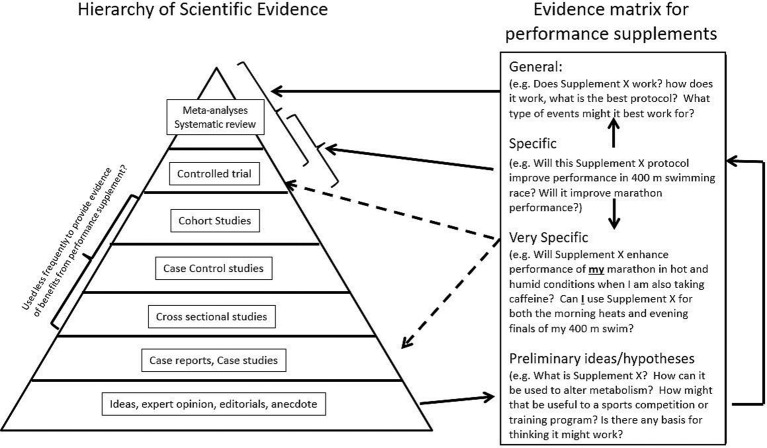
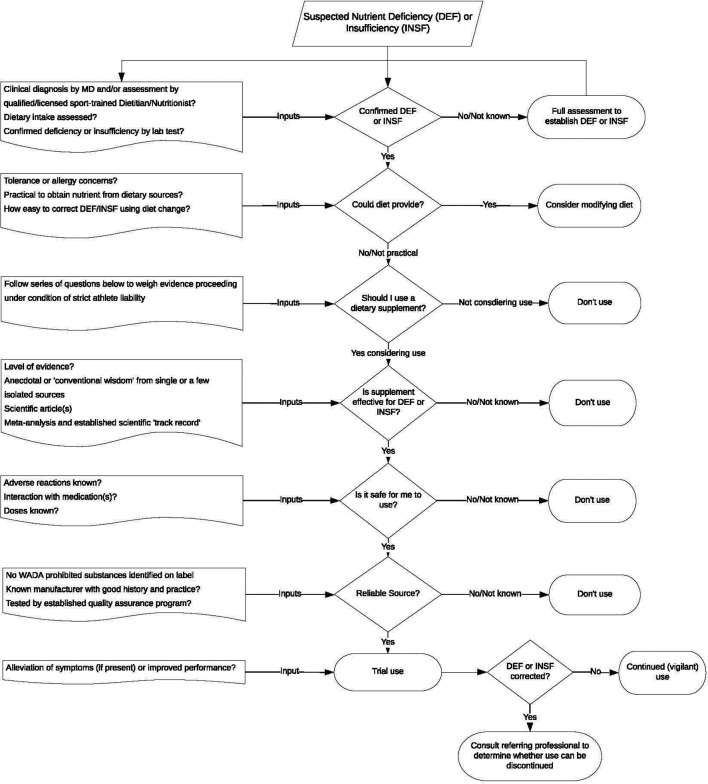
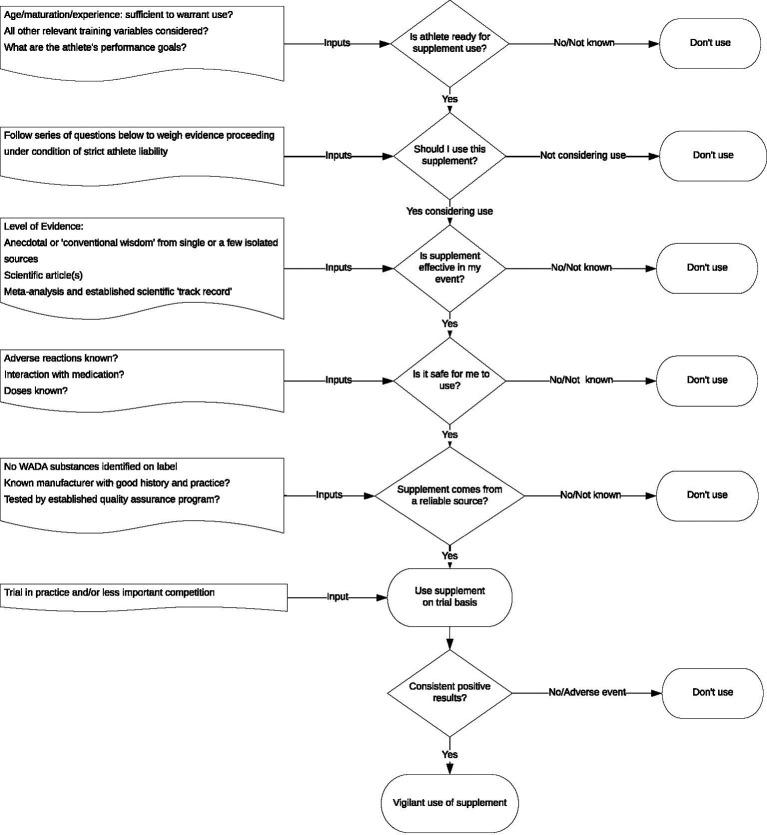
“В зависимости от этого может меняться не только уровень доказательности, но и общая оценка смысла применения пищевых добавок: места в «иерархической пирамиде доказательности» и обоснованность выбора в соответствии с «деревом принятия решения» в Консенсусе МОК о применении пищевых добавок элитными спортсменами [50].”
Aguinaga-Ontoso, I., Guillén-Aguinaga, S., Guillén-Aguinaga, L., Alas-Brun, R., & Guillén‐Grima, F. (2023) · Preprints.org · doi:10.20944/preprints202304.0261.v1 · Cited by 1
da Silva, K. V. (2024) · Preprints.org · doi:10.20944/preprints202405.0125.v1 · Cited by 1
Editorial: Advancements in dietary supplements: enhancing sport performance and recovery
Willems, M. E. T., Wentz, L. M., & Nieman, D. C. (2025) · Frontiers in Sports and Active Living · doi:10.3389/fspor.2025.1703153 · Cited by 2
Liu, C. (2021) · Kent Academic Repository (University of Kent) · doi:10.22024/unikent/01.02.88716 · Cited by 2
Dubious and Fraudulent Activities in Sports Nutrition
Maughan, R. J. (2018) · International Journal of Sport Nutrition and Exercise Metabolism · doi:10.1123/ijsnem.2018-0261
Self-citationCalcium, vitamin D and iron status of elite rugby union players during a competitive season.
Smith, Duckworth, L. C., King, R. F., Starfelt, L. C., & Jones, B. L. (2018) · Leeds Beckett Repository (Leeds Beckett University)
Ergogenic effects of dietary nitrate
Nyakayiru (2019) · Research Publications (Maastricht University) · doi:10.26481/dis.20190213jn
Leukocyte ROS Measured with Flow Cytometry before and after a Strength Training Session
NIELSEN, H. G. (2018) · Journal of Physical Fitness Medicine & Treatment in Sports · doi:10.19080/jpfmts.2018.05.555653
Bae, M., Kim, S., & Yun, J. (2019) · The Korean Journal of Sports Medicine · doi:10.5763/kjsm.2019.37.2.54
Roy, K.-A. (2019) · The Atrium (University of Guelph)
Whiton, T. K. (2019) · Digital Commons - East Tennessee State University (East Tennessee State University)
Znaczenie folianów dla osób uprawiających sport
Karczemna, A., Krzywański, J., & Lange, E. (2019) · Kosmos · doi:10.36921/kos.2019_2538
Nutrition and Sport. New conceptual approaches today
Pruna, R., & Lizarraga, A. (2019) · Medicina Clínica (English Edition) · doi:10.1016/j.medcle.2019.03.015 · Cited by 3
Fritz, P., Kiss, A., & Pfeiffer, L. (2019) · Recreation · doi:10.21486/recreation.2019.9.3.1
Zinc lozenges and vitamin C for high-performance athletes : [eLetter]
Hemilä, H. (2018) · Työväentutkimus Vuosikirja
Kaçoğlu, C. (2019) · Turkiye Klinikleri Journal of Sports Sciences · doi:10.5336/sportsci.2019-70197 · Cited by 1
The metabolism of beta-amino acids and carnosine in relation to supplementation and exercise
Stautemas, J. (2020) · Ghent University Academic Bibliography (Ghent University)
Bechard, A. L. (2020) · VTechWorks (Virginia Tech)
Die Rolle der Ernährung im Sport
Mosler, S. (2020) · Sportphysio · doi:10.1055/a-1203-7139
“[20] Maughan RJ, Burke LM, Dvorak J et al.”
BackgroundBone health and high-performace athletes
Stewart, K. L. (2020) · Queensland University of Technology · doi:10.5204/thesis.eprints.203100
Higgins, J. A. (2020) · University of Limerick Institutional Repository (University of Limerick) · doi:10.34961/6126
Kawamura, A., & Sugita, M. (2020) · Nippon Eiyo Shokuryo Gakkaishi · doi:10.4327/jsnfs.73.199
Franco, G. S. (2020) · Digital Library of Theses and Dissertations (Universidade de São Paulo) · doi:10.11606/t.17.2020.tde-23082020-135132
Advancing statistical decision-making in sports sciencePreprint
Aisbett, J., Drinkwater, E. J., Quarrie, K. L., & Woodcock, S. (2020) · arXiv (Cornell University) · doi:10.48550/arxiv.2010.13375
“(Maughan et al. 2018; Bernards et al., 2017; Bishop et al., 2006; Lyle, 2018; Eisenmann, 2017).”
BackgroundГунина, Л., Danylchenko, S. I., Nosach, E. V., Golovashchenko, R. V., Butskaya, L. V., Sergienko, Y. P., & Lavrent'ev, A. N. (2020) · Ukraïnsʹkij žurnal medicini bìologìï ta sportu · doi:10.26693/jmbs05.05.090
Optimiser la supplémentation nutritionnelle chez les sportifs
Kruseman, M., & Grémeaux, V. (2020) · JMIG · doi:10.53738/revmed.2020.16.701.1401 · Cited by 2
Manjula, J., & Karthiga, K. (2021) · Journal of Experimental Biology and Agricultural Sciences · doi:10.18006/2021.9(spl-1-gcsgd_2020).s23.s29
“A dietary supplement is defined as “a manufactured or commercially available products which added purposely to food in an intention to achieve the targeted benefit” (Maughan et al., 2018).”
BackgroundMoradi, S., Alivand, M., Khajebishak, Y., Asghari-Jafarabadi, M., Alipour, M., & Alipour, B. (2020) · Research Square · doi:10.21203/rs.3.rs-98846/v1
IMPACTO DA SUPLEMENTAÇÃO DESPORTIVA NA RESISTÊNCIA DO ATLETA
Batista, A. A. C. (2021) · Portuguese National Funding Agency for Science, Research and Technology (RCAAP Project by FCT)
特集「国際オリンピック委員会のサプリメント合意声明の紹介」にあたって
亀井, 明. (2020) · doi:10.32155/jissjhps.5.0_53
Food first – Die Rolle der Ernährung im Sport
Mosler, S. (2021) · physiopraxis · doi:10.1055/a-1492-5998
Efeitos ergogênicos da beta-alanina para a performance
Lage, M. H., & de Souza, E. B. (2021) · Cadernos UniFOA · doi:10.47385/cadunifoa.v16.n46.3468 · Cited by 1
Consumo de suplementos deportivos en remeros universitarios
Monzón, R. P., Jiménez-Alfageme, R., Sospedra, I., Sánchez-Oliver, A. J., Domínguez, R., & Sanz, J. M. M. (2021) · Revista Andaluza de Medicina del Deporte · doi:10.33155/j.ramd.2021.08.002 · Cited by 2
Relatives Energiedefizit im Sport (RED-S)
Kopp, C. (2021) · Gynäkologische Endokrinologie · doi:10.1007/s10304-021-00396-5
Khairi, N. M., Razlan, Z., Ong, M. L. Y., & Jusoh, M. R. C. (2021) · Malaysian Journal of Sport Science and Recreation · doi:10.24191/mjssr.v17i2.15392
Supplementation and Ergogenic Aids for Enhancing Muscular Strength Production
Domínguez, R., Naderi, A., & Sánchez-Oliver, A. J. (2021) · Lecture notes in bioengineering · doi:10.1007/978-3-030-81989-7_19
What Will the Next Challenges Be?
Kinahan, A., & Stuart, M. C. (2021) · Springer eBooks · doi:10.1007/978-3-030-79293-0_19
Self-citationVitamin-D-Supplementierung im Sport: Was sind die aktuellen Empfehlungen?
Flueck, J. L., Baumgartner, S., & Hertig-Godeschalk, A. (2021) · Journal für Gynäkologische Endokrinologie/Schweiz · doi:10.1007/s41975-021-00220-0
“Bisher existieren keine konkreten Richtlinien für Athleten [53].”
BackgroundThe Influence of a Collagen-Based Multiple Ingredient Supplement on Muscle Performance
Hatchett, A. G., Gregory, R., Shick, A., & Armstrong, K. (2022) · Journal of Sports Research · doi:10.18488/90.v9i1.2906 · Cited by 1
“INTRODUCTION Dietary supplements are used by athletes at all levels of sport, reflecting the prevalence of their use in the wider society (Maughan et al., 2018).”
BackgroundInfluentialPerim, P. (2021) · Digital Library of Theses and Dissertations (Universidade de São Paulo) · doi:10.11606/d.5.2021.tde-04042022-152506
Verger, C., & Dratwa, M. (2022) · Bulletin de la Dialyse à Domicile · doi:10.25796/bdd.v5i1.65163
Laure, P., & Dine, G. (2018) · Elsevier eBooks · doi:10.1016/b978-2-294-76041-9.00003-9
Grgić, J. (2022) · Sports Medicine · doi:10.1007/s40279-022-01709-9
“While I agree with the authors here, this is not specific to studies on the effects of paracetamol on exercise performance as studies in sports nutrition commonly involve small sample sizes [3].”
ResultFukushima, Y. (2021) · KAGAKU TO SEIBUTSU · doi:10.1271/kagakutoseibutsu.59.162
Staśkiewicz‐Bartecka, W., Grochowska‐Niedworok, E., Zydek, G., Kiciak, A., Agnieszka-Bielaszka, Marek-Kardas, Białek-Dratwa, A., Jaruga-Sękowska, S., & Grajek, M. K. (2022) · Journal of Physical Education and Sport · doi:10.7752/jpes.2022.06184 · Cited by 2
The role of the microbiome in sports nutrition
Rodríguez, E. G., Montava, L. A., López, I. S., & Martínez-Sanz, J. M. (2022) · Elsevier eBooks · doi:10.1016/b978-0-12-822238-6.00039-x
Sesbreno, E., Hein, S., Tiollier, E., Lacroix, V., Ostiguy, G., Maître, C., Dupont, A., Siboni, R., Seil, R., & Martens, G. (2022) · Science & Sports · doi:10.1016/j.scispo.2022.09.001
Ling, J., Leyland, S., Pattinson, E. M., Soós, I., & Whyte, I. (2022) · Scientific Journal of Sport and Performance · doi:10.55860/jyxw3461
“Performance and image enhancing drugs (PIEDs) is a collective term that covers substances that affect human performance and that have been highlighted as problematic by many national and international governing bodies of sport (Maughan et al, 2018).”
BackgroundA nutritional intervention for moderate altitude endurance preparation: A case report
Guerrero-Pinzón, J. J., Alcántara, J. M. A., García-Buendia, G., Mochón-Benguigui, S., Ramírez‐Maldonado, M., Ruiz, J. R., & Jurado‐Fasoli, L. (2022) · Journal of the International Society of Sports Nutrition · doi:10.1080/15502783.2022.2140596 · Cited by 1
AN EVALUATION OF HIGH SCHOOL ATHLETES ACQUISITION OF NUTRITIONAL INFORMATION A SURVEY BASED APPROACH
Waltz, N. (2022) · Digital Commons - URI (University of Rhode Island) · doi:10.23860/thesis-waltz-nicholas-2022
Tomaz, L. D. S. P., & Cruz, M. F. D. A. (2022) · Research Society and Development · doi:10.33448/rsd-v11i16.38519
A Research Survey on Supplement Intake and Anti-doping among Physical Education University Students
Horiuchi, M., Sagara, A., Yoshida, R., Kobayashi, M., Takenoya, F., Ryushi, T., Kobayashi, T., Nakama, W., Hwang, I., Sato, F., et al. (2021) · Iryo Yakugaku (Japanese Journal of Pharmaceutical Health Care and Sciences) · doi:10.5649/jjphcs.47.659
Dietary supplements for athletes in terms of anti-doping regulations
Siodłak, D., Pokajewicz, K., Biernat, P., Kulik-Kupka, K., Jaros, K., & Balwierz, R. J. (2022) · Annales Academiae Medicae Silesiensis · doi:10.18794/aams/154906
Estrada, G. D. G., Paz, E., & Sanclemente, F. (2023) · bioRxiv (Cold Spring Harbor Laboratory) · doi:10.1101/2023.01.14.523685
Deota, P., & Chandorkar, S. (2023) · Research Square · doi:10.21203/rs.3.rs-2484103/v1
Filho, J. M. P., Padilha, T. P. C., Costa, F. Z. D. N., & Costa, C. S. R. (2023) · Revista de Gestão e Secretariado (Management and Administrative Professional Review) · doi:10.7769/gesec.v14i2.1651
García‐González, Á., & Robert-McComb, J. J. (2023) · Springer eBooks · doi:10.1007/978-3-031-15485-0_20
Prestatiebevorderende middelen in de sport
Kenney, L. W., Wilmore, J. H., COSTILL, D. L., & Lindauer, R. (2023) · Bohn Stafleu van Loghum eBooks · doi:10.1007/978-90-368-2921-2_18
Gomes, I. L., Pereira, C. P., Bezerra, A. N., Amâncio, L. C., Cavalcante, K. P., Aguiar, L. P., Pereira, B. B., Freitas, P. H. B. D., Souza, G. P., & Paim, R. T. T. (2023) · Seven Editora eBooks · doi:10.56238/devopinterscie-128
Yazıhan, N. (2023) · Akademisyen Kitabevi eBooks · doi:10.37609/akya.2479
Fernandes, A., Pereira, A. I., Fernandes, A., & Salselas, V. (2022) · Egitania Sciencia · doi:10.46691/es.v1i30.44
Metadata
- Authors
- Maughan, R. J., Burke, L. M., Dvorak, J., Larson-Meyer, D. E., Peeling, P., Phillips, S. M., Rawson, E. S., Walsh, N. P., Garthe, I., Geyer, H., Meeusen, R., van Loon, L. J. C., Shirreffs, S. M., Spriet, L. L., Stuart, M., Vernec, A., Currell, K., Ali, V. M., Budgett, R. G., Ljungqvist, A., Mountjoy, M., Pitsiladis, Y. P., Soligard, T., Erdener, U., & Engebretsen, L.
- Affiliations
- University of St Andrews (GB)
- The University of Western Australia (AU)
- McMaster University (CA)
- Messiah University (US)
- Bangor University (GB)
- German Sport University Cologne (DE)
- Vrije Universiteit Brussel (BE)
- University of Guelph (CA)
- BMJ Group (United Kingdom) (GB)
- World Anti-Doping Agency (CA)
- English Institute of Sport (GB)
- International Olympic Committee (CH)
- Corresponding author
- Maughan, Ronald J
- ORCID
- Venue
- British Journal of Sports Medicine
- Publisher
- BMJ
- Published
- 2018-03-14
- Volume
- 52
- Issue
- 7
- Pages
- 439-455
- ISSN
- 0306-3674 (ISSN-L)
- 1473-0480
- PMC
- PMC5867441
- OpenAlex
- W2791581924
- Semantic Scholar
- 8e8c609bb6ec0644a6355188a5e65c8702ee2529
- Cited by
- 1,004
- References
- 184
- Citations by year
- 2026: 123 · 2025: 84 · 2024: 141 · 2023: 143 · 2022: 143 · 2021: 119 · 2020: 125 · 2019: 87 · 2018: 37
- FWCI
- 209.31
- Type
- journal article
- Language
- en
- Open access
- hybrid
- doi.org
- Licence
- cc-by-nc
- Locations
- British Journal of Sports Medicine (publishedVersion, cc-by-nc)
- Europe PMC (PubMed Central) (publishedVersion, cc-by-nc)
- PubMed Central (publishedVersion, cc-by-nc)
- PubMed (publishedVersion)
- Kölner Universitäts PublikationsServer (Universität zu Köln) (publishedVersion)
- Liverpool John Moores University (acceptedVersion)
- University of Brighton Repository (University of Brighton) (submittedVersion)
- University of Brighton Repository (University of Brighton) (submittedVersion, cc-by-nc)
- UWA Profiles and Research Repository (UWA) (submittedVersion, cc-by-nc)
- Research Bank (Australian Catholic University) (submittedVersion)
- Research Publications (Maastricht University) (submittedVersion, cc-by-nc)
- HighWire Press Open Archive (submittedVersion)
- St Andrews Research Repository (St Andrews Research Repository) (submittedVersion, cc-by-nc)
- VUBIR (Vrije Universiteit Brussel) (submittedVersion)
- Research Publications (Maastricht University) (submittedVersion, other-oa)
- Topics
- Social Sciences › Sociology and Political Science › Doping in Sports
- Health Sciences › Medicine › Public Health, Environmental and Occupational Health › Nutrition and Health Studies
- Health Sciences › Medicine › Orthopedics and Sports Medicine › Sports Performance and Training
- Keywords
- dietary supplements, elite athletes, anti-doping rule violations, caffeine, creatine, nitrate, buffering agents, micronutrient deficiency, sports nutrition, supplement safety, ergogenic aids, nutritional assessment
- MeSH terms
- Diet, Humans, Dietary Supplements, Consensus, Athletic Performance, Athletes, Sports Nutritional Physiological Phenomena
About these checks
Registry, retraction, Cites and statistics results are computed, not judged, with one exception: a printed reference that no index lists is read once by a model before it counts as a citation error. Claims are extracted by a model and kept only when their quote appears verbatim in the text; each cited source is then checked, with a model’s help, for whether it says what the claim relies on. Those verdicts can be wrong — read the claim’s quote and the cited source before relying on one.
Statistics and arithmetic are recomputed, not judged.
Confidence bands are shown only for fields calibrated on our annotated test set. None is calibrated yet, so no band is shown.
What counts as a claim ›How we measure confidence ›How we check this ›
Are you an author, or do you see a problem with this page? Request a review
Data sources
Bibliographic data: Semantic Scholar, OpenAlex, Crossref.
Contains information from the Semantic Scholar Academic Graph Datasets, made available under the ODC Attribution License (ODC-BY 1.0).
Semantic Scholar’s data is described in: Kinney, R., et al. (2023). The Semantic Scholar Open Data Platform. arXiv:2301.10140.
