

IOC consensus statement: dietary supplements and the high-performance athlete
Open accessThe DOI matches its Crossref record; 181 of the 184 references it cites were found in a registry or an index.
Abstract
Nutrition usually makes a small but potentially valuable contribution to successful performance in elite athletes, and dietary supplements can make a minor contribution to this nutrition programme. Nonetheless, supplement use is widespread at all levels of sport. Products described as supplements target different issues, including (1) the management of micronutrient deficiencies, (2) supply of convenient forms of energy and macronutrients, and (3) provision of direct benefits to performance or (4) indirect benefits such as supporting intense training regimens. The appropriate use of some supplements can benefit the athlete, but others may harm the athlete’s health, performance, and/or livelihood and reputation (if an antidoping rule violation results). A complete nutritional assessment should be undertaken before decisions regarding supplement use are made. Supplements claiming to directly or indirectly enhance performance are typically the largest group of products marketed to athletes, but only a few (including caffeine, creatine, specific buffering agents and nitrate) have good evidence of benefits. However, responses are affected by the scenario of use and may vary widely between individuals because of factors that include genetics, the microbiome and habitual diet. Supplements intended to enhance performance should be thoroughly trialled in training or simulated competition before being used in competition. Inadvertent ingestion of substances prohibited under the antidoping codes that govern elite sport is a known risk of taking some supplements. Protection of the athlete’s health and awareness of the potential for harm must be paramount; expert professional opinion and assistance is strongly advised before an athlete embarks on supplement use.
Overview
The claims and statistics of this paper haven’t been checked yet.
Free: it reads the open-access text and checks the first 5 claims that cite a source we can check. Create a free account to check every claim.
Integrity signals
Registry
Cites
Statistics
Figures
Verification
Claims the paper makes
The claims and statistics of this paper haven’t been checked yet.
Free: it reads the open-access text and checks the first 5 claims that cite a source we can check. Create a free account to check every claim.
Claims other papers make about this one
Each is checked against this paper’s own text: does it say what the citing paper says it does?
The source backs part of the claim, not all of it — or backs it for a different population, condition or comparison.
In the citing paper
“The utilization of supplements in young athletes “overemphasizes their ability to manipulate performance (i.e., typically 2-5% improvement).”49”
From Nutritional Recommendations for the Young Athlete (2023) · cites this paper as [49]
Experimental — accuracy not yet measuredThe source backs part of the claim, not all of it — or backs it for a different population, condition or comparison.
In the citing paper
“Subsequently, to maintain elevated creatine stores, the most effective strategy is to continue with a daily intake of 0.05 to 0.15 g/kg or 3–5 g per day [7,87].”
From Use of Nutritional Strategies, Bioactive Compounds, and Dietary Supplements in Young Athletes: From Evidence to Potential Risks—A Narrative Review (2025) · cites this paper as [7]
Experimental — accuracy not yet measuredThe source backs part of the claim, not all of it — or backs it for a different population, condition or comparison.
In the citing paper
“Studies in adults suggest that around 1–2 g of omega-3s per day can reduce post-exercise inflammation and DOMS, indirectly benefiting performance [7,75].”
From Use of Nutritional Strategies, Bioactive Compounds, and Dietary Supplements in Young Athletes: From Evidence to Potential Risks—A Narrative Review (2025) · cites this paper as [7]
Experimental — accuracy not yet measuredThe source backs part of the claim, not all of it — or backs it for a different population, condition or comparison.
In the citing paper
“Supplementing with high doses of creatine monohydrate (e.g., 0.3 g/kg/day for 5–7 days or 20 g/day for 5 days) is indeed the most effective strategy to rapidly increase intramuscular creatine levels, as recommended by the International Society of Sports Nutrition (ISSN) [87] and the International Olympic Committee (IOC) [7].”
From Use of Nutritional Strategies, Bioactive Compounds, and Dietary Supplements in Young Athletes: From Evidence to Potential Risks—A Narrative Review (2025) · cites this paper as [7]
Experimental — accuracy not yet measuredThe cited source says what the claim attributes to it.
In the citing paper
“a cafeína é considerada um suplemento ergogênico capaz de aumentar o desempenho físico durante o exercício. 3 , 4”
17 more claims about this paper
Create a free account to see every claim other papers make about this one.
Self-check
Percentages, sums and reported differences re-computed from the paper’s own numbers.
The self-check needs the paper’s full text.
Citations
Cites
1 retracted
Singh, M., & Das, R. R. (2013) · Cochrane Database of Systematic Reviews · doi:10.1002/14651858.cd001364.pub4 · Cited by 237
RetractedThe Pharmacological Basis of Therapeutics
(1976) · American Journal of Health-System Pharmacy · doi:10.1093/ajhp/33.4.373a · Cited by 8,209
The Neuroendocrinology of Stress: A Never Ending Story
Lightman, S. L. (2008) · Journal of Neuroendocrinology · doi:10.1111/j.1365-2826.2008.01711.x · Cited by 3,566
Principles of nutritional assessment
(1990) · Choice Reviews Online · doi:10.5860/choice.27-6362 · Cited by 2,765
Principles Of Nutritional Assessment
Gibson, R. S. (2005) · doi:10.1093/oso/9780195171693.001.0001 · Cited by 1,887
Nutrition and Athletic Performance
(2016) · Medicine & Science in Sports & Exercise · doi:10.1249/mss.0000000000000852 · Cited by 1,305 · cited 4×
“Calcium Avoidance of dairy products and other calcium-rich foods, restricted energy intake, and/or disordered eating increases risk of suboptimal calcium status (Thomas et al., 2016) No appropriate indicator of calcium status; bone mineral density scan may be indicative of chronic low calcium intake but other factors…”
InfluentialSelf-citationVitamin D for health: a global perspective
Hossein-nezhad, A., & Holick, M. F. (2013) · Mayo Clinic Proceedings · doi:10.1016/j.mayocp.2013.05.011 · Cited by 1,298
Morton, R. W., Murphy, K. T., McKellar, S. R., Schoenfeld, B. J., Henselmans, M., Helms, E., Aragon, A. A., Devries, M. C., Banfield, L., Krieger, J. W., et al. (2018) · British Journal of Sports Medicine · doi:10.1136/bjsports-2017-097608 · Cited by 1,269
Self-citationElevation of creatine in resting and exercised muscle of normal subjects by creatine supplementation
Harris, R. C., Söderlund, K., & Hultman, E. (1992) · Clinical Science · doi:10.1042/cs0830367 · Cited by 1,168 · cited 1×
“Zinc deficiency results in impaired immunity (eg, lymphoid atrophy) and zinc deficiency is not uncommon in athletes.”
BackgroundKreider, R. B., Kalman, D. S., Antonio, J., Ziegenfuss, T. N., Wildman, R., Collins, R., Candow, D. G., Kleiner, S. M., Almada, A. L., & Lopez, H. L. (2017) · Journal of the International Society of Sports Nutrition · doi:10.1186/s12970-017-0173-z · Cited by 1,057
Research works printed but not linked: 2
- Geyer H, Bredehoft M, Marek U, et al Hohe Dosen des Anabolikums Metandienon in Nahrungserganzungsmitteln. Deutsche Apotheke Zeit 2002; 142: 29.
- Hultman E, Söderlund K, Timmons JA, et al Muscle creatine loading in men. J Appl Physiol 1996; 81: 232– 7. 10.1152/jappl.1996.81.1.232 8828669 · DOI · Paper page
Cited by
Items 101–200 of 1,000
Can Nutrients and Dietary Supplements Potentially Improve Cognitive Performance Also in Esports?
Szot, M., Karpęcka-Gałka, E., Dróżdź, R., & Frączek, B. (2022) · Healthcare · doi:10.3390/healthcare10020186 · Cited by 69
“Doses of 1–4 mg/kg body weight improve alertness, concentration, and reaction time [118] (Table 3), while doses of 3–6 mg/kg b.”
BackgroundInfluence of Oral Contraceptive Use on Adaptations to Resistance Training
Dalgaard, L. B., Dalgas, U., Andersen, J. L., Rossen, N. B., Møller, A. B., Stødkilde-Jørgensen, H., Jørgensen, J. O., Kovanen, V., Couppé, C., Langberg, H., et al. (2019) · Frontiers in Physiology · doi:10.3389/fphys.2019.00824 · Cited by 58
António, J., Newmire, D. E., Stout, J. R., Antonio, B. B., Gibbons, M., Lowery, L. M., Harper, J., Willoughby, D. S., Evans, C., Anderson, D., et al. (2024) · Journal of the International Society of Sports Nutrition · doi:10.1080/15502783.2024.2323919 · Cited by 63
Use of Sports Supplements in Competitive Handball Players: Sex and Competitive Level Differences
Muñoz, A., López-Samanes, Á., Domínguez, R., Moreno-Pérez, V., Jesús Sánchez-Oliver, A., & Del Coso, J. (2020) · Nutrients · doi:10.3390/nu12113357 · Cited by 48
“The high use of supplements that provide energy is likely because they provide macronutrients, especially carbohydrates, a more convenient form than normal foods for general nutrition support [12] Regarding caffeine, data on urinary caffeine concentration indicates that handball is within the team sports with the high…”
BackgroundA Survey on Dietary Supplement Consumption in Amateur and Professional Rugby Players
Sánchez-Oliver, A. J., Domínguez, R., López-Tapia, P., Tobal, F. M., Jodra, P., Montoya, J. J., Guerra-Hernández, E. J., & Ramos-Álvarez, J. J. (2020) · Foods · doi:10.3390/foods10010007 · Cited by 52
“Formulated foods and sports foods, products which provide energy and nutrients in a more convenient form than normal foods for general nutrition support or for targeted use concerning exercise (sports drinks, sports gels or sports bars) [19], are some of the DS most consumed by athletes of different ages, sex, levels…”
BackgroundResultInfluentialFinamore, A., Benvenuti, L., Santis, A. D., Cinti, S., & Rossi, L. (2022) · Nutrients · doi:10.3390/nu14050945 · Cited by 68
Consumption patterns of energy drinks in university students: A systematic review and meta-analysis
Protano, C., Valeriani, F., Giorgi, A. D., Marotta, D., Ubaldi, F., Napoli, C., Liguori, G., Spica, V. R., Vitali, M., & Gallé, F. (2022) · Nutrition · doi:10.1016/j.nut.2022.111904 · Cited by 63
Probiotics and sports: A new magic bullet?
Leite, G. S., Resende, A. D. S., West, N. P., & Lancha, A. H. (2018) · Nutrition · doi:10.1016/j.nut.2018.09.023 · Cited by 65
Acute caffeine intake increases muscle oxygen saturation during a maximal incremental exercise test
Ruíz‐Moreno, C., Lara, B., Brito de Souza, D., Gutiérrez‐Hellín, J., Romero‐Moraleda, B., Cuéllar‐Rayo, Á., & Del Coso, J. (2020) · British Journal of Clinical Pharmacology · doi:10.1111/bcp.14189 · Cited by 53
Nutritional Strategies to Optimize Performance and Recovery in Rowing Athletes
Kim, J., & Kim, E.-K. (2020) · Nutrients · doi:10.3390/nu12061685 · Cited by 61
“[45] showed that 5–9 mmol (310–560 mg) of nitrate-rich beetroot juice had an effect on acute performance 2–3 h after its intake and that intake for more than three days may also be beneficial.”
BackgroundLee, M., Hsu, Y.-J., Ho, H.-H., Kuo, Y., Lin, W., Tsai, S., Chen, W., Lin, C.-L., & Huang, C. (2021) · Scientific Reports · doi:10.1038/s41598-021-98958-x · Cited by 61
Dietary supplements as a major cause of anti-doping rule violations
Lauritzen, F. (2022) · Frontiers in Sports and Active Living · doi:10.3389/fspor.2022.868228 · Cited by 55
Role of Oral and Gut Microbiota in Dietary Nitrate Metabolism and Its Impact on Sports Performance
González-Soltero, R., Bailén, M., de Lucas, B., Ramírez-Goercke, M. I., Pareja-Galeano, H., & Larrosa, M. (2020) · Nutrients · doi:10.3390/nu12123611 · Cited by 54
“Dietary nitrate is a precursor of the signaling molecule nitric oxide (NO), and has been recently identified both as a therapeutic agent [9] and an ergogenic aid [10].”
BackgroundResultGeneral public knowledge and use of dietary supplements in Riyadh, Saudi Arabia
Algaeed, H. A., AlJaber, M. I., Alwehaibi, A. I., AlJaber, L. I., Arafah, A. M., Aloyayri, M. A., Binsebayel, O. A., Alotaiq, S. A., Alfozan, M. A., & Ahmed, I. B. (2019) · Journal of Family Medicine and Primary Care · doi:10.4103/jfmpc.jfmpc_511_19 · Cited by 60
Ritz, P. P., Rogers, M. B., Zabinsky, J. S., Hedrick, V. E., Rockwell, J., Rimer, E. G., Kostelnik, S. B., Hulver, M. W., & Rockwell, M. S. (2020) · PLoS ONE · doi:10.1371/journal.pone.0228834 · Cited by 60
“The use of ω-3 FA supplements is another strategy for improving ω-3 FA status, and has been discussed as a potentially helpful nutritional tool for athletes [54].”
BackgroundEffects of Nitrate Supplementation on Exercise Performance in Humans: A Narrative Review
Macuh, M., & Knap, B. (2021) · Nutrients · doi:10.3390/nu13093183 · Cited by 53
“a direct, positive effect on athlete’s performance based on the latest consensus statement by the International Olympic Committee (IOC) [72].”
BackgroundResultInfluentialGrgić, J., & Coso, J. D. (2021) · International Journal of Environmental Research and Public Health · doi:10.3390/ijerph18115773 · Cited by 62
“While this study reported similar effects as all other included studies, future research should aim to use a double-blind design as this is considered the “gold standard” in sports nutrition [41].”
ResultTiming of Creatine Supplementation around Exercise: A Real Concern?
Ribeiro, F., Longobardi, I., Perim, P., Duarte, B., Ferreira, P., Gualano, B., Roschel, H., & Saunders, B. (2021) · Nutrients · doi:10.3390/nu13082844 · Cited by 34
“Creatine (Cr) deserves a special place among the plethora of ergogenic supplements, as it is one of the most studied and scientifically supported supplements on the market [1,2].”
BackgroundPolyphenol Supplementation and Antioxidant Status in Athletes: A Narrative Review
Bojarczuk, A., & Dzitkowska-Zabielska, M. (2022) · Nutrients · doi:10.3390/nu15010158 · Cited by 60
Park, H., Kim, S.-W., Seo, J., Jung, Y. P., Kim, H. J., Kim, A.-J., Kim, S., & Lim, K. (2023) · Nutrients · doi:10.3390/nu15051268 · Cited by 61
“Functional drinks, and supplements that claim to enhance athletic performance, are popular among both recreational and elite athletes [6,7].”
BackgroundAnalysis of Nutritional Supplements Consumption by Squash Players
Ventura Comes, A., Sánchez-Oliver, A. J., Martínez-Sanz, J. M., & Domínguez, R. (2018) · Nutrients · doi:10.3390/nu10101341 · Cited by 47
“Thus, supplementation with β-alanine has been effective for improving performance in high-intensity continuous exercises [8].”
BackgroundInfluentialWhat Dose of Caffeine to Use: Acute Effects of 3 Doses of Caffeine on Muscle Endurance and Strength
Grgic, J., Sabol, F., Venier, S., Mikulic, I., Bratkovic, N., Schoenfeld, B. J., Pickering, C., Bishop, D. J., Pedisic, Z., & Mikulic, P. (2020) · International Journal of Sports Physiology and Performance · doi:10.1123/ijspp.2019-0433 · Cited by 49
“The International Olympic Committee has also identified caffeine as having strong scientific support for its ergogenic effects on exercise performance.(3) There is good evidence that caffeine ingestion can acutely enhance aerobic and muscle endurance, muscle strength, power, jumping height, and exercise speed.”
BackgroundEffects of sodium bicarbonate supplementation on exercise performance: an umbrella review
Grgić, J., Grgic, I., Coso, J. D., Schoenfeld, B. J., & Pedišić, Ž. (2021) · Journal of the International Society of Sports Nutrition · doi:10.1186/s12970-021-00469-7 · Cited by 57
“Besides these factors, the discrepancies in the findings might be due to the small sample sizes in some of the individual studies, which might have resulted in low statistical power [12].”
ResultWebster, J., Via, J. D., Langley, C. K., Smith, C., Sale, C., & Sim, M. (2023) · Bone Reports · doi:10.1016/j.bonr.2023.101684 · Cited by 55
Evaluation and Behavior of Spanish Bodybuilders: Doping and Sports Supplements
Sánchez-Oliver, A. J., Puyana, M. G., & Domínguez, R. (2019) · Biomolecules · doi:10.3390/biom9040122 · Cited by 63
Impact of Caffeine Intake on 800-m Running Performance and Sleep Quality in Trained Runners
Ramos-Campo, D. J., Pérez, A., Ávila-Gandía, V., Pérez-Piñero, S., & Rubio-Arias, J. Á. (2019) · Nutrients · doi:10.3390/nu11092040 · Cited by 43
“Caffeine is a supplement with good-to-strong evidence of achieving benefits in athletic performance when used in specific scenarios across endurance-based situations and in short-term, supramaximal, and/or repeated sprint tasks [26].”
BackgroundMental Performance and Sport: Caffeine and Co-Consumed Bioactive Ingredients
Kennedy, D. O., & Wightman, E. L. (2022) · Sports Medicine · doi:10.1007/s40279-022-01796-8 · Cited by 50
Ergogenic effects of caffeine on peak aerobic cycling power during the menstrual cycle
Lara, B., Gutiérrez-Hellín, J., García-Bataller, A., Rodríguez-Fernández, P., Romero-Moraleda, B., & Del Coso, J. (2020) · European Journal of Nutrition · doi:10.1007/s00394-019-02100-7 · Cited by 45
Are There Benefits from the Use of Fish Oil Supplements in Athletes? A Systematic Review
Lewis, N. A., Daniels, D., Calder, P. C., Castell, L. M., & Pedlar, C. R. (2020) · Advances in Nutrition · doi:10.1093/advances/nmaa050 · Cited by 43
Ojeda, Á. H., Cerda, C. T., Salvatierra, M. F. P., Barahona-Fuentes, G. D. F., & Aguilera, C. J. (2020) · Nutrients · doi:10.3390/nu12092490 · Cited by 53
Vårvik, F. T., Bjørnsen, T., & Gonzalez, A. M. (2021) · International Journal of Sport Nutrition and Exercise Metabolism · doi:10.1123/ijsnem.2020-0295 · Cited by 51
“, 2019), yet CitMal was not included in the latest International Olympic Committee consensus statement on recommended dietary supplements for athletes (Maughan et al., 2018).”
BackgroundPotato biofortification: an effective way to fight global hidden hunger
Singh, B., Goutam, U. K., Kukreja, S., Sharma, J., Sood, S., & Bhardwaj, V. (2021) · Physiology and Molecular Biology of Plants · doi:10.1007/s12298-021-01081-4 · Cited by 53
“Previous studies have shown that diet sup- plements are not just to reduce the hidden hunger but these are also used to enhance the performance of athletes (Maughan et al. 2018).”
BackgroundFedewa, M. V., Spencer, S. O., Williams, T. D., Becker, Z. E., & Fuqua, C. A. (2019) · International Journal for Vitamin and Nutrition Research · doi:10.1024/0300-9831/a000543 · Cited by 48
Pomeroy, D. E., Tooley, K. L., Probert, B., Wilson, A., & Kemps, E. (2020) · Nutrients · doi:10.3390/nu12020545 · Cited by 50
“A dietary supplement is broadly defined as “a food, food component, nutrient, or non-food compound that is purposefully ingested in addition to the habitually-consumed diet with the aim of achieving a specific health and/or performance benefit” [1].”
Arazi, H., & Eghbali, E. (2021) · Frontiers in Nutrition · doi:10.3389/fnut.2021.660150 · Cited by 53
Ferreira, L. H. B., Forbes, S. C., Barros, M. P., Smolarek, A. D. C., Enes, A. A. N., Lancha, A. H., Martins, G. L., & de Souza, T. P. (2022) · Nutrients · doi:10.3390/nu14224921 · Cited by 48
Nutritional Recommendations for the Young Athlete
Hecht, C., Bank, N., Cook, B., & Mistovich, R. J. (2023) · Journal of the Pediatric Orthopaedic Society of North America · doi:10.55275/jposna-2023-599 · Cited by 48
“49 Similarly, most dietary supplements have not been studied in a pediatric population due to ethical concerns, so the long-term safety profile of consumption is largely unknown.”
Dietary Supplements: A Gateway to Doping?
Mallick, M., Camacho, C. B., Daher, J., & Khoury, D. T. D. E. (2023) · Nutrients · doi:10.3390/nu15040881 · Cited by 52
“Therefore, it is vital that athletes understand the risk of consuming DS, as trace amounts of prohibited substances can still result in a failed drug test even in quantities that are too low to have any actual physiological effects [4].”
BackgroundInfluentialMosadegh, M., Goodarzi, N. N., & Erfani, Y. (2025) · Cancer Investigation · doi:10.1080/07357907.2024.2445528 · Cited by 52
“What works for one person may not work for another (215).”
Drobnic, F., Lizarraga, M. A., Caballero-García, A., & Córdova, A. (2022) · Nutrients · doi:10.3390/nu14091811 · Cited by 55
Durkalec–Michalski, K., Zawieja, E. E., Zawieja, B. E., Michałowska, P., & Podgórski, T. (2020) · Scientific Reports · doi:10.1038/s41598-020-57590-x · Cited by 40
Braakhuis, A. J., Somerville, V. X., & Hurst, R. D. (2020) · Journal of the International Society of Sports Nutrition · doi:10.1186/s12970-020-00354-9 · Cited by 50
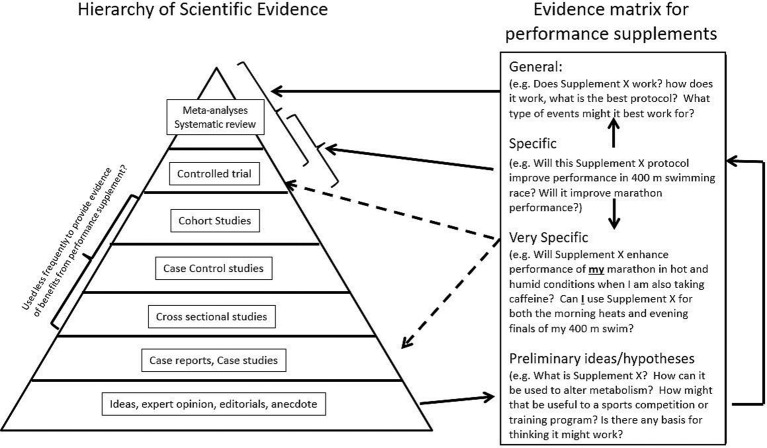
“The IOC highlighted the importance of conducting reviews using a systematic process and in their hierarchy of scientific evidence, systematic reviews and the process of meta-analysis were considered the gold standard [4].”
BackgroundSustainable Diets for Athletes
Meyer, N. L., Reguant-Closa, A., & Nemecek, T. (2020) · Current Nutrition Reports · doi:10.1007/s13668-020-00318-0 · Cited by 48
Pérez-Castillo, Í. M., Williams, J. A. S., Chicharro, J. L., Mihic, N., Rueda, R., Bouzamondo, H., & Horswill, C. A. (2023) · Nutrients · doi:10.3390/nu16010017 · Cited by 58
Berends, J. E., van den Berg, L. M. M., Guggeis, M. A., Henckens, N. F. T., Hossein, I. J., de Joode, M. E. J. R., Zamani, H., van Pelt, K. A. A. J., Beelen, N. A., Kuhnle, G. G., et al. (2019) · International Journal of Molecular Sciences · doi:10.3390/ijms20092277 · Cited by 44
“In view of the increased interest in BRJ by sportsmen and -women, it is important to investigate its possible health risks [12].”
BackgroundRezende, N. S., Swinton, P. A., de Oliveira, L. F., da Silva, R. P., Silva, V. D. E., Nemezio, K., Yamaguchi, G. D. C., Artioli, G. G., Gualano, B., Saunders, B., et al. (2020) · Frontiers in Physiology · doi:10.3389/fphys.2020.00913 · Cited by 53
“, 2019a), and has earned BA its place as one of the world’s most popular, scientifically-backed and widely endorsed sports supplements available (Maughan et al., 2018).”
BackgroundNtoumanis, N., Quested, E., Patterson, L. B., Kaffe, S., Backhouse, S. H., Pavlidis, G. T., Whitaker, L., Barkoukis, V., Smith, B. J., Staff, H. R., et al. (2020) · British Journal of Sports Medicine · doi:10.1136/bjsports-2019-101963 · Cited by 46
Antioxidant supplementation, redox deficiencies and exercise performance: A falsification design
Margaritelis, N. V., Paschalis, V., Theodorou, A. A., Kyparos, A., & Nikolaidis, M. G. (2020) · Free Radical Biology and Medicine · doi:10.1016/j.freeradbiomed.2020.06.029 · Cited by 45
Oral health and microbiota status in professional rugby players: A case-control study
Minty, M., Canceill, T., Lê, S., Dubois, P., Amestoy, O., Loubières, P., Christensen, J. E., Champion, C., Azalbert, V., Grasset, E., et al. (2018) · Journal of Dentistry · doi:10.1016/j.jdent.2018.10.001 · Cited by 45
Supplementation of Bovine Colostrum in Inflammatory Bowel Disease: Benefits and Contraindications
Sienkiewicz, M., Szymańska, P., & Fichna, J. (2020) · Advances in Nutrition · doi:10.1093/advances/nmaa120 · Cited by 52
“lactation, SFAs and PUFAs reduced their content, while the concentration of MUFAs increased as lactation progressed (98).”
BackgroundElsahoryi, N. A., Trakman, G., & Zaidalkilani, A. T. (2021) · PLoS ONE · doi:10.1371/journal.pone.0258123 · Cited by 52
“Likewise, when taken using evidence-based protocols, certain ergogenic aids can enhance speed and/or power output and other measures of athletic achievement [2].”
Backhouse, S. H. (2023) · Sports Medicine · doi:10.1007/s40279-023-01933-x · Cited by 46
“Consequently, many products are sold on exaggerated claims and questionable evidence of safety and efficacy [2, 22, 23], with few supplements underpinned by an established evidence base [2, 24, 25].”
BackgroundInfluentialBoegman, S., Stellingwerff, T., Shaw, G., Clarke, N., Graham, K., Cross, R., & Siegler, J. C. (2020) · Frontiers in Nutrition · doi:10.3389/fnut.2020.00138 · Cited by 40
Jurado‐Castro, J. M., Campos-Pérez, J., Ranchal‐Sánchez, A., Durán-López, N., & Domínguez, R. (2022) · Sports Health A Multidisciplinary Approach · doi:10.1177/19417381221083590 · Cited by 46
“813 Supplementation with beetroot juice (BRJ) is considered an ergogenic aid for endurance sports.(42) However, the consumption prevalence of BRJ supplements is low in well-trained athletes of both sexes.”
BackgroundDurkalec-Michalski, K., Zawieja, E. E., Podgórski, T., Zawieja, B. E., Michałowska, P., Łoniewski, I., & Jeszka, J. (2018) · Nutrients · doi:10.3390/nu10060697 · Cited by 39
“Nevertheless, sodium bicarbonate is recommended by International Olympic Committee (IOC) experts to be used by high-performance athletes [20].”
BackgroundSANTOS, C. D. S., & Nascimento, F. E. L. (2019) · Einstein (São Paulo) · doi:10.31744/einstein_journal/2019rb4898 · Cited by 52
Durkalec-Michalski, K., Nowaczyk, P. M., Główka, N., & Grygiel, A. (2019) · Journal of the International Society of Sports Nutrition · doi:10.1186/s12970-019-0305-8 · Cited by 41
Gervasi, M., Sisti, D., Amatori, S., Zeppa, S. D., Annibalini, G., Piccoli, G., Vallorani, L., Benelli, P., Rocchi, M., Barbieri, E., et al. (2020) · Journal of the International Society of Sports Nutrition · doi:10.1186/s12970-020-0337-0 · Cited by 47
New Opportunities to Advance the Field of Sports Nutrition
Jonvik, K. L., King, M., Rollo, I., Stellingwerff, T., & Pitsiladis, Y. P. (2022) · Frontiers in Sports and Active Living · doi:10.3389/fspor.2022.852230 · Cited by 48
“Historically, consensus statements, such as the International Olympic Committee (IOC) consensus on sports supplements (Maughan et al., 2018) are drafted following in-person meetings of leading medical and scientific content experts.”
BackgroundSelf-citationNutritional Considerations for the Vegan Athlete
West, S., Monteyne, A. J., van der Heijden, I., Stephens, F. B., & Wall, B. T. (2023) · Advances in Nutrition · doi:10.1016/j.advnut.2023.04.012 · Cited by 42
The impact of nutrition on tendon health and tendinopathy: a systematic review
Hijlkema, A., Roozenboom, C., Mensink, M., & Zwerver, J. (2022) · Journal of the International Society of Sports Nutrition · doi:10.1080/15502783.2022.2104130 · Cited by 47
“A dietary supplement is defined as a food, food component, nutrient, or nonfood compound that is purposefully ingested in addition to the habitually consumed diet with the aim of achieving a specific health and/or performance benefit [14].”
BackgroundGarnacho-Castaño, M. V., Palau-Salvà, G., Cuenca, E., Muñoz-González, A., García-Fernández, P., del Carmen Lozano-Estevan, M., Veiga-Herreros, P., Maté-Muñoz, J. L., & Domínguez, R. (2018) · Journal of the International Society of Sports Nutrition · doi:10.1186/s12970-018-0255-6 · Cited by 36
Analysis of Sports Supplements Consumption in Young Spanish Elite Dinghy Sailors
Caraballo, I., Domínguez, R., Guerra-Hernandez, E. J., & Sánchez-Oliver, A. J. (2020) · Nutrients · doi:10.3390/nu12040993 · Cited by 39
Nutritional Interventions to Improve Sleep in Team-Sport Athletes: A Narrative Review
Gratwicke, M., Miles, K. H., Pyne, D. B., Pumpa, K. L., & Clark, B. (2021) · Nutrients · doi:10.3390/nu13051586 · Cited by 44
“One authoritative consensus group indicated that tart cherry juice interventions in athletes is not recommend nor endorsed [60].”
BackgroundDidymus, F. F., & Backhouse, S. H. (2020) · Psychology of sport and exercise · doi:10.1016/j.psychsport.2020.101680 · Cited by 45
MARTICORENA, F. M., CARVALHO, A., OLIVEIRA, L. F. D., DOLAN, E., GUALANO, B., SWINTON, P., & SAUNDERS, B. (2021) · Medicine & Science in Sports & Exercise · doi:10.1249/mss.0000000000002635 · Cited by 34
“Caffeine and buffering supplementation studies were chosen here because of the well-known ergogenic and placebo effects associated with their ingestion (4,5,7), but these only served as a model, and results could be extrapolated to other effective nutritional supplements (3) or any alternative intervention or interact…”
BackgroundNutritional optimization for female elite football players—topical review
de Sousa, M. V., Lundsgaard, A., Christensen, P. M., Christensen, L., Randers, M. B., Mohr, M., Nybo, L., Kiens, B., & Fritzen, A. M. (2022) · Scandinavian Journal of Medicine & Science in Sports · doi:10.1111/sms.14102 · Cited by 28
Jacob, Y., Anderton, R. S., Wilkie, J. C., Rogalski, B., Laws, S. M., Jones, A., Spiteri, T., Hince, D., & Hart, N. H. (2022) · Sports Medicine - Open · doi:10.1186/s40798-022-00522-y · Cited by 40
Wilk, M., Krzysztofik, M., Maszczyk, A., Chycki, J., & Zajac, A. (2019) · Journal of the International Society of Sports Nutrition · doi:10.1186/s12970-019-0275-x · Cited by 37
Grgic, J., Garofolini, A., Pickering, C., Duncan, M. J., Tinsley, G. M., & Del Coso, J. (2020) · Journal of Science and Medicine in Sport · doi:10.1016/j.jsams.2019.08.016 · Cited by 36
“Two authors of the review (JG and AG) extracted the following data from the included studies: (1) author names and publication year; (2) sample size and the sample characteristics; (3) the variant of the Yo-Yo test used for the testing; and (4) main findings regarding the effects of caffeine and/or sodium bicarbonate…”
BackgroundMethodTirla, A. G., Islam, F., Islam, M. R., Vicaş, S. I., & Cavalu, S. D. (2022) · Applied Sciences · doi:10.3390/app12178611 · Cited by 46
López-Samanes, Á., Gómez Parra, A., Moreno-Pérez, V., & Courel-Ibáñez, J. (2020) · Nutrients · doi:10.3390/nu12010188 · Cited by 39
“The use of nutritional supplements and ergogenic aids to directly or indirectly enhance performance is increasing in popularity among stop‐and‐go intermittent exercise [3], but only a few have good evidence of benefits [4,5], such as caffeine, creatine, sodium bicarbonate, beta‐alanine, and nitrate (NO3−).”
BackgroundBougrine, H., Ammar, A., Salem, A., Trabelsi, K., Jahrami, H., Chtourou, H., & Souissi, N. (2024) · Nutrients · doi:10.3390/nu16050640 · Cited by 40
Wilk, M., Filip, A., Krzysztofik, M., Gepfert, M., Zajac, A., & Del Coso, J. (2020) · Nutrients · doi:10.3390/nu12020406 · Cited by 36
Wong, T. H., Sim, A., & Burns, S. F. (2021) · Nutrients · doi:10.3390/nu13113674 · Cited by 35
“As already noted, a recent IOC consensus statement supports the use of dietary nitrate [5] (including beetroot juice) for performance in higher intensity exercise, including intermittent team sport activities [5–10].”
BackgroundInfluentialPortuguese Football Federation consensus statement 2020: nutrition and performance in football
Abreu, R., Figueiredo, P., Beckert, P., Marques, J. P., Amorim, S., Caetano, C., Carvalho, P., Sá, C., Cotovio, R., Cruz, J., et al. (2021) · BMJ Open Sport & Exercise Medicine · doi:10.1136/bmjsem-2021-001082 · Cited by 38
Multiomics Approach to Precision Sports Nutrition: Limits, Challenges, and Possibilities
Nieman, D. C. (2021) · Frontiers in Nutrition · doi:10.3389/fnut.2021.796360 · Cited by 42
Effect of Probiotics Supplementations on Health Status of Athletes
Sivamaruthi, B. S., Kesika, P., & Chaiyasut, C. (2019) · International Journal of Environmental Research and Public Health · doi:10.3390/ijerph16224469 · Cited by 41
Raya-González, J., Scanlan, A. T., Soto-Célix, M., Rodríguez-Fernández, A., & Castillo, D. (2021) · International Journal of Sports Physiology and Performance · doi:10.1123/ijspp.2020-0144 · Cited by 33
Effects of Rhodiola Rosea Supplementation on Exercise and Sport: A Systematic Review
Lu, Y. W., Deng, B., Xu, L., Liu, H., Song, Y., & Lin, F. (2022) · Frontiers in Nutrition · doi:10.3389/fnut.2022.856287 · Cited by 45
Tan, R., Cano, L., Lago-Rodríguez, Á., & Domínguez, R. (2022) · International Journal of Environmental Research and Public Health · doi:10.3390/ijerph19020762 · Cited by 37
“The International Olympic Committee (IOC) recently classified five supplements to have a strong evidence base for enhancing high-intensity exercise performance, which includes caffeine, beta-alanine, sodium bicarbonate, beetroot juice, and creatine [8].”
BackgroundSomerville, V., Moore, R., & Braakhuis, A. J. (2019) · Nutrients · doi:10.3390/nu11020358 · Cited by 40
dos Santos Quaresma, M. V. L., Guazzelli Marques, C., & Nakamoto, F. P. (2021) · Nutrition · doi:10.1016/j.nut.2020.110994 · Cited by 30
Elite athletes, a rationale for the use of dietary supplements: A practical approach
Garthe, I., & Ramsbottom, R. (2020) · PharmaNutrition · doi:10.1016/j.phanu.2020.100234 · Cited by 43
Self-citationAcute Effects of Caffeine Intake on Psychological Responses and High-Intensity Exercise Performance
Domínguez, R., Veiga-Herreros, P., Sánchez-Oliver, A. J., Montoya, J. J., Ramos-Álvarez, J. J., Miguel‐Tobal, F., Lago-Rodríguez, Á., & Jiménez, P. J. (2021) · International Journal of Environmental Research and Public Health · doi:10.3390/ijerph18020584 · Cited by 39
“Among currently available sports supplements, caffeine consumption has increased considerably since 2004, when it was removed from the list of banned substances for sports [2] based on its ergogenic effect [3].”
BackgroundBell, M., Ghatora, R., Retsidou, M. I., Chatzigianni, E. (., & Klentrou, P. (2023) · Nutrients · doi:10.3390/nu15071788 · Cited by 37
An Updated View of the Effect of Probiotic Supplement on Sports Performance: A Detailed Review
Aykut, M. N., Erdoğan, E. N., Çelik, M. N., & Gürbüz, M. (2024) · Current Nutrition Reports · doi:10.1007/s13668-024-00527-x · Cited by 40
“Pro-biotics are effective and safe in preventing and treating GI disturbances caused by intense exercise, thereby improving physical performance [46, 71].”
BackgroundMaughan, R. J. (2018) · British Journal of Sports Medicine · doi:10.1136/bjsports-2018-099199 · Cited by 40
Self-citationCaffeine Increases Whole-Body Fat Oxidation during 1 h of Cycling at Fatmax
Ruiz-Moreno, C., Gutiérrez-Hellín, J., Amaro-Gahete, F. J., González-García, J., Giráldez-Costas, V., Pérez-García, V., & Del Coso, J. (2021) · European Journal of Nutrition · doi:10.1007/s00394-020-02393-z · Cited by 36
Barreto, G., Loureiro, L. M. R., Reis, C. E. G., & Saunders, B. (2023) · European Journal of Sport Science · doi:10.1080/17461391.2022.2049885 · Cited by 36
“The Caff-gum doses ranged between 1.27 and 4.26 mg/kg BM, while current evidence supports the consumption of caffeine doses ranging from 3-6 mg/kg BM (Maughan et al., 2018).”
BackgroundMethodInfluentialSan Juan, A. F., Dominguez, R., Lago-Rodríguez, Á., Montoya, J. J., Tan, R., & Bailey, S. J. (2020) · Nutrients · doi:10.3390/nu12082227 · Cited by 36
Thomas, E., Karsten, B., Şahin, F. N., ERTETİK, G., Martines, F., Leonardi, V., Paoli, A., Gentil, P., Palma, A., & Bianco, A. (2019) · Heliyon · doi:10.1016/j.heliyon.2019.e01508 · Cited by 38
Wirnitzer, K., Boldt, P., Wirnitzer, G., Leitzmann, C., Tanous, D., Motevalli, M. S., Rosemann, T. J., & Knechtle, B. (2022) · Scientific Reports · doi:10.1038/s41598-022-13844-4 · Cited by 39
Safety of Creatine Supplementation in Active Adolescents and Youth: A Brief Review
Jagim, A. R., Stecker, R. A., Harty, P. S., Erickson, J. L., & Kerksick, C. M. (2018) · Frontiers in Nutrition · doi:10.3389/fnut.2018.00115 · Cited by 35
Nitrate: “the source makes the poison”
Bowles, E., Burleigh, M. C., Mira, Á., van Breda, S. G., Weitzberg, E., & Rosier, B. T. (2024) · Critical Reviews in Food Science and Nutrition · doi:10.1080/10408398.2024.2395488 · Cited by 40
“Dietary nitrate is one of only five accepted ergogenic aids reported by the International Olympic Committee for its demonstrated ability to enhance exercise capacity and/or performance in a range of exercise modalities (Maughan et al. 2018).”
Use of nutritional supplements by elite Japanese track and field athletes
Tabata, S., Yamasawa, F., Torii, S., Manabe, T., Kamada, H., Namba, A., Kato, J., Kaneko, H., Tahara, K., Tsukahara, Y., et al. (2020) · Journal of the International Society of Sports Nutrition · doi:10.1186/s12970-020-00370-9 · Cited by 27
Wirnitzer, K., Motevalli, M. S., Tanous, D., Gregori, M., Wirnitzer, G., Leitzmann, C., Hill, L., Rosemann, T. J., & Knechtle, B. (2021) · Nutrients · doi:10.3390/nu13082741 · Cited by 37
Moreno-Heredero, B., Veiga, S., Sánchez-Oliver, A. J., Domínguez, R., & Morencos, E. (2022) · Nutrients · doi:10.3390/nu14153218 · Cited by 39
Ozan, M., Buzdağlı, Y., Eyipınar, C. D., Baygutalp, N. K., Yüce, N., Öget, F., Kan, E., & Baygutalp, F. (2022) · Nutrients · doi:10.3390/nu14204399 · Cited by 36
Volpe-Fix, A. R., de França, E., Silvestre, J. C., & dos Santos, R. V. T. (2023) · Foods · doi:10.3390/foods12050916 · Cited by 35
“Thus, in conjunction with current work, quercetin supplementation is considered a strategy to modulate the immune response of athletes by the International Olympic Committee (IOC) consensus statement [122] and can be an additional strategy to improve muscle recovery.”
Background
Metadata
- Authors
- Maughan, R. J., Burke, L. M., Dvorak, J., Larson-Meyer, D. E., Peeling, P., Phillips, S. M., Rawson, E. S., Walsh, N. P., Garthe, I., Geyer, H., Meeusen, R., van Loon, L. J. C., Shirreffs, S. M., Spriet, L. L., Stuart, M., Vernec, A., Currell, K., Ali, V. M., Budgett, R. G., Ljungqvist, A., Mountjoy, M., Pitsiladis, Y. P., Soligard, T., Erdener, U., & Engebretsen, L.
- Affiliations
- University of St Andrews (GB)
- The University of Western Australia (AU)
- McMaster University (CA)
- Messiah University (US)
- Bangor University (GB)
- German Sport University Cologne (DE)
- Vrije Universiteit Brussel (BE)
- University of Guelph (CA)
- BMJ Group (United Kingdom) (GB)
- World Anti-Doping Agency (CA)
- English Institute of Sport (GB)
- International Olympic Committee (CH)
- Corresponding author
- Maughan, Ronald J
- ORCID
- Venue
- British Journal of Sports Medicine
- Publisher
- BMJ
- Published
- 2018-03-14
- Volume
- 52
- Issue
- 7
- Pages
- 439-455
- ISSN
- 0306-3674 (ISSN-L)
- 1473-0480
- PMC
- PMC5867441
- OpenAlex
- W2791581924
- Semantic Scholar
- 8e8c609bb6ec0644a6355188a5e65c8702ee2529
- Cited by
- 1,004
- References
- 184
- Citations by year
- 2026: 123 · 2025: 84 · 2024: 141 · 2023: 143 · 2022: 143 · 2021: 119 · 2020: 125 · 2019: 87 · 2018: 37
- FWCI
- 209.31
- Type
- journal article
- Language
- en
- Open access
- hybrid
- doi.org
- Licence
- cc-by-nc
- Locations
- British Journal of Sports Medicine (publishedVersion, cc-by-nc)
- Europe PMC (PubMed Central) (publishedVersion, cc-by-nc)
- PubMed Central (publishedVersion, cc-by-nc)
- PubMed (publishedVersion)
- Kölner Universitäts PublikationsServer (Universität zu Köln) (publishedVersion)
- Liverpool John Moores University (acceptedVersion)
- University of Brighton Repository (University of Brighton) (submittedVersion)
- University of Brighton Repository (University of Brighton) (submittedVersion, cc-by-nc)
- UWA Profiles and Research Repository (UWA) (submittedVersion, cc-by-nc)
- Research Bank (Australian Catholic University) (submittedVersion)
- Research Publications (Maastricht University) (submittedVersion, cc-by-nc)
- HighWire Press Open Archive (submittedVersion)
- St Andrews Research Repository (St Andrews Research Repository) (submittedVersion, cc-by-nc)
- VUBIR (Vrije Universiteit Brussel) (submittedVersion)
- Research Publications (Maastricht University) (submittedVersion, other-oa)
- Topics
- Social Sciences › Sociology and Political Science › Doping in Sports
- Health Sciences › Medicine › Public Health, Environmental and Occupational Health › Nutrition and Health Studies
- Health Sciences › Medicine › Orthopedics and Sports Medicine › Sports Performance and Training
- Keywords
- dietary supplements, elite athletes, anti-doping rule violations, caffeine, creatine, nitrate, buffering agents, micronutrient deficiency, sports nutrition, supplement safety, ergogenic aids, nutritional assessment
- MeSH terms
- Diet, Humans, Dietary Supplements, Consensus, Athletic Performance, Athletes, Sports Nutritional Physiological Phenomena
About these checks
Registry, retraction, Cites and statistics results are computed, not judged, with one exception: a printed reference that no index lists is read once by a model before it counts as a citation error. Claims are extracted by a model and kept only when their quote appears verbatim in the text; each cited source is then checked, with a model’s help, for whether it says what the claim relies on. Those verdicts can be wrong — read the claim’s quote and the cited source before relying on one.
Statistics and arithmetic are recomputed, not judged.
Confidence bands are shown only for fields calibrated on our annotated test set. None is calibrated yet, so no band is shown.
What counts as a claim ›How we measure confidence ›How we check this ›
Are you an author, or do you see a problem with this page? Request a review
Data sources
Bibliographic data: Semantic Scholar, OpenAlex, Crossref.
Contains information from the Semantic Scholar Academic Graph Datasets, made available under the ODC Attribution License (ODC-BY 1.0).
Semantic Scholar’s data is described in: Kinney, R., et al. (2023). The Semantic Scholar Open Data Platform. arXiv:2301.10140.
