

IOC consensus statement: dietary supplements and the high-performance athlete
Open accessThe DOI matches its Crossref record; 181 of the 184 references it cites were found in a registry or an index.
Abstract
Nutrition usually makes a small but potentially valuable contribution to successful performance in elite athletes, and dietary supplements can make a minor contribution to this nutrition programme. Nonetheless, supplement use is widespread at all levels of sport. Products described as supplements target different issues, including (1) the management of micronutrient deficiencies, (2) supply of convenient forms of energy and macronutrients, and (3) provision of direct benefits to performance or (4) indirect benefits such as supporting intense training regimens. The appropriate use of some supplements can benefit the athlete, but others may harm the athlete’s health, performance, and/or livelihood and reputation (if an antidoping rule violation results). A complete nutritional assessment should be undertaken before decisions regarding supplement use are made. Supplements claiming to directly or indirectly enhance performance are typically the largest group of products marketed to athletes, but only a few (including caffeine, creatine, specific buffering agents and nitrate) have good evidence of benefits. However, responses are affected by the scenario of use and may vary widely between individuals because of factors that include genetics, the microbiome and habitual diet. Supplements intended to enhance performance should be thoroughly trialled in training or simulated competition before being used in competition. Inadvertent ingestion of substances prohibited under the antidoping codes that govern elite sport is a known risk of taking some supplements. Protection of the athlete’s health and awareness of the potential for harm must be paramount; expert professional opinion and assistance is strongly advised before an athlete embarks on supplement use.
Overview
The claims and statistics of this paper haven’t been checked yet.
Free: it reads the open-access text and checks the first 5 claims that cite a source we can check. Create a free account to check every claim.
Integrity signals
Registry
Cites
Statistics
Figures
Verification
Claims the paper makes
The claims and statistics of this paper haven’t been checked yet.
Free: it reads the open-access text and checks the first 5 claims that cite a source we can check. Create a free account to check every claim.
Claims other papers make about this one
Each is checked against this paper’s own text: does it say what the citing paper says it does?
The source backs part of the claim, not all of it — or backs it for a different population, condition or comparison.
In the citing paper
“The utilization of supplements in young athletes “overemphasizes their ability to manipulate performance (i.e., typically 2-5% improvement).”49”
From Nutritional Recommendations for the Young Athlete (2023) · cites this paper as [49]
Experimental — accuracy not yet measuredThe source backs part of the claim, not all of it — or backs it for a different population, condition or comparison.
In the citing paper
“Subsequently, to maintain elevated creatine stores, the most effective strategy is to continue with a daily intake of 0.05 to 0.15 g/kg or 3–5 g per day [7,87].”
From Use of Nutritional Strategies, Bioactive Compounds, and Dietary Supplements in Young Athletes: From Evidence to Potential Risks—A Narrative Review (2025) · cites this paper as [7]
Experimental — accuracy not yet measuredThe source backs part of the claim, not all of it — or backs it for a different population, condition or comparison.
In the citing paper
“Studies in adults suggest that around 1–2 g of omega-3s per day can reduce post-exercise inflammation and DOMS, indirectly benefiting performance [7,75].”
From Use of Nutritional Strategies, Bioactive Compounds, and Dietary Supplements in Young Athletes: From Evidence to Potential Risks—A Narrative Review (2025) · cites this paper as [7]
Experimental — accuracy not yet measuredThe source backs part of the claim, not all of it — or backs it for a different population, condition or comparison.
In the citing paper
“Supplementing with high doses of creatine monohydrate (e.g., 0.3 g/kg/day for 5–7 days or 20 g/day for 5 days) is indeed the most effective strategy to rapidly increase intramuscular creatine levels, as recommended by the International Society of Sports Nutrition (ISSN) [87] and the International Olympic Committee (IOC) [7].”
From Use of Nutritional Strategies, Bioactive Compounds, and Dietary Supplements in Young Athletes: From Evidence to Potential Risks—A Narrative Review (2025) · cites this paper as [7]
Experimental — accuracy not yet measuredThe cited source says what the claim attributes to it.
In the citing paper
“a cafeína é considerada um suplemento ergogênico capaz de aumentar o desempenho físico durante o exercício. 3 , 4”
17 more claims about this paper
Create a free account to see every claim other papers make about this one.
Self-check
Percentages, sums and reported differences re-computed from the paper’s own numbers.
The self-check needs the paper’s full text.
Citations
Cites
1 retracted
Singh, M., & Das, R. R. (2013) · Cochrane Database of Systematic Reviews · doi:10.1002/14651858.cd001364.pub4 · Cited by 237
RetractedThe Pharmacological Basis of Therapeutics
(1976) · American Journal of Health-System Pharmacy · doi:10.1093/ajhp/33.4.373a · Cited by 8,209
The Neuroendocrinology of Stress: A Never Ending Story
Lightman, S. L. (2008) · Journal of Neuroendocrinology · doi:10.1111/j.1365-2826.2008.01711.x · Cited by 3,566
Principles of nutritional assessment
(1990) · Choice Reviews Online · doi:10.5860/choice.27-6362 · Cited by 2,765
Principles Of Nutritional Assessment
Gibson, R. S. (2005) · doi:10.1093/oso/9780195171693.001.0001 · Cited by 1,887
Nutrition and Athletic Performance
(2016) · Medicine & Science in Sports & Exercise · doi:10.1249/mss.0000000000000852 · Cited by 1,305 · cited 4×
“Calcium Avoidance of dairy products and other calcium-rich foods, restricted energy intake, and/or disordered eating increases risk of suboptimal calcium status (Thomas et al., 2016) No appropriate indicator of calcium status; bone mineral density scan may be indicative of chronic low calcium intake but other factors…”
InfluentialSelf-citationVitamin D for health: a global perspective
Hossein-nezhad, A., & Holick, M. F. (2013) · Mayo Clinic Proceedings · doi:10.1016/j.mayocp.2013.05.011 · Cited by 1,298
Morton, R. W., Murphy, K. T., McKellar, S. R., Schoenfeld, B. J., Henselmans, M., Helms, E., Aragon, A. A., Devries, M. C., Banfield, L., Krieger, J. W., et al. (2018) · British Journal of Sports Medicine · doi:10.1136/bjsports-2017-097608 · Cited by 1,269
Self-citationElevation of creatine in resting and exercised muscle of normal subjects by creatine supplementation
Harris, R. C., Söderlund, K., & Hultman, E. (1992) · Clinical Science · doi:10.1042/cs0830367 · Cited by 1,168 · cited 1×
“Zinc deficiency results in impaired immunity (eg, lymphoid atrophy) and zinc deficiency is not uncommon in athletes.”
BackgroundKreider, R. B., Kalman, D. S., Antonio, J., Ziegenfuss, T. N., Wildman, R., Collins, R., Candow, D. G., Kleiner, S. M., Almada, A. L., & Lopez, H. L. (2017) · Journal of the International Society of Sports Nutrition · doi:10.1186/s12970-017-0173-z · Cited by 1,057
Research works printed but not linked: 2
- Geyer H, Bredehoft M, Marek U, et al Hohe Dosen des Anabolikums Metandienon in Nahrungserganzungsmitteln. Deutsche Apotheke Zeit 2002; 142: 29.
- Hultman E, Söderlund K, Timmons JA, et al Muscle creatine loading in men. J Appl Physiol 1996; 81: 232– 7. 10.1152/jappl.1996.81.1.232 8828669 · DOI · Paper page
Cited by
Items 201–300 of 1,000
Alsharif, N. S., Clifford, T., Alhebshi, A., Rowland, S. N., & Bailey, S. J. (2023) · Antioxidants · doi:10.3390/antiox12061194 · Cited by 40
“Over the last couple of decades, dietary NO3− supplementation has emerged as a potential nutritional strategy to improve exercise performance in healthy and moderately trained individuals [3,4].”
BackgroundFueling for the Field: Nutrition for Jumps, Throws, and Combined Events
Sygo, J., Glass, A. K., Killer, S. C., & Stellingwerff, T. (2019) · International Journal of Sport Nutrition and Exercise Metabolism · doi:10.1123/ijsnem.2018-0272 · Cited by 39
“An in-depth discussion is beyond the scope of this study, so the interested reader is referred to recent reviews (Maughan et al., 2018; Peeling et al., 2018).”
BackgroundPawlak-Chaouch, M., Boissière, J., Munyaneza, D., Gamelin, F.-X., Cuvelier, G., Berthoin, S., & Aucouturier, J. (2019) · Journal of the American College of Nutrition · doi:10.1080/07315724.2019.1601601 · Cited by 32
“Few nutritional supplementations have showed good benefits for exercise performance in elite athletes that are already well adapted to sport events due to chronic training adaptations (51).”
BackgroundSaunders, B., Saito, T., Klosterhoff, R. R., de Oliveira, L. F., Barreto, G., Perim, P., Pinto, A. J., Lima, F. R., Pinto, A. L. D. S., & Gualano, B. (2019) · PLoS ONE · doi:10.1371/journal.pone.0222982 · Cited by 40
“Taken together, this study showed comparable group and individual effects of an open-placebo intervention on 1-km cycling time-trial performance to that of effective [35] ergogenic aids.”
BackgroundVlahoyiannis, A., Sakkas, G. K., Manconi, M., Aphamis, G., & Giannaki, C. D. (2020) · Sleep Medicine · doi:10.1016/j.sleep.2020.07.029 · Cited by 36
Ordóñez, F. M., Domínguez, R., López‐Samanes, Á., Sánchez-Gómez, Á., Jiménez, P. J., & Sánchez-Oliver, A. J. (2021) · BMC Sports Science Medicine and Rehabilitation · doi:10.1186/s13102-021-00278-0 · Cited by 37
“This may be due to the usefulness of this supplement in international trips and competitions since they are an easily accessible resource for consumption and nutrient delivery (13,45) on the one hand, and can serve in this type of athletes before, during and then in more demanding training and competitions compared to…”
BackgroundAlcock, R., Hislop, M., Vidgen, H. A., & Desbrow, B. (2024) · Journal of Functional Morphology and Kinesiology · doi:10.3390/jfmk9040221 · Cited by 33
Castillo, D., Domínguez, R., Fernandez, A. R., & González, J. R. (2019) · Nutrients · doi:10.3390/nu11020255 · Cited by 62
Dietary Acid-Base Balance in High-Performance Athletes
Baranauskas, M., Jablonskienė, V., Abaravičius, J. A., Samsonienė, L., & Stukas, R. (2020) · International Journal of Environmental Research and Public Health · doi:10.3390/ijerph17155332 · Cited by 38
“30 g·kg−1·day−1 120–150 min before workouts [92].”
BackgroundHarrison, S. E., Oliver, S. J., KASHI, D. S., Carswell, A. T., Edwards, J. P., Wentz, L. M., Roberts, R., TANG, J. C. Y., Izard, R. M., Jackson, S., et al. (2021) · Medicine & Science in Sports & Exercise · doi:10.1249/mss.0000000000002604 · Cited by 36
“≥50 nmol·L -1 ) in only 40–65% of athletes and military personnel during the winter, when skin exposure to UVB radiation is negligible (9-11).”
BackgroundInfluentialSelf-citationZhang, Y., Wu, X., Wang, W., Huo, J., Luo, J., Xu, Y., & Lu, J. (2022) · Journal of Pharmaceutical and Biomedical Analysis · doi:10.1016/j.jpba.2022.114619 · Cited by 33
Dietary Supplement Use of Turkish Footballers: Differences by Sex and Competition Level
Günalan, E., Çavak, B. Y., Turhan, S., Cebioğlu, İ. K., Domínguez, R., & Sánchez-Oliver, A. J. (2022) · Nutrients · doi:10.3390/nu14183863 · Cited by 38
“In addition, it is essential to understand the pros and cons of supplement/sports food use, considering whether they are safe, effective, and permissible for use in sports [22,23].”
BackgroundDietary Intake, Body Composition and Performance of Professional Football Athletes in Slovenia
Macuh, M., Levec, J., Kojić, N., & Knap, B. (2022) · Nutrients · doi:10.3390/nu15010082 · Cited by 40
“No one used beta-ala ine, nitrates, or sodium bicarbonat as an ergog nic aid even though th se supple ents might be useful in this type of sport and ave high level of evidence [22].”
BackgroundResultPractitioner Perceptions of Evidence-Based Practice in Elite Sport in the United States of America
Fullagar, H. H. K., Harper, L. D., Govus, A. D., McCunn, R., Eisenmann, J. C., & McCall, A. (2019) · The Journal of Strength and Conditioning Research · doi:10.1519/jsc.0000000000003348 · Cited by 37
“, those with established freely accessible International Olympic Committee consensus statements; nutrition (19), recovery/injury risk (28) or areas of strong historical context in their sport or country (1)).”
BackgroundAthletes Can Benefit from Increased Intake of EPA and DHA—Evaluating the Evidence
Tomczyk, M., Heileson, J. L., Babiarz, M., & Calder, P. C. (2023) · Nutrients · doi:10.3390/nu15234925 · Cited by 32
“A summary of the scientific evidence for the application of popular dietary supplements, published in a statement by the International Olympic Committee (IOC), indicates a dose of about 2 g of EPA + DHA daily which may offer potential health and performance effects [70].”
BackgroundLopes-Silva, J. P., Reale, R., & Franchini, E. (2019) · Journal of Sports Sciences · doi:10.1080/02640414.2018.1524739 · Cited by 32
“…Center, Ângelo Neto, 51 – Farol, Maceió, Alagoas 57051-530, Brazil © 2018 Informa UK Limited, trading as Taylor & Francis Group capacity, increasing the rate at which H+ is removed from working muscle cells during high-intensity exercise (Lancha Junior et al., 2015; Maughan et al., 2018).”
BackgroundProbiotics and Gut Health in Athletes
Miles, M. P. (2020) · Current Nutrition Reports · doi:10.1007/s13668-020-00316-2 · Cited by 33
Mettler, S., Bosshard, J. V., Häring, D., & Morgan, G. (2020) · Nutrients · doi:10.3390/nu12092595 · Cited by 38
“At the same time, potentially effective supplements such as creatine or beta-alanine were used only once a week, which cannot be effective [9], indicating random supplement use.”
BackgroundIs It Time for a Requiem for Creatine Supplementation-Induced Kidney Failure? A Narrative Review
Longobardi, I., Gualano, B., Seguro, A. C., & Roschel, H. (2023) · Nutrients · doi:10.3390/nu15061466 · Cited by 31
“This conclusion is shared by evidence-based position statements [77,78] and further supported by a small meta-analysis that demonstrated that creatine supplementation did not alter serum Crn (five studies included) or blood urea nitrogen levels (six studies included), despite a trend towards lower Crn clearance (three…”
ResultKnowledge Concerning Dietary Supplements among General Public
Kołodziej-Lackorzyńska, G., Cyran-Grzebyk, B., Majewska, J., & Kołodziej, K. (2019) · BioMed Research International · doi:10.1155/2019/9629531 · Cited by 37
“, on the micronutrient deficiencies management, providing convenient forms of energy and macroelements, and providing direct or indirect benefits for the results, such as supporting an intensive training process [15].”
BackgroundChantler, S., Griffiths, A., Matu, J., Davison, G., Holliday, A., & Jones, B. L. (2022) · PLoS ONE · doi:10.1371/journal.pone.0266379 · Cited by 31
Redha, A. A., Siddiqui, S. A., Zare, R., Spadaccini, D., Guazzotti, S., Feng, X., Bahmid, N. A., Wu, Y. S., Ozeer, F. Z., & Aluko, R. E. (2022) · Food Reviews International · doi:10.1080/87559129.2022.2162076 · Cited by 34
“[46] Nowadays, there is no single systematic classification of sports that can be fully exhaustive.”
BackgroundTrends in dietary supplement use among athletes selected for doping controls
Lauritzen, F., & Gjelstad, A. (2023) · Frontiers in Nutrition · doi:10.3389/fnut.2023.1143187 · Cited by 36
Effects of Nutrition Interventions on Athletic Performance in Soccer Players: A Systematic Review
Aguinaga-Ontoso, I., Guillén-Aguinaga, S., Guillén-Aguinaga, L., Alas-Brun, R., & Guillén‐Grima, F. (2023) · Life · doi:10.3390/life13061271 · Cited by 37
Murray, A. D., Archibald, D., Murray, I. R., Hawkes, R. A., Foster, C. E., Barker, K., Kelly, P., Grant, L., & Mutrie, N. (2018) · British Journal of Sports Medicine · doi:10.1136/bjsports-2018-099509 · Cited by 31
Nutritional Considerations for Para-Cycling Athletes: A Narrative Review
Flueck, J. L. (2021) · Sports · doi:10.3390/sports9110154 · Cited by 34
Effects of caffeine on rate of force development: A meta‐analysis
Grgić, J., & Mikulić, P. (2021) · Scandinavian Journal of Medicine and Science in Sports · doi:10.1111/sms.14109 · Cited by 30
Dietary Supplements for Athletic Performance in Women: Beta-Alanine, Caffeine, and Nitrate
Murphy, M. J., Rushing, B. R., Sumner, S., & Hackney, A. C. (2022) · International Journal of Sport Nutrition and Exercise Metabolism · doi:10.1123/ijsnem.2021-0176 · Cited by 39
Bromelain supplementation and inflammatory markers: A systematic review of clinical trials
Pereira, I. C., Vieira, E. E. S., Torres, L. R. D. O., da Silva, F. C. C., Sousa, J. M. D. C. E., & Torres‐Leal, F. L. (2023) · Clinical Nutrition ESPEN · doi:10.1016/j.clnesp.2023.02.028 · Cited by 34
Baranauskas, M., Kupčiūnaitė, I., & Stukas, R. (2023) · Nutrients · doi:10.3390/nu15184003 · Cited by 33
Hurst, P., Ring, C., & Kavussanu, M. (2020) · Journal of science and medicine in sport · doi:10.1016/j.jsams.2020.09.012 · Cited by 34
Cadegiani, F., & Kater, C. E. (2019) · Frontiers in Endocrinology · doi:10.3389/fendo.2019.00858 · Cited by 32
Bougrine, H., Cherif, M., Chtourou, H., & Souissi, N. (2022) · Chronobiology International · doi:10.1080/07420528.2022.2077747 · Cited by 29
“Also, CAF was classified by the International Olympic Committee as an effective aid that improve performance in different sports (Maughan et al. 2018).”
BackgroundAnalysis and Screening of Commercialized Protein Supplements for Sports Practice
Rodríguez-López, P., Rueda‐Robles, A., Sánchez-Rodríguez, L., Blanca-Herrera, R. M., Quirantes‐Piné, R., Borrás‐Linares, I., Segura‐Carretero, A., & Lozano‐Sánchez, J. (2022) · Foods · doi:10.3390/foods11213500 · Cited by 32
“In this sense, this value is in terms of total protein consumption per day [20,50,51].”
BackgroundMethodInfluentialLambert, V., Carbuhn, A. F., Culp, A., Ketterly, J., Twombley, B., & White, D. A. (2022) · Journal of Athletic Training · doi:10.4085/1062-6050-0157.22 · Cited by 31
Carey, C. C., Doyle, L., & Lucey, A. J. (2023) · Frontiers in Sports and Active Living · doi:10.3389/fspor.2023.1088979 · Cited by 36
“A food first approach has been widely advocated for by sporting bodies as well as in three notable expert consensus statements on sports nutrition (57, 82, 83).”
BackgroundPaoli, A., Cerullo, G., Bianco, A., Neri, M., Gennaro, F., Charrier, D., & Moro, T. (2024) · Journal of Human Kinetics · doi:10.5114/jhk/186660 · Cited by 31
Evaluation of Dietary Supplement Use in Wheelchair Rugby Athletes
Madden, R. F., Shearer, J., Legg, D., & Parnell, J. A. (2018) · Nutrients · doi:10.3390/nu10121958 · Cited by 37
An investigation of habitual dietary supplement use among 557 NCAA division I athletes
Barrack, M. T., Muster, M., Nguyen, J., Rafferty, A., & Lisagor, T. (2020) · Journal of the American College of Nutrition · doi:10.1080/07315724.2020.1713247 · Cited by 23
Acute Caffeine Supplementation Does Not Improve Performance in Trained CrossFit® Athletes
Stein, J. A., Ramirez, M., & Heinrich, K. M. (2020) · Sports · doi:10.3390/sports8040054 · Cited by 31
Poon, E. T.-C., Iu, J. C.-K., Sum, W. M.-K., Wong, P.-S., Lo, K. K.-H., Ali, A., Burns, S. F., & Trexler, E. T. (2025) · Sports Medicine · doi:10.1007/s40279-025-02194-6 · Cited by 28
“In the field of sports nutrition, systematic reviews and meta-analyses synthesize the available primary studies to reflect the quantity and quality of research available based on the inclusion or exclusion criteria needed to answer specific questions [10].”
de Souza, R. A. S., da Silva, A. G., de Souza, M. F., Souza, L. K. F., Roschel, H., da Silva, S. F., & Saunders, B. (2021) · International Journal of Sport Nutrition and Exercise Metabolism · doi:10.1123/ijsnem.2020-0223 · Cited by 28
Baranauskas, M., Jablonskienė, V., Abaravičius, J. A., & Stukas, R. (2020) · International Journal of Environmental Research and Public Health · doi:10.3390/ijerph17186749 · Cited by 29
“Careful monitoring is necessary to avoid toxicity [55,65].”
BackgroundEffects of Chronic Supplementation of L‐Arginine on Physical Fitness in Water Polo Players
Gambardella, J., Fiordelisi, A., Spigno, L., Boldrini, L., Lungonelli, G., Vaia, E. D., Santulli, G., Sorriento, D., Cerasuolo, F. A., Trimarco, V., et al. (2021) · Oxidative Medicine and Cellular Longevity · doi:10.1155/2021/6684568 · Cited by 31
“The consumption of amino acid supplements carrying vasodilatory properties is increasing in the sports field, due to the positive additional effect of vasodilation on muscle blood supply and athletic performance [24, 25].”
BackgroundReinhard, C., & Galloway, S. D. R. (2022) · Frontiers in Nutrition · doi:10.3389/fnut.2022.862396 · Cited by 23
Thyroid Hormone Abuse in Elite Sports: The Regulatory Challenge
Gild, M. L., Stuart, M. C., Clifton-Bligh, R. J., Kinahan, A., & Handelsman, D. J. (2022) · The Journal of Clinical Endocrinology & Metabolism · doi:10.1210/clinem/dgac223 · Cited by 30
Self-citationGraybeal, A. J., Kreutzer, A., Willis, J. L., Moss, K., Braun-Trocchio, R., & Shah, M. (2023) · Journal of Dietary Supplements · doi:10.1080/19390211.2022.2056670 · Cited by 19
“established DS shown to improve endurance performance (6) and the prevalence of DS in most common endurance events is unknown.”
BackgroundViribay, A., Fernández-Landa, J., Castañeda-Babarro, A., Collado, P. S., Fernández‐Lázaro, D., & Mielgo‐Ayuso, J. (2022) · Nutrients · doi:10.3390/nu14173479 · Cited by 31
“However, the use of nutritional supplements with functions related to Nitric Oxide (NO) synthase has increased considerably in the field of sport, due to evidence linking their intake to positive effects on sports performance [12,15,16].”
BackgroundInfluentialPrevalence, patterns, and attitude regarding dietary supplement use in Saudi Arabia: Data from 2019
Alhashem, A. M., Alghamdi, R., Alamri, R., Alzhrani, W. S., Rakaf, M. S. A., Alzaid, N. A., & Alzaben, A. S. (2022) · PLoS ONE · doi:10.1371/journal.pone.0274412 · Cited by 30
“A comprehensive examination should ideally include a full medical and nutritional history, food evaluation, as well as biochemical tests [2].”
BackgroundEffects of placebo on bench throw performance of Paralympic weightlifting athletes: a pilot study
Costa, G. D. C. T., Galvão, L., Bottaro, M., Mota, J. F., Pimentel, G. D., & Gentil, P. (2019) · Journal of the International Society of Sports Nutrition · doi:10.1186/s12970-019-0276-9 · Cited by 28
“The intake of nutritional supplements are a common practice among physical activity practitioners and athletes; however, few actually have scientific evidence for their efficacy [1].”
BackgroundSaunders, B., de Oliveira, L. F., Dolan, E., Durkalec‐Michalski, K., McNaughton, L. R., Artioli, G. G., & Swinton, P. A. (2021) · European Journal of Sport Science · doi:10.1080/17461391.2021.1880649 · Cited by 29
“Sodium bicarbonate is considered an effective ergogenic supplement (Maughan et al., 2018), with repeated meta-analytical data supporting its use for improving high-intensity exercise capacity and performance (Carr, Hopkins, & Gore, 2011; Christensen, Shirai, Ritz, & Nordsborg, 2017; Matson & Tran, 1993; Peart, Siegler…”
BackgroundCaffeine, CYP1A2 Genotype, and Exercise Performance: A Systematic Review and Meta-Analysis
BARRETO, G., ESTEVES, G. P., MARTICORENA, F., OLIVEIRA, T. N., GRGIC, J., & SAUNDERS, B. (2024) · Medicine & Science in Sports & Exercise · doi:10.1249/mss.0000000000003313 · Cited by 27
Varðardóttir, B., Guðmundsdóttir, S. L., Tryggvadóttir, E. A., & Ólafsdóttir, A. S. (2024) · Frontiers in Sports and Active Living · doi:10.3389/fspor.2024.1390558 · Cited by 28
Bilondi, H. T., Valipour, H., Khoshro, S., Jamilian, P., Ostadrahimi, A., & Zarezadeh, M. (2024) · Heliyon · doi:10.1016/j.heliyon.2024.e35025 · Cited by 30
“Athletes use these supplements for various reasons, including improving health and performance, and providing micro-and macronutrients [1].”
BackgroundNutrition for optimising immune function and recovery from injury in sports
Kozjek, N. R., Tonin, G., & Gleeson, M. (2025) · Clinical Nutrition ESPEN · doi:10.1016/j.clnesp.2025.01.031 · Cited by 33
Infographic. The road to the ergogenic effect of caffeine on exercise performance
Baltazar-Martins, J. G., de Souza, D. B., Aguilar, M., Grgić, J., & Coso, J. D. (2019) · British Journal of Sports Medicine · doi:10.1136/bjsports-2019-101018 · Cited by 29
Ayaz, A., Zaman, W., Radák, Z., & Gu, Y. (2024) · Antioxidants · doi:10.3390/antiox13040437 · Cited by 26
“As athletes strive to exceed their physical capabilities through intense workouts, understanding the significance of antioxidants becomes crucial [38,39].”
BackgroundGough, L. A., & Sparks, S. A. (2024) · Sports Medicine - Open · doi:10.1186/s40798-024-00684-x · Cited by 32
“Sodium bicarbonate (SB) is a recommended supplement to improve exercise performance, with the most recent International Olympic Committee (IOC) supporting its use in doses of 0.2–0.4 g∙kg − 1 BM [1].”
BackgroundInfluentialConsensus Statements—Optimizing Performance of the Elite Athlete
Bangsbo, J., Hostrup, M., Hellsten, Y., Hansen, M., Melin, A., Kjær, M., Burr, J. F., Engebretsen, L., Egan, B., Hackney, A. C., et al. (2025) · Scandinavian Journal of Medicine and Science in Sports · doi:10.1111/sms.70112 · Cited by 29
“The readers can refer to the extensive list of potentially relevant supplements listed in a recent IOC statement [28] with supplements such as creatine and caffeine having a strong evidence base to improve performance [31–35], although more recent meta-analysis data do not support the benefit of…”
InfluentialSelf-citationDavies, R. W., Bass, J. J., Carson, B. P., Norton, C., Kozior, M., Wilkinson, D. J., Brook, M. S., Atherton, P. J., Smith, K., & Jakeman, P. M. (2020) · Nutrients · doi:10.3390/nu12030845 · Cited by 28
“7 g·kg−1·d−1) [17,18] that likely diminished any additive effect that the supplemental protein may have had on myoPS.”
BackgroundDurkalec-Michalski, K., Nowaczyk, P. M., Adrian, J., Kamińska, J., & Podgórski, T. (2020) · Nutrition & Metabolism · doi:10.1186/s12986-020-00457-9 · Cited by 24
Ficarra, S., Raimondo, D. D., Navarra, G. A., Izadi, M., Amato, A., Macaluso, F. P., Proia, P., Musiari, G., Buscemi, C., Barile, A. M., et al. (2022) · Journal of Personalized Medicine · doi:10.3390/jpm12081238 · Cited by 34
Jiménez-Alfageme, R., Domínguez, R., Sánchez-Oliver, A. J., Tapia-Castillo, P., Sanz, J. M. M., & Sospedra, I. (2022) · Nutrients · doi:10.3390/nu14245211 · Cited by 31
Tan, R., Pennell, A., Karl, S. T., Cass, J. K., Go, K., Clifford, T., Bailey, S. J., & Perkins Storm, C. (2023) · Nutrients · doi:10.3390/nu15112493 · Cited by 19
“A recent consensus statement from the International Olympic Committee suggested that only five dietary supplements demonstrated a firm evidence basis for enhancing exercise performance [2].”
Talebi, S., Shahi, M. H. P., Zeraattalab-Motlagh, S., Asoudeh, F., Ranjbar, M., Hemmati, A., Talebi, A., Wong, A., & Mohammadi, H. (2024) · Clinical Nutrition ESPEN · doi:10.1016/j.clnesp.2024.01.015 · Cited by 29
Analysis of Sport Supplement Consumption and Body Composition in Spanish Elite Rowers
Domínguez, R., López-Domínguez, R., López‐Samanes, Á., Gené, P., González-Jurado, J. A., & Sánchez-Oliver, A. J. (2020) · Nutrients · doi:10.3390/nu12123871 · Cited by 29
“This supports the hypothesis of higher SS consumption at a higher level of competition [18].”
BackgroundResultSport Dietary Supplements and Physical Activity in Biomedical Students
Martinović, D., Tokić, D., Vilović, M., Rušić, D., Bukić, J., & Božić, J. (2021) · International Journal of Environmental Research and Public Health · doi:10.3390/ijerph18042046 · Cited by 32
“These results were anticipated as SDS users are commonly more informed about the substances they are using, and it is well established that the greatest number of SDS users are athletes, both recreational and professional [13,16,17].”
BackgroundNutrition to Optimise Human Health—How to Obtain Physiological Substantiation?
Witkamp, R. F. (2021) · Nutrients · doi:10.3390/nu13072155 · Cited by 32
Song, Y., Shi, X., Gao, Z., Li, R., Tian, J., Cao, X., Yang, B., Zhao, S., & Yang, Y. (2023) · Animals · doi:10.3390/ani13040558 · Cited by 25
Aly, M. O., Ghobashy, S. M., & Aborhyem, S. M. (2023) · Scientific Reports · doi:10.1038/s41598-023-42084-3 · Cited by 29
“This figure may be thought of in terms of daily total protein consumption 12,33,34 .”
BackgroundPirmohammadi, S., Hemmatinafar, M., Nemati, J., Imanian, B., & Abdollahi, M. H. (2023) · Journal of the International Society of Sports Nutrition · doi:10.1080/15502783.2023.2282051 · Cited by 28
Fernández-Elías, V. E., Courel‐Ibáñez, J., Pérez‐López, A., Jiménez, P. J., Moreno-Pérez, V., Coso, J. D., & López‐Samanes, Á. (2020) · Journal of the American Nutrition Association · doi:10.1080/07315724.2020.1835585 · Cited by 29
Fraud in nutritional supplements for athletes: a narrative review
Martínez-Sanz, J. M., Ripoll, M. S., Braza, J. M. P., Martínez-Segura, A., Sánchez-Oliver, A. J., Ordóñez, F. M., & Cortell-Tormo, J. M. (2021) · Nutrición Hospitalaria · doi:10.20960/nh.03413 · Cited by 25
Achieving an optimal fat loss phase in resistance-trained athletes: a narrative review
Ruiz-Castellano, C., Espinar, S., Contreras, C., Mata, F., Aragon, A. A., & Martínez-Sanz, J. M. (2021) · Nutrients · doi:10.3390/nu13093255 · Cited by 24
Karpęcka-Gałka, E., & Frączek, B. (2024) · Frontiers in Sports and Active Living · doi:10.3389/fspor.2024.1435494 · Cited by 27
“To date, there have been many studies con fi rming the effects of ergogenic agents during physical activity (141), however, there are a limited number of reports on supplementation in hypoxic or high-altitude conditions.”
InfluentialLopes‐Silva, J. P., Choo, H. C., Franchini, É., & Abbiss, C. R. (2019) · Journal of science and medicine in sport · doi:10.1016/j.jsams.2019.03.007 · Cited by 25
Fogaça, L. J., Santos, S. L., Soares, R. C., Gentil, P., Naves, J. P. A., dos Santos, W. D. N., Pimentel, G. D., Bottaro, M., & Mota, J. F. (2020) · The Journal of Sports Medicine and Physical Fitness · doi:10.23736/s0022-4707.19.10043-6 · Cited by 26
Peel, J., McNarry, M. A., Heffernan, S. M., Nevola, V. R., Kilduff, L. P., & Waldron, M. (2021) · Sports Medicine · doi:10.1007/s40279-021-01500-2 · Cited by 25
“The two supplements deemed to have the strongest empirical evidence to support these mechanisms [6], and reportedly serve to aid endurance exercise performance in temperate conditions, are caffeine (1,3,7-trimethylxanthine [1, 40]) and dietary nitrate (NO3 [4]).”
BackgroundMethodInfluentialMabrey, G., Koozehchian, M., Newton, A. T., Naderi, A., Forbes, S. C., & Haddad, M. (2024) · Nutrients · doi:10.3390/nu16060766 · Cited by 27
Garnacho‐Castaño, M. V., Palau-Salvà, G., Serra‐Payá, N., Ruiz-Hermosel, M., Berbell, M., Viñals, X., Bataller, M. G., Carbonell, T., Vilches-Saez, S., Pleguezuelos, E., et al. (2020) · Journal of the International Society of Sports Nutrition · doi:10.1186/s12970-020-00388-z · Cited by 34
The Evolution of World-Class Endurance Training: The Scientist’s View on Current and Future Trends
Sandbakk, Ø., Pyne, D. B., McGawley, K., Foster, C., Talsnes, R. K., Solli, G. S., Millet, G. P., Seiler, S., Laursen, P. B., Haugen, T., et al. (2023) · International Journal of Sports Physiology and Performance · doi:10.1123/ijspp.2023-0131 · Cited by 23
An overview of nutritional strategies for recovery process in sports-related muscle injuries
Quintero, K. J., Resende, A. D. S., Leite, G. S. F., & Lancha, A. H. (2018) · Nutrire · doi:10.1186/s41110-018-0084-z · Cited by 28
Hannon, M. P., Flueck, J. L., Gremeaux, V., Place, N., Kayser, B., & Donnelly, C. (2021) · Frontiers in Sports and Active Living · doi:10.3389/fspor.2021.599118 · Cited by 23
Valente‐Silva, P., Červenka, I., Ferreira, D. M. S., Correia, J. C., Edman, S., Horwath, O., Heng, B., Chow, S., Jacobs, K. R., Guillemin, G. J., et al. (2021) · Metabolites · doi:10.3390/metabo11080508 · Cited by 23
“In this context, several nutritional supplements have been and continue to be explored [1].”
BackgroundErgo-Nutritional Intervention in Basketball: A Systematic Review
Escribano-Ott, I., Calleja-González, J., & Mielgo‐Ayuso, J. (2022) · Nutrients · doi:10.3390/nu14030638 · Cited by 28
“Caffeine is considered a legal, safe and effective substance with a large ergogenic potential in many performance outcomes [30,99,100].”
BackgroundMendonça, L. D. M., Schuermans, J., Denolf, S., Napier, C., Bittencourt, N. F. N., Romanuk, A., Tak, I. J. R., Thorborg, K., Bizzini, M., Ramponi, C., et al. (2022) · Physical Therapy in Sport · doi:10.1016/j.ptsp.2022.04.002 · Cited by 28
Therapeutics That Can Potentially Replicate or Augment the Anti-Aging Effects of Physical Exercise
Lages, A. D. S., Lopes, V., Horta, J., Espregueira‐Mendes, J., Andrade, R., & Rebelo‐Marques, A. (2022) · International Journal of Molecular Sciences · doi:10.3390/ijms23179957 · Cited by 24
Molina‐López, J., Pérez, A. B., Gamarra-Morales, Y., Vázquez‐Lorente, H., Herrera‐Quintana, L., Sánchez-Oliver, A. J., & Planells, E. (2023) · Nutrition · doi:10.1016/j.nut.2023.112239 · Cited by 25
Bougrine, H., Ammar, A., Salem, A., Trabelsi, K., Żmijewski, P., Jahrami, H., Chtourou, H., & Souissi, N. (2024) · Nutrients · doi:10.3390/nu16142223 · Cited by 24
Varillas‐Delgado, D. (2024) · Nutrients · doi:10.3390/nu16152511 · Cited by 26
“The effectiveness of these supplements is influenced by a combination of the player’s intrinsic factors and environmental conditions [56,57].”
BackgroundSaunders, B., Franchi, M., de Oliveira, L. F., da Eira Silva, V., da Silva, R. P., de Salles Painelli, V., Costa, L. A. R., Sale, C., Harris, R. C., Roschel, H., et al. (2020) · European Journal of Nutrition · doi:10.1007/s00394-018-1881-0 · Cited by 23
Kim, J. (2019) · Exercise Science · doi:10.15857/ksep.2019.28.3.211 · Cited by 27
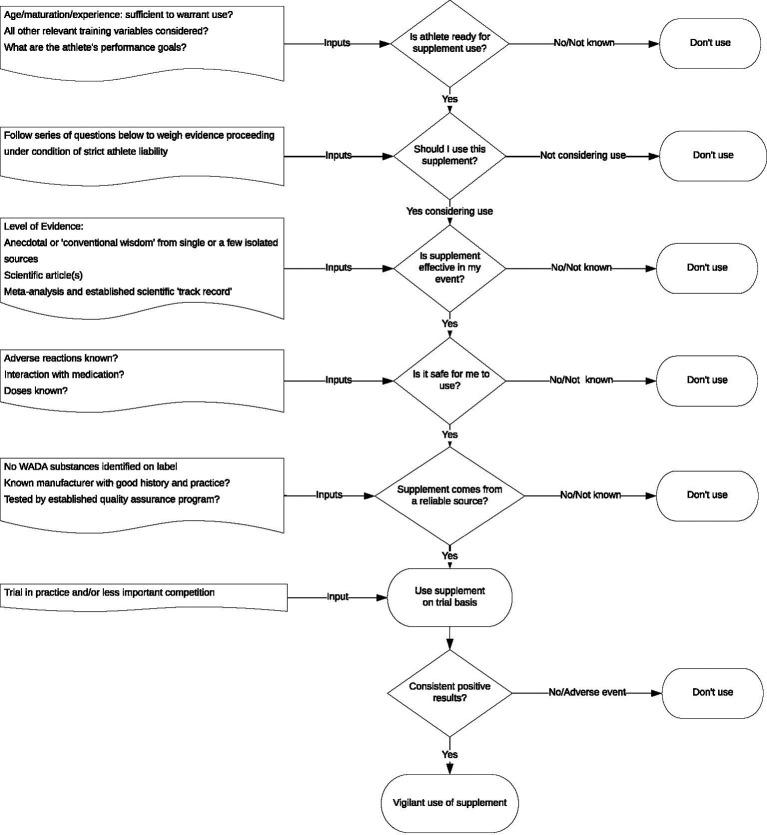
“This flow chart contains a sequence of questions such as ‘Is the athlete ready for supplement use?’, ‘Should I use this supplement?’, ‘Is supplement effective in my event?’, ‘Is it safe for me to use?’, ‘Supplement comes from a reliable source?’, and ‘Consistent positive results?’; after going through these questions,…”
BackgroundMethodApostolidis, A., Mougios, V., Smilios, I., Frangous, M., & Hadjicharalambous, M. (2020) · Journal of the International Society of Sports Nutrition · doi:10.1186/s12970-020-00360-x · Cited by 25
Wirnitzer, K., Motevalli, M. S., Tanous, D., Gregori, M., Wirnitzer, G., Leitzmann, C., Rosemann, T. J., & Knechtle, B. (2021) · Nutrients · doi:10.3390/nu13082776 · Cited by 22
Widespread Supplement Intake and Use of Poor Quality Information in Elite Adolescent Swiss Athletes
Mettler, S., Lehner, G., & Morgan, G. (2022) · International Journal of Sport Nutrition and Exercise Metabolism · doi:10.1123/ijsnem.2021-0043 · Cited by 14
The Impact of Supplements on Sports Performance for the Trained Athlete: A Critical Analysis
Kaufman, M. W., Roche, M. D., & Fredericson, M. (2022) · Current Sports Medicine Reports · doi:10.1249/jsr.0000000000000972 · Cited by 26
“Of note, some athletes have reported temporary red urine or stool or gastrointestinal upset during the initial phase of the supplementation period, this should bemonitored; however, it is not considered to be severe or deleterious to the athlete (17).”
BackgroundInfluentialRocha, P. L. D. A., Lima, A. L. C., Saunders, B., & Reis, C. E. G. (2022) · Nutrients · doi:10.3390/nu14204417 · Cited by 22
“According to the International Olympic Committee and the International Society of Sports Nutrition, doses of caffeine between 3 and 6 mg/kg per body weight, consumed approximately 60 min before physical exercise are effective in improving sports performance [49,50].”
MethodLópez‐Samanes, Á., Pérez‐López, A., Morencos, E., Muñoz, A., Kühn, A., Sánchez-Migallón, V., Moreno-Pérez, V., González, P., Bach-Faig, A., Roberts, J., et al. (2022) · European Journal of Nutrition · doi:10.1007/s00394-022-03052-1 · Cited by 24
“, 2–3 h before) at doses > 5 mmol of nitrate (NO3–) [11] has reported potential ergogenic effects [12].”
BackgroundNutritional Supplements in the Clinical Management of Tendinopathy: A Scoping Review
Burton, I., & McCormack, A. (2023) · Journal of Sport Rehabilitation · doi:10.1123/jsr.2022-0244 · Cited by 24
Fu, T., Liu, H., Shi, C., Zhao, H., Liu, F., & Xia, Y. (2024) · Journal of Health Population and Nutrition · doi:10.1186/s41043-024-00638-9 · Cited by 24
“Nutritional supplements for sports and exercise (NSSE) refer to products containing carbohydrates, proteins, fats, minerals, vitamins, herbs, enzymes, metabolic intermediates (amino acids), or extracts of various plants/ foods [1].”
Background
Metadata
- Authors
- Maughan, R. J., Burke, L. M., Dvorak, J., Larson-Meyer, D. E., Peeling, P., Phillips, S. M., Rawson, E. S., Walsh, N. P., Garthe, I., Geyer, H., Meeusen, R., van Loon, L. J. C., Shirreffs, S. M., Spriet, L. L., Stuart, M., Vernec, A., Currell, K., Ali, V. M., Budgett, R. G., Ljungqvist, A., Mountjoy, M., Pitsiladis, Y. P., Soligard, T., Erdener, U., & Engebretsen, L.
- Affiliations
- University of St Andrews (GB)
- The University of Western Australia (AU)
- McMaster University (CA)
- Messiah University (US)
- Bangor University (GB)
- German Sport University Cologne (DE)
- Vrije Universiteit Brussel (BE)
- University of Guelph (CA)
- BMJ Group (United Kingdom) (GB)
- World Anti-Doping Agency (CA)
- English Institute of Sport (GB)
- International Olympic Committee (CH)
- Corresponding author
- Maughan, Ronald J
- ORCID
- Venue
- British Journal of Sports Medicine
- Publisher
- BMJ
- Published
- 2018-03-14
- Volume
- 52
- Issue
- 7
- Pages
- 439-455
- ISSN
- 0306-3674 (ISSN-L)
- 1473-0480
- PMC
- PMC5867441
- OpenAlex
- W2791581924
- Semantic Scholar
- 8e8c609bb6ec0644a6355188a5e65c8702ee2529
- Cited by
- 1,004
- References
- 184
- Citations by year
- 2026: 123 · 2025: 84 · 2024: 141 · 2023: 143 · 2022: 143 · 2021: 119 · 2020: 125 · 2019: 87 · 2018: 37
- FWCI
- 209.31
- Type
- journal article
- Language
- en
- Open access
- hybrid
- doi.org
- Licence
- cc-by-nc
- Locations
- British Journal of Sports Medicine (publishedVersion, cc-by-nc)
- Europe PMC (PubMed Central) (publishedVersion, cc-by-nc)
- PubMed Central (publishedVersion, cc-by-nc)
- PubMed (publishedVersion)
- Kölner Universitäts PublikationsServer (Universität zu Köln) (publishedVersion)
- Liverpool John Moores University (acceptedVersion)
- University of Brighton Repository (University of Brighton) (submittedVersion)
- University of Brighton Repository (University of Brighton) (submittedVersion, cc-by-nc)
- UWA Profiles and Research Repository (UWA) (submittedVersion, cc-by-nc)
- Research Bank (Australian Catholic University) (submittedVersion)
- Research Publications (Maastricht University) (submittedVersion, cc-by-nc)
- HighWire Press Open Archive (submittedVersion)
- St Andrews Research Repository (St Andrews Research Repository) (submittedVersion, cc-by-nc)
- VUBIR (Vrije Universiteit Brussel) (submittedVersion)
- Research Publications (Maastricht University) (submittedVersion, other-oa)
- Topics
- Social Sciences › Sociology and Political Science › Doping in Sports
- Health Sciences › Medicine › Public Health, Environmental and Occupational Health › Nutrition and Health Studies
- Health Sciences › Medicine › Orthopedics and Sports Medicine › Sports Performance and Training
- Keywords
- dietary supplements, elite athletes, anti-doping rule violations, caffeine, creatine, nitrate, buffering agents, micronutrient deficiency, sports nutrition, supplement safety, ergogenic aids, nutritional assessment
- MeSH terms
- Diet, Humans, Dietary Supplements, Consensus, Athletic Performance, Athletes, Sports Nutritional Physiological Phenomena
About these checks
Registry, retraction, Cites and statistics results are computed, not judged, with one exception: a printed reference that no index lists is read once by a model before it counts as a citation error. Claims are extracted by a model and kept only when their quote appears verbatim in the text; each cited source is then checked, with a model’s help, for whether it says what the claim relies on. Those verdicts can be wrong — read the claim’s quote and the cited source before relying on one.
Statistics and arithmetic are recomputed, not judged.
Confidence bands are shown only for fields calibrated on our annotated test set. None is calibrated yet, so no band is shown.
What counts as a claim ›How we measure confidence ›How we check this ›
Are you an author, or do you see a problem with this page? Request a review
Data sources
Bibliographic data: Semantic Scholar, OpenAlex, Crossref.
Contains information from the Semantic Scholar Academic Graph Datasets, made available under the ODC Attribution License (ODC-BY 1.0).
Semantic Scholar’s data is described in: Kinney, R., et al. (2023). The Semantic Scholar Open Data Platform. arXiv:2301.10140.
