

Pilot evaluation of the Sleep Ninja: A smartphone application for adolescent insomnia symptoms
Open accessThe DOI matches its Crossref record; 53 of the 54 references it cites were found in a registry or an index; 19 of the 41 sources its claims cite were checked for support.
Abstract
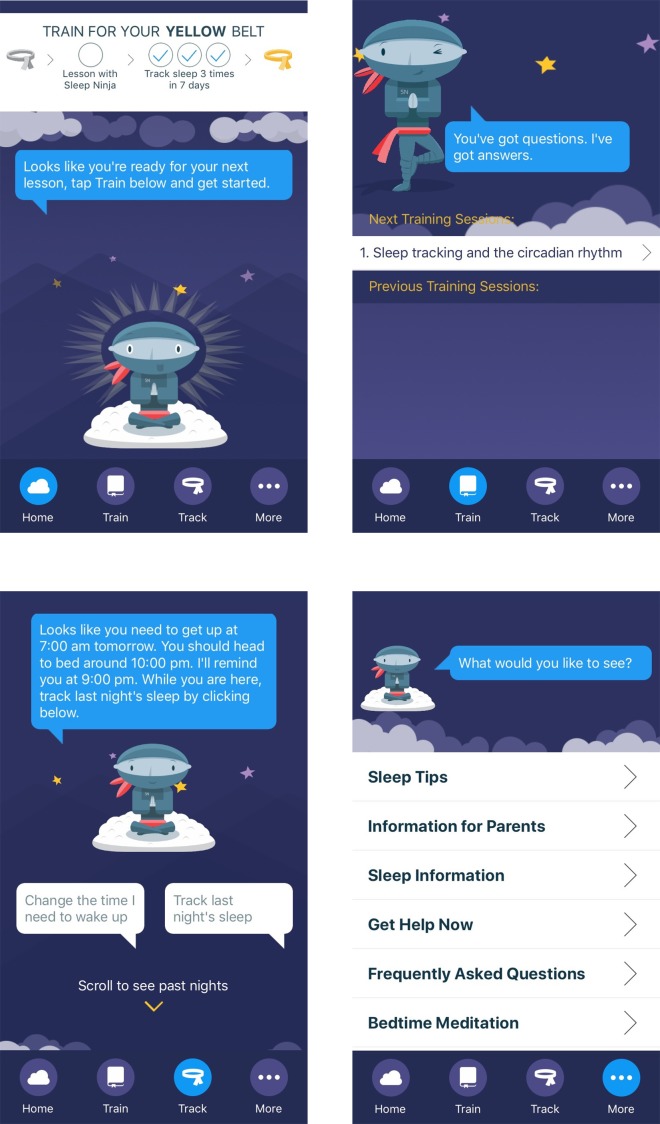
Objectives The aim of this study was to test the feasibility, acceptability and preliminary effects of a recently developed smartphone application, Sleep Ninja, for adolescent sleep difficulties. Setting The study was conducted online with Australian individuals recruited through the community. Participants Participants were 50 young people aged 12-16 years with sleep difficulties. Design A single-Arm pre-post design was used to evaluate feasibility, acceptability and sleep and mental health variables at baseline and postintervention. Intervention Cognitive-behavioural therapy for insomnia informed the development of the Sleep Ninja. The core strategies covered by the app are psychoeducation, stimulus control, sleep hygiene and sleep-related cognitive therapy. It includes six training sessions (lessons), a sleep tracking function, recommended bedtimes based on sleep guidelines, reminders to start a wind-down routine each night, a series of sleep tips and general information about sleep. Users progress through each training session and conclude the 6-week programme with a black belt in sleep. Outcome measures Feasibility was evaluated based on consent rates, adherence and attrition, acceptability was assessed using questionnaires and a poststudy interview, and sleep, depression and anxiety variables were assessed at baseline and postintervention. Results Data indicated that the Sleep Ninja is a feasible intervention and is acceptable to young people. Findings showed that there were significant improvements on sleep variables including insomnia (within-group effect size d=-0.90), sleep quality (d=-0.46), depression (d=-0.36) and anxiety (d=-0.41). Conclusions The Sleep Ninja is a promising intervention that could assist adolescents who experience sleep difficulties. A follow-up randomised controlled trial is now warranted. © Author(s) (or their employer(s)) 2019. Re-use permitted under CC BY-NC. No commercial re-use. See rights and permissions. Published by BMJ.
Overview
CoChat Summary
TL;DR
This pilot study found that the fully automated Sleep Ninja smartphone app was feasible and acceptable for adolescents aged 12–16 years with sleep difficulties. In a single-arm pre–post evaluation, participants showed significant improvements in insomnia, sleep quality, depression, and anxiety, but the authors note that a controlled trial is needed.
Key findings
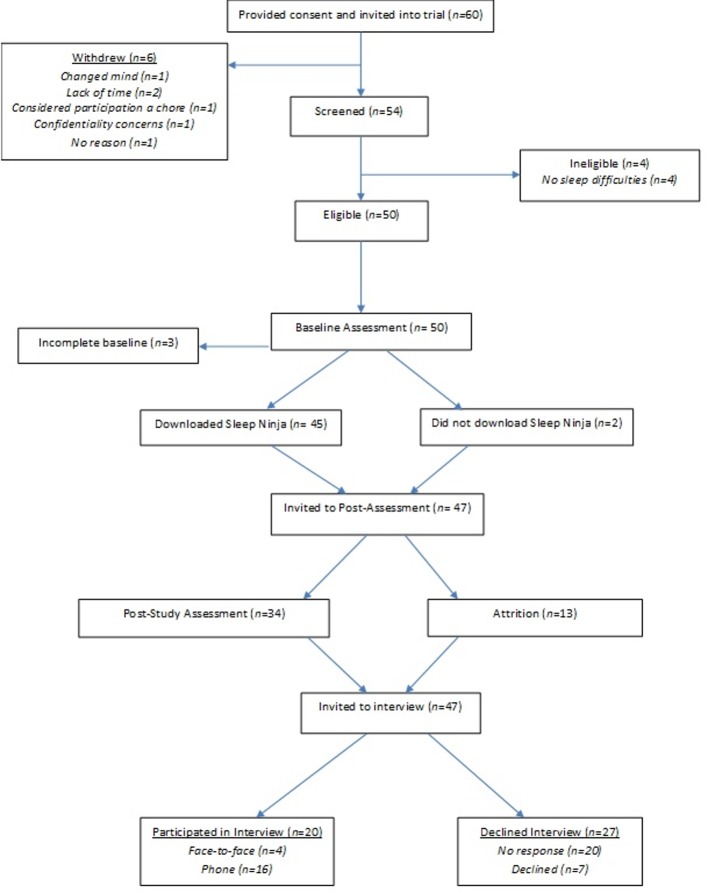
- Recruitment and retention were reasonably strong: >300 enquiries led to 60 eligible consent forms, 50 participants enrolled, 47/50 (94%) completed baseline, and 34/50 (72%) completed the poststudy battery.
- Uptake/adherence was moderate: 45 participants (96% of those who completed baseline) downloaded the app; 82% completed the first lesson, 51% completed 4 of 6 lessons, and 33% completed all 6.
- Acceptability was high: 97% said the app was “easy” or “very easy” to use, 78% found it useful or very useful, 72% reported behaviour change, and 91% would recommend it to a friend.
- Preliminary effects favored improvement from baseline to poststudy: insomnia severity decreased (ISI, β=−4.29, p<0.001, d=−0.90), sleep quality improved (PSQI, β=−1.88, p<0.001, d=−0.46), and depression and anxiety also decreased (PHQ-A, β=−2.60, p<0.001, d=−0.36; GAD-7, β=−2.56, p<0.001, d=−0.41). Sleep diary outcomes also improved, including going to bed 35 min earlier, falling asleep 21 min faster, sleeping 33 min longer, and reducing night awakenings to 0.87 on average.
Methods
- Single-arm pre–post pilot study conducted online with Australian community-recruited adolescents aged 12–16 years who had at least mild insomnia symptoms.
- Sample: 50 participants; inclusion required a smartphone (iOS or Android), email, internet access, and personal plus parental consent.
- Main analysis used multilevel modelling comparing baseline with poststudy outcomes; feasibility was assessed via consent, adherence, and attrition, and acceptability via questionnaires plus semistructured interviews.
Limitations
- Stated by the paper: the sample had relatively minor insomnia symptoms at entry, there was no control group, and sleep outcomes were exclusively self-reported.
- Evident from the text: the study was small (n=50) and therefore preliminary, so the reported effects cannot establish causality or separate intervention effects from time or other confounders.
Model-written summary. Check it against the paper before relying on it.
Integrity signals
Registry
Cites
Statistics
Figures
Verification
Claims the paper makes
14 Valid · 1 Not valid · 13 Not checked · 81 Own results and interpretations
At least one cited source doesn’t support this claim or points to a different paper, and none confirmed it — see the verdicts below.
In the paper
“Currently, there are no digital CBT-I programmes that are commercially available for youth.21”
§ Pilot evaluation of the Sleep Ninja: a smartphone application for adolescent insomnia symptoms > Introduction
What the sources say
- Disputedcites [21] Werner-Seidler A, Johnston L, Christensen H Digitally-delivered cognitive-behavioural therapy for youth insomnia: A systematic review. Internet Interv 2018; 11: 71– 8. 10.1016/j.invent.2018.01.007 30135762 PMC6084877 sourceExperimental — accuracy not yet measured
The Results (Studies meeting inclusion criteria; page unavailable) describe a commercially available online CBT-I program, “Insomnia Relief,” tested in university students. Because the review includes that student sample among its studies of young people, it contradicts the claim that no such program is commercially available for youth. (LLM, conf=0.88)
Checked by a reasoning model — may be wrong.
plain- Asserted: passes — The authors put it forward as true.
- Checkable: passes — It can be checked against evidence.
- Load-bearing: passes — The paper’s conclusions depend on it.
- Based: passes — The paper gives a reason why it holds.
- Disputed
The cited sources support only part of this claim — read each source’s verdict below.
In the paper
“with adolescents showing a strong preference for digital delivery (97%) when given the choice between face-to-face and digital CBT-I.17”
§ Pilot evaluation of the Sleep Ninja: a smartphone application for adolescent insomnia symptoms > Introduction
What the sources say
- Partly supportedcites [17] de Bruin EJ, Oort FJ, Bögels SM, et al Efficacy of internet and group-administered cognitive behavioral therapy for insomnia in adolescents: a pilot study. Behav Sleep Med 2014; 12: 235– 54. 10.1080/15402002.2013.784703 23767888 sourceExperimental — accuracy not yet measured
The introductory passage labeled Abstract says online CBT-I may be a preferred treatment for adolescents. It does not report a 97% preference or a choice between face-to-face and digital CBT-I; the Participants section instead describes assignment to Internet or group treatment. (LLM, conf=0.86)
boosted- Asserted: passes — The authors put it forward as true.
- Checkable: passes — It can be checked against evidence.
- Load-bearing: passes — The paper’s conclusions depend on it.
- Based: passes — The paper gives a reason why it holds.
- Partly supported
The sources with a verdict support this claim; the rest weren’t checked yet, have no full text we could read, or their verdicts aren’t rated yet.
In the paper
“there is accumulating evidence to support the use of digitally delivered CBT-I in both adults and young people.16–19”
§ Pilot evaluation of the Sleep Ninja: a smartphone application for adolescent insomnia symptoms > Introduction
What the sources say
- Supportedcites [16] de Bruin EJ, Bögels SM, Oort FJ, et al Efficacy of Cognitive Behavioral Therapy for Insomnia in Adolescents: A Randomized Controlled Trial with Internet Therapy, Group Therapy and A Waiting List Condition. Sleep 2015; 38: 1913– 26. 10.5665/sleep.5240 26158889 PMC4667374 source
This adolescent trial supports the young-people component of the multiply cited sentence. The Discussion (page unavailable) reports that internet-delivered CBT-I was effective for adolescent insomnia and recommends promoting it as a treatment option. (LLM, conf=0.91)
- Supportedcites [17] de Bruin EJ, Oort FJ, Bögels SM, et al Efficacy of internet and group-administered cognitive behavioral therapy for insomnia in adolescents: a pilot study. Behav Sleep Med 2014; 12: 235– 54. 10.1080/15402002.2013.784703 23767888 source
The paper's background section (labelled Abstract in our copy) describes five studies reporting positive effects of online CBT-I in adults. The Discussion reports that Internet-delivered CBT-I alleviated insomnia symptoms in adolescents in this pilot study. Together, these passages support the claim of accumulating evidence in both age groups. (LLM, conf=0.91)
- Not checked — no full text of the sourcecites [18] Okajima I, Komada Y, Inoue Y A meta-analysis on the treatment effectiveness of cognitive behavioral therapy for primary insomnia. Sleep Biol Rhythms 2011; 9: 24– 34. 10.1111/j.1479-8425.2010.00481.x source
- Not checked — no full text of the sourcecites [19] Zachariae R, Lyby MS, Ritterband LM, et al Efficacy of internet-delivered cognitive-behavioral therapy for insomnia - A systematic review and meta-analysis of randomized controlled trials. Sleep Med Rev 2016; 30: 1– 10. 10.1016/j.smrv.2015.10.004 26615572 source
plainstates an association- Asserted: passes — The authors put it forward as true.
- Checkable: passes — It can be checked against evidence.
- Load-bearing: passes — The paper’s conclusions depend on it.
- Based: passes — The paper gives a reason why it holds.
- Supported
The sources with a verdict support this claim; the rest weren’t checked yet, have no full text we could read, or their verdicts aren’t rated yet.
In the paper
“Insomnia is not only a symptom of depression, but is a common precursor, with high-quality longitudinal data having established insomnia as an independent risk factor for depression onset.5–7”
§ Pilot evaluation of the Sleep Ninja: a smartphone application for adolescent insomnia symptoms > Introduction
What the sources say
- Not checked — no full text of the sourcecites [5] Baglioni C, Battagliese G, Feige B, et al Insomnia as a predictor of depression: a meta-analytic evaluation of longitudinal epidemiological studies. J Affect Disord 2011; 135(1-3): 10– 19. 10.1016/j.jad.2011.01.011 21300408 source
- Supportedcites [6] Franzen PL, Buysse DJ Sleep disturbances and depression: risk relationships for subsequent depression and therapeutic implications. Dialogues Clin Neurosci 2008; 10: 473– 81. 19170404 PMC3108260 source
The section “Insomnia is a risk factor for developing depression” reports longitudinal studies in which insomnia predicted new-onset depression, including after adjustment for baseline depressive symptoms or other risk factors. The paper cautions that these associations do not prove causation, but the claim describes insomnia as a risk factor, not a cause. Page numbers were not supplied. (LLM, conf=0.90)
- Not checked — no full text of the sourcecites [7] Riemann D, Voderholzer U Primary insomnia: a risk factor to develop depression? J Affect Disord 2003; 76(1-3): 255– 9. 10.1016/S0165-0327(02)00072-1 12943956 source
boostedstates a cause- Asserted: passes — The authors put it forward as true.
- Checkable: passes — It can be checked against evidence.
- Load-bearing: passes — The paper’s conclusions depend on it.
- Based: passes — The paper gives a reason why it holds.
The sources with a verdict support this claim; the rest weren’t checked yet, have no full text we could read, or their verdicts aren’t rated yet.
In the paper
“There is emerging evidence that addressing insomnia in individuals with concurrent insomnia and depression improves both sleep and depression outcomes.8–10”
§ Pilot evaluation of the Sleep Ninja: a smartphone application for adolescent insomnia symptoms > Introduction
What the sources say
- Not checked — no full text of the sourcecites [8] Ashworth DK, Sletten TL, Junge M, et al A randomized controlled trial of cognitive behavioral therapy for insomnia: An effective treatment for comorbid insomnia and depression. J Couns Psychol 2015; 62: 115– 23. 10.1037/cou0000059 25867693 source
- Supportedcites [9] Manber R, Edinger JD, Gress JL, et al Cognitive behavioral therapy for insomnia enhances depression outcome in patients with comorbid major depressive disorder and insomnia. Sleep 2008; 31: 489– 95. 10.1093/sleep/31.4.489 18457236 PMC2279754 source
The Discussion (page not available in our copy) reports that, among patients with major depressive disorder and insomnia, adding cognitive behavioral therapy for insomnia to antidepressant medication produced higher remission rates for both depression and insomnia than the control treatment. This supports the citing sentence’s qualified description of emerging evidence. (LLM, conf=0.92)
- Not checked — no full text of the sourcecites [10] Wagley JN, Rybarczyk B, Nay WT, et al Effectiveness of abbreviated CBT for insomnia in psychiatric outpatients: sleep and depression outcomes. J Clin Psychol 2013; 69: 1043– 55. 10.1002/jclp.21927 23109266 source
hedgedstates a cause- Asserted: passes — The authors put it forward as true.
- Checkable: passes — It can be checked against evidence.
- Load-bearing: passes — The paper’s conclusions depend on it.
- Based: passes — The paper gives a reason why it holds.
62 more claims · 3 with their cited sources checked
Create a free account to see all 109 claims and every source verdict.
- Probably not a substantial claim. 17
- It may state two separate claims as one. 33
- The quote only partly states this claim. 1
Citations
Cites
Diagnostic and Statistical Manual of Mental Disorders
American Psychiatric Association (2013) · doi:10.1176/appi.books.9780890425596 · Cited by 116,369
The PHQ-9: Validity of a brief depression severity measure
Kroenke, K., Spitzer, R. L., & Williams, J. B. W. (2001) · Journal of General Internal Medicine · doi:10.1046/j.1525-1497.2001.016009606.x · Cited by 44,910 · cited 2×
“It is comparable to the PHQ-9 in terms of diagnosing depressive disorders.(32) 33 Each item is scored on a 4-point scale and summed together to form a total depression score ranging from 0 to 24.”
Method(1998) · Cited by 36,049
A Brief Measure for Assessing Generalized Anxiety Disorder: The GAD-7
Spitzer, R. L., Kroenke, K., Williams, J. B. W., & Löwe, B. (2006) · Archives of Internal Medicine · doi:10.1001/archinte.166.10.1092 · Cited by 31,765 · cited 4×
“The Generalised Anxiety Disorder 7-item scale (GAD-7) evaluates symptoms of GAD.34 All items are scored on a scale from 0 (not at all) to 3 (nearly every day).”
BackgroundMethodInfluentialDeveloping and evaluating complex interventions: the new Medical Research Council guidance
Craig, P., Dieppe, P., Macintyre, S., Michie, S., Nazareth, I., & Petticrew, M. (2008) · BMJ · doi:10.1136/bmj.a1655 · Cited by 10,995
Validation of the Insomnia Severity Index as an outcome measure for insomnia research
Bastien, C. (2001) · Sleep Medicine · doi:10.1016/s1389-9457(00)00065-4 · Cited by 8,067 · cited 3×
“The ISI is a psychometrically sound, seven-item self-report measure of insomnia symptoms over the previous 2 weeks.(24) 25 Responses are reported on a Likert scale from 0 to 4, producing total scores of 0–28.”
BackgroundInfluentialThe PHQ-8 as a measure of current depression in the general population
Kroenke, K., Strine, T. W., Spitzer, R. L., Williams, J. B. W., Berry, J. T., & Mokdad, A. H. (2009) · Journal of Affective Disorders · doi:10.1016/j.jad.2008.06.026 · Cited by 5,121
Gulliver, A., Griffiths, K. M., & Christensen, H. (2010) · BMC Psychiatry · doi:10.1186/1471-244x-10-113 · Cited by 3,292 · cited 1×
“This preference may in part be explained by the fact that young people are reluctant to seek help for psychological issues, for reasons that include stigma and a preference to manage the problem themselves.(20) Sleep is typically less stigmatised than disorders like depression, suggesting that targetting sleep it may…”
BackgroundSelf-citationBaglioni, C., Battagliese, G., Feige, B., Spiegelhalder, K., Nissen, C., Voderholzer, U., Lombardo, C., & Riemann, D. (2011) · Journal of Affective Disorders · doi:10.1016/j.jad.2011.01.011 · Cited by 2,779 · cited 1×
“For example, a recent meta-analysis found that insomnia was associated with a greater than twofold increase in depression risk.(5) Although depression has multiple causes and maintaining factors that go beyond the presence of sleep problems, the literature suggests that sleep plays an important role, and targeting sle…”
The consensus sleep diary: standardizing prospective sleep self-monitoring
Carney, C. E., Buysse, D. J., Ancoli-Israel, S., Edinger, J. D., Krystal, A. D., Lichstein, K. L., & Morin, C. M. (2012) · Sleep · doi:10.5665/sleep.1642 · Cited by 2,172
Cited by
Systematic review and meta-analysis of the effectiveness of chatbots on lifestyle behaviours
Singh, B., Olds, T., Brinsley, J., Dumuid, D., Virgara, R., Matricciani, L., Watson, A., Szeto, K., Eglitis, E., Miatke, A., et al. (2023) · npj Digital Medicine · doi:10.1038/s41746-023-00856-1 · Cited by 224
Bauducco, S., Pillion, M., Bartel, K., Reynolds, C., Kahn, M., & Gradisar, M. (2024) · Sleep Medicine Reviews · doi:10.1016/j.smrv.2024.101933 · Cited by 102
“Additionally, adolescents may use apps specifically designed for emotion regulation, such as those offering guided meditation, mindfulness exercises, or therapy resources [75,76].”
BackgroundFitzpatrick, O. M., Carson, A., & Weisz, J. R. (2020) · Child Psychiatry & Human Development · doi:10.1007/s10578-020-01089-z · Cited by 109
Eaton, C. K., Vallejo, N., McDonald, X., Wu, J., Rodríguez, R., Muthusamy, N., Mathioudakis, N. N., & Riekert, K. A. (2024) · Journal of Medical Internet Research · doi:10.2196/50508 · Cited by 142
Ueafuea, K., Boonnag, C., Sudhawiyangkul, T., Leelaarporn, P., Gulistan, A., Chen, W., Mukhopadhyay, S. C., Wilaiprasitporn, T., & Piyayotai, S. (2020) · IEEE Sensors Journal · doi:10.1109/jsen.2020.3046259 · Cited by 84
“, another team developed a smartphone application, Sleep Ninja, to tackle sleep difficulties in adolescents [90].”
BackgroundMorin, C. M., Bei, B., Bjorvatn, B., Poyares, D. R., Spiegelhalder, K., & Wing, Y. K. (2023) · Sleep Medicine · doi:10.1016/j.sleep.2023.07.001 · Cited by 69
Werner‐Seidler, A., Huckvale, K., Larsen, M. E., Calear, A. L., Maston, K., Johnston, L., Torok, M. H., O’Dea, B., Batterham, P. J., Schweizer, S., et al. (2020) · Trials · doi:10.1186/s13063-019-3901-7 · Cited by 62
Self-citationWerner‐Seidler, A., Li, S. H., Spanos, S., Johnston, L., O'Dea, B., Torok, M., Ritterband, L., Newby, J. M., Mackinnon, A. J., & Christensen, H. (2023) · Journal of Child Psychology and Psychiatry · doi:10.1111/jcpp.13795 · Cited by 42
“Both uncontrolled trials demonstrated a reduction in insomnia symptoms, depression and anxiety following completion of the intervention (Cliffe, Croker, Denne, Smith, & Stallard, 2020; Werner-Seidler et al., 2019).”
BackgroundMethodInfluentialSelf-citationLi, S., Graham, B. M., & Werner‐Seidler, A. (2021) · JMIR Formative Research · doi:10.2196/22498 · Cited by 53
Self-citationd'Halluin, A., Costa, M., Morgiève, M., & Sebbane, D. (2023) · Journal of Medical Internet Research · doi:10.2196/43102 · Cited by 44
“For example, users can customize the interface and enable or disable geographical location [34,52].”
Werner‐Seidler, A., Maston, K., Calear, A. L., Batterham, P. J., Larsen, M. E., Torok, M., O’Dea, B., Huckvale, K., Beames, J. R., Brown, L., et al. (2023) · International Journal of Methods in Psychiatric Research · doi:10.1002/mpr.1954 · Cited by 37
Self-citationDigital technologies to support adolescents with depression and anxiety: review
Jones, R. B., Hussain, F., Agha, S. S., Weavers, B., Lucassen, M. F. G., Merry, S., Stallard, P. N., Simpson, S. A., & Rice, F. J. (2022) · BJPsych Advances · doi:10.1192/bja.2022.3 · Cited by 49
Development and Validation of the Adolescent Insomnia Questionnaire
Bromberg, M. H., de la Vega, R., Law, E. F., Zhou, C., & Palermo, T. M. (2019) · Journal of Pediatric Psychology · doi:10.1093/jpepsy/jsz073 · Cited by 38
“As expected, we found a large, positive correlation between the AIQ total and subscale scores with measures of insomnia symptoms (ISI) and sleep quality (ASWS) (range .47–.88, p’s .01) which supports convergent validity.”
InfluentialCarmona, N. E., Usyatynsky, A., Kutana, S., Corkum, P. V., Henderson, J. L., McShane, K., Shapiro, C. M., Sidani, S., Stinson, J., & Carney, C. E. (2021) · JMIR Formative Research · doi:10.2196/25392 · Cited by 37
Buttazzoni, A. N., Brar, K., & Minaker, L. M. (2021) · Journal of Medical Internet Research · doi:10.2196/16490 · Cited by 41
Baka, E., Tan, Y.-R., Wong, B. L. H., Xing, Z., & Yap, P. (2025) · Oxford Open Digital Health · doi:10.1093/oodh/oqaf005 · Cited by 31
Li, S., Corkish, B., Richardson, C. E., Christensen, H. M., & Werner‐Seidler, A. (2023) · Journal of Sleep Research · doi:10.1111/jsr.13932 · Cited by 33
Self-citationBirrell, L., Debenham, J., Furneaux-Bate, A., Prior, K., Spallek, S., Thornton, L. K., Chapman, C., & Newton, N. C. (2023) · Journal of Medical Internet Research · doi:10.2196/45216 · Cited by 28
“For example, Werner-Seidler et al [38] found that 47% of their participants aged 12 to 16 years in an insomnia mobile cognitive behavioral therapy intervention did not use the app because there was too much text to read.”
Wanniarachchi, V. U., Greenhalgh, C., Choi, A., & Warren, J. (2025) · Frontiers in Digital Health · doi:10.3389/fdgth.2025.1500220 · Cited by 46
Ribaut, J., Dabbs, A. D., Dobbels, F., Teynor, A., Mess, E. V., Hoffmann, T., & Geest, S. D. (2024) · JMIR mhealth and uhealth · doi:10.2196/48625 · Cited by 25
Overcoming barriers to mHealth co-design in low- and middle-income countries: a research toolkit
Poulsen, A., Hickie, I. B., Alam, M., Crouse, J. J., Ekambareshwar, M., Loblay, V., Song, Y. J. C., & LaMonica, H. M. (2024) · Information Technology for Development · doi:10.1080/02681102.2023.2295480 · Cited by 22
“At the intersection of technology and healthcare, co-design is being used to create and implement e ff ective digital health innovations, including telehealth (Beattie et al., 2020), eHealth games (Thabrew et al., 2021), and mHealth (Werner-Seidler et al., 2019).”
Evidence Base Update on Assessing Sleep in Youth
Meter, A. V., & Anderson, E. A. (2020) · Journal of Clinical Child & Adolescent Psychology · doi:10.1080/15374416.2020.1802735 · Cited by 22
Australian psychologists experiences with digital mental health: a qualitative investigation
Scott, S., Knott, V., Finlay-Jones, A. L., & Mancini, V. O. (2022) · Journal of Technology in Behavioral Science · doi:10.1007/s41347-022-00271-5 · Cited by 18
“…of digitally mental health services with demonstrated efficacy for many types of mental health conditions and personal contexts (Baus & Bouchard, 2014; Hilvert-Bruce et al., 2012; Orman & O’Dea, 2018; Park et al., 2019; Tait et al., 2019; Titov et al., 2016; Werner-Seidler et al., 2019).”
BackgroundMathews, A., Gibbons, N., Harrison, E., Ukoumunne, O. C., & Stallard, P. N. (2022) · Behavioral Sleep Medicine · doi:10.1080/15402002.2022.2063866 · Cited by 22
“With adolescents, Werner-Seidler et al. (2019) in a community study with volunteers found that whilst 78.7% activated the unguided online Sleep Ninja programme, only 33% completed all sessions.”
BackgroundInfluentialHeynemann, S., Philip, J., & McLachlan, S.-A. (2021) · Supportive Care in Cancer · doi:10.1007/s00520-020-05969-x · Cited by 15
Rezapour, T., Rafei, P., Baldacchino, A., Conrod, P., Dom, G., Fishbein, D. H., Kazemi, A., Hendriks, V. M., Newton, N. C., Riggs, N. R., et al. (2024) · Neuroscience & Biobehavioral Reviews · doi:10.1016/j.neubiorev.2024.105578 · Cited by 18
Cleary, M. A., Richardson, C. E., Ross, R. J., Heussler, H., Wilson, A. C., Downs, J. A., & Walsh, J. H. (2025) · Journal of Sleep Research · doi:10.1111/jsr.14466 · Cited by 17
“Five studies reported longer-term follow-up assessment of sleep outcomes after the post-intervention assessment, with follow-up duration ranging from 2 to 6 months (de Bruin et al., 2014; de Bruin, Bögels, et al., 2015a; Georén et al., 2022; Werner-Seidler et al., 2023; Zetterqvist et al., 2020).”
InfluentialExploring the Role of Mobile Apps for Insomnia in Depression: Systematic Review
Chiu, Y.-H., Lee, Y.-F., Lin, H., & Cheng, L. (2024) · Journal of Medical Internet Research · doi:10.2196/51110 · Cited by 18
“The target audience for these apps included young people (aged 13-25 years; n=12) [5,41,43,45,46,48,49,52,54-57] and adults (aged 18 years and older; n=11) [42-47 The primary purpose of mobile apps is to provide personalized support [5,50-52, 54, 56, 57 ].”
Fatima, Y., Senden, R. V., Bucks, R. S., Ashby, C., Sullivan, D., Smith, S. S., Blunden, S. L., Yiallourou, S. R., Eastwood, P. R., Mamun, A. A., et al. (2025) · SLEEP Advances · doi:10.1093/sleepadvances/zpaf012 · Cited by 11
“Accounting for 10% attrition, a minimum of 113 participants will be needed for the study [50, 51].”
The future of paediatric sleep medicine: a blueprint for advancing the field
Schlarb, A. A., Blunden, S. L., Brand, S., Bruni, O., Corkum, P. V., Horne, R. S. C., Ipsiroglu, O., Quante, M., Spruyt, K., & Owens, J. (2025) · Journal of Sleep Research · doi:10.1111/jsr.14482 · Cited by 12
Nicholas, J., Mills, B., Hansen, S. S., Bright, S. J., Scott, J. J., Ridout, I., Watson, J., Boyd, H., Brook, L., & Hopper, L. (2023) · Computers in Human Behavior · doi:10.1016/j.chb.2023.107774 · Cited by 15
Rowan, A. B., Magnante, A. T., Urh, N., & Figueroa, L. M. (2024) · Journal of Clinical Psychology in Medical Settings · doi:10.1007/s10880-023-09992-y · Cited by 9
“Five studies assessed sleep efficiency using subjective (four studies) or objective (one study) methods of sleep monitoring with three finding baseline to post-treatment differences (Dupuy et al., 2021; Leonard & Duncan, 2020; Werner-Seidler et al., 2019).”
InfluentialGregory, A. M., Rutter, M. K., Madrid‐Valero, J. J., Bennett, S. D., Shafran, R., & Buysse, D. J. (2023) · Journal of Child Psychology and Psychiatry · doi:10.1111/jcpp.13732 · Cited by 10
Lawrence‐Sidebottom, D., Huffman, L. G., Beam, A. B., Parikh, A., Guerra, R., Roots, M., & Huberty, J. (2024) · Digital Health · doi:10.1177/20552076241249928 · Cited by 8
Nicholas, J., Mills, B., Hansen, S. S., Bright, S. J., Boyd, H., Brook, L., Watson, J., & Hopper, L. (2022) · Australian and New Zealand Journal of Public Health · doi:10.1111/1753-6405.13287 · Cited by 12
Can Digital Therapeutics Open a New Era of Sleep Medicine?
Park, K., Lee, S., & Lee, E. M. (2021) · Chronobiology in Medicine · doi:10.33069/cim.2021.0028 · Cited by 11
“Sleep NinjaTM (Black Dog Institute), a DTx for insomnia targeting adolescents, has also been shown to significantly improve sleep indicators [24].”
ResultInfluentialSubotic-Kerry, M., Werner‐Seidler, A., Corkish, B., Batterham, P. J., Sicouri, G., Hudson, J. L., Christensen, H. M., O’Dea, B., & Li, S. (2023) · BMC Psychiatry · doi:10.1186/s12888-023-05185-x · Cited by 13
“This study will utilise an online recruitment strategy targeting parents/guardians of children aged 10 to 12 years as this recruitment method has been established to recruit parents and young people [22].”
BackgroundMethodInfluentialSelf-citationBennett, S., Johnston, M., Treneman‐Evans, G., Denison‐Day, J., Duffy, A., Brigden, A., Kuberka, P., Christoforou, N., Ritterband, L. M., Koh, J., et al. (2024) · JMIR Human Factors · doi:10.2196/63341 · Cited by 9
“Similarly, Sleep Ninja was developed in partnership with Australian adolescents through a series of focus groups focusing on the app design [46,47].”
BackgroundWerner‐Seidler, A., Maston, K., Calear, A. L., et al. (2022) · doi:10.31234/osf.io/x6vdj · Cited by 7
Self-citationUsability of an augmented reality bedtime routine application for autistic children
Ahmadian, P., Cardy, R. E., Luca, G. D., & Kushki, A. (2024) · Assistive Technology · doi:10.1080/10400435.2024.2338277 · Cited by 9
“In the area of sleep education, there is encouraging evidence to support the acceptability, feasibility, and effectiveness (Quante et al., 2019; Werner-Seidler et al., 2019) of smartphone-based applications for the general pediatric population.”
Symptom network analysis of insomnia-depression-anxiety-stigma in tuberculosis patients
Liu, X. H., Qiu, X., Lan, H., Diao, L., Huang, W., Wen, Y., Feng, M., & Tang, X. (2025) · Frontiers in Psychiatry · doi:10.3389/fpsyt.2024.1513524 · Cited by 15
Chiu, Y.-H., Lee, Y.-F., Lin, H., & Cheng, L. (2025) · Health Informatics Journal · doi:10.1177/14604582251396428 · Cited by 10
“12 To address these limitations, this study developed a chatbot embedded in the LINE platform (a mobile communication app like WhatsApp but with more integrated features, widely used in Japan and Taiwan; see https://www.digitalmarketingforasia.com/line-most-popular-app-in-japan/).”
Racial and ethnic disparities in insufficient sleep among US in infants and preschoolers
Li, Y., Lin, S. X., Cheslack‐Postava, K., Tang, H., Fan, F., & Hoven, C. W. (2023) · Sleep Health · doi:10.1016/j.sleh.2022.11.003 · Cited by 7
Turan, N., & Çetintaş, Ş. (2021) · Journal of Evidence-Based Psychotherapies · doi:10.24193/jebp.2021.2.11 · Cited by 7
Sleep well, worry less: A co-design study for the development of the SMILE app
Cormier, M., Orr, M., Käser, A., MacDonald, H., Chorney, J. M. L., & Meier, S. M. (2024) · Digital Health · doi:10.1177/20552076241283242 · Cited by 8
“19 Sleep can be successfully measured via mobile sensing.”
Pape, L. M., Antypa, N., Spinhoven, P., van Straten, A., Struijs, S. Y., Struijs, S., Garnefski, N., Kraaij, V., Salemink, E., Hurks, P. P. M., et al. (2025) · Scientific Reports · doi:10.1038/s41598-025-04891-8 · Cited by 7
“Based on previous similar studies 23 , we intended to include a minimum of 50 participants to examine our main study objectives.”
Evaluation and treatment of sleep disorders in adolescents with depression; a scoping review
Mensah, S. O., Duan, X., Ling, Y., Xu, F., You, Y., Li, L., Wei, Y., & Chen, X. (2025) · BMC Psychiatry · doi:10.1186/s12888-025-07652-z · Cited by 6
“…28], and there are wonderful opportunities on the digital front with things like the Sleep Ninja app [28] or other smartphone-based CBT programs [8, 13] offering amazing potential to promote accessibility, particularly in low-resource areas or adolescent populations who may be less willing to…”
Bi, J. (2022) · Occupational Therapy International · doi:10.1155/2022/8489077 · Cited by 6
“In addition, the network relationship of social activities and network activities will replace the reality, which often leads to serious conflicts between the network and various life events and relationships in the real world [14], and therefore when networking more, it is prone to tension, avoidance and anxiety, and…”
BackgroundRetractedThorshov, T. C., Øverby, C. T., Hansen, D. D., Bong, W. K., Skifjeld, K., Hurlen, P., Dammen, T., Moen, A., & Hrubos‐Strøm, H. (2023) · Sleep Medicine X · doi:10.1016/j.sleepx.2023.100093 · Cited by 7
“Time consumption and repetitiveness were reported as reasons for non-adherence to filling in the sleep-diary, which is also reported in previous studies [21,31].”
ResultStanding on the shoulders of giants: A decade of research on digital pediatric sleep interventions
Williamson, A. A. (2021) · Pediatric Pulmonology · doi:10.1002/ppul.25530 · Cited by 3
“lescents with insomnia demonstrated initial feasibility, acceptability, and positive sleep outcomes.(5) There are additional examples of digital pediatric sleep interventions in the extant literature (see Meltzer et al.”
BackgroundBack to Basics: Lifestyle Interventions for Adolescent Depression
Benheim, T. S., Dalal, M., Holcomb, J. M., Dutta, A., Hosker, D. K., Jellinek, M. S., & Murphy, J. M. (2022) · Harvard Review of Psychiatry · doi:10.1097/hrp.0000000000000343 · Cited by 5
Darker, C. D., Moore, E., Flynn, E., O’Neill, M., Doherty, L., McMahon, J., McLoughlin, O., Rouine, E., Ivers, J., Allwright, S., et al. (2021) · Health Promotion International · doi:10.1093/heapro/daab071 · Cited by 4
Duffy, A., Bennett, S., Yardley, L., & Moreno, S. (2025) · EAI Endorsed Transactions on Pervasive Health and Technology · doi:10.4108/eetpht.11.9416 · Cited by 5
Çağlar, S., & Kesgin, M. T. (2024) · Sleep And Breathing · doi:10.1007/s11325-024-03138-6 · Cited by 4
Thorshov, T. C., Dammen, T., Moen, A., Einvik, G., & Hrubos‐Strøm, H. (2024) · Sleep Medicine · doi:10.1016/j.sleep.2024.11.028 · Cited by 3
Werner‐Seidler, A., Li, S. H., Spanos, S., et al. (2022) · SSRN Electronic Journal · doi:10.2139/ssrn.4200346 · Cited by 3
Self-citationSo, R. W. L., Chan, K. Y., Cheng, C. C. W., Chan, N., Li, S. X., Chan, J. W. Y., Chau, S. W. H., Wing, Y. K., & Li, T. M. H. (2026) · PLOS Digital Health · doi:10.1371/journal.pdig.0001170 · Cited by 2
Rigney, G., Keys, E., Johnson, M., Paul, J., & Corkum, P. V. (2021) · Cambridge University Press eBooks · doi:10.1017/9781108682053.016 · Cited by 2
Poulsen, A., Hickie, I. B., Alam, M., et al. (2023) · Studies in health technology and informatics · doi:10.3233/shti230377 · Cited by 2
Marino, C., Andrade, B. F., Aitken, M., Bonato, S., Haltigan, J. D., Wang, W., & Szatmári, P. (2020) · BMJ Open · doi:10.1136/bmjopen-2019-034606 · Cited by 3
The Virtual Co-design of Sleep Solved – A Case Study of an Educational Sleep App Designed with Teens
Duffy, A., Bennett, S., Yardley, L., & Moreno, S. (2025) · Lecture notes of the Institute for Computer Sciences, Social Informatics and Telecommunications Engineering · doi:10.1007/978-3-031-85575-7_1 · Cited by 2
Sleep-Related Problems in Childhood and Adolescence
Tikotzky, L., Kahn, M., Gradisar, M., & Bruni, O. (2025) · Oxford University Press eBooks · doi:10.1093/oxfordhb/9780197602751.013.46 · Cited by 1
Bennett, S., Lewis, G., Chambers, S., Johnston, M., Denison‐Day, J., Duffy, A., Treneman‐Evans, G., Kuberka, P., Christoforou, N., Ritterband, L. M., et al. (2026) · JMIR Formative Research · doi:10.2196/82410 · Cited by 2
“For example, adolescents using the Sleep Ninja app can work toward a black belt in sleep at the end of a 6-week program [75], whereas users who meet their sleep and wake-up time goals in the Sleep Town app could collect a variety of buildings and coins [76].”
Simon, L., Steubl, L., Gossmann, M., Stach, M., Terhorst, Y., Witte, J., Reis, O., Kölch, M., Berger, C., Pryss, R., et al. (2026) · Sleep Medicine · doi:10.1016/j.sleep.2026.108814 · Cited by 2
Tougas, M. E., Rigney, G., Chambers, C. T., Smith, I. M., Mugford, J., Keeler, L., Rajda, M., & Corkum, P. V. (2023) · Children · doi:10.3390/children10101692 · Cited by 5
Sicouri, G., Daniel, E. K., Salemink, E., Mackinnon, A. J., Allsop, A., & Hudson, J. L. (2024) · BMJ Open · doi:10.1136/bmjopen-2023-078652 · Cited by 1
“One way to promote engagement of a new intervention is to involve end-users in the design process, 39–42 which has been shown to lead to interventions that are feasible, acceptable and effective, 41 42 yet this has never been done for child CBM-I interventions.”
BackgroundMoghadam, S., Husted, M., Aznar, A., & Gray, D. (2024) · JMIR Formative Research · doi:10.2196/51322 · Cited by 2
Can resetting the body clock help with depression?
DeWeerdt, S. (2022) · Nature · doi:10.1038/d41586-022-02211-y · Cited by 1
Mental Health Apps for Children - Support or Downside? A Scoping Review. (Preprint)Preprint
Käferböck, A.-S. (2022) · doi:10.2196/preprints.39877
Fostering Resilience and Well-Being Among Pre-Health Students
Frame, L. A., Dyer, K. A., Powell, C. A., Dawson, D., Warren, A., Corr, P. G., & Siglin, M. (2022) · Advances in medical education, research, and ethics (AMERE) book series · doi:10.4018/978-1-6684-5969-0.ch007
Carmona, N. E., Usyatynsky, A., Kutana, S., Corkum, P. V., Henderson, J. L., McShane, K., Shapiro, C. M., Sidani, S., Stinson, J., & Carney, C. E. (2023) · doi:10.32920/23925342.v1
Carmona, N. E., Usyatynsky, A., Kutana, S., Corkum, P. V., Henderson, J. L., McShane, K., Shapiro, C. M., Sidani, S., Stinson, J., & Carney, C. E. (2023) · doi:10.32920/23925342
A clinician’s quick guide to evidence-based approaches: insomnia disorder
Saunders, W. J., & Bei, B. (2024) · Clinical Psychologist · doi:10.1080/13284207.2024.2351876
Bamigbayan, I. O., Prowse, R. J. L., Twells, L., & Shannahan, K. L. J. (2025) · doi:10.2196/preprints.79306
Bamigbayan, I. O., Twells, L., Shannahan, K. L. J., & Prowse, R. J. L. (2025) · JMIR Formative Research · doi:10.2196/79306
“This was higher than other feasibility studies testing mobile apps among youth, which had overall completion rates of 33% and 68% [44,45].”
SAGE: Sensor-Augmented Grounding Engine for LLM-Powered Sleep Care Agent
Lee, H., Cho, Y., Kwak, S. S., & Calvo, R. A. (2026) · CHI Conference Extended Abstracts on Human Factors in Computing Systems (CHI EA) · doi:10.1145/3772363.3798959 · Cited by 1
“Rule-based and scripted sleepCAslackflexibility,relyingonfixedscriptsandself-reports [27, 29, 32, 37], and have focused solely on inducing sleep hygiene behaviors through scheduled notifications, check-in questions, and pre-defined branching logic [27, 29, 31, 37].”
Luo, Y. X., Qiu, C., & Zhang, Z. N. (2026) · doi:10.2196/preprints.103873
Sleep Interventions and the Prevention of Pediatric Anxiety: A Systematic Review
Kidwell, K. M., Vrabec, A., & Tully, L. K. (2026) · Current Psychiatry Reports · doi:10.1007/s11920-026-01701-4
“Website-based CBT-I [ 25, 35 ], email-delivered CBT-I [ 27, 29 ], and app-based CBT-I [ 37] improved both sleep problems and anxiety.”
Ethical Considerations in Health Psychology Practice and Research
Sharma, V., Selvakumar, P., Chalakh, R., Mulmule, S. J., Saipogu, L., & Radhika, P. (2026) · IGI Global eBooks · doi:10.4018/979-8-3373-6294-6.ch008
Sweetman, A., Putland, S., Meaklim, H., Winter, S., Kennedy, G., Lack, L. C., Bartlett, D. J., Szeto, J., Blunden, S. L., Salles, H., et al. (2026) · SLEEP Advances · doi:10.1093/sleepadvances/zpag086 · Cited by 1
“Australian-developed programs with peer-reviewed evidence include This Way Up: Insomnia Program [ 72, 113], Bedtime Window [ 76, 77, 114], Sleep Ninja [ 115– 117], Sleep Fix [ 74, 75], A Mindful Way [ 78], and the Sleep Course [ 118].”
Ewart, C., Farrell, S., Inchley, J., Martin, A., & Simpson, S. A. (2026) · Sleep Health · doi:10.1016/j.sleh.2026.07.009 · Cited by 1
Bellamkonda, M. (2026) · Research Square · doi:10.21203/rs.3.rs-10779602/v1
Whīria moe: a pilot trial of the Sleep Ninja CBT-I app for adolescents in Aotearoa, New Zealand
Ludin, N. M., Challis, H., Pawley, M. M. D. M., Fortune, S., Warman, G. R., Galland, B. C., Werner‐Seidler, A., Hetrick, S. E., & Cargo, T. (2026) · Australasian Psychiatry · doi:10.1177/10398562261491672
Self-citation
Metadata
- Authors
- Werner-Seidler, A., Wong, Q., Johnston, L., O’Dea, B., Torok, M., & Christensen, H.
- Affiliations
- Black Dog Institute, University of New South Wales, Sydney, NSW, Australia
- Black Dog Institute (AU)
- Venue
- BMJ Open
- Publisher
- BMJ
- Published
- 2019-05
- Volume
- 9
- Issue
- 5
- Pages
- e026502
- ISSN
- 2044-6055 (ISSN-L)
- PMC
- PMC6537982
- OpenAlex
- W2946137690
- Cited by
- 82
- References
- 54
- Citations by year
- 2026: 11 · 2025: 14 · 2024: 16 · 2023: 16 · 2022: 10 · 2021: 7 · 2020: 7 · 2019: 1
- FWCI
- 7.35
- Type
- journal article
- Language
- en
- Open access
- gold
- doi.org
- Licence
- cc-by-nc
- Locations
- BMJ Open (publishedVersion, cc-by-nc)
- PubMed Central (publishedVersion, cc-by-nc)
- PubMed (publishedVersion)
- UNSWorks (University of New South Wales, Sydney, Australia) (submittedVersion, cc-by-nc-nd)
- HighWire Press Open Archive (submittedVersion)
- Funders
- Corella Foundation
- Topics
- Social Sciences › Psychology › Experimental and Cognitive Psychology › Sleep and related disorders
- Social Sciences › Psychology › Applied Psychology › Digital Mental Health Interventions
- Health Sciences › Health Professions › General Health Professions › Mobile Health and mHealth Applications
- Keywords
- mobile application, adolescent insomnia, sleep disorders, cognitive behavioral therapy for insomnia, feasibility, acceptability, depression, anxiety, sleep hygiene, stimulus control, psychoeducation, sleep monitoring, digital mental health interventions
- MeSH terms
- Smartphone, Adolescent, Anxiety, Australia, Child, Depression, Female, Humans, Sleep Initiation and Maintenance Disorders, Male, Mental Health Services, Patient Acceptance of Health Care, Pilot Projects, Psychiatric Status Rating Scales, Surveys and Questionnaires, Cognitive Behavioral Therapy, Mobile Applications
About these checks
Registry, retraction, Cites and statistics results are computed, not judged, with one exception: a printed reference that no index lists is read once by a model before it counts as a citation error. Claims are extracted by a model and kept only when their quote appears verbatim in the text; each cited source is then checked, with a model’s help, for whether it says what the claim relies on. Those verdicts can be wrong — read the claim’s quote and the cited source before relying on one.
The claim verdicts this report counts are experimental: their accuracy is not yet measured.
A language model drew the claims from the paper on 2026-10-11, under version 3 of the claim definition (model deepseek-v4.1-flash, prompt extract-v3).
A second model labelled each claim on 2026-10-11 (model jev-1.13-20260917, definition revision gold-guideline-v0.2).
Cited sources are checked with a language model’s help (gpt-6-sol).
Statistics and arithmetic are recomputed, not judged.
Confidence bands are shown only for fields calibrated on our annotated test set. None is calibrated yet, so no band is shown.
What counts as a claim ›How we measure confidence ›How we check this ›
Are you an author, or do you see a problem with this page? Request a review
Data sources
Bibliographic data: Semantic Scholar, OpenAlex, Crossref.
Contains information from the Semantic Scholar Academic Graph Datasets, made available under the ODC Attribution License (ODC-BY 1.0).
Semantic Scholar’s data is described in: Kinney, R., et al. (2023). The Semantic Scholar Open Data Platform. arXiv:2301.10140.
