

Effectiveness of mindfulness-based interventions on the well-being of healthcare workers: a systematic review and meta-analysis
Open accessThe DOI matches its Crossref record; 61 of the 67 references it cites were found in a registry or an index; 5 of the 8 sources its claims cite were checked for support.
Abstract
Background: Growing evidence attests to the efficacy of mindfulness-based interventions (MBIs), but their effectiveness for healthcare workers remains uncertain. Aims: To evaluate the evidence for MBIs in improving healthcare workers' psychological well-being. Methods: A systematic literature search was conducted on Medline, Embase, Cumulative Index for Nursing and Allied Health Literature, PsycINFO and Cochrane Central Register of Controlled Trials up to 31 August 2022 using the keywords 'healthcare worker', 'doctor', 'nurse', 'allied health', 'mindfulness', 'wellness', 'workshop' and 'program'. Randomised controlled trials with a defined MBI focusing on healthcare workers and quantitative outcome measures related to subjective or psychological well-being were eligible for inclusion. R V.4.0.3 was used for data analysis, with the standardised mean difference as the primary outcome, employing DerSimonian and Laird's random effects model. Grading of Recommendations, Assessment, Development and Evaluation framework was used to evaluate the quality of evidence. Cochrane's Risk of Bias 2 tool was used to assess the risk of bias in the included studies. Results: A total of 27 studies with 2506 participants were included, mostly from the USA, involving various healthcare professions. MBIs such as stress reduction programmes, apps, meditation and training showed small to large effects on anxiety, burnout, stress, depression, psychological distress and job strain outcomes of the participants. Positive effects were also seen in self-compassion, empathy, mindfulness and well-being. However, long-term outcomes (1 month or longer postintervention) varied, and the effects were not consistently sustained. Conclusions: MBIs offer short-term benefits in reducing stress-related symptoms in healthcare workers. The review also highlights limitations such as intervention heterogeneity, reduced power in specific subgroup analyses and variable study quality. PROSPERO registration number: CRD42022353340.
Overview
CoChat Summary
## TL;DR
This systematic review and meta-analysis found that mindfulness-based interventions (MBIs) can improve healthcare workers’ well-being, especially in the short term. Effects were more consistent for stress-related outcomes than for burnout, depression, or self-compassion over longer follow-up.
## Key findings
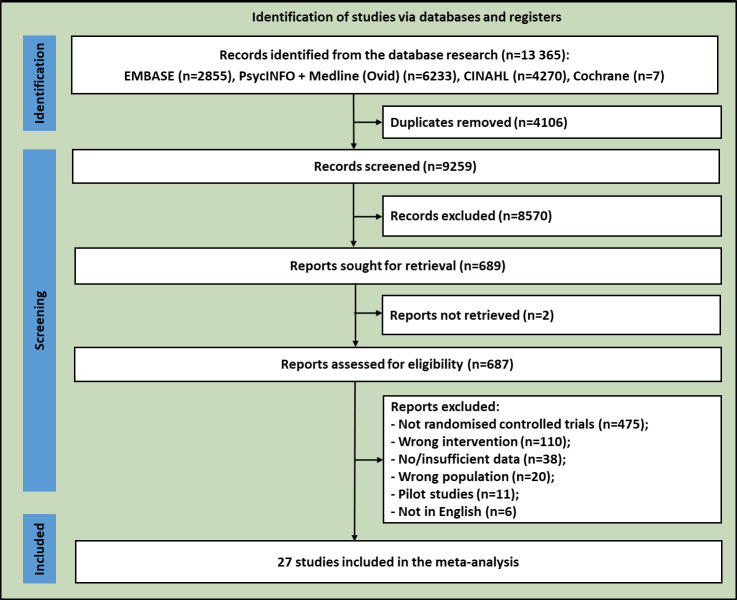
- The review included 27 studies with 2506 participants; the initial search yielded 13,365 studies, 9259 were screened after duplicates were removed, and 687 full texts were reviewed.
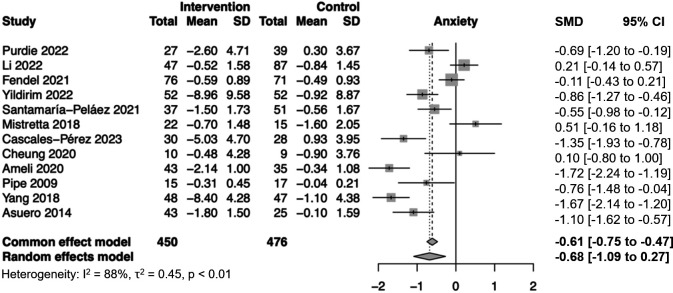
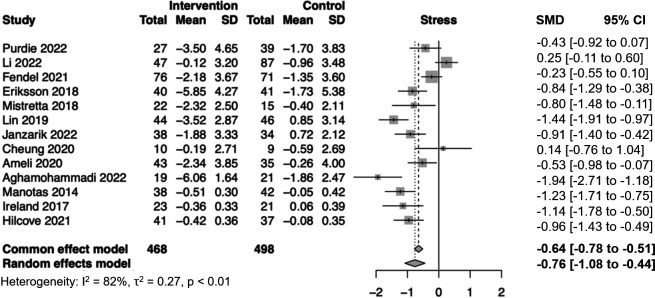
- In the short term (<1 month postintervention), MBIs showed significant benefits for anxiety (SMD −0.68), burnout (SMD −0.44), stress (SMD −0.76), depression (SMD −0.50), psychological distress (SMD −0.85), and job strain (SMD −0.49).
- Short-term improvements were also seen in self-compassion (SMD 0.86), mindfulness (SMD 0.92), and positive well-being (SMD 0.55); resilience was not significant short term (SMD 0.29, p=0.221).
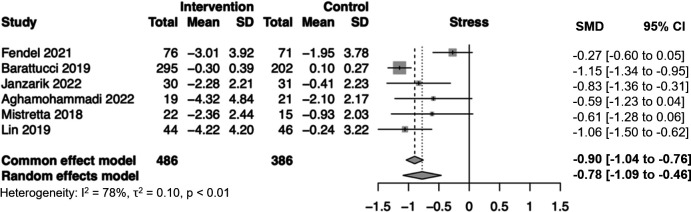
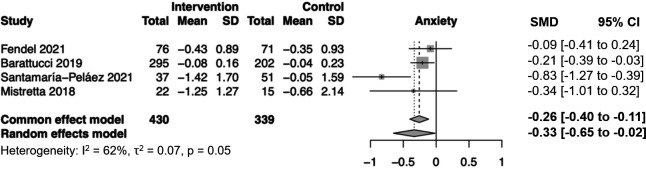
- Longer-term effects (≥1 month) were significant for positive well-being (SMD 0.87), resilience (SMD 0.45), stress (SMD −0.78), and anxiety (SMD −0.33), but not for burnout, depression, or self-compassion.
## Methods
- Systematic review and meta-analysis of randomised controlled trials of defined MBIs in healthcare workers, with quantitative outcomes related to subjective or psychological well-being; protocol registered in PROSPERO (CRD42022353340) and conducted per PRISMA.
- Searched Medline, Embase, CINAHL, PsycINFO, and CENTRAL from inception to 31 August 2022; only English-language original RCTs were included, and pilot/feasibility studies were excluded.
- Used standardised mean difference as the primary effect size in a random-effects model (DerSimonian and Laird); assessed risk of bias with RoB 2 and evidence certainty with GRADE; conducted subgroup analyses by occupation and delivery mode, plus leave-one-out sensitivity analyses.
## Limitations
- The paper states that there was intervention heterogeneity, reduced power in specific subgroup analyses, and variable study quality.
- It also notes that follow-up was often only short term, so it is unclear whether effects are sustained over time.
- Evident from the text: many studies had high heterogeneity in outcomes (with some I2 as high as 88%), and the evidence base was concentrated in the USA and Europe, with few Asian studies, which limits generalisability.
Model-written summary. Check it against the paper before relying on it.
Integrity signals
Registry
Cites
Statistics
Figures
Verification
Claims the paper makes
2 Valid · 1 Not valid · 2 Not checked · 45 Own results and interpretations
A result the paper reports from its own data — it cites no other source for it, so there is none to check. The quote shows it is in the paper.
In the paper
“mindfulness (SMD=0.92, 95% CI: 0.48 to 1.37, p<0.001, I2=81%)”
§ Effectiveness of mindfulness-based interventions on the well-being of healthcare workers: a systematic review and meta-analysis > Results > Characteristics of interventions
plainstates a cause- Asserted: passes — The authors put it forward as true.
- Checkable: passes — It can be checked against evidence.
- Load-bearing: passes — The paper’s conclusions depend on it.
- Based: passes — The paper gives a reason why it holds.
A result the paper reports from its own data — it cites no other source for it, so there is none to check. The quote shows it is in the paper.
In the paper
“stress (SMD=−0.76, 95% CI: −1.08 to −0.44, p<0.001, I2=82%)”
§ Effectiveness of mindfulness-based interventions on the well-being of healthcare workers: a systematic review and meta-analysis > Results > Characteristics of interventions
plainstates a cause- Asserted: passes — The authors put it forward as true.
- Checkable: passes — It can be checked against evidence.
- Load-bearing: passes — The paper’s conclusions depend on it.
- Based: passes — The paper gives a reason why it holds.
A result the paper reports from its own data — it cites no other source for it, so there is none to check. The quote shows it is in the paper.
In the paper
“resilience (SMD=0.45, 95% CI: 0.06 to 0.83, p=0.023, I2=53%)”
§ Effectiveness of mindfulness-based interventions on the well-being of healthcare workers: a systematic review and meta-analysis > Results > Characteristics of interventions
plainstates a cause- Asserted: passes — The authors put it forward as true.
- Checkable: passes — It can be checked against evidence.
- Load-bearing: passes — The paper’s conclusions depend on it.
- Based: passes — The paper gives a reason why it holds.
A result the paper reports from its own data — it cites no other source for it, so there is none to check. The quote shows it is in the paper.
In the paper
“burnout (SMD=−0.44, 95% CI: −0.74 to −0.13, p=0.005, I2=69%)”
§ Effectiveness of mindfulness-based interventions on the well-being of healthcare workers: a systematic review and meta-analysis > Results > Characteristics of interventions
plainstates a cause- Asserted: passes — The authors put it forward as true.
- Checkable: passes — It can be checked against evidence.
- Load-bearing: passes — The paper’s conclusions depend on it.
- Based: passes — The paper gives a reason why it holds.
A result the paper reports from its own data — it cites no other source for it, so there is none to check. The quote shows it is in the paper.
In the paper
“stress (SMD=−0.78, 95% CI: −1.09 to −0.46, p<0.001, I2=78%)”
§ Effectiveness of mindfulness-based interventions on the well-being of healthcare workers: a systematic review and meta-analysis > Results > Characteristics of interventions
plainstates a cause- Asserted: passes — The authors put it forward as true.
- Checkable: passes — It can be checked against evidence.
- Load-bearing: passes — The paper’s conclusions depend on it.
- Based: passes — The paper gives a reason why it holds.
27 more claims
Create a free account to see all 50 claims and to verify the 1 reference still open.
- Probably not a substantial claim. 3
- It may state two separate claims as one. 8
- The quote only partly states this claim. 9
Citations
Cites
The PRISMA 2020 statement: An updated guideline for reporting systematic reviews
Page, M. J., McKenzie, J. E., Bossuyt, P. M., Boutron, I., Hoffmann, T. C., Mulrow, C. D., Shamseer, L., Tetzlaff, J. M., Akl, E. A., Brennan, S. E., et al. (2021) · BMJ · doi:10.1136/bmj.n71 · Cited by 108,283
Meta-analysis in clinical trials
DerSimonian, R., & Laird, N. (1986) · Controlled Clinical Trials · doi:10.1016/0197-2456(86)90046-2 · Cited by 39,552 · cited 1×
“22 Heterogeneity was quantified using Cochran’s Q test and I 2 statistics.”
MethodRoB 2: a revised tool for assessing risk of bias in randomised trials
Sterne, J. A. C., Savović, J., Page, M. J., Elbers, R. G., Blencowe, N. S., Boutron, I., Cates, C. J., Cheng, H.-Y., Corbett, M. S., Eldridge, S. M., et al. (2019) · BMJ · doi:10.1136/bmj.l4898 · Cited by 34,787
Distribution Theory for Glass's Estimator of Effect Size and Related Estimators
Hedges, L. V. (1981) · Journal of Educational Statistics · doi:10.2307/1164588 · Cited by 5,695 · cited 1×
“To account for any different units of analysis, continuous data were pooled with standardised mean difference (SMD), 19 expressed as Hedges’ g. 20 For effect sizes, SMD thresholds of 0.2, 0.5 and 0.8 represented small, moderate and large effect sizes, respectively.”
MethodInfluentialShapiro, S. L., Carlson, L. E., Astin, J. A., & Freedman, B. (2006) · Journal of Clinical Psychology · doi:10.1002/jclp.20237 · Cited by 4,002
Mindfulness practice leads to increases in regional brain gray matter density
Hölzel, B. K., Carmody, J., Vangel, M., Congleton, C., Yerramsetti, S. M., Gard, T., & Lazar, S. W. (2011) · Psychiatry Research: Neuroimaging · doi:10.1016/j.pscychresns.2010.08.006 · Cited by 1,914 · cited 1×
“At present, there is notable heterogeneity in the types of interventions and the populations they target, leading to varied effectiveness across different groups.”
BackgroundControlled Interventions to Reduce Burnout in Physicians: A Systematic Review and Meta-analysis
Panagioti, M., Panagopoulou, E., Bower, P., Lewith, G., Kontopantelis, E., Chew-Graham, C., Dawson, S., van Marwijk, H., Geraghty, K., & Esmail, A. (2017) · JAMA Internal Medicine · doi:10.1001/jamainternmed.2016.7674 · Cited by 1,395 · cited 1×
“58 Similarly, a majority of included articles in this review focused solely on physicians or nurses, and there is a paucity of research literature on the effectiveness of”
BackgroundA narrative review on burnout experienced by medical students and residents
Dyrbye, L., & Shanafelt, T. (2016) · Medical Education · doi:10.1111/medu.12927 · Cited by 1,134
The Effects of Mindfulness Meditation: A Meta-Analysis
Eberth, J., & Sedlmeier, P. (2012) · Mindfulness · doi:10.1007/s12671-012-0101-x · Cited by 791 · cited 2×
“11 The techniques may also help individuals cultivate compassion, kindness and acceptance towards themselves and others.”
BackgroundBurnout in Healthcare Workers: Prevalence, Impact and Preventative Strategies
De Hert, S. (2020) · Local and Regional Anesthesia · doi:10.2147/lra.s240564 · Cited by 746
How Does Mindfulness Training Affect Health? A Mindfulness Stress Buffering Account
Creswell, J. D., & Lindsay, E. K. (2014) · Current Directions in Psychological Science · doi:10.1177/0963721414547415 · Cited by 543 · cited 1×
“While these interventions might work at the periphery rather than address the fundamental causes of workplace stress, they hold promise in alleviating symptoms related to stress and burnout among healthcare professionals.”
BackgroundGoldberg, S. B., Riordan, K. M., Sun, S., & Davidson, R. J. (2022) · Perspectives on Psychological Science · doi:10.1177/1745691620968771 · Cited by 520 · cited 1×
“58 Similarly, a majority of included articles in this review focused solely on physicians or nurses, and there is a paucity of research literature on the effectiveness of”
BackgroundInterpreting estimates of treatment effects: implications for managed care.
(2008) · PubMed Central · Cited by 511
Huberty, J., Green, J., Glissmann, C., Larkey, L., Puzia, M., & Lee, C. (2019) · JMIR mHealth and uHealth · doi:10.2196/14273 · Cited by 488 · cited 1×
“58 Similarly, a majority of included articles in this review focused solely on physicians or nurses, and there is a paucity of research literature on the effectiveness of”
BackgroundBurton, A., Burgess, C., Dean, S., Koutsopoulou, G. Z., & Hugh‐Jones, S. (2017) · Stress and Health · doi:10.1002/smi.2673 · Cited by 412 · cited 1×
“…Previous meta-analyses of MBIs indicate a moderate to large within-group and between-group effect on stress in the general population 11 and healthcare professionals, 14 15 but these interventions did not appear as effective in reducing burnout or improving resilience for healthcare professionals.”
BackgroundMindfulness skills and interpersonal behaviour
Dekeyser, M., Raes, F., Leijssen, M., Leysen, S., & Dewulf, D. (2008) · Personality and Individual Differences · doi:10.1016/j.paid.2007.11.018 · Cited by 404 · cited 1×
“While these interventions might work at the periphery rather than address the fundamental causes of workplace stress, they hold promise in alleviating symptoms related to stress and burnout among healthcare professionals.”
BackgroundTakeshima, N., Sozu, T., Tajika, A., Ogawa, Y., Hayasaka, Y., & Furukawa, T. A. (2014) · BMC Medical Research Methodology · doi:10.1186/1471-2288-14-30 · Cited by 387 · cited 1×
“To account for any different units of analysis, continuous data were pooled with standardised mean difference (SMD), 19 expressed as Hedges’ g. 20 For effect sizes, SMD thresholds of 0.2, 0.5 and 0.8 represented small, moderate and large effect sizes, respectively.”
MethodInfluentialAge effects on gray matter volume and attentional performance in Zen meditation
Pagnoni, G., & Cekic, M. (2007) · Neurobiology of Aging · doi:10.1016/j.neurobiolaging.2007.06.008 · Cited by 370 · cited 1×
“At present, there is notable heterogeneity in the types of interventions and the populations they target, leading to varied effectiveness across different groups.”
BackgroundKriakous, S. A., Elliott, K. A., Lamers, C., & Owen, R. (2021) · Mindfulness · doi:10.1007/s12671-020-01500-9 · Cited by 342 · cited 2×
“15 The analysis is further complicated by the wide range of interventions and employees in different occupational roles.”
BackgroundAssociation of Physician Burnout With Suicidal Ideation and Medical Errors
Menon, N. K., Shanafelt, T. D., Sinsky, C. A., Linzer, M., Carlasare, L., Brady, K. J. S., Stillman, M. J., & Trockel, M. T. (2020) · JAMA Network Open · doi:10.1001/jamanetworkopen.2020.28780 · Cited by 340
Mindfulness and compassion: an examination of mechanism and scalability
Lim, D., Condon, P., & DeSteno, D. (2015) · PLOS ONE · doi:10.1371/journal.pone.0118221 · Cited by 291 · cited 1×
“12 Although there is growing evidence supporting the efficacy of mindfulness-based stress reduction and mindfulness-based cognitive therapy, 13 the evidence regarding the application of these programmes to healthcare workers remains conflicting.”
BackgroundEriksson, T., Germundsjö, L., Åström, E., & Rönnlund, M. (2018) · Frontiers in Psychology · doi:10.3389/fpsyg.2018.02340 · Cited by 225 · cited 1×
“58 Similarly, a majority of included articles in this review focused solely on physicians or nurses, and there is a paucity of research literature on the effectiveness of”
BackgroundAsuero, A. M., Queraltó, J. M., Pujol-Ribera, E., Berenguera, A., Rodriguez-Blanco, T., & Epstein, R. M. (2014) · Journal of Continuing Education in the Health Professions · doi:10.1002/chp.21211 · Cited by 223
Deady, M., Choi, I., Calvo, R. A., Glozier, N., Christensen, H., & Harvey, S. B. (2017) · BMC Psychiatry · doi:10.1186/s12888-017-1473-1 · Cited by 222 · cited 1×
“58 Similarly, a majority of included articles in this review focused solely on physicians or nurses, and there is a paucity of research literature on the effectiveness of”
BackgroundNurse Leader Mindfulness Meditation Program for Stress Management: A Randomized Controlled Trial
Pipe, T. B., Bortz, J. J., Dueck, A., Pendergast, D., Buchda, V., & Summers, J. (2009) · JONA: The Journal of Nursing Administration · doi:10.1097/nna.0b013e31819894a0 · Cited by 213
Mindfulness-Based Interventions in Psychiatry
Shapero, B. G., Greenberg, J., Pedrelli, P., de Jong, M., & Desbordes, G. (2018) · Focus · doi:10.1176/appi.focus.20170039 · Cited by 172 · cited 1×
“58 Similarly, a majority of included articles in this review focused solely on physicians or nurses, and there is a paucity of research literature on the effectiveness of”
BackgroundSchool of Nursing, C. S. U., Yang, J., Tang, S., School of Nursing, C. S. U., Zhou, W., & The Second Xiangya Hospital, C. S. U. (2018) · Psychiatria Danubina · doi:10.24869/spsih.2018.189 · Cited by 163
Ireland, M. J., Clough, B., Gill, K., Langan, F., O'Connor, A., & Spencer, L. (2017) · Medical Teacher · doi:10.1080/0142159x.2017.1294749 · Cited by 138
Smallwood, N., Karimi, L., Bismark, M., Putland, M., Johnson, D., Dharmage, S. C., Barson, E., Atkin, N., Long, C., Ng, I., et al. (2021) · General Psychiatry · doi:10.1136/gpsych-2021-100577 · Cited by 136
The Community Resiliency Model® to promote nurse well-being
Grabbe, L., Higgins, M. K., Baird, M., Craven, P. A., & San Fratello, S. (2020) · Nursing Outlook · doi:10.1016/j.outlook.2019.11.002 · Cited by 136
Lin, L., He, G., Yan, J., Gu, C., & Xie, J. (2019) · Workplace Health & Safety · doi:10.1177/2165079918801633 · Cited by 134 · cited 1×
“58 Similarly, a majority of included articles in this review focused solely on physicians or nurses, and there is a paucity of research literature on the effectiveness of”
BackgroundMistretta, E. G., Davis, M. C., Temkit, M., Lorenz, C., Darby, B., & Stonnington, C. M. (2018) · Journal of Occupational & Environmental Medicine · doi:10.1097/jom.0000000000001285 · Cited by 114
Galante, J., Friedrich, C., Collaboration of Mindfulness Trials (CoMinT), Aeamla-Or, N., Arts-de Jong, M., Barrett, B., Bögels, S. M., Buitelaar, J. K., Checovich, M. M., Christopher, M. S., et al. (2023) · Nature Mental Health · doi:10.1038/s44220-023-00081-5 · Cited by 113
Ameli, R., Sinaii, N., West, C. P., Luna, M. J., Panahi, S., Zoosman, M., Rusch, H. L., & Berger, A. (2020) · JAMA Network Open · doi:10.1001/jamanetworkopen.2020.13424 · Cited by 94
Holistic nursing in practice: Mindfulness-based yoga as an intervention to manage stress and burnout
Hilcove, K., Marceau, C., Thekdi, P., Larkey, L., Brewer, M. A., & Jones, K. (2021) · Journal of Holistic Nursing · doi:10.1177/0898010120921587 · Cited by 92
Manotas, M., Segura, C., Eraso, M., Oggins, J., & McGovern, K. (2014) · International Journal of Stress Management · doi:10.1037/a0035150 · Cited by 86
Xu, H. (., Kynoch, K., Tuckett, A., & Eley, R. (2020) · JBI Evidence Synthesis · doi:10.11124/jbisrir-d-19-00252 · Cited by 83 · cited 1×
“58 Similarly, a majority of included articles in this review focused solely on physicians or nurses, and there is a paucity of research literature on the effectiveness of”
BackgroundA Group Intervention to Promote Resilience in Nursing Professionals: A Randomised Controlled Trial
Janzarik, G., Wollschläger, D., Wessa, M., & Lieb, K. (2022) · International Journal of Environmental Research and Public Health · doi:10.3390/ijerph19020649 · Cited by 81
Mindfulness meditation for workplace wellness: An evidence map
Hilton, L. G., Marshall, N. J., Motala, A., Taylor, S. L., Miake-Lye, I. M., Baxi, S., Shanman, R. M., Solloway, M. R., Beroesand, J. M., & Hempel, S. (2019) · Work · doi:10.3233/wor-192922 · Cited by 77
Effects of Loving-Kindness Meditation on Doctors’ Mindfulness, Empathy, and Communication Skills
Chen, H., Liu, C., Cao, X., Hong, B., Huang, D., Liu, C.-Y., & Chiou, W. (2021) · International Journal of Environmental Research and Public Health · doi:10.3390/ijerph18084033 · Cited by 75
Yıldırım, D., & Çiriş Yıldız, C. (2022) · Holistic Nursing Practice · doi:10.1097/hnp.0000000000000511 · Cited by 64
Amutio, A., Martínez-Taboada, C., Delgado, L. C., Hermosilla, D., & Mozaz, M. J. (2015) · Journal of Continuing Education in the Health Professions · doi:10.1097/ceh.0000000000000002 · Cited by 63
Liu, C., Chen, H., Cao, X., Sun, Y., Liu, C.-Y., Wu, K., Liang, Y.-C., Hsu, S.-E., Huang, D., & Chiou, W. (2022) · International Journal of Environmental Research and Public Health · doi:10.3390/ijerph19063282 · Cited by 62
Chong, R. I. H., Yaow, C. Y. L., Chong, N. Z.-Y., Yap, N. L. X., Hong, A. S. Y., Ng, Q. X., & Tan, H. K. (2023) · The American Journal of Surgery · doi:10.1016/j.amjsurg.2023.09.045 · Cited by 56
Self-citationHealthcare staff well‐being and use of support services during COVID‐19: a UK perspective
Petrella, A. R., Hughes, L., Fern, L. A., Monaghan, L., Hannon, B., Waters, A., & Taylor, R. M. (2021) · General Psychiatry · doi:10.1136/gpsych-2020-100458 · Cited by 51
The Relationship Between Burnout and Help-Seeking Behaviors, Concerns, and Attitudes of Residents
Dyrbye, L. N., Hunderfund, A. N. L., Winters, R. C., Moeschler, S. M., Stelling, B. E. V., Dozois, E. J., Satele, D., & West, C. P. (2020) · Academic Medicine · doi:10.1097/acm.0000000000003790 · Cited by 47
Cascales‐Pérez, M. L., Ferrer‐Cascales, R., Fernández‐Alcántara, M., & Cabañero‐Martínez, M. J. (2020) · Scandinavian Journal of Caring Sciences · doi:10.1111/scs.12905 · Cited by 46
Fendel, J. C., Aeschbach, V. M., Schmidt, S., & Göritz, A. S. (2021) · Journal of Internal Medicine · doi:10.1111/joim.13374 · Cited by 45 · cited 1×
“58 Similarly, a majority of included articles in this review focused solely on physicians or nurses, and there is a paucity of research literature on the effectiveness of”
BackgroundEffects of mobile mindfulness on emergency department work stress: A randomised controlled trial
Xu, H. (., Eley, R., Kynoch, K., & Tuckett, A. (2022) · Emergency Medicine Australasia · doi:10.1111/1742-6723.13836 · Cited by 42 · cited 1×
“58 Similarly, a majority of included articles in this review focused solely on physicians or nurses, and there is a paucity of research literature on the effectiveness of”
BackgroundPhysician Suicide in the Era of the COVID-19 Pandemic
Laboe, C. W., Jain, A., Bodicherla, K. P., & Pathak, M. (2021) · Cureus · doi:10.7759/cureus.19313 · Cited by 39
Barattucci, M., Padovan, A. M., Vitale, E., Rapisarda, V., Ramaci, T., & De Giorgio, A. (2019) · International Journal of Environmental Research and Public Health · doi:10.3390/ijerph16224421 · Cited by 36
Aghamohammadi, F., Saed, O., Ahmadi, R., & Kharaghani, R. (2022) · BMC Psychology · doi:10.1186/s40359-022-00823-7 · Cited by 33
Valley, M. A., & Stallones, L. (2017) · Journal of Occupational & Environmental Medicine · doi:10.1097/jom.0000000000001090 · Cited by 31
Pérez-Fuentes, M. D. C., Molero Jurado, M. D. M., Mercader Rubio, I., Soriano Sánchez, J. G., & Gázquez Linares, J. J. (2020) · Applied Sciences · doi:10.3390/app10051851 · Cited by 30
Pérula-de Torres, L., Verdes-Montenegro-Atalaya, J., Melús-Palazón, E., García-de Vinuesa, L., Valverde, F., Rodríguez, L., Lietor-Villajos, N., Bartolomé-Moreno, C., Moreno-Martos, H., García-Campayo, J., et al. (2021) · International Journal of Environmental Research and Public Health · doi:10.3390/ijerph18084340 · Cited by 28
Cheung, E. O., Barsuk, J. H., Mitra, D. L., Gannotta, R. J., Horowitz, B., Didwania, A. K., & Victorson, D. E. (2020) · The Journal of Alternative and Complementary Medicine · doi:10.1089/acm.2019.0209 · Cited by 20
Purdie, D. R., Federman, M., Chin, A., Winston, D., Bursch, B., Olmstead, R., Bulut, Y., & Irwin, M. R. (2023) · Journal of Clinical Psychology in Medical Settings · doi:10.1007/s10880-022-09896-3 · Cited by 19 · cited 1×
“58 Similarly, a majority of included articles in this review focused solely on physicians or nurses, and there is a paucity of research literature on the effectiveness of”
BackgroundLi, J., Wu, R., Zhang, T., Zhong, S.-Y., Hu, T., Wang, D., Jiang, C., & Liu, Y. (2022) · Complementary Therapies in Clinical Practice · doi:10.1016/j.ctcp.2022.101600 · Cited by 18
Santamaría-Peláez, M., González-Bernal, J. J., Verdes-Montenegro-Atalaya, J. C., Pérula-de Torres, L. Á., Roldán-Villalobos, A., Romero-Rodríguez, E., Hachem Salas, N., Magallón Botaya, R., González-Navarro, T. D. J., Arias-Vega, R., et al. (2021) · Journal of Clinical Medicine · doi:10.3390/jcm10245941 · Cited by 16
Mackenzie, A., Harvey, S. B., Mewton, L. R., & Andrews, G. (2014) · The Medical Journal of Australia · doi:10.5694/mja14.00293 · Cited by 15 · cited 1×
“58 Similarly, a majority of included articles in this review focused solely on physicians or nurses, and there is a paucity of research literature on the effectiveness of”
BackgroundGalante, J., Friedrich, C., Dalgleish, T., White, I. R., & Jones, P. B. (2022) · BMJ Open · doi:10.1136/bmjopen-2021-058976 · Cited by 9
Doctors: the invisible patients
White, C. M. (2010) · BMJ · doi:10.1136/bmj.c2013 · Cited by 1
Cited by
Ong, T. S. K., Goh, C., Tan, E., Sivanathan, K. A., Tang, A. S. P., Tan, H. K., & Ng, Q. X. (2025) · Journal of Healthcare Leadership · doi:10.2147/jhl.s526565 · Cited by 55
“31 The structured nature of these programs ensures that participants receive targeted coping strategies, unlike peer support models, which generally rely more on informal emotional validation.”
InfluentialSelf-citationvon Lützow, U., Neuendorf, N. L., & Scherr, S. (2025) · BMJ Mental Health · doi:10.1136/bmjment-2025-301641 · Cited by 29
“achieve effectiveness comparable to in-person formats such as workshops and classes, 7 underscoring their promise as accessible therapeutic options.”
Artificial intelligence in bioinformatics: a survey
Jiang, J., Li, Y., Cao, S., Shan, Y., Liu, Y., Fei, T., Yu, Y., Feng, Y., Li, Y., Li, Y., et al. (2025) · Briefings in Bioinformatics · doi:10.1093/bib/bbaf576 · Cited by 35
“We conduct a structured literature search following PRISMA guidelines [30], with the screening workf low summarized in Fig.”
Strengths use and thriving at work among nurses: a latent profile and mediation analysis
Wu, J., Shen, Z., Ouyang, Z., Xiang, Y., Ding, R., Liao, Y., & Chen, L. (2025) · BMC Nursing · doi:10.1186/s12912-025-02715-8 · Cited by 15
Burnout and the Brain—A Mechanistic Review of Magnetic Resonance Imaging (MRI) Studies
Chmiel, J., & Kurpas, D. (2025) · International Journal of Molecular Sciences · doi:10.3390/ijms26178379 · Cited by 16
“…short-term reductions in burnout (most consistently on emotional exhaustion), alongside gains in well-being, resilience, and perceived stress, with benefits sometimes persisting to medium-term follow-up despite heterogeneity in trial quality and delivery (in-person vs. Digital) [243–245].”
Metadata
- Authors
- Ong, N. Y., Teo, F. J. J., Ee, J. Z. Y., Yau, C. E., Thumboo, J., Tan, H. K., & Ng, Q. X.
- Affiliations
- National University of Singapore (SG)
- SingHealth (SG)
- Corresponding author
- Ng, Qin Xiang
- Venue
- General Psychiatry
- Publisher
- Wiley
- Published
- 2024-05-07
- Volume
- 37
- Issue
- 3
- Pages
- e101115-e101115
- ISSN
- 2096-5923 (ISSN-L)
- 2517-729X
- PMC
- PMC11086195
- OpenAlex
- W4396746676
- Cited by
- 93
- References
- 67
- Citations by year
- 2026: 44 · 2025: 42 · 2024: 7
- FWCI
- 8.19
- Type
- journal article
- Language
- en
- Open access
- diamond
- doi.org
- Licence
- cc-by-nc
- creativecommons.org/licenses/by-nc/4.0/ (vor)
- doi.wiley.com/10.1002/tdm_license_1.1 (tdm)
- creativecommons.org/licenses/by-nc/4.0/ (unspecified)
- Locations
- General Psychiatry (publishedVersion, cc-by-nc)
- PubMed Central (publishedVersion, cc-by-nc)
- PubMed (publishedVersion)
- DOAJ (DOAJ: Directory of Open Access Journals) (submittedVersion)
- Topics
- Social Sciences › Psychology › Clinical Psychology › Mindfulness and Compassion Interventions
- Health Sciences › Health Professions › General Health Professions › Healthcare professionals’ stress and burnout
- Social Sciences › Psychology › Social Psychology › Stress and Burnout Research
- Keywords
- mindfulness-based interventions, healthcare workers, psychological well-being, burnout, stress, anxiety, depression, psychological distress, job strain, self-compassion, empathy, meditation, long-term intervention effects
About these checks
Registry, retraction, Cites and statistics results are computed, not judged, with one exception: a printed reference that no index lists is read once by a model before it counts as a citation error. Claims are extracted by a model and kept only when their quote appears verbatim in the text; each cited source is then checked, with a model’s help, for whether it says what the claim relies on. Those verdicts can be wrong — read the claim’s quote and the cited source before relying on one.
The claim verdicts this report counts are experimental: their accuracy is not yet measured.
A language model drew the claims from the paper on 2026-10-10, under version 3 of the claim definition (model deepseek-v4.1-flash, prompt extract-v3).
A second model labelled each claim on 2026-10-10 (model jev-1.13-20260917, definition revision gold-guideline-v0.2).
Statistics and arithmetic are recomputed, not judged.
Confidence bands are shown only for fields calibrated on our annotated test set. None is calibrated yet, so no band is shown.
What counts as a claim ›How we measure confidence ›How we check this ›
Are you an author, or do you see a problem with this page? Request a review
Data sources
Bibliographic data: Semantic Scholar, OpenAlex, Crossref.
Contains information from the Semantic Scholar Academic Graph Datasets, made available under the ODC Attribution License (ODC-BY 1.0).
Semantic Scholar’s data is described in: Kinney, R., et al. (2023). The Semantic Scholar Open Data Platform. arXiv:2301.10140.
