

Dietary cholesterol drives fatty liver-associated liver cancer by modulating gut microbiota and metabolites
Open accessThe DOI matches its Crossref record; 43 of the 43 references it cites were found in a registry or an index.
Abstract
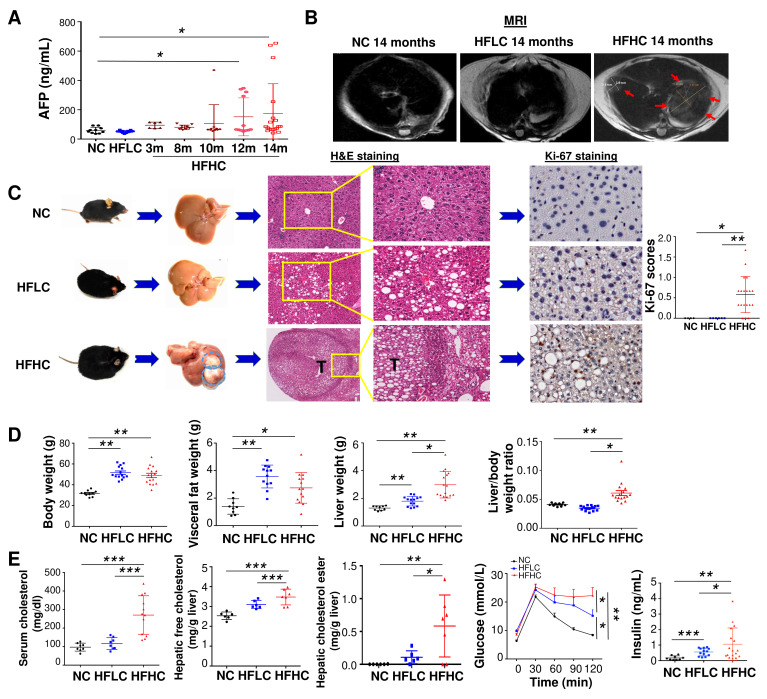
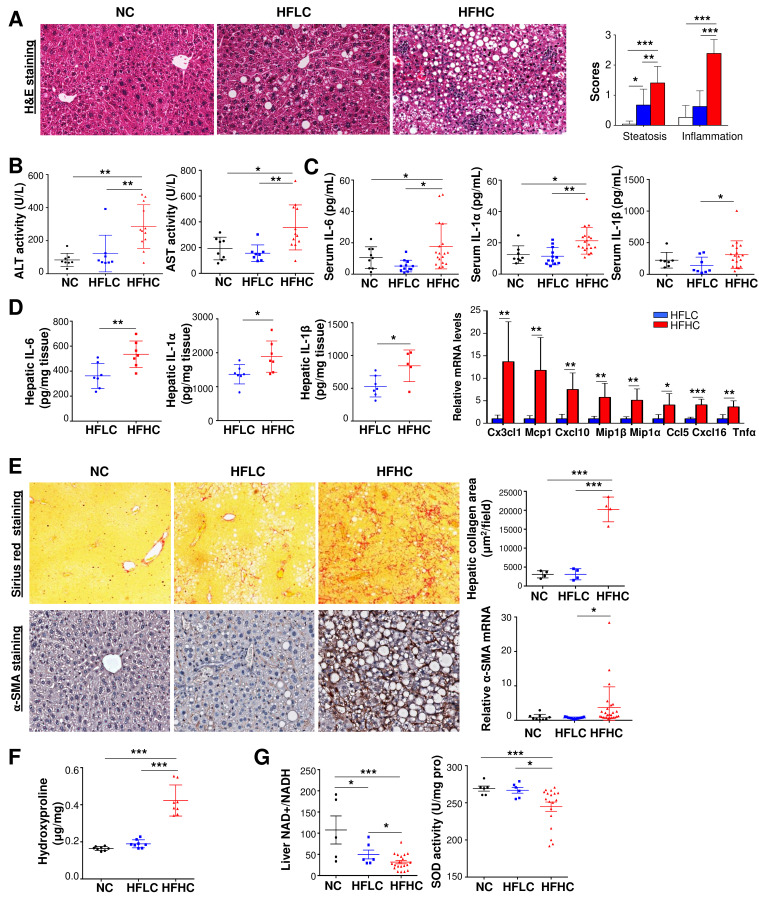
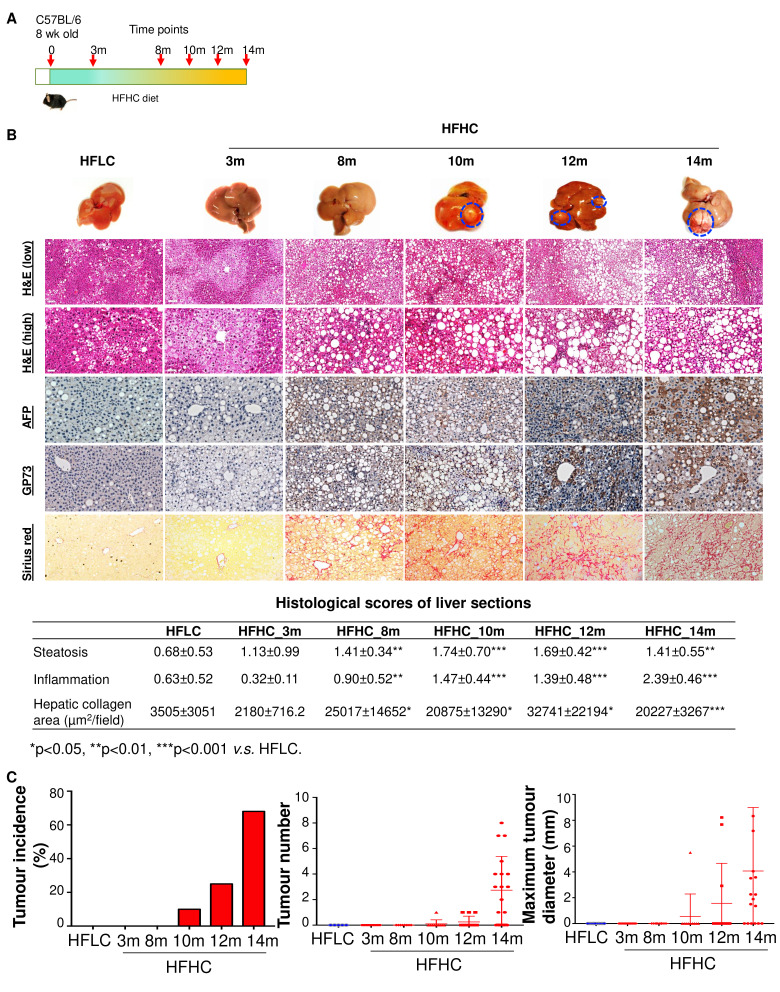
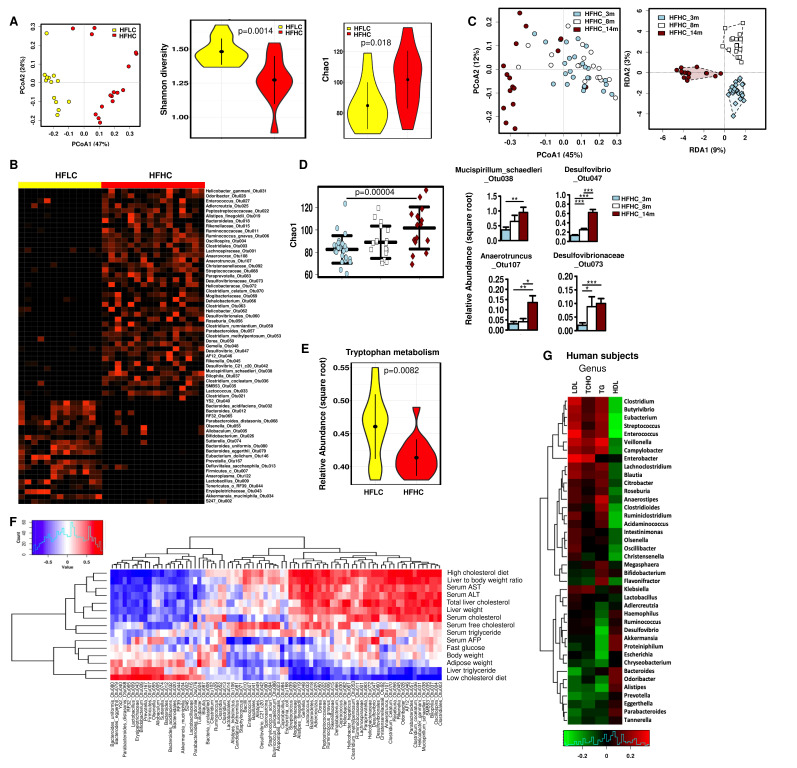
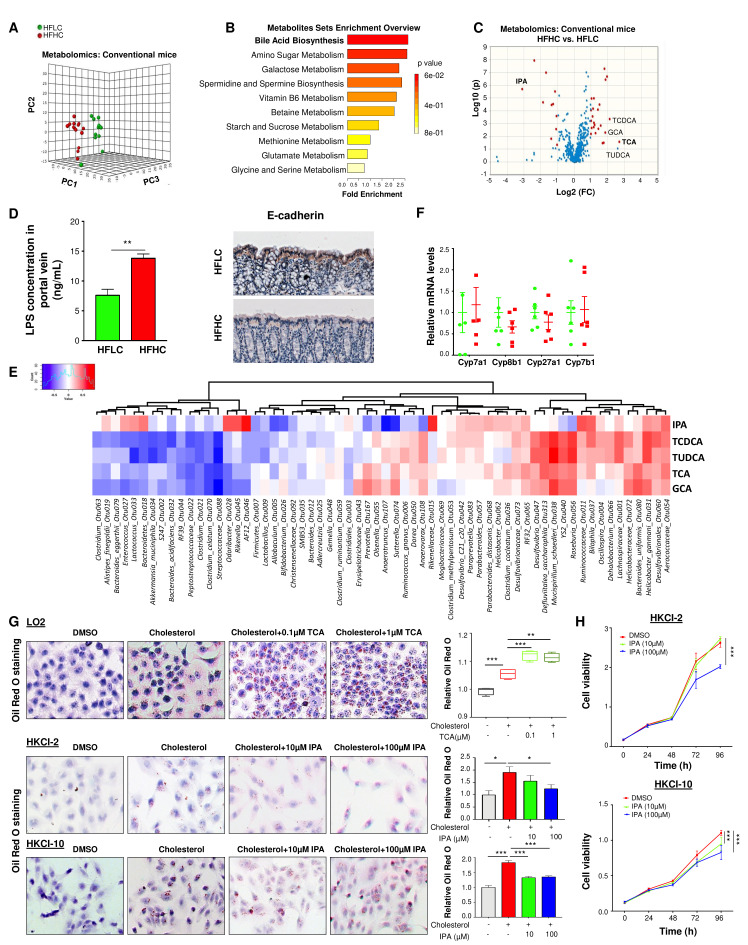
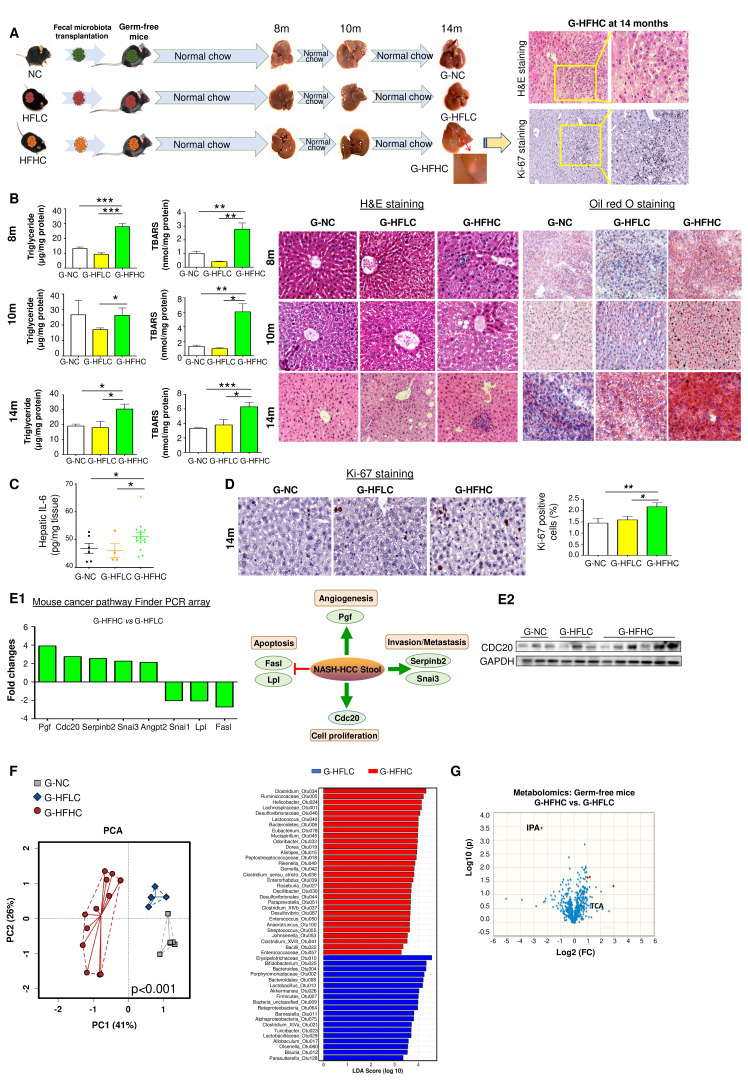
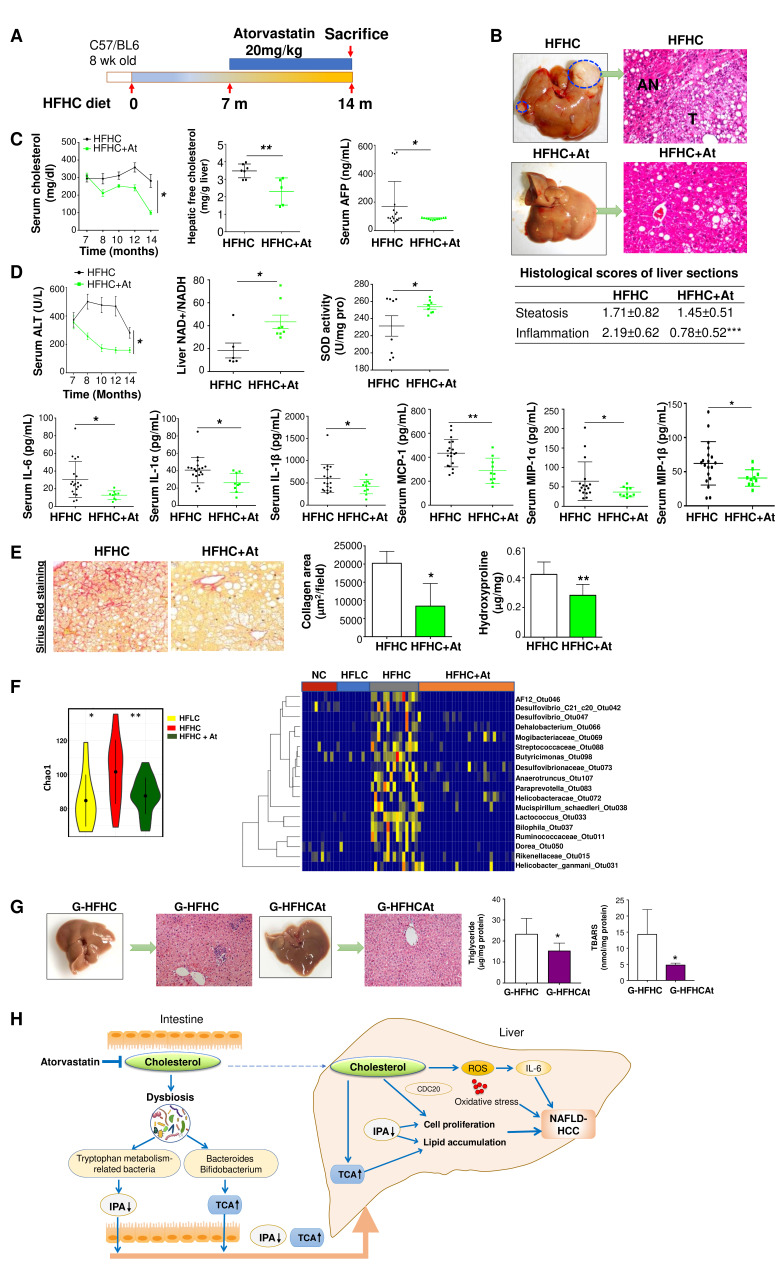
Objective: Non-alcoholic fatty liver disease (NAFLD)-associated hepatocellular carcinoma (HCC) is an increasing healthcare burden worldwide. We examined the role of dietary cholesterol in driving NAFLD–HCC through modulating gut microbiota and its metabolites. Design: High-fat/high-cholesterol (HFHC), high-fat/low-cholesterol or normal chow diet was fed to C57BL/6 male littermates for 14 months. Cholesterol-lowering drug atorvastatin was administered to HFHC-fed mice. Germ-free mice were transplanted with stools from mice fed different diets to determine the direct role of cholesterol modulated-microbiota in NAFLD–HCC. Gut microbiota was analysed by 16S rRNA sequencing and serum metabolites by liquid chromatography–mass spectrometry (LC–MS) metabolomic analysis. Faecal microbial compositions were examined in 59 hypercholesterolemia patients and 39 healthy controls. Results: High dietary cholesterol led to the sequential progression of steatosis, steatohepatitis, fibrosis and eventually HCC in mice, concomitant with insulin resistance. Cholesterol-induced NAFLD–HCC formation was associated with gut microbiota dysbiosis. The microbiota composition clustered distinctly along stages of steatosis, steatohepatitis and HCC. Mucispirillum, Desulfovibrio, Anaerotruncus and Desulfovibrionaceae increased sequentially; while Bifidobacterium and Bacteroides were depleted in HFHC-fed mice, which was corroborated in human hypercholesteremia patients. Dietary cholesterol induced gut bacterial metabolites alteration including increased taurocholic acid and decreased 3-indolepropionic acid. Germ-free mice gavaged with stools from mice fed HFHC manifested hepatic lipid accumulation, inflammation and cell proliferation. Moreover, atorvastatin restored cholesterol-induced gut microbiota dysbiosis and completely prevented NAFLD–HCC development. Conclusions: Dietary cholesterol drives NAFLD–HCC formation by inducing alteration of gut microbiota and metabolites in mice. Cholesterol inhibitory therapy and gut microbiota manipulation may be effective strategies for NAFLD–HCC prevention.
Overview
The claims and statistics of this paper haven’t been checked yet.
Free: it reads the open-access text and checks the first 5 claims that cite a source we can check. Create a free account to check every claim.
Integrity signals
Registry
Cites
Statistics
Figures
Verification
Claims the paper makes
The claims and statistics of this paper haven’t been checked yet.
Free: it reads the open-access text and checks the first 5 claims that cite a source we can check. Create a free account to check every claim.
Claims other papers make about this one
Each is checked against this paper’s own text: does it say what the citing paper says it does?
In the citing paper
“this genus has been associated with the pathogenesis of fatty-liver-associated liver cancer36.”
From Nivolumab plus ipilimumab with or without live bacterial supplementation in metastatic renal cell carcinoma: a randomized phase 1 trial (2022) · cites this paper as [36]
Self-check
Percentages, sums and reported differences re-computed from the paper’s own numbers.
The self-check needs the paper’s full text.
Citations
Cites
Vernon, G., Baranova, A., & Younossi, Z. M. (2011) · Alimentary Pharmacology & Therapeutics · doi:10.1111/j.1365-2036.2011.04724.x · Cited by 3,074 · cited 1×
“27 28 There are evidences that Bifidobacterium has cholesterol-lowering activity through gut microbiota modulation.”
Sayin, S. I., Wahlström, A., Felin, J., Jäntti, S., Marschall, H.-U., Bamberg, K., Angelin, B., Hyötyläinen, T., Orešič, M., & Bäckhed, F. (2013) · Cell Metabolism · doi:10.1016/j.cmet.2013.01.003 · Cited by 2,331
Microbial tryptophan catabolites in health and disease
Roager, H. M., & Licht, T. R. (2018) · Nature Communications · doi:10.1038/s41467-018-05470-4 · Cited by 2,236 · cited 1×
“IPA is a specific metabolite whose production completely depends on tryptophan metabolism by the gut microbiota 18 and characterised as being anti-inflammatory and protective of intestinal barrier integrity.”
Bile acid-microbiota crosstalk in gastrointestinal inflammation and carcinogenesis
Jia, W., Xie, G., & Jia, W. (2018) · Nature Reviews Gastroenterology & Hepatology · doi:10.1038/nrgastro.2017.119 · Cited by 1,924 · cited 2×
“40 Therefore, the decreased Bifidobacterium and Bacteroides in the stool of HFHC-fed mice may account for the accumulated taurine-conjugated bile acids in HFHC-fed mice.”
Zhu, L., Baker, S. S., Gill, C., Liu, W., Alkhouri, R., Baker, R. D., & Gill, S. R. (2013) · Hepatology · doi:10.1002/hep.26093 · Cited by 1,708 · cited 3×
“27 28 There are evidences that Bifidobacterium has cholesterol-lowering activity through gut microbiota modulation.”
Gut microbiome–mediated bile acid metabolism regulates liver cancer via NKT cells
Ma, C., Han, M., Heinrich, B., Fu, Q., Zhang, Q., Sandhu, M., Agdashian, D., Terabe, M., Berzofsky, J. A., Fako, V., et al. (2018) · Science · doi:10.1126/science.aan5931 · Cited by 1,508 · cited 1×
“21 We therefore explored the potential involvement of the gut microbiota in mediating dietary cholesterol-induced NAFLD–HCC.”
Gut microbial metabolites in obesity, NAFLD and T2DM
Canfora, E. E., Meex, R. C. R., Venema, K., & Blaak, E. E. (2019) · Nature Reviews Endocrinology · doi:10.1038/s41574-019-0156-z · Cited by 1,493
A gut bacterial pathway metabolizes aromatic amino acids into nine circulating metabolites
Dodd, D., Spitzer, M. H., Van Treuren, W., Merrill, B. D., Hryckowian, A. J., Higginbottom, S. K., Le, A., Cowan, T. M., Nolan, G. P., Fischbach, M. A., et al. (2017) · Nature · doi:10.1038/nature24661 · Cited by 1,425 · cited 1×
“…and potentially, those of other enriched bile acids to the pathogenesis of cholesterol-induced NAFLD–HCC. Additionally, IPA, which is exclusively produced by commensal gut microbes, 41 42 was depleted in both HFHC-fed conventional mice and germ-free mice transplanted with stools from HFHC-fed mice.”
Venkatesh, M., Mukherjee, S., Wang, H., Li, H., Sun, K., Benechet, A. P., Qiu, Z., Maher, L., Redinbo, M. R., Phillips, R. S., et al. (2014) · Immunity · doi:10.1016/j.immuni.2014.06.014 · Cited by 1,066 · cited 2×
“36 Disruption of bile acid homeostasis alters metabolic homeostasis in the liver and can lead to hepatic inflammation and metabolic diseases including diabetes and NAFLD.”
Gut microbiota and human NAFLD: disentangling microbial signatures from metabolic disorders
Aron-Wisnewsky, J., Vigliotti, C., Witjes, J., Le, P., Holleboom, A. G., Verheij, J., Nieuwdorp, M., & Clément, K. (2020) · Nature Reviews Gastroenterology & Hepatology · doi:10.1038/s41575-020-0269-9 · Cited by 1,063
Cited by
Items 901–916 of 916
Yamazaki, K., Kato, T., Tsuboi, Y., Miyauchi, E., Suda, W., Sato, K., Nakajima, M., Yokoji-Takeuchi, M., Yamada-Hara, M., Tsuzuno, T., et al. (2021) · doi:10.3389/fimmu.2021.766170.s001
Zhang, Q., Chen, Q., Yan, C., Niu, C., Zhou, J., Liu, J., Song, Y., Zhou, F., Fan, Y., Ren, J., et al. (2022) · doi:10.3389/fimmu.2022.931176.s001
Zhang, N., Liu, J., Chen, Z., Chen, N., Gu, F., & He, Q. (2022) · doi:10.3389/fmicb.2022.832915.s001
Liu, Y., Tan, Y., Huang, J., Wu, C., Fan, X., Stalin, A., Lu, S., Wang, H., Zhang, J., Zhang, F., et al. (2023) · doi:10.3389/fphar.2022.875700.s007
Song, C., Wen, H., Liu, G., Ma, X., Lv, G., Wu, N., Chen, J., Xue, M., Li, H., & Xu, P. (2022) · doi:10.3389/fmicb.2022.861705.s002
Yang, B.-Y., Zhao, F.-Z., Li, X.-H., Zhao, M.-S., Lv, J.-C., Shi, M.-J., Li, J., Zhou, Z.-Y., Wang, J.-J., & Song, J. (2023) · doi:10.3389/fmicb.2023.1133782.s001
Li, P., Hu, J., Zhao, H., Feng, J., & Chai, B. (2022) · doi:10.3389/fphar.2022.925349.s007
Tian, G., Wang, W., Xia, E., Chen, W., & Zhang, S. (2023) · doi:10.3389/fcimb.2023.1078447.s001
Mai, H., Yang, X., Xie, Y., Zhou, J., Wang, Q., Wei, Y., Yang, Y., Lu, D., Ye, L., Cui, P., et al. (2024) · doi:10.3389/fmicb.2023.1257903.s013
Self-citationLi, J., Sun, H., Wang, C., Li, S., & Cai, Y. (2022) · doi:10.3389/fmicb.2022.895383.s011
Xu, P., Hong, Y., Chen, P., Wang, X., Li, S., Wang, J., Meng, F., Zhou, Z., Shi, D., Li, Z., et al. (2022) · doi:10.3389/fmicb.2022.970563.s001
Wang, W., Huang, G., Lin, H., Ren, L., Fu, L., & Mao, X. (2023) · doi:10.3389/fonc.2022.1102392.s002
Jiang, H., Song, T., Li, Z., An, L., He, C., & Zheng, K. (2023) · doi:10.3389/fmicb.2023.1255650.s001
Liu, X., Pan, Y., Shen, Y., Liu, H., Zhao, X., Li, J., & Ma, N. (2022) · doi:10.3389/fvets.2022.862006.s001
From Diet to Cancer: A Narrative Review of Precision Nutrition in MASLD-to-HCC Progression
Singh, A., Mohr, W., Muñoz‐Vega, M., Septiningsih, E. M., Jayaraman, A., Patil, B. S., Tsai, R. Y. L., Bailey, R. L., & Sun, Y. (2026) · Nutrients · doi:10.3390/nu18223811
Chang, J., Zhu, J., 陈高羽, Chen, X., Yin, J., Tao, M., Chu, Y., Wang, Y., Zhu, Y., Chen, Y., et al. (2026) · Frontiers in Immunology · doi:10.3389/fimmu.2026.1939930
Self-citation
Metadata
- Authors
- Zhang, X., Coker, O. O., Chu, E. S., Fu, K., Lau, H. C. H., Wang, Y.-X., Chan, A. W. H., Wei, H., Yang, X., Sung, J. J. Y., & Yu, J.
- Affiliations
- Chinese University of Hong Kong (HK)
- Department of Imaging and Interventional Radiology, The Chinese University of Hong Kong, Hong Kong SAR, China
- Army Medical University (CN)
- Yale University (US)
- Corresponding author
- Yu, Jun
- ORCID
- Venue
- Gut
- Publisher
- BMJ
- Published
- 2020-07-21
- Volume
- 70
- Issue
- 4
- Pages
- 761-774
- ISSN
- 0017-5749 (ISSN-L)
- 1468-3288
- PMC
- PMC7948195
- OpenAlex
- W3045114299
- Cited by
- 841
- References
- 43
- Citations by year
- 2026: 94 · 2025: 180 · 2024: 218 · 2023: 155 · 2022: 139 · 2021: 51 · 2020: 4
- FWCI
- 28.28
- Type
- journal article
- Language
- en
- Open access
- hybrid
- doi.org
- Licence
- Locations
- Gut (publishedVersion, cc-by-nc)
- PubMed Central (publishedVersion, cc-by-nc)
- PubMed (publishedVersion)
- Funders
- Vice-Chancellor's Discretionary Fund CUHK
- CUHK direct grant for research
- RGC Theme-based Research Scheme Hong Kong (T12-703/19-R)
- RGC Collaborative Research Fund (C4041-17GF, C7026-18G, C7065-18G)
- Guangdong Natural Science Foundation (2018B030312009)
- Topics
- Life Sciences › Biochemistry, Genetics and Molecular Biology › Molecular Biology › Gut microbiota and health
- Health Sciences › Medicine › Hepatology › Liver Disease Diagnosis and Treatment
- Life Sciences › Biochemistry, Genetics and Molecular Biology › Cancer Research › Cancer, Lipids, and Metabolism
- Keywords
- dietary cholesterol, non-alcoholic fatty liver disease, hepatocellular carcinoma, gut dysbiosis, microbial metabolites, taurocholate, 3-indolepropionic acid, atorvastatin, hypercholesterolemia, steatohepatitis, liver fibrosis, insulin resistance, Desulfovibrio, Bacteroides, Bifidobacterium, Mucispirillum, hepatic lipid accumulation, cell proliferation
- MeSH terms
- Atorvastatin, Gastrointestinal Microbiome, Fecal Microbiota Transplantation, Animals, Cholesterol, Dietary, Carcinoma, Hepatocellular, Liver Neoplasms, Male, Mice, Inbred C57BL, Case-Control Studies, Disease Progression, Mice, Non-alcoholic Fatty Liver Disease
About these checks
Registry, retraction, Cites and statistics results are computed, not judged, with one exception: a printed reference that no index lists is read once by a model before it counts as a citation error. Claims are extracted by a model and kept only when their quote appears verbatim in the text; each cited source is then checked, with a model’s help, for whether it says what the claim relies on. Those verdicts can be wrong — read the claim’s quote and the cited source before relying on one.
Statistics and arithmetic are recomputed, not judged.
Confidence bands are shown only for fields calibrated on our annotated test set. None is calibrated yet, so no band is shown.
What counts as a claim ›How we measure confidence ›How we check this ›
Are you an author, or do you see a problem with this page? Request a review
Data sources
Bibliographic data: Semantic Scholar, OpenAlex, Crossref.
Contains information from the Semantic Scholar Academic Graph Datasets, made available under the ODC Attribution License (ODC-BY 1.0).
Semantic Scholar’s data is described in: Kinney, R., et al. (2023). The Semantic Scholar Open Data Platform. arXiv:2301.10140.
