

Dietary cholesterol drives fatty liver-associated liver cancer by modulating gut microbiota and metabolites
Open accessThe DOI matches its Crossref record; 43 of the 43 references it cites were found in a registry or an index.
Abstract
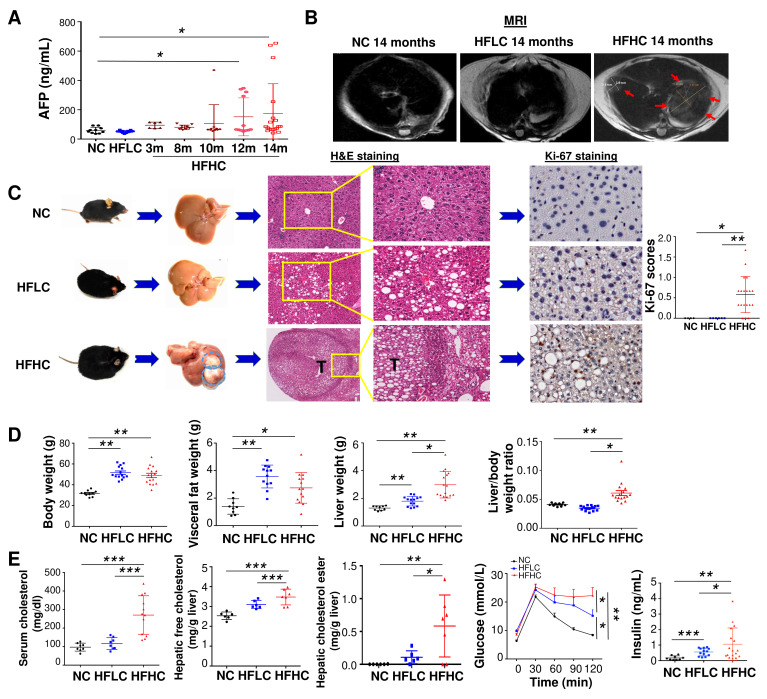
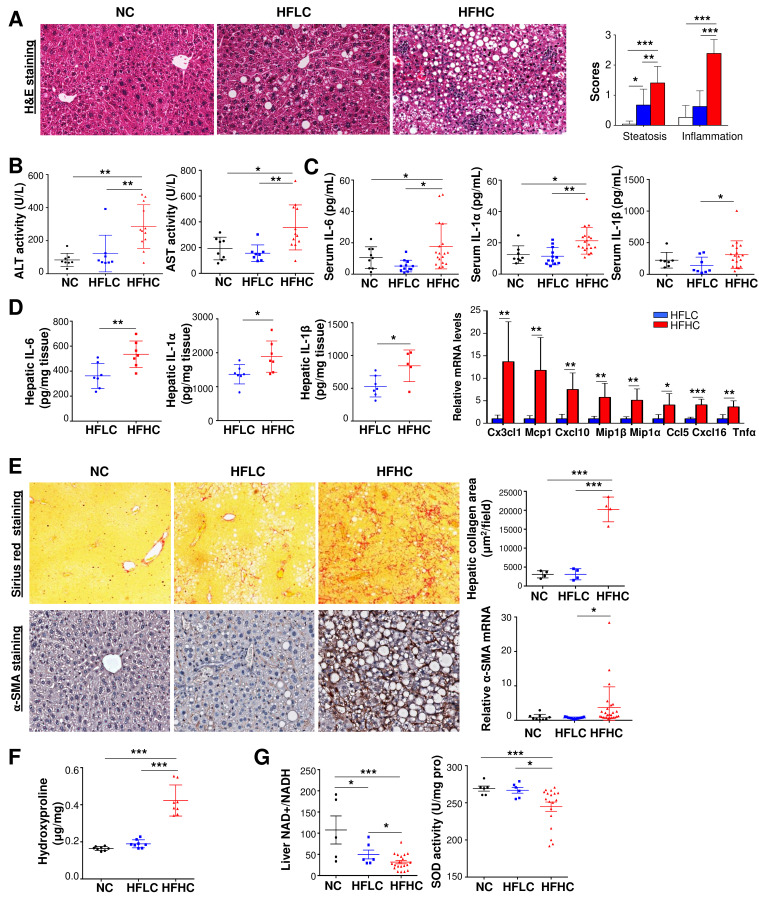
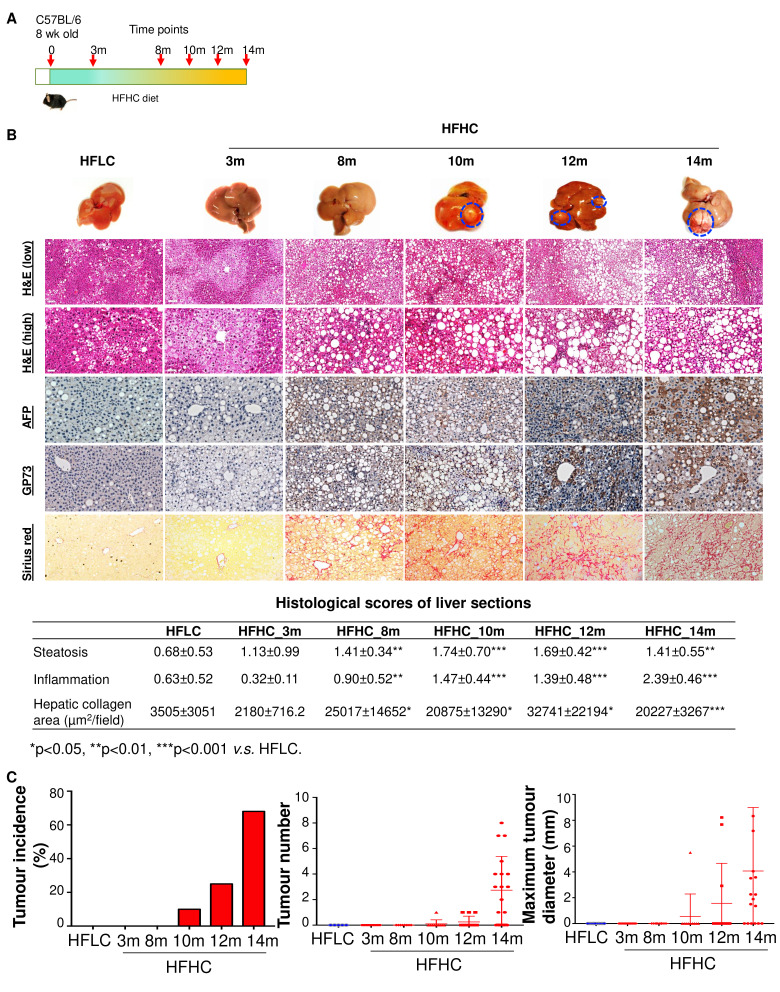
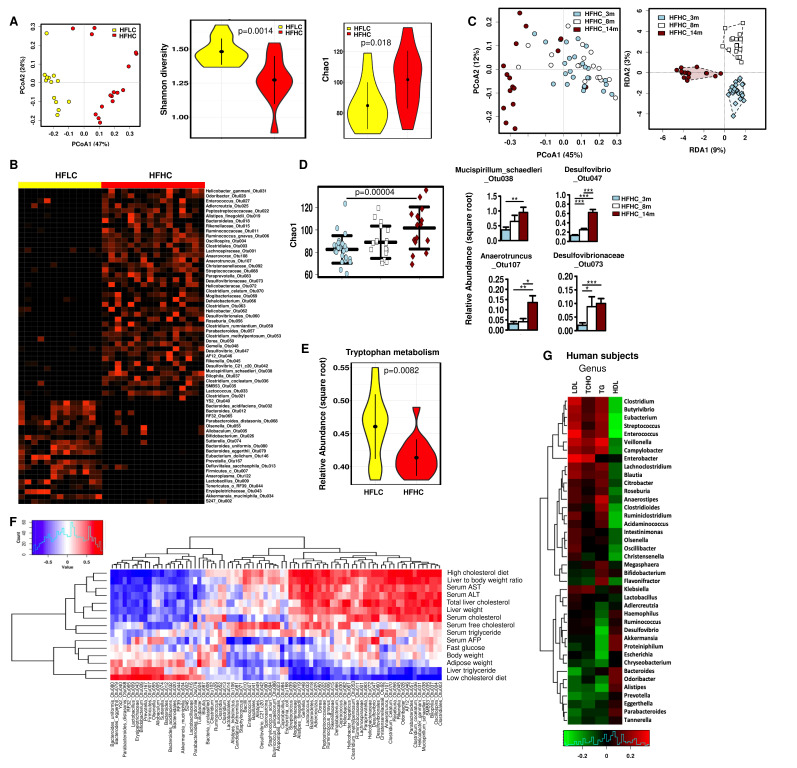
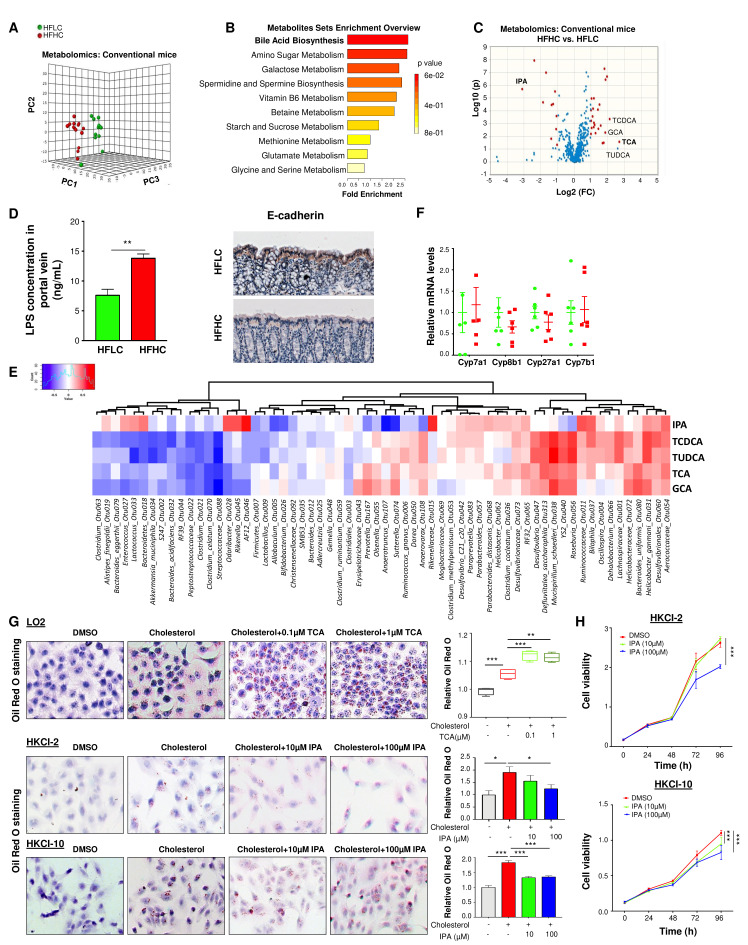
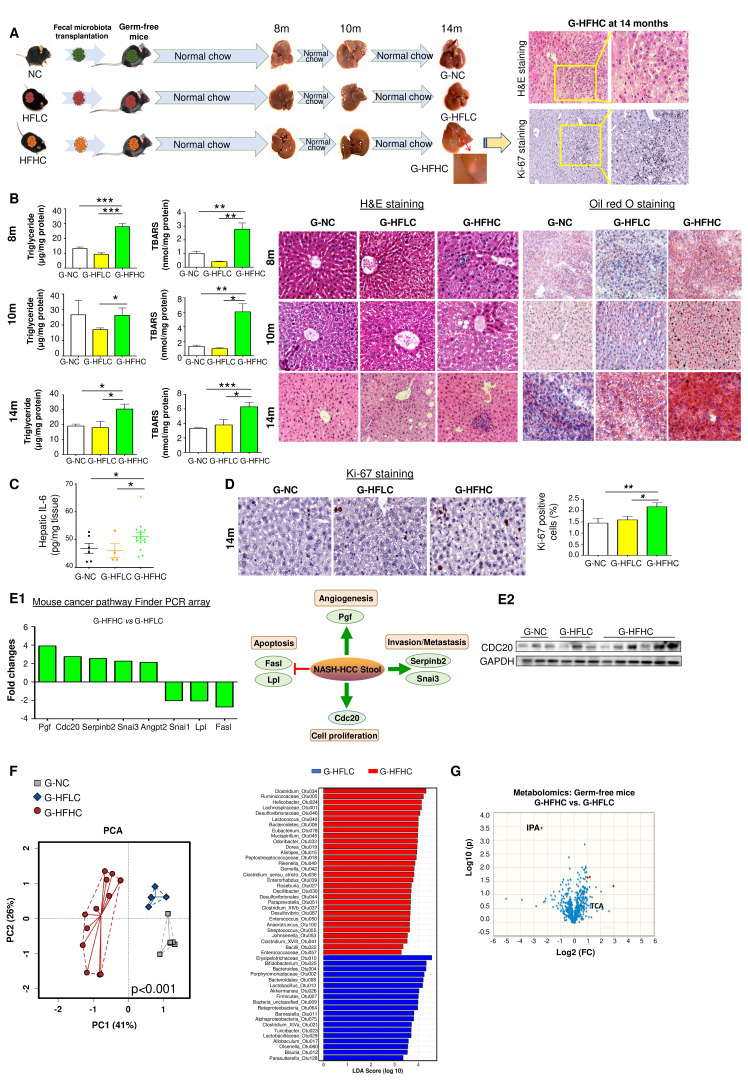
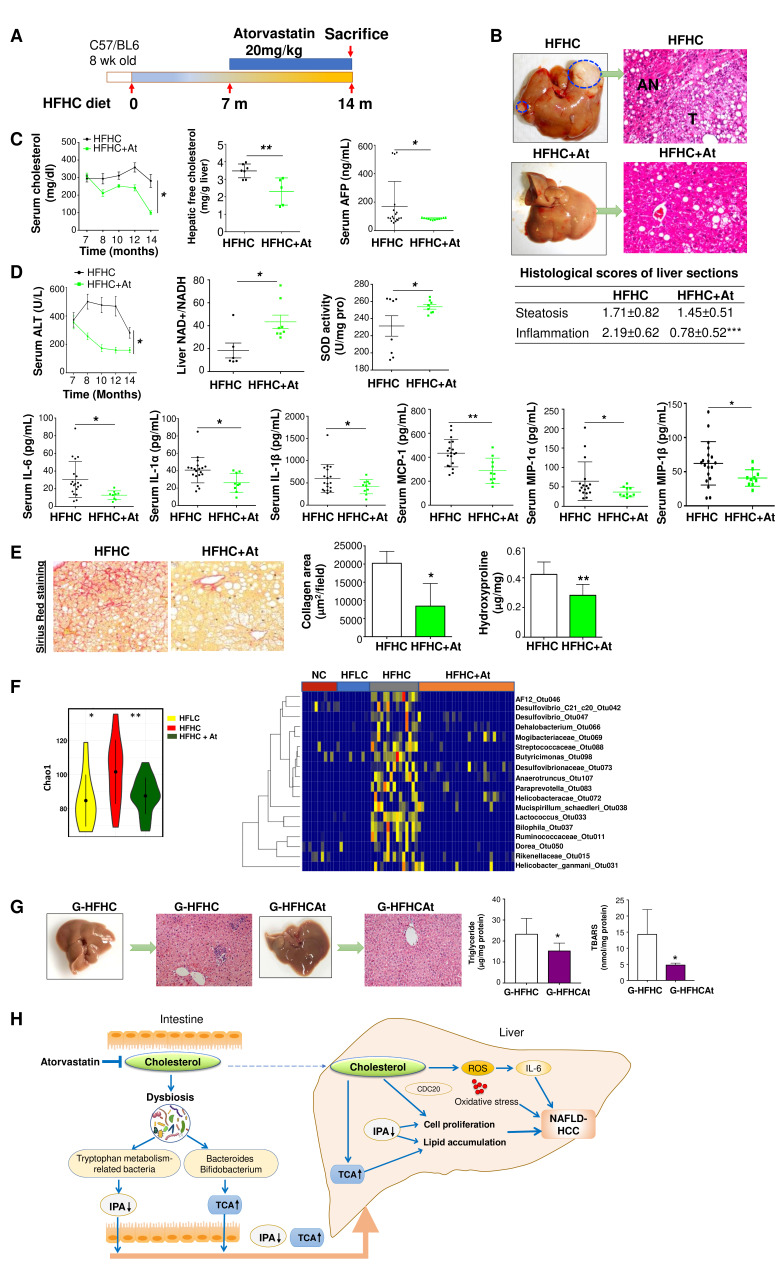
Objective: Non-alcoholic fatty liver disease (NAFLD)-associated hepatocellular carcinoma (HCC) is an increasing healthcare burden worldwide. We examined the role of dietary cholesterol in driving NAFLD–HCC through modulating gut microbiota and its metabolites. Design: High-fat/high-cholesterol (HFHC), high-fat/low-cholesterol or normal chow diet was fed to C57BL/6 male littermates for 14 months. Cholesterol-lowering drug atorvastatin was administered to HFHC-fed mice. Germ-free mice were transplanted with stools from mice fed different diets to determine the direct role of cholesterol modulated-microbiota in NAFLD–HCC. Gut microbiota was analysed by 16S rRNA sequencing and serum metabolites by liquid chromatography–mass spectrometry (LC–MS) metabolomic analysis. Faecal microbial compositions were examined in 59 hypercholesterolemia patients and 39 healthy controls. Results: High dietary cholesterol led to the sequential progression of steatosis, steatohepatitis, fibrosis and eventually HCC in mice, concomitant with insulin resistance. Cholesterol-induced NAFLD–HCC formation was associated with gut microbiota dysbiosis. The microbiota composition clustered distinctly along stages of steatosis, steatohepatitis and HCC. Mucispirillum, Desulfovibrio, Anaerotruncus and Desulfovibrionaceae increased sequentially; while Bifidobacterium and Bacteroides were depleted in HFHC-fed mice, which was corroborated in human hypercholesteremia patients. Dietary cholesterol induced gut bacterial metabolites alteration including increased taurocholic acid and decreased 3-indolepropionic acid. Germ-free mice gavaged with stools from mice fed HFHC manifested hepatic lipid accumulation, inflammation and cell proliferation. Moreover, atorvastatin restored cholesterol-induced gut microbiota dysbiosis and completely prevented NAFLD–HCC development. Conclusions: Dietary cholesterol drives NAFLD–HCC formation by inducing alteration of gut microbiota and metabolites in mice. Cholesterol inhibitory therapy and gut microbiota manipulation may be effective strategies for NAFLD–HCC prevention.
Overview
The claims and statistics of this paper haven’t been checked yet.
Free: it reads the open-access text and checks the first 5 claims that cite a source we can check. Create a free account to check every claim.
Integrity signals
Registry
Cites
Statistics
Figures
Verification
Claims the paper makes
The claims and statistics of this paper haven’t been checked yet.
Free: it reads the open-access text and checks the first 5 claims that cite a source we can check. Create a free account to check every claim.
Claims other papers make about this one
Each is checked against this paper’s own text: does it say what the citing paper says it does?
In the citing paper
“this genus has been associated with the pathogenesis of fatty-liver-associated liver cancer36.”
From Nivolumab plus ipilimumab with or without live bacterial supplementation in metastatic renal cell carcinoma: a randomized phase 1 trial (2022) · cites this paper as [36]
Self-check
Percentages, sums and reported differences re-computed from the paper’s own numbers.
The self-check needs the paper’s full text.
Citations
Cites
Vernon, G., Baranova, A., & Younossi, Z. M. (2011) · Alimentary Pharmacology & Therapeutics · doi:10.1111/j.1365-2036.2011.04724.x · Cited by 3,074 · cited 1×
“27 28 There are evidences that Bifidobacterium has cholesterol-lowering activity through gut microbiota modulation.”
Sayin, S. I., Wahlström, A., Felin, J., Jäntti, S., Marschall, H.-U., Bamberg, K., Angelin, B., Hyötyläinen, T., Orešič, M., & Bäckhed, F. (2013) · Cell Metabolism · doi:10.1016/j.cmet.2013.01.003 · Cited by 2,331
Microbial tryptophan catabolites in health and disease
Roager, H. M., & Licht, T. R. (2018) · Nature Communications · doi:10.1038/s41467-018-05470-4 · Cited by 2,236 · cited 1×
“IPA is a specific metabolite whose production completely depends on tryptophan metabolism by the gut microbiota 18 and characterised as being anti-inflammatory and protective of intestinal barrier integrity.”
Bile acid-microbiota crosstalk in gastrointestinal inflammation and carcinogenesis
Jia, W., Xie, G., & Jia, W. (2018) · Nature Reviews Gastroenterology & Hepatology · doi:10.1038/nrgastro.2017.119 · Cited by 1,924 · cited 2×
“40 Therefore, the decreased Bifidobacterium and Bacteroides in the stool of HFHC-fed mice may account for the accumulated taurine-conjugated bile acids in HFHC-fed mice.”
Zhu, L., Baker, S. S., Gill, C., Liu, W., Alkhouri, R., Baker, R. D., & Gill, S. R. (2013) · Hepatology · doi:10.1002/hep.26093 · Cited by 1,708 · cited 3×
“27 28 There are evidences that Bifidobacterium has cholesterol-lowering activity through gut microbiota modulation.”
Gut microbiome–mediated bile acid metabolism regulates liver cancer via NKT cells
Ma, C., Han, M., Heinrich, B., Fu, Q., Zhang, Q., Sandhu, M., Agdashian, D., Terabe, M., Berzofsky, J. A., Fako, V., et al. (2018) · Science · doi:10.1126/science.aan5931 · Cited by 1,508 · cited 1×
“21 We therefore explored the potential involvement of the gut microbiota in mediating dietary cholesterol-induced NAFLD–HCC.”
Gut microbial metabolites in obesity, NAFLD and T2DM
Canfora, E. E., Meex, R. C. R., Venema, K., & Blaak, E. E. (2019) · Nature Reviews Endocrinology · doi:10.1038/s41574-019-0156-z · Cited by 1,493
A gut bacterial pathway metabolizes aromatic amino acids into nine circulating metabolites
Dodd, D., Spitzer, M. H., Van Treuren, W., Merrill, B. D., Hryckowian, A. J., Higginbottom, S. K., Le, A., Cowan, T. M., Nolan, G. P., Fischbach, M. A., et al. (2017) · Nature · doi:10.1038/nature24661 · Cited by 1,425 · cited 1×
“…and potentially, those of other enriched bile acids to the pathogenesis of cholesterol-induced NAFLD–HCC. Additionally, IPA, which is exclusively produced by commensal gut microbes, 41 42 was depleted in both HFHC-fed conventional mice and germ-free mice transplanted with stools from HFHC-fed mice.”
Venkatesh, M., Mukherjee, S., Wang, H., Li, H., Sun, K., Benechet, A. P., Qiu, Z., Maher, L., Redinbo, M. R., Phillips, R. S., et al. (2014) · Immunity · doi:10.1016/j.immuni.2014.06.014 · Cited by 1,066 · cited 2×
“36 Disruption of bile acid homeostasis alters metabolic homeostasis in the liver and can lead to hepatic inflammation and metabolic diseases including diabetes and NAFLD.”
Gut microbiota and human NAFLD: disentangling microbial signatures from metabolic disorders
Aron-Wisnewsky, J., Vigliotti, C., Witjes, J., Le, P., Holleboom, A. G., Verheij, J., Nieuwdorp, M., & Clément, K. (2020) · Nature Reviews Gastroenterology & Hepatology · doi:10.1038/s41575-020-0269-9 · Cited by 1,063
Cited by
Gut-liver axis: Pathophysiological concepts and clinical implications
Tilg, H., Adolph, T. E., & Trauner, M. (2022) · Cell Metabolism · doi:10.1016/j.cmet.2022.09.017 · Cited by 843
Short-chain fatty acids in diseases
Zhang, D., Jian, Y.-P., Zhang, Y.-N., Li, Y., Gu, L.-T., Sun, H.-H., Liu, M.-D., Zhou, H.-L., Wang, Y.-S., & Xu, Z.-X. (2023) · Cell Communication and Signaling · doi:10.1186/s12964-023-01219-9 · Cited by 718
“The abundance of the SCFA-producing bacteria Bacteroides, Lactobacillus curvatus , and L. plantarum in the gut of NAFLD patients is significantly decreased (Table 2) [115–118].”
BackgroundSelf-citationImmune cell-mediated features of non-alcoholic steatohepatitis
Huby, T., & Gautier, E. L. (2022) · Nature Reviews Immunology · doi:10.1038/s41577-021-00639-3 · Cited by 573
Dizman, N., Meza, L., Bergerot, P., Alcantara, M., Dorff, T., Lyou, Y., Frankel, P., Cui, Y., Mira, V., Llamas, M., et al. (2022) · Nature Medicine · doi:10.1038/s41591-022-01694-6 · Cited by 515
Gut–liver axis: barriers and functional circuits
Pabst, O., Hornef, M. W., Schaap, F. G., Cerovic, V., Clavel, T., & Bruns, T. (2023) · Nature Reviews Gastroenterology & Hepatology · doi:10.1038/s41575-023-00771-6 · Cited by 436
Role of the gut microbiota in type 2 diabetes and related diseases
Yang, G., Wei, J., Liu, P., Zhang, Q., Tian, Y., Hou, G., Meng, L., Xin, Y., & Jiang, X. (2021) · Metabolism · doi:10.1016/j.metabol.2021.154712 · Cited by 418
Facchin, S., Bertin, L., Bonazzi, E., Lorenzon, G., De Barba, C., Barberio, B., Zingone, F., Maniero, D., Scarpa, M., Ruffolo, C., et al. (2024) · Life · doi:10.3390/life14050559 · Cited by 380
“Notably, the gut microbiota of patients with the formerly known NAFLD exhibits a significantly reduced abundance of SCFAs-producing bacteria such as Bacteroides , Lactobacillus curvatus , and Lactobacillus plantarum [321–324].”
BackgroundRao, Y., Kuang, Z., Li, C., Guo, S., Xu, Y., Zhao, D., Hu, Y., Song, B., Jiang, Z., Ge, Z., et al. (2021) · Gut Microbes · doi:10.1080/19490976.2021.1927633 · Cited by 356
“muciniphila in treating MAFLD in an obese mice model induced by high-fat and highcholesterol (HFC) diets, which well mimics the humans daily diet and is critical for inducing hepatocyte injury and driving the development of fatty liver-associated disease.(23) Our second aim was to investigate the molecular mode of act…”
BackgroundHepatocellular carcinoma: signaling pathways and therapeutic advances
Zheng, J., Wang, S., Xia, L., Sun, Z., Chan, K. M., Bernards, R., Qin, W., Chen, J., Xia, Q., & Jin, H. (2025) · Signal Transduction and Targeted Therapy · doi:10.1038/s41392-024-02075-w · Cited by 341
Tumor microenvironment-mediated immune evasion in hepatocellular carcinoma
Chen, C., Wang, Z., Ding, Y., & Qin, Y. (2023) · Frontiers in Immunology · doi:10.3389/fimmu.2023.1133308 · Cited by 305
Song, Q., Zhang, X., Liu, W., Wei, H., Liang, W., Zhou, Y., Ding, Y., Ji, F., Ho-Kwan Cheung, A., Wong, N., et al. (2023) · Journal of Hepatology · doi:10.1016/j.jhep.2023.07.005 · Cited by 293
Self-citationVallianou, N., Christodoulatos, G. S., Karampela, I., Tsilingiris, D., Magkos, F., Stratigou, T., Kounatidis, D., & Dalamaga, M. (2021) · Biomolecules · doi:10.3390/biom12010056 · Cited by 289
“, 2021 [54] Mice, C57BL/6 male, high-fat, high-cholesterol diet ↑Mucispirillum ↑ Desulfovibrio ↑ Anaerotruncus ↑ Desulfovibrionaceae ↓ Bifidobacterium ↓ Bacteroides”
Endoplasmic reticulum stress and lipids in health and diseases
Celik, C., Lee, S. Y. T., Yap, W. S., & Thibault, G. (2023) · Progress in Lipid Research · doi:10.1016/j.plipres.2022.101198 · Cited by 262
Desulfovibrio in the Gut: The Enemy within?
Singh, S. B., Carroll-Portillo, A., & Lin, H. C. (2023) · Microorganisms · doi:10.3390/microorganisms11071772 · Cited by 256
Metabolic reprogramming in the tumor microenvironment of liver cancer
Lin, J., Rao, D., Zhang, M., & Gao, Q. (2024) · Journal of Hematology & Oncology · doi:10.1186/s13045-024-01527-8 · Cited by 251
“Using 16S rRNA sequencing and serum metabolomic analysis, another independent group found that the development of MASLD-HCC induced by a high-cholesterol diet in mice was closely correlated to dysbiosis of the gut microbiota and the resultant alterations in metabolites [199].”
MethodA Review of Gut Microbiota‐Derived Metabolites in Tumor Progression and Cancer Therapy
Yang, Q., Wang, B., Zheng, Q., Li, H., Meng, X., Zhou, F., & Zhang, L. (2023) · Advanced Science · doi:10.1002/advs.202207366 · Cited by 240
Excess body weight: Novel insights into its roles in obesity comorbidities
Zhang, X., Ha, S., Lau, H. C.-H., & Yu, J. (2023) · Seminars in Cancer Biology · doi:10.1016/j.semcancer.2023.03.008 · Cited by 228
Self-citationNew Insights Into Gut-Bacteria-Derived Indole and Its Derivatives in Intestinal and Liver Diseases
Li, X., Zhang, B., Hu, Y., & Zhao, Y. (2021) · Frontiers in Pharmacology · doi:10.3389/fphar.2021.769501 · Cited by 224
Zhang, K., Yang, J., Chen, L., He, J., Qu, D., Zhang, Z., Liu, Y., Li, X., Liu, J., Li, J., et al. (2023) · ACS Nano · doi:10.1021/acsnano.3c04449 · Cited by 215
Hou, Y., Li, J., & Ying, S. (2023) · Metabolites · doi:10.3390/metabo13111166 · Cited by 213
A researcher’s guide to preclinical mouse NASH models
Gallage, S., Avila, J. E. B., Ramadori, P., Focaccia, E., Rahbari, M., Ali, A., Malek, N. P., Anstee, Q. M., & Heikenwalder, M. (2022) · Nature Metabolism · doi:10.1038/s42255-022-00700-y · Cited by 203
Mitochondria, oxidative stress and nonalcoholic fatty liver disease: A complex relationship
Karkucińska‐Więckowska, A., Simões, I. C. M., Kalinowski, P., Lebiedzińska, M., Zieniewicz, K., Milkiewicz, P., Górska‐Ponikowska, M., Pinton, P., Malik, A. N., Krawczyk, M. J., et al. (2021) · European Journal of Clinical Investigation · doi:10.1111/eci.13622 · Cited by 197
Gut microbiota bridges dietary nutrients and host immunity
Fan, L., Xia, Y., Wang, Y., Han, D., Liu, Y., Li, J., Fu, J., Wang, L., Gan, Z., Liu, B., et al. (2023) · Science China Life Sciences · doi:10.1007/s11427-023-2346-1 · Cited by 189
“Furthermore, dietary fat has been reported to be associated with the development of inflammation by altering gut microbiota and damaging intestinal barrier integrity (Fritsch et al., 2021; Zhang et al., 2021b).”
BackgroundSelf-citationVictoria Obayomi, O., Folakemi Olaniran, A., & Olugbemiga Owa, S. (2024) · Journal of Functional Foods · doi:10.1016/j.jff.2024.106337 · Cited by 184
Pan, Y., Chen, H., Zhang, X., Liu, W., Ding, Y., Huang, D., Zhai, J., Wei, W., Wen, J., Chen, D., et al. (2023) · Cell Reports Medicine · doi:10.1016/j.xcrm.2023.101144 · Cited by 183
“Moreover, we established a spontaneous model of NAFLD-HCC by feeding mice with HFHCD for 45 weeks (Figure 3G).(13) Consistently, METTL3 knockout inhibited NAFLD-HCC development, as shown by reduced AFP andMRImeasurements (Figure 3G) and the reduced tumor number (p = 0.”
MethodSelf-citationMitochondrial cholesterol: Metabolism and impact on redox biology and disease
Goicoechea, L., Conde de la Rosa, L., Torres, S., García-Ruiz, C., & Fernández-Checa, J. C. (2023) · Redox Biology · doi:10.1016/j.redox.2023.102643 · Cited by 181
Molecular mechanisms and therapeutic significance of Tryptophan Metabolism and signaling in cancer
Yan, J., Chen, D., Ye, Z., Zhu, X., Li, X., Jiao, H., Duan, M., Zhang, C., Cheng, J., Xu, L., et al. (2024) · Molecular Cancer · doi:10.1186/s12943-024-02164-y · Cited by 176
“Notably, the gut-cancer axis has gained considerable interest, as dysbiosis-an imbalance in gut microbiota composition-has been linked to the progression of gastrointestinal cancers [92–94].”
BackgroundFournier, E., Leveque, M., Ruiz, P., Ratel, J., Durif, C., Chalançon, S., Amiard, F., Edely, M., Bézirard, V., Gaultier, E., et al. (2022) · Journal of Hazardous Materials · doi:10.1016/j.jhazmat.2022.130010 · Cited by 175
Sphingomyelin synthase 1 mediates hepatocyte pyroptosis to trigger non-alcoholic steatohepatitis
Koh, E. H., Yoon, J. E., Ko, M. S., Leem, J., Yun, J.-Y., Hong, C. H., Cho, Y. K., Lee, S. E., Jang, J. E., Baek, J. Y., et al. (2021) · Gut · doi:10.1136/gutjnl-2020-322509 · Cited by 154
“47 Thus, these findings indicate that feeding mice with a high CED for a short time (present study) is equivalent to feeding a moderate CED for longer periods, achieving with either approach a high level of FC in the liver.”
The Role of Gut–Liver Axis in Gut Microbiome Dysbiosis Associated NAFLD and NAFLD-HCC
Song, Q., & Zhang, X. (2022) · Biomedicines · doi:10.3390/biomedicines10030524 · Cited by 174
“Except for clinical evidence, a recent study from our team showed that there is an alteration of gut bacterial metabolites such as increased level of serum taurocholic acid (TCA) and decreased level of serum 3-indolepropionic acid (IPA) in mice with NAFLDHCC [50].”
BackgroundSelf-citationLau, H. C.-H., Zhang, X., Ji, F., Lin, Y., Liang, W., Li, Q., Chen, D., Fong, W., Kang, X., Liu, W., et al. (2024) · EBioMedicine · doi:10.1016/j.ebiom.2023.104952 · Cited by 173
“7 Our previous study also re-ported the marked reduction of bene fi cial commensals including Lactobacillus and Bi fi dobacterium in NAFLD-HCC mice, 11 thus suggesting the capacity of probiotic supplementation against NAFLD-HCC.”
Self-citationMolecular mechanisms in MASLD/MASH-related HCC
Wang, X., Zhang, L., & Dong, B. (2025) · Hepatology · doi:10.1097/hep.0000000000000786 · Cited by 169
High-fat diet promotes liver tumorigenesis via palmitoylation and activation of AKT
Bu, L., Zhang, Z., Chen, J., Fan, Y., Guo, J., Su, Y., Wang, H., Zhang, X., Wu, X., Jiang, Q., et al. (2024) · Gut · doi:10.1136/gutjnl-2023-330826 · Cited by 162
“Consistent with these findings, we obtained liver tissues from a reported HFLC-feeding induced NAFLD/NASH/HCC murine model, 25 and observed that AKT activity was increasingly elevated on progression of NASH to HCC (figure 1I–”
ResultSelf-citationImmune microenvironment in hepatocellular carcinoma: from pathogenesis to immunotherapy
Seyhan, D., Allaire, M., Fu, Y., Conti, F., Wang, X. W., Gao, B., & Lafdil, F. (2025) · Cellular and Molecular Immunology · doi:10.1038/s41423-025-01308-4 · Cited by 164
“Most notably, Zhang et al. discovered that a high-fat high-cholesterol diet, not a high-fat low-cholesterol diet, drives the formation of MASLD-HCC through gut dysbiosis [68].”
Asian perspective on NAFLD-associated HCC
Yip, T. C.-F., Lee, H. W., Chan, W. K., Wong, G. L.-H., & Wong, V. W.-S. (2022) · Journal of Hepatology · doi:10.1016/j.jhep.2021.09.024 · Cited by 161
Gheorghe, C. E., Ritz, N. L., Martin, J. A., Wardill, H. R., Cryan, J. F., & Clarke, G. (2021) · Gut Microbes · doi:10.1080/19490976.2021.1941711 · Cited by 148
Jiang, H., Chen, C., & Gao, J. (2022) · Nutrients · doi:10.3390/nu15010151 · Cited by 160
“Zhang et al. found that high-fat/high-cholesterol (HFHC)-fed mice developed cholesterolrelated dysbiosis, impaired microbial tryptophan metabolism, and significantly decreased serum IPA levels compared to high-fat/low-cholesterol (HFLC) [86].”
BackgroundEng, J. M., & Estall, J. L. (2021) · Cells · doi:10.3390/cells10071805 · Cited by 133
“203% cholesterol) results in tumor development in 68% of animals after 14 months [86].”
BackgroundNabavi-Rad, A., Sadeghi, A., Aghdaei, H. A., Yadegar, A., Smith, S. M., & Zali, M. R. (2022) · Gut Microbes · doi:10.1080/19490976.2022.2108655 · Cited by 155
“Furthermore, Anaerotruncus that enriched in the antibiotic group are butyrate-producing bacteria with a positive correlation to saturated fatty acid and cholesterol intake; therefore, they are involved in obesity and NAFLD-associated hepatocellular carcinoma (HCC).(223,224) Citrobacter genus presented a low virulence…”
BackgroundXu, L., Zhang, Y., Li, X., Li, C., Hu, H., Hu, J., Liu, M., Yang, Q. Z., Gu, P., Li, J., et al. (2025) · iMeta · doi:10.1002/imt2.270 · Cited by 154
Self-citationEffect of different bile acids on the intestine through enterohepatic circulation based on FXR
Xiang, J., Zhang, Z., Xie, H., Zhang, C., Bai, Y., Cao, H., Che, Q., Guo, J., & Su, Z. (2021) · Gut Microbes · doi:10.1080/19490976.2021.1949095 · Cited by 149
Zhang, B., Jiang, M., Zhao, J., Song, Y., Du, W., & Shi, J. (2022) · Frontiers in Endocrinology · doi:10.3389/fendo.2022.841703 · Cited by 141
“Therefore, the partial reason for cholesterol-induced lipotoxicity is the damage to tryptophanmetabolism inmicroorganisms and the reduced serum IPA content, thereby promoting the development of NASHHCC (50).”
BackgroundLau, H. C.-H., Zhang, X., & Yu, J. (2025) · Nature Reviews Gastroenterology & Hepatology · doi:10.1038/s41575-025-01089-1 · Cited by 138
“A murine study reported that excess consumption of fats and cholesterol leads to spon-taneous and sequential progression from liver steatosis, to fibrosis and to HCC in a microbiome-dependent manner 73 .”
Self-citationLi, H., Huang, S., Zhou, D.-D., Xiong, R.-G., Luo, M., Saimaiti, A., Han, M.-K., Gan, R., Zhu, H., & Li, H. (2023) · Journal of Advanced Research · doi:10.1016/j.jare.2023.01.008 · Cited by 132
“These findings confirmed the positive role of Akkermansia, Bacteroides and Parabacteroides in alleviating NAFLD and obesity, and proposed novel insight into the relationship among TB, serotonin, gut microbiota, and NAFLD [32,69,74].”
BackgroundMethodResultInfluentialXu, H., Cao, C., Ren, Y., Weng, S., Liu, L., Guo, C., Wang, L., Han, X., Ren, J., & Liu, Z. (2022) · Frontiers in Immunology · doi:10.3389/fimmu.2022.949490 · Cited by 126
“For instance, colon cancer may progress from chronic inflammation caused by dysbiosis (15, 43, 44).”
BackgroundTang, W., Zhou, J., Yang, W., Feng, Y., Wu, H., Mok, M. T. S., Zhang, L., Liang, Z., Liu, X., Xiong, Z., et al. (2022) · Cellular and Molecular Immunology · doi:10.1038/s41423-022-00872-3 · Cited by 122
“Pharmacological inhibition of mTOR confines obesitypromoted HCC development via NKT but not CD8 T cells Compared to the NAFLD mouse model induced by direct dietary cholesterol uptake [35, 36], the source of excessive cholesterol in our HFHC-induced obesity model was derived from biosynthesis in hepatocytes via the mTO…”
BackgroundSelf-citationSpatial metabolomics and its application in the liver
Santos, A. A., Delgado, T. C., Marques, V., Ramírez-Moncayo, C., Alonso, C., Vidal‐Puig, A., Hall, Z., Martínez‐Chantar, M. L., & Rodrigues, C. M. P. (2023) · Hepatology · doi:10.1097/hep.0000000000000341 · Cited by 118
“Changes in mouse gut microbiota and metabolites can drive NAFLD progression to HCC. [124] Moreover, cecum and liver metabolic signatures have been described in obese mice using the high-fat diet (HFD) model.”
BackgroundDysregulation of cholesterol metabolism in cancer progression
Liu, X., Lv, M., Zhang, W., & Zhan, Q. (2023) · Oncogene · doi:10.1038/s41388-023-02836-x · Cited by 117
“Furthermore, a high-cholesterol diet has been shown to promote cancer development [11].”
BackgroundChen, W., Wen, L., Bao, Y., Tang, Z., Zhao, J., Zhang, X., Wei, T., Zhang, J., Ma, T., Zhang, Q., et al. (2022) · Proceedings of the National Academy of Sciences · doi:10.1073/pnas.2203894119 · Cited by 116
Self-citationMouse models of nonalcoholic fatty liver disease (NAFLD): pathomechanisms and pharmacotherapies
Fang, T., Wang, H., Pan, X., Little, P. J., Xu, S., & Weng, J. (2022) · International Journal of Biological Sciences · doi:10.7150/ijbs.65044 · Cited by 114
“In addition, cholesterol diets induced modification in intestinal microflora and metabolites to promote NAFLD development [86].”
BackgroundZhang, X., Lau, H. C.-H., & Yu, J. Q. (2025) · Pharmacological Reviews · doi:10.1016/j.pharmr.2024.100018 · Cited by 112
Self-citationLiu, F., Tian, T., Zhang, Z., Xie, S., Yang, J., Zhu, L., Wang, W., Shi, C., Sang, L., Guo, K., et al. (2022) · Nature Metabolism · doi:10.1038/s42255-022-00616-7 · Cited by 110
Lin, A., Xiong, M., Jiang, A., Huang, L., Wong, H. Z. H., Feng, S., Zhang, C., Yu, H., Chen, L., Chi, H., et al. (2025) · iMeta · doi:10.1002/imt2.70070 · Cited by 108
Microbiota-driven mechanisms at different stages of cancer development
Ivleva, E., & Grivennikov, S. I. (2022) · Neoplasia · doi:10.1016/j.neo.2022.100829 · Cited by 103
A distinct microbiota signature precedes the clinical diagnosis of hepatocellular carcinoma
Yang, J., He, Q., Lü, F., Chen, K., Ni, Z., Wang, H., Zhou, C., Zhang, Y., Chen, B., Bo, Z., et al. (2023) · Gut Microbes · doi:10.1080/19490976.2023.2201159 · Cited by 100
Self-citationGuo, W., Ge, X., Lü, J., Xu, X. P., Gao, J., Wang, Q., Song, C., Zhang, Q., & Yu, C. (2022) · Nutrients · doi:10.3390/nu14245335 · Cited by 94
“Recent studies have indicated that a diet rich in sugar, saturated fatty acids, and cholesterol promotes the pathogenesis and development of NAFLD [7,8].”
BackgroundZhu, L.-R., Li, S., Zheng, W.-Q., Ni, W., Cai, M., & Liu, H. (2023) · Frontiers in Immunology · doi:10.3389/fimmu.2023.1086078 · Cited by 93
“Moreover, dietary cholesterol was found to induce gut microbiota dysbiosis and metabolite alterations in mice that drive NAFLD-hepatocellular carcinoma (HCC) formation, while both cholesterol suppression and gut microbiota modulation showed potential anti-HCC effects (10).”
BackgroundXu, W., Yu, J., Yang, Y., Li, Z., Zhang, Y., Zhang, F., Wang, Q., Xie, Y., Zhao, B., & Wu, C. (2023) · Gut Microbes · doi:10.1080/19490976.2023.2228045 · Cited by 92
Self-citationYan, C., Huang, S.-H., Ding, H., Kwek, E., Liu, J.-H., Chen, Z., Ma, K. Y., & Chen, Z. (2023) · Journal of Hazardous Materials · doi:10.1016/j.jhazmat.2023.132057 · Cited by 89
Gut microbiota as a new target for anticancer therapy: from mechanism to means of regulation
Sun, J., Song, S., Liu, J., Chen, F., Li, X., & Wu, G. (2025) · npj Biofilms and Microbiomes · doi:10.1038/s41522-025-00678-x · Cited by 89
Dietary nutrition for neurological disease therapy: Current status and future directions
Mao, X., Yin, X., Guan, Q.-W., Xia, Q., Yang, N., Zhou, H., Liu, Z., & Jin, W. (2021) · Pharmacology & Therapeutics · doi:10.1016/j.pharmthera.2021.107861 · Cited by 87
Pezzino, S., Sofia, M., Faletra, G., Mazzone, C., Litrico, G., Greca, G. L., & Latteri, S. (2022) · Biology · doi:10.3390/biology11111622 · Cited by 87
Indole-3-Propionic Acid, a Gut-Derived Tryptophan Metabolite, Associates with Hepatic Fibrosis
Sehgal, R., Ilha, M., Vaittinen, M., Kamińska, D., Männistö, V., Kärjä, V. J., Tuomainen, M. H., Hanhineva, K., Romeo, S., Pajukanta, P., et al. (2021) · Nutrients · doi:10.3390/nu13103509 · Cited by 87
“Therefore, IPA doses of 1, 10, and 100 μM were selected for the actual experiments, which were the highest non-toxic concentrations, close to the physiological range [19,38] and which have been previously used [15,40,41].”
BackgroundMethodWang, P., Wang, R., Zhao, W., Zhao, Y., Wang, D., Zhao, S., Ge, Z., Ma, Y., & Zhao, X. (2024) · Gut Microbes · doi:10.1080/19490976.2024.2446391 · Cited by 86
“16,17 Notably, nutrients that are not fully metabolized by the host are processed by gut microbiota into beneficial metabolites, such as short-chain fatty acids and bile acids, 18 which then enter circulation and mediate interaction between the host and microbiota.”
Kang, Y., Cai, Y., & Yang, Y. X. (2021) · Liver Cancer · doi:10.1159/000521358 · Cited by 85
The role of gut microbiota in patients with benign and malignant brain tumors: a pilot study
Jiang, H., Zeng, W. G., Zhang, X., Pei, Y., Zhang, H., & Li, Y. (2022) · Bioengineered · doi:10.1080/21655979.2022.2049959 · Cited by 85
Self-citationGut microbiome in gastrointestinal cancer: a friend or foe?
Liu, Y., Baba, Y., Ishimoto, T., Gu, X. J., Zhang, J., Nomoto, D., Okadome, K., Baba, H., & Qiu, P. (2022) · International Journal of Biological Sciences · doi:10.7150/ijbs.69331 · Cited by 85
“Dietary cholesterol induces an increase in taurocholic acid and a decrease in indole propionic acid which drive the occurrence of NAFLD-HCC [66].”
BackgroundWen, J., Zhang, X., Wong, C. C., Zhang, Y., Pan, Y., Zhou, Y., Cheung, A. H. K., Liu, Y., Ji, F., Kang, X., et al. (2024) · Gut · doi:10.1136/gutjnl-2023-331117 · Cited by 84
“5 38 In support of this, a meta-analysis of 59,073 HCC patients showed that statin users had significantly lower risk of HCC development compared with statin non-users.”
ResultSelf-citationWu, X., Fan, Y., Chung, K. P. S., Leung, C. O. N., Leung, R. W. H., So, K. K. H., Lei, M. M. L., Chau, W. K., Tong, M., Yu, J. Q., et al. (2025) · Cell Reports Medicine · doi:10.1016/j.xcrm.2024.101900 · Cited by 84
“Overall, this study demonstrates the potential of the application of Akk in combination with current immune checkpoint therapies in MAFLD-related HCC. Akk is a gram-negative bacterium living in anaerobic conditions and accounting for 1%–4% of the gut microbiota in healthy individuals.”
InfluentialSelf-citationOxidative Stress and Reprogramming of Lipid Metabolism in Cancers
Li, S., Yuan, H., Li, L., Li, Q., Lin, P., & Li, K. (2025) · Antioxidants · doi:10.3390/antiox14020201 · Cited by 84
“Notably, high-cholesterol diets have been shown to induce steatosis, steatohepatitis, and fibrosis and promote the development of cancer [113].”
Peiseler, M., & Tacke, F. (2021) · Cancers · doi:10.3390/cancers13040730 · Cited by 71
Crudele, L., Matteis, C. D., Piccinin, E., Gadaleta, R. M., Cariello, M., Buduo, E. D., Piazzolla, G., Suppressa, P., Berardi, E., Sabbà, C., et al. (2022) · JHEP Reports · doi:10.1016/j.jhepr.2022.100627 · Cited by 81
“In this context, it has been shown that dietary cholesterol can also modulate the intestinal microbiota, contributing to the sequential progression of steatosis to steatohepatitis, fibrosis and finally HCC in mice.(47)”
Xia, J., Guo, W., Hu, M., Jin, X., Zhang, S., Liu, B., Qiu, H., Wang, K., Zhuge, A., Li, S., et al. (2023) · Gut Microbes · doi:10.1080/19490976.2023.2221450 · Cited by 82
“Although the WD had higher sugar and fat, the WDAL group still showed more absorption of D-fructose, D-xylose, and linoleic acid than that of the NDAL group, which also meant excessive calorie intake and a higher predisposition to adiposity.(17,40,53) The WDTRF group preferred to excrete derivatives of D-fructose, D-x…”
BackgroundSehgal, R., de Mello, V. D., Männistö, V., Lindström, J., Tuomilehto, J. O., Pihlajamäki, J., & Uusitupa, M. I. J. (2022) · Nutrients · doi:10.3390/nu14214695 · Cited by 80
“Even in germ-free mice, the IPA level was reduced and this was directly correlated with the increased risk of liver steatohepatitis and tumorigenesis [92].”
BackgroundInfluentialCholesterol metabolism in tumor microenvironment: cancer hallmarks and therapeutic opportunities
Jiang, W. G., Jin, W., & Xu, A. (2024) · International Journal of Biological Sciences · doi:10.7150/ijbs.92274 · Cited by 78
“Zhang et al. found that dietary cholesterol contributes to non-alcoholic fatty liver disease (NAFLD)-associated HCC formation by inducing gut microbial dysbiosis [64], which could be effectively prevented by statin treatment [64].”
BackgroundHao, Y., Feng, Y., Yan, X. S., Chen, L., Ma, X., Tang, X., Zhong, R., Sun, Z., Agarwal, M., Zhang, H., et al. (2021) · Microbiology Spectrum · doi:10.1128/spectrum.00028-22 · Cited by 77
The role of the gut microbiota in tumor, immunity, and immunotherapy
Xie, Y., & Liu, F. (2024) · Frontiers in Immunology · doi:10.3389/fimmu.2024.1410928 · Cited by 77
Shu, Y., Huang, Y., Dong, W., Fan, X., Sun, Y., Chen, G., Zeng, X., & Ye, H. (2023) · International Journal of Biological Macromolecules · doi:10.1016/j.ijbiomac.2023.125662 · Cited by 74
Yang, M., Wang, J., Xiao, W., & Fan, X. (2024) · Frontiers in Medicine · doi:10.3389/fmed.2024.1410668 · Cited by 74
Yamazaki, K., Kato, T., Tsuboi, Y., Miyauchi, E., Suda, W., Sato, K., Nakajima, M., Yokoji, M., Yamada‐Hara, M., Tsuzuno, T., et al. (2021) · Frontiers in Immunology · doi:10.3389/fimmu.2021.766170 · Cited by 73
The gut–liver axis: host microbiota interactions shape hepatocarcinogenesis
Silveira, M. A. D., Bilodeau, S., Greten, T. F., Wang, X. W., & Trinchieri, G. (2022) · Trends in cancer · doi:10.1016/j.trecan.2022.02.009 · Cited by 73
Lu, T., Li, Q., Lin, W., Zhao, X., Fu, L., Ji, J., Zhang, Y., & Xu, N. (2023) · Cellular and Molecular Gastroenterology and Hepatology · doi:10.1016/j.jcmgh.2023.01.004 · Cited by 73
Gut mucosal microbiota profiles linked to colorectal cancer recurrence
Huo, R., Wang, Y., Hou, S., Wang, W., Zhang, C.-Z., & Wan, X. (2022) · World Journal of Gastroenterology · doi:10.3748/wjg.v28.i18.1946 · Cited by 72
Self-citationHu, Z., Liu, L., Guo, F., Huang, J., Qiao, J., Bi, R., Huang, J., Zhang, K., Guo, Y., & Wang, Z. (2023) · Journal of Animal Science and Biotechnology/Journal of animal science and biotechnology · doi:10.1186/s40104-023-00889-2 · Cited by 72
Dua, A., KUMARI, R. R., Singh, M., Kumar, R., Pradeep, S., Ojesina, A. I., & Kumar, R. (2025) · Frontiers in Medicine · doi:10.3389/fmed.2025.1618275 · Cited by 72
Abnormal bile acid-microbiota crosstalk promotes the development of hepatocellular carcinoma
Shen, R. D., Ke, L., Li, Q., Dang, X., Shen, S., Shen, J., Li, S., Liang, L., Peng, B., Kuang, M., et al. (2022) · Hepatology International · doi:10.1007/s12072-022-10299-7 · Cited by 71
“In addition, dietary cholesterol drives the formation of NAFLD-related HCC in mice [35, 36].”
BackgroundLong, F., Bhatti, M. R., Kellenberger, A., Sun, W., Modica, S., Höring, M., Liebisch, G., Krieger, J.-P., Wolfrum, C., & Challa, T. D. (2023) · Molecular Metabolism · doi:10.1016/j.molmet.2023.101675 · Cited by 72
Vitamin D alleviates non-alcoholic fatty liver disease via restoring gut microbiota and metabolism
Zhang, X., Chen, L., Yang, J., Zhao, S.-S., Jin, S., Ao, N., Yang, J., Liu, H., & Du, J. (2023) · Frontiers in Microbiology · doi:10.3389/fmicb.2023.1117644 · Cited by 71
Self-citationMiao, Z., Miao, Z., Teng, X., & Xu, S. (2022) · Environmental Pollution · doi:10.1016/j.envpol.2022.120730 · Cited by 70
Niu, B., Pan, T., Xiao, Y., Wang, H., Zhu, J., Tian, F., Lu, W., & Chen, W. (2024) · Critical Reviews in Food Science and Nutrition · doi:10.1080/10408398.2023.2299744 · Cited by 70
“IPA administration can inhibit the onset and development of NAFLD and NAFLD-related conditions (Zhang et al. 2021; Zhao et al. 2019).”
InfluentialZuo, G., Chen, M., Zuo, Y., Liu, F., Yang, Y., Li, J., Zhou, X., Li, M.-H., Huang, J., Liu, Z., et al. (2024) · Journal of Agricultural and Food Chemistry · doi:10.1021/acs.jafc.3c04832 · Cited by 69
NAFLD-Associated HCC: Progress and Opportunities
Geh, D., Anstee, Q. M., & Reeves, H. L. (2021) · Journal of Hepatocellular Carcinoma · doi:10.2147/jhc.s272213 · Cited by 61
“mice into germ-free mice fed with normal chow who then developed NAFLD and increased hepatocyte proliferation.(115)”
BackgroundZhang, C., Liu, S., & Yang, M. J. (2021) · Frontiers in Endocrinology · doi:10.3389/fendo.2021.808526 · Cited by 68
“In addition, gut microbial metabolites taurocholic acid and 3-indolepropionic acid were increased and decreased, separately, during NAFLD-HCC development (10).”
BackgroundLi, Y., Bai, D., Lu, Y., Chen, J., Yang, H., Mu, Y., Xu, J., Huang, X., & Li, L. (2022) · International Journal of Biological Macromolecules · doi:10.1016/j.ijbiomac.2022.05.130 · Cited by 68
Yu, Y., Cai, Y., Yang, B., Xie, S., Shen, W., Wu, Y., Sui, Z., Cai, J., Ni, C., & Ye, J. (2022) · Cancers · doi:10.3390/cancers14112573 · Cited by 67
“DSV was reported to be abundant in fatty liver models [46,47].”
BackgroundSREBP1/FASN/cholesterol axis facilitates radioresistance in colorectal cancer
Jin, Y., Chen, Z., Dong, J., Wang, B., Fan, S., Yang, X., & Cui, M. (2021) · FEBS Open Bio · doi:10.1002/2211-5463.13137 · Cited by 65
Self-citationHepatocellular Carcinoma: How the Gut Microbiota Contributes to Pathogenesis, Diagnosis, and Therapy
Luo, W., Guo, S., Zhou, Y., Zhao, J., Wang, M., Sang, L.-X., Chang, B., & Wang, B. (2022) · Frontiers in Microbiology · doi:10.3389/fmicb.2022.873160 · Cited by 65
“…cholesterol diet was found to induce NAFLD-HCC formation, which was accompanied by gut microbial dysbiosis (Bifidobacterium and Bacteroides depleted) and altered flora metabolites (serum taurocholic acid was increased while 3- indolepropionic acid was depleted) in patients (Zhang et al., 2021).”
BackgroundJiang, Z., Zeng, G., Dai, H., Bian, Y., Wang, L., Cao, W., & Yang, J. (2025) · BMC Public Health · doi:10.1186/s12889-025-22026-6 · Cited by 65
“Therefore, delving deeper into the relationship between the gut microbiota and liver cancer is of significant importance for early diagnosis and treatment [39, 40].”
Li, Y., Chen, M., Ma, Y., Yang, Y., Cheng, Y., Ma, H., Ren, D., & Chen, P. (2022) · npj Science of Food · doi:10.1038/s41538-022-00167-x · Cited by 64
Zhao, H., Gao, X., Liu, Z., Zhang, L., Fang, X., Sun, J., Zhang, Z., & Sun, Y. (2022) · Nutrients · doi:10.3390/nu14224846 · Cited by 64
“In the gut of patients and animals with NAFLD, the abundance of some pernicious bacteria was increased, such as Ruminococcus_torques_group and LPS-containing Desulfovibrio [41,42].”
Background
Metadata
- Authors
- Zhang, X., Coker, O. O., Chu, E. S., Fu, K., Lau, H. C. H., Wang, Y.-X., Chan, A. W. H., Wei, H., Yang, X., Sung, J. J. Y., & Yu, J.
- Affiliations
- Chinese University of Hong Kong (HK)
- Department of Imaging and Interventional Radiology, The Chinese University of Hong Kong, Hong Kong SAR, China
- Army Medical University (CN)
- Yale University (US)
- Corresponding author
- Yu, Jun
- ORCID
- Venue
- Gut
- Publisher
- BMJ
- Published
- 2020-07-21
- Volume
- 70
- Issue
- 4
- Pages
- 761-774
- ISSN
- 0017-5749 (ISSN-L)
- 1468-3288
- PMC
- PMC7948195
- OpenAlex
- W3045114299
- Cited by
- 841
- References
- 43
- Citations by year
- 2026: 94 · 2025: 180 · 2024: 218 · 2023: 155 · 2022: 139 · 2021: 51 · 2020: 4
- FWCI
- 28.28
- Type
- journal article
- Language
- en
- Open access
- hybrid
- doi.org
- Licence
- Locations
- Gut (publishedVersion, cc-by-nc)
- PubMed Central (publishedVersion, cc-by-nc)
- PubMed (publishedVersion)
- Funders
- Vice-Chancellor's Discretionary Fund CUHK
- CUHK direct grant for research
- RGC Theme-based Research Scheme Hong Kong (T12-703/19-R)
- RGC Collaborative Research Fund (C4041-17GF, C7026-18G, C7065-18G)
- Guangdong Natural Science Foundation (2018B030312009)
- Topics
- Life Sciences › Biochemistry, Genetics and Molecular Biology › Molecular Biology › Gut microbiota and health
- Health Sciences › Medicine › Hepatology › Liver Disease Diagnosis and Treatment
- Life Sciences › Biochemistry, Genetics and Molecular Biology › Cancer Research › Cancer, Lipids, and Metabolism
- Keywords
- dietary cholesterol, non-alcoholic fatty liver disease, hepatocellular carcinoma, gut dysbiosis, microbial metabolites, taurocholate, 3-indolepropionic acid, atorvastatin, hypercholesterolemia, steatohepatitis, liver fibrosis, insulin resistance, Desulfovibrio, Bacteroides, Bifidobacterium, Mucispirillum, hepatic lipid accumulation, cell proliferation
- MeSH terms
- Atorvastatin, Gastrointestinal Microbiome, Fecal Microbiota Transplantation, Animals, Cholesterol, Dietary, Carcinoma, Hepatocellular, Liver Neoplasms, Male, Mice, Inbred C57BL, Case-Control Studies, Disease Progression, Mice, Non-alcoholic Fatty Liver Disease
About these checks
Registry, retraction, Cites and statistics results are computed, not judged, with one exception: a printed reference that no index lists is read once by a model before it counts as a citation error. Claims are extracted by a model and kept only when their quote appears verbatim in the text; each cited source is then checked, with a model’s help, for whether it says what the claim relies on. Those verdicts can be wrong — read the claim’s quote and the cited source before relying on one.
Statistics and arithmetic are recomputed, not judged.
Confidence bands are shown only for fields calibrated on our annotated test set. None is calibrated yet, so no band is shown.
What counts as a claim ›How we measure confidence ›How we check this ›
Are you an author, or do you see a problem with this page? Request a review
Data sources
Bibliographic data: Semantic Scholar, OpenAlex, Crossref.
Contains information from the Semantic Scholar Academic Graph Datasets, made available under the ODC Attribution License (ODC-BY 1.0).
Semantic Scholar’s data is described in: Kinney, R., et al. (2023). The Semantic Scholar Open Data Platform. arXiv:2301.10140.
