

Dietary cholesterol drives fatty liver-associated liver cancer by modulating gut microbiota and metabolites
Open accessThe DOI matches its Crossref record; 43 of the 43 references it cites were found in a registry or an index.
Abstract
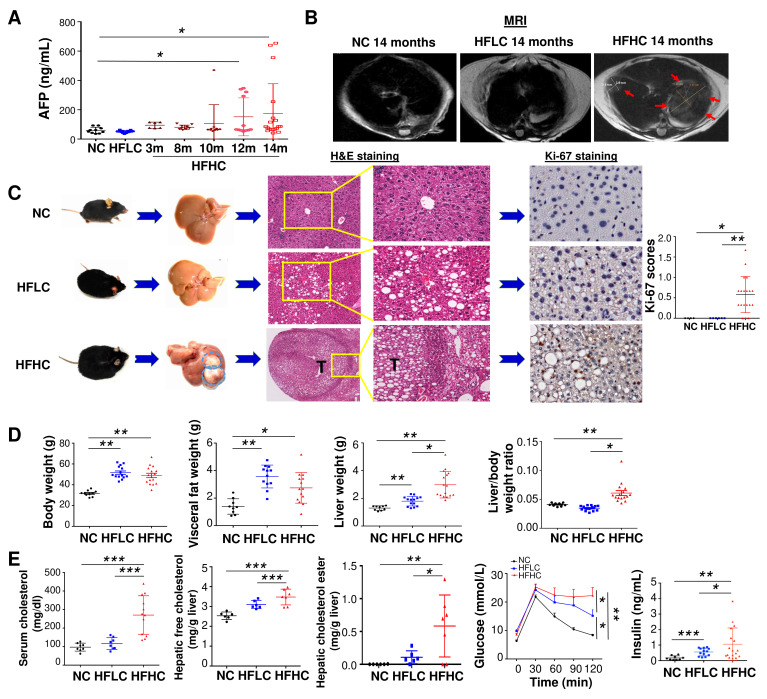
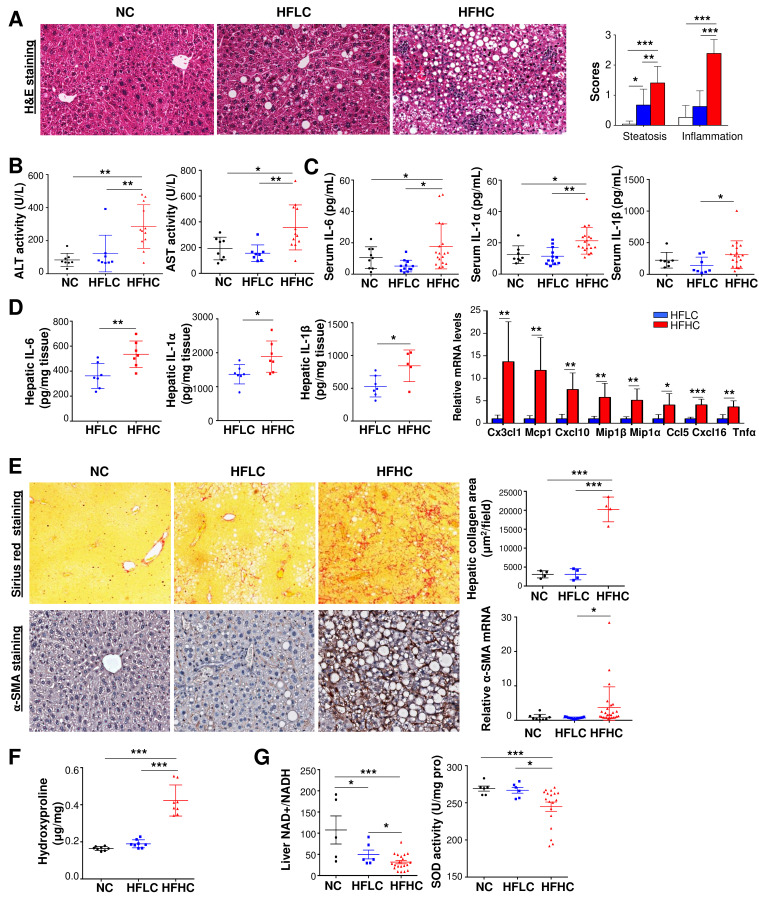
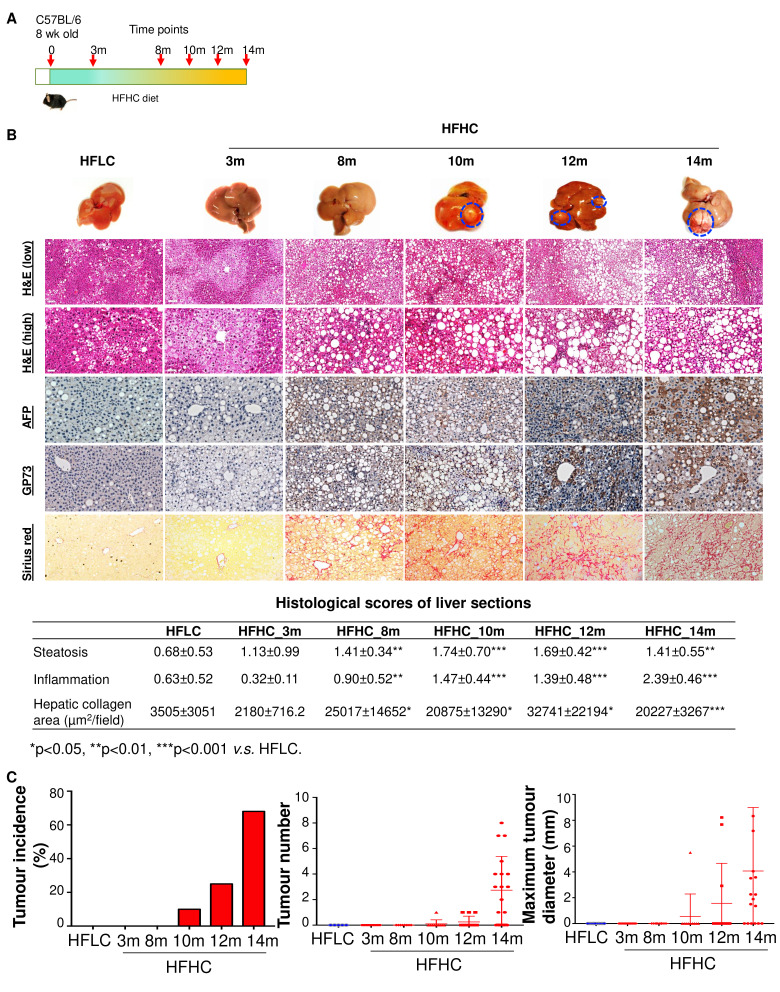
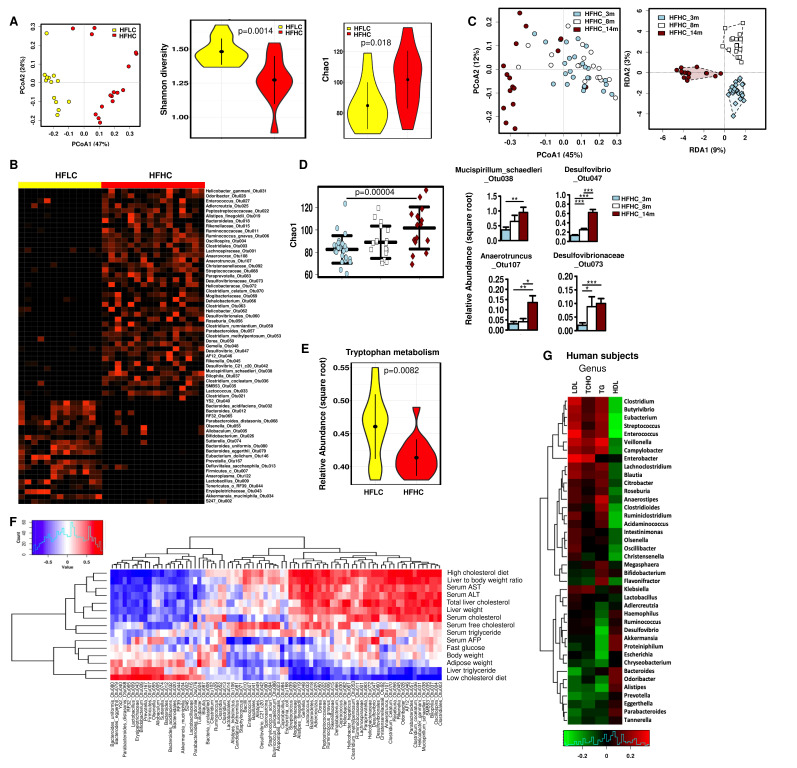
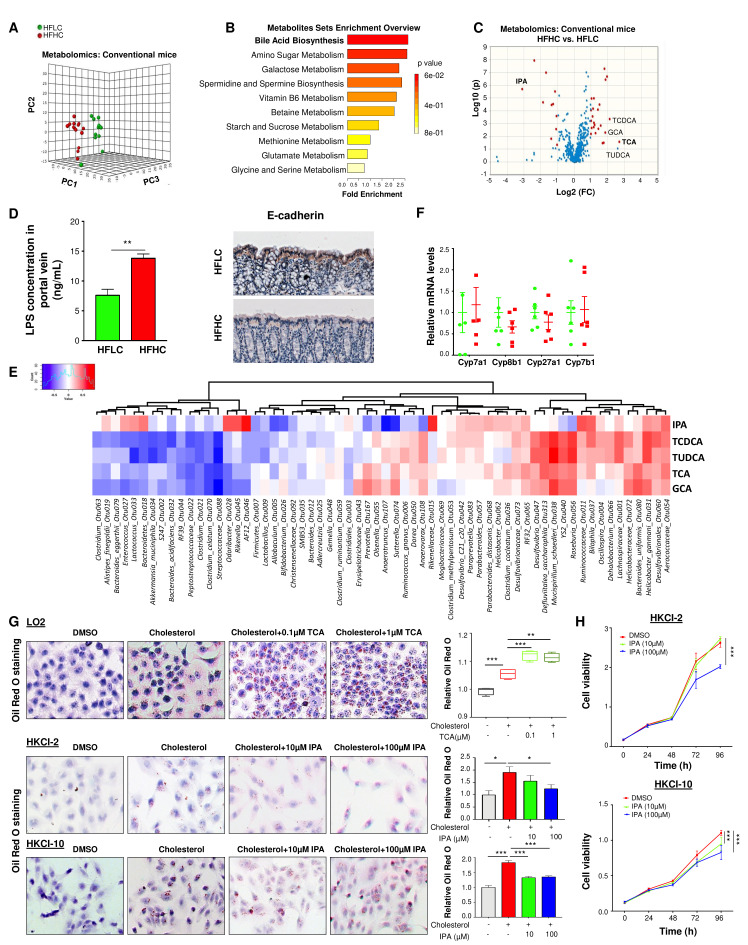
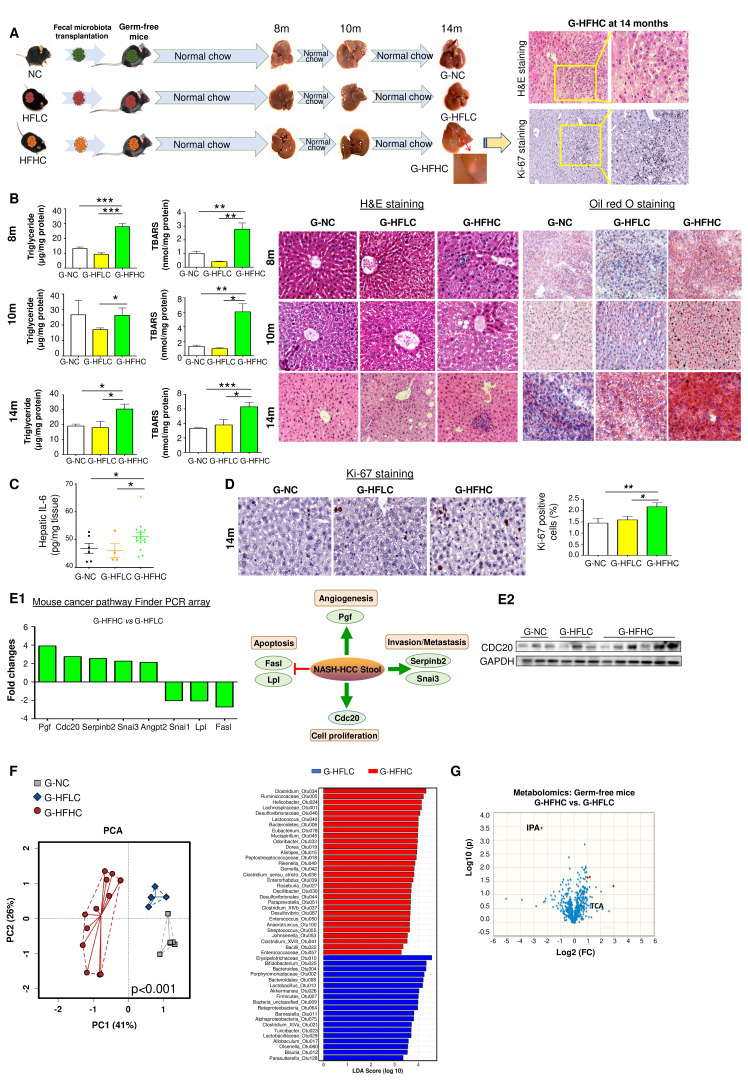
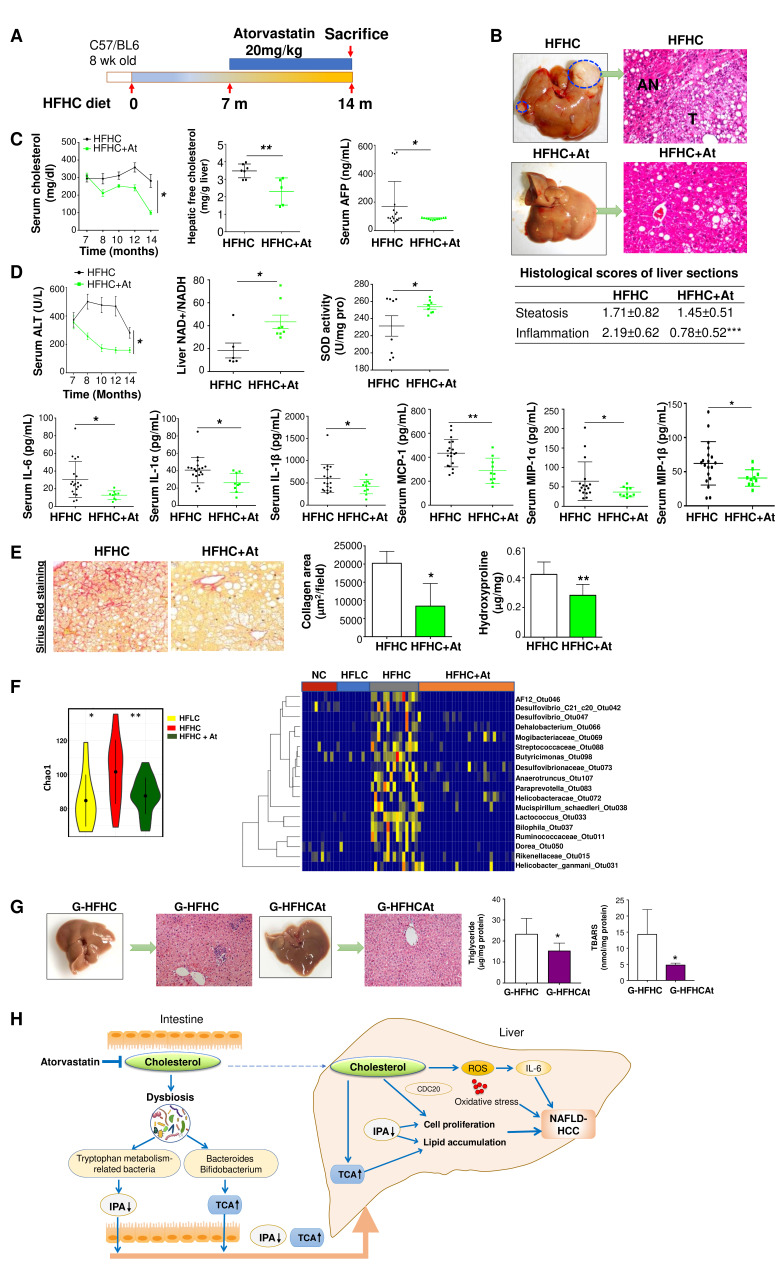
Objective: Non-alcoholic fatty liver disease (NAFLD)-associated hepatocellular carcinoma (HCC) is an increasing healthcare burden worldwide. We examined the role of dietary cholesterol in driving NAFLD–HCC through modulating gut microbiota and its metabolites. Design: High-fat/high-cholesterol (HFHC), high-fat/low-cholesterol or normal chow diet was fed to C57BL/6 male littermates for 14 months. Cholesterol-lowering drug atorvastatin was administered to HFHC-fed mice. Germ-free mice were transplanted with stools from mice fed different diets to determine the direct role of cholesterol modulated-microbiota in NAFLD–HCC. Gut microbiota was analysed by 16S rRNA sequencing and serum metabolites by liquid chromatography–mass spectrometry (LC–MS) metabolomic analysis. Faecal microbial compositions were examined in 59 hypercholesterolemia patients and 39 healthy controls. Results: High dietary cholesterol led to the sequential progression of steatosis, steatohepatitis, fibrosis and eventually HCC in mice, concomitant with insulin resistance. Cholesterol-induced NAFLD–HCC formation was associated with gut microbiota dysbiosis. The microbiota composition clustered distinctly along stages of steatosis, steatohepatitis and HCC. Mucispirillum, Desulfovibrio, Anaerotruncus and Desulfovibrionaceae increased sequentially; while Bifidobacterium and Bacteroides were depleted in HFHC-fed mice, which was corroborated in human hypercholesteremia patients. Dietary cholesterol induced gut bacterial metabolites alteration including increased taurocholic acid and decreased 3-indolepropionic acid. Germ-free mice gavaged with stools from mice fed HFHC manifested hepatic lipid accumulation, inflammation and cell proliferation. Moreover, atorvastatin restored cholesterol-induced gut microbiota dysbiosis and completely prevented NAFLD–HCC development. Conclusions: Dietary cholesterol drives NAFLD–HCC formation by inducing alteration of gut microbiota and metabolites in mice. Cholesterol inhibitory therapy and gut microbiota manipulation may be effective strategies for NAFLD–HCC prevention.
Overview
The claims and statistics of this paper haven’t been checked yet.
Free: it reads the open-access text and checks the first 5 claims that cite a source we can check. Create a free account to check every claim.
Integrity signals
Registry
Cites
Statistics
Figures
Verification
Claims the paper makes
The claims and statistics of this paper haven’t been checked yet.
Free: it reads the open-access text and checks the first 5 claims that cite a source we can check. Create a free account to check every claim.
Claims other papers make about this one
Each is checked against this paper’s own text: does it say what the citing paper says it does?
In the citing paper
“this genus has been associated with the pathogenesis of fatty-liver-associated liver cancer36.”
From Nivolumab plus ipilimumab with or without live bacterial supplementation in metastatic renal cell carcinoma: a randomized phase 1 trial (2022) · cites this paper as [36]
Self-check
Percentages, sums and reported differences re-computed from the paper’s own numbers.
The self-check needs the paper’s full text.
Citations
Cites
Vernon, G., Baranova, A., & Younossi, Z. M. (2011) · Alimentary Pharmacology & Therapeutics · doi:10.1111/j.1365-2036.2011.04724.x · Cited by 3,074 · cited 1×
“27 28 There are evidences that Bifidobacterium has cholesterol-lowering activity through gut microbiota modulation.”
Sayin, S. I., Wahlström, A., Felin, J., Jäntti, S., Marschall, H.-U., Bamberg, K., Angelin, B., Hyötyläinen, T., Orešič, M., & Bäckhed, F. (2013) · Cell Metabolism · doi:10.1016/j.cmet.2013.01.003 · Cited by 2,331
Microbial tryptophan catabolites in health and disease
Roager, H. M., & Licht, T. R. (2018) · Nature Communications · doi:10.1038/s41467-018-05470-4 · Cited by 2,236 · cited 1×
“IPA is a specific metabolite whose production completely depends on tryptophan metabolism by the gut microbiota 18 and characterised as being anti-inflammatory and protective of intestinal barrier integrity.”
Bile acid-microbiota crosstalk in gastrointestinal inflammation and carcinogenesis
Jia, W., Xie, G., & Jia, W. (2018) · Nature Reviews Gastroenterology & Hepatology · doi:10.1038/nrgastro.2017.119 · Cited by 1,924 · cited 2×
“40 Therefore, the decreased Bifidobacterium and Bacteroides in the stool of HFHC-fed mice may account for the accumulated taurine-conjugated bile acids in HFHC-fed mice.”
Zhu, L., Baker, S. S., Gill, C., Liu, W., Alkhouri, R., Baker, R. D., & Gill, S. R. (2013) · Hepatology · doi:10.1002/hep.26093 · Cited by 1,708 · cited 3×
“27 28 There are evidences that Bifidobacterium has cholesterol-lowering activity through gut microbiota modulation.”
Gut microbiome–mediated bile acid metabolism regulates liver cancer via NKT cells
Ma, C., Han, M., Heinrich, B., Fu, Q., Zhang, Q., Sandhu, M., Agdashian, D., Terabe, M., Berzofsky, J. A., Fako, V., et al. (2018) · Science · doi:10.1126/science.aan5931 · Cited by 1,508 · cited 1×
“21 We therefore explored the potential involvement of the gut microbiota in mediating dietary cholesterol-induced NAFLD–HCC.”
Gut microbial metabolites in obesity, NAFLD and T2DM
Canfora, E. E., Meex, R. C. R., Venema, K., & Blaak, E. E. (2019) · Nature Reviews Endocrinology · doi:10.1038/s41574-019-0156-z · Cited by 1,493
A gut bacterial pathway metabolizes aromatic amino acids into nine circulating metabolites
Dodd, D., Spitzer, M. H., Van Treuren, W., Merrill, B. D., Hryckowian, A. J., Higginbottom, S. K., Le, A., Cowan, T. M., Nolan, G. P., Fischbach, M. A., et al. (2017) · Nature · doi:10.1038/nature24661 · Cited by 1,425 · cited 1×
“…and potentially, those of other enriched bile acids to the pathogenesis of cholesterol-induced NAFLD–HCC. Additionally, IPA, which is exclusively produced by commensal gut microbes, 41 42 was depleted in both HFHC-fed conventional mice and germ-free mice transplanted with stools from HFHC-fed mice.”
Venkatesh, M., Mukherjee, S., Wang, H., Li, H., Sun, K., Benechet, A. P., Qiu, Z., Maher, L., Redinbo, M. R., Phillips, R. S., et al. (2014) · Immunity · doi:10.1016/j.immuni.2014.06.014 · Cited by 1,066 · cited 2×
“36 Disruption of bile acid homeostasis alters metabolic homeostasis in the liver and can lead to hepatic inflammation and metabolic diseases including diabetes and NAFLD.”
Gut microbiota and human NAFLD: disentangling microbial signatures from metabolic disorders
Aron-Wisnewsky, J., Vigliotti, C., Witjes, J., Le, P., Holleboom, A. G., Verheij, J., Nieuwdorp, M., & Clément, K. (2020) · Nature Reviews Gastroenterology & Hepatology · doi:10.1038/s41575-020-0269-9 · Cited by 1,063
Cited by
Items 201–300 of 916
Luo, D., Yang, L., Pang, H., Zhao, Y., Li, K., Rong, X., & Guo, J. (2022) · Frontiers in Microbiology · doi:10.3389/fmicb.2022.984019 · Cited by 36
“Non-alcoholic fatty liver disease (NAFLD) is a liver manifestation of metabolic syndrome with a multi-factor clinicopathological state (Zhang et al., 2021).”
BackgroundLiao, Y., Wang, L., Liu, F., Zhou, Y., Lin, X., Zhao, Z., Xu, S., Tang, D., Jiao, Y., Yang, L., et al. (2023) · Frontiers in Endocrinology · doi:10.3389/fendo.2023.1078149 · Cited by 35
“Moreover, atorvastatin restored cholesterol-induced gut microbiota dysbiosis and completely prevented MAFLD-HCC development (12).”
BackgroundFu, X., Liu, L., Han, H., Li, Y., Si, S., Xu, B., Dai, W., Hong, Y., He, T., Du, X., et al. (2023) · Environmental Toxicology · doi:10.1002/tox.23763 · Cited by 35
“The relative abundance of Mucispirillum, Desulfovibrio, Anaerotruncus, Desulfovibrionaceae, Bifidobacterium, and Bacteroides was related to cholesterol metabolism and steroid hormone synthesis.(60) The relative abundance of Parabacter-”
BackgroundBiological Role and Related Natural Products of SIRT1 in Nonalcoholic Fatty Liver
Meng, D., Zhang, F., Yu, W., Zhang, X., Yin, G., Liang, P., Feng, Y., Chen, S., & Liu, H. (2023) · Diabetes Metabolic Syndrome and Obesity · doi:10.2147/dmso.s437865 · Cited by 35
Self-citationHu, N., Li, H., Tao, C., Xiao, T., & Rong, W. (2024) · International Journal of Molecular Sciences · doi:10.3390/ijms25115584 · Cited by 34
“…highly expressing c-myc, a transcription factor of glutaminase (GLS) and a mediator of increased glutamine uptake, tend to rely on glutamine metabolism, which is also referred to as glutamine The e ff ects of abnormal amino acid metabolism on the TME are depicted in Figure 3. addiction [49,50].”
BackgroundInfluentialMetabolic reprogramming of immune cells in MASH
Ma, C., Wang, S., Dong, B., & Tian, Y. (2025) · Hepatology · doi:10.1097/hep.0000000000001371 · Cited by 36
Liver Steatosis is a Driving Factor of Inflammation
Mooli, R. G. R., & Ramakrishnan, S. K. (2022) · Cellular and Molecular Gastroenterology and Hepatology · doi:10.1016/j.jcmgh.2022.01.007 · Cited by 34
Fu, J., Xu, K., Ni, X., Li, X., Zhu, X., & Xu, W. (2022) · Nutrients · doi:10.3390/nu14051003 · Cited by 35
“Specifically, genus Desulfovibrio, a bacterium producing endotoxin [37] which is prone to being promoted by a high-fat diet [38], was found to cause abnormal metabolism [39].”
BackgroundModulation of the Gut Microbiome to Improve Clinical Outcomes in Hepatocellular Carcinoma
Shen, S., Khatiwada, S., Behary, J., Kim, R., & Zekry, A. (2022) · Cancers · doi:10.3390/cancers14092099 · Cited by 34
“Tryptophan C57BL/6 HFD + high/low cholesterol (HC/LC) (HFD + HC diet) Spontaneous HCC ↗ Serum and hepatic cholesterol ↘ gut bacteria associated ≈ tryptophan metabolizing capacity ↘ Serum 3-indolepropionic acid ↗ HCC [43]”
BackgroundEvolving interplay between natural products and gut microbiota
Zhang, N., Jiang, Z., Li, S., Yang, X. S., & Liu, E. (2023) · European Journal of Pharmacology · doi:10.1016/j.ejphar.2023.175557 · Cited by 34
Self-citationPick fecal microbiota transplantation to enhance therapy for major depressive disorder
Meng, Y., Sun, J., & Zhang, G. (2023) · Progress in Neuro-Psychopharmacology and Biological Psychiatry · doi:10.1016/j.pnpbp.2023.110860 · Cited by 34
The role of the gut microbiome in the development of hepatobiliary cancers
Daniel, N., Genua, F., Jenab, M., Mayén, A., Chatziioannou, A. C., Keski‐Rahkonen, P., & Hughes, D. J. (2023) · Hepatology · doi:10.1097/hep.0000000000000406 · Cited by 33
“[111] A high-fat diet (HFD) can lead to hepatic steatosis, cell injury, portal and lobular inflammation, and fibrosis along with increases in the abundance of Firmicutes in the murine gut.”
BackgroundGut Microbiota and Hepatocellular Carcinoma: Metabolic Products and Immunotherapy Modulation
Xiao, K., Li, K., Xiao, K., Yang, J., & Zhou, L. (2025) · Cancer Medicine · doi:10.1002/cam4.70914 · Cited by 33
“Factors such as genetics [123], age [124], geography [125], and lifestyle [54] contribute to this variability, making it difficult to develop biomarkers that are applicable to all HCC patients.”
Li, J., Han, J., Yan, X., Shao, D., Hu, X., & Shi, J. (2021) · International Journal of Biological Macromolecules · doi:10.1016/j.ijbiomac.2021.04.070 · Cited by 33
Host–Microbiota Interactions in Liver Inflammation and Cancer
Giraud, J., & Saleh, M. (2021) · Cancers · doi:10.3390/cancers13174342 · Cited by 33
“Importantly, treatment with a cholesterol-lowering drug restored the microbial ecology and prevented disease development in mice [27].”
BackgroundDuan, H., Li, J., & Fan, L. (2023) · Foods · doi:10.3390/foods12020424 · Cited by 33
“, induced by a high-fat/high-cholesterol diet, is associated with fatty liver and even liver cancer [53].”
BackgroundApplying artificial intelligence in the microbiome for gastrointestinal diseases: A review
Zeng, T., Yu, X., & Chen, Z. (2021) · Journal of Gastroenterology and Hepatology · doi:10.1111/jgh.15503 · Cited by 34
“35 A recent study collected 16S rRNA sequencing data of fecal samples from disease group with locally advanced rectal cancer before and after neoadjuvant chemoradio-therapy and samples from healthy group, which identi fi ed microbial signatures responsive to therapy so as to provide necessary…”
BackgroundThe microenvironment in the development of MASLD-MASH-HCC and associated therapeutic in MASH-HCC
Wu, Q., Yang, Y., Lin, S., Geller, D. A., & Yan, Y. (2025) · Frontiers in Immunology · doi:10.3389/fimmu.2025.1569915 · Cited by 32
Liu, S., Hua, S., Gu, X., Cai, P., Zhou, Y., Wang, Y., Zhou, M., & Shan, T. (2024) · Food Hydrocolloids · doi:10.1016/j.foodhyd.2024.110156 · Cited by 32
Self-citationLi, A., Wang, R., Zhao, Y. Q., Zhao, P., & Yang, J. (2024) · Metabolites · doi:10.3390/metabo14060325 · Cited by 32
“Changes in gut microbiota and metabolites in individuals with MASLD can result in the development of liver cancer [28].”
BackgroundJarmakiewicz-Czaja, S., Sokal-Dembowska, A., & Filip, R. (2025) · Medicina · doi:10.3390/medicina61020192 · Cited by 32
“…et al., after observing animal models fed a high-fat diet, found that there was an increase in Mucispirillum and Desulfovibrio, among others, while there was a decrease in Bacteroides and Bifidobacterium , which was associated with the development and progression of MASLD to the onset of HCC [24].”
Yan, S., Chen, J., Zhu, L., Guo, T., Qin, D., Hu, Z., Han, S., Zhou, Y., Akan, O. D., Wang, J., et al. (2022) · Journal of Agricultural and Food Chemistry · doi:10.1021/acs.jafc.2c00885 · Cited by 32
Dysbiosis of the Gut Microbiome Is Associated With Histopathology of Lung Cancer
Xiong, Q., Bi, L., Yang, W., He, Y., Gu, Y., Yang, Y. H., Gong, Y., Wang, Y., Yan, X., Xu, L., et al. (2022) · Frontiers in Microbiology · doi:10.3389/fmicb.2022.918823 · Cited by 32
“A previous study demonstrated that the abundance of Anaerotruncus was significantly increased in the intestinal flora of a mouse model with non-alcoholic fatty liver-related cancer fed on high diet cholesterol (Zhang et al., 2021).”
BackgroundSelf-citationLu, G., Zhang, Y., Ren, Y., Shi, J., Xu, Z., & Geng, Y. (2023) · Microorganisms · doi:10.3390/microorganisms11020276 · Cited by 32
“Some studies have shown that Desulfovibrio increases significantly in liver diseases such as NAFLD and liver fibrosis [9,10].”
BackgroundChen, D., Wang, Y., Yang, J., Ou, W., Lin, G., Zeng, Z., Lu, X., Chen, Z., Zou, L., Tian, Y., et al. (2024) · Frontiers in Pharmacology · doi:10.3389/fphar.2024.1343755 · Cited by 32
“The frozen liver tissue used for Oil Red O (ORO) staining was embedded in an optimal cutting temperature compound and sectioned to 5 μ m thickness (Zhang et al., 2021).”
BackgroundMethodInfluentialSelf-citationDai, Q., Ain, Q., Seth, N., Rooney, M., & Zipprich, A. (2025) · Digestive and Liver Disease · doi:10.1016/j.dld.2025.01.189 · Cited by 32
Sorafenib-loaded silica-containing redox nanoparticles for oral anti-liver fibrosis therapy
Tran, H. T., Vong, L. B., Nishikawa, Y., & Nagasaki, Y. (2022) · Journal of Controlled Release · doi:10.1016/j.jconrel.2022.04.002 · Cited by 31
Li, B., Mao, Q., Xiong, R.-G., Zhou, D.-D., Huang, S., Saimaiti, A., Shang, A., Luo, M., Li, H., Li, H., et al. (2022) · Foods · doi:10.3390/foods11213457 · Cited by 31
“An increasing amount of evidence indicated that the intestinal microbiota dysbiosis was highly linked with the pathogenesis of NAFLD [44,45].”
BackgroundYang, C., Yang, L., Yang, Y., Wan, M., Xu, D., Pan, D., & Sun, G. (2023) · Biomedicine & Pharmacotherapy · doi:10.1016/j.biopha.2023.114864 · Cited by 31
Alcohol and its associated liver carcinogenesis
Jacob, R., Prince, D. S., Kench, C., & Liu, K. (2023) · Journal of Gastroenterology and Hepatology · doi:10.1111/jgh.16248 · Cited by 32
The role of gut microbiota in the occurrence and progression of non-alcoholic fatty liver disease
Mai, H., Yang, X. H., Xie, Y., Zhou, J., Wang, Q., Wei, Y., Yang, Y., Lu, D., Ye, L., Cui, P., et al. (2024) · Frontiers in Microbiology · doi:10.3389/fmicb.2023.1257903 · Cited by 31
“Accumulating evidence has shown that the gut microbiome is involved in the pathogenesis and progression of NAFLD (Boursier et al., 2016; Ponziani et al., 2019; Saeedi et al., 2020; Zhang et al., 2021).”
BackgroundSelf-citationWang, Y., Fleishman, J. S., Li, T., Li, Y., Ren, Z., Chen, J., & Ding, M. (2024) · Frontiers in Pharmacology · doi:10.3389/fphar.2023.1336216 · Cited by 31
Self-citationInflammatory Bowel Diseases and Non-Alcoholic Fatty Liver Disease: Piecing a Complex Puzzle Together
Maresca, R., Mignini, I., Varca, S., Calvez, V., Termite, F., Esposto, G., Laterza, L., Scaldaferri, F., Ainora, M. E., Gasbarrini, A., et al. (2024) · International Journal of Molecular Sciences · doi:10.3390/ijms25063278 · Cited by 34
“As well as IBD, NAFLD is also associated with increased intestinal permeability and dysbiosis [71] and growing evidence suggests that gut microbiota may play a role in NAFLD occurrence and progression and different microbiota signatures may characterize different NAFLD stages [72,73].”
BackgroundPlaza‐Díaz, J., Solis‐Urra, P., Aragón‐Vela, J., Rodríguez‐Rodríguez, F., Arancibia, J. E. O., & Álvarez‐Mercado, A. I. (2021) · Biomedicines · doi:10.3390/biomedicines9020145 · Cited by 31
Zhu, L., Tang, Z., Jiang, W., Dong, Y., Li, X., Huang, K., Wu, T., Xu, L., Guo, W., & Gu, Y. (2025) · Experimental & Molecular Medicine · doi:10.1038/s12276-025-01457-6 · Cited by 30
Ribas, V., de la Rosa, L. C., Robles, D., Núñez, S., Segalés, P., Insausti-Urkia, N., Solsona‐Vilarrasa, E., Fernández-Checa, J. C., & García‐Ruiz, C. (2021) · Cancers · doi:10.3390/cancers13164091 · Cited by 30
“As a high-fat diet (HFD) alone does not induce NASH and DEN plus HFD feeding does not completely model NASH-driven HCC [36], we established a dietary NASH-driven HCC approach by feeding WT mice with a HFD diet supplemented with cholesterol (HFHC) for 10 months [37].”
BackgroundMethodSong, C., Wen, H., Liu, G., Ma, X., Lv, G., Wu, N., Chen, J., Xue, M., Li, H., & Xu, P. (2022) · Frontiers in Microbiology · doi:10.3389/fmicb.2022.861705 · Cited by 30
Qiu, S., Chen, J., Bai, Y., He, J., Cao, H., Che, Q., Guo, J., & Su, Z. (2022) · Nutrients · doi:10.3390/nu14132749 · Cited by 30
“Dietary cholesterol can drive the formation of NAFLD-HCC by changing the intestinal microflora and its metabolites in mice after intestinal absorption [20].”
BackgroundEzetimibe and Cancer: Is There a Connection?
Gu, J., Zhu, N., Li, H., Zhang, C., Gong, Y.-Z., Liao, D., & Li, Q. (2022) · Frontiers in Pharmacology · doi:10.3389/fphar.2022.831657 · Cited by 31
Lactobacillus rhamnosus GG protects against atherosclerosis by improving ketone body synthesis
Zhai, T., Ren, W., Wang, P., & Zheng, L. (2022) · Applied Microbiology and Biotechnology · doi:10.1007/s00253-022-12265-7 · Cited by 30
Wei, X., Leng, X., Li, G., Wang, R., Chi, L., & Sun, D. (2023) · Frontiers in Pharmacology · doi:10.3389/fphar.2023.1120672 · Cited by 30
Genetics, Immunity and Nutrition Boost the Switching from NASH to HCC
Dongiovanni, P., Meroni, M., Longo, M., Fargion, S. R., & Fracanzani, A. L. (2021) · Biomedicines · doi:10.3390/biomedicines9111524 · Cited by 30
Liu, J., Qiao, B., Cai, Y., Tan, Z., & Deng, N. (2023) · BMC Microbiology · doi:10.1186/s12866-023-02896-9 · Cited by 29
Ding, L., Teng, R., Zhu, Y., Liu, F., Wu, L., Qin, L., Wu, X., & Liu, T. (2023) · Frontiers in Endocrinology · doi:10.3389/fendo.2023.1207574 · Cited by 29
Li, Z., Zheng, D., Zhang, T., Ruan, S., Li, N., Yang, Y., Yang, P., & Wang, D. (2023) · Hepatology Communications · doi:10.1097/hc9.0000000000000343 · Cited by 29
“[41,42] A 43 – 45 ] Overall, cholesterol plays a crucial role in the occurrence of NAFLD and the development of liver cirrhosis, HCC, and extrahepatic atherosclerotic diseases.”
BackgroundGut microbiota predict retinopathy in patients with diabetes: A longitudinal cohort study
Qin, X., Sun, J., Chen, S., Xu, Y., Lu, L., Lü, M., Li, J., Ma, Y., Lou, F., & Zou, H. (2024) · Applied Microbiology and Biotechnology · doi:10.1007/s00253-024-13316-x · Cited by 30
“Despite recent emphasis on adjusting for dietary confounders in disease-microbiota crosstalk (Wang et al. 2022; Zhang et al. 2021), our study focused on participants recruited from community health care centers with presumed shared dietary habits.”
BackgroundGualou-Xiebai-Banxia-Tang regulates liver-gut axis to ameliorate Metabolic Syndrome in HFD-fed mice
Zhang, Y., Zhang, L., Li, Z., Liu, X., He, P., Gu, Y., Liu, L., Jin, Y., Cheng, S., Zhou, F., et al. (2024) · Phytomedicine · doi:10.1016/j.phymed.2023.155320 · Cited by 28
Wang, X., Zhang, B., & Jiang, R. (2025) · Frontiers in Cellular and Infection Microbiology · doi:10.3389/fcimb.2025.1467197 · Cited by 28
Non‐bacteria microbiome (virus, fungi, and archaea) in gastrointestinal cancer
Coker, O. O. (2021) · Journal of Gastroenterology and Hepatology · doi:10.1111/jgh.15738 · Cited by 28
Self-citationTsiantas, K., Konteles, S. J., Kritsi, E., Sinanoglou, V. J., Tsiaka, T., & Zoumpoulakis, P. G. (2022) · International Journal of Molecular Sciences · doi:10.3390/ijms23084070 · Cited by 28
“Updated evidence has confirmed the detrimental effect of dietary cholesterol in microbial populations and in gut bacterial metabolites (taurocholic acid (TCA) and 3-indolepropionic acid (IPA)) [61].”
BackgroundChang, L., Qiu, L., Lei, N., Zhou, J., Guo, R., Gao, F., Dong, S., Chen, M., Wu, F., & Qin, B. (2023) · Frontiers in Cellular and Infection Microbiology · doi:10.3389/fcimb.2023.1145950 · Cited by 28
Zhang, J., Fu, S., Liu, D., Wang, Y., & Tan, Y. (2023) · European Journal of Gastroenterology & Hepatology · doi:10.1097/meg.0000000000002517 · Cited by 27
Rusu, I., Pirlog, R., Chiroi, P., Nutu, A., Puia, V. R., Fetti, A. C., Rusu, D. R., Berindan-Neagoe, I., & Al Hajjar, N. (2022) · International Journal of Molecular Sciences · doi:10.3390/ijms232012370 · Cited by 27
Wan, C., Wu, K., Lu, X., Fang, F., Li, Y., Zhao, Y., Li, S., & Gao, J. (2021) · Journal of Agricultural and Food Chemistry · doi:10.1021/acs.jafc.1c04259 · Cited by 27
Sui, J., Xia, H., Zhao, Q., Sun, G., & Cai, Y. (2022) · International Journal of Environmental Research and Public Health · doi:10.3390/ijerph191610305 · Cited by 27
“Previous studies presented that gut microbiota affected bioprocessing of bile acids and production of pro-inflammatory intermediate metabolites resulting in hepatic disorders [59,60].”
BackgroundDas, B. K. (2022) · Apmis · doi:10.1111/apm.13282 · Cited by 27
Does diet or macronutrients intake drive the structure and function of gut microbiota?
Li, Y., Yan, Y., Fu, H., Jin, S., He, S., Wang, Z., Dong, G., Li, B., & Guo, S. (2023) · Frontiers in Microbiology · doi:10.3389/fmicb.2023.1126189 · Cited by 27
Maiuolo, J., Bosco, F., Guarnieri, L., Nucera, S., Ruga, S., Oppedisano, F., Tucci, L., Muscoli, C., Palma, E., Giuffrè, A. M., et al. (2023) · Plants · doi:10.3390/plants12112126 · Cited by 27
“This fruit belongs to the Rutaceae family and to the genus Citrus and, despite being present in some other areas of the world (Greece, Antilles, Canary Islands), preferably grows in a thin strip of coast in the province of Reggio Calabria, Calabria, Italy [16,17].”
BackgroundInteractions between dietary cholesterol and intestinal flora and their effects on host health
Liu, Y., Xiao, H., Wang, Z., Pan, Q., Zhao, X., & Lu, B. (2023) · Critical Reviews in Food Science and Nutrition · doi:10.1080/10408398.2023.2276883 · Cited by 27
Statins and non-alcoholic fatty liver disease: A concise review
Pereira, E. N. G. D. S., Franco, R. L. C., dos Santos, R. D. C., & Daliry, A. (2025) · Biomedicine & Pharmacotherapy · doi:10.1016/j.biopha.2024.117805 · Cited by 26
Dietary Lipids, Gut Microbiota, and Their Metabolites: Insights from Recent Studies
Mohammadi, F., & Rudkowska, I. (2025) · Nutrients · doi:10.3390/nu17040639 · Cited by 27
“The GM levels of Mucispirillum, Desulfovibrio , Anaerotruncus , and Desulfovibrionaceae increased, while Bifidobacterium and Bacteroides were reduced in mice fed a high-fat high-cholesterol diet (HF-HCD) diet [81].”
Li, J., Ma, Y., Cao, Y., Zheng, G., Ren, Q., Cheng Ann, C. H. E. N., Zhu, Q., Zhou, Y., Lu, Y., Zhang, Y., et al. (2025) · Nature Microbiology · doi:10.1038/s41564-025-01978-w · Cited by 27
“Most of the 44 microbe–hepatocyte associations in the Stringent group were from the order Coriobacteriales ( Collin-sella , Collinsella aerofaciens ), Bacteroidales ( Alistipes indistinctus , Barnesiella intestinihominis , Bacteroides ) and Clostridiales ( Faecali-bacterium , Anaerotruncus , Eubacterium hallii ) (Fig.”
Bifidobacterium boosts anti-PD-1 effectiveness through JAK pathway in hepatocellular carcinoma
Huo, R., Xu, Q.-G., You, Y., Chen, Y., Su, G.-J., Yang, K.-R., Xiao, Y.-P., Zhong, X., Li, Y.-J., Sun, P., et al. (2025) · npj Precision Oncology · doi:10.1038/s41698-025-00960-3 · Cited by 26
“Dietary cholesterol alters the metabolisms induced by gut bacteria, leading to increased taurine-conjugated bile acids and decreased 3-indolepropionic acid 40 .”
Morales, C., Rojas, G., Rebolledo, C., Rojas-Herrera, M., Arias‐Carrasco, R., Cuadros-Orellana, S., Maracaja‐Coutinho, V., Saavedra, K., Leal, P., Lanas, F. T., et al. (2022) · Frontiers in Cellular and Infection Microbiology · doi:10.3389/fcimb.2022.943609 · Cited by 26
Li, X. Q., Du, Y., Xue, C., Kang, X., Sun, C., Peng, H., Fang, L., Han, Y., Xu, X., & Zhao, C. (2023) · International Journal of Molecular Sciences · doi:10.3390/ijms24108970 · Cited by 26
“NAFLD usually occurs with concomitant other metabolic abnormities such as obesity, dyslipidemia, and insulin resistance [4].”
BackgroundInfluentialRole of Gut Microbial Metabolites in the Pathogenesis of Primary Liver Cancers
Pallozzi, M., Gaetano, V. D., Tommaso, N. D., Cerrito, L., Santopaolo, F., Stella, L., Gasbarrini, A., & Ponziani, F. R. (2024) · Nutrients · doi:10.3390/nu16142372 · Cited by 27
“Intestinal permeability is another key regulator of this process, with a high release of LPSs into circulation, which is associated with the progression from NAFLD to NASH [32,68].”
BackgroundChen, L., Wang, X., Sun, J., Xue, J., Yang, X., & Zhang, Y. (2025) · International Journal of Biological Macromolecules · doi:10.1016/j.ijbiomac.2025.139863 · Cited by 26
Self-citationGut Feelings: How Microbes, Diet, and Host Immunity Shape Disease
Theis, B. F., Park, J. S., Kim, J. S., Zeydabadinejad, S., Vijay–Kumar, M., Yeoh, B. S., & Saha, P. (2025) · Biomedicines · doi:10.3390/biomedicines13061357 · Cited by 25
Dietary cholesterol impairs cognition via gut microbiota-derived deoxycholic acid in obese mice
Liu, Y., Wang, Z., Zhang, Y., Zhao, T., Zhang, Q.-J., Huang, W., & Lu, B. (2025) · Gut Microbes · doi:10.1080/19490976.2025.2537753 · Cited by 25
“…led to a marked elevation in serum levels of TCDCA, GCA, TCA, TUDCA, tauro-hyodeoxycholic acid, and TDCA compared to those in mice fed an HFD. 15 Furthermore, in comparison to mice fed an HFD, mice fed an HFD containing 2% cholesterol for 24 weeks exhibited significant increases in the liver…”
InfluentialGut microbiota and immune alteration in cancer development: implication for immunotherapy
Lau, H. C.-H., Zhang, X., & Yu, J. (2023) · eGastroenterology · doi:10.1136/egastro-2023-100007 · Cited by 25
“34 Using different HCC mouse models, Ma et al showed that commensal gut bacteria especially Clostridium spp secrete bile acids to increase hepatic CXCR6 + NKT cells, thereby strengthening the host antitumour immunity and suppressing tumour progression in the liver.”
Self-citationHao, Y., Hao, Z., Zeng, X., & Lin, Y. (2024) · Journal of Gastroenterology · doi:10.1007/s00535-024-02134-7 · Cited by 25
“…non-alcoholic fatty liver mice after atorvastatin administration, which might result in PH amelioration through maintaining intestinal epithelium homeostasis and limiting the endotoxin leakage, as well as mitigating HSC activation and extracellular matrix deposition to attenuate cirrhosis [32, 60].”
Liu, Y.-T., Qi, S.-L., & Sun, K. (2021) · Annals of Palliative Medicine · doi:10.21037/apm-20-2129 · Cited by 25
Tian, Y., Zhou, Y., Liao, W., Xia, J., Hu, Q., Zhao, Q. S., Zhang, R., Sun, G., Yang, L., & Li, L. (2025) · Food & Function · doi:10.1039/d4fo05847j · Cited by 25
Insights into the gut-liver axis: mechanisms and emerging therapies in hepatocellular carcinoma
Hu, Y., Gao, M., Chenghuang, J., & Bao, R. (2025) · Frontiers in Pharmacology · doi:10.3389/fphar.2025.1595853 · Cited by 24
Zhang, N., Liu, J., Chen, Z., Chen, N., Gu, F., & He, Q. (2022) · Frontiers in Microbiology · doi:10.3389/fmicb.2022.832915 · Cited by 24
Li, X., An, S., Luo, Z., Zhou, P., Wang, L., & Feng, R. (2023) · Food Chemistry · doi:10.1016/j.foodchem.2023.135592 · Cited by 24
Yang, G., Jena, P. K., Hu, Y. C., Sheng, L., Chen, S., Slupsky, C. M., Davis, R. R., Tepper, C. G., & Wan, Y. Y. (2023) · Biomarker Research · doi:10.1186/s40364-023-00458-9 · Cited by 25
“It has been shown that these three expanded bacteria contribute to metabolic liver disease development in the mouse model [58, 59].”
BackgroundZhao, N., Kong, Y., Yuan, Q., Wei, Z., Gu, J., Ji, C., Jin, H., & Zhao, M. (2023) · Journal of Hazardous Materials · doi:10.1016/j.jhazmat.2023.132155 · Cited by 24
Bahitham, W., Alghamdi, S., Omer, I., Alsudais, A. S., Hakeem, I., Alghamdi, A., Abualnaja, R., Sanai, F. M., Rosado, A. S., & Sergi, C. M. (2024) · Biomedicines · doi:10.3390/biomedicines12030550 · Cited by 24
Gut microbiota and immunosenescence in cancer
Xu, Y., He, C., Xi, Y., Zhang, Y., & Bai, Y. (2024) · Seminars in Cancer Biology · doi:10.1016/j.semcancer.2024.07.004 · Cited by 24
Che, Z., Xue, W., Zhao, X., Hu, C., & Tian, Y. (2025) · Clinical and Translational Gastroenterology · doi:10.14309/ctg.0000000000000914 · Cited by 23
“Integrating clinical data with the analysis of gut microbial metabolites will provide novel insights for the prevention and control of NAFLD/MASLD-HCC, ultimately reducing the incidence and mortality of liver cancer.”
InfluentialYang, B.-Y., Zhao, F., Li, X., Zhao, M., Lv, J.-C., Shi, M., Li, J., Zhou, Z., Wang, J., & Song, J. (2023) · Frontiers in Microbiology · doi:10.3389/fmicb.2023.1133782 · Cited by 23
Liang, X., Fu, Y., Niu, K., Zhai, Z., Shi, H., Wang, R., & Yin, Y. (2023) · Animal nutrition · doi:10.1016/j.aninu.2023.07.008 · Cited by 23
Yan, B., Zheng, X., Wang, Y., Yang, J., Zhu, X., Qiu, M., Xia, K., Wang, Y., Li, M., Li, S., et al. (2023) · ACS Pharmacology & Translational Science · doi:10.1021/acsptsci.3c00210 · Cited by 24
Self-citationZhang, Z., Xu, S., Song, M., Huang, W., Yan, M., & Li, X. (2024) · Cancer Causes & Control · doi:10.1007/s10552-024-01853-9 · Cited by 23
“Metabolic alterations are widely recognized as hallmarks of cancer [39], and there is a close association between dyslipidemia and the development of liver cancer [23].”
BackgroundRole of FXR in the development of NAFLD and intervention strategies of small molecules
Long, J., Xu, Y., Zhang, X., Wu, B., & Wang, C. (2024) · Archives of Biochemistry and Biophysics · doi:10.1016/j.abb.2024.110024 · Cited by 23
Self-citationZhou, L., Lu, G., Nie, Y., Ren, Y., Shi, J., Xue, Y., Xu, Z., & Geng, Y. (2024) · Gut Microbes · doi:10.1080/19490976.2024.2370634 · Cited by 24
“Basic physiological parameters including daily energy intake, body weight and liver/body weight ratio were compared between the two groups.”
Nutrition and Cancer Risk from the Viewpoint of the Intestinal Microbiome
Tanaka, Y., Shimizu, S., Shirotani, M., Yorozu, K., Kitamura, K., Oehorumu, M., Kawai, Y., & Fukuzawa, Y. (2021) · Nutrients · doi:10.3390/nu13103326 · Cited by 23
Zhou, S., Liu, L., Ye, B., Xu, Y., You, Y., Zhu, S., Ju, J., Yang, J., Li, W., Xia, M., et al. (2024) · EBioMedicine · doi:10.1016/j.ebiom.2024.105150 · Cited by 22
“5 Intriguingly, the genus Clostridium had been reported to disrupt the balance of BAs metabolism, which in turn led to an increase in circulating cholesterol.”
BackgroundResultRen, S., Zhang, Y., Wang, X., Su, J., Wang, X., Yuan, Z., He, X., Guo, S., Chen, Y., Deng, S., et al. (2025) · Frontiers in Immunology · doi:10.3389/fimmu.2025.1526967 · Cited by 22
“In addition, germ-free mice also showed liver lipid accumulation after ingesting stool samples from the high-cholesterol diet group (111).”
Ding, F.-F., Zhou, N.-N., Mao, Y.-J., Yang, J., Limbu, S. M., Galindo‐Villegas, J., Du, Z., & Zhang, M. (2025) · Microbiome · doi:10.1186/s40168-025-02172-0 · Cited by 22
“…most abundant bacterial genera in the gut of healthy individuals [21, 22], and a significant reduction of Lactobacillus was found in patients with nonalcoholic fatty liver disease-associated hepatocellular carcinoma (NAFLD-HCC) or in animal models of non-alcoholic steatohepatitis (NASH) [22–24].”
Zhang, Q., Chen, Q., Yan, C., Niu, C.-Y., Zhou, J., Liu, J., Song, Y., Zhou, F., Fan, Y., Ren, J., et al. (2022) · Frontiers in Immunology · doi:10.3389/fimmu.2022.931176 · Cited by 22
“We found differences at the class level (Supplementary Figure 5), which are consistent with those mentioned in the literature (15, 29, 30).”
ResultGut microbiota and fecal metabolic signatures in rat models of disuse-induced osteoporosis
Qiao, X., Zhang, K., Li, X., Lv, Z., Wei, W., Zhou, R., Yan, L., Pan, Y., Yang, S., Sun, X., et al. (2022) · Frontiers in Cellular and Infection Microbiology · doi:10.3389/fcimb.2022.1018897 · Cited by 22
“Frontiers in Cellular and Infection Microbiology 11 development (Zhang et al., 2021).”
BackgroundZhang, B., Luo, X., Han, C., Liu, J., Zhang, L., Qi, J., Gu, J., Tan, R., & Gong, P. (2022) · Journal of Ethnopharmacology · doi:10.1016/j.jep.2022.116082 · Cited by 23
Wu, L., Ye, S., Deng, X., Fu, Z., Li, J., & Yang, C. (2024) · Nutrients · doi:10.3390/nu16081133 · Cited by 22
Microecological regulation in HCC therapy: Gut microbiome enhances ICI treatment
Liu, X., Li, S., Wang, L., & Ma, K. (2024) · Biochimica et Biophysica Acta (BBA) - Molecular Basis of Disease · doi:10.1016/j.bbadis.2024.167230 · Cited by 22
Pan, Z., Luo, H., He, F., Du, Y., Wang, J., Zeng, H., Xu, Z., Sun, Y., & Li, M. (2024) · International Journal of Biological Macromolecules · doi:10.1016/j.ijbiomac.2024.133725 · Cited by 22
Shou, J., Ma, J., Wang, X., Li, X., Chen, S., Kang, B., & Shaw, P. (2024) · Advanced Science · doi:10.1002/advs.202406191 · Cited by 22
Hepatocyte SH3RF2 Deficiency Is a Key Aggravator for NAFLD
Yang, X., Sun, D., Xiang, H., Wang, S., Huang, Y., Li, L., Cheng, X., Liu, H., Hu, F., Cheng, Y., et al. (2021) · Hepatology · doi:10.1002/hep.31863 · Cited by 22
Self-citationThe Entero-Mammary Pathway and Perinatal Transmission of Gut Microbiota and SARS-CoV-2
Juárez-Castelán, C. J., Vélez-Ixta, J. M., Corona-Cervantes, K., Piña-Escobedo, A., Cruz‐Narváez, Y., Hinojosa-Velasco, A., Landero-Montes-de-Oca, M. E., Dávila-González, E., González-del-Olmo, E., Bastida-González, F. G., et al. (2022) · International Journal of Molecular Sciences · doi:10.3390/ijms231810306 · Cited by 22
Metadata
- Authors
- Zhang, X., Coker, O. O., Chu, E. S., Fu, K., Lau, H. C. H., Wang, Y.-X., Chan, A. W. H., Wei, H., Yang, X., Sung, J. J. Y., & Yu, J.
- Affiliations
- Chinese University of Hong Kong (HK)
- Department of Imaging and Interventional Radiology, The Chinese University of Hong Kong, Hong Kong SAR, China
- Army Medical University (CN)
- Yale University (US)
- Corresponding author
- Yu, Jun
- ORCID
- Venue
- Gut
- Publisher
- BMJ
- Published
- 2020-07-21
- Volume
- 70
- Issue
- 4
- Pages
- 761-774
- ISSN
- 0017-5749 (ISSN-L)
- 1468-3288
- PMC
- PMC7948195
- OpenAlex
- W3045114299
- Cited by
- 841
- References
- 43
- Citations by year
- 2026: 94 · 2025: 180 · 2024: 218 · 2023: 155 · 2022: 139 · 2021: 51 · 2020: 4
- FWCI
- 28.28
- Type
- journal article
- Language
- en
- Open access
- hybrid
- doi.org
- Licence
- Locations
- Gut (publishedVersion, cc-by-nc)
- PubMed Central (publishedVersion, cc-by-nc)
- PubMed (publishedVersion)
- Funders
- Vice-Chancellor's Discretionary Fund CUHK
- CUHK direct grant for research
- RGC Theme-based Research Scheme Hong Kong (T12-703/19-R)
- RGC Collaborative Research Fund (C4041-17GF, C7026-18G, C7065-18G)
- Guangdong Natural Science Foundation (2018B030312009)
- Topics
- Life Sciences › Biochemistry, Genetics and Molecular Biology › Molecular Biology › Gut microbiota and health
- Health Sciences › Medicine › Hepatology › Liver Disease Diagnosis and Treatment
- Life Sciences › Biochemistry, Genetics and Molecular Biology › Cancer Research › Cancer, Lipids, and Metabolism
- Keywords
- dietary cholesterol, non-alcoholic fatty liver disease, hepatocellular carcinoma, gut dysbiosis, microbial metabolites, taurocholate, 3-indolepropionic acid, atorvastatin, hypercholesterolemia, steatohepatitis, liver fibrosis, insulin resistance, Desulfovibrio, Bacteroides, Bifidobacterium, Mucispirillum, hepatic lipid accumulation, cell proliferation
- MeSH terms
- Atorvastatin, Gastrointestinal Microbiome, Fecal Microbiota Transplantation, Animals, Cholesterol, Dietary, Carcinoma, Hepatocellular, Liver Neoplasms, Male, Mice, Inbred C57BL, Case-Control Studies, Disease Progression, Mice, Non-alcoholic Fatty Liver Disease
About these checks
Registry, retraction, Cites and statistics results are computed, not judged, with one exception: a printed reference that no index lists is read once by a model before it counts as a citation error. Claims are extracted by a model and kept only when their quote appears verbatim in the text; each cited source is then checked, with a model’s help, for whether it says what the claim relies on. Those verdicts can be wrong — read the claim’s quote and the cited source before relying on one.
Statistics and arithmetic are recomputed, not judged.
Confidence bands are shown only for fields calibrated on our annotated test set. None is calibrated yet, so no band is shown.
What counts as a claim ›How we measure confidence ›How we check this ›
Are you an author, or do you see a problem with this page? Request a review
Data sources
Bibliographic data: Semantic Scholar, OpenAlex, Crossref.
Contains information from the Semantic Scholar Academic Graph Datasets, made available under the ODC Attribution License (ODC-BY 1.0).
Semantic Scholar’s data is described in: Kinney, R., et al. (2023). The Semantic Scholar Open Data Platform. arXiv:2301.10140.
